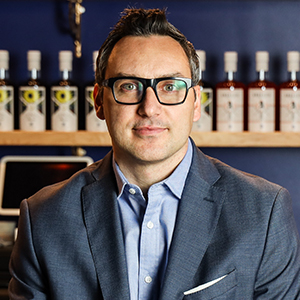
[00:00:04] Ray Latif: Hey folks, thanks for tuning in to episode 107 of Taste Radio Insider. I'm Ray Latif, the editor and producer of Taste Radio, and with my BevNET and Notch colleagues, Mike Schneider and Jacqui Brugliera. In this episode, we're joined by Francesco Amodeo, the Co-Founder President of Don Ciccio & Figli, an acclaimed distiller of handcrafted Italian herbal liqueurs and ready-to-drink cocktails based in Washington, D.C. Within our expansive interview, Amodeo explained why obsession has been key to the company's success and how brands can adopt a modern approach to a legacy category.
[00:00:37] Francesco Amodeo: Oh man, obsession is a great, a great word for this brand. And before you remind the listeners, I am totally obsessed. They have been powering my pandemic.
[00:00:46] Ray Latif: Mike, I've got to, I've got to remind the listeners before your mouth goes. Remind the listeners, Ray. Remind them. Just a reminder, if you like what you hear on Taste Radio, please share the podcast with friends and colleagues. And of course, we'd love it if you could review us on the Apple Podcasts app or your listening platform of choice. You got me drooling for an Amaro. That's the... So I had to interrupt you before you... before you reminded the listeners, right? Yeah, well, John Craven, who conducted this interview with Francesco, was drooling the entire time. Like, I was watching his video, and he had, like, a bucket underneath his chin collecting all the drools. It was both remarkable and gross at the same time.
[00:01:24] Don Ciccio: Interesting. I'm a newbie, so I need to try this stuff.
[00:01:28] Ray Latif: You're missing out, especially because you are of Italian descent. Yes, Jackie?
[00:01:32] Don Ciccio: Yes, I am.
[00:01:33] Francesco Amodeo: We'll get you hooked up with the Ambrosia or one of the Amaros, Jackie. They make for great sipping or great spritzes. It's a really good product.
[00:01:46] Ray Latif: Indeed it is. Jackie, for some reason, I was thinking about your nickname, Quee, the other day.
[00:01:54] Francesco Amodeo: It's not Quee, it's Jaquee.
[00:01:56] Don Ciccio: Jaquee or Queequee.
[00:01:58] Ray Latif: Oh, Queequee, okay. Or the Quee. Yeah. It's interesting that it could be queequee, because a couple of my friends call me Ray Ray, specifically a friend from South Carolina. I think it's like it's a Southern thing. Ray Ray. That's what everybody calls me. It's like Ray Ray, you know. So that's awesome. My friends call me Ass Ass or Jerk Jerk.
[00:02:21] Don Ciccio: Yeah, mine comes from this old video skit called, it's with Bon Quiqui. Some people might remember that. So when I was a teenager, that was really popular and going viral. So that's where the Jaquiqui came from.
[00:02:37] Ray Latif: I'm surprised no one ever calls you JB, because I feel like that's a more basketball kind of nickname. Do you call her JB, Mike? Yeah, from time to time.
[00:02:46] Don Ciccio: Yeah, that was definitely my, you called it my basketball nickname on the court. It's a lot easier straight to the point, you know, call JB before they pass the ball. So that's another nickname.
[00:02:57] Francesco Amodeo: Yeah. Jackie me like efficiency. So JB is easy, you know, but I don't know. I like calling her queen or Jackie or the awesome one or I take them all.
[00:03:08] Ray Latif: Yeah, well, it seems like you can have a lot of nicknames for you. And JB, I guess, is reminiscent of KB, Kobe Bryant, who most people called him Kobe, but I heard some folks called him KB from time to time, so. Well, folks might recall that Kobe was an investor in Body Armor, which was BevNET's brand of the year in 2018. Speaking of our brand of the year and our best of awards, we just announced them. Congratulations Are to Oatly, which is BevNET's brand of the year for 2020. And LA Libation's co-founder, Danny Stepper, was our person of the year. Amazing job by both brand and operator. You know, Danny has been a pretty remarkable figure in the beverage industry. And to see what he's accomplished this year has been nothing short of amazing, particularly LA Libation's relationship with Miller Coors and all that they've worked on and built going into 2021. On the Nosh side of things, Nosh's brand of the year was Ben & Jerry's, and person of the year was Chobani, founder, chairman, and CEO, Hamdi Ulukaya, both very well deserving. You know, I think for some folks, Ben & Jerry's might've gone under the radar in terms of all it's done this year, but they had a really incredible 2020. Jackie, I mean, you know, what are some of the things that folks might've missed?
[00:04:33] Don Ciccio: Yeah. So in 2020, I think a big thing with Ben and Jerry's is just what they did on the advocacy front. So anyone that follows them on Instagram, they're not really focused on their product. They're focused on sharing a message. They're focused on sharing information for people that might not know what's going on in the world or going on in our country or sharing information and facts. So it's a great resource for people and they do it in a way that's inclusive and welcoming and not really trying to take sides, but again, is very factual and trying to spread the word about things that are going on.
[00:05:12] Francesco Amodeo: But obviously, from a PR perspective, Ben and Jerry's strategy was very risky. And they're a large brand, and maybe they could afford to take risks more than a smaller brand. So when Ben and Jerry takes a stance, they know what the impact can be. They know what the potential impact of their bottom line is. But at the end of the day, they also know that their audience is behind them too. So their primary audience, their core audience, probably wasn't going to go anywhere if they take a stance. In fact, they probably would grow said audience.
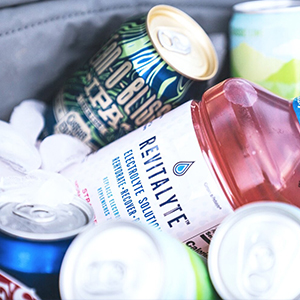
[00:05:44] Ray Latif: Now you can see the full list of winners of BevNET and Nosh's Best of 2020 on BevNET and Nosh. Check out our Brands of the Year, Marketing Campaigns of the Year, New Products of the Year. Check it out when you have a chance. Also on the site, All of the content from our recently held BevNET Winter 2020 and Notch 2020 events, all of the panels, presentations, and educational sessions are now available for streaming on demand. Of course, the only way to watch this extremely valuable content is to be a subscriber of BevNET and Notch. Many of you who are listening are probably subscribers already. For those of you who are not, Very easy to do so. I think I say this a lot. For $365 a year, you can get access to everything, everything that we do on the site. And I'm sure you've run into a situation where you're not logged on, you try to click on a story, and it's like, sorry, you can't read this full story unless you're a subscriber. It's just really easy to do so. Go to the upper right-hand corner of either site, hit subscribe, take you three minutes to sign up, and you'll be happy you did. You'll never have to worry about it again. So notable news Loves The past week in the worlds of Brewbound and BevNET, Canarchy, which is a brewery collective whose brands include Oscar Blues, Cigar City, Wasatch Brewery, has signed a distribution partnership with a recovery drink called Revitalite. You might imagine, and you would be correct, that it's a Pedialyte-type product for recovery, whether it be fitness or hangover-related. But in the case of Canterkey's relationship, it seems like a lot of the focus is on that hangover recovery benefit. And people have been drinking Pedialyte, I mean adults have been drinking Pedialyte for years now, post night out or pre-night out to avoid the after effects of drinking too much alcohol. And, you know, it's still a niche business, I think. but it's growing in its awareness and it's growing in demand among adult consumers. I think I mentioned this in a previous episode. I was in San Francisco, I think it was for the Fancy Food Show this past year, and I went into a Walgreens, and in the cooler set next to Gatorade was Pedialyte. So, you know, it's interesting to see that dynamic and how this, I guess, segment is growing. You know, we talked to a participant of this growing segment, which is a brand called Hoist. We talked to the founders, Kelly Heakin and Ben Schmidt, back in episode 58 of Taste Radio Insider about this emerging business of Pedialyte-type drinks. And Hoist is very much that, but it's much more focused on single-serve bottles. But again, similarly positioned as you know, something to drink perhaps after or before or during your night of imbibing.
[00:08:35] Francesco Amodeo: Yeah. And sometimes it's about the marketing because you, you know, you've got this idea of a drink that's like Pedialyte and Pedialyte not normally positioned for hangover recovery, you know, taking something and saying like, we've got our major differentiator is this particular function focused on a particular audience versus huge changes in product. We see a lot of powder products like Liquid IV and Hydrant, and I just recently got my hands on the new Ruby Riot Cure Hydration, which is a grapefruit coconut water powder that's Cure Hydration powder, and they're positioned very differently than Revitalight, but similar function.
[00:09:14] Don Ciccio: I think that's why the channel that they're going into makes a lot of sense, because they're positioned for the recovery beverage. They're looking for people that are buying alcohol. And I think that's also why the partnership with Canarchy does make sense as a non-alcoholic partnership for them, because they're distributing beer, they want people to drink beer, and they want them to feel okay with maybe being a little hungover, because they can then have a Revitalate.
[00:09:38] Francesco Amodeo: Well, who knows the audience better, right, Jackie?
[00:09:40] Don Ciccio: Right, exactly. And I think people are also very focused on being more productive these days, and they're not okay with being hung over all day the next day. And I think that's why people are going away from alcohol, drinking lower alcoholic products, drinking non-alc. And I think this is kind of a way to make it okay to imbibe.
[00:09:59] Ray Latif: Yeah, it's this interesting convergence of sober curious and, you know, reducing the after effects of alcohol. I mean, in both cases, you just want to feel better. You don't want to be, I guess, sluggish and sort of, I don't want to say brain dead, but brain fogged throughout the day.
[00:10:16] Don Ciccio: Yeah, I think also there isn't a lot of competition as far as direct competition with PDLA. If you go into a convenience store, you see PDLA and then maybe you see Gatorade or some other hydration beverage, but nothing directly competing with a PDLA, which is why people go back to it. It's something that they know they've seen for years. And I think people like consumers like myself, if I'm going to look for something that's curing my hangover, and I see something that looks really similar and is slightly better for me, I'm going to buy that product.
[00:10:47] Ray Latif: Well, there you go. You're the target consumer, it seems like, for some of these products. Have you been a Pedialyte consumer in the past, Jackie?
[00:10:53] Don Ciccio: I have for multiple occasions, hangover included, but also for sports.
[00:10:59] Francesco Amodeo: Basketball, of course.
[00:11:01] Don Ciccio: So if you're very dehydrated or you're trying to be very hydrated the day before a game, we drink Pedialyte. So I think that's another use case for this product as well.
[00:11:12] Ray Latif: Well, I mean, last note on this, I mean, to back up Jackie's point, Odell Beckham Jr., the superstar wide receiver for the Cleveland Browns, was tapped last year as the quote-unquote creative director for Pedialyte. So, yeah, interesting to see this category, this segment emerging, and it seems like folks in the industry are paying attention.
[00:11:34] Congratulations Are: Guessing your margins? That's risky. Belay Financial gives CPG brands the clarity to scale smarter, faster, stronger. Get your free inventory ebook by texting TASTE to 55123 and start making data work for you. Vibrant Ingredients is the natural ingredient partner powering food and beverage innovation, delivering flavor, function, and protection through a science-backed portfolio. Vibrant delivers purpose-driven solutions that help brands create extraordinary experiences. Discover what's possible with Vibrant today. Visit VibrantIngredients.com.
[00:12:21] Ray Latif: Well, while some folks are imbibing on electrolyte and hangover recovery beverages, I've been imbibing or drowning myself in immunity-focused beverages, particularly within the juice shot and just general juice category. Recently, I was sent some of this new Salty Crown Super Shot, which is a pretty great product. This is made with zinc, quinine, vitamin D, vitamin C, and 18,000 milligrams of raspberry. Wow, I didn't know I needed 18,000, but I'm glad I have it. Yeah, Salty, growing like crazy Loves The past year between their shots and their full-serve juice products. Definitely a brand to keep an eye on. Also, Ginger. It's a ginger immunity shot, immunity booster. This is a relatively new brand on the market. Ginger and turmeric defense, wellness shot is how they describe it. They even have a heat meter, which is pretty cool. They'll tell you how spicy this thing is. As you can see, it's one of these brands that Loves The vowels. It's just G-N-G-R. That's a trendy thing to do these days. And then Legacy Juice Works, another brand out of upstate New York. I got this from Wegmans actually. They make a organic turmeric blast. This thing is high test. It's just lemon, ginger, turmeric, and cayenne. And it's one of those ones shots that you can't do in one shot because then you're just like completely burned in this whole area. But it's not quite the spiciest ginger shot I've had, but it's definitely spicy. Yeah, I would agree with that. And then lastly, Uncle Matt, the organic juice company, recently introduced a new ultimate immune product, which is fantastic. It has orange elderberry and zinc, orange juice that is, and elderberry juice, 25% of your daily zinc per serving, 300% of your daily vitamin C. Thanks so much to Matt McClain. who is the founder of Uncle Matt's for sending me some of the products. Really had a great conversation with Uncle Matt. We'll call him Uncle Matt. In episode one, the very first episode of Taste Radio Insider. So check it out. Mike, I know you always have some stuff on your desk. Is it immunely related as well? It is.
[00:14:42] Francesco Amodeo: It's, oh, no, it's not. This is honey. Of course, I got Honey Mama, which I can't stop talking about or eating. The other thing that I have here is a product called Bon Buzz, which last week on the show, I talked about Batera, who has a very different form factor for their non-alcoholic cocktail. And this is a alcohol-free alchemy spirit. which is quite good. So yeah, I've been I've been I've been drinking this and thanks to the founders for sending us pampas.
[00:15:14] Ray Latif: I like that they're including alchemy in there before the word spirit. It feels like it's sort of an elevated experience for the consumer versus just say handcrafted. I guess alchemy just makes it seem like there's more magic involved in the bottle than just, you know, the standard traditional way of distilling a product. Although there's no, there probably isn't a standard way because it's not alcoholic. Jackie, what's on your desk these days?
[00:15:40] Don Ciccio: So I wanted to give a shout out to a local brand, one of my favorite vegan dips, Bitchin' Sauce. They're based in San Diego and they just entered into 7-Eleven because they launched their Bitchin' Snacks line this year. So that kind of gives them an opportunity to get into C-Store, 7-Eleven specifically. Also cool to see a bunch of other local brands in my local convenience store these days. Shout out to them. Also, I've been using a lot of tried and true products this week because I've been trying to do some vegan baking for Christmas. So I've been using a lot of Bob's Red Mill, chickpea flour, Earth Balance, and creating some Italian biscotti.
[00:16:24] Francesco Amodeo: So that's been- I saw that on Instagram. I wanted some of that.
[00:16:29] Ray Latif: It's so good.
[00:16:30] Don Ciccio: I was surprised.
[00:16:31] Ray Latif: Nice.
[00:16:31] Don Ciccio: Yeah.
[00:16:32] Ray Latif: It's funny you mentioned biscotti because In Order a fruitcake this year. For some reason, I was really craving a fruitcake. I don't know why. Maybe it's just because of the holiday season and whatnot. But it's just from this company called Assumption Abbey. It's not really a company. It's this group of Trappist monks who make apparently some of the best fruitcake in America. So In Order some and they gave me a nice little sample of some biscotti on the side, which I thought was nice. Biscotti is great.
[00:16:59] Francesco Amodeo: It pairs really well with coffee. It also pairs really well with a cocktail. It would go really well with this Bon Buzz, which I think is doing a really good job of layering in a way that you're not, that I haven't seen in many non-out products. You know, the layering that you want in, like for Don Ciccio, for instance, their Amaros are so layered and the experience is like, it's an experience you can't get, well, outside of the alcohol world generally until, you know, something like a Bon Buzz comes along and tries to, really layer in the bitter and there's like a little cinnamon and maybe just a touch of a chocolatey flavor to it. So that's what's going to make non-alch interesting is just to tap into flavors that we're not used to without the burn.
[00:17:40] Ray Latif: Yeah, and you know, one thing I want to mention about sort of including this additional price, a little sample along with the main product, I thought that was a pretty and I'm seeing this more and more often. It's a really good way to sort of develop rapport with your consumer, get them to try something, give them something for free, you know, get some feedback, maybe have them just give you a shout out, oh, thanks for this product. Oh, and you know, for this other little thing that they included. So For me personally, I thought that was a, that has been a good thing to see among folks who are doing direct-to-consumer. So shout out to Assumption Abbey and the Trappist Monks. A little surprise and delight from the Trappist Monks. I mean, who wouldn't want that? There you go. One other brand I really want to mention is 12 Tides, which was a semi-finalist in Nosh's pitch M9 competition. Yeah. They're a maker of organic kelp snacks. They're made with a little bit of sea salt, nice and crunchy. They have compostable packaging. I posted their brand on Instagram a few days ago, and the response was pretty interesting. I saw a lot of people being like, yum and wow, and things like that. So not often you see kelp chips, and as I think one of the judges in the competition mentioned, they didn't even know what kelp was. So good to see that people are interested in learning more about this product and their key ingredient, because it is good stuff.
[00:19:02] Francesco Amodeo: When I tasted that, that put a smile on my face. And Ray, I haven't had a lot to smile about recently, thanks to my soccer team. Oh, no. But it was an expected yet not expected flavor. The crunch is great. I really like that 12 tides. And also on my desk, Ray, well, it was on my desk, but I already sampled it, was the new Rosemary Truffle Ayoba, which is a Biltong brand. Shout out to Vine for sending that along. It's this new product that they have. It's really tender. The flavor is great. It's an interesting new meat snack.
[00:19:37] Ray Latif: Well, you know what goes well with meat snacks is Nutella, the original hazelnut spread. I would eat that. Nutella, the brand is doing something pretty cool this season. They've got a limited edition DIY holiday breakfast kit. It's this tin, this big Nutella-shaped tin that includes a jar of Nutella. It's got gingerbread cookie cutters. It's got maraschino cherries. It's got all the things you need to make a gingerbread cookie with Nutella on top. And, you know, one of the benefits of buying this product and specially marked jars of Nutella is that a portion of this proceeds is going to a nonprofit called No Kid Hungry, which obviously helps to end childhood hunger by launching programs that give kids healthy food. Really great program, really cool product. If you want to learn more about what Nutella is doing and check out that kit, head to NutellaHoliday.com. All right, it's time to get to our interview with Francesco Amodeo, who as I mentioned at the top of the show is the Co-Founder President of Don Ciccio & Figli. Founded in 2012, the distillery produces handcrafted Italian herbal liqueurs and ready-to-drink cocktails in the tradition of Francesco's family, whose roots in the spirits business go back to the 1800s. Francesco's embrace of his heritage has given way to the development of a highly-awarded portfolio of Amari, Apertivi, and Cordials, and comes amid Americans' growing interest and demand for Italian liqueurs and bitter drinks. In an interview with BevNET founder and CEO John Craven, Francesco spoke about following in the footsteps of his family, incorporating a modern touch into old-world production methods, the company's thoughtful innovation strategy, and how it validates new products. He also spoke about the impact of trends on business planning and strategy and how the company has responded to the COVID-19 pandemic via an expansion of its portfolio.
[00:21:36] Francesco Amodeo: Hello, I'm John Craven, founder and CEO of BevNET. And today I am joined by Francesco Amodeo, who is the president and co-founder of Don Ciccio & Figli. Francesco, thanks for joining me. Thank you, John, for having me. So I guess before we kind of pester you with questions, maybe you can just give a little introduction and background to what your company is all about.
[00:22:03] Congratulations Are: Yeah, absolutely. So our company was founded back in 1883 on the Amalfi Coast. My grandfathers, they kind of wanted to do something different back in the day. And I believe they achieved that. simply is because my one of my grandma she was working in this factory that was producing sweets so you know confetti cakes and anything sugary back in the day so sugar was a hot commodity And within this company, which was called Mompingar, which was founded by three individuals from Atran, one of the cities there, where we first started the company, they were making three different liquors. So my grandfathers, they kind of wanted to, some sort of, you know, emulate, but wanted to do something on their own, just for fun. And, you know, they started this company, which was just giving it to friends and family first. And, you know, it leaps all the way down to 1980, when the company was then reopened in the 50, since 1931 was closed due to economical crisis of the World War II. So then they ran from the 50, 1951 till 1980. when the company completely shut down due to an earthquake. And overall, we were producing 45 different liqueurs. So anything from an Amaro, being an herbal medicinal remedy, to any other, most of the classic products like limoncello, which is known globally. That was how we started in DC in 2011 slash 12. just with the idea of bringing those family traditions back and using all natural ingredients and products, following the same style of making of my grandparents, but with a modernized touch. Essentially, we take this recipe and we modernize them in a way that they're very palatable to the modern consumer.
[00:24:23] Francesco Amodeo: Is that the core difference, just that you've sort of maybe taken the edge off a little bit with the original formulations?
[00:24:31] Congratulations Are: I mean, I won't really say edge off because some of the products as you've tasted through in the past years, you know, they're pretty out there in terms of flavor. They're almost like a gentle, gentle punch in the face. What we try to do is we try to use sugar as one of the ingredients, not as a main component. Because what happened is you ended up having such a big, sweet mouthfeel. Back in the days, you know, when I first came in this country, I used to make apple apothenes, I used to make cosmopolitan, I used to make grasshoppers, very, very sweet cocktails. And then slowly everything started to change. So essentially, that's what we're trying to do is take the sugar that's in the recipe, flip it, gave the botanicals the ability to shine through in a kind of a layer of flavors, so almost like a roller coaster of flavors, using essentially sugar as a binder. The kind of a product that makes the alcohol and the water and all the 30 to 40 different herbs and roots just get together. Almost as somebody, you're getting married in a house and you're a guest, somebody pulls the chair. It's almost that style of a binder, more than an aggressive flavor. Because, you know, you're a big fan of the Serena, you're a big fan of the Dona Rosa. When you tasted them, you have a deceiving sweetness up front when you sip it. And then the bitterness slowly, gradually will come out and kind of surprise you. Because if you do a deceiving sweetness, Most of the people, so 90% of the people, even some that are not accustomed to very highly botanical flavors, they're going to be okay with it. It's like, oh, I can do this. And then slowly they will develop. I never seen a person that likes it in it right off the bat. Maybe on the third sip, they started to appreciate it. That's the gradual kind of sugary component where it's more of a deceiving flavor than main character into the product.
[00:26:47] Francesco Amodeo: Well, you're making me thirsty a little bit hearing all that. I guess it seems like your background, at least here in the States that started out with restaurants and bars, That has been a key component of how you've built this brand too, right? So I guess, you know, I'm kind of curious if you can talk a little bit about just what the strategy was once, okay, now you've got the liquid in the bottle, you know, what did you do next?
[00:27:19] Congratulations Are: Well, you know, the main thing was to come as close as to the 1970s, 1980s recipes that we, my family has made. For example, if you taste the Campari 1970, if you taste the Cino 1970, it tastes very close to the Luna and the C3 Carciofo that we have. So the goal was that, was trying to find Earth Balance between the botanicals, trying to source in the country the best products that you could possibly use. and sort of, you know, gradually evolve the brand. So as you do, as you work in a sommelier, you try to do a wine pairing. So what we try to do is we try to pair these products and give the bartenders some sort of different colors and to, we see the cocktails essentially as a painting. And so we just try to give these bartenders different colors to paint their canvas, different flavor profiles they can blend. So strategy was find the best ingredient possible, use the best fresh ingredients possible, source the botanicals from the best country that we know that grows best. So we're not going to get juniper from Australia, which it doesn't really grow well. We take it from Italy or Oregon or things like that. Sourcing water. Originally, we did not have a water system in our distillery. And then find the best sugar possible that was not bleached, that was only treated by, you know, naturally. And then come out with some cool designs that people will kind of relate to it. I think about it in 2012, we launched the sweeter cordial only. The original idea was to create Don Ciccio as basically an umbrella. And you have three subcategories of products. So you have aperitivo, amari, and essentially cold juice. We always wanted to make sure that we are going to release a product that can be pleasing at least 90, 95% of the community. It's not about what I like to drink. It's not about what I think people need. It's about giving, again, that color, that paint to the bartender. People now, especially today, they're drinking more at home. A product that is easy to mix. It mixes well. It's not just a sipper. You can also use it as a modifier to make a good cocktail. I think the hardest part is to actually make sure that once you do all the steps, so outsourcing all the best ingredients possible, making it the same way traditionally that our family has been doing without jeopardizing the quality. Small batch for us, it's always important. So for example, we only make $600 a part at a time. We don't exceed that. We just have continuous batches going on all the time. And then mixability, the chance to give the person at home or give it to the bartender a product that's easy to use.
[00:30:32] In Order: Do you want more repeat buyers on Amazon? Well, this free resource in collaboration with Straight Up Growth will help your brand turn first-time buyers into long-term subscribers. Download Winning the Repeat Purchase Game on Amazon now at Taste Radio.com slash SUG. That's Taste Radio.com slash S-U-G to start building retention-driven growth for your brand on Amazon. Scaling a beverage brand into major retail comes down to operational readiness. From packaging lead times to co-manufacturing strategy, the details can make or break a launch. In a new e-book in collaboration with Octopi and Asahi Beer USA, industry leaders share what they've learned in helping brands scale. Download it now at Taste Radio.com slash octopi. Do you need to scale your team faster without compromising on talent? Join Oceans for a live webinar on April 20th and learn how leading companies are hiring top global professionals who are ready to grow with your business. Register for the webinar now at Taste Radio.com slash oceans. That's Taste Radio.com slash oceans.
[00:31:43] Francesco Amodeo: I guess one of the things I'd like to understand a little more is also just like when you have a new product, you know, can you talk a little bit about kind of the business end of how you launch these products? You know, is it producing it and just pushing it into distribution or what would you guys do kind of on premise with a new product, you know, just to build up demand for it and whatnot?
[00:32:05] Congratulations Are: Well, you know, a lot of our strategy before even we launch it. So we send samples out to targeted people to gather all the feedbacks first. So we send it to a different group of people, like distributors, journalists. We target to the bartenders, liquor stores, friends and family. So we gather all the information and all the feedbacks in terms of flavor profile. What would you like to see more to be pronounced and less and what's missing and so forth. Once that is decided, then we go into translate that feedback into essentially liquid form. And then we start working on labeling design. In the meanwhile, we do all this, let's say, experiment in terms of gathering all the feedbacks. We also talk with our national distributor to see, hey, I have this idea that I think it's a product that's missing in the market. The market will totally benefit from it. What do you think? So once we have, let's say the green light is a great idea, then we know we started with labeling design and then we, you know, we do all the kind of, you know, press branding marketing and gets together with our PR firm. And then we started launching it first year locally only. So only gets to see, gets to taste it first. So turn off the tasting room, and then we'll see the reaction of people. We send a newsletter to a targeted segment of our fans. And then we started to introduce it into our bar serenades. So the bar gets to make cocktails. So a clear example of Ambrosia. Ambrosia was a product that was strategically launched with the opening of the new distillery. And now we have such a lengthy lineup of products, and we have also been in the market for eight years, that people always, you know, it's happy when we launch something new. So also we're going to give our fans something else to be excited about.
[00:34:26] Francesco Amodeo: One of the things I was hoping to get your perspective on too, is just in the eight years you've been doing this here in the U.S., you've also been doing this at a time where, you know, the thirst specifically for Amaro has been increasing and it's, you know, I think becoming certainly an on-trend category. Where do you think we're sort of at in that and what do you see as sort of the potential for Amaro in general?
[00:34:55] Congratulations Are: So Amaro in 2014, 15, we started going up and a lot more people started to understand the beauty of bitterness and the medicinal element as the palates were switching slowly. Now you understand that you cannot get a Negroni without Amaro. Now you understand you cannot really get a spritz without an aperitivo. Now you understand that you cannot make any other Boulevard Dez or any other cocktail without that herbal confit. Could be different kinds of clear profiles. But the category all of a sudden became a category that you need to have. So then what happened is when you go to a bar and you only see a shelf full of the biggest Italian brands. And you will see them almost every bar. It's almost like a distributor will take the six brands, just place them there, et cetera. My personal goal was to create a second shelf at the bar. Yes, you have these beautifully Italian-made products. Go way back in the days. There's lots of history there. But it's also the American-inspired product. They're done with locally sourced ingredients and so forth. Also a really good thing to have and to try to create more stuff, you know, and I'm out of light. Or you trace some of this, some of that, so you compare the difference between US, Italy, locally made, sourced here, sourced there, in high quantities, volumetrical quantities and so forth. And I think, you know, that's also why there is a lot of more producers in America. They started to make it and add that category into their overall distillery portfolio. Most of the time, you know, you see people that just come out with the vodka and then they go to gin and while they wait for rye and bourbon, because they have to wait. Now they understand that, yes, you can make vodka and make the gin, but while you wait for rye and bourbon, you can make caramel.
[00:37:07] Francesco Amodeo: Well, you sort of answered my next question with that, which I mean, it seems like we are having, you know, a surge in sort of craft tomorrow producers here in the U.S., precisely for the reason that you mentioned, which is time and not having time. Right. So. It seems like a category that if you want to start up quickly, maybe put that in quotes, but certainly quicker than creating an aged liquor that you have to wait for. The other side of it, you had mentioned products that were lower proof. Do you think there's a component to the popularity of Amaro and the growing awareness because it's a lower proof spirit or is that not a factor in it?
[00:37:58] Congratulations Are: I mean, it can be a factor and also could not, because, you know, think about it. One of the most popular Amaros in the world, it's Fernet Branca. Sure. 39%. Right.
[00:38:10] Francesco Amodeo: The upper end, of course.
[00:38:12] Congratulations Are: It's way out there. So for me, in terms of proofing, it really depends how about your botanical blend, right? So if you have a certain amount of botanicals, they might shine through a certain ABV. So for example, sirene, one of the highest ABV that we produce at 29%. We tried 33%, we tried 38%, we tried 23%. It does not work. The magic number is 29, because the eucalyptus, the passion flower, the chicory, the barley, all the other ingredients inside, they shine best at their specific percentage. It's not about, again, going back to what I said earlier, it's not about what I like to drink and what you should be in the market. It's about creating Earth Balance between the botanicals. There's always going to be, I like to call it the black sheep into the botanical blend. There's always going to be one ingredient that fights against the other. because it's very hard to put all these 30 ingredients together. So you find Earth Balance. And sometimes the 29%, the ABV is your balance. So you really need to like dissect one by one and kind of find that kind of balance point.
[00:39:41] Francesco Amodeo: Well, you're clearly someone who is like a product wizard on this stuff, so. It's fun to talk, I guess, maybe a little nerdy, but, you know, hey, it's an audience of people in the food and beverage industry who appreciate this stuff. It's great to hear this. One of the other, you know, sort of the last kind of component of this I wanted to talk about was the pivot that you guys have made, you know, which I guess, at least from an outsider's perspective, seems like you've made a sort of heavier push into e-commerce, direct-to-consumer. And also, you know, you've launched ready-to-drink, ready-to-pour products, both a spritz and some bottled cocktails. You know, I know that's kind of a lot for one question, but I guess I'll just make it a little more open-ended of, you know, if you could talk about sort of the newer initiatives and your company's response to the pandemic.
[00:40:36] Congratulations Are: Yeah, I mean, the Perla cocktails were launched after seven years of me thinking about it. So I had this idea back in 2013 when I was working on the Luger residue that we ended up launching in 2015. because it took me a little bit longer to develop and to perfect. So we wanted to essentially create already a local Negroni with another distillery that was making gin. And back in the days, we were only two distilleries in the market locally here in the district. So I wanted to do this Negroni. And then we wanted to do it in a can. But then canning lines were a little bit out of the budget. considering the potential amount of volume that you gotta do and all that. And also think about it, back in the days, there were not many mobile scanning copackers available. That's something that got developed later on. So then, you know, my idea was completely gone. The distillery also didn't really want to collaborate with us. We're not in the market of making gin, whiskey, and vodka. So I'm like, okay, well, we'll see what happens. Now let's focus on what's more important, trying to build Don Ciccio brand awareness. So when we had to shut down and all of a sudden, we had weekends, you know, pretty much free. Never happened in, you know, 38 years of my career. And then, you know, it just, I was talking to, you know, my distributor and say, hey, would you think what we can do to increase the off premise segment? Because our brand, it's 90% on premise. Bars, And only people that actually know about our brand will go on a liquor store and do a cold call. Hey, I need a bottle of Don Ciccio. Which in the past five years, we actually have a pretty good amount of stores available to the big cities. But you cannot find all 15 products. So it always becomes difficult to track down one specific item that you would like to get, special orders and all that. It becomes logistically a bit of a headache. So then, how can we reach the off-premise segment? And I said to my distributors, I said, listen, I'm running some numbers and see what cocktails that the bar sells the most. And since we are basically basing our cocktail menu on a classic, let's just launch our cocktails that people come at the bar and enjoy the most. And it seems to be, you know, an easy way of approaching the off premise. And throughout this pandemic, everybody needs to stay at home. There's only so much you can do during the day at home. You can only cut the grass so many times in a week.
[00:43:54] Francesco Amodeo: You did end up doing a product in a can, which is your spritz. Don't forget to talk about that.
[00:44:00] Congratulations Are: You have to because the spritzer, if you don't have a combination, it doesn't taste the greatest. Very difficult to make a spritz into a can that tastes the way that Ambrosia spritz tastes. Of course, it's different when you make it à la minute with Prosecco and Ambrosia handy. But, you know, I'll let you talk about the spritz more, so you have tasted it, so you can tell me what you think about it.
[00:44:29] Francesco Amodeo: I have tried it many times. I would agree it's definitely done a great job with it, which again, given all the mastery you have of this stuff, you know, no surprise. But I'm curious from just the business perspective, you know, you talked about kind of how the La Perla, the cocktails themselves, the bottle products sort of fill a void. You know, where does this go? I mean, does this sort of get you wrapped up in the whole competing with wine companies that are doing spritzes or hard seltzers, or is this just its own animal?
[00:45:06] Congratulations Are: I think it's its own thing. There's a different segment that almost like, you know, if you're an Amaro drinker, you might end up drinking more beer than wine, right? So it really depends about our style of living and really depends on on the way that you usually drink. So I drink only IPAs. If you give me a Pilsner, I'm not even drinking. But I appreciate a good bottle of wine because I have a wine degree. So my family also produced wine back in the days. So it really depends where you're accustomed to. But most of the people that will end up drinking our sprints is because they know I'm Rosa. It's because they know some of the parts of me.
[00:45:53] Francesco Amodeo: Just to make sure I understand, like, are you looking at something like the Ambrosia Spritz or the Perla bottle cocktails as discovery products that leads the consumer back to the core line? Is that kind of what you're saying? It's a circle, right?
[00:46:11] Congratulations Are: So to make a good Negroni, you need to use Luna. Now, if you come from work, If you had a busy week, now with all these conferences, Zoom calls and all that, you might be mentally exhausted or physically exhausted at the end of the day. That the last thing that you want to do is using three different bottles to make one drink. You might end up drinking way too fast, so you end up again doing a second one. Or you just make the first one double, right? So what if If you know about Luna, and let's say you don't want to do the three, five steps of cocktail making at home, then you can just buy a Negroni Classico with Luna inside. You can just pour it off and it's as good as you made it yourself. These are the recipes that have been tested in repetition in our bar. And then, oh my God, I like this Negroni so much. What's, how does it made like? Take a look at behind the bar. And now you go back to Don Ciccio and then you buy either the Luna or you want to give us a gift or you want to try a new thing, you can try anything. And you know, he goes, he goes, you know, they go back and forth. So it's an extension of his own extension. And then back to, to the main course. It's all connected. You never produce things that are not connected to each other. Otherwise, it's two different companies.
[00:47:46] Francesco Amodeo: Well, I know we've been chatting for quite a while here. So I really appreciate your time. And it's been great to learn more about your business and the background of how all these products are made, too. I guess I think I know what I'm drinking tonight. It's great to chat with you, Francesco Amodeo best of luck in 2021.
[00:48:07] Congratulations Are: Yeah, thank you, John. I appreciate you taking the time and chat. It's always nice to put a face and a name, so. There you go. Be good to you.
[00:48:22] Ray Latif: That brings us to the end of episode 107 of Taste Radio Insider. Thank you so much for listening, and thanks to our guest, Francesco Amodeo. Please subscribe to Taste Radio on the Apple Podcasts app, Spotify, Stitcher, or Google Podcasts. As always, for questions, comments, ideas for future podcasts, please send us an email to askatasteradio.com. On behalf of the entire Taste Radio team, thank you for listening, and we'll talk to you next time.