[00:00:04] Ray Latif: Hello, and thanks for tuning into episode 108 of Taste Radio Insider. I'm Ray Latif, the editor and producer of Taste Radio, and I'm with my BevNET Nosh colleagues, Martín Caballero and Brad Avery. This is a special edition of the podcast, which highlights interviews with four founders, creators, and experts who joined us on the show during the second half of 2020. A quick request, if you like what you hear on Taste Radio Insider, please share the podcast with friends and colleagues. And of course, we'd love it if you could review us on the Apple Podcasts app or your listening platform of choice. Every time I say 2020, I think back to that news show with Barbara Walters from back in the day, 2020. Do you guys remember that show where you... Of course, yeah. Peter Jennings, right, I think?
[00:00:47] Brad Avery: I was more of a 60 Minutes guy.
[00:00:49] Ray Latif: Well, 60 Minutes is like primetime for Sunday nights. It was always on like at 7 p.m. I think 2020 was like one of those late-night news shows. Right, Marty? It was like 10 o'clock or 9 o'clock, something like that? Yeah I think it was kind of like would Dateline be maybe the equivalent or maybe it was a little bit more serious than that. I don't know. That's the thing. They always wavered between serious subjects and then like the celebrity puff piece. So you never know what you're getting with 2020. Kind of like the year. No, but you always associate Barbara Walters with the show and the number 2020. Of course. Just because of the way she said it, yes. 2020. I think SNL has done some parodies of that. Well, listeners, this is, I think, the first time that we've had both Brad and Marty on the show at the same time, and I'm so grateful that we have both of them on. they stepped in admirably, not stepped in. They took over admirably for our, I guess, quote unquote, regular hosts, including Jackie, John, and Mike. And I don't know why Mike would not want to take part in today's episode. His team, the Arsenal Gunners have won two in a row, which just seems miraculous for a team that has done so poorly this season. So I thought he would definitely be on the show to gloat, but missed a shot. yeah, this is where the bar has been set two wins in a row and it's gloating time. So yeah, Mike Missed his chance. I think he did. He did. I mean, I could gloat because Manchester United is now, you know, in second place in the league with 30 points, but I'm not going to do that. Cause we're getting way ahead of ourselves for this, this point in the season, Brad, you don't follow English soccer. Do you
[00:02:25] Brad Avery: No, I, not at all. I do remember what, like shortly after I joined BevNET and you guys were all talking soccer and you're like, you have to pick a team. You have to pick a team. And I just like out of a hat named the first team I was aware of. I think I said like Liverpool because the Beatles. And then I never paid any attention to soccer after that.
[00:02:45] Ray Latif: Because the Beatles. I've never heard that before.
[00:02:48] Brad Avery: First place in England I could think of that had a, had a football club.
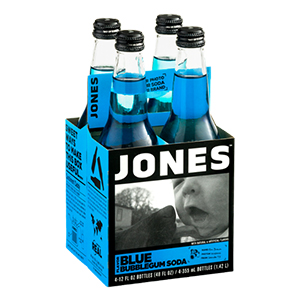
[00:02:53] Ray Latif: Gotcha. All right. Well, Liverpool's not a bad team. If you want to keep them as your team, then good for you. In fact, they're a great team, but anyway. So for folks who don't follow soccer, but happen to follow the food and beverage industry, which I assume is quite a few of you listening, you might be familiar with our Elevator Talk series, which focuses on emerging food and beverage companies and talking to them about their business plans, products, and strategy. It's a 60-minute show, which is published bimonthly, in which we profile five beverage companies, talk about their business plans, products, and brands, as I mentioned, and have a co-host, who is an expert in the industry, offer feedback, advice, and some constructive criticism on those plans. We are bringing the series back in 2021. If you are interested in participating, please fill out an application. Just go to BevNET.com slash Elevator Talk. You'll find all the details on how to do so. It's going to be fun, lively, and once again, an exciting opportunity for early stage companies to showcase their brands to the industry and get feedback, very valuable feedback from our experts who are there to help. Well, at one point, Zevia, the stevia-sweetened soda company, and Jones Soda, the artisanal soda company, were both considered small and emerging. Both are not that anymore. Both are established. Brad, you profiled both in recent stories on BevNET. Zevia for raising $200 million in a recent round, and Jones Soda for a change in their leadership and a shift in their strategy. You know, it's interesting to look at both stories and... understand how each company is navigating a soda category that is continuing to evolve amid decreased demand for the beverage.
[00:04:51] Brad Avery: Let's start though with Zevia, which raised $200 million for from a Canadian firm, I can't pronounce the name because it is French and long, but CDPQ, they are a investment fund for the province of Quebec. And this whole plan, the raise is to go towards a global expansion. Now, Zevia, founded in 2007, has, like you said, been around for a long time. And I think It's always been a brand with an interesting proposition. They tied themselves to the stevia ingredient, but built on the need for natural sweeteners, zero-calorie sweeteners, and the move towards better for you. And that's kind of always been Zevia's bread and butter is the better for you. And it seems that it is still driving growth for them. Jones, on the other hand, is interesting. The profile is a bit of a different turn, because Jones is a publicly traded company, and it's been no secret that They've struggled in the past few years, if not longer. They've had challenges, and it's been written about and reported out in their earnings reports. But now they're really taking the turnaround, and they are rebuilding, and they have a pretty robust strategy that has already returned growth to the company. Last year, Heavenly RX Limited, which is a subsidiary of Soul Global Investments, acquired a 25% stake in Jones. And since then, they've been sort of reworking the brand. They brought in a new CEO named Mark Murray, who is taking a back to basics approach to rebuild Jones to kind of its glory in the 90s. And it's a brand with a lot of awareness, a lot of ubiquity, but is still very much a full flavor soda brand. And the approach so far has just been to lean into that, to own that, and to kind of go back to what worked before and what's going to work in the current environment. So I think you see two very different companies here. Despite playing in the same category, they're playing to very different consumers in very different segments.
[00:06:59] Ray Latif: Yeah I would just add that you know for these two companies in particular a lot of the thing that we talk about often on that man in these discussions is the importance of authenticity. And I think first and foremost as Brad said both these companies are really honed in on an identity that works for them and they've stuck to it. Zevia highlighting the use of CBI and Jones being the full sugar kind of more dynamic flavors and colors and that kind of thing. So they've both really been successful within that context of being authentic. And then secondly I would just add that I think that although certainly the awareness of the dangers of sugar consumption is definitely growing and I think on the sort of on the innovative side of things people are definitely looking towards lower sugar products. Overall carbonated soft drinks had a good year. They continue to sell well. I think in the pandemic we saw some of those stockpiling behaviors that were also in bottled water and other products also occur in soda. So these are still products that people want. And these are still leading products for the leading brands. I mean we saw Coca-Cola really lean into their brand with energy with coffee. Pepsi I think has done kind of similar things really trying to do some some different varieties around the flagship products. But you know it's still a big category. It's still a major force. So I think that there's still plenty of room.
[00:08:21] Brad Avery: I think it's interesting to kind of talking about the growth that has happened for beverage this year because of COVID. And I think, you know, obviously the big top trend is health and wellness, immunity, you know, those types of products. But I think something I hear, especially from a company like Jones, is there's kind of a subtrend there, which is towards indulgence and comfort and something familiar. And so there are consumers that are, you know, reaching for a full sugar bottle of craft soda, because it's comforting and it's enjoyable. And it's like, hey, why not give yourself a treat? And I think that's one key to Jones being able to bounce back at this moment. And it is interesting, you know, how different people are obviously, you know, responding to the pandemic marketplace with, you know, in totally different ways.
[00:09:11] Ray Latif: You know, it'll be interesting to see if this strategy holds beyond the pandemic as well. I think Brad pointed out that, you know, people are reverting toward brands that they know and love as a way to comfort themselves during challenging times. Can that last beyond the pandemic? Not sure. We'll see.
[00:09:28] Brad Avery: Jones is in a really curious place because they are a Gen X brand that is trying to now appeal to Gen Z. And I think you look at, you know, when Jones, you know, built its brand identity was in the 90s, you know, amid a background of, you know, extreme sports being on TV all the time, and a general, like, anti-consumerist sentiment along, you know, among the youth that very much went to, you know, reject Coke and Pepsi, you know, brand X, you know, I want no logo, Jones is the alternative. And they really were able to play to that well. And now, obviously, the market has changed. And so now they're kind of playing both fields. They are leaning back to the history, you know, their identity with skate culture. They brought Tony Hawk back this summer that, you know, was a big boost for them. It played well. But they also are, you know, they're looking towards social media marketing. They're looking to expand to Gen Z and they're looking how to speak to, you know, new generations of consumers, which is something I think they hadn't been doing before. And now that's really their top goal is how do we speak to our past consumer who's nostalgic, who remembers us, you know, growing up with us. And how do we speak to this new generation of consumers just learning about Jones because they've never heard of it?
[00:10:34] Ray Latif: I think the question is, you're asking a new generation of consumers to get into something that was cool 20 years ago. Isn't that the antithesis of everything that is going on? So it's kind of like the snake eating the tail. I don't know if that's, I don't know if you can do it that way, but we'll see, I guess.
[00:10:51] Brad Avery: I think in my experience with Gen Z is you you can't tell them to like anything. You can't you can't tell them what they're going to like. They are very much going to reject. They've already rejected millennials tastes and I'm sure they you know it's hard. It's hard to know what they're going to grab onto.
[00:11:10] Ray Latif: Well, in the meantime, as Jones and Zivia have done in the past, if you're listening and have a product that you'd like us to take a look at, review, offer some feedback on, just send them to BevNET.com. So a lot of people ask, you know, what happens when samples come into the office? Well, we will take pictures of them and in some cases, post them in our social media sites like Instagram. In some cases, these products will get reviewed for a formal review on BevNET. If it's a Nosh product, if it's a food product, we'll include you in our database of brands. Just go to Nosh.com slash brands. Best way to get products to us is to send them in a box that won't break. That's really important because we do get products that break because they were not packaged properly, but please send them to BevNET slash Nosh. 65 Chapel Street, Newton, Mass, 02458. Again, if you have any questions about how or what we do with products, come to the office, just send us a note to ask at Taste Radio. We'll get you sorted out. A product that came in the office recently that I really enjoyed drinking was Genius Juices, or just Genius nowadays, Whole Coconut Smoothies. This is their mocha variety. I'm just going to show you guys. This is made with coconut water and coconut meat. Also, organic cocoa powder and coffee extract. It is phenomenal. Plant-based, dairy-free. Yeah, this thing has the whole package for sure. Also, I was amazed by these amazing jackfruit chews. A-M-A-Z-I. If you're not familiar with jackfruit, it's sort of a cross between a banana, a mango, and a pineapple. And these chews are really great. All it is is jackfruit, lime, and chili powder. Can you get more flavor out of jackfruit, chili, and lime than what you're getting in here? I don't think so. It's really fantastic stuff. Marty, Brad, anything come across your desks or home offices in the last week or so? Yeah, I gotta say, you know, I talked to this company a couple weeks ago for a story, but a Massachusetts-based brand, True, with our shout out to Jack, a good friend of BedNet. But this is a company that had a variety of functional shots, predominantly, but is now going through a bit of a shift where now the emphasis is going to be on their new full-size ready-to-drink products.
[00:13:24] Martín Caballero: The two that I tried in 12-ounce cans was the True Defend, which is an immunity blend, pineapple flavor, and then there was True Energy as well.
[00:13:34] Ray Latif: I'm not going to quote the exact amount of caffeine because I'm not totally sure. But, you know, trying these drinks, it had me thinking, we try a ton of functional drinks. Almost everything now is trying to include some functional ingredients or benefits. And because of that, it kind of flipped back to flavor more than I think maybe previously, because now I can get all these different things. I know that, you know, they're going to be available. So I want to drink them kind of in the format that tastes best. So I have to compliment the job that these guys did on the flavor. 10 calories. It only has three grams of sugar and 5% juice, but Really tasty stuff, the pineapple flavor in particular for the immunity blend. Yeah, it's the old cliche that's true that I'm so cliche that I won't actually say it now, but you know what I mean when it comes to flavor. So that's very apparent here. They did a great job. Now is it T-R-U-E drinks? Uh, no, I should say, uh, it is TRU. Good point. TRU drinks. So this one I have here is a TRU true defend and the other one is true energy. There's going to be some other functional skews coming out in the next couple of months, but, uh, but yeah, good stuff.
[00:14:42] Brad Avery: Nice. I've gotten some samples lately of some new Tropics energy drinks. I'm interested in this space. I try them out occasionally, and I enjoyed the flavor a lot on Nerd Focus, which is actually a rebrand of a Texas-based energy drink that is now looking to expand nationwide. They were acquired a little while ago by a smaller firm, and now they have sort of reposition the drink and have a zero calorie and a full sugar line. And I have to say, I gave it a try. And I very much, you know, found good focused energy, and, you know, fairly sweet flavor. So I enjoyed that.
[00:15:29] Ray Latif: Did you find good energy, like good focused energy or Nerd Focus energy?
[00:15:34] Brad Avery: Like, it just, it turned me into a total nerd. And I just was hitting the books.
[00:15:42] Ray Latif: Guessing your margins? That's risky. Belay Financial gives CPG brands the clarity to scale smarter, faster, stronger. Get your free inventory ebook by texting TASTE to 55123 and start making data work for you. Vibrant Ingredients is the natural ingredient partner powering food and beverage innovation, delivering flavor, function, and protection through a science-backed portfolio. Vibrant delivers purpose-driven solutions that help brands create extraordinary experiences. Discover what's possible with Vibrant today. Visit VibrantIngredients.com. Yeah, I just like to take this time to say big thank you to all our subscribers from this year. We really appreciate you guys. It's been great having you. And we're really looking forward to giving you more great content in 2021. So thank you guys again. I hope you all have a wonderful new year and hope to speak to you soon. Yeah, really well said, Marty. Obviously, 2020 has been a very challenging year, but it's been great to see the community coming together and supporting each other as much as possible. And to our subscribers at BevNET and Nosh, what you offer to our company is invaluable. We are here to help. We're here to continue to produce the best, highest quality content possible, and we couldn't do it without you. So thank you from the bottom of our hearts. If there's anything we can do to assist you along your journey, please let us know. We are here to help in any way we can. Send us a note, askatasteradio.com. We're back to you ASAP. All right, it's time to get to the interview portion of our show, which features clips from four episodes of Taste Radio Insider, published in the second half of 2020. Let's kick things off with Greg Fleishman, the co-founder and CEO of clean label baking mix and snack company, Foodsters. In the following clip, pulled from episode 93 of Taste Radio Insider, Greg explains why successful entrepreneurs are most often purpose-driven, the importance of collaborating with retail buyers when formulating an innovation strategy, why tapping your network for advice and feedback is more important than ever. You know, back when we had you on in episode 69, you stated that successful entrepreneurs always have, quote, a hunger and humility to learn. I'm curious about what you've learned about owning a business. That's probably one of the most important questions to ask yourself, you know, daily, if not hourly, and make sure you have clarity on why you start a business, why you own a business. I think there's a few top reasons why anybody would start a business another business and it's money related ego related and wanting to legitimately change the world. I found that what pulls you through and you have the greatest chance for success is when you do it to change the world. When it's just all about making a positive difference and in solving a fundamental problem. That's what pulls you through the dark days when you're working 18 hours and things aren't going to plan. And then also just when you actually win and you succeed. on a daily, weekly, monthly, yearly basis, it feels so much sweeter, so much more fulfilling when you're doing it for almost that altruistic purpose. So I would say that's what I've learned about it. And certainly in these times right now, we need something that will pull us through. And if I've found, I've talked to so many entrepreneurs, I've talked to people that work in strategics, over the last several months, I found the ones that are struggling the most are the ones that got into it for the money, or they got into it as a vanity exercise. They want to see themselves on the cover of a magazine or other media. And the ones that are thriving are the ones that just keep focused. They're obsessed about changing the world. And I've really learned that more concretely in the last few months, because that's where you draw the most strength. is from that being a purpose-driven individual. That's how you get through certainly the times that we're in right now. I assume, you know, like any company that Foodstirs has an innovation pipeline that, you know, they've been working on and thinking about for some time, you know, how has that been affected by the pandemic? And, you know, is it something where buyers just aren't really looking at innovation at this point? They're not thinking about what's coming down the line because they're just trying to stock what's going to sell best on shelves? A couple of points there. Let's unpack that for a second because I think being a buyer has got to be one of the most challenging roles in the industry. And Can you imagine like during COVID, when there was all the panic buying, they basically had to do a reset. So if you talk to a Whole Foods buyer, you talk to, you know, a Kroger buyer, they're essentially having to do on the fly resetting, and they're going to what they were classifying right as essential goods within their category and making sure they're well stocked up. And then they were eliminating or pausing on certain brands to something that was new that was coming in that wasn't classified as essential item, they had to halt that. Then they had to order more and buy more and stock up on the things that were classified as essential item. And so that happened during the panic buying as really there was this, I don't think people totally get that there was such an apocalyptic nature going on there because they were carrying on average two to four weeks of supply and the demand was about 12 weeks. So it was just utter chaos as they were trying to fill the shelves and do something that isn't typical, which is basically a reset. a category reset. So now they're getting back to normal and now they're looking at well what is the new normal. What is the consumer demand out there. What is the white space in that category. Where do I need to plug in holes. Where do I need to discontinue. And I don't think anybody really right now has a grip. We know we have a challenged economy. You know that they're looking for value plays right now. So which brands are going to be things that consumers bump and make sure that they're offering value whether it's price promotion or whatnot. So I think there are a couple of things right now to trends that we're seeing that you can bank on right now. And then I'll add a couple more. So one is value. So when it comes to innovation they are looking at items that are giving you more for less. So you know family size packs or you know by four get one free kind of thing. So that You'll see innovation around pack sizes and delivering value. And then I don't know if you've been tracking this but there's certainly that. I think it's kind of funny about that covered 19 thing that the majority of people who have been stuck at home have been packing it on the way they've been dealing with the stress and strain. where rat is by overeating, and then they haven't been able to work out as much because there's so much disruption to your daily routine, certainly when it comes to exercising, that's the majority of people. So weight management is a trend that is going to be building. It looks like keto has gotten another two years of life on it as a result of this. Value will be important. The other is this self-care. So are you offering comfort that will help with stress management and helping people just generally relax? And then certainly something related to immunity and health. So those four major trends Generally most buyers are rallying around and now they're looking at brands that are going to innovate into those four spaces. So if you're not a brand right now that isn't already adapting your innovation pipeline against those four trends then get on it because that's what buyers are looking for right now from least what I have seen out there for right now. So and you know in uncertain times when there is no new normal yet established innovation plays a very key role in solving problems. It will. It can either make or break brands right now to just shut it off and not come up with those ideas. I think that's definitely not the right approach. And certainly when you talk to buyers they're very free in telling you what they need. And I actually see more collaboration on the buyer side right now saying this is what I need. Can you deliver it. Can you help us out. Can you innovate around it. I mean, I've never relied more on my network, my stakeholders than I have in the last couple of months. I'm just so thankful for it. And I talk to people on a daily, but what do you think of this? What do you think of that? And it's not to second guess myself. It's like, that's just proper, you know, ways in which you product business. And you don't want to spend all this time creating something special that you know is going to make a positive difference in the world and then losing because you haven't been able to get the communication right. And you can, you can be misunderstood, you can be all those things right now. So, you know, it's smart to, to talk to experts, to float stuff by, to try stuff out before you roll it out to the world. You know, I think about all the things that keep me up at night whether it's supply chain making sure we have enough cash on hand making sure the team is properly motivated and they know what they're supposed to do or inspired in general energized by the mission as much as I am you know. But the one thing that keeps me up. knowing that people are so motivated right now about creating a home sweet home is that we are communicating effectively. And so I've spent quite a bit of time over the last couple of weeks trying to figure out what that looks like which my heritage as a marketer you think I would know that front to back. We're in a whole new world right now. There's never been a greater need right now for marketing expertise. And because we're kind of writing the playbook as life is unfolding, you've got to leverage all the resources that you have at your disposal, particularly when it comes to communication. I would say, forget about the trial and all that new items. Do you have enough supply chain? It's going to come down to how well you can communicate with consumers at the right time, in the right way, in the right setting to really make an impact the way you want. Next up is Jing Gao, the founder and CEO of Sichuan-inspired sauce and seasoning brand FlyByJing. Within our interview from episode 103, Jing spoke to BevNET CMO Mike Schneider about the company's success in landing widespread media coverage and how she addressed production and logistical challenges that arose from crushing demand.
[00:26:54] Taste Radio: The media has been really amazing to us since the very beginning. We've been covered by pretty much all the major media outlets since our launch. And I think that was largely, you know, in the beginning it was literally me writing cold outreach emails to editors and writers who I knew might be interested in this topic. I think that they sensed that there was a real person and a real story and a real, You know, for me, there's something that's compelling me to do this, right? And it's a very personal story. And that, I think, has really helped us in terms of getting in front of press. So we've never paid for any placements. And, you know, all of the pieces that you've seen on us, including in the New York Times, you know, we're all organic.
[00:27:47] Brad Avery: And your background in cooking and your background as a restaurateur has helped you as well because you're creating these recipes and you love to do it. The passion is there, obviously. So you've been able to use that to help you as well.
[00:28:02] Taste Radio: I think that a lot of people have seen themselves in my story as well. I think it's a very relatable tale of trying to find a sense of belonging and identity and expression. And I just happen to be doing it through food. Others can be artists and writers. And I think that that kind of authenticity in the journey is what is appealing to many people. I think that the brand has evolved quite a lot since the beginning, and I started to think about how to express our story and who we are, our values, and where we're headed in something as small as a jar. because we could create a whole brand world on our website, but once we start thinking about going into other channels and going into retail, I'm going to need for the product itself to tell that story and jump out at someone as they're walking down the aisle instead of having them listen to a podcast or read an article to figure out what we're about. And I started to feel that the version 1.0 of the branding was no longer serving in telling the complete story. And so I decided to launch a rebrand. This is much more of a narrative kind of style. The JAR is telling you a story, the web experience is going to be telling you a story. You're going to see what I mean when it launches, that it's deeply personal and it's rooted in my story and in the heritage of this 5,000-year culinary history, but it's also extremely modern in its feel and in how approachable it is. You know, it's not scary. It's completely approachable. It's meant for you to incorporate into the way that you're already eating and not change who you are. So prior to this point, there was a shocking statistic that I read about how 80% of Americans didn't know how to cook or hated to cook. But overnight, obviously, we saw so many people cooking for the first time, and they started reaching for our condiments, which are really about simplifying the process of cooking by adding this instant, you know, complex umami flavors just straight out of the jar. So it was really built for quarantine cooking and so our social media mentions went through the roof. Celebrities were talking about it. A lot of media publications wrote about it. And we started getting so much mail from people writing to tell us how our products have given them comfort and have been a lifesaver in these dire times. And then in mid-April, the New York Times wrote about us. So Sam Sifton, the managing editor, he had been a longtime customer of ours, and he reached out because he was intrigued by how we were impacted by coronavirus. And so he wrote a feature, including a recipe that he developed using Sichuan chili crisp, which was published as a multi-page spread in the New York Times Sunday magazine. And I had no idea what the reach and impact of the times was going to be. So we ended up selling out of multiple months of inventory in about three days. At that time, I had just managed to place a new order in China because factories, they were closed in China for a while due to Chinese New Year, as well as COVID. But they had luckily in April in China, like started to kind of come back to life a little bit. And so factories were starting to reopen. But because of their resource constraints, they hadn't been producing for so long. They were so backed up that they couldn't produce my sauces. So I had to beg them to at least manufacture the sauce and ship it to me in bulk in the US so I could figure out how to bottle it here because they just flat out refused to bottle it. They were so constrained. So that meant that I had to set up a whole new supply chain in the US overnight. I had to find co-packers, I had to find bottle manufacturers, label printers, everything. And meanwhile, we were getting more sales than we'd ever seen. So we started to take pre-orders because by my calculations, we were going to receive the product in the US in June, if nothing went wrong. But of course, things went wrong. We had, in the end, over 30,000 people on a pre-order, but people were you know, extremely understanding because at every turn when something went wrong, I wrote, you know, very kind of lengthy and detailed updates about exactly what was going on, completely transparent. You kept your customers in the loop. Yeah, yeah. And, you know, I think most of them really appreciated it. Some of them wrote in to say that it was the most thrilling updates they've been reading all during COVID. Because it was just insane, like the number of things that went wrong. It was a comedy of errors. Not only did we have this, you know, crazy delay with customs, we also then when we brought the sauces to the US co-packer, The day that we went to go bottle it, the sauce was so viscous that it instantly broke the machines. So the machines literally explode and we're like, what do we do now? And they ended up having to hand bottle every single jar for over 30,000 jars. 30,000 jars hand bottled. So when I say everything that could have gone wrong went wrong, it did.
[00:33:56] Greg Fleishman: Do you want more repeat buyers on Amazon? Well, this free resource in collaboration with Straight Up Growth will help your brand turn first-time buyers into long-term subscribers. Download Winning the Repeat Purchase Game on Amazon now at Taste Radio slash SUG. That's Taste Radio slash S-U-G to start building retention-driven growth for your brand on Amazon. Scaling a beverage brand into major retail comes down to operational readiness. From packaging lead times to co-manufacturing strategy, the details can make or break a launch. In a new e-book in collaboration with Octopi and Asahi Beer USA, industry leaders share what they've learned in helping brands scale. Download it now at Taste Radio slash octopi.
[00:34:46] Ray Latif: Let's continue with Carlton Fowler, the Managing Partner of venture capital firm Goat Rodeo Capital. Pulled from episode 101, Carlton explains how he identifies new products that have a runway for success, the three tenants that shape Goat Rodeo's funding decisions, why he is always on the hunt for category creators. Also in your LinkedIn profile, you have an interesting quote there that says, constantly searching for the intersection of the interesting and the obvious. What does that mean?
[00:35:19] Martín Caballero: Yeah, that's just a reminder for myself. I tend to be quite enthusiastic, and I'll get really caught up sometimes in extremely complex ideas and potential investments. And the places that I, and I think many others, as you look back at success, you want that 20-20 hindsight to be, oh, well, that was obvious. How could no one have done that one before? So, you know, it's a reminder to me to say, hey, yeah, ideas can get more complex as you execute them, but the very basis of it has to be incredibly interesting and also just in hindsight, incredibly obvious. And those are the ones that become the most successful.
[00:35:57] Ray Latif: You have some very specific ways of identifying brands that could be successful or at least could fit into your portfolio. You mentioned three specific things the last time we spoke. Can you talk about those?
[00:36:10] Martín Caballero: Yeah, of course. So, you know, I'll go back to your listeners, again, realizing that the bulk of our fund goes towards beverage alcohol. And the way that three-tiered system works is, again, there are suppliers and suppliers can be as big as Gallo and Diageo or as small as some of the companies that we fund. And then you have distributors. And distributors, by law, are the ones that get the product from the supplier to the retailers. And the retailers can either be bars or liquor stores. And within beverage alcohol, you tend to see a very large consolidation in that middle tier. And the outcome of that is that the system can seem almost antagonistic towards new startups. And when we look at that system, we say, hey, this is probably something that needs to change. So let's go about unpacking it and figuring out what are the three things that matter and will make a change. And the first one almost counterintuitively in a world that is quite branded, is that we look very hard at whether or not there's a piece of actual IP, and by IP I mean true patents, or absent that, a very novel go-to-market that allows them to skip the on-premise. And I don't want to use too much technical terms here. The on-premise really is just a fancy term for bars. And if you think about it, bars in the beverage alcohol system, they exist as like trial and awareness vehicles. A lot of times that's where people learn about new brands, try brands for the first time, and consider becoming loyal to them. And what we said is, okay, everybody knows this. Everybody uses the exact same methods to go to market on premise. They either pay quite a bit for ambassadors, or they do very big incentives for their distributors, or they just outright pay to play. And we wanted to set our entire fund up to say, OK, how do you succeed without that? And that's kind of the second part. How can you scale without winning on premise? And then the third one is we wanted to focus on high velocity and high margin products. And that really kind of moved us away from the craft space. Yes, craft spirits and craft wine as a whole are growing. but it's very difficult to figure out which one of those is going to be a winner and actually give returns that make venture capital appropriate. So when you put all those three things together, look for IP, look for novel go-to-markets, obviously that usually involve direct-to-consumer, try and scale with that one on-premise, and look for high velocity and high margin, you actually couldn't have set up a more perfect strategy for how alcohol looks in the COVID world. And we've been very, very pleased with how our investments have performed throughout this road because the actual impact of COVID, which is a complete and total shutdown of the on-premise is exactly how we viewed the world going to be changing over the next five to 10 years. It's just happening faster.
[00:38:47] Ray Latif: When you talked about high velocity and high margin, when we spoke last, you mentioned a brand called Drinksmith that you're involved in, D-R-N-X-M-Y-T-H, which is a great brand. Can you talk a bit about that? And then also, I'm interested, you know, what's more important to you, high velocity or high margin?
[00:39:06] Martín Caballero: Gosh, that'd be like picking between two of your children. And I'll tell you why, in tandem, they are so important. And I'll actually use Drinksmith as an example. Of course, as I've alluded to, we're very prone towards direct-to-consumer. We love this ability to go direct-to-consumer because you can bypass a lot of the distribution issues and you get a lot richer data that way. Drinksmith is a really, really wonderful company. It's one that we're extremely high on. They've essentially found a patented way to make truly, truly fresh mixology bar-quality cocktails in a package that you twist, shake, and most important, this package can be overnighted so people can have cocktails that are as good as the best bar in the world, only they can have them at home almost on demand. And the really nice part about that is, unless there's something wrong with the consumer, they're probably not buying more than a couple bottles of spirits a month. You know, you really shouldn't, but I'm here to say you shouldn't be buying multiple bottles of gin, multiple bottles of vodka a month. So, that by definition makes most spirit products kind of low velocity. When it's a cocktail, you can buy and enjoy a couple cocktails multiple times a week. And so Drinksmith by definition can become high velocity and then also high margin because people are used to paying a fair price for a very good cocktail. And when you combine those two things together, you actually can then afford to build your own D2C apparatus and own it from the ground up. Whereas if you're a brand new vodka or a brand new gin or a brand new whiskey, you probably can't afford because you don't have the velocity and the sales to really focus on truly building a DVC organization. So that's why we look at those two things together, because if it's high-velocity, low-margin array, then you're selling a lot, but you're trying to make it up on volume, and that's just not going to be possible with the regulations and the marketing costs that happen in the BevAlc world.
[00:41:00] Ray Latif: I talk to so many entrepreneurs every year who say that they have a really novel concept, that they have a really differentiated brand or product that's going to change the game for beverage food or beverage alcohol. There's a lot of those folks out there and, you know, some of them do have really disruptive concepts. When you're talking about something that's really novel, and aside from the three aspects that you're looking for in a brand to invest in, how do you define innovation as it relates to that word novel?
[00:41:34] Martín Caballero: Sure. Well, I mean, I say this partly in jest, but if you're truly novel, you tend to be able to get a patent. So that's one excellent signal that you're truly novel. But beyond that, I think what I look for most is incrementality. So I'll give you an example. Right now, hard seltzers are all the rage. And frankly, it's just not that difficult to get a mobile canner to pull up. There are not many barriers to entry to coming out with a new hard seltzer. And you'll constantly get people say, well, this is why mine's going to succeed. This is why mine's going to succeed. Well, no, you're not providing any incrementality. The first hard seltzer was truly novel. because it hit on all of the aspects that people actually want. They want sessionability, they want lightness, they want great taste. And that's why the first entrance in the market grew so fast. So I tend to look for things that you don't have to replace something else on the shelf with in order to be successful. And that's typically your very first signal towards it being novel. If it's just another vodka packaged better, or to use a food or beverage, just another granola bar packaged better, probably it's not truly innovative. If you have to take something else off the shelf to put it up, not so innovative. If you have to create a whole new shelf space for a category as a function of that product, now you're looking at something that would really peak my attention.
[00:43:00] Ray Latif: Wrapping up this episode is Breezy Griffith, the co-founder and CEO of fast-growing coated nut brand Skinny Dipped. In this clip, pulled from an interview featured in episode 96, Breezy shared a remarkable story about how Skinnydips made its way into the offices of two top tech companies and how she built a lasting partnership with a key buyer at Target. So as you mentioned, the idea for Skinnydips came about in 2013. When was your first sale?
[00:43:31] Jing Gao: I think our very first sale was the end of 2015. All four of us, me and my mom and two best friends who are my co-founders as well, we all four of us walked into a corner store in Seattle and we cornered the poor manager and asked him if he wanted to buy our nuts and the good news, we had them for sale in the back of the car and we would accept cash or check. Honestly, that was our first Samples And that is how we... Yeah. And I'll never forget the look on his face. I think he was so overwhelmed that he said yes. And that was really how we built the business for the first year. Just boots on the ground, door-to-door selling, learning about our product, learning about buyers and distributors and route to market. That has served us so well.
[00:44:15] Ray Latif: Cornering the manager of a corner store. That's the first for me. But you know what? It's good that you had backup. You had four people? All four of you were there?
[00:44:24] Jing Gao: All four of us were there and then it didn't end there. I think for about three months, all four of us would go like three times a week and we would demo for two or three hours in this little teeny tiny local neighborhood market. But again, like we learned so much. We watched people react to our product. We learned about pack size and what people really wanted. And I think those early days of kind of collecting that information was just so important to our growth later on.
[00:44:51] Ray Latif: Were you also knocking on other doors? Were you also going into other corner stores to try to get placement there as well? I ask because I think back to an interview I did with the founders of a brand called Tiesta Tea. And they had gone to their investors and said, hey, look, you know, we've knocked on every door in Chicago where they're based and no one's buying our products. And their investors are like, did you knock on every door in New York City? And so they went out for a month and knocked on like 500 doors. So I would guess that you had a similar story.
[00:45:24] Jing Gao: Oh, Ray, let me tell you, we knocked on every door in Seattle, and that included everything from selling in our product to Whole Foods locally and other natural foods chains, and sneaking into the Microsoft campus, sneaking into the Google cafeteria to find the head chef to see if he'd bring the product in. And believe me, I have also spent a lot of time knocking on many doors in New York City, coffee shops, bodegas, you name it, I'm sure we've paid them a visit.
[00:45:57] Ray Latif: Well, you're not an entrepreneur until you've heard the word no about a thousand times. Sneaking into the Google campus, the Microsoft campus, that sounds really scary. I'm not sure if we should encourage that on the show, but I'm curious. How'd you do it?
[00:46:13] Jing Gao: So Microsoft was actually very easy. That was, um, so one of our co-founders, Chrissy, she's always the one that's got kind of like the master plan. She's, um, heads up a lot of our sales still. And so Microsoft, we just walked in like right behind someone with their badge and got in and was it, we were able to find someone in food service and then Google, Google, we waited outside until we saw the chef. And then, you know, he had his big tall white hat on. And then I think we proceeded to go up and completely overwhelm him. And he was flustered. So he let us come in. We sat down. And actually, that was Google. That was kind of like our first corporate account. We did a special pack size for them. And they brought it into all of their cafeterias and micro markets. So you know what? Sneaking into Google turned out to be worth it. And I'm not saying that's what everybody should do. But I think sometimes you have to be a little bit creative.
[00:47:07] Ray Latif: Yeah, that certainly is creative. And I think there's a theme here about bum-rushing the gatekeeper. Once again, not necessarily something we would encourage, but you know, occasionally it works. You know, you can get into a thousand bodegas. You can get into, you know, hundreds of doors, but when you can get into Target, that says something. Talk about that Target deal because it really made the brand. You guys got into Target nationally.
[00:47:36] Jing Gao: Yeah. And we did not break into target. Um, so target was a really pivotal point for the brand. We were able to secure a meeting with the buyer and my mom and I flew out to Minneapolis and we sat down and we met with her. And to be honest, like usually I think you, you can walk out of a meeting and you have a pretty good sense of, you know, if it went well or maybe it didn't go so great. And honestly, we both walked out of that meeting and we had no idea You know, they were so hard to read. And we knew that it was a long shot because we were a small brand, emerging brand, and we were talking about, you know, national distribution. So we went back to Seattle. We kind of crossed our fingers and toes that maybe we could make it into 500 of their kind of health and wellness stores. And we got a call back from the buyer. We flew back to Minneapolis. She sat us down and I'll never forget it. She, you know, she looked me straight in the eyes and she said, do you have any supply chain problems? And I said, nope. And she said, you know what, I love your product. I love your story. You know, she's like, I want to support this brand and have it in Target. So we're going to take it in chain wide, all 1800 stores and all SKUs. I've never celebrated like that in my life. I think my mom and I were just speechless afterwards, you know, we called her to co-founders, like everybody just couldn't believe it. But we celebrated for a moment. And then we realized that we had a ton of work to do to go from a little scrappy startup to we had 10 weeks to figure out how to supply target nationally and not mess it up.
[00:49:15] Ray Latif: Have you spoken with that buyer since and asked her, you know, what really moved her to make that deal? Because, you know, I'd love to hear about the elements of your pitch and I bet our audience would as well.
[00:49:29] Jing Gao: Yeah, we definitely still chat with her and every time we make it out to Minneapolis, even though she's no longer our buyer, I always try to make a point to reach out to her and also run past, you know, new innovation as well. So I think that, well, one thing that is just always super important to us is we are ourselves. So when I go into meet with a buyer, I just feel like, you know, the best thing I can do is be myself and tell our story and be genuine and be a believer. Like I believe so much in what we're doing that I think that that comes across to the buyer. I also think that she tasted the product and the product is absolutely delicious. And the package also, I think she knew that that could sit on the shelf and it could really sing and it would stand out and it would resonate with the target consumer.
[00:50:24] Ray Latif: That brings us to the end of episode 108. Thank you so much for listening and thanks for our guests, Greg Fleishman, Jing Gao, Carlton Fowler, and Breezy Griffith. Please subscribe to Taste Radio on the Apple Podcasts app, Spotify, Stitcher, or Google Podcasts. As always, for questions, comments, ideas for future podcasts, please send us an email to ask at Taste Radio. On behalf of the entire Taste Radio team, thank you for listening, and we'll talk to you next time.