[00:00:05] Jon Landis: Hey Mike, before we start this episode of Taste Radio Insider, I just want to take a moment and thank everyone who turned out for our Winter 2018 events. We had such an amazing experience with you all and we're really looking forward to 2019. You know, when I got back, my inbox was just destroyed with messages from people who couldn't come to BevNET Live Winter 2018 because it was sold out.
[00:00:25] Mike Schneider: Yeah, Landison, for those of you who don't want to miss out and are planning ahead, double win here. Super early registration pricing is available now until January 11th.
[00:00:34] Jon Landis: So visit bevnetlive.com and noshlive.com so you don't miss out. Register early and save. We look forward to seeing you there. And now Taste Radio.
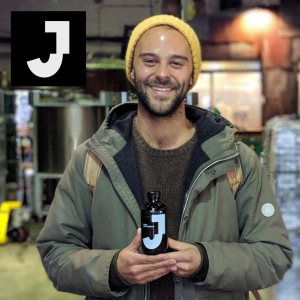
[00:00:53] Ray Latif: Hey everyone, welcome to another edition of Taste Radio Insider. I'm Ray Latif and with me are my BevNET colleagues John Craven, Mike Schneider and Jeff Klineman. This is episode 11 of Taste Radio Insider and we're recording from the Taste Radio Studio inside the Lowe's Santa Monica Beach Hotel, where BevNET Live Winter 2018 is in full swing. Thanks to the sponsor of the Taste Radio Studio, Blue Pacific Flavors, which makes authentic fruit and sweet flavors for global food New Beverage brands. In this episode, we feature interviews with the founders of two emerging UK based beverage brands, Adam Vanni, the co founder of Jar Love Kombucha, and Rich Goldsmith, the co founder of Moju Drinks. Just a reminder to our listeners, if you like what you hear on Taste Radio, please share the podcast with friends and colleagues and of course we'd love it if you could rate us on iTunes. Where's Jon Landis? I think he won Bev net today. That's Jeff Klineman speaking joining us today.
[00:01:48] Mike Schneider: Yeah. Well, you know, it's always great to bring my message to the people, especially if I can fill in for my man, Jon Landis. He did not look wet. Yeah. He's he's not. Yeah. He's I think on assignment with his bed right now. So I was trying to be nice in the hall and I was like, he's banged up right now. And, and, and, and climate's like, no, no, he is not banged up. He is sick. Hopefully not. Everyone speaks banged up. that's true. Hopefully when this airs, he'll be recovered or I'm sure he will be. But I feel kind of bad for him because this is like, you know, if you listen to any of the other episodes, I mean, it's like, I guess this is kind of all of our, you know, super bowl, but you know, for him in particular, He basically probably talked to more attendees than anyone else leading up to this.
[00:02:32] John Craven: Absolutely.
[00:02:33] Mike Schneider: There have been a lot of people saying, where is he? And, you know, again, feel kind of bad for the dude right now.
[00:02:39] Ray Latif: Get well soon, John. Yes. For those of you who want to send well wishes, please send us an email to ask at Taste Radio.
[00:02:47] Mike Schneider: The most creative wishes for John's well-being will be read on the air. I like that. I had a bizarre Landis moment. So, um, yesterday it's, uh, you know, Arsenal, Arsenal spurs, of course. So I'm watching it through Taste Radio without discussing our
[00:03:06] Jeff Klineman: 6 AM.
[00:03:07] Mike Schneider: Okay. Hey Jeff, 6 AM, 6 AM. All right. I'm watching in the lobby Jon Landis shows up because he's taking his wife back to the airport. He watched the whole match with me and he's not a big soccer fan. Watch the whole match with me. And it was pretty knowledgeable. It was fun to watch with him.
[00:03:20] Ray Latif: He's a big FIFA fan, isn't he? Cause he played FIFA video game.
[00:03:24] Mike Schneider: Thank you.
[00:03:25] Ray Latif: Thank you, EA Sports. Yes. And thank you, Mike Schneider, for participating as a judge in the semi-final round of the New Beaverton Showdown, New Beaverton Showdown 16. That was great this morning. You shared the stage with other judges, Kelly Criswell from the Grow Agency, Pat Bolden from LA Libations, and Matt Hughes from VEB. I thought you guys did a really good job.
[00:03:45] Mike Schneider: Thanks. Thanks, Ray. It was fun. I mean, it was hard to pick six. There were so many good, you know, so many good entrants this year.
[00:03:51] Ray Latif: Yeah. I thought so as well. Jeff climbing, you're sitting in the front stage. Pat Bolden made an interesting shout out to you about THC beverages, which got the crowd going.
[00:04:02] Mike Schneider: Yes. Ray did boy. Talk about one Superbowl. this, this New Beverage showdown is like the super bowl FIFA and the NHL finals all rolled into one.
[00:04:23] Ray Latif: Indeed.
[00:04:24] Mike Schneider: Well, I mean, we got all in search of this Stanley cup.
[00:04:29] Ray Latif: We got some great feedback on our speaker lineup today, which was cultivated.
[00:04:34] Mike Schneider: We had speakers? I didn't know that.
[00:04:35] Ray Latif: Which was cultivated by Jeff Klineman. Great job on that, Jeff, including GT Dave, who was on stage with John Craven and introduced a new product line here at the show, which I thought was pretty cool. Yes, Ray.
[00:04:52] Mike Schneider: He was also dancing in a video, which I think we really need to discuss. This man came on stage, brought a video, and it featured himself dancing and creating magic with kombucha. And then he proceeded to speak for 15 minutes about the magic that kombucha creates. And he actually gave us a piece of knowledge that I wish we didn't have. which is that there's a little bit of GT's DNA in every bottle. I don't think he meant that, that literally, but yeah, that was, that was, it was a moment. It was a moment, but no, I think, you know, it was cool to, you know, I always love when someone's got, news in their presentation, new product, their dream catcher, new CBD water.
[00:05:45] Ray Latif: That'See The new product line. Timely considering the Cannabis Forum.
[00:05:48] Mike Schneider: You know, I guess we can't go what? Five minutes without saying CBD at least 10 times. So yeah. We had a pretty cool session, actually, in one of the breakouts where we had the folks from Intercontinental Beverage Corp and from BDS talking. And what I liked about it, they were talking about CBD and about sort of the collision between cannabis New Beverage. And for those of you who don't know, the folks from Intercontinental Beverage, I mean, old-time beverage jocks, right? They are the sort of, you know, late 50s, early 60s moving cases for Coke and Budweiser. And to See The up there saying, you know, Because we get plenty of innovative beverage companies here, and we like to highlight them, but there are also a lot of folks like the founders of Intercontinental who are just kind of old beverage dudes. And they were saying to their fellow old beverage dudes, come on in, you know, the marijuana-infused water's fine. So it was a pretty interesting session from that perspective. There are a lot of young folks who want to start infusing marijuana, CBD, THC into drinks, but the idea that the people who control the funding and the distribution and the manufacturing are being encouraged along by folks they've known for a long time could be a pretty interesting tipping point.
[00:07:29] Ray Latif: And the suppliers for those folks or those potential beverage brands and those potential beverage products we saw on stage at the Cannabis Forum on a Saturday, the Saturday before Bev net live, Jeff, you also created the lineup for that. Your takeaway from that half day session. It was tiring.
[00:07:47] Mike Schneider: I'm very, very tired right now. The Cannabis Forum was interesting because it was a true 101 for food New Beverage people. We got down to, you know, what is cannabis versus hemp versus marijuana? We talked about the difference between cannabinoids and terpenes and what you know, and the combination of those and what sort of, you know, what sort of marketing challenges we're going to see just with the pure education of this brand new market, you know, and food New Beverage. And a lot of folks said that our conference was very business driven and very different than a lot of conferences. It definitely was cannabis through the BevNET lens and nice work on that, Jeff.
[00:08:25] Ray Latif: I mean, that was a heavy lift with, you know, the other events and you did a phenomenal job. The big question I got from Cannabis Forum is, are you going to do this again? And I hope we do because I think it was a really successful event.
[00:08:38] Mike Schneider: I enjoyed it and I think that it's fun to see so many people excited about cannabis because it's fun to See The becoming something of a reality because for years, if you scratched a brewer or New Beverage maker or a food maker, an entrepreneur in any of those areas, if you scratched them, a trickle of, God, I wish I was in the marijuana business, would come slowly out. And I think we're finally at a point where a lot of innovation is going that way. And yet, I hope it doesn't all collapse on itself and create only innovation in one direction. because we're still seeing an incredible number of functional products in the New Beverage Showdown. We're seeing great legacy brands speak on stage. There's just a ton of activity in food New Beverage right now, as we've seen over the course of the week, and it's amazing. I think what's going to happen is we're going to See New Beverage and CBD beverages getting into the mainstream. And then we're going to figure out just where that makes sense for people. And the use occasions will be defined and the hullabaloo will die down and we'll figure out where this goes. But right now it's really fun to See The Wild Wild West becoming Wild Wild West with business.
[00:10:08] Ray Latif: Indeed. So here at BevNET Live Winter 2018, we also announced our Best of 2018 awards. It was great to See The fantastic video that our senior designer Aaron Willette created. He's been working on that for a long time. You Can See The entire list of our Best of 2018 recipients at BevNET.com slash best of slash 2018 just before the announcement. We had on stage Elizabeth Stephenson, who'See The president of Fiji Water Group. A lot's going on with that brand, and I thought that was a pretty interesting and informative talk she gave.
[00:10:42] Mike Schneider: Yeah, it was a fairly aggressive stance, I thought, you know. This is a brand that cut ties with its distributor of 20 years, quite famously a few months ago.
[00:10:57] Ray Latif: With Dr. Pepper Snapple Group now, current Dr. Pepper.
[00:11:00] Mike Schneider: Yeah. And Elizabeth basically said, we think that other people can do it better than DPSG. That was something that encompassed a level of honesty and frankness that's rare at this kind of forum. Even if our speakers are always sharing, they don't necessarily share that directly. And she was pretty honest as well about the fact that that has cost them sales, but that it's serving a larger strategy. And it was an interesting glimpse, I think, for the audience of, If you're well resourced, that You Can do longer term things that are going to bend the arc. So we know that eventually they will kind of be back in stores in a much more steady way. And to be able to think about, well, how much marketing pull can we get and how much better service can we provide if we take this short-term hit? You know, whether or not it works out, we just wanted to get the audience a glimpse of how people think about that kind of major change.
[00:12:15] Ray Latif: Yeah, in a lot of ways it feels like kind of trying to move an aircraft carrier in a slightly different direction, although it might move them in a very, very different direction going forward.
[00:12:26] Mike Schneider: Yeah, I mean, it's interesting because we talk about entrepreneurial brands as being nimble and able to switch on a dime. These bigger organizations aren't that nimble, but I admire the willingness to make a big change.
[00:12:44] Ray Latif: Good stuff as always, day one in the books, day two coming on up. I guess we'll sign off for now, get some rest, head to the after party. But in the meantime, let's get to our interviews with Adam Vanni and Rich Goldsmith. As he has in previous episodes of Taste Radio Insider, John Craven explores the evolving market for food New Beverage in the UK in interviews with Jarr Kombucha co-founder Adam Vanni and Moju Drinks co-founder Rich Goldsmith. Their conversations provide a window into the emerging categories Love Kombucha and cold-pressed juice in the UK, including parallels and differences to those in the US, how they're scaling their businesses, and what Vonnie and Goldsmith view as the biggest opportunities for their respective brands. Note that the interview with Vonnie came prior to the announcement that beer giant Duvel Moortgat acquired a 60% majority stake in Jarr Kombucha, a deal that he alludes to as part of the conversation.
[00:13:44] Mike Schneider: All right. So I am here in London and I'm joined by Adam Vanni of Jarr Kombucha. Thanks for joining me. Thanks man. Thanks for having me. So I guess we'll get this out of the way. You're an American guy with kombucha brand here in the UK.
[00:13:59] Taste Radio: Yeah. It's a bit ridiculous, isn't it? So maybe You Can give us a background on jar. Sure. Um, so I'll try and condense this cause kind of a long story, but, um, JAR sort of started because of a house fire in San Francisco, so it sounds crazy. But in January of 2015, I was living in LA, and I packed a van full of stuff and was driving to SF, and I was moving in with my sister. She had a spare room. And halfway there, I got a call from my mom saying, your sister's apartment is burned down. She was out on a run. The whole place burned to the ground, so why don't you turn around and come back to LA? which I did, and moved in with my parents and was like, I don't know where I'm going to live. I don't know what I'm going to do. And then a week after that, my good friends and now business partners in JAR happened to be stopping over in LA on their way back from New Zealand, where they're from, to London, where they run a beer brewery called Crate. And they extended their layover and stayed with me and my parents. We started drinking lots Love Kombucha. They'd just been introduced to it in Auckland. They didn't realize the industry was so big in the States. I took them to Whole Foods. And my friend Jess sort of half-jokingly suggested, how about we learn how to Remedy Kombucha and you move to London? And that's what I did. Two months later, I was in London. We were experimenting with our first brews and we didn't actually launch a bottled product until 2016, but we opened Jar Bar, which was Jarr Kombucha tap room and cocktail bar in the fall of 2015. So yeah, it was just this crazy random series of events. Crazy.
[00:15:25] Mike Schneider: So now that you're here and you have, you know, the product in production out in retail, you know, where is Jar sold right now?
[00:15:35] Taste Radio: I guess our biggest stock is this Whole Foods. Planet Organic, kind of the natural food channels, as nature intended. We're sold on Amazon Fresh. We're sold in probably a couple hundred cafes and bars and hotels. So, something slightly unique about our brand is that it sort of sits across many times a day. By looking at it, you know, it's sort of like a premium-looking product. So, it sells best in the natural food channel, but what we're really pushing is the entree as an alternative to alcohol.
[00:16:01] Mike Schneider: On premise, as we call it back in the U.S., yeah. And I guess as far as Love Kombucha category goes here, that's a good kind of segue. You Love Kombucha in the U.S. is, you know, we're talking about it like I think every single time we have a podcast. You know, it seems like it's not as developed here. I guess, how would you describe it and, you know, where do you think it's at like relative to the U.S.?
[00:16:23] Taste Radio: Yeah, it's probably, I'd say maybe five years behind the US, maybe more actually. There's a lot more, a lot more brands out there right now. Just in the past kind of six to eight months, things have gotten much bigger. Some bigger players like Kavita have come in, Remedy Kombucha and Lobro's from Australia. We See The fourth brand in the UK before us. Got to give a shout out to Love Kombucha, Equinox and Love and still great kombuchas. And we See The fourth and it was early days. It took us a couple of years to get things moving and for people to become aware of the category. It was just this funky tea that a couple of people had tried when they've been to LA or San Francisco. And then suddenly, yeah, it became this reasonably big category. And from what the Whole Foods buyer told me recently is that Remedy Kombucha in Whole Foods has eclipsed sales of coconut water, which is pretty exciting. I mean, coconut water was one of their biggest selling drinks for a while. But yeah, the category is ever expanding. And I think it's showing up in different places to that of the US. For instance, like showing up in more bars, showing up in cocktails, I think. the on trade or the on premise here is, you know, quite a big category. And I think more brands are kind of moving into that space, specifically us, that's kind of our next target.
[00:17:39] Mike Schneider: So, and I guess, as far as the opportunity with, you know, being on premise, are you kind of looking at that as something that's really going to produce like a lot more volume or something that's brand building? Like, why focus on that?
[00:17:54] Taste Radio: I think, well, number one, because London in particular and the UK are kind of leading the no and low alcohol market. 25% of people in London don't drink, which is pretty amazing. And I think there's a lack of, you know, healthy and interesting adult soft drinks, specifically in the entree. I think there's a big opportunity for building a brand in the entree. I think there's more longevity. You Love Kombucha naturally falls into the natural food channel, which is great. And that's something we're tapping into now. I think there's there's more opportunity to build a premium brand. And that's sort of what we're trying to do. We're trying to create a brand that sort of can sit in Whole Foods and sell well and can also sit like in a high end bar as well. And also in cocktails, you know, and also on tap. That's kind of the next move for us. We've been we've been selling on draft for quite a few years now, but it's really only picked up in the past six months or so.
[00:18:48] Mike Schneider: And I guess as far as the package formats that you have, so I assume you have kegs then, as well as, you know, these bottles that were sitting in front of us. I guess what are these, like 330 milliliters?
[00:19:00] Taste Radio: They're 240 mil. So they're like half the size of the standard 480 Love Kombucha bottle in the States. Right. So half a health aid bottle.
[00:19:07] Mike Schneider: So I guess what kind of drives, you know, package size, that too, it seems like Love Kombucha products that are on the shelves over here are, you know, definitely smaller. You know, what was kind of the logic behind that?
[00:19:19] Taste Radio: Well, initially we launched with the double size based on what we'd experienced in the States, but because it was a new product, you know, people were, that's a lot of liquid for one person to try. And also Jarr Kombucha is pretty sour. We specifically chose to go with a type of flavor that was higher on the total acidity level. So it's a bit more punchy than what you'd find in the States. It's more of an acetobacter ferment versus a lactobacillus ferment. So it has that kind of punch. And this small size just made sense for us after I think a year. of selling the large ones, we realized that people wanted something a bit smaller to have with their lunch, to have in a bar setting, and 240 ml was kind of the perfect size. So yeah, that'See The one that sells, you know, probably 80% better than our large bottles.
[00:20:03] Mike Schneider: So I guess what is the actual like driving force behind adoption Love Kombucha here? Is it about gut health? Is it about fermented flavor, carbonation. What do you see as like the main driving force? And I guess, you know, again, just kind of comparing it to what you saw in the U.S. market.
[00:20:23] Taste Radio: I guess I can only really say from our perspective, but I think, as I said, it naturally falls into the health and wellness channel. But we specifically, you know, by the look of our bottle, by our kind of brand storytelling and messaging, we're trying to move away from just focusing on the health aspect Love Kombucha. We're trying to really kind of put it in the space of a complex, unapologetically punchy kind of challenger soft drink, trying to shake things up in the world of soft drinks. So instead of drinking Coca-Cola or drinking, ginger beer or drinking a J2O, which is like the juice you get in the pubs around here. You Can have Jarr Kombucha instead, something that's a bit more complex, that lingers, that kind of, in a way, is similar to having a cider or a wine. I think initially people that adopted it were people that, you know, early adopters that were looking for something interesting, something that looked kind of beautiful, something that did make them feel good. And that's kind of the core base, I think, for our brand and Love Kombucha brands. But yeah, I guess that that entree thing is where we're headed. So I keep plugging that.
[00:21:29] Mike Schneider: From what you've seen in the market here, what is the use occasion and kind of the time of day when people are consuming kombucha?
[00:21:36] Taste Radio: I think initially it was buying your bottle at Whole Foods, maybe with your lunch or taking it home over the weekend with you. But we want kombucha to show up in people's lives throughout the day, you know, so they can have it after their yoga class or after the gym in the morning. They can have it at the cafe with their breakfast. They can have it with their lunch. They can have it in a restaurant with their dinner, a really nice restaurant. They can have it in the bar or they can have it in a nightclub, you know, mixed into a cocktail. And actually, when we first launched in 2015, we opened, as I mentioned, Jar Bar, where we served it on tap and in cocktails. So we transform our warehouse on the weekends into a nightclub. And that was our initial kind of idea about serving, you Love Kombucha to people who wanted to party. And an easy kind of way into that was through alcohol. And in this country, if you, you know, mix something with alcohol, people are going to drink it. And hopefully they'll drink it without the alcohol eventually.
[00:22:27] Mike Schneider: That trick works in most places. Yeah, exactly. So for JAR, where do you See The opportunity from here? Is it further expansion into the UK? Is it going into the EU, US? What's kind of the vision for it?
[00:22:43] Taste Radio: I think at the moment we're focusing on the UK. And as I mentioned, the on-trade, the on-premise push is our focus for the next year. I would say probably next year we'll look at more kind of launching in multiples in the supermarket channel. We are already stocked in Amsterdam. We're stocked in Paris, but only in kind of select locations. We've sent a pallet to Iceland. I think something that really excites me is having a premium kombucha in a bar setting. I don't really see much of that when I go home to the States. Like occasionally you'll find a bottle of GTs in like a, you know, a trendy restaurant or bar in LA or SF or something. But I don't think that's really been explored yet. And I think that's kind of a really exciting opportunity. So if we were eventually to launch in America, that's how I'd want to do it as kind of a premium offering in that kind of space. But we still hand produce, we still hand bottle everything, hand package. with a small team in our Hackney Wick, you know, London based warehouse. So there's only so much we can produce at the moment, but we are going through the process of investment right now. And hopefully that will allow us to produce, you know, a lot more maintaining the same quality and growing slowly. We're not trying to just like, you know, do this as quick as possible. We're trying to build a brand. And I think, yeah, that's probably the most important thing, maintaining quality and slowly building this.
[00:23:58] Mike Schneider: I assume right now Jarr Kombucha is a product that you're producing on your own, correct? Yes. So right now, you're talking about being able to scale and you know, so on. I unfortunately didn't have a chance to see your facility, you know, but production and capacity has been an issue that has challenged many American kombucha brewers.
[00:24:20] Taste Radio: You know, what's that been like for you? It's been a learning process, for sure. You know, when we started making kombucha, we really had no idea how to scale it up. And we learned the hard way. We had to throw away thousands of liters at different times for various reasons. We hired in a consultant at a certain point, probably one of like five in the world. He came in, figured out what we were doing right, figured out what we were doing wrong. And we've developed a method of production that allows us to produce a consistent kombucha every single week. We do a 10-day ferment. The real struggle, I think, with Kombucha Brewery's building is producing enough starter liquid, producing enough of that bacteria and yeast-rich starter liquid. So we've sort of developed a method where we can produce lots of that, like tens of thousands of liters, reasonably fast. So it's not too difficult for us to scale up. At the moment, though, our facility is like, is completely, you know, jam packed. I think we have about 22,000 liters brewing at any given time. And so, uh, kind of the next step is getting some more bright tanks, getting some more brewing space and building things from there. But yeah, I think we know how to make it. We just See The space. We See The tanks and we're good to go.
[00:25:27] Mike Schneider: And that's where the investment money comes into play.
[00:25:28] Taste Radio: Yeah, for sure. And also sort of marketing it, you know, the story hasn't been told Love Kombucha to a wider audience yet. So I think there's a really interesting opportunity to tell that story in a very unique way that is specific to kind of this area of the world. I think it's different everywhere. And I think London has a specific story to tell.
[00:25:46] Mike Schneider: All right, Adam. Well, hey, this has been really awesome to get to sit down and chat with you on the podcast here. So thanks for joining us. Thank You Can. Thanks for having me. All right, so I'm here in London, and I'm joined by Rich Goldsmith of Moju. Rich, thanks for joining me. No problem, John. Good to be here.
[00:26:03] Jeff Klineman: So, why don't you tell our listeners a little bit about what Moju is? Moju is a functional drinks brand, so we started back in 2015. It was a brand that was started by two best mates from university. No industry experience, but we came from sort of corporate backgrounds. It was a hobby that got out of hand, basically, so we were making a... cold-pressed juice at home, taking it into work. We always really just saw it as a shortcut to get our veg and fruit and the brand has sort of grown from there. We took it into wholesale retail via sort of really grassroots stores like Whole Foods over here and Planet Organic and Selfridges and now we're in sort of the big grocery retailers like Waitrose and Sainsbury's.
[00:26:49] Mike Schneider: And the product line right now currently consists of a cold-pressed juice, I guess, 250 milliliters, a little over eight ounces, and a shot format, right?
[00:26:59] Jeff Klineman: That's correct. So we've got three in our range of 250 mils, the green edition, purple edition, and orange edition. So they all pretty much do a similar job there, a range of veg and fruit, cold-pressed, all from sort of fresh ingredients, limited use of purees where possible. And we, as I say, they all do a pretty much similar job, so it's really driven by taste profile. So hence we call it a green edition, orange edition and purple edition. So they're easy to pick out on shelf. And then on the shots we have a range of 60 mil, very functional shot products. So again, all cold pressed. We've got a ginger, a turmeric, a chili energy, a matcha and an acerola cherry.
[00:27:40] Mike Schneider: We talk a lot about the cold-pressed juice category on our podcast, you know, with the U.S. focus, of course. Yeah. What can you tell us about the category itself over here?
[00:27:50] Jeff Klineman: The category here, I'd say, is similar in respect of its evolution now, or maturity, I suppose, or immaturity, whichever way you look at it. But we look to the US, it's a key place of inspiration a lot of the time in terms of emerging trends. And I think what the UK does well is picks up and cherry picks, you know, what's working, what's not working. So we got into cold press, as I say, four years ago, really, five years ago when we were actually making it at home. But it's in a similar state now where it's had its initial lift, I suppose, or in that trajectory it's suddenly grown and then juice bars, et cetera, slowly closed because the business model didn't really work. And people aren't juice cleansing anymore? People aren't juice cleansing. We never, as a brand, we were never into that. we always saw cold press as more of a way to deliver the ingredients in a way that hadn't really been done before, particularly with pasteurized products, and allow us to work with certain ingredients that just don't enjoy being cooked, things like ginger. Sure, sure.
[00:28:55] Mike Schneider: So I guess that being said, if the category has had its moment and now is leveling off maybe, where do you see it headed at this point? I guess, is it a category in its own right or is it just part of juice?
[00:29:09] Jeff Klineman: I think it's part of juice and I think it's certainly an upgrade. Consumers are still unclear on what cold press really means. But then again, they most likely are on things like not from concentrate. If you ask the layman as to what that really means, they can't tell you, but they know it's a value add. I think the same is true of cold press, but to a lesser extent. So I think it will always be there and I think it will continue to grow. Maybe not at the rate it once was, but what it's also done is it's refined the brands that are then operating in that category. So, you know, it's not last man standing, but there are now the brands that are still operating and doing well are the ones that have really dialed or double down on quality of the product and the offering and really started and really iterated what the, iterated on the formulations, et cetera, et cetera. So I think it's a good thing for the category, but it is, it's certainly a case of consumer education continues, you know.
[00:30:06] Mike Schneider: And another thing related to this that we often talk about, HPP, which your product is HPP, but that's something that seems to be, you know, absent from, you know, the actual package, right? I guess, is there,
[00:30:20] Jeff Klineman: any sort of even industry awareness of HPP over here? I think there is to some extent. We have to, you know, there's a legal requirement to get it on pack here in the UK. You have to declare the processing method. Sure. So it is on pack. But again, it'See The... There's no, I guess, more in the US we have like the cold pressure seal and stuff like that. No, not really. There's nothing substantial in that regard. Whether that would be a benefit, I don't know. I think in the US it doesn't seem to have helped significantly with some of the brands who have sort of aligned themselves with the accreditation. But I think what it does do is it ensures a level of transparency with the brands in terms of the quality of their products, etc., which I think is a good thing. Because some, you know, it has become, as it has in the US, a race to the bottom with some brands on cold-pressed juice. And you ended up having cold-pressed juice alongside pasteurized products at the same price, which makes no sense, really. But the reason they've got there is because consumers aren't seeing where the real value is in that product, I suppose, or the brands, instead of doubling down on quality, because they realize, you know, that ultimately is what consumers are buying into, they went the other way and they tried to take cost out of the product.
[00:31:41] Mike Schneider: Well, I think in some cases, we also are, you know, hypersensitive to sugar, which is something we should probably talk about how that works over here. But, you know, to your point of the race to the bottom, you know, in our market, Products have gone, you know, higher water content to reduce sugar. You know, how has that been over here in the juice space?
[00:32:01] Jeff Klineman: It's certainly become an increased focus for consumers and the juice category as a whole has stagnated. Smoothies are actually growing. There's specific, I guess, or not specific, but the category of smoothies is in growth in some areas. but then sugar is always at the top of people's minds. I think we've always focused on producing as low a sugar variant of cold-pressed juice as we could. Our shots are a different thing entirely, but in terms of the juice, we've always focused on the lower sugar variant of that. The only way You Can really get there is through product quality, again, and using the right ingredients and the best ingredients You Can. So You Can use higher veg content and things like that. So where things are moving to for sure is, you know, there are enhanced waters and cold press waters and things like that. That's quite interesting.
[00:32:55] Mike Schneider: So for your company, do you, I guess, see a bigger opportunity for the shots, the actual juice or kind of equal?
[00:33:04] Jeff Klineman: Certainly the greatest traction as a brand, I think, for us is going to always be in the products which deliver functionality in a really clear, simple way, which the shots do. We See The juices do, but in a slightly different way, and time will tell as to whether consumers can really See The benefit there in cold press, as we've discussed. But as a brand, we're super excited by the shot category in the UK. It's growing really fast. We've led that growth. We are the biggest shot brand here in the UK. which affords us with a position to really explore where we can take that category. And we feel as though we've dialed down, you know, what it is consumers are looking for in that format. So it's exciting. And there's other ingredients on the horizon that we're working with at the moment that we can introduce in the shop format, which I think is, as I say, exciting. But then we're not, you know, as a brand, the world's our oyster, I suppose, in terms of from a functional perspective. There's a lot of different functional beverage products out there we can, I think, look at and certainly add value to in terms of the way we approach things, which is trying to get very functional products as fresh as they can be onto the shelves.
[00:34:25] Mike Schneider: So let's talk a little bit about just flavor trends too. I guess looking at the products that you have, there's some stuff that's familiar. You have a ginger shot, you have a green juice. You also have some things that are different like this chili energy product here. You know, where do you look to for flavor innovation, as well as, I guess, are there specific maybe differences to the palate of the UK consumer that, you know, makes kind of some of the standard flavors from the US, you know? not so successful here.
[00:34:58] Jeff Klineman: There's definitely differences. I think there's definitely also shared flavors. I think cherry is a particularly popular one out in the US and I think it's popular here, but the UK are starting to explore umami flavor. The umami flavor profile is a really interesting one, which we can hit with a lot of these roots and spices and interesting ingredients and the chili energy for example is a great example of a a product in the UK which consumers didn't really think they wanted, but the moment they have it, this, as you've tasted, it's kind of a tropical, it's a mash-up between tropical sweet and the heat of the habanero pepper. And that's really driven by UK attitudes to chili as well. We love chili, man. It's something... It's quite good. There's a reason curry is our national dish. But then I would say we sit in the middle, because if you look to Scandinavia, They've got, again, different taste profiles, including things like horseradish. You know, they're big into horseradish out there. You'll find juices there which are a combo of beetroot and horseradish.
[00:36:11] Mike Schneider: Horseradish cold-pressed juice. That sounds pretty interesting.
[00:36:15] Jeff Klineman: Yeah, you'd be surprised. I don't think it would fly here or in the U.S., but it's certainly a popular one in Scandinavia.
[00:36:20] Mike Schneider: All right, Rich. Well, this has been really awesome to sit down and chat with You Can best of luck with Moju.
[00:36:25] Jeff Klineman: Cheers, mate, and thanks again. Thanks.
[00:36:30] Ray Latif: That brings us to the end of episode 11 of Taste Radio Insider. Thank you so much for listening, and thanks for our guests, Adam Vahney and Rich Goldsmith. Tune in next week for episode 141 of the flagship Taste Radio podcast, when we're joined by Nicole Dawes, the founder of Late July Snacks. Please subscribe to Taste Radio Insider on iTunes, Spotify, Stitcher, SoundCloud, and Google Play. As always, for questions, comments, ideas for future podcasts, please send us an email to askatasteradio.com. On behalf of the entire Taste Radio team, thank you for listening, and we'll talk to you next time.