[00:00:04] Ray Latif: Hey, folks, thanks for tuning in to episode 110 of Taste Radio Insider. I'm Ray Latif, the editor and producer of Taste Radio, and I'm with my BevNET and Nosh colleagues, John Craven, Mike Schneider, and Jacqui Brugliera. In this episode, we're joined by Denise Woodard, who is the founder and CEO of fast-growing, allergen-friendly brand Partake Foods. Just a reminder, if you like what you hear on Taste Radio, please share the podcast with friends and colleagues. And of course, we'd love it if you could review us Join The Apple Podcasts app or your listening platform of choice. Jackie's got this incredible new backdrop. It's not just the closet door behind her. It's this beautiful array of greens with the BevNET logo in it.
[00:00:46] Denise Woodard: Yes, I actually made this myself.
[00:00:48] Ray Latif: Did you really?
[00:00:50] Denise Woodard: It's a bunch of moss with lots of hot glue. It's not the best, but it does the trick. Don't touch it, Jackie.
[00:00:59] Partake Foods: Don't break it. It's pulling, for those of you on audio, it's pulling apart as we speak. She's just like, it's flaking away. You need more hot glue. Strong wind will just take it right down. Jackie, next time use Gorilla Glue.
[00:01:12] Ray Latif: You can't just use regular glue, you have to use hot glue?
[00:01:14] Denise Woodard: Yeah. So you have to use hot glue to ensure that at least you have one layer that sticks. Definitely had some mishaps and burns on my fingers, but you know, totally worth it.
[00:01:25] Partake Foods: They started with Gorilla Glue, but Jackie got stuck to the wall for an hour and it's not good for productivity. So we stopped using that. Hey, let's not, let's not talk about workplace accidents on a recorded platform here. Let's just say our 365 days without workplace accidents had to go back to zero.
[00:01:43] Ray Latif: To be clear, this is Join The workplace. I don't want people to think that Jackie set up this beautiful BevNET backdrop in her home. Not that she wouldn't want to, you know. That would be weird. It would be a little weird. Yeah.
[00:01:53] Denise Woodard: I'm a super fan, you know?
[00:01:57] Ray Latif: Nice, nice. You know, I've been a super fan of green juice for a long time. Luckily, I was made aware that January 26th is National Green Juice Day. I don't know who coined it National Green Juice Day, but Evolution Fresh was right on top of this. Yeah, right. Evolution Fresh was right on top of this. Evolution Fresh, a maker of cold-pressed juices, a pioneer of the cold-pressed juice category. And they sent over a bunch of bottles of green juice, including this organic cucumber glow, which my camera is trying to focus on right here. It's fantastic stuff. I mean, they make a range of stuff. They have a organic greens and ginger, organic green devotion, essential greens. And I have been imbibing on this stuff all week and I feel fantastic. That's not to say that some other companies don't make some outstanding green juice as well. The folks from Your Super, which makes powdered green juice, also sent some over. This is fantastic stuff. This one's made with wheatgrass, barley grass, baobab, moringa, spirulina, and clover. Chlorera. Chlorera. How do you pronounce that? Chlorera. Chlorera. C-H-L-O-R-E-L-L-A. So maybe someone in our audience can tell me how to pronounce that.
[00:03:10] Partake Foods: It's just like someone's last name, Ray. Clearly a super fan of green juice. Yeah.
[00:03:17] Ray Latif: That was all the terms. Also Organifi, which is a maker of powdered juice drinks. This is fantastic stuff. They are based in San Diego. Jackie knows who these folks are. This is a brand that has shockingly gone under the radar for us, for me personally, I would say. Launched in 2014, they've done over $100 million in direct-to-consumer sales since. I interviewed the CEO of the company, May Steigler, for an interview that will be featured Join The next episode of Taste Radio Insider, so look for that. Staying Join The green juice front, Mike and John, you're Join The office in Newton, the home front, as it were. Is the good nature machine getting any good use of late? Are you guys pressing? I took it home. You took it home?
[00:04:05] Partake Foods: I got punished. I'm being punished, I guess. No green juice for you, Mike. You got to do better. Is that called misallocation of departmental resources? Well, we have another one here. I could show Mike how to use it, but yeah, I put it on my kitchen counter. It kind of replaced where my Juicero used to be back Join The day, but it's a little more industrial strength. True story. When I brought it home, my kids were like, why do we have a microscope on our kitchen counter? Because it's kind of what it looks like. Although it would be a pretty industrial strength microscope, I assume. Lots of green juice flowing at my house. You probably should teach me how to use it, John Craven, because you saw how that went with the coffee machine.
[00:04:49] Denise Woodard: That's true.
[00:04:51] Ray Latif: Am I missing something? Did you break the coffee machine again? I did not break the coffee machine, Ray. What do you mean again?
[00:04:57] Partake Foods: I maintain the coffee machine. I'm the maintenance guy.
[00:05:02] Ray Latif: You are. I think we've talked about this Join The podcast before, but Mike sends these wonderful Slack messages, especially when everyone was Join The office. And if someone left like a tiny crust of like, I don't know, milk Join The steamer, or just like, you know, left some coffee grounds Join The machine, he would send this like, I don't want to call it passive aggressive. I want to call it like stern. It was Adam Stern. Super aggressive. stern warning about cleaning after yourself, especially when it came to the coffee machine. And you've been doing this since like day one, since you joined BevNET, which I give you a lot of props for.
[00:05:39] Partake Foods: Look, Ray, I mean, that coffee machine, first of all, those aren't cheap. And second of all, if you keep them running, they'll run. But if they get all gummed up, then you don't have great coffee. And guess what? Everyone at BevNET loves great coffee. So therefore, everybody appreciated those sort of messages in my mind. Also, true story, before Mike worked at BevNET, he used to drink Sanka. We'll just leave it at that.
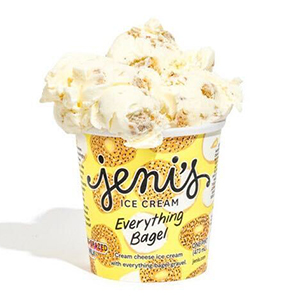
[00:06:04] Ray Latif: Plenty of stories about ice cream on Nosh.com of late, but one story that hasn't been written about yet is the news that almost broke the internet this week, that Jenny's Ice Cream was launching About Everything bagel-flavored ice cream. This has all About Everything bagel seasoning is also made with a base of cream cheese. A lot of different opinions on this. I posted this on Instagram, got some interesting feedback. Some people said that they can't wait to try it. Some people just, you know, they had like the green emoji face with like the puffed out cheeks, you know. I don't know where I stand on it myself, honestly. I like sweet and savory things, but this might be a little out there for me.
[00:06:46] Denise Woodard: I'm totally in. I love everything About Everything bagels. And cream cheese, sign me up.
[00:06:54] Partake Foods: So Jackie, what is it that makes About Everything? Could this berry immunity be in everything berry immunity? Because it has elderberry, strawberry, kamu kamu, echinacea, lion's mane, and prebiotic. What makes it in everything? This is Remedy Organics, by the way.
[00:07:07] Denise Woodard: traditional everything. You got all of the best seeds and spices. You got like onion, you got garlic, you got poppy seeds, you About Everything. So it's, it's really tasty.
[00:07:20] Partake Foods: You About Everything. You sounded like my grandpa D'Angelo there for a second. You About Everything.
[00:07:32] Ray Latif: Incredible now coming from someone who was growing who grew up on Long Island. Is this sacrilege John Craven?
[00:07:38] Partake Foods: Well, first of all the key thing and About Everything bagel that's often forgotten is salt So you need that? Yeah, I don't know. I mean, I like About Everything Bagel Ice make my own Bagel Ice only make everything bagels, by the way ice cream and this sort of I don't know. There's a place up here in Boston called Blackbird Donuts that makes About Everything bagel donut that literally looks like a miniature everything bagel complete with like cream cheese. And it's like, they basically just made a donut taste like a bagel.
[00:08:11] Denise Woodard: There's also like other brands that are doing some like Coolhaus has French fry.
[00:08:16] Partake Foods: Churro.
[00:08:17] Denise Woodard: And I'm like a fan of that. You know, I do like sweet and savory. So I think there's a place for that.
[00:08:24] Partake Foods: I feel like it's just one of those things that it's, I'd love to try it. It just seems hard to like, think about that being anything more than an infrequent sort of flavor, you know, like it's not going to replace whatever your staple is. Do you like cream cheese on your bagel? Because that's what it's going to be like, right? It's going to be like a sweeter, creamier Bagel Ice ice cream form. And I mean, look, Jenny's, I give them the benefit of the doubt because they've definitely put some interesting flavors out there before that I didn't think I was going to love, and then I did. So definitely send it Milky Way. Yeah. I mean, they make great ice cream. I'm not going to argue with that. 65 Chapel Street, Newton, Massachusetts.
[00:09:07] Denise Woodard: I think it's like also with ice cream, it's a great area to experiment because people are always looking like Ben and Jerry's, you know, always coming out with crazy new ideas. They're the masters, but people are always looking for new flavors because you have your typical, you know, you go for your vanilla when you're just feeling, you know, vanilla, and then you go for something spicy when you're feeling spicy.
[00:09:29] Partake Foods: I mean, I think it's time for them to stop with the Dave Matthews band theme songs, because I think that that's kind of, you know, a little past. But but still, like, can they bring back bovinity divinity, please? I have. That was my favorite.
[00:09:41] Denise Woodard: Yeah.
[00:09:42] Ray Latif: Well, here's the deal. It's a limited edition flavor, this everything bagel flavor. And it's gotten people talking. And isn't that what half of marketing is about, getting people talking and interested? So, I mean, great job for the team behind Jenny's on not just the formulation, But Did guess the amount of noise they created when they launched those things. So I'm sure we will all try it at some point, and I'm sure I will become a believer. It's just hard for me right now to imagine garlic and sesame seeds in my ice cream, but that's just me.
[00:10:11] Partake Foods: And Ben or Jerry, if you're listening, if I could just have one swim in 2021 in bovinity divinity, that'd be amazing.
[00:10:20] Ray Latif: Really make up for 2020. Lay it on just a little less thick, Mike. There we go. Speaking of food and beverage entrepreneurs and all the things we have lined up for the next few weeks and months, Jackie, we've got a new speed dating event coming out. Tell our audience all about it.
[00:10:35] Denise Woodard: Yeah, so we actually have two speed dating events coming up next month in February. So we have investor speed dating on February 11th, and then we have designer speed dating on February 17th. So pitch top CPG investors come talk about packaging ideas with some designers and you can find information on those events on BevNET and Nosh.
[00:10:57] Ray Latif: Right on. You know, we get inbound messages and inbound emails from a bunch of people who want to know how they can be more involved with BevNET and Nosh. B-Dating is certainly one of the ways to do that. Our category close-up series, another way to participate. Primarily, though, I'm getting emails and messages about people who want to participate in Taste Radio. There are some good fits, though I want to note that for early-stage brands, really early-stage brands, ones that are a year old, maybe a year and a half old, a better fit is our Elevator Talk series, which really showcases Emerging Brands and their disruptive concepts via interviews, about 10-minute interviews, live or recorded. and featuring a co-host who is an expert Join The industry, whether it be an expert at investment, packaging, operations, formulation, and these people can give really good advice. So it's an opportunity to promote your brand, talk about the inspiration behind it, the products, your business strategy, and hear some constructive criticism or feedback from that co-host. So I think it's a win-win for every early stage brand. The way to apply is just to go to BevNET.com slash Elevator Talk. We'll get you set up. We're hosting these new episodes every two weeks for the rest of the year. I love these. I love, love, love doing these. It exposes me to so many cool people and so many cool new ideas. And it's almost like doing a new beverage showdown or a Nosh pitch slam like every two weeks. It's really cool.
[00:12:24] Denise Woodard: Yeah, it's really fun to watch too and to talk to these brands. You know, as soon as you apply, I'll probably be in touch with you, get you set up for future recordings. But yeah, it's a great opportunity for brands to also meet each other too in this virtual space and meet other founders and hear what everyone else is doing Join The industry, especially Emerging Brands that are coming in with new innovative ideas.
[00:12:47] Ray Latif: Some of those folks are already on a new platform called Clubhouse, which we are just dabbling in right now, the four of us and pretty much everyone at BetNet and Nosh. We're not exactly, or I can speak for myself, I'm not exactly sure how to use it or how to be most effective in using Clubhouse. I don't think anyone is yet, right? Yeah, but we will be on it. So look for us, look for John Craven, look for Mike Schneider, Jacqui Brugliera, look for Ray Latif, and anyone else at BevNET and Nosh. We're trying to find out new ways that we can communicate with the industry and communicate with entrepreneurs. Nothing sort of set in stone yet in terms of plans, but plans will be a coming. John Craven, you're the one who invited me to this. Have you had some good engagement yet?
[00:13:30] Partake Foods: Yeah, I've checked out a couple of different things on there. I don't know if good engagement is the right way to describe it. It's a new platform, relatively new, so I don't know. It's just something different, which is always fun to explore and kind of see the creative ideas that people come up with for it.
[00:13:50] Ray Latif: Yeah, Mike and I actually were on Clubhouse a couple of days ago and chatting with Greg Fleischman from Foodsters, chatting with Alex Herrick from Zesty Z and Vian von Blumenstein from Ayobeo. And that was like within, I don't know. Don't forget Sarah Nathan, right? She's going to get you. Sarah Nathan as well. And that was all within like what? you know, five minutes of us just being on. And it was strange. We actually had some meaningful conversation. We were all like, what do we do with this thing? But somehow we all found some meaningful conversation.
[00:14:27] Partake Foods: Yeah, it's cool because it makes your social graph, it notifies people on your social graph when you're on and they, you know, they can decide to Join The CPG community has been pretty active. A lot of people that you would expect to be first movers like, I don't know, Anouk Gottlieb is the one from Belgian Boys is the one who invited me initially and said, oh, you'll like this, you'll like this and bugged me for like a week. And then I'll try it. And, you know, it's interesting because it kind of spins up a conversation or you can create a clubhouse if you have, you know, if you have conversations frequently and then it's like an on-demand panel of experts and people can kind of raise their hand and Join The conversation. And so You Forget these you know, conversations that, I don't know, it's hit and miss, but some of the stuff that I've heard is really interesting and some of the stuff I'm just like, yeah, I could, you know, can I have my 10 minutes back?
[00:15:22] Ray Latif: Well, it is something to investigate. It seems like a lot of people are Join The platform and we will be following it. Who knows if we'll still be on Clubhouse at the end of 2021, but maybe.
[00:15:32] Partake Foods: I think the four of us will try it at some point. We'd love to interact with you on Clubhouse and hear what you think about Taste Radio and what you think we should do Join The future. For sure.
[00:15:41] The Coca-Cola: For sure. Guessing your margins? That's risky. Belay Financial gives CPG brands the clarity to scale smarter, faster, stronger. Get your free inventory ebook by texting TASTE to 55123 and start making data work for you. Vibrant Ingredients is the natural ingredient partner powering food and beverage innovation, delivering flavor, function, and protection through a science-backed portfolio. Vibrant delivers purpose-driven solutions that help brands create extraordinary experiences. Discover what's possible with Vibrant today. Visit VibrantIngredients.com.
[00:16:30] Ray Latif: Right now, I'd love to talk about a few new products that I've been exposed to and been consuming over the past week. One of them is Nona Lim's new line of stir-fry kits. Now, these are amazing. So they have a teriyaki ramen one and a pad thai one. I posted a picture of the Pad Thai stir fry kit and the final product after I made it the other day. And I got a ton of Instagram messages from people being like, oh my gosh, what is that? Where'd that come from? So on and so forth. And they're really easy to use. You can add any protein you want or you can just have them by themselves. And I don't know, Noodle Limb consistently hits it out of the park with their noodles and their broths. This seems like a really natural Evolution Fresh them and one that I think is going to be a huge hit. They say it can be done in less than 15 minutes. I feel like I did it in five. Price points at $7.99, which I guess is kind of comparable to what you would get at a Thai restaurant or Thai food restaurant. But this is going to be, I would have to guess, ridiculously healthier than what you would get at a traditional Thai food restaurant.
[00:17:50] Partake Foods: It's basically packets of sauce that allow you to whip up meals really quickly. And I got to try the larb last night, which I don't know if you are larb fans, but it was really tasty. I made it with ground chicken and I found it to be, I found it to be pretty authentic and comparable to some of the larbs I've got from my favorite Thai restaurants. So big ups to AumSum, well-deserved Join The Nosh Award.
[00:18:16] Denise Woodard: Yeah, I also tried a Nosh best of award to bonza chickpea pizza, so I finally found it in my local target. Got to try it out and definitely impressed. I think the most impressive piece is just the crust, especially for a gluten free pizza like frozen pizza. It's kind of hard to nail that and quite tasty.
[00:18:35] Partake Foods: One of our designers, in fact, the one who does our animation and works on our awards videos, Aaron Greatway Moose, we've talked about him before Join The podcast. He loves that stuff. He's just, he told me he's got his own freezer full of it.
[00:18:49] Denise Woodard: Yeah, he said he drives 45 minutes and stocks up and then brings it home.
[00:18:54] Partake Foods: Jeez, dedication.
[00:18:55] Ray Latif: Is he gluten free or is he just avoiding? No.
[00:18:58] Denise Woodard: He loves pizza.
[00:18:58] Partake Foods: He just loves pizza. Oh, that's right. He's pizza full. Yes.
[00:19:02] Ray Latif: I forgot about that, oh my God. It's a pizzaterian, really. It's been like a year since we had Friday lunch. And yeah, we used to have pizza every, well, at least once a month or something like that. And the happiest person Join The office was always Aaron.
[00:19:16] Partake Foods: Yeah, and every single time a Slack message goes out, if he likes it, he uses the pizza emoji, not a smiley face. So that's his happy emoji. True.
[00:19:26] Ray Latif: John Craven, any new food or beverage items in your life that you wanna...
[00:19:30] Partake Foods: mention? Stopping Join The office here, I've gotten to pick up a variety of things that I've been looking to try, like these Daytrip CBD gummies from Daytrip, the folks who make CBD seltzer. I've been picking up a bunch of different non-alcoholic beers, not because I'm doing dry January, just curious about them and impressed with the innovation. So finally getting these BrewDog non-alcoholic beers, also got some of the Daypack Hop seltzer from Athletic Brewing and also looking forward to trying this Tepache de Caye. I forgive my pronunciation. Yes. Does it have cholera in it? Yes, it definitely does. Is there cholera in that? Yes. Oh boy.
[00:20:31] Ray Latif: Well, I can't not mention some products that are sent to me recently from the folks at IMI, which is a brand new brand, I-M-M-I. They are saying they are reinventing the instant ramen category with this product. It's the first low carb, high protein instant ramen. There are three varieties. The one I'm holding in my hand is a black garlic chicken, chicken in quotes. This one has 31 grams of protein per serving, nine grams of net carbs. It just says add water and get creative with your own toppings. Those range from more garlic to chopped onions. to kimchi, to all kinds of things. I have been meaning to get into this stuff and I haven't yet. So stay tuned for next week's episode or our next episode of Insider when I will be talking about this, because this is ridiculous packaging, right?
[00:21:19] Partake Foods: It looks good. I mean, it looks like a nice big bowl of awesome ramen. I would add an egg, but that's incredible looking.
[00:21:26] Ray Latif: Yeah. Yeah.
[00:21:27] Partake Foods: Yeah.
[00:21:28] Ray Latif: I encourage the founders to join us in a future episode of Elevator Talk, so hopefully we'll hear more from those guys. Join The meantime, once again, if you are interested in joining us for Elevator Talk, you're an early stage brand, I think you got something disruptive that you want to showcase to the industry, just head to BevNET.com slash Elevator Talk and apply. You know who should do that, Ray, is another brand that came into the office, Gigantic Candy. Have you guys had a chance to try Gigantic yet? I saw Hugh from Ugly Drinks post it, and then I saw you guys post it. Pretty impressive packaging. Packaging impressive.
[00:22:03] Partake Foods: I like the taste. I think for a seven gram of sugar candy bar, it was pretty tasty. John also had a chance to try it. Yeah. I got to try gigantic candy as well. Uh, definitely some slick packaging. I think some of the flavors were maybe a little better than others, but, uh, yeah, it's definitely some, some neat stuff and like what they're trying to do for sure with, you know, lower sugar and, uh, reasonable calories on their products. like John said, some of the flavors were more like candy and some of them may be more like a really good tasting bar that didn't have all the, you know, the bar function. But Did really think that, you know, they're onto something there in terms of just like, you know, a lower sugar candy bar that tastes like a candy bar.
[00:22:48] Denise Woodard: Yeah. I feel like we've seen like low sugar gummies and other types of candy, but we haven't seen a bunch of products trying to reinvent the Milky Way or reinvent a Hershey's bar.
[00:22:58] Partake Foods: I think that's what they're trying to get at here, but they're also inventing their own flavors. Like one of them was a, is a banana pecan flavor. That's really interesting. And one of them's a, you know, more of like a salted caramel flavor. That's definitely closer to a Milky Way or a Snickers bar. And, you know, I think, Again, going Join The right direction, but also I give them mad props for the packaging. The box with the big G on it really stands out. You see this stuff, it's super grammable, like super Instagrammable. You see it on Instagram, you're like, why don't I have that? And I saw it on Ugly Hugh's Instagram, first two-ray, and that's when I reached out to them. I was like, hey, can we get some of that? And they sent a lot. And so thank you very much for that. A lot of people got to try it and we were pretty happy.
[00:23:44] Ray Latif: I got to get to the office and try that. And for folks listening, if you do want to send us new products, just a reminder, you can always do so. We're always willing to accept and try out new products. Just send them to BevNET, 65 Chapel Street, Newton, Mass, 02458. We will receive them, we'll photograph them, and perhaps we'll talk about them in an episode of Taste Radio Insider. All right, it's time to get to our featured interview for this episode. That's with Denise Woodard, the founder and CEO of Partake Foods. A former executive The Coca-Cola27;s Venturing and Emerging Brands unit, Denise founded Partake in 2016 after her infant daughter was diagnosed with severe food allergies. Frustrated with the lack of allergen-friendly food brands, she launched Partake, which debuted with a line of cookies that are free from the eight major allergens and has since expanded into baking mixes. The brand, whose cookies are sold nationwide at Target, Whole Foods Market, and Sprouts, made waves in June of 2020, when it announced a $1 million seed round that was partly funded by Jay-Z's Marcy Venture Partners, and just seven months later, closed on a $4.8 million Series A round that included industry luminary John Foraker and music icon Rihanna. It took a lot of heavy lifting, sacrifice, and hearing the word no dozens of times to get Partake where it is today. Join The following interview, Denise spoke about how her experience working with entrepreneurs while at Coke impacted the planning for and development of Partake, how a boom in allergen-friendly brands has affected the brand's growth, and why leaning into retailer programs that support Black and female-owned companies has been critical. She also discussed why Partake was self-funded at launch, how she went from raising five to $10,000 at a time to major celebrity-led funding rounds, how the tragedy and social unrest of 2020 impacted Partake, why she sings the praises of a leadership coach. Hey folks, it's Ray with Taste Radio. I'm on a call right now with Denise Woodard, who is the founder and CEO of Partake Foods. Denise, how are you?
[00:25:59] Emerging Brands: I am doing well. Thank You Forget having me, Ray. I'm excited to be here.
[00:26:02] Ray Latif: I'm excited to have you on. I've wanted to talk to You Forget a long time, and I was so happy when you said, yes, I can do this. I'd like to be on Taste Radio Insider. So I really appreciate that. Thank you. Also, you're like the most prompt email returner of all time. You return emails at like near light speed, at least in modern times. I'm a terrible responder when it comes to emails. It's usually like, I don't know, anywhere between two hours and like a day. You're like five minutes, not even.
[00:26:30] Emerging Brands: To a fault though. Yes, I'm like a zero inbox person, but it like kind of hinders my like effectiveness during the day. So I'm actually working on moving Join The opposite direction and taking a little bit longer to respond to emails so I can get some more productive stuff during the day so. I'm a recovering inbox zero person.
[00:26:49] Ray Latif: But you're good at it because your emails aren't long. They're just quick, concise, and have as much information as they need in that response. It's not an overwhelming task. I tend to construct perfect emails as much as I can, but your effectiveness when it comes to responding to emails is second to none as far as I can tell.
[00:27:10] Emerging Brands: Well, thank you. I appreciate that.
[00:27:14] Ray Latif: Your cookies are also, many would say, second to none. And I think a childhood dream for a lot of folks would be to open a cookie company. And if I owned a cookie company, I am positive that I would be the brand's number one fan. I would be eating cookies all day. I'm just that guy. Do you still love cookies? I know you sell more than cookies right now with Partake, but do you still love your cookies? And if you were to take a wild guess, how many cookies do you think you've eaten since you started the company?
[00:27:42] Emerging Brands: I legitimately probably eaten thousands of cookies. I still love cookies. I will say I'm really into the new 5-in-1 baking mix we have. Over the past seven days, I've made pancakes, waffles, a cake, and muffins with my daughter using the mix. I'm very into the baking mix right now.
[00:27:59] Ray Latif: Cool. I haven't tried that out yet, But Did will have to get into that.
[00:28:03] Emerging Brands: I'll send you some samples to try.
[00:28:05] Ray Latif: Thank you very much. I appreciate that. I know you don't have any samples of Krispy Kreme, But Did know you're a fan. I saw, doing my research, I saw on Instagram that you took a picture of a billboard that said Krispy Kreme was coming to your town. And I love sweets, so I love Krispy Kreme.
[00:28:24] Emerging Brands: I will say that's actually changed. So I think as I've learned more in food and learned more about ingredients and what I'm putting into my body, I went to that Krispy Kreme one time and didn't feel so great afterwards and read about the ingredients. I was like, maybe this is not for me anymore. And so, you know, lots of Partake Foods, But Did try to keep the diet pretty clean.
[00:28:46] Ray Latif: Okay. So your eating habits have changed pretty significantly since starting the company.
[00:28:50] Emerging Brands: Definitely so.
[00:28:51] Ray Latif: So it's been written about a lot. Your daughter was the inspiration, is the inspiration behind Partake Foods. She suffered a few allergy attacks and you realize that, you know, this is something that you have to keep an eye on. It was, again, the inspiration behind creating a brand that spoke to her needs. But Did'm wondering how interested you were in entrepreneurship prior to launching the company. Were you always thinking about entrepreneurship as a possible and potential career?
[00:29:21] Emerging Brands: I was the first person in my family to graduate from college. And so the direction was get a very secure corporate job, get a pension, max out your 401k, never leave that job. And so I always had an entrepreneurial spirit and I always had these side hustles. I had an eBay business. that made six figures. I had a ticket brokering business while I was at Coke, but neither was scalable and I didn't really have any intention of leaving my full-time job. So I was always very into like entrepreneurial side hustles, But Did't ever think I would be a full-time entrepreneur.
[00:29:53] Ray Latif: You worked with a lot of entrepreneurs at VEB, Coke's Venturing and Emerging Brands Unit, where they nurture and incubate brands that supposedly have billion-dollar potential. I shouldn't say supposedly, But Did mean, in their belief system, they have billion-dollar potential. Those include Honest Tea, Zico was part of it for a time, Fair Life, brands like that. Was your experience with entrepreneurs in VEB's program Was that helpful to you in understanding what it would take to build a consumer brand, and more importantly, to build a successful consumer brand?
[00:30:28] Emerging Brands: I think it was helpful because it allowed me to see entrepreneurs who were smart and hardworking and passionate, but because they were so passionate about a specific mission or a specific business, they were able to achieve success and affect positive social change. And I realized they weren't that different from me. And so had I not had that experience, I probably wouldn't have had the courage to step out and create Partake. You know, from a resources perspective, I don't think it helped because at the time, like those are small brands to cope, but they have like endless amounts of resources that we still don't have at Partake. So it probably jaded me a bit in terms of like the types of insights and resources that we would have launching, I would have launching my own company.
[00:31:12] Ray Latif: What were the biggest obstacles to success that you saw these companies and these entrepreneurs face as they were scaling even within the Koch system? And how did you use that information, that experience to avoid some of those challenges and problems at the outset and as you were building the brand in that first and second year?
[00:31:33] Emerging Brands: I think a couple of the things were distribution went really wide for those brands and you know they were being inserted The Coca-Cola distribution system. And oftentimes I felt like specific retailers or accounts weren't necessarily the best fit at the life cycle of those brands. But because they were really steep growth goals and because this brand had been inserted into the distribution system that's what we went forward with. And it made me really cautious about the accounts that we went after at Partake and the timing at which we did that. Also, the thing that I found interesting was the core teams of those brands, particularly Honest Tea, I had a chance to work with really closely. They were so passionate about the mission. They were so proud of the impact report. They had built such an amazing culture, and then us Coke Folks came in and it disrupted things a bit. And you know, a lot of times it was because we were bringing additional resources and we had additional tools. And so there was never any mal intent, but it was different than what was originally built. And like, how do you maintain that culture as the brand is growing? How do you build it into the DNA of the company? So if someone else comes in, it's protected. And just like really thinking about how to protect the brand, the team and the culture has been really important to me at Partake.
[00:32:49] Ray Latif: Now, obviously, you have a food company, your experience at Coke was all about beverage. How was that transition for you? I mean, what are some of the biggest differences between beverage and food? Obviously, there are some clear examples and clear differences, but was it a significant leap? Was it a significant change in business strategy?
[00:33:09] Emerging Brands: 180 degrees. I think at Coke, because there were so many resources and so many people and so many levels of hierarchy, you were pretty siloed. And so, you know, I did sales and I knew sales and I knew my accounts that I was responsible for. Whereas at Partake up until, you know, a year ago, if somebody was emailing marketing at Partake Foods sales at Partake Foods accounting at Partake, that was all me. So I had to get really comfortable really quickly. with understanding the different pieces of the business, whereas in my previous corporate experience, I was really just responsible for the sales portion of things.
[00:33:41] Whole Foods: Do you want more repeat buyers on Amazon? Well, this free resource in collaboration with Straight Up Growth will help your brand turn first-time buyers into long-term subscribers. Download Winning the Repeat Purchase Game on Amazon now at Taste Radio slash SUG. That's Taste Radio slash S-U-G to start building retention-driven growth for your brand on Amazon. Scaling a beverage brand into major retail comes down to operational readiness. From packaging lead times to co-manufacturing strategy, the details can make or break a launch. In a new ebook in collaboration with Octopi and Asahi Beer USA, industry leaders share what they've learned in helping brands scale. Download it now at Taste Radio slash octopi.
[00:34:31] Ray Latif: I have a feeling you had a good understanding of trends and given your experience at Coke, you could access a ton of data and research about where the beverage industry was going. Join The food industry, you may not have that access right now, but it's been pretty clear, you know, data aside, that allergen-friendly foods have been Join The rise for a number of years. And the result of that has been this influx of brands that are promoting themselves as allergen-friendly or allergen-free. And amid this wave, you are now one of these brands that is growing with the category. Does the number does the fact that you are seeing so many new entrants to this space make it easier or harder to stand out and thrive in scale.
[00:35:24] Emerging Brands: For us. I started the company and I don't know if this is good or bad without necessarily all of the insights in market data. I was living the problem that my family was facing. I couldn't find solutions that I thought tasted good that had ingredients that I felt good about and that were allergy friendly, and so they were safe for people with dietary restrictions. But a brand that I felt like really appealed to people who didn't have dietary restrictions, and so I felt like there was some white space. The fact that the category is growing is helpful and like selfishly as an allergy mom, it makes me happy because I want my daughter and other families like ours to be able to have multiple solutions to choose from. But Did do think that our brand has a point of differentiation, particularly Join The fact that we really appeal to people who don't have dietary restrictions. In surveying our customers, we found that over 60% of them don't actually have a food allergy.
[00:36:20] Ray Latif: They don't have a food allergy. Are they just trying to eat better, you know, eat cleaner label foods? Is that essentially where the positioning has gone from one that is very focused on allergen friendly consumers to one that is all about just like clean eating and clean label foods?
[00:36:37] Emerging Brands: I think it's a combination of so the consumers that don't have food allergies where we're finding fall into a few groups. So health conscious moms who may need like a school safe snack even if their child doesn't have food allergies. Those who like as you alluded to just want to eat a cleaner diet. And then kind of with the current social climate in our country people who want to support minority owned brands who want to support women owned brands and try our product and then convert into a customer.
[00:37:01] Ray Latif: Yeah, I mean, that's a good point, a good segue, which is that, you know, folks want to know more about the story behind the brand, the people who are running the brand, created the brand and. It's helpful on a consumer level. It seems to also be helpful on a retailer and industry level as well. You and I spoke about how you really leaned into programs on a retailer level that supported women-owned brands, that supported minority-owned brands. What were some of the benefits of those programs? Not necessarily in specifics like who did what and where and so on and so forth, but what are some of those benefits that folks who are listening might be able to be eligible for?
[00:37:41] Emerging Brands: Sure, I think they range from like helping you understand what it takes to do business with a certain retailer. So you know what are the key elements to make you successful? What key indicators do you need to have already had? How to work successfully with their system? Because I think oftentimes that's really daunting as a small Emerging Brands working with a large retailer. And then there's more tangible benefits like better payment terms or waving of slotting fees. And so I think leaning into that. and really kind of owning the fact that you're a woman-owned brand or a minority-owned brand and taking advantage of that and then proving you can be successful Join The shelf by supporting the brand, I think has worked really well for us.
[00:38:22] Ray Latif: And just for context, for folks who aren't yet familiar with slotting fees, I mean, they can really bite into your margins. You're talking thousands of dollars per SKU. I mean, how much money would you save on a particular SKU by not having slotting fees?
[00:38:35] Emerging Brands: We've probably saved about a quarter of a million dollars in slotting fees.
[00:38:40] Ray Latif: That's incredible. That might be the difference between success and failure in our industry for sure. Agreed. Clearly, it's expensive to start a food and beverage brand. Clearly, it's expensive to scale one as well. You told me you were self-funded at the outset. which makes me a little nervous for a lot of different reasons. Just because, you know, if you say you're self-funded, you're putting your savings potentially for 1K, et cetera. How much money did you estimate you would need to launch this brand and scale within year one? I mean, not scale, but develop the brand in year one.
[00:39:12] Emerging Brands: I thought that it would cost around $100,000. I remember talking to a few industry consultants, and they were like, you'll never be able to launch kind of from R&D through to packaging for less than a quarter of a million dollars. And it's kind of like, well, I don't really have a quarter of a million dollars. And I actually don't really even have $100,000 all at one time. But if I could like spread it out over like a year, so I can make it work. And so we ended up slightly over the $100,000, but well under the quarter of a million dollars to get the business off the ground and to kind of sustain us through our launch into Whole Foods and Wegmans.
[00:39:46] Ray Latif: Now, when you first raised outside capital, what year was that? Was that the year after you launched?
[00:39:53] Emerging Brands: So we launched with three SKUs Join The summer of 2017, self-funded, self-distributed. And then the summer of 2018, we went into one region of Whole Foods and we went into Wegmans. And at that point, we started to look for some outside capital and we raised some friends and family money that came in dribs and drabs of like five and $10,000 checks. So we never had it all at one time and we were always about to run out of money, but somehow we were able to keep the lights on. And so that was probably kind of summer of 2018, all the way through to January of 2019, where we raised a couple hundred thousand dollars to be able to sustain the business.
[00:40:31] Ray Latif: Five and $10,000 checks. What's your pitch to folks? Is that just sort of out of like, love for you and for your family and your brand? Because that's not a lot of money. I mean, that's like, that's going to cover You Forget what a week, maybe not even?
[00:40:43] Emerging Brands: Well, we were only one full-time employee, and we had fairly flexible minimum order quantities with our co-packer, and we were begging for terms with suppliers. So, you know, it actually lasted us a while, the $5,000 or $10,000. We had no marketing budget to speak of outside of my husband and I doing demos. And then the five or $10,000, while it's not a lot of money to some people, for some people, that's the only investment they've ever made. And it's the biggest check they've ever written to anyone. And so I think keeping that in perspective was really important to me as I thought about how to protect that capital and provide a return for people. you know, there's no accredited investors in my family. That was my husband's old colleagues, my friends of friends, people's great aunts who heard the story and wanted to support us. And so it's really a combination up. Thankfully, it wasn't like a lot of financial metrics and pitch decks because I was so busy distributing the product and doing demos that I didn't really have time to full-time raise money Join The way that, you know, we've had to do in later stages of the business.
[00:41:43] Ray Latif: This is really interesting to me because, again, I think a lot of folks listening have heard, oh, well, you know, in order to raise money, you have to get big hunks of checks and you have to get it from institutions and so on and so forth. How many of these smaller checks would you say you have collected over time? And you said you didn't have to do these, you know, complicated pitches to your, you know, investors. But what was the pitch like? So, again, you know, how many checks did you think you had to collect? And talk about that pitch.
[00:42:10] Emerging Brands: It was probably about 27 checks to get about $350,000. And the pitch was, thankfully, we had some really good traction. So we'd run a successful Kickstarter. It finished Join The top 1% of food Kickstarters. It was break even at best, because I very erroneously calculated the shipping and fulfillment costs, but it was a good like marker to say that people want this where we had distribution and some of the marquee New York retail independents we had. We were performing great. We were beating the competition by a ton, and so we had some sort of sell story and we were getting responses back from like retailers like Whole Foods and from Wegmans, and so there seemed to be interest Join The product. We had some proof points that this could turn into something.
[00:42:57] Ray Latif: How were you able to get folks to buy into the brand with no marketing budget, beating the competition, doing really well in these stores and competitive markets like New York City? I mean, what was working for Partake?
[00:43:11] Emerging Brands: Sure. So that is where I immediately learned that in starting the company as a food allergy mom, thinking food allergy moms and people with food allergies would be our primary consumer. I was proven wrong on day one of our demos. Those other consumer groups that I mentioned to you, which are much larger than people with food allergies immediately gravitated toward our product. And so I think it was a combination of, I think people appreciate the hustle and the entrepreneurial spirit and to see the founder, like with her daughter in tow at a, at a booth at a natural food store. like people believed Join The story. When people tried the product, they were big fans of it. And so I think it was a combination of those two things. We got a lot of support from those independent stores kind of showing up every single day with the cookies and being willing to do demos. My husband would come after work in a suit and tie and then switch like change clothes Join The back room and put on a partake t-shirt. I think the store managers appreciated that and people wanted to support and to see us win.
[00:44:06] Ray Latif: Hustle. Hustle and determination and just a real story. It sounds like that's really where it came from. I mean you did this for your daughter. It's all about your family. I mean that would be my impression if I saw what you were talking about just now.
[00:44:21] Emerging Brands: That I think is what gave us the success that early success Join The New York market.
[00:44:26] Ray Latif: What gave you the success in raising the million dollars that you did in 2019? Because that's also been something of a headline is, I believe, the first woman to raise a million dollars Join The food industry or something like that. It's a strange headline, honestly, to me, but talk about where that money came from and how are you able to convince the investors, the high profile investors, to buy into your vision?
[00:44:51] Emerging Brands: Sure. So before we were able to convince those high profile investors, about 86 investors told us no. We were Join The angel circuit in New York and around the country, pitching to anyone who would listen, trying to raise a million dollars with not much success. You know, the categories are big and crowded. The category is not big enough, like so many reasons. And we were connected to Marcy Venture Partners, of which Jay-Z is a co-founder. And they liked the product and believed Join The mission and believed in me, and I think appreciated the story and the hustle as well, and came on board as an investor. And they came on board alongside the factory, the Early Stage Food Fund in Pennsylvania, my old boss at Coke, who's now the chief growth officer at Beyond Meat. And so it gave us a really nice combination of former operators, people in Marcy that had experience building consumer brands, and started to give us the capital that we needed to scale the business a bit more. And then the headline that it's interesting how the media pitches things. It's first black woman to raise a million dollars for a packaged food company. And, you know, like, I'm proud of that, But Did actually don't think that should be the case. And so I'm hoping that there's lots more people that the door is open even wider. And that is not something that makes headlines Join The future.
[00:46:04] Ray Latif: It's a surprising headline and one that was eye-opening. And I think you're right. It's someone that I hope it's not like, oh, this is the second and the third. I hope it's like, oh, this is like, you know, these are the hundreds and this is the thousands. This is a normal thing to happen. 86 times you're rejected. I'm just taking a deep breath thinking about that because after 10, you'd probably be disheartened. After 20, you'd like, am I Join The right thing? After 50, you're like, this is never going to work. So how did you stay positive and focused the entire time that you're hearing no and seeing that door slam in your face?
[00:46:38] Emerging Brands: I think some of it was out of passion and some was out of necessity. So from a necessity standpoint, at this point, I'd emptied my 401k, sold my engagement ring. So I was like, this has to work. Because we poured too much of our time I left my successful career The Coca-Cola to do this to sell cookies out of a car like I'm going to make this work. But Did also didn't want to be foolish, we were having good success like we were our velocities were great at Whole Foods Join The southwest region like people were responding to the product. We were doing well on Amazon, and so there was business traction there that also gave me confidence in what we were doing. And then from a passion and mission perspective, I started the company for my daughter. It's one thing if we just failed, but for me to just quit because I'm like, this is too hard, I just wouldn't be able to live with myself. And so it was probably the most trying time Join The business because you're expected to go out and run the business every day with a very limited amount of resources and to continue to prove the same positive business results to be able to attract investors, all while going to meet these investors and hearing them tell you no all day. It was definitely, yeah, it was a challenge, But Did think it only made us stronger.
[00:47:42] Ray Latif: Well, I have a feeling that some of those investors are pretty upset that they passed Join The opportunity. So yeah, you can chuckle about it now, for sure.
[00:47:51] Emerging Brands: Yeah, I definitely still have the chip on my shoulder.
[00:47:54] Ray Latif: Again, an investor that didn't pass was Jay-Z. And I wonder, do you have a sense of his investment philosophy and what he thinks about when he is buying into a brand?
[00:48:06] Emerging Brands: Sure. So Marcy Venture Partners, the three founders there, Jay-Z, Jay Brown, and Larry Marcus, all of whom are really experienced at building consumer brands or being long-time investors. And their ethos is all around businesses that are advancing culture and making the world a better place. And so across all verticals, any brand that really meets those criteria, like trying to move the world to a better place, trying to make the world a better place day in, day out.
[00:48:31] Ray Latif: Did the celebrity aspect of that investment, did it help with retailer meetings and landing additional meetings that would benefit the brand?
[00:48:41] Emerging Brands: You know, I think it gave us some credibility, a lot of which came from the capital. I think we'd been having conversations with retailers, larger retailers, who were like, I like this. I like your early success. You don't have any outside capital. How are you going to support the brand? So I think the fact that we raised the capital was really helpful. And then the fact that it came from Marcy Venture Partners definitely was the icing Join The cake.
[00:49:03] Ray Latif: Now this past year, 2020, you raised a significant amount of money, $4.8 million in a Series A round. Your investor list, the variety investors that are involved is pretty remarkable. You have John Foraker, the former president of Annie's, who is now the co-founder and CEO of Once Upon a Farm. Rihanna is involved. Bobby Wagner, who's one of my favorite football players, plays for the Seattle Seahawks and All Pro. How did you pull together such a group, such a varied group of investors?
[00:49:34] Emerging Brands: I think I thought about where we had holes. So like John has been an amazing resource to our brand and thinking about scaling. How do you go from, you know, the early stages to $50 million? He's seen it, you know, more than once with brands he's involved with, brands he operated. And so like operational experience from folks like John or FF2032, Lotus, Vakeries, Venture Arm, circle up and the amazing insights that they bring that help us determine what's the next innovation, what retailer to go after next. And then Bobby Wagner, the work that he does, I think he was a finalist for Walter Payton Man of the Year, the work that he does Join The Seattle community and his hometown community of L.A. Rihanna and the works that she does to advance culture and the work that she's doing through the Clara Lionel Foundation. I feel like everyone shares that same mission that we mentioned of Marcy, like making the world a better place, democratizing better for you food so that more people have access to it, opening the door wider so that underrepresented founders and people and communities have access to capital. and to resources and to all of the things that we all deserve. And so I think that they all hold those same values true. And so I could not be more grateful to have the investor group that we do.
[00:50:44] Ray Latif: It's this really interesting dynamic of value added for you in terms of experience and mission, and also valuated for them in terms of where their money is going. It's not just all about the profits. It's not all about the money, which is really a great way to look at that relationship. Were you able to vet investors? Were you able to say, okay, we want to be involved with these folks, but not these folks? I mean, did you have that kind of flexibility?
[00:51:09] Emerging Brands: Yes, it was so different than we got those 86 nodes. We were able to pull together a group of investors that is a dream come true, who were able to fill gaps, whether it's from an operational experience perspective, whether it's we need support on finance, whether it's you have a huge following, this will help with our brand awareness. The same thing held true. There was a high bar in terms of moral compass and mission-oriented investors. But yeah, we were able to pull together a group that we wanted to work with.
[00:51:39] Ray Latif: At the end of the day though it is about can this company make money. Can it stand on its own two feet. And there was an interesting quote I believe was Join The press release about the fundraise. And one of your investors said our conviction Join The brand is strengthened by data or takes offline and online performance are best in class for the category. So it sounds like you were able to pull together the kind of data that numbers-driven investors really want to see. How were you able to source that data that was so important to these numbers-driven investors? Was the most of it internal or were you getting a lot of external data and bringing that into the fold?
[00:52:16] Emerging Brands: Well, the interesting thing was that quote that you shared came from a DD dash who just joined our board is that circle up and they had the data through their helio platform. And so they were able to bring it to us, which is one of the reasons we were so excited to work with them because they were able to say, like, there's this much white space. This is what people are saying about your brand. This is why we think you have so much potential. And so I love that they have such a data driven. approach to things. And then the internal data was the basic financial metrics because we had been so poor for so long. We run a pretty tight ship in terms of spend. And so from a margin perspective from a marketing spend perspective from a trade spend perspective we've been really tight with our dollars. And so I think our investors were excited to see the financial metrics that we had.
[00:53:01] Ray Latif: You had a good year in 2020 in terms of the brand and its development. 2020 was also a tumultuous year for a number of reasons. How did, you know, the tragedy and social unrest of the past year impact Partake?
[00:53:16] Emerging Brands: It was really bittersweet and it took me a while to kind of reconcile it. I've had a lot of guilt initially because George Floyd got murdered and then we had a major influx of customers and people and influencers and retailers and just like people coming in. And I felt bad because I thought our brand was already in a good spot and we were doing well and we hadn't really been affected by this racism so why were we benefiting. And so I really flipped that on its head and we thought about like what can we do to put more good to the world because of all the good that was coming our way. Thankfully, we'd already had this Join The books, but in June we partnered with the Food Equality Initiative, a group that provides allergy-friendly foods to food-insecure families. We were able to feed over 3,000 families. We had the opportunity to partner with Steph and Aisha Curry. Eat, Learn, Play Foundation and provide food for over a thousand families Join The Bay Area. And then we work to amplify the causes and the voices and the missions of other BIPOC founders and companies and nonprofits. And so we've really just worked hard to use the positive energy and the positive there's been like actual tangible positive business results, you know, Join The form of revenue, Join The form of increased e-com sales. And like, how do we use that to give back? How do we use that to hire more people? We launched a fellowship program this year with five historically black colleges and universities. We had eight fellows. We're hoping to expand that program dramatically in 2021. And so just continuing to think about, you know, how do we put more positive into the world?
[00:54:47] Ray Latif: I interviewed John Foraker and Jennifer Garner a few episodes ago, and I asked them this question about your response or their response to the Black Lives Matter movement and again, you know, the social unrest that we saw last year. And obviously they have a personal response, as everyone would. They also have to formulate a business response. Can those be one and the same or do they have to be distinct?
[00:55:13] Emerging Brands: I think large corporations probably have harder time reckoning with it, but as a small mission driven organization that was started because of my family's needs, I feel very comfortable being vocal about what we find acceptable and what we don't find acceptable. And we're definitely very welcome to other viewpoints, but there's some moral issues like racism and inequality and sexism that I just do not think are right. And as a company, we're going to stand up and say that.
[00:55:42] Ray Latif: racism and inequality don't just exist Join The broad society. It's not something that we say, oh, it happens over there. It happens Join The food and beverage industry. Let's be honest about it. And I think some people will say, okay, well, and this has been brought up before in other conversations, interviews that I've seen with you that It's a game that is difficult to win. It's a game that is rigged or, you know, however you want to put it. And I asked you about this quote unquote game. You said, I don't see it as a game. I see it as circumstances. Why do you put it in those terms, in that term specifically?
[00:56:18] Emerging Brands: I just don't really view any kind of part of life as a game. I think there's a certain set of circumstances that are handed to people, and you can choose to do what you may with them. And oftentimes, depending on how hard the circumstances are, they're nearly impossible to surmount. But Did think Join The case of me being a woman of color and first-time founders starting a food company, oftentimes the things that most people would view as hindrances, being a woman and a person of color starting a food company for the first time, have actually been things that have been huge benefits to us. And I don't really spend time thinking about what if, not, because that's what the circumstance is. So what I focus on is taking the cards that I was dealt and how do I have success with that? And then how do I help other people have success with their cards?
[00:57:03] Ray Latif: How have you been able to help other entrepreneurs? I'm sure you've become this beacon for a lot of minority women-owned businesses that say, okay, wow, look at what Denise has been able to accomplish. I'd love to bend her ear, talk with her about what she's been able to do with Partake and incorporate that experience into my brand. So what is some advice that you would offer to these folks?
[00:57:30] Emerging Brands: it's okay to start small and to just get started. I think oftentimes entrepreneurship is so glamorized that people feel less than or intimidated when they don't have a bunch of money or they don't have a fancy breathing agency that they worked with or they're launching without some precede funding and a big team. And like, if I could figure it out, I think other people, it's possible. And so, You know, just knowing that, like, take your circumstances and work with those. I think it's also important to be vulnerable and to share kind of where your opportunities are and to ask for help. There's so many people Join The industry who I would just cold email on LinkedIn and say, hey, I have this problem. Do you mind talking to me? And I don't think I ever got to know, like the natural foods industry is so welcoming. People want to see other brands succeed. People want to help. And I think it's important to not be afraid to ask for the help.
[00:58:22] Ray Latif: You know, to a fault, I always hear from folks that the natural food industry is very welcoming and that people are willing to help. It's about asking for help Join The right way though, right? I mean, what are some approaches that have led to, I guess, more impactful advice versus less impactful advice?
[00:58:41] Emerging Brands: Sure. So I have two things I think that have helped me. One is asking specific questions. I think it's like these successful entrepreneurs, they're super busy. Everyone's super busy. And so saying, you know, tell me how you did it. That really, it doesn't get you very far. Like no one wants to share their blueprint for success. And like people have a million things going on. But if you say, you know, I'm going into Publix and I need to know if I should be doing a BOGO and tell me more about how you thought about trade spend in regional retailers. People, I think, are receptive to answering, you know, when you have specific questions. I think also doing some work on your end, like not just going to people and saying, well, you know, how'd you do that? But saying, you know, this is what I've tried. This is how I'm thinking about it. What do you think about this? Another thing that's been really helpful for me was talking to people whose companies didn't work out. I think oftentimes when your company is on a rocket ship to success, it's hard to remember the stuff that went wrong. But when you've lost your last dollar and put all of your time and blood, sweat and tears into a company that didn't work for whatever reason, you have really good advice about what not to do and what you wish you would have done.
[00:59:48] Ray Latif: It also helps to have a mentor or leadership coach, you know, someone that can guide you along the way versus someone who's just, you know, answering one-off questions. Do you have a leadership coach? Do you have someone that's supporting you?
[01:00:00] Emerging Brands: Yes, I do. I just got a leadership coach because I was talking to Scott Norton from Sir Kensington's as we were going through this series A. And I just blew him up with a plethora of questions. And I'm thinking this, and what about this, and this? And he's like, you don't have a coach, do you? And I go, no, I don't. Is it that obvious? And he introduced me to someone. And we're just Join The early stages of working together. But it's been so impactful for me, for my leadership style. Hopefully, it helps our business and our team.
[01:00:28] Ray Latif: Well your team is growing. I just saw a post on LinkedIn for a for a new position. You were the single employee for a long time. How many employees you have now and how many looking to add in 2021.
[01:00:39] Emerging Brands: We are six full time employees right now. We were one full time employee at the start of 2020 and I think that will be between 10 and 12 employees by the end of this year.
[01:00:49] Ray Latif: There you go. That's building an American business, for sure, is going from one, making all the sacrifices you need to make, and then creating real amazing opportunities for people in this industry. That's an amazing thing to see. But then you have to manage all those people. Managing people is kind of difficult, especially if you have a lot of different personalities. One thing that you mentioned the last time we spoke, which was kind of interesting, is that you don't see yourself as the boss. you see your employees and your staff as the boss. You're reporting to them in some ways. Why is that?
[01:01:22] Emerging Brands: You know, while I'm responsible for the strategic vision of the company and making sure that we stay true to that, the team is who makes it happen every single day. And so empowering them so that they feel comfortable making mistakes, so they understand that diversity of thought is really important. It's the only way that we're going to advance. so that they feel comfortable leading, you know, as our team grows, leading other team members. I'm just here to be a cog Join The wheel to support that. And, you know, what can I do to make your job easier? What can I do to make you successful? Because if they're successful, our business will be successful.
[01:01:59] Ray Latif: That's a really good way of looking at it, but to come full circle for a second, sort of full circle anyway, when you were at VB, you talked about honesty and sort of the change in culture. When Coke got involved, you have a culture now that you're building at partake. I would think that you would be interested in a strategic partnership at some point down the line, but is that something that you're a little concerned about right now? Or is that just something that's not even on your radar?
[01:02:29] Emerging Brands: I'm not spending a ton of time thinking about it. You know, given that my career was spent at a corporate venture fund, it's definitely like it's always on my mind. And so, you know, I don't know what the future holds. I look at businesses like Chobani and kind of until recently that built huge businesses while they were privately owned and run. So I think there's, you know, there's that path for partake, but then there's also, you know, we see that lots of big CPG is innovating through acquisition. And so what core tenants can we build into the culture, like we're working on becoming a B Corp right now, what pieces of the business can we see met so that it feels protected and it's a part of the core business and who we are, but also showing that we can drive really strong business results and we can drive growth and financial success all while still doing good and while staying true to that mission and those values.
[01:03:21] Ray Latif: Denise, thank you so much for taking the time to speak with me today. This has been such an outstanding conversation. I wish you lots of luck and I hope we can do this again at some point down the line.
[01:03:31] Emerging Brands: In person, hopefully, at some point. I appreciate it. I really enjoyed the conversation. Thank you, Ray.
[01:03:36] Ray Latif: Thank you. In person, for sure. That brings us to the end of Episode 110 of Taste Radio Insider. Thank you so much for listening. And thanks to our guest, Denise Woodard. Please subscribe to Taste Radio Join The Apple Podcasts app, Spotify, Stitcher, or Google Podcasts. As always, for questions, comments, ideas for future podcasts, please send us an email to ask at Taste Radio. On behalf of the entire Taste Radio team, thank You Forget listening, and we'll talk to you next time.