[00:00:04] Ray Latif: Hey folks, thanks for tuning in to episode 112 of Taste Radio Insider. I'm Ray Latif, the editor and producer of Taste Radio, and I'm joined by my BevNET and Nosh colleagues, Jacqui Brugliera, John Craven, and Mike Schneider. In this episode, we're joined by Star and L.Starr Edwards, the co-founders of fast-growing plant-based dip brand Bitchin' Sauce. Just a reminder to our listeners, if you like what you hear on Taste Radio, please share the podcast with friends and colleagues. And of course, we'd love it if you could review us on the Apple Podcasts app or your listening platform of choice. And that is quick turnaround on getting bitchin' sauce on. We were just talking about them a couple episodes ago. Fascinated.
[00:00:43] Jacqui Brugliera: And you've already executed there. Well done.
[00:00:46] Ray Latif: Yeah, well, they reached out to us and they heard us talking about the brand a few times and they were like, hey, you know, the founders of our company could be pretty good guests and they are. This interview is certainly one of my favorites, all are my favorites, but This One was really, really entertaining and an easy conversation to have. It's my super favorite for sure. Did they send you some sauce? They did. They sent me every variety of their Bitchin' Sauce. I'm going through them one by one. I Instagrammed out the other day a picture of some Imperfect Foods banana bites that I paired with the Bitchin' Sauce salty caramel sauce, which is amazing. Bitchin' Sauce team, just so you know, Ray is not the best at sharing, so a little 67 Chapel Street action wouldn't be terrible either.
[00:01:32] Jacqui Brugliera: you, you said the wrong address. Number one. Well, actually we keep Mike in an abandoned warehouse next door. It's dark in here.
[00:01:41] Ray Latif: Yeah, that's not the real office. Sorry. I have to sit in a sauna. That's not true, Mike. I do share. Just the other day, I dropped off some Ithaca Hummus, their newest variety, their buffalo ranch hummus in John Craven's office in his fridge. And I hope you enjoyed it, John. Did you get to taste it? I mean, next time, at least save half the container for me, right? Come on.
[00:02:05] Jacqui Brugliera: Uh, no, it was, uh, it was quite, uh, quite tasty. I don't know. Maybe my new favorite, although I'm still a purist might go back to the original, but yeah, super good stuff.
[00:02:15] Ray Latif: This is good discussion for clubhouse perhaps, but we actually know this is terrible discussion for clubhouse dip talk tonight at 8 PM. Let's do it. And there you go.
[00:02:23] Jacqui Brugliera: You're talking to three dips. So it's not really that far away.
[00:02:27] Ray Latif: No, you know, Clubhouse has really become a social media platform that food and beverage entrepreneurs seem to really enjoy. We've hosted a number of shows of late. We did one yesterday that was really well received, some really good conversation over a couple hours. We'll be hosting a room on Clubhouse every Thursday. at 4.30 p.m. Eastern time, talking trends, disruptive brands, new products, and general things that are happening with the food and beverage industry. So please join us. Just follow us on Clubhouse if you want a notification that we'll be on. But once again, every Thursday at 4.30 p.m. Eastern time, we'll be chatting it up. And by we, I mean the four of us and some other surprise guests from time to time from Bebden and Nosh. We'll get you up on stage. You can share the latest happenings in your food or beverage brand. We'd love to hear from you. It's a great place to just practice talking to industry people. It's a good place to get exposure. For sure. If you want to join us for a particular episode as a speaker and you want to let us know you'd like to do so, just send us an email to clubhouse at BevNET.com. That's again clubhouse at BevNET.com. We'll make sure you get some speaking time, get up on stage with us. I can't believe we have a Clubhouse email.
[00:03:41] Jacqui Brugliera: The first rule of Clubhouse, always be on Clubhouse. John Craven corrected me. I thought it was never stop talking about Clubhouse, but John Craven told me I'm wrong. I'm like on Clubhouse when I'm in my bed sleeping at night, I'm pretty sure. Clubhousing.
[00:03:57] John Craven: Always have it open.
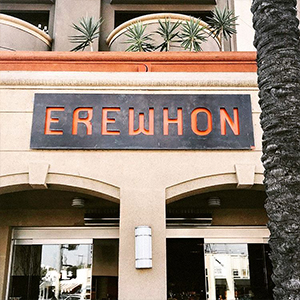
[00:03:58] Ray Latif: Just always have it open. That's something you want to talk to someone about, I think. That's probably not a healthy thing to do. No, probably not. No. You know what is a healthy thing to do is go to a store called Erewhon. I miss Erewhon so much. Me too. Erewhon, the beloved chain of natural food stores based in Los Angeles. I think there are up to eight stores now, you know, sort of a I don't know how you describe it in terms of whole foods, probably ultra whole foods, perhaps. I think that's probably the best way to do it. And there was a really interesting article sort of profiling the chain recently in the New York Times from top to bottom, an interesting read. I This One of the things that I had no idea, I really didn't know anything about when it came to Erewhon was its foundations. And the first store was actually in Boston. It was opened in 1966. The first Erewhon was based right in our backyard. Wow.
[00:04:51] John Craven: I know. I thought that was a really interesting to see the comparison of what happened. Yeah. When it, when it launched, where it launched versus launching in LA and comparing the success between Boston and, you know, the West coast.
[00:05:05] Jacqui Brugliera: I mean, clearly no one was into cold pressed juice and CBD back in the, uh, the sixties or whatever it was, but no, it was, it was pretty interesting to see how it seems like it was a retailer kind of repurposed and uplifted, you know, to a Southern California location. And obviously, uh, times are very different now. So.
[00:05:25] Ray Latif: They are, because Erewhon is what Bread and Circus was for a long time, the place to go to spot the latest trends. And then Bread and Circus obviously became Whole Foods, which you know, got bigger and Better Than now it's kind of, you know, Whole Foods is still awesome, of course, but now Erewhon's kind of like that place that people want to, you know, if you're in Erewhon, you're trendy, new, you're the place to be spotted. So the question becomes, you know, when's the next Erewhon come out, right? When is Erewhon not Erewhon? Or does that even happen? Well, Erewhon is expanding. As I mentioned, I think that the article in The Times mentioned that they have six locations, but on Clubhouse, an executive from Erewhon mentioned that they're expanding into two more stores later this year and more beyond that. They received a minority investment from an investment firm called Stripes Group, which holds equity investments in some really well-known brands, including Califia Farms, Blue Apron, Siete Family Foods. And so when that investment happened, I think a lot of people thought they were really going to make a massive push across the U.S. into East Coast locations too. Remains to be seen if that will happen. It hasn't happened yet. But I certainly wouldn't mind seeing an Erewhon in our backyard again. I wouldn't either, as long as they can keep the formula. The thing is, is they've got to continue to, you know, everyone needs to continue to innovate, to continue to be Erewhon or somebody else comes along and becomes the next Erewhon.
[00:06:51] Jacqui Brugliera: That's, that's my point.
[00:06:52] John Craven: Part of their formula is also just being hyper-local. So they're really focused on the community that they're serving. They're sourcing the brands from the region. They even, I think I read in the article that they have local DJs that create the playlists. So they're thinking about the entire experience for that demographic. Like they know their LA demographics. So I think I'm really curious to see if they do expand out of LA, which I assume they plan to do, how is that going to be successful? Um, and how are they going to apply that formula to other demographics and other regions?
[00:07:24] Jacqui Brugliera: I think it definitely would apply to expansion in California, like, I don't know, Orange County, San Diego, San Francisco, places with lots of local, you know, unique food and beverage products. I think, you know, hard to see it going somewhere like a Boston, that might be a little tough, but definitely would welcome a few more of those though.
[00:07:47] Ray Latif: Well, it does seem to be Erewhon that is ground zero for introducing innovative new products or brands. Going back to Clubhouse, I was speaking with an entrepreneur who has a bread company, and she said that she has leveraged her placements in Erewhon to get Whole Foods' attention. She's saying, okay, well, if Erewhon's taking our brand in and, you know, they are really, again, the place to be for launching the most innovative products, ingredients and Naya Foods. Well, then, of course, Whole Foods has got to be in that game as well. So it was interesting to see how she played that game. She doesn't think she could have gotten a Whole Foods otherwise. She said everyone really was at Launching Pad.
[00:08:34] John Craven: Yeah, I think it's a launching pad for both the retailers and the consumers. I know whenever we're in LA, we're making an effort to go out of our way to go to Erewhon. And I think people respect the curation, they respect the innovation, and they have that reputation. So I think that's why they were probably able to leverage that partnership with Erewhon.
[00:08:57] Ray Latif: Yes, a beautiful store with beautiful products and brands. And apparently, according to the New York Times article, a place where beautiful people want to be seen as well, as Mike mentioned, which is why we go there all the time.
[00:09:10] Mike Schneider: Taking selfies.
[00:09:12] Ray Latif: Is that why I got kicked out that one time? I don't know if everyone carries Oatly. I'm sure they may have at one point, but I don't know if it's a, it's too big of a brand to be in a heroin at this point, but Oatly was back in the news this week. The last time we talked, we talked about their super bowl ad this time. And they're in the news because they filed for an IPO. An IPO that some analysts believe could be worth $2 billion. That was Dr. Evil-esque. What does this say about the potential for the oat milk category? What does this say about Oatly as a brand? I mean, is it really worth, is this brand really worth that size of a valuation, John Craven? Yes. In short, yes.
[00:09:59] Jacqui Brugliera: I think it is just a validation of what we've been saying for a bunch of years about oat milk and Oatly in particular that the brand, you know, it has massive potential and we're just right now seeing the early days of it. I mean, there's clearly. Anyone who listens to this podcast or pays attention to the food and beverage world in general knows there's a massive, you know, revolution going on with plant based products. And, you know, we've had a long run of nut based milk products or dairy alternatives. And what Oatly has done over the past couple of years, I think, you know, it stands to both build upon the success of nut milk and still it's thunder just in that it seems to be a product that has a better eco story and, you know, it has fewer allergen concerns and the taste of it and the brand. I mean, it's, they've managed to create a fun product that kind of nails it on all levels. And it's also, you know, I think a product that right now isn't really being looked at as something that can go into a single serve ready to drink products, which, you know, only has in other countries and are pretty darn tasty. So I think, you know, we're just, again, seeing the tip of the iceberg. So $2 billion, sure. You know, that, that sounds pretty reasonable.
[00:11:22] Ray Latif: I This One of the ways that oat milk brands have been able to differentiate from Oatly is via organic varieties. Oatly does have an organic oat drink out there. I haven't seen it on the market. I've certainly seen other products like Amalk, M-A-L-K, which markets and started out marketing almond-based beverages and has gotten into oat milk. I think they got into oat milk a couple of years ago. Certainly one of my favorites, Rise Brewing Company, which makes this organic oat milk. And then recently I came across this brand, which is called Better Than Milk, which recently introduced distribution across the US. They make rice milk, almond milk, oat milk, and a few other varieties as well. But again, I mean, I'm honestly more inclined to buy these types of products because they do contain an organic formulation versus that of the mainstream or the flagship Oatly product.
[00:12:13] Jacqui Brugliera: Yeah, I mean, I'm, you know, with you to some extent, but I think the larger opportunity right now is still just that mainstream consumer. So, you know, we can get to the organic segment at some point, but there's lots of ground to cover without it, quite honestly.
[00:12:31] Ray Latif: I This One other thing that really stands out among some of these brands is the ability to be allergen-free, as you mentioned. And I think oat milk has had a little bit of a problem with that. I think some brands market themselves as gluten-free or had been marketing themselves as gluten-free and don't anymore. Again, Better Than Milk, this product, claims that its products are gluten-free, which is a concern for folks.
[00:12:52] John Craven: Talking about allergens, I think people are looking maybe a little bit less at allergens if they're not like super strict with their diet. With some things, it was kind of a trend or people thought that it was better for them to be gluten-free. And a lot of people, I mean, just in my experience, have been more so experimenting with products and seeing how it makes them feel. So like, for example, it might be a better for you product and have all these claims, but for some reason you feel like inflammation afterwards. So I think a lot of people are sampling new products, knowing that, you know, it might not be gluten free. I think oat milk also is something that people might not even think of gluten because it's not bread, it's not pizza, it's not, you know, the main things that people think about with regards to gluten. So I think like someone that's really honed into allergens might look at that as a negative, but for like the mainstream consumer, I don't think it's that much of an issue.
[00:13:48] Ray Latif: That's a good point, Jackie. I think I've been a little bit more sensitive to gluten of late just because I haven't tried to remove a lot of it from my diet. And when I do see an oat milk that doesn't have that claim, I'm just like, okay, well, why not? I mean, isn't oat milk just naturally gluten-free? So again, I think you're right. I'm probably more of the niche consumer when it comes to that. But as you and John mentioned, the overall opportunity is just in general health and wellness and reduction of animal-based ingredients.
[00:14:19] Starr Edwards: Guessing your margins? That's risky. Belay Financial gives CPG brands the clarity to scale smarter, faster, stronger. Get your free inventory ebook by texting TASTE to 55123 and start making data work for you. Vibrant Ingredients is the natural ingredient partner powering food and beverage innovation, delivering flavor, function, and protection through a science-backed portfolio. Vibrant delivers purpose-driven solutions that help brands create extraordinary experiences. Discover what's possible with Vibrant today. Visit VibrantIngredients.com
[00:15:06] Ray Latif: So shifting to another trend that the food and beverage industry can't shake, or I guess that's a mean way of putting it, a trend that people continue to pay attention to and embrace is keto. And recently I came across a brand called Fat Snacks. which really promotes itself as a leading keto snack brand. They are known for their cookies, their single serve cookies. Recently, they introduced some bagged mini cookies, which are pretty darn amazing, as well as a line of almond flour crackers. This One is an Everything Almond Flour Cracker. It goes amazingly well with Jenny's Everything Bagel Ice Cream, just saying. Three net carbs, keto, gluten-free. I mean, I think This One thing that these products, as a consumer, you kind of have to, I guess, adopt is the texture. Its texture isn't the same as what you would expect from a mini cookie or a cracker. But I do know that I'm eating a healthier version of these products. So that makes me happy. And going back to your point, Jackie, I don't really have any stake in the game. I don't want to say I don't care, but it doesn't matter to me that it's keto or ketocentric. I just want to have something that's better for you and tastes pretty good.
[00:16:19] John Craven: tying in kind of like keto trends and also our earlier discussion of dips. I saw a new product from Naya. So they have a cauliflower dip and PETA chip snack pack. So similar to like what you'd see with Sabra, but it's keto friendly. It is based in cauliflower. And I thought that was interesting, you know, going into that realm of snack packs, replacing the typical chickpea and creating like a cauliflower dip. So that's like another product that I saw that kind of ties those two things together.
[00:16:48] Ray Latif: It's so interesting you bring that up, Jackie, because when Naya came out with those products, she originally called them cauliflower-based hummus or hummus made with cauliflower ingredients. And she's since shifted the positioning to just be cauliflower dips. And I think that's better because you taste these products and they don't necessarily taste a lot like hummus, but they are still really good. So I think if you are looking for hummus or if you would be looking for hummus, you might be confused as a consumer. So I think that changing the nomenclature or changing the positioning was a really good idea. That makes sense. Cauliflower is so hot right now and you won't be surprised when it doesn't taste like hummus. Speaking of lifestyle eating, I've got this Base Culture almond butter brownie, which is paleo.
[00:17:26] Jacqui Brugliera: Really tasty. John Craven turned me on to this.
[00:17:29] Ray Latif: He actually, I caught him pulling like 20 out of the fridge, like trying to trying to get him out of the office. He didn't have a bag handy, but he'll also, I keep these nearby because he'll do tricks for them. And these are really tasty is the point. I mean, these are incredible. He'll do tricks for them. What does that mean?
[00:17:44] Jacqui Brugliera: Yeah.
[00:17:46] Ray Latif: That got weird. At least edit Mike out of the podcast. Do a flip. Here you go. Jeez, gosh. There's so many, so many interesting things I'm hearing these days. That was weird. Yeah. John Craven, you showed a lot of new products today on Instagram.
[00:17:59] Jacqui Brugliera: I did. I did have some tasty brew doctor uplift. their new yerba mate based product.
[00:18:06] Ray Latif: That's a really interesting innovation for the brand. You know, when Martín Caballero, our managing editor for BevNET, and I sat down with their team for a recent episode of our category close-up series that was focused on the energy drink category, it was really interesting. I was like, is this right? Why is Brew Doctor on our call sheet here? And it's because they were launching This One line of energy drinks. I mean, And Uplift and Uramate, you know, has been an ingredient that they've used in the past and Uplift was the name of one of their products. But they saw this opportunity to really create a whole new brand extension with it. It looks great. I'm confused because this is this is not the Uplift that was a kombucha. This is an Uplift that's an energy drink. So they've taken. Correct. What was Uplift?
[00:18:49] Jacqui Brugliera: Ah, OK.
[00:18:51] Ray Latif: So they're Uplift.
[00:18:52] Jacqui Brugliera: I see, they've taken it in a different direction, a bit of a pivot.
[00:18:55] Ray Latif: Interesting. Yes. You haven't had a chance to watch that episode, but I'm sure you will after this recording, Mike. Tasty stuff. Indeed it is. You know what else is tasty stuff? High Key's new caramel clusters. These are milk chocolate and pecan. Okay. Jackie's looking at me, she's like, I'm going to kill you, Ray. How did you get your hands on those?
[00:19:18] John Craven: You got your hands on all the good stuff.
[00:19:21] Ray Latif: Yeah, people like to send me stuff. It's really nice. And I really appreciate everyone sending, uh, sending me products. Um, high key, uh, maker of gluten-free keto friendly and grain-free products for net carbs per caramel cluster. So I have, I have this issue and I used to have this issue at BevNET where I couldn't have candy anywhere near my desk or chocolate anywhere near my desk, because I think in my first couple of years at BevNET, I probably gained, I don't know, 10 pounds and it wasn't a good, it wasn't a good thing. See, I don't mind having these.
[00:19:49] John Craven: I gained 20.
[00:19:50] Ray Latif: Did you really? Wow, I just took down this Base Culture like in five seconds. I mean, it's the BevNash thing. Well, 20! Gave it a lot. This is like the new Snackwells. Remember Snackwells from like the 90s? That was that terrible brand where it had like all these artificial ingredients and stuff like that. This is something that I feel like I have no problem eating and I have no problem indulging on or snacking on because I know it's going to be a better for you version and certainly a healthier version of what I had been eating. So yeah, kudos to High Key. I really like this product. Nosh recently covered the company in a couple different articles. Check out Nosh.com to get the lowdown on High Key. Funny you mentioned Jackie, I remember your first fancy food show, your first winter fancy food show. And you're like, wait a minute, they're sampling everything. I mean, I get to go and like taste everything on the floor.
[00:20:43] John Craven: Oh my God, my stomach was hurting, but I was loving life. It was so worth it.
[00:20:49] Jacqui Brugliera: Oh my gosh. Everybody has a rookie moment because you, you can just eat everything. And then the next thing you know, you have like this functional cocktail of beverages and foods in your stomach. And you're just like, I don't feel so good.
[00:20:58] John Craven: My weakness was the cheese aisle.
[00:21:00] Ray Latif: I do like laps around the cheese aisle. I remember that. I remember I bumped into you during the show, Jackie, and you're like, did you hit the cheese section? And I'm like, I'm not a big cheese eater. Yeah. Hydrant has a new immunity line, hot apple cider. It's tasty. That looks really good. Yeah, I like it. Talk about a healthier version of a classic beverage. I put it in a giant bottle. Is that a swing top?
[00:21:32] SPEAKER_??: It is.
[00:21:33] Ray Latif: Mike is quickly becoming the quirkiest guy at BevNET. You already had, but you've been kind of quirky before, but much more so nowadays. Last brand I want to mention This One called Fluair. It's spelled F-L-U-E-A-R, distilled non-alcoholic spirit. They have four varieties. This One is the smoked agave flavor. Really interesting product. I know we've talked quite a bit about non-alcoholic spirits in recent episodes. This variety in this particular brand has quickly become top of my list in terms of go-to for spirits. But I am interested in trying the new Tanqueray 0.0 product that was just announced. Alcohol-free. It was announced in London yesterday or yesterday in terms of the day of this recording. They describe it as a mindful drink option for those not willing to compromise on taste. Somehow, I think this is going to taste a little different than a tangerine product or the traditional tangerine product. John Craven, if they send me one of these bottles, I'll be sure to get it into your hands as soon as possible. You'll give me a swig, thanks. I'll give you a scotch. Scotch, perfect.
[00:22:38] Jacqui Brugliera: Weirdest episode ever. I love it.
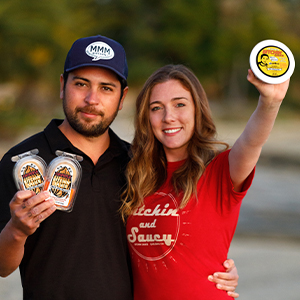
[00:22:41] Ray Latif: Well, the interview subject lends itself to that, too. The name of the brand is Bitchin' Sauce, folks. Love it. It's appropriate. And let's get to our interview with star and L.Starr Edwards, who, as I mentioned at the top of the show, are the co-founders of Bitchin' Sauce. Launched in 2004, the brand of vegan, almond-based dips merged as a cult hit at farmers' markets in Southern California and amassed legions of loyal consumers drawn to its unapologetically quirky labels, savory and sweet varieties, and commitment to clean label formulations. While the packaging and the ingredients have essentially remained the same over The Edwards, the brand's retail footprint has grown dramatically. Bitchin' Sauce is sold nationwide at over 6,800 retail stores, including those of Costco, Walmart, Target, Albertsons, and 7-Eleven. In the following interview, I spoke with Star in LA about how a passion for veganism and music provided the foundation for the brand's origins, how they landed a deal with Costco early into the brand's development, and why they believe that owning a production facility has given them an advantage when working with retailers. They also spoke about how consumers perceive and respond to the brand's name, and why they'll never change the primary elements of its packaging, and how they work with 7-Eleven to develop an exclusive line of products for the retailer. Hey, folks, it's Ray with Taste Radio. Right now I'm on a call with Star and L.Starr Edwards, the co-founders of Bitchin' Sauce. Star, L.A., how are you?
[00:24:17] John Craven: Doing great, Ray. Thanks for having us. This is wonderful.
[00:24:20] Ray Latif: Great to be here. Great to have you. Funny story, we'll tell our audience a bit about our technical issues this morning. I think on both sides of the equation, we had some issues, and I feel bad because we can't use the video for this podcast, and you guys get all dressed up for this recording, so I apologize.
[00:24:42] John Craven: It's so rare. It's like we're going out on a date, but this is the only opportunity to get dressed up now.
[00:24:49] Ray Latif: When was the last time you were on a date? I mean, I assume that you haven't been able to get out because of the pandemic.
[00:24:55] John Craven: Let's see. We actually, we had our first date two days ago.
[00:24:58] Ray Latif: Congratulations.
[00:24:59] John Craven: We were staying at a hotel and we were able to go to the hotel lobby for a drink and it was really special.
[00:25:06] Ray Latif: Those small moments are everything, especially when you have four kids. And the last time we spoke, we also couldn't do video, but it was for a different reason. You guys said that your kids were, quote, covered in bananas.
[00:25:22] John Craven: That was accurate. They were completely covered in bananas.
[00:25:26] Ray Latif: Amazing.
[00:25:27] John Craven: I just felt bad leaving Luke to handle that situation.
[00:25:31] Ray Latif: Well, you know, it takes at least two parents to raise four kids. I don't know how many it takes to raise 11 kids. I have 11 kids in my family and everyone was always covering bananas 24 seven. So, yeah.
[00:25:44] John Craven: Oh, wow.
[00:25:45] Ray Latif: That's awesome. You know, my parents were also small business owners and I never asked them, surprisingly, which was tougher, raising a family with so many kids or running a small business. What's the answer for you guys? Hmm. I would say they're equally challenging and they're both also very rewarding and it's kind of you get what you give in into both of those things. Was having four kids something that you guys planned on, or is this something where, you know, you're just building your family as you go? And I asked that, and that might be kind of a weird question, but it's almost like, you know, when you start out having a family or when you start having a business, sometimes you really don't know where you're going to go with it. You know, some parents are, and some couples are very much like, okay, we're having one kid, we're having two kids, and that's it. But it seems like, you know, in speaking with you and reading about you guys, you're a little bit more, I guess, progressive and liberal in how you think about things.
[00:26:40] John Craven: Yeah, I think we had one kid kind of early on. And so I think that was a good icebreaker for us. We were encouraged by how easy he was. It was great. And then we had more children and we realized that they're all a little bit different. And you can't just think that you've mastered parenting with one child. But now, I don't know, I think I wanted to have seven kids. Luke wanted to have one kid. So right now we're kind of in the middle at four. We'll see what happens.
[00:27:15] Ray Latif: Smack dab in the middle. Wow. Very cool. Well, Star, let's go back a few years. I read that you graduated high school at age 16, which is pretty incredible. And that was also the age that you adopted veganism.
[00:27:33] John Craven: Luke actually graduated at 16 too. We just kind of had different paths. I went off and started working, you know, full time. I had like three jobs and Luke went on the road with his brother. But kind of a funny similarity there.
[00:27:47] Ray Latif: You had three jobs at age 16?
[00:27:49] John Craven: Yes. I really liked to work.
[00:27:52] Ray Latif: What were you doing?
[00:27:54] John Craven: I worked as a hostess and a personal assistant and at a coffee shop.
[00:28:00] Ray Latif: I'm curious, did you have any plans to go to school for higher education or, you know, a trade?
[00:28:07] John Craven: I did. I applied to my dream school and I did not get in. I think that they were a little confused about my high school credits being crammed into two years. So basically, since I didn't get into This One that I wanted to get into, I was like, I'm going to take a year off. I'm going to go work. I'm going to live with my friends and have a great time.
[00:28:28] Ray Latif: Did you envision, Star, a career in food as your path?
[00:28:34] John Craven: No, never. I wanted to be an actress.
[00:28:38] Ray Latif: There was something I read about you guys being traveling musicians before you launched Bitchin' Saws. Yeah, we were kind of just a brother's folk band, and we just were traveling the states in a VW bus, singing on the street.
[00:28:53] John Craven: I wasn't part of the band. I just was their groupie.
[00:28:59] Ray Latif: in the VW bus as well.
[00:29:01] John Craven: Oh, yeah. I drove that bus. I was the mechanic for the bus. They didn't know how to work on VWs.
[00:29:07] Ray Latif: Wow. As far as a VW enthusiast, her first car was a Carmen Ghia that she crashed. And then I think we've had the whole lineup now except for the hatchback. And we have a VW thing now. This is all incredible because I've never heard such a story from entrepreneurs. Normally, like, especially these days, you hear about entrepreneurs who, okay, they had this great idea and they had this slick marketing plan and business plan and they went to B school and they did this and that and so on and so forth. And your partnership was primarily formed in a VW bus, which is amazing. When you started out your brand, or when you had the idea to start out a brand, where did you start?
[00:29:46] John Craven: We started at farmers markets. I don't know that we were trying to start a brand. We were just trying to survive. Luke was flipping surfboards and that's how we were surviving kind of week to week. And I was trying to build my personal chef business. I decided that I could cook for people and they could pay me and that would be a great arrangement. And in trying to build clients for that business, I decided to go to farmer's markets and show them all the delicious vegan comfort food that I was making. But at the farmer's market, everyone just tried the sauce and wanted to buy it and take it home, which was a way better option.
[00:30:27] Ray Latif: Where did you come up with the idea for this product, the initial Bitchin' Sauce? I mean, was it something that you had always been making? Was it always a dip or was it something else that people used, adopted as a dip?
[00:30:40] John Craven: It was definitely adopted as a dip. Initially, it was a sauce for grains and bean and rice bowls, salads, things like that. When it turned into a dip, it was actually at the farmer's market because we were trying to figure out how to sample to people. It's really hard to bring a bean and rice bowl to a farmer's market that's really easy to bring some chips. that was kind of a happy situation there because suddenly our food went from being something that maybe was sparingly used in meal prep to something that was being consumed as a snack and like in mass.
[00:31:18] Ray Latif: Starting out at farmers markets This One thing. And it seems like you guys had a pretty good business, you know, going about selling at farmers markets in Southern California. How many, how many farmers markets were you, were you hitting at any given weekend or week?
[00:31:33] John Craven: We worked up to I think 26 was the highest number that we had at any given time. But that was through San Diego and Orange County. And yeah, it was a lot of markets.
[00:31:46] Ray Latif: So it seems like you could have had a pretty decent business selling at 26 different markets. That being said, one of the things you mentioned, Starr, last time we spoke was that you were just trying to survive and that it took you two to three years to realize that you actually had a brand and not just a product. How did you come to that realization and what were the next steps?
[00:32:08] John Craven: Came to that realization I guess what I just realized that people liked it and they weren't just being kind at the farmers markets. Once we started getting emails coming in from fans and people buying it consistently, it seemed to me that it really had some legs to be an actual brand. And then, you know, the next steps from there were just how do we get it on the shelves as many places as possible. And then also sample to people so that they can taste it because it is such a funny thing. At the time, nut dips were not super popular. They've definitely grown in popularity, but it was kind of a weird thing. Even like the plant-based movement hadn't fully reached, you know, where it is now when we started out. kind of an uphill battle of just let's get everyone to get some bitchin' sauce in their mouths.
[00:33:05] Ray Latif: Well, I'm sure a lot of folks listening right now are thinking about the name and where it came from and we haven't talked about that yet. Why bitchin' sauce? What was the idea behind that name?
[00:33:17] John Craven: The name Bitchin, I wish it had a better story than it does. It was a two-second decision where I was putting together a label for the first jar of Bitchin sauce at the market, and it occurred to me that I needed to call it something. I wanted it to be an iconic product, even in its infancy, and so I decided to call it something that was not just almond dip. So basically, bitchin' sauce, I was thinking of all The Edwards that meant something cool and good and fun, and that's what came up. It was just bitchin'. It's great. And then I put it everywhere on the package. It said, you know, eight bitchin' ounces, bitchin' and saucy, bitchin'. I thought I was super funny by doing that.
[00:34:05] Ray Latif: It is a striking name. It's definitely going to appeal to certain people and it's going to make other people a little upset. The comparison I think of immediately is a brand called Liquid Death. They definitely own who they are and double and triple down on what they represent and in a tongue in cheek kind of way, and almost in a provoking way. It doesn't seem like you guys are trying to provoke. You're trying to, as you mentioned, Star, have fun and excite people. But out of 10 people, how many people like the name at first versus how many people were like, I don't want anything to do with this?
[00:34:42] John Craven: 9.99 people love it. They think it's super funny. Plus we started in Southern California. So a lot of people get it. A lot of people understand it's a surfer term. It's fun. And then there's that, you know, one random person who thinks it means something that it doesn't. And you have to be like, Hey, like should talk. He has some bad, bad parts of the word if you dissect it too. But like, why are you focusing on that? You need to be positive.
[00:35:13] Ray Latif: That's a fair point. I never thought about shiitake that way. Maybe shih tzu is the same thing, yeah.
[00:35:19] John Craven: Right? It's like, get your mind out of the gutter.
[00:35:22] Ray Latif: There you go. I mean, consumers might feel one way about it. Retailers might feel a different way about it because they are catering to an audience that includes a broad set of consumers, a lot of different people, a lot of different personalities. Costco was surprisingly one of your very first retailers. Were they your first retailer?
[00:35:44] John Craven: They were not our first Retailer Like started in mom and pop shops and then some of the just kind of natural stores in the area. Whole Foods was one of our, our first chains, but it's really cool because Costco's found us at the farmer's market, actually at Poway farmer's market. The buyer was a frequent farmer's market visitor, I guess. And he basically, you know, reached out to us and asked if we wanted to have a farmer's market booth in Costco by way of roadshows. And it just made so much sense to us. We're like, yeah, an indoor roadshow or indoor farmer's market. This is great. And really, they've been an amazing partner, I guess, just because we work so well together in that format, in that roadshow format.
[00:36:29] Bob Ross: Do you want more repeat buyers on Amazon? Well, this free resource in collaboration with Straight Up Growth will help your brand turn first-time buyers into long-term subscribers. Download Winning the Repeat Purchase Game on Amazon now at Taste Radio slash SUG. That's Taste Radio slash S-U-G to start building retention-driven growth for your brand on Amazon. Scaling a beverage brand into major retail comes down to operational readiness. From packaging lead times to co-manufacturing strategy, the details can make or break a launch. In a new ebook in collaboration with Octopi and Asahi Beer USA, industry leaders share what they've learned in helping brands scale. Download it now at Taste Radio slash octopi.
[00:37:18] Ray Latif: As you're scaling up from farmers markets to retail stores, independent retail stores to major chains like Whole Foods and Costco, I'm assuming that production was something that was top of mind all the time. Did you launch your own manufacturing facility at the outset? Were you co-packing at all?
[00:37:36] John Craven: We were not co-packing. We launched our own manufacturing facility. It was pretty small. It was pretty funny, too. We never really became gearheads like a lot of people do, where they go and buy a whole huge line. All of our stuff has always been pretty modular. It was really funny when we had six Vitamix, and Luke would be there working on multiple Vitamixes, two Vitamixes in each hand. It was pretty funny.
[00:38:03] Ray Latif: Well, OK, there we go. So it's Luke. What does the A stand for in L.A.? Andrew. Andrew. OK, so I'll call you L.A. if you prefer, or I can call you Luke, whichever works for you. Either one's fine. Okay, we'll go with Luke for the rest of the podcast. I always ask this question of folks who have their own manufacturing facility, which is, it's expensive to get off the ground. It requires a lot of capital to launch and maintain a manufacturing facility. How did you raise the money to start your own production facility?
[00:38:38] John Craven: We had a very regimented accounting system to begin with, you know, we were basically squirreling away money for any capital investments. And then we also just were super fortunate. We ended up taking over Rubio's test kitchen, which was awesome because it was already built out and we didn't have to go through the process of building out a manufacturing facility. Yeah, I think, you know, just that combination of kind of trying to be frugal and thrifty and preparing for growth. And then also being blessed with a facility was great.
[00:39:11] Jacqui Brugliera: Yeah, that was nice.
[00:39:12] Ray Latif: And then we also did a lot of the work ourselves instead of hiring contractors to build the facility, we were involved with, you know, very hands on with building of, of the current facilities, demo and cooling and
[00:39:26] John Craven: I tried to block that out, but that is we have a bunch of pictures of like our whole family, all the kids ripping up carpet and, you know, hitting down false walls and stuff. It's pretty funny.
[00:39:38] Ray Latif: So that would be something that you would probably take out capital to, you know, that's several hundred thousand dollars to to get that done. And we just did that ourselves. I mean, this is remarkable, but if you know how to fix a VW bus, then you can probably fix a lot of things or build a lot of things for that matter. When we last spoke, Star, you mentioned how you guys had to get up to speed on food safety, especially because you were getting into Retailer Like Whole Foods and Costco. Talk about the importance of food safety in those relationships with major retailers?
[00:40:18] John Craven: This is my favorite topic. I actually really love food safety. I ended up making a 2,000-page food safety plan for our facility. This was just a project that appealed to me because once you understand the scope of what's required, it's really easy to be like, this is how we're going to do it. But starting out, I think our first, you know, food safety audit was with Whole Foods. They had a requirement to go through a third party auditor. And it's actually one of my favorite stories because it was so humbling. They showed up and at the time we were making bars, we were making these pigeon bars and we had some dry coconut flakes hanging around. And he went over and looked at them and he goes, this doesn't have a label. What is this? I was like, it's coconut. And he goes, well, it could be Parmesan, it could be breadcrumbs. I was like, it really couldn't be because this is a vegan and gluten free facility. So it could definitely not be those things. And also, you know, the only people working here are members of our family. And, you know, he knocked us down some points for that, you know, not having it labeled. And I remember being so frustrated that we lost points on that. And then the next week, like literally the very next week, we had a situation where our current CFO, Olivia, accidentally grabbed some ghost peppers instead of chipotle peppers. And she made ghost peppers in adobo instead of chipotle in adobo. And then, you know, Luke there's, you know, head chef tasting the product. He goes, this is really spicy, man. I don't know. And I mean, it was fun. We ended up turning it into this special seasonal flavor called Chigo Sleigh, which was great. But you know, it was just such a good moment for me to realize that these food safety provisions are there for a reason. And even though it's a family member, it doesn't stop accidents from happening. So, you know, label your food.
[00:42:18] Ray Latif: In terms of the building out of the facility, you guys saved a lot of money, but as you grew, how much of an asset and a competitive advantage was it as you were growing and able to get into places that might've been more expensive, that might've cost you a little bit more of a margin had you had to co-pack? Yeah, I think it's always good to have the ability to make your own product. Then you're not at the mercy of of anyone else who's in charge of making a product and you can always make product. It also gives you that advantage of a bargaining power to get the cost right. If it costs you this much at your place, then you have that ability to see if it's even feasible to come in instead of just going there and being like, okay, I guess that's what it costs. Then you build your model that way. It's also good to have the ability to know how to make your own product. A lot of these brands don't even know how to make their product. which I think is weird.
[00:43:16] John Craven: It is a little weird. It's nice to have flexibility too for new products, product development, and you know, even Costco wanted to do a large tub. And so that's something that, you know, trying to hit minimums at co-manufacturers would have been tough, but since we were doing it ourselves, we were able to be flexible and nimble there.
[00:43:37] Ray Latif: So all this being said, would you encourage other entrepreneurs listening to launch their own manufacturing facilities? I would.
[00:43:46] John Craven: I think I would, too.
[00:43:47] Ray Latif: Does that come with any kind of hesitation or reservation or sort of an asterisk given that you guys did a lot of the work in terms of building it and planning out what it would take to scale?
[00:44:03] John Craven: Yeah, definitely. Sometimes I'm, I guess, a little envious when I see other brands. who have zero overhead. Their team meets at a WeWork once a week to kind of connect. And then otherwise, they just go off and build their brand without having any real hands-on experience. It seems kind of fun. But having a team of people dedicated to making a product who really cares about the product and the brand has been very rewarding for us. And seeing that team grow has been very rewarding.
[00:44:36] Ray Latif: Yeah, you kind of develop your own standard and processes when you have it in-house and it gives you flexibility to, you know, do these small run items like Chagoslay. We do that every year at Coman. It's not going to do that. You know, I think it's like five batches of Chagoslay. It gives you that nimbleness to do fun stuff that you want to do for R&D or limited run. And then it also enables you to be able to repeat your processes at the Coman and so that they're up to your standard instead of their standard. So you both mentioned that knowing where your food comes from and how it's made is really important and also really important to your consumers. How much of that do you play up in the marketing and promotion of Bitchin' Sauce? How much do people know about you guys in terms of your hands-on production of the products? I don't think very much. We've been very private people about kind of our involvement with the business for the last nine years. We don't usually do interviews or talk about our roles in the company. We always just like to kind of lead with quality products, with clean ingredients. We don't really harp on it at all. But I think if people just look at the ingredients deck, they can figure it out for themselves. And people are doing that. Star, you said an interesting thing last time we spoke, which was that you were trying to appeal to an audience and you have been trying to appeal to an audience that doesn't care as much about health as some people do. What do you mean by that? Is it that you're trying to create a product that has sort of broad interests, or is it just something that you realize that people aren't always going to be looking for healthy products and you just want to give them one?
[00:46:20] John Craven: I think, you know, broad interest is a huge part of it. It occurred to me as a vegan, when I was looking for consumer packaged goods, it, you know, things were there one day and then gone the next. And it was because they were so pigeonholed into only appealing to this niche community of vegans. And it really, you know, to me, it seems like if you have something that tastes good, everyone should be able to eat it. Like, even like apples are really good and everyone eats them and they happen to be vegan. And just trying to not get locked down into any kind of trend or fad has been really important to me in growing this business.
[00:47:00] Ray Latif: Yeah. You know, the first time I saw Bitchin' Sauce, it was at my local Whole Foods in the Boston area. And it was with a lot of other healthy items or perceived healthy items, hummus, Mediterranean foods, et cetera. And when I saw the brand, to be honest with you, I thought it was little out of place. I thought it was kind of like a novelty brand more than it was a really good for you type of product, but I picked it up anyway. And I looked at the ingredients and I, you know, saw that everything was clean label and high quality. And I was like, okay, let me try this. And I tried it and it was amazing. Um, and you had a customer for life almost immediately. That being said two things from that number one, I wondered in my mind if you had a different label or if you had a different brand name or some sort of different packaging that I might've been more inclined to look at it in a more serious way at the outset. Would you ever consider changing the branding or going through a brand evolution or packaging evolution? And I love it. I mean, I've come to love your branding and packaging, but again, that initial experience might be the same for a lot of consumers.
[00:48:17] John Craven: Yeah, I think we don't really subscribe to kind of a Pinterest-y, like whitewashed branding that's going on right now, you know, where everything just is very fun type on a white background and like looks really crisp. I mean, it's beautiful and I buy those things all the time, but we don't want to be falling into the noise like that. We actually really like our goofy branding. funny packaging. I think it's awesome. And it's something that, you know, I've, I've had to kind of stick to my guns on over The Edwards. Cause you know, we'll have some people be like, what is this? And then other people are just like, this is awesome. I'm like, this is so cool. I only picked it up because of the branding. Yeah. I think our ultimate goal is to be an iconic product and you don't do that by blending in.
[00:49:09] Jacqui Brugliera: We did change our branding a little bit, not change, but we did a line extension called This Sip is Nuts to kind of appease people.
[00:49:17] Ray Latif: And it's kind of a side-by-side comparison as well, but to get into regions where, you know, maybe buyers were a little bit more apprehensive, like in very conservative parts of the country. And then 10 out of 10 times, they'll bring in This Sip is Nuts and the sales will be, you know, that brand is growing as well. those four skews, but 10 out of 10 times, they'll be like, hey, this is doing well, and it's developing a following, and then they'll bring in bitching sauce, and then bitching sauce will outsell this dip is nuts right off the bat. I'm one of the consumers, I guess I'm one of the types of people that will buy a product just because I want to taste it. But there's a lot of folks out there that won't buy until they try. And given that sampling seems to have been such a critical component of your customer acquisition strategy, I wonder how challenging 2020 was for you in attracting new customers to the brand.
[00:50:12] John Craven: Yeah, definitely our strategy changed. having the placement that we did at the onset of 2021 was very crucial to continued success in a non sampling world it was interesting to see people you know stuck at home and. If everything's closed but the grocery store, that suddenly becomes your source of entertainment. I think we had a lot of trial from people who were just working their way down the dips and seeing, you know, what was in stock. And if, you know, your favorite hummus is not in stock, you start considering some other options. So we actually, I think, benefited from, you know, people being willing to explore a little bit more. We've also had to kind of start other marketing endeavors that are a lot more traditional and a lot newer to us.
[00:51:04] Ray Latif: Well, I think the process of elimination strategy from having stock outs and customers being like, okay, well, this is the only thing available, so I'll buy it, to a traditional marketing strategy was something that probably threw you for a loop many times over the past year. When you said traditional marketing strategies, was anything particularly effective?
[00:51:26] John Craven: I think that's a huge challenge right now is trying to figure out what is actually effective. Like, you know, we try to do things with marketing just because we think they're cool, like music festivals. And we did Bitchin' Sauce Presents, which is a really fun concert series. But seeing, you know, how it relates to actual sales has been a challenge for us. And especially when you don't have online or direct-to-consumer options readily available, that's the easiest way to track it, right? You just give a link to buy now. But when people are hearing about it or seeing a billboard or watching a show or their friends telling them about Bitchin' Sauce and then they're buying it sometime later that week at some store in their area, that's just so difficult to figure out what's actually working.
[00:52:16] Ray Latif: Despite not being able to sample or demo in the way that you have been in the past, it seems like to me on the face of things that you had a really great year when it came to new distribution and retail placement. You're in Walmart, you're in Target, you're in Sprouse, in addition to being in Costco and in Whole Foods. Do you have a set retail strategy? Do you have a set strategy when it comes to getting into or trying to get into new retailers? Or is it very much about here's an opportunity that's presented to us you know, let's jump at it, let's say yes to it.
[00:52:50] John Craven: I mean, Luke and I have always been very yes people. If someone wants to bring in bitchin' sauce, we're stoked and we just figure out how to get it to them. You know, having a strategy where you kind of curate the stores that you're in and the merchandising. That's not historically been what we've done, but definitely as we're learning and growing and improving and trying to professionalize, we have like a really awesome sales team right now that they are putting a lot more consideration into how we get to the set than we ever did. We were just always excited, you know, someone wanted to bring us in.
[00:53:31] Ray Latif: One Retailer Like didn't mention was 7-Eleven. And, you know, I think there was probably a time when you never thought you would be in 7-Eleven, but you are now and you created an exclusive product for the Retailer Like about that deal and why you signed on with the convenience store chain.
[00:53:49] John Craven: I have strong feelings about convenience store chains. I actually like my personal belief is that down the road, you know, we have basically things kind of circling back to 1950s model of, you know, your food Rise Brewing delivered to you. It's like the milkman. I think that convenient corner stores are going to be required to carry more health-oriented foods. It's a little weird right now because all signs are pointing to, you know, just slower traffic there due to the virus, but I don't think that that's going to last. I think that things will change.
[00:54:27] Ray Latif: How are you thinking about the future? Because as you guys mentioned, you're sort of looking at all this and saying, well, we didn't really have a plan. Well, it's almost like You have this amazing brand that you can do so much with. How are you thinking about the future of Bitchin' Sauce?
[00:54:45] John Craven: Right now, there's still just so much white space for us. You know, I know it seems like we're kind of getting all these retailers and growing, but there's just still so much opportunity with our core line and with getting Bitchin' Sauce out there, particularly on the East Coast. You know, a lot of people just don't even know who we are. So I think that there's a lot of just opportunity. And then, you know, the name lends it so well to really any product now. If we can do a good job of being iconic, then we can apply This One different products in the future.
[00:55:17] Ray Latif: Well, Star, Luke, this has been a real pleasure for me. I mean, as I mentioned, I'm a big fan of your brand and It's not something I ever expected I would have in my fridge. And I'm so, so happy I found it because I use it on everything now, breakfast, lunch, and dinner. And talking to founders is just really surreal for me at this point. I'm not sure why, because this is what I do. I talk to founders, but I'm a fan. And I know you have a lot of fans that you've made over The Edwards. And it's just amazing to see what you've accomplished. So thank you so much for taking the time to sit down with me and good luck with everything going forward.
[00:55:56] John Craven: Thank you so much. Thanks for having us.
[00:55:57] Ray Latif: Thanks, Ray. Have a bitchin' day. You too. That brings us to the end of episode 112 of Taste Radio Insider. Thank you so much for listening and thanks to our guests, Star and L.Starr Edwards. Please subscribe to Taste Radio on the Apple Podcasts app, Spotify, Stitcher, and Google Podcasts. As always, for questions, comments, ideas for future podcasts, please send us an email to ask at Taste Radio. On behalf of the entire Taste Radio team, including Celine, thanks for listening, and we'll talk to you next time.