[00:00:00] Ray Latif: All right. Ready? Joe, start the clock now. Mike, what are you doing? What's that noise? It's a stopwatch. We're promoting our 30 second pre-roll ads and now available for Taste Radio and Taste Radio insider. I thought we could try and see how much information we could pack in 30 seconds. Can I ask you a question? Sure.
[00:00:15] Karen Nation: Can you list all the things that BevNET offers for free? snack guide. We have our podcast. Now we have three weekly podcasts with the Brewbound, Taste Radio, Insider, all this stuff. Oh my God. Those are available every week for free. What about our YouTube channels? Go, go, go. YouTube channels, three YouTube channels, hundreds of hours of videos. It's kind of crazy. All of our newsletters are free. Livestream broadcasts of the conferences. Don't forget those. Yeah. Why would you not watch the free live stream broadcast? You could apply for all these jobs on our website. There's no cost to do any of that. Oh, by the way, the whole editorial process, that's free. I mean, we don't charge to write about you. Just reach out with your news. That's, I mean, what more do you want?
[00:01:05] Ray Latif: I don't think I thought this through man. Your 30 seconds are up.
[00:01:07] Karen Nation: Oh, man.
[00:01:09] Ray Latif: Well, we give a lot of stuff away. That we do. And if you want to share with our audience what you have to offer, we now have Taste Radio ad packages available. Email sales at BevNET.com to learn more. We'd love to hear from you.
[00:01:19] Karen Nation: Can I do the thing?
[00:01:20] Ray Latif: Yeah, of course.
[00:01:21] Karen Nation: And now, Taste Radio.
[00:01:32] Ray Latif: Hey everyone, welcome to another edition of Taste Radio Insider. I'm Ray Latif, and with me are my BevNET colleagues, John Craven, Mike Schneider, Jon Landis, and Carol Ortenburg. This is episode 13 of Taste Radio Insider, and we're recording from the Taste Radio studio at BevNET headquarters in Watertown, Mass. In this episode, we discuss category building from the perspective of G.T. Dave, the founder and CEO of G.T. 's Living Foods and creator of G.T. 's Kombucha. We're also joined by Karen Nation, the founder and CEO of Creation Nation, a maker of no-bake protein bar and bite mixes, who was victorious in Nosh Live's Pitch Slam 5. Just a reminder to our listeners, if you like what you hear on Taste Radio Insider, please share the podcast with friends and colleagues. And of course, we'd love it if you could rate us on iTunes. This is important, Jensen lady. Jensen lady?
[00:02:25] Creation Nation: Jensen lady. Is that like Jensen a butler?
[00:02:28] Ray Latif: It sounds like a whiskey. That could be a good whiskey, I like that. Jensen lady. We have two podcasts, folks. We have Taste Radio and we have Taste Radio Insider. We've got some good feedback, reviews, stars on iTunes for Taste Radio. We're lacking in that department on Taste Radio Insider. It's brand new, bro. It is relatively new. So I'm really encouraging and we're all really encouraging folks to please rate us on iTunes for Taste Radio Insider. And if you haven't already on Taste Radio, it's a pretty simple process. Launch Apple's podcast app on your iPhone or iPad, search for Taste Radio Insider, tap write a review at the bottom of the page, leave a rating and comments, hit send, boom, done. Thank you very much. Yeah, and while you're in there, maybe hit the subscribe button or say, hey Siri, subscribe to Taste Radio Insider. I was expecting your phone to go off. I got it. I've done that. I got it. It's off. Exactly. I mean, maybe it's because he just came back from the dentist. Your, uh, it doesn't recognize your voice. It thinks I'm Barry white. You know, you were a little swollen this morning. I was, I was, I was drooling everywhere. I was going to be able to podcast. I walked into your office and you're like, I don't want to talk right now. I didn't please leave. I know I should go to the dentist more often.
[00:03:43] Nosh Live: It's great. What a miser. I have to ask you if you got euthanized at the dentist. But you know where I'm going.
[00:03:52] Ray Latif: I wish the anesthesia was still on.
[00:03:55] Creation Nation: I think it is still in effect, Mike.
[00:03:57] Ray Latif: I wish the anesthesia would take over my entire body right now. Nice, nice. I'd be numb from this. It's end of the year dentist stuff you gotta do, right? You gotta get those benefits in and use up all the, I don't know, what is it that you have to use? FSA credits. FSA credits and whatnot. My good dentist had to fix the work that my evil dentist did. I'm feeling much better now. You have an evil dentist? Don't you? You know, I might have actually back in the day.
[00:04:24] Creation Nation: It's like, hey kids, I'll grab you with a candy bar if you pull out this tooth for me.
[00:04:27] Ray Latif: Nice, nice. Carol Ortenburg, that's the voice you heard right there. Everyone knows Carol Ortenburg. Carol.
[00:04:34] Creation Nation: Basically the lady on here.
[00:04:35] Ray Latif: She was the host of the Nosh Live Pitch Slam 5. Nosh Live Pitch Slam 5, I love it. Had her winter 2018 event in Santa Monica. As I mentioned, Creation Nation, the winner of the Nosh Live Pitch Slam. It bested, or it didn't really beat, it bested, I like the word bested more than beat. It bested five other brands, including Bumble and Butter, Spudsy, Tiny Giants, how do you pronounce this? Kotatsu. Kotatsu, which is a- AKA Punk Rock Labs. They were formerly known as Punk Rock Labs. as well as O'Leara. Lots of details about the Pitch Slam on Nosh. Just look for Pitch Slam 5 on Nosh.com. You can read all about it, but we're going behind the scenes here since we have Carol and she has some insight into the judging process. And well, John Craven, Mike Schneider, and Jon Landis, you were all there keeping a close eye on what was going on. So yeah, you know, Carol, if you can take us into the room, what was some of the feedback that you heard from the judges?
[00:05:43] Creation Nation: Well, we won't get into specifics. Judging is kept, you know, under a cloak of secrecy. But I think, you know, they thought about a lot of the same things that entrepreneurs think about as they're developing their food brands, or good entrepreneurs should be thinking about. one of which is scalability. What's the market potential for this? Where do they see it being sold? Does it have widespread reach? I mean, most of all, they wanted it to taste good, right? And I think they were in agreement that all of the products had great flavor and taste. And that was really top level bar. You know, if it doesn't taste good, nobody's going to buy it and it's not going to be a successful product.
[00:06:26] Ray Latif: So what about differentiation? I mean, these are all pretty interesting brands. I mean, Creation Nation, a no-bake protein bar and bite mix, you don't see too many of those, but we also had granola on there, some snacks in there as well. Did the judges say anything about differentiation or how these brands needed to adjust to stay on shelf or stand out on shelf?
[00:06:44] Creation Nation: Well, yes, they did, in short, think about differentiation. Bumble and Butter, while it is a granola brand, they have savory granola, which the judges, I think you saw on stage, them really respond positively to that idea that, you know, that is a big category. There's a lot of dollars spent in that aisle of the store, but there's not really a lot of people thinking of other ways to use granola or other flavor profiles.
[00:07:07] Karen Nation: Bumble and butter also killed it in that taste is king category that you just mentioned.
[00:07:13] Creation Nation: Oh my God. I think that's personal preference. I mean, it might be all of our personal preferences, but judging by the fact that everybody was like pouring the remnants of the bag down their throats, you find like granola just all over their faces.
[00:07:24] Ray Latif: Notable is that the founder of bumble and butter, Jamie Kim is still an undergrad at Cornell. Yeah.
[00:07:29] Karen Nation: I mean, I can't, I don't know how you do that, but she, she's at Cornell, no less. Yeah, and both of her and her business partner are both there, I believe.
[00:07:40] Creation Nation: So yes, taste was important, differentiation was important. At the same time, on the opposite end of the spectrum, it couldn't be so specific that they didn't see a market for this product. It had to be a product that they could see living on shelf and that had a wide range of consumers that were interested in it and would want to purchase it.
[00:08:00] Ray Latif: And this is something we talked about in regards to the new beverage showdown, John Craven, market readiness, such a critical part of that judging process. You know, what did you see in terms of the six brands in the Pitch Slam that you thought might have some potential?
[00:08:15] Nosh Live: Well, I think it's interesting if you just look at like the branding and the packaging, which in the case of, you know, the Pitch Slam was not something that I think was as important as it is in the Showdown. Simply, you know, different categories and whatnot. But you had all the products up there that, you know, were showing, I think, products that looked very premium and well, you know, put together. I think they sort of, you know, range from some that looked like super professional, like, you know, I don't know, Tiny Giants had like, you know, the box and all that stuff all figured out. Whereas Kotatsu was like showing off a new brand, which looks like a huge step forward for them. And then, you know, Bumble and Butters in kind of like their standard package was more of like a bag. And then they had these tins. Which I think was one of the things that the way they showed that up on stage probably could have been thought out a little better. But, you know, it's just really neat to see in the Pitch Slam, you know, you have all these different categories and each one kind of has its own sort of style of packaging and branding.
[00:09:17] Ray Latif: Yeah, and you mentioned Kotatsu, the makers of cashew cheese. Yep. They formerly were known as Punk Rock Labs, and they use Pitch Slam as an opportunity to do a big reveal, which you can pitch however you want in these competitions. If you're pitching to win, I would recommend against doing that. You know, I think you want to go in with a product that you have, and as a founder, when you're on stage, be you know, the biggest proponent of what you have now and the market readiness of what you have now. I think talking about roadmap is smart, but not using that as a crutch for things that we're going to do later. So we saw a few of those things kind of happen in the Pitch Slam as well. But I think largely this was a really great class with market ready products. There were a couple instances where they talked about the future or talked about, you know, product that wasn't present and, You know, I think you just have to think about that stuff and make sure that it's all there and pitched and, you know, in front of the judges during the contest and you'll do well. Well, that was something that came up. I mean, some of the brands had more to show, but they didn't. And Jon Landis, I mean, you know, what was your, cause you helped sort of steer these brands on stage. I mean, you know, what would be your feedback for how much to show and when to show it?
[00:10:33] Karen Nation: You know, this is a really hard stage for a lot of people to get on. It's a short amount of time. It's not a pitch for money. It's not a pitch to buy my product. You have to be concise but detailed. A lot of people really struggle with how to utilize the time properly. I don't know. I mean, announcing a rebrand, you know, I agree, probably not the best strategy to win this competition. There's probably a lot of value in, you know, having it done though. There was a value in the announcement.
[00:11:06] Ray Latif: They just, I feel like they just. didn't pitch to win at that point.
[00:11:10] Karen Nation: A lot of people just being offered the few minutes on stage is winning enough. You know, I mean, obviously they all would love to win. We try. I mean, I, I don't pick everybody myself. I have a vote in who gets selected, but I always like to pick people who I feel like, you know, But the opportunity is already winning and what they do with it then from there on tends to be more wholesome, you know, and less about winning the competition and less bummed out if they don't.
[00:11:45] Ray Latif: that's tough to get up on stage. Landis, as you mentioned, I called Jon Landis. Sorry, John. I used to say Jon Landis. I mean, it's tough to get up on stage. I mean, the winner, the winner of the Pitch Slam Karen Nation, you mentioned she was relatively nervous. Oh my God.
[00:12:02] Karen Nation: She seemed very nervous to me. I didn't, I talked to her very, very briefly afterwards because it was kind of a whirlwind after she won. And you know, I said, you know, good job conquering those nerves. But I did a walkthrough with all the contestants on the stage during lunch just to kind of show them the podium and the clicker and where their timer is and answer all their questions. And she was kind of standing in the back really taking real deep breaths. And she looked like she was, you know, feeling almost a little nauseous. She was so nervous. And, and then she ended up pitching last and watched everyone, which she also told me was a very anxiety inducing thing for her. And then she got up there and just, I thought she killed it. Like, I am not certain how she managed to overcome all of it, but it was really inspiring to watch.
[00:12:47] Ray Latif: She had to have rechanneled that energy or something like that, because she, like you said, she was shaking before the thing. And then And then she went on and then afterwards she went on the live stream and then she, we recorded the podcast and she was, she was good.
[00:12:59] Karen Nation: If you watch her presentation, she clearly practiced. She clearly was very prepared. And I hope that she channeled that into confidence. Just knowing, I know I have a job just to execute. I got to get it done and I'll be in good shape. And that's what she did. You know, the founder of a Spudsy,
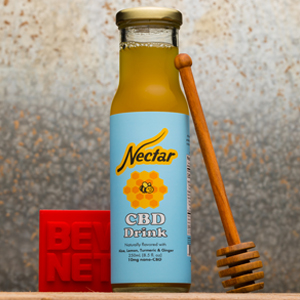
[00:13:17] Ray Latif: She did Toastmasters. There's a lot of preparation happening. What is Toastmasters? Toastmasters is an organization where you can basically go and practice public speaking. Very cool. Very cool. Well, we're going to get to Karen Nation's interview with Mike Schneider, hear all about the origins of the brand, how she's going to market, and how she prepared for this competition that's in the interview after GT Dave's. Also a quick shout out to Trevor from Nectar, which makes a interesting brand of CBD drinks. They're made also with apple cider vinegar and turmeric and honey and all kinds of other great things.
[00:13:48] Karen Nation: The guy literally just was passing by and was like, I should stop at DevNet and had a case of his beverages and just came in off the street and we hung out with him for like half an hour. It was awesome.
[00:14:00] Nosh Live: Thank you, Trevor, for making sure that we didn't have a podcast episode without saying CBD. exactly, exactly.
[00:14:06] Ray Latif: No, but we've encouraged this on the podcast.
[00:14:08] Karen Nation: Yeah. And we had a Danny and Mike from endorphin and they have this cool patented bottle with these agitators in it so that they just ship it with powder. You add the water yourself. They have a really interesting strategy selling exclusively to D one athletic programs at colleges right now.
[00:14:27] Ray Latif: And that was a fun conversation. We talked to those guys about investment. We talked about their supply chain, about, about IP. I mean, we ran those guys through the ringer and that they, uh, that was a great conversation.
[00:14:38] Karen Nation: Some really interesting stuff that they're working on and some outside the box thinking on how to gain volume and market traction with, uh, you know, with their co-packer and stuff like that before anything else. So yeah, thanks Mike and Danny and Trevor for stopping in.
[00:14:51] Ray Latif: Yeah, and if any of you out there who are listening happen to be in the Watertown area, we're at 44 Pleasant Street, Suite 110, Watertown Mass, 02472. Ask for Ray. Ask for Ray. That happens to be the same place you can send food and beverage samples if you like. Indeed, indeed. All right, let's get to our interview with GT Dave. Many of us have heard the sentence, I'm starting a new category. It's a familiar refrain heard in the food and beverage industry. In most cases, what's spoken isn't necessarily true, but in the few cases that an entrepreneur is indeed breaking new ground, the challenges are plentiful. G.T. Dave, the founder of G.T. 's Living Foods and a pioneer of the packaged kombucha category, knows firsthand the difficulties of introducing an entirely new segment to the market, having launched G.T. 's Kombucha in 1995. For years, GT's was alone and in the trenches as the singular kombucha brand. It wasn't easy, but GT's eventually paved the way for what is now a thriving category that includes dozens of brands. In an interview with BevNET's John Craven and Mike Schneider and recorded at the headquarters of GT's Living Foods in Vernon, California, Dave revisited the first few years of his business, marketing the brand to consumers and the milestones that helped chart his journey. He also discussed why being an, quote, artistic sponge supported GT's development and spoke about his approach to working with competitors and the importance of authenticity in and around the bottle. Mike and John here in Los Angeles, California, with GT Dave of GT's Kombucha. GT, great to be with you.
[00:16:33] Pitch Slam: Hello, gentlemen. Nice to see you again. It's been a while. It's been a year, I think, since the last time we did this, hasn't it? It has. Too long in my book.
[00:16:42] Ray Latif: Thanks a lot for having us. We wanted to talk today about category building. It's a question that there are questions that brands ask us all the time about what it's like to build a category. We hear brands all the time saying, I want to start a category. I want to change the beverage industry. And you're a person who has done that. So I think we want to talk a little bit about the tactics, but also the emotions that you go through as you're, you know, as you're beginning a category. So when you started making kombucha, did you know that you were going to be starting a new category in beverage?
[00:17:11] Pitch Slam: So when I got started, I didn't know what I was doing, but I was doing it. And so to me, looking back, the two questions that need to be answered to define and determine if you're actually creating a category is what is it that the consumer needs and wants and why are they not getting it? And how am I, as the company, the brand owner, the pioneer, the fill in the blank, going to satisfy that need? So that's the first most important questions to ask yourself. Because if you just jump those steps and go, I want to create a category and I want to, quote unquote, disrupt, which is such an overused term these days, In my mind, you're almost leading from the ego and everything to me starts with what does the world and the consumer want and what role are you going to play in providing that.
[00:18:04] Ray Latif: And as you're trying to figure out what the world and the consumer wants, what are you looking for? What sort of signals are you looking for from your audience that will tell you what they want?
[00:18:14] Pitch Slam: Well, first of all, it's important to define your audience. So when I first started, I frequently would say to people as well as myself is, I am my consumer. So the way I see the world, the way I see the products on the shelf, the things that I like and the things that I don't like is the profile that I'm going to create for the audience that I'm trying to reach. And so, you know, being raised a vegetarian, being raised with the importance of good clean food and how food can be your medicine as well as your poison, I had a certain philosophy and certain criteria of things that I would seek out and things that I would buy. And so if I saw a disparity on the shelf of that, whether it was making it up too much sugar or overly processed didn't taste Food For bad packaging or whatever, I would say, all right, for my product, I'm going to fix those things. And through doing that, you create, call it a culmination of things that become eventually your product, which is now making a difference, whether you know that at the time or not.
[00:19:14] Nosh Live: So as you were, you know, bringing GT's kombucha to life, you know, you're 15, getting older, et cetera, et cetera, you know, was there a point where, you know, you realized you had a beverage business and, you know, I assume you looked at kind of what was out there as far as beverage categories. Like, did you ever feel the need to sort of be attracted to one of the existing categories or I don't know, was there a point where you're like, all right, none of these are a fit. I'm just going to create a kombucha category.
[00:19:43] Pitch Slam: I mean, I didn't see it as creating a kombucha category because to me, what I was doing, although it clearly was kombucha, was just providing a fresh, authentic, handmade, handcrafted offering that happened to be a beverage called kombucha to people. And honestly, the most insightful experience that I ever experienced was physically, personally demoing at the stores. Because what you would see is, Two things, you would see people's reaction to what you're giving them and you would see the immediate feedback of, wow, this tastes good, this tastes bad, this was unexpected, this was expected. Then you sometimes will get comments on the packaging. I mean, you know, honestly, back in 2005 was when I would sample and people were like, oh my God, this product is so great, but the packaging is horrible. And because at the time, you know, back then Snapple and vitamin water, which were popular, so I consciously or unconsciously emulated my packaging off of them and people were like, I don't think this is that. And so that was a cue to change. So the point that I'm trying to make is it's having that relationship with the consumer. And then the second thing that I would experience while doing these demos in these stores is that I was the consumer, right? So as I was there, as you know, when you demo, you have your busy and slow moments. So the slow moments, I would step away from my table, and I would kind of scour the shelves for stuff. And I would, again, put on the consumer hat, and I'd buy, and I'd taste, and all of that. And through that, I would find, wow, this is great. Too much sugar. Wow, this is great. Not enough benefits. Wow, this could have been great had they made it fresh and whatever. So like, I'll give you an example. So growing up when I first started my business, you know, Edwalla was like the holy grail of functional beverages, even though at the time they were technically just a juice company. But their number one flavor was their superfood. And I would see people going crazy for superfood. And then I would naturally go, all right, well, I'm going to give it a chance. So I would drink it and be like, God, this is like so indulgent. Like it's so heavy and has so much sugar. And naturally, shortly thereafter, Ed Wallace tried to flash pasteurize. So I was like, what am I even drinking? You know, might as well drink just a shelf stable, fill in the blank. And so I thought, all right, well, I'm going to take my kombucha, which is raw, unpasteurized, fully authentic, and I'm going to emulate some of the things that I love in the superfood, which is these blue-green algaes, chlorella, spirulina, but I'm going to incorporate it into one of my products. And that's how our multi-green was born. I didn't know I was disrupting. I didn't know I was perhaps creating the beginning of an alternative green juice to a lot of these candy juices that were out there. But that's kind of the approach. You know, it's a long journey to eventually get there, but there's a lot of thought and kind of milestones that happened along the way.
[00:22:31] Nosh Live: Well, I guess thinking back to 2005 and to your point of the beverages that were popular at the time, you know, everything about what GTs is and stands for is almost so completely the opposite of what you were competing against. I guess, you know, as you're talking about this experience of demoing, I mean, did most people like it right away? Were people like, what the hell is kombucha? I hate this. I mean, what, what was it like?
[00:22:57] Pitch Slam: I mean, it was definitely a mixed bag, right? I mean, you would have people that would like spit it up in front of you or even worse yet, spit it in your face. So you're like, okay, so you won't be buying a bottle. But then there are others that again, back then the health food consumer was a very narrow profile. But those that were in that profile were fanatic. I mean, you're talking about like the raw foodists, the yoga devotees, the vegans, the, you know, I don't want to say extremists, but they like walk the walk. And then when you would encounter them, they would say, oh, my God, I've been looking for something like this. I do the master cleanse, I do apple cider vinegar in the morning, I had this in my country, you know, there's other ethnicities that whether it was Russia with tea kvass or others, there are actually other ethnicities that were used to consuming these types of things, but when they moved to the US, they couldn't find it. So the example that I'm giving is that you started to see that this may not be for everyone right now, but there are some people that immediately get it. And not only do they get it, they're so incredibly in love with it that they will speak to it, they will preach about it. And that's your best advertising, right, is the authentic word of mouth.
[00:24:11] Nosh Live: So for that narrow slice that you appealed really well with in the beginning, did you look at that and say, well, the best case for GTs is just owning this little slice? Or did you think this slice is going to get way bigger? What kind of motivated you to keep going?
[00:24:29] Pitch Slam: You know, honestly, the motivation was just making something that I loved and identifying that there are others that felt the same way. What wasn't important is how many of those people exist and how does that translate into dollars. Because keep in mind, and this is not me trying to toot my own horn, but I was very young when I started. And because of that, My mind wasn't programmed to think of percentage of sales or percentage of growth or business plans or any of those kind of called professional mechanics that typically exist in a usual business. In mine, it didn't. So I was honestly, and I know this sounds super cheesy, I got off on making something that I loved. handcrafting it with my own bare hands, seeing it on the shelves. And I honestly could have just stopped there. But then seeing people purchase it and then say that they loved it. And I didn't need, again, I wasn't interested or motivated to like say, oh, this is going to be global. This is going to be nationwide. This is going to be, I'm going to be the next Coke, or I'm going to be the next fill in the blank. It was just like, I love this and people love it too. And we'll see how far it goes. And that's really it.
[00:25:38] Ray Latif: A tactic that I heard you use was taking ingredients and flavors from other beverages that you saw that were popular and sort of putting your spin on them, making them better. How did you know to do that and did that work for you? Did it make kombucha more accessible to people?
[00:25:53] Pitch Slam: Absolutely. I mean, the one thing that I pride myself on and something I make a conscious effort is to constantly be, call it an artistic sponge. And the reason I put artistic in there is I think most artists study things not only from a, call it a functional visual level, but there's also that emotion associated with that. And so, you know, I would, again, intuitively seek out certain things and see, all right, how can I benefit from this? And one of the things, to answer your question specifically that I noticed is that back in the day, you know, in the mid-90s when I started making kombucha, the color and flavor were very off-putting, right? I mean, people would literally use the word piss when referencing how they thought my kombucha looked. So I was like, I need to change that. And so I thought, all right, well... Let me incorporate, and that's where Synergy was born, let me incorporate some fruit juices. You know, back then cranberry was the holy grail of fruit juice, you know, because of the urinary tract infection and all that. And I was trying to identify a way to introduce this unique offering to people that knew that they wanted it but just needed to overcome certain visual hurdles. And so that's when the introduction of cranberry juice and other juices and even name changes and even packaging designs, trying to understand where the consumer is in their life cycle with their health and wellness and then modify your behavior so you're speaking the same language.
[00:27:15] Ray Latif: And you were leading with Synergy at that point versus leading with GTs and was that a conscious decision to kind of downplay the word kombucha and the brand?
[00:27:22] Pitch Slam: It certainly was. I mean, again, in the 90s, you had in the beverage section, you had vitamin water, Naked Juice, Edwalla, You know, maybe the innovation that Snapple was doing at the time, like Elements and you had SoBe.
[00:27:39] Nosh Live: You're going way back here.
[00:27:40] Pitch Slam: Yeah. I mean, but this is the nineties. I mean, I remember when I was demoing, I would be facing the cooler on the opposite side and it was my stuff, tons of juice, maybe Honest Tea, but what was selling a lot was SoBe. And it was because people were trying to look for function, but there was a lot of... the whole world was very mysterious to them of these herbs, you know, there was echinacea, there was St. John's wort, there was all this stuff back in the 90s. People didn't understand it, but there was a conscious effort to buy this stuff. And so I was seeing that it was selling and I thought, these people have no idea that that sobi has like a speck of echinacea. And I would sometimes ask people straight out, why are you buying that? Oh, I have a cold. So I'm drinking it because it has echinacea. And I'm like, well, you realize it virtually has no echinacea. And so that again was a cue to me of like, all right, well, people want functional things, but they also want results. And I'm not here to sell snake oil. You know, I'm here to make something that people can trust, experience and see the result. And so that was kind of my North Star back then.
[00:28:46] Ray Latif: So as person zero for kombucha evangelism, what were the things that in the early days kept you up at night?
[00:28:52] Pitch Slam: Let's see. I mean, I think when you're doing anything unusual, and what I mean by that is something that you really can't find anywhere else, you're always worried that somehow you're going to be flagged as like the bad guy, right? So you'll see it in today's economy, like we were just talking earlier about these bird scooters, right? Like those new upcoming emerging economies or categories, to get scrutinized because they don't fit to certain, call it regulations or certain expectations or whatever. So I was always worried that at some point that like the FDA or somebody was going to say, wait, you're making raw kombucha? You can't make raw kombucha. Because again, shortly after I started my company, one of the most memorable moments back then was the Ed Waller recall. which then forced them to go from raw to flash pasteurized. So I was nervous, I was like, I hope I don't get pigeonholed into that category, because I'm making a raw kombucha, but I'm not making a potentially hazardous food like a fruit juice or milk. I'm making a non-potentially hazardous food, which is what kombucha technically is. But I didn't know if people were going to understand that difference and maybe just... throw me into this group of raw is bad and then rather send me a warning letter, force me to pasteurize or just worse yet ban my products. Unfortunately it never happened and in my mind the reason is that I always tried to be incredibly responsible, like I didn't want to make over claims, I didn't want to do anything that would somehow mislead people or upset somebody because that's honestly where problems exist is when you start creating problems in the consumer's lives.
[00:30:27] Ray Latif: So let's fast forward to some other kombucha brands come onto the scene. And, you know, as a category leader and the person who started this, how does that feel to see other kombuchas sort of enter the marketplace?
[00:30:39] Pitch Slam: I mean, generally speaking, I love it, right? Because I started making kombucha because I believed in it, right? And I believe the world needed it. And I didn't think that I was the only one that could do it. I felt that at the time I was the only one that was interested in doing it, right? Because everybody was chasing other things and things that, you know, the energy drink market was taking off, what have you. But once my kombucha created attention for kombucha in general and people started entering the category, I had no issue with it. The only time that changed is when... they rather try to aggressively target me or my company or my brand or the products we make by saying, hey, drink ours because we don't have those floaties in it or drink ours because ours is this or whatever. And I, in general, whether in the kombucha space or otherwise, personally have a problem with people who try to advance themselves by pushing somebody else down. And that's something that we make a conscious effort with at GT's Living Foods is that we don't try to advance ourselves by stepping on people. we focus on doing who we are and what we stand for. And if somebody else is doing something else, that's fine. They're totally, it's a free country. They can do that, but I'm not going to reference them when I reference myself. And so that's the only issue I have in the kombucha category primarily. But honestly, in the natural category in general is this like civil war that goes on where people are pointing fingers and saying, he's bad, she's bad. You know, these are the reasons why. And you know, they don't actually even focus on themselves. They just focus on pushing other people down.
[00:32:10] Ray Latif: And how important do you think it is in the initial going or when competitors come onto the scene to have somewhat of a uniformity in product so that if somebody picks up any kombucha and they taste it, they say, hey, I like kombucha and we'll try others versus, oh, I don't like kombucha and we'll put it down or perhaps a uniformity in the messaging that's out there so that people know what kombucha is when they do find a bottle on the shelves.
[00:32:35] Pitch Slam: Yeah, that's a huge topic for me and everybody here at GT's is because kombucha in my mind is something very specific. And if you're not doing that, then you don't deserve to put kombucha on your label. And so to your point, if call it a new consumer is browsing the aisle and sees a kombucha product, but let's say it's not fully fermented, let's say it's not even made with an authentic SCOBY, you know, let's say it's more of a juice than it is a kombucha, they don't know that. And so you run the risk of them going, God, that tasted awful, or God, that tasted just like a regular juice, or I didn't feel anything or whatever, and immediately you're tarnishing that first impression. which adversely affects everybody, right? And so again, I encourage everybody in any category, but especially in kombucha, just to be authentic. I mean, again, we've seen this in other categories. I mean, the fresh pressed juice category was bastardized through, call it the arc from blueprint to now. Kombucha in many ways is exposed to that predicament where, like anything, as soon as it becomes popular, everybody wants a piece of it, everybody wants to dumb it down, everybody wants to throw it in there. You know, on their truck, I mean, the other day, Sam Adams announced that they're doing a shelf-stable 4% kombucha, which, you know, candidly, I have an issue with, because if it's shelf-stable, it's not kombucha. If it's 4%, especially if it's 4% alcohol, shelf-stable kombucha, it's a beer. And just call it that. And what can you do about it as a category leader? So we're working really hard. So we're working with the Kombucha Brewers Association, which, you know, something that I'm thankful for that was created many years ago by Hannah Krom, because we do need to add some legitimacy to the category. Because again, we're not just making sparkling water, right? Sparkling water doesn't need its own association because it doesn't stand for anything. But when you're making something like kombucha that specifically stands for something, you need to make sure that it doesn't lose its identity. And so we're working with the association personally and intimately to create this standard of identity. And we really want to say, listen, the consumer deserves to know if are they drinking an authentic kombucha So authentic to me is raw, made with a SCOBY, actually fermented with a fermenting agent in a tea base. Like those are the fundamentals. So but from there it goes to is it pasteurized? Is it adulterated? Is it denatured? Is it filtered? Is it ran through some kind of equipment to change its personality? The consumer needs to know that. And then how about it's not even kombucha, maybe it was a water-based that somebody threw in a concentrate in. I mean it's just like buying a juice, you want to know was that juice from concentrate? Was that juice fresh pressed? Was that juice pasteurized? Was that juice frozen and then thawed? I mean, those are all the things that in any item we run through our filter of, is this for me? Does this deserve my dollar? So same with kombucha, right? I mean, right now, unfortunately you have all these different brands that have different processes and different standards, different marketing, different pricing, you know, all of that, but they're failing to identify what are they doing and how does that relate to authentic kombucha? Because the consumer, I guarantee you, and pull any consumer aside and say, hey, would you want to buy authentic kombucha that's like real? Or would you want to buy something that has like kombucha somewhere in it? And almost everybody will say, I want to know. So at least, if anything, I can make the choice. Because if I think that authentic kombucha is too polarizing and too strong or whatever, then I at least know that the category for me is the beverages made with a kombucha concentrate or something like that. So it's just information.
[00:36:12] Nosh Live: You know, in the past year or so, you've put out a host of different products in, I guess we'll call them nascent categories, kefir, as well as, you know, a CBD kombucha, which is still kombucha, but the wide world of CBD. Curious how, you know, now, you know, you're not 15, you're not someone who doesn't know anything about business. You know, how do you approach these new categories? You know, what are your... expectations or metrics, you know, that you would use just in, I don't know, even dipping your toe in the water in some of these?
[00:36:43] Pitch Slam: That's a great question. So typically, and this is sometimes a conscious or unconscious thought process. So the first thing that I always kind of meditate on is, again, as cheesy as it sounds, but is this going to make the world a better place, right? Is this going to change people's lives? And so many years ago I was exposed to CBD and it was presented to me as, hey, this could provide calmness, peace of mind, consent to you, body-mind-spirit, right? And so then I naturally said, all right, I'm listening, I'm interested and started to consume it and loved the way it made me feel. Very similar to kombucha, right? Kombucha was in my parents' household, they loved it, I started drinking it, I loved it. So clearly there's similarities here. To answer your question of why did I feel compelled to bring it into the portfolio of my company's products is it felt right. It is plant-based, it is made from nature, it does provide tangible value to people when presented to them properly and I do believe that there's a lot of people out there that rather are on antidepressants or on prescription medicine and or just having health issues that CBD could benefit them just like it did me. And so when I, you know, looked at where this would fit and why I would do it, it made sense to put it in a thoughtful way with our kombucha, right? Because kombucha is what most people know us for. But make sure it doesn't get lost on shelf because I didn't want to, and this is kind of my mission to make sure CBD is represented on the shelf responsibly, is I didn't want to just come up with a flavor and call it GT's kombucha. ginger turmeric with CBD because I think that's confusing. I really wanted to give the CBD a front and center kind of positioning so people could slowly understand that we believe here at GT's that this is important and it deserves that real estate and that attention.
[00:38:32] Ray Latif: In the entire conversation that we've had you've been person zero for each of your products. How important is that as an entrepreneur to be the biggest user of your own products? I mean to me it's everything.
[00:38:43] Pitch Slam: I think I'm alone sometimes in that statement, because I think there's people who are like, hey, as long as it sells, I don't need to drink it. But for me, I mean, I don't make anything that I personally don't want to see on the shelf or personally something that I don't want in my diet. So criteria number one is this has to be something that I want to consume, this has to be something that I genuinely will see benefits in, and it of course has to be from nature. And so to me, I mean, for better or for worse, as you called it, ground zero for all our product innovation. Because in many ways, everything that we do here at GT's is my personal expression. And for better or for worse, I like to create things through my, call it artistic vision or artistic ambition. Just like an artist that does a painting, they don't say, I'm going to paint this because I think people are going to think this is pretty. They say, I have something to say. I'm going to create something and my personality and my background and my philosophies are all embedded in this Creation Nation I just hope that people will be moved by it in any way that they are. And kimchi veggie kefir is born. Thank goodness. I mean, again, I think my job is to, just like with kombucha, is to expose the consumer to a different way of eating, drinking and then subsequently thinking. I believe everything starts with the belly, right? So if you can get somebody to understand how food plays a role in our personality, in our health, our mood, all of that, then also understand that there's not a single approach to anything. Something can be sweet, it can be spicy, it can be bland, it can be vinegary, it can be whatever. But I want people to understand the benefits of each of those. So with the kimchi that you referenced, I mean, here in the US, trying to get people to drink a product called kimchi is just like it was 20 years ago, trying to get people to drink something called kombucha. But I'm not trying to take over the world overnight. I'm big on slow and steady, right? And again, whether we sell one bottle of our veggie kefir kimchi or 1 million bottles, it's all the same to me.
[00:40:38] Ray Latif: Well, thanks, GT, for being with us. It's been fun and insightful as always, and hope to have you on the show again.
[00:40:44] Pitch Slam: It was my pleasure. Thank you for having me.
[00:40:45] Ray Latif: Thanks. About an hour northwest of GT's Living Foods headquarters, you'll find Calabasas, a quiet celebrity haven that's also home to Creation Nation, an upstart brand of protein bar and bite mixes. As we discussed, Creation Nation was the winner of Nosh Live's Pitch Slam 5 shortly after her big win. Nation sat down with BevNET CMO Mike Schneider and spoke about the genesis of the brand, what she's learned about her consumers, the go-to-market strategy, surprises about being a CPG entrepreneur, and her experience in the competition. Mike Schneider here at Nosh Live Winter 2018 with the winner of Pitch Slam 5, Karen Nation of Creation Nation.
[00:41:31] Living Foods: Hi.
[00:41:32] Ray Latif: Karen, for the five people maybe who didn't watch Pitch Slam, what is Creation Nation?
[00:41:37] Living Foods: Creation Nation is the world's first protein bar mixes so that you can make your own fresh protein bars at home in minutes. It's a no bake mix, easy as making a protein shake.
[00:41:47] Ray Latif: What is it about make your own protein bars that got you excited enough to build this company?
[00:41:52] Living Foods: It's because I always made my own homemade. I didn't like all the sugars, preservatives, certain ingredients I didn't want, ingredients I couldn't pronounce and all that stuff. Bars also sit on the shelf for a year or two, and anything you make from scratch is going to last a few weeks. That's just the nature of real food. And as a sports nutritionist, knowing that, I just would always make my own. And my clients loved them and loved making the recipes. But nobody wanted to show up to three different stores to get all the ingredients, put it all together from scratch. And I just thought, yeah, why is there not an easy way to do this? Millions of people are doing it on Pinterest and Instagram. And, you know, let's just make it easy for everybody in the same vein of people buy protein powders to make smoothies. Why not a protein bar mix to make bars?
[00:42:35] Ray Latif: So you created this framework for people to be creative with. And we live in the social media era. You said Pinterest. You said Instagram. What have you learned from people who are using your product?
[00:42:44] Living Foods: Yeah, so what I've learned is that people do it for all different kinds of reasons and make them all different kinds of ways. People find their favorite. Some people add coffee and coconut oil or grass-fed butter. Other people... They go for the Bulletproof version? Yeah, they go for the Bulletproof version. Other people just water and peanut butter, super basic. The way I make mine, I add two mashed bananas, mix it up, roll balls, you're done. And that's how I like mine. So everybody kind of does their own thing. And with the holidays, you can make them seasonal, you know, pumpkin pie, protein balls, all of it.
[00:43:14] Ray Latif: Who is the audience?
[00:43:16] Living Foods: Families, when you're buying protein bars by the box, it's really nice to be able to make your own and you're saving money too as well. So it's about half the price of a box of bars, but yet you're getting all these organic proteins and super foods and higher quality. So it's partly families as well as food tribes. We have a big following with paleo and keto and gluten-free because you control the sugars. You decide if you're going to make them sweet, not sweet, or even keto friendly.
[00:43:42] Ray Latif: What about the go-to-market strategy? This impresses me as something that would work just as well in the supermarket as a direct-to-consumer.
[00:43:49] Living Foods: Yeah, we are kind of 50-50 e-commerce. We started out the first few years really just e-commerce. Thrive Market was one of our early partners, and they've been amazing. And then we, this year, branched out into a lot of brick-and-mortar distribution. Grocery is a great place, really anywhere that people would typically buy a box of bars. We're in HEB, we're in Whole Foods Market, and a lot of the natural retail stores.
[00:44:11] Ray Latif: Karen, a relatively new entrepreneur, what surprised you the most about being an entrepreneur and creating this product?
[00:44:18] Living Foods: That's a really good question. So I've always been an entrepreneur actually, but this is my first CPG. And I definitely would say I have a great work ethic. I'm used to working seven days a week. I'm used to giving it my all, but this takes things to a whole nother level. Like, I think I'm really surprised. Like I thought, oh, well, you know, I'm used to working hard. It'll be fine. But you know, I barely sleep anymore. I think that really surprised me that, I mean, you really are juggling so many different aspects of the business at all times. And until you really grow the team and you're a big brand and you can just hire, you know, a dozen people, but until then, as an entrepreneur, you're doing a lot.
[00:45:03] Ray Latif: So let's, let's talk about the competition for a minute here. I'm sure that, you know, you went in and prepared and we're certain that you were going to crush the hopes and dreams of your five competitors and you just went in and did it methodically.
[00:45:14] Living Foods: I'm just kidding.
[00:45:16] Ray Latif: How did you prepare for the competition?
[00:45:19] Living Foods: So I did watch some of the YouTube videos. Project Nosh does a great job with all your live content, so that makes it really easy to go back and look at what other people have done.
[00:45:30] Ray Latif: Karen Nation, OG Nosh reader, because she doesn't even, she calls it Project Nosh still, right? Sorry, did I say it wrong? No, you didn't say it wrong. That's OG Nosh.
[00:45:41] Living Foods: Nosh.com, Nosh Live. So yeah, I watched a lot of those. I wrote notes on sort of the format that people would kind of talk through the different things. I mean, we already had a pitch deck and stuff like that, but we just kind of really fine-tuned it just for this. I had a graphics designer help me kind of clean it up a bit, and then just rehearsed my script a million times because I get really nervous in front of people, and I'm shy, so I didn't want to freeze up, and so I memorized things, and yeah.
[00:46:11] Ray Latif: You did great. You're doing well here. I mean, it's kind of similar. There's like, you know, tens of thousands of people listening to this thing right now. What about the competition? I mean, I joked before about you methodically destroying the competition, which is obviously not the way the natural food industry works, but did you think you would win? What did you think of the competition?
[00:46:34] Living Foods: I thought the competition was great. I didn't think, honestly, I did not think about, am I going to win or not win? I think I was so worried about whether I was going to remember what I had to say. And, you know, I really wanted to take this opportunity and make the most of it and really be able to share what this new category is. So that was what was most important to me. And it was just an added bonus to win. And I was definitely inspired by all the other finalists and there's some really great tasting and great
[00:47:02] Ray Latif: Any specifically that you were like, hey, I'm going to go eat that or I want to try that.
[00:47:07] Living Foods: Yeah. The Spudzies chips with the sweet potato chips, those were good. And I thought that the Tiny Giants had really great marketing. It was bright and really fun. And even though I'm not a kid, it's a kid's, I want to try it. I want to taste them. Yeah.
[00:47:21] Ray Latif: What's next for Creation Nation?
[00:47:23] Living Foods: We are expanding our distribution. We're going in a lot of new stores, so we're just, you know, growing. We've got some new flavors coming out, some new line extensions coming out. We'll be at Expo West in March, and we just want to really continue to connect with our customers. We love how people share all their recipes, because it's so easy. I mean, it's like making a smoothie. I put this in that, and I did this.
[00:47:45] Ray Latif: And you also feel like a creative, too, when you're doing it, right? You feel a bit like a chef. Hey, I made my own bar, you know? They just take ownership of it and that's great for your brand.
[00:47:52] Living Foods: Yeah, we love that. We love to see people going, oh, I made a keto recipe or, oh, I made these for my kids. And with so many great brands out there, like Wild Friends, Nut Butters has all these seasonal flavors or Georgia Grinders has a new hazelnut butter that I just tried. I mean, it's like you can put any of these really fun things and it's just never boring. There's like no flavor fatigue ever.
[00:48:17] Ray Latif: Right. Yeah. Well, Karen, thanks so much for first of all, being in Pitch Slam. Congratulations on winning Pitch Slam 5 and thanks for being on Taste Radio.
[00:48:25] Living Foods: Thanks.
[00:48:28] Ray Latif: That brings us to the end of episode 13 of Taste Radio Insider. Thank you so much for listening and thanks to our guests, GT Dave and Karen Nation. Tune in on January 1st for episode 143 of the flagship Taste Radio podcast when we look back at a few notable interviews from the first half of 2018. Please subscribe to Taste Radio Insider on iTunes, Spotify, Stitcher, SoundCloud, and or Google Play. As always, for questions, comments, ideas for future podcasts, please send us an email to askattasteradio.com. On behalf of the entire Taste Radio team, thanks for listening, and we'll talk to you next time.