[00:00:05] Danny Grossfeld: Hey Mike, before we start this episode of Taste Radio Insider, I just want to take a moment and thank everyone who turned out for our Winter 2018 events. We had such an amazing experience with you all and we're really looking forward to 2019. You know, when I got back my inbox was just destroyed with messages from people who couldn't come to BevNET Live Winter 2018 because it was sold out.
[00:00:25] Ray Latif: Yeah, Landison, for those of you who don't want to miss out and are planning ahead, double win here. Super early registration pricing is available now until January 11th. So visit bevnetlive.com and noshlive.com so you don't miss out. Register early and save. We look forward to seeing you there. And now Taste Radio. Hey everyone, welcome to another edition of Taste Radio Insider. I'm Ray Latif and with me are my BevNET colleagues Mike Schneider and Jon Landis. This is episode 14 of Taste Radio Insider and we're recording from the Taste Radio studio at BevNET headquarters in Watertown, Mass. In this episode, we explore trends that may shape the food and beverage industry in 2019 through the lens of our BevNET and Nosh editorial teams. We also sit down with Shark Tank alum and Hot Shot Coffee founder Danny Grossfeld, who discuss the development of his innovative brand of heated, canned coffees. Just a reminder to our listeners, if you like what you hear on Taste Radio Insider, please share the podcast with friends and colleagues. And of course, we'd love it if you could rate us on iTunes. A few of you have, I really appreciate it. For those of you that haven't yet done it, it's very simple. You go to iTunes, you type in Taste Radio Insider into the search bar, you look us up, there's an opportunity to rate and leave a review. If you leave a review, let us know. Send us an email to askattasteradio.com and we will send you a brand spanking new Taste Radio t-shirt. It's soft.
[00:01:59] Shark Tank: While supplies last.
[00:02:02] Ray Latif: No, it's very soft, it's high quality, and you'll be the envy of all your fellow entrepreneurs. Big and bright and bold. You have Jon Landis, right? Yeah, I have three. You have three?
[00:02:11] Shark Tank: Why do you have three? Because I'm greedy and selfish.
[00:02:15] Ray Latif: Is that sort of like if you've eaten too much, you can use the large? If you're a regular Jon Landis, you have the medium?
[00:02:22] Danny Grossfeld: I really love... I'm wearing a Brewbound shirt right now. I love our company tees.
[00:02:27] Ray Latif: I told this bro, one each. He's like Steve Jobs. He's got one uniform. He's wearing like BevNET and... Or maybe it's like me. I have five different blue shirts that I wear every week.
[00:02:36] Taste Radio: That is all you wear.
[00:02:37] Ray Latif: And then you got your Taste Radio t-shirt on underneath that, it looks like there. No, this one's a little different. You've got the Taste Radio t-shirt on underneath it, Ray. Oh, I must have been mistaken. I do have the Taste Radio t-shirt underneath this. It's very soft, very comfortable. Yeah. If you leave us a review, yeah, just send us an email. We'll send you one of those t-shirts. So this is the last Taste Radio Insider episode of 2019.
[00:03:00] Danny Grossfeld: Yeah, man, I just popped in. I'm actually on vacation. I got a bit of a cold, but I live down the street. So I was like, hey, I'll come down and record you guys.
[00:03:07] Ray Latif: We thought he wasn't coming in. We're like, Landis is dead. We actually recorded me and Mike about five minutes worth of the intro here. We're about to just talk about how beat Jon Landis is. Landis pops in. And we're like, what the heck? I thought you weren't coming. He was actually gonna wear a mask, he said. He did, he wasn't feeling well. Should I go to CVS and get one of those masks? And Ray was concerned with voice muffle, I was too.
[00:03:29] Danny Grossfeld: Yeah, well, I just really wanted to wear one of my new Christmas gifts, this nice new coat that I got.
[00:03:35] Ray Latif: Congratulations.
[00:03:36] Danny Grossfeld: That no one can see.
[00:03:37] Shark Tank: It's a puffy coat.
[00:03:39] Ray Latif: What is that, velvet?
[00:03:40] Shark Tank: Velvet.
[00:03:42] Ray Latif: So now all Jon Landis's Taste Radio and Brewbound t-shirts, which he wears every single day, will be covered by puffy coat.
[00:03:49] Danny Grossfeld: I've been wearing them recently a lot because I'm going to New York tomorrow for four nights of fish and I gotta wear all my fish t-shirts.
[00:03:56] Shark Tank: Oh, I forgot he has fish t-shirts as well. Almost forgot. How could I forget?
[00:04:00] Ray Latif: I think it's impossible, almost impossible that you forgot. I didn't forget. So as I mentioned, this is the last episode of Taste Radio Insider for 2018. We started the new podcast in September and iterated, adjusted, innovated, tried to make everything really interesting and insightful for our listeners. We are expecting some great things for both podcasts, Taste Radio and Taste Radio Insider in 2019. Please continue to email us at askatasteradio.com. We'd love to hear those ideas for new content, for new subject material, for new interviews. And yeah, love to hear from you folks. Gonna keep iterating. Now we're going to be traveling next month in search of some really good content for both podcasts. I'll be in Bend, Oregon on January 9th and 10th. and traveling to San Francisco on January 13th and 15th for the 2019 Winter Fancy Food Show. John, Mike, you'll both be there as well.
[00:05:02] Danny Grossfeld: Yeah, we're going out. We got a big crew going to Winter Fancy Foods. Myself, Mike Craven, Andrew Brayton. We got Jackie and Josh. And man, we got a whole bunch of people. We got the whole BevNET team. Carol Furnash is going out there as well. So we got a lot to report on from that show. Brayton and I have been working like overtime the last few weeks, just preparing and talking to people who are exhibiting and getting ready to have a bunch of great conversations out there.
[00:05:28] Ray Latif: Yeah. Always a fun show, for sure. Now, in between my visit to Bend and the Fancy Food Show, most of the Taste Radio team will also be in Sonoma. That's on January 11th and 12th. If you find yourself on any of these fine locales, please let us know. We'd love to meet up if we can. You'll find me at the on-premise dispensaries in downtown San Francisco. It's a shocker. I think that's one of those things that goes without saying. People are like, hey, I wonder where Atlantis is. Oh, let's check one of the many dispensaries in San Francisco. On-premise stuff is really interesting.
[00:06:00] Danny Grossfeld: I mean, that's where I see, I mean, are we getting into our predictions for 2019 here? I'm assuming that some of our colleagues have been talking about CBD coming up. You are correct.
[00:06:10] Ray Latif: You are correct. You predicted what they predict.
[00:06:13] Danny Grossfeld: Exactly.
[00:06:13] Ray Latif: So there you go.
[00:06:14] Danny Grossfeld: Yeah. Well, like I was going to say, the on premise consumption thing for cannabis is interesting because the beverage applications obviously lend towards that. I mean, you think about alcohol beverage applications on premise at bars and things like that. And, you know, when I was in high school and college, all the talk was about Amsterdam and the coffee shop. So, uh, you know, I think that there's going to be a lot of proliferation in the next few years and it's really just kind of the wild west right now. So it's kind of fun to go talk to people and enjoy.
[00:06:44] Ray Latif: You're going to the Wild West? Yeah. Dude, because it's the Wild West?
[00:06:48] Shark Tank: Yeah. It's quite wild.
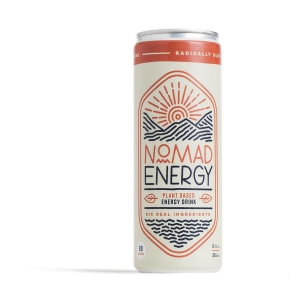
[00:06:50] Ray Latif: San Francisco is weird for me, man. It's great to go for a Food Show, because I used to go for all the tech shows. And when I was in tech, I'd run around San Francisco like crazy. It's just strange. It's a different experience. Very different. Yeah. I like this show. It's a great way to kick the year off. Definitely, definitely. Now, before we get into these 2019 trends that Landis referred to, I wanna talk for a sec about this can that I have in my hand that is Nomad Energy, made by a company called Nomad Trading Company. And Mike, I know that cascara is an ingredient that's near and dear to your heart.
[00:07:30] Shark Tank: It's a category that I pick on a lot, I think.
[00:07:34] Ray Latif: And Nomad had put a lot of emphasis on Cascara as part of who they are and what they were marketing. This product, though, is a little bit of a different take on what they had been offering. This is called Nomad Energy. It's described as a plant-based energy drink with six real ingredients.
[00:07:55] Shark Tank: So they were definitely waving the Cascara banner early on as Nomad Trading Company, and Nomad Trading Company was the primary logo on their label. Now, Nomad Energy, front and center, the biggest thing on the label too, aside from this cool sun and interesting graphics, maybe enough to draw your eye in to see plant-based energy drink.
[00:08:15] Ray Latif: On the previous label, the word Cascara was big, front and center. Now you can find it twice, in the ingredients and then under one of the call-outs, radically sustainable, powered by upcycled cascara. Another interesting word on here is the word nootropics. Did you notice that? I did. Caffeine and nootropics, no crash. 90 calories. The ingredient panel here is super simple. Sparkling water, cascara, organic lemon juice, organic lemon extract, organic maple syrup, Himalayan pink salt, and ascorbic acid. I appreciate what they're doing because, Mike, you and I were talking about this before we got on the mics. I mean, cascara is one of those things that over the past year has been mentioned more than a few times within beverage industry circles, but it still seems to be very unknown among consumers. Cascara, to even explain what it is, takes a lot of time. The fact that it is the coffee fruit, it's the fruit that surrounds the coffee bean, What are Cascara's functional attributes? Why should I care that it's being upcycled? What does it taste like? What does it taste like? I mean, all these things are making it seemingly an uphill battle when selling a product like this. And I appreciate the fact that Nomad is just going for what people understand. I mean, keep it simple seems to be the name of the game. It seems to me that they're trying to run the buy playbook here, who initially launched a water with coffee fruit. And their initial messaging was about coffee fruit. And then they sort of put that to the side and... It was all about taste. It was all about taste. Ari's tell this story from an event that we held in Chicago a few years back. And one of the event coordinators was drinking a bottle of Bai. And she wasn't part of the beverage industry. And I asked her, you know, why are you drinking that? And she said, well, number one, it tastes good. Number two, It only contains five calories. And number three, the antioxidants are nice. It was definitely the collision of those three, because there's a lot of things out there that taste good, obviously, with 51 grams of sugar. Odwalla, for instance. Yeah, I mean, that's what she noted. She said it tastes better than a lot of low-calorie beverages. And so I rode that to a billion seven acquisition. Well, I can't, I can't predict that nomads going to sell for a billion dollars. I think they're on the right track with doing something like this again, keeping it simple and making sure that the hero ingredient doesn't trip them up as they continue to evolve and grow.
[00:10:40] Shark Tank: Yeah. The devil's advocate here would say that the energy space is a really crowded space. A lot of players in that.
[00:10:46] Ray Latif: The question is, is better for you energy going to be a thing in 2019? Well, that's a good question, Mike, but perhaps our editorial team will have a few thoughts on that. All right, folks, I'm sure you're all wondering what will 2019 hold for funding, innovation, and emerging categories in the food and non-alcoholic beverage industries. Well, we've got some predictions from members of the BevNET and Nosh editorial teams who offer their takes on what's to come and how they see the business of food and beverage evolving over the next 12 months. All right, I'm with BevNET founder and CEO, John Craven. John, how's the end of the year going for you? Excellent, Ray, thanks for asking. I'm expecting big things out of 2019 for this company. But I'm curious as to your thoughts on relevant trends for the food and beverage industry going into next year.
[00:11:40] Shark Tank: Definitely. I think, you know, there are a couple pretty obvious ones to talk about. You know, for sure, cannabis is one that I think you know, especially now that the farm bill is signed and sealed, I suppose, you know, I think the floodgates for cannabis related food and beverage products are really going to open. I do think that, you know, that's not to say that it's going to be a year where this all gets figured out, but it'll certainly speed up the evolution of companies trying to figure out, you know, what the right products are and right formats are for certainly CBD products and, you know, which ones the consumer will really adopt. I think, you know, what we saw in 2018, which is pretty much, you know, let's put cannabis and everything and see what sticks. You know, I think that's something that, again, you'll probably see that continue, but I think, you know, as 2019, you know, goes on, we'll have a better sense of just, you know, which ones are good and which ones are bad.
[00:12:37] Ray Latif: You mentioned CBD, THC as an ingredient seems to be of interest among some food and beverage companies as well. Do you see a particularly large runway for growth for that ingredient?
[00:12:48] Shark Tank: For sure. I mean, that's in sort of the same boat of just, you know, well, not totally the same boat with a much more complicated regulatory environment. You know, I think that, too, you know, you're seeing products that, you know, people are putting or companies are putting THC in that previously didn't. You know, some of the stuff that I've seen, I think kind of makes sense and is interesting. And some of it, I think, is just maybe a little too over the top to really be long term viable. I think, you know, next year with just, you know, presumably more recreational dispensaries out there, I think you are going to see that pick up where Again, it's just sort of take any product that a consumer already consumes and, you know, load it up with some THC and see if, you know, I guess one plus one equals three, so to speak.
[00:13:37] Ray Latif: So we've seen a flurry of activity in the M&A world, particularly in the beverage industry over the last week and a half, two weeks. And what are your thoughts on the funding environment for beverage in particular in the coming year?
[00:13:52] Shark Tank: Yeah, I mean, I think there are obviously some bigger kind of macroeconomic concerns that are starting to at least have grumblings. But, you know, I think this is a space that, you know, there has been a fair amount of, you know, M&A activity, as you pointed out. It seems like that will continue as just the big CPG companies need to continue to use their cash to acquire innovation. So I think, you know, as long as that's happening and, You know, it's hard to imagine that this is an industry that would be one of the early ones to be hit by like a cool down or recession. You know, I do think the climate for it is pretty good. However, and I've said this before, I think, you know, the challenge that's still out there that there's all this investment money being deployed and, you know, where's the return? And I think right now what we're seeing is that A lot of these companies are still in the early stages of deploying that capital that they maybe raised in 2018 or late 2017. But I think 2019, as each year goes on, we need to see some companies really break out and show that this is a good place to invest and it is a place to get a return, aside from just hoping that you've invested in something that gets a a grand slam, you know, billion dollar acquisition from some big CPG company. But isn't that the validation for some of these brands is to get acquired? Oh, it is. But I think, you know, there's different levels of that for sure. So, I think if you look at, you know, some of the deals that are out there, you know, even this week with, you know, majority, you know, stakes being purchased, that's different than, you know, something like, I don't know, buy or Corewater, you know, these things that are really big in size. And that's not to knock any of the smaller deals. I mean, presumably investors who put in capital are getting a return. My point is just that, you know, you need some of that. You need some companies that just go on and keep growing and, you know, continue to get bigger. And, you know, you need a steady pipeline of ones that are having that big exit, you know, that's what fuels kind of the next round of people who want to, you know, put money in or funds wanting to, or being able to re-up and do it again. So, you know, I guess I would say I'm sort of optimistic, but maybe slightly cautious too.
[00:16:10] Ray Latif: We see these end of the year predictions roundups often. What's your perspective on some of the trends that were predicted to be? really relevant and important in the beverage industry, but haven't really lived up to the expectations?
[00:16:23] Shark Tank: Well, I think, you know, you always see that with any host of sort of functional beverage concepts that are out there where, you know, I think people want to believe that, I don't know, to use one like relaxation was going to be a thing that became the same, you know, caliber as energy or You know, it's like those sort of PRs you see of, you know, X is the new, I don't know, coconut water or something like that. Right. So I think, you know, the stuff that probably didn't work out were things that, you know, they certainly have their, their chance and their, their niche and, you know, their place in the industry. I think it's when, companies sometimes try to, I don't know, accelerate them at a pace that's not sustainable. So I think, you know, I always take that sort of stuff with a grain of salt. I think, you know, it's interesting looking at, you know, just the categories that, you know, people wanted to talk about at the end of some of these years. And I was thinking back to one, I think it was from 2016, where someone had asked me for my predictions on cold press juice. Which, you know, I guess to kind of make a point relevant to your question, like, I don't think anyone's really going to ask me my perspective on cold-pressed juice this year. So, you know, you see some categories kind of come in and out quicker, probably the ones that people would talk about more for beverage. I mean, again, big things like, you know, coffee, kombucha, the stuff we just keep talking about, sparkling water, you know, what's really going to change in that in 2019. I guess I personally wouldn't place any bets, but there'll be categories to watch for sure.
[00:17:57] Ray Latif: Indeed. John, thanks so much for taking the time. Happy holidays. Thanks, you too, Ray. All right, I'm now with Carol Ortenberg, who's the editor of Nosh. Carol, thanks for being with me.
[00:18:08] Taste Radio: Thanks for having me, Ray.
[00:18:09] Ray Latif: So 2019 trends, what's on your mind?
[00:18:12] Taste Radio: Oh my gosh, 2019 trends. I mean, first of all, I'm really excited and maybe sometimes a little scared by all the food tech that's out there. You know, we saw in 2018 just what you can do with plant-based meat. You look at Beyond Meat, you look at Impossible Foods, Beyond Meat filing for an IPO, no less. I think 2019 we're going to continue to see alternative protein sources evolve and that might mean the rise of lab-grown meats or cellular meats and really how do we regulate that? What do you label them as? How do you convey that to consumers? You and I are both in the industry and this is pretty complicated stuff even for us. So I think brands have their work cut out for them explaining how this meat is produced and where it comes from when it comes to consumers. That's not to say it's not very exciting.
[00:19:06] Ray Latif: Now, as of this recording, you are furiously writing a story about hippies getting a new round of funding. Hippies, the crunchy snack company. What do you expect the environment to be like for food companies in the next year?
[00:19:19] Taste Radio: It's been a fast and ferocious 2018, certainly lots of investments. There's just more and more people entering the space. Just today I was told of a food brand with numerous NFL investors. So there's a lot of interest in the space as people realize that Food is not just something you eat. It contributes to your health, your well-being. It's a lifestyle now. People Instagram it. They want to post about it. So I expect interest will still continue. That said, you know, investors keep getting more strategic and dialing in their portfolios and what makes for a successful brand. We are at a period where there's a lot of interest in natural and organic, and it's to be seen You know, what if the market becomes saturated? Can it become saturated? And what that will do for the investment climate.
[00:20:10] Ray Latif: Great stuff. Thanks, Carol, for the time and look forward to seeing you and talking to you again in the new year. Thanks so much, Ray. All right, I've got Martín Caballero on the mics. Marty, how are you? I'm fantastic. How are you, Ray? I'm doing pretty good. I see you've got a nice big glass of Nitro Cold Brew right next to you. Got to do it, you know, it's Friday. Got to get through. Indeed, indeed. So you have very closely followed the non-alcoholic beverage industry over the past year, over the past three years, so to speak. But for 2019 in particular, you know, what are you expecting in terms of trends that are going to be affecting and relevant to the beverage industry?
[00:20:49] Danny Grossfeld: Well, I don't think it's any surprise to anyone that CBD comes to mind. I mean, we're talking about one of the hottest functional ingredients in a hot functional category overall. So I think over the course of the year, especially with the passing of the farm bill, which recently just happened yesterday, actually, I think we're going to see a sort of gradual and incremental increase in the level of interest by some of the large non-alcoholic strategic players, Coke, Pepsi, KDP. I don't want to overstate this. I don't think that necessarily in the next year we're going to see a proliferation of these companies putting out CBD drinks. I think there's definitely still questions over the FDA guidance on what can be allowed in terms of food and beverage. Right now it is not allowed. in terms of FDA guidance. But I do think that over the course of the coming months and over the next 12 months, we're going to see that some of these large strategic players, obviously, they're already recognizing and already exploring some of the potential for this. I think we're going to see some sort of investment, some sort of incremental play into this space, because I think that as time moves forward, there's going to be this growing acknowledgement that competition is going to be very hot in this area. There's a lot of maybe attractive brands that have already established a little bit of a reputation in this space that could be receiving investment to help scale and grow. So I'm not sure exactly the form of it's going to take, but I think we're going to see one of these strategic players make the decision to try to get out ahead of this and try to get involved in some incremental way. We'll see, you know, how that manifests.
[00:22:24] Ray Latif: Is your perspective rooted in the fact that we have already seen significant investment into cannabis on the beer and spirits side of things?
[00:22:34] Danny Grossfeld: Somewhat. I think in general, that's a good bellwether for the level of interest from the large strategic players in this space, be it non-alcoholic or alcoholic. With some of the investments we're seeing in Canada, I think is a little bit different with Constellation. And there was recently some news about AB InBev exploring some options there as well. That I think because of the regulations in Canada that involves sort of more vertical integration, cultivation, extraction, all different levels of cannabis, the plant. Whereas here in what I'm sort of looking at is specifically the non-psychoactive CBD market. Certainly cannabis in general is a big trend, but I think that the health and wellness aspects of CBD and the fact that it is a lot of the regulations are going to be lifted with the farm bill, I think that is going to be the pace setter for cannabis stuff. So it's good to see that people are exploring this space, but I think this one is going to be more closely related to the CBD.
[00:23:31] Ray Latif: In terms of beverage categories that you think will have some lift in the coming year, what's your perspective?
[00:23:38] Danny Grossfeld: Yeah, I think plant-based is certainly one of the most exciting ones that I've been tracking really since I've arrived here at BevNET. It really just evolves and changes every year because plant-based is such a huge umbrella. But I think when we're talking about sort of alternative dairy, that's going to be a really interesting space to watch. I mean, we saw obviously almond milk. As soon as sort of almond milk became a thing that sort of mainstream consumers knew about and accepted, and we see it on grocery shelves, we're already moving on to the next plant-based source. And oat milk certainly was one of the more attractive ones of this past year. I mean, obviously, Oatly was one of our rising stars for the past year. And we've also seen some of the other brands announce launches in the past few months, including Quaker doing its own drink. So I think that the ceiling for plant based really hasn't been seen yet. And I really think there's a lot of great opportunities to create synergies and introduce this to new consumers via coffee. Starbucks recently announced a couple different new SKUs with almond milk. But again, they're, you know, experimenting with more stuffs in their cafes. You know, obviously, some of the more innovative emerging brands have done this and some of the bigger ones as well. I'm thinking of Calafia, certainly. So I think there's a lot of synergies there and I really just think that people are going to continue to define plant-based in different ways, different use occasions, different sort of pairings, different sort of culinary inspirations. I really don't think that we've seen anywhere close to the ceiling for plant-based alternative dairy for sure.
[00:25:05] Ray Latif: Outstanding.
[00:25:06] Danny Grossfeld: Finally, you know, the other one I'm really looking forward to watching the other category, I should say, is kombucha. I think over the past couple of years, we've really seen the emergence of leaders in this category, you know, companies that are willing to experiment with formats, flavors, aggressively scaling and expanding and getting into more stores. So I think it'll be interesting to see how 2019 shakes out because we're seeing these companies kind of go in different directions. slightly different approaches. We saw Brew Doctor make a concerted effort to go towards C-Stores with its cans. Humm Kombucha is also getting into that play as well. Whereas you look at GTs and you see a company that is sort of evolving in different ways and launching CBD water, going outside of Kombucha, sort of defining itself in a broader health and wellness space. So I think amongst these leaders, I should mention Revive as well, who was just earlier this week was Pete's Coffee, which took a minority investment last year, a year and a half ago, is now the full majority owner. So that's a new chapter for that company as well. So I think amongst the leaders, we're going to see some interesting, we've seen different strategic approaches, and we're going to kind of see over the course of this year, you know, what works, what doesn't work, maybe it all works, maybe none of it works. But it'll be interesting to see those sort of bigger players really branch out and define themselves further.
[00:26:24] Ray Latif: All right, I'm now joined by the Editor-in-Chief of BevNET, that's Jeffrey Klineman. Jeff, thanks so much for being with me. Happy holidays, Ray. And to you as well. 2019 is upon us, and I wanted to get your thoughts on some of the trends that you think will be relevant and important for the coming year.
[00:26:45] Sonoma County: Well, I think that one thing that's going to continue is this move toward micro diets. I mean certainly the paleo and the keto movements are the sort of broad sweep, but diets within diets are really going to be influential again. We saw paleo kind of evolve into keto and keto came out of stuff like South Beach. So you never know when one of these dietary slots is going to suck a lot of entrepreneurial energy in. Right now obviously Whole30 is another big kind of elimination diet and then who knows what people will bounce out of the Whole30 diet. One of my favorite things that I made fun of in March was the idea of keto-veganism and what hit my mailbox just a couple of days ago, but a press release concerning a vegan... keto product. So these things start to pick up a momentum of their own and the old Hunter Thompson line is when the going gets tough the weird turn pro. It's a lot of weird diets are creating a lot of new professional food entrepreneurs.
[00:28:18] Ray Latif: So what are your thoughts on the retail environment for food and beverage companies going into 2019?
[00:28:24] Sonoma County: Well, I think that the recent news that Dirty Limit had gotten some investment from Coke and from a bunch of sort of technologically focused investors was a real indicator that the shakeout in the route to market and the way that consumers get their products isn't done kind of spasming and won't be for a couple more years. I mean, this is a very crazy time and retailers, traditional retailers are facing big decisions about how they realign themselves and create better experiences for consumers. While at the same time, you know, Amazon and Walmart are developing these massive direct-to-consumer environments, and the depot idea may, in fact, get a boost from something like a cellular or messaging-based app that allows consumers to order.
[00:29:35] Ray Latif: Jeff, this has been great. Thank you so much for taking the time and happy holidays once again.
[00:29:39] Sonoma County: Have a great new year and I'll see you in 2019. Jesus Christ, 2019. I'm such an old man.
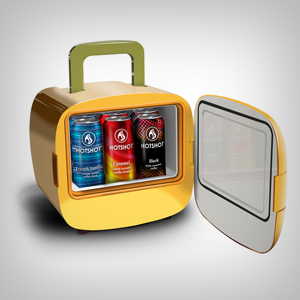
[00:29:52] Ray Latif: All right, now let's get to our interview with Danny Grossfeld, who, as I mentioned, is the founder of Hot Shot Coffee, a brand of canned coffees that are served hot. Grossfeld was inspired by a trip to Japan where warmed beverages are commonly sold in vending machines throughout the country. Hotshot is merchandised in heating cabinets that warm the cans to 140 degrees and are sold in a mishmash of convenience stores, sporting venues, movie theaters, and the brand also has a presence at Cirque du Soleil. Grossfeld spent six years and $2 million developing Hotshot before launching it in 2015, the same year that he presented the brand on the ABC reality TV show, Shark Tank. In our conversation, we discussed the opportunities and challenges in bringing an international food or beverage concept stateside, his experience on Shark Tank and how he's incubated Hotshot in non-traditional retail channels. All right, it's Ray, and I'm here in New York City, and I am with Danny Grossfeld, who's the founder and CEO of Hotshot Coffee. Danny, thank you so much for being with me. Thank you for having me, Ray. How was your New York day going? It's good.
[00:31:07] San Francisco: Yeah. Uh, yeah. Besides the traffic, everything has gone great.
[00:31:11] Ray Latif: There has been, there's been a lot of traffic. I've been here for three days and ever since they moved the, uh, they, they added those bike lanes. Yeah. I mean, it's just, it's gridlock everywhere. It's been strange. Yeah. Yeah.
[00:31:21] San Francisco: I almost got hit by a bike on my walk here. Oh no.
[00:31:25] Ray Latif: With your, with your machines and everything.
[00:31:27] San Francisco: Yeah. I was going to throw a hot can at the guy. Oh, don't do that.
[00:31:31] Ray Latif: First of all, for our listeners at home, you know, what is hotshot and what was your inspiration to launch the brand?
[00:31:36] San Francisco: At Hotshot, we are the first hot grab-and-go ready-to-drink beverages in the United States. I discovered it when I was traveling to Japan. I've always been open to opportunities, which I had one that had nothing to do with beverages. took me on a trip to Japan. And I was walking the streets of Tokyo, desperate for a cup of coffee, which I could not find. Couldn't find one fresh pot of coffee. And what I discovered was that something in their culture they've been drinking for over 30 years are hot cans. So I grabbed a hot can out of what they call a hot fridge, which stores all the beverages hot. And I cracked it open, and it tasted like a fresh cup of coffee. And immediately the light bulb, you know, over my head. And I thought, why isn't anyone doing this in the United States? Little did I know how challenging it would be to develop and introduce the product to the United States.
[00:32:35] Ray Latif: How long did it take?
[00:32:37] San Francisco: Just to get a product that was able to sit on constant heat 24 hours a day took me two and a half years, working with a major, major beverage development company. And then it took another six months just tweaking the flavor. So basically it took me three years before I had a finished product that I was ready to bring to market.
[00:32:55] Ray Latif: You couldn't have been the first person to think of bringing this concept to the U.S. I mean, have there been other attempts to introduce a hot Vendee'd coffee?
[00:33:03] San Francisco: You know, it's interesting. I kept thinking the same thing myself. Believe it or not, the number one brand in Japan is owned by Coke. It's called Georgia. Total retail sales for hot can coffee in Japan last year was $15 billion. I always tell people that it's one of the largest beverage categories that no one's ever heard of. and Coke owns 3 billion of that 15 billion. And over the years, I speaking to ex-Coke executives and other people, I found out that they did attempt to take most of the canned coffee is sold out of vending machines in Japan. I found out that they attempted to take that exact same vending machine and bring it over to other countries in Europe and Asia. And it was unsuccessful. And a lot of times, these big companies, they do that. They think that because it worked in one country that they can just transfer it to another country. So I learned from their mistake. And I realized that I had to Americanize the product. to bring it here. And what that entailed was increasing the can size, because they do just five and a half, six ounce little shot cans, and also increasing the temperature because it's only sold basically warm, not really hot. So when I did my first market research and tastings in the United States, everybody complained the portion size was too small and the temperature wasn't hot enough. We're accustomed to very hot coffee in this country. So I had to do those two things. And then once I increased the temperature, now you couldn't hold the can. I had to develop a new insulated label to wrap around the can. So it was extremely, extremely challenging, you know, but very happy and satisfied with the outcome.
[00:34:51] Ray Latif: So you mentioned Coke. I remember I wrote a story for BevNET a couple of years ago about Pepsi. Pepsi did a test for heated cans, those, as you mentioned, the smaller size cans and a few CVS stores in the Boston area. Correct. But it didn't, there was a test and then there was nothing beyond that. In front of us on this table that we're looking at, you have two different heating cases. Tell us what these two units are and how you merchandise the product.
[00:35:17] San Francisco: So we call them hot box or a hot fridge. And they're basically just hot shelves. Our retail unit looks very similar to a refrigerator, which is part of the challenge because people see it immediately and just think it's a fridge. It's funny that we're very programmed for cold. It is hard to get people to understand that there are hot beverages, hot cans in these machines. So we tested a lot of different signage, point of sale signage. We found that We had to educate people, so sampling is very big and key to the success of the product in each venue. So we have two units. We have a retail unit and we also have a home unit. And the home unit we're selling online, and we're about to go do some testing in Bed Bath & Beyond. And the retail unit, we have several sizes depending on the venue. It's really when it comes to, especially for things like movie theaters and stadiums, the speed of service, you can't match it. It's you just grabbing a hot can and passing it off. There's really no making it. There is no cleaning equipment. There's no nothing. We call it plug and play coffee. All you need is an outlet and you could be in the hot beverage business immediately.
[00:36:33] Ray Latif: That's a pretty good pitch. Before we hopped in the mics, we were joined by Barry Nathanson, who is the publisher of BevNET Magazine. And he mentioned convenience stores. I mean, I think convenience stores would seem to be the obvious place for a hot shot to someone who, well, is not the founder of the company. But you're not huge on convenience stores. Why?
[00:36:52] San Francisco: Well, it's interesting. What we did was I wasn't actually sure which direction to go into. So I took all these opportunities that I got from Shark Tank for the first six months after we launched to test it in almost every channel possible. I put it in movie theaters, grocery stores, convenience stores, gas stations, food trucks, bars, billiard halls, bowling alleys, ice skating rinks. And after the six months was over, our conclusion was that going the normal route that most beverage companies do is not the route. We're going the opposite way. Most people go for that C and G in the beginning, and then they go into food service later on. We're approaching it with food service first. And because I found that we're selling it as a solution, a lot of people want to offer coffee, but don't want to deal with the hassle of fresh brewed. They're looking for a coffee solution. And that's what we are. We simplified the whole process for them. They can get up and running immediately. They don't have to deal with the health department and water lines and cleaning equipment. It reduces their labor. It gives them great speed of service. So that's where we're focused. Most of those places we don't have competition. So that's good. You know, convenience stores have big coffee stations and it's already very difficult for me to differentiate myself from fresh brewed.
[00:38:21] Ray Latif: So in some of the places that you're currently sold and what are some of those places?
[00:38:25] San Francisco: We're in a few movie theater chains. We're in Madison Square Garden. We're in Disney World and some hotels in Disney World. We're in a lot of the type of venues in New York. We're in a place called Kick Axe, where it's like dart throwing, but they throw axes instead. Very successful. We're in a couple of Broadway theaters.
[00:38:47] Ray Latif: You were part of Cirque du Soleil.
[00:38:49] San Francisco: Cirque du Soleil was our first customer and our biggest success. They're great for us because they travel the country from city to city introducing Hotshot. And yeah, when we gave it to Cirque du Soleil, they were having issues. They weren't selling much coffee. And they had big, fresh-brewed machines. They had to throw out most of the coffee every night when it didn't sell. So they did a test with us. And within 30 days, they sent us pictures that all the coffee machines were going in the garbage. And they replaced all the fresh-brewed with our product. And believe it or not, I'm not sure if it's the speed of service or the ease or the wow factor. They told me they love to see the consumers' expressions when they grab a hot can. It's something they're not expecting. we increased their coffee or hot beverage sales by almost a thousand percent. They were selling three to four cups of coffee per show. They're selling 30 to 40 cans of hot shot per show now. So they're extremely happy.
[00:39:50] Ray Latif: Did you pitch Cirque du Soleil or did they find you and ask you to participate?
[00:39:54] San Francisco: It's funny, I actually have a long relationship with somebody who was in a different retail And she moved to Cirque du Soleil. She's a buyer there. So she introduced me to the beverage buyer. So I had entree.
[00:40:07] Ray Latif: Nice. And so when you're in, I mean, getting on shelf is one thing. Actually getting people to try your product is another thing. And again, you know, we've been alluding to this importance of sampling. You know, what's your pitch to consumers? What is, you know, the best, most effective way to get people to try it and then to buy it?
[00:40:28] San Francisco: So it is very challenging. We're learning every time we go out there, we're learning. Of course, sampling is key. There's two parts of the experience. One is when they hold the hot can. And then the second is their first thought is that how good can a hot beverage be coming out of a can? That's the second surprise that they get is how good it tastes. And everybody is pleasantly surprised at the flavor and the taste of the product, the aroma. The fact that it is really hot, that it's steaming when you drink it, that's when I get people to try the product is when they come back and they repurchase it. But it's not for everybody. I'm not disillusioned thinking I'm going to change everybody's habits, but we are changing people's behavior and habits. We found that the demographic that's Most accessible and willing to change are the millennials, Generation Z. They love trying new things. They think it's really cool. It's really easy. College students, they love the little home hotbox. They literally grab a can and they can just run out the door to their class. There's no fuss. There's no making it. There's no cleaning up. They just love the convenience of it. It's really about convenience.
[00:41:43] Ray Latif: For home consumption, however, it's sort of a two-step process for buying hot shot, right? You have to buy the machine, the small heating hot box, the heating unit, and then you have to buy regularly the cans. What's that process like getting someone to buy an appliance for their beverages?
[00:42:01] San Francisco: Again, sampling is key for that. We usually get people before it's going to spend $50 on an appliance. They usually wanna sample it. And that's the price, it's $50 for the heating unit. Yeah, $50 retail. And we sell a starter kit that comes with the sorted flavors and the machine. And then we also have subscription. So you can sign up and get bi-weekly deliveries, monthly deliveries. A lot of the students or the student's parents have signed up for that. This way they get the machine and then nobody has to worry about it. The cases just get delivered automatically to their door. We also try to get on campus. This is pertaining to colleges, of course. We get into the bookstore or local convenience store that also sells four packs and 12 packs for easy access. So yeah, it is all about having access to that to make it as simple as possible to replenish.
[00:42:55] Ray Latif: So two and a half years to develop the coffee. I read somewhere that you've spent nearly $2 million on this concept. Yeah. And, you know, getting investment is a tricky part of the business for any entrepreneur. You attempted to get investment from some well-known celebrity investors who are the hosts of Shark Tank. Tell us about that appearance. When was that?
[00:43:22] San Francisco: That was season seven, episode six. I believe it was in 2016. And what's funny is that I never even applied. To be honest with you, that's not my thing to be on TV. But... You did a good job. I saw it. Thank you. I watched it on YouTube. Thank you.
[00:43:43] Ray Latif: It's good.
[00:43:44] San Francisco: I had an article written about me in the Los Angeles Times about Hotshot. And the executive producer read the article and thought it was very interesting. And he contacted me. So the year that I was on, they had 50,000 applicants. They only chose a hundred to film. Out of that hundred, only 60 made it on air. He told me that out of the 50,000 applicants, about 20,000 were food and beverage companies. So they never have a shortage of food and beverage companies applying. He said in all the years that the show's been on, I was the first time he ever reached out to a food and beverage company. He just thought it was so different and innovative that he had to have me on the show. And then I went through the process, and it was extremely nerve-wracking. To say the least. I'm sure. But the best experience I've ever had after the show aired, I received 4,000 emails, a lot of retailers reached out to me, Walgreens, 7-Eleven, Bed Bath & Beyond, and it opened up a lot of doors for me.
[00:44:50] Ray Latif: What were you asking for?
[00:44:52] San Francisco: On the show, yeah, it was just $300,000. I needed a lot more money than that. I just really wanted to get one of the sharks on board. It brings a lot of influence.
[00:45:04] Ray Latif: What were you asking for? $300,000 for what?
[00:45:06] San Francisco: 10% of the company, $3 million valuation. I already spent $2 million in six years of my life.
[00:45:14] Ray Latif: So, you know, ultimately, you know, you didn't get investment, but what would you have done differently? What's maybe an approach you would have taken that you think might have been a little more successful?
[00:45:23] San Francisco: On the show? Yeah. First thing, I wouldn't have told them I spent $2 million because they immediately attacked me. What are you, crazy? And then I also told them, I was being honest as to how long it had taken me. Besides the development, I had other setbacks with raising money and being able to launch. Production was a big problem. only two factories in the whole United States that can fill that size can and do retort pasteurization that I need. So what would I have done differently? I don't know, besides not mentioning those couple of things. They actually loved it. They thought it was a very fascinating concept, but I was surprised, they're wealthy and successful individuals. And I was surprised that nobody had ever heard of it before. So, but most people that I've met in the United States that have been to Japan or lived in Japan or a lot of soldiers or veterans that were stationed in Japan all fell in love with the concept of hot canned coffee. They actually tell me they were addicted to it. So it was a lot of that that gave me the confidence even before launching to continue that I thought that it could have a home and be successful in the United States. But again, you never know until you launch. So I'm very happy with the reaction right now with everybody. And believe it or not, Shark Tank has reached out to me again.
[00:46:49] Ray Latif: Oh, wow.
[00:46:50] San Francisco: Yeah, possibly for next year. And by that time, I'll have a lot of ammunition. Because if you watch the show, most of the people, most of the sharks told me I should quit. You give up, it's been six years, you spent all this money. It's a time that you should just give it up. And Mark Cuban's actually the one who said, don't you see his face? He's not giving up. And he was right. Giving up and failure is not an option for me. I'm going to make this successful, no matter what anybody says.
[00:47:22] Ray Latif: What were you doing before you launched Hotshot?
[00:47:24] San Francisco: I was actually in a very, I have a very unique.
[00:47:28] Ray Latif: Unique set of skills? Yeah.
[00:47:30] San Francisco: Unique experiences in my life. I grew up in, believe it or not, the bankruptcy business. Okay. And ironic, right? Yeah. So what's interesting about the business was that I got to see firsthand behind the scenes why all these businesses went out. And, I mean, every business you could possibly think of, from food and beverage to huge retailers to apparel and home goods and things like that. So it was interesting to see why people go out of business. I try to apply all of that as I move forward, not to make those same mistakes that others have made. But, you know, I make mistakes every day. I try to learn from them and move forward. and not make those mistakes again. But yeah, I have a unique experience in life. I mean, we've dealt with everything. I had retail stores. I had a restaurant. I had an office. We did an import wholesale, import export business and office in Moscow, Russia. I had a wholesale business in Caracas, Venezuela. I mean, I've always been an entrepreneur and I'm not afraid to get up and get out there. I hear an opportunity in Japan or China, I jump on a plane. And that's just me. I grew up in that environment. Since I'm a little kid, my father used to take me with him to board meetings, and, you know, I'm sitting in the corner, and I must have absorbed these things, and I have that itch. I can't, not since I'm a teenager, have I worked for anybody else.
[00:48:53] Ray Latif: That's amazing. Danny, I really appreciate that you've taken the time. This has been so much fun talking to you. Good luck with Hotshot. I hope to hear many more great stories about the development of the brand and the company, and I'm sure I will. So once again, good luck and thanks for being on Taste Radio.
[00:49:09] San Francisco: Thank you so much. I appreciate it.
[00:49:11] Ray Latif: This is great. That brings us to the end of episode 14 of Taste Radio Insider. Thank you so much for listening. And thanks to our guest, Danny Grossfeld. Tune in on January 1st for episode 143 of the flagship Taste Radio podcast. We look back at a few notable interviews from the second half of 2018. Please subscribe to Taste Radio Insider on iTunes, Spotify, Stitcher, SoundCloud, or Google Play. As always, for questions, comments, ideas for future podcasts, please send us an email to ask at Taste Radio. On behalf of the entire Taste Radio team, thank you for listening, and we'll talk to you next time.