[00:00:05] Nicole Cogan: Hey Landis, remember that survey we sent to the community? Did you read what the listeners said? Here's a quote.
[00:00:17] No Bread: Another listener said, I work at a natural food startup and this is one of my most valuable hours of the week.
[00:00:22] Nicole Cogan: Each week I walk away with two to three ideas to test at work. So the Taste Radio audience is looking for partners to help them formulate products, provide ingredients, design packages, can, pack, market, provide investment. I mean, they're looking for everything. So if you're out there listening, they're here.
[00:00:38] No Bread: And to reach this engaged audience made up of over 65% brands who are ready to hear what you can do for them, contact ask at Taste Radio.com and ask about our new 4, 16, and 24 packs of pre-roll and mid-roll ads. And now, Taste Radio.
[00:00:58] Ray Latif: Hey everyone, welcome to episode 16 of Taste Radio Insider. I'm Ray Latif and with me are my BevNET colleagues, John Craven, Mike Schneider, and Jon Landis. We're recording from the Taste Radio studio at BevNET headquarters in Watertown, Mass. And in this episode, we sit down with Nutpods founder and CEO, Madeline Haydon, who discussed the e-commerce strategy behind her fast-growing non-dairy creamer brand. We're also joined by Nicole Cogan, the social media maven behind No Bread, a popular gluten-free blog and Instagram feed. Just a reminder to our listeners, if you like what you hear on Taste Radio Insider, please share the podcast with friends and colleagues. And of course, we'd love it if you could rate us on iTunes. Everyone excited for San Francisco? Yeah, man. All right. Jon Landis is excited. I didn't hear anything from Mike or John Craven. I still get the shakes. Oh, right, from your tech days.
[00:01:48] No Bread: Yeah, from my tech days. No, I love San Francisco. I'm, of course, excited. Very excited to go to San Francisco.
[00:01:53] Ray Latif: We're all heading to San Francisco for the 2019 Winter Fancy Food Show and some accoutrement along with that show. Yes, maybe, maybe.
[00:02:01] Nicole Cogan: Yeah, yeah, totally. I love San Francisco and I'm not, it's like I'm not traveling for a while after this too, so that's nice. Well done. It's like the last one for a while.
[00:02:09] Ray Latif: Well, the show runs Dry January 13th to 15th and if you're attending or if you're showcasing, exhibiting that is, new brands, line extensions or revamps, please let us know. Send us an email to news at BevNET.com for beverage related updates and news at Nosh.com for food contents.
[00:02:27] Nicole Cogan: You know, this show actually has a really good press system. They have tons of press releases, and there's a lot of announcements that come through there. They really do a good job. The Specialty Food Association does a great job of coordinating all that information for us.
[00:02:40] Ray Latif: They do. We get a lot of updates on what brands are doing and what they're going to be showing at the event.
[00:02:45] Nicole Cogan: Yeah. And this is a cool show because, you know, obviously Expo West is coming up and everyone's focused on that. But I think that there's a bunch of brands that like to make their announcements here and get ahead of all of that and get ahead of, you know, the whole cycle of buying and everything. Get off to a good start for 2019, so to speak.
[00:03:04] Ray Latif: I think everyone wants to do that.
[00:03:34] Nicole Cogan: It's right before Fancy Food, which is also quite a relaxed show, so tack it on and it's a lot of fun.
[00:03:41] Ray Latif: Yeah, it seems like there's about 140 or so exhibitors, all really, for the most part, small brands that are just getting off to their first, maybe second year in the business. And they're from all over the country. Although I saw a lot of those folks, a lot of the brands are based out of California, Colorado places along the West coast. Yeah. And I think Carol's going to an editor of notch.
[00:04:03] Nicole Cogan: Yeah. And Andrew Brayton, our new brand specialist, uh, he'll be there as well with me.
[00:04:07] No Bread: What is it? Smoked fish? CBD? Everything. Plant-based energy?
[00:04:12] Nicole Cogan: All of it. Well, I think it's a lot of charcuterie. It's a lot of, like, cheese. It's really like specialty specialty. It's very, very high end.
[00:04:21] No Bread: Because it's a specialty food show. Fancy Food show's not fancy enough. It's not fancy enough anyway.
[00:04:25] Nicole Cogan: You gotta be fancy and then you can be good.
[00:04:29] Ray Latif: It's a fire up. All right. So it is the month known as Dry January. That's when people abstain from the consumption of alcohol, sort of reset their systems, reboot in some ways. You know, once you've booted on December 31st, you want to reboot. Dry January 1st to January 31st. Did you like that? That's your cheesiest segue ever. Yeah, I know. I like it. It is what it is. The good news is we've seen a lot of beverage brands taking note of the fact that it is Dry January and promoting their products on Instagram with the hashtag Dry January. We've seen Dry Soda, Ugly Drinks, seed lip, many brands. Right in the middle of it, yeah. Indeed. But here on the Taste Radio table, is a brand that came into the office recently called Curious Elixirs. They're promoted as curiously complex, booze-free cocktails, and they're handmade with real food in the Hudson Valley. John Craven, have you tried these yet? I have. You have? I have. Okay. Well, we haven't tried these.
[00:05:31] Nicole Cogan: I don't know.
[00:05:33] Ray Latif: What are your initial thoughts I I mean I should actually I should have known that you had to open one of these because This one thing I'm about to open is their Curious Elixirs number one Which they say is a booze free spin on a classic stirred cocktail Like the Negroni and old-fashioned and I'm gonna be like the Negroni and the old-fashioned and a Negroni Enthusiast like John Craven. I I got a figure that's I
[00:05:55] No Bread: It's in a grilled fashion or what? Right up your alley. What's going on here, Ray?
[00:05:58] Madeline Haydon: You know, it's tough. These non-alcoholic cocktail things. I mean, to me, when I taste some of them, like, non-alcoholic cocktails, kind of like drinking a soda almost. Let's see. You know, I think some of the ones that have mimicked the, like, bitter flavor of something like a Negroni, you know, that's interesting. I don't know. For me, like, if I don't want a cocktail, sometimes I just drink, like, tonic water or, you know, something that's got some bitterness to it.
[00:06:26] No Bread: They're not mimicking anything bitter here.
[00:06:27] Madeline Haydon: This is a lot of bitterness. This is totally bitter. Yeah. So these are, I feel like it would just be hard to consume an entire bottle of this.
[00:06:35] Nicole Cogan: Very much so. I mean, when I consume something that has like very strong flavors, like boozy flavors or bitter flavors, I'm at least getting an altered state of mind. And that's kind of like why people, I mean, I don't know, I didn't love the taste of beer when I first had it when I was growing up. I feel like these are like acquired tastes, alcohol and beer, and that we do it so that we can, you know, get to that altered state of mind. When you have something that is this advanced in flavor, that's this complex, and it doesn't really deliver anything beyond just the sensory experience, it feels like it's missing something.
[00:07:18] Ray Latif: Have you tried it on the rocks, John Craven? No. No? I wonder if it would have sort of a different effect.
[00:07:24] No Bread: I like this a lot. I think it has a really nice licorice flavor that gives away to like an almost unripe red persimmon. You know, in fact, have you ever had a persimmon that's not quite ripe yet and it sucks all the moisture out of your mouth? That's how the bitterness is on this to me.
[00:07:38] Madeline Haydon: I like it. Jon Landis' point, I mean, I think, you know, products like this, and this is certainly one of the more bitter ones that I've tried, you know, I think it's created that sort of need to sip it as opposed to like, you know, if you're going to go out and not drink, let's say you have an iced tea, a Coke or something like that, or maybe even a beer, you're kind of like gulping something, whereas everybody else who maybe is having a cocktail is going a little slower. So you're kind of a little out of place, you're missing out on that. I think with this, like, yeah, sure, you have to sip this. You know, you're probably going to consume it the same way as somebody who's drinking, you know, a cocktail. But like you said, it doesn't have that sort of effect, which some people just don't want to.
[00:08:17] No Bread: Let's say this thing had vodka in it. I mean, would that change the way you feel about it? Probably, yeah.
[00:08:23] Nicole Cogan: I mean, I think that this is a really, I would love to make a real cocktail with this. But I understand. I mean, I don't consume caffeine, right? And one of the supers here came by my office and just held up a product that he found in the front. He's like, I just want something without caffeine. Tell me this doesn't have caffeine. I'm like, you're good. But I know where that's coming from. And other people, they just, for whatever reason, There's a lot of them to not consume alcohol. So, you know.
[00:08:51] No Bread: Who are these heathens?
[00:08:54] Ray Latif: Did you just call someone who works in the building a super?
[00:08:56] No Bread: Yeah.
[00:08:56] Ray Latif: Isn't that like a 70s term? Like a superintendent?
[00:08:59] No Bread: I thought he meant like in the Incredibles.
[00:09:01] Ray Latif: Supers.
[00:09:02] No Bread: No. Oh, okay.
[00:09:02] Ray Latif: John. Is that what they call him? I don't even know. Honestly, I'm just asking. That's what I call John.
[00:09:06] No Bread: I thought like Elastigirl came up to him or something. Oh, okay. Facilities manager.
[00:09:10] Ray Latif: Facilities manager.
[00:09:10] No Bread: There you go.
[00:09:12] Nicole Cogan: I got it. Is that his proper title? That is.
[00:09:14] Ray Latif: Yeah. It's a super. Well, do you guys want to try that? They have a curious looks to number two, which is that this is presented as the spicy love child of the pineapple margarita and the dark and stormy. If anyone wants to try it, it's on the table to wash it down with some Thomas Tipple Mimosa here too. Exactly. You got some Mimosa. This is not what you brought. John Craven is not non-alcoholic. That's the only thing.
[00:09:38] Nicole Cogan: I do like how much crossover is happening between alcoholic and non-alcoholic products right now, and I think that that's a big source of innovation for the next few years.
[00:09:50] No Bread: Well, you know, you guys are going to hate this. You're going to hate this. That's why I'm just going to keep it for myself.
[00:09:56] Ray Latif: You're talking about the Curious Elixirs number two. I like it a lot. Yeah. Yes. And it's really spicy. It's very spicy. Going back to the Thomas Tipple products that John Craven brought. These are sparkling wines that are mixed with concentrated juice. I'm holding my handy Raspberry Bellini and Jon Landis, to your point, this is relatively low in alcohol, 4%. It's certainly not non-alcoholic, but it's not going to get you banged up, so to speak.
[00:10:23] Nicole Cogan: Sure. This one drinks like a sparkling wine, but is, you know, a low alcohol, like a sessionable sparkling wine. And it's quite sweet, but it's got a pretty attractive design there. It stands out to me. I definitely know people in my social circles who would want to try that and drink that.
[00:10:43] No Bread: So does it look like it belongs in that space to you, or does it look like something different? To me, it looks a little bit like an energy drink from here. Well, yeah, a little bit.
[00:10:51] Nicole Cogan: I would imagine that, you know, in a liquor store, it's probably going to be in a pack, like a four or 12 pack. It's kind of a new space though, you know, canned. This thing straddles a sparkling wine and a ready to drink cocktail. It's like not high enough ABV to be a real ready to drink cocktail, but that's kind of what it is, but it does have kind of that wine flavor profile. So hopefully it'll just kind of cross over and work in both. Find its way into both spaces.
[00:11:20] Madeline Haydon: Yeah. What I like about it is that it does not feel kind of weird to drink like certain canned wines out there do. So it kind of takes the emphasis off of like making your mind and your palate compare it to like sparkling wine from a bottle. Yep. So in that sense, like, you know, I think it tastes pretty good.
[00:11:36] Ray Latif: Yeah, definitely. So did you guys know there's new editions of Elevator Talk weekly? Speaking of drinking. Speaking of drinking. There was no transition.
[00:11:47] Madeline Haydon: There was no segue.
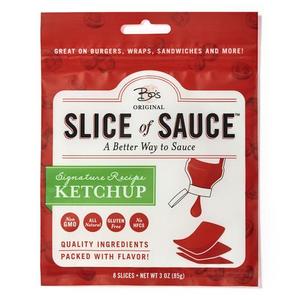
[00:11:48] Ray Latif: Speaking of elevators. So as many of you know, Elevator Talk is a series which showcases up and coming food and beverage brands. It's available at youtube.com slash BevNET and youtube.com slash Nosh.com, all one word. It's also featured on Instagram live weekly, new episodes weekly. And this past week we featured a brand called Slice of Sauce, very innovative, interesting brand, which takes traditional condiments and turns them into individual mess-free slices. of signature ketchup. Is that a ketchup slice? Yes, it's a ketchup fruit roll-up. In essence, Mike, you're correct. That's what it is. It's a ketchup fruit roll-up, except you don't roll it up. You just put it on top of a hamburger.
[00:12:32] Madeline Haydon: Right. Wait, so you don't just eat slices of ketchup?
[00:12:36] Ray Latif: I don't believe many people do.
[00:12:38] Madeline Haydon: I think there are kids that would do that, yeah.
[00:12:39] No Bread: Remember back in the day, ketchup sandwiches?
[00:12:43] Ray Latif: Yeah.
[00:12:43] No Bread: Did you ever sit at the table with that kid who brought a ketchup sandwich? No.
[00:12:46] Ray Latif: Oh, my God.
[00:12:47] No Bread: What are you talking about?
[00:12:48] Nicole Cogan: Where the hell did you go? Picky eaters, man. Not me. No way.
[00:12:51] No Bread: I was eating caviar.
[00:12:52] Nicole Cogan: Is this in Ohio? Yeah, of course. I mean, it's an interesting play for consumers, but in food service, and you know, there's a lot of applications for this product that could move a tremendous amount of volume. And Emily is really, really sharp, so definitely something to keep an eye on.
[00:13:11] Ray Latif: What other Slice of Sauce do they have? I think it's just ketchup for now.
[00:13:14] Nicole Cogan: Yeah, but they're working on all sorts of different sauces.
[00:13:18] Ray Latif: We're giving away the secret sauce here. Emily Williams, who you referred to, Jon Landis, is the founder and CEO of the company. She spills her guts, tells us all about Slice of Sauce and what they're about to do Grain Elevator Talk. Check it out once again, youtube.com. In this case, youtube.com slash Nosh.com.
[00:13:37] Nicole Cogan: And if you're out there and you want to get Grain Elevator Talk, just get in touch with us and let's make it happen. Sure.
[00:13:43] Ray Latif: You can send us an email to ask at Taste Radio.com. We'll point you in the right direction. And just to note, Taste Radio listener Troy Derigo, who's the founder of Grain Elevator Talk of beer grain crackers, or at least crackers that are made.
[00:13:58] No Bread: You guys, too bad we're not on TV right now, because John Craven's examination of Slice of Sauce is precious.
[00:14:05] Ray Latif: I need a French fry to wrap. Once again, Troy DeRugo's Grain Elevator Crackers, which are crackers that are made from spent grain that brewers normally discard. He will be featured Grain Elevator Talk in a future episode.
[00:14:19] Nicole Cogan: Yeah. He's a radio super fan. Yeah.
[00:14:22] Ray Latif: Like super fan number one, Troy. Also on YouTube complete video coverage of the main stage presentations from Nosh live winter 2018 and devnet live went to 2018 Revisit the content which is packed and I say packed the valuable content from the industry's top innovators leaders and gatekeepers. I Mean, it's all there. It's all free. I don't know why you wouldn't want to watch it All right, before we get to our interviews for the episode, I just want to mention a couple of folks that I met at a Chobani Incubator event last week. The event was here in Boston. It gave local entrepreneurs an opportunity to meet the Chobani Incubator team and its alumni founders. Also hear about the application process for its new class. It was great to see the incubator leaders, Zoe Feldman and Mitch Rubin, as well as Drink Simple co-founders, Kate Weiler and Jeff Rose. Also, I saw Brad Callow, who's the founder and CEO of 6AM Health. Yeah, Brad. Taste Radio fan. Yeah, with some delicious buffalo chicken bowls.
[00:15:19] Nicole Cogan: You hear that, Brad?
[00:15:20] Ray Latif: Yeah. Jeez. Also, shout out to Josh Velasquez, who's the co-founder and CEO of Nuttin' Ordinary. It's a plant-based food company that makes cashew-based cheese spreads, snacks, and ravioli. They're based in New Hampshire. Josh came up to me and he mentioned that he's a huge fan of Taste Radio. Got to get that man a T-shirt.
[00:15:38] No Bread: That doesn't sound very far away either.
[00:15:40] Ray Latif: No, it's not.
[00:15:41] No Bread: Could get into our office maybe somehow.
[00:15:43] Ray Latif: There you go, Josh. Come visit. All right, let's get to our interview with Madeline Haydon, who, as I mentioned at the top of the show, is the founder and CEO of Nut Pods, a fast-growing brand of alt-dairy unsweetened creamers made from almonds and coconuts. Launched in 2015, Nutpods has developed a thriving direct-to-consumer business and consistently been a top-selling brand on Amazon. Targeted outreach to consumers with specialized diets, including Whole30, Paleo, and Keto, has supported a loyal consumer following for Nutpods, which has also sold at major grocery chains, including Publix, Kroger and Wegmans. In the following interview with Mike Schneider, Madeline discussed her foray into entrepreneurship and how she laid the groundwork for a successful e-commerce strategy. She also explains how online reviews, including bad ones, have been critical to the development of Nutpods, why the company has very strict protocols for customer service, and how they get consumers to promote the brand for free.
[00:16:42] No Bread: This is Mike Schneider here, BevNetMike on Instagram, at BevNetLive with Madeline Haydon, the founder and CEO of Nutpods.
[00:16:49] Fancy Food: Hi, thanks for having me, Mike.
[00:16:50] No Bread: I'm so excited that you're here. Let's start by just jumping right into, you know, Nutpods a little bit about the Nutpods story and your background.
[00:16:58] Fancy Food: Sure. You know, five years ago, I didn't know anybody in food. I came from blood banking and medical devices and Nutpods is really just born out of my own personal journey towards a gap that I had. I love a good cup of coffee, don't we all?
[00:17:17] No Bread: Yes.
[00:17:17] Fancy Food: And unfortunately, I'm lactose intolerant and I never could get into black coffee. And so my options at the time were like heavily processed creamers and soy products or an all coconut creamer. And I just really missed a beautiful cup of coffee tasting like a cup of coffee and not this watered down, super coconutty, you know, concoction. And I also wanted something that was completely unsweetened, and that had two purposes for me. Number one, it's such a ritualistic habit, coffee. I wanted to be able to choose my own preferred sweetener and sweetness level, but I also really wanted the versatility so I could bake and cook with nut pods too, because us lactose intolerant people, we want mashed potatoes, we want chowders, we want, you know... Oh, you deserve chowder. Yes, I want it all.
[00:18:11] No Bread: Don't we all? You say, and you say this on your website, start with a great product. You can't fake that. I agree with that. What are the attributes of a great product though?
[00:18:22] Fancy Food: Well, for me, when I was thinking about entering in the space and excuse me, you have a jazz voice, Madeline, right now, just because I'm nursing a cold. And so, you know, I knew I was going against really big competition and they had like oodles for their marketing budget. So no matter what branding, no matter what storyline, no matter what extra certifications, all of the messaging, You know, you have to be able to have a great product that stands on its own, that people will want to buy not just once, but will buy again. And because I was a startup, because I'm a small player, you know, they have to buy it at a premium price. In order to get people to buy you again and buy you for more than the standby, it has to be a great product. It can't just be smart, you know, messaging and in a great category.
[00:19:13] No Bread: So it's more than taste.
[00:19:15] Fancy Food: It's taste, it's mouthfeel, it is how you as a brand, you know, feel. We're a very approachable brand. We're very inclusive as a brand. We're kind of this weird brand where if you are on a paleo or a Whole30 diet and you're eating bacon every five seconds, you belong in our tribe. If you are completely vegan, you belong in our tribe. So we span like the whole gamut of vegan, specialized diets, gluten-free, paleo, keto, as well as just the average person who's saying, you know what, I'm going to cut out dairy or I'm going to eat less dairy. I want to try this nut pods because I hear it tastes really good.
[00:19:54] No Bread: You know, a lot of marketers would say you can't go after all those markets at once. How does nut pods manage to do that?
[00:20:02] Fancy Food: We went with a niche marketing strategy because as an unknown brand, especially starting out online, you know, who are you going after? And so for me, I knew so many people that were on specialized diets where they didn't like their options. So for me, we made community outreach into keto, into gluten-free, into plant-based, and be able to talk about, you know, our products work for your lifestyle. And as we've grown, we realized Wow, 60% of our customer base regularly consume dairy. That means they're just regular folks trying to, you know, eat a little bit healthier. And a lot of people join our tribe because we're completely unsweetened.
[00:20:45] No Bread: I love that you call it a tribe. Natalie, you started with eight stores, traditional route, and then you went online, you went direct to consumer. How do you wire the company for direct to consumer success?
[00:20:58] Fancy Food: Well, I believe when you start out, you have to learn as much as you can for your business. And for us, we wanted to learn how do we sell in stores? How do we win at retail or at least get our start to understand that world? And, you know, because our DNA as a brand started as a Kickstarter brand, We had a practical problem, like 510 Kickstarter backers got their backer rewards and they needed a way to reorder who wasn't, you know, living in the area of PCC natural markets. And so we launched a month later on Amazon and we just really went, you know, number one new release, number one best selling item. Three years later, we're still in Amazon's choice and we have 6,000 reviews across our three SKUs. And it really took a life on its own. And looking back, you know, I would have loved to go into more stores, but you take the route and you take the doors that are open to you. And for us, it was online. It was such a great way for us as a small unknown challenger brand to get our story out, direct to consumer. We could test our pricing a lot faster than Unify's 90 days, you know. we could figure out, are we talking about our brand in a way that resonates with consumers? And get all of that immediate feedback. Like, is there enough French vanilla? Is there not enough French vanilla? You know, do we want a little bit more of the dark chocolate or the orange? And you get all that instant feedback that you can't get through any type of like spins or IRI.
[00:22:39] No Bread: You mentioned 6,000 reviews across SKUs. That rhymes. Is that a success metric that you look at? Is it, we've got this many five and four star reviews. What are the metrics of success in DTC that you care about the most?
[00:22:56] Fancy Food: So I'll tell you why reviews are really important. Number one, the fact that we, as a teeny tiny marketing budget company, has been able to get to not only the number of consumers, but the important part is the number of engaged consumers. I buy a lot on Amazon Prime. I've probably written two reviews in my life. And so to me, it talks about like the cult following or how beloved a brand is when you can get like 6,000 people to write back and to talk about what they love about your brand. And I think we take an immense pride, you know, in the fact that we average 4.3 out of five stars. That's kind of like that new hot, you know, restaurant where all of a sudden it's like you have that social proof after thousands of reviews. And it's very telling. We're able to mobilize this community that not only likes nut pods, but they love us and they share about us. And our whole way that we've grown our business is through word of mouth and being able to capture that love that people love about the products. It's really this phenomenon where when you don't know nut pods and you come outside, it's like, we're really this coffee condiment, right? But people talk about nut pots as a very emotional reaction. And I think part of it is because we solved a real problem. We were able to have something that tasted really good, had all of the clean ingredients, had unsweetened, and allowed people to enjoy their cup of coffee, live the lifestyle that they wanted, be healthier. And it really supports what they're trying to do, which is just Enjoy Life.
[00:24:39] No Bread: Reviews on Amazon's so important. There are a lot of companies out there right now that will, quote, help you get reviews. You've done yours organically. How do you encourage reviews and what do you say to an entrepreneur who's thinking about taking shortcuts?
[00:24:54] Fancy Food: Don't do it. Number one, Amazon will yank any like inauthentic reviews. I don't know how they do it. They just have algorithms out the, you know, wazoo that they know.
[00:25:05] No Bread: Very technical term, the wazoo. That's where they keep their algorithms.
[00:25:10] Fancy Food: And so, but they're very sophisticated, so they know when your reviews are not authentic or bought or promoted or anything like that. And when you read our reviews, you will never see, I was given free nut pods for this review or I was compensated for this review. And for us, it's kind of like the same way where, you know, you have the brands that like kind of do the growth hacking where they buy followers on social media. I think for us with our brand, the way that we've tried to build it organically, authentically, you know, and who we are, it's like, we want to be with people that get what we're doing that, you know, understand our brand and share about us and not try and like buy our way in because it never stays around anyways.
[00:25:54] No Bread: What about when, if a bad review comes in, what's the impact of that on NutPodge and then also on your soul?
[00:26:00] Fancy Food: Number one, you need bad reviews because if you see a brand that only has good reviews, like they're scrubbing it for the poor reviews. And number two, that brand is really doing a disservice because you're not hearing how to improve on your brand. Now sure, we get people that try us after Coffee Mate or their lifelong Coffee Mate and their palate is trained towards like, you know, a lot of sugar and they go full steam with nut pods where we're completely unswinged. And by the way, unsweetened means unsweetened. There's no monk fruit, there's no stevia, there's no erythritol, there's like nothing. And it's not for everyone, but you have to know, like you're not going to get everyone and you have to be open to hearing what your customers really think about your product because don't you want to know? Don't you want to know so you can improve upon it and know what people you belong with and what people you don't belong with?
[00:26:49] No Bread: What about an example of turning a hater into a lover?
[00:26:53] Fancy Food: customer service. So, you know, sometimes you'll have someone where it's like, you know, like my product came and it was damaged and like, you know, I'm really unhappy and, and, you know, you turn around and you're like, you know, sorry for that experience. We're going to have, go ahead and send you out some new product. And here's this, we have very strict protocols with customer service because What I'm building is not just a brand that has a look and a taste, but it's an experience. And part of that experience is like how you can turn someone who's unhappy with your brand to saying, you know what? They have great customer service, by the way.
[00:27:30] No Bread: You mentioned customer service. There have to be other competencies within the business that you have to optimize that are different than a traditional model, perhaps like user experience or things of that nature. What would you say is different about building a direct-to-consumer business than brick and mortar?
[00:27:48] Fancy Food: Scalability, number one. You know, for us, we are a surprisingly small brand. For our revenues, we're 22 people strong. And that's much smaller than if you look at a peer company at our revenue, which will be undisclosed because we're privately held. But it's because you can scale so much with digital marketing, with online, you know, being able to not necessarily need to have brokers, distributors, you know, feed on the street, all of that. It allows you to scale very quickly. I think number two, a big difference is cash flow. So cash flow is king when you start as a startup. And with Amazon, you know, they pay regularly, they pay twice a month. It really helps as a small company for you to be able to have that cash flow versus, say, the traditional, they say net 30, but it's really net 45 plus deductions. And so being able to utilize those two things is immensely helpful.
[00:28:52] No Bread: Roll your own Amazon or both.
[00:28:54] Fancy Food: Both. The reason why is because there are advantages, right? So, of course, I would love to have people come to our website. We have greater gross margins. We have their information. We can, you know, like service them directly.
[00:29:09] No Bread: But... You can run experiments on marketing. You can try to get them to add other things to the cart. There's loyalty. There are segmentation opportunities, all kinds of things you can do.
[00:29:18] Fancy Food: all sorts of things, but discovery of the brand, right? And so it's like Amazon is really singular and for that. And even though we have so many people that can be Googling for a keto creamer or a plant-based creamer or a paleo creamer or, you know, just a healthy creamer, you can find them sometimes on Google. You can find a lot of them that are already actively searching. So you talk about that funnel, you know, actively searching for something on Amazon. And they don't have to know Netpods because we will show up within Amazon. But for us, when we were starting, you know, now we show up on the first page on Google. But it takes time for you to have that SEO. It takes time for you to build that discoverability. Amazon will allow you as a young brand to really scale and be able to more efficiently target people that are looking for something like your product, even though they may not know about your particular brand. And so you need both.
[00:30:19] No Bread: You just mentioned getting folks into the top of the funnel is difficult and usually requires a very large marketing budget to do it in a way that's, you know, effective.
[00:30:30] Fancy Food: That's why we didn't go that way.
[00:30:31] No Bread: Right.
[00:30:32] Fancy Food: So we went after people that were actively looking for a solution like NetPods. And once they tried our product, they thought, you know, this is a great product, but your work's not done because you have to get them to buy you again. You have to get them to buy into your value proposition where it's like, hey, we taste great. Oh, and we have clean ingredients. Oh, and we're backed by certification. So you have transparency as a brand. And oh, by the way, you know, we've got great customer service. So when you hook a customer and you give them that brand experience that I want people to have with us, then they have really been so generous. And how we've grown our business is absolutely by word of mouth. And that's why we have such this, you know, beloved cult following of people where we're three years on the marketplace. But people are sharing and they're tagging their friends and they're doing the work for me, for free, by the way. And the cost of that is building a great product, supporting it, and making sure that they have a great experience with our brand.
[00:31:39] No Bread: Where to go next? Demos, I think. We'll go to demos. Demos are often the model. You're a direct-to-consumer. How do you get someone to try?
[00:31:46] Fancy Food: So we did try demos, to be honest with you, in stores. Demos are frankly complicated for us because we're not the coffee. We're the creamer that goes in the coffee. And then you have like electricity and water and how are you going to brew this coffee type of thing.
[00:32:02] No Bread: Wait, so you're saying it's really important that the person starts with the coffee that they like and then puts nut pods into that coffee.
[00:32:11] Fancy Food: Yes, exactly. And so, you know, for us, when we did coffee demos, it was always this network mosaic of what coffee to partner with. Is it the store's private label? Is it the best selling coffee? Is the coffee that we think best, you know, pairs with nut pods? All of these things. Because at some point, it was a little bit weird to just have a shot of like a coffee creamer by itself, but people wanted to try it that way anyways. Frankly, we've moved away from that because it's so expensive. It's laborious for us to match up all the brewing and the water and the coffee partners and all of that. And now, you know, you can't for cents. instead of dollars, be able to target someone digitally, then be able to talk about your brand that way. And people, you know, if you get your price point right, people are willing to try a product that has thousands of reviews that, you know, either their hairdresser or their coworker or their brother are saying, you know, you should try Nutbox. And so that's how we've built our business in terms of discoverability.
[00:33:16] No Bread: So speaking of mobile and digital targeting, let's talk about the gram. A lot of people are talking about Instagram being ridiculously important for customer acquisition and loyalty purposes. How important is it for nut pods?
[00:33:28] Fancy Food: And it's our biggest growing channel for us. And, you know, at first I was thinking, like, how is this going to work? Because it's not like we're this apparel brand where we photograph beautifully. But Instagram is just something where it's proven very relevant for our brands. Now, we do also do a lot on Facebook. but we focus a lot of our attention on Instagram and that's where we can have links to recipes that look amazing. We have photographs of our, you know, of our different products that we have and be able to build our brand that way.
[00:34:04] No Bread: And is that where you're putting some of your, you know, your tiny marketing budget into paying to promote those posts or are you using influencer marketing or both or what? Or is it mostly organic?
[00:34:14] Fancy Food: Both. So for us, we do influencer marketing, but for us, that means like we have a lot of pod squads. So we have people that sign up and, you know, they're selected to be an influencer for us and then they get exclusives on. on new products that we're putting out like our peppermint mocha or our pumpkin spice. And then they're able to mobilize their communities to talk about us. But for us, we really are so super, super picky about picking people that are authentically engaged with our brand. So we don't go after the biggest influencers. We go after the ones that are the most authentic and genuine about our brand. I think the big thing is you can grow your company in a stealthy way that doesn't attract the attention of your larger incumbent competition because they're just doing their thing online. And when you take a look at our brand, we're like 20-ish ACV points, but we're much larger in terms of the category because of our online business. And that direct-to-consumer relationship, that ability to speak about your brand and be able to get all those, you know, pricing elasticity testing and figuring out whether or not you're properly hitting the keywords for your brand is really important, especially when you're starting out.
[00:35:37] No Bread: Well, Madeline, this has been a fascinating conversation about direct-to-consumer. We've been very fortunate to have you back in the Food and Beverage University days and continue to enjoy your presence here at BevNET. Thanks so much for being on Taste Radio.
[00:35:52] Fancy Food: Thank you so much. We love BevNET and all we've learned through you guys.
[00:35:56] No Bread: Thanks, Madeline.
[00:35:57] Fancy Food: Thanks, Mike.
[00:36:00] Ray Latif: Madeline noted the importance of working with social influencers that are authentically aligned with a brand's mission and marketing strategy. That's also the perspective of Nicole Cogan, who is the creator of No Bread, a popular social media brand focused on gluten-free lifestyles. As of the publication of this podcast, No Bread has over 163,000 followers of its Instagram page, which is loaded with content promoting gluten-free recipes, products, and brands. In the following interview, Mike Schneider speaks with Nicole about her work with CPG Brands, best practices for sponsored social campaigns, and how influencer marketing has evolved in recent years.
[00:36:42] No Bread: This is Mike here at the Lowe's Santa Monica Beach Hotel with Nicole Cogan, also known as No Bread, who is, what are you, a social media influencer?
[00:36:49] Dry January: I'm a social media influencer. I'm a brand, a blogger, a foodie. I kind of answer to a lot of different things.
[00:36:59] No Bread: social media influencer. You need to have clout. So that means you need to build a brand. Let's talk a little bit about Nicole Cogan or No Bread. Is it sort of a synonymous thing? You know, are you, do you, do you walk down the street and people say, Hey, there's No Bread.
[00:37:10] Dry January: Okay. It's really funny because literally, yes, that's how I, all my friends call me No Bread. When I'm out, I'm, if I hear two people talking about me, it's like, Oh, is No Bread coming? It's literally It's like my stage name. And then people will ask me, do you get annoyed when people are like, hey, No Bread, are you around? And I'm like, well, I kind of signed up for it. So I guess I can't.
[00:37:29] No Bread: I was in the same boat because I used to, my name is Mike Schneider, but I, I told everybody that I'Mike Schneider Mike. Cause that was what I could get on Twitter. And that was the URL I could get. Cause Mike Schneider was a Tony Hawk of fingerboarding and I couldn't own him in SEO.
[00:37:41] Dry January: Oh my God, that's so funny. Yeah, one of my best friends' Instagram name is Cheek Lane, and my dad thinks her name is Cheek, so when she comes over, he's like, hi, Cheek. I'm like, uh-uh, dad, other way around. No Bread is the blog and brand that I started. And originally, my blog was fully about gluten-free food options and finding the best in gluten-free, the best gluten-free recipes, all things food and gluten-free.
[00:38:08] No Bread: Let's talk about the state of the gluten-free lifestyle and what kind of brands excite you right now. What kind of, what are the trends in gluten-free that are exciting you?
[00:38:15] Dry January: For me, at first, it was anyone who had gluten-free anything was, you are amazing, and I want to feature you. So Cheerios, for example. The fact that Cheerios, this iconic brand, also did gluten-free, huge. I want to support that. McDonald's, you have gluten-free options, amazing. I want to support that. But now, it's more than just gluten-free. There is that health and wellness component to it. For example, I don't really eat Cheerios anymore. I won't touch McDonald's because of all the other things that now that there's this health and wellness movement has come in, has kind of said like, okay, yeah, that's cool that you're gluten free, but kind of so is everyone right now. But what makes you really awesome? So brands that I'm loving right now, I Drink Simple Mills is brilliant. I love what they're doing. My OG gluten-free family, Enjoy Life Foods, I think that they're the staple for what, at a minimum, gluten-free should look like. They're still using cane sugar, whereas other brands are like, oh my God, no cane sugar. But it's just delicious and relatable because you do have to keep your product relatable. But me loving Simple Mills is because I'm part of a greater health and wellness niche. It's not everyone who can afford that and care enough about that. So I will always love Enjoy Life. Also, they're the first gluten-free item I ever had, like a cookie. And I needed that when I went gluten-free. So I love seeing them grow and develop.
[00:39:42] No Bread: Talk to me about how a brand works with No Bread. So they come to you, they want to work with you. Is there a deck? Do they have to pitch you? How does that work?
[00:39:52] Dry January: So there is a deck, but ultimately at the end of the day, it really comes down to stats and rates. So like, do you really need to see my whole deck? At the meat of it, it's stats and rates. I go to all these things like Expo West, Expo East. So the way I did the restaurant hustle, I did the brand hustle too. And I went to all these things where I can meet with the marketing team. Because at the end of the day, there's a lot of people like me. Yes, I've kind of honed in on that gluten-free space. And whereas other people who are doing gluten-free are also doing a bunch of other things. It might just be that's just one aspect of their brand, which, whereas this is my brand, there are competing influencers. So I think putting a face to the name with brands is super important because if you develop a personal relationship with them, they're going to want to come to you. They trust you. There are very few brands that I'm like, quote, exclusive with. But if I'm working with a brand like Enjoy Life Foods, am I motivated to go work with another chocolate chip cookie? No. I don't enjoy doing one-offs. I would rather... have these meaningful relationships, if it was up to me, I'd only have like five or six brands that I work with on an annual basis. And then I get to, cause my followers, if I'm doing a sponsored post, even if it's the most beautiful picture ever, it does less because they just like feel the sponsor.
[00:41:05] No Bread: Yeah, it's not like integrated into your lifestyle.
[00:41:08] Dry January: Whereas if I'm just traveling and living life and doing something so cool and unique to me, engagement is huge. Even if I tie in a brand to that moment, me on a beach in Mexico, it still will do less than just me on a beach in Mexico.
[00:41:20] No Bread: So you have the vision, you have the creative vision here, and how much of, how much, when a brand comes to you and, you know, tries to sort of take over in the creative direction department, how do you address that?
[00:41:30] Dry January: Everything is such an open dialogue and an open conversation. Before we commit to what that content is going to be, there's a full conversation. So I say to them, because essentially, yeah, they're pitching me on why, why I should create content for them and be involved with their brand, but I'm also pitching them on ideas that I have. So, all know before we get into the signing stages if we're on the same page. And usually brands, brands are coming to influencers because they trust our vision. They, they've seen us, they've stalked us on Instagram and social media and our blogs and they've done their research so they know what kind of content I'm creating.
[00:42:05] No Bread: If you look into the future, you look into your crystal ball, do you see Instagram in the future or is it something else?
[00:42:10] Dry January: For me personally or for everyone?
[00:42:12] No Bread: For everyone.
[00:42:13] Dry January: No. Think about, I have friends who are OG bloggers who started blogging 10 years ago and they were, what was big then was Facebook. Who's going on Facebook now to like check out blogs? Not, that's not the driving, it's not the driving force anymore. Now Instagram has come out with their algorithm. The amount of likes I get on pictures now, even though my following is bigger, is less than likes I got last year or about the same amount. than a year ago because Instagram is now, with their algorithm, making it harder for all of your followers to see your content. So how am I countering that? I'm being present on all platforms. Stories, static posts, Pinterest, YouTube, Twitter, Facebook, because it is a different demographic that is on each.
[00:42:59] No Bread: Nicole, do you have tips for companies who are just getting started in social media or who are maybe stagnant in social media?
[00:43:06] Dry January: Social media is where it's at right now. I don't wanna say most successful brands have grown from social media, but influencers have proven to sell out brands, sell out the products of brands. So how do you do that, right? I can be talking all day about this brand, but then if they click on the brand's page and it's ugly and there's no following there and there's no rhyme or reason, it shows that the brand didn't really care about their own, doesn't really care about their own product. So I always tell brands, I'm like, yeah, I can talk about you all you want, but if you're not getting the conversion of my followers over to your page, it's because they don't like it. So for brands to really, I think that for a brand to kill it right now, it's all about packaging and social media. There's a million bars on the market.
[00:43:54] No Bread: But also packaging yourself on social media.
[00:43:56] Dry January: Correct. Oh my gosh, for sure. One of my best friends, Priscilla from Coco Kind Skincare, she and I worked at JPMorgan together and we would scheme about her business plans and my business plans. And Coco Kind is a true example of how a brand has dominated the social media game. She started making beautiful content on social media, created this community. Brands need to create a community and a family. She really created this community of people And therefore her product didn't become just this, this like extra self-care thing. It's a need. She made herself be a need. She also branded herself as the face of Coco Kind. And that's something that brands aren't really doing. You know, I don't know what the person who Simple Mills, I don't think I know what that person looks like, you know, cause I don't see that on their feed. I knew exactly all about Priscilla, what she was doing. She made you love her and her product all at the same time. and created this family and community. So she is the ultimate example of someone who did a brand right. Now she launches a brand and it sells. It's just insane how well she does.
[00:45:04] No Bread: NoBread, a.k.a. Nicole Cogan. Thank you so much for being on Taste Radio. How can people get in touch with you?
[00:45:10] Dry January: Thank you for having me on. So I have my blog, NoBread.com, and you can contact me through there. Also, my Instagram is at NoBread, and YouTube, my page is Nicole Cogan, tying in both of my worlds there. So thank you again for having me.
[00:45:25] Ray Latif: Hey, thanks for being on. That brings us to the end of episode 16 of Taste Radio Insider. Thank you so much for listening, and thanks to our guests, Madeline Haydon and Nicole Cogan. Please subscribe to Taste Radio Insider on iTunes, Spotify, Stitcher, SoundCloud, and Google Play. As always, for questions, comments, ideas for future podcasts, please send us an email to askatasteradio.com. On behalf of the entire Taste Radio team, thank you for listening, and we'll talk to you next time.
[00:45:57] SPEAKER_??: you