[00:00:05] Mike Schneider: Hey Mike, can I take a second to clear up a common misconception? Sure, but I think I know what you're gonna say.
[00:00:09] Jon Landis: Nosh Live is not a trade show. Right, and to be clear, we love trade shows. They're high energy events and often are an instrumental tool for your sales team. But your business is more than just pitching and interacting with retailers and distributors. Most brands come to Nosh Live in grow my business mode and take the time to learn what's next. You'll get to meet with experts from designers to packaging suppliers to co-packers to ingredients providers and investors. Everyone that a CEO needs to partner with is there.
[00:00:35] Mike Schneider: Yeah, and if you're not in this room, you're passing by a lot of opportunities that other brands will be taking advantage of.
[00:00:41] Jon Landis: Early registration is available now through mid-April. Tickets and more information can be found at noshlive.com. And now, Taste Radio.
[00:00:58] Ray Latif: Hey folks, thanks for listening to episode 18 of Taste Radio Insider. I'm Ray Latif, and with me are my BevNET colleagues, Mike Schneider and Jon Landis. We're recording from the Taste Radio studio at BevNET headquarters in Watertown, Mass. And in this episode, we discussed retail strategies with the entrepreneurs behind two innovative companies, Pete Maldonado, the co-founder of fast-growing meat stick brand Chomps, and Paul Evers and Steve Barham, the co-founders of upstart coffee brand Riff Cold Brewed, who opened up the playbook on everything from Trader Joe's to tap rooms. Just a reminder to our listeners, if you like what you hear on Taste Radio Insider, please share the podcast with friends and colleagues. And of course, we would love it if you could rate us on iTunes. You know, we've given away a lot of t-shirts. Soft t-shirts. Soft t-shirts. How come you guys don't have one? And by you guys, I mean the listeners out there. Because I have one. Some of you actually do have. Because Landis has three. Because Landis has three, 300. Some of you do have those t-shirts. The folks that do have the t-shirts, some of them, we've sent to them because they've rated us, they've reviewed us on iTunes. And if you leave a review. The rest were someone beat me down at a show, stole them. No, how else would they get them, right? Indeed, indeed. We gave them to you. But if you're listening right now, you want a t-shirt, it's a very easy way to get one. You just rate us, and if you could, review us on iTunes. Pretty simple process. Once you do, just send us an email to ask at Taste Radio.com, letting us know you did so. We'll send you a t-shirt. Just let us know the size that you'd like as well. And we have them in small, medium, and large. And extra large, bro. Oh, well done. Well done, well done.
[00:02:34] Jon Landis: I'm thinking about everything in the marketing department around here.
[00:02:38] Ray Latif: You know, I opened up the fridge in the lobby earlier this week and I saw this interesting brand called Olipop and it calls itself a sparkling tonic that supports digestive health. Tonics are hot right now, aren't they? I think so. So many tonics. So probiotics, botanicals, and plant fibers, I guess, as well, all of which are included in Olipop. This is a brand that recently raised two and a half million dollars in seed funding. A pretty interesting brand. Interesting that they were able to raise that much money.
[00:03:06] Jon Landis: Tonics are interesting to me right now. It feels like anybody who, you know, has like some kind of Severus Snape style idea and just wants to combine a bunch of stuff and doesn't really know what to call it, calls it a tonic.
[00:03:19] Ray Latif: Well, I want to try this because I haven't yet to try this and I figured why not do it right here on Taste Radio. There we go. This is their ginger lemon variety and I'm a ginger lemon fiend. Mike, Landis, would you like some? There you go. Let's try it. It's great. It tastes like a better for you Canada dry. Although I think the stevia is starting to get to me. There's a lot of stevia.
[00:03:42] Mike Schneider: Here it comes. Stevia alert. There's a lot of ingredients in this. I'm looking at the cinnamon cola and I guess this is why it's like a tonic, right? Because it has chicory root, Jerusalem artichoke. kudzu root, cassava fiber, marshmallow root, slippery elm bark, nopal cactus, calendula flower, green tea caffeine, what's an alpha-galangal root? I mean, there's a lot of stuff in this.
[00:04:08] Jon Landis: Wait, you don't know what alpha-galangal root is?
[00:04:10] Mike Schneider: No, I don't.
[00:04:11] Jon Landis: I take three alpha-galangal roots a day, bro.
[00:04:13] Mike Schneider: But you don't really, the thing is, it just tastes like a soda. So there's a lot of stuff in here. It does note that they're mostly extracts in the ingredient panel. So I don't know exactly what that means either.
[00:04:29] Jon Landis: Well, what do they want to be is the question. If they want to be a better freeze soda, I think they're achieving their goal here. But they want to be a better for you diet soda, perhaps?
[00:04:37] Mike Schneider: What's the goal? What do you think? It's definitely more of a diet soda palette. It's a little bit of a kitchen sink approach, you know, like, oh, people are going to be researching like alpha galangal root and want it. And so they'll drink a cinnamon cola with all these other things in it. So I'm not sure how that works. But if someone is looking for like the multivitamin approach, this seems like a really good product for them, although I'm just a little confused overall.
[00:05:05] Ray Latif: Well, I mean, the packaging is pretty nice.
[00:05:07] Mike Schneider: It does look nice.
[00:05:08] Ray Latif: You pick it up off the shelf, you see it, you know, right next to all the other beverages in the cooler and you want to pick this one up. And we'll show you folks on our show notes what it actually looks like as Mike opens up the cinnamon, was that cinnamon cola? Cinnamon cola. Cinnamon cola variety. But yeah, I don't know. It is interesting where they see themselves and where they're sort of positioning themselves. Is it a soda alternative? Is it a probiotic beverage? What is it?
[00:05:32] Jon Landis: Here's what I know about it. When we were out at the winter events, saw it at Erewhon, it was on the shelf center stage near all Humm Kombucha brands, and they put it on sale and it flew right off the shelves.
[00:05:44] Ray Latif: I like the cinnamon cola. This is good. Cinnamon's kind of a weird ingredient to include in beverages, but sometimes it works. And in this case, I believe it does work.
[00:05:52] Mike Schneider: It hides the stevia a little bit. It hides the stevia a little bit. It also kind of, I think, probably hides a little bit of the bite of all those botanicals that they're adding to it. You know, the last one was ginger lemon and it certainly had a little bit of a heat to it. This one has a similar heat to it, which makes me feel like they're using the flavors of cinnamon and ginger as, you know, ways to mask a little bit of all those botanicals.
[00:06:15] Jon Landis: I like it aside from the S word.
[00:06:17] Ray Latif: Speaking of S words, do it, Ray, go. Now, does it pair well with Spudsy? We're gonna find out real quick. Now, Spudsy, a brand of sweet potato puffs that was a finalist in the Pitch Lamb competition at Nosh Live Winter 2018. I don't know if I actually tried these when I was at the conference, so I'm gonna give these a whirl. Oh, man. Oh, more cinnamon. So we go from a cinnamon cola to a crunchy cinnamon variety of these sweet potato puffs.
[00:06:42] Jon Landis: They must pair well. I know you guys love to hear me crunching.
[00:06:47] Mike Schneider: Crunch it. Crunch. Yeah, these are like the savory kind of dessert ones. They're good.
[00:06:54] Ray Latif: 130 calories per serving. There are four servings per bag. Yeah, you could definitely go through the whole bag pretty quickly.
[00:07:03] Mike Schneider: It definitely is like a crunchy version of the Domino's cinnamon sticks to me, you know, it definitely has that kind of a- Much healthier.
[00:07:12] Ray Latif: Oh yeah, much healthier. There's an interesting alignment between these two brands in that they're both promoting plant-based very significantly on their packages as it seems like everyone is these days, right?
[00:07:25] Mike Schneider: Well, the interview that we had on Taste Radio earlier this week with the president of Tofurky that Carol did was at that Alternative Protein Conference, which I think is a relatively new event. And we're seeing other things pop up, like the Plant-Based Foods Association, which started last year and is trying to get all these brands, which is something you talk about all the time, Mike, all these brands together on the same page with a common message, unified front type of thing that consumers can maybe understand a little bit better.
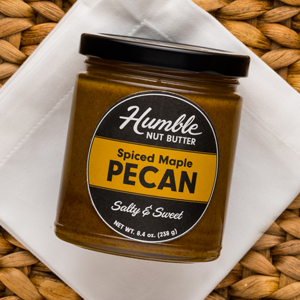
[00:07:52] Ray Latif: Well done, All Protein Show. Yeah, I'm definitely getting some of this, you know, salty sweetness with a spudsy. It's not overly sweet. And I'm looking at another product that we have on the table. It's from Humble Nut Butter. It's a new brand out of Minneapolis. I met with the co-founder, John Waller, at the recently held Winter Fancy Food Show. He and his wife launched the brand last year. Small batch, savory nut butters, vegan, gluten-free, palm oil-free. And it's listed, this spicy maple pecan variety that I have. is promoted as salty and sweet. I have yet to try this. We have three spoons.
[00:08:31] Mike Schneider: But it's spicy. If it says spicy on it, it's got to be spicy to me. OK. I'm still putting roast by the Spudsy package here. Yeah. Mike has already put down half that bag of Spudsy.
[00:08:44] Jon Landis: And while I'm reading that, it feels like when I was a little kid and I used to read the cereal box, know every ingredient in the cereal. It took a long time to read those boxes because the cereal ingredients were so just awful.
[00:08:55] Ray Latif: Remember those days? Well, listeners, as I mentioned with Spudsy, you can probably eat the whole bag and Mike is trying to do that right now. Trying to do just that, except I keep having to talk, so. There you go. Well, having this spiced maple pecan butter might make it more difficult to talk, but we've got some lollipop to wash it down with if you'd like. Oh, that is good.
[00:09:15] Mike Schneider: Isn't it? Yeah, it's really tasty. This is quite tasty, but there's a lot of turmeric in it, and there's no turmeric on the front call out. They say spiced, and I definitely clearly taste turmeric in it. People do love their turmeric. as it goes flying off the food. People love their turmeric, but put it on the front. Fly that flag. It can be an expensive ingredient at times if you're going for organic varieties. So there's a good turmeric flavor in here. I want that on the front.
[00:09:46] Jon Landis: I want to read the ingredients on this panel here.
[00:09:49] Ray Latif: Yeah, sure. It's kind of hard to stir it. So maybe I didn't stir it as well, so that maybe you're getting a higher dosage of turmeric in your spoon than would otherwise. I like that.
[00:09:58] Jon Landis: This stuff is so smooth. It is really. Atlanta's licking the spoon. Amazing. You might eat the spoon. Ingredients, dry roasted pecans, grade A pure maple syrup, spice, turmeric, and sea salt.
[00:10:13] Ray Latif: Nice. Simple ingredient panel. Indeed. Yeah, I think John and his wife, Jessica, pretty good product on their hands. And he mentioned to me that they hand label every single one of those jars. And it looks like it's machine labeled, doesn't it? I might drink this because I don't have a second spoon and I want to double dip. I'll get you another spoon after we're wrapped up with this. It is very, very smooth. Indeed. Now, I don't have a good segue for this, so I'm just going to transition. You know, a lot of you folks out there have done a wonderful thing for us. You've heeded to our calls to send questions, comments, and ideas to us via the Ask a Taste Radio email address, and we really, really appreciate it. We'd love to hear from more of you folks and want to talk about the best way to pitch us and some of the things that we're actually looking for in terms of new content that we can provide to this amazing base of food and beverage executives and entrepreneurs out there. What are some of the things that we're looking for specifically is a question I often get? Well, it depends. You know, for the flagship Taste Radio podcast, we're looking for a great success story from an entrepreneur who's been there, done that, exited, or someone who is a bona fide figure in the food and beverage industry, someone who is well-known, i.e. in Andrew Zimmern, Kobe Bryant, who's an investor in Body Armor, folks like that. If it's, you know, someone who's already been there, done that kind of thing, it's someone like a Nicole Dawes from Late July, a Mike Rapoli from Vitamin Water. So those folks who, once again, really have an amazing founder story to tell.
[00:11:50] Jon Landis: And part of that is that they can articulate the journey and they're not afraid to talk about the failures as well as the successes so that you have a sense of what it took to get there.
[00:12:01] Mike Schneider: Internally, we call these interviews tastemakers. So, I mean, you guys want to pull the curtain a little bit. I mean, that speaks a lot right there.
[00:12:08] Ray Latif: It does, indeed. And for Taste Radio Insider, the podcast you're listening to right now, it's folks that are right now in the trenches, folks that can offer some perspective on a specific area of focus for other entrepreneurs, i.e. fundraising, marketing, retailing, things like that. It's also folks who have failed. We've had a couple entrepreneurs on Taste Radio and now Taste Radio Insider that stumbled and had to close up shop. And those stories are just as important and valid as the success stories.
[00:12:37] Jon Landis: When you pitch us or when you pitch anyone, the key is to tell a story, build a little bit of intrigue, support it with some data, and give us something juicy, a failure story, a success story, show us a hockey stick, show us a charter, a graph along the way. And that will get you at least into the conversation. Building that intrigue is the thing that opens the door.
[00:13:01] Mike Schneider: And this isn't like exclusively just for us. I mean, we're talking about what we're looking for for this particular show, but for folks who are listening, you know, this is a really great exercise for you and you're probably doing this a lot anyways. And one thing that I'd like people to keep in mind is a lot of the times you are looking to promote yourself, your story and your platform and your business. And, you know, in our experience, The best way to promote yourself is by providing value through your content. So if you come and you want to just shout from the hilltops about, you know, your new products and your, you know, all the benefits and stuff, we have coverage, we have articles and stuff like that. But when you talk about, you know, an in-depth personal interview, We want you to share some insight and then that will make you stand apart from everybody else. And that will start you if you're not already on the path to being a thought leader.
[00:13:54] Jon Landis: In terms of the language that you're using, we see a lot of pitches with colorful language like, this is an amazing story or, you know, a top story or something like that. And I think what you want is to have the story speak for itself. Let the reader be the judge, and let the reader decide that your story is awesome. Tell the story as it is. Build the intrigue. Save a few of those descriptive words for later. Let the story speak for itself. Indeed. Wet the palette, as it were.
[00:14:24] Mike Schneider: And for a lot of the startups and entrepreneurs who maybe feel like you're not fully connected in the space yet, I give this advice all the time and it works in this setting too. Do a little bit of research and write a thoughtful note. Make the person who you're writing to understand that you've spent the time to learn about their experience or you fully understand the show or the publication or the investor and what their goals are. So you always want to put yourself in the other person's shoes when you're presenting yourself. When we get a pitch and we have three or four value propositions listed in the pitch, it shows us what you think is most valuable. So people are evaluating you at all times when you're communicating with them, so just keep it in mind.
[00:15:11] Ray Latif: And we wanna hear from everyone. Don't let what we're saying detract you from pitching us or reaching out to us. Prior to the Winter Fancy Food Show, I wrote a LinkedIn post and let people know that I was heading out there and just to get in contact. And so many people did, and I was able to connect with so many folks at the show and even after the show, and it was fantastic. I really, really appreciated that. So if you have an idea for a pitch for the show, you wanna talk about some of the things that you're doing as a brand, just reach out. you know, maybe it's not the right time for an interview today, but it might be a year from now or two years from now.
[00:15:43] Jon Landis: And we know as brands, you're pitching all the time. You're pitching investors, you're pitching retailers, you're pitching, you know, suppliers and partners, and you're pitching the media. With us, if you're not sure how to pitch the media, just reach out, ask us, you know, ask us for advice. We're here to help. One thing that comes to mind here is a Mark Twain quote. I didn't have time to write a short letter, so I wrote a long one instead. This is one of those things where you really want to sit down and figure out the short letter. You want to get to the point, and this goes back to the point I was making before about saving some of the more descriptive language. Get your pitch nice and clean and concise, and read it over a few times. Make sure you've built the intrigue that you want, and say just what you want to say in the pitch, and that will open the door.
[00:16:29] Mike Schneider: And myself and Andrew Brayton and Ray Latif and there's plenty of others here who will take 15 minutes out of our day any day of the week, you know, just connect with us. We're happy to set up a time to chat and discuss this stuff with you guys individually too. 100%.
[00:16:45] Ray Latif: All right, let's get to our first interview for this episode. That's with Pete Maldonado, the co-founder and CEO of Chomps, a brand of better for you meat sticks. Launched in 2012, Chomps has gradually evolved from a small direct-to-consumer brand focused on consumers with specialized diets to one that has carried nationally at Trader Joe's and on the verge of a major distribution deal with Walmart. Sales reached over $20 million in 2018, and Chomps is continuing to expand its retail presence at major chains, albeit patiently, with a focus on strategic merchandising and in-store placement. In the following interview, Pete discussed the origins of Chomps, how it has developed a loyal following among Whole30 and Paleo consumers, and best practices for working with the notoriously secretive Trader Joe's. He also explains why the brand will never compete on price, why females make up over 80% of its consumers, and the reason that he's extremely cautious about accepting outside capital. Hey folks, it's Ray from Taste Radio and I'm on a call with Pete Maldonado, who's the co-founder and CEO of Chomps. Pete, thanks so much for being with me on Taste Radio.
[00:17:58] Trader Joe: Thanks for having me, Ray. Appreciate it.
[00:18:00] Ray Latif: Had a couple technical difficulties before we started, but all solved. Always. It was fun to actually kind of go through this and, uh, and do some tech support on a Friday afternoon. I, you know, it was a little frazzled moments, but we got through it together.
[00:18:18] Trader Joe: Things got heated there for a hot minute, but I think we got through it.
[00:18:21] Ray Latif: They did. They did. But I'm sure those weren't the only heated moments you've had in your career as an entrepreneur. Tell me how you got started with chomps.
[00:18:30] Trader Joe: You know, I've always loved meat snacks, right? I love jerky. I liked eating it. But then the problem was afterward, I would get a massive headache. And I felt like it was there were always it was also dry, and it was really hard in your jaw. But I always kept eating it, and I would give myself a massive headache. And I realized quickly that I was eating the normal conventional gas station brands that you're familiar with. I won't mention the names, but I've eaten a lot of those. And they were just a lot easier on your jaw. So I always remembered that. And I couldn't eat those just knowing what were in those, the ingredients. And I was no longer eating stuff like that. And I was fully aware of what I was putting into my body, and I just couldn't bring myself to do it. So the idea was really just to create a better for you version of Slim Jim. I mean, that's just really what it was. And it was a pretty simple idea. I just wanted to take out all the bad stuff that I didn't like in it and create something that was better. And it ended up turning out, I think, and I think a lot of our customers believe that they taste better than the conventional brand.
[00:19:30] Ray Latif: at launch though, chomps wasn't for the mainstream consumer. You had pretty targeted consumer sets. You mentioned one crossfitters paleo consumers was, was another one. And then those who adopt the whole 30 diet have become a key part of your consumer base. What made those three sets attractive for chomps out of the gate?
[00:19:53] Trader Joe: part of the thing that this is a premium product, right? So if I'm trying to compete on price with the mainstream, the conventional brands out there, there's a level of education that goes along with that. So I have to be able to, you know, show those customers and it's, you know, what's the value prop? Why should you choose chomps over these other brands when they're more expensive? Right? So that's a very clear, clear cut question. And the answer for that is I go straight to the customers that are going to They already know. They have this level of education already. I don't have to go and educate them on why chomps are better. They know how to read labels. They know about all the products and the ingredients that are inside those other products that they're trying to avoid. So for us, it's kind of like an easier path to getting the product launched and into the market. And also, these are my peers. I was a CrossFitter. I was eating paleo. I was doing a Whole30. So it was stuff that I wanted to eat for myself. And so creating a product to fit into what I was already doing was an easy thing to do.
[00:20:55] Ray Latif: You mentioned there's a lot of consumer education that's required with your products. So now that you have experience under your belt, now that you have a stable set of consumers, mainstream would seem to be the next logical step for chomps. Do you take into consideration when you are trying to make that move from a product and a brand that has a very specific consumer set and usage occasion to those who are just looking for a snack, a meat snack, or as you mentioned, a healthier Slim Jim?
[00:21:27] Trader Joe: Yeah, that's a really good question. And it's all about like, you know, our go to market strategy has been very laser focused on this exact topic, you know, because you could go and launch and land 2030,000 new doors in a year, that sounds great. But if the product isn't selling, and you don't have those velocities, you won't be on those shelves for very long. And we know that we've seen, you know, even other brands in this category that we're in skyrocket, they get a clear, you know, front runner in the in the category, and they just plummet, you know. So I think for us, it's being strategic about each and every account that we go after. And we, we have to be laser focused on that. So it's actually tough to stay disciplined on it. I'll tell you, so some of the things that we look for Again, it's going back to competing on price with commodity products. It's impossible. I can't do it. I have premium raw ingredients. I'm bringing in the best of the best, you know, grass-fed, grass-finished beef. I have, you know, all free-range, ABF, organic turkey that we use in our product, you know. So, I'm never going to compete with these conventional brands that you're used to seeing in 7-Eleven, Walmart, Target, all these other stores. For me to go into one of those stores and be in that exact same set does not make sense. It doesn't make sense. That core customer that's already shopping in those stores, I don't think those people yet, I don't think they have that level of education to know the difference of why Chomps over those other products. We will go into one of those types of retailers if there's an opportunity to be in a different healthy lifestyle set. So for instance, we're launching into Walmart on February 1st, which we're super excited about. We'll be in the thousand stores and we're going to the healthy lifestyle set. So we're not going to be in the normal jerky set competing with all those other conventional brands.
[00:23:15] Ray Latif: Well, how do you work with a retailer to help merchandise your products to help get in the sets that you want to be in versus the sets that they want to put you in?
[00:23:24] Trader Joe: Yeah, I think it's a lot of just showing data. We're fortunate enough right now to have some of that data that we've started with, with Trader Joe's, and kind of showing a success at front end. This is a really great impulse buy, but it's also kind of just having that placement in the perimeter of the store. So anything we can do to get any kind of off-shelf placement I think this is the same type of dilemma and challenge a lot of better for you brands are having right now, especially if they're typically merchandise and center store. A lot of the customers that have that base of education and nutrition, they're kind of shopping the perimeter of the store for the most part, because that's where all the healthier, natural ingredients are, your produce, your fresh meats and all that. So that's definitely a challenge. And it's one of those things that we always think about. So if we are going to be in center store, just having the opportunity to have some off-shelf placement, whether it's a shipper or, you know, NCAP or something like that, we'll invest in that because we know driving trial is super, super important. We know once the customer tries the product, they'll taste the difference and then they come back and buy. So, the positive thing for us is that we have the data to kind of show that once the customer is trying the product, there's a really good retention rate, that they're going to come back and buy again.
[00:24:41] Ray Latif: You mentioned that Trader Joe's has become a key retail partner for Chomps. How did you get involved with the business and I guess, how do you keep them happy?
[00:24:49] Trader Joe: Yeah, Trader Joe's is an amazing partner to work with. And I think it's it's both ways. You have to have a it's a partnership, you know, a lot of retailers, it's really, you know, very one sided, but they're amazing to work with. They pay very, very quickly. That's always nice. Yes, as a startup. I mean, it was, that's pretty critical. But at the same time there, if they have an issue with what you've delivered or the product or your performance, they don't mince words, you know, they come and they will tell you exactly what the problem is. And you should fix it pretty quickly. But it's been a great learning opportunity for us. It was it was our first both my partner and myself, we had no background in CPG whatsoever. I've never sold into a retailer before.
[00:25:31] Ray Latif: So Trader Joe's was your first brick and mortar store?
[00:25:34] Trader Joe: Well, yeah, first national chain, we sold national chain, we were working with, you know, a bunch of CrossFit gyms and an independence across the country. But they were all ordering directly from us through our wholesale portal on our website. But we really had no distributors or any other actual, you know, retail distribution.
[00:25:53] Ray Latif: So how cognizant is Trader Joe's of some of the trends that chomps has aligned with like a whole 30, like a paleo or a CrossFit.
[00:26:04] Trader Joe: Yeah. I think, I think a lot of people would be surprised. You know, you would probably think that they're more of an old school type retailer. But I mean, they have been some of the more progressive buyers that I've ever spoken with, actually, they found chomps. I mean, we were such a small brand, we were only really available online, and then a few independent retail stores across the country. But, you know, there was definitely no national placement. And there was no They took a gamble on us. They definitely did. We made out and we proved that we can handle it. So they actually found us because one of the family members of the buyer that ended up contacting us originally, her daughter, I guess, was doing a Whole30 and was bringing the product home. And that's how the whole family tried it. And they realized it was a good product. And that's when I got my phone call. So yeah, it's pretty interesting to see that. I never expected it, to be honest with you. I know when I got that phone call, I was kind of like, yeah, what? Like I thought it was a prank phone call, but it turned out it wasn't, luckily.
[00:27:07] Ray Latif: It was Mr. Trader Joe himself.
[00:27:10] Trader Joe: It absolutely was.
[00:27:13] Ray Latif: So, I mean, as most people know, it seems like 90% of what Trader Joe's sells is private label. How do you keep them happy and, you know, maintaining your brand in their stores?
[00:27:25] Trader Joe: We support the brand pretty heavily on, you know, just through our social media networks. And we're always talking about, you know, Trader Joe's. We really didn't go outside of Trader Joe's to any other retailers until about a whole full year of working with them. I think that was a good decision on our part, really, just to kind of make sure and just a nurture that relationship and make sure that we get that working really well and You know numbers were up 20% year-over-year for us. We launched a second skew now things seem to be going really well and The partnership continues to thrive
[00:27:59] Ray Latif: The proof is in the pudding and the pudding is sales, right? That's right. So, Pete, I read somewhere that 70% of your consumers are female. Is that correct? And how is that possible considering that meat snacks would, on the surface, appear to be something that, well, guys eat? Right.
[00:28:19] Trader Joe: Yeah, that's absolutely, it's actually low. It's actually probably closer to 80%.
[00:28:24] Ray Latif: Wow.
[00:28:25] Trader Joe: Yeah, we're, you know, and it's, I think that's one of the big differentiators and part of why our brand has grown the way it has, you know, we're bringing new customers to this category. We're not trying to go and, you know, compete with these other brands on shelf even. And it's actually a great, great thing. You know, buyers, when they realize that, I mean, especially in the meat snacks category, they're missing out on that female buyer, even if to take it even deeper, it's that female millennial, millennial buyer, that's that all these buyers are missing out on. And that's the reason why we're in 7-Eleven today. That's the reason why we're going to be on in Walmart. I mean, that's just like, It's nice to have that data to be able to show a buyer that we're not here to go and cannibalize all the other brands that you have in the set. If you put us here, you're actually going to grow the set and grow the category. So for them, it's just incremental revenue and growth into the category. But for us, it's great because that's our customer. This is an overly masculine category to be in, you know, and we try to from everything from our branding to our packaging to just the tone and feel of our brand when you go to our social media, you know, we cater to the female customers.
[00:29:36] Ray Latif: Well, what about your brand is resonating with female consumers specifically?
[00:29:41] Trader Joe: I think it started with the nutrition side of it, right? So it was the whole 30 approval. It's the non-GMO project verification. It's the no sugar, especially if they're keto dieters. So all of those niche communities that we spoke about before, those definitely played a part into it because those are very heavily female. And I think from there, it's really just the branding and the feel of our, you know, the tone and feel of the branding that we put out. That's who we are, you know, where it's not female. It's not feminine, but it's kind of, I guess you could say gender neutral. I don't know. It's just, it's just not as masculine as what you're, you're typically used to in this, um, in this category.
[00:30:21] Ray Latif: Let's talk a little bit about the funding for your company. It's interesting because you told me for a long time the company was primarily self-funded and that you've been cautious about taking outside money. Why are you wary of raising outside capital?
[00:30:36] Trader Joe: Yeah. So I mean, just going back to my first business I ever started, I didn't really get into it, but I had a bad experience. Let's leave it at that. Right. So I raised some money from the wrong investor and learned very quickly that I never wanted to be in that position where you're kind of you're chasing cash and you're trying to, you're relying on somebody else to fund your business. So I knew very early on when we started this, that we were going to make this a self-funded business. We were going to grow, we were going to reinvest profits back into the business to grow it. And I was not going to rely on anybody outside. So yeah, that was for the first, let's see, five years maybe. Yeah, about four and a half, five years, we did this totally self-funded. We grew it, bootstrapped it, just selling direct to consumer. very slowly grew it. And then we took some very small, just some outside investments, but they were actually strategic investments. We never took on money for the sake of needing cash. It was more of strategic partnerships, just You know, actually, one of them is actually Courtney room was on was on this year, your podcast previous Yeah, from m 13. He was on the Yeah, so that's the exact, you know, they're the perfect example. I mean, they've been, they've been great partners for, you know, very early on with us. And great advisors. Yeah, so it was less about the cash and more about what else can you bring to the table to help us build this company up and do it the right way. They've done it before. And they've built, you know, various types of brands, but they're involved with all types of CPG companies right now. So Rasheed and I, we're the first ones to raise our hands and just be like, we're not the experts here. We've never done this before. We're going to lean on you. What do you think we should do next? And it's I think it's just great to have mentors like that on your side.
[00:32:21] Ray Latif: Did it also, this notion of, hey, we're going to be very cautious about who we accept money from and how we spend our money, I mean, how much of that has benefited or affected your approach to costs and being frugal with your costs?
[00:32:40] Trader Joe: So it's probably the opposite of what you're thinking, because I think we actually might... Let me explain that a little better. So I think that we spend money on things that you probably wouldn't expect. And if we had investors, If we had private equity behind us right now, breathing down our neck all the time, we probably would not be able to invest in these things. And that's like going back to the, I think we talked about this the other day, was we hand inspect every single stick that we manufacture. And part of the reason we do that, we're not adding sugar to the product. Sugar actually helps with the quality control of meat-based products. That's why you see even the Better For You products out there right now, there's very few that are eliminating sugar altogether. Everyone's adding some sort of sugar in one way or another. We don't do that. It was one of my decisions that we made very early on. It's something that we stuck to. We don't add any sugar to the product. It's actually done very well for us. I mean, that's why we're Whole30 approved. That's why all the keto dieters are all eating our product. But it's brought its own set of challenges now because we have to step up the quality control side of our business in order to make sure that we don't lose customers, right? So it's everything from shelf stability, to cosmetics. I mean, it could change the color of the product, it could change the mouthfeel, all of these different things. So if you're eliminating sugar completely, especially from snack sticks, it makes it very challenging. So for us, we have to go and we 100% inspect every single stick. And as we've scaled, It's been challenging to do, but we've got it to the point now where this process is... We can continue to scale it. We don't see it as it's going to be a ceiling at any point. And for us, though, we're investing heavily. If we were to eliminate that and go to spot checking, like most brands are going to do, which is probably what any PE group would want you to do. We would add multiple six figures, if not seven figures, to the bottom line. It would be very easy to do. We invest heavily there, but that's why we've been doing this for six years and we're growing at the rate we are. I honestly think that's why.
[00:34:43] Ray Latif: So what kind of private equity firm or venture capitalist would be the right fit if there ever were a time when you would need that kind of funding?
[00:34:53] Trader Joe: Good question. If we were ever to take on money, it would be from somebody that brings something totally different to the table besides capital, right? We have great banking partners. That's one of the good things about being a profitable business. I could go to the bank, we have a credit line, we don't need the cash. So if we were going to take on money, it's got to be from somebody, some sort of strategic partners that has something else that they could bring to the table, whether it's massive infrastructure that we know we can lean on to scale the brand to, you know, new stores, whether it's relationships with other buyers, or whether it's supply chain, if they have massive scale in that area, and we can reduce our costs on that side, or if they have a big sales team and kind of expand our footprint that way. So those are the things that really get us interested. It really has very little to do with the cash side of it.
[00:35:43] Ray Latif: Pete, this has been fantastic. Thank you so much for taking the time to speak with me. I really appreciate it. And good luck with everything going forward with Chomps.
[00:35:50] Trader Joe: Thanks, Ryan. I appreciate it.
[00:35:53] Ray Latif: Alright, let's see if I can't make a segue from beef sticks to Bend, Oregon. You know what? I think I just did. I recently traveled to the Beaver State, where I met up with Paul Evers and Steve Barham, the co-founders of Riff Cold Brewed, a maker of glass-bottled cold brew coffee that launched in early 2018. In addition to its ready-to-drink beverages, the company also operates a unique taproom in Bend, one that Paul, a co-founder of beloved craft brewery Crux Fermentation Project and branding agency TBD, described as the epicenter of the brand and a key to its mission of creating new consumer experiences for coffee. In the following interview, Paul and Steve discussed the role of the taproom in Riff's development and as an incubator for new ideas. They also spoke about the genesis of Riff and their plans to differentiate the brand amid a crowded space for cold brew coffee, the evolution of the word craft, and how Steve, a former LinkedIn executive, is incorporating lessons from the tech space into the company. Hey, it's Ray from Taste Radio. I'm in Bend, Oregon, and I'm at the Riff Cold Brewed Coffee Tap Room, and I am joined by the co-founders of the company. That's Steve Barham and Paul Evers. Guys, thank you so much for joining me. Thank you.
[00:37:06] Pete Maldonado: Thanks, Ray, for making the big long travel or the big trip out here.
[00:37:11] Ray Latif: It was a big trip out here. Steve, thank you for having me. You bet.
[00:37:14] Riff Cold: Nice to have you.
[00:37:15] Ray Latif: So Riff Cold Brewed Coffee, you guys launched not too long ago. When did the company get off the ground? We launched our production facility in March of 2018. And the tap room itself that we're sitting in launched or opened in December of 2018, right? This is only three weeks old. It's like a newborn baby. Yes. So Riff Cold Brewed Coffee, where did the name come from? Where did Riff come from? And why do you call it cold brewed versus cold brew, which seems to be the standard for this type of coffee?
[00:37:43] Pete Maldonado: Well, I'll answer that part of the question. We thought it was confusing because cold brew could be a cold beer and it has very strong reference to the temperature in which the beverage is being served. We wanted to emphasize the process and we're about cold brewing and that's where all the benefits from cold brew come from is the cold brewing process. So we decided early on to be clear with the descriptor of the kind of company that we were. and chose to call it a cold brewed coffee company.
[00:38:16] Riff Cold: And the name, Riff? One of the definitions of riff is a fun, spontaneous outpouring. And so after we looked at going through and naming a company, as you often do, and looking at what the other associations are, riff is about being spontaneous. It's about being fun, not taking ourselves too seriously. And I think that it's short. It's fun to say, has good mouthfeel, and has a musical connotation. We're all big music fans. So when I think Paul came up with the idea of naming our company Riff. It was pretty instantaneous that we loved it.
[00:38:51] Ray Latif: So before you came up with the idea for the name, there must have been an idea for the concept of a cold-brewed coffee brand. What was the genesis of this brand and how did you guys meet and come together to co-found it? Paul? Yeah.
[00:39:10] Pete Maldonado: There was five questions in that one question. I usually try to pack it as much as I can. That's excellent. I'm a co-founder of Crux Fermentation Project. It's a craft brewery here in Venezuela. I was working day-to-day as a co-founder, president, and also CMO. I had decided that Crux, the brand of Crux, was pretty mature and it was well-established. I thought it was a good time for me to move on and hand it off to somebody else and infuse some new energy. and started thinking about what would be next. And we were actually exploring the idea of packaging a nitro stout in a can. And so I started doing some reconnaissance on shelves and came across a can of Stumptown's Nitro and drank it and dissected it and to find out, you know, if they had a widget, what kind of widget it was. And that is really the first cold brewed coffee I had ever consumed. And that intrigued me. And I had conversations with people in the industry about what was interesting that was going on. I had a conversation with Bill Anderson, asked him what the hot categories were in non-alcohol. I was interested in exploring something outside of something that was regulated, like beer or spirits. And he told me that on his radar were two categories that were hot. One was kombucha and the other was cold brewed coffee. And one of the things I thought was really interesting was he cited a statistic that he had heard about, which was that 70% of millennials preferred their coffee cold. So I happened to have a millennial as a good friend and as a son, and I started asking him about cold brewed coffee. And it grew from there. And Steve and I, we were already friends, and he can tell you his story in coming to Bend and how we met. We have a lot of shared values and an interest in, you know, the operations side of a craft beverage company. And we had been talking about working together. And so, I remember the day he and I got together actually for a beer. And I posed the question to him if he would be interested in launching a cold brewed coffee company. I'm not even sure, were you familiar with cold brewed coffee at that time?
[00:41:29] Riff Cold: I was, but I moved to Bend in 2014, and Paul Evers is known in this town as the de facto mayor. He's not elected, but he serves in the role voluntarily.
[00:41:40] Ray Latif: I got the sense that he's sort of a godfather in this community.
[00:41:43] Riff Cold: He's the godfather of the mayor. It depends on what side of town you're from here. In a good way, not mafia-ish.
[00:41:48] Pete Maldonado: Well, without the organized crime mask back then.
[00:41:50] Riff Cold: So we were introduced and one of the aspects I look for in a new friend is, do they own a brewery or not? And Paul happened to.
[00:41:57] Ray Latif: And you came out of the corporate side.
[00:42:00] Riff Cold: You were with LinkedIn for many years, right? I was in tech for 20 years. And so after 17 years in the Valley and four years living in Australia, opening and operating all the LinkedIn offices in Asia, we wanted to try something new and different. and our kids were at an age where we wanted to find a place for them to grow roots. And I guess the story is we built a spreadsheet with all the attributes in life that we were hoping to seek. Community, a town that was progressive, a town that had wonderful outdoor recreation opportunities, and so we looked at places like Santa Barbara and Steamboat Springs, Austin, Seattle, and ultimately chose Bend. And then after moving to Bend and meeting Paul, I was fascinated with what he and the team at Crux had created. Almost overnight, it became the town square of Bend. It's an old Amco transmission shop that has been converted into, I think, the leading craft beer and craft beer pub in Oregon. And if you go there on a summer day, you probably have 300 or 400 people outside on this lawn, celebrating around a bonfire, toasting beers. Their kids are there, their dogs are there. It literally is the town square of Bend. And so I was very apt to want to do something like that with Paul at some point in the future. And the long story short is about two years after that conversation, he reached out and said, I'm going to do something in craft beverage again. What do you think about Cobra?
[00:43:33] Ray Latif: So Steve, you qualified what you wanted out of life and on a personal level, how did you qualify the market opportunity for Cold Brew, which even in 2016 was getting to be a crowded and pretty competitive space and now in 2019 is very crowded and very competitive. What did you see as the market opportunity? What did you see as your opportunity to differentiate in this space?
[00:43:57] Riff Cold: I think cold brew is still, was then and is today to some degree, nascent. Paul and I attended the Craft Brewers Association Conference in 2016.
[00:44:07] Ray Latif: This is the Craft Beer Conference you're talking about?
[00:44:10] Riff Cold: Yeah, sorry, Craft Beer. And I think the statistic then was there were 5,000 craft breweries in America. Today, it's grown by about 40%. There's 7,000 craft breweries in the United States. And so I think when you compare what happened in craft beer with what's going on in cold brew, It's still early days and consumer tastes are evolving. The reality is when we're doing sampling at a grocery store, two-thirds of the people aren't familiar with cold brew yet. So I think the space is growing very quickly and the industry needs to educate people on cold brew and its benefits and frankly its incredible taste profile.
[00:44:47] Pete Maldonado: You know, I think the other thing is that we see the total addressable market as being coffee consumers, not just cold brew coffee consumers. And I suppose that I have some insensitivity or immunity to this idea of being a crowded space because when we were first launching Crux, we were told over and over again that it was exceedingly crowded. There were already 2,000 breweries in America. How could the market accommodate any more? So what really was the primary driver behind the growth in craft from 2010 to last year, or the year before is when I think it started plateauing, was innovation and new types of beers and beverages and new ways of presenting it, new experiences around those beers. So I think that's where we see the opportunity is creating a new experience around coffee and redefining coffee in ways that people don't expect at all.
[00:45:42] Ray Latif: So what are some of those ways that you're trying to introduce new experiences for coffee?
[00:45:49] Pete Maldonado: Well, I think one of the things that we've talked about is that we identify ourselves as a craft beverage. And when we hear the term craft, the way we interpret it, and back when I was leading the branding agency of TBD, we were working on brands such as 21st Amendment, we restaged the Shoes Brewery, we actually worked with Hum to develop that brand.
[00:46:11] Ray Latif: Humm Kombucha.
[00:46:12] Pete Maldonado: Yeah, it was previously Kombucha Mama. And we had conducted, you know, anywhere from 12 to 15 different consumer research studies, more qualitative than quantitative, to get insight and to understand what was behind this movement away from mass-produced products to craft. And what did craft mean? You know, literally, or the connotation or denotation is something fairly literal, but the reality is that it's really about a different kind of relationship with the company, one that's driven by aligning or identifying with a value set you know, developing a relationship with this sense of humanity behind the brand, a sense of purpose, creativity and innovation, being fearless about experimentation. You know, what we saw was creating, so the taproom that we're sitting in right now is really the epicenter now of the brand. The centerpiece of the tap room is a 60-gallon or two-barrel pilot brewing system where we're experimenting on a daily basis and then within 24 hours we can have a new brew pouring across the bar and getting feedback from consumers. So we're not in a lab somewhere or a production facility or shipping off our recipes to a co-packing facility. engaging consumers in the development of our products. So some of the things we have going on here, this is the first place that we introduce it to people and we get feedback, but we have a hot, brewed cold, but served hot, nitrogenated, and heated in line. Jim, I'm just sipping on right now. It's quite good. It's actually excellent. Excellent. Good. People are blown away by that experience. The heated, nitrogenated, cold-brewed coffee gives them the experience of a latte. We've also got some sparkling, what we're calling coffee fruit tea, or it's cascara, that is really exciting, that we think is going to lead to a lot of new innovation. Being sparkling is very refreshing. And it's got a fair amount of caffeine. We still have yet to do some lab testing to identify the specific amount of milligrams of caffeine per serving. But it's just like a perfect afternoon or early evening pick-me-up that's refreshing.
[00:48:30] Ray Latif: Let's talk about the taproom a little bit. It's still obviously very early for this business. But how much of the taproom plays into your overall business and marketing strategy? Paul, you mentioned that you're getting feedback from your customers about some of the things you're experimenting with. Do you expect that to be a critical part of what you're doing going forward when it comes to innovation and how you present and position the brand?
[00:48:56] Pete Maldonado: Well, this is the manifestation of what we're talking about with the relationship, the kind of relationship we want to have with our customers. where there's reciprocity or sharing of ideas and a circular flow of thinking, this is the place where it's happening. So this is our, we'll call it internally our brand epicenter.
[00:49:14] Riff Cold: Paul, you've done a lot of work on what makes a craft brand, and part of it is the origin story and the connection to the maker. I lived in San Francisco for 17 years, and the Napa and Sonoma experience was part of the lifestyle there, where you didn't drink wine based on where it was positioned on the store shelf. You chose wine based on your experience in meeting the winemaker and visiting their estate, and then, A few years later, living in Oregon, the same thing happens with beer. You choose your drink based on the personal experiences you have with that brand. And with coffee, especially cold brew coffee, you don't see a lot of that yet. So what we wanted to do was create the personal affiliation and the craft experience where consumers could come and see cold brew being made. You know, that's why we have this pilot system here in the taproom. And we believe that when people go home, whether it's to Portland or on the other side of the country at some point, they'll want to reach for that riff in the cold case because of the experience they had in getting to know the makers and getting to know the physical place, the birthplace, where riff was born.
[00:50:27] Pete Maldonado: I have a good friend who I think came up with a perfect metaphor for it, which is, this is like coming to see the live concert. And when you go back home, you want to listen to the playlist over and over again. and it's because you had an experience. It was a human experience, and that's what we're seeking to provide.
[00:50:42] Ray Latif: Definitely taking a page out of the craft beer playbook, tap room is becoming more and more present and an important part of the industry. I've heard the word craft brought up quite a bit in our conversation. It seems like it's been a little watered down in beer. So how do you think the word has evolved in terms of its meaning and its relevance?
[00:51:04] Pete Maldonado: Well, you know, I fell in love with the term when it was first introduced to the world of microbreweries. You remember that? It was microbreweries. And what I loved about the renaming it of craft is it was more about the humanity behind the production of the product or the design of the product.
[00:51:22] Ray Latif: It's shorthand for handcrafted, right?
[00:51:24] Pete Maldonado: It's shorthand for handcrafted, yeah. And one of the things I love about it, too, is I believe that a lot of people associate when they're thinking about the literal term of craft as being small. I believe it has nothing to do with being small. It has everything to do with the quality of the relationship that you develop. So craft has gotten commoditized because, I mean, I saw that McDonald's a few months ago actually has Kraft hamburgers. Let's just say it's somewhat jumped the shark.
[00:51:54] Ray Latif: I wish our listeners could see Paul's face when he said that. It was a look of frustration, anger, and he was going to throw my laptop over the railing over here.
[00:52:02] Pete Maldonado: Yes, definitely. It's a bit jumped the shark as you would say. So if it jumped the shark, why are you still using the term? Well, because it is a vernacular. But I agree, it needs a new term. It really does because it's it is limiting what a craft brand really is. So it needs a new term. In fact, we came very close to launching a customized research study around taking the concepts or the components that we had identified before about what defines a craft brand from a consumer's point of view, looking at that at a deeper level and trying to identify a new term. We were working with a research company on a program to figure that out. Then I came up with this idea of talking to Steve about starting a cold brew coffee company.
[00:52:55] Riff Cold: Before Ray leaves Bend, I think it should be our goal to come up with that new word. We won't tell McDonald's what that word is. For a few years, we'll have a head start. Maybe it's neocraft. We'll just, we'll kind of riff on what the new craft era should be called.
[00:53:11] Ray Latif: Maybe riff will be the new craft.
[00:53:13] Riff Cold: There you go. There you go.
[00:53:14] Pete Maldonado: Okay. Well, let's, let's decide it now. Why wait until before he leaves?
[00:53:20] Ray Latif: You both come from backgrounds where the user experience was critical to the success of your respective companies. I'll start with you, Steve. What did you try to incorporate from an experiential standpoint when building LinkedIn and you and the company overall?
[00:53:38] Riff Cold: Yeah, no, I think one of the phrases you hear most at Riff was something that at LinkedIn we practiced every day, and that is test, learn, iterate. And everything we do, we're very bold in our experiments because we know they're not permanent. We try something once, a few more times, that we adjust, and we learn from what customers and consumers really are after. And we do that here in the tap room. We do it with our products. In our first year, we've launched our first four SKUs. I think we're one of the few cold brew companies to offer consumer empowerment, the ability for consumers to dial in their own caffeine intake. And we talk about caffeine levels like a brewery would talk about ABV or IBUs in terms of beer. One of the things that we did about three months ago was open our Riff Tap Shack on campus of the University of Oregon. And it's a place before we even bring it here, we can literally have a new idea envisioned and in consumers' hands. in a matter of days. And we think it's very important for the next generation of coffee drinkers to learn what they want. So whether it's Millennials, whether it's the up-and-coming Gen Z, we've got a kiosk on campus and literally can get feedback in hours after launching a new product.
[00:55:00] Ray Latif: Well, I've really enjoyed our conversation, guys. Thank you so much for taking the time to sit down with me. Thank you for having me in your beautiful taproom. Good luck with everything going forward with Riff. It feels like you have a great runway going forward.
[00:55:13] Pete Maldonado: Hey, thank you, Ray. It's always great having a conversation with you. Really enjoyed the process leading up to this and the conversation today. We really appreciate you being here. Of course.
[00:55:23] Riff Cold: I don't know if you can see this on radio, apparently you can't, but we've got a collaboration Riff Crux beer, we've got a Cascara tea, and an Affogato that we're gonna cheers with.
[00:55:33] Ray Latif: Cheers, right? Cheers. Cheers. Cheers. Cheers. That brings us to the end of episode 18 of Taste Radio Insider. Thank you so much for listening, and thanks to our guests, Pete Maldonado, Paul Evers and Steve Barham. Please subscribe to Taste Radio Insider on iTunes, Spotify, Stitcher, SoundCloud, and Google Play. As always, for questions, comments, ideas for future podcasts, please send us an email to askatasteradio.com. On behalf of the entire Taste Radio team, I'm Ray Latif. Thank you so much for listening, and we'll talk to you next time.
[00:56:10] SPEAKER_??: you