[00:00:05] Jon Landis: Every so often, an entrepreneur will tell me that they're not ready to attend BevNET Live, but nothing could be further from the truth. You don't even need a completed product to get value from attending. That's right. In fact, product development is a major aspect of this event. Every brand, no matter how established, is always working on something new.
[00:00:23] Mike Schneider: And there are all different types of innovative suppliers and service providers attending BevNET Live specifically to meet you and help you bring your next big idea to market.
[00:00:31] Jon Landis: Brand tickets to BevNET Live also include admission to Beverage School, a very full afternoon of foundational knowledge and structured networking with early-stage experts.
[00:00:40] Mike Schneider: I mean, it sounds like BevNET Live is actually the perfect place for an early stage entrepreneur.
[00:00:45] Jon Landis: Exactly. You can definitely be too early to exhibit at a trade show, but it's never too early to attend our conferences. Discounted tickets are available through mid-April. Head to BevNetLive.com to learn more. And now, Taste Radio.
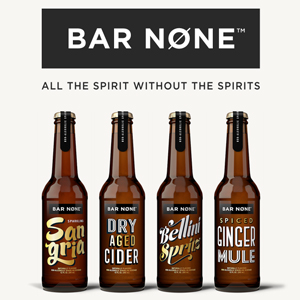
[00:01:07] Ray Latif: Hey everyone, welcome to episode 19 of Taste Radio Insider. I'm Ray Latif and with me are my BevNET colleagues, John Craven, Mike Schneider, and Jon Landis. We're recording from the Taste Radio studio at BevNET headquarters in Watertown, Mass. In this episode, we feature interviews with Patrick Tannous, the co-founder and CEO of a fast-growing functional tea company, Tiesta Tea, and Robert Jakobi, the founder and CEO of better for you soup brand, Boo. Just a reminder to our listeners, if you like what you hear on Taste Radio Insider, please share the podcast with friends and colleagues. Of course, we'd love it if you could rate us on iTunes. So this week we saw the Big Soda companies going niche again, as we reported on BevNET. Pepsi launched a new nitro product, or they're about to launch it at the Superbowl. And as we can see on the table, we've got a new line of mocktails, non-alcoholic cocktails The Coca-Cola company. This line is called Bar None. John Craven, what's this line all about?
[00:02:05] John Craven: Well, basically, as you said, it's a non-alcoholic cocktail product. It's interesting, the product comes in a couple of different flavors, most of which I don't think would technically be cocktails. Things like Sangria and there's a Bellini Spritz, also a Ginger Mule and a Dry Cider. Interesting stuff. I mean, it basically looks like a craft soda. you know, a lot of these have vinegar in them. So it's kind of almost got this like drinking vinegar, switchel kind of flavor to it. I don't really see it as like a cocktail replacement. It's certainly something that you would have to sip. So maybe that's kind of what, you know.
[00:02:41] Jon Landis: It could be a sweet cocktail replacement, but like a lot of cocktails aren't this sweet in my estimation.
[00:02:48] John Craven: I was gonna say, or you could mix it with booze and make it into a cocktail.
[00:02:51] Jon Landis: Yeah. I mean, the vinegar, it seems like they're trying to use the vinegar as like a replacement for that spirit edge to it.
[00:02:59] John Craven: Wicked Sweet Shrubs is what I taste. Yeah, Sweet Shrubs. I mean, it's also, you know, one of those products that if you looked at it, if you looked at their, you know, social media presence, like you wouldn't know that this was a Coke product. It doesn't say Coke on the label. on the bottle, although it has like an ambiguous company name, Atlanta, Georgia. So you'd figure it out.
[00:03:20] Ray Latif: It's also not apparently clear that it's a non-alcoholic product. I mean, I know it says that underneath the variety names or the flavor names, it says non-alcoholic sparkling beverage, but it's in tiny little letters. So I wonder how many people are going to pick this up and wonder what the heck it is. Especially the sparkling sangria that's a sangria.
[00:03:36] Mike Schneider: It's like screaming at you.
[00:03:38] John Craven: Sangria. I mean, whatever it is, they're definitely thoughtfully formulated, you know, really unique. I think all pretty tasty.
[00:03:46] Jon Landis: So kudos to them for that. Yeah. And in fairness, I think a lot of the mocktails I've tasted have been sweeter than I would personally consume. And also here's a company that puts out billions of gallons of, you know, fizzy sugar water and here's something that's sweet and it's a little bit more evolved and refined and it's pretty interesting.
[00:04:08] Ray Latif: Jon Landis, have you heard from other mocktail producers about Coke's entry into the space and I guess their concern or lack of concern?
[00:04:16] Jon Landis: I haven't heard about this specific event from anyone yet. But it's definitely something that people talk about frequently, the concern that, you know, Coke or Pepsi will take my idea and, you know, do the same kind of thing and knock it off and put me out of business. But in this case, it's a benefit to those manufacturers, right? I think in most cases, it's a benefit. In most cases, that's kind of best case scenario. A, I mean, imitation is the most sincere form of flattery and it kind of gives you a little bit more to go off of than, hey, I'm the only person out here doing it. It kind of validates what you're doing in a sense.
[00:04:55] John Craven: Well, I'll give some context on that too that makes this point. I mean, I've talked to a couple of investors like literally in the past week and you know, this is something that's on people's radar. You know, there's obviously with the start of the year, dry January, a bunch of stuff on like non-alcoholic cocktails and you know, here is Coke. getting into it. So I think it for sure, at least for a certain period of time, you know, gives this category focus and legitimacy that, you know, somebody who's big and sophisticated sees an opportunity there.
[00:05:26] Mike Schneider: The big question is, are they dipping their toes in or are they, are they in it for the long haul? This, this looks like minimum viable product to me. I mean, it's a, it's pretty artisanal label. There's an ambiguity here. You don'The Coca-Cola on the label. So the question is how much are they putting behind this thing? Now the formulation tells me There's something to it.
[00:05:45] Jon Landis: Well, if I'm a mocktail entrepreneur, I got to be really happy about this because, you know, I don't know how many dollars Coke is going to put into marketing and consumer education, but it's more than zero. And they're basically educating consumers for the same use occasion as your product, which could potentially be better.
[00:06:05] Mike Schneider: So, you know, your product is better.
[00:06:07] Jon Landis: Yeah. And so, you know, this is something that when Coke launches something like this, we see it on, you know, mainstream television. And so it becomes part of the larger conversation outside of a lot Not Just the industry bubble.
[00:06:20] Mike Schneider: So what do you guys think of the entry, the, the time to market here for Coke versus Pepsi with the nitro? I mean, we've been seeing, you know, nitro feels like it's been hot for, you know, it was hot last year and we saw a lot of entry into the nitro market and, and now Pepsi's finally, you know, come out with a, with a nitro
[00:06:37] John Craven: Well, I think the difference is that there is a market for mocktails. I would say that nitro by itself is not really a market. Nitro coffee is, certain types of nitro beer are. But otherwise, I think, you know, people put nitro in things like IPAs and stuff that are, you know, haven't really gotten the buzz because they just don't taste as good. You know, putting nitro into a soda That's definitely a more, I guess, risky move perhaps. I guess I think of things like, you know, their Pepsi's 1893 and, you know, some of the other like niche craft soda offerings that the big guys have tried over the years. And, you know, I think they get some like early interest, but the reality is that, you know, you drink it. It's still a soda, nitro or whatever in it. So it seems like it'll be hard for that to really, I don't know, in my opinion, at least, become something that has some legs to it.
[00:07:37] Jon Landis: The nitro soda from Pepsi Nitro me, seems more like a flash in the pan marketing type thing that they're doing where this, Bar None, has maybe potential to be a longer platform, a longer tail thing that they can take the time to build out if they want to.
[00:07:53] John Craven: I also think it's pretty neat that Pepsi is going hard on Superbowl when the Superbowl is in Atlanta. So there's some interesting stuff you can see out there.
[00:08:04] Ray Latif: And they're launching the nitro products for the Superbowl. Right.
[00:08:09] John Craven: So, I mean, I think that's kind of old school in itself that there's like this cola war brewing in Atlanta over the Superbowl.
[00:08:16] Jon Landis: I wonder what Coke is going to do in response if they're going to be buying up billboards and things like that. they'll definitely have a super bowl at they must know all of the, they must have all the connections to all the media buyers in Atlanta.
[00:08:28] Ray Latif: So for sure. Not Just like everyone else in America, we here at Bev net are gearing up for the super bowl, especially with the hometown Patriots in the game. That's not the only thing going on here at Bev net. We have a new weekly TV show that we're live streaming on YouTube and Instagram Live. It's called Taste Radio Now. Some of you may have seen it last week in the debut episode. It was less than a debut episode and more of an episode zero, just sort of getting the kinks out.
[00:08:54] Mike Schneider: Soft launch, right?
[00:08:54] Ray Latif: Soft launch. For sure. But the first episode, episode one went out yesterday. And just a little bit about the show, you know, we chat about highlights and insights from recent episodes of Taste Radio and Taste Radio Insider. Also talk about goings on here at BevNET. We'll also feature interviews with folks in the office and visitors at Watertown headquarters. Show streams live at 4 p.m. Eastern time and 1 p.m. Pacific time every Thursday. We encourage folks to send in questions, comments, and ridicule. We take them all. Lots of ridicule via messages on Instagram Live and the chat feature on YouTube.
[00:09:30] Mike Schneider: But you know, the thing that is most exciting about Taste Radio now for me is a lot of listeners have said, you know, we want an opportunity to interact. They enjoy the opportunity to interact. And this gives us a chance to do some synchronous connection during a show with our listening audience. You know, so I'm pretty, I'm pretty stoked about that.
[00:09:47] Ray Latif: It's almost like when you're on stage at BevNET Live and you get a message from the audience that says, please stop mansplaining. Oh, I'm sorry, not mansplaining, manspreading, sorry.
[00:09:59] John Craven: Jesus, you went there. I did. But you can do that. I don't know which is worse. You can do that. Well, hey, there'll be good things. You'll get to see the emotion on our face as we sample these products. You'll get to see Ray's like perfectly pressed blue shirt. I mean, it'll be great, right?
[00:10:14] Ray Latif: I think so. I did have a perfectly pressed blue shirt in episode zero with the soft launch, as it were.
[00:10:19] Mike Schneider: I do think we should pixelate that Manchester United hat because it's offensive. Unfortunately, I don't wear the hat.
[00:10:25] John Craven: I was going to say rule number one, no, no sports logos.
[00:10:30] Jon Landis: Hopefully you'll be able to hear everything clearly if I'm doing my job.
[00:10:35] Ray Latif: Also this week, we had a visit from Catherine Smart, who's the founder of Not Just Pasta Sauce, who brought the team a gluten-free vegan lunch made with her tomato-based sauce. Thank you so much, Catherine. Also, I had a visit from Leighton Knowles, who's the founder of CBD beverage brand Brooklyn Boocha and CBD coffee brand Flower Power. Interesting stuff. And folks, we just wrapped up our first Cannabis Guide that's coming out with the next issue of BevNET Magazine. That's the January, February issue. Look for it in your mailbox soon. If you're not signed up, head to BevNET.com slash magazine for your free subscription.
[00:11:11] Jon Landis: You'll see a lot of cool food and beverage brands using different forms of Cannabis Guide there as an ingredient and Also in the Cannabis Guide, tons of different service and supplier companies that work with Cannabis Guide food and beverage. So if you're developing, check it out for sure.
[00:11:29] Ray Latif: Also, BevNET is hiring. We have a few open positions, and John Craven, what are we hiring for?
[00:11:36] John Craven: Yeah, for sure. I mean, the team is expanding, which is great. We've got a couple of positions open. We've got a reporter position open for Nosh, an events coordinator position open that will help work on all our fun and exciting events. including our cannabis event, right? That's right. We're also hiring for a product marketing specialist. You can work with Mike. Sorry. Hey, yours is coming here. That's a benefit. And then we're also hiring for a brand specialist. You get to work with Landis. Woof. Extra sorry. But yeah, all these jobs are on our job board, I guess, with a couple hundred other jobs out there.
[00:12:16] Ray Latif: Yeah, if you're interested in applying or if you know anyone who is interested in applying, visit BevNET.com slash jobs and enter the keyword BevNET. Very easy stuff. All right, let's get to our interview with Patrick Tannous, who, as I mentioned at the top of the show, is the co-founder and CEO of Tiesta Tea. Launched in 2010 by Patrick and childhood friend Dan Klein, the Chicago-based company markets a range of functional loose-leaf and ready-to-drink cold brew teas. The fast-growing brand is sold in over 6,500 retail locations across the U.S., including Costco, Target and Whole Foods. And last year, the founders were named to Inc. magazine's 30 Under 30 list. In the following interview, I sat down with Patrick, who spoke about the origins of Tiesta, how they identified an opportunity to innovate in the sleepy category of loose leaf teas, and why knocking on 500 doors is something that every entrepreneur should do. He also discussed how buyer relationships are critical to success, noting the case of Tiesta's partnership with Target and Whole the founder of Jimmy John's sandwich chain played a key role in the company's development. Hey everyone, it's Ray from Taste Radio and I'm on the mics with Patrick Tannous, the president and co-founder of Tiesta Tea. Patrick Tannous so much for visiting us here in Boston. It's my pleasure, Ray. Thanks for having me, man. Of course. Of course. Technically we're in Watertown. This is where BevNET headquarters are located. Is it as chilly here as it is in your hometown of Chicago?
[00:13:43] Tiesta Tea: Not so much. It's probably about 20 degrees chillier in Chicago. And then with the wind, it makes it pretty brutal. So it's a nice breath of fresh air to be out here in the Northeast and not experience the chill of Chicago.
[00:13:57] Ray Latif: So TSST, you guys have been in business for a number of years. You sell loose-leaf tea, ready-to-drink bottled tea, a fast-growing business, part of the Inc. 5000. I'm so happy that you're here to talk with us because there's a lot going on with the company, and a lot has gone on with the company over the past year. But before we get ahead of ourselves, tell us how you founded the company, how you got into the tea business.
[00:14:20] Tiesta Tea: Sure, sure. So it's actually a pretty interesting story. I started it with my preschool best friend, Dan Klein, and we both went to college in the universities at Illinois in Chicago and then Illinois in Champaign, and we both studied abroad. So I studied in Paris, he studied in Italy, and as we were studying abroad, we noticed that tea was all over Europe. good tea, high quality tea using real whole ingredients, not this bag tea with what I'll call tea dust. We came back to the US and we identified that loose leaf tea was rather hard to find and super expensive and kind of intimidating to the younger millennial crowd. So we wanted to create a brand that was based off function and flavor. So we've got Energizer, Slenderizer, Immunity, Relaxer, and Eternity. And then under each function, we have flavors that are super easy to identify with. So like Maui Mango. Blueberry Wildchild, Lavender Chamomile, flavors that the common consumer can identify with and easily make a purchasing decision. At what point did you realize that you were picking up some steam with Siesta? Sure, great question. So, in 2012, the business was not doing great, very small numbers, and we were told that we need to pick it up or else we were going to go out of business. So, Dan and I went on a door-to-door trip, knock on 500 doors in 20 days. Why 500? Why 20? Because the whole idea is we would do 20, it was 25 days actually, it was 25 doors every day for 25 days and we mapped it out so that we would stay out there. And then if we hit 10%, which would be 50 new accounts, we should be able to double or quadruple the business. So that was the idea.
[00:15:53] Ray Latif: Is this something that is a concept that's been done before? Or did you guys just come up with it?
[00:15:57] Tiesta Tea: Our advisors pulled us out and they said, all right, here are your top customers. And they looked through it and they said, how did you get this customer door-to-door? How'd you get this customer door-to-door? How'd you get this customer door-to-door? They're like, guys, you guys got Not Just keep going door-to-door. And we're like, well, guys, we've gone door-to-door everywhere in Chicago, everywhere in Milwaukee, Wisconsin, Champaign, Madison. What do you guys want us to do? And they looked at us and said, did you guys go door-to-door in New York? And we're like, are you kidding me? You want us to go out to New York and just, and they're like, yeah. So that's when Dan and I kind of looked at each other. Thankfully, we had our COO, Alex. He joined us very shortly after we started, and he was able to kind of run the company while Dan and I could go door to door and just try and get our product in as many hands, in many people's hands as possible. And Ray, what we learned during that, we learned who our customer was. And it's such a cliche thing to say, but when you knock on 500 doors, it's the easiest way to learn how to sell your product. No cafes wanted our product. No fitness centers wanted our product. And at the time, this is just the loose leaf? This is just the loose leaf in the tin can that we sell. The only players that were going to take our product were grocery stores, because they had huge shelves, they had lots of teas on there, and we were a little different product that they could put on their shelf. So that's when we kind of put our heads down and just focused on grocery. And then 2013 is when we started really seeing what the brand could turn into. We got into Target. We got into Meijer. We got into Juul. We got into Harris Teeter. We got into Roundy's Marianos. We got into Sprouts. We got into Safeway Albertsons. We knocked down 14 of the top 15 retailers and no one was really telling us no because they all needed loose leaf tea. I would advise any entrepreneur that's trying to learn about their product, go do it. Don't do it for 25 days, that's kind of crazy, but do it for a week. You know, just go door to door and bust your butt and you'll learn so much about your product. You'll learn just how to sell it. What were some of the worst rejections you ever got? Man, just imagine New York City going in. I mean, we were 23, 24 at the time. So the cafe owners, they were just like, listen, we don't want it. We don't want your tea. We don't want any samples. We're really busy right now. And you just kind of have to bite your tongue and say, all right, I'll leave. And it's kind of embarrassing. Sure. I'm not going to lie. Like sitting there, you're definitely, you Feel a little degraded. I'll never forget Ray. We we ran out of money in Philadelphia during this trip And I had to call up mom for a thousand dollars. We were in Philly and one of our vendors embarrassing, right? Oh my god, my mom told me this was a crazy idea when I started it I dropped out of college to do it And so when we were in Philadelphia, we had a vendor charge us that what we weren't expecting so our bank account got drowned to zero and All we had was the cash in our pockets. It was $7. We went to one of the Philly cheesesteak stores. We got a Philly cheesesteak. We split it between the two of us, a Philly and a Coke. The next morning, I had to call my mom and ask her for $1,000 so that we could live. Thankfully, during that trip, our business did really well and I was able to pay her back, but it wasn't all fun and games.
[00:19:09] Ray Latif: I have a feeling that there are similar stories among other entrepreneurs, but it shows that perseverance and determination can go a long way. It also shows that relationships are really important. You developed some strong relationships with buyers at different retailers, different retail chains. What's your approach to a long-lasting, strong partnership between you and, say, in Albertsons?
[00:19:36] Tiesta Tea: It's a great question. For me, Ray, when I do start doing business with some of these guys, I look at how can I help them the most and make them look the best. For me, it's not all about profit in that first year. It's not all about profit in that second year. It's about developing the relationship so that they know if they need something, they can come to you. You can be trusted. Generally, if they ask me for something, I will do it immediately. without looking at the cost of it. Because if my customer needs something, they need to know that I'm on the short list of people who will do anything for them. And my company has been rewarded in many ways because our close buyers, shout out to Robbie Cruz, Tommy Renda, Drew Sullivan, they've taken just incredible care of us. They support what we do, and in turn, we support what they do. So Robbie's over at SuperValue, Andrew Schuster, our guy over at Target and Whole Tommy Renda over at Safeway. The importance of relationships really is, it started with one guy, Drew Sullivan at Safeway. He left Safeway, we started working with Robby. Robby left Safeway and went to Target. So then we started working with Robby at Target, still worked with Safeway, and we started working with Tommy. And then Robby went from Target to Super Value and then brought us into Super Value. So we've been so fortunate to work with guys who believe in us and will take a chance on our product and in turn we're backing them any chance we can. If they want a demo in their store, give me a call. I'll send someone in. If they want us to run a social media ad, please. Do you want us to do a giveaway with any other products in your store? Let us know. We'll do it. So it's becoming partners. It's not a transaction. It's a partnership. And it's a partnership with the actual individual more so than even the retailer itself? 100%. We're going to be doing this for a long time. We're going to know these people for years and years to come. So it's really important to establish a trust that when you need something, you can go to some of these people and vice versa.
[00:21:36] Ray Latif: Your relationship with one of the aforementioned buyers helped spur your decision to get into bottled tea, right? Yes, yes. Tell us that story.
[00:21:45] Tiesta Tea: Oh man, I'll never forget it. So we get an email on New Year's Eve from Robbie Cruz. He came from Safeway and he went to Target and Whole emails us and he says, hey guys, you know, we're doing this grab-and-go cooler and I'm looking for some functional beverages to add to it. I think your brand would be really good in this grab-and-go cooler. Have you ever thought about doing cold brew tea? And we said, you know, we haven't, we haven't thought about it, but it'd be really cool to do it. And he's like, well, why don't we talk about it? We're like, Robbie, we would love to. So he said, all right, let us come to your facility and talk about developing this product. So Robbie and a couple of his colleagues came in with, with one of our partners, the Moscow group, shout out to them. They've been incredible. Aaron Jane and so Robbie and them and their team came into our facility in Elk Grove, Illinois and we've sat for around the table for about six hours developing the product talking about everything from plastic bottles to glass bottles to hot brew to cold brew. And what we settled on was we wanted a really craft product that was super low in sugar, very sugar conscious, that was cold brewed. The reason why you cold brew it is because there's less acidity, so it's not as bitter. And then obviously the low calorie count. So we still use the same exact loose leaf teas to produce the bottled teas. We were able to create a process that, I don't know if anybody else in the country's done it, but we take the tea, we put it into 1700 gallon tanks, and we let it sit for two to four hours, and then we pasteurize it and bottle it up. So we figured out how to do that process. Target basically said, if you guys can get this product to what you showed us how it tastes, if you guys can get this commercialized, we'll take it on January 1st with a six month exclusive. So we worked our butts off all of last year and we got the product in January 1st with Target. The sales have been great. team members over at Target are very happy. And you know, it really shows you what some of the relationships can do. If he didn't send us that email, I don't know if I'd be sitting here today, Ray. I really don't. And for a guy like that to take a risk on a company like us, it's one of the beauties of entrepreneurship. It's one of the beauties of this food industry. You know, when someone can see your product and say, I believe in this guy, I believe in this brand, and I'm going to put my neck out for them. It makes the food and beverage industry a special place to be.
[00:24:05] Ray Latif: One of the things that retailers seem to stress a lot is consistency, reliability, particularly when it comes to production and delivery. How are you able to convince Target that you could be a reliable partner, that you could actually produce something that you've never produced before, which is an RTD product?
[00:24:24] Tiesta Tea: My operations team is just incredible. They're run by our COO and he's the one who convinced them. He's the one who went out and he worked with a lot of our other teammates and found the line. He found out how to create this process. And when we first started this process, we had to take our process and outfit a line. Well, after the success we started having, we now had a co-packer create a line that fits our process. But really, Alex went out and showed how we were going to do it, showed the volumes, and they even asked us to deliver a week early, which for a brand new product was really stressful, and our team got it done. And you know, Ray, I think the number one thing about that? Communication. When we made a mistake, when we had a short ship, my team called them, let them know, and we took the responsibility for it and fixed it. We're human. People make mistakes. You know, the other day, We shipped out product that had a wrong label. It was the the stock label. And so we had to go to our retailer partner and said, hey, we made a mistake. And, you know, that caused a lot of pain for everybody. But we were honest about it and we handled it what I'll call professionally. And it builds a lot of trust. When things don't go right, you can either shine or die. And when you handle things the right way, when they don't go right, you can make yourself look really good. And to be clear, you're national with Target with these products, correct? Yeah, all stores.
[00:25:47] Ray Latif: Even though you're relatively small in the context of the beverage industry, you're a fast-growing company and you're attempting to give back in a really meaningful way. You created the Living Well Project.
[00:26:01] Tiesta Tea: Tell us about that. So the Living Well Project was an idea that we had when we started becoming more and more successful. We asked ourselves, what are we doing to give back? And so we sell a lot of hibiscus, a lot of our teas have hibiscus, a lot of our teas have ginger. Our hibiscus and our ginger come from Nigeria, a region called Kano in the north of Nigeria. We asked our farmers in 2016, we said, what do you guys need? Like, we want to give back. We don't have a fair trade certification and we want to give directly to the people that are farming our products. And they basically said, we have a lot of our villages are, they don't have access to clean water. The ladies have to, when they wake up, the ladies get out of their house. they'll walk a couple miles onto the main highway. When they're pumping their water, they might have to wait in line, several other people there. And then they have to walk back with a huge jug of water. And that they use to feed their kids, their brothers, their sisters. They cook, they clean, they eat, they wash with that water. And then guess what? A few hours later, she has to go back because they need more water. And so what we tried to do was we tried to take proceeds from every bottle sold, go into the TS2T Foundation, which is under the Living Well Project is a part of, and we build water wells in Nigeria. So we built our first one last year. We built our second one a few months ago. Each water well helps about 50,000 people get more and more access to clean water. And you know, Ray, the whole idea is when you have a successful business, You have a platform to do some things that you can give back in different ways when you have a business. And to know that you and I have been turning our faucet every day to get water, and it's a norm for us. And then seeing these kids, you know, waiting anxiously with a cup to fill up their buckets with water. We're just so lucky. And anyone who's in business and has success, I'll challenge them to use some of your success to give those who are not as fortunate. You and I are both really lucky to be sitting here. We're Americans. We live in the best, greatest country in the world. We have water at our fingertips whenever we want. And that was given to us. And so we really want to help some of the less fortunate people who don't have what we have.
[00:28:15] Ray Latif: Truly amazing stuff, Patrick, and you and the company should be commended for doing what you do. So if you had any advice for entrepreneurs out there listening, and I know you've already given some great pieces of advice, what's the one or two things that you would say to an entrepreneur who hasn't even started a business but wants to and really wants to be successful and maybe one day be a T.S.
[00:28:38] Tiesta Tea: to T. So one of my mentors when I first got started was Jimmy John's from Jimmy John's Gourmet Sub Sandwich Shop. And he told me... Shout out to Jimmy John. I love that stuff. Oh man, he's such an incredible guy. He took us under his wing when we were 21 years old and he personally incubated us for about three months. We had a really ugly product, ugly packaging, and we wanted $250K to open up a cafe. And the school got us in touch with Jimmy and Jimmy basically said, he's like, guys do not even think about opening up a cafe. So two things there, what school and how'd they get you in touch with Jimmy? U of I, University of Illinois in Champaign. They got us in touch with Jimmy through an incubator program called Illinois Launch. And part of the program was they would put you in touch with investors. So Jimmy's company is based in Champaign. So Jimmy came to the school, he sat down at the pitch and he liked Dan and I, what we were doing. Ray, no joke, he calls us the next morning at 7 a.m. Okay, we're still in college, that was really early. And I wasn't awake, neither was my business partner, leaves us a message. I call him back, I say, hey Jimmy, Patrick here, it was great to meet you yesterday. You called? And keep in mind, this guy's got 2,000 stores. And he said, hey Patrick, I love what you guys are doing. I'm on my jet right now, I'm flying into Champaign. Come meet me in my office in two hours. I said, oh my goodness, what in the world is going on? I wake up my business partner, I said, dude, Jimmy just called. He wants us to come to his office. So we go, we don't have a car. There's no Uber at the time. We're in Champaign. What year is this? 2010.
[00:30:12] SPEAKER_??: Okay.
[00:30:12] Tiesta Tea: So we knock on our neighbors in the dorm next door. We said, Hey, would you guys mind driving us over to Jimmy John's office? We got to go meet with Jimmy. The first of many door knocks, right? Oh my goodness. It was great. Yeah. Very, very much so. So we went and we met with Jimmy. I'll never forget. Jimmy takes us into his office and he starts just Guys, this is awful. This is ugly. This sucks. I love what you're doing here, but this is not cool. You got to change this. You got to change that. But I love keep doing this. So he found all the things in our business that he didn't like. He found the things in our business that he did like, and he helped us avoid a lot of the mistakes he made. The first thing he told me, he said, don't start up a cafe. I've opened up thousands of shops. If you have one bad location at 21 years old, you're going to lose your shirt. You're going to lose all your money. He said, why don't you take your product? He helped us develop the brand. He helped us develop the logo, the colors. Great story from Jimmy. We came into his office with our colors. And he's like, how'd you guys pick these colors? And we said, they're just our favorite colors. He's like, no. Goes online, goes on apple.com, top selling iPod colors. and he pulled up the top selling iPod colors. And those are the colors that we now use. It's as easy as that. But that Jimmy incubated us for about three months. And then once we were done doing the packaging, he said, go start selling to other stores. So that's when we started just knocking on doors and selling the product. Is he still an investor in the company? He never invested. He never asked for anything. Wow. He just did it out of the goodness of his heart. And he was on a podcast that I highly suggest you listen to. I'll forward it to you. We'll have to get him on Taste Radio actually. Oh, I mean, he's a perfect guy for it. Well done. And he mentioned us on his podcast and saying that he was just as an entrepreneur, he wanted to help people. And so still to this day, we still talk. I'm friends with his son and he's an incredible guy. And you know, Ray, you need mentors like that in this business to help you not only understand what to do, but get a little confidence. You know how much more confident I was when Jimmy John helped me develop our product? When I left his office that night, no one could take me down. That's not confidence you can get anywhere else but a guy like Jimmy who's done it before. As any entrepreneur in the food industry, it's our duty to give back. It's our duty to pass it back. If any food entrepreneur reaches out to me and asks for help, there's a good chance I'm going to help them just because I've been in those shoes before. And this space right now is a great place to have a business. The quote Jimmy told me, that's what I forgot to get into. The quote he said that I never forget is, listen to your customers and outwork your competition. If you do those two things, you will always win. And so for me, it's just as simple as that.
[00:32:50] Ray Latif: It's great advice. And for the great advice that we've heard as part of this interview, I'm hearing hard work, determination, perseverance, mentorship, and relationships are so critical. And it's interesting because You and I first met at the Winter Fancy Food Show, I believe in 2018, just in January of 2018. It was at one of the after parties and we just struck up a good conversation. And I was like, Patrick's just a great guy. He's a generally nice guy. He's got a cool brand. He's got an interesting company. I want to stay in touch with this guy. And a few months later, here you are in Watertown, Mass, recording this podcast interview. And I love it and everything. This has been this has absolutely been one of my favorite interviews. Oh, thanks, Ray. In some time. So thanks so much for coming on Taste Radio. Really appreciate you taking the time and hope to see you again really soon.
[00:33:40] Tiesta Tea: My pleasure. Thanks a lot, Ray. And continue doing what you guys are doing for the food and beverage industry. It's it's really important to have a go to place where we can get the best information about the industry. So thanks for what you guys do as well. Of course. Anytime.
[00:33:52] Ray Latif: It's a fair guess that most of you are familiar with Cup-O-Noodles. You know, that instant soup brand that comes in a styrofoam cup. Technically, it's called Cup-Noodles. The manufacturer dropped the O in 1993, but it seems that few things about the Brad Avery changed otherwise. Robert Jakobi, a serial entrepreneur who launched a number of successful brands in England, noticed dearth of innovation in the instant soup category and in 2017 launched Boo, spelled B-O-U, a better for you brand of bouillon and gravy cubes here in the U.S. A year after its market debut, the company introduced its Soup Cups, which are distributed a range of retail chains including Whole Foods Market, Wegmans, Albertsons, and Sprouts. In the following interview with Mike Schneider, Robert chronicled his journey from the UK to the US and discussed differences between the two countries in terms of financing, entrepreneurship, and MNA.
[00:34:48] Mike Schneider: Mike Schneider here at Nosh Live Winter 2018 with Robert Jakobi, who's a cereal food entrepreneur, currently the founder and CEO of Boo. Welcome. Thank you for having me. I'm psyched to have you here. Psyched to have you here. We were just talking a little football before. We just got done with a great soccer chat here. Obviously, I'm an Arsenal supporter. Everyone knows that. And Robert, you are? Manchester United.
[00:35:09] Patrick Tannous: Manchester United. So we've got a bit of rivalry already before we even start.
[00:35:13] Mike Schneider: too bad. Ray's not here. You guys would be all Kumbaya. Ray loves Manchester United as you know. So Robert, tell us a little bit about your background. You're currently in New York city, but originally from London.
[00:35:23] Patrick Tannous: Absolutely. Sure. So I'll give you that high level overview. Otherwise we'll bore all of the listeners with my background From London, as you can tell with the accent, I came to study here in the US for university. And after working in finance for two years, I moved back to London and have been in the food industry for the last nine years. While I was in London and working in finance, I was in investment banking at Barclays Capital. I had this food idea, which I came up with while I was studying at Penn in Philadelphia. It was a range of healthy edamame snacks. Initially, I wanted to launch edamame in the cinemas as an alternative to popcorn. I came up with the name edamame at a movie, but that didn't work. Cinemas don't have kitchens to boil the edamame, and there was a liability issue with, you know, when you suck the edamame pods out. I refined the idea and launched a range of chocolate and yogurt covered edamame, so think a chocolate raisin or chocolate peanut. It was a healthy yet indulgent snack. This was 2009, right when kind of the healthy snacking craze was about to take off in the UK. And I got the products into Harvey Nichols, Selfridges, Harrods, Whole Foods, and sent samples to Prada Manger, which is still a huge chain in the UK. After months of persisting to get a meeting, the founder of Pret, who was called Julia Metcalf, called me and asked to have a meeting. And I came in there thinking I was going to present my products to get them into Pret, and he had other ideas, like the fact that I had a background in finance, was entrepreneurial, and had launched a food company, and asked if I would be interested in joining forces with him and creating a healthy snacks business. We spent months negotiating, and then in October 2010, we launched Metcalfe's Food Company. And initially it was my edamame brand called Podbites, and he had a range of popcorn, skinny pop, healthy gourmet popcorn, selling in Pret. But the vision was to build that brand everywhere in all the supermarkets. So I ran that business day-to-day. Julian and I owned the company together and we built that up into the fastest growing privately owned food and drink company in the UK over a four-year period. We had three lines of business. Metcalf Skinny was our popcorn brand. We became the market leader in gourmet healthy popcorn. So very similar to Skinny Pop here or Boom Chicka Pop. We were in every supermarket. We sold that business two and a half years ago to Kettle Chips. At the time, they were owned by Schneider's Lance, and now they're owned by Campbell's, which is ironic because I'm now in the soups business. The second business that we had was a chain of restaurants called Itsu. We're now up to about 100 locations all over the UK, light prep, but Asian-inspired, so eat-in, take-out, kind of sushi, Asian-inspired soups and other things. And then we launched a line of Asian-inspired snacks in the supermarkets under the Itsu brand. and my edamame was part of that. So that's what I did in the UK. Cut a long story short, I then moved here three years ago around Thanksgiving. Main reason was my wife, girlfriend at the time, is from New York. We were in a long distance relationship. And having sold Metcalf Skinny, which was the brand I built up from nothing, I wanted a new challenge. Jitsu was very big, doing very well. And I always felt that the US market offered much more opportunity for a young entrepreneur like myself. It was much bigger. And so I had this desire to launch a new food business over here. I moved back here, I spent kind of four or five months looking at different things, kind of went into semi retirement, which is, I guess what you do when you know when you when you sell a brand, you kind of take a step back and kind of rest because, you know, the four or five years journey that we had was just so crazy and so busy. And I came up with Boo. So we started working on Boo in April 2016. I had a longstanding relationship with a privately owned family soups manufacturer based here in the U.S. through my last business in the U.K. And I started looking at these categories. So the bouillon category, the instant soups category, the gravy category. And what I found very interesting was that these categories were very stale, hadn't had much innovation. So big brands like Campbell's, Cup O' Noodle, Knorr still dominated and really have monopolies over these categories. In the same way that Heinz did with ketchup, before Sir Kensington's came in and launched a cleaner alternative. So that was the first thing that really interested me. And the second thing was that the manufacturer that we ended up partnering up with and their co-founders of Boo, they're the only manufacturer in North America that can make a better for you cube. When you reduce the sodium content in a cube, it falls apart. And so they have a proprietary formulation and recipe. I, having been in popcorn in the UK for four and a half, five years, which is highly commoditized, zero barriers to entry. We were first to market with our range, but then obviously Tyrell's came in and tons of other brands. I didn't want to launch another brand or another product range, which was easy to copy. And so I love the fact that we had this kind of exclusive product range that we could make with our manufacturer, plus obviously the opportunities to really disrupt and innovate stale categories.
[00:40:40] Mike Schneider: Talk about it as a Niche Category because Boolean, it's not the sexiest category. It's been around forever and it's one of those where you said, hey, Boolean, this one is really ripe for disruption. How are you disrupting Niche Category and why is this the one that you're passionate enough about to found this company?
[00:40:58] Patrick Tannous: It was an easy product to launch with. The manufacturer were able to create three SKUs for us very quickly, chicken, vegetable, beef. We came in with healthier ingredients to what the market has at the moment. So the product has 30% less sodium on average, all natural, non-GMO, gluten-free. And we started presenting to the retailers. When the Whole Foods buyer in Austin says to us that he loves our vision and loves what we're doing so much that he's going to put us into every store nationally overnight, we knew that we had a brand and we knew that we had potential here. And that's kind of with every young brand, you need a bit of luck. We had this buyer that wanted to get behind us at Whole Foods and he launched us into every store. So I knew at that stage that we had this real opportunity with Boo. Everyone was receptive to it. Consumers, buyers, retailers. And so we went and we obviously we've been in the market now for about 15 months. We're in about five and a half thousand locations across the US, which is pretty good going in terms of rooftop growth. And now we have three product ranges. We have the Bouillon range that we initially launched with, then the Gravy Cubes, which came out because Whole Foods wanted a range of cubes for Thanksgiving last year. And this is the only Gravy Cube in the market. So that kind of, we never thought about Gravy Cubes before we launched Boo, that came because of Whole Foods. And then the Soup Cups, which launched two and a half months ago, which is effectively a better for you version of Cup O' Noodle, which has a cult following as you know. Absolutely.
[00:42:30] Mike Schneider: Let's break this down a little bit. You're a cereal food entrepreneur in the UK. How was the pitch process? How does it differ in the US from the UK pitch process? How is pitching to Whole Foods different from maybe a Tesco?
[00:42:43] Patrick Tannous: Good question. I think in terms of pitch, very similar. I mean, the buyers are very similar at Tesco versus, say, Walmart here or Whole Foods. They care about certain things, their margin. The priorities that they have are the same. So the UK experience translates one to one. One-to-one, but the players are different here. It's a different group of people. The supply chain side is very fragmented. So you've got brokers here and distributors. In the UK, we were supplying most of the supermarkets and retailers directly. Whereas here in the US, you know, we're going through UNFI, for Whole Foods, we're going through Kahee, for Safeway Albertsons, the market is fragmented. So it is different, but the skill set that you need to present a product successfully to someone is the same. And, you know, I've always been very passionate about what I've done. And when I get in front of a room with someone, I'm always confident in what I'm presenting. And we had a great story to tell here. Well, what about getting from story to product?
[00:43:42] Mike Schneider: What about differences in maybe money raising or the startup culture in the US versus UK?
[00:43:47] Patrick Tannous: Sure, that's different. So in the UK, when we launched Metcalfe's food company, we never raised any outside money. We had a credit line with the bank and as we grew, that line increased. There were only two shareholders in that business from start to finish. It was myself and Julie and my partner. The culture here, when I moved here, is very much if you have a great idea or if you have a great product range, you go out and raise money. So the VC world here was new to me when I arrived, and we raised money for Boo, which I've never done before. Valuations over here in the US are much more attractive for an entrepreneur or founder of a brand. And so, you know, if I was to raise money in the UK for Boo, we would have raised money probably off an EBITDA multiple. And as you know, with a small brand, you don't make any profit. So I would have probably ended up giving away a lot more equity at the beginning. What the hell does that mean, EBITDA multiple? You got to break that down for people. I'll explain that. So when we sold our business in the UK to Schneider's Lance, which owned Kettle Chips, they looked at our numbers.
[00:44:50] Mike Schneider: No relation to me, by the way.
[00:44:51] Patrick Tannous: And Hoolihan Loki, funnily enough, ran the sale for us. Schneider's Lance, an American company, were far more interested in our EBITDA because Kettle Chips in the UK were buying us. They wanted to see a path to real profitability versus our year-on-year revenue growth. Here in the U.S., brands are much more focused on their top line and growing year on year and making, you know, if they make big losses, so be it. You know, brands like Bayer, you know, they made big losses before they were bought. In the U.K., we had to be very kind of focused on both. And so we were always, we were either breaking even or profitable every year. Here in the U.S., it doesn't matter as much. So that's what I mean by EBITDA multiple. Brands in the U.K. are valued on EBITDA multiples when they sell. Brands here in the U.S. are valued on revenue multiples. So we ended up selling Metcalf Skinny to Kettle Chips for a very high EBITDA multiple, which worked out at a quite a good revenue multiple. But if we sold the business over here, based on the market share that we had, and being a category leader, we would have sold for five, six, seven times revenues. And that was what motivated me to move back here.
[00:45:59] Mike Schneider: But you're not saying that a brand should just focus on revenue. I mean, the profit margins is important, especially if you're looking for an exit.
[00:46:06] Patrick Tannous: Absolutely. But most young brands, having been in Niche Category and space now for over nine years, they don't mind making big losses each year if they, for example, you know, they run a marketing campaign doesn't go so well, no problem. You know, the culture and the psyche here is very different to the UK. People are much more kind of profit conscious in the UK and people here are much more revenue conscious. And that's a big difference between the UK and the US. What about culture wise, the entrepreneurial community? So I think here in the US, what I always loved and when I studied here, I kind of was exposed to it. If you're successful in the US, you've lived the American dream. People respect you for that. Here in the US, people really congratulated you if you were successful in what you did. And that American dream, I always loved it. And also the other big difference here, you have this work hard, play hard mentality. People work very hard, but at the same time, you know, they enjoy themselves. People are also here, I think, very ruthless when it comes to doing business in a good way, not in a bad way. The culture in Europe and in the UK, people are much more, I wouldn't say they're lazy, but they, give you an example, holidays, for example, in big UK corporate companies, People when they start have 25 days off a year. In the US, when you start in a corporate company, it's 10 to 12 days. There is a much more relaxed mentality in the UK, which I think is very positive as well. People here are much more cutthroat, ruthless, and very hardworking, and I love that.
[00:47:40] Mike Schneider: We've seen a bit of a shift in culture. I think there's a, there's like an, I don't know, a new group, almost like a brat pack in, in the UK. And it includes companies like Sandoz and Ugly Drinks and Macho Works and Jar Kombucha, Pippin Nut, Minor Figures, you know, there's, and they, they kind of seem to have adopted this, you know, work hard, play hard lifestyle. And then also it's been interesting to see them collaborating a lot.
[00:48:05] Patrick Tannous: Absolutely. I mean, the industry in the UK has really taken off in the last probably five years. When I started in 2009, there were a handful of small kind of healthy, better for you brands. And now Niche Category, it's not as big as the US, but it's really growing. And a lot of brands are coming over to the US and being successful. You know, it's a very exciting time if you're a UK entrepreneur to be in the industry.
[00:48:28] Mike Schneider: Well, Robert, thanks so much for being on Taste Radio. This has been a fascinating interview and I wish you continued success. Thank you for your time and good luck to Arsenal. To the Gunners.
[00:48:42] Ray Latif: That brings us to the end of episode 19 of Taste Radio Insider. Thank you so much for listening, and thanks for our guests, Patrick Tannous and Robert Jakobi. Please subscribe to Taste Radio Insider on iTunes, Spotify, Stitcher, SoundCloud, and Google Play. As always, for questions, comments, ideas for future podcasts, please send us an email to askatasteradio.com. On behalf of the entire Taste Radio team, thank you for listening, and we'll talk to you next time.
[00:49:11] SPEAKER_??: you