[00:00:05] Kara Goldin: If you appreciate the content of Taste Radio and Taste Radio Insider, we think you'll love our live events. Nosh Live is two and a half days of hearing from superstars in the industry like you live inside this podcast and can engage with the experts at will. Think about how much you'll get done. Wow, Landis.
[00:00:21] Ray Latif: In other words, Nosh Live is where a natural food community in business mode gathers to learn what's next and partners to get there. It's a lot of information coming at you fast, touching on all aspects of owning and operating a better for you packaged food brand.
[00:00:34] Kara Goldin: and no sponsored content. Our main stage is curated by our editorial team to give conference goers data-driven industry insights.
[00:00:42] Ray Latif: Early registration is available until mid-April. Plan ahead, you'll save money and make the most of your experience. Tickets and more information available at noshlive.com.
[00:00:51] Kara Goldin: And now, Taste Radio.
[00:00:58] Ray Latif: Hey folks, thanks for listening to episode 20 of Taste Radio Insider. I'm Ray Latif, and with me are my BevNET colleagues, John Craven, Mike Schneider, and Jon Landis. We're recording from the Taste Radio studio at BevNET headquarters in Watertown, Mass. And in this episode, we discuss experiential marketing and direct to consumer strategies with Kara Goldin, the founder and CEO of flavored water company, Hint. We also sit down with James Lecomte, the CEO of luxury brand, Toac Chocolate, and hear the remarkable story behind its development. Just a reminder to our listeners, if you like what you hear on Taste Radio Insider, please share the podcast with friends and colleagues. And of course, we'd love it if you could rate us on iTunes, thanks to those who have done that. With their new swag. With their new t-shirts. You get a t-shirt if you rate and review and then let us know you did. It's very simple. Is it a soft t-shirt?
[00:01:48] Kara Goldin: It's the softest of soft t-shirts. You have a few of them, don't you?
[00:01:50] Ray Latif: Oh yeah, I do. That's because I did two ratings. No. I would not write my own podcast. True story, the t-shirts are made out of chinchilla fur. That's not a true story, but... They feel like they are. Wow. I've got mink t-shirts. Indeed. Well, you know, chinchilla, pretty luxury item. We're not going to be talking about TOAC chocolate, also pretty luxury item. At one point, Fiji was considered kind of a luxury water, wasn't it? I think it still is. I think it is. Yeah. Yeah. I mean, I don't know about in your household, Ray, what you're drinking, but yeah, I think that's still a premium.
[00:02:27] Kara Goldin: I mean, the Lowe's puts it in our rooms.
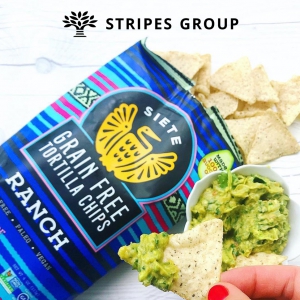
[00:02:29] Ray Latif: They had an arsenic scare at one point, right? Wow, we really down a rabbit hole on this one. You know, in the news this past week... They have great PR. You hear about Fiji Water all the time. Good and bad and ugly, apparently. Indeed. Well, Fiji Water was in the news this week with the revelation that the person known as Fiji Water Girl is suing the parent company of Fiji. That's The Wonderful Company. She's upset that The Wonderful Company is using her image to spearhead a global marketing campaign, following her appearance at the Golden Globe Awards on January 6th. More on this case on BevNET.com. Check it out. Hashtag not what I signed up for. Nice. Meanwhile on Nosh, big news in the world of grain-free tortillas, dairy-free queso and chips, all made by a company called Siete Family Foods. They just picked up $90 million in new investment from Stripes Group, which is a private equity firm that also holds stakes in companies like Calafia Farms and Blue Apron. The article on Nosh states that the money will be used to scale the company's, quote, audacious platform, according to co-founder and CEO Miguel Garza. Jon Landis, you know Miguel.
[00:03:41] Kara Goldin: Miguel was Miguel for about four years. Yeah. Miguel was an attendee at our food and beverage university, Austin in February, 2015. Wow. Three and a half years later, he's a speaker at Nosh Live Winter, 2018. That's a pretty solid trajectory. Nice job, Miguel.
[00:03:57] Ray Latif: And four years later, he picks up $90 million in new investment to fund this audacious platform. Interesting stuff. Full coverage of the deal on Nosh.com. Check it out. Audacious platform and delicious platform. Indeed. Jesus just realized Expo West is a month away. Oh my God. I got no wonder I've been shaking. Yes. You sure it wasn't all that jolt cola you were drinking. Yeah, I've got a Jolk Cola IV in right now. Actually, I'm holding a Goldthread. Thanks again, Goldthread, for keeping us well hydrated. What are Goldthread beverages? It's a plant-based tonic, and they have many different varieties. It's always some super herb that leads the way, or super spice. In this case, I'm drinking Tumor Gradients. Mad adaptogens. I'm drinking Liquid Death. He's murdering his thirst. John Kramer is drinking death. Well, Liquid Death. Yes. How is it? Tastes like water. Well done. This is a can of water.
[00:04:50] Kara Goldin: They had it in, uh, they had a giant life-size coffin at NACS filled with ice and they were giving out ice cold Liquid Death out of a coffin.
[00:05:00] Ray Latif: It's ironic that one of the healthiest products at NACS has a coffin. It's called Liquid Death. Well, we're going around the horn. I'm drinking some Harmless Harvest dairy-free yogurt, their cultured coconut drink. This one's the unsweetened variety. Good stuff. A lot of good coconut products coming through the office right now. I just tried this Taja coconut. All it is is coconut water in a triangle bottle. Triangle bottle. Triangle bottle. Yeah, triangle bottle. And we got some Colorado Hemp honey CBD honey sticks for... Hello. I don't know, CBD product of the week at the office here.
[00:05:31] Kara Goldin: And they're flavored too. Is it the flavor good?
[00:05:34] Ray Latif: It tastes like honey. It's a honey stick. Oh, really? With CBD in it. I was going to say 10 seconds without CBD mentioned, but we didn't quite make it to 10 seconds. See how many times we can say CBD. While we're talking about CBD, I'm sure we're going to see some of those products at the aforementioned Expo West. If you have news, about a new product, revamp, client extension, new hires, etc. Reach out to our editorial team, news at betnet.com, news at Nosh.com. We want to hear all about it. And always better to do that, that early. Don't save it till the last couple days before. That's like the worst time to do it. You should do it right about meow. Inside tip. I said meow. As I mentioned at the top of the show, we feature an interview with Kara Goldin, who's the founder and CEO of Hint. John Craven, Mike Schneider, and I had an opportunity to visit Hint HQ and their retail store when we were in San Francisco for the 2019 Winter Fancy Food Show. Interesting place, right, Mike? Yeah, it's a pretty cool idea to take your offices, which are in a cool area on Union Street already, and turn it into an experience. It looks like they've set up a giant studio for Instagram. It does. They've got like a swing in there. Although the swing was not, well, visible when we were there. It was invisible. The swing was just taken down from the ceiling at that point. It also kind of localizes the experience. I mean, it kind of reminds you of maybe they want to be Rice-a-Roni 2.0. The San Francisco tree? So I've been to their office before, you know, back when it was literally just like the office that's now like one of their many offices on that street kind of buried behind The Stripes. And, you know, it's really neat to just see sort of like the evolution of this thing going from, you know, what was sort of a nondescript office space that was kind of down this weird little alley that you had to actually couldn't find it. I think I had to call the first time I visited. So now it's like you go there and it's like this hint, you know, roadblock on both sides of the street and got a billboard. They've got banners on the light posts. It's truly impressive. You know, all kinds of stuff to draw attention to hint both, you know, on the street there, but also. You know, Hint's thinking like a media channel with their podcast. They've got this great setup inside there where they can have, they can have parties, but they can also, you know, they can, they can do social media and media in there too.
[00:07:49] Kara Goldin: The thing that's always impressed me about Hint is that they have a reputation for killing the e-commerce game, and it's essentially bottled water, which is notorious for being difficult to ship and being expensive. So, you know, they've been able to kind of flip that on its head, and I don't even know how they've managed to do it, but Cara's going to let us in on a little bit of it.
[00:08:10] Ray Latif: Well, I think it's also just pretty interesting looking back, you know, this is a brand I've known since the beginning where, you know, I think when they first came out and I've said this before, I remember when people kind of looked at them like they were crazy and, you know, Kara talks about that and, you know, now she's sort of evolved into this, you know, obviously very legitimate brand with, that's going really well. And, you know, she's someone who we're now having her on here to talk about direct to consumer. And in a lot of ways, she's probably one of the top people in the beverage industry that's doing that. So, you know, kudos to her for, for, you know, establishing that. Yeah, it's pretty insane to find out exactly how much of their business comes from e-commerce. Stay tuned for the full interview. All right, I got to give a Landis-style shout out to James LeCompte, our other interview in this episode. Really enjoyed hearing him talking about driving around in Ecuador in his home in Quito, which, bad geography, I thought he was talking about the Quito diet for a minute. You know, super awesome to hear that we have fans all over the place and, you know, that he's getting value out of this and then ultimately came to one of our conferences and loved it. So, uh, New Year's Day, New Year's Day, he was, uh, tending trees in Ecuador and Taste Radio t-shirt to send us, send us a photo.
[00:09:28] Kara Goldin: Kind of blows my mind that there's a car in Ecuador with my voice pumping out the speakers.
[00:09:34] Ray Latif: We're all invited. If we want to go to Ecuador. We're all invited. Who's picking up the tab? John Craven? Is that all? The Chocolate Empire? Willy Wonka's picking up the tab. So what else happened at BevNET this week? I don't know. You know what I do know, actually? It was Taste Radio Now, the second episode of Taste Radio Now. For folks who haven't yet tuned in, it's a new weekly TV show that we're live streaming on YouTube and Instagram Live. Chat about highlights and insights from recent episodes of Taste Radio and Taste Radio Insider. Also goings on here at BevNET, we built out this beautiful studio right next door. Um, I built a bar in the kitchen. True story. We have a lot of booze in the kitchen.
[00:10:19] Kara Goldin: I saw the people who were building that and they did not look like you.
[00:10:22] Ray Latif: Oh, I put the stuff on the shelves. I devised the plan. Okay, fine. I didn't build any shelves. Bar, studio, let's flip a coin at that point. I'm gonna hang out at the bar. You can have your studio. Thank you. The show streams live on Thursdays at 4 p.m. Eastern time, 1 p.m. Pacific time. We'll also feature interviews with folks in the office and visitors here at BevNET headquarters in Watertown. We encourage you guys, you listeners and viewers, to send in questions, comments, and ridicule, as much ridicule as possible, by the way. via messages on Instagram Live and the chat feature on YouTube. Think of it as an AMA for BevNET and Taste Radio. AMA, Jon Landis means? Ask me anything.
[00:11:03] San Francisco: Ask me anything.
[00:11:05] Ray Latif: You could ask us anything, just not about our boxers. I was thinking about ASMR. I got it confused. Please don't send offensive emoji like last time. Exactly. Also, we had a great visit from Kevin Rutherford, the CEO of Noon. Great to see him in the office. Stopped by, dropped off some of the new products, their new Sportline. Great stuff. If you're not familiar with Noon, those hydration tablets that you'll see at the register at Whole Foods and a whole bunch of other places like that. And finally, just a reminder that BevNET is hiring. We're looking for a reporter for our Nosh vertical, an events coordinator, and Mike, a product marketing person. Product marketing specialist, Ray. What's a product marketing specialist do? Product marketing specialist comes in and creates value around our products, and they get to know our audiences really well, and they craft messages that make sense, that tantalize Ray. I liked analyzing. Yeah. Very good. That's a word you shouldn't use. Well, don't use that in the interview if you're planning on interviewing for the job. If you're interested or know anyone who's interested in applying, visit BevNET.com slash jobs, enter BevNET into the keyword box. Alright, let's get to our interview with Kara Goldin, who we first featured back in episode 81 of the Flagship Taste Radio podcast. This time around, I sat down with her at Hint's headquarters in San Francisco. As we mentioned, Hint operates out of four storefronts on Union Street, one of which is a company-owned retail store that it describes as, quote, an experiential water bar. In the following interview recorded inside Hint's podcast studio, I spoke with Cara about the mission and purpose of the brick and mortar shop and how it's allowed the company to quote, get closer to the consumer. We also discussed Hint's thriving e-commerce business and the advice she has for any company launching a direct to consumer platform. All right, it's Ray, and I am in San Francisco at the headquarters of Hint. And sitting in front of me is the founder and CEO of Hint. That's Kara Goldin. Cara, thank you so much for having me here.
[00:13:05] James Le: Thanks for coming over to our offices and visiting with us. It's great.
[00:13:10] Ray Latif: I think this is the first time I've been to Hint Headquarters.
[00:13:16] James Le: It's a tongue twister.
[00:13:17] Ray Latif: It is, it is. But eight years at BevNET and never having been here, how did that happen?
[00:13:22] James Le: I know, it's crazy. Well, we were a tiny little office when we first started. We actually, one of our four offices on Union Street is actually, I think we've been there now for almost 11 years, 10, 11 years. And then we've just expanded. So now you can now see how we've taken over Union Street. We're trying to negotiate to actually get the street renamed after Hint. So I know.
[00:13:48] Ray Latif: Well, yeah, I mean, when I first came in, when I was first walking up the street, I saw a Hint storefront, and then I saw another one. And I saw another one. I was just like, Whoa, there's what do you have about three or four storefront, like actual storefronts here.
[00:14:02] James Le: So we sell out of the one storefront that I took you into. So that is really what we look at as kind of the experience. But all of our different spaces, if a consumer comes in here, you can, you know, walk you over to The Stripes and make sure that you're able to buy it. I mean, I think, you know, it's really, really unique what we've done. And I think we talked a little bit about this last time, but, you know, we saw this opportunity. Our office was already in this one space we call Office One. It was kind of down this hallway just off of the main street on Union Street. And we saw that, you know, real estate was really, you know, a lot of these retail storefronts were like the office that we're sitting in now was an Indian rug store. And then where we put in our store, it was a women's clothing store. And then our office three, we call it was an art gallery. And so we saw this opportunity. They were all sitting vacant and they were all kind of ideally located where we could all sit here and kind of not necessarily be in the same space, but we have 45 people that are working out of these four spaces now. You know, again, when we looked at, we probably have about 10,000 square feet total. And when we looked at in San Francisco, getting real estate, getting 10,000 square feet downtown, I mean, we would easily be paying, you know, five to seven times what we're paying here. And so we thought, like, why not? Like, why not do it? I mean, we've got our license to be able to actually sell product here. So it's all legit. You know, why not do it? And then to your point, too, we have the ability on the outside to brand. And so when people are walking down the street, they'll see the branding. And we believe that that really reinforces what we're doing in places like you know, Whole Foods or Publix or any The Stripes where you could find us or Target or whatever. And people are like, Oh, yeah, aren't you guys that brand inside of Target? So again, it's really kind of this omni channel approach and touch points and you know, and it's really just advertising for the consumer to really get to know your brand.
[00:16:19] Ray Latif: Totally. Let's talk about your actual retail store for a sec. When did you launch that? And, you know, what was the chief mission for that store? I mean, do you turn a profit there?
[00:16:30] James Le: Yeah, I mean, it's it actually is profitable. We're using half of the space actually for an office. So our creative team is kind of up some stairs and back in that office. But, you know, again, we really very similar to kind of what we do on our direct to consumer front, we really wanted to give consumers in San Francisco the opportunity to have access to all of our products. I mean, oftentimes people would call us and they'd say like, hey, I'm having a party on Friday and I need to have, you know, all these beverages and I drink it at Google right now and, you know, I went on Amazon or your website or I went to Whole Foods and you didn't have that specific flavor in stock. And so I'd really love to be able to come by your office to get the product. And so we knew that there was this market there. But we had no idea, you know, how many people would actually ultimately show up. So, you know, it was really kind of a test. But we also felt like we really just wanted to get closer to the consumer, too. I mean, that's something that, you know, if you're an entrepreneur and you're launching a product, whether it's in beverage or food or tech or whatever, you want to get opinions back from consumers who are buyers of your product, right? And so the traditional thinking is that you maybe launch it in Whole Foods and then go and set up demos and, you know, hopefully you'll get some feedback from the customer. I mean, the number we just did a whole brand redesign and I mean, poor people walking down the street of, you know, of union, I mean, they would, you know, we'd walk up to them and we'd say, hey, can we get your opinion about this? Right. And these were not necessarily people who were already like brand evangelists. They were just people that we said, hey, like, try this flavor, look at this label or whatever. So we really felt like it was a place where there was like a focus group as well, where sometimes people would walk in or sometimes we just pull them in. and pull them in off the street. And, you know, frankly, it's really hard when you're working under somebody else's guidelines. And, you know, I don't mean this in a negative way, but if you're a brand that is, you have to follow the rules of a whatever store you want to name or business, you know, that you're basically supplying product to, it's just really hard. Oftentimes they'll charge you to actually demo or You know, you just, there's rules, right? And here there's really not rules, right? We're just trying to get feedback from the customer. And I think that there's also, like, other things that we do, too, outside of our products that, you know, we really wanted the consumer to know about. For example, you can buy things in our store that are made out of plastic bottles. So, like, we have lots of shirts and bags. it offers us the ability to actually talk about how we feel about recycling products and how, you know, we believe at Hint that you can create a circular economy if you're actually taking plastic bottles and putting them into a machine that spits out thread and creates bags and the bags can not only then create jobs but also create products where people can actually make revenue. Like we think like that kind of stuff is not necessarily a story that we would tell on the front end. I'll pick on Whole Foods, like inside of a Whole Foods, right? We would never get enough time to sort of talk about that. even in a demo, but for the consumer who walks in The Stripes and sees, for example, that the bags say this bag was made out of plastic bottles, yet it feels really softer than maybe they think that a bag made out of plastic bottles should be, we can actually talk to them about our carbon footprint and how we think about things.
[00:20:30] Ray Latif: It creates a deeper relationship with the consumer.
[00:20:32] James Le: Much deeper. And so that was something, frankly, that We felt like there were things that we wanted to do like, you know, branded t-shirts and, you know, speakers and things like that that we really like wanted to sell because people would say they would see like our team at an event and they'd see a shirt with hint on it and they're like, oh, can we buy that shirt? Like we thought. Yeah, maybe we'll sell them in The Stripes. But we didn't really understand the power of being able to tell that story even a little bit more. So that's really, you know, what you'll see in really this first store. And it's not a pop-up. It's a permanent location. You know, for us, it really secures this omni-channel approach where We not only can have that better relationship with the consumer, but we also have data that we can show retailers about certain products that we launch. For example, you know, we launched the carbonated version of peppermint. peppermint fizz in The Stripes first and we saw like in comparison to many of our other fizz products we just saw this huge spike and we knew from a sales perspective that that product was we we knew what that was going to do over the holidays just based on what we were seeing in November what was happening with it so I think it's it's not just about I guess the front end of messaging with the consumer but also from the data side actually allowing us to make better predictions for what's going to happen with the rest of our business.
[00:22:08] Ray Latif: Yeah, I was in this area a few years back and we visited one of the retail stores for Urban Remedy, which is a retailer of raw foods and beverages. And the CEO, Paul Coletta, described the storefront as a 3D billboard for the brand. Totally. A way for consumers to come in, learn about the direct-to-consumer side of the business, and convert them. Does your retail store do that for you guys?
[00:22:33] James Le: A hundred percent. And so, you know, there's a number of people who walk into our store who have bought our products at Whole Foods, who maybe work at Facebook and get our product there. But for one reason or another, they never even thought of going online to actually buy our product. So, you know, the person who was standing behind the counter at Hint actually offers every single customer who walks in the ability to get a free bottle if they actually sign up for a subscription. And so we're converting, like for us, it doesn't matter where this consumer gets serviced. That's what we call it. It's really about just maintaining that relationship with the customer and, you know, offering them whatever. So I don't care if that consumer buys my product at Whole Foods or Target or online with us or with Amazon They only get it when they go to their office at Facebook. For us, it's really just making sure that the customer, no matter where they go, that we're there.
[00:23:41] Ray Latif: Yeah, and you mentioned something earlier, which was kind of interesting that you said that the consumer, the customer is now in control, completely in control. How do you rein in that customer though, so that you have at least some control over how and where they buy the product? Again, you said it doesn't matter where they buy it, but doesn't it matter how they buy it and how they experience your brand?
[00:24:01] James Le: I think it's really tough for a brand who doesn't have, you can't control your own destiny. when you give your product to a distributor, for example, to sell off to whoever they're dealing with, right? We learn that early on, that that is something that is just very, very difficult. At best, best case scenario, you get like a shelf strip that you can sort of tell your story a little bit about why a consumer should buy this product. But I think that, again, it's what is the consumer choosing to learn about your product? And there's a lot of consumers And I still think that if your product doesn't taste good, especially in the beverage space, then game over, eventually. Depending on how much money you have, you can continue to push it out the door and give away free product, et cetera, et cetera. But once you have a product that tastes good, that you have consumer loyalty with, then I think It's really up to the consumer to decide exactly where they're going to purchase it from. And it doesn't really matter where that consumer is ultimately going to buy it. I mean, when consumers come to us and they say, hey, you know, I was on Amazon and the product is actually more expensive at Amazon today than it is at Target. My response is, you should go buy it at Target. I mean, that's great. If that's what you care about, if you have a target that is convenient for you, And, you know, you can go down the street and buy it, then you should go get it there. And I know that there's, I can't control pricing, for example, in all these different outlets. I can only do it with our website, what we offer on our own website. It's probably never going to be the cheapest option out there. but what it will have is some unique flavors that we don't actually sell in stores or in, you know, businesses or food service or to Amazon. And then also just overall consistency of having everything in stock.
[00:26:09] Ray Latif: Following up on that, your direct-to-consumer business seems to be growing consistently. What percentage of your total business is direct-to-consumer, can you tell me?
[00:26:18] James Le: It's a little shy of like 40% of the overall business.
[00:26:23] Ray Latif: That includes direct-to-consumer and e-com or Amazon?
[00:26:26] James Le: So with Amazon it's a little over 40. And so that business kind of fluctuates. And then we do Jet too and we have a little bit on Target.com. The majority, I mean our largest account today is Drinkhint.com. But again, like that could change. I mean, I think I was just talking to an entrepreneur this morning who's getting into e-commerce. And I said, like, I'm excited because that's our business, you know, drinkin.com. But having said that, if like we ended up we were confident in our ability to actually sell head to head now with some of these large beverage companies that are out there, some of the bigger brands that are out there that are more focused on stores and the fight. that we've had, you know, frankly with The Stripes, but it's not even really with The Stripes as much as it's been the dollars that are put in by these large, you know, beverage companies to basically own real estate on the shelves, is that according to our spins numbers, our sales per square foot is higher than many of the top brands that you see on these shelves. And retailers are recognizing that. And so in places like Target, for example, we're tripling our space starting this month in Target. And that number could definitely become, you know, a larger percentage of our business. Again, we would welcome that. It's just that the economics of actually going to a store shelf and trying to actually make a difference there, has just not been worth it, frankly. And, you know, in the almost 14 years since I started this company, I mean, the number of companies that I've seen that have gone out of business that have just done really stupid deals because, you know, their destiny has been reliant on basically like writing those big checks. And if they don't write those big checks to Target and Kroger and Publix, et cetera, then basically they're done. And so it's really, really tough. And for us, I mean, having 40% of our business that is not reliant on doing those deals has just been game changing.
[00:28:41] Ray Latif: Totally. Inside the retail store, you pointed out your head of direct-to-consumer, who you mentioned used to work for Proactiv, the acne medication company. So outside of hiring someone of his caliber for entrepreneurs listening, how do they enhance their online experience for their customers so that it will translate to the kind of growth in sales numbers that they want to see and insulate them from exactly what you were just talking about?
[00:29:09] James Le: Yeah. I mean, you know, we started small. I mean, you know, we've built this, we have a pretty significant direct to consumer team now that it's not just one guy. It's, um, I don't know, our team is, that team is probably 16, 17 people. So I get, I get phone calls. I always laugh. I get phone calls from like billion dollar brands like saying, you know, we've now figured out that it's not really worth like driving all our revenue through Amazon because You know, while it's a great channel for us, it's like we don't get any of the data. And I was like, yeah, I mean, I get it. Like, that's where I was five years ago when I was talking about this. And I love Amazon still to this day. We drive tons of revenue through Amazon. It's great, but I think whether you're a $500,000 brand or you're a billion-dollar brand, I mean, start small. And, you know, I'm not gonna lie, like, Facebook is king still to this day. You know, if you have a little bit of money, you put it on Facebook ads. I mean, that's like step one, right? You launch a website, a small website, Don't worry about content as much as maybe there's a founder story in there, but just make it really simple to transact. You know, I came from the tech side. I was at AOL and running their e-commerce business, so I have a little bit of experience with sort of knowing what kind of websites, like, transact and what don't. And again, the consumer, if you have, if you start with, like, the consumer controls your destiny, make it easy, right? Think about your own life. If things, I don't know, in my life, like, if things aren't easy, then they just don't get done these days, right? People are really busy, and you have to make it, like people don't like to read anymore either so make pictures like very simple, spend money on photography and you know basically like a very basic story and super easy to check out and then spend a little bit of money on ads and throw it into Facebook and understand that, you know, there's two different sides of an ad. One is a branded ad that maybe you would put up on, you know, a billboard somewhere or a phone kiosk. And then the other type of ad is one that is really getting into the psyche of the consumer. And it could mean like, you know, I'm going to give you a great deal of whatever, you know, nine cases for 99 bucks or something that you think would like trigger somebody to get excited. But then it could also, you know, in the case of Hint, it could be whatever is drinking zero really something that is helping me to get healthy? Like something that really starts to get people like, engaged in your brand enough to click. And then again, your website has to be really simple. But you're wasting your money if you think like, oh, I'm just going to go build a website. And you know, you found like this great website developer is going to charge you a half a million dollars to go and build this killer thing that doesn't even transact really well. It's not simple. the back end isn't set up in such a way where you've got a dashboard, where you can actually see like, you know, not only emails, but also, you know, demographic data, where, where people are coming from. I mean, that's, you know, the beauty of online is like what I started to realize again, like having come from tech and coming into this business, it's like, I basically had shelved my tech life and then walked into this business and thought, okay, I'm now trying to get product on the shelf at Target and Whole Foods and Kroger and whatever. And the only measurement that I had that said that I was successful was how much I was actually selling. Right. Which was very frustrating because I knew from my tech days that there was a lot more data that those retailers were getting on my customer, but I couldn't get them. And maybe if I paid millions and millions of dollars and I was a category captain, if I ever got to that level, maybe. But I couldn't even afford Spins data. And even with Spins data, you're not going to get the emails, right, to be able to have conversations with these customers. So I think, like, that is the thing that, frankly, like, I just really believe a lot of, you know, food and beverage companies don't even know what they're missing because you, like, have so much information about, you know, who this customer is and, you know, today, Like most people who are at the fancy food show today and who are gunning to get on the shelf at Whole Foods, for example, the Whole Foods shopper, according to Wall Street, is, you know, this female who's in her 30s and discretionary income and has got some kids. But nowhere, for example, do they talk about that there's guys living in the house, right? And we know, for example, from selling into tech companies where there's no women. There's a lot of people drinking Hint, right? But if you look at the data coming from Whole Foods, for example, it would say that Hint is a product for females. But what we see online is that there are lots of men who are buying our product online as well, and maybe they go into Whole Foods you know, get lunch really quick and grab one bottle and they may not be considered like heavy ring at a Whole Foods, but they're having eight bottles a day at Google. And so then they're coming online and they're buying this product and we're actually able to see that they're not only buying our product online, but they're also coming from you know, Barry's Boot Camp. They've just booked their workout probably. We don't know that information, that level of detail. But it also starts to help us to figure out like what brands potentially we may want to work with. And who is this, you know, it paints a great customer journey for, you know, outside of our own brand of what we should be really looking at in terms of, you know, co-marketing and how these people are thinking about our product.
[00:35:55] Ray Latif: Outstanding. Well, such great advice, Cara, and I really appreciate you sharing it with us and sharing with our entrepreneurs listening. Yeah. Congratulations on all your success to this point. I know there's a lot more to do.
[00:36:06] James Le: Lots more to do. It's always.
[00:36:08] Ray Latif: Love the new kids line, by the way. Great stuff.
[00:36:10] James Le: Yeah.
[00:36:11] Ray Latif: Super excited. All right.
[00:36:12] James Le: Thank you so much.
[00:36:13] Ray Latif: Thank you. Hope to see you again really soon.
[00:36:15] James Le: Yeah. Awesome. Thanks.
[00:36:16] Ray Latif: All right. All right, now it's time to talk TOAC, an ultra premium chocolate maker based in Ecuador. The company is doing some pretty special things with a rare variety of cacao once thought to be extinct. When I mentioned ultra premium, I meant it. TOAC chocolate bars range from 280 to $685 depending on variety. Mike Schneider sat down with the CEO of TOAC, James LeCompte, who discussed the origins of the company and the amazing story of how it located and identified the cacao used in its products. He also explains why Ecuador is central to TOAC's mission and discussed why the company chose to position its products as luxury items. This is Mike Schneider at BevNetLive, and I'm here with James LeCompte, the CEO of TOAC. Welcome.
[00:37:04] San Francisco: Thank you. It's amazing to be here.
[00:37:06] Ray Latif: It's amazing to have you here. Now, you had a story about how you found out about Taste Radio that you wanted to start with. Usually we talk about the company. We're going to talk about artisan chocolate, luxury experiences and barriers to entry today. But you want to start off with a Taste Radio story?
[00:37:22] San Francisco: Yeah, I just felt that it was important to perhaps share a little bit about how I found out about Taste Radio and how I consume it, if you like. Sure. Particularly for people that aren't based in the US. So I'm based in Ecuador in Quito, originally from Australia. For me, Taste Radio, I came into the food and beverage space about two and a half, three years ago. And really, for me, I was desperate to learn more about what the emerging trends were, what's happening in the space. And being based in Ecuador, with our largest consumer base in the US, followed by the UK and Europe, you know, I really felt a little bit of sort of distance or cut off from, you know, having my finger on the pulse. And so I found Taste Radio and I listened to Taste Radio in my car on the way from home to and from the office in Quito pretty much every day or when you have a new episode out anyway. And yeah, for me it's kind of really been... a window into the world of emerging, you know, food and beverage trends, not only in the U.S., but I think in so many other parts of the world. And that was also how I came to be at, you know, BevNET Live and Nosh Live and Cannabis Forum. And for me, you know, if Taste Radio is a window into that world, it feels like BevNET Live and Nosh Live has really been like the door into that world. Yeah, it's just unparalleled experience. You just walked right through the door. Yeah, I mean, meeting people that, you know, you can only meet at these sort of events, yeah, is incredible for a brand that's not based in the US. Well, we appreciate you saying that.
[00:39:02] Ray Latif: And while you felt disconnected from the mainstream of the food and beverage industry, you were connected to the product that you're producing in a way that we don't normally see. So let's talk a little bit about TOAC. It's a, what is it, an artisan chocolate experience with a deep, rich history behind it and a story?
[00:39:21] San Francisco: Yeah.
[00:39:22] Ray Latif: Could I call it that? Or how do you characterize it?
[00:39:24] San Francisco: Definitely there's a really strong element of artisan in everything that we do. You know, really what we're doing is we're working with a single origin, a single variety of cacao and Part of the mission of TOAC is to elevate single origin chocolate to the same level as a fine wine or whiskey and to really learn from those incredibly rich cultures that we have around wine, whiskey, coffee, tea, for example, and take chocolate into that space. Because on so many levels, it's just as complex, if not more complex than those incredible, you know, products. Yet chocolate has got this, you know, ever since really the Industrial Revolution, chocolate has been commoditized and cheapened. You know, in pretty much every culture since or pre-industrial revolution, cacao was considered something sacred and noble, even as recently as 1617. 1800s in Europe, chocolate was something that was enjoyed by the nobility, by people that had the ability to enjoy something very special. And the Industrial Revolution did something amazing for us. We now, everyone practically, at least in the US and Europe, can enjoy chocolate. But at the same time, it cheapened it as a product. And what we're really trying to do is challenge that perception in the consumer mind that chocolate is a cheap commodity. the nature of a commodity is that it's uniform.
[00:40:55] Ray Latif: And you're pushing that boundary there. And you're saying that that's not necessarily true. And you're going an awfully long way to get there. And so let's talk about that. Let's talk about, let's talk about Ecuador. Let's talk about, let's talk about trees.
[00:41:09] San Francisco: Let's start there. Sure. So, yeah, I mean, it's great that you mentioned Ecuador, because I think that's absolutely core and central to who we are as as a group of individuals behind the brand TOAC. The passion and history of a community who did things a bit differently than the rest of the world are the reason that you're here right now, right? Totally right. So we like to say that nature has been perfecting the cacao tree for more than 5,300 years and we're putting the finishing touch on it and making it available for people to enjoy. But I guess, you know, seriously, the fact that we're based in Ecuador, I think that that's For the largest part, it's a huge asset that we have. You know, we're based at origin, we're based at the birthplace of cacao. We have the incredible advantage or luxury of working so closely with the source, with The Stripes. We actually harvest the cacao with the farmers that we work with. you know, we can really integrate ourselves with that incredibly rich culture and practice. Now talk to me about The Stripes.
[00:42:16] Ray Latif: The Stripes are what make this cacao particularly special. And if I got the story correctly, it's because these trees haven't readily been available since the 17 or 1800s?
[00:42:28] San Francisco: So basically, what we're working with is an heirloom variety of cacao. And so just like in any commodity or fruit, vegetable, grain, etc, these days, we're losing an incredible amount of heirloom varieties. And with that, we're heading towards a really one dimensional when it comes to flavors, aromas, complexity, etc. True commodity. Cacao is a true commodity.
[00:42:51] Ray Latif: And that's because, if I understand this correctly, trees grow and they bear fruit for a certain number of years and then they're cleared out in favor of new trees. And tell us about what's special about these trees in Ecuador.
[00:43:04] San Francisco: Basically the story with The Stripes that we're working with is Ecuador used to be until the early 1900s the largest exporter of cacao in the world. More recently, we've discovered or learned through archaeological studies that have been published in esteemed academic journals like Nature, we've learned that Ecuador is actually the birthplace of cacao. We have the earliest evidence of any domestic use of cacao, predating evidence in Central America and Mexico by more than 1500 years and dating more than 5300 years in the past. But what's so special, I think, is that the variety that we work with was during the 18th century in particular, was the most sought after variety of cacao by European chocolatiers. So the top European chocolatiers would travel all the way from Europe to Ecuador, seeking out this particular variety called Nacional, which was famed for its very floral aroma and very complex flavors. And basically what happened was around 1916, a disease came to Ecuador called Escoba de Bruja or witch's broom. It's a fungal disease and it really decimated this ecosystem of heirloom nacional in Ecuador. And the country at the time was built up, you know, the entire economy was built on being a cacao exporting country. And so it was devastating for the country. Obviously they needed to, you know, bring in measures to address that. And what that meant was over the past hundred years, more or less, Ecuador brought in a number of introduced varieties of cacao. Is it because they would grow faster than the Nacional?
[00:44:42] Ray Latif: So they could get the economy jump-started again?
[00:44:44] San Francisco: Yeah, I mean basically just think about it this way. If you had France, for example, the iconic region of Burgundy, and a plague came and destroyed all of the Pinot Noir grapes, what would they do? They have to address that. So they brought in other varieties because, you know, farmers' livelihoods depended on this. They brought in other varieties from different parts of the world and they also started to bring in hybrid varieties, which are essentially created in laboratories to be highly pest resistant in theory until a mega pest comes. And they brought this in and over the space of the last century in Ecuador, what happened was Ecuador went from having an ecosystem which was pretty much exclusively heirloom nacional to as recently as about eight years ago, experts in the industry believe that pure 100% nacional was now extinct. So you took steps to bring Nacional back.
[00:45:41] Ray Latif: Talk about that. This is where we're talking about barriers to entry, folks.
[00:45:46] San Francisco: So, you know, there's obviously more than I could ever tell on, you know, an episode of Taste Radio, but we came across a valley in a remote part of Ecuador and, you know, largely and thanks to one of our business partners, who's a fourth generation cacao farmer, Cerdivier, We have two co-founders in the business. One comes from a conservation background. Did you have bomber jackets and whips and fedoras at the time? We like to joke that it was kind of our Indiana Jones moment. So we came to a valley in remote Ecuador. We met with a group of smallholder farmers, we now work with 14 of them. They had kept, really for sentimental reasons, we're talking about Latin America here, it's not all about, you know, economic rationale. They had kept a number of old trees on their orchards or plantations and, you know, normally... They were not for producing trees, they're just sentimental. Yeah, they had kept them for sentimental purposes. They were producing, you know, on average some months, you know, two or three pods a month. It's nothing. It's not economically viable in any reality that we, you know, we're living in at that point. When we met with them and they told us about how their grandparents and their great-grandparents had planted these trees, you know, something twigged in our minds. And we thought, well, you know, if that's the case, these trees were planted before Witch's Broom arrived in Ecuador, before 1916. Doing the maths and looking at the scenario, we had a really high, I guess, confidence that these could be pure Nasionale, but we didn't want to stop there. What we did was we sent a number of samples to USDA labs in the States, and out of a selection of 46 trees that we sent, nine of them came back as 100% pure Nasionale, this variety that was thought to be extinct. Okay, so now you've got these trees. How do you scale them? Great question. The short answer is that it's a process, like pretty much everything we do at TOAC. So what we've done is we've taken cuttings from the nine DNA verified mother trees and we've grafted them onto rootstock and we have a partnership with an agricultural university in Ecuador as well as a conservation NGO which was actually co-founded by Jerry, one of our co-founders at TOAC. And we've planted these trees, these baby Pure Nationale trees in a protected rainforest reserve. At the moment we have about a little over 200 trees. We were really fortunate enough to have National Geographic come and film the conservation work that we're doing earlier this year. But that's what we're doing and it's going to take us about four to five years before those trees are fruiting. And then we're going to look at which are the most productive trees out of those and then we're going to continue to reproduce those with the ultimate objective of bringing them back to farmers in Ecuador as a viable economic proposition, that they can actually farm a productive heirloom variety that has a huge amount of significance to them as a country and as farmers and have that as something that is economically viable and alternative to hybrids. So you're essentially reintroducing...
[00:48:57] Ray Latif: a part of their heritage to the country. Okay, so now let's talk about going to market. This sounds like a pretty significant development in the chocolate industry. What are you going to do with this? How do you go to market with it? How do you price chocolate that's so rare? And is there really a big difference between this cacao and the quote commoditized cacao?
[00:49:23] San Francisco: Sure, so to answer the last part of your question first, yes, definitely there is a difference. You know, when we look at any type of heirloom, fruit, vegetable, grain, et cetera. I think we all know that when we taste it, the flavor complexities just can blow you away compared to a conventional, you know, the iceberg lettuce of the world, right? So we are working with a really special variety of cacao. How do we bring that to market? So back when we really launched the product initially, so it came to market essentially around Valentine's Day, 2015. And I guess I preface this part by saying that no one on the team comes from a luxury background. I spent the previous 10 years working in rural parts of Asia. I come from a social enterprise background in those 10 years working with farmers in rural Asia. Jerry, one of our co-founders, is a conservationist, and Carl, our other co-founder, comes from a design background, but a background that's really trying to use design to translate social and environmental messages. Conservationists going into luxury. Interesting play. Yeah. So, you know, why would we choose a luxury strategy? So there's a few reasons. One is that we're working with an incredibly scarce raw material, at least, you know, right now. Exactly. 200 trees, saplings. A little over. We have about 526 trees that we harvest from. So those nine DNA verified trees, we took an incredibly detailed analysis of those and then surveyed the rest of the valley and we harvest from about 500 trees for the chocolate that we produce. But the reason we took a luxury strategy was that luxury allows you this incredible opportunity to focus on detail, to focus on quality, to focus on how you communicate your product to the end consumer. We really try and engage people's senses, the sense of sight, the sense of touch when they hold the box that's made from an Ecuadorian, sustainably sourced Ecuadorian wood that's handcrafted. you know, the sense of smell when they smell that aroma, the sense of taste when they put it on their palate. This is very much like a fine wine sort of experience where you are, you know, encouraging the use of different senses throughout the experience. Indeed. And, you know, there really was no other way for us to go to market other than a luxury strategy to begin with. We couldn't compete on volume. We couldn't compete on price. And, you know, right now the market for Kraft chocolate or single origin chocolate, it's really starting to come into its own. And in the States here in particular, we find some incredible Kraft chocolates, really fantastic products out on the market. But again, thinking of our situation, we're based in Ecuador. We don't have ready access to the consumers that we want to pitch our product to. And we're working with this really rare heirloom variety of cacao. how do we fit the jigsaw puzzles together so that we can actually bring that to market and at the same time achieve all of our social and environmental mission, if you like, in terms of bringing back this variety that has so much significance to Ecuador, bringing it back as a viable economic proposition. How do we do that? And luxury was the answer. Now that's not the only answer and we do have other plans. The experience of the chocolate isn't
[00:53:04] Ray Latif: a typical chocolate experience where you just open a bar, maybe break off a piece, enjoy the chocolate. Like I said, it's more like tasting a fine wine or it can be enhanced by pairing it with fine bourbon or scotch. So is that the play here that you need to, you know, inject yourself into those kinds of experiences and how do you do that?
[00:53:30] San Francisco: Yeah, so that's definitely part of the play is working with partners who ultimately can help get our product and experience in front of a consumer base that considers themselves connoisseurs of fine food or fine beverage, fine spirits, etc. You know, how do we do that? So some of the ways we do that are working with, in partnership with brands like McAllen Whiskey, for example, or we have also done events with Louis XIII Cognac. So these are, you know, brands that I guess we look up to from the luxury world and we would like to be associated with. They really set the standard when it comes to experiential food and beverage.
[00:54:19] Ray Latif: James, it's been fascinating talking to you about chocolate, farming, being close to the process and systemic change. Thanks for being on Taste Radio.
[00:54:28] San Francisco: Thanks. Thank you very much, Mike. It's been an absolute pleasure to be here for the last five or six days and I've really learned so much, met some incredible people and look forward to being part of this family of incredible food and beverage entrepreneurs going forward.
[00:54:47] Ray Latif: That brings us to the end of episode 20 of Taste Radio Insider. Thank you so much for listening, and thanks for our guests, Kara Goldin and James Le Compte. Please subscribe to Taste Radio Insider on iTunes, Spotify, Stitcher, SoundCloud, and Google Play. As always, for questions, comments, ideas for future podcasts, please send us an email to askatasteradio.com. On behalf of the entire Taste Radio team, thank you for listening, and we'll talk to you next time.
[00:55:17] SPEAKER_??: you