[00:00:05] Carol Ortenberg: Hey Mike, can I take a second to clear up a common misconception? Sure, but I think I know what you're gonna say. Nosh Live is not a trade show. Right, and to be clear, we love trade shows. They're high-energy events and often are an instrumental tool for your sales team. But your business is more than just pitching and interacting with retailers and distributors. Most brands come to Nosh Live in grow my business mode and take the time to learn what's next.
[00:00:27] Ray Latif: You'll get to meet with experts from designers to packaging suppliers to co-packers to ingredients providers and investors.
[00:00:32] Harmless Harvest: Everyone that a CEO needs to partner with is there.
[00:00:35] Carol Ortenberg: Yeah, and if you're not in this room, you're passing by a lot of opportunities that other brands will be taking advantage of.
[00:00:41] Harmless Harvest: Early registration is available now through mid-April. Tickets and more information can be found at noshlive.com.
[00:00:46] Carol Ortenberg: And now, Taste Radio.
[00:00:58] Ray Latif: Hey folks, I'm Ray Latif and you're listening to episode 22 of Taste Radio Insider. I'm here at BevNET headquarters in Watertown, Mass. And with me are my BevNET colleagues, Mike Schneider and Jon Landis. In this episode, we sit down with Ben Mand, the CEO of super premium coconut water brand, Harmless Harvest. and discuss the evolution of its business and innovation strategy. We also survey the changing landscape for plant-based foods in an interview with Michele Simon, the founder and Executive Director of the Plant-Based Foods Association. Just a reminder to our listeners, if you like what you hear on Taste Radio Insider, please share the podcast with friends and colleagues. And of course, we'd love it if you could rate us on iTunes. If you do, we'll send you a T-shirt. You just gotta let us know by sending us an email to ask at Taste Radio.com. Jon Landis, you okay? Ray said you're here, but you look barely here. You're like grabbing onto the table, holding on for dear life, like you're going to fall off the world.
[00:01:49] Carol Ortenberg: I actively have food poisoning right now. My wife and I made dinner last night and now we're both pretty beat down. What was the culprit? Green apron? I don't know. It could have been the asparagus. It could have been the salmon. I'm not really sure. Stick with blue apron, bro. Green apron. I know it's discount, but... I was lucky that I had some Zofram anti-nausea pills left over from my sickness during BevNET Live. That's kind of helped me going through the day today.
[00:02:17] Ray Latif: Oh my God, bro. I just noticed you've got a spicy and raw red winter cap on. It says Harmless Harvest 2013. How perfect is this? So timely. Did you intentionally do that? I didn't, but you know. Your stomach is spicy and raw.
[00:02:33] SPEAKER_??: Oh my God.
[00:02:33] Carol Ortenberg: Well, I mean, who was the CEO in 2013? Was it still Douglas? Yeah, it was Douglas and Justin. They were co-CEOs. Yeah, I believe so. They've gone through a few leadership changes, so it's still a very prominent brand and, you know, shows no signs of going anywhere. Going away, that is, right? Yeah, they're not going anywhere. No, those guys are doing okay. Yeah, no, shows no signs of going away, but, you know, it's very interesting when you have something that's, you know, that far down the business life cycle, how you continue to revitalize it.
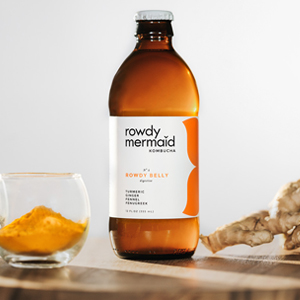
[00:03:02] Ray Latif: Indeed, and that's part of what I talked about with Ben in our interview, which we'll get to in a little bit. John Craven, he's not here. He's absent today. He's on location in San Diego visiting our West Coast branch, aka the WCB. Started by issuing him a tardy slip, and then it just... I was just wondering that. It evolved. I said he's absent. Do people still use the word absent or tardy? It seems like those are old school, school words. You do, Ray. I'm present. You do. I'm present. Nice. Present. landis present present yeah he's been uh John Craven's been snapping away on instagram lots of pictures of new beverages and food products now i didn't see any photos of Rowdy Mermaid kombucha in his instagram feed however The brand is in the news nonetheless. The Colorado-based kombucha maker has raised $3.5 million in a series A round led by private equity firm, Carp Reilly. Carp Reilly is known for investing early in high growth brands, including Spindrift, Covita, Iconic Protein, Koya, and LifeAid. It also acquired coconut water and acai juice brand Zola in 2016, and last year invested $7.5 million in Picnic, which is a brand of butter coffees. I know I'm making Landis' stomach churn right now talking about all these butter coffees and kombuchas. But yeah, Rowdy Mermaid is gonna use the proceeds to build its presence in conventional and convenience channels, also in food service, including schools. Interesting time for this brand and looking forward to seeing where they go from here in 2019. You can read all about Carp Reilly's investment in Rowdy Mermaid on BevNET.com. Speaking of Booch, have you guys tried this new GT's product? It's actually not Booch, it's an adaptogenic tea. It's their Alive line. Mushroom-based tea. Mushroom-based teas. Landis, I know you can't have any of this, but Mike, would you like some? Of course.
[00:05:03] Carol Ortenberg: I mean, I guess I could, but I'm just going to stick with my essential water here.
[00:05:08] Ray Latif: I would like some, Ray. I know you're dying to say it. Well, we've got two varieties here on the table. We've got their guayusa turmeric, and we've got their cascara spice. Oh, I should have given you the cascara spice. Mr. Cascara is Mike Schneider himself. I do like to talk about cascara, but no, this is, this guayusa turmeric is... Guayusa. Guayusa? Yeah. You like to say guayusa? You don't say, you say guay. Why? You know, it's subtle. Why you say? I see, I see. Now I'm going to try this cascara spice. The turmeric one is very turmeric-y, if that is a word. It's delicious. It's turmeric-ic. Yes. Yeah, there's a lot of turmeric. There's a little citrus balance in there too. It's good. The cascara spice one is quite floral. Both are quite good. I feel badly. You look so sad. It's okay. He's going to get better pretty soon. He has to, right? You're going to get right back onto it.
[00:05:58] Carol Ortenberg: We'll see. Closed deals as they say. Hopping on a flight to Chicago tonight. Who knows?
[00:06:03] Ray Latif: Wait, why are you doing that by the way? You're flying, is it a one night thing?
[00:06:07] Carol Ortenberg: Yeah, it's my wife's birthday tomorrow. So we're going to go out and spend the night at her mom's house and go out to dinner with her mom and her brother and come back. And I don't know what's going to happen now. She's at home in Ben Mand I'll figure it out in the next hour or two. You don't think Reishi Chaga or Turkey Tail will help you here? I mean, I'm sure that there's, you know, purported health benefits and whatnot, but. These are very expensive microphones.
[00:06:35] Ray Latif: And if we have projectile vomit on those, not only will our audio engineer, Joe, be very angry with us, we may not be able to get through the next episode. We do have a pea shield in front of, you know, for popping peas, but that's not what it's for. What else is happening at BevNET these days? We had a visit today from a gentleman named Adam Stern. Why did he come to the office, Mike? Well, I met him at the Seed to Sale show this past week. That was the cannabis show that was in Boston last week. The cannabis show that was in Boston at Heinz Convention Center, and he works for Integrative Health Products, and he... He runs product. He's a chemical engineer, bioengineer, graduate from UMass. And I mean, he just has a wealth of information on what's going on in the cannabis market. He's super smart guy, you know, formulating products through to, you know, his vision on where the industry is heading. So we had to have him and talk to him. Yeah, it was interesting to hear him talk about how flavor was something that was drastically missing from a lot of these cannabis infused food and beverages and that was something he was looking to, well, rectify. Yeah, concern of his was just the way that cannabis tastes when you try to infuse it into food and beverage and thinking about, you know, applications of cannabis that sort of enhance the flavors and What are the keys to someone enjoying a cannabis-based beverage? You know, it's not masking it with stevia or, you know, trying to make it overly fruity or whatever the sort of techniques are out there right now. He had some different ideas.
[00:08:01] Carol Ortenberg: He also gave us some good insight from the cannabis side of things as to what the allure is for food and beverage products. And, you know, from his research finds that, you know, most of the people who are currently purchasing a lot of cannabis products are already cannabis consumers. And the real opportunity here is tapping into people who aren't already consuming cannabis and finding opportunities for them to do that. And food and beverage is obviously, you know, a relatable thing for a lot of folks.
[00:08:31] Ray Latif: We're going back to the BevNET playbook here, but that's going to require a lot of the E-word. Education, I mean, because there's been a lot of sort of misinformation out there about the cannabis Plant Based what the cannabis plant does or doesn't do. And there still aren't that many clinical trials that have been done with cannabis. So a lot of the things that we say cannabis does, are still supposition versus, you know, actual scientific proof. Well, I think there are some things that are not supposition.
[00:09:01] Carol Ortenberg: We've Jon Landis. So, you know. And when we were talking to Adam, he made it pretty clear that through his research, there are about half people who believe all of the effects on a product, on its label as gospel, and then the other half just think it's worthless and it's just... you know, it's all the same. And so there's really not a whole lot of gray area. From his perspective, again, looking more at the cannabis industry and not so much at CPG food and beverage, but again, where the opportunity aligns is where those two converge.
[00:09:33] Ray Latif: We also talked a little bit about cannabis brands and, you know, sort of moving from this medical look and feel to more of a mainstream look and feel and some of his thoughts on that. And one of the things that came up was, you know, because he's a bioengineer and because he, you know, has this deep scientific background and he's doing this every day, we talked a lot about quality and testing. And, you know, one of the things that I thought was going to be a differentiator for any company in the space is whether or not you're actually testing your CBD. It seems to me at some point, there would be a USDA organic equivalent for testing of cannabis going forward. There's gonna be all kinds of regulation, obviously, but I feel like that would be a distinct advantage to a company who's not doing testing, at least in the early going. You know what's the distinct advantage?
[00:10:17] Ben Mand: What's that?
[00:10:17] Ray Latif: Knowing who your suppliers are, and you know where you can find your suppliers, Mike. Where's that, right? In the 2019 Cannabis Food and Beverage Guide that's published as part of the January, February issue of BevNET Magazine. If you're already subscribed, you're gonna get it. If you haven't subscribed, you can do it right now, BevNET.com slash magazine. It's a free subscription. It's a smart thing to do. Print or digital, you can get it either way. You can, yes. Digital is one way to do it as well. Stay green, people. All right, let's get to our first interview of this episode. That's with Ben Mand, the CEO of coconut beverage brand Harmless Harvest. Ben came aboard last year and has taken the reins of a company that has faced a few challenges to its business in recent years, most notably in the use of its former processing method, HPP. Nevertheless, the Harmless Harvest brand has maintained a loyal following, particularly among consumers in the natural channel, and sales of its flagship Coconut Water continue to be one of the bright spots within a category whose growth has flattened out. In the following interview, I spoke with Ben about the recent revamp of Harmless Harvest's probiotic line and how lessons from the initial launch play into the company's innovation strategy. He also discussed how Harmless Harvest is exploring possibilities for brand extensions while maintaining the integrity of the flagship product, how the coconut water category has evolved in recent years, and the most pressing challenges facing companies in the space. All right, it's Ray, and I'm at the 2019 Winter Fancy Food Show here in San Francisco, California. And sitting in front of me is the CEO of Harmless Harvest. That's Ben Mand. Ben, thank you so much for being with me. Ray, thanks for having me. Well, how is your Fancy Food Show going? Is this your very first Fancy Food Show? Well, it is my first one with Harmless Harvest. But yes, it is. So what were you doing before Harmless Harvest? Because you came on as CEO just a few months ago, right?
[00:12:07] Harmless Harvest: Yeah, I joined in June of this past year, in 2018. Prior to that, I was at a company called Plum Organics. So we did organic baby, toddler, and kid Food Show I was there for a number of years. Prior to that, did FRS, natural energy drinks, so a little bit of beverage work there. And then prior to that, I was at General Mills.
[00:12:25] Ray Latif: Right on. So how have these first few months gone? You know, since coming aboard, you know, what is your primary focus for the brand and for the company?
[00:12:34] Harmless Harvest: The first few months have been amazing and really reaffirmed some of the assumptions I had coming in. So one of the things I you know, I did some work to make sure that this was going to be the right fit. And one of the things I did was spent a lot of time just out in the field talking to consumers and store managers about their product. Because fundamentally, when you're building a brand, you want it to be, in my mind, mission-driven, and you want it to be a great product. Universally, I found so many people who were deeply passionate about their products. And I think as I've gotten on the inside and now, you know, see how we make the product and what we do out in the field, I'm really impressed with not only the mission, but the care we take and the proprietary nature behind our products. So that has been amazing.
[00:13:18] Ray Latif: It's interesting to hear you call it a product because the primary product is your organic coconut water, which is beloved, has a very, very loyal consumer following, and in many ways is the standard for high-end premium coconut water. Two years ago, you launched a product called Harmless Harvest Probiotics, which was a dairy-free yogurt, dairy-free kefir, but you never called it that. You just called it a, I think it was a cultured coconut beverage was what the descriptor was when it first came out. You've since revamped and debuting here at the show. is this Harmless Harvest dairy-free yogurt. That's exactly what it looks like. I'm looking at the bottle right now. It still says cultured coconut drink. But there were some learning lessons from the launch. And I'd love to talk about how you assessed the product at launch. and then how you assessed opportunities to improve and innovate Beyond Meat you had originally had. So starting out, what was the initial reception for this product, and what ways did you see an opportunity to improve upon it?
[00:14:24] Harmless Harvest: Yeah, so the product was actually well received. Consumers really liked the taste, and so we knew, or the team then, I think, knew that they had something, and I think that is an important lesson in innovation. I think sometimes when things are just not fully baked and it's working but not fully working, people don't take the time to go back and see what parts of it are working and seeing if they can tweak the things that are not working. And I think that was very smart by the team. So when I joined, they had just completed the consumer work. And what we found was people love the taste and they love how simple the ingredient label was. However, the original product had a couple issues with it. One is it was oftentimes sitting with beverage. And it was a thicker product. You pointed out it's, you know, in some regards, somewhat similar to what we had done before. It's got a thicker texture, so it's a little less refreshing, per se, but more drinks like a drinkable yogurt. And so, you know, the first thing we did was we felt that it needed to move locations and it had to sit with drinkable yogurts because that is the occasion and the type of identity that the product has. The second thing that we realized was the original product was 11 ounces, so it's a pretty big product, priced at $4.99, and had pretty high sugar. And so the team really challenged themselves to really find a better price point and reduce the ounces, and most importantly, reduce the amount of sugars in there. What's really exciting is now it is $2.99 for an 8-ounce bottle. But perhaps most exciting is it's a really simple ingredient label. So if you look at the plain, it is just our coconut water, coconut meat, and cultures. So very, very simple. And then with the fruit preps, you just have six ingredients. So when you get to a mango or a strawberry or blueberry, really simplified, kept the ingredient label really simple, got the cultures in there. and kept the sugars very low. So 7 grams for the plain with the coconut water and then 11 to 12 on the other ones.
[00:16:22] Ray Latif: So you received external feedback. How did you go about curating that feedback? And then obviously internally you have your own development team, your marketing team, your communications team who have their own opinions. So how do you balance that feedback from the inside and from the outside?
[00:16:38] Harmless Harvest: Well, you know, it is a careful balance. I mean, first of all, we did spend time just even talking to buyers. Buyers are very knowledgeable about their categories. Spent time working with consumers, both impromptu intercepts in stores as you shop. as well as then more formally in homes and with focus groups to really understand these are people who are buying these types of products, getting their input. But we're all, you know, when you think about it on the inside, we're all passionate about these types of categories and these types of products as well. So, you know, you put your own hat on as well to understand, you know, What would I be looking? What are the people that I know that are buying in these categories? What are the types of things that they're looking at? So, you know, you bring inputs from all over the place, put it together. And once you have some prototypes and an idea of how you want to position it, that's when you go back out and get input again, right? Talk to consumers, talk to buyers. And that's when we really knew we were on something. We had done a nice job prior to me coming of listening to consumers, had to say about our old product. And I think the team did a really nice job of refining that product and coming with a much, much stronger offering now.
[00:17:44] Ray Latif: I feel like, and this wasn't something that your predecessors talked about, but I feel like one of the reasons why brands, plant-based brands are wary of using terms like yogurt and kefir, because there may be a legal or technical definition that would require some sort of dairy input. Has that evolved? I mean, has that changed? Has that category, has the plant-based food and beverage category sort of come together and said, look, you know, we're going to call us a yogurt. We're going to call us a kefir because that's how consumers perceive the product.
[00:18:13] Harmless Harvest: Yeah, clearly there's still ongoing debate on this topic. And what I would say is from a consumer standpoint is what we're trying to do is just make sure that they understand the occasion and the kind of eating experience or drinking experience that they should expect with this type of thing. We learned firsthand when we had this similar product and call it a probiotic, they just didn't understand what it was for, when they were supposed to drink this, what day part, you know, what would I buy this for? But when you give it a, you know, dairy-free drink, and we're very clear that this is dairy-free, right? You know, it's very, you know, branded quite strongly that it's dairy-free.
[00:18:46] Ray Latif: You could not miss that it's dairy-free right on the front of the label here.
[00:18:50] Harmless Harvest: Yeah, but we wanted to make sure that people understand when they take it home and they try it, what kind of texture, what kind of eating experience and how they might use it. And so our goal, and I would venture to say for many people, is just to try and make it as straightforward as possible for consumers.
[00:19:05] Ray Latif: I was at your booth a few minutes ago and someone came up and said, wait, how can you have a dairy-free yogurt? And so I guess that plays into who your customer is, who your consumer is, what channels you play in. Yeah. So are you still focused? I mean, is this very much a natural specialty focused product? Or is this, you know, do you see this as being a mainstream product at some point?
[00:19:25] Harmless Harvest: Yeah, you know, the Plant Based dairy is far more developed in the natural channel. And so in the beginning, we'll certainly start there, and that's where our brand is so strong. But as you see it start to develop in other channels, we'll start picking off where are the right places to go to start bringing this product.
[00:19:45] Ray Latif: Prior to the launch of the probiotic line, now the dairy-free yogurt line, the way that Harmless Harvest had innovated was via flavors, flavor development. We had seen anything from a cinnamon and clove to a cacao product to a coffee-infused product. I personally enjoyed all those products. You don't still currently market those products, though, do you?
[00:20:04] Harmless Harvest: No, no, none of those products.
[00:20:06] Ray Latif: So in terms of your overall innovation strategy, in terms of the company's overall innovation strategy, are we going to see more products? Are you looking to innovate more in the way that you're doing with the yogurt line? Or do you see an opportunity with the actual flagship coconut water?
[00:20:21] Harmless Harvest: We actually think that there's an opportunity in both. I would say one of the things that we've done over the last couple of years is really built in stronger proprietary elements behind our products such that we can safeguard the coconut water that we're making right now. The beauty and the curse of that is, you know, the beauty is we have a great product that has some proprietary technology and how we actually process it. We don't thermally process like others. However, that is then an impediment from an innovation standpoint when you have, you know, a very specific way of processing it. So we are certainly looking at other ways and other things. You know, the good news for our brand is while we've gotten to a sizable business, our household penetration and the amount of doors that we're in is actually quite small. And so there's a lot of very simple blocking and tackling that we can do that still unlocks a ton of growth for the core water while we start figuring out some of the more technical challenges of innovating behind, you know, that coconut water with the proprietary processes that we have in place.
[00:21:21] Ray Latif: That's gotta be a priority though, right? I mean, the water itself, as we talked about before, is a product. And in many ways, it's the product and the brand. But the brand needs to continue to evolve, let's say, in case people stop drinking coconut water, right? Which I don't foresee happening. I hope you don't foresee that happening anytime soon. So when taking into consideration innovation, what are some of the things that are top of mind? What are some of the things that are priority, not just for Harmless Harvest, but for the entire coconut water category, which has slowed in terms of its development as compared to a few years ago?
[00:21:55] Harmless Harvest: Yeah, so two things I would say there from just a pure coconut water standpoint, I would say a priority for us is just we've spent a little bit of time going deep on what we stand for from a mission and finding better ways to start articulating and sharing that with people. But the second thing is then how do we start coming to life in a more impactful way in the marketplace? So there's certainly a place from a brand and a marketing standpoint that we think that there's a ton of opportunity. The other thing is from a mission standpoint is, you know, going back to your question on innovation is, you know, we have a big, you know, coconut that we can use. And, you know, one of the things that we're focused on from a mission standpoint is how do we use that entire coconut, right? And so the drinkable yogurt here is a great opportunity for us to start, you know, scooping the actual meat. We have our own factory worked with the farmers directly and freezing that, using that then for products like drinkable yogurt.
[00:22:48] Ray Latif: And that's also been something that is a key aspect of any new food or beverage company these days is, you know, where is your product sourced from? Where do you get your ingredients from? And I know Harmless Harvest has been at the forefront of organic fair trade sourcing, but it's difficult. I mean, it's challenging to continue to keep up with demand and keep up with supply. So, you know, what are some of the ways that you're laying down, you know, new foundations for the company for future growth?
[00:23:18] Harmless Harvest: Yeah, that's a great question. Listen, we have 17 agronomists on staff. That's a bigger team than in innovation, marketing and everything all together.
[00:23:27] Ray Latif: Now I know what an agronomist is and you know what an agronomist is. For our listeners at home who may not know what an agronomist is. Maybe you can refresh my memory.
[00:23:35] Harmless Harvest: In simple terms, uh, they're farming experts. So we have folks on staff that work directly with the farmers on a whole host of things. Part of which is just making sure that we're living to the organic standards fair for life, getting new farms certified. So they have to go through a certification process. It takes some time before they obviously can be organic, but then working with them, we're working with the local university and experts on, on how do we improve yields? So we're introducing regenerative agriculture. So. nitrogen fixing crops. We've got some beekeeping that we've been starting, so improves yield, but also another source of revenue. So that's what that team there does is, you know, it works really closely with the farmers. So we can get a, you know, larger set of farmers that we can source from, that we can partner, that has a positive environmental impact, but also, you know, safeguards our business.
[00:24:23] Ray Latif: Now, as you mentioned, you still see a lot of opportunity for Harmless Harvest to get into places where it didn't previously or it hasn't previously. Household penetration still relatively low for the brand. But at the same time, coconut water is becoming a little bit of a legacy category. So, you know, what are some of the ways you're trying to stay top of mind with consumers? What are some of the ways you're trying to attract new consumption opportunities with the flagship brand?
[00:24:46] Harmless Harvest: Yeah, some of the things that we're trying to do from a coconut water standpoint is as we see our development really well developed in the natural channel and really starting to get well developed in more traditional conventional channels. But for beverage, as you know, so much of the consumption happens in dark channels, channels that are not measured and more that grab, you know, immediate consumption, grab and go type thing. And so that is an area that we think is a big opportunity for us is starting to grow in those areas for when people do need, you know, have hydration moments. Are you talking about food service? Yeah, it could be food service, it can be convenience, it can be any number of locations, airports, you name it. Those are significant opportunities for us and that will help with household penetration and awareness. People start to, you know, sample and see our product differently. I think what's really interesting is I've been surprised by how many people when I meet them, you talk about coconut water, maybe feeling like it's past its heyday, but what we're seeing is the refrigerated coconut water and Harmless Harvest have been growing tremendously and the shelf stable has actually been declining. And I think one of the interesting things there is those products, because of the way they're processed, just don't taste as good. And so oftentimes I find consumers, I meet people, they're like, oh yeah, I actually don't really like coconut water. And then they try the Harmless Harvest and Michele're like, Wow, that was amazing. I didn't think I liked coconut water, but I really, really like this. And so that's where we've seen our business really explode is people who are discovering that coconut water really tastes good and Harmless Harvest, you know, obviously has what we think is some of the best coconut water.
[00:26:19] Ray Latif: People say try it and buy it. In your case, it's definitely try it.
[00:26:22] Harmless Harvest: Definitely buy it. Yeah, it is. I mean, it's at the repeat rates. Anytime we tell anybody, they're like blown away. They're like, I've never seen that kind of those kind of numbers.
[00:26:29] Ray Latif: Wow. Ben, this has been great. I really appreciate you taking the time. Good luck with the rest of the show. Good luck with Harmless Harvest and Michele hope to catch up with you guys again really soon. Sounds great. Thanks a lot, Ray. All right. Transcribed by https://otter.ai Along with Harmless Harvest's revamped line, a growing number Plant Based drinkable yogurts have come to market. Promoting similarly positioned products and the plant-based food industry as a whole is the Plant-Based Foods Association, an industry trade group founded by Michele Simon in 2016. Over the past three years, Michelle and her team have lobbied for the company's innovating with plant-based alternatives to meat and dairy products. Nosh editor Carol Ortenberg caught up with Michelle at the 2019 Winter Fancy Food Show for a conversation about the development of the trade group and its work on behalf of member companies. As part of the discussion, Michelle spoke about a shift in how consumers perceive plant-based foods and how brands are responding. She also addressed a growing debate about the use of words like meat and milk and why she believes that lobbyists on behalf of animal-based meat and dairy industries are fighting a losing battle in that regard.
[00:27:35] Michele Simon: Hi, everyone. Carol Ortenberg, editor of Nosh here. I'm joined by Michele Simon, who is the founder and Executive Director of the Plant-Based Foods Association. Michelle, thanks so much for being with us. Thanks for having me, Carol. So we're here at the Fancy Food Show, which is full of cheese and cured meats. So listeners may find it funny that there is also a lot Plant Based innovation here. Have you seen anything on the show floor that's particularly of interest?
[00:28:04] Ben Mand: Well, of course, there's PBFA members, which are always fun to visit with. And then, yeah, I mean, there's, right, plant-based, of course, is the buzz term, and you have to walk in between the charcuterie and the Wisconsin cheese aisle to find it, but it is there. And, you know, it's... It's, I think, a sign of the times that this pretty conventional show is now becoming more attractive to the natural food companies and particularly our members, you know, who maybe have a harder time getting into the natural product show. And, you know, there's a particular type of buyer here that I think our members are coming to reach.
[00:28:41] Michele Simon: Well, I want to delve deeper into a lot of what you just broke down for our listeners. But to start, what is the PBFA? Let's let's start there.
[00:28:51] Ben Mand: So PBFA is the membership trade organization that consists of 123 member companies, most of whom are making alternatives to meat and dairy products. And we lobby on behalf of our members. And we also do marketplace promotion. So it's the first of its kind. And I'm happy to say about three years in, we're growing right along with the industry.
[00:29:12] Michele Simon: And so you mentioned that some of the buyers here maybe in the past would be less receptive or less aware, let's say, of what's going on Plant Based foods. You know, why do you think that environment has shifted a little bit?
[00:29:25] Ben Mand: Well, I think it's boils down to consumer demand, right? We're seeing a shift in the consumer that is not necessarily just looking for, you know, a tasty bacon or Wisconsin cheese, but is, you know, eating healthier and looking for options, especially where they don't have to compromise. So, you know, that's what our members are doing. They're providing tasty, innovative options for people who are looking to cut down on their meat and dairy consumption.
[00:29:53] Michele Simon: Do you find that most consumers are going strictly vegan, vegetarian, or are they kind of this flexitarian where they're, you know, just making different choices?
[00:30:02] Ben Mand: Right. Well, that's what's exciting about what's happening now. In the past, a lot of our member companies, especially ones that have been around a while, were really just targeting and being available to the vegan or vegetarian consumer market, and mostly through the natural channel. But in the last, I'd say, five to ten years, you know, the door has swung wide open into the conventional channel and to the mainstream consumer. And again, because people are looking to eat healthier, they're not necessarily ready to go vegan per se, but they do want to cut back on meat and dairy. And so, you know, we're really excited to help expand this industry to that mainstream consumer.
[00:30:40] Michele Simon: And Plant Based, you know, we see two different directions. On one hand, there's folks who are trying to make direct analogs for dairy and meat-based products. So it tastes just like cheese or it bleeds like a real burger. And on the other hand, I mean, you have members as well who are just making really awesome plant-forward food. And they're not trying to copy meats and cheeses. They're just trying to make plant-heavy dishes.
[00:31:05] Ben Mand: I think a way to think about it is more that no one's trying to copy. They're actually trying to improve on. the meat and dairy products that are out there. And so, you know, making a better meat or a better glass of milk, as it were, or certainly a better creamer, better yogurts, you know. So I think what's going on is that companies are trying to give consumers a familiar taste and texture, but, you know, doing it even better.
[00:31:30] Michele Simon: And how do you message that to consumers? You know, they know what they love, and these are certainly to an extent, maybe a little more risky, and maybe they've tried plant-based products in the past and didn't have as great an experience with them. How do you tell consumers as a, you know, what's your advice to Plant Based brand about, you know, come back, give us another shot?
[00:31:53] Ben Mand: Yeah. Sample, sample, sample, right? And so the key is to get it into the consumer's mouth to, you know, break down that perhaps previous and not so great experience or just to take away that mystery or that fear. And I think it varies, you know, it may be a little bit of an easier sell if we're talking about dairy alternatives, especially if, you know, somebody may be already lactose intolerant or just choosing to not eat dairy, then they're more willing to take a chance. With meat alts, it's perhaps a little trickier to reach that hardcore meat consumer, but, you know, definitely we've seen a lot of our members that go to consumer shows just for that reason, to be able to reach consumers and get them to try it.
[00:32:31] Michele Simon: And it is getting really buzzy. You're right. We saw someone like Impossible Foods go to CES last week, debut their new and improved burger and take home some big awards. And a lot of these plant-based foods have huge social media followings, are garnering tons of attention, and it's almost like they're the Kardashians of the food world.
[00:32:54] Ben Mand: Yes, when you see the long lines at the shows for an Impossible or Beyond Meat, you know something exciting is going on. One of my favorite stories about Beyond Meat going mainstream is that a gentleman came up to me. I was actually at a Sprouts show after I gave a talk there to their employees, and a gentleman came up to me and said, you know, I told my wife recently that I really wanted to cut back on meat and, you know, I wanted to try this Beyond Burger. And she said, oh honey, you've been eating it for a while now. You just haven't realized it. So that's a really great example of where again, no sacrifice, just replace it and people just enjoy it.
[00:33:30] Michele Simon: Right before we started recording the interview, we were talking about all the innovation that's going on in the plant-based dairy space, especially in yogurts. There have been so many plant-based yogurts launching in the last couple weeks. It's interesting to us because we have BevNET and plant-based milk flies off the shelves, but when it comes Plant Based cheese and plant-based yogurts, we haven't quite seen that same runaway success yet.
[00:33:57] Ben Mand: Yeah. I think milk has been of a mature category. There's definitely been a lot of innovation there. There's also been more room on the shelf. People already understand where to find it. It's been shelved right next to cow's milk for a long time. So there's, I think, various reasons that we've, you know, we're able to see more success in that category. Yogurt, I mean, is such a crowded category, first of all. I mean, you know, you go down an average supermarket aisle, for yogurt, and it's just this sea of dairy yogurt. So if there's, you know, one or two or three non-dairy brands, they kind of get lost on shelf there. And so one thing, you know, we're trying to do is really work with retailers for how they could do a better job at, you know, calling out the plant-based versions of whether it's yogurt or cheese alts. And, you know, cheese alts, it's tricky because there's different types of cheeses, right? I mean, milk is, you know, pretty much a fluid beverage in a carton and, you know, we know where to put it. But if it's cheese, you've got sliced cheeses, you've got shreds, you've got soft cheeses. I mean, and that's what's so exciting. There's so much innovation and new options, but it's trickier for where to merchandise, how to merchandise it, and again, getting consumers to try it.
[00:35:02] Michele Simon: Does the association prefer those items to be integrated though or is it better when they're in a special diet set kind of by themselves?
[00:35:11] Ben Mand: Well, that is an excellent question, Carol. And when I get the membership to come to agreement on that, I'll let you know. So this is the big question. And we're at a point now at PBFA to try to put some research behind it, because we've got 123 members and 123 opinions. So we're hoping to be able to look at it more closely and come up with some data-driven thinking and recommendations to retailers about it. So let's talk in a couple of months, and I'll let you know how that goes.
[00:35:41] Michele Simon: It seems like both have advantages, though, and disadvantages.
[00:35:45] Ben Mand: Yeah. Well, I mean, milk, of course, is a great example. So once The Ill alternatives came out of the health food aisle and the Tetra packs and were put into gable top cartons right next to cow's milk, That, you know, pretty much what helped propel that category to success. So, you know, that is a great model. We don't know for sure if that is replicable with meat alts, but it certainly makes sense that being in the produce aisle, where really no one but the most dedicated vegetarian is likely to go hunt down a product is not ideal. And Beyond Meat philosophy of being where the meat eater is going to go and being in the meat department, I think it probably makes sense. We just want to make sure that Beyond Meat isn't the only product in the meat department. We'd like to see an entire set, dedicated shelf space for all of the plant-based meat alternatives to make sure that that space is dedicated and it's more highlighted for the consumer to find. Because I know, like for me, even finding Beyond Meat on shelf is sort of a treasure hunt, you know? Oh, yeah. Every store is a little different. Yeah. Just seeing the sea of meat and finding that one brand is hard, yeah.
[00:36:57] Michele Simon: For me, I imagine the first retailer who makes this decision, though, is really going to have amazing press and a big splash around the fact that they are integrating everything in. It could be an opportunity for someone to really stand out from the rest of the pack when, yeah, retail is getting kind of crowded right now with consumers.
[00:37:15] Ben Mand: I think we're already seeing that trend. So take a big retailer like Kroger. They, you know, for years had what's called a store within a store, you know, the National Organic section within the store where consumers would have to go to that special part of the store. And now they're backing away from that. And they actually are integrating their National Organic products on shelf with the regular conventional products. And so, you know, we'll see what that looks like. And we are talking to them about what that will look like for our particular members' products, which are, you know, in refrigerated sections. But I think you're right. I mean, we need that kind of leadership, that kind of forward thinking to realize, you know, putting these products in a special part of the store doesn't really make sense. We need to integrate into where consumers are already shopping.
[00:37:57] Michele Simon: Now, though we are talking about consumers who are still going into the store, with the rise of online shopping, I imagine that integration is a whole lot easier.
[00:38:04] Ben Mand: Yes. I was giving a talk about this topic recently, and someone brought that up. Well, when you're dealing with Instacart, you don't have to worry about where they are on shelf. You just have to worry about how they come up in a search term. And so, yes, it definitely does change the conversation. But still, you know, most shopping is happening in the traditional brick-and-mortar space.
[00:38:22] Michele Simon: Especially for things like meat where you want to see the quality, it comes down to pounds and how much exactly you want and, oh, this looks good today, I'm going to pick up that. That visual experience is a little more important and fresh, it seems like still.
[00:38:35] Ben Mand: Right, right. And of course, then we're talking about often products that are new to consumers. So really being able to pick it up, look at it, read the ingredients, understand it is important. How much is taste important? That's the whole ballgame right there. I mean, you know, a lot of companies, of course, are mission-driven and want to reduce the environmental impact and all these important social reasons that we know the consumers need to shift to a more plant-based diet. But at the end of the day, if it doesn't taste good, really, I mean, no one's going to buy it.
[00:39:09] Michele Simon: And a lot of CEOs in the plant-based dairy space have told me that's what they think the hurdle was, was that taste, it just wasn't there yet. In fluid milk, sure, but not in other dairy alternatives.
[00:39:21] Ben Mand: It's true. I think it's been pretty spotty. I know even myself as a consumer, I've just been really blown away in these last few years now that I, you know, are sampling these products more and more. It's just been a sea change and innovation and great testing. options.
[00:39:37] Michele Simon: I think what comes next with that is also accessibility and price and making sure that consumers, no matter where they are, not just in San Francisco, where you are, Boston, where I am, have access to these products and they're affordable.
[00:39:48] Ben Mand: Absolutely. And actually, you just touched on the three areas that we know are the most important drivers for consumers is taste, price, and accessibility. And so at PBFA, we think about, okay, what Do we, as a collective trade organization, what can we impact the most? So taste, that's up to our members to, you know, figure out how to make their products taste great. You can give them gentle nudges. Yeah, we can, or opinions, you know. And then price is tricky. We think we can be helpful in that, but that's more of a long-term play. But what we're really focused on right now is accessibility. So making the products more widely available, partnering with retailers, getting more engaged in food service, really making sure that you know, these channels are more widely open to our members. How do you all feel you can assist with price long term? Yes, well, we have some thoughts about looking at the distribution challenges that a lot of our members face, you know, with so few options for distribution and how that sort of leg in the supply chain tends to increase prices more than, you know, would be ideal for a consumer. and then looking at the production challenges and ingredient supply. I mean, there's multiple aspects. So that's sort of on the business side, but there's also the policy side and how our government regulations can often influence prices of, you know, in getting the ingredient supply chain. There are a lot of complex reasons for why an animal burger at McDonald's is so much cheaper than, say, a Beyond Burger. So, you know, really trying to unpack how much of that price differential is based on, you know, business issues that perhaps we could impact versus policy is tricky. But those are the kinds of things we're thinking about.
[00:41:30] Michele Simon: Now, you mentioned policy. There's just a tiny bit of litigation and debate around policy right now. Namely, a lot of discussion around what do we call these products? Can I call them meat? Can I call them cheese? And I know you personally and the PBFA have been doing a lot of lobbying around this topic.
[00:41:51] Ben Mand: Yes, and so well I would say that you know the discussion is mostly being caused by the meat and dairy lobbies that don't like the fact that our members are using words like milk and meat and so at the federal level we have had an effort by the dairy lobby to get FDA to quote unquote enforce the outdated milk definition. And so we are, you know, discussing that with FDA and there's in fact a comment period going on where FDA is asking for input on this issue. And so we're getting very engaged on that. And then we also now are facing more state level activity than we did. So last year, the state of Missouri passed a bill that is related to meat labeling, and there is a lawsuit challenging that law that got passed on First Amendment grounds. And so now we have a number of state legislatures that are coming back into session, and a few states have already proposed bills that are similar in language to that Missouri bill. And so we are engaging in that fight as well.
[00:42:53] Michele Simon: I imagine you guys have done consumer research. Have you found that consumers are confused whether something is, you know, animal-based cheese Plant Based cheese? Is this on their minds and a concern?
[00:43:06] Ben Mand: Yeah, no, this is definitely a solution in search of a problem, right? I mean, there's no evidence at all that consumers are confused. I mean, look, these companies are using specific call-outs like non-dairy, meatless, vegetarian. I mean, they're trying to reach the consumer who is looking for these alternatives, right? They're not trying to hide it. They're not trying to fool anyone. I mean, it's quite absurd to think that there's any consumer confusion going on. So really, it's just, frankly, industries that are feeling threatened and are just lashing out at what feels like low-hanging fruit to them. I find there's a lot of emotion involved, and so you have a dairy industry that's hurting, and the reasons are complex, and the policy solutions to help them are probably not readily available. But this is something where they can point fingers at another industry that they feel threatened by.
[00:43:57] Michele Simon: Because this is already a hard discourse to have with consumers sometimes. A lot of these companies, like you mentioned, are mission driven and are emphasizing that this is better for the planet. So how do you bring consumers in while still simultaneously telling them like, hey, you're doing it wrong. You know, don't eat that. That's bad for you. That's bad for the planet. You don't want to make them feel bad about their choices. You just want to help them understand the next place they can go.
[00:44:21] Ben Mand: Oh, absolutely. I mean, and actually that is what's so great about what our member companies are doing. They're providing great tasting alternatives as a positive message, not to say, hey, don't eat that. It's like, hey, come try this. You know, and it's just another option. And we know that many families are, you know, not all vegan or, you know, all cheese eaters, right? There's a mix both within the family, right? If you look at a lot of shopping carts these days, you'll see, you know, cow's milk, almond milk, regular cheese. I mean, so given that most families are already mixed in terms of what they buy, like clearly that conversation is already happening. And it's not about saying, don't do this, don't do that. It's about providing more options.
[00:45:06] Michele Simon: It's interesting. We had Ethan Brown on the podcast, who's the CEO of Beyond Meat. And he said that his company doesn't even take part in a lot of Meatless Monday content because they don't want to tell families and tell consumers, hey, give up something that you were eating. It's not about sacrifice. It's just about an alternative, like you said.
[00:45:26] Ben Mand: Yeah, no, I agree. I mean, I think some people are starting to question that concept of meatless Mondays for that reason, because it does give the idea of deprivation. There's another campaign called Green Mondays, which is kind of, you know, with the same idea in mind, but going at it from a bit of a different angle. And, you know, we also don't like even using the word meatless, right? Because again, it's sort of saying there's something missing versus saying, well, this is also meat. It just happens to Ben Mand from plants. I mean, Miyoko is going all in with the plant dairy revolution, right? So this kind of using language in an important way to get the idea across that, you know, you can have meat from an animal and you can have meat from soy and wheat or pea protein. You know, it's just different inputs to get to a similar, again, familiar taste and texture. It's almost like, I think you need a linguist on staff. We do think a lot about language and, you know, how important it is. But yeah, that's a good idea. I should look at that.
[00:46:25] Michele Simon: It makes sense. Food is something that brings us together, just like language is something that brings us together. It's a common way to sit down and communicate, whether that's communicate through a meal or communicate through the words that we're using.
[00:46:38] Ben Mand: Yeah, I mean, I just think having a shared understanding, right, that's what language is. And that's why it is important. I get asked all the time, well, why are you fighting so hard over this milk thing? I mean, what difference is it going to make? Consumers are still going to buy it. It's like, well, OK, yes, that's probably true. I mean, you know, people aren't going to, you know, if you're lactose intolerant, you don't care what it's called. You're going to purchase it. But there is a principle at stake. And I can tell you our members feel very passionately about what they're doing. And, you know, I sort of feel like if we lose on milk, then how are we going to defend yogurt or cheese? Because it also potentially impacts, you know, future companies from even thinking about going into this space, right? If you can't use certain words, again, to communicate to the consumer what you're doing, then that's going to make a company really think twice about even starting. And that's not what we want. We want more companies to get engaged in this, to provide these alternatives that are really important for, you know, saving the planet, as well as just providing consumers better options.
[00:47:34] Michele Simon: It says a lot when someone like Chobani comes out with plant-based yogurt and is not using the term yogurt on their packaging.
[00:47:41] Ben Mand: Yes. Well, that was an interesting business decision that they made and I can understand why they would make it, you know, our members would probably have a different approach, but yeah.
[00:47:50] Michele Simon: Given all these discussions around regulation and policy and labeling and language, where do you see this winding up? If you gaze into your crystal ball, are consumers going to walk into their store and buy plant-based milk or are they going to have to buy plant-based some other name?
[00:48:08] Ben Mand: Yeah, no, we're absolutely going to win. I mean, the meat and dairy industries are fighting a losing battle here, mainly because we have the First Amendment on our side. And, you know, the courts have been clear that they really have very little tolerance for government control of free speech. And in this case, what's called commercial speech, how companies are able to label their products. So there's no question that, you know, whether it's at the federal level, at the state level, any attempt to restrict, you know, what's on labels that are not misleading and are clear to consumers will be met with a successful First Amendment challenge. And so that's in our back pocket, you know, so I have no doubt that that's where it's all headed probably to court and that we will win eventually there.
[00:48:54] Michele Simon: And you have some retailers who are fully on board with this as well. It's not like retailers are saying, they find their consumers are confused.
[00:49:01] Ben Mand: Oh, no. Well, of course, I mean, almost every pretty much every big retailer has private label, and they're called soy milk, almond milk, right? I mean, so no, I mean, there's a couple of exceptions to that, like Costco, actually, Trader Joe's, also the private label, they choose to use the word beverage, but the others are all using milk. So yes, we have quite a big industry that will be impacted by this. And there's just, you know, no stopping. the current labeling from being used long term.
[00:49:30] Michele Simon: And speaking of forward-thinking retailers, you recently had a program with Lucky's that was very unique and sort of helped introduce consumers to the idea Plant Based products, regardless of what they're called.
[00:49:43] Ben Mand: Yes. Yeah, so we're really excited and trying to pilot a program. Last fall, we were landed with Save Mart, Lucky Stores. Lucky has 70 stores throughout Northern California. And so they took a chance on a pilot promotional project with us and wound up, we were pleasantly surprised in this very conventional retail chain to find 20 PBFA member brands already on shelf at Lucky Stores. We engaged in a number of marketing tactics and engaged our members with coupons and other marketing opportunities. So, you know, it was an eight-week program and the retailer was very happy with it. We've already heard some great results from our members. Calafia reported a 20% increase in sales that were sustained even beyond the, you know, end of the program. So it was pretty exciting to have that kind of collective action and see those kinds of results.
[00:50:37] Michele Simon: What do you think that indicates to you about the consumer?
[00:50:39] Ben Mand: Well, I think what it tells us is in, you know, what is a very noisy store environment, when you really shine a light on a category and help the consumer, in this case, we had point of sale signage, you know, when you really help the consumer find the products, you know, give them coupons, they're going to respond. And so that's the kind of partnerships that we're planning to continue to do into this year and, you know, to say like it's not enough to just put it on shelf. You need to actually help the consumer with purchasing it.
[00:51:08] Michele Simon: We look forward to seeing what else this year holds and more of these campaigns and more of what happens on the legal side of things as well. Thank you so much for taking time today and joining me at the show.
[00:51:18] Ben Mand: My pleasure, Carol. Thanks so much for having me. I really enjoyed it.
[00:51:23] Ray Latif: That brings us to the end of episode 22 of Taste Radio Insider. Thank you so much for listening, and thanks to our guests, Ben Mand and Michele Simon. Please subscribe to Taste Radio Insider on iTunes, Spotify, Stitcher, SoundCloud, and Google Play. As always, for questions, comments, ideas for future podcasts, please send us an email to ask at Taste Radio.com. On behalf of the entire Taste Radio team, thanks for listening. We'll talk to you next time.
[00:51:53] SPEAKER_??: you