[00:00:05] Boulder Food: We've received so much feedback of late from retailers, service providers, investors, and suppliers about how vital BevNET, Nosh, Taste Radio, Taste Radio Insider are to the industry, and we are grateful. It's really humbling to be a part of something that brands and industry experts find vital. This audience of heavy hitters makes advertising with us a high signal audience for brands looking to raise capital, find retail partners, improve messaging, and scale their products.
[00:00:33] Tom Spier: Our team can walk experienced marketers through our offerings to help them find exactly what they need to plan for this year's story arc.
[00:00:40] Boulder Food: And for those new to advertising, don't worry. We can help explain what each of the components do for you and help you build packages around the right times to be in market.
[00:00:48] Tom Spier: To learn more, visit mediakit.BevNET.com Or if you're ready to talk, reach out to sales at BevNET.com and send us 200 words explaining what you're trying to achieve, and we'll be in touch quickly. And now, Taste Radio.
[00:01:07] Ray Latif: Hey everyone, I'm Ray Latif and you're listening to episode 25 of Taste Radio Insider. I'm with my BevNet colleagues, John Craven, Mike Schneider, and Jon Landis, and we're recording from the Taste Radio studio in Watertown, Mass. This episode features an interview with Tom Spier and Dayton Miller, the Managing Partners of Boulder Food Group, a food and beverage-focused venture capital firm that recently closed on a new $100 million fund. Just a reminder to our listeners, if you like what you hear on Taste Radio Insider, please share the podcast with friends and colleagues. And of course, we'd love it if you could rate us on iTunes. We're back, back in the studio, back home. And I'm actually happy to be here. You know, not because I don't like Expo West, because I get to sleep in my own bed. You know, it's a very comfort thing. You forget about the little things like that sometimes when you're on the road.
[00:01:56] Dayton Miller: No bed bugs there, right?
[00:01:57] Tom Spier: No, no. I like my bed at Expo West. So we made, you know, we had shakshuka and breakfast tacos for breakfast.
[00:02:05] Ray Latif: Yes, I heard you were at the Airbnb house. Mike was the chef de cuisine.
[00:02:09] Tom Spier: Chef, not Mike.
[00:02:10] Ray Latif: And you turned into driver Mike, unwillingly. So thank you. I'm willing to do that. I'm willing to do that for the team. Thank you very much. Now, in last week's episode of Taste Radio Insider, we talked a lot about day one of Expo West, the tent, the North Halls. Now we've had some perspective.
[00:02:26] Tom Spier: I'm shaking when you mentioned the tent.
[00:02:29] Ray Latif: We're about a week outside of the first day of the main halls, which were gigantic. And we walked around the arena, the Hilton, other parts of the show that we didn't necessarily talk about. And yeah, it's time for a little perspective on the show and what we saw. And it was interesting because, you know, as much as you can try to think that you're going to cover everything, it's pretty difficult to do that. I think to this point, BevNET and Nosh have done a pretty darn good job of their coverage of the show. And we have a lot of it already out there. Head to BevNET.com and Nosh.com for videos, interviews, recaps of Expo West 2019. And if you showcased, if you introduced new products to the show, and you haven't sent them to us yet, now's your opportunity to do so.
[00:03:17] Tom Spier: Yeah, because like many people, we're in analysis mode now. Like you said, Ray, it's kind of like drinking from the fire hose. You're trying to see everything. You're going from booth to booth. You're seeing friends that you haven't seen in a while. You're trying to get as much in as you can at Expo West, and Now Is's time to reflect.
[00:03:33] Ray Latif: And Now Is's time to send us some products. So BevNET, 44 Pleasant Street, Suite 110, Watertown Mass, 02472.
[00:03:42] Boulder Food: I mean, this is a time where everyone actually does business. I mean, you know, it's the wheeling and dealing handshakes, you know, talk to someone for 30 seconds, got to go run back and fix your product on your table. And, you know, now you get time to really connect with all those people. So hopefully everyone is out there doing just that.
[00:03:59] Tom Spier: You having a lot of good conversations. I have been having a lot of good conversations. I assume you are.
[00:04:02] Boulder Food: Yeah. We've, we've been having a lot of great conversations. I've, you know, we're, we're going to have more soon because we're not really hitting everyone up right now. Everyone's got to follow up with their buyers, follow up with their distributors and their brokers and get all their products moved. And then, uh, you know, there's, we're, we don't go anywhere. We're very easy to get in touch with.
[00:04:22] Ray Latif: Well, this is what Ryan Lewenden from the GNUZ group was talking about in episode 23 of Taste Radio Insider, which is that, you know, you may not have those big, important conversations at Expo West, an 80,000-person event, but if you had that initial conversation, now's The Time to follow up, or maybe a week from Now Is The Time to follow up so that you can have those relationships build on those relationships that you started at Expo.
[00:04:44] Boulder Food: And that's really where my team's looking right Now Is mean, what do you expose over guys? What does that mean? What do you got to do next? What do you what's on your radar? So many people scramble and you know, put together this show and they invest so much into it that you know, you're almost in a daze once it's done. You got to remember, you know, every week you have to have a strategy.
[00:05:05] Ray Latif: So John Craven, you were mentioning this earlier. It seems like now more than ever. is The Time to spread the word about your products. You know, in past events, you could just rely on, you know, one-shot coverage of Expo, but now with so much competition, so many brands and products out there, you've got to do a little bit more.
[00:05:23] Dayton Miller: Yeah, I mean, I think the fact that, like, basically the entire industry is trying to get buzz, like, all at the same time. you know, makes it harder and harder to cut through that clutter. And, you know, I think, you know, from some of the people that I spoke to, it's kind of like you see, you know, while there's a lot of positive happening for these companies, it's like a little bit of the wind is out of their sails of like, you know, they're so focused on this, like, you know, getting over to the finish line of Expo. And then it's like, you're over the finish line and cool. You still have this new product and you've got all these numbers that, you know, you've got to go hit or whatever it might be. It's certainly very different, I don't know, than maybe 10 years ago in that, you know, you have to keep pushing after the event's over. Keep trying to get that buzz going. You know, if you got a spark at Expo West, just again, don't let it burn out.
[00:06:11] Ray Latif: Speaking of spark and burn, it might not be what you're thinking of, audience. But in my hand, I've got this sample of Apple Cider Vitigor Tonic from Fire Cider. It's described as a tangy tart spice. One super shot.
[00:06:26] Tom Spier: I have Taste Radio Now PTSD.
[00:06:29] Ray Latif: Mike Schneider had one of these on last Thursday's episode of Taste Radio Now, our live video show, every Thursday at 4 p.m. Eastern and 1 p.m. Pacific. And I brought another one for you, Mike. I'll do it again. Are you going to do it live on the show? Absolutely.
[00:06:43] Dayton Miller: There you go. Whoa.
[00:06:44] Ray Latif: Almost knocked over a microphone. I almost landed on the soundboard and sizzled the entire episode. That would have been amazing. No more episode. There you go. It's a hot shot.
[00:06:55] Tom Spier: Oh God, same thing as last time. It is, your face is getting redder and redder.
[00:07:01] Ray Latif: It's as red as the brick behind you. I'm crying, I'm crying guys.
[00:07:05] Boulder Food: But do you feel good?
[00:07:06] Tom Spier: Yeah, I feel awesome.
[00:07:07] Boulder Food: All right Mike, tell us why you should go to Nosh Live.
[00:07:11] Tom Spier: Well, and next time, next time, next time on Taste Radio.
[00:07:18] Ray Latif: All right, Jon Landis, tell our folks why you should make this trip to Nosh Live.
[00:07:23] Boulder Food: I don't want to make this a commercial, but John, after what you said, you know, you got your spark at Expo. Everyone's pounding the phones, everyone's getting their products sold, opening all those accounts. You know, look at your calendar, June 10th and 11th, Nosh Live, 12th and 13th, BevNET Live. We'd love to have you there. If you need more info, just give me a call.
[00:07:41] Tom Spier: We find that brands, the dust has settled from Expo by The Time. Brands are in due business mode. They've got their product into retail and they're starting to think about what's the next thing I'm going to do. A lot of people are preparing for essentially the next Expo West at Nosh Live and BevNET Live.
[00:07:59] Ray Latif: That wasn't the only fermented thing that you ate at Expo, Mike. You ate a lot of fermented products, didn't you?
[00:08:05] Tom Spier: I did. I visited a Fermenting Fairy while we were there. What's that? Fermenting Fairy is a coconut kefir product. Retails for like $19 a bottle at Erewhon, but I got to wear the fairy wings and meet the Fermenting Fairy.
[00:08:18] Ray Latif: You also had fermented banana snacks, you said?
[00:08:20] Tom Spier: There was a fermented banana snack as well that I saw and I actually passed on that one. Did you? I did in a strange turn of events. I passed on something.
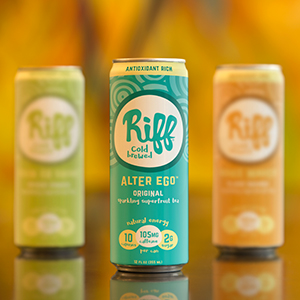
[00:08:30] Ray Latif: I thought you'd be really excited to see all the Kaskara products that we saw at the show. I mean, Riff Goldberg launched their Alter Ego product, although they didn't call it Kaskara.
[00:08:40] Tom Spier: They didn't, and they called it Alter Ego. So basically, Riff is getting themselves into the natural energy game, and their packaging is slightly different. It's kind of like it's them, but it's not them. And I thought that was the perfect way to describe it as their Alter Ego.
[00:08:57] Ray Latif: Yeah, we also saw Up to Good, which is a sparkling Cascara product as well, saw that in the arena, interesting product. But, you know, a lot of these companies are now marketing Cascara much more as an energy drink.
[00:09:08] Tom Spier: You're absolutely right. A lot of them are in the energy game and kind of downplaying the actual fact that there's Cascara in the beverage.
[00:09:16] Ray Latif: Yeah, it's hard to educate about Cascara. It's very hard. Indeed. I wonder what the folks at Boulder Food Group think about the opportunity for Cascara. The venture capital firm, led by industry veterans Tom Spier and Dayton Miller, invests in early-stage innovative and socially conscious food, beverage, and supplement brands, and as I mentioned at the top of the show, recently announced a $100 million fund from which it has already begun to deploy capital. I spoke with Tom and Dayton at Natural Products Expo West 2019, where they were on the hunt for disruptive brands and concepts. And as part of our conversation, they spoke about BFG's investment philosophy and how it evaluates and identifies synergies with entrepreneurial brands, the environment for food and beverage investment and how it has evolved in recent years, and the data that can make or break an investor pitch. All right, it's Ray with Taste Radio. I'm at Natural Products Expo West 2019, and I'm with Tom Spier and Dayton Miller of Boulder Food Group. Guys, thanks so much for joining me. Thanks for having us. So Now Is your Expo West going? I know it's day two, which, you know, you've probably only walked like one aisle at this point. It's so hard to navigate this show, especially as it's gotten so much bigger and there are so many halls.
[00:10:29] Chameleon Cold-Brew: So yes, so far, so good. And you're right, it's definitely a lot to navigate. So far, I've made it through the North Hall and the Hilton. I was a little bit upset to see that there's exhibits back in the Hilton again, which I think is wonderful, obviously, for the organizers, but certainly makes it that much more challenging for us to cover the ground that we need to. But it's great, and we're super impressed. It feels a bit like a fever pitch here in terms of the interest level in the whole sector.
[00:10:58] Ray Latif: Well, you forgot about the arena, too. I forgot about the arena. I haven't even gotten over there yet.
[00:11:02] Birch Benders: There are booths there again this year?
[00:11:04] Ray Latif: Yes, along with the bleachers and whatnot. Yeah, so you can go chill out in the bleachers. I've done that a couple of times, actually. Like, who's that guy way up there?
[00:11:14] Chameleon Cold-Brew: That's actually a great spot to go take a meeting, right? There you go. That's a good idea. Yeah, there you go. I'm full of them. Nice show hack. So Boulder Food Group, when did you launch it? We launched it originally in 2014 with our first fund. And over the last four years, we were investing out of that fund. And just about a week ago, we announced our second fund. So we're now investing out of fund two. And that's a very small one, only $100 million in that one, right? Yeah, we're very proud to, you know, have reach that mark and it's important for us and obviously wonderful for our partnership.
[00:11:47] Ray Latif: A tenth of a billion. You could have called it that.
[00:11:49] Chameleon Cold-Brew: I could have.
[00:11:50] Ray Latif: I might call that from now on. I think that's a good way to do it. Just go big or go home, right? Exactly. So what's your background in this industry, Tom? How did you get involved in the food and beverage industry?
[00:12:04] Chameleon Cold-Brew: Sure, so my career in the industry started in 2004, and I was very lucky. I was college roommates with a gentleman who was the co-founder of Bare Naked, the granola company, and they were about a year and a half into building that business, and they were kind enough to ask me to get involved in the business. I had no food experience, but, you know, was excited to learn and had some great mentors, and that's what put me in the industry. Did Bare Naked for about four years, and then on the heels of that, after selling the business in 2007 to Kellogg's, my wife and I moved to Colorado, and then in 2009, I partnered with a gentleman named Phil Anson, and we created the company that became Evolve Foods.
[00:12:46] Ray Latif: Evolve Foods, great brand. I love those, the burritos. When those came out for the first time, you were like, frozen burritos? And then Evolve came out and you were like, frozen burritos? Heck yeah, great stuff. Dayton, you have a lot of experience in the beverage industry as well. Tell us about how you got into the business.
[00:13:01] Birch Benders: for sure. So I was working in corporate development at the Walt Disney Company when a friend approached me with an idea for a functional health drink called Function, which we kind of launched out of our garage shortly thereafter, was able to work there and kind of build that business over the next few years. And then when we exited to Sun Suite, Tom and I had kind of stayed in touch over the years. We actually went to college together and the timing was right where he was raising a fund and I was looking for my next thing and able to kind of marry some of the experiences I had doing M&A work at Disney with some of my early stage experience on the beverage side and partner up.
[00:13:39] Ray Latif: So I'm going to call it BFG. Do you guys call it BFG? We do. Okay, cool. So BFG, what's the mission? What kind of brands are you looking to invest in? What's your general business strategy?
[00:13:51] Chameleon Cold-Brew: We're identifying food and beverage brands pretty much exclusively at this point, and any potential businesses that are very close to the food and beverage selling process. So most of our portfolio partners are brands themselves, and we do have two partners that are actually service businesses that are helping to support the channels. We're generally focused on Series C and Series A investments, and we're always looking to identify disruptive concepts, hopefully the brands that have iconic potential, and certainly trying to find partners that are wonderful people and passionate, and the type of folks that we wouldn't mind spending a lot of time with.
[00:14:30] Ray Latif: What are some of your successful investments? What are some of the brands that you worked with that have exited?
[00:14:34] Birch Benders: So far, Chameleon Cold-Brew was in our first fund, and that's it from the exit side, but we have a couple of businesses that are of great size and feel really great about, so hopefully they're on the right track.
[00:14:45] Ray Latif: So it's a good mix of food and beverage at this point, right? So tell me a little about the portfolio that you guys work with.
[00:14:52] Chameleon Cold-Brew: So today there's, I guess, two pure play beverages in the portfolio. One is called Malk Organics, which is an organic nut milk company, super simple, clean label product. Our most recent investment is in a company called Olipop, which is a prebiotic soda concept. And we have one other company in the portfolio that's sold as a powder format, but it's a hydration concept called Scratch Labs, and that's obviously a beverage concept too. They do have some food in their portfolio also, but really started off with being about hydration. On the food side, some of our partners include Birchbenders, which is a pancake and waffle company. a company called Kali Power, which is innovating in pizzas in the frozen space. They've actually repositioned their whole company as Vegilutionary Foods, and they have an offering in sweet potatoes. They recently launched Kali flour-based tortillas and are going to be bringing additional innovation to the market soon. So those are just a couple of the brands.
[00:15:54] Ray Latif: Pretty trailblazing companies. It sounds like innovation is the name of the game for your interest in food and beverage. What does innovation mean to you guys? I mean, what does it look like?
[00:16:04] Birch Benders: To me, it means kind of solving a need that exists that isn't being solved adequately today. So whether that's, you know, having alternatives to really highly processed flours and giving more functional ingredients into your foods or providing a still great tasting but yet lower calorie or lower sugar alternative. needs that we believe exist but aren't being met adequately today in the marketplace. And if companies are finding interesting ways to solve and meet those needs, then that's innovation to me.
[00:16:34] Chameleon Cold-Brew: Yeah, that's right. It used to be that it was pretty monochromatic in terms of what was available for consumers. Ingredient statements all looked very similar and now there's so many special preferences that consumers have and you're seeing it play out in areas like adaptogens, areas like paleotrends, ketotrends. identifying the companies that are delivering the best in class products that are still delivering consumer value, because we are very focused on value for the consumer that, you know, these aren't necessarily the most expensive items in the store, but products that are approachable for the vast majority of consumers.
[00:17:11] Ray Latif: When you're considering investments, do you look at category first, ingredient first, need state first? Do you look at the brands? I mean, if a brand just pops for you, I mean, what stands out? What's the, what's the sort of the pecking order at this point?
[00:17:23] Birch Benders: I think we're opportunistic. So, you know, normally it depends on kind of every deal is different, every company is different. We definitely have themes that we believe in that we're trying to identify the right teams and brands to kind of fit that theme. But, you know, we don't necessarily know if those exist. And not to mention, are they going to be a fit for BFG and us a fit for them? So then other businesses come our way and ask for capital. that might turn us on to a trend that we might not have known existed previously and really open our eyes to what consumers are seeking based on how well they're doing.
[00:17:57] Chameleon Cold-Brew: Yeah, and the importance of visual beauty, private label areas that are certainly growing that are not branded, that's important and delivers a lot of value for consumers. But if you can deliver the right visual representation, and then also the taste, the price, you can steal a disproportionate amount of category share with that combination. But if you're lacking the visual appeal, that gets to be a lot more difficult. So we really do try to identify brands that we believe are beautiful, unique, memorable brands that are going to get a consumer to stop in a store and maybe take a look and hopefully pick it up and buy it.
[00:18:36] Ray Latif: So we talked to a lot of entrepreneurs who are looking for investment and they say, we don't want just money, we want someone with operational experience, we want a value-added investor. You know, how do you support brands beyond just the financial component? Clearly both of you have had operational experience, but what do you feel like you bring to the table beyond just money?
[00:18:56] Birch Benders: Yeah, I mean, I think just having been entrepreneurs, hopefully we have some idea kind of what it means to have value-added investors on the other side. And I think that means certainly being a great support network for our entrepreneurs. There are definitely areas where we tend to get more heavily involved than others. I'd say on the HR side is really one. So, you know, we talked about Kali Power earlier. That was a business that We were fortunate to partner with when there was really one full-time employee, Gail, the founder, and two part-time employees, and now that business today is over 35 employees, and we hopefully played a really significant role in bringing in a lot of those folks and interviewing them and really putting the right team in place at the right time. So those are kind of areas that we get really involved in, capital raises, price pack architecture, how to think about sequencing retailers, and then hopefully there's a lot of good shared services amongst our portfolio because we're so focused on food and beverage, whether it's connecting people at various portfolio companies or just leveraging some of the other vendors that work with them and really hopefully accelerating the growth.
[00:20:01] Ray Latif: It starts with the founder though, right? I mean, the founder is such a critical component to the rest of the brand and building that team around the founder can sometimes be challenging. You know, how do you identify what the founder needs in a way that's going to help scale the business? I mean, let's say a founder is weak in a particular area, say sales. How do you break it down so that you're not telling that founder, hey, you suck at sales, but, you know, provide them with the tools to win.
[00:20:30] Chameleon Cold-Brew: We use the words people puzzle a lot, and every one of these businesses, in my opinion, is a bit of a people puzzle. And there's all kinds of people in the world. So it's pretty easy to have that conversation with someone. And it's pretty rare when someone reacts negatively to it, because a lot of these founders would love to have help. And a lot of them do have pretty strong self-awareness and do already know where they're weak. So if we can be supportive in helping them bring on the type of folks that you know, are really the right folks, then it's usually a pretty easy conversation. Now, not in every case. There are certainly, you know, strong-willed people out there, and maybe sometimes they don't see what we see, so those can be, you know, harder conversations, but that's our job.
[00:21:14] Ray Latif: The $100 million fund, Tom, you mentioned that you're looking at seed rounds, series A funding. Deploying that capital, especially in an environment where there's just so much money. I mean, it feels like every other person you talk to is looking to invest in a brand with potential or a high growth brand. What's your strategy for meeting with these folks and for getting into their world, communicating what you have to offer and doing it in a way that is differentiated from all these other private equity firms out there?
[00:21:43] Birch Benders: I think we like to scale into our investments. So we get in early and hopefully prove that we're a great partner. And then that makes the follow-on investments to the extent they're raising additional capital a lot easier. For example, last year was our most productive year from a capital deployment standpoint, but there was really only one new investment in all of last year. But we were able to continue to invest in our existing partners. And I think that really works well for both sides because they know what we've been able to do and help with, and then at the same time, we've been partners with them for a while, so we're more comfortable deploying larger amounts of capital against what they're going after.
[00:22:21] Chameleon Cold-Brew: Yeah, and we believe people aren't going to stop eating and the population of the world is growing. The number of opportunities over the next decade, they're going to be numerous. And so we don't have to be in every great brand, but we certainly have to be in some great brands. So we try to be really disciplined about it. you know, sometimes it's just not the right fit. I mean, we have our own approach, our own style, and certain people like a different style. So we get that, and, you know, we're not going to win every deal. There's a lot of really, really great firms in the space that we respect very much, and, you know, we're just as likely to partner with them on a later stage round as anything. So we really do try to, you know, play nice with as many people as we can.
[00:23:04] Ray Latif: Tom, you mentioned that you're invested in a couple other companies that aren't brands. One is a brokerage called Greenspoon. What was the idea behind investing in a broker? And I mean, do they teach you a little bit about how the industry is evolving? I mean, what's the relationship like?
[00:23:22] Chameleon Cold-Brew: Yeah, it's a great question. Certainly the idea of our partnership with Greenspoon is not to force our brand partners to work with Greenspoon. We are very, very adamant about the fact that the partners should pick their own brokers or marketing firms or whatever services they need. But, you know, Greenspoon is headquartered in Boulder, a block from our office. You know, we believe they provide outstanding service to their clients and it makes us a little bit more muscular, both in terms of our knowledge and then, you know, the number of intersections that, you know, the industry might have with our organization. You know, Kari and Matt, the founders of Greenspoon, have been fabulous partners. You know, if you talk to their clients, you know, results are pretty amazing, and people really, really do appreciate how much energy they put into the partnerships.
[00:24:12] Ray Latif: Yeah, I follow them on Instagram, and it feels like their team is just so active and fun and engaging, and most of their business is focused on the natural general, if I'm not mistaken. That's correct.
[00:24:22] Chameleon Cold-Brew: Yeah, they were really born in the Rocky Mountain region. They've since expanded to numerous regions, and they are further expanding even to represent some of the more conventional retailers, but their backbone was built in the natural channel.
[00:24:37] Ray Latif: So are they actively sharing information about what they're seeing on the ground? I mean, it seems like that'd be a very helpful thing to do. You have these people that are literally, not literally, but in the trenches, going through up and down the aisles, seeing, you know, customer activity.
[00:24:50] Chameleon Cold-Brew: It's a great question. I mean, we don't have any type of formal reporting we review. We certainly respect. you know, the fact that there's, you know, confidential information amongst Greenspoon and their clients. But, you know, if we identify a brand or an area that we find interesting, it's a great perspective to get. And the example I like to give actually relates to the kale chip category that developed, you know, five, six years ago, maybe a little bit longer. And it was an area we were interested in, and, you know, we did talk to Greenspoon about it, and they actually told us, you know what, Whole Foods is starting to dial those sets back. And so it was a cautionary note for us in that case. And so those types of insights can be incredibly valuable to us. And so that's really, it's a fluid, it's a conversation, and it goes both ways. Sometimes, you know, Kari and Matt will call us and ask, what our perspective is on a potential client, and they're trying to have a really wonderful roster of really successful clients, so that dialogue helps both parties.
[00:25:49] Ray Latif: It certainly sounds like it. Are you thinking about investing in any other kind of service providers in that regard?
[00:25:53] Birch Benders: Well, we made one other investment, kind of very similar to Greenspoon, but more on the digital side. It's in a business called Cartograph. They're an Amazon sales engine, so sales and marketing firm. We found them through a portfolio company of ours, Fourth and Heart, which has done a great job selling online through Amazon. You mentioned Gee.
[00:26:12] Ray Latif: Yeah, I mentioned Gee, exactly.
[00:26:14] Birch Benders: and beautiful brand as well. We saw what a fabulous job that they were doing for Forth and Hard and really asked them to partner because we thought they could be really helpful to other portfolio companies as well as other companies just in the natural products industry. And they've really done a great job building a great business and providing different level of insights on the digital world that Hopefully, we're kind of seeing similar things to the offline world. I think, you know, one really awesome evolution we've seen for entrepreneurs over the last few years is how many different functions you can outsource. So, you know, rather than hiring a large, expensive sales team, you can work with a company like Greenspoon or You know, similarly on the financial side, you can work with partners out there and really keep your fixed costs pretty small and scale up to a nice sized business with only a couple of people. So, you know, we like seeing teams like that that are really capital efficient and effective and take their dollar a really long way. So we're probably a bit more focused on that than others, but kind of how we think about things.
[00:27:16] Ray Latif: So when you're investing in some of these companies, seeing a founder and maybe one other employee, that's a good thing. That's a good sign.
[00:27:23] Chameleon Cold-Brew: It's not a bad sign. It can be a great sign. It really depends on the business and where they are. has some pretty good scale and there's only a couple people, you know, that can be a little concerning. We've heard anecdotes of some very large businesses in our space that are run with, you know, less than a dozen people, so, and doing really well.
[00:27:46] Ray Latif: How long does it take you to evaluate an investment opportunity? So when you're presented with this opportunity, is it months? I mean, could it be even longer than that? I mean, at what point do you say, okay, we're ready to pull the trigger?
[00:27:58] Chameleon Cold-Brew: You know, it depends on the case. Sometimes we see something and we know almost immediately that it's something we'd like to engage in, take a deep dive, and see if there's something to do. In other cases, we may just need to revisit it. We may not have enough conviction on the category, on the team, and, you know, we try to keep those doors open, and hopefully, you know, six, 12, two years down the road, we can revisit it with those founders, and, you know, they still are excited to take our phone call.
[00:28:27] Ray Latif: Let's talk about Chameleon for a moment because Chameleon has exited Soul to Nestle two years ago. An impressive brand, an impressive team led by Chris Campbell. What did you see early on with that brand that said, okay, wow, amid all the other cold brews out there, and there were a lot, this is the one that we should invest in?
[00:28:46] Chameleon Cold-Brew: But we love that they were a leader in organic, the leader in organic. And we're big believers in organic generally, long term. You know, that's to us is, you know, not a fad whatsoever. It's a long term trend, and it's only going to continue to grow. And to be able to partner not only with a brand that really had a lot of appeal for, you know, the demographic that they were targeting, and then to have the highest quality product through organic to us was a win-win, and then couple that with the low sugar. You know, they always really did have a viewpoint on low sugar, and clearly that's becoming more and more important in our industry. So those are the key things. Dayton may have a couple other.
[00:29:22] Birch Benders: Well, no, and then I think you add on Chris Campbell, who is just a rock star operator and Now Is numbers cold and Now Is business cold, and when you have that product plus Chris Campbell, it's a bet we would take all day long.
[00:29:34] Ray Latif: A lot of the innovation for Chameleon came after all the success they had with their Concentrate. How much does innovation beyond the initial product, how important is that for you as an investor?
[00:29:47] Birch Benders: I think we love to see it, but I think we normally, you know, we like to see velocity when we're kind of underwriting investments. As we think about kind of valuing a business today, it's more based on normally on current products. And we expect all of our businesses to be innovating. Innovation is the lifeline of this industry. So that's just kind of a given. But, you know, I'd say we think about it more for the future, not for kind of current kind of
[00:30:12] Ray Latif: So I'm sure you've seen dozens if not hundreds of pitches in The Time that you've been investing. What are some of the better ones look like and what are some of the ones that you never want to see again? And no names per se, but what does it take to really wow you guys?
[00:30:30] Chameleon Cold-Brew: Well, trajectory is certainly an important piece. Historical financials we're obviously very focused on and that's pretty much the first thing we usually ask for because that gives us a sense of how the business is being operated from a cost standpoint. If the trajectory is really strong, that immediately gets our attention. The presentations, there's a big difference between a presentation that's an A plus and a D minus, and it's pretty easy to see. So the teams that can really be incredibly thoughtful about their opportunity, about the potential addressable market.
[00:31:03] Birch Benders: I think Tom's right. I mean, at the end of the day, these businesses are marketing their products to consumers. And if they can't market successfully to investors, that's probably not a great thing. So I think it's just a litmus test for how well they can ultimately market to consumers as well.
[00:31:18] Chameleon Cold-Brew: And the numbers don't lie. Ultimately, you know, if the presentation is great, but there's no numbers, then that's a red flag. And maybe there, you know, a lot of companies don't want to share numbers right away, which we totally respect. But the syndicated data, all the information's out there, there's nowhere to hide at the end of the day from that standpoint. So, you know, we can flush that out. So don't lie, ever. That's a pretty good rule of thumb for life.
[00:31:46] Ray Latif: Try not to. I agree. Totally agree, Tom. What's one thing that's, not a red flag, but what's one thing that you never want to hear in a pitch? What's one thing that's just like, you know what? I wish you hadn't said that. And Now Is don't know if I'm interested in investing in you anymore.
[00:32:03] Chameleon Cold-Brew: I don't know, I think you'd have to say something kind of off the wall to really get us upset. We don't like to see unrealistic expectations. We like an aggressive plan, but if someone is so unrealistic in their viewpoint of what's possible, if you have a company that's doing a million dollars and you're saying that you can be a $500 million business in two years, That's pretty unlikely. So those type of things we look for and that's not necessarily a statement, but more of a watch out.
[00:32:36] Ray Latif: Do entrepreneurs ever approach you and you feel like they did their research on you guys and they know who you are, your backgrounds? I mean, is that a good thing, doing as much research on your investors or potential investors as they do on you?
[00:32:52] Birch Benders: Yeah, I mean, hopefully that means they kind of know what we're looking for from, you know, a people, product, brand type strategy. So if they think about that and they're fit, then we would obviously love to talk to them.
[00:33:03] Ray Latif: So perhaps if they listen to this episode, this is going to be right here. You know, I recall on Taste Radio Insider that, um, last question. I mean, you know, the future of the food and beverage industry seems really bright. Uh, so it should say 80,000 people here at Natural Products Expo West, but You know, there's been talk about a bubble. There's been talk about some slowdown, some potential for a recession, considering how well everything's been going for the past four or five years. What concerns, if any, do you guys have?
[00:33:34] Chameleon Cold-Brew: I'll be really interested to see how the landscape changes over the next decade in terms of the strategics. And I'm 100% sure that most of the strategics are still going to be just that. They're going to be the big legacy players. They'll have continued to acquire lots of the most exciting young brands. But I also think that there's going to be some new companies that are developed that become what I'll call mini majors and you know companies that might have you know companies like a white wave before it was acquired by the known and I do think that that's you know we need that as an organization as an industry we can't all be Nestle's and massive, massive organizations, but we do need a bit more breadth from that standpoint. So, you know, there might be a bit of froth in terms of pricing, particularly at the early stage, but certainly in terms of the amount of food that's being sold in the country, that's not going to slow down. I mean, we all need to eat a certain amount of food and drink a certain amount of liquid. And so I don't really have much nervousness about that whatsoever.
[00:34:39] Birch Benders: I would just say from my side, you know, it does strike me as a little bit concerning when we see brands really spending far ahead of the curve. You know, there's a kind of a natural pull to a lot of these products, and it does worry me a bit that whether companies have over-raised money or just kind of over-capitalized themselves, and if you really spend ahead of the curve and then the curve doesn't catch up to you from a sales standpoint, you can really find yourself in a tough spot in terms of raising capital down the road. So I don't know if that's happening or not, but it feels like you see it sometimes and time will tell.
[00:35:12] Ray Latif: What's your take on some of these incubators, these venture capital arms that the strategics are, it seems like everyone's got one at this point. I think Morris just announced one as well. Is this helpful to the industry, to the development of the industry, or are these strategics a little bit out of their league?
[00:35:29] Chameleon Cold-Brew: I think it's great. I mean, the reason is that I believe that liquidity is so important to our market. And even though there's investors out there who would love to see a massive correction and prices drop, I think that is the worst case scenario because to really have the right amount of liquidity in the market is critical. And if the incubators and accelerators that the corporates are launching are helping to add liquidity, I believe that's great for the market because it helps with pricing, it helps with discussions, and we always encourage our partners to be talking to the market. And the market is... you know, could be anyone really. It could be a venture capital firm, private equity firm, high net worth individuals, and the incubators. So the bigger the market is, the more opportunity is for companies to understand how the market is talking about their company, the valuations. I believe those are all really important feedback points.
[00:36:23] Ray Latif: Fantastic. Guys, this has been a great conversation. I really sincerely appreciate The Time. I think our listeners are going to get a heck of a lot out of this. And if they want to get in touch with you, how do you get in touch with BFG?
[00:36:34] Chameleon Cold-Brew: Send us a note. It's pretty easy. I'm Tom at BFGPartners.com. And send us a note. We try to be responsive.
[00:36:44] Ray Latif: I'm assuming it's Dayton at BFGPartners.com. All right. Well, enjoy the rest of the show. Good luck with everything going forward. Congratulations on the new fund. And I hope to talk again really soon. Thank you, Ray. All right. That brings us to the end of episode 25 of Taste Radio Insider. Thank you so much for listening, and thanks for our guests, Tom Spier and Dayton Miller. Please subscribe to Taste Radio Insider on iTunes, Spotify, Stitcher, SoundCloud, and Google Play. As always, for questions, comments, ideas for future podcasts, please send us an email to askatasteradio.com. On behalf of the entire Taste Radio team, thank you for listening, and we'll talk to you next time.
[00:37:25] SPEAKER_??: you