[00:00:05] Jody Levy: Hey Landis, how many times have you heard a brand tell you that they're ready to meet investors or looking for retailers or wanting to tell the industry about a new product launch?
[00:00:13] Watermelon Water: Maybe like four times today and it's only 11 o'clock. BevNET and Nosh provide multi-channel advertising capabilities to build that kind of awareness and to generate quality leads that drive the bottom line.
[00:00:25] Jody Levy: Our team is ready to help experienced and new marketers drive awareness around important milestones like product launches, fundraising, seasonal releases, and trade show appearances.
[00:00:33] Watermelon Water: We can help you build a plan that will drive awareness of your brand, open doors, and generate high-quality, business-oriented conversations. You know, the ones you're ready to have, like today.
[00:00:43] Jody Levy: To learn more, visit mediakit.BevNET.com, or if you're ready to talk, reach out to sales at BevNET.com and send us like 200 words explaining what you're trying to achieve, and we'll be in touch quickly.
[00:00:53] Watermelon Water: And now, Taste Radio Insider.
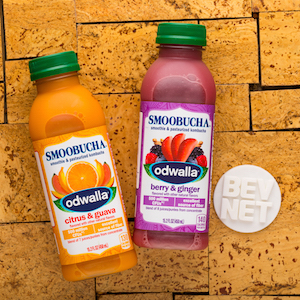
[00:01:03] Ray Latif: Hey folks, I'm Ray Latif, and you're listening to episode 26 of Taste Radio Insider. I'm with my BevNET colleagues, John Craven, Mike Schneider and Jeff Klineman, and we're recording from the Taste Radio studio in Watertown, Mass. This episode features interviews with two entrepreneurs that are advancing the conversation for cannabis-infused food and beverage brands. Jonathan Eppers, the founder and CEO of Vibes, and Kristi Knoblich-Palmer, the co-founder and COO of Kiva Confections. Just a reminder to our listeners, if you like what you hear on Taste Radio Insider, please share the podcast with friends and colleagues. And of course, we'd love it if you could rate us on iTunes. John Craven is just munching away at some of these products that we have on the table. A cornucopia, another cornucopia here at Taste Radio of products that came into the office over the past couple of weeks. What is this? Smoo-bucha? What is a smoo-bucha, John Craven?
[00:01:49] Jonathan Eppers: Well, it says that it's a juice smoothie with pasteurized kombucha. Pretty interesting.
[00:01:55] Ray Latif: Name kind of has a weird sound when it rolls off your tongue. This is an Odwalla product, Odwalla owned by the Coca-Cola company. If it's pasteurized kombucha, is it still kombucha? That's a question for the ages, Mike Schneider. That is one of the things that the kombucha industry is wrestling with as we speak. I'm going to ask GT. He's going to say no, I'm pretty sure. I think he is. He's going to say no. Well, in addition to the smoo-bucha that we have... It's hard to say smoo-bucha. In addition to the smoo-bucha that we have on the table, we also have another cold-pressed juice. This is Watermelon Water's new strawberry variety. I haven't tried this yet. Have you guys tried this, Landis?
[00:02:31] Kristi Knoblich: Yes.
[00:02:31] Ray Latif: No, I haven't. You want to open this up? Sure. There you go. Now we are featuring an interview with Jody Levy, who is the founder of Watermelon Water. Look for that in an upcoming episode of Taste Radio. And while I try this Watermelon Water strawberry variety, which is pretty darn good. Now, keto, I don't think it's hit its peak, but it's definitely one of the hotter trends that's happening in food and beverage right now. In my hand, I've got a bottle of, I still don't know how to pronounce this, keto? Keto. Keto, it's K-I-I-T-O. That's Chevron fuel you have in your hand there. Chevron fuel. Jon Landis, what was the original name of this product? New Superfoods, N-I-U Superfoods.
[00:03:15] Jody Levy: That's the one you bailed me out on, thanks Landis.
[00:03:17] Ray Latif: Yeah, that's from a former episode of Taste Radio. A previous episode of Taste Radio now. Yeah, Taste Radio now. I haven't tried this product yet. Any of you guys tried this yet? Definitely.
[00:03:26] Watermelon Water: I'm not keto, so I don't consume keto products. That is like the quote of the year, Landis. I'm not keto. I don't put my body through ketosis, so I have no interest in literally any high-fat, low-sugar product. None of them have any interest.
[00:03:46] Ray Latif: Can we pull that quote in? We should end every episode.
[00:03:49] Watermelon Water: I honestly think that if you're not... You're not into high-fat, low-sugar food? No, not really. What about those steak and cheese? They're still high carbohydrate. Ah, right. That's not keto. That's not keto. Oh, you're a steak sandwich. Steak sandwich. You were a sandwich artist. I am. I was in a former life. What? Mountainside Deli. What is a Mountainside Deli? From 2000 to 2004 as a sandwich artist. Yeah, bro. You can see it, it's on my LinkedIn profile.
[00:04:18] Ray Latif: We have to have like an entire episode about this. Land is the sandwich artist. We've talked about this before, haven't we?
[00:04:24] Jody Levy: I mean, this is a good combo.
[00:04:25] Ray Latif: It's a revelation. Sandwich artist. You should start like a chain of stores called Landwich.
[00:04:33] Watermelon Water: He's a Jean-Claude the sandwich artist. I like Landwich better than Landwell. Landwich. I lost a lot of weight so people stopped calling me Landwell.
[00:04:43] Ray Latif: All right, well, I know you can't pass up those Banzo Bites, Jon Landis, that are right in front of us. These chickpea cookies. They might be gone. Are they gone? They're totally gone.
[00:04:52] Jonathan Eppers: Gluten-free, peanut-free. These were great.
[00:04:53] Ray Latif: I actually met the founder of this company at Expo West last year. Her name is Anya Aurora. She was a pâtissier before she launched this product, this brand. It's a thin chickpea wafer on either side, and in between is this toasty chocolatey filling. You guys really eat all this? We did.
[00:05:14] Jonathan Eppers: Only feedback, we had to use a box cutter to open the pouch.
[00:05:18] Jody Levy: If you eat those, you don't choke and die in your sleep, do you? That's how Banzo Bites it, isn't it?
[00:05:26] Ray Latif: No, these are really good. I think the packaging could use a little bit of a refresh, but other than that, you know, great start to the company.
[00:05:33] Jody Levy: In the 70s, that brand might not have played so well in Banzo Bites.
[00:05:36] Ray Latif: Yeah, and I think this is just the first iteration of the package, so I shouldn't be too critical of it.
[00:05:40] Jody Levy: It's good. It's a good product, and it plays on the chickpea craze, Jon Landis was saying it has a little bit of a Nutella quality to it. I mean, we all garbage mouth it.
[00:05:51] Jonathan Eppers: Fortunately, it said eight cookies on the bag, which was definitely a serious miscount. There were more than eight cookies. Thank you for more cookies. Yeah, I appreciate that. We never complain about that. It's a mistake that can always be made. More cookies than promised.
[00:06:03] Ray Latif: Just want to note to our listeners, if you're looking for these products, if you want to see what they look like, want to learn more about them, at the bottom of our page, episode page, we have brands in this episode. You just click on that link, you can learn more about any brand that we'd mention on the show. We're going to mention Caffee. Caffee. Caffee is actually the name of a Icelandic protein coffee from Smari. Smari, the maker of Icelandic yogurt, is a new brand launched at Expo West, actually debuted at BevNET Live Winter 2018. We had Smari on the livestream studio. Again, another product I haven't tried yet.
[00:06:39] Jody Levy: I think this is one of those where they're playing off of the fact that Iceland has a lot of good credit in natural foods right now from Smari and Icelandic provisions and, you know, the Skyers of the world are things that are close like Siggy's. Skier, isn't it? Skier, yeah. Oh, I'm a skier.
[00:06:57] Ray Latif: Dad jokes all the way.
[00:06:58] Jody Levy: All the way. All day. Hashtag dad jokes. But, you know, it kind of draws you in. It has that Icelandic vibe to it when you look at it. And I think that's going to cause people to take it off the shelf.
[00:07:07] Ray Latif: Probably the most important drinks you got on the table right now are these cold-pressed two shots that are infused with cannabis and hemp. But we've also got Lumen. Lumen is a brand of hemp elixirs. They were recently featured in our Elevator Talk series. Check it out on BevNET.com, youtube.com slash BevNET. Jon Landis, what can you tell us about Lumen?
[00:07:29] Watermelon Water: It's a cold pressed hemp juice. So they're actually, you know, taking the full hemp stalk and juicing it. So a little bit different technique than a lot of... Does that mean it has CBD or no?
[00:07:43] Jody Levy: It's one of the things where the function of some of this stuff is going to require an awful lot of education.
[00:07:48] Watermelon Water: I would imagine that if they were just juicing the hemp plant for like flavor alone, there's not a whole lot to go on there. So I would imagine they're doing it for functional benefits. Yes. They're nice guys, and there's obviously a lot of buzz. And they're both very social guys and are out there really working really hard. And so we'll see where these things go.
[00:08:10] Jody Levy: But Landis, as the CBD crowd and the THC crowd, they go mainstream. There's going to have to be an awful lot of education about what you're getting when you drink. a certain dosage, you know, on either the CBD side or the THC side. Some of us have had some interesting experiences with that.
[00:08:29] Watermelon Water: You know, on the THC side of things, I mean, just consider how many of your friends have you seen have too much to drink in an evening and, you know, made an ass out of themselves or, you know, cause that's what you do when you drink too much. And, you know, people are just going to have to figure that stuff out. And I would caution folks to take it easy.
[00:08:50] Jody Levy: Yeah. Thanks for saying that now, Landis, after the fact. And thanks for taking care of me that night. I mean, it's like one of those things where you have, you know, you look at the amount of THC in a product and you know what you've had from other products and you say, okay, oh, this is a different strain or it's a different concentration, you know, it's a different ratio of THC to CBD.
[00:09:10] Watermelon Water: Really, it's not all regulated yet. It's similar to saying, you know, I went out and over the course of an evening had four beers. So maybe if I just do four shots in a row, it won't, you know, do the same thing to me.
[00:09:24] Jonathan Eppers: So I mean, bottom line is you probably shouldn't act like Cookie Monster.
[00:09:30] Jody Levy: You might have to take a nap at the Rose Cafe. I'm not saying I did that, but I'm not saying I didn't either.
[00:09:37] Ray Latif: Thanks, Landis.
[00:09:38] Jody Levy: Thanks, Craven, for being there for me.
[00:09:39] Ray Latif: I appreciate that. That's why I like these two interviews that are coming up, because we talk a lot about CBD and THC and have been for the past, I don't know, year or so, but there are some pretty well-defined terms. with regard to isolate and full spectrum and things like that in these next couple of interviews.
[00:09:56] Jody Levy: And also talking about mainstreaming and talking about this very thing where what's it going to take for cannabis to become mainstream.
[00:10:04] Watermelon Water: Totally. If you're out there and listening, you know, there's a lot of questions that you can be asking yourself and how are you going to be educating consumers and how are you going to get ahead of people abusing your product because that's what people do. will very happily go ahead and abuse your product, and you have to be prepared for it. So, you know, if you're not asking those questions, then you're doing yourself a disservice.
[00:10:30] Ray Latif: If anyone wants any clarification on what sounds like an inside joke about Mike, just send him a direct message on Instagram at BevNetMike. All right, let's get to our interview with Jonathan Eppers, who is the founder and CEO of Vibes, a CBD-infused drink brand based in Los Angeles. A tech executive turned beverage entrepreneur, Eppers recently sat down with John Craven and Mike Schneider for an interview about the launch and development of Vibes, which is sold in 14-ounce glass bottles and emits a cool, laid-back image via its minimalist label design and the tagline, mind plus Body Function. In their conversation, Eppers discussed his embrace of CBD, why, quote, borrowing brand equity has been a key to Vibe's marketing strategy, and what's in store for 2019.
[00:11:15] Jonathan Eppers: Hey, John and Mike here, and we are in West Hollywood at the Soho House, and we are sitting down with Jonathan Eppers of Vibes. Jonathan, thanks for joining us. Hey, thanks for coming over, guys. Appreciate it. Good to see you. For sure. So let's talk a little bit about Vibes for those who are listening and aren't familiar with it. Can you tell us what it is? Yeah, it's pretty simple. Vibes is an organic beverage made with hemp CBD. We have three flavors right now. Peach, ginger, blueberry, mint, strawberry, lavender. We just stopped our seasonal, our fall-winter seasonal line, which is a sparking line. And we're working on two new flavors that are going to come out within the summer. So, 25 milligrams of CBD in a 14-ounce glass bottle. And this brand hasn't been around for all that long, right? I brought Vibes into the market here in LA in January of 2018, so about 14 months. And I guess from what I understand, you're in a pretty good number of states, though, right? Yeah, it's been pretty amazing, I have to be honest. It's really surpassed any of my expectations. We started here in West Hollywood, where we're sitting right now, and by the end of this past year, in 2018, we were in 19 states. Today is March, what, 5th, 6th, and we're in 21 states. Wow. pretty incredible for a relatively short period of time. You know, this is my first time in food and beverage. I came out of the tech world, so I have little to compare myself to. So when people tell me that, I mean, it certainly feels like we've had an incredible journey that I don't know if a lot of brands experience, but I have nothing to compare myself to. So let's talk a little bit about the tech background. You know, how did you get from tech? And I believe you had your own company and as well as worked at a couple of other more well-known ones, right? Well, I moved out to L.A. from Indiana where I grew up 12 years ago, come out to work for MySpace. I went from MySpace to eHarmony, sort of getting a little bit disillusioned with what I was doing at eHarmony. I was in product, product manager. I considered moving up to San Francisco to work for Google. I'd had an opportunity to do that and I decided, you know, after moving around, I wanted to stay in L.A. and ended up kind of opening up this door for me to start this company called RADPAD. RADPAD was like a rental marketplace, much like Airbnb, but on the longer term side of things. And things were humming along really well. Started the company in 2013. By 2016, we had raised $15 million, had an amazing team of about 15 employees, a beautiful office in Culver City. And then we got into a big lawsuit with Craigslist. and it nearly destroyed the company, and it was a very traumatic, very painful experience for me, my co-founders, and the whole team. But that's kind of what led me into what I'm doing today, because sort of my worst, my absolute worst, just emotionally, a friend of mine had introduced me to hemp CBD. I started taking it, and it's kind of changed my life. So you were passionate about the ingredient. How did that segue into, I should start a company and produce beverages? You know, like I told you when we sat down here, if you would have said two years ago, hey, John, you'd be making a beverage, CBD, and I would have laughed at you because I know nothing about beverages other than I like to drink them. Hey, well, in fairness, if we sat down two years ago and you told me that CBD beverages would be a thing, I would probably laugh at you, so. I think we've all been taken by surprise at this. For sure. But, you know, what really got me into it is I was introduced to this stuff called Charlotte's Web, which is a hemp oil I started taking, and it was working so well for me. But the problem with the hemp oil was kind of the format. I didn't like putting it under my tongue. I did it in sort of privacy. If someone saw me doing that, it was kind of a weird thing. I'd have to explain what I was doing. And I started asking myself, you know, if I was to take this and consume it in the format I wanted, what would it be? And it was beverage. And so it kind of led me to go down the path of beverage. And I kind of think, you know, Changing consumer behavior is incredibly difficult. So if you can find something that fits into what they're already doing, i.e. I drink something every day, it's much easier to get adoption. How did you end up on the format that you're in with the glass bottle and the flavors that you're in? Clearly, there are a lot of variables that could go into making a beverage. You know, for me, like, I knew I wanted glass from the get-go. Glass says premium. I'm making a health and wellness product. I don't think people associate plastic with wellness today. And don't get me wrong, plastic's great. You know, it works for a lot of different formats. But for me, I wanted something that was sturdy, premium, that, you know, if you ever drink, like, something out of glass, it sends a taste better to me. So I really wanted, you know, wanted that. CBD's not cheap, you know, it's a very expensive ingredient. I figured that it needed to be put into a vessel that, you know, complemented it. To me, there was only one choice, it was glass. And I guess that is a good segue to the price point of Vibes, right? It's not cheap. Vibes is $8 in most stores. Retails between $7.99 and about $8.50. Probably the most expensive non-alcoholic drink on the shelf, which when I launched Vibes, people said I was crazy. There's no way an $8 RTD beverage would work. But I think what people that said that didn't understand was what CBD is and how important it is for people and their body and their health.
[00:16:15] Jody Levy: You've built what looks like a very premium brand. Can you talk about the inspiration for the brand and how that's helped to build up the messaging around Vibes?
[00:16:22] Jonathan Eppers: That's a great question. You know, like when I started thinking about what Vibes would look like as I was conceiving sort of this idea, just the name of the company, you know, the first couple of flavors. First of all, I'm in L.A. It's always sunny here. I love the city. I knew that coming out of L.A. L.A., I feel like to me, coming from the Midwest has a very health and wellness connotation outside of L.A. People think of L.A. as healthy. fit people. So I wanted a brand that kind of feel like LA, borrowed from the city that I've fallen in love with and I live in. And second thing I wanted was, you know, CBD is not a pushy, loud product. It's not caffeine. It's not an alcohol. It doesn't alter your state of being, you know, your mindset. So I wanted something that reflected that. And CBD's subtle. So the packaging couldn't be loud. It couldn't have bold flavors on it, big fonts. Couldn't be a loud packaging screaming at you on the shelf to buy it. Like, wanted something that was like, you know, that would be true to what this ingredient is. And that's really sort of, so California, Los Angeles, and the fact that CBD Subtle sort of led us to the inspiration. And I worked with a guy named Steve Reinmuth, who came out of an agency in San Francisco. And Steve has a very, unique way of like reading between the lines. And I was talking about maybe putting palm trees on the packaging and we sat down and we thought about it and we said, you know, we can't communicate the health benefits of CBD because of some of the regulations around CBD right now. So how can we communicate that it has a medicinal value to the body? And we tried to communicate that through the packaging. So if you've ever seen the brand Aesop, The skincare brand, of course, vibes as much like that. It's just copy. It's the way it's structured, laid out on the page.
[00:18:01] Jody Levy: I feel like it has a high fashion value to it, too. It reminds me a little bit of like a Burberry or, you know, just many London brands I've seen.
[00:18:08] Jonathan Eppers: It's funny you say that because there was three brands that inspired us. Aesop, Saint Laurent and Supreme. That's kind of where our inspiration came from for the brand. YSL. YSL. So we're kind of in an age where we're talking a lot about companies that are trying to build, you know, direct-to-consumer or they're trying to get into big chains. There's certainly a lot of money being invested in some other startups that you compete with. But it seems like you've largely built this using a slightly different approach of going after mom-and-pop retailers, not being very flashy outwardly. Can you talk a little bit about kind of what the approach has been? Yeah, when I started Vize, it was just me. And I think partly because I'm new to this industry, I didn't have sort of all the, I was maybe naive coming into it. So I didn't know, you know, I think a lot of times when people build brands in this category, they go right to Whole Foods. So they want to be right in Whole Foods. They want to get into the big chains. And I think there's a lot of challenges with that because, you know, you get into a store where you're competing with 10,000 other products on the shelf. So how do you stand out? And unfortunately for me, but also fortunately, CBD at the time, which was about a year and a half ago when I kind of got into this, was still pretty much banned everywhere. And the big retailers wouldn't touch it. So I was kind of forced, really, to go up and down the street. which I learned was a term in the cemetery up and down the street, the mom and pops independence. I didn't know that term when I got in the business. I just knew that, hey, I go to, this is the coffee shop I go to, this is the grocery store I go to, the little natural food store, Air One in LA. This is the gym I work out at. And I started to build a profile of someone like me and kind of saying like, okay, where do I go and how do I ensure vibes is where I'm at. and you know I don't go into big chain stores really and so I call it borrowing brand equity is what I kind of tell my team because it's like you know I can't come out and tell you the health benefits of CBD but if I put it in like a gym like Equinox and we sell vibes in Equinox you're probably gonna feel like it's good for you. Because it's in Equinox. Equinox is going to put good products in their cafes. And so that's what I did. We put it in those kind of places. And next thing you knew, you know, in Silver Lake is where all the hipsters live. So we really hit up Silver Lake. We went over to Santa Monica, where all the beachy guys are and girls. We went to West Hollywood, just studying the pop culture trends. And we went downtown, which has got this huge revitalization. And everyone's going down there, and all the cool retailers are down there. And we really went in those places. And when you start kind of saying, You know, kind of like a street brand. You know, like, hey, have you heard of Ives? Yeah, I kind of heard of it. What is it? You know, oh, my God, it's a CBD beverage. I got it at the gym. Can you believe they have CBD at the gym? And it kind of created this, like, storyline that helped us kind of come into the right crowds. And then that naturally helped drag us into more of those types of stores. So you've talked a lot about kind of the positive of having CBD in a product. There's also a fair amount of headwinds out there. You know, what's that been like over the past year, just dealing with different states and some of the regulatory stuff here in California? It's just crazy how fast this industry has just kind of exploded. You know, again, like a year and a half ago, like no one really knew what it was. I barely knew what it was. Now today you can find CB in gas stations and I was in the Midwest recently and you see it in the airports. It's pretty crazy. One of the things that happened to kind of transform this industry was the farm bill. that was signed into law in 2018, December 2018, passed bipartisan support. One of the only bills last year passed bipartisan support. Both Democrats and Republicans supported this. And that sort of opened the industry up. A lot of people, I think, that were waiting on the sidelines to get into the industry thought that once the Farm Bill was passed and legalized hemp, that that gave the green light to get into this. And I think what people failed to realize was that the FDA still regulates food and beverages. And so the FDA has had a policy for the last three or four years that prohibits CBD in food and beverages. And so what we've been seeing since the passage of the Farm Bill is more states cracking down on CBD. And really, I think because of the explosion of the industry and because I think a lot of these regulators who are tasked with protecting the health of the public are sort of saying, well, what is this stuff? And they're just looking and saying, well, the FDA's you know, prohibits this, so we're going to prohibit it too until we figure out how to get a handle on this. So we're seeing some of that happen right now in California, in New York City, Maine, North Carolina, Ohio. And as a reaction to that, what you're seeing is consumers kind of getting up and saying to the regulators and politicians, like, hey, I depend on this. I'm not taking antidepressants or opioids and I'm using this to supplement my well-being, you know, for chronic pain or whatever that is. And so you're seeing a lot of pushback, which is helping kind of create basically an environment where we're getting kind of a handle on what this is, but also not restricting it so people can't get access to it.
[00:22:48] Jody Levy: Jonathan, I haven't known you for very long, but in the time that I've known you, you seem to be a purist. We talked a little bit before the podcast about you using CBD isolate versus full spectrum CBD. Talk to us a little bit about why you made that choice.
[00:23:03] Jonathan Eppers: Well, the reason why I made the choice is because when I was introduced to CBD for the first time, it was an isolate that I took. And I didn't know what an isolate was. I didn't even know what a full spectrum was. So basically for those listening, an isolate is basically just a CBD compound. It's isolated CBD. A full spectrum is a spectrum of the compounds found in the hemp plant. So not just the CBD, but the CBG, the CBNs, even THC. So if you're taking You're gonna get some THC in there. I didn't want THC and vibes. I wanted it to be THC less. I want people to feel confident they could drink this product and not have that compound in their beverage. But you know, at the end of the day, what it comes down for me is that the research doesn't prove or disprove that one's better than the other.
[00:23:44] Jody Levy: What about the entourage effect?
[00:23:45] Jonathan Eppers: The entourage effect is, to me, it's a, dare I say the word, it's not a gimmick, but it's definitely a term that the people that push full spectrum would have you believe that it's better for you, but there's no scientific proof or evidence that suggests that it is. In fact, the FDA approved Epidiolex, which is a CBD isolate drug for children who have epilepsy. They're not using full spectrum, they're using CBD isolate. We use CBD isolate, so essentially the same product that the FDA has approved is what we're using at a very low dose. So before we wrap up here, just want to ask kind of what's in store for Vibes in 2019. And I guess also since you're on the forefront of the cannabis CBD space, you know, what are you expecting to see on that front? Well, in the cannabis CBD front, I think things are moving very quickly. It wouldn't surprise me if we had full cannabis legalization in the United States within two years. So I think that as a social issue is moving very quickly and more Americans want legalized cannabis. So I think we're on a precursor of having that. To be honest with you, I think CBD is kind of the compound that is like that horse in a race that was in the back and all of a sudden came out of nowhere and THC was in the front. And now you're seeing CBD sort of starting to lead the pack a little bit. And I think part of that is the fact that, you know, CBD is essentially all the medicinal benefits without the high. And when you look at today, I think that's what people are looking for. I think people want, you know, the calm feelings and the anti-inflammatory feelings you get with CBD that you don't, you know, without the high. And I think that's going to make this industry quite big. I don't think it's going anywhere. You know, we're excited to see what the FDA does with this. I think the FDA's recent comments by the commissioner are going to create a pathway for CBD to be sort of more accepted in food and beverages. And what's the story for Vibes? Like, I mean, I'm in this for the long haul. You know, I'm not looking to build a quick brand. I think, you know, we're not just a beverage company. We're trying to create this lifestyle brand. around this idea of like a balanced well-being. And I think that's what people are looking for. That's what I'm looking for. And that just takes time, you know. And so focusing on really the quality of our product, ingredients, stores, and the customers that we work with is really what we're set out to do. And we've launched in some really important markets, and we'd love to bring people into those markets to help us grow in those markets. So if anyone's listening that's a sales manager, please reach out to me. Well, hey, Jonathan, it's been great to sit down with you and get to know you and appreciate you taking the time with us here. Thanks, guys. Appreciate it. Thanks a lot. Enjoy your time in West Hollywood.
[00:26:14] Watermelon Water: The industry is listening to Taste Radio. Advertising with BevNET gives you control over the message coming through our platform. Visit mediakit.BevNET.com to learn more.
[00:26:27] Ray Latif: From CBD to THC, our next interview focuses on the budding business of Kiva Confections, a maker of cannabis-infused chocolates, mints, and gummies. Launched in 2010, Kiva products are sold at cannabis dispensaries in five states, including its home market of California, and is known for its commitment to high-quality and efficacious edibles. Christine Noblick Palmer is the co-founder and COO of Kiva, And in an interview with Mike Schneider and Jeff Editor-in-Chief Jeffrey Klineman, she spoke about the company's origins, its branding strategy, how it differentiates its products and drives trial. She also discussed the evolution of the cannabis industry and mainstreaming of cannabis products and offered some advice to entrepreneurs looking to break into the space.
[00:27:11] Jody Levy: Mike Schneider here at Expo West for Taste Radio with Jeffrey Klineman and also Christy Noblek-Palmer, our guest, co-founder of Kiva Confections. Christy, welcome to Taste Radio.
[00:27:22] Kristi Knoblich: Thanks for having me.
[00:27:24] Jody Levy: It's great to have you here. Let's just start with the story of Kiva Confections. Why did you start Kiva Confections company with cannabis?
[00:27:32] Kristi Knoblich: Yeah, so my husband and I were photographers before we started our careers in the cannabis industry. And we were trying to become photographers at a time when the economy was tanking. And so to make ends meet, we started a backyard garden cultivation in the house that I grew up in, in our garden shed. And so that put us into the dispensaries at that time. This is like 2008, 2009.
[00:27:58] Kiva Confections: So you were selling to medical dispensaries at that time?
[00:28:01] Kristi Knoblich: Exactly. Yep. And so that got us into the stores, and that's when we really recognized the opportunity to provide consumers with a better edible experience. The edibles at that time were not what consumers were used to seeing at Whole Foods, at Trader Joe's, at Starbucks, right? It was a brownie in a saran wrap package labeled 10X. And you're like, 10X? What the hell is 10X? Like, I don't want 10X. I don't know what X is, right?
[00:28:30] Jody Levy: Yeah, what is it? It's a variable.
[00:28:35] Kristi Knoblich: Yeah, it's a gamble, right? It's an experiment. So that was a little bit scary for consumers. So we thought, why isn't there a professional experience for them that they're used to? And so that's when we jumped into the confection space was we thought we could create a better edible.
[00:28:49] Jody Levy: So back at our cannabis forum, I met Ari and Jordan of Evo Hemp and subsequently met them at at a dispensary and, you know, I was very new to cannabis. I'm, you know, very much a person who likes to know what I'm putting into my body. And so, you know, I'm in there and I meet these guys there and I was like, I really need an experience that I know what I'm going to get. And it was like, you want one-to-one, you know, CBD and THC and try this one. And I immediately noticed the brand. and the packaging and that everything was very nicely labeled. And I felt like Kiva, the chocolate that was in front of me, was the one I should try. That's amazing. Talk to me a little bit about how you're trying to drive trial with Kiva.
[00:29:33] Kristi Knoblich: As it pertains to the packaging, we're very intentional about how we've laid out our packaging. We are really trying to give a sense of trust to the consumer, right? Like if we spend this much time and energy making a beautiful, informative package, then you can only imagine what the experience is going to be like, the attention to detail that we put into the Natural Products itself. So we're really trying to first kind of extend an olive branch out to our consumers and say, trust us, we're going to give you a great experience. But it's the package that gets people in the first time, but it's the product quality that gets them coming back over and over. So for us, the experience doesn't stop when we put the confection in the package, right? It's maintaining that quality and that consistency over and over and over so that every batch today and in five years from now delivers the same exact experience to the consumer.
[00:30:24] Kiva Confections: I wonder, when you started with the confection business, 2009, 2010, did you consider yourself a chocolatier or a gonjapreneur at that time?
[00:30:41] Kristi Knoblich: Um, at that time, we still considered ourselves desperate and starving artist. Yep. And struggling to make ends meet. So we, we practice a lot of that, like fake it till you make it right. Like, okay, we have this beautiful package, this beautiful product, but we're still in the home kitchen. So we were doing everything that we needed to, to make sure we had a beautiful product and, um, a quality product. But yeah, we were, uh, we were like a duck swimming across the pond. Right. It was like looked calm on top, but a frenzy beneath trying to keep up.
[00:31:14] Kiva Confections: I want to extend that pond metaphor for one more second because the other thing I was wondering is the pond's going up, right? So it's getting bigger at that time. Did you anticipate the growth of the industry you were going into or were you thinking we're gonna make a product for these dispensaries, these medical dispensaries at this time that serves a certain purpose or were you saying we're catching a bigger wave with this product that we're gonna make?
[00:31:45] Kristi Knoblich: We were looking at the bigger picture. And that's, I think, just because probably we were a bit naive, a bit ambitious. I mean, I grew up with just a general acceptance for cannabis. So it was like, how bad is this really? Like, it's just not a big deal. I just always grew up thinking this is like not a big deal, the use of cannabis. So I think we were positioning ourselves to be a normal consumer packaged good. That was like kind of the dream and the vision from the beginning.
[00:32:14] Kiva Confections: But did you see the industry growing at that point? Was that something you were growing?
[00:32:20] Kristi Knoblich: Yeah, it took a couple years for it to really explode, but it was growing the first few years from like 2010-2012, but not a ton of competitors, not a ton of professionalism. There still were no regulations. You couldn't get a license. Like people didn't even know what cannabis manufacturing was. So it still stayed fairly small for those first few years. And then around 2014, 2015, when we actually got regulations, that's when the really nose started to lift up and things really started to explode.
[00:32:54] Jody Levy: You talked about being a brand that's rooted in trust. What do you think the important call outs are for a cannabis brand, you know, particularly a food and beverage cannabis brand are to build that trust?
[00:33:05] Kristi Knoblich: Yeah, well, I think the trust from the consumer is garnered from transparency. So the brand, especially in cannabis, potency is like number one, right? You're not eating a chocolate bar because it's a treat necessarily, right? First, it has a functional component and that is... By the way, bonus, yours does taste very good. Yes, thank you. Yeah, we work really hard to make sure it does taste good. But that first reason you're going to consume a cannabis product is for a change in your state of mind, right? And that's asking a lot from the consumer, like, hey, will you trust us to take you on a journey for the next four to eight hours? Like that's... That's asking a lot. So I think potency, trust and potency is number one. So we tested Natural Products for THC potency from the very, very first batch. And we wouldn't have existed if those capabilities and testing didn't exist. So if there weren't labs in the area to test THC, we wouldn't have been able to start the company because that's really at our core is that consistency.
[00:34:08] Kiva Confections: So I wonder what some of the key branding cues are that you built into the package and what ideas, both artistically and in terms of formula, you wanted to make sure that you were bringing forward to the consumer.
[00:34:24] Kristi Knoblich: Yeah, so we worked with a really awesome couple of designers. And when we went to them, we said, hey, guys, we need a package and a logo. And they were like, you need a brand. And here's the exercise we're going to go through to determine what does the brand stand for. So we went through that exercise and we came up with like what the brand would stand for, which was professionalism. It should be approachable and welcoming. It should be holistic. And those are principles that still ring true today, which is pretty awesome. So we tried to take our core values and what our brand would stand for, and then inject that, infuse that into the package. So we want to put a cannabis leaf on there because on our Kiva bars, for example, because it conveys natural from the earth. And then it's also like, oh yeah, this contains cannabis, right? Like, watch out, don't eat this like a regular chocolate bar. And then keeping the information really straightforward and kind of in your face, right? In the beginning, we labeled a big potency number on there, 180 milligrams, for example. If your chocolate bar has a giant number on it, you should probably read that number because not all chocolate bars have a giant number on them. So we put information in certain places to catch the consumer so that they wouldn't accidentally over consume or, you know, share with their friends unknowingly consuming Natural Products that had cannabis in them.
[00:35:46] Jody Levy: Super important. I think the Camino stuff is some of the most accessible. This new Camino product is some of the most accessible cannabis I've seen. Talk a little bit about that packaging.
[00:35:56] Kristi Knoblich: Yeah, so the Camino brand is our newest baby, our newest lineup in the product selection, and it's a gummy product. So that launched at the end of 2018 in a recreational market in California. So it's our first brand launch, product launch in a rec market. So we got to have a little more fun with Camino. Our Kiva bars are a a bit more medical, because that's the environment they were born into. But Camino showcases the landscapes of California. It uses terpenes to create a certain effect in the consumer. It's a really colorful, engaging pack.
[00:36:34] Kiva Confections: They have a pop of color on the bag, whereas the chocolate bars almost have sort of a spa-like aura about them. Yeah, and that sort of spa. I've always admired, you know, it's almost like you're unwrapping a lovely soup. while you work your way through three or four locking pieces of paper to get to it.
[00:36:55] Kristi Knoblich: Yeah, totally. I love that description. It's a spa-like experience. Yeah, definitely. And we're actually going through an exercise right now to refresh the Kiva bars, because they were born in that medical environment, so they are a little more strict or stringent in the way the information is laid out, and Camino definitely seeks to have way more fun.
[00:37:17] Jody Levy: Let's talk a little bit about some of the speed bumps. What advice would you give to a food and beverage company who wants to get into the cannabis game?
[00:37:26] Kristi Knoblich: Speed bumps. There's been a lot of speed bumps. I would say do your homework. It's just a totally different ballgame in the cannabis industry, right? Like in a regular food company, and I'm not from the regular food world, so this is my understanding of how regular food companies work, is when you have a great idea for a product, You might do a small bench top of that in your facility, or maybe you work with an R&D company that will help you develop the formulation. Then you shop around for a contract manufacturer that might help you make that product. And then you scale it up, you monitor quality, and they do all that kind of the actual manufacturing for you. In cannabis in California, that really doesn't exist. So the ability for a brand to do its own manufacturing is actually quite an asset. So you have to invest in the facility, you have to buy the license, you have to find the team, a director of operations, like you got to make the whole thing from nothing. And that's starting to change, but we still don't have like a book of contract manufacturers that we can call up to make products for us. That manufacturing is an asset. So if you want to jump in as a regular food world from the regular food world, you're going to have to make that adjustment.
[00:38:38] Kiva Confections: What do you think of the product innovation potentialities that exist as more industry starts to move into the business?
[00:38:49] Kristi Knoblich: Yeah, I think variation is going to be really cool, right? Like we're going to see different form factors. And what the food world will bring into cannabis is the expertise on how to make that stuff. Because in the cannabis space, it's not inherently there, right? Everything that we infuse with cannabis in food mediums is new for us. That's what's exciting about seeing food come into cannabis is the innovation, all the expertise that it brings.
[00:39:17] Jody Levy: You mentioned consuming terpenes, which is yet another level of education beyond, hey, this is what CBD does, this is what THC does. In your original Kiva products, are they THC and CBD isolate or is it full spectrum product?
[00:39:31] Kristi Knoblich: Yeah, so in our chocolate products, we're a little bit unique. We use a cold water hash and we actually started the company using an oil, but we landed on cold water hash and that's been what we've been using for years and years because it just makes a better product, we feel. People love the effect. They get that full spectrum effect. And a cold water hash is made from the leaves of the plant and it ends up containing a ton of other cannabinoids. It's even got a lot of chlorophyll in it. So it's more of a concentration of the plant rather than an extraction of the THC or an isolation of the THC or CBD. And so, yeah, it creates a different effect. So we found that to be great for our chocolate bars. For our mints and our gummies, we've used a distillate oil, a triple distilled distillate oil. And then for Camino, we add back in those terpenes so we can narrow in on an effect. And that's something we've only been able to do with terpenes in recent time. because the innovation and the manufacturing of terpenes is really starting to catch on.
[00:40:35] Jody Levy: And what's your recommendation for sort of the branding of an effect? Is it the Kiva effect? The Camino effect? I mean, you know, different ingredient profiles, different terpene concentrations cause different effects, right?
[00:40:47] Kristi Knoblich: Effect-based marketing is super hot right now. So I think it's important to not make your effects too out there in the ether, to use effects that are like more digestible for the consumer. And then also when you're using effects and flavors, You don't necessarily know when you've got a product on the market what people are buying. Are they buying because of the effect or are they buying because of the flavor? So if you've got strawberry up and lemon chill and strawberry is your bigger seller, is that because the strawberry is hot or because up is hot as an effect? So mixing flavors and effects and CBD and THC, you start to get a lot of diversity there in your product that it can be hard to know what people are buying.
[00:41:35] Jody Levy: Are there conversations between companies in the industry that say, hey, we should maybe standardize on a few of these things so that people know what they're getting?
[00:41:43] Kristi Knoblich: I haven't been a part of any of those conversations yet.
[00:41:47] Jody Levy: I figured it was early days.
[00:41:48] Kristi Knoblich: Yeah, I think people are still trying to find what the best effects are. So we're still mining for data to see what are people buying. So I think it's a little early for that. But that would help the consumer, I think, definitely.
[00:42:01] Kiva Confections: Is it hard to create effect profiles knowing that half the equation is what the consumer brings into the experience themselves?
[00:42:12] Kristi Knoblich: Yeah, definitely. It's what the consumer brings. It's also what the budtender prefers, right? We have these gatekeepers in the stores that are the budtenders.
[00:42:23] Kiva Confections: Yep.
[00:42:23] Kristi Knoblich: And so whatever they love is what they will often recommend. And so you may get a consumer that wanders in and says, oh, I'm exhausted. I need, but I have insomnia and I'm looking for sleep. And they may walk out with a thousand milligram tincture, you know, that is labeled up because, you know, it's like they don't get to go in and grab the products and compare them.
[00:42:44] Kiva Confections: One of the things that I think has been impressive in sort of researching you a little bit is that you've been pretty out front on the mainstreaming question and have sort of taken an industry leadership role. with newer entrepreneurs. So what's it take to get these products more heavily into the mainstream either in a higher volume recreational situation or even a just more broad distribution channel set?
[00:43:22] Kristi Knoblich: Yeah, so I think the ultimate goal is to find cannabis products in the grocery stores that were made in one state and shipped to another. We're so bifurcated right now and we have to produce Natural Products in every state that we want to be in and then we can only sell to licensed chains. So being able to expand that would be the nirvana situation for a cannabis brand.
[00:43:46] Kiva Confections: How much of that outlook do you think is shared by the rest of the industry?
[00:43:51] Kristi Knoblich: It's probably not super popular among the retailers in the cannabis space right now. That would be a direct threat to them. And I don't know if the industry is really, if they really believe that we're going to get there in the next like five years. So it's pretty far away, I think. And in cannabis, there's so many like issues that we're dealing with on the day to day. It can be a little bit hard to like look up and focus on the overall vision because you're so in the weeds dealing with the problems of right now.
[00:44:21] Kiva Confections: There's so many incremental steps that you have to go through.
[00:44:24] Kristi Knoblich: Yeah, it would take a huge concerted effort from cannabis industry, outside industry. So yeah, it's gonna take a long time for sure.
[00:44:33] Kiva Confections: Sitting in the press room at Expo West, I wonder how long you think it'll be before there are tables for your kind of business here.
[00:44:44] Kristi Knoblich: Hopefully it's not too far away. We've got a few team members here trying to understand the CBD market, right? The CBD market is all over this show. So the THC market, I mean, next year would be amazing. I don't think that's possible. Two years, maybe, probably not, but maybe. I think that's because cannabis still has a stigma. It's still kind of racy. People don't understand it. The fact that it's federally illegal just makes it not something you're going to see at this show. But I think it would be really fun to be one of the first companies to have a booth here. Right?
[00:45:22] Jody Levy: Any guesses as to when it'll be federally legal?
[00:45:24] Kristi Knoblich: Oh, man. I mean, obviously you'd like it to be tomorrow, but... Yeah, yeah. Federal legalization is still a few years away.
[00:45:33] Jody Levy: That's your gut.
[00:45:33] Kristi Knoblich: Yeah, a few years. So call it two to six.
[00:45:40] Kiva Confections: I wonder, even if the product isn't on display here, how much Kiva is in the pockets of attendees. I know one pocket.
[00:45:54] Kristi Knoblich: Yeah, right. It's almost like you don't need to have a booth. You just need to throw a party at the end of the day, right? Fair enough. We know some people who do that. Maybe next year we will be here.
[00:46:04] Jody Levy: I like that. Well, we'll look forward to that, and hopefully we'll have you back on the show again in the future. Chrissy, thanks so much for being on Taste Radio.
[00:46:12] Kristi Knoblich: Thanks so much for having me, guys. Really appreciate it.
[00:46:17] Ray Latif: That brings us to the end of episode 26 of Taste Radio Insider. Thank you so much for listening, and thanks for our guests, Jonathan Eppers and Kristi Noblick-Palmer. Please subscribe to Taste Radio Insider on iTunes, Spotify, Stitcher, SoundCloud, and Google Play. As always, for questions, comments, ideas for future podcasts, please send us an email to ask at Taste Radio.com. On behalf of the entire Taste Radio team, thank you for listening, and we'll talk to you next time.
[00:46:47] SPEAKER_??: you