[00:00:05] Central Oregon: If you appreciate the content of Taste Radio and Taste Radio Insider, we think you'll love our live events.
[00:00:10] Ray Latif: Nosh Live is two and a half days of hearing from superstars in the industry like you live inside this podcast and can engage with the experts at will. Think about how much you'll get done. Wow, Landis. In other words, Nosh Live is where a natural food community The Business mode gathers to learn what's next and partners to get there.
[00:00:29] Central Oregon: It's a lot of information coming at you fast, touching on all aspects of owning and operating a better for you packaged food brand.
[00:00:34] Ray Latif: and no sponsored content. Our main stage is curated by our editorial team to give conference goers data-driven industry insights.
[00:00:42] Central Oregon: Early registration is available until mid-April. Plan ahead, you'll save money and make the most of your experience. Tickets and more information available at noshlive.com.
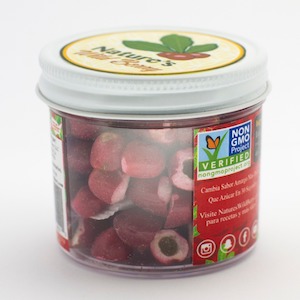
[00:00:51] Ray Latif: And now, Taste Radio. Hey everyone, I'm Ray Latif and you're listening to episode 27 of Taste Radio Insider. I'm with my BevNET colleagues John Craven, Mike Schneider and Jon Landis, recording from the Taste Radio studio in Watertown, Mass. This episode profiles the entrepreneurial food and beverage community in Bend, Oregon, and the city's evolution as a hub for innovative concepts. Just a reminder to our listeners, if you like what you hear on Taste Radio Insider, please share the podcast with friends and colleagues. And of course, we'd love it if you could rate us on iTunes. What happens if you rate us on iTunes and send us an email at askatasteradio.com, letting us know you did review us, Mike Schneider. I drool, my Pavlovian response is to drool when you say that. Oh God. You still nag us to rate us on iTunes? You're not helping the cause here. T-shirt and stickers. T-shirt and stickers, indeed. It's a pretty simple process, launch Apple's podcast app on your iPhone or iPad, search for Taste Radio Insider, tap write a review at the bottom of the page, leave a rating and comments, hit send, boom, done, thanks. And then don't forget to send us an email, askatastereader.com. We'll send you that t-shirt of your size of choosing. If you rate us on a different platform, you could probably twist our arm to do the same. I agree. That's correct. Well done, Mike. Now on the table today, we've got this pretty interesting product called Nature's Wild Berry. Supposedly, it'll make anything that tastes sour, tart, or acidic, taste extremely sweet after you chew it for 30 seconds. This berry is based on the Ladidi berry, and supposedly there's Vital Proteins in the pulp that binds to your taste buds. Jon Landis, you've tried something similar to this before. We haven't tried this particular brand. No, but we've had similar products marketed as Miracle Berry sent to us. bowl of lemons here. So, you know, I've done this before. It's pretty cool because it makes, you know, you bite into a lemon and it kind of just tastes like an orange. It tastes like lemonade. It's pretty cool. Yeah. I mean, we've also got some pickled brine, some apple cider vinegar. So I want to try this all out and see if... Linus, are there any instructions you should be giving me specifically before we do this or is this pretty safe? No, you're good. Well, you're supposed to... Also, chew the berry for 30 seconds, moving the five, three, is it going to do something different? I don't know. This whole thing is starting to turn my stomach. Leave instructions to finish the podcast for after you guys have to exit. Well, I think the whole point is turn off the board when you're done. The whole point is when you're chewing something or eating something that is, I guess, less than sweet or less than delicious to the taste buds, this supposedly is going to make it better. So I got some pickle juice and I'm going to try. Oh, I have to chew this first. I mean, it looks like basically a cranberry bread with an acorn. All right, I'll go for it.
[00:03:44] West Coast: And you just eat one and you chew it?
[00:03:46] Ray Latif: Yeah, you're supposed to chew it for 30 seconds. Yeah. Now, while we have... Now, while we're chewing this delicious, sweet, pulpy, berry product, Mike Schneider, you know, the events are getting closer and closer. Bay Night Live, Nosh Live, Cannabis Forum. When is all this happening again and where? Ray, our events are happening in June in New York City, back to back to back. June in New York City, back to back to back. Exactly. Nosh live, BevNET live, cannabis forum for food and beverage. Where can you learn about all these wonderful events? Go to BevNET.com slash events. We're going to have like 1500 people across all three events coming this summer, at least. Probably more. If I have anything to say about it. Yeah, Landis, that's the spirit. I love it. My question is, are we going to see as many shot products on the table as we will at BevNET Live? I will get to that in a moment because there are a lot of shots.
[00:04:41] West Coast: I'm ready for pickle juice. I'm ready to test this thing out. I got some pickle juice right here.
[00:04:44] Ray Latif: Here we go. Oh, yeah. Does that make it sweeter? Did it do it for you? It definitely makes it less sour, if that makes any sense. All right, let's see. There's still a tinge of sour. That is weird, man. That is weird. You should try the lemon. I'm going for the lemon here. I'm going to try another one. That stuff works. Yeah. Oh yeah. It's like you're eating an orange.
[00:05:11] Central Oregon: It tastes like a lemonade.
[00:05:13] Ray Latif: Yeah. Lemonade. Yeah. It's I taste no sourness in this lemon. This is very interesting. Elvis sing lemonade. So I guess it's trying to be marketed as if you want to cut sugar from your diet and you still have a sweet tooth and you can find sweetness in other places if you coat your mouth with this protein from this barrier. I can definitely feel the acid from the lemon juice going down my esophagus and into my stomach. Although it's very sweet. I just want to say that I would eat the lemon by itself anyway, and the sour doesn't bother me, but it tasted more like an orange. Yeah. Yeah. Up With stevia, there's like a weird kind of sweetness to it. A little aftertasty. I agree with you, Mike.
[00:05:55] West Coast: Up With me?
[00:05:56] Ray Latif: It's a little more fruity maybe or stevia-ish. Now, as Landis alluded to, you know, one of the, reasons for being for this product nature's Wild Berry is to make products more palatable, products specifically that don't have a great flavor profile. Or a lot of sugar. Or a lot of sugar. Now, within that set, you know, are products that are marketed as shots. Shot beverages have been around for a while. I mean, at the outset of the energy shot craze, I mean, we saw, I don't know, John Craven, how many thousands and thousands of brands? Definitely hundreds, maybe thousands. Okay. Meanwhile, as I mentioned before, we have all these new shot products on the table, and I see more and more of these coming into the office, and they're all made with a very specific function. Vital Proteins is in the shot game now. We've got a collagen shot over here, tart cherry and turmeric. Got some CBD shots, of course. Fermenting Fairy in the house with their coconut milk kefir shot. 10 billion CFU. 10 billion CFU. Now in my hand I've got a shot product from a brand called BB. It says lighten up is the name of the product. Flush prevention is the function. What is flush? Why would I need to prevent it? When your face gets red. Why does your face get red? You mean from drinking too much? Yeah, I mean for some people that's an issue. If they drink their face, a lot of blood rushes up to their face. It does say, drink one bottle 30 minutes before alcohol. No headaches, no nausea, no palpitations. Oh, Adam Stern could definitely use this, no palpitations. Oh my goodness, Mr. Stern. They also have nightcap. I have nightcap over here. So it seems like you drink that at the beginning of the night, you drink this at the end of the night and you're all taken care of. There are a bunch of brands on the table here that are going bigger on the function than even their own brand. The Vital Proteins shot's called Restore. And the BB shot, you know, the one that I can see from across the table is Nightcap. And the other one, what's the pink one called, Ray? That's the Lighten Up. Lighten Up. I can see that from across the table now, too, that you turn it, Landis. But it's evident that the smaller form factor is, you know, is for function.
[00:08:07] West Coast: Yeah, I mean, I think these products since basically the days of five hour kind of pioneering this category, I mean, it for sure has been primarily about function. Flavor has been, you know, very secondary. It's also interesting to see how, you know, there's certainly a, you know, clear market out there for energy. There've been some sleep products, hangover recovery products have been, you know, people have been trying to get into that game for a long time, but there hasn't really been like one super dominant brand the way that, you know, 5-Hour has dominated energy. And then I think clearly what you're seeing with some of these other products, you know, CBD products and these cold-pressed juice shots, companies trying to take, you know, a healthy angle, which I think, you know, is certainly nice to see.
[00:08:53] Ray Latif: The other thing that's interesting is just the package variety. I mean, originally you did have that 5-Hour bottle and then there's this one other stock bottle that's been around, this plastic stock bottle that's been around forever. but now you're seeing stuff in glass, you're seeing shots that are larger than 2 ounces, which I think is the standard or 1.93, 1.7 had been the standard. Now you're seeing shots that are 4.5 fluid ounces like this BrainGear. And I like what BrainGear does because it's in a larger bottle, they have more real estate to work with and it's very clear what this product is for. Nourish your brain, focus, clarity, memory. And I need all that. That has a bit of a medical feel though, it almost looks like a jar of pills from here.
[00:09:30] West Coast: Well, this also is not really positioned as a shot in the same degree. So it's just kind of a more concentrated, you know, this one's labeled as a dietary supplement.
[00:09:41] Ray Latif: You know, I think this is supposed to be kind of an in-between. You drink that in one shot though, right? No?
[00:09:46] West Coast: Well, I think the difference of a shot is like the one gulp verse, you know, do you drink it quickly?
[00:09:52] Ray Latif: I don't know. I mean, it seems sort of nuanced. There's one shot on the table that definitely needs to use glass, and that would be the coconut milk kefir. But do they all need glass or are they making a statement with glass? I think it's more of a statement for sure. It's, you know. If you're a sustainably focused EPG company, glass, you know, like we see with Salty, I mean, Salty, the cold press juice company out of San Diego, they are 100% behind glass. They will never go into plastic and it has everything to do with their, you know, mission of being in a more environmentally friendly company. In episode 26 of Taste Radio Insider, Jonathan Epper said the same thing of vibes. There you go. Well, as intriguing as the development of the functional shot category is, and it is intriguing, I think it's about time to banter on Bend. Now, chances are you've heard of Bend, or perhaps some of the companies based in the city, which is located in Central Oregon about three hours east of Portland. Bend is home to craft beer pioneered to Deschutes Brewery, Hydro Flask, which is a popular brand of reusable water bottles, and Humm Kombucha. As I mentioned at the top of the show, Bend, whose economy had been dominated by timber production for over a century, has become a hub for entrepreneurship and innovative companies. It's also a haven for outdoor sports and craft beer enthusiasts, a combination that has led to a variety The Business and consumer publications to rank Bend as one of the best small cities to live and work in the United States. High praise indeed, but there's nothing like seeing something with your own eyes, or hearing about it from the horse's mouth, or whatever other cliches you want to use here. That said, I recently made my way out to the Pacific Northwest and met with a few of Ben's entrepreneurs and business leaders to learn more about the city's appeal and the reasons behind its emergence as The Business capital on the West Coast. A quick note, some of the interviews had to be re-recorded via phone due to an unfortunate loss of the original audio, hence a slight variation in sound quality. My first stop in Ben was the Riff Cold Brewed Tap Room, an innovative coffee shop and meeting place in the city. Newly opened and located in a renovated milling facility, the tap room is where I met with a few folks from Ben'The Business community, including Jesse Thomas, who's the co-founder and CEO of Picky Bars, a brand of healthy energy bars, oatmeal, and granola products. Jesse and his wife founded the company in 2010.
[00:12:12] Central Oregon: We started with my wife and I. It was a very typical kind of Oregon food startup story. I was a emerging professional athlete. My wife was a much more established professional athlete, both in the endurance. Avenue. And I started training super hard for triathlon, having all these kind of stomach issues with the overly processed energy bars and food products that I was consuming in and around my exercise. And Lauren basically wanted to create something that balanced the best of both worlds, which was something that was performance nutrition balanced, but also made out of real food ingredients. That was the genesis for the original, what we called a Picky Bars because we were very picky about how it was going to taste and the balance of all the ingredients and the nutritional balance. And that was the genesis for the company.
[00:13:07] Ray Latif: You mentioned that Picky Bars is a traditional story for a food company in Oregon. What's a traditional story?
[00:13:13] Central Oregon: I don't know. Well, it seems to me like, at least people that I talk to, I'm a Bend kid. I'm like a unicorn in this town. You're one of the few. I was born here and raised here. My dad moved here in the early 50s. So Bend is my DNA. Like every company, Picky Bars has a big chunk of my DNA in it as well. It's a very active, balanced, fun lifestyle, both in terms of the product and the packaging and the branding. And I think that is a huge reflection of Bend to a specific extent and Oregon to a larger extent in general.
[00:13:50] Ray Latif: Now, as a child of Bend, you're one of its quasi-celebrities. Oh, God.
[00:13:57] Central Oregon: You once appeared on the cover of Outside magazine, correct? I did, much to the chagrin of the entire town. Yeah, I will say, in all honesty, that was not my idea. I didn't approach them. You know, Outside is a great publication. They've supported Lauren and I's careers in various ways through profiles. and stuff over the years, and they reached out to us, because they had selected Bend as their top city, and knew that we were a couple that lived there. It was an opportunity that I honestly debated a little bit, because of the criticism that would come from it. Had you already launched Picky Bars? Yeah, yeah, this was just maybe a year or two ago. Yeah, yeah, but that was it. And I'm a firm believer, you know, I feel like if anybody can feel okay about promoting what Bend is and the greatness of Central Oregon. It should be a kid that was born and raised here. And I do believe that. I think that it's so typical. Everybody wants to be the last person that moves to a great city. and then shut the doors and let nobody else in. And that's just unrealistic. I think Bend is an awesome place that has a ton of incredible natural features and activities for people in close proximity. And I don't think that we should shy away from promoting that. I think we need to be intelligent in the way that we promote it and in the way that we scale the city. And I believe that are, for the most part, the people that run the city are doing that. So, you know, I'm all for it. And then it does bring, it brings more opportunity. Like 15, 20 years ago, even having a small business like Picky Bars would have been really, it would have been a lot harder to pull off than it is now.
[00:15:35] Ray Latif: Has there been a greater emphasis on entrepreneurship in Bend and in Central Oregon over the past few years? I mean, you mentioned 15, 20 years ago, it might not have been possible. So what are some of the ways that you're being supported specifically? What are some of the ways that the city and the region is supporting your brand?
[00:15:51] Central Oregon: What I've found is a real willingness and openness to just meet up and support and talk shop amongst a number of different people at high levels in all the various organizations in Bend. Everybody from Scott Allen at Hydroflask to Will Blunt at Ruffwear, You mentioned Jamie at Hum. There's a number of people at both in food and outdoor space and kind of this cool infrastructure that have given a lot of their time to up-and-coming businesses like myself to help us, you know, continue to grow the environment here.
[00:16:33] Ray Latif: As Jesse noted, Jamie Danik has emerged as one of the The Business leaders in Bend, having co-founded Humm Kombucha in 2009. As the company's CEO, Jamie has overseen Hum's evolution from a tiny brand to one of the leading names in a fast-growing kombucha category. I spoke with Jamie about Ben's role in the development of Hum and how she's paying for the support she received early on.
[00:16:56] Sweetening You: So nobody knew what kombucha was in 2009. Nobody. And you had a combination where you had these entrepreneurs and our specialty is we get excited about something and we just want to share it with the world. Super friendly, we're really passionate, and we're incredibly convincing because we were sure that this was why we were feeling so good. And so we had to make sure that Ben had access to this so that they could feel really good too. Okay, so you have that part of the equation. Well, you need the other part as well. So then you have this really interesting town that is incredibly supportive of local, incredibly supportive of each other. I mean, you think about it, we live in a town of 100,000 people in basically the middle of nowhere. We're probably four hours to the closest city, Portland or Eugene, which is a tiny city next to ours. And people have to really rely on each other. They live here because they want to live here. So we live in a place that's gorgeous. There's a lot of fresh air. Anything that you want to do in the outdoors is completely accessible. It's not a hard thing to do three different activities in one day. And then we call it the trifecta. That's when you get your best day ever in Bend is you get to like ski, mountain bike and float the river or whatever it might be. Because you can do all those things in Bend in one day. And then the problem with Bend, so that's the great stuff. And then the issue with Bend is there's no work. I mean, it's a boom and bust town. It's all built around construction, tourism, and now, of course, craft beverages and craft beer. And so you have a place that's hard to live in because it's hard to sustain. your life when yeah it's really fun but then you have to make a living and actually be able to pay your bills too. So there's this incredible like insaneness for people that just love to support each other. We're all so happy with where we live and all we want to do is support each other and make each other successful so that everybody can stay here and that we can all be in this amazing place. So this community basically, so you have these entrepreneurs that like, just had this great idea and wanted to help people feel better. We had a magic about sharing that message. And then you have these people and this community that just aided up. A, they wanted to feel better. B, they wanted to be super supportive. And C, they wanted to wrap their arms around and just take care of anything that's local.
[00:19:03] Ray Latif: How did you incubate the idea in Bend? I mean, how did you incubate The Business so that you could expand and grow beyond the city limits?
[00:19:12] Sweetening You: Yeah, I think that's one of the trickiest things because you hit it exactly exactly as it is. It's pretty easy to start The Business of Bend if you have something that tastes good and you know it's a good product. It's pretty easy to be successful in Bend again because you have that community and if you're a decent entrepreneur and you have a good idea and you can spread an idea that's not a problem. Then we kind of went back and Because Bend is such a tourist town, many people were calling us from all over the country. They come to visit Bend, they try our product, and then they go, how do we get this in Arizona? How do we get this in New York? How do we get this in Florida? And we kept saying, we'll get there one day. Ha ha ha, we'll be there. And then Michelle and I actually sat down one day and said, is this true? A, do we want to have The Business that's more than just Bend in the regional area? And B, why on earth would we do that? And how on earth would we do that? So at that point we really needed to bring in guidance and expertise in order to help us scale The Business because we as as like many Venn entrepreneurs are entrepreneurs. We have a great idea. We're really really passionate. We're so bought into what we're doing. We think we're going to change the world. We're sure of it as a matter of fact. And we just want to share it. that personality isn't the personality that can scale and build a huge national business. It's not the same skill set. And so for Hum, we knew we wanted to go national. We weren't just going in regions. We wanted to go national and take this big. And that's when we brought in some expertise to help figure out how to scale and figure out all the challenges of being in Bend, right? Because there's distribution. I mean, we're in this little town, we're refrigerated, we're glass, it's heavy, et cetera, et cetera.
[00:20:46] Ray Latif: How have you attempted to be supportive of other young entrepreneurs that were in the same situation as you were when you launched early on in Bend?
[00:20:54] Sweetening You: Yeah, this is a great, this is a great point. So when we launched early on, here's what Michelle and I did. We called everybody and asked a ton of questions. So within like a week of being The Business, we were on the phone with one of Deschutes Brewery. They actually picked up the phone and talked to us. This is the really cool part about Bend. And then we called kombucha companies from all, we were on the phone with lots of people. So we got our first bottles from Silver Moon. We got our, how to even Humm Kombucha on draft, because that was not a thing. We were one of the first, if not the first in the country to be putting kombucha on draft. So we, the home brew shop, they helped us. And what we realized and what we saw was that When you get help, like you need help to start The Business, no matter how great your ideas or how smart you are. And when you get help, you can really move a lot faster and you can move a lot smarter. You can glean from people's mistakes. And so what we decided early on was that we were going to help every, we were going to pay it forward because at first all we did was need help. We were going to pay it forward if we ever got in a position there. As a matter of fact it was of all Humm Kombucha companies were called way back when there was one kombucha company that snubbed us and wouldn't talk to us. And we said we will never ever do that. We will absolutely open our arms to everybody who calls. So now what we do is. I have a dozen, if not more, entrepreneurs that I am mentoring, guiding, help with whatever they need. The door's always open. They can make an appointment whenever they want. And the only thing they have to do for me, because they can't do anything for me, right? I'm way ahead of it as far The Business goes. They can't help me in The Business. but what they can do for me is pay it forward so that they can help other entrepreneurs. So when they say, what can I do for you? There's, you know, you're helping me so much. Oh my God. And I can say, there's only one thing you can do for me is when somebody calls you, open up the phone, take the time and help the next person that calls you.
[00:22:37] Ray Latif: The rebranding of Hum from its original name of Kombucha Mama was led by Paul Evers, a longtime resident and principal figure in Ben'The Business community. A co-founder of the highly respected Benbury Crux Fermentation Project and the branding agency TBD, Paul is now focused on the aforementioned coffee brand and taproom Riff Cold Brewed, which he co-founded with former tech executive Steve Barum.
[00:23:04] Up With: Community is obviously really important if you're going to move to a place like Bend, as well as lifestyle values. And, you know, we have a bumper sticker that you see on cars. It's pretty common in Bend. It's, be nice, you're in Bend. There's a cultural code that we need to be friendly. We understand that we need to, we rely on each other. As food and beverage companies, we have to work with each other. I mean, we have infrastructure challenges, like how do you get a cold product freighted to Portland or to Southern California? We're working with companies like Hum and collaborating and figuring out how to problem solve. And Jamie is super supportive. That's something I think that is really super special about Ben, and that spans private enterprise and it spans city management, carries over to city management.
[00:23:53] West Coast: I think another dimension to it is Oregon is a bit of an underdog. We're sandwiched between Seattle and San Francisco. And we're known for kind of being a backwards timber town in a way. And I think what happens is we look out for each other. there's a sense of we need to band together as a tribe in order to compete and survive against the much bigger and well-known metropolises to our north and south. I worked in San Francisco and Silicon Valley for 17 years, and you've seen some of the greatest companies of the modern era emerge from that region. But I'll tell you, Ray, Bend and I think Oregon overall is incredibly entrepreneurial. much more so than Silicon Valley. If you're an entrepreneur in Silicon Valley, your level of risk is if this startup doesn't work out, I'll just go to the next one and it will have millions upon millions of dollars of funding and I'll keep my $200,000 or $300,000 salary. When you move to a place like Bend, there is no safety net. You need to support yourself. You need to make a living for you and your family. And so it creates this not only entrepreneurial sense, but a sense of I'm going to be successful. And so the community rallies behind each other and you get The Business and these entrepreneurs that on a per capita basis is just insane. That's why Bend has been ranked the number one community for small businesses for a few years in a row.
[00:25:26] Ray Latif: So Paul, you're a co-founder of a very popular brewery here in Bend called Crux Fermentation Project. And Bend has consistently been called one of the top places in America for craft beer. What made this town of less than 100,000 people the focal point or one of the focal points for craft beer in America?
[00:25:52] Up With: I think a couple of factors. One is we had one of the earliest craft breweries that became a regional craft brewery, Deschutes Brewery, drawing incredible talent from around the country, brewing staff and marketing people and sales that then spawned off these little spinoffs in smaller craft breweries. I think every notable craft brewery in Bend has some sort of connection in his family tree to shoots. From ale apothecary to boneyard to crux.
[00:26:26] Ray Latif: Both Paul and Jamie noted the influence and clout of Deschutes Brewery in the evolution of Bend and that of the city's food and beverage community. Founded by Gary Fish in 1988, Deschutes has, over the past 30 years, been at the epicenter of craft beer in America and continues to play a critical role in how the industry evolves in the Pacific Northwest. Early on, however, it was hard to see the light at the end of the tunnel. Our original business plan was pretty modest. You know, the pub was 100 seats. I thought I knew how to operate in a restaurant environment. I had opened seven different restaurants prior to that. I had been a part of a number of very successful operations. And that was, again, I also followed that Up With we didn't know what we didn't know at the time. And our business plan, I had discounted even from our kind of worst case scenario. And as it turns out, Bend was a great place to do this, but at the time for a little hundred seat pub without any plans for expansion or extension of The Business beyond the four walls, You know, I think we were pretty cautious about the way we approach things. But Ben was even more depressed than we gave it credit for. You know, I think when I first went out to hire employees hire opening staff. I think at the end of a week of taking applications I had received a grand total of 15 applications of which I was pretty much forced to hire 12 people. And so The adventure really began at that point in time as we struggled to pull things together with a situation that was far short of optimal in terms of building and growing a restaurant operation, even a very small one. Tourism is to this day a key industry for Bend. Although craft beer tourism, or at least the craft beer industry, has become an important part of the community as well, you know, how did it become such a focal point for craft beer in America? Why is Bend such an important destination for craft beer enthusiasts? Well, that strikes me similar to the question that I asked, why Oregon? Why did craft beer take root in Oregon with you know, the highest market share of craft beer sales of any state in the country. And I think the answer is similar in that, you know, it took some adventurous consumers and some entrepreneurial business owners to really work together to capitalize on the attributes that are here. You know, I mean, Oregon is the second largest hop growing state in the country. It grows a lot of the barley. There's a fairly large malt house in Vancouver, Washington. So the sources, the supplies were relatively close at hand. Consumers are pretty adventurous. And by that, I mean, you're talking about people, particularly on the Valley side of the state, that live in the rain for a large part of the year. And rather than grabbing a six pack and going to the beach, they head down to their local pub. The local movement took root in Oregon sooner than most. All of those kinds of things, I think, contributed. Oregon was one of the first states to legalize homebrewing after Jimmy Carter made it legal federally in 1974. So there's a host of things that I think when all those, you know, the confluence of all those things in Oregon kind of allowed craft beer to take root and take root it did. Gary mentioned the role that the local movement played in Oregon's development and Bend helped to refine its meaning according to Jennifer Moore. She's the founder and president of Jem Organics, a brand of sprouted organic nut butters that are manufactured in Bend.
[00:30:49] Sweetening You: I think our average Bendite is very particular. We're not just easily swooned just because it's local. It actually also has to be really delicious and healthy and something cool and interesting. We're here because we want to be and we're here because we want a certain lifestyle. And our standards, I think, are a little higher, honestly. a great place for people to try products out and start up because we have such a supportive network of people. We have people that have The Business from startup to selling their company a few times that are accessible, you know, to talk to where when you get into the bigger communities and bigger cities and states that they really don't have that kind of intimate access to amazing knowledge.
[00:31:48] Ray Latif: So what's it like working with governmental agencies? I mean, do you have the same issues that a lot of small companies have, you know, getting through that web, that tangled web of bureaucracy, or is it a little different? How does it work in Bend?
[00:32:03] Sweetening You: So I personally just because of who I am I knew that I needed to get a good relationship with our Oregon Department of Agriculture who's you know they work with and along with the FDA. And I knew that it would be better to get their buy in up ahead and ask for their advice and ask for their input before Instead of going to them afterwards. And so because I did that and also our guy here who was working on his own but now has other people is also extra amazing in how much he's available for input. And sure, it might take a few days for him to get back with you, but it's not like the bureaucracy of red tape that I've heard nightmares with. And so even in Oregon, the Oregon CDC, Center of Disease Control, the ODA, we've also have the Oregon Health Extension Service that helps Up With nutritional facts and knowing how to put the right nutritional facts on your label. All of those people are so accessible. I never have ever waited more than a week to get a hold of any of them. And at the most, two days, really, is more the average. And they're so there to help you when you ask.
[00:33:24] Ray Latif: Working alongside state and municipal agencies are non-government organizations designed to support economic development in the region. One of them is EDCO, a nonprofit corporation that works with a range of entrepreneurial businesses that are based in Bend. Brian Vieira is a venture catalyst with Edco.
[00:33:42] Wild Berry: So Edco is a traditional economic development organization. So it's all about job creation and helping businesses get started, bringing investment in and growing the revenue base. These are traditional economic development organizations. Edco is different from other economic development organizations in that it has a focus on early stage. So early The Business are particularly difficult because most of them fail. They have a very high failure rate, but they also represent that part of the economy that is most active and really generates most of the job growth in a community.
[00:34:19] Ray Latif: So how do you define early stage? What's in terms of age, in terms of revenue?
[00:34:25] Wild Berry: Yeah, so early stages is really from, like, back of a napkin. The Business doesn't even exist yet, so they don't even have a corporate entity.
[00:34:34] Ray Latif: Not even pre-revenue, pre-napkin.
[00:34:37] Wild Berry: Yeah, it could be. I mean, they could just be coming in to ask me what I think of an idea or what... the market looks like for that idea. And then all the way up to maybe several million in revenue, at which point they would outgrow me. They can find their own resources or the resources that I have don't fit as well for companies further along.
[00:34:57] Ray Latif: So in the food and beverage sector, are you seeing significant growth in folks wanting to get into food and beverage, entrepreneurs wanting to launch a new company, a new brand in this industry?
[00:35:12] Wild Berry: Yeah, I've been shocked, frankly. Portland has a reputation for being a foodie town, and I wasn't sure that that translated all the way over here to Central Oregon, but... And for context, Portland's three hours away from Bain. Right, three-hour drive, but 160, 170 miles away. But it really is. I mean, I think it feeds on that. that dynamic there where people are foodies, there's a strong interest in fine dining. Here, what I've seen is in the craft food and beverage space, it's explosive. I mean, the number of companies that are starting in craft food and beverage probably represents around 20% of The Business that I see or more. And that includes all industries and all different types of businesses that get started. So it's pretty amazing. And we've had some of those companies grow to significant size. So they've turned into decent sized businesses.
[00:36:05] Ray Latif: So I've been hearing great stories about businesses that open up here in Bend, in Central Oregon. What makes it such a desirable place?
[00:36:12] Wild Berry: Yeah, that's a good question. We like to think it's because Bend has the lifestyle that goes along with the area. I mean, you can ski. There's a culture that's kind of built up here in Bend. I think it's desirable to live in, in general. And maybe it's the fact that we've built up a critical mass of early stage companies already. So when you make the decision to start up The Business here, you know you're not alone. You have peers that you can talk to, other people that have walked the path, done what you're trying to do, you know, in any industry, right? But food and beverage specifically in this case, you can talk to other people that have done it. You can talk to people who failed. You can talk to people who have succeeded. You can talk to medium-sized companies that have grown rapidly over the years and get good advice on what they did, didn't do, and what worked for them. And I don't think you get the type of community support in a big town as you do in a small town. You know, you'd think, well, more resources when you're in a bigger town, but it's also very isolating because, you know, people just aren't as open to meeting, connecting, supporting as they are in a small town where it's really probable that you're going to run into somebody again, right? I mean, it's Ben's under 100,000 people still. So it's almost like supporting your neighbors.
[00:37:28] Ray Latif: One could say that Bryan's neighbor analogy extends to the city's guests. I know I felt that way during my visit. It was a pleasure, Bend. Thanks, and hope to meet again soon. That brings us to the end of episode 27 of Taste Radio Insider. Thank you so much for listening, and thanks for our guests, Jesse Thomas, Brian Vieira, Jamie Danek, Gary Fish, Jennifer Moore, Paul Evers, and Steve Barum. Please subscribe to Taste Radio Insider on iTunes, Spotify, Stitcher, SoundCloud, and Google Play. As always, for questions, comments, ideas for future podcasts, please send us an email to askattasteradio.com. On behalf of the entire Taste Radio team, thank you for listening, and we'll talk to you next time.
[00:38:11] SPEAKER_??: you