[00:00:05] Simple Mills: Hey Mike, can I take a second to clear up a common misconception? Sure, but I think I know what you're gonna say. Nosh Live is not a trade show.
[00:00:12] Katlin Smith: Right, and to be clear, we love trade shows. They're high energy events and often are an instrumental tool for your sales team. But your business is more than just pitching and interacting with retailers and distributors. Most brands come to Nosh Live in grow my business mode and take the time to learn what's next. You'll get to meet with experts from designers to packaging suppliers to co-packers to ingredients providers and investors. Everyone that a CEO needs to partner with is there.
[00:00:35] Simple Mills: Yeah, and if you're not in this room, you're passing by a lot of opportunities that other brands will be taking advantage of.
[00:00:41] Katlin Smith: Early registration is available now through mid-April. Tickets and more information can be found at noshlive.com. And now, Taste Radio.
[00:00:58] Ray Latif: Hey everyone, I'm Ray Latif, and you're listening to episode 28 of Taste Radio Insider. I'm with my BevNET colleagues, John Craven, Mike Schneider, and Jon Landis, and we're recording from the Taste Radio studio in Watertown, Mass. In this episode, we examine brand and category building strategies in interviews with Katlin Smith. the founder and CEO of fast-growing baking mix brand Simple Mills, and David Eben, the owner of Carrington Farms, a leading brand of organic seeds, grains, and oils. Just a reminder to our listeners, if you like what you hear on Taste Radio Insider, please share the podcast with friends and colleagues. And of course, we'd love it if you could rate us on iTunes or your listening platform of choice. You know, about three, four, five, we'll call it six weeks ago, we let it be known that we were hiring at BevNET. And guess what? We hired at BevNET. Got a bunch of new people in the office, a lot of new faces, including... Paige Roberts.
[00:01:51] Katlin Smith: Paige Roberts in the house. P. Smalls.
[00:01:53] Ray Latif: P. Rowe. P. Smalls. P. Smalls.
[00:01:56] Katlin Smith: What's her Instagram handle? P. Smalls. Is it? Okay. Yeah. P underscore Smalls? P underscore Smalls. She's pretty active on Instagram. I was going to say, that'd be super weird if you just made up that nickname. Well, there's also a P. Tall's apparently, I guess in basketball, they were P. Smalls and P. Tall's and they were, they were both named Paige.
[00:02:11] Ray Latif: Well, I bring up Paige cause she's a good person to know. She's our new product marketing specialist. Mike, what does a product marketing specialist do? Is this a trick question?
[00:02:21] Katlin Smith: They market products. They're really good at it, too. Well, they... That was Jon Landis. Thanks, Landis. Well, we actually work with Landis' team and Paige is working on the supplier and service provider side to, you know, make sure that we have properly explained what we do here at BevNET and how you can work with us, essentially, so that you want to have conversations with us and, you know, keep your eye on the media kit because we're making a bunch of changes and we're releasing a bunch of new packages.
[00:02:47] Ray Latif: We've also got a new events coordinator. That's Sarah Copeland. She's actually in the office right next to the studio. I'm sure she's tired of hearing us rant and rail and rave about, well, whatever it is we're talking about from week to week. CBD and GMOs.
[00:03:00] Katlin Smith: She looks pretty busy right now with some spreadsheets in there. She's working on the events.
[00:03:02] Ray Latif: This is a problem because we literally, literally have a window into her office from the studio.
[00:03:08] Katlin Smith: We literally have a window into her office.
[00:03:11] Ray Latif: Yes. Well, Sarah will also be a really good person to know for those of you who are coming to our events in June. That's BevNET Live, Nosh Live and the Cannabis Forum.
[00:03:19] Katlin Smith: She'll be handling things like the sampling experience and Expo at Nosh Live. And she's going to be helping out with the basically the sampling experiences across Nosh and BevNET.
[00:03:27] Ray Latif: Very true. Jon Landis, speaking of the events, we've got our competitions gearing up. We've got the Nosh Pitch Slam and the New Beverage Showdown. What are applications due for that?
[00:03:39] Simple Mills: Application deadline is May 17th, so there's still plenty of time. And in fact, The application, the whole thing should take less than an hour. If you're interested in applying, get in contact with us, myself, my team, and we'll walk you through the process. We definitely encourage you to apply a little closer to the deadline. We want the most up-to-date information. And if there's a lot that's going to happen with your company in April, just wait until early May to apply.
[00:04:06] Katlin Smith: Yeah, especially if you're like rebranding or something like that. We'd love to see the latest and greatest.
[00:04:11] Ray Latif: Landis, you mentioned your team. I know you've mentioned Melissa a couple of times. Melissa Traverse, new brand specialist with the team. What's her background? Where did she come from?
[00:04:19] Simple Mills: She actually worked at Whole Foods for over a decade. There you go. So, she has a ton of insight into just kind of how that whole machine works and has a lot of great relationships that she brings from her time there. And Andrew Brayton started back in October with us. He's on the West Coast branch in the San Diego office, came from Ernest Eats, more on the operator side of things, got his hands real dirty and really knows what all you entrepreneurs are up to. The three of us, you know, we have a pretty good handle on, you know, what kind of challenges some of you might be facing. And for a lot of entrepreneurs that we talked to who previously never worked in this industry before running this business, you know, some of that insight can be helpful. So reach out to us. Hands really dirty. Love that.
[00:05:07] Katlin Smith: P. Smalls also from the brand side. She worked for Siren, Siren Snacks.
[00:05:11] Ray Latif: Did she work with Zico as well for a bit? Yeah, she did. Yeah. We've also got a new reporter for Nosh. Her name is Beth Kaiserman. She joined us on April 1st. She's currently based in Brooklyn. She's going to be joining us here in Watertown headquarters pretty soon. She's got plenty of experience writing about food, beverage, and cannabis, which is all exciting because, well, that's a lot of what we talk about.
[00:05:32] Katlin Smith: Yeah, so Beth comes to us having just previously written for Forbes on food, beverage, and CBD. So pretty exciting stuff. But yeah, pretty excited for all of the additions to the team here. Still have a few more to come. I guess we'll talk about those in future podcasts. Yeah, I was going to say, if you want to hear all our hiring updates, do it in here. A lot of new faces. It's like I have a hiring meeting on the podcast.
[00:05:58] Ray Latif: Yes, please visit our job boards and post your jobs. Thank you. Yeah, I mean, it's funny because when you come into our Friday lunches and you're like, who are all these people? Where'd they come from? It's pretty interesting. It's pretty great to see so many new faces and all the talents they're bringing to the team. For sure. As I mentioned at the top of the show, we're going to be talking to Katlin Smith and David Eben about category building and brand building strategies. And as usual, the table is covered in a bunch of new and exciting products. These are the bleeding edge brands, the exciting brands of the moment that came into the office from everywhere from crackers to What do we got? Nick sticks, meat sticks. I don't know why you guys put these next to me. Put them over here. Mike is the meat stick guy.
[00:06:48] Simple Mills: Yeah. Mike is the meat stick guy. Shocks your brain. I am the meat stick guy.
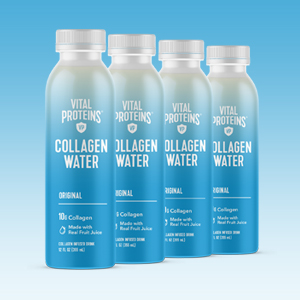
[00:06:51] Ray Latif: We've got some collagen water too. Now, you know, Vital Proteins, which is a leading brand in the collagen protein space. They just recently launched this product. It's a, like I said, a collagen water made with 10 grams of collagen and real fruit juice. They're passing a lot of this out at Expo West. Jon Landis, you know, in terms of category building, you know, how does this enhance what they're doing with collagen?
[00:07:17] Simple Mills: I mean, I think it's pretty interesting. It just makes it more accessible and available for people to consume collagen in a ready-to-drink format. They have a really big platform of products now and are rolling out a lot of this edible beauty stuff in through Target, I believe. And similarly, the company Pacifica has a vegan type of edible beauty, so it doesn't have collagen. it's
[00:07:54] Ray Latif: because they don't mention edible beauty. They don't mention anything about, I guess, the function of what collagen is. It sort of dances around it.
[00:08:01] Katlin Smith: I think they've got a lot of brand equity in collagen right now. And people, you know, if you know collagen, you know Vital Proteins. And one of the things that I noticed about this package is that collagen water is slightly bigger. not much bigger, but slightly bigger than the logo, which, you know, they have the word protein in the logo, collagen water's a new category that they're trying to create. So they're making the product the hero here now. It's, you know, it's not that much bigger, but I give them credit for trying here. But to Ray's point, I think, you know, it's neat that they feel confident in, you know, the ingredient that they're promoting that, you know, they don't need to be an educator anymore. And, you know, this is clearly a more convenient version of a collagen product than, you know, well, I say more convenient because we're beverage guys, right? Then a, you know, powder sort of mix form. So, you know, I think it makes sense. It's probably something that they couldn't have done, you know, three, four years ago, because they would need to explain that. But, you know, at this point, it seems like a pretty good time to do it. I think a lot of times when you use the collagen powder, you're putting it in a smoothie so you don't taste it. And I thought that it was going to be difficult to do with the water. And I think it's pretty tasty.
[00:09:08] Simple Mills: I haven't tried the original flavor. What's original collagen water flavor?
[00:09:12] Katlin Smith: It's just straight up collagen. No, I don't know. No, but I think that what Mike just said, though, is another, you know, just point in there that's worth noting. I mean, we've had some pretty gnarly collagen drinks probably in the past decade where people have been trying to put it in the liquid. And yeah, this is far from those. I mean, this is obviously an exercise use case or something along those lines. And it's really tasty and it's light and refreshing. I think they've done a good job with this product. My wife likes them. Nice.
[00:09:43] Ray Latif: Mike, you know, Overnight Oats, I remember you being a big fan of Overnight Oats. I make them still. You still make them? I sure do. On the table right now, we've got this brand called Rachel's Overnight Oats. This came into the office this week, described as an organic oat cereal made with organic chia, hemp, and flax, only four ingredients. How do you see Rachel's Overnight Oats as advancing the category or putting something out there that, well, isn't already on shelf?
[00:10:12] Katlin Smith: I mean, you have to look pretty deep at the package to find it, but you've got chia, hemp, and flax in this one. So it's got a little bit more than just your standard Overnight Oats. Although that said, many of us will add, I add chia seeds to my Overnight Oats.
[00:10:26] Ray Latif: So for you, like that's the big talking point. That's the thing that is missing from a lot of the overnight Natural Products?
[00:10:31] Katlin Smith: I think from what I've seen in things that I make, yes. I mean, you usually have to add your own flax or your own hemp or your own chia or whatever you want to put in your Overnight Oats. And this is going to be a lot easier to prepare than the stuff that I do because I've got to go to four different bags. I also like on the package that, you know, the word Rachel's probably pretty hard to own. I like how they've done the oats part on Overnight Oats is clear so you can see the oats and you can also see the flax and the chia in here too, which is pretty cool, I think.
[00:10:57] Ray Latif: Once again, I know you folks at home or in your office or in your car can't, thanks for shaking that, can't see these products. We have links to the episode page for each episode of Taste Radio where you can click on it and you can actually see what the product and brands look like. So go to Taste Radio to learn more. In the meantime, we've got, what the heck?
[00:11:19] Katlin Smith: We've got Spudsy here, which is, I think, a product you could see from space. Sweet potato puffs. Obviously a new category, building a category, trying to get people to pick it up based on the word puff, but then sweet potato puffs, so huge here. And the brand is much smaller. Those are pretty tasty. On the packaging here. These, I think, have been reformulated, and the new vegan cheese and cheddar.
[00:11:38] Ray Latif: Everything comes full circle. Pretty good. A Pitch Slam participant at Nosh Winter 2018. What else do we have on the table right now? Oh, these came into the office. Actually, you know what? Recipe 33, infused almonds. These were sent in by a fan of Taste Radio. So thank you so much for doing that. I wonder what infused almonds are. Talk about enhancing a current category in almonds. What are infused almonds, I wonder?
[00:12:04] Simple Mills: It's similar to what Pazut's is doing with the peanuts. I don't know exactly how they infuse them through pressure, I'm assuming, but the... It says a slow and craft technique in case you're wondering. Yeah, so something proprietary, but the real benefit of this is they're not coated, so it doesn't cover your hands in crap. Yeah, these were pretty good.
[00:12:25] Katlin Smith: They're cinnamon vanilla flavored. I mean, I'm not going to lie. I think if they were coated in crap, they might taste a little better, but they do. Let me see. They do taste like lightly, you know, like they have kind of the essence of cinnamon and vanilla flavors.
[00:12:40] Simple Mills: I like them, though, because they're really they're really kind of dry and you still taste almond. So, you know, it's a lot of the problems with chocolate covered almonds. Yeah, almonds.
[00:12:51] Katlin Smith: I dig the cinnamon flavor. This is not like a candy product, which yes, the sugar coated one would taste better, but for sure makes sense why you'd want this. For the second show in a row, John Craven has the chickpea cookies in front of him. Yeah, I mean, these things, they need to make these easier to open. We had to get a box cutter. I think we said that last time.
[00:13:08] Ray Latif: Well, yeah, I think those were, they're a very nascent product. Yes, I think those are, these are samples. That's not the end package. There were samples until John Craven got to see them.
[00:13:16] Katlin Smith: I made like a double stuff with like, anyway, you get those. Those are really delicious.
[00:13:21] Ray Latif: Also in front of John Craven is the latest and greatest from Ugly Drinks. FYI, those are Banzo Bites. Oh yeah, we didn't mention the name. You've got the pina colada variety. I haven't seen a pina colada flavored sparkling water ever. Talk about moving a category forward with an interesting flavor.
[00:13:39] Katlin Smith: Yeah, first of all, as a disclaimer, big fans of the Ugly Guys. This was literally the drink that was on my desk when I was running this meeting. Probably would not pick a pina colada flavor personally, but the grapefruit one, that was quite nice.
[00:13:53] Ray Latif: It is impressive how much grapefruit flavor they're able to put into that water without actually adding grapefruit juice.
[00:14:01] Katlin Smith: Yeah, for sure. I mean, this one, it's pretty good too. It's super coconutty. Yeah, it's super coconut. I like the coconut flavor, and I was wondering if maybe they just wanted to go with coconut, because pina colada might be confused for an alcoholic beverage, but that's like nitpicking. Wait, there's no alcohol in this?
[00:14:19] Simple Mills: Sorry. It's a virgin pina colada. I remember being 10 years old and ordering virgin pina coladas and thinking I was cool. That's a scary picture. Yeah.
[00:14:31] Ray Latif: You know what else is a scary picture? I keep thinking about you being a sandwich specialist or whatever the heck you was. Artist. A sandwich artist.
[00:14:38] Simple Mills: For four years? Yeah. I mean, I worked there for four years. I didn't make sandwiches the whole time. I think I had to work there about a year before they let me start making sandwiches.
[00:14:49] Katlin Smith: Thing is, he still has some of his sandwich art in his office. It's not smelling good anymore. That's like a New Jersey deli, right?
[00:14:54] Simple Mills: They take pride in their sandwiches.
[00:14:55] Ray Latif: They're not just gonna let some noob start making sandwiches.
[00:14:59] Katlin Smith: You're like around here, you know?
[00:15:00] Ray Latif: Your hair wasn't nearly as long, so you didn't have to wear a hairnet or anything, did you?
[00:15:03] Simple Mills: No, I didn't, no, no. That would have been kind of funny to see, though. No, but yeah, I learned how to make the sloppy joe there, so. The sloppy joe. Yeah. With coleslaw and Russian dressing and Swiss cheese. Which in Australia is a sweatshirt.
[00:15:15] Katlin Smith: Oh, okay. I know. It's strange. So for Australian listeners, Landis is talking about a sandwich.
[00:15:21] Ray Latif: All right, let's get to our interview with Katlin Smith. I just want to note before we get to our conversation with Caitlin, that we actually really do listen to your feedback, listeners at home, in our office, in your car. When you send us an email to askatasteready.com, we incorporate some of these ideas that you send us into the interviews. Mike Schneider, you can attest to that.
[00:15:41] Katlin Smith: I can. We had a few people write in and say that they would really like to know what it's like from day one for a founder and sort of what it's like emotionally. And I mean, the people who asked are definitely worth mentioning, but I couldn't, it would take a long time to list all the people that asked us for something similar. And in this interview with Katlin Smith, I really kind of pushed her to talk to us about what it was like in the early days and what sort of obstacles did she have to overcome to get where she is today.
[00:16:08] Ray Latif: And the answers are great. Just a bit of background on Simple Mills, a brand of natural baking mixes, crackers, and cookies that Katelyn launched in 2013. Over the past six years, Simple Mills has become one of the leading natural brands in the spaces in which it plays. Its products are distributed in over 13,000 conventional and natural grocery stores, including Whole Foods, Sprouts, Target, Kroger and Safeway. Caitlin was named to the Forbes 30 under 30 class of 2017, and based on what you'll hear in the following interview, it's easy to understand why. Caitlin spoke with Mike about the origins of Simple Mills, how she assessed the opportunity for a better-for-you baking mix brand, what her first year was like, and her definition of entrepreneurial commitment.
[00:16:51] Katlin Smith: This is Mike Schneider at Expo West, and I'm here with Katlin Smith, the founder and CEO of Simple Mills.
[00:16:56] David Eben: Thanks so much for having me.
[00:16:58] Katlin Smith: I'm so happy that you're here. Caitlin, how's the show been going so far?
[00:17:01] David Eben: Oh my goodness. It's been awesome. Every year it just gets better.
[00:17:04] Katlin Smith: Just better and better. And of course, you know, you feel well rested and highly energetic right now. And you can, you're not drinking honey and lemon or anything right now.
[00:17:12] David Eben: No, not at all. I'm at my a hundred percent.
[00:17:14] Katlin Smith: Aren't we all? Yeah. It's a pretty crazy show. I'm sure you're having a lot of productive conversations out there. Like, you know, a lot of us are, that's why we come to the show. Let's just, let's kick into something a little bit different than the sales pitch that you're probably giving over and over and over again at your booth. I read that you became intrigued with management consulting while you were a sophomore in college, like WTF, who does that? What does that even, what does that even mean? And why was that a jumpstart for your career in business?
[00:17:41] David Eben: Yeah, it's really funny. So I did an internship about halfway through college for a pharmaceutical company. And when I did, I realized that I was really intrigued with improving processes and making things better than they were. And that got me brainstorming about careers. I was like, what kind of careers exist where you can literally improve processes and make things better? And I came up with this idea. I was like, maybe there's something out there called consulting for the management. Turns out there's a whole career called management consulting.
[00:18:14] Katlin Smith: It's actually a thing. I started there too.
[00:18:16] David Eben: No way.
[00:18:16] Katlin Smith: Way. I worked for Ernst & Young.
[00:18:19] David Eben: Oh my goodness. Wow. It's a great place to start.
[00:18:22] Katlin Smith: So process improvement, you know, can you improve a process when you're new to a process when you haven't, you know, you haven't like seen the process a bajillion times? How did you approach that?
[00:18:33] David Eben: You know, I think that being naive to a problem is almost better because it helps you see it in a new light. Even as I started thinking about Simple Mills, I think me being naive to the food industry was actually a strength because then I started thinking about, is there a way for me to do this completely different. Whereas had I been in this industry, maybe I wouldn't have thought of the same things.
[00:18:58] Katlin Smith: So how do we get, yeah, how do we get from management consulting, process improvement, which, you know, as we both know, has a lot to do with being an entrepreneur. You have processes that you go through all the time and you're constantly looking for optimization in those processes, cost saving or quality measurements, you know, things like that. So how do you go from management consulting to Simple Mills, and maybe for the feeble-minded, for me on this side of the microphone, what is Simple Mills?
[00:19:26] David Eben: So Simple Mills, we are a company really looking to change the way America eats by making convenient, delicious, everyday favorites like baking mixes, crackers, cookies, out of things that we all want to be eating more of instead of things that we want to be eating less of. It really goes back to, I think you have to start with me in undergrad. I double majored in business and biology, and I didn't know exactly why. Found myself really interested in both, and kind of as we just discussed, really found myself in management consulting after graduating, and I never knew quite when that biology was going to kick in. But my favorite class in undergrad was actually immunology. And so it was fast forward a few years and I've been traveling tons, eating lots of processed food, and I'm not feeling my best. I'm not feeling great. And one of my friends suggests that it might be the food that I was eating that was impacting my body so much. And so out of an experiment, I cleaned up my diet, took out the processed food, switched it out for Whole Foods, simple ingredients. things that worked hard for my body, and things that, honestly, I wanted to be eating more of. And when I did, just everything changed. I was stunned that food could have that kind of effect on my body. But then I started doing all this research into it, of why food affects your body and your immune system, and it made complete sense.
[00:20:50] Katlin Smith: Someone who has that realization, though, don't you go into, you know, like, I don't know, energy bars or something, something like that, or maybe, I don't know, something with kale. You're in baking mixes. What was it about baking mixes? What was the white space that you saw there that said, I've got to make a better-for-you baking mix?
[00:21:08] David Eben: Yeah, I mean, I think when you look at baking mixes, crackers, cookies, these are all places in the grocery store where you're seeing tons of ingredients you can't pronounce, lots of carbs, lots of sugar. And these are all things that I didn't want to be eating. I wanted to be eating things that have more nutrient density, things like almonds, sunflower seeds, flax seeds. If I was gonna eat sugar, I wanted it to be something that was natural and lower glycemic, like coconut sugar.
[00:21:36] Katlin Smith: Okay, but you couldn't have just said, All right, this is what I want to eat your management consulting, there had to be some kind of analysis, there's a spreadsheet out there somewhere where you analyze the category, right? What was the category analysis like, before you decided to, you know, go into this in this category?
[00:21:50] David Eben: Yeah, I think it goes back to thinking about the best way to solve the problem. So the problem in my mind that I was looking at was the way that this country is eating and really wanting to change that. Because once I realized that food has this profound impact on our emotional and mental and physical health, I had to do something about it. I think our general solution is just to give someone a pill. when they have an issue. And I realized that food affects that. And so how do you change what this country is eating? So that was really the first stage of my analysis and went home one day and brainstormed probably 10 different ways that I could change what people are eating. Everything from going and getting my master's in public health to starting a natural food company. And so the analysis was more around the mission than it was the actual category itself. And then from there I narrowed to where are the places that have the most need. And I really saw the center of the grocery store as a primary.
[00:22:51] Katlin Smith: Was the first year for you, the first year of the company, getting started, was it easy for you to take the leap? And just tell us a little bit about what that was like.
[00:23:00] David Eben: Admittedly, it wasn't easy. I think some parts of it were easier than you would expect and some parts of it were harder than you would expect. I think that the things that were easiest actually was committing to the mission and to what we were doing. Every waking hour, I think, was spent thinking about this brand. I didn't have friends. I worked weekends, I would get to the office at 7am and I would leave at 10. I don't think I could think about anything else. And I think I was so committed to what we're doing.
[00:23:31] Katlin Smith: What does that mean to be committed? Talk to me a little bit about, you know, what it means to be committed as an entrepreneur and to go all in because that's what you did. And you were you were working this job you're working. another job is what I hear. And I want to hear about just the angst that you went through. Because right now, you're smiling, you're wearing yellow, you're all on brand, you know, you've got your booth, you've got these great products out there, but it didn't happen overnight.
[00:23:55] David Eben: No, it didn't. I think the first year of starting the company was insane. I mean, to your point, I was working another job where I was traveling four days a week. On the weekends, I'd come back to Atlanta. And I would either mix product or do demos. It was one of the two. On the weekends, I was mixing product. I would drive out to the suburbs. I had a super cheap commercial kitchen, hence it was very far away and also not in a great neighborhood. And I would mix product until 2, 3 in the morning. I couldn't afford a mixer, so I would put all of these flours into a food grade barrel and I'd roll it back and forth across the counter to mix them together. And then the weekends I was demoing. I mean, we're a baked product, right? So to do a demo, we would have to bake the product before the demo. And I say we, it was me. And so I'd bake for hours. And then I would go and stand in Whole Foods from, you know, 10am to 8 or 9pm demoing the product. And I would do this all weekend long, like I would do it all of Saturday, all of Sunday, and then all the time I could on Friday evening, to try and tell as many people about our brand as possible. But I mean, I was even reflecting on our first Expo, which was five years ago. So this is our sixth Expo. And I remember we did all kinds of crazy things. I mean, we spent an entire day baking before the show. And this was me, my mom, one of the first employees, and an intern. And we thought that water would be a great way to get our brand name out there by putting our logo on water bottles, like Simple Mills gluten-free. It's not, for those of you listening. And water's really heavy.
[00:25:43] Katlin Smith: Test and learn.
[00:25:44] David Eben: We brought thousands of water bottles into this show on this $20 caddy.
[00:25:52] Katlin Smith: So everyone thought you were a water company.
[00:25:54] David Eben: Everyone thought we were a water company. Yeah, and I remember I was carrying so many heavy suitcases that despite wearing tennis shoes, I had blisters.
[00:26:03] Carrington Farms: And sneakers.
[00:26:04] David Eben: Wow. And I remember getting to the top of one of the escalators and realizing our booth was at the exact other end. And just sighing.
[00:26:12] Katlin Smith: I've been there. I've been there. Oh my gosh. I've been there. And you're just like, oh.
[00:26:18] Carrington Farms: I just went all this way. Oh my God. Yes.
[00:26:23] Katlin Smith: Well, was there ever a time when you were using makeshift devices to grind your product that you just thought, I can't do this, I'm not doing this anymore? Or were you just always fully committed and you knew that there was something brighter around the corner?
[00:26:41] David Eben: I mean, I think there were definitely points where you just reach a low point and you're just like, man, that hurts. I mean, I think about like some of the, one of the ways we got into Whole Foods stores, which I don't think would work these days, but we went around to all the Whole Foods regions and we would basically bring them baked muffins and hope that they would give us a meeting. Nine times out of 10, it didn't work. But for the two times that it did, we got into the regions. She brought me brownies too. And so we went around the U.S. She brought me brownies. So we basically went around the U.S. and brought these baked muffins to every region. And I remember getting to one of the regions and I had just done basically the Northeast Corridor. I'd done the Boston office, the New York office. And then I was in the D.C. office and I'd taken these Chinatown buses. I was staying in $15 a night hostels. And I got to one of the hostels late at night. Everything was closed. I think it was hard to even get into the hostel. And I got in my room and there was one bunk left and it was underneath this gigantic water spot on the ceiling, right above it.
[00:27:46] Katlin Smith: Hopefully it was water.
[00:27:47] David Eben: Like a foot above my head. And I'm just like, oh, this is dark. I'm going home tomorrow. I mean, you just like, you reach the point of tears sometimes, but it's part of the process.
[00:27:58] Katlin Smith: Changing gears, you're a very effective communicator. Have you always been that way? Have you always been able to just hop up on stage and give a really great talk?
[00:28:06] David Eben: Absolutely not.
[00:28:08] Katlin Smith: How did you get where you are?
[00:28:09] David Eben: I think a lot of, a lot of hard work, a lot of trial and error. One of the stories I tell is one of the most embarrassing moments in my history was actually when I first got my job at Deloitte, I actually did a presentation in front of some of the partners and I literally stuttered through the entire presentation. I think people think that I'm exaggerating when I say this, but I said like, I, I, I, I think, think, think, think, think. And I remember one of the partners pulling me aside afterwards and saying, it's OK. I mean, it just gives you an idea of, with a lot of practice, you can make a lot of progress. And so just keeping at it and keeping at it, no matter how uncomfortable it feels.
[00:28:49] Katlin Smith: So you got more comfortable presenting in front of people. What about sort of crafting the perfect pitch? I mean, you're pitching retail. You've got to pitch in, you know, sometimes you have to pitch for investment. There's all sorts of pitches that you have to make, the press pitches to the industry. How do you kind of hone in on the perfect pitch?
[00:29:07] David Eben: I think that one of the most important things, and this is pretty simple, but making sure that you understand what is important to your audience. So whether it's a retailer or press or an investor, what are they looking for? So investors, they're trying to make sure that they're going to be able to make money off of your business, right? So what's going to mitigate their risk? what are the places that they see are most risky. If it's a retailer, they want to know that they're going to make a larger number of dollars per square foot than whatever else they would put on their shelf. And so usually once you understand what they're looking for, you can generally simplify and give them the answer that they need.
[00:29:50] Katlin Smith: We're just going to talk all about your rise from management consultant to CEO. Are you a natural leader or did you learn on the job and how do you learn how to become a leader if you're not a natural leader?
[00:30:00] David Eben: In a word, no. No, I mean, I don't think that leadership is one of those things that comes naturally to many people. I think when I first started the company, my belief was that people are either naturally born good leaders or they're not. And you can't really improve that very much.
[00:30:23] Katlin Smith: Are you a naturally born good leader?
[00:30:25] David Eben: I'm not, no.
[00:30:26] Katlin Smith: Okay, so what did you have to do? How do you know that, first of all?
[00:30:33] David Eben: I think that you start to get some of the feedback from your team.
[00:30:37] Katlin Smith: And you were open to listening.
[00:30:38] David Eben: Yeah, I think that's the critical part. In order to be a good leader, you have to be willing to change.
[00:30:44] Katlin Smith: What's the best piece of feedback that you got from your team?
[00:30:48] David Eben: I remember this point. It was shortly after our leadership team joined a few years ago. So, we hired an awesome leadership team. People who have, you know, 10, 15 years of experience in the industry. They've been super helpful to our growth. But I wanted to help them with all kinds of things because I'd been building the business from day one, right? And it turns out people don't like it when you're in their shorts.
[00:31:18] Katlin Smith: So you got some pretty pointed feedback.
[00:31:20] Carrington Farms: Yes.
[00:31:22] Katlin Smith: Let's rewind again. Your first hire, was it the right one and how did you know you could actually hire somebody and sustain the business?
[00:31:33] David Eben: Like many things, hiring is something that you learn on the job. It's not something that you're great at from the first time that you do it. And so you have to continue to work at it. We started by hiring more junior team members. and then work our way up to having more, more senior leaders on our team. And I think that that enabled me to kind of get my feet wet and start to understand what types of people we need in what roles, because that's not something that's obvious.
[00:32:04] Katlin Smith: You started the company, you've developed a mission for the company. Do you see yourself as the primary ambassador and face of the brand?
[00:32:13] David Eben: Absolutely. It's a really important role of the founder to champion the mission and the purpose.
[00:32:19] Katlin Smith: Yeah, we saw that a lot in tech. I'd always think that when I was, you know, back when I was a tech pundit, I always thought that the companies where the founder really understood the use occasion and was the primary user of whatever app they were making gave them a better chance.
[00:32:36] David Eben: I think that it's really important that the founder has a vision for the company. That said, I think that more and more as the company grows, you want other people to champion the execution, the idea of what that actually looks like. And so I can say our job is to change the way that this country eats. And our team can say, here's a great way for us to do that.
[00:32:59] Katlin Smith: Do you have to live the lifestyle of the brand in order to promote it?
[00:33:02] David Eben: That's a tough question. I think that in some cases, the founder doesn't and the company can be perfectly successful. The stance that we've taken is that we want our consumers in our four walls, myself included, because it gives us really terrific insight for what we need to be working on, what the problem areas are. And I think that it leads us to much more creative and on-point solutions.
[00:33:27] Katlin Smith: Katlin Smith's been really great to have you on Taste Radio. Thanks a lot for sharing and thanks for the transparency.
[00:33:32] David Eben: Thanks for having me.
[00:33:35] Ray Latif: Like Simple Mills, Carrington Farms is a brand rooted in center store aisles. A leading marketer of organic seeds and cooking ingredients, Carrington Farms actually started out as a tea company. In the following interview, founder and CEO David Eben discussed the origins of the brand and how it has evolved and grown over the years. Take note of David's advice on working with retail buyers and why it has and continues to be a key part of the company's business and innovation strategies. Hey, folks, it's Ray with Taste Radio, and I'm at Natural Products Expo West 2019, and sitting in front of me right now is David Eben, the founder and CEO of Carrington Farms. David, thank you so much for being with me. Oh, thank you. I appreciate it, Ray. So, for folks who are not familiar with Carrington Farms, what do you guys do?
[00:34:20] Whole Foods: We are obviously, in this world, since we're at the Expo West're an organic and natural food company. We have four divisions, a tea division, which was really our roots, Then from there, we have a grains and seed division. Then we have an oil division. And we just acquired a company back in March called Tara's Way. And now we have protein powders. Very cool.
[00:34:47] Ray Latif: And you started the company in 1999? In 1999. Congratulations. 20 years in business.
[00:34:52] Whole Foods: 20 years. As of this July, it'll be 20 years. Wow. I said that a lot also. Wow. By the way, I'm only 25. No.
[00:35:01] Ray Latif: You don't look a day over 24, David. 99 when you started the company focused on tea. I'd read that you've never had a cup of coffee in your life. Is that still true? That is still true. Wow. Even at a show like this, you need coffee, no?
[00:35:11] Whole Foods: I have never, ever had a cup of coffee in my life, and it was not intentional. It was just growing up, my parents had it every once in a while, never had a desire for it. Even in college, people say, why didn't you have a cup of coffee in college? And I said, just, I don't know, just never had a cup of coffee. What made you interested in getting into the tea business? So my partner and I had a food distribution business before 1999. My partner, Brad, and a gentleman walks into our office. First of all, back in 97, 98, we saw the writing on the wall that these distributors were either closing or being bought up, and we were only building up someone else's brand at the end of the day. So we said, all right, we got to find something that we own that's our brand. Long story short, a gentleman walks into our office, and he was a tea machinist, and he bought and sold tea machines. What is a tea machine? That makes teas. They make tea bags. Oh, they made tea bags. The name of the brand was called Barrington Tea. In order to keep it running, he created a Barrington Tea because of the street where the factory was. So we looked at it and we said, hmm, let's see what we can do. We changed the B to a C because there was a Barrington Coffee up in New England. Still exists. It still exists. It's still out there. Okay. And we didn't want to have a conflict. So, long story short, we go into, we take the Carrington Farms, and we go into our first store. The guy says, oh, and this is two weeks in, says, oh, I've heard of you. And we said, oh, I'll buy it, no problem. It was actually ShopRite. What happened was, because, if you remember, the Carringtons that were on TV from Dynasty, so Carrington sounded, British, and the Dynasty was on TV, so it all meshed. So next thing we know, we said, let's just get rid of our distribution business and stick with Carrington Farms. And so for the first couple of years, we did Carrington Farms. And so it sounds like your initial consumers were Dynasty fans, or was that a point of preference? I don't know. I actually don't know. But, you know, so the first couple of years was just tea. And some of what we did was private label. And one of our private label accounts walked into our meeting and says, hey, put a bag on the table and said, can you do this? And typical salesman we are, we said, sure, no problem, not knowing what it was. And he put actually a bag of flax on the table. How many years was this into the business? This was about four years into the business. My partner Brad and I walked out of the meeting and I said to him, do you know what flax is? He said, no. Do you know what flax is? No, but we're going to figure out how to do it.
[00:38:09] Ray Latif: And you did. And we did. And now you not only have flax, you have a broad range of grains and seeds. Grains, seeds, oils, all sort of natural focused, as you mentioned, organic focused. When you got into flax, when did you realize the opportunity to expand into other categories?
[00:38:27] Whole Foods: So that's what I call a blue ocean strategy. I don't know if you're familiar with a blue ocean strategy. It's taking a category and seeing how you can change that category. So Flax wasn't in the mainstream grocery stores yet, but we had, because of our distribution business, we knew a lot of the retailers. And so we said, all right, let's look at the category. How can we get this in there and how can we expand on it? How can we create? a functional grain and start going into the flower category more and more and build on that. We've been doing that for years and try to be innovative. So back then also, the retailer looked at the organic and natural space in a different area. But our goal was to take an organic and Natural Products and put it in the mainstream when everybody else went to the organic and natural set. And it was tough the first couple of years.
[00:39:23] Ray Latif: And what you're talking about is sort of a store within a store. A lot of times you go to a conventional grocery store and they have a Natural Products section. Correct. And I wonder how many people actually shop there. But your goal was to actually be in the aisles with the conventional products.
[00:39:35] Whole Foods: Absolutely correct. It was very difficult and it's very difficult to convince a buyer. But the more that you can make it easier for the buyer, the more likely that buyer will buy from you. There's more of a consolidation happening right now between retailers. And so there's less and less buyers out there. And if there's less and less buyers out there, that relationship becomes more and more important. And whatever you can do for that buyer to make their job easier is important.
[00:40:05] Ray Latif: And how do you build upon that relationship? I mean, what are some of the keys to enhancing that relationship? Is it a Christmas card?
[00:40:13] Whole Foods: No, it's all about making the buyer's job easier. Doing the work for them. They got thousands of things to do. And if you can say, I can supply on time and 100%. I mean, that's something we work on all the time. I can not just give you my product, but I can do other things for you. And if you have a request for a product, we can supply it. We're the go-to person for New Kids. We're the go-to person when they're in a jam. And we had it recently, one of the big buyers said, a company closed their doors. I need this product. We didn't have the product in our line. We got on the phone, we said, okay, we'll figure it out. And by the way, can you get it to me in eight weeks? Again, our team is awesome. We can do it. That become, then we become more and more important to that buyer. And the buyer might go to some other place, and when they're in a jam, and they need a place to go to, we're there for them. And that's what we build on.
[00:41:21] Ray Latif: Now, when you're considering line extensions, brand extensions, what did product development look like? How does it work for Carrington Farms?
[00:41:27] Whole Foods: So that comes down to the relationship with up and down. What I mean by that is the relationship with the retailer that says, look, can you get me this? And then at the reverse side is our suppliers say, hey, I have this. Can you sell this? And we would test the waters going up and down. And we found a lot of product development that way, but it only works so far. What I mean by that is there's the life cycle of a product because if it eventually becomes a commodity, then there's no bottom to the market. So we have shifted. a lot of our thinking, and going back to the blue ocean concept, is how can we change a market? How can we go in and be the first to market, be innovative, and then people will follow us? And we've done that with a number of liquid coconut oil. We're now doing that with croutons. Just to talk about croutons for a second, we looked at the crouton market, and nobody's changed the crouton market.
[00:42:33] Ray Latif: That was a big leap, by the way, from coconut oil to croutons.
[00:42:36] Whole Foods: It was. It was. Well, I'll tell you how the croutons happened. It was a mistake because we were selling Costco a Krispy Puff quinoa, and the people that bought it absolutely loved it. We've been out of Costco for two and a half years. People still buy it from our website. It's an amazing product, but we couldn't sell it. Nobody understood what a Krispy Puff quinoa was. It was like a healthier Rice Krispie. So we had that, and we literally had a truckload of Krispie Puff quinoa. We said, what do we do with it? And we looked at the crouton. A salesman and I were walking down an aisle one day, and he said, this market, this crouton market, no one has done anything. No one's innovative. No one's done a thing different about it. And so that's when the lightbulb went on and says, I got an idea. We're stuck with this product, this crispy puff quinoa. Why don't we make them in little squares and create a crouton? And then a couple of members of our team They said, why don't we call it Crunon? And Crunon was born.
[00:43:46] Ray Latif: You know, what do you have to do to stay relevant, to stay top of mind with consumers, existing consumers, and then new ones as well?
[00:43:53] Whole Foods: In our case, it's how do we get more shelf space? How do we, when you walk into that section in center store, how do you catch that consumer's eye? How do you, get it off the shelf. And what innovation are you bringing to the category? We are constantly thinking of new items. Sometimes we have an innovation list of like 30 items, and everybody said, hold back, it's too much, too many new items. But in order to be relevant, I think you have to constantly get the consumer excited about your brand with new stuff. But new stuff that they understand, not new stuff that's crazy out there.
[00:44:34] Ray Latif: This has been great and I really appreciate you taking the time. Good luck with everything going forward and here's to the next 20 years.
[00:44:40] Whole Foods: Yeah, absolutely. But there's one thing I would love to talk about. Part of our culture is we have something called Carrington Farms. Carrington Farms is about giving back. For about 15 years, we've been giving back but not telling anybody. We donate locally, we give turkeys, but our marketing person said, you got to tell people what you're doing. And it's a fine line to tell people, you know, promoting what you're doing to help other people versus, I'm not sure if doing it for the good or for promotion. So, long story short, we, for the past three years, about three years, we've been feeding kids lunch at a school down the street from our factory in the Philippines. 350 kids every day. We are expanding that program and this is actually exciting news for us. We think we're going to be in the next couple of months to about 2,500 kids every day.
[00:45:41] Ray Latif: Wow. That's amazing.
[00:45:42] Whole Foods: Yeah.
[00:45:43] Ray Latif: That's really commendable and I feel like it's something you should promote because it might encourage other folks and other companies to follow your lead.
[00:45:53] Whole Foods: Exactly. I didn't think of it that way, but it's natural for us, natural for our culture. to figure ways to give back. And so we're going to start doing stuff more and more here, as well as through our suppliers, as well as any way we can. So our goal actually is to feed 10,000 kids. Our big, hairy audacious goal is to feed 10,000 kids every day for lunch at school. That's an amazing goal. I hope you reach it. I hope we do too. Fantastic.
[00:46:22] Ray Latif: David, thank you so much again for your time. Really appreciate it. And hope to see you again soon. Thank you very much. I appreciate it, Ray. Right on. That brings us to the end of episode 28 of Taste Radio Insider. Thank you so much for listening, and thanks for our guests, Katlin Smith and David Eben. Please subscribe to Taste Radio Insider on iTunes, Spotify, Stitcher, SoundCloud, and Google Play. As always, for questions, comments, ideas for future podcasts, please send us an email to askatasteradio.com. On behalf of the entire Taste Radio team, thank you for listening, and we'll talk to you next time.
[00:47:00] SPEAKER_??: you