[00:00:05] Ray Latif: Every week, thousands of people tune into Taste Radio and Taste Radio Insider for insights and advice that will help them succeed.
[00:00:12] Chris Hollod: Our audience represents decision-makers at emerging and established food and beverage companies.
[00:00:17] Ray Latif: Advertising on the podcast puts your company's name in the ears of veteran executives, industry gatekeepers, and tomorrow's leaders.
[00:00:24] Chris Hollod: This is an opportunity to speak with the best in the business. Sponsoring Taste Radio will drive awareness of your company, open doors, and generate high-quality, business-oriented conversations. Email us at sales at bevna.com to learn more. And now, Taste Radio.
[00:00:48] Ray Latif: Hey everyone, thanks for listening to Taste Radio Insider. I'm Ray Latif and you're listening to episode 29 of the show. I'm with my BevNET colleagues, John Craven, Mike Schneider and Jon Landis. We're here at BevNET headquarters. We're recording from inside the Taste Radio studio here in Watertown, Mass. In this episode, we feature an interview with Chris Hollod. a Los Angeles venture capitalist who's focused on early-stage investments in high-growth brands at the intersection of culture and wellness. His fund includes stakes in Dirty Lemon, Recess, and Matcha Bar, to name a few. Just a reminder to our listeners, if you like what you hear on Taste Radio Insider, please share the podcast with friends and colleagues. And of course, we'd love it if you could rate us on iTunes.
[00:01:28] Dirty Lemon: Two out of four of us have been to Chris Hollod's house. That's true. I'd like to go back to his house. Where in Los Angeles does he live? Where was that? Like West Hollywood sort of area?
[00:01:36] Chris Hollod: Yeah, West Hollywood area. The guy has, I mean, he has a fridge that would make, his fridge would give you fridge-heavy, Landis. I mean, you have one of the best fridges in the place. You know, ocular scan, all that kind of stuff, secret beverages, et cetera, et cetera. But Chris has you beat.
[00:01:51] Know Foods: He's also- Yeah, well, mine are all given to me.
[00:01:55] Chris Hollod: I didn't see Chris paying for a lot of stuff either.
[00:02:13] Dirty Lemon: Plus for a guy that lives in LA, it's pretty neat that he doesn't leave his house. It's like basically everyone comes to him, which I guess that's a good way to eliminate the traffic woes, which Mike and I certainly suffered through those trying to actually get to his house.
[00:02:30] Chris Hollod: We did suffer through those, but we made it there, and it's kind of like a little oasis. It's pretty awesome. His house is cool. You walk in. He doesn't have a dining room table. He has a ping pong table, which he uses for a dining room table.
[00:02:41] Ray Latif: He also has a wiki page, Wikipedia page. He does, yeah. Yes, I was surprised to see that. Chris is chill.
[00:02:46] Know Foods: What do you consider the difference between an angel investor and an early stage venture capitalist? Ooh, it's a big difference.
[00:02:53] Chris Hollod: There's probably a technical difference between the two. more money. The difference is generally that the time that they get involved and how many people get involved. So angel investors, you know, you have angel investors who are friends and family really close. They don't always know who else is involved. And then early stage investors are like, all right, who else is in this round, you know, and what's going to what's going to happen in this round.
[00:03:16] Dirty Lemon: Also, venture venture capital usually has a fund of some sort. So, you know, in some cases, VC is essentially Managing Partner fund, angel investor, writing checks. I don't know, in this case, I guess we're sort of splitting hairs on what Chris is, although he's making... Well, Chris has a fund. He has a fund, but is... He's putting the fun in fund, guys.
[00:03:36] Know Foods: It's interesting because it's almost as if early stage venture capital refers more to venture capital than early stage brands. Because when we say early stage venture capital, We're probably talking about like, oh, he's investing earlier than typical venture capital does. But that's still not what many listeners who consider an early stage brand that's so much further out than that.
[00:03:58] Chris Hollod: Yeah, no, that's that's pretty accurate. I mean, early, early, early, early stage. And like you're talking about early stage brand, you're talking about friends and family and an early stage is probably a series a or pre a. So then you're like, you know, you're getting in with the angels. What do you got there, Kareem?
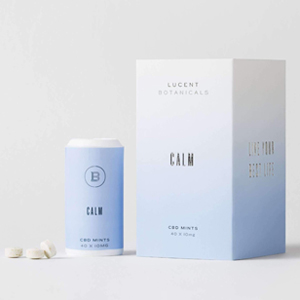
[00:04:14] Dirty Lemon: What do you got? Well, Landis handed me this packet of, what is the brand called? Seven, I guess? What you didn't hear was Landis say, suck on this oil, guy. Yeah, that's true. Suck on this hemp oil. He did say that. That was a little weird. but it's a water-soluble, full-spectrum hemp oil with a mocha flavor. I literally opened this packet on the table here, and the aroma, I'll call it aroma, I guess, of mocha hits your nose pretty quickly. I am definitely not gonna slam that down. How does that compare to the Charlotte's Web chocolate mint that seemed unlimited at Expo West? I still have that, and I like that stuff. I also brought these, what is the brand called, Lucent Botanicals. These are some CBD mints. They come in Pain Relief Calm, and I know there's another version that I didn't get, but this is from Chris Cooper, who has Black Medicine Coffee. Yeah, sure dude. Yeah, he's gone into the CBD mint game, if anyone would care to have a I would like a CBD mint. You need a pain relief, Mike. You look like you're...
[00:05:21] Chris Hollod: I like the calm.
[00:05:22] Know Foods: Going back to this hemp oil packet, it's Pure7, P-U-R-7. And there's a lot more than hemp oil in here. There's multiple sweeteners, monk fruit, xylitol, stevia, natural flavors. There's a lot of junk in here. I'm assuming that this is supposed to be like put into a glass of water and supposed to make your water taste like hemp oil, wild berry.
[00:05:49] Dirty Lemon: We could put it in these Ice Cold Infinite Session non-alcoholic beers I got here. Anyone?
[00:05:54] Chris Hollod: Anyone? I would like to taste this Infinite Session IPA from Chris Hannaway, right?
[00:06:00] Dirty Lemon: Chris Hannaway's company? Yeah, just sent these to us. Nice guy. Have not tried the cans before. I'll give you a little Crisp AF craft lager. How about that?
[00:06:11] Know Foods: I really love the look of this can. I mean, I think that the whole point of drinking a non-alcoholic beer is to maybe look like you're drinking a real beer and everything about this screams real beer. You have to really kind of look a little closely to really know that it's a non-alcoholic beer.
[00:06:28] Chris Hollod: The non-alcoholic beer space has come a pretty long ways from my beer blogging belching monkey days when you get... You were sucking on O'Doul's? Yeah, O'Doul's was pretty much it. And nothing in the non-alcoholic... You could always tell it was non-alcoholic. Now it's hard to tell. I would put this Infinite Session IPA up against an ALK IPA or at least a low ABV ALK IPA in a blind test and have people see if they could tell the difference, because I think a lot of people couldn't tell the difference. You put this up against, let's say... Founders All Day IPA. You'd have a hard time telling which one's the alcohol. It's good.
[00:07:06] Know Foods: It's got a very good mouthfeel and body to it. And it's still got a lot of oil from the hops that you can taste. It's very fresh.
[00:07:13] Chris Hollod: English IPA, nice and bitter. Good stuff. Yum. Fresh AF. I love the name of the pale ale. Fresh AF. I was following some founders on Instagram and one was talking about the story of their company and taking questions from people. It's really cool stuff. Follow Spudsy. There's a conversation. Somebody asked Ashley Rogers, you must have done really well on Buff Bake. Why are you taking investment? And you're talking about Ashley Rogers, who's the founder of Spudsy. The founder of Spudsy, right. She's in Columbus, Ohio right now, going to her co-packer and distributor and basically talking about that journey. And she was talking about an investment in her latest company. Someone had said, hey, you left Buff Bake, you must have done really well at Buff Bake, why are you taking investment in this company? And there's a lot of stuff that goes into that question and I realize it's not always apparent. Just because you exited a company doesn't mean that you necessarily... and even if the number's big, it doesn't necessarily mean that you personally... you know, did well. It just depends on how much of the company do you own and how much investments already in the company.
[00:08:22] Know Foods: And was this person insinuating that she should be able to fund her new business because she exited successfully and now is like wealthy? That's kind of what it sounds like. That's the insinuation there. I mean, that's a kind of ill-informed, like you're saying, Mike. I think that Even if you are personally wealthy, there's nothing wrong with raising capital from outside investors. Let's be real. You're running a business. Businesses are people. You're selling products that are made by people to other people. It's all about relationships. Investors are a huge part of relationships. And there's really nothing wrong with, no matter your personal wealth, going out and raising capital. So it's just a misguided question.
[00:09:08] Chris Hollod: I think that's what she, her point was, you know, she's trying to be really transparent about this and show people what the journey is like. And, you know, you could do well on a previous company, but there's a lot of factors that go into how you build your next company. And one reason to raise capital is for, you know, R and D, you know, sometimes the profit isn't enough to do everything that you want to do in the company.
[00:09:28] Dirty Lemon: Well, there's also just basic, you know, risk tolerance, which is, you know, if you were to sell your company and pocket a million dollars, would you go out and pay cash for your house and then just have no money? Of course not. You'd get a mortgage, you know. So I think in any case, like, yeah, risk tolerance is part of it. And then there's just the other reality that I think there's very few people out there that, you know, have the liquidity to fund and permanently fund a manufacturing-oriented business. And again, I mean, why would you do that when you don't need to? There's nothing wrong with, you know, having that risk. And I suppose the reward of success shared with others. I mean, Jon Landis' point, you know, having other people will certainly, assuming you choose the right people, help with the chances of success anyway.
[00:10:18] Ray Latif: Can we switch gears real quick? Yeah, let's do it. I want to talk about my love and hate relationship with donuts. Do it. Can I talk about that? Are you guys cool with that?
[00:10:27] Know Foods: Are our listeners cool with that?
[00:10:28] Ray Latif: Okay, cool. So over the past couple of weeks, we had donut deliveries here in the office. Mike brought some Union Square Donuts, which is based in Somerville, a town not too far from Watertown. And then this morning we had some Cane Donuts. Cane's Donuts.
[00:10:41] Chris Hollod: Yeah, those are famous.
[00:10:42] Ray Latif: Famous brand in Boston. They also have a Boston outlet downtown as well.
[00:10:47] Dirty Lemon: Went there maybe last weekend.
[00:10:50] Ray Latif: You know, I love donuts, but I hate donuts because well, they're just not healthy for you, right?
[00:10:55] Chris Hollod: I got the tip off that you loved Union Square Donuts, which was that helped me make the decision.
[00:11:00] Ray Latif: Well done. Thank you very much.
[00:11:01] Chris Hollod: Everything in moderation.
[00:11:02] Ray Latif: I mean, they're plant based.
[00:11:03] SPEAKER_??: Yeah.
[00:11:03] Ray Latif: Some don't know, I don't know if the donuts are plant-based. There's milk and eggs and stuff like that that go into donuts as well, right? The one that I had had some fruit filling. I would say this, you know, if someone can come up with a donut that is plant-based, that tastes as good as the ones I had this morning from Cane's, the one, I don't want to sound like that guy who's eating more than one, okay, I had more than one.
[00:11:27] Chris Hollod: We cut them up, I mean, we have knives in the box.
[00:11:30] Dirty Lemon: I mean, my problem with donuts is that this whole sort of hipster donut trend has resulted in a dozen donuts costing like 50, 60 bucks, right? Thanks, Voodoo Doughnut. And, you know, like the old days, if you get a nice box, it's 10 bucks.
[00:11:48] Know Foods: That's your own problem, because you ain't going to Dunkin'. Well, I can get my dozen there. Duncan's not even a doughnuts company. Did you even mention Duncan in this conversation?
[00:11:56] Dirty Lemon: Have you been in a Dunkin' Donuts lately? No, but I'm just saying, if you want a cheap dozen doughnuts, they still exist. I mean, they have doughnuts with like a crumpled up like Snickers bar on top. It's nuts.
[00:12:06] Know Foods: That's awesome. And it's probably super cheap, not 50 bucks a dozen. Probably. They don't have a lot of selection there anymore. I'm gonna bring in Duncan next week. Yeah? Yeah. Munchkins? Because everyone's upset about how expensive doughnuts are.
[00:12:18] Dirty Lemon: Well, if you're buying, go to Union Square.
[00:12:21] Know Foods: No, I liked Cane's better, personally. Agreed. I thought the Union Square were a little too dense, but they had some really great flavors.
[00:12:28] Chris Hollod: You know why I got Union Square, aside from the fact that Ray likes them? DoorDash. I had DoorDash, the donuts.
[00:12:34] Ray Latif: Nice.
[00:12:34] Chris Hollod: Yeah, it was convenience.
[00:12:35] Ray Latif: It was park convenience. Did you guys get to go to Randy's Donuts when you're out in LA? It's in Englewood.
[00:12:40] Dirty Lemon: Oh, is that the one with the big donut? Yes. You know, I've been by that like a million times and I guess you can see it from like when you're landing at LAX, but never, never stopped.
[00:12:48] Chris Hollod: I always think of Lard Lad, you know, from the Simpsons, the big Lard Lad guy with the donut.
[00:12:52] Ray Latif: Huh. That's up there with Roscoe's, never been there either. Oh my goodness, you gotta get to Roscoe's. Someday, someday. I have a feeling Jon Landis would like Roscoe's. I've been to Roscoe's. You've been to Roscoe's? Yeah. Yeah? You like the chicken or the waffles more? I like the chicken. The chicken's pretty phenomenal. I'm not a breakfast guy. You're not a breakfast guy?
[00:13:09] Know Foods: No.
[00:13:10] Ray Latif: You don't have to be a breakfast guy to go to Roscoe's.
[00:13:11] Know Foods: Yeah.
[00:13:12] Ray Latif: Yeah. Well, I would say this, the next time you are in Inglewood, next time I'm in Inglewood, I'm definitely gonna go to Randy's. How far is that from West Hollywood, do you think?
[00:13:20] Dirty Lemon: A mileage, traffic, and a helicopter. I mean, it seems like it could vary a lot.
[00:13:25] Ray Latif: I kind of want to go to Chris Hollod's house now. Take the Nosh chopper. Take the Nosh chopper. Seamless Randy's Donuts. Well, I'm thinking about this. This is what I'm thinking about. Yeah. We'll go to Randy's Donuts. We'll bring him over to Chris Hollod's house and we'll have beverages and donuts and we'll go with him. We're inviting ourselves over, Chris.
[00:13:40] Dirty Lemon: We'll put his address in the show notes. Definitely will not do that.
[00:13:43] Know Foods: I'm going to spike some of those drinks with this hemp oil.
[00:13:48] Ray Latif: All right, let's get to our interview with Chris Hollod, who, as I mentioned, is a venture capitalist focused on early stage investments in the food and beverage space. In an interview with John Craven and Mike Schneider, Chris spoke about his background and investment philosophy, why digital strategy is at the top of the list when evaluating brands, and why he believes that his job requires him not only to follow and facilitate innovation, but to predict it.
[00:14:14] Dirty Lemon: Hey, it's Jon here and I am with Mike and we are in Los Angeles at the home of Chris Hollod. Chris, thanks for joining us. Thanks for having me. So you are, I guess I don't want to call you a new investor on the scene because you've been, you know, you have investments in a variety of different companies, but you're someone who has a background in other industries like tech. How did you get here?
[00:14:38] Managing Partner: Sure, that's a great question. So, from Atlanta, Georgia, originally, so very far away from where we are now, and went to Vanderbilt undergrad, didn't want to move up to New York, was still oblivious to California at the time, so took a job in investment banking in Charlotte. Was there for four years and in hindsight became a bit complacent. Money was good, the promotions were good, I love the people, I love the city. And it took the market crashing where my team and I got laid off to really transform my lifestyle and my trajectory from that point. So getting laid off 08, 09, the market had crashed, it would have been easy to move back to Atlanta. Instead, on a whim, booked a one-way flight out to Los Angeles and slept on a friend's couch. I had one friend in LA, one friend in San Diego, and went back and forth until I found a job, lucky enough, through LinkedIn, through a previous contact at Vanderbilt that I went to school with. And at that point, it was the end of 2009, took a job with Ron Burkle, who's a multi-billionaire investor here in Los Angeles at his family office called the Ukyper Companies. I was 26 at the time, so I was the youngest new employee. And a lot of the older employees were more or less pigeonholed or verticalized within their respective verticals focused on private equity deals. Whereas I was kind of hungry, wanted to meet people and learn about innovation in Southern California in particular. So I started taking up all the small meetings and small deals that were falling through the cracks. over a year kind of built up a small venture portfolio. And that coincided with Ashton Kutcher. If you remember, he was the first one to have a million Twitter followers. And at the time, he propelled Twitter into the mainstream without necessarily monetizing that situation. And my boss called him and said, let's create this nuanced celebrity-driven investment paradigm, focus on venture capital, predominantly social media, because there was a confluence of social, mobile, and e-commerce, 2009, 2010. And I was chosen to manage that. I'm sorry. Yeah, it's not a beverage.
[00:16:27] Dirty Lemon: What were some of the companies that you guys were in?
[00:16:29] Managing Partner: Sure. So we hit the ground running. 2010 was kind of the heyday. 11 and 12. All social mobile e-commerce, as I mentioned. Big companies like Uber, Airbnb, Spotify, Houzz. We liked direct-to-consumer brands like Casper and Warby Parker. So we got an early stage there. So no winners. Yeah, yeah. No, it was pretty bad. Pretty bad portfolio. So again, it was right place at the right time. And it took me getting laid off a seemingly negative event to propel me into my dream job. And then in doing that, you know, consumer tech at that time, it was the app stores relatively new, the iPhone was relatively new. So everyone and their brother had a new dating app, social media app, you know, inspirational app, you name it e commerce. And I guess it became a bit saturated and homogenized to some degree, and it was very competitive. If you remember, various venture capitalists and firms were bidding up valuations. So I, in my free time, started building my own CPG portfolio. Anything health and wellness-oriented, food and beverage, and started doing that kind of as a side hustle, as a hobby, in tandem with the consumer tech investments that we were doing. How would you compare food and beverage now to tech then? That's a great question. I've been thinking a lot about that. And the best analogy that I've come up with is 2009, 2010, iPhone was new, App Store was new. So you're going in the App Store, you're picking out cool apps, and you're curating your phone. Now that's saturated. The majority of people are not downloading a new app on a monthly basis. In fact, a lot are deleting them. Eight out of the top 10 apps are either owned by Google or Facebook, and 80% of the activity on your phone is confined to your top three. Whereas your kitchen, your refrigerator, and your pantry, I think, is still uncharted territory, which has been dominated too long by these behemoths, these outdated behemoths peddling unhealthy products. I won't name names, but I think of the phone as the pantry and the kitchen, and I'm trying to curate my fridge and my pantry with health and wellness products.
[00:18:27] Dirty Lemon: So when you were building out this side hustle CPG portfolio, what was like your foot in the door? Like what were some of the brands you were with?
[00:18:35] Managing Partner: Some of the first companies I invested in, one was Dirty Lemon, obviously, which was a winner. And Zach is just a legend and a visionary in the space. And before a lot of people were pitching me these one-off single skewed CPG products, and they're talking to me about a product. where Zach was the first one who pitched a vision, a brand. The next guy who I've seen, my most recent investment is a company called Recess out of New York, the sparkling CBD beverage with adaptogens. And Ben was the same way. First five minutes on the call, he would not let me focus on ingredients. He would not let me pigeonhole him, focus on any specificity. It was like, Chris, we are creating a consumer facing brand, a lifestyle oriented brand, which was very reminiscent to what Zach was doing at Dirty Lemon. And then in between, I've backed various companies, matcha bar being one of them, Know Foods. I've also invested, fascinated by the alternative alcohol space, which is realizing double digit growth around the twisted teas and spike seltzers and hard ciders. I backed a company called Juneshine. which is hard kombucha, and then really into this anti-coffee movement, which I could talk about all day long. I think growing up, you know, my mom and my dad, you see everyone, your parents in the kitchen with a can of Folgers and everyone's making coffee. And then the second wave was Starbucks. The third wave was, you know, these small batch coffee producers, one of which I invested in and had a nice exit in Blue Bottle Coffee. And I think this fourth wave is this functionalized beverage around coffee, whether it's an anti-coffee, like my most recent investment in Mudwater, or my friend Taro's working on Four Sigmatic, which is just blowing up, and then other matcha companies like Tenzo Tea out of LA. So really like that movement away from coffee.
[00:20:24] Dirty Lemon: So you're clearly, I guess, in a lot of stuff right now, too. Yeah, that was a lot. Sorry. No, it's all right. It's great. It also seems like you are diversified among kind of bleeding edge, you know, categories out there. You also talked about recess and sort of, you know, being a brand and a lifestyle. You know, how do you kind of piece all these things together? You know, there are a million different categories out there. There are things that of course range from completely esoteric to more, you know, standard established categories. And I guess not all of these companies are out there trying to, you know, build a lifestyle brand necessarily either. So how do you put all those pieces together? Like when you look at stuff?
[00:21:08] Managing Partner: Sure, I guess it starts with authenticity. And it was similarly with what I did with Ashton and Consumer Tech World is we invest in things we know and that we use. So you're just at my house, you saw my kitchen, brand ambassador for for a plethora of different products. So it has to start with appealing to me personally, because I just, I mean, I don't have time to invest in things that I'm not going to drink or eat or put in my in my home. And then I extrapolate beyond that, right? I look at friends and influencers, and I don't think I could do this job if I wasn't here in Southern California, in LA. I think it's the right place at the right time in terms of the confluence of trends around health and wellness. I would contend that Los Angeles is the health and wellness capital of the country, at least at the moment. So again, starting with authenticity, enjoying the product, gifting it to friends and influencers here in Hollywood and seeing if it resonates with them. And then most importantly is this digital strategy. When I used to share deals with people back in the day, it was send the website, send the investor presentation. Now it's simply DM a link to the Instagram page. Sure. And I tell every brand this, I say, I judge you within the first two seconds of looking at your Instagram page. And I think it's the most important piece of the puzzle, aside from the actual packaging itself. But most of the time, the package of product is in the mail to me, so I haven't seen it or tried it yet. And I have to make a judgment off of Instagram. And if they're not active, if they're not posting, if the message isn't coherent or cohesive or compelling, it's just, again, I don't have time for that. So I think digital strategy is massively important.
[00:22:40] Dirty Lemon: Do you think that that, I guess, are you implying that that is sort of you know, a symptom or sign of how they run their company? Or is it just that something like an Instagram page is, or, you know, digital is that important right now?
[00:22:55] Managing Partner: Yeah, I think it's, I mean, it could be both primarily the latter, because it's the first front facing interaction that a customer has with your product, aside from the impulse, right? When you're walking up and down aisles, there's the impulse buy, and then there's the education and looking it up afterwards. But you see the transition from Instagram becoming a marketplace and the direct-to-consumer aspect of it. I just met with these guys, Verb Energy, and I love what they're doing. It's a low price point, caffeine-infused, two-byte bar. And you can click through photos on Instagram and buy it quickly. Or you can buy through text message once you get to know them. Again, it's very streamlined. So I like that interaction because I think it embodies and personifies the physical brand through the digital elements.
[00:23:41] Chris Hollod: you mentioned Blue Bottle coffee. It's a phenomenal coffee brand that has tech roots. And you know, Zach Normand and his company Dirty Lemon certainly has a tech play. Was that what drew you to them initially? Because you're, you know, you're a tech guy, tech background. And is that the sort of thing you're looking for? Someone who has this sort of technology been to them when you invest
[00:24:00] Managing Partner: No, I think it was just a pleasant byproduct. I think what drew me to them was the visionary nature of the founders coupled with the beautiful product and brand. And if you're a visionary, you're going to think outside the box. And in Zach's case, it was around distribution. And he said, Chris, why would I give up and sell through a third party who sells to another third party, who then subsequently sells my product when I can own the entire relationship and make it an intimate connection? And that resonated with me right off the bat, because I try to go grocery shopping every day. At least every other day, I can walk within Hollywood to four or five grocery stores. And you see the products that are just sitting there stale on the shelf versus the products that pop out and speak to you and then you subsequently want to follow up with and you can buy through Instagram or through SMS. So I think the technology side is not necessarily a deal breaker in my opinion. It's just a nice byproduct of being an innovative company.
[00:24:55] Chris Hollod: You mentioned digital and you mentioned direct to consumer. When you're talking to companies about direct-to-consumer, I mean, you talked about a couple of alternative channels just now, you know, direct-to-consumer itself for a lot of food and beverage companies is still pretty new. Texting is definitely bleeding-edge stuff, but it's not for the tech world. So you must bring some of that experience to the table when you invest.
[00:25:15] Managing Partner: I'd like to think so, but again, I was not an engineer by trade. I fell into the world of venture capital and it just happened to be, you know, as a venture capitalist, you have to pursue innovation. And that's why I've transitioned away from tech into CPG, because it's my job to not only follow and facilitate innovation, but to predict it. So at the time, I hate to admit this, but I didn't have an iPhone. when we started. When I started, the first couple of investments I made with Ashton, no iPhone. Then, again, I had an iPad. I was downloading the apps on an iPad like a goofball in the meetings. I looked so weird in hindsight. I can't believe I did that. But you know, tech, but you got a ceremonial matcha maker in there right now.
[00:25:58] Chris Hollod: So you're good. You're on the other side.
[00:26:01] Managing Partner: Yeah, the hardware side is pretty fascinating. But in terms of getting deep in the weeds and coding and engineering and helping with distribution strategy around technology, that's not me. I love high level branding, customer acquisition, strategy, marketing,
[00:26:17] Chris Hollod: But you're driving them in that direction, though. You're saying, I love this idea of texting. I love this idea of direct-to-consumer. I love this idea of digital. How do you know that's the right path?
[00:26:26] Managing Partner: I think, again, it comes back to intimacy and urgency. So if I open up an Instagram app and I'm inspired in that moment to initiate a new behavior in my trend or my daily ritual of, hey, I'm going to give up coffee or I'm going to give up beer, I want a sense of urgency and I need to buy now and understand now and there's always some sense of education. So if I say, wow, I got to walk down to Ralph's or Kroger or Publix and figure this out and go through the aisle and weed through things and then have my phone in one hand and Googling things, that doesn't work. So I think you want to capitalize on the moment leveraging technology to really sell your product to the end customer.
[00:27:05] Dirty Lemon: So you talked about the homogenization of, you know, tech and this sort of whole thing about how, you know, people don't use apps anymore, whereas apps used to be like the thing and how you, you know, were inspired to look at CPG. Do you ever have fears of there being, you know, homogenization in the food and beverage world? I guess, you know, just to sort of seed that question. For example, you know, there's a lot of categories that are pretty saturated. Do you think we're sort of headed in a path where, you Know Foods and beverage might have a similar problem? Yeah. Like people just start deleting their collagen beverages.
[00:27:38] Managing Partner: That was a good one. Um, yes, 100%. And I would be bad at my job if I didn't at least acknowledge that aspect of what's happening in particular in the CBG world. So I guess when I look back at consumer tech, there are so many me-tos as they proliferate each industry, right? So it's the Uber of X, the Uber of Y, the Warby Parker of X, the Warby Parker of Y, and there's just copycat central subsequent to an initial company or entrepreneur pioneering that space. So I 100% see that in CPG. I'm probably pitched on a daily basis, whether it's adaptogenic, collagen-infused, or CBD-infused companies, you know, up to 10 a day. So I have to weed through, Ashton used to talk about the signal to noise ratio. Right now it's super noisy. The industry is very noisy. The verticals are very noisy. But as a venture capitalist, I have to weed through and pick the pioneer who's really driving innovation as opposed to a copycat in the space.
[00:28:35] Dirty Lemon: Well, how do you temper that with the other extreme, which, you know, looking at some of the products that you have here and some of the things we've talked about before we started recording, You know, there's the other end of the spectrum, which is stuff that is like so innovative, so bleeding edge, you know, its path to being at some high run rate or being a household name is it's just really far away from now. How do you evaluate companies like that? Like, do you invest in companies that are just so, I don't know, so bleeding edge?
[00:29:07] Managing Partner: Great question. So obviously by nature of my profession, I'm very risk tolerant, so I can stomach a ton of risk, and I've been doing that for the last nine years. But when it comes to companies that you just alluded to that are so bleeding edge and innovative in that respect, I like to build rapport initially, and then if I can't add value, if I can't gift the product, introduce the product to people that it would resonate with, what I like to do is just help them in the interim and then pay a justifiably higher valuation in the subsequent round and kind of track it. Because again, I don't want to get in too early. I'd rather risk missing a deal and getting in the subsequent round than getting in too early where I can't help them and I'm just a line item on the cap table.
[00:29:52] Chris Hollod: In the tech world, in the app world, it seems like for a particular use occasion, you'll see an app that sort of rises to the top, a Waze, for instance, that, you know, is the clear leader in terms of navigation. Although, you know, there's Google Maps as well, but they bought Waze for a reason, right? So in the CPG world, it seems to me that there's a lot more room for competition. You need more sort of frenemies in a space to build a kombucha category or cascara category or whatever that kind of pans out to be. What are your thoughts on that?
[00:30:22] Managing Partner: Yeah, I couldn't agree more. I think the most astute example would be a company like Airbnb. Once Airbnb hits critical mass on the supply side, it then subsequently generates more demand, which then perpetuates more supply, and it becomes a self-propelling cycle that you can't infiltrate. It's this virtuous cycle of more supply begets more demand. So it used to drive me crazy when people would come in and say, we're going to disrupt Airbnb, or we're going to do this, or we're going to focus on mansions in the hills. And Airbnb, it's just like, you know what? This thing, Airbnb is a beast, and it has critical mass, and you're not going to touch it. And it exists on most people's home screens. And people aren't creating a subfolder that says home sharing apps, right? It's Airbnb. It's anointed. But to your point in the CPG world, it behooves individual brands to the previous question John mentioned, if you're bleeding edge and you're coming at me with this crazy infused botanical beverage that can replace my nightly wine, glass of wine, I wanna have a couple different brands that are really moving the space forward. So you're not just a singular brand sitting on a shelf alone on an island with a huge amount of education to push forward on the customer. So I think the Frenemy thing in particular to a point, So the hard kombucha space with June Shine, there's a handful of other players, but they're all benefiting one another. There's symbiosis instead of cannibalization to a point. So I think once there's a few brands in a bleeding edge space, it's very beneficial on the CBG side as opposed to what's going on in the consumer tech world.
[00:31:51] Dirty Lemon: Alright, so before we wrap up here, Chris, I of course have to ask how entrepreneurs out there who are listening to this who want to connect with you, what's the best way to get in touch with you?
[00:32:01] Managing Partner: Sure, that's a great question. My most recent deal was through a DM on Instagram. And I was the one sending the DM. I had a lot of followers in common. I could have asked for a warm introduction, but I said, I'm going to practice what I preach. This is the next generation marketplace of venture capitalists interacting with CBG brands. So the best way is follow me on Instagram at Chris Hollod and send me a DM or DM me the profile page for the company and I can get a real good gist of what's going on with the brand and then I can follow up accordingly. Awesome. Well, I hope we don't flood your inbox there.
[00:32:34] Dirty Lemon: I love it. I love this stuff. There you go. Well, thanks very much for your time and thanks for having us here at your house. Thank you so much. I enjoyed it.
[00:32:41] Chris Hollod: Thanks, Chris.
[00:32:45] Ray Latif: That brings us to the end of episode 29 of Taste Radio Insider. Thank you so much for listening, and thanks for our guest, Chris Hollod. Please subscribe to Taste Radio Insider on iTunes, Spotify, Stitcher, SoundCloud, and Google Play. As always, for questions, comments, ideas for future podcasts, please send us an email to askattasteradio.com. On behalf of the entire Taste Radio team, thank you for listening, and we'll talk to you next time.
[00:33:12] SPEAKER_??: you