[00:00:05] Ray Latif: Natural food and beverage companies find their next great employees using the BevNET and Nosh job boards.
[00:00:10] John Craven: Our job boards reach industry pros actively seeking a new opportunity, as well as those setting up alerts for their dream job. Placing a single job on our site and in our newsletter is simple. If you have a more ambitious plan, you can save time and hiring budget with a 10-pack.
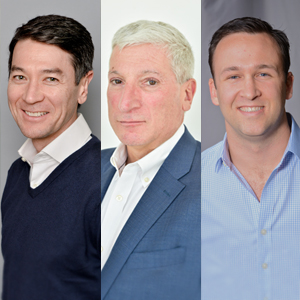
[00:00:25] Ray Latif: To learn more and post a role, visit BevNET.com slash jobs or Nosh.com slash jobs. And now, Taste Radio. Hey everyone, I'm Ray Latif and you're listening to episode 32 of Taste Radio Insider. I'm with my BevNET colleagues, John Craven, Mike Schneider, and Jon Landis, and we're recording from the Taste Radio studio in Watertown, Mass. In this episode, we feature an interview with Jack Belsito, Bob Nakasone, and Joe Angiuli, a trio of leaders from First Beverage Group, a beverage investment and advisory firm that holds stakes in a number of fast-growing brands, including Essentia, Health-Ade Kombucha Q Drinks. Just a reminder to our listeners, if you like what you hear on Taste Radio Insider, please share the podcast with friends and colleagues. And of course, we'd love it if you could rate us on iTunes or your listening platform of choice. Mike, what's your listening platform of choice?
[00:01:20] John Craven: iTunes. Nice. Spotify? And SoundCloud. I don't, I use a, I use a trio. You have a trio of listening platforms of choice. I guess Spotify is my most recent one of choice because I can listen to you in 3X.
[00:01:32] Ray Latif: That's like a hip thing to do.
[00:01:33] John Craven: I like that.
[00:01:33] Ray Latif: I think the old people like me like to listen on iTunes.
[00:01:37] John Craven: I like to hear you faster.
[00:01:38] Ray Latif: Huh? I like to hear fast Ray. Fast Ray?
[00:01:40] John Craven: Yeah, 3X speed.
[00:01:42] Ray Latif: Oh, gee.
[00:01:42] John Craven: Like Ray's had three Red Bulls?
[00:01:44] Ray Latif: And you can do this on Spotify.
[00:01:46] John Craven: Three Red Bull, yeah.
[00:01:47] Ray Latif: Three Red Bull Ray.
[00:01:48] John Craven: Yeah, all right. Good tip. Pro tip.
[00:01:50] Ray Latif: Pro tip. Hey, Jon Landis, it's about what, five weeks from the events?
[00:01:54] John Craven: Oh yeah, about five weeks now. Yeah, he's not going out of his mind or anything.
[00:01:59] Ray Latif: He's carrying a trumpet in one hand right now. It's a toy trumpet. What in the hell do you have that in your hand for?
[00:02:04] Jon Landis: It's the deal horn.
[00:02:07] Ray Latif: Of course it's the deal horn, yes. The most obvious thing that you could possibly come up with when you have a toy trumpet.
[00:02:12] John Craven: Well, we used to have one of those really long horns, but we lost it. It was like... A trombone? Yeah, he would get up on a hill and he would go... Oh, like the Ricola? Yeah. Ricola horn.
[00:02:23] Ray Latif: Whatever that thing was called. But we lost it in the fire. All right, go ahead, play it. I know you want to play it.
[00:02:28] Jon Landis: Well, no, I'm on standby, man. It's... He's waiting for a deal.
[00:02:32] John Craven: You can't play the horn when there's no deal. That's like hitting the gong when there's no deal. You just don't do that. Have you ever been in a sales organization, Ray?
[00:02:41] Ray Latif: Nah, I'm much more of a content product guy. Gotcha, gotcha. Yeah. We can't not talk about this.
[00:02:47] John Craven: It's sacred, Ray.
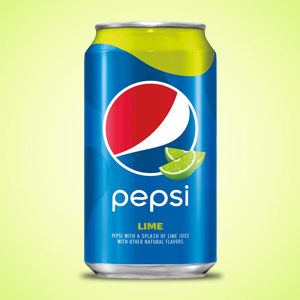
[00:02:48] Ray Latif: No, we can't not talk about this. John Craven popped open a can of Pepsi with a splash of lime juice. It's a new product. Yeah, it's a new product. That's what I'll say about it. Yeah.
[00:03:02] John Craven: Yeah, they sent us a couple of flavors. I think there was a mango one, a lime one.
[00:03:07] Jon Landis: Is this 1997? Is this in response to the, what was it, the vanilla, orange vanilla Coke? Well, no, I think Diet Coke has a bunch of new flavors. They've been doing a bunch of marketing around them.
[00:03:17] Ray Latif: I haven't had a Pepsi in, I don't know how long. I'm just going to pour myself some of this. Again, this is a Pepsi with a splash of lime. This is a new product that the company came out with. They released it a week or so ago.
[00:03:29] John Craven: See this, just a note here. It's got a splash of lime juice. So it's not just flavor. Interesting.
[00:03:37] Mike Schneider: Real juice.
[00:03:37] John Craven: It's 1%. I'm not getting any lime.
[00:03:38] Mike Schneider: Juice.
[00:03:39] John Craven: Oh, I taste the lime. Yeah? Yeah. Not as much as you would imagine. I kind of like the... Hold on for a second. Did you stifle a sneeze, Mike? I'm not sneezing. I'm just so glad that you're drinking Pepsi out of the Cortado glasses, Ray. Oh, sorry. These are Mike's... You drink your Pepsi out of a champagne flute, Mike? Every time. These are Mike's precious Cortado glasses that no one's supposed to touch. I mean, you can drink Cortados out of them all day long. Yeah.
[00:04:07] Ray Latif: Linus, I cut you off. I'm sorry.
[00:04:08] Jon Landis: No, that's okay. I was just going to say, I kind of like how the green on top seems like it's like oozing onto the Pepsi logo in the can.
[00:04:15] Ray Latif: It does look like it. Good choice of words. That was the weird thing. I brought out all these beverages from the cooler. They've all got green on them, but it seems like the green means a million different things. Like for example, in one case it's cucumber mint, in another case it's pear pomegranate, in another case it's watermelon, and in another case it's nootropic thunder.
[00:04:36] John Craven: Of course green is nootropic thunder. Isn't that obvious? When you see greens, it's supposed to say something to you. It means mint, it can mean tea, it can mean matcha, it can mean lime. There's a few things that it means. So green speaks volumes, right? And so do Instagram posts, don't they? Have you noticed recently on Instagram that there are people that every single moment that they post is like the most epic moment, the most amazing, the most extra AF moment. And I think people are starting to get tired of that. And you know why that is? It's because people are trying to say too much and they can't figure out what The New level of thing to say is. And if they actually experience something, that's the most amazing moment of their lives. So we're seeing like a change from everybody trying to frame up everything as perfection to, okay, here's just the stuff that's going on in my life. And you're seeing like influencers sort of change their tune from everything is super perfect to now. Let's try talking about something that's actually real. You're also starting to see it from companies who are managing influencers talking about we need something new and different because the garden variety influencer isn't necessarily The New that brands want to work with right now. It's either too expensive or it's not effective enough. So you're starting to see things like micro influence come into play and then you're starting to see like The New motif happen from influencers. I actually saw a post about it today because I've been thinking about this for a while that, you know, I don't know how long this can sustain because every single person who's an influencer is like, this is the most amazing thing that's ever happened to me in my entire life. And they're like eating like a piece of grapefruit or something like that, you know, some like tiny, tiny thing in their lives. They're over grateful about it.
[00:06:22] Jon Landis: I saw a video of a chimpanzee using Instagram. Did you see that? No. Instagram? You guys got to see this chimp using Instagram because, I mean, it's more of a testament to the UX design of Instagram, how intuitive it is. But I mean, he's just flying around, looking at stuff, going back, searching, poking.
[00:06:42] John Craven: He's got 5 million followers. Was he making lattes and working at BevNET?
[00:06:46] Jon Landis: I think he was watching videos of other chimps and stuff. Damn, that was a big one. I'm just wondering when the Instagram, you know, I mean, to your point, Mike, like when it kind of all just kind of jumps to the shark and when people, maybe for the consumers out there who are influenced, when does that start losing its luster? I think that's maybe where it's going because like, man, I don't know how much time everybody has to be, you know, be beaten over the head about how great things are and how awesome your life could be and, you know, these products.
[00:07:20] John Craven: Well, the biggest problem right now is that there isn't another soapbox or megaphone. So Instagram is the, as you just point out in an interesting way, that it's the easiest one to use, probably the most beautiful, and it's the platform of choice right now. Like, you know, Facebook's kind of passe. The latest and greatest one is this thing called TikTok. I don't know if you've tried TikTok, but it's kind of like The New Vine where it's like people are putting kind of short, funny videos. It's like The New comedy influencer platform, if you will.
[00:07:50] Jon Landis: Does Kesha get royalties on that app? I don't know. Does Kesha get royalties?
[00:07:54] John Craven: I don't know.
[00:07:55] Ray Latif: For TikTok. All right. Good stuff. Good stuff. I think it's time we get to our interview with Jack Belsito, Bob Nakasone, and Joanne Julie from First Beverage Group. As I mentioned at the top of the show, First Beverage is an investment and advisory firm that works with and invests in brands across the beverage spectrum. In an interview recorded at Expo West 2019, I spoke with Jack, Bob, and Joe about the firm's portfolio and investment philosophy, and how First Beverage evaluates synergies with entrepreneurial brands. They also spoke about the current funding environment for the food and beverage industry, which categories might be best suited to weather a potential downturn. And we also hear why CBD is not the only cannabis-based ingredient that's caught the attention of First Beverage. Hey, folks, it's Ray Latif from Taste Radio. I'm at Natural Products Expo West 2019, and sitting with me is Jack Belsito, Joanne Julie, and Bob Nakasone, executives and very intelligent gentlemen from First Beverage Group. Guys, thanks so much for being with me. Thank you, Ray. Thanks for having me here. All right. Jack, you're kind of like a legend in this beverage industry. I use the word. I don't throw that word around very often, but how'd you get into this business? Tell me a little bit about what brought you to the table.
[00:09:09] First Beverage: Oh man, I've been in the business for so long I think I forgot how I get into it. I started years ago, almost 35 years ago, with Pepsi. I worked a couple years at Procter & Gamble, spent a couple years at Pepsi, but most of my career was at the different derivations of Cadbury'First Beverage businesses, where I really learned the business and they taught me a lot. Great company that's now morphed a couple times and currently is the carry Dr. Pepper business, which is one of the movers and shakers and has been for a while. And you came to First Beverage about a year or so ago? A little less than a year ago. And it's been great, a great team. Really, you said it before, really, really smart people. So it's humbling to be around them.
[00:09:46] Ray Latif: It's great. Right on. Joe, when do you get to First Beverage and how do you get involved in this insanity that we call the beverage business?
[00:09:51] Mike Schneider: Yeah, so I started at First Beverage about four years ago. I actually started on the investment banking side of our business, which we no longer do. We were primarily focused on the craft beer industry. And so I actually view that as very formative to my education in the beverage industry to watch a category like craft beer grow so rapidly, culminating in transactions with Ballast Point, Constellation, Lagunitas, Heineken, and then move on from there to a different growth metrics in the industry. And so to watch that evolve is really educated my experience now in the industry. I shifted over to the private equity side of our business about two years ago and have been with the team ever since. Right on. Bob.
[00:10:35] Joe Angiuli: You've had quite a career yourself. Yeah, I spent a long time at PepsiCo, first out of headquarters in New York and then eventually made my way out here to California to help PepsiCo open their emerging brands unit. And a lot of things there, one of the most important of which was it really opened my eyes. This was 10 years ago when I moved out to California and really opened my eyes to all the terrific innovation going on outside of the PepsiCo realm, which when you work at a large CPG like that, you can get pretty insular in your perspective and viewpoint. And so I had a good run with the emerging brands unit and then eventually left and got the handcuffs released and went to work. It's for an entrepreneur in Bill Moses up at Kavita. Did that for a couple of years. We were fortunate to be able to sell that to PepsiCo and had met another Bill, Bill Anderson sometime before that and joined First Beverage kind of coming out of the Kavita experience.
[00:11:21] Ray Latif: Bill Anderson being the chairman and the founder of First Beverage Group.
[00:11:24] Joe Angiuli: Yeah, our founder. Exactly.
[00:11:25] Ray Latif: Cool. Well, Bob, let's stick with you. You know, what is the mission? What do you guys do at First Beverage?
[00:11:30] Joe Angiuli: Yeah. So I think it really starts with Bill. It's a good place to start. You know, he more or less without going into deep history on him, but he grew up in the beverage industry amongst a lot of other things. He's a pretty talented guy, pretty thoughtful guy, and he's our founder. And so, you know, really, we are a team of passionate beverage people. We go deep in the beverage space, both the ALC side of it, the ALC beverage side of it, as well as the non-ALC side. And then really from there, if I can just simplify it to, we like to partner with dynamic founders and very transformative brands. And, you know, from there, I think a lot of things take care of itself. But with that as kind of that high level lens, that's how we look at the space and that's what we enjoyed.
[00:12:06] Mike Schneider: Joe, what are some of the brands in the portfolio at this point? So we're investors Health-Ade Kombucha, Essential Water, Q Drinks, Project Juice, a retail outlet out in San Francisco, Repsly, we have two ALK beverages in the portfolio, Gem and Bolt, Mezcal, and Law'Laws Whisky House out of Denver, and Vita Cup.
[00:12:27] Ray Latif: So, Jack, again, you've had quite a bit of experience in the beverage business, seen a lot of brands come and go. You know, how do you consider a partnership with brands? How does FirstBev look at brands and evaluate the opportunities to invest and partner with them?
[00:12:39] First Beverage: Yeah, I think partnership's a good word there, the operative word. You know, we start with everybody else with broad consumer trends, which then, you know, translate into certain types of category trends and then hot brands that break out underneath those trends. But we're looking for a particular match with a player who's in charge, either that's the founder or the management team. We want to be sure that they are engaged in a particular way and that they're coachable in many ways. So we're looking what we call for a behavioral fit because we're very engaged. We think we're differentiated in that way. you know, great expertise on both the private equity and banking financing side, as well as operationally. So we wanna make sure that when we're engaged with a player, that they're not only have a brand that's disrupting and creating value where others aren't, but we're matching that individual from a behavioral and value standpoint as well.
[00:13:24] Ray Latif: So it sounds like what you're talking about is active investment. And Jack, as a former operator, what are the needs of entrepreneurs today that are different from what they were, say, 10, 15 years ago?
[00:13:35] First Beverage: I'm not sure how different they are. I think growing these companies are both art and science, you know, so it's helpful to have been in situations that might repeat themselves over time and experiencing, you know, things that you may have succeeded or failed at, you know, and you see a similar type of opportunity to be able to impart that type of at least experience, I think is helpful to those founders. It's more competitive than ever. Consumers are more demanding than they ever have been. So getting this right takes more time. It probably takes more evolution, takes more tinkering than ever. And so to be able to sit next to those founders and experience and be able to give that feedback in real time because of our level of engagement, I think is particularly helpful to them.
[00:14:17] Ray Latif: Now, the Taste Radio hosts were talking the other day and We were talking about this show in particular, where one of the big differences from years past is brand owners and entrepreneurs always used to be like, you know any investors, do you know any investors that would consider funding my idea, funding my brand? It seems like you don't hear that much anymore, because the investors are all over the place and they're looking for these opportunities to invest in innovative, interesting brands. So how has that environment changed, Joe? Is it a lot more competitive for you guys right now to find brands and find the right brands? to incorporate into your portfolio?
[00:14:52] Mike Schneider: Yeah, and I'd love to get the perspective of the rest of the team on this one. There's certainly a lot of capital in the industry, but I think more than anything that speaks to the growth of the industry and the dynamic nature of the food and beverage industry, just how exciting it is, just how much opportunity there is in this space. So we get really excited about it. I think at its root, though, we're still trying to find the right brand, the right entrepreneur in that unique situation. I think the way that First Beverage comes out of show or comes at any new business opportunity is We start with a category first approach. We try and identify the categories that we think are really exciting and we think that the tailwinds of a strong category, whatever that dynamic may be, can always help a business as it's starting to get off the ground early. So we get comfortable with the category, category metrics, the dynamics, the private label dynamics, and then we turn it on its head and we start bottoms up to find the brands that we think are not only differentiated and unique. And I think those words are, you know, a lot of people use those words, but really the brands that are attacking the gaps in a given category and really identifying the opportunities alongside what we see as the opportunities in the category. And so a lot of people are looking for those opportunities in the space, but I think we come at it in a very unique and specialized way. So what are some of those categories that you guys are interested in? So we've been watching closely the evolution of energy, and that's happened not only at this Expo West, but over time watching how that's evolved. And there are really two primary reasons behind that. The first is it's an immediately tangible function. So you drink it and you feel it. There's no guesswork that the consumer has to make to understand what is this beverage going to do for me. Real versus perceived function. Exactly. And so alongside that, I think the consumer's gone through and is continuing to go through an evolution of managing their energy throughout the day. So historically that's looked like quick up and down jolts of energy, right? So this up, down, up, down, up, down effect. And that's transitioned over time to maybe I can have a cup of coffee in the morning, but I might have a matcha in the afternoon or a yerba mate in the afternoon. I might have some energy around a sports occasion that day. And then I'm also going to watch my decreasing energy levels at the end of the day. And how do I wind that down while still retaining my focus levels? And so we've been watching that closely. It's led to the evolution or the growth of a number of subcategories, so I mentioned a few, matcha, yerba mate, mushrooms for focus. All of these things are growing alongside a strong growing traditional energy business, as well as a growing coffee business. So we're looking at the evolution of energy holistically.
[00:17:35] Ray Latif: Well, I mean, it's interesting because the definition of the function has evolved as well, right? So people are saying energy but without caffeine. You know, you're saying you're getting energy in a different kind of way. You mentioned mushrooms, for example. So is traditional caffeine, though, still... you know, the big play, the big opportunity and energy at this point?
[00:17:56] First Beverage: I would say that caffeine remains a consistent interest to consumers. It starts at consumer level. They still need and drive energy as busy as ever. You know, we're filling up our lives more and more, even though There's now swings where people want more time, but they want time doing things that they like to do. So they need energy for those things as well that aren't necessarily work. So there's more play, but energy for play is a new place, right? So those things are consistent over time. I think what consumers are demanding more and more is stacked function. It's not enough to be coffee. It has to have coffee with something else. And so that's the more, I need more. And that's why there's, I don't know how many people are coming through this place. It's amazing. I remember coming here when they're, a thousand people, right? So, but as consumers learn more and want more, the idea of stacked function becomes more prominent. So, you see lots of things with multiple function. I mean, I spent some time in the water business. There's nothing more functional than water, right? It's the ultimate functional business, right? It's the only thing we actually need of anything in that building. It's the only thing we need. yet there are a thousand derivations of water with stacked function. So I think you'll see more and more of that and consumers trying to sort through that.
[00:19:07] Ray Latif: It's amazing, right? You have energy, hydration. You could include both in one beverage, but that's not even enough anymore. You got to include something else, CBD perhaps. Speaking of CBD, Bob, what's First Beverage's thoughts on CBD? I mean, you can't turn around and not be like covered in CBD oil here at this show.
[00:19:24] Joe Angiuli: What's going to happen with this category? You know, how are you evaluating it? Yeah, I mean, more questions than answers at this point, but we've spent a lot of time looking at it and really tapping into our ecosystem of people touching CBD in meaningful ways and trying to form opinions around it. But listen, I think it's an ingredient today that's quickly becoming a category and something that's playing across a lot of categories. It clearly holds. a lot of promise for a lot of folks. And so I think we explore questions even still, you know, there seems to be a lot of popular opinion out there that, you know, really CBD over THC is what the bigger, the bigger play is. We still question that. We, you know, at the end of the day, you look at, I think Joe or Jack just gave the analogy that you actually feel energy, right? I mean, it feeling of it feel THC a lot quicker than you do, maybe not quicker, but in a bigger way, depending on the dosage and I'm not going to ask the obvious question, but anyway, yeah, talking, talking strictly from, you know, secondhand, secondhand, what I've heard, what I've, what I've been told. So yeah, listen, it's going to be big, you know, we're looking closely. We want to jump in here just as quick as, you know, kind of our comfort level will allow. And I think we're getting there pretty quickly.
[00:20:34] Ray Latif: You said the word meaningful in a meaningful way using CBD in a meaningful way. What does that mean? What does meaningful mean?
[00:20:40] Joe Angiuli: Well, to us, you know, we'd love to see it tied to a specific lifestyle, you know, type benefit or brand or feeling or aura. I don't know that the science is going to be there on the timeline. We'd like to invest in something and get involved in something CBD. But I think, you know, starting with a good brand that communicates whether it's a part of the day or a purpose in folks' lives, a real lifestyle brand, I think that would be a good Way To start at this point.
[00:21:08] Ray Latif: Are there specific formats that might work better than others? Sparkling water, juice, still water, tea? I mean, what's really resonating with consumers? What's resonating with investors?
[00:21:20] Mike Schneider: I think taste is going to be critical to this industry. So taste is going to drive that decision. What I would say is in water, you want to avoid the consumer hurdle of looking at something and wondering what's in there and that question mark. You want to try and avoid that question mark. And so taste is going to be critical, but also consumer perception. And a lot of that has to do with brand. Some of that has to do with packaging. Some of it has to do with the appeal of the beverage. And so all of that's going to work together.
[00:21:47] Ray Latif: Joe, you mentioned the tailwinds driving some of the changes that are happening, the evolution of this beverage industry. And, you know, one of the great things over the past, say, five years or so is that we've existed, we've operated in a very robust economy. There's a lot of interest in this food and beverage space, and there's a lot of money to be spent and invested in it. There are some concerns, though, that We're not too far from a recession or just an economic downturn. Do you see the economy as staying strong for The New few years, or do you have any concerns about where things are going? Jack?
[00:22:20] First Beverage: You know, there's a lot of predictions that say that we may end up in something that's relative to a downturn. We have presidential elections coming up here in the States that certainly might impact things. We see that there's a potential movement there. I think the first impact on food and beverage typically is channel impact, not necessarily overall growth. So in many cases, there are brands that can weather storms. Alcohol is one that typically is famous for weathering a storm. You know, you may not go out to the bar, but you'll drink at home, right? I think that's the first level of impact. You might find that strategic players looking to maybe acquire brands that are still creating value where they cannot might want to see those brands closer to cash positive type of operations. So it might mean that players need to stay in a little bit longer. We see that as an opportunity for us because that's what we do. And so being able to shepherd those opportunities probably a little bit closer to profitability might be something we see. We'll have to see. That's something in our future.
[00:23:19] Ray Latif: So that brings up an interesting question. At what stage of a company's lifecycle do you look to invest? It seems like that age, for lack of a better word, is getting younger and younger. At what age and at what growth type do you look for some of these companies, Bob?
[00:23:33] Joe Angiuli: Yeah, in part just because our Fund 1 strategy was a bit different and evolved into Fund 2. We've got experience investing earlier on in some cases, especially in Fund 1 versus what we try to do in Fund 2. And I'll get to the numbers in a second, but we really do try to look at it more in terms of, hey, is this, Joe touched on the deep category analytics and deep dives that we do, and do we like the category? And that might allow us to invest earlier, if we see something really like if we're just completely committed to the category, we see something earlier than normal that we like. But, you know, generally, you talk about, you know, marketplace, you know, performance and being built out in two to three going really deep in a couple markets, maybe three markets, and then having, you know, a handful of national retailers where you're seeing how a brand might perform or behave in the middle of the country, you know, in a Minneapolis or, or in a Chicago versus, you know, something, something other than California and New York, basically, right? What that generally amounts to, though, is, you know, companies with LTM anywhere between a million to 10 million, let's call it, you know, sometimes bigger, sometimes a little smaller. For our listeners who may not be familiar with the term LTM, Trailing 12-month revenue. Trailing 12-month revenue. So some actual results in the rearview mirror. I think there's a difference, obviously, in a lot of projections that we see past index versus actually doing it even, maybe it's not for 12 months, but maybe it's for a few months to know, hey, has the brand proven they can get on a run rate that is consistent with something we view as having real proof points with real consumer pull out there? And of course, the quality of that revenue is important as well. Where are they getting it? At what price point? where in the marketplace, what type of consumers they think they're bringing in at that point too.
[00:25:13] Ray Latif: How important is profitability?
[00:25:14] Joe Angiuli: It's important. You generally don't see it at the stage we're looking at. In fact, you rarely see it at the stage we're looking at. And that's fine. It's a low hurdle to get First Beverage, but very expensive to get in scale, even to the first few million of revenue. And then really up to 20, 30 million, it's a tough task because it's only gotten more competitive and only requires more and more sales and marketing resources. And so it's something that we look at as having a clear line of sight too. And gross margins are a really good indicator of where a business might end up at a point when they can be cash flowing positive.
[00:25:49] Ray Latif: So I bring up profitability because there are some brands that may not have a great cash flow and they need money and they need more money. And let's say they come to First Beverage and say, hey, I need money right now. You're not going to give it to them. I would assume anyway. Not right away. How long does it take for you guys to evaluate a category and then the brand? I mean, how long is that process?
[00:26:09] Mike Schneider: We would prefer to have a standing relationship with the founder.
[00:26:12] Ray Latif: So I think the evolution of that... You don't want someone to be knocking on your door and be like, I need $10 million right now? It's not the preferred route.
[00:26:18] Mike Schneider: It's not the preferred route, right? So we want to get comfortable. You know, early on, you're betting as much on the package and the product and the brand as you are on the entrepreneur. So we want to take the time to get to know the entrepreneur. to understand what are their strengths, what are their weaknesses, where can we help their business? And at the same time, we want them to get comfortable with us. How can we help their business? What are our strengths? What are our weaknesses? And some of that just takes time to get used to us and us to get used to you. Is it months? Is it years in some cases? I think months and in some cases years. Yeah, we've had relationships spanning, yeah, years definitely.
[00:26:53] Ray Latif: Wow.
[00:26:54] Mike Schneider: I'd also want to add that We have the ability to move fast. It's preferred that we get to understand and know the entrepreneur, but that's different in every situation and occasion.
[00:27:04] Ray Latif: Yep. We asked a private equity director in a previous episode this question. I'm curious to hear your answer. What's The New thing that an entrepreneur should never say in a pitch? What are some of the things that would really make you angry?
[00:27:19] Joe Angiuli: I'm dying to answer.
[00:27:21] Ray Latif: Everyone lifted up their microphone as quickly as they could.
[00:27:23] Joe Angiuli: Listen, I want to be fair to the entrepreneurs because those are tough meetings for them, right? For a lot of reasons, in a lot of ways, great opportunities as well, you know, to be out there fundraising and be in a position to really feel like you're doing it. But I think The New that, you know, I probably can't help but rolling my eyes to is when you see, you know, the vitamin water exit quoted or, you know, just the extremes quoted rather than, you know, going with something that that might err certainly toward the rosier or bullish side, but you don't need to quote vitamin water, buy, and especially when it's in a category that really has no similarities. So that's probably The New, because I don't think anyone in this industry, whether you're as deep as we are First Beverage or just a broader consumer fund, is going to look at that and say, okay, yeah, that's the benchmark that we're going to go with. OK, I could add to that. We never want to hear them say, this is a hobby for me.
[00:28:12] First Beverage: That's they have to be all in. And we're really looking for all in. And that means all in. And it's hard to do what these people are doing. So players who are distracted and show that type of distraction, I think, is a real turnoff.
[00:28:23] Ray Latif: Joe, you know, what's one thing that you hear in a pitch that you're just like, please leave my office?
[00:28:29] Mike Schneider: Well, I never say that. I would say. not having a clear understanding of the business today alongside where the business is going. And so not being able to answer the straightforward, simple questions around how is it getting made, understanding the product itself, and what do you want to do with this product? We're not majority owners. We want to hear what you want to do with the product, and we want to be able to be there to help you with that growth strategy. But I'd like to understand from the entrepreneur Where do you see this in three to five years? And not being able to answer questions like that as well as simple questions like, what's your gross margin and what would you like it to be over time? You don't have to get specific, but have an understanding of your business and where you want it to be.
[00:29:16] Ray Latif: Well, gentlemen, this has been really fantastic. I know you're extremely busy and running all over the floor, and I'm sure there's a lot of people that want to talk to you. So thank you so much for sitting down with me, taking the time. I know our audience is going to be very, very happy to hear about what you guys are doing at First Beverage and wish you all the success going forward.
[00:29:34] Joe Angiuli: Thank you, Ray.
[00:29:35] Ray Latif: All right. That brings us to the end of episode 32 of Taste Radio Insider. Thank you so much for listening, and thanks for our guests, Jack Belsito, Bob Nakasone, and Joanne Julie. Please subscribe to Taste Radio Insider on iTunes, Spotify, Stitcher, SoundCloud, and Google Play. As always, for questions, comments, ideas for future podcasts, please send us an email to ask at Taste Radio. On behalf of the entire Taste Radio team, thanks for listening, and we'll talk to you next time.
[00:30:09] SPEAKER_??: you