[00:00:05] gulp Snickers: Hey Landis, how many times have you heard a brand tell you that they're ready to meet investors or looking for retailers or wanting to tell the industry about a new product launch?
[00:00:13] Taste Radio: Maybe like four times today and it's only 11 o'clock. BevNET and Nosh provide multi-channel advertising capabilities to build that kind of awareness and to generate quality leads that drive the bottom line.
[00:00:25] gulp Snickers: Our team is ready to help experienced and new marketers drive awareness around important milestones like product launches, fundraising, seasonal releases, and trade show appearances.
[00:00:33] Taste Radio: We can help you build a plan that will drive awareness of your brand, open doors, and generate high-quality, business-oriented conversations. You know, the ones you're ready to have, like today.
[00:00:43] gulp Snickers: To learn more, visit mediakit.BevNET.com, or if you're ready to talk, reach out to sales at BevNET.com and send us like 200 words explaining what you're trying to achieve, and we'll be in touch quickly.
[00:00:55] Taste Radio: And now, Taste Radio Insider.
[00:01:03] Ray Latif: Good morning, good afternoon, good evening, and thanks for tuning in to Taste Radio Insider. I'm Ray Latif, and you're listening to episode 36 of the podcast. I'm with my BebNet colleagues, John Craven, Mike Schneider, and Jon Landis. We're recording from the Taste Radio studio in Watertown, Mass. And in this episode, we feature an interview with Josh Zloof, the co-founder and CEO of Sudden Coffee, an innovative startup that's aiming to revolutionize the $40 billion instant coffee category. Just a reminder to our listeners, if you like what you hear on Taste Radio Insider, please share the podcast with friends and colleagues. And of course, we'd love it if you could rate us on iTunes or your listening platform of choice. Hey, John Craven, I got a present for you. I've been hiding this. You didn't see this, did you? It's a book called London's Best Cocktail Bars, The Most Popular Hotspots. Look at that. $15 MSRP. Hold on, let me get my wallet out. actually came in the mail. It was delivered to me yesterday, I believe. Exciting. I think I've been to all these now. There's at least 200 bars in there. You couldn't have been to all of them. Look, there it is.
[00:02:07] Josh Zloof: Give me three days. No.
[00:02:10] Ray Latif: in there. The American bar, that's the one you like, right?
[00:02:12] Josh Zloof: There's so many pages on the same bars, though.
[00:02:14] Ray Latif: Yeah, but they're showing like high quality photos of the cocktails. It looks like the ones you take for Instagram. I think those are your photos, bro. Yeah. I think they ganked a couple of your photos. That never happens to me. Don't you always say, please ask before sharing or before using my photos? Yeah, some people bar my photography. You sent them a cease and desist letter?
[00:02:33] gulp Snickers: That's a pretty common thing that happens on social media, but you know, a lot of people, you just put the little, you're supposed to put the little photo emoji, colon, and then the person's handle.
[00:02:43] Ray Latif: More like what we do on BevNET. You have to take the photo with a 3D printed logo. We have hockey pucks.
[00:02:49] Josh Zloof: I just don't like the accounts that are out there that just repost stuff. So like if a brand were to say borrow someone's photo of their product, cool. If someone who's just, I don't know, an account that posts pictures of random stuff, like if for example for Nosh or BevNET, instead of shooting our own stuff, we just boosted other people's stuff. That's rude. That would be kind of lame. Yeah, definitely. Oh, thanks Ray. Of course. Anytime. Here, I got you a present too. What'd you get me? Hold on. It's this a bottle of Twix chocolate milk that we just got in the office. John, you shouldn't have. No, no, no. Really. You shouldn't have. I mean, I know that you like things that are high in sugar.
[00:03:31] Taste Radio: We have to share that with Marty. He was very, very excited when those came in. Marty Caviero, the managing editor of PebNet.
[00:03:37] Josh Zloof: I mean, it definitely smells like Twix.
[00:03:39] Taste Radio: Yeah, it tastes like Twix, too.
[00:03:41] Josh Zloof: Tastes like gummy chocolate.
[00:03:42] Taste Radio: Yeah, it tastes like, you know, too many sweeteners. All I see when I look at this is Wilford Brimley.
[00:03:50] Ray Latif: Well, Mike, you have in your hand gulp Snickers variety.
[00:03:53] gulp Snickers: I do, and it's the last thing I thought I'd have in my hand today. So thanks for that. A lot of peanuts, like, flying all over that label. I know, it's weird.
[00:04:01] Taste Radio: And right next to one of these peanuts in the fine print, it's vitamin A and D.
[00:04:08] gulp Snickers: I will give them some props though, because the Snickers logo is iconic and unmistakable. You did not need those peanuts. You just need, if you gulp Snickers, you know, it's going to have peanuts flying peanuts, but it does have an awesome picture of gulp Snickers bar, which makes you hungry.
[00:04:23] Taste Radio: I don't think the Twix bar thing, or is this Nestle?
[00:04:27] Josh Zloof: I don't think this has peanuts in it. It has to, it'gulp Snickers.
[00:04:33] gulp Snickers: How could it not have peanuts?
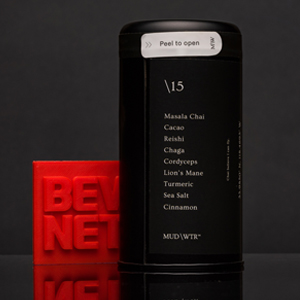
[00:04:34] Ray Latif: I don't know. No high fructose corn syrup. Here's the complete antithesis of this. I'm holding in my hand a can Mud Water, M-U-D slash W-T-R. Everyone's using the W-T-R of late. Mike Schneider, you interviewed Chris Hollad. You and John Craven interviewed Chris Hollad a few weeks back. He's an investor in this brand. This is a super shake, basically. You open it up. You put a tablespoon into some hot water, steep it for two minutes, and it's basically supposed to be a super drink. It's got masala chai, cacao, reishi mushroom, chaga, and a whole bunch of other stuff.
[00:05:09] gulp Snickers: It's like a mushroom tea that's supposed to be Spark Coffee alternative, and it tastes... It has a bit of Spark Coffee hint to it, and I think it's a decent replacement. I made a latte with it. It was terrible latte art.
[00:05:20] Ray Latif: You can make a shake with it too.
[00:05:22] Josh Zloof: Mike and I were just in Venice, California, that is last week. And I swear, did they have a shop or something? Or what was that all about? We walked by... We have a pop-up on Abbot Kinney.
[00:05:32] gulp Snickers: Yeah, yeah, yeah. We were heading to Cha-Cha Matcha. I just like to say Cha-Cha Matcha.
[00:05:36] Josh Zloof: We also walked past Four Sigmatic's little place in the back there.
[00:05:40] Taste Radio: They just had their one-year anniversary party at their pop-up in Abbot Kinney. Mud Water you're talking about.
[00:05:46] gulp Snickers: Can we just pick Abbot Kinney and slab it down in Watertown, please?
[00:05:49] Ray Latif: It would never work. First of all, because Abbot Kinney still living in 2019, whereas, you know, Watertown Square, most of it is still locked in 1983. Yeah, that's pretty true. Abbot Kinney like in the future, though. It is.
[00:06:00] Josh Zloof: Realistically, where you've got multiple dispensaries, as we've talked about before.
[00:06:06] Ray Latif: It's into the future, as in the year 2000? Someone got it. All right, all right. That was Landis.
[00:06:18] Taste Radio: That was amazing.
[00:06:20] Ray Latif: That's Landis blowing out your speakers. Thank you, Landis. And thank you to the folks from Besa Mi Vino who sent us this new Canned Wine made with organic grapes. The variety I'm holding in my hand is an all-day rosé variety. Everyone loves rosé, right?
[00:06:35] Taste Radio: Would you consider canned rosé to be basic yet? I think so. It's everywhere now. I'm not an authority on what is basic, what is woke. I guess I'm too old for all that already.
[00:06:47] Josh Zloof: Well, in any event, we definitely get a good healthy number of canned rosé products into the office and just Canned Wine in general. So, I mean, that stuff's all out there. It seems like the differentiation between all of them is, you know, it's pretty different than like regular wine, because they don't seem to talk a lot about where it came from, and it's more design of the can and whatnot. Very much about portability, lifestyle. Yeah. And I think most of these are like, you know, blends and whatnot anyway.
[00:07:21] Taste Radio: Yeah, we see that. What is it, lila?
[00:07:24] Josh Zloof: Jeez, I mean. I see it everywhere.
[00:07:26] Ray Latif: Everywhere, yeah. I wish I knew it better. Well, I mean, it's interesting to see the wine industry following, you know... Carol's going to love that, sorry. It is interesting to see the wine industry following in a craft beer's footsteps. I mean, remember way back in the day, no one, you know, there was what, like a handful of brands. I think Oskar Blues was the primary one using cans. And, you know, there were so many concerns about cans affecting the flavor and quality of beer. It's the same thing with wine, but I think consumers are becoming a little bit more comfortable with wine in cans. Clearly, if there's so many of these out there in the market. So you don't have to stick to Franzia anymore? Ah, good lord. Box it up. Never. Never, never, never.
[00:08:01] Taste Radio: There's too many wine box bags in the ocean, John. Oh yeah?
[00:08:09] gulp Snickers: Why are we joking about the environment? Because per your intro, you're like, good morning, good afternoon, good evening. No one knows if it's morning, afternoon, evening, because the events are coming up.
[00:08:21] Ray Latif: That's right, Mike. Excellent segue. We are less than 10 days away from Nosh Live Summer 2019. Event is rapidly selling out. Jon Landis, where do we stand on the number of brands, unique brands attending this year?
[00:08:35] Taste Radio: Yeah, we have around 200 beverage brands coming to BevNET live, well over 100 coming to Nosh, and it's going to be a really exciting week. Oh my gosh. We're doing eight events over six days at five different venues, and I think we're going to have time to sleep.
[00:08:54] gulp Snickers: Five venues? What?
[00:08:55] Taste Radio: Yeah, I think so.
[00:08:56] gulp Snickers: New beverage showdown contestants. Are you counting after parties? Yeah. Oh, there you go. New Beverage Showdown contestants have been determined. Pitch Slam contestants have been determined. Sampling Bar and Sampling Experience and Expo applications are flying in. This is getting real fast, guys. You better get your tickets.
[00:09:14] Ray Latif: We can't wait to see you there. And I've been noticing that we've been promoting the number of investors that are attending both events as well. It actually surprises me. I mean, I've been with BevNET for going on over eight years, and it's incredible to see the diversity of investors. You're talking about everyone from angels to strategics attending the show. Just really impressive.
[00:09:36] Taste Radio: We actually get a lot of them signing up. final days as well. New York is a big city of finance and people don't tend to plan ahead too much. They fly by the seat of their pants. Or do they just enjoy their cash flow? Yeah, and they do that too.
[00:09:51] gulp Snickers: They just enjoy having cash in pocket.
[00:09:54] Taste Radio: There's still a lot to come. We're gearing up. There's definitely a buzz in this office now. It's pretty palpable. Is it the CBD that everyone's making? Nice use of palpable.
[00:10:06] gulp Snickers: And the Cannabis Forum. On Friday. On Friday. June 14th. We just added a kickoff party with Herb Force.
[00:10:12] Ray Latif: Which is happening on June 13th. Right. Exactly. Yeah, very cool. I mean, these parties, these networking parties are fantastic. It's like, they're really, really good networking opportunities. I think, you know, this is exactly what Ryan Lewendon was talking about in a few episodes ago on Taste Radio Insider, Ryan Lewendon from the Junuzzi Group. It's like, if you really want to meet someone, these networking parties are a great opportunity to do so. Meet them, get their business card, talk to them for a couple of minutes, and then follow up after.
[00:10:38] Taste Radio: And the only way to get into the kickoff party is to have a ticket for the Cannabis Forum. So make sure that you get yourself signed up. And where do you do that, Jon Landis? On the internet.
[00:10:55] Josh Zloof: Why don't you Google that?
[00:10:57] Taste Radio: Devnet.com slash events.
[00:10:59] Ray Latif: Well done. Well done. I love it. Now before attending the New York events, I always try to read up on some new hotspots to grab a bite, have dinner in the city. You know, not unlike what you guys did in LA last week, you know, that place juice, one of the hottest, you would think it's the hottest.
[00:11:21] gulp Snickers: eatery in Los Angeles. To be fair, we did go to Jelena first. Okay. That's true. You did go to Jelena. We did branch out. At least for me, it was, believe it or not, it was actually my first time at Jelena. Really? Yeah. Very cool. But that place, their vegetable game is, is it woke? No, not woke. On point? Fire? I think fire, I can say. Fire. Fire vegetables.
[00:11:46] Josh Zloof: These vegetables are so fire. These vegetables are fire roasted.
[00:11:51] gulp Snickers: Some of them are indeed. So either way, I'm correct.
[00:11:54] Ray Latif: All right. Well, I'm going to I'm going to look up a few places. And then the next week's episode of Taste Radio Inside, I'm going to reveal my my special destination, so to speak. Do they have juice in New York?
[00:12:03] Josh Zloof: I don't think so. They talked about opening a Jelena in New York or something like that.
[00:12:09] Taste Radio: And I think the dude bailed. 20 bucks says your list includes employees only.
[00:12:14] Ray Latif: My list. Yeah. I mean, well, they do make a nice steak there. Well, employees only is a great spot. No doubt. Cocktails are getting a little expensive, but that's New York city for you. But I like that place a lot. Yeah. What do you like? Good $3 cocktail at a Penn station.
[00:12:30] gulp Snickers: Uh, no, I like $3 sushi at Penn station. True story. I wouldn't mind a cocktail or two at the up and up or maybe death and company.
[00:12:37] Ray Latif: Ooh, there you go. I think everyone should think about this. Everyone here in the room should think about this and give our listeners one good piece of advice on where to go or where to grab a good drink. The after party.
[00:12:48] gulp Snickers: And with that, we'll see you at BevNET Live and Nosh Live.
[00:12:53] Ray Latif: All of a sudden, I'm feeling like talking to Josh Slufe. As I mentioned at the top of the show, Josh is the co-founder and CEO of Sudden Coffee, a San Francisco maker of specialty instant coffee. Founded in 2015, Sutton has taken aim at the sleepy instant coffee category with an ultra-high-quality approach that incorporates single-origin coffee beans and a proprietary production process. In the following interview, I spoke with Josh about the origins of the company and how his career led him to the coffee business. He also discussed the challenges of managing both manufacturing and marketing as a small company, how Specialty Coffee roasters, including Intelligentsia, have supported its development, and why Josh views Sudden as more of a product than a brand. Hey folks, it's Ray with Taste Radio. I'm at BevNET headquarters in Watertown, Mass., inside the Taste Radio studio. In front of me is Josh Zloof, the CEO and co-founder of Sudden Coffee. Josh, thanks so much for being with me. Thanks for having me. You're in town from San Francisco?
[00:13:54] Sudden Coffee: Yep, yeah, I'm here for the weekend for the Specialty Coffee Conference.
[00:13:59] Ray Latif: Very cool, Specialty Coffee Association Expo, which is being held in Boston for the first time, I believe.
[00:14:05] Sudden Coffee: Yep, I think it was here maybe five or 10 years ago, so a while back. My first time, which is really what counts, right? And my first time, exactly. So this is really the first time it's ever existed because it's both of our first times.
[00:14:18] Ray Latif: So what makes Sutton Coffee special? We know it's an instant coffee, but what makes it different than any other instant coffee that's already been out there?
[00:14:24] Sudden Coffee: Yeah, so the biggest difference is really all about the taste. We made Sudden taste amazing. We want people to be drinking Sudden not just because they're in a bind and don't have another option, but because it tastes so good that it'Spark Coffee that you want to drink. And behind the scenes, I think what's really special about what we've made is we actually invented an entirely new brewing method, process, and just new way of doing it in coffee that didn't exist before. We're not just simply taking better beans and putting it in machines that have been around for a while. You know, everything about it is new and modern for 2019.
[00:15:03] Ray Latif: So to be clear, it's not taster's choice, it's not Folger. So for folks at home who are thinking it's anything like that, that's not the case.
[00:15:09] Sudden Coffee: Yes, it's absolutely nothing like that. It's much more close to taking an actual pour over from a cafe and then figuring out a way to preserve that and freeze dry that.
[00:15:18] Ray Latif: It's very much that. I mean, I think you told me basically you Spark Coffee, you brew the coffee. and then you dehydrate it and freeze it, right?
[00:15:26] Sudden Coffee: Yep, exactly. So all instant coffee, even Folgers or Taster's Choice, is made like that. Like you're taking coffee beans, turning it into liquid, and then dehydrating it. And the differences are in what beans you use, how you brew it, and then how you dehydrate it. And so brewing is a part that in traditional instant coffee, they would brew it, you know, up to four times. You're trying to get as much out of the coffee bean as possible. That's how you make it super cheap. But Spark Coffee bean's mostly wood, so it ends up tasting really bitter and woody. And most scaled processes are designed to do that. And then dehydration, that's also really challenging. The best parts of coffee are these fragile aromatics. And so when you're using heat, which is how you dehydrate most things, you break them apart. It's sort of like hard-boiling an egg. And so we had to figure out a way to dehydrate without using any heat. So we have our freeze-drying step, but before that, we actually remove water and we concentrate it using a method that doesn't use any heat, which that's one of our trade secrets, but I can tell you that it's really, really special.
[00:16:35] Ray Latif: Now, one would call this a niche opportunity. I think, you know, you would even describe it as sort of a niche opportunity. But the opportunity for instant coffee itself is pretty big, right?
[00:16:44] Sudden Coffee: Yeah. I mean, instant coffee worldwide is this $40 billion market. With a B, $40 billion. Yeah, with a B. And it's something that most people in the world get. And so, That's already there, but it's just been, it's totally been unchanged, right? It's been this Folger's, Taster's choice for decades. And then you have Specialty Coffee, which has really been taking off. I mean, I think, you know, it's kind of like the hipster cafes of the world. They've really jumped the shark from not being niche anymore. Specialty Coffee makes up over 50% of retail consumption in the U.S. now as of a couple years ago. And so that's the way that people are drinking coffee. And I think it kind of goes with just the general trends you see in food where people want sustainability, supply chain transparency. You want to know where the things you're putting in your body came from. And that's just I think that's just going to be true in all food systems going forward. And so We wanted to take that those really Specialty Coffee and put it in a form factor that more people could access. Because right now Specialty Coffee is location limited and it is training limited. Like you have to have a bunch of equipment or know what you're doing. You know even earlier making an espresso like not everyone knows how to do that. And so we wanted to just make that easy to access.
[00:18:06] Ray Latif: And it seems pretty easy. Sudden Coffee comes in these little plastic test tubes. You pop one open. You pour the contents into a cup. You pour any kind of water. It can be hot or cold, right? It doesn't matter if it's – the temperature doesn't matter, correct?
[00:18:19] Sudden Coffee: Yeah, exactly. So if you want an iced coffee, you know, you got to stir it a little bit more. But it's a great way to have an iced coffee without having to do a bunch of work. You don't need to make cold brew overnight. And for hot coffee, yeah, you just mix it and stir it. We wanted to make it, I call it grandma proof. Your grandmother should be able to use this without knowing anything about, you know, grind settings and your water temperature, any of that stuff.
[00:18:42] Ray Latif: A millennial product for grandmas.
[00:18:44] Sudden Coffee: Exactly.
[00:18:47] Ray Latif: Your background is not in CPG, though. It's not even in coffee. Backing up a little bit, you know, how did you get into this business?
[00:18:54] Sudden Coffee: So yeah, so I started my career in operations supply chain. I was a consultant at McKinsey. I always had this fascination with even in high school, like how you could make a McDonald's more efficient? Like how do you make it so there's no wine in restaurants or in the food space? So that was always just this undercurrent. And that's why I studied, you know, majored in what I did and took the first job out of school with that focus. And then after that, I worked at Groupon. So I was the product manager for this product called Breadcrumb. which is a point of sale. It's like square for high end restaurants. And so that pulled me into this fine dining hospitality space. And I realized that, you know, it's not actually about making your restaurant more efficient. It's about hospitality. How do you make people feel good? through these really craft food experiences. But what bothered me about it is, you know, I'd go to these fine dining restaurants and they were great. They were my customer. I was interviewing the GMs and the chefs and they had these really amazing values. They really cared about the food and, you know, could tell you the story about, you know, like, where does this walnut come from? But for the majority of people in the US and in the world, they don't have access to that stuff. It's too expensive. They don't have it in their city. You know, maybe once in a lifetime, someone could go to one of these restaurants where you're paying $300 for a meal. And so that really set me off. You know, I said, Okay, it's not really about being efficient. I want to figure out how you can I call it scalable hospitality, like how do you share the feeling of those craft experiences with more people. And so before Sudden I spent about a year just trying different startup ideas. The one right before Sudden was a burrito bowl delivery startup where I hired a Michelin star chef to make burrito bowls for ten bucks. And I wanted to just make that more accessible. And eventually met my co-founder, Kalle. He'd been in the coffee space for 10 years. Had a similar, you know, he had a nine-person cafe and similarly said, you know, I love Specialty Coffee. I want more people. I want to share this with a billion people. But I can't do it in the four walls of this cafe. How do you share that with more people? And so Sudden was really the answer.
[00:21:06] Ray Latif: So we often talk about white space and clearly you saw white space in the instant coffee category, but then you have to set about doing what you just talked about, which is sort of reinventing instant coffee for a modern consumer, reeducating consumers as to what instant coffee can be. So where do you start?
[00:21:28] Sudden Coffee: It was hard. So there's always been two sides of our business. There's the manufacturing side. And so that that was always constrained by cost and capacity. At first we could only make 100 cups. It used to cost six dollars to make each cup. We're selling it for six dollars. We weren't making any money. And then there's the marketing side and how you educate and teach people. And so we've always kind of, you know, spent three months here, three months there. So three months making it cheaper. We're kind of doing both simultaneously, but we'll, you know, focus a lot of energy on the next level of the manufacturing process, make it cheaper. And every time you make it cheaper, you can access new customers and open it up to more people and then focus on, okay, what are ways we can get better at telling the story and introduce it to more people and all of that. And so it was sort of these iterative you know, three to six-month cycles. And so we've been able to decrease our cost by half every year. So it went from six to three to $1.50. Now it's closer to 80 cents. Per tube. Per tube, yeah. And that's our cost. And so we're actually still barely making money off of it. You know, we're not breaking even on the coffee. But we want to make it more as cheap as possible. And then there's the marketing side. So we started out as a subscription and we've really been just trying different things. And at first it was, you know, just targeting hipsters, millennial hipsters in cities. And we realized, oh, that's actually not a good fit. And then we started to see that. How did you realize that that wasn't a good fit? So we would get a lot of people who would subscribe who were, you know, people like us, like people living in cities and then they would unsubscribe and we'd go and interview them and they said, you know, I just wanted this for a camping trip. I don't really need to drink it consistently. And we were searching for the people who drink this consistently because that to us was the white space. Consistent convenience is what you were looking for versus sort of occasional convenience. Exactly. So, you know, not having it every day but having it you know, three or four times a week, like the same amount that you would go to a Starbucks instead of getting, you know, an iced mocha latte. How do we get you to drink sudden? And we started to see that the people who were drinking that were actually 35 to 55 generation X. They lived outside of the cities and it made sense. It made a lot more sense. You know, they used to live next door to a great cafe when they were in their 20s. They moved out of the city. They still like great food. They're busy. They don't have time and they have disposable income. And so all of those parts said, okay, great, that's a fit. And so that was sort of the second phase for what we were doing or how we were getting it out there. And then the most recent phase, and this is where things have really started to blow up for us, Because we got the cost down low enough and we figured out some really big innovations on manufacturing where we could do small enough batch sizes at a cheap enough price, we were able to start working with roasters. And so one of the roasters, Intelligentsia, actually inspired us and said, hey, you know, you should really start making products for roasters. We'd love to have an instant coffee. I'm sure other people would too. And, you know, you're building out a category. You're not building out a brand. So focus on getting people used to seeing coffee in a test tube and associating that with really high quality. Get as many touch points as possible. Get into as many stores as possible. Get in airports. Get it in cafes. Get it in grocery stores. Because you need a lot more brand impressions than what you guys are doing now on a website. And so about a year ago, we started down that path. And now we have five different products with roasters that are live, and we have another four on the way. That has been the biggest level up in terms of customer education. And that's what it's really about for us. How do we have more people telling people about this product, getting them excited and just being passionate about it?
[00:25:21] Ray Latif: The other part of people going to an intelligentsia is that it's an experience. The feel of going into one of their retail stores, of seeing a barista handcraft your product, handcraft your coffee, there's something really special about that. How do you make a Sudden Coffee an experiential moment for a consumer?
[00:25:40] Sudden Coffee: Yeah, so that's what I generally refer to as the hospitality when you go to these places. It's literally a feeling, you know, you can kind of measure an emotion just by walking into a place, you'll feel like you'll smile a little bit more. There's an interaction there. Obviously, you can't. fully, you know, we can't create a true human interaction, but hospitality and figuring out ways to integrate that has always from day one been a really big part of our mission and our brand and what we try to do, even in these co-branded products. And so the ways that we do that, every coffee comes with an insert. Every box comes with an insert that tells you the story of the coffee, the farm, where it came from. And that's to give you some form of connection to a person. It's really people focused. And when we went to cafes, we would hear that people like the fact that, you know, they're seeing a person make it. It's not handmade, but made by person is the phrasing people would use. And so that's really important to us. We also try to include more education so that we show you the intention that went behind this. And then there's little touch points like on you know our sudden branded box we have we just write be yourself be amazing which is something that one of the folks on our team says to people just we're having a bad day like just be yourself. And so we wanted to just share have these little threads or touch points that just make you smile or make you reflect in some way. And so. I can't say that it's going to be on the same level as going to an intelligentsia cafe, but it's a whole lot different than, you know, getting a box of Colgate toothpaste, which is the counterpoint I use where I've been buying, I've been buying the same Colgate for 20 years and I feel no emotional connection to the brand. They don't acknowledge me in any way. And it's a commodity. Yeah, exactly.
[00:27:31] Ray Latif: Although it's a brand that you buy on a regular basis. You could buy Crest, you could buy, well, any of the other number of different toothpaste brands out there, but you consistently go to Colgate. So, there must be some connection to the brand.
[00:27:43] Sudden Coffee: It's about the way that they've branded their whitening wine and the color.
[00:27:49] Ray Latif: Very important for Spark Coffee entrepreneur.
[00:27:51] Sudden Coffee: Exactly. Exactly. But, you know, we don't know the guy who made that. And I'm sure there's some guy out there and his passion was getting that whitening, you know, chemical to be perfect. Right. And it would be cool to hear that story, but we don't hear any of that. And to me, that's a loss. You know, I think people want and for food lately, especially, that's what people want. And so. We want to integrate that into the product, whether you get it at a cafe, whether you get it on our website, whether you get it in a store, there needs to be some thread of humanity where you're hearing about the people behind this thing and why they did it and why it's important. And that's just something that's always going to be there for us.
[00:28:31] Ray Latif: Does Intelligentsia, does Equator, does Ritual, when they have your product in their stores, do they know how to properly educate the consumer? I mean, how do you go about that process of educating your co-branded partners?
[00:28:42] Sudden Coffee: Yeah, so every box comes with, in addition to the insert about the coffee, there's an insert about Sudden that just tells you more about the process. I think at a very basic level people are asking, like, why does this cost three bucks? Like, how is this different than Folgers? That's just a very basic question. So we try to answer that. We also try to educate people about things like packaging. All of our packaging is recyclable. It's really important to us to be as eco-friendly as we can as a startup. And so wanting to just teach people about things like that. The frontline staff So we've, you know, assumed, okay, we're gonna need to send training teams and really train everyone. But they really get it. You know, when you ask a barista who we've never met before to tell you about Sudden, we walk in and pretend that we're just someone off the street. They're, number one, really excited. They tell people, they're like, I drink this. You know, I really like your drinking this. It tastes really great. And then they'll tell people a little bit about, you know, yeah, this is made in a different way, or it's really special. And I think that comes from us just having been fortunate enough to have a lot of awareness within coffee. The coffee world in general was just really excited about what we were doing. And so most folks who work in coffee. already knew what it was about, and so they're already willing to share it with people.
[00:30:04] Ray Latif: So it's less formal training to the baristas and a little bit more of just sort of, hey, I know about this because it's been talked about in the industry?
[00:30:11] Sudden Coffee: Yeah, exactly. They've seen our Instagram or people on our team's Instagram. Also, you know, because so many folks from our team have come from the coffee world, there are already those connections that, you know, a lot of the staff have made with it.
[00:30:27] Ray Latif: So do you see Sudden as more of a product or more of a brand?
[00:30:32] Sudden Coffee: Yeah. So, you know, I would have said both before. I think now it's very, in my mind, very clearly a product and not as much a brand. And I've really started in my mind to frame, you know, what makes things really good brands versus products. So I think To me, what makes it a product is we had to invent a new way to do this. It is unique in how it's built. It's unique in how it's made. It's, you know, different form factor. It didn't really exist before. And so because of all of those things, you kind of end up almost in this. with things that are products like that, it ends up being pseudo monopolistic. Like if somebody wants that thing, you're kind of the only game in town. And you see that in a lot of different areas of tech. And you know, our company as a whole is around it. Like we have our own factory, we make everything in house. We have some pretty hardcore industrial equipment. These are all things that you do as a product. I've started to realize that when you're focused on building a brand, a lot of the components around the manufacturing are oftentimes pretty commoditized and the differences are really in the mission and the story and, you know, maybe how the ingredients are sourced. And both of those things take a lot of work. Like it takes a lot of work to build a Brandt Gehrs and it also takes a lot of work to build a product. And we were trying to do both and we were failing at doing both. And we had to do the product stuff because that was necessary. It didn't exist. And so we've now said how can we avoid doing as much of the brand stuff as possible or work with people who are really, really good at that. But, you know, when you look at things like soap or toothpaste or even coffees, right, like those are really ideal for brands. And so my co-founder on Sudden left Sudden to start a company called Spark Coffee. And he's making really functional cold brew based drinks. And it's a great business because, you know, he doesn't have to reinvent the wheel on how cold brew is made. He is doing a lot of different things with the ingredients going into it. But he can really focus on the brand. He's telling a story about why functional coffee makes sense. And he can really focus on that. For Sudden, you know, we wanted to focus on that, but we have to do so much work focusing on building the product because it's new that we're much more of a product company at this point and not focused on the brand. You know, there is a part about the brand that is, you know, we care about our brand within coffee. I think we have to have like a B2B brand. Absolutely. But the consumer brand is less important for us at this point.
[00:33:15] Ray Latif: Do you envision a time when sudden, all of a sudden doesn't exist and the product does, the product remains?
[00:33:23] Sudden Coffee: but where we totally remove the brand. I think we we absolutely have to brand the process in some form where you know you have to as a consumer We want consumers going to their roaster and saying, you know, I want this form factor, I want this delivery method, whether they know it by name or not, but they subconsciously, you know, want that thing, that product, but with the roaster's brand. Like a K-Cup. Yeah, like a K-Cup's a really great example of that. And most people know what a K-Cup is, but I don't think they know that it's owned by J.A.B. or they don't know that it's Green Mountain, right? It's just kind of like a K-Cup is an idea. And so it's similar to that. But, you know, one of the interesting things about Keurig is they then started doing partnerships with other coffee companies like Dunkin Donuts and then eventually created a new brand. I think it's called Donut Coffee that is actually created by Keurig, but to the consumer, it's another coffee brand. And so, you know, that could be a path that we go to where, you know, we keep working with as many roasters as we can. And then the way that we get to the $1.50 single origin is by making our own coffee. And it could be Sudden Branded or maybe it's an entirely new coffee brand that we make up that is really about the taste of the coffee as opposed to the process. And again, this is, you know, totally just shooting out ideas. We don't have a direct path yet. We're just now focused on building the best product we can for the roasters. But that could be a path that we pursue.
[00:35:00] Ray Latif: Before we got on the mics, you mentioned that Sudden just got into all the Whole Foods stores in Northern California in their region. And it would appear that retailers have or want strong brands in their stores. So at the same time that you're looking at the potential for Sudden years down the line, at present day, you've really got to focus on building out. that set and building your brand in store. You know, how do you explain to retailers what your long-term vision is for the company while satisfying their short-term needs?
[00:35:38] Sudden Coffee: So I think what's been interesting is across the board, whether it's been roasters, retailers, hotels, like everyone gets it and everyone's excited about it and wants to try it. The questions for them are really around it's still too expensive or how do the margins work? And then how often are people going to be consuming this or drinking this? And this is both with a Roaster's brand product or a Sudden Branded product. We've generally been received with a lot of excitement. But the general vision that we paint for folks is we want to build the instant coffee aisle of the future. You know, now you go into a grocery store, especially specialty grocery stores, and you'll have 40 different brands of roasted coffees. They're all in the same bag. You just kind of know what to look for. And we want to do that same thing for instant coffee, where there will be dozens of different brands of instant coffee tied to those same roasters. They're all in the same form factor that we've sort of branded and created. And it's a way to have those same coffees with a much higher shelf life. So the shelf life of Sudden is closer to nine to 12 months versus roasted beans or two weeks. So there's that huge benefit. And it's in a form factor that hopefully more people can access. And that's really where the white space aspect comes into it. Like we want to get people who They're not buying roasted beans today because they don't have a grinder and they don't have the equipment. They are going to Starbucks, but they will pick up Sudden instead because it's there.
[00:37:10] Ray Latif: And that seems to be really the growing out of the niche is not just building the brand, but building the category. Yeah, totally. Josh, thanks so much for being with me. I really appreciate the time. Yeah, thanks a lot. It was great. All right. That brings us to the end of episode 36 of Taste Radio Insider. Thank you so much for listening, and thanks to our guest, Josh Zloof. Please subscribe to Taste Radio Insider on iTunes, Spotify, Stitcher, SoundCloud, and Google Play. As always, for questions, comments, ideas for future podcasts, please send us an email to askattasteradio.com. On behalf of the entire Taste Radio team, thank you so much for listening, and we'll talk to you next time.
[00:37:54] SPEAKER_??: you