[00:00:05] Ray Latif: Every week, thousands of people tune into Taste Radio and Taste Radio Insider for insights and advice that will help them succeed.
[00:00:12] Mike Schneider: Our audience represents decision makers at emerging and established food New Beverage companies.
[00:00:17] Ray Latif: Advertising On The podcast puts your company's name On The ears of veteran executives, industry gatekeepers, and tomorrow's leaders.
[00:00:24] Mike Schneider: This is an opportunity to speak with the best On The business. Sponsoring Taste Radio will drive awareness of your company, open doors, and generate high-quality, business-oriented conversations. Email us at sales at BevNET.com to learn more. And now, Taste Radio Insider.
[00:00:48] Ray Latif: Hello, and thanks for tuning in to Taste Radio Insider. I'm Ray Latif, and you're listening to episode 37 On The podcast. I'm with my BevNET colleagues, John Craven, Mike Schneider, and Jon Landis, around the horn, that is. We're recording from the Taste Radio studio in Watertown, Mass., and in this episode, we discuss the keys to social marketing success, among other topics, in an interview with Laura and Steve Jakobsen, the co-founders of Tea Riot, a fast-growing brand of tea-based energy drinks. Just a reminder to our listeners, if you like what you hear on Taste Radio Insider, please share the podcast with friends and colleagues. And of course, we'd love it if you could rate us On The Apple Podcasts app or your listening platform of choice. Why not iTunes, Ray? Oh, isn't iTunes going away? Mike Steinway. It is dying like a dinosaur, but you know what I'm happy about? Not the extinction of dinosaurs. I'm excited about Nosh live bed, net live and cannabis forum coming to you live in New York city.
[00:01:42] Mike Schneider: I'm actually pretty happy that like a velociraptor is not going to walk in here right now and rip one of our heads.
[00:01:47] Ray Latif: I guess that's a good point. That got weird. It did get weird, but I'm excited about the events. If you're listening on Friday, June 7th, the publication of this episode, that means we're only three days away from the kickoff of our three events in New York City next week. That's again, Nosh Live, DevNet Live, and Cannabis Forum. How are you guys feeling?
[00:02:09] Mike Schneider: Jon Landis, how are you feeling?
[00:02:11] Jon Landis: I'm ready to get the show On The road, man. Literally, literally.
[00:02:16] Ray Latif: John Craven as the fearless leader of Bev. Ned, how are you feeling about the events? Great Ray. Thanks for asking. As he's taking Kafina Energy shot. I feel like more prepared, I don't know, in a way, because we have a bigger team these days. I feel like there's not as many things on one or two people. It's like we've got a bigger base of folks for all the responsibilities that come with these events.
[00:02:39] Mike Schneider: Thank goodness, because we've got a lot more people coming.
[00:02:41] Ray Latif: Yes, this is true. This is very true. I think this is a record-breaking number for BevNET Live and Nosh Live in New York City, yes? All On The above. Outstanding stuff.
[00:02:50] John Craven: And it's our 21st BevNET Live event that we're putting on. Not our first rodeo, as they say, and we have plenty of Nosh Live events under our belt. Only our second Cannabis Forum, but I think that's coming along pretty nicely too. 21. BevNET has come of age.
[00:03:08] Ray Latif: You know what I'm excited about is New Beverage Showdown 17, which is happening at BevNET Live next week. Definitely one On The most exciting parts On The show for me personally. I've been hosting the competition for some time now. Really excited to meet the dozen semifinalists that we have participating On The showdown, including a couple brands that we have On The table right here. One is called Ya Ya Ya, which is a yaupon based drink. Every time I see that thing, I can't get that flaming lip song out of my head.
[00:03:37] Mike Schneider: Ya, ya, ya, ya, ya, ya.
[00:03:39] Ray Latif: I love that. And Sunwink, which is a sparkling herbal tonic. Interesting looking bottles and packaging for both of these. If you're attending the event, Please get in your seats by 8 a.m. on Wednesday morning. That's when we start the competition. And if you're watching at home On The live stream and On The West Coast, make sure to tune in at 5 a.m. Pacific time so you can see everyone on stage.
[00:04:03] Jon Landis: We should get like a West Coast feed or something. We should do a tape delay. Like a, yeah, like a three hour delay. Like Howard Stern does. There you go.
[00:04:11] Mike Schneider: I think the technology is such that you can go back. Oh yeah. That's true.
[00:04:16] Ray Latif: Do it yourself. DIY. We're here for you at BevNET.
[00:04:19] Mike Schneider: We're here for you.
[00:04:20] Ray Latif: But we have a, we have an outstanding lineup of semifinalists for all the information about those semifinalists and the judges for both the semifinals and the finals head to BevNET.com. We've got it all On The site.
[00:04:32] Mike Schneider: I got my judging wig ready and I saw Craven, he got a brand new gavel. Oh, that's right. You guys are judges, aren't you?
[00:04:38] John Craven: That's funny. Gavel, wig. You're like amateur hour On The first round. I'm On The finals, bro.
[00:04:46] Ray Latif: Before we hopped On The mics, there was so much crunching going On The we've got a couple brands On The table. So then we got some cassava chips. You've got some grain-free tortilla chips. Siete. John Lennon, that's one of your favorite brands, right?
[00:04:58] Jon Landis: I like them. I think they're fantastic chips. I mean, I don't necessarily need to eat like gluten-free, grain-free type products, but I mean, they're really delicious. I wouldn't call it my favorite brand because it's not something that I would like eat every day. I don't necessarily need to spend the extra money. I'm happy, very, very happy with corn tortilla chips personally. But it's a very colorful bag and it's a delicious product and it flies off the shelf.
[00:05:26] Mike Schneider: The product is great inside. And this is an example of, hey, you have a great product, so have great packaging. And they've got like, you know, they've got the ability to do that because of what's inside. And this brand really pops On The shelf because this one that we have in front of us, it's basic sea salt chips with a rainbow bag.
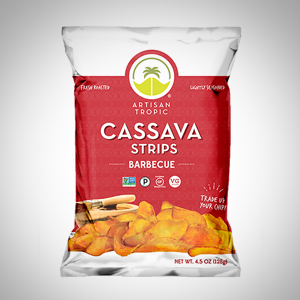
[00:05:45] Ray Latif: This one's made with avocado oil, this variety of... Actually, this is made with cassava too. How about that? I looked at the back. That's so interesting because Siete says grain-free tortilla chips On The front. And On The back, they only mention that it's made with cassava flour. Whereas the Artisan Tropic product that we have in front of us, the biggest word On The front On The package is cassava.
[00:06:06] Mike Schneider: Where siete is not, they're going for the, this is a grain tortilla chip play for you. People know it's better for you. Do you notice a little beach vibe there too, with the sea salt? I kind of like the beach, the beach towel vibe On The... On The bag. Yeah.
[00:06:19] Jon Landis: And these Artisan Tropic are cassava strips. They're like the raw cassava plant. This is, you know, cassava flour, which is, you know, different, different type of product for sure. So don't they make these with the same way? I think Siete also, like they have a lot of cassava based products. So their brand is almost You know, like people see Siete and they almost understand that it's a cassava product. They already have done a lot of that consumer education with their base.
[00:06:48] John Craven: Well, I mean, I guess the other thing is why tie yourself to whatever ingredient happens to be the thing you use today. I think we've seen a lot of brands that get kind of stuck down that path where And look, I think Ciete is sort of taking a pretty smart approach to this, because who's out there really looking for a cassava? What do you care about? Grain-free, tastes good, ticks the box. And cassava might be the ingredient of choice today, and it might be something else in a couple of years, and they'll still have a brand, whereas other ones... might have some challenges.
[00:07:23] Mike Schneider: These guys are also, sorry, the Artisan Tropic brand is about cassava and they also do plantains too, so I would bet that they're doing this to differentiate the two different, you know, the kinds of chips that they're doing so you don't get confused when you grab the bag expecting cassava and getting plantains. And the plantains are good plantains too. They've got a sweet and a savory in there. They're both really good.
[00:07:43] Ray Latif: Yeah, I wasn't totally aware that cassava flour was the main ingredient in a lot On The Siete products, but I know they are trying to broaden their consumer base. And for someone like me who, you know, I know about cassava, it's not necessarily like the first thing I look for in a product, but yeah, it definitely pops to see grain-free and also made with avocado oil. That's one On The things On The bottom On The package that I like, I don't know, just because I think I like avocados, but I'm not really necessarily sure about the nutritional value of using avocado oil. You're basic, Ray. I'm basic. I like my Starbucks tall dash of cream.
[00:08:19] Mike Schneider: That's just me. That's just how I do it. The I guess the criticism I'd have for the Artisan Tropic is that the chips look a little flat On The bag. They're kind of not as exciting as, you know, as chips on On The bags I've seen. But I think in terms of what it is, it gets the job done here and it has good call outs. Gluten-free, vegan, certified paleo, non-GMO. I mean, those are some good calls that people are gonna be looking for in this, in better for you chip space.
[00:08:46] Ray Latif: How about this Tapatio pickle that I have in my hand, Mike Schneider? It's salsa picante. This is actually a very, very big pickle. So Tapatio is getting into the pickle game apparently. We got these On The office recently. Single serve bags of pickle. There you go. Exactly. It's a single serve bag. It's a very big pickle. I took one home and then I was going to open it up just to try it. But On The ingredients listed is, I think, artificial yellow color. And I was like, screw that. I really don't need that in my life.
[00:09:16] John Craven: This looks kind of like it'd be messy to eat because there's a lot of liquid in this bag. Yes.
[00:09:21] Ray Latif: And did you drink the liquid? No. Again, I didn't. I didn't open it.
[00:09:24] Jon Landis: I mean, that's all I'm more interested in doing picklebacks with that stuff than anything else.
[00:09:28] John Craven: I would love to see you do that. Here you go.
[00:09:32] Jon Landis: I need some bourbon.
[00:09:34] John Craven: We might have that here. Assuming you didn't drink it all already, because I'm pretty sure you're the guy who drinks all the bourbon and whiskey here. There's Brad Avery, too. Brad likes his bourbon.
[00:09:45] Jon Landis: I've been under control.
[00:09:46] Ray Latif: That's good. I look at this product, Simple Life. This is a brand of Yerba Mate teas with added hemp extract, and I immediately think On The band No Doubt. Is that weird? Yes. I think you have a problem, Ray. Yeah. No, Simple Life, you know that song by No Doubt. No? Didn't listen to a lot of No Doubt. For a guy who was totally into 90s music, you never listen to No Doubt?
[00:10:08] John Craven: No, that just grated on my nerves, ears, etc. Never liked Gwen Stefani's voice?
[00:10:14] Mike Schneider: He's not home right now. He's walking in Spider-Web. Sorry, man. I haven't tried this yet. Have you guys tried this stuff?
[00:10:22] Jon Landis: It's pretty good. I didn't try the tea. I tried one On The waters. I thought it was interesting. You know, the flavors were pretty strong. I don't know if it was the hemp extract, but it left me thirsty, which a water probably shouldn't do.
[00:10:38] Ray Latif: That's definitely the weirdest thing I've ever heard.
[00:10:41] Jon Landis: New Beverage made me thirsty. Yeah. It left my mouth feeling dry and it left, it didn't quench my thirst very well, which, you know, I'm a little wary about some of these hemp extract products doing. Caffeine and monk fruit maybe too. Yeah. I mean, I only had the water. I didn't try the tea. I'm not into the caffeine. Gotcha. Gotcha. Ah, true.
[00:11:01] Ray Latif: So Jon Landis, you're off the caffeine, have been for some time. So I'm assuming you wouldn't like this shot that I'm holding in my hand. It's called Cafina, K-A-F-I-N-A. It's an organic or described as an organic energy elixir made with water, maple syrup, coffee.
[00:11:16] Mike Schneider: They're trying to trick you, Landis, because you don't drink a lot of caffeine. So they spelled it differently.
[00:11:20] Jon Landis: Yeah, it's, it's not for me, but my team member, Andrew Brayton out in San Diego, they got some out there and he says that they're really awesome. He's been really enjoying them. I mean, it doesn't have a caffeine count on it either. So I'm just really wary. I'm sure maybe the outer pack might have more information because it's a really small label.
[00:11:40] John Craven: I mean, what do you really need to know here? It's like water, maple syrup, coffee, schizandra berry, fenugreek, cardamom.
[00:11:47] Jon Landis: Yeah.
[00:11:48] John Craven: Whatever. I mean, it tastes kind of like coffee and maple syrup. It's pretty good. Beautiful packaging. Really love the packaging here. Yeah. I mean, it looked like if you handed this to me, I would guess that there were some little, I don't know, pills in here or something. Like it looks very pharmaceutical, not like a shot bottle, but the logo is for sure pretty slick. I mean, it's kind of obvious what's in there, right? Yeah, I would assume so.
[00:12:14] Ray Latif: Yeah, the bottle is not quite amber, but definitely apothecary style.
[00:12:18] Mike Schneider: I thought it was Red Ace when I first saw it, except in a black container, because I remember they used to use the Red Ace, the beach shot used to use a similar little jar. B-E-E-T. Yeah, beach, not B-A-T. You choose.
[00:12:32] Jon Landis: I like Red Ace. I mean, I think it's interesting that we're getting Kor Shots that are trying to do better with flavor. You know, the category historically is, you know, This is a shot because you don't want to drink more than two ounces of it. You can't choke down more than two ounces of it. It's just a functional purpose. It's almost more of a supplement than a Vital Proteins.
[00:12:55] Mike Schneider: They're collagen shots. Those are pretty tough to get down.
[00:12:58] Jon Landis: I mean, five hours, a classic example. So, I mean, you know, with Vive and Core and some of these other guys coming out with these higher end shots, trying to change that, flip that over and say, you know, just because it's a shot doesn't mean it's going to taste like garbage.
[00:13:12] Ray Latif: Definitely a different ingredient profile for all, as you mentioned, for Vive and Core versus some On The things you'll find in a five hour. Now I asked you guys to think of some restaurants or bars or places that you could recommend to our listeners who might be attending the events next week. Any suggestions? Metropolitan West. Tickets are online, betnet.com slash events. I hear the event is well catered. It's delicious food.
[00:13:39] John Craven: Um, yeah, we have a solid caterer beyond the bread and they've been catering our event for a bunch of years. Scoops. The man, their avocado toast is beyond. So good.
[00:13:49] Ray Latif: Nice. I like how you just called it beyond. It is. It's beyond. If you're new to New York or just come to New York for the first or second time and you haven't been to Eataly On The Flatiron District of New York, it is fantastic.
[00:14:01] Mike Schneider: And it's the Flatiron District, it's below 30th, you won't get a nosebleed from being too close to Midtown.
[00:14:06] John Craven: Great place to drop a hundred bucks on a glass of wine and a cheese plate. It is not cheap. What is cheap in New York? Well, OK, I'm not saying anything is cheap, but the value proposition of Eataly is somewhat low.
[00:14:23] Ray Latif: And Eataly is more of a gastronomic experience. It's a market. It's a place where you can eat at a whole bunch of different sort of, I guess I'm going to call them stalls for lack of a better word. There's horses in there with feed bags. Yes, exactly. No, there's a vegetarian area. There's a chicken area. There's all kinds of different places where you can get different kinds of food. Great seafood. Yeah, great seafood indeed.
[00:14:44] Mike Schneider: I'm going to go On The Up and Up at least once while I'm there. Probably have a nice cocktail. It's downstairs On The village.
[00:14:51] Ray Latif: On The village, huh? Yeah. I might check out SDK in Midtown. I like that place. It's like a very cool atmosphere. They've got a DJ, which might turn some people off, but it's a very fun, lively environment. I feel like, I don't know, as far as steaks go, they make a pretty darn good steak.
[00:15:06] John Craven: Delmonico? I like the thought of you eating a steak with the DJ going.
[00:15:12] Ray Latif: Like I said, you know, if you want a quiet atmosphere, if you're looking for fun, New York nightlife, you know, sort of dinner.
[00:15:17] Jon Landis: I'm going to be hitting that dollar pizza spot on 10th Avenue.
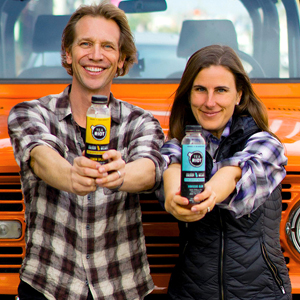
[00:15:21] Ray Latif: Nice. Ray's like swinging a steak around, smacking people with it. No, I've been to that dollar place. That's actually, that's a good value. So I mentioned the New Beverage Showdown earlier On The show, and the competition is where I first met our featured interview guests in this episode. Laura and Steve Jakobsen, the co-founders of Tea Riot, a brand of tea and botanical-based energy blends, made it On The final round On The competition back in December of 2015. On The three and a half years since, Tea Riot has built a multi-channel retail footprint that stretches from coast to coast and includes national distribution at Whole Foods. That growth has been fueled in part by the brand's impressive following on social media. Tea Riot has over 121,000 followers on Instagram alone, and will be supported by a $3 million funding round that closed in March. In an interview with Mike Schneider, Laura and Steve spoke about their approach to brand building and what they view as the keys to a successful social marketing strategy. They also discussed their experience On The Chobani Incubator and lessons from the prestigious program and explain why T-Rites investors must also be consumers On The brand first and foremost.
[00:16:36] Mike Schneider: This is Mike here in Los Angeles at T-Riot worldwide headquarters, where there's a rave happening right On The next room. You can't hear it right now because of our high quality audio, but I'm here with Lauren, Steve, the founders. Welcome to Taste Radio.
[00:16:48] Chobani Incubator: Thanks for having us. We're excited to have you here.
[00:16:50] Steve Jakobsen: Great to have you here. Thanks for coming by.
[00:16:51] Mike Schneider: Thanks for having me. I'm really excited to be here. I mean, this is a long time coming. T-Riot's been around for a while. Tell us a little bit for the three people who don't know on Taste Radio and the Taste Radio audience, what is T-Riot?
[00:17:03] Chobani Incubator: Okay, great, yeah, Tea Riot's 100% plant-based energy, all from the powers of tea and botanical. We don't add any sugar, there's no jitters, there's no crash, and you just get a great, steady, calm energy that gives you mental focus as well.
[00:17:17] Mike Schneider: Tea Riot is this brand, it's a very engaging, colorful package. It pulls you right in, and then you kind of go and check it out, and you're like, wow, 100,000 Instagram followers. How did you get there? Is social media really important for Tea Riot?
[00:17:31] Chobani Incubator: Yeah, from day one, we really committed to content. So that's been I think, our biggest focus early on, a lot of people pay attention to social content. But if you look around at the industry, a lot of people are reusing like user generated content and maybe haven't defined their style. So from day one, we committed to creating our own content and not being so much like brand forward or bottle in your face, but more about what happens when you are energized by our product and what kind of lifestyle do you live?
[00:18:02] Steve Jakobsen: And one On The big parts of building our Instagram has been getting just local people involved as far as local like influencers. When I say influencers on Instagram, it's kind of a big word, but we're looking at people that have, you know, maybe five or 10,000 followers that are just excited to get out there and do something with their lives and share what they're doing in a positive manner, whether they're being, you know, the lifeguard On The beach, or they're trying to become an athlete at one On The local colleges. They just want to be involved and do something that's fun for everybody.
[00:18:29] Mike Schneider: We should break this down a little bit because T-Riot is... Did you hear that thunderous moment? I said T-Riot and it thundered outside.
[00:18:38] Chobani Incubator: It's letting you know we're coming. We've been hidden for a little while, but we're about to break On The sky.
[00:18:43] Mike Schneider: Because T-Riot is this brand that has really cool packaging, great messaging. It's a brand that when people find it, it resonates with them. How did you build it? Let's break it down to sort On The studs here for a second.
[00:18:58] Chobani Incubator: Well, first of all, it came from a core idea that we really believed On The energy behind tea. So even if you think about the components On The brand at the tip On The iceberg, your name, so Tea Riot has always stood for energy behind tea. If you look at the category, it's like very calm, zen, natural. And we're from Venice, like we don't do boring. So we were like, hey, let's cause a riot. Like we want people to understand the power that's behind tea. And so that's really to date been our biggest asset. And then we're fortunate. Steve has designed every component. So I think when you look at Tea Riot from what's inside the bottle to what the graphics are On The bottle, You know, it came from the founders, like every inch of what's on this table is our spirit. And so Steve's, you know, got a background in just being a creative director, and he's really reflected and harnessed the visual identity behind what does it look like to be a modern, vibrant tea brand?
[00:19:58] Mike Schneider: So as a creative director, are you sitting around thinking, hey, you know, what are the brand pillars of T-Rite? What are like the things that it stands for? And do you, have you written that stuff down in a brand book somewhere? Or is this more just, you know, kind of a more grassroots effort?
[00:20:14] Steve Jakobsen: So Laura's background is a strategic planning director, and that all comes naturally to her at this point in time. So everything's well thought out, everything's well planned, and then we go about executing it together.
[00:20:25] Mike Schneider: So you're truly a yin and yang here.
[00:20:27] Steve Jakobsen: Oh, absolutely. Yeah, we're a perfect partner. We have the same fearless attitude about what we're going to do. And we go out and do it and build on each other's talents.
[00:20:36] Chobani Incubator: I think the biggest thing, though, as I think about us and our backgrounds, yes, it applied for sure. But I think one thing we were fortunate with the name T-Riot that we always felt like we could break the rules. And so we never tried to be like everyone else or do what any, we always said, what is T-Riot supposed to do? And I think that that's something that every brand can do. But because we're tight on resources, you don't have capital, like, you know, for us, we took the choice and really believed On The very beginning, we're building a lifestyle brand. And we needed to really concentrate On The iconicness of our brand and the meaning of our brand. And, you know, before we are sort On The brand that's coming out of nowhere, because before we invested in distribution, we invested in brand building. What does it look like? How does it stand out on shelf? What are consumers saying? How do we need to change it? from the inside On The bottle On The outside On The bottle. And we just stayed nimble for like two years and made changes in our foundation to really tighten everything up together. And I think sometimes when, if you just have the courage to step out and say, how do we be different and how do we do things differently and own it as our own, instead of being like the category, it really became an advantage for us.
[00:21:54] Mike Schneider: But tactically, how do you invest in brand building? What does that mean exactly?
[00:21:59] Steve Jakobsen: I think part of it, just really quickly, is building out the brand, and everybody says the brand, and so building out the look and feel, building out the attitude, building out the followers, building out everything else before you expand too far. More thunder On The background, listen to that.
[00:22:14] Mike Schneider: You're making so many good points right now.
[00:22:16] Steve Jakobsen: Prayer in LA here.
[00:22:17] Mike Schneider: God's giving you the high five.
[00:22:18] Steve Jakobsen: Yeah, so. We're building out everything about the company except, I should say, building out our distribution or building out our breadth or our reach of where we're selling our product and making sure everything's aligned messaging-wise and creatively-wise before we put emphasis on growth On The company. And that way when we do grow, we're already lined up, we're ready to move fast and quickly and we can pivot the way we want to because we already have those strengths developed.
[00:22:47] Chobani Incubator: Yeah, I think also just to shortcut that a little bit, I think it's time and trial. You know, you got to give time to some assets, but you also have to not be afraid to change them.
[00:22:59] Mike Schneider: So let's talk about change for a second here. How have your thoughts on who the audience was evolved from the beginning of time to now?
[00:23:07] Chobani Incubator: I don't know so much if it's changed as much as it's gotten more specific. And so I think we've always, from the very beginning, wanted to be the modern tea brand for younger consumer base. And so generically, everyone has kind of definitions for millennials and Gen Zers. I think what we focused on was social media, building our content, and understanding who was following us. And then we found out, like, more specifically, why were they using our product? Because they were fitness buffs and working out and using it not only for energy, but also hydration. wanted the caffeine, but loved that it didn't have added sugar. And then we found out that there's a huge trend of people who want to replace their energy habits, like energy drinks, and replace coffee occasions with something that's like an alternative energy. They just didn't have a cleaner, better source before, but they were tired of getting the jitters On The crash. So these things, it takes time and really not only using social media to publish outward, but to also listen. and to really gardener interact and engage with them to find out like how are they using it and then using these people as micro influencers to broadcast out to your following like how they're using the product. So we just learn more and more as time went on.
[00:24:26] Mike Schneider: You just said a lot of great things about influencer marketing, micro influencers, creating content. Talk to me a little bit about the things you've learned about social marketing and social influence. So how do you know what kind of content to create first? And then how do you know who to sort of hook up with that's going to resonate with your audience? And how do you do that?
[00:24:47] Chobani Incubator: Yeah, great question. I wish there was a magic pill for all of this. But I think just taking a couple of things in bite sizes that you said. One is, I am On The belief that influencers are kind of dead. I know a lot of people continue to ask themselves, how can we use influencer marketing? But the biggest influencers are real people. And so that's who we've always focused on, who are the real people using our product in a real way, who have real followers, that we can stay focused in our distribution in and around LA out of our hub of Venice.
[00:25:32] Mike Schneider: So old school is new school again, basically.
[00:25:34] Chobani Incubator: And like really old school, like believe in word of mouth. Because there's a lot of influencers who have a lot of followings, but then there's also a lot of people who may not be listening exactly to what they're saying. So these are like real authentic people in your community who are influencing in your community. that yes, we call micro influencers, but I think it's like this level of authenticity really matters. And so as far as the content, like we always focus on what people are doing with our product. And so if you look at our gram, like it really portrays the vitality On The brand, but some pictures, we don't even have the product. You know, it's really how people are living, being energized On The. And I think for people listening who are like, tactically, how did you do it? I think we had a great idea On The very beginning that worked for us, which is we found a kick-ass photographer in LA who was a skateboarder, you know, Under Armour girl, like all kinds of different influencing connections, who we happened to stumble upon her because we were like, wow, we love what she creates. that represents our brand, like let's get her. And then because she had some significance of being an influencer in LA, the pictures that she started to take of micro-influencers, we all built our Grams together. So if you look at the people who are involved in our photo shoots, like their Gram is built with ours and everybody wants content. So we just promise people product and content, like come to this amazing shoot. You understand this woman has an awesome style. You're gonna get content to build your feed. You're gonna walk away with some amazing energy from tea that's going to keep you jazzed forever. And everybody wins. You tag us. The only rule is you tag us all, the photographer and us. And then we have real people in L.A. who built a real following that not only came to Tea Riot, but On The community of everybody that was involved.
[00:27:25] Mike Schneider: So you built it organically, but as a community.
[00:27:29] Chobani Incubator: Yeah, like truly, they are community social tools, right? Like we really treated it as a community. It is kind of old school.
[00:27:37] Mike Schneider: And it was a grind, wasn't it? How long did it take?
[00:27:40] Chobani Incubator: So let's see, we just hit our three year anniversary. So it's taken us about two and a half years to get over 100,000 followers.
[00:27:49] Mike Schneider: So you've built up this, I don't know, social capital. Do you see an impact On The business directly from this? Bottom line.
[00:27:58] Chobani Incubator: Bottom line, so I would say to today, there's really no way to measure that. You know, do we know is it bringing dollars? We haven't done anything else up until very recently. So I have to imagine it has some impact. Is it measurable? I know. But we did just launch click to buy on Instagram and we just launched our e-commerce platform. And if we were probably really on top of it, we would have tied our social following to e-commerce earlier on. But, you know, it just we weren't we just weren't there yet. So we will be able to measure it here On The future and we will and we think there's some real value there. Yeah. But I think that you just hit the nail On The head, though. I think for a lot of early stage companies who are under pressure, you know, on building their brand, and then people questioning why are we spending money on social? Why are we spending time on social? We can't prove that it's doing anything. Those are all the reasons why people don't invest enough in it. And at the end On The day, we all need tools to create community around our brands. And right now, it's the most vital tool we have, as long as you're doing it with real people.
[00:29:11] Mike Schneider: Well, I know it's something that the investment community pays attention to. So let's switch here. Let's switch gears here. T riot recently, uh, recently closed a, an a round.
[00:29:22] Chobani Incubator: We did. Yes. So we're stoked.
[00:29:25] Mike Schneider: I bet you are. So talk to us a little bit about how you go from, you know, a scrappy seed company to now, you know, big time A-Round. What does that mean? What is the difference between, you know, being a seed round company and an A-Round company? What's the difference between what you were trying to prove at the seed round and what you have to do at the A-Round?
[00:29:46] Chobani Incubator: Yeah, great question. I think in two parts, one is much like our social following. We really focus on who is involved On The brand. And so we're stoked about our round. Obviously, every brand would be to have capital to operate. But the real reason we're stoked about our round is the people we have around us. And we really added a ton of intellectual capital On The business. These people are involved in T-Ride and believe in our mission. And I think at the end On The day, you have to get everyone around you who's mission aligned. And for us, part of that mission alignment is we're trying to build a brand and distribution simultaneously. And so On The earlier seed round, we really honed in our backyard, focused on where we were, built penetration, built our following, and really focused on being from somewhere, having an origin that mattered. And to us, Venice does matter. It's like a place On The map that reflects the attributes of our brand. But I think now, you know, post, Getting the funding and looking forward, we were just awarded National Distribution Whole Foods, which we're stoked about. Again, another partnership. Whole Foods has been great at partnering with us and scaling us. I heard you say national.
[00:31:01] Mike Schneider: That means I can get it.
[00:31:02] Chobani Incubator: What's that?
[00:31:02] Mike Schneider: That means I can get it finally, East Coast.
[00:31:04] Chobani Incubator: Yeah, you can get it. National Distribution. Oh, yeah. Absolutely. Yeah. So, um, so anyway, so I think this round with great people around us and great retail partners who everyone understands the mission that we're on, we're really focused On The operational excellence, like retail execution.
[00:31:22] Mike Schneider: Some scale.
[00:31:23] Chobani Incubator: Yeah. And scale. So it's like we want to do what we did in our backyard and scale that in all the markets. And that means like a real focus on how we're executing everywhere and taking what we have and just, you know, hitting repeat.
[00:31:37] Mike Schneider: And what does it mean for your two roles at the company? Does it mean that you can still do everything that you do every and all the time?
[00:31:44] Steve Jakobsen: I mean, as you know, sometimes we think that we find out the hard way. That's not true. You gotta learn to distribute and get help.
[00:31:52] Chobani Incubator: Yeah, I mean, getting help is a huge thing. And I think, look, we set out to build a brand that created a culture. And we never thought about that culture only as an in market culture. So we are building a culture internally with amazing people want to kick ass every day who believe On The energy of tea. And we built an amazing investing culture with our investors. Just the same kind of dialogue we have with them I think is rare and the partnership we have with them. And so it's really the trifecta of like creating that culture inside, outside, and with the investment community to really create a force to be reckoned with.
[00:32:29] Mike Schneider: So talk to us a little bit about how you chose who invested in you. I mean, you said you're building this culture and you looked for a certain something in your investors. How did you know that they would be riders?
[00:32:41] Chobani Incubator: Well, first, they're consumers. They believed On The product and then they believed in us. So I think that's the number one thing is, are these people using our product and does it fit their lifestyle and do they understand how other people can use it? And then there's a few sacred cows, like, will they allow us to continue to invest in brand and distribution simultaneously? You know, will they add On The intellectual capital to give us advice and brainstorm and think about what this brand could be? And I think we're On The natural energy category. It's massive. So aside from everybody being stoked about the opportunity, we have a set of people around us who believe we are the brand that's going to emerge as a healthier energy leader. And we have a suite of people who are ready to help us do it.
[00:33:29] Steve Jakobsen: We have, yeah, through our investors and advisors and it's an incredible group of people and everybody brings something different On The table and that's mostly not by accident. We sought out people that had something to offer whether it be financial knowledge or distribution knowledge or something within an industry preferably or people that fully understand it and want to be engaged and understand how we're moving forward. And sometimes that was really hard to find those people because there's other people with money that just want to put money out there. But then they don't necessarily bring as much On The table. So we've been very fortunate. We haven't done any institutionalized investors at this point in time. It's all been personal people with experience, which is we're very fortunate for that.
[00:34:11] Mike Schneider: Let's take a let's let's take a step back and talk about prior to investment. You took part On The Chobani Incubator. Talk a little bit about why you chose that experience. What were you seeking with the incubator experience first?
[00:34:25] Chobani Incubator: Yeah.
[00:34:26] Steve Jakobsen: I think, first of all, we were fortunate just to hear about it. It was their third term. They had done two classes already. Third time's the charm. Yeah. And we were fortunate. And a lot of people apply multiple times before they get in. So definitely, if you don't get into the Chobani the first time you're interested, apply again. They really appreciate that, and they like to see how you grow year over year. Yeah, so someone told us about it the morning before the deadline and we were fortunate enough to, I don't know, we got home at three o'clock On The afternoon and you have to do a video, so we put a video together really quickly. Laura filled out the application and got it out by the midnight deadline. And then we just started conversations with them, and next thing you know, they've invited us to be part of their program. And I think one On The nice things about Chobani is that they stand for a lot On The same things that we stand for. They want to do good food for all people as much as possible, and we want to have great product for all people Kafina Energy as much as possible. So I think we align with a lot of things, and that was a great starting point.
[00:35:23] Mike Schneider: What was it about the incubator experience On The incubator culture that you felt was right for T-Riot or for an entrepreneur in general?
[00:35:33] Chobani Incubator: Yeah, I think for an entrepreneur in general, I think Everyone is so passion forward, right? And everybody has their idea. It's impossible for one person to understand the depths of every aspect On The business, right? Everybody has their strength. And so going into the incubator for us was about being well-rounded business leaders and entrepreneurs that had full understanding of every component. And what Chobani helped us do was understand what are all On The details you need to have and know about your business and your product and everything from finance to innovation to operations to sales and marketing. And then they really also educated us on what are the right people to then help you fill those roles and what is your area of expertise and how do you build a team? This is all about orchestrating a team. I think our biggest thing we took away from Jibani is like, you know, we're in a sport every day and you got to build your team the right way. And like some days you're practicing and some days you're in competition, but the people that are around you are the biggest factor in how you're going to perform.
[00:36:47] Mike Schneider: Were there things that you thought you knew before the incubator experience that now, you know, you didn't know? Yeah, a couple of things that would be really helpful for some On The brands listening.
[00:36:59] Chobani Incubator: Yeah, I think the first thing, which sounds so obvious, but the first thing is just anchoring back on why you got started the first day, like where that idea came from and what you were trying to do and just regrounding back in that. Because I do think with all the pressures and you're tired and you're trying to accomplish so much in so little time and you're trying to hit these success metrics for people to give you investment or whatever. At the end On The day, we just all need to sit back and say, I tried to kick ass for a reason. Like, what was that reason? And remind ourselves every day while we get out of bed. It's not that complicated. And so, you know, you look at Hamdi. He's an amazing person where he's just taken his belief in wanting to provide better food to people and just, you know, blowing that up in so many different ways of what he's involved in. The purpose, that's the thing that matters the most. What's the purpose? Why you got started?
[00:37:53] Steve Jakobsen: I think one On The things that they really helped us with was, and they did this for all everybody in our class, they helped you understand the story you're trying to tell and make sure that you know what your story is so that when you go out and you talk about your product in every different way from your Instagram to your interviews to your packaging, that you have a clear vision. Because if you don't know it well enough, the consumer is not going to know it.
[00:38:15] Chobani Incubator: The other thing that I'm super passionate about, and again, it's one of those obvious things, but I so distinctly remember this one day when we were in one On The breakout sessions, and it came from the QA guy, which you would imagine, but he said, look, you're the entrepreneur. That means you're responsible for every component of your business. all the way down, you're the one. Whoever makes that decision, you need to know how they manage that decision, you need to be kept informed, you need to, if you don't know something about your business, you better go find out. And I think we really took that to heart, that was why we were On The incubator, was to get more familiar with a higher level business perspective of every aspect of what we were trying to do, to figure out the priorities of what we needed to change, and then be curious And like, you'll find out what to do about those things.
[00:39:10] Mike Schneider: It goes back to what you were saying before about, you know, you can't do everything and you have to delegate and there's this level of trust, but you still have to know everything that's going on.
[00:39:17] Steve Jakobsen: Yeah, absolutely. Yeah. You always want to put people in a position to succeed. You don't want to make their job any harder for them. And if you know more about it, you can help them help you.
[00:39:25] Mike Schneider: So you talked about the way that you introduced T-Riot at the beginning of our conversation is different than the way that you have introduced it On The past. And you mentioned in our preparation for this that you've really honed in on that message. So let's talk a little bit about how that came about On The incubator experience and then what that is.
[00:39:46] Chobani Incubator: Yeah, it goes back to what I was saying previously, like when we started this, what was that simple thought of why we started Tea Riot? And it really was, and even the name itself reflecting it, the energy behind tea and causing a riot On The industry. And when you think about energy, I think One On The first things we learned as we went to market was a lot of people don't really remember that tea provides energy. And so we kind of got caught in this, are we a tea brand? Are we Kafina Energy brand? And so On The incubator and beyond, we've done a lot of work beyond to really put the stake On The ground. We are Kafina Energy brand. And we believe the energy category is stagnant, lacking consumer-focused innovation, in fact, underserving customers, delivering bad ingredients and concoctions that nobody knows how harmful they actually are. And in a bottle of Tea Riot, you get energized by nature. It's just the power of tea and botanicals. We don't add any sugar. And we're super bad, like we are riotous about that. We don't think anything exists On The market like we're here to deliver. We've done our homework. We know the trends are in our favor. And we know that people want energy from fresher, better ingredients. And there's a time for change. And we think we are the change.
[00:41:07] Steve Jakobsen: Spot on. And I'll add on to what you're saying about how we see our vision is number one, well, we're Tea Riot. We are a brand. So we're creating a brand. Number two, we're creating Kafina Energy product. Number three, we happen to do that through tea as a mechanism. And after that, it all filters down.
[00:41:23] Chobani Incubator: And I think we're inspired by our time at Chobani too, because when we think about better food for more people, what's better energy for more people? Everybody's looking for it.
[00:41:34] Mike Schneider: And you have a kind of an insight zero for that, don't you? certain e-sports team.
[00:41:41] Chobani Incubator: Oh, yes. So we're obviously we're we're really positioning ourselves against the energy drink category at the moment. We're upset with all the big beverage companies that, as I said, are underserving the customer.
[00:41:54] Mike Schneider: So as many disruptors are there as most disruptors are.
[00:41:57] Chobani Incubator: as most disruptors are for sure. Yeah, it's a privilege to be called a disruptor. So we really want to cause havoc and we want to storm the castle. So we looked at Kafina Energy drink landscape and realized that there's a couple of things that they are synonymous with. And one of them is eSports. And so eSports is a huge growing category. The audience is growing like over 50 percent.
[00:42:22] Steve Jakobsen: More people watched some On The championships On The eSports teams online last year than they watched the Super Bowl. Yeah, it's way bigger than people think.
[00:42:30] Chobani Incubator: And it's our core audience when we're talking about this younger demographic and their digital natives. So we can take our digital marketing expertise and apply we're going to have like be On The Twitch dashboard. So we create a part we actually had a team come to us initially. We are value aligned in our belief that a better energy needs to exist. We partnered together and now are the sponsors of a team called FlyQuest here based out of LA. That's a League of Legends team. And we couldn't be more stoked because their whole value is showcasing greatness of their players. And we want to spread positive energy and fuel with the right things. And the benefits of T energy really directly relate to eSports. So not only are they energized, but they're cognitive. cognitively, their, their mental performance is enhanced as well. And so we can give them better ingredients and better performance on one hand, twitch channel.
[00:43:30] Mike Schneider: So hot right now.
[00:43:31] Chobani Incubator: I mean, you're not in, and here's the thing is that I will state this and I hope five years from now we can look back and say it happened, but You know, we are being disruptors Kafina Energy, and we hope to be disruptors as much in content as well, and really authentic content and being contextual in people's daily lives. And we think esports and Twitch and all of this is a way to do that.
[00:43:57] Steve Jakobsen: And specifically with FlyQuest and that comes back to one of our three or four pillars why we started our own business On The first place is we want to work with good people. We want to work with good people every day. We've all had those times On The office where you work with someone that's a little grumpy you're not fun to be with. FlyQuest people are awesome.
[00:44:13] Chobani Incubator: And it feels really good to have all 12 League of Legends team up on a board. And they're all sponsored by leading brands, which you all can imagine what they are. I won't say them out loud. And then to have one team that has T Riot underneath of it, that we actually are in a sponsorship opportunity with the big dogs to let them know we're here.
[00:44:33] Mike Schneider: Well, that's awesome. Well, hey, thanks a lot for having this conversation, for being on Taste Radio Insider and for having us On The worldwide headquarters.
[00:44:41] Chobani Incubator: Awesome. Thanks so much for stopping by you guys. Always a pleasure.
[00:44:44] Ray Latif: Love it. Thanks, guys. That brings us On The end of episode 37 of Taste Radio Insider. Thank you so much for listening, and thanks to our guests, Laura and Steve Jakobsen. Please subscribe to Taste Radio Insider on Apple Podcasts, Spotify, Stitcher, SoundCloud, and Google Play. As always, for questions, comments, ideas for future podcasts, please send us an email to ask at Taste Radio.com. On behalf On The entire Taste Radio team, thank you for listening, and we'll talk to you next time.
[00:45:19] SPEAKER_??: you