[00:00:05] Sebastian Dreher: We've received so much feedback of late from retailers, service providers, investors, and suppliers about how vital BevNET, Nosh, Taste Radio, Taste Radio Insider are to the industry, and we are grateful. It's really humbling to be a part of something that brands and industry experts find vital. This audience of heavy hitters makes advertising with us a high signal audience for brands looking to raise capital, find retail partners, improve messaging, and scale their products.
[00:00:33] Döhler Ventures: Our team can walk experienced marketers through our offerings to help them find exactly what they need to plan for this year's story arc.
[00:00:40] Sebastian Dreher: And for those new to advertising, don't worry. We can help explain what each of the components do for you and help you build packages around the right times to be in market.
[00:00:48] Döhler Ventures: To learn more, visit mediakit.BevNET.com Or if you're ready to talk, reach out to sales at BevNET.com and send us 200 words explaining what you're trying to achieve, and we'll be in touch quickly.
[00:01:00] Sebastian Dreher: And now, Taste Radio Insider.
[00:01:07] Ray Latif: Hey folks, thanks for tuning in to Taste Radio Insider. I'm Ray Latif, and you're listening to episode 39 of the podcast. I'm with my BevNET colleagues, John Craven, Mike Schneider, and Jon Landis. We're recording from the Taste Radio studio at BevNET headquarters in Watertown, Mass. And in this episode, we're joined by Sebastian Dreher, the Managing Director of Döhler Ventures US, who discusses the strategic vision behind the venture capital firm, which makes investments in early stage and innovative brands. Just a reminder to our listeners, if you like what you hear on Taste Radio Insider, please share the podcast with friends and colleagues. And of course, we'd love it if you could rate and review us on the Apple Podcasts app or your listening platform of choice. It doesn't roll off like iTunes, does it, Ray? No, Apple Podcasts is a little bit of a... Apple Podcasts.
[00:01:54] Döhler Ventures: It's a... A lot of Ps to pop in. It sounds like an apple pie.
[00:01:57] Ray Latif: No. Now I'm hungry.
[00:01:59] Döhler Ventures: Apple pie, apple potato. Turnovers. Thank goodness we have chicken chips on the table here.
[00:02:03] Ray Latif: Well, we do have chicken chips and we have a nice note with those chicken chips. These are from the folks at Wonderful Wild. I shouldn't say Wonderful Wild. The name of the brand is Wild. They're just wild. They're just wonderful and they're wild. That's W-I-L-D-E. And the note says, hey, Taste Radio team, just in case Landis was getting tired of talking about CBD, here's an assortment of our new flavors to spice things up a bit. The wild, I can't read the last part.
[00:02:31] Los Angeles-based: I'm assuming it says team. Well, lucky, one of the flavors is CBD chicken chips. Isn't the C in CBD chicken? Totally kidding about that. So chicken chips, they're chips made out of chicken, literally.
[00:02:43] Döhler Ventures: I gotta say their newest, the Nashville Hot. What did we say, flavor for chips? Okay. That's what it's called, Mike. Yeah, I know. I was like, is it chip flavor? I know you're new here, but yes. Flamin' Hot chips. This is not gonna be cut. I was hoping this would hit the cutting room floor, but it's not. No, can't cut this part.
[00:03:02] SPEAKER_??: No, definitely not.
[00:03:02] Döhler Ventures: The newest variety, the Nashville Hot, this thing pops right off the shelf with the fiery chicken. It's pretty awesome.
[00:03:10] Wilde On: The chicken is on fire. Yeah, it's pretty awesome. That better be burn your face off hot with that kind of graphic. It is pretty hot. Have you tried them before? No. I'm allergic to chicken. No, we're going in, bro. We're going in. I'm allergic to chicken.
[00:03:22] Ray Latif: We're going in. These are good. You know, I saw these at Whole Foods the other day. I wonder what consumers think of these and whether or not they actually know that they're made out of chicken. Would you know that these are made out of chicken if John Craven, you're munching on one right now?
[00:03:35] Sebastian Dreher: Is it chicken chips?
[00:03:36] Ray Latif: Yeah.
[00:03:36] Sebastian Dreher: Would you know if the chicken chips are made out of chicken? I think it's a good guess.
[00:03:40] Döhler Ventures: Well, I mean, it's not really an intuitive thing. Let me just call out a couple of clues here. First, it says chicken up in the upper left corner, raised with no antibiotics or added hormones. There's clue one, okay? Clue two, it's called chicken chips, okay? And that's heroic and right in the middle of the package. And then if that's not enough for you, the giant rooster.
[00:04:02] Wilde On: All I can tell you is that it's not intuitive to think about chips that are made out of chicken ray has a fair point He does know I remember when there was a bottle of chimp food that beverage and raised like where the chimps out on the ingredient Sure enough no chimps
[00:04:21] Döhler Ventures: But what we're really pointing out here is that something new to the market, like chicken chips, which doesn't have a competitor at all yet. Beef chips. I don't, I don't think so. I don't think so either format. I don't think anybody else has made a chicken chip to date that not that we've seen tilapia chips, tilapia chips are the closest competitor, but But it requires a lot of education and they're, they're doing a pretty good job on this, on this package for starters.
[00:04:45] Wilde On: Well, as you noted, there's a huge chicken on there. There's fire coming out of its rear too. I mean, it's, they're spicy, but they're not, they're not that spicy. They taste good.
[00:04:55] Döhler Ventures: I think that this serrano pepper here, this Thai chili pepper is definitely misleading because these things set your face on fire, like you said, John Craven. And with this packaging, it should be a lot hotter.
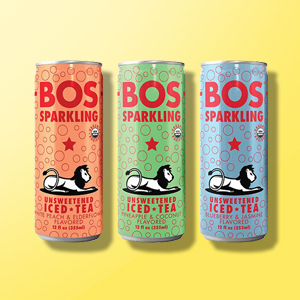
[00:05:07] Ray Latif: We got into the office. This caught my eye. Boss BOS. They have a new sparkling or new line of sparkling iced teas. I believe these are new, yes?
[00:05:16] Döhler Ventures: This is a South African tea?
[00:05:18] Ray Latif: It's a South African rooibos company, I believe.
[00:05:20] Wilde On: Yes, rooibos tea. It's been on the market for, well, Boss has been on the market with that yellow can for a very long time.
[00:05:26] Ray Latif: But these aren't yellow. These are new, as far as I know, these sparkling unsweetened iced teas. It looks like they have three varieties. What I'm holding in my hand is blueberry and jasmine. I also have a pineapple and coconut. and a white peach and elderflower. These products are slightly reminiscent of what we tried on stage at the New Beverage Showdown. The Minna. Minna, M-I-N-N-A, which also makes a sparkling tea product. The hieroglyphics brand. The hieroglyphics brand.
[00:05:54] Döhler Ventures: What's that bag in front of you there, Jerky?
[00:05:56] Ray Latif: Yeah, this isn't new. I just had this in my cabinet. I just decided to pull it out. It's from Fish People. It's a wild Alaskan salmon jerky. The variety is Rainbow Peppercorn. I'm not familiar with Rainbow Peppercorn as... How long has that been in your cabinet, Ray? I'm not sure. I wouldn't throw this away even if it were expired.
[00:06:16] Sebastian Dreher: But anyway, I was making more of a comment on your hoarding than anything else.
[00:06:21] Ray Latif: You should see my cabinet. It takes one to know one.
[00:06:24] Sebastian Dreher: I know I'm, I'm cleaning everything out now, bro.
[00:06:27] Ray Latif: There's about, uh, I'd say how about 200 cans of stuff Jon Landis's office? At least not as bad as Barry's. I spent his Perry, Barry Nathanson, the publisher of that net magazine.
[00:06:37] Sebastian Dreher: I just got leftovers from that new beverage showdown selection meeting. That's it.
[00:06:41] Ray Latif: Of course, at the New Beverage Showdown, if folks were listening, watched it, you'll know that five out of the 12 semifinalists had some sort of CBD infused into their products. I met Mark Niederhaus, who was not a participant in the New Beverage Showdown, but a participant in Beverage School before BevNET Live. He is the founder of Upwell, which is a brand of CBD beverages. Very nice guy. I haven't tried the product. John Craven just popped that one open. I've been hoarding that one actually for a week. That's amazing.
[00:07:14] Döhler Ventures: You can't put CBD in front of John Craven and expect it to last.
[00:07:18] Wilde On: You know, I just want to try all these things. It's super interesting to see just like the number of products and which ones, you know, are drinkable, which aren't and the approach. I mean, this one just tastes like a sparkling water with a little bit of lemon in it. I mean, you can't see the label on Taste Radio here, which, It needs some serious work. I'm not really a big fan of leading with CBD above what the drink actually is. But it's not bad. There's maybe something there.
[00:07:51] Sebastian Dreher: I'll say that for most of the hemp waters that I've had, they leave you quite thirsty. And that's what I like about Upwell here is you don't taste the hemp, the CBD, whatever. You don't taste it at all. And it doesn't leave your mouth dry and thirsty. So I think that that's one of my favorite sparkling waters that I've had so far. Mark gave me one at the show, and I gave him that feedback as well. Send more, Mark. Yeah.
[00:08:18] Ray Latif: It was wonderful meeting so many young entrepreneurs, early stage entrepreneurs at Beverage School and at BevNET Live in general, as well as those at Nosh Live and at Boot Camp. If you do have new products and you want some feedback, please send them to us. But if you're just looking for a couple pointers on your packaging or formulation, happy to offer some feedback. Yeah, we do it all day long. And I should note that if you send us some of your products, we'd be happy to send you a t-shirt as well. We got some brand spanking new Taste Radio t-shirts. You could be the envy of your company and your community. Just rate and review Taste Radio on the Apple Podcasts app and let us know you did by sending us an email to askatasteradio.com. Include in your email your preferred size for the t-shirt and mailing address and we'll get it out to you pronto. Also, if you're attending the Summer Fancy Food Show or exhibiting at the Summer Fancy Food Show, which is happening this weekend, that is June 23rd through the 25th, I guess it's partly the weekend and part of next week, let us know, drop us a line, just shoot us an email, askattastetrader.com, or you can reach out via Instagram or LinkedIn, whatever your preferred method of communication is. My Instagram handle is BevTrade, B-E-V-T-R-A-Y-D-E. Mine's easier. Yours is easier.
[00:09:38] Döhler Ventures: BevNET Mike.
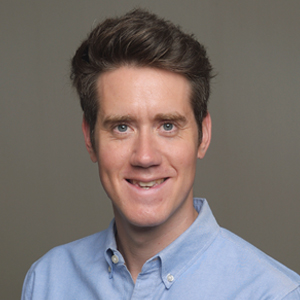
[00:09:39] Ray Latif: BevNET Mike. Can't wait to see you at Fancy Foods. Can't wait to see what you've been working on. And can't wait to hoard some stuff. Right, Jon Landis? Jon Landis has left the building. All right. As I mentioned at the top of the show, Sebastian Dreher is the Managing Director of Döhler Ventures US, which is the venture capital arm of Dohler, a global supplier of natural ingredients to the food and beverage industry. Dreher oversees the firm's American investment portfolio, which includes stakes in a number of fast-growing brands. As part of our conversation, Sebastian discussed the mission and focus of Döhler Ventures, why they're focused on early-stage brands, how they evaluate scalable innovation, why category dynamics are crucial to their investment strategy, and why Sebastian believes that the best founders are great at fundraising. I'll also note that like two of the four people in this room, Sebastian is a noted fan of European soccer, which places him squarely in the realm of CFDs to appear on the podcast. Good stuff all around. Let's have a listen. Hey folks, it's Ray with Taste Radio. I am at BevNET Live Summer 2019 in New York City. With me right now is Dr. Sebastian Dreher, the Managing Director of Döhler Ventures US. Sebastian, thanks so much for being with me.
[00:10:57] Wilde Brands: Thank you so much for having me, Ray.
[00:10:58] Ray Latif: Let's do it. Again. Listeners at home will not be aware that we've attempted to do this a few times now, and for various reasons, this is, I think, take three? Yeah, I think so. How's your Paper.Live experience?
[00:11:12] Wilde Brands: It was fantastic. This was a really good show. You guys know that I'm a big fan of what you're doing here and the content you're creating. I learn every time so much. The networking is great. And this time, Mike Rapoli, Bill Weiland, they just knocked it out of the park. They really did.
[00:11:26] Ray Latif: I thought Mike Rapoli in particular, the co-founder of Vitamin Water and of Body Armor, has such a stage presence. His charisma is so undeniable that all you could do is just focus on him. Really, really magnetic. So Dohler and Döhler Ventures, for folks who are not familiar with the company and the venture unit, what is Dohler?
[00:11:49] Wilde Brands: So first of all, we are a global B2B company. So it's our mission to help brands grow. We don't own any brands and we never will, just to clarify that, but it's our job to help brands to be successful ultimately. We are a producer of natural ingredients, meaning that we use technology to extract the most value of the fruits, vegetables or botanicals like tea. So we really were plant-based before plant-based actually was a thing. So what it does, we basically take our flavors from the real fruit, we touch the real fruit, we process it in many of our factories all over the world and that also allows us to be very sustainable because we don't ship water all over the world. On top of that, we do not just sell ingredients like flavors or colors, we ideally formulate a whole blend for our customers. So what it really means is that we look at a product of our customers holistically and look, how can we optimize the functional values? How can we make the overall product even better? And that we have the right variety of ingredients actually helps us to do so. And lastly, we offer a whole range of solutions around the actual ingredient or ingredient system. We formulate the product, as I said, we have several solutions around the value chain, like sensory services, product testing, regulatory support, and so forth and so on. So in a nutshell, we really want to be like an all-in-one solution provider for the food and beverage industry. In terms of the venture unit itself, what's your mission? What's your area of focus? So we really want to invest in the ecosystem that is building around health and nutrition. And for B2C brands in the food and beverage space, that means that we're really looking for innovation. We understand the product and so we really want to use that understanding of identifying innovative products that ideally create new categories.
[00:13:29] Ray Latif: I mentioned that you're a doctor. What's your background? How did you get your doctor's degree and why does it apply to your current role?
[00:13:35] Wilde Brands: So my background is I'm actually an industrial engineer, which means that I studied mechanical engineering and business administration at the same time, which represents the fact that I always like the different worlds. And I think that's where innovation really is happening across categories or in between categories and in between functions. So having a passion for the technical side of things and having a passion for the marketing side of things, I think that is a pretty good prerequisite to do what I do right now in the venture unit. And you asked me how that helps. I think with a PhD, what you do is you really analyze data. you try to see patterns. You spot patterns and you try hypotheses and you learn with that. And that is what a venture investor does. The number one job for me as a venture investor is to analyze and to find patterns. Patterns in the industry across categories and really look for something that we think has the potential to go all the way down to a successful exit.
[00:14:30] Ray Latif: You currently live in Los Angeles-based. What part of Los Angeles-based do you live in? I live in Venice Beach. In Venice Beach, which seems like ground zero for innovative concepts in the food and beverage industry at this point. Makes sense that you're out there given your role. In terms of the investment strategy for Döhler Ventures, do those trends and those innovative concepts really apply to what you're doing? You know, how do you think about investing in brands and what's the sort of long-term strategy for those investments?
[00:15:00] Wilde Brands: So what's unique about our approach is that we are investing very early stage. Early stage for us means ideally there is a product and there is a brand, but we do pre-revenue, early revenue because what we really analyze is the product and its potential to create a new category. I mentioned that before, but I think it is really important that there is a new value proposition, that there is an insight in the consumer's minds that really makes a difference on the longterm. And there are many products out there that are basically getting in a crowded category and they're going to have a tough time. With a new product that has the potential to have high velocities and create a new category, you have the ability to build a company a little bit differently and scale it a little bit faster and with a little bit less capital needs than if you're having a me-too product. Having that said, Venice Beach, Los Angeles-based in general is a ground zero for many brands. I think there's a good track record of brands that have been founded in LA, even at the beach. I think of Naked, for example, Naked Juice. So there is a lot of companies out there and there's a lot of thinking about health and nutrition. As I said, people are passionate about what they do and that passion is translated into new products. And if you're there, I know from the podcast that you guys love Erevan, you love Giusta, you love all the places out there. And for me, I have my weekly trip where I go to Erevan, which is in most cases the ground zero for new products because they're really quick in taking something which they think is a clean product and fits the trends. And people are going there and it's really great. And in Venice, you have Whole Foods, you have also Kroger's, you have 7-Eleven. So in a day, you really can get a look around of What is the context in every store? What are the people buying? And it gives you good thinking about evaluating a product, a category and a startup.
[00:16:50] Ray Latif: In terms of the actual size of the investments, you said you invest in early stage brands. How much money are we talking about?
[00:16:56] Wilde Brands: So a typical check. for me would be a $250,000 investment in an early stage startup. And we do reserve some money for follow-ons because we kind of want to see how a startup is progressing. The early stage is very risky and by kind of splitting the check sizes, you kind of can de-risk, you can see how a startup develops. So we typically have a buy-in with a $250,000 check and we reserve up to a million dollar per deal. And typically that comes down to, we write a $250,000 check, then there's going to be a bridge round where we're going to allocate the next 250 to 500. And then for the Series A that hopefully is coming up, we then can follow in, double down with another 250. And that is kind of from our experience what is happening and I'm happy to break that down a little bit more in the typical funding patterns we see. But a $250,000 check together with other investors who are skipping in some money too, that is where our sweet spot is right now.
[00:17:51] Ray Latif: How many investments would you say you make in a calendar year?
[00:17:53] Wilde Brands: So we do about five to seven investments per calendar year. But I really want to stress that we are, it really depends on the market. So we don't have any quota I have to hit. It is really if we see good companies, we think have a lot of potential, we are able to do more. If we see that the market is getting crowded, as it is, for example, right now, we dial a little bit back and really see what is happening and try to get a better understanding. But five to seven deals a year is something that's manageable and something we did in average in the past.
[00:18:23] Ray Latif: And if Eintracht has a great year, you're more likely to make more investments, right? Yeah, I mean, there is. Yeah. For listeners at home who are not familiar with Eintracht, Eintracht Frankfurt is a soccer team in Germany. And Sebastian's a big supporter, just like I'm a big supporter of Manchester United. You know, when your team wins, you feel good. You're willing to spend a little bit more money. So for brands listening out there, they should be rooting for Eintracht because, you know, Sebastian might be more likely to invest in your brand.
[00:18:52] Wilde Brands: I hope nobody is ever tracking and correlating the data there. I might be in trouble. But, you know, the last two years were really good. And I remember the cup final, for example, in Frankfurt. It was on a weekend and I was sitting in Santa Monica and I was listening in my headphones and everybody think it was crazy and I was jumping around. It for sure makes for some good experiences, but hopefully nobody ever tests that data.
[00:19:14] Ray Latif: You told me something once that I thought was really interesting. You said that investors don't invest in products, but in businesses. Businesses that get acquired.
[00:19:23] Wilde Brands: Can you elaborate on that? Yeah, I'm happy to. First of all, what's really important for me, founders are very passionate about their product and they have a right to be in many ways. They spend a lot of time, money and resources in developing a product. So naturally, when they talk to investors, they talk a lot about the product and making all the points. But as an investor, this is only the starting point. If I'm talking to a company, they can think of, yes, I'm interested in the product, I see it and I get the rough outline of it. But if I'm talking to a company, to a founder, I want to know more. I want to think it all the way through to a potential exit. And venture capital is not the only way of funding. you can get out there. And let me totally be clear, there's other ways to build a company which are perfectly fine. But the moment you want to take on venture capital, it's clear that there has to be some kind of exit down the line. And what's really important is, at the end of the day, you need to have a business. And a business means that you need to make some kind of money with that. So you need to answer questions like, what does the competitive landscape look like? What is happening if the first wave of competitors, which are usually startups coming after you, What is happening if the bigger companies are spinning off a unit or spinning off a new brand that is attacking you? Do you think that the trend you're addressing, is it a trend that's going to be there in 10 years or is it over in two years? Those are all questions that are factoring in if you have a business at hand. And one of the examples coming off the show is, if you look at a product, CBD is a magical ingredient, right? So you have an amazing product and if you look at that, fantastic, everybody should invest in it. But then you're looking at, wait a minute, There are so many companies out there right now. How do you want to build a successful business around it? There's so much competition. How do you want to stick through? And there are cannabis companies, there are other companies going after you. Those are all the questions. As an investor, I necessarily have to think five steps ahead. And that is why, and actually Bill Weiland said it as well in his presentation, the category is so important and the dynamics of a category. If you can create a new category, there's a better chance for you of having a successful exit. But you have to think it all through the end and those are the questions that I want to have answers to or at least an idea to. I know that nobody has all the answers if you have an initial discussion. But if a founder can make clear, okay, those are the steps I'm seeing and those are the things I need to do and I need to address, then it gives me a good feeling that a founder has a realistic understanding of what it takes to bring the company to the next stage, to the next next stage, and hopefully sometime to an exit.
[00:21:54] Ray Latif: You talked a little bit about category and category dynamics. Let's unpack that a little bit. How do you evaluate the potential for a small category now to be a big one later on?
[00:22:02] Wilde Brands: First of all, this is a continuous process. As I said, a big part of my job is constantly going to the supermarkets, talking to people, talking to people like you, listening to podcasts, understanding what is happening, what are the trends and what is resonating with consumers. Ultimately, every brand is competing for shelf space and that is shelf space in consumers' minds at the end of the day. Is there something that is resonating with the consumers? And in our company, we always say it's If you create true value, you're going to have a chance to stay and things will go your way. If you're creating something that doesn't have true value and is more like a fad, you're going to be in trouble pretty soon. But focusing on something that makes sense. It sounds easy, but if something makes sense in the long run and for people, there's a good chance you have something that can make a big impact in consumers' minds. And often it is really just looking at the underlying trends and things that are happening. I mean, right now, the health and nutrition trend is amazing. And I mean, we're talking about a generation who saw their parents getting sick. And I feel many founders I talk to, that is something that is so emotional for them and drives many people in creating better food and beverages because they understand, listen, that is not, I don't wanna live that life. I wanna be better and I wanna be healthier. And so they're creating better products. Understanding that rational, understanding that this is now happening is a pretty good chance that this is a trend in general that's here to stay. And that is kind of the process, continuously talking, continuously checking. And then of course, you're looking at something that's truly different, truly innovative. And as a rule of thumb, I normally say, if you come to us and there's a product, I know that we as a company cannot easily produce ourselves. I mean, usually say, you know, I'm interested because if we can produce it, others potentially can do too. And then you're just going to have a lot of competition. And it's really the sweet spot of you want to have some level of innovation that is unique, but also you don't want to be too innovative. If you're too innovative, you have to do consumer education and changing behaviors. And that is the hardest, toughest and most expensive thing to do.
[00:24:06] Ray Latif: You said that the category dynamics have to make sense. Making sense sometimes is subjective. I'll put you on the spot. What's something that doesn't make sense to you?
[00:24:14] Wilde Brands: Yeah, you put me on the spot, that's true. That is true. I would say something that doesn't make sense is some magical ingredient that is coming out of nowhere and nobody has ever heard of and trying to build a brand around a single ingredient. It has been done before, but it's incredibly tough. What we rather look for right now is building platforms, having a proposition that is resonating, and it's not dependent on a single ingredient. I mean, by the way, that is something we see now with CBD, and I know other investors right now as well are thinking of, how do you build a category around CBD? It's gonna be at some point in time in every food and beverage product, so does it make sense to build a brand only around CBD? Mostly we say, okay, actually it makes more sense to build a brand around a higher aspiration and not around an ingredient per se. So building a platform is one thing that makes sense. Building something around a single ingredient only that is very niche and very unique is very tough to do and doesn't make sense. And then, I mean, what you see else, sometimes we have really, I would say, aggressive call-outs that not gonna hold every regulatory review. So those are things where I'm very skeptical around.
[00:25:26] Ray Latif: That's for the category. How about for the brand? We can call this sort of a green light, red light in terms of investing.
[00:25:32] Wilde Brands: What's special about the food and beverage industry is you need to come at scale. We are talking about prices and talking about a distribution system where in order to build a sustainable company and a company that makes a profit, you need to come at scale. So something that is a red light for us if we see innovative concepts and high level brands that only will work in a certain environment and a certain demographic or that are just too niche, right? I mean, in order to open up mass America, to open up the whole world, right? You need something that's a little bit more approachable and affordable. And I think that is something we see often. People are passionate. It's a great brand. Fantastic. It is passionate customers, fantastic. Does it work everywhere else outside of Venice and that area code? It's going to be tough, right? So you need to have something that is able to scale and to work in different demographics, different regions, different channels. And that is in general, I mean, what we're seeing often and listening to Bethnet Live, listening to the podcast and the investors are thinking very alike about that is, Only because you work in one channel doesn't mean necessarily that you work in a different channel. Often it's context that you see, it doesn't work, doesn't translate, people just don't resonate with that. And that is something from a brand perspective where we're like, okay, very hesitant. There has to be some mass market likability, I call it that way. Other red lights. know, I would see is if I mean, investors, we give a lot of feedback, we have a lot of conversations with founders, and often they're just too aggressive goals and unrealistic business plans, unrealistic expectations. And we want founders to be to be bold, we want founders to have a big vision. But ideally, a big vision is combined with a good sense of reality. It's like, yeah, we know that's the vision, but it's going to take us some time, there's going to be a lot of setbacks. But sometimes you get business plans that are just so unrealistic that you're saying, OK, something is off here. And if you give feedback and you just get overpowered and founders are not listening, then this is typically a red flag where you're like, you know, I think you have to make the experiences yourself. and then at a later time, you're going to come back. But those are, it's a learning experience for everyone. Founders make mistakes, investors make mistakes, and that's what it takes, but you always have to be open, have to be willing to learn and take the feedback you get and incorporate it. And one thing I learned in the industry also is, I want to mention that here, is that investors think a lot alike. So you see something and there's very often, there's a similar understanding of it. And I want to make the last point is, that what I like and what I want to see is that a founder knows the limitations of a product, of a brand as of right now. If a founder can communicate and say, I know that branding is not perfect right now, I know we have work to do, but it's good enough to start right now. That is something where I'm getting excited because As an investor, you get kind of a sense. I'm getting nervous if somebody's telling me this is the best brand and the best product ever, when clearly you look at it and say, OK, this needs improvement, which is OK. It doesn't have to be perfect to begin with, but there has to be a good sense of realism. And that is really important. And having this open conversation to a founder and to a team is very, very important as you grow as a brand, hopefully, together.
[00:28:55] Ray Latif: Also in a founder, something you look for is a good fundraiser. That's something you told me. In fact, I think you told me that the best founders right now are the ones who are the best fundraisers. Why is that?
[00:29:07] Wilde Brands: So first of all, the industry dynamics right now, they make it necessary that you are able to raise capital. There is an unspoken rule that if you raise a million, you can make a million in revenue. If you want to get to five million in revenue, you have to raise five million and so on and so forth. So there is a lot of need of capital for companies right now. So necessarily you need good fundraisers. So that's the direct relationship. But also a good fundraiser is someone who can communicate a vision. is someone who can motivate people and it's someone to speak to a broader audience. And so somebody who's good at fundraising typically is also someone who's good to build a great team, to influence people to buy a product, to influence people to join his team. So there was actually good fundraiser is a proxy for many things that I want to see in a good founder or a good founding team.
[00:30:00] Ray Latif: Sounds like you're speaking about someone specific there.
[00:30:04] Wilde Brands: I'm really blessed in being able to speak with great people and I'm very happy that some of them are investment of ours and that makes me very happy and makes me enjoy my job.
[00:30:16] Ray Latif: Well, once you do invest, you want to keep track of how the company is doing, support them in any way you can. Sometimes it can be kind of difficult though because you have a perspective on say operations or hires or things like that. probably don't want to overstep your position. So, you know, how do you best nurture and support those founders, those brands?
[00:30:40] Wilde Brands: Yeah, absolutely. So first of all, the reason startups exist is because startups are and should be very good in executing. So that is the key to a successful company is if they're very good at executing. And that is the dynamic right here, right? So as an investor, A startup cannot ask for me to help them execute it because that per definition is their role. If I could do it myself, you know, I would do it myself. So it's really important to understand the different roles and the dynamics of a founder, of a team, and of an investor. As you know, it is all about communication and the conversation and having the right mindset. The most important part for me is to make sure that the mindset of a founder is aligned with the mindset of an investor. I can't over stress the importance of that, because naturally, Can I say that shit hits the fan? Like, naturally things are going to go wrong and what you want to have there, you want to be able to have a good relationship with a team and sit down and have a good and open conversation. You know, the moment you have to hold back and the moment you cannot speak your mind on some things... You're talking about you as an investor. Yeah, but in both ways. In both ways because, I mean, you don't have the time to be... Of course, you should always be politically correct, but sometimes you don't have the time to be politically correct. You need to address issues you see and you need to have an honest discussion about it and also challenge the other persons. And that is really important, having a conversation. As an investor, you don't want to have the surprises. You don't want to get a call and saying, hey, Sebastian, what are you doing? Oh, by the way, for next week, do you have like another 100,000 of capital lying around? We could need that right now. Right? But it's really, I mean, you know, because you're so good at it, conversations are important. You need to have honest, open conversations with challenge. That's what I want to see. And I think there's a lot of value in that. And as I said, the mindset is right. So I usually don't get involved in the operations. As I said, it's not my role as an investor. But I want to be up to speed, whatever that means. And if I get an occasional call and I get an update, and it doesn't all have to be shiny and sunny. I know it never is, but I need to get a sense of, okay, the founder is in control of things and he lets me know. And these discussions are very important. And let me say that in order to make sure that there is the best possible outcome, it is really important to build the best team. Everybody is talking about this, but it's really true and a team means it's the team around the founder, it's the advisory around the founder, it's a board. A board is of critical importance and can make and break companies if it's built the wrong way or the right way. So that is very important and that is where we spend it as investors a lot of time on.
[00:33:25] Ray Latif: How do you work with other investors? I mean, obviously, you know, in a single round, there might be several investors. Given that you might be in a round or invested in a company that has, say, Angels or perhaps even another strategic investor, you know, what's the best way for you guys to work together to support that brand, that company?
[00:33:45] Wilde Brands: That's a good question and I'm still also learning on how to do this the right way. I would say it is really, and again I'm definitely alive and all of those conferences are great, just because you can align with different investors and you can see where the thinking is really overlapping. And typically you build those relationships over time and you see who's thinking alike. It's totally fine to have different thesis and everybody actually frankly does have, because there's a lot of risk and you need to make sure that you're comfortable with the specific risk taking. Some investor wants to take risk A and other investor wants to take risk B, but my job as an investor is seeing all the risk that is there and then you evaluate, okay, this is something I feel comfortable with and I think I can mitigate. For rounds, I mean, there's obviously, there is actually often not that much interaction in a deal, but typically, you know, you reach out, you exchange your notes, you exchange your thinking, but you want to make sure that ideally you have investors with different value adds along the way. So you have someone who understands sales really well, you have someone who understands product really well, and so forth and so forth. I think having a good mix of different value adds and different understandings, that is really important. Again, the networking and talking about trends in general and aligning on the mindset is really important in general before you're actually sitting down on a deal because everything goes much quicker then.
[00:35:07] Ray Latif: When you invest money in anything, you hope to get more than you put in. What are your expectations for return on investment and what role does that play in how you negotiate with them for that first round and perhaps later down the line?
[00:35:22] Wilde Brands: So there are many great books about general venture capital approach, venture capital investing. I can recommend Zero to One from Peter Thiel, for example. The most important part for me is when I'm investing early. There is so much risk involved in every single deal that I need to have the feeling that this company has the potential to become a big brand. And what I mean by big brand is ideally, let's just make the numbers here, a hundred million dollar exit, right? You have to have the feeling that a company can get there, at least even higher. And that's really important because sometimes you have deals where companies are like, yeah, you know, we have a really good path to growth and you're like, yeah, but that's not, it doesn't, the risk reward is not right here because I need to, accommodate for the fact that maybe a lot of the investments, more investments actually than more than be successful will actually not end up being successes. So I need to make sure that every investment itself can be big enough. And if you talk about, let's put some numbers down here. If you look at investment, so let's say I come in early and there's a $5 million valuation. I typically want to see a 10x return. and I have to have the feeling there can be a 10x return on my investment. And since you're diluting down the way, it means there has to be a $100 million potential for an exit, right? And then in general, in my portfolio, if I do 10 investments, if I do only like one of those 10 deals is getting to the $100 million and the rest is not working out, then I'm in trouble as an investor because I can return the money, but I really don't make any revenue in here. 2 out of 10, and I'm going to be like 0 and 0, and 3 out of 10, then I'm going to have a good return on my fund. But it's really important to understand the risk and reward scenarios. And this is important if you talk about valuations. Valuations right now are sometimes getting really crazy and are getting high. But especially in the early stages, I need to adjust for risk. And it's really important that founders also understand that otherwise many investors will just not invest down the line. And that is important because you need to be able to bring further investments in. It's never going to be only one investment and then you never have to raise money again. And of course it's a different discussion about valuation. After the fundraise is before the fundraise. And we usually say 50% of a founder's time is going to be spent on fundraising. And you have to make sure that the valuations make sense. And once you go in too high, too early, you're putting a company in a lot of pressure. And if you then can't bring the revenue up, you're in a lot of trouble. And sometimes you really don't have to do that.
[00:37:49] Ray Latif: You mentioned risk a number of times. How do you define risk? Because you could do all the analysis on a company and all the analysis on the potential for a brand. But at the end of the day, it feels like there's a certain level of gut feeling that comes into play.
[00:38:05] Wilde Brands: Yeah, so especially the early stage investing really is more art than it is science. And the bigger a company grows and the more revenue there is, it becomes more science-y. But yeah, you're right, it's a lot of gut feel. You can argue now gut feel actually is just internalized pattern recognition and learnings you have all the time, right? Yeah, it's gut feel in many ways. Also, ideally, you look for some indicators for risk mitigation. So give an example, you're talking about single founders versus founding team. If there's a founding team, it already mitigates the risks because it seems there is some people trust themselves and people are willing to bet their career and a lot of their time and ultimately money to follow a leader or to work together. So we can argue that single founding companies can be very successful, that is correct, but there is already a risk mitigation in there because people trust each other and that is great for me as an investor because oftentimes I don't know founders for a long time and I'm betting a lot of money on them. And so you're looking for indicators and for signs that can take that risk down. When I say I want to see a brand, already that is risk mitigation because I can see, okay, there's someone leading a company that has a good aesthetic eye, someone who can apparently work with an agency. So the bigger the company gets and the more you can actually put to the market, it's actually very interesting. And if you, for example, can attract a person, you have a senior hire with someone with a lot of industry experience joins your team, this is a very good sign for an investor because you have someone who has a lot of experience and is betting his time and money on someone and that is those are the things and founders always have to keep in mind that there are many many things they can put together to make an investor feel more comfortable to take a certain risk.
[00:39:52] Ray Latif: You had said before that investors sometimes get things wrong. Often they get things wrong. How do you get better at your job? How do you learn from an experience that may not have gone according to plan?
[00:40:05] Wilde Brands: Yeah, especially in the early stages, you're right. If you're an early stage investor, the numbers just tell you that typically you are more wrong than right. You don't want to be wrong, don't get me wrong, and you do everything not to be, but eventually it shakes out that way. One thing is that it's really important. We said before, when we invest, we're going to normally do it stepwise. And that is a mechanism we apply in order to learn. You're going to put some money in, and you're going to see you get customer feedback, you get market feedback, and it prevents you of making mistakes early on. And also as an investor, you know, as an investor, it's the same as an entrepreneur. You get, sometimes you get things wrong and some things are not in your control, right? I mean, markets are reacting, press releases that are talking about lawsuits. We in America, those are things you can do nothing about it. It's just something that happens and you have to work your way through it. Two ways that are really important is, first of all, you got to make sure as a company and as an investor that when you're wrong, it doesn't bankrupt your business. And I often see that when founders, for example, are rolling out nationwide and they're taking big swings. And I'm saying to them, you put yourself at a lot of risk right now. If this is not going right, you have so much inventory and working capital at your hand, it's gonna be a problem for the company. So make sure if you're taking bets, if they go wrong, you don't tank the business or as an investor, you don't lose all your money. So be really careful about that. And then obviously it is about building syndicates. So what I mean by that is, when we're putting $250,000 in a round, there may be three or four other investors that are joining you in your vision and obviously that is a way as well as an investor to learn and to mitigate risks and to make sure that it's not just you who's seeing something there, that there really is something that might other people see as well and you can get other people behind and that is something what you do. Ultimately, it is the toughest part of our business. Once there's a really successful venture capital investor in LA and he told me once, Sebastian, you know what? Being a venture capitalist is very easy. The only thing you have to do is writing a check. Being a good venture capital investor, that's really tough because the feedback loops are very long. Sometimes it's five to seven to ten years until I really know if the decision I took was the right one. So you try to mitigate as good as you can. You have different strategies. You obviously try to talk with people that are way smarter than you. The same is for an investor. I want to build a good group of people around me, a good network of advisors. But ultimately, it's a tough game and the numbers in the venture capital industry show that as well. It's not easy to be successful in that game because feedback loops are just very long. When you said feedback loops, can you define what you mean by that? So if you develop a beverage and you put it out and you let people test and five people don't like it, or five, then you have a feedback loop that's really quick, right? Maybe two months. As an investor, if I know if an investment did go all the way through an exit, it might take 10 years or seven years by definition, by design. And that is very tough to learn in that feedback loop. So you're really having a long time until you get feedback if something you did was right. And that is what's making it tough for investors. It's the same that CEOs are facing in big companies, because the higher you are up in the hierarchy, the longer it takes for you to get feedback of the market. And that's why, and it's interesting enough, when I think about it, one outcome of my PhD thesis was that top managers have to build good feedback loops around them. It means open communication with their employees. It means good advisors and people outside of the industry to get as much feedback as they can to see if they're in check or if they're really railing off something right now or really derailing the business.
[00:43:47] Ray Latif: I'm sure there are folks listening right now who are like, okay, I got everything. I understand their investment strategy. I understand how Sebastian operates. How should they approach you?
[00:43:57] Wilde Brands: Just reach out to me. My email address is on our Döhler Ventures homepage. And just reach out to me and send me an email. Visit me in Venice when you're in LA. Give me a shout. When you're at Bethnaid, I'm always going to be around. Just look me up and talk to me. And we're going to make sure to have a conversation. I'm always happy to sit down, have a tea, coffee, whatever, CBD drink of choice, and have a conversation. Just reach out to me, send me an email, and hopefully we're going to meet up. You're not looking for a pitch. You're just looking to have a conversation. Yeah, it's interesting that you say that, you know, when you're at university or in college, you learn like for long, really long, how to do presentations and all of that. But at the end of the day, I use presentations that I get sent more like a reminder of the facts I just heard. I love to sit down to have a genuine open conversation with a founder. That is, and you know the value of that, right? Because that's your job, right? And that is, you know, it's a way better way of getting context, getting, getting to know someone and getting a deeper knowledge about what is happening. And often a presentation is something to remind me of the facts and to get some sanity factors in to check them off the list. But really what I'm looking for is an open and honest conversation and that's the starting point for a good relationship and possible investment. And, you know, shared interests like soccer, perhaps. Yes, I love sports and I love to follow sports. I watch more than I do, that's a problem. I jokingly always say in America it seems you start every conversation in finding a common denominator. if it was a college you went to, or a college your friend went to, or if it's a sports you follow. And it's great, I mean, that's how you build relationships. You find common interests, you find common things, and as you guys all love soccer, which is fantastic, even though you have to talk about some clubs I don't support, that's okay, but it's a love and appreciation for the game and for the people who play, and I think it's great to bond over that.
[00:45:55] Ray Latif: And I certainly have a newfound appreciation for OnTrack. Thank you so much for the wonderful jersey that you gifted me. I am definitely now an honorary Eintracht Frankfurt fan, so thank you very much for that. And Sebastian, thank you so much for taking the time to be with me. So much great insight into what you do and advice for our listeners, our early stage entrepreneurs who are in their cars or in their offices. And I'm sure they're at the Döhler Ventures website right now trying to figure out how to get in touch with you.
[00:46:22] Wilde Brands: Thank you so much. I love this industry. I love my job. I love what you guys are doing. And yeah, reach out to me and looking forward to be in touch. Indeed. Hope to see you again soon. Thank you.
[00:46:33] Ray Latif: That brings us to the end of episode 39 of Taste Radio Insider. Thank you so much for listening, and thanks to our guest, Sebastian Dreher. Please subscribe to Taste Radio Insider on the Apple Podcasts app, Spotify, Stitcher, SoundCloud, or Google Play. As always, for questions, comments, ideas for future podcasts, please send us an email to askatasteradio.com. On behalf of the entire Taste Radio team, thank you for listening, and we'll talk to you next time.
[00:47:03] SPEAKER_??: you