[00:00:04] Ray Latif: Hello, and thanks for tuning in to Taste Radio Insider. I'm Ray Latif, and you're listening to episode 46 of the podcast. I'm with my BevNET and Nosh colleagues, Mike Schneider, Martín Caballero, and Carol Ortenburg. We're recording from the Taste Radio studio at BevNET headquarters in Watertown, Mass. And in this episode, we sit down with Daniel Katz, the founder and CEO of No Cow, a fast-growing brand of dairy-free protein bars. Just a reminder, if you like what you hear on Taste Radio Insider, please share the podcast with friends and colleagues. And of course, we'd love it if you could review us on the Apple Podcasts app or your listening platform of choice. Do you have a listening platform of choice, Marty? Spotify guy?
[00:00:41] Daniel Katz: Uh, title bro titles, the only one that can get you the highest quality streaming for music. If you're a real nerd about that kind of stuff. So a little bit more money, but yeah, it's worth it.
[00:00:50] Ray Latif: Podcasts and title.
[00:00:51] Daniel Katz: They don't, it's not great for podcasts, unfortunately, but, uh, for podcasts, I use an app called overcast. Oh, overcast.
[00:00:58] Ray Latif: Yes.
[00:00:59] Daniel Katz: Solid. Uh, good choice for anyone who's out there, but yeah.
[00:01:02] Ray Latif: Yeah. Title is owned by Jay-Z. That's his platform. Yeah.
[00:01:05] Daniel Katz: And a bunch of other people are investors in it and such. Yeah. Title is definitely more for the music side of things, but not the best for podcasts. Spotify. I was a longtime user of Spotify. They're definitely much, much better for that kind of thing.
[00:01:20] Ray Latif: Marty has a long history in the music business. You were a music writer before you came to BevNET?
[00:01:25] Daniel Katz: Yeah, yeah, I was actually. I did, I guess you would call it music journalism kind of stuff for some local papers here in Boston and a couple national papers, did a couple projects for a couple different record labels and that kind of thing. So yeah, once in a past life, that was me.
[00:01:41] Ray Latif: You got to get one of these guys who's invested in a beverage brand to, uh, to be on the podcast. I don't know if there's any like high level folks that are invested in beverage brands like that anymore.
[00:01:50] Daniel Katz: Like obviously 50 cent, you know, with his investment, I know, I think his glory years in beverage may have. May have passed, but yeah, I don't know. I mean, I think, you know, I was a big hip hop guy. So rappers tend to sort of like go in droves. Like I remember in the early 2000s, I think every single rapper had a clothing line. Then it was headphones after that. Every rapper had their own premium headphone line. And now I think it's going to be some CBD, THC, cannabis. That's going to be the, I think the next kind of thing. Yeah, I can see some synergies there as they say Yeah, so I can definitely imagine a lot of people actually burner Sometime rapper a big-time cannabis entrepreneur. That's his name burner burner. That's right. Yeah hemp to oh Yeah, and some other stuff too so Yeah, man, a lot of entrepreneurs.
[00:02:41] Ray Latif: Isn't it funny, Hemp 2.0, I remember seeing Hemp 2.0 like years ago at trade shows. I mean, that was like out there way before anyone else was making a hemp or CBD infused product. And people would just pass by it and not even give it any kind of attention or any kind of interest.
[00:02:58] No Cow: It probably didn't have CBD, full spectrum CBD in it at the time. It was probably just a hemp drink.
[00:03:04] Ray Latif: Oh, we couldn't possibly have that, Mike, could we?
[00:03:06] Daniel Katz: Right. Well, I think like we said about a lot of brands in that space, it's like positioning, branding, telling them a little bit of a story can make a big difference. You know, maybe it's not that much different of a product than stuff we see out there now, just branded differently.
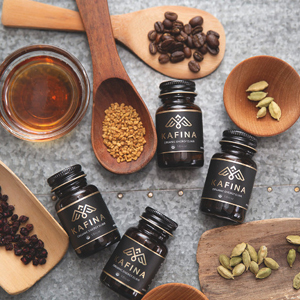
[00:03:19] Ray Latif: Indeed. Speaking of branding, I'm holding in my hand, we've mentioned this brand before on the podcast. It's called Cafina, K-A-F-I-N-A. We had the co-founders of the company come into the office this week. That's Heather Beach and Kathleen O'Brien. They recorded an Elevator Talk with us, Elevator Talk once again for folks who are not familiar, is a video series in which we profile new and emerging entrepreneurs in the food and beverage industry. This Is an organic energy elixir. It's in a one ounce glass bottle, apothecary style. It is fantastic stuff. What is that, concentrate or is it a shot? No, it's a shot. So our photographer, Nate Brescia, he took one of these while we were recording the Elevator Talk. And afterwards he slacked me and said, you know, I took This Is an experiment, but I'm feeling mad focused and like energetic. He didn't use the word mad. I introduced the word mad right there.
[00:04:13] General Mills: It's like, that didn't sound like Nate exactly.
[00:04:15] Ray Latif: No, but he's right. This Is is a, This Is pretty efficacious stuff in my opinion. It's good.
[00:04:20] No Cow: You like it. You've tried it. Are you on it right now? No, I'm about to have some though. I'm going to do this shot. I like that bottle.
[00:04:26] Ray Latif: Yeah. This one wasn't sealed, so I'm a little worried, but I'm going to try it anyway. Famous last words. So focused right now. It's instant, huh? Yeah.
[00:04:36] General Mills: Instant focus.
[00:04:38] Ray Latif: Marty, you welcomed an entrepreneur into the office last week. That's Mehdi Rahmani from Moti.
[00:04:45] Daniel Katz: Yeah, so moti is a rosewater lemonade, definitely a pretty interesting brand base here in Boston, just really getting off the ground. But yeah, I had a great conversation with them. You know, lemonade is definitely one of those products, I think, during a conversation that came up that it seems like there's definitely still a big audience for it, despite some of the concerns about sugar. But it's sort of this kind of open playing field where you have a lot of that have been around for a long time, kind of the middle aisle in the grocery store type brands.
[00:05:25] No Cow: Do they have functional callouts?
[00:05:27] Daniel Katz: Not so much. Rosewater does have some, you know, I'd like to say sort of anecdotal functional benefits, but they're not really going heavy on that. It is definitely a flavor play. It's definitely sort of a better for you, but indulgent kind of drink.
[00:05:41] No Cow: That's why I asked because, you know, we've had other Rose products come in. Petalip beverage is one of those where it says it has some kind of function, but we haven't really seen anyone prove the function of Rose. Sure.
[00:05:53] Daniel Katz: I think that's one of those things where I think brands, including Motsy, are being pretty cautious if really touching at all on those areas about, you know, what kind of functional benefits it brings.
[00:06:03] General Mills: I use rosewater on my face. Could someone invent like a dual purpose? Maybe I can like drink it and put it on my face, a little four sigmatic action going on, edible beauty.
[00:06:15] No Cow: Sure. I like this idea.
[00:06:17] Ray Latif: You know, I looked up the founder of Moti, as I mentioned, Mehdi Rahmani on LinkedIn. He's listed as the CEO and legal counsel. That's a first for me. I've never seen that actually. Did he mention that he's the legal counsel for the company?
[00:06:31] Daniel Katz: Yes, he is actually left his legal practice in New York to sort of focus on this business here in Boston. So yeah, it's a small operation over there. I think the actual recipe comes from his mother's restaurant, which is based here in Boston. So yeah, definitely early days for this brand, but certainly one to watch and we appreciate them coming in and sharing their brand with us.
[00:06:53] Ray Latif: Yeah. Mike, when you said that it's hard to prove what, if anything, that rosewater does, isn't that true with CBD as well? I had to, I'm going to, I'm going to plug CBD in here as well as much as I can because it's Taste Radio. And we talk about CBD all the time.
[00:07:07] No Cow: I don't know that it's that hard to prove that it does anything. It's just that we haven't seen a lot of science around CBD yet because of the legality of CBD.
[00:07:18] General Mills: There are clinical trials going on in hospitals with CBD and with researchers. I think how you translate that sort of medicinal research into actual product claims is, you know, a couple of steps down the road.
[00:07:32] Ray Latif: So let's say you're a supplier of CBD extracts or oils, and you're working with the food and beverage industry to infuse said extracts and oils into these products, but don't know how to reach the industry in a really efficient way. Hey, Mike, is there a way that you can advise or educate these companies on how to best market their products?
[00:07:55] No Cow: Funny you should ask, Ray. We've been doing a bunch of that this summer. Summer's the time to think campaign has been running for BevNET, which, you know, is our... Summer is the time to think, that's what it's called? We're calling it the summer's the time to think.
[00:08:07] General Mills: I thought summer was the time to chill with like a White Claw if I follow Instagram.
[00:08:11] No Cow: I mean, look, summer's in the middle of the year. You just want to chill out. But guess what's right around the corner? Budgeting and Q3. When you come back from your vacation, you have to start thinking about your budget, but you're also thinking about all the events that are coming up and the campaigns that you need to run to be successful. And what we've been trying to do is to give suppliers and service providers a bunch of strategic ideas around things they can do to enhance awareness of their brands, which leads to better lead generation, which is what we know they want. So there are a lot of ways to do that, right? Yes.
[00:08:44] Ray Latif: There's a good place to start as well. The marketing team has created an e-book that's downloadable.
[00:08:50] No Cow: How do you download that e-book? You can go to our media kit at mediakit.BevNET.com and you can download the awareness e-book. The purpose of that, just like any thought leadership, is to It's funny to say thought leadership when you wrote the thing, but the purpose of thought leadership is to provide a language and strategic insight into things that are in the industry that go beyond your product. So This Is, for us, an attempt to say, This Is how we think about awareness, This Is how you might want to think about awareness, and This Is how you can take action and what it does for you. And brands can read it too. We don't mind if brands download it because I think it applies to them as well. It's just that we tune the tactics and the voice to be specific to suppliers and service providers.
[00:09:36] Ray Latif: Hundreds of folks have already downloaded the e-book. Now's your chance to do it the same. Mediakit.bednet.com, correct? That's correct.
[00:09:42] Daniel Katz: Yeah. Can you, do you update your LinkedIn to say that you're now like an author? Cause that would be like the first thing that I would do.
[00:09:49] Ray Latif: Marty, I'm already an author. Mike penned a really good article on LinkedIn. Uh, would you publish that last week or? I did. It was fantastic.
[00:09:58] Daniel Katz: Every time I do a new thing, I add a line to my LinkedIn. So I'm like a photographer, a writer.
[00:10:03] No Cow: I wrote location based marketing for dummies. I am an author.
[00:10:05] Ray Latif: Uh, why do we have chopped up, uh, peaches on the, on the table?
[00:10:11] General Mills: Because the Georgia peach truck stopped by Cambridge, it is a truck that travels up and down the Eastern seaboard and is kind of spreading awareness and introducing people to Georgia peaches.
[00:10:26] Ray Latif: Is it a refrigerated truck? I'm a little worried with this humidity that we had last week. The peaches are delicious.
[00:10:31] General Mills: It is a refrigerated truck. To me, it speaks to a larger story of brands embracing where products come from. I don't know if you've seen the new Chobani lower sugar yogurts, but they call out exactly sort of the lineage of their fruit. I think it says like Montgomery cherries, it talks about the different types of peaches, the different types of blueberries, and these call-outs about where your fruit comes from and what's the produce inside are just becoming differentiating ways for brands to sort of highlight what makes them unique and talk about transparency. Big trend from a little peach.
[00:11:08] Ray Latif: Now a cutting edge trend or one that one might perceive to be a cutting edge trend is ready to make brownies out of a machine that makes ready to make brownies. Okay. I don't really know where I was going with that. All I'm trying to say is that we had a visit this week from the folks from a company called genie, G E N I E. Carol, what do these guys do?
[00:11:29] General Mills: Okay, so when I saw this thing, I was like, is this like a Keurig of Food? Is this a Juicero for food? It is a small appliance that currently they're leasing B2B, not B2C. And you put different, you scan a pod, picture a larger pod than a Keurig pod, more like a cup of noodle soup size. scan it, machine instantly knows how to cook it, and then rehydrates the food with water. Where it really has some potential applications is in areas like sea stores, you could get a fresh meal, hospitals, restaurants even. Imagine if instead of that like cold slice of cheesecake you could get, that like kind of everyone has on their menu, you could get a- A normal slice of cheesecake? or a molten lava cake, or chocolate souffle, I should say, is what they call it. They're an Israeli company. They have done some amazing work in Israel, and now they're expanding to the U.S. It's really kind of cutting-edge technology. I think where that evolves and does it eventually become a consumer product will also continue to grow. They're also tapping into office spaces.
[00:12:36] No Cow: Who visited us? Was it the founder?
[00:12:38] General Mills: It was not the founder. It was their U.S.-based team. Their founder is based in Israel still.
[00:12:44] No Cow: Did one of them, like, tear off a rubber mask and reveal Doug Evans?
[00:12:48] Ray Latif: So, Gevins, for context, is... CEO of Juicero. Former CEO and creator of... Correct. I think he's a Burning Man guy now, officially. He makes that raw water. I think he's still in that business. Gotcha.
[00:12:59] General Mills: I did ask how it's different from Juicero, and their key point was, like, Juicero, there were allegations you could squeeze the package and juice would come out. For their product, it is, like, literally the cup may have raw pasta and dehydrated sauces, and... You can't really go from raw to cooked using like a microwave or any other appliance. There's a lot of tech and agitators and things like that that I won't get into.
[00:13:24] No Cow: And it's packets like Gisera or?
[00:13:27] General Mills: It's like a cup of noodles size pouch. And so their thought is, well, if these are in offices, maybe employees won't leave for lunch. They'll just make a genie pod for lunch.
[00:13:35] Daniel Katz: Why would you get like a dessert from there? Why would they, why would they have a dessert?
[00:13:39] General Mills: They find that the 2.30, 3.30 p.m. slump is really big, especially in offices, and people are looking for like a kind of sugary treat at that time of day to give themselves a little pick-me-up.
[00:13:50] No Cow: I'm looking for a bottle of caffeine at 2.30. These guys will know they've arrived when some internet troll is trying to cold brew their cup of noodles.
[00:13:59] SPEAKER_??: Yeah.
[00:13:59] Ray Latif: Indeed. Marty, big news this week. I just saw the latest edition of BevNET Magazine came into the office. Got some big stories. On the cover is a brand called Sound, Seasons Sparkling Tea. You penned that story, right?
[00:14:13] Daniel Katz: So yeah, that's sort of taking a look at a couple of different categories in This Is. One of them, obviously on the cover, being iced tea. So the article that I wrote was sort of taking a look at the rise Seasons Sparkling iced teas, carbonated iced teas. Clearly, you know, I don't think I need to introduce anyone to the trend that we've seen Seasons Sparkling waters. That's clearly a category with a lot of growth. So carbonation is kind of a way to sort of inject some, you know, differentiation and some buzz. Fizz, you know, insert your own pun here. Well done. Into the segment. So, yeah, there's Seasons Sparkling, obviously, on the cover. Cam, cold brew is another one.
[00:14:53] Ray Latif: CHAM.
[00:14:54] Daniel Katz: Yes, that's right. Seasons Sparkling. So, there's kind of some brands like, you know, actually carbonating the tea. So, I'm using a tea extract in Seasons Sparkling water. So, different sort of approaches there. Also taking a look at meal replacement drinks. There's sort of a next generation of brands sort of emerging in that space as well. So kind of fun to catch up with that. And yeah, another great issue. Thanks to everyone involved.
[00:15:18] Ray Latif: The digital version is available at BevNET.com slash magazine, or you can actually get your own print subscription at the same website. Once again, BevNET.com slash magazine.
[00:15:28] General Mills: Marty, it was also really cool for me to see a whole page about what Mondelez is up to in the Snack Space, acquiring Perfect Bar, launching new products. And coincidentally this week, we also announced that Mondelez will be speaking at Nosh Live Snack Futures about how they approach innovation. And if you missed the new products that they're testing out, they're pretty cool and cutting edge for, especially for a big CPG firm, kind of for anyone. And I'm looking forward to diving into that further with them on stage.
[00:15:58] Ray Latif: That's Nosh Live, and that's happening when?
[00:16:01] General Mills: That is December 4th and 5th in Santa Monica.
[00:16:04] Ray Latif: At the Lowe's Santa Monica Beach Hotel. Get your tickets now. Details at noshlive.com. noshlive.com.
[00:16:10] General Mills: Right before BevNET and the Cannabis Forum.
[00:16:12] Ray Latif: There you go. Before we wrap things up, just want to give a quick shout out to the founder of Karina's Switchy. That's Karina Bell-Isle, who came in last week. It seemed like there was a bunch of people in the kitchen devouring her product, which is an apple cider vinegar-based product. It's got some lime and ginger juice. It's pretty fantastic. She also joined us for an Elevator Talk. Look for that next month.
[00:16:36] No Cow: And Karina, to answer your question, yes, it tastes great with Mezcal.
[00:16:39] Ray Latif: Well, what I would say is that switchy is a great word. I like it myself, and I feel like it's applicable to what we're going to do right now, which is switchy things up to our featured interview for the episode. As I mentioned at the top of the show, Daniel Katz is the founder and CEO of No Cow, a brand of dairy-free protein bars. Daniel was just 18 years old when he launched No Cow in 2015 and has steered its growth into a national player in the competitive protein bar category. The brand is distributed in a broad range of retailers, including Walgreens, Wegmans, CVS, The Vitamin Shop, and Kroger, and is expected to generate $20 million in sales in 2019. In the following interview, I spoke with Daniel Katz his passion for entrepreneurship and the genesis of No Cow, which he launched with no business plan or extensive market research. He also discussed his initial play-by-the-numbers retail strategy and why it worked, whether his age played a factor in the early days of the brand, why he rarely asks for advice, and how NoCow's partnership with General Mills' 301, Inc. unit came together. Hey folks, it's Ray with Taste Radio. I'm on a call with Daniel Katz, the founder and CEO of NoCow. Daniel, thank Your Shot much for being with me.
[00:17:59] The Vitamin: Of course. How you doing, Ray?
[00:18:00] Ray Latif: Very, very good. You go by D, is that right?
[00:18:03] The Vitamin: I do. I like to keep everything short and sweet, especially over the phone, you know, trying to get email addresses out and things like that. D just makes it very simple.
[00:18:11] Ray Latif: When did you start going by D?
[00:18:13] The Vitamin: Ever since I was younger, everybody kind of just, you know, it was easy on homework assignments when you just put the letter D on top. And unfortunately, usually the teacher put letter D on top also, because I wasn't the best student, but that's kind of how it all started.
[00:18:26] Ray Latif: Nice. Let's talk about your youth. You were an entrepreneur from a very early age, right? I mean, you were building businesses when you were in your teens.
[00:18:35] The Vitamin: Correct. Yeah. I think, you know, a lot of people when they're young, one of the biggest struggles is figuring out what they want to do when they're older. And I think that, you know, the one thing I'm really thankful for is from a very early age, knowing pretty much exactly what I wanted to do.
[00:18:49] Ray Latif: I read that you once sold a house when you were a teenager. Is that right?
[00:18:53] The Vitamin: That is correct. Yeah. Pretty much every single strange entrepreneurial venture you can think of. I got my hands in when I was younger. So everything from breeding reptiles believe it or not. I started a car dealership in high school. I flipped houses. Yeah I mean I was always just kind of on the lookout for for really trying to take ideas that were in my mind and realizing that you know this world is so free that you can just go out and actually do them.
[00:19:18] Ray Latif: Wow, so you had no problem getting into the consumer products business, I'm sure.
[00:19:23] The Vitamin: That's the most fun thing that you can think of is actually coming up with an idea and watching, you know, hundreds of thousands, millions of people across the world actually using them as the coolest feeling in the world.
[00:19:32] Ray Latif: I can only imagine. You went to college. You left college, though. What was it, three months in?
[00:19:39] The Vitamin: Three months in. So I had a very short stint, so to speak.
[00:19:43] Ray Latif: Why did you decide to leave? And what were you studying, actually?
[00:19:47] The Vitamin: Yeah. So you know first world problems I'll be the first to admit you know I never wanted to go to college. I was always a terrible student. You know I always was the type of kid who was a lot younger than than I thought I was and wanted to grow up faster and get into the real world. You know the standard way of life was you go to high school you go to college and you graduate. And I didn't want to take that approach. So I actually ended up graduating high school a year early. I was 16 when I graduated high school. Right. And my parents just, they said, you're going to college and that's just the way it's going to be. And I was always pretty rebellious when I was younger. So I think that there was no chance in their minds that they thought I was going to make it through the whole thing. But I listened to them and I went for the first three months to IU. I guess you could say I was studying business, but it pretty much dropped every one of my classes on day one. And you know I started working on a at the time a beverage concept that I had an idea for in my dorm room. And three months later ended up moving out to California to start that company.
[00:20:44] Ray Latif: And that was a brand of energy drinks, right?
[00:20:47] The Vitamin: Correct. It was actually at the time, the first ready to drink amino acid beverage. So, you know, different amino acids have different functions. So I found that, you know, L-theanine for example, relaxes you. So we had a drink called Unwinds that focused on the benefits of L-theanine. So that was the overall concept. And, you know, I worked on formulations. I did a very, very small production run. I knew nothing about the CPG world at all at the time. So I was kind of just, going with the flow and making mistakes as I went and decided as soon as that production run happened that I was ready to move out to California, buy a van and just start knocking on doors and trying to sell this product in a convenience stores.
[00:21:22] Ray Latif: Yeah. I recall meeting you at Expo West, I want to say it was 2016 or 2017. And I was walking the floor with BevNET CEO, John Craven, and he immediately saw you and knew who you were. Did you guys talk about your energy?
[00:21:36] The Vitamin: He probably ran away from me, right? Because I used to call him all the time.
[00:21:39] Ray Latif: I had a feeling that you guys had a relationship when you were starting out, you were probably picking his brain about the category and just beverages in general, given that he is, well, as knowledgeable about that industry as anyone. So what was it like? I mean, running that kind of a business, I mean, energy drinks, notoriously difficult category. What did you see as the opportunity and what did you learn from the experience?
[00:22:01] The Vitamin: Yeah I mean I think that more than anything that was essentially my MBA right was was actually getting out in the field and understanding how that industry works. I mean DSD This Is pretty much as you know in the fields and hands on as you can get. So I was literally going into these stores and you know watching Coke reps come in and place bottles of cans of Coke and then Pepsi reps coming in the next day and ripping those off the shelf. And really getting to see that experience firsthand and exactly how it works. you know that was all really cool. I mean I didn't know what a margin was. I didn't know how to calculate a margin. What cops were really how to run this business at all. So it really gave me all the fundamental understanding of what to do one financially and then to logistically how to actually get products from point A to point B. And while I was doing it, you know, This Is very, very small at the time. I was, you know, probably selling the product in like four or five local L.A. stores and, you know, handwriting invoices. It was very, very small. I was eating two to three protein bars a day because I was very, very into health and fitness and got these crazy, crazy stomach aches and realized I had a dairy sensitivity. And that's really the spark that led to the creation of Deez Naturals, which is now No Cow. And long story short of it, I ended up really making a huge huge investment in plant based protein because you got to think This Is six or so years ago where plant protein was really nobody knew what it was. I mean you had a tub of Vega protein powder you know for sale at Whole Foods that cost like 70 bucks at the time and that was about it. So you know the beverage company was so small at the time that I decided to make a fast decision and realized there was a much much bigger opportunity in plant based and moved back to Ohio and launched these naturals.
[00:23:40] Ray Latif: When you say you made a very big investment in plant-based protein, what do you mean by that? Did you make a big financial investment? Did you lock down any kind of sourcing?
[00:23:48] The Vitamin: Yeah, I mean, I think that the investment I was referring to is more just time, right? I mean, I packed up all my bags within 24 hours, moved back, rented office space. And, you know, the investment wasn't necessarily in a protein bar. It was in the entire category. So when I say investment just more or less time and resources dedicating to really plant based as a whole. You know I think a lot of people today look at No Cow is it's just a protein bar. But we've got ambitions that are far greater than just protein bars. Right. We want to be the leader in dairy free products that are low sugar and truly healthy for you. So that's really how the idea sparked and protein bars was was really just the first piece of that puzzle.
[00:24:25] Ray Latif: It's interesting to hear you call your experience with the Energy Drink Company as your MBA for CPG. I don't know how many listeners we have that are 18 to 21. I mean, you started the company, you started your Energy Drink Company when you were 18. But for those who might be listening, I mean, would you, would you recommend that these folks who have ambitions like yours not go to college and really just jump right into it? Or, you know, what, what sort of advice would you give them?
[00:24:54] The Vitamin: Yeah you know I certainly am not an advocate for dropping out of school or not going. But I'm not a big fan of the college system either. You know the way that I look at it is if you see yourself you know five ten years down the road if there's no chance that you're going to be working in corporate America that you're going to be working in you know if you know you're going to be an entrepreneur in the future then then college This Is not the right place for you. I mean just the learning opportunity you have to be out in the real world is an experience that you can't get anywhere else. Right. Especially sitting in a classroom you know listening from from people who haven't actually had that real world experience themselves. So I think you know depending on what you want to do and what you want to become you know it makes sense for some and it doesn't make make sense for others. And you know for me it didn't make a whole lot of sense. I was actually 17 years old at the time when I started the beverage company. So you know it did have some complications. I mean I couldn't sign a lease or anything on my own. I wasn't considered a legal adult. So it made the process a little bit more difficult. But it also provided these opportunities for me to kind of face those obstacles head on and figure out You know, okay, I can't sign a lease. What do I do? You know, you go to Craigslist and you sketchily, you know, sign a lease with a family and live in their house in their basement. You know, it forces you to become creative and think more street smart than book smart.
[00:26:10] Ray Latif: Did you ever work for anyone else? Or were you always on your own?
[00:26:14] The Vitamin: Always on my own. You know, I grew up where my dad was an entrepreneur, still is an entrepreneur, but completely on the real estate development side of it. So nobody had any CPG type of experience. My mom was pretty much the opposite, you know, more of the corporate, you know, hence why I went to college for three months. So no, I have never worked for anybody. And I think that, you know, I contribute a lot of that to my dad who exposed me to a lot of things growing up, you know, typically when you're 13 years old and want to go meet a stranger on Craigslist, you know buy and sell electronics. Parents would probably have a hard time letting people do that. But my dad was always supportive and drove me to go meet with strangers and just let me handle it on my own. And that allowed me to have a solid understanding of how to deal with people and in business at an early age.
[00:27:00] Ray Latif: Nice. It's also really important to analyze and understand the market that you're getting into. And as you mentioned, you know, you didn't really have any background in CPG before the energy drink brand and certainly not in the business of protein bars. So what market research and analysis did you undertake when deciding to launch Deez Naturals?
[00:27:24] The Vitamin: Yeah. You know I dumped it down to its simplest form. Right. I mean I certainly could have spent the time and months and months understanding the industry how big the category was what the opportunity is. But what I did is I really simplified it and realized that I was 18 17 or 18 years old at the time when I started the protein bar company or No Cow. You know and I was is into health and fitness as you could possibly get. You know you look at a lot of the other protein bars that were on fire at the time. High protein low sugar was certainly in and that was apparent. And I realized that I was just like the majority of the country who couldn't digest dairy. And if there was a personal need for me I was sure that there was a personal need for millions and millions of other consumers. So there wasn't a whole lot that went into it. It was really just something that clicked in my brain and said holy crap. 60 percent of the world can't digest dairy products yet plant based protein is nowhere. You can't find it anywhere practically especially plant protein that's low in sugar. So there wasn't a whole lot that went into it other than that. And I pretty much made the decision within a couple hours of coming to that realization.
[00:28:28] Ray Latif: Did you have a business plan? Because I asked because it's one thing to have a great idea, but investors probably want to see that you've done some legwork, that you've analyzed the opportunity, the market opportunity, and then they might invest in your brand. So did you, I mean, what kind of, what kind of business plan did you start out with and what kind of investment did you start out with and how did you acquire that capital?
[00:28:51] The Vitamin: Yep. So no business plan whatsoever. You know my goal early on. Well I guess you could say I had one in my mind kind of was that I never wanted to take a farmer's market approach. You know I realized a big opportunity in plant based protein and saw a massive gap in the market and realized that I needed to launch and launch in a big way. So you know let's go back five six years ago when specialty health and fitness was on fire and you know the most competitive bar categories in the country were in GNC. They were in vitamin shop. You know that's where you had a very knowledgeable consumer that was turning over panels. They knew exactly what they were getting and they were used to you know protein bars that were over 20 grams of protein and kind of what that tastes like. So the first step for me was was really you know obviously making the product in my kitchen. And what I did is I set up a company entity and started cold calling all these big suppliers of ingredients and flavors and protein powders and all these types of things and said you know listen I'm Daniel I'm the head of R&D for this massive company and they send me free samples. So It was awesome. So I started making the stuff in my kitchen. I created little plastic bags of it. I probably did like 500 rounds of samples until I found something that contained over 20 grams of protein, one gram of sugar, was plant-based, non-GMO, really everything that I wanted in a protein bar. And then I picked up the phone and I called every retailer in the country and that was it. That was my game plan. My game plan was let's get a national retailer on board and I'll be able to finance the first production run once we do so.
[00:30:22] Ray Latif: How many times did a retailer hang up on you?
[00:30:25] The Vitamin: Uh quite a few times if it even got to them and didn't go straight to voicemail. But yeah no it was just it was a grind. It was a hustle. And you know I realized that if there's 150 retailers in this country that are big enough to be able to launch this thing at scale you know all I needed was one one out of 150. My chances are pretty good. So you know it was just resilience and somehow ended up getting meetings with Target and Kroger and really all the big boys in this country. And you know vitamin shop was one of the first meetings that I had that, you know, seemed to go really, really well. And they totally understood the concept. And, you know, they realized that Quest was on fire at the time, but there was a huge gap for dairy-free and saw plant-based being the next big thing. And long story short of it, you know, there's, there's a guy The Vitamin Shoppe, his name is Scott, who, you know, believed in the concept and said, listen, I mean, This Is me meeting with him, showing him a plastic bag and a company name called No Cow. And that was about it. There was no packaging. There was, really nothing. And he said, listen, you got to work on taste a little bit. I love the concepts. You obviously need to show me packaging and get it done really, really fast. If you can do that and you can find a co-packer to create your product for you in the next 90 days, I'll make a purchase order. And of course, being the, uh, you know, optimistic entrepreneur I was, I was like 90 days, give me two weeks. I'll get it done. Let's go. He wrote a purchase order for 200 stores to launch a couple SKUs and put them on the shelf. And I was somehow able to find a co-packer. I hired a guy on Craigslist to spend 48 hours literally sitting there on a computer with me, creating our packaging in Illustrator and produce the products, put it on the shelf, and it just started taking off.
[00:32:03] Ray Latif: That's amazing. Did The Vitamin shop buyer, do you feel like he was investing more in you or the brand and the opportunity for a dairy-free protein bar?
[00:32:14] The Vitamin: Yeah you know probably a little bit of both. A lot of people ask me the question of if there were any downsides to being young in the industry and not very knowledgeable and inexperienced. And I kind of look at it a little bit differently where you know when you're young you really have nothing to lose. And You know I would walk in and just say This Is what's going to happen. We're going to take over. You know here's the reasons why. And just passion that is really really hard to find. And you know when you're that passionate about something and you've got a product that just totally makes sense for where we are you know in whatever year we were at that point. I think it was probably a combination. But I mean clearly the brand has legs and the concept of dairy free plant based was about to take off. So I think it was a combination of the two.
[00:32:56] Ray Latif: So what did that first meeting teach you about subsequent meetings, subsequent meetings with retailers?
[00:33:01] The Vitamin: Leverage. Leverage is everything. I picked up the phone and I called GNC the next day and said, Hey, your biggest competitor is bringing our product on shelf. What do you want to do about it? You know, and I think that leverage is very, very important, you know, and also just, just really pitching things in a way that is not too scientific. Right. You know, obviously we're a different brand today than we were back then. And, you know, we now use spins and we've got a, you know, an analyst to be able to put together PowerPoints of why we belong here and what SKU should belong and whatnot. But, you know, when I was out there hustling, you know, when it was just me and all I had really was an idea, it was all about that. Just the idea of the concept. And, you know, that's something that I think a lot of companies tend to lose as they get bigger. And it's something that, You know, we at a certain point certainly did lose at No Cow, even though we are certainly not big, we're still a very, very small company. And we started to kind of reintroduce a lot of that back into the team and put a lot of that entrepreneurial passion back into the business. You know, whether it's me going out to a sales meeting or one of our sales reps, we need to have that entrepreneurial passion of why, right? You know, you can look at as much data as you want and we can tell you it's going to sell well, but they need to hear it from you. And they need to believe that, that, you know, it's going to work in order for them to take a shot on you. So, yep.
[00:34:13] Ray Latif: Yeah, we just recorded or just published an interview with Ken Sadowski, who's known as the beverage whisperer. He's a beverage industry insider. And one of the things that stuck with me was when he said, when a small company starts thinking like a big company, that's really bad. And it sounds like that's exactly what you just were just talking about.
[00:34:30] The Vitamin: Yeah, I mean, I'll say we've gotten a ton more distribution and shelf placements strictly off of passion and walking in cold calling retailers and saying, listen, guys, This Is going to be the next big thing. You need to believe in us. We're going to partner with you if you partner with us. And we have by showing them a PowerPoint of why we're going to sell better than than the rest of their set. So that's just you can't lose that. It's it's so important.
[00:34:52] Ray Latif: The name of the brand today is No Cow. It was originally called Deez Naturals. When did you decide to make that rebrand and who advised you on that change?
[00:35:01] The Vitamin: Yeah. You know I kind of always knew it when I launched the company DS Naturals. First off it's like the most narcissistic name in the world. I mean name a company after yourself.
[00:35:09] Ray Latif: You're not the first person to do that though.
[00:35:12] The Vitamin: That's very true. But it just didn't feel right. So the concept at the time was we were actually DS Naturals No Cow. So it was almost like a holding company. So think of like White Wave and Silk. So that was the original concept was, you know, maybe these naturals can hold many more brands than just No Cow. However, you know, as the bar started to go and we started to evolve the name, No Cow, you know, clearly represented more than just a protein bar clearly represented more than just, you know, a brand within a holding company. I think that No Cow has the potential to be something massive, something at the scale of a General Mills, so to speak. So, you know, it's something that we really, really believe in and decided that these naturals was not There was no reason for it to exist. You know all of our products are all natural and you know most of the industry is starting to head that way anyway. So I don't think the all natural claim is something that we needed to focus too much on. You know it's really No Cow. We're dairy free and we want people to know that right off the bat. there was just no reason to have these naturals there. So nobody advised it. It was a decision I kind of always wanted to make at some point. It was just was so busy with the foot on the gas pedal growing this business trying to get more distribution. It was hard to take a step back and focus on a rebrand that early on.
[00:36:22] Ray Latif: So you said no one advised you on the rebrand, but I'm guessing that you had mentors and advisors that really supported the development of your brand and your ability to lead. So tell me about some of the most important people that supported your business and how you aligned with those folks.
[00:36:40] The Vitamin: Yeah I mean listen to the people that have supported the business are the ones that believe in the product and brought it in. So I'm talking about retail partners I'm talking about supplier partners you know people that that were stakeholders in this business from a sense that you know if No Cow does well they do as well. So if you can align interest in that fashion where you know if you launch into The Vitamin shop and you become one of the top best selling bar brands it benefits them as well. So you know I have never been a big fan of kind of asking for favors or asking people for For help or advice, it's probably, to be honest, not a great trait of mine because I always feel guilty and feel like I always owe people things. So starting this up, I didn't really have a whole lot of mentors or people advising. I was really just making every single mistake in the book twice and learning from that, which I would not suggest doing. So yeah, there weren't a ton of those people outside of retailers and suppliers that were helping make this thing become a reality.
[00:37:37] Ray Latif: Let's talk a bit about the big partnership that you secured a couple of years ago. That's with General Mills 301 Inc. unit. Did they approach you or did you approach them?
[00:37:48] The Vitamin: It was a combination of the two. You know I'll be honest I'm pretty transparent about This Is launched this company back in 2015. I was pretty much running the thing as a one man show. You know up until a pretty decent point where it was pretty much just impossible to continue doing it by myself anymore. I was working 18 hour days seven days a week for several years and literally lived in my office. I mean I had a mattress you know in one room and used a file cabinet is my my clothes cabinet and you know had my desk right next to it. So it was it was a pretty difficult. You know obviously at the time I felt like I was invincible and was operating on three and a half four hours of sleep every single night and just literally working 18 hour days seven days a week and kind of hit this wall where you know I got burnt out. And there were a lot of people you know that I've heard say that burnout is a real thing. And obviously at the time I was too narcissistic to believe that. But hit this wall where the company was growing at a crazy rate. I mean we were quadrupling the business from year one to two and we had 25 percent EBITDA margins. Very profitable. So what I did is actually hired an investment banker and wanted to explore options. I didn't know if I wanted to sell this business. I didn't know if I wanted to bring a partner on board. I was kind of just in a bad mindset at the time. And you know probably all I needed was a couple weeks of vacation. That would have been good to go. And you know ready to get back to it. But you know I was in a bad mindset and wanted to explore options. And you know in that process of talking with a bunch of strategics a bunch of private equity firms and was able to meet with General Mills and They're just awesome. Right. I mean you think about what they've accomplished and what their portfolio of brands looks like today. And I mean they were first to market on bars with Nature Valley and just the support that they could offer you know in the areas that I was really struggling with like operations and supply chain management and things like that. It's just all aligned really really well and obviously love the team out there. And you know we sat at a conference table and just said we need to make this work. So let's figure it out.
[00:39:48] Ray Latif: What was their primary interest in the brand? Was it the sales growth? Was it the branding? Was it you?
[00:39:54] The Vitamin: Again, a combination. I think that one, bars were on fire. And what they did, the first thing that they showed me was this little chart that they put together of every single protein bar on the market. What it had is it basically showed, do they contain dairy? Do they not? What's the protein content? Is it 20 grams? Is it 10? And what's the sugar content? And after that exercise you know it placed No Cow in This Is area where none of the other protein bars played. So I think it was really a combination. You know obviously we were growing very very fast and that was very exciting to them. You know top line growth was was growing quickly with very very limited distribution which is always a positive. And then also I think that they were early on the plant based trend and saw that you know plant based is going to be the future. And in No Cow is a brands that you know could potentially you know be much much bigger than just bars one day. So I think it was a combination.
[00:40:43] Ray Latif: So when you landed on General Mills as the partner that was going to help you move the company forward, how did you ensure that you got everything that you wanted out of the deal? And did you?
[00:40:55] The Vitamin: Yeah no absolutely. You know I think that what we wanted out of the deal was really help in the areas that that I was struggling with which were the ops it was supply chain it was things like that. And they jumped right in and they helped out and gave every resource that they possibly could. They're awesome partners. They're pretty much the epitome of what somebody would look for in an investor where they're completely quiet. They don't say a word unless you want them to or unless they've got good ideas. So you know if we need help they're going to be the first to offer it. They're going to be the first to say that they can give the support. And if they've got great ideas that they think can help grow the business, they're going to jump right into. But if there's no reason, they're not going to say anything. So they're awesome partners and certainly lived up to the expectation.
[00:41:36] Ray Latif: So not too long after the investment, you brought on a veteran CPG executive as the CEO of the company. Tell us about that process in the search.
[00:41:46] The Vitamin: Yeah absolutely. So you know like I said I was kind of burnt out at the time. And you know the concept for me was all right let's get some investors on board. I'm going to step out of the day to day operations and really focus just on kind of big picture you know for the brands. And we ended up doing just that. We kind of went out and we we hunted for a veteran CEO. You know, what we realized pretty quickly was that, you know, taking a company from 10 million to 100 is a lot different than taking a company from, you know, 100 to 500. And that process is, it's so important to the growth of this business or any business of that size. So, you know, we learned pretty quickly and I won't get into details, of course, but we learned pretty quickly that that just wasn't working. And, you know, No Cow had lost a lot of its entrepreneurialism and we needed to drive that right back into the business. You know it was a long call it 12 months or so that I kind of stepped away from the day to day. Everybody jokes that I was partially retired and I ended up making the decision to step back into the company in October of last year to kind of infuse it with a lot of that entrepreneurialism that we were missing and really hit the ground running again. You know everything we talked about earlier you know whether it be going into retailers and really just pitching the story and the passion and being able to have that grid of a startup company is so so important. So, you know, like I said, I stepped back in and we've started that process of regrowth again.
[00:43:07] Ray Latif: Having taken some time away from the CEO role, as you mentioned, you could start to look at the big picture and how you're going to continue to grow the company. Can you do that now? Can you still do what you want to do and run the company on a day-to-day basis?
[00:43:21] The Vitamin: Absolutely. Yeah. You know I think with any optimistic entrepreneur the idea or the long term vision is always much bigger than that many people can understand. And you know to be in a position where you can actually think that and then you can implement you know every single step along the way in order to make that happen is really important. You know, if you have one piece of that where you're the vision guy, but you're not necessarily the one who's directly involved with actually making that happen, the alignment is not always there. So yeah, it's incredible to be able to be back in the position and be able to make the day-to-day decisions that'll get us to where we want to be.
[00:43:56] Ray Latif: What are your predictions for 2019 in terms of sales growth?
[00:44:00] The Vitamin: Yeah you know for us we expect 2019 to be one of the biggest sales growth years you know in history for us. And you know obviously any brand is going to say that the forward 12 months are going to be the biggest. But we're thinking big. You know we're back to the entrepreneurial mindset of how do we really grow this thing and how do we make it a household name. So bars is just the beginning point for us. We've continued to pick up distribution. We picked up a lot of the major retailers here this year especially going into 2020 as well. And we're going to continue to evolve, not just our distribution growth, but also our product line.
[00:44:32] Ray Latif: Any hints on the product line? Because you once had nut butters and cookies and things like that, but you've since discontinued them to focus on the bar line. So I'm wondering what might be next.
[00:44:41] The Vitamin: Yeah you know we definitely are working on things and you know our goal moving forward is anytime there's new innovation to be had we're going to get it done and we're going to get it done really really fast. Meaning you know This Is not a 12 month process and we're planning for innovation because you know I personally don't believe you can actually plan for innovation and that it just comes naturally. So yeah we've got a lot of things that kind of popped up that we're working on and you know we'll be on the shelf within the next 90 days. In addition to that, we've got a much, much bigger vision of where this brand can go. And we think that, you know, I don't want to give too many hints or anything, but we think that, you know, you'll be seeing us in multiple categories within the store coming up here very shortly.
[00:45:20] Ray Latif: Very cool. Really excited to see all of it unfold and congratulations on everything that you've accomplished to this point and good luck going forward with No Cow and the company. And Daniel, thank Your Shot much for sharing your story with us. I'm sure our listeners are really going to love it.
[00:45:36] The Vitamin: Awesome. Well, thanks so much, Ray. I really appreciate it.
[00:45:38] Ray Latif: All right. Thank you. That brings us to the end of episode 46 of Taste Radio Insider. Thank Your Shot much for listening, and thanks to our guest, Daniel Katz. Please subscribe to Taste Radio Insider on the Apple Podcasts app, Spotify, Stitcher, SoundCloud, or Google Play. As always, for questions, comments, ideas for future podcasts, please send us an email to ask at Taste Radio. On behalf of the entire Taste Radio team, thank you for listening, and we'll talk to you next time.