[00:00:04] Ray Latif: Hello and thanks for tuning in to Taste Radio Insider. I'm Ray Latif, the editor and producer of Taste Radio, and you're listening to episode 48 of the podcast. I'm with my BevNET colleagues, John Craven and Brad Avery. We're recording from the Taste Radio studio at BevNET headquarters in Watertown, Mass. And in this episode, we're joined by Beryl Stafford and TJ McIntyre, the founder and CEO respectively of fast-growing snack brand Bobo's. Our interview explores the dynamic between founder and CEO, their working relationship, and shared vision of success. If you like what you hear on Taste Radio Insider, please share the podcast with friends and colleagues. And of course, we'd love it if you could review us on the Apple Podcasts app or your listening platform of choice. Brad, good to have you on the show. Good to be here. Brad, for those of you who don't know, and I don't know how you would not know this, as a staff writer here at BevNET, has been for about three, two and a half years now? Two and a half. It'll be three in November. Three in November. Yep. Time flies. People who might know you might not know that your full name is Bradford. It is. Is that a family name? No. I think my parents just wanted something that was a little uncommon. I know that they went for Bradford over Bradley because of that. Sure. I think I was almost a Jonathan, but it was just too common. That would have made me really mad because we have enough Jonathans in this office. Would you agree, John Craven?
[00:01:29] Beryl Stafford: Uh, yes, but I would never go by Jonathan.
[00:01:32] Ray Latif: Are you a Jonathan? Hell no. You've got the age. You're on the driver's license that says John. That's right. Wow. On the passport too? It's not normally short. That's not how it works, Ray. Or Raymundo or whatever your name is. It's Raymond. You know, it's interesting. I actually made the conscious decision to go by Ray when I joined BevNET. I was always Raymond. Really? Yes. I can't picture calling you Raymond. No, I always went by Raymond. People used to call me Ray, but I think I wanted my byline to say Ray Latif because I guess I just didn't want the internet to know who I was. Were you trying to shake your past? You don't have Facebook or anything, right? No, I'm not using you only use the Tor browser. You got the VPN set up DuckDuckGo. He's burned off his fingerprints. Yeah. Yes I'm that guy. No, I might not even be his real name Brad, right? How do we know? I just think you know a guy and then you find this out. You don't know. Well, there's no profile photo of me on my Instagram page. This is Bev Trade B-E-V-T-R-A-Y-D-E. Brad, do you use a profile photo on your Instagram page? Yeah, I have one. I'm not a very 91. Yeah, Brad Avery night. Yeah, I'm not as active on Instagram. I'm trying to be more active, but I'm I don't know why for Sweet Reason that platform I'm always a little like I use it really actively for like a week and then I forget about it again. I do browse it sometimes so I'd like I see when people Post our new beverages or post our brands like I try and like keep tabs on it that way But I just I don't post as much as I should you don't like a lot of my stuff I don't see like I'm sorry all the time, but it's all going away.
[00:03:05] Beryl Stafford: Anyway, they're getting rid of the likes Really? Are they? Why?
[00:03:10] Ray Latif: I don't know. There's all these articles on it, but they're going to hide the likes, so it's not going to display it. Oh, I did hear about this. Yes. Very Zuckerberg. Zuckerberg. Well, Brad, would you take a photo of that Good Belly probiotics, that box of cereal that you have there? It's their peanut butter crunch cereal. It looks like Cheerios, but it's peanut butter covered multigrain O's cereal with probiotics. That's the... identification of this product? Yeah, it is. Good Belly was kind enough to send us a few boxes for samples, and I've been having them Good Breakfast just about all week because I usually forget to eat breakfast. So it's nice when I can come into the office and have a pretty, pretty tasty cereal. I would post this. I think it's a solid kind of Cheerios alternative with the added probiotics that makes it nicer and been feeling fine. You've been feeling fine? My belly is indeed good. You get a billion probiotics with every serving. Does it taste any different than Cheerios? Or I mean, well, I guess because it has a peanut butter flavor. I mean, it's a little closer. It's kind of like a healthier, um, you know, the Reese's, uh, pieces, uh, cereal Reese's puffs. No, I'm not. Wait, you never had that?
[00:04:20] Good Breakfast: No.
[00:04:21] Brad Avery: It's good.
[00:04:21] Ray Latif: It's not as intense a flavor as that. And obviously it's more, you know, it's, it's, uh, a little healthier for you, uh, significantly so. You might want to switch supermarkets there, Brad. Cause you never had Reese's puffs?
[00:04:32] Brad Avery: No.
[00:04:32] Ray Latif: No, what about the Oreos? Oh, so you ever have I've seen those but I haven't touched him. No, I'm not that guy Sorry, it's cuz we're different generations. I was I was a kid knows for you anything to do with that I was a kid when those are new so we get them. No, we were growing up folks like John Craven and I we had all we all that was available was pretty much junk for the most part. Yeah Nowadays, there's choices. It was different brands of junk.
[00:04:55] SPEAKER_??: I
[00:04:56] Ray Latif: Well, I mean, nutrition has changed pretty dramatically since we all grew up and who would have thought that would see cannabis or at least a cannabis ingredient in a can of sparkling water. But that's what I have in my hand right now, a very blue colored can. What would you call it? What color would you call this? It's not quite Navy, but it's a dark blue. Midnight blue, cobalt blue. I don't know.
[00:05:21] Brad Avery: Cobalt blue.
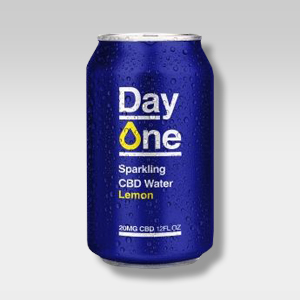
[00:05:21] Ray Latif: I mean, I'm thinking of like, if this were the color of a car. What would they mark it as? It's definitely a type of blue you see on a car. Car paint, yes. Yeah, car paint blue. Car paint blue. The name of the brand is Dayone, D-A-Y-O-N-E. And it's a sparkling CBD water. This variety is infused with lemon. They sent us a bunch of product this morning, along with a refrigerator. That was very nice. Oh, yeah. Thank you. Yeah, I've been in contact with them, but I haven't had a chance to really talk on the phone yet to get to know him a bit better, but excited to be able to try. It's been drinking a lot of the CBD sparkling waters this week. There was a, it was Infuzed Thirst was another one that came through the office this week. I'm drinking right here a Sweet Reason who have just recently took on some some investment and I'm drinking here a strawberry lavender flavor. They kind of go for a bit more of a premium look and feel I think Day One here is going for more of the the minimalist branding vibe, which is I always like I always like that clean design and it's definitely eye-catching for me and For sure. You know, it was interesting. I was in New York this past weekend and New York has banned all CBD infused food and beverages. When I looked for CBD infused products on shelf, I didn't see any except for one. I was visiting Brooklyn and I went to a place called the Dumbo Market. That's in Dumbo. That's down under the Manhattan Bridge overpass. And I saw a brand called Brooklyn Hemp Company. They make botanical sodas. This was the only CBD product that's on shelf and it probably should not have been there. But anyway, I didn't buy it. Have you guys tried this product before? Have you tried this Brooklyn Hemp Company stuff? It's the first time I'm seeing it. Yeah. Well, Brooklyn Hemp Company, if you're listening, please send us some products. We'd love to try it. If you can't sell it in New York, well, we'll drink it for you. Also on the table right now, we've got some Huel, H-U-E-L. This is their ready to drink variety. They had previously been in powder format for a long time. It's a meal replacement brand. The beverage is certainly intended to replace your meal, 400 calories. We've had this in the office for some time. Brad, you know this brand quite often. You've reported on it for a while. Yeah, no, and I reported on the RTD launch back in November. So it's been around for a few months now, but they've really been taking off lately. They've been reporting some significant growth, especially online. So they're really coming for this emerging meal replacement RTD space. And I find that these are probably among the most filling of the meal replacements I've had. 400 calories, we'll do that. Yeah, and it's thicker. It's kind of a thicker texture. Alright, I think it's time to get to our featured interview for this episode. That's with Beryl Stafford and TJ McIntyre of Bobo's, an innovative snack brand best known for its oat-based bars. As I mentioned at the top of the show, Beryl is Bobo's founder, having launched the brand in Boulder, Colorado in 2003. TJ came aboard as Bobo's CEO in late 2016, and over the past two-plus years, the company has adopted an aggressive sales and distribution strategy. Supported by $16 million in new funding during that time, Bobo's has achieved dramatic growth, with sales up by 70% in 2017, 45% in 2018, and are expected to climb by 40% this year. In the following interview, I spoke with Beryl and TJ about the working dynamic between founder and CEO, the decision to bring TJ aboard and why he was the right person for the job, and how they assign responsibilities and guidelines for their respective roles. Hey folks, it's Ray with Taste Radio. I am on a call with Beryl Stafford and TJ McIntyre, the founder and the CEO of Bobo's. Beryl, TJ, thank you so much for joining me. Thanks for having us, Ray.
[00:09:11] John Craven: Thanks, Ray.
[00:09:13] Ray Latif: So I have just recently become familiar with Bobo's over the past couple of years, particularly since you've ramped up distribution and sales, but the brand's been around for a while. Beryl, tell us a little bit about Bobo's and when it was founded and the genesis of the brand.
[00:09:29] John Craven: Yeah. So I started Bobo's 16 years ago in the kitchen of my home. And Bobo's is just a simple homemade wholesome bar that is made with basically four ingredients that you might have in your kitchen at home. Oats, sweetener, and some oil. And I started this with my daughter whose nickname is Bobo. She created the first bar when she was 14. She said, mom, do you mind if I start baking I said, knock yourself out. She came out with this original gooey oat treat. And that was 16 years ago. She was making it with corn syrup and butter. They were actually delicious. And then I had the idea to put some more healthier ingredients in it. Like instead of corn syrup, I used brown rice syrup. And instead of white sugar, I used non-refined brown sugar. And instead of butter, I used a blend of vegetable oil. That was 16 years ago.
[00:10:32] Ray Latif: And so from the outset through to about 2016, you were the founder and the CEO of the company, correct?
[00:10:39] John Craven: Right. For 12, 13 years.
[00:10:44] Ray Latif: I was also the head of sales and the head of marketing and the head of customer service. I can imagine that's pretty challenging. What was the toughest part of the job for you, Beryl?
[00:10:54] John Craven: I guess knowing zero about the food business. and having no sales background, no formal sales training. I had to figure it out myself, everything. I was the head baker, the head sales girl and the head marketer.
[00:11:12] Ray Latif: So in those 13 years, those 12, 13 years, do you ever think about bringing somebody else on for the job as CEO prior to when TJ came on?
[00:11:20] John Craven: You know, I did all along the way. I was, I always say, just figuring it out. And I was kind of having fun with it. It was my baby that I started, you know, obviously I had one employee that was me. And, you know, I toyed with bringing in a CEO or a partner or hiring a sales team, but I never exactly knew what direction to go with that. So not knowing, I just never moved on it. So I just kind of put my head down and did it myself, not knowing how hard it was going to be. how taxing it would be after years.
[00:11:59] Ray Latif: So what motivated you to begin the search and how are your investors involved? Cause TJ came on right around the same time that you picked up your first big round of investment, correct?
[00:12:08] John Craven: Well, okay. So I kind of did it backwards. Um, in 2015, I started to feel extremely overwhelmed. I was doing everything myself. I was going to about a hundred trade shows a year. Not really, but I felt like it. And, you know, I knew TJ from being in this industry for years in Boulder. You know, like I said, I wasn't sure what to do. I kept thinking, do I hire somebody? Do I bring on an equity partner? Keep doing this myself? Do I just sell the business? And so all these things were going around in my head for a couple of years. TJ and I started talking and meeting, and I just honestly knew that I needed and wanted some help. And so when TJ and I met, um, he's got this great reputation, you know, he's been at Boulder brands. I knew him. I liked him. He's obviously so smart, talented, you know, and I also heard he was a great dancer at Christmas parties. So then I thought, you know what, I think we would make a great team. And, um, I do have a funny story about that, that TJ might've forgotten, but, um, In one of our meetings here at the office, we met several times over about a month. And at one of the meetings, he gasped after about an hour and screamed and ran out the door because he had completely forgotten to pick up his kids at school.
[00:13:33] Ray Latif: Oh my gosh.
[00:13:34] John Craven: And it was kind of funny. He was an hour late to pick up his kids. And I was like, Oh, I think I got this guy. I think he likes it here.
[00:13:43] Ray Latif: Did you, uh, did you have a broad search or were you pretty much focused on TJ?
[00:13:48] John Craven: I did not have a broad search. As a matter of fact, I think when TJ came in, he was the only person that I had interviewed for this because, like I said, it was maybe I would sell it and I was kind of interviewing private equity partners. But, you know, no, I wasn't looking at anybody else. And the funny thing is, you know, I had five employees at the time in the front office. And I was at sales of about eight million. And so I was actually making a lot of money, which is kind of rare in this industry. And so TJ and I decided, let's just bring him on and I'll pay him through, you know, the earnings without getting private equity. So that's why I say I do it kind of backwards because most people in this industry bring on the equity. But it was great because I got to hire TJ myself and then we established our own relationship before the private equity partner came in, which was a year after that.
[00:14:45] Ray Latif: TJ, Beryl mentioned you were with Boulder Brands and you have a pretty extensive background in the food industry. Tell us a little bit about how you came into this business. I moved to Boulder in the early, mid nineties and started working in the natural foods industry here back then. And over the course of about 20 years, I've, I've been able to work with a lot of great founders and industry leaders and great brands. I was at Legacy White Wave. I was at Frontier Natural Products Co-op, where we created the Simply Organic brand. And, you know, some entrepreneurial pursuits, and of course, Boulder Brands. First, it was Smart Balance, and then it was Boulder Brands. And at Boulder Brands, we had a tremendous amount of growth. We acquired Lutino, we acquired Udi's, we acquired Evol. I managed all of those businesses after we acquired them, all the integration and kind of the category management strategies on the growth. And, uh, we, you know, on, on average, we like tripled all of those businesses after we bought them. It was a lot of fun, a lot of success. And, uh, witnessing what Beryl was doing here after. six years at, at, at Boulder brands. And it was, uh, we were publicly traded business the entire time. It was really not six years, but 24 quarters. And I was definitely involved in closing a lot of quarters and facing an enormous amount of short-term pressure. And with this portfolio that was really significant, it was almost, almost a 500 million gross. By the time I left, it was not super in touch with food. It was super in touch with trend. and brand and customer, but we have 35 co-packers and five or six internal manufacturing facilities. And, you know, from the leadership team, which I was a part of, you know, through our marketing and sales organizations, there was not a keen orientation to the food itself. And I came to realize that where we had the most success in our portfolio was ultimately with the categories where most often we self-manufactured the goods. And we did, as a company, have a deep orientation to how the products were manufactured and upholding quality with those items. And knowing Beryl, Beryl was actually a customer of Boulder Brands. She was buying some of our industrial birth balance for manufacturing, and she and I stayed in touch. to that relationship. And then, as, as Beryl mentioned, I knew her socially, I, I was really an admirer of the purity and the humility with which she was self-manufacturing in Boulder. You know, it's really rare in this town for people to actually self-manufacture here. There's a lot of brands that are co-packed here. And I felt, um, this was a great opportunity to, for myself to go back upstream, if you will, back to, you know, the mixing bowl and to the oats and oil on the bottom of the shoes and the very quick R&D, you know, again, just kind of a deep orientation to food manufacturing and quality. And that was the primary attractant for me and Beryl and Bobo's back at the end of 2015.
[00:18:19] Good Breakfast: Guessing your margins? That's risky. Belay Financial gives CPG brands the clarity to scale smarter, faster, stronger. Get your free inventory ebook by texting TASTE to 55123 and start making data work for you.
[00:18:39] Ray Latif: Tune in at the end of this episode for an exclusive interview with Matt Lin of Belay Solutions. He sits down with Melissa Traverse to break down the biggest inventory and accounting mistakes CPG founders often make. You'll learn how to bring clarity to your numbers so you can scale with confidence. So it sounds like you didn't need a lot of convincing and it sounds like Beryl, you knew TJ was the right person for the job, but in terms of actually signing on the dotted line and getting that contract done, what were some of the things that needed to be thought through more carefully before you moved forward together? At the end of 2015, as Beryl and I were coming together and trying to understand what it would look like if we formed a partnership, Beryl had re or private equity firms that were interested in investing or buying for business. And I was on a short list with all of them as a CEO that could come in behind their investment. But what Beryl and I concluded is that the company was profitable enough in 2015, where if in 2016, instead of raising money, We got a lot of kind of core fundamentals accomplished here with the team build out, with a strategy, with a little bit of rebranding, getting our broker partners lined up that we could create some value with the EBITDA. And we would need to take all of that time anyway. And then when, when we needed to raise money, we would be in a better position because a more formidable plan for the future would be hatched at the end of 2016. At the start of that conversation, I said to Beryl, we're going to be able to recruit the very best people from Boulder Brands. Because at the time that the company was going to be sold most likely to ConAgra, it ultimately went to Pinnacle who ConAgra bought. So it did end up in ConAgra's hands, but I had pretty keen insight to all of that transpiring as well as the ability to get, you know, the, the very best folks from the Boulder Brands team to initially form what would be, you know, the fantastic team that we have here today. But I recognize that a stock option plan was going to be necessary. And I mean, Beryl, maybe you can speak to some of the challenges that you had and, and kind of addressing that, because that was, that was kind of the first big step for Beryl, I think, in some of the changes that we implemented.
[00:21:11] John Craven: So, yeah, I mean, it was a great year of transition. Like he was saying, there was no private equity in here. So it was, just me 100% owner. And then it was the first time I gave ownership of the company to anyone else, ie TJ, but that was kind of hard to implement for me. And it was just a change, but it was all good. And you know, it all worked out super positive. And then also before the private equity money came in, we started hiring people from Boulder brand because their contract was up. So TJ had relationships with all these people, which was fabulous. And so we started establishing this fabulous team right in the beginning.
[00:21:58] Ray Latif: Beryl, I can imagine for you, you know, after running the company by yourself, leading the company for 13 years, that it must've been somewhat challenging to say, I'm going to give up even a little bit of control. How'd you work yourself through that? How did you get comfortable with that?
[00:22:17] John Craven: Just went on a lot of bike rides. No, you know, it's just, if you're convinced, it took me a long time to make that decision. I was in the CEO chair for 12 years and wearing every single hat of the company. And you can imagine the burnout I was feeling. So I was delighted to have somebody here and be my partner. But, you know, I'll say it was a little awkward in the beginning and He had his office. I had my office right next door to each other. And we just kind of dealt with the daily tasks each day, month to month, and it got easier. And I stepped back a little bit more each day.
[00:22:59] Ray Latif: So out of the other four employees in the company, you know, what were some of their thoughts? What were some of the things that you had to talk to them about to get them on the same page as you in that you knew you needed help?
[00:23:13] John Craven: You know, some were more reluctant than others. I pulled each aside by themselves a lot and explained to them that change is good. We're going to grow. There are times when it's not going to be fun. But welcome the challenge. Welcome the change. There will be other people here. And they, for the most part, wrapped their hands around it and jumped in.
[00:23:39] Ray Latif: And keep in mind, it was a very small team. that Beryl had when I joined her back then. And of the four people that were really working here on a regular basis, we have had a little bit of turnover. Two of them are not here, but the two that are, have accomplished, I think already, like more in this still early stage of their career than they had anticipated that they would have. And they're absolute key contributors to 2019's Bobo's.
[00:24:10] John Craven: Also, you know, let's face it, people don't like change. And so some of them were a bit grumpy about it. But they realized how hard I was working. And they realized that we all had a tiger by the tail here. And something had to change. I think we were kind of the brink of people burning out.
[00:24:35] Ray Latif: How did you divide primary responsibilities? How did you, Beryl and UTJ determine who was going to do what and who was responsible for what? That evolved over time. Beryl was still, especially in 2016, you know, pretty intimately involved in all of the aspects of the business. We established a leadership team over time, but, um, In the beginning, I made sure that we had strategy across all of our functional areas. And Beryl and I co-formed that strategy. And in some cases, I brought her along and wanted to make sure that she was comfortable with what our ambitions were going to be across operations and finance and sales and marketing. And once we had alignment on those strategies, it was really not so much me taking that over, but having key functional leads that would be in charge of it, and they would essentially report in to Beryl and I on a kind of a weekly basis, so that we have totally empowered individuals here, but Beryl and I both understand, you know, what their undertaking involves. Beryl and I have had a friendship that proceeded me joining Bobo's that has really developed thoroughly as we've become business partners. And I can say, looking at Beryl across the desk here, that that friendship has grown and grown and continues to grow. And we have a working relationship that I think is as good as you could ever hope for as a founder and CEO. And there's an enormous amount of trust that has developed between us and Um, we get together socially, we happen to live two or three blocks away from each other and. You know, bubbles make sure that, uh, when we're out on the road for sales calls or trade shows that we're far and away having the most fun as a, as a company and that all of those kinds of cues of trust and friendship and fun for our organization and for our stakeholders really starts with how Beryl and I are interacting with each other. And I think everybody else picks up on that. In the very beginning, as we would socialize, and as I'm getting to know Beryl on a deeper level as a business partner, there were some stories and truths and lore that would come out that would kind of drip out in terms of how she came to make key decisions as a founder and the woman that was running this business. very early after I was here for about three or four months, which, you know, there was just, we're operating at an incredibly fast speed back then. We decided to have an offsite with, you know, the early leadership of this company. And we went to Salida, Colorado and rented a couple of Airbnbs and had some fun, you know, we went fly fishing one afternoon, but we had some kind of key cultural sessions. And honestly, over some bourbon cocktails, we ended up kind of interrogating Beryl and asking her a lot of key questions as to why the brand was developed, you know, with this image of the Bobo girl and why the oven mitt and, you know, her friend Robin as the illustrator, you know, how and why she got selected and when did all these sales calls originally take place. and kind of pulled a lot of history and truth and kind of foundational attributes of this company out of her. And Henry Hughes, our VP of marketing, and I spent a lot of time with that information and really developed what became today, not our purpose and mission, but what we very actively at the beginning of any stakeholder conversation refer to as our will and our way. And all of that is really founded in Beryl Stafford's determinism as a, you know, as a founder, as a woman entrepreneur going back to 2003. And it kind of serves as a foundation for our products, our brand, our team, all of that today. I mean, Beryl, I don't know if you want to talk about the will and the way that we operate by today.
[00:28:49] John Craven: Yeah, I'll talk about the Salida Retreat. It was one of the first things on our to-do list when TJ came on board. And, you know, like you said, I was interrogated, and that's an understatement. I worked this business by myself for 12 years, and nobody asked me to tell my story. So I wasn't used to it. I just basically put my head down for 10 years and grew this business super passionately, but nobody asked me to tell the story. So it was very hard for me to talk about it because I felt like, who cares? So it was kind of funny, it was my initiation into telling the story and even knowing that I had a story. So that was great for our relationship together.
[00:29:39] Ray Latif: And the will and way that came out of that is the will is to bring people home and feed them like family. The way that we do that is with handmade and homemade baked goods. And just this week, I've been with three different customers both on the road and here in Colorado. And that is how all of those conversations really kind of start and end. And it's our, it's our key point of difference. And it all, it all points back to how Beryl Stafford this company as a single mom in Boulder and, you know, baking goods in her kitchen with all of the appropriate imagery of oven mitts and aprons. And that's, that's kind of, how we stand alone in the categories in which we compete and how we stand alone really in the center of the grocery store. So TJ, you mentioned that. Scaling a beverage brand into major retail comes down to operational readiness. From packaging lead times to co-manufacturing strategy, the details can make or break a launch. In a new ebook in collaboration with Octopi and Asahi Beer USA, industry leaders share what they've learned in helping brands scale. Download it now at Taste Radio slash octopi. Do you need to scale your team faster without compromising on talent? Join Oceans for a live webinar on April 20th and learn how leading companies are hiring top global professionals who are ready to grow with your business. Register for the webinar now at Taste Radio slash Oceans. That's Taste Radio slash Oceans. Were there any sort of stumbling blocks early on or through to today that you guys have had to face and how did you get through them? It all comes back to the strategy that we developed and we kind of have a little bit of internal debate around that. And then we align and we decide here's the, channels that we're going to go after. Here's what we're going to accomplish with our brand or our product. Here's the broker partners that we're going to form. Here's our strategy on manufacturing or quality pursuits. And if we go into that discussion and debate really objectively and kind of isolate each one of those with intention, and align on them, then that's what we can come back to when the company or an individual is operating in a way that's kind of out of step with what we think is right. We go back to, well, what was the strategy that we aligned on and was that the right strategy? And of course, you got to go back and kind of rewrite some of those ideas and strategies and papers. But with that approach, I think Beryl and I have been able to avoid making knee-jerk reactions and also having flare-ups. I will say, though, that as tactical and as plotting as all of that sounds, we also moved at a very fast pace. That was something that I was encouraging then and encourage now because we're trying to grow this business at a tremendous clip. As we did that, there were some changes that we made to the product. I learned pretty early on, if you really want to piss Beryl off, mess with the product and mess with the quality of the product. The one thing that I think really serves as the foundational elements of who we are is the actual bar. It's a humble oat bar, and it bears a lot of characteristics and personality traits of, in many ways, who Beryl is and who we are as a team and who we are as a brand. We began to tinker with some of the ways that we were going to mix or bake or the ingredients we were going to use. Some of those changes, Beryl was very appropriately, very reluctant to make. And that's probably the one hot button that I kind of discovered early on in partnering with Beryl.
[00:34:21] John Craven: I am the chief defender. of the integrity of the bar. I feel like that's my role here. There is no way we're changing ingredients to save a penny. And everybody knows that. And I think I've driven my team crazy about that. I've drilled it in their head so many times. I think they're afraid of me when it comes to changing anything. But, you know, so our motto is bring people home and feed them like family. And we do that with this imperfect funky oat bar that's never going to look like a perfect four square automated bar like you see on the shelf like most bars are. So yeah, I'm a stickler when it comes to don't change the ingredient. Don't change the packaging.
[00:35:09] Ray Latif: And Beryl taking that stance has really informed a lot of our strategy. As we compete in the nutrition bar category and in the cereal bar category against Cliffkind and Lara and against Quaker and Annie and Nature Valley, our point of difference is the quality of our product. We don't have some nutritional facts trend tailwind behind Bobo's. We're selling- We're not keto. We're not paleo. We're simply a inherently nutritious bar that is kind of chasing the type of nutrition strategy that grandma chased. It's homemade, it's about as complicated as a pancake or a chocolate chip, but it tastes the best in the category. It tastes the freshest. It carries an aroma that reminds you of coming home from school on a rainy day in third grade and there's mom pulling something delicious and warm out of the oven. And all of that strategy points back to Beryl's kind of staunchly defending of the Bobo's oat bar that continues to this day.
[00:36:20] John Craven: When I first started this, Ray, obviously I was wrapping it in saran wrap. I mean, I didn't have a foil wrapping machine and I didn't have an automated baking line. And I insisted on keeping the package clear, not saran wrap, but continuing with a clear package. I just had this romantic notion that it looked more homemade and therefore more tasty and healthier. And along the way, I had so many advisors tell me, oh no, you're crazy. You need to wrap that up. People don't wanna see their food and you need to keep it in foil because you'll have a longer shelf life. And I just held true to the values of that and never changed. And then over the years, as I got bigger, recommending that I do that, hire a co-packer, go find somebody else to make these. So then there I was being the staunch defender of keeping the clear package and we're here we are 16 years later, continuing to do that. I mean, yes, our margins might be slightly smaller if we had automation all the way through our system, but we're not doing that.
[00:37:36] Ray Latif: Beryl, TJ, it's been so wonderful speaking with you. Thank you so much for the time, sharing your stories with us, and good luck going forward with Bobo's. I see a great runway for the brand, and I'm craving a Bobo's oat bar right now. I don't know why, but. Well, we'll have to send you some, Ray. I won't say no. Thanks so much again, guys, and hope to talk to you again really soon.
[00:38:02] John Craven: Thank you.
[00:38:03] Ray Latif: Yeah, our pleasure. Thanks for making time. Of course. That brings us to the end of episode 48 of Taste Radio Insider. Thank you so much for listening, and thanks for our guests, Beryl Stafford and TJ McIntyre. Please subscribe to Taste Radio Insider on the Apple Podcasts app, Spotify, Stitcher, SoundCloud, or Google Play. As always, for questions, comments, ideas for future podcasts, please send us an email to askattasteradio.com. On behalf of the entire Taste Radio team, thank you for listening, and we'll talk to you next time.
[00:38:39] SPEAKER_??: you
[00:38:45] Taste Radio: Hello, I am Melissa Traverse here for the Taste Radio podcast, talking about some of the biggest tension points that CPG brands and founders face when they're scaling a brand, and those are financial accounting and inventory management. I am joined by Matt Lynn, inventory accounting guru from Belay Solutions, and he is going to shed some light on all of this that is going to help everybody out quite a bit. Matt, thank you so much for joining us today.
[00:39:15] Beryl Stafford: Thank you for having us, Melissa. It's great to be out here at Expo West and it's great to sit down and be able to chat this because it's kind of a passion project of ours, working mainly with CPG brands and hoping to help them scale.
[00:39:27] Taste Radio: It's been such a pleasure chatting with you and the team and learning all about what you do over there at Belay Solutions. Can you tell us a little bit about yourself and what your role is and the kinds of solutions that Belay gives to CPG brands and founders?
[00:39:42] Beryl Stafford: Yeah, absolutely. My role with Belay, I'm actually our inventory accounting manager. I run our inventory department, so we work with CPG brands, taking them from spreadsheets, putting them on inventory management systems, and really helping connect their tech stack between their sales online marketplaces to that inventory management system, even down to their financial systems like QuickBooks. Belay overall is kind of an outsourced accounting firm. And with that, we're helping teams. We have different levels with bookkeeping, controller level work, even high level into CFO type items. So we really help those brands in any way that they need financially. And then I just have a subset of a department where we're really just laser focused on inventory.
[00:40:25] Taste Radio: It's certainly a complex topic and there are plenty of places to go wrong. Let's start by going right and start super simple. Can you tell us what some of the biggest red flags are that would help a founder understand or, you know, the person running a brand understand that it really is time to get some help with some of these areas?
[00:40:46] Beryl Stafford: Yeah, absolutely. I think some of the early red flags is just everything is chaos. So when they're looking in their financial software, maybe they don't really have an accounting background, and they're kind of just piecing it together and doing their best. And what they'll see is that reconciliations take forever, if they even happen. They have a lot of transactions that don't get coded, or they just put them into placeholders to just get rid of it so it's not an eyesore. they'll notice they have revenue but no cash or they notice that they have a good amount of cash but their blind spot is really seeing the vendor invoices that are sitting there just needing to be paid and so they just lack that clarity that's going to really be around the corner.
[00:41:23] Taste Radio: You know, you were talking about one of the red flags that comes up that I think makes so much sense. When somebody asks you what your numbers are and you can't come up with the right number, that's a big problem because that's something that you really should be able to share with decision makers who you're ideally looking to do business with. What should you be able to call up at a moment's notice?
[00:41:47] Beryl Stafford: Really, at any time, you should be able to know an accurate margin. It's amazing how many founders we end up talking to that they can tell you their revenue numbers, they can tell you their selling price, and then the minute you start talking about cost or their cost of goods sold, they just get a deer in headlights look. So really, it's very hard to tell, am I even making money? or if you don't know your entire landed cost. Maybe you know what the freight cost is, the duties separately, but you're not really getting that as part of your unit cost. So it's really hard to tell. Am I even making money or am I losing money from the very beginning?
[00:42:20] Taste Radio: And do you recommend that founders are able to call up a margin by channel?
[00:42:25] Beryl Stafford: Absolutely. And depending on the number of products and channels, you kind of want to know what are your best sellers, which ones are making the most and which ones maybe you're not making as much. But especially if you're branching out and you're doing D to C with B to B, absolutely want to know that.
[00:42:42] Taste Radio: Gotcha. You mentioned that when things feel really chaotic, that's probably a red flag. I would say that it probably almost always feels chaotic if you're running a CBD brand. And I know this may be hard to quantify, but is there a revenue number? Is there a number of doors number that would help a brand understand whether or not it makes sense to bring on a partner like Belay? Understanding that so many brands are bootstrapped or they might be tight for cash. What is that friction point?
[00:43:15] Beryl Stafford: a little bit different for everybody depending on where you're at in your process and sometimes just your level of understanding of financial aspects. You know, when you're first starting and you're really cash conscious and don't want to spend that much money, you may keep it on yourself. But as you're growing, as you're getting to those six-figure revenue numbers, and especially as you're approaching seven, you want to make sure you've got good financials. Because as you scale to that point, most likely you're going to be looking to raise capital. And investors, the first thing they're going to look at is your books. And are they clean? And do they show a clear picture of your business?
[00:43:45] Taste Radio: You know, another area that folks might look to to organize some of the chaos are their systems. So many folks stick with Excel spreadsheets for a good amount of time. How do you know that you need to outsource some of your accounting to an organization like Belay Solutions versus maybe signing on to a SYN7 or a NetSuite or something like that?
[00:44:08] Beryl Stafford: Well, that's actually something we really help with when it comes to that cost question. That's something that trips people up. And sometimes if you just have a turnkey business, you buy and sell a finished good, you can maintain with spreadsheets. And we've had clients with million dollar revenue that can do that. But we see so many brands nowadays are using contract manufacturers. and they're just sourcing certain parts of their product. So when you start talking cost, they have no idea exactly what their unit cost is. So that's where we come in and we kind of understand, we'll speak with the customers and the clients and get their needs. And then if we think they're ready for a system, then we'll help put them on that system so they can get some of that clarity. And it's not something we force on anybody. There are plenty of times where founders come to us and we'll tell them bluntly, you're not ready for it right now, but we'll let you know when we think you are.
[00:44:54] Taste Radio: That sounds like excellent advice. What should a founder or somebody running a brand look for in an outsourced accounting partner? Are there certain checklist items that they should make sure that their partner be able to execute or be able to help them understand?
[00:45:11] Beryl Stafford: Absolutely. I think one of the keys, there's a lot of outsourced accounting firms out there. Some focus on service-based SaaS companies. But if you're a CPG founder, you really want to make sure that your accounting firm has CPG experience. I would ask them, you know, what kind of brands have they worked with? And even beyond that, industry specific, because there's so many subsets of CPG. And that's something that I think is great about what we do with Belay, is that we kind of run the gamut. It's kind of like the insurance commercial. We know a thing or two because we've seen a thing or two across a broad spectrum.
[00:45:40] Taste Radio: Probably getting references is always helpful, right? Absolutely. All right. So this all sounds great. I think we have a really good understanding of would it make sense to hire an outsourced partner? You know, what some of the things you should be looking for are. What does offloading this kind of work mean for the brand? What can this do for lightening the load of a founder or lightening the load of a brand operator? Like, how does that help them in their everyday business?
[00:46:10] Beryl Stafford: It just tries to really help quiet the chaos. So what we're looking to do is just take some of the weight off that founder's shoulder. Let them focus on building the brand, building the business, getting that exposure. If you don't have sales, you really don't have anything. So we want them to be able to focus on that while we take care of your back-end office work. And we can just present that to you on a monthly basis. You can help make decisions. You can take that to investors. And really, you can just focus on growing your business.
[00:46:35] Taste Radio: I feel like I felt founders and the folks who are running brands collectively sigh a breath of relief just hearing that. How can people learn more about Belay Solutions?
[00:46:46] Beryl Stafford: So people can text TASTE to 55123 for their free inventory guide to get started.
[00:46:52] Taste Radio: Matt Lynn, Inventory Accounting Guru at Belay Solutions. Thank you so much for joining me here at Expo West. It's been such a pleasure to chat with you and learn about what you all do over there to help founders and brands with their financial accounting and inventory management. For everybody else out there, thank you for listening to the Taste Radio podcast. I am Melissa Traverse and we'll see you next time.