[00:00:04] Ray Latif: Hello, and thanks for tuning in to Taste Radio Insider. I'm Ray Latif, the editor and producer of Taste Radio, and you're listening to episode 49 of the podcast. I'm with my BevNET colleagues, Mike Schneider and Martín Caballero, recording from the Taste Radio studio at BevNET headquarters in Watertown, Mass. And in this episode, we're joined by Kate Weiler and Jeff Rose, the co-founders of Maple Water Pioneer Drink Maple. We discuss how they prepared for and executed upon a major rebrand. If you like what you hear on Taste Radio Insider, please share the podcast with friends and colleagues. And of course, we'd love it if you could review us on the Apple Podcasts app or your listening platform of choice. I can't wait to hear this interview. I love me a rebrand story. All right, we got one listener. Mike, welcome back. Thanks. Good vacation. Where were you? I was in Ocean City, New Jersey. And you know what?
[00:00:56] Kate Weiler: You were on New Jersey Shore?
[00:00:56] Ray Latif: I was on New Jersey Shore. The Joy-Z Shore. The second best Ocean City in the country, I think. And I don't think either of those accents was the correct accent. I don't think it was either. No. It sure wasn't. I can't do that one, but. So you know Massive Seagull Problem On The Shore, right? Is that the name of a band? Yeah. Massive Seagull Problem On The Shore. Flock of Massive Seagull Problem On The Shore, the cover band. The way that they're dealing with the seagull Problem On the boardwalk, because the seagulls will dive bomb people to take your food, because it's not better for your food. It's like chicken. It's not Nosh food for sure. Donuts and pretzels and all the good stuff, right? Fudge Philly twist pretzels. Oh my god. So anyway, these seagulls they dive-bomb you and so what they've done is they've gone to this team of people who have falcons and owls and they patrol the boardwalk and it scares the you-know-what out of seagulls and they don't come to the boardwalk because they see these falcons on their arm or they see the owl on their arm. And by the way, I heard you had an incident with an eagle or two? That was a heck of a segue there, Mike. I'm still curious about this owl. Don't they only come out at night? How does that work during the day? Well, the owl is the night patrol. So they bring the owl out at night. And it was a Eurasian eagle owl. I was as close to that owl as I am to you right now, Marty. And I thought the thing could have taken my face off. For listeners, Marty and Mike are about four feet apart. That's true. What I want to talk about is this pretty fantastic calendar that's in front of me. It says Gatorade Beat The heat calendar for 2020. Marty, was this addressed to you? I believe it may have come in while I was out of the office. So this is the first time I'm kind of looking through it. I always needed a Beat The heat calendar. And now that I have one. I feel complete.
[00:02:40] Jeff Rose: It's difficult outside on those hot days when you reach for the calendar and you don't have one. So Gatorade is really filling a need here.
[00:02:48] Ray Latif: To the PepsiCo folks and the Gatorade folks, please forgive me for... Having a laugh at your calendar, it's all in good fun. Thanks for sending product instead, you guys. Yes, indeed. I was out of the office for a few days when I came back. It was nice to see a few new products in the cooler. This one caught my eye, Blue Bluestone Lane, a maker of Australian Iced coffee. This one's with organic milk. Are they all made with organic milk? I wonder. And more to the point, what is Australian Iced coffee? How is it different from regular iced coffee?
[00:03:21] Kate Weiler: I was kind of curious about that myself, but if you look on the back there, according to the ingredients, it is cold brew. So I'm not sure if Australian Iced coffee is a sort of naming convention, but it looks like that is actually cold brew and milk.
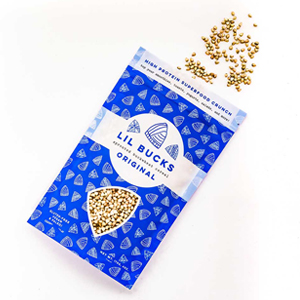
[00:03:37] Ray Latif: Yeah, I'm looking all over the package and I don't see anything that indicates that it's Australian Iced any different from any other kind of iced coffee, except for the fact that it says, shake well, separation is natural, which I can imagine if you get like a big hunk of milk Beat The top, if you don't shake it, that would probably not be a good thing. You know, I'm pretty happy to Beat The guinea pig if you need one. It's not completely cold, but there you go. I shook it. I shook too many times. All right. Thanks. Australia does have a pretty unique coffee culture. I don't know the details of that, but I know it's unique, so that's pretty cool. And we also had some Vietnamese coffee come in the office from one of our co-workers. Yeah, one of our co-workers is a little jaunt to Asia, so shout out to them too. She brought in some fine French roast beans, and they are smooth. Nice. Now a little bit more of a straightforward approach to coffee branding. Riff Cold Brew Coffee is the name of the brand, based in Bend, Oregon. Although this particular product, not necessarily as straightforward. It's a sparkling coffee fruit tea, cascara if you want to call it. The name of the product is Alter Ego. This is the original variety, 35 calories, Six grams of sugar. I'm trying to figure out, uh, 105 milligrams of caffeine. I like the packaging. I like the branding. I love the name alter ego because you're asking yourself what, if you know, riff, you know, riff is, is known for, you know, their coffee. And if you look at this, you're like, what is it? So you have to explore to figure it out. Yeah. They like the names much. They trademarked it alter alter ego. That's a pretty good one. natural energy in a can as opposed to their cold brews, which I believe are in glass bottles. Right. I think they're in a custom glass bottle. It's sort of the wide base and then, yeah, stubby, Beat The neck is a little bit more, I guess, I don't want to say bumpy, but more pronounced around below the cap. This was a product we saw Beat The Summer Fancy Food Show. Little Bucks sprouted buckwheat cereal. This came into the office recently. Have you tried these, Marty? I have not. It's the first time I'm seeing those. Really? Yeah, I've been out for a little while, so I'm catching up. Where were you? I was in Switzerland for two weeks.
[00:05:46] Jeff Rose: Marty brought us to Switzerland. You missed it. Yes.
[00:05:49] Ray Latif: Well done. Keeping it neutral. That chocolate went fast. It did. All right, Mike, while Marty's still looking Beat The Little Bucks Sprouted Buckwheat Cereal, I'm gonna hand you something that's kind of interesting here. We got Kraft Ramen from a brand called Common Foods. Think ramen in the old cup of noodles package, except that one's a little bit bigger. And then in my hand, I have a brand called Mike's Mighty Good. also promoted as craft ramen. You know how I feel about this, Ray? You asked. Great. This is amazing. Spinach ramen is the first ingredient here. Spinach ramen with wheat flour, water, and then spinach powder and modified potato starch. So the noodles have actual spinach in them. I feel great. I'd try this. Yeah, but I'm still wondering about why both or how both could be called craft ramen. Do you think they got together and decided like category, like category builders should, that they were going to both call their product craft ramen? I don't know. I think maybe there's just so much of that quote unquote regular ramen that people are familiar with that, you know, that's kind of a way to stand out. I imagine, you know, the, with the spinach noodles, a little bit of different ingredients. Could they Beat The Adidas and Puma of the noodle category? Somehow it always ends up back to that. Well, it's interesting because, you know, the term craft or the descriptor of craft was first used and popularized by craft beer. Then we started to hear about craft coffees, now craft ramen, there's craft juice, but craft ramen seems little. I'm not, I'm not sure if that's the right way to go with this kind of product, but that's just me. I don't know why it's called craft ramen. I'm assuming that means small batch. Usually that's what craft means. What does the word craft mean to you, Marty? That's a good question. Um, I don't know, I think, you know, just kind of the associations with small batch, you know, higher quality ingredients. That's the same kind of things that maybe helped craft beer sort of build an identity around that, that specific term.
[00:07:52] Jeff Rose: But you know, it's it's like one of those things it gets used The Shore it gets used I think it can lose a little bit of its specificity or a little bit of its, you know, special quality. So Craft ramen. Yeah, I'm kind of with you. I'm not sure if that's totally what works in the sense, you know gourmet ramen or something like that Maybe is a little bit more intuitive.
[00:08:12] Ray Latif: I don't know But I think, yeah, craft is kind of one of those things where it's very, you're seeing it a lot now, so it's not quite as unique as maybe it was a few years ago. Yeah, I remember Pete's Coffee used to use craft when describing their products. Yeah, less so. I see that now with beverages, less and less, except for craft beer. And even in craft beer, I think there are some folks that are avoiding the term, but comfortable with not calling it that. Hey, Ray, can you pass that craft gravy over here?
[00:08:44] Kate Weiler: Well, I think craft beer, um, you know, as it's, it has kind of specific definitions with relation to, to beer, uh, in terms of the size of the brewery and that whole kind of thing.
[00:08:53] Ray Latif: At least according to the industry trade group.
[00:08:55] Jeff Rose: Exactly. So, well, that in itself kind of indicates that there's some desire to protect the integrity of,
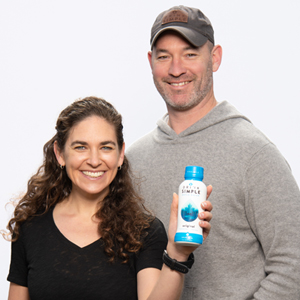
[00:09:02] Ray Latif: you know, the term as it's appropriate for that category. So yeah, I'm not quite seeing that as much as in other places. So it's kind of maybe something that it's probably maybe best for that specific craft beer. We'll have to get to the bottom of this and report back later. Well, you know where it might be discussed, Mike, is that Brewbound Live Winter 2019. Do you know when that's happening? It's happening on December 4th and 5th in Santa Monica, California. And Hey, you know what else is happening on December 4th and 5th in Santa Monica, California, live, live winter, 2019. And how about the next day, December 6th, 2019, Marty, you want to take a, let me bail him out. Cannabis form cannabis form winter, 2019 is Winter 2019. BevNET Live, the mother of all events, is happening December 9th and 10th Beat The Lowe's Santa Monica Beach Hotel. Now is your chance to register. Now is your chance to get ahead of the room block. Get your room Beat The Lowe's Santa Monica. If you don't do it now, you're going to miss out on the wonderful views, the pool, that big, wonderful lobby on what they call the fourth floor. Why do they call it the fourth floor? I don't know. Because there's three floors below it. I guess there are three floors below it. It never feels like the fourth floor. If anyone's ever attended a BevNET Live or a Nosh Live, you're like, how is this the fourth floor? I just walked in from the street. I know you just walked in from the street, but there's a catacombs underneath. There's like a minotaur down there. Indeed. Also, applications for New Beverage Showdown and the Nosh Pitch Slam as well as the Brewbound Pitch Slam now open. You can head to BevNET.com slash events to learn more about the events and the competitions within them. Alright, I think it's time we get to our featured interview for this episode. That's with Kate Weiler and Jeff Rose, the co-founders of leading Maple Water brand Drink Maple. Founded as Drink Maple in 2014, the company was one of the first in the U.S. to market Maple Water, a beverage derived from maple trees and often promoted for their hydration benefits. The company later introduced a line of watermelon juice drinks to augment its flagship line, a move that, among other reasons, spurred the decision to rebrand as Drink Maple. In the following interview, I spoke with Kate and Jeff about their relationship as co-founders, the genesis of the brand, the formation of the Maple Water category, and their approach to consumer education and awareness. They also discussed how learnings from the first few years were incorporated into the revamp, how investors were involved in the process, and why it took longer than they anticipated to launch the revised look. Hey folks, it's Ray with Taste Radio. I'm here at DevNet headquarters inside the Taste Radio studio, and sitting with me now are Kate Weiler and Jeff Rose, the co-founders of Drink Maple. Guys, thanks so much for coming out.
[00:11:51] Maple Water: Thanks so much for having us.
[00:11:52] Ray Latif: Hey, Ray. Not too far of a journey for you?
[00:11:55] Maple Water: No, not at all. We're just in Sudbury, so pretty quick. How far is Sudbury for context? 20 minutes. Really? 15.
[00:12:04] Ray Latif: Oh, wow. I thought it was further than that. I've only lived in Massachusetts for 20 years. This is certainly not your first time to BevNET headquarters. And I asked you, we were in our kitchen earlier and The first time you guys were here, was it 2016, 2015? And you go, no.
[00:12:22] Maple Water: 2014.
[00:12:22] Ray Latif: My goodness.
[00:12:23] Maple Water: I know.
[00:12:24] Ray Latif: And back then, wide-eyed entrepreneurs.
[00:12:27] Maple Water: Oh dear, yes.
[00:12:28] Ray Latif: Going to invent a brand new category called Maple Water.
[00:12:31] Maple Water: Yes.
[00:12:31] Ray Latif: And now grizzled veterans.
[00:12:35] Maple Water: out.
[00:12:35] Ray Latif: Yeah, that was I mean, I was so amazing. I remember when you came in, you had a little Tetra packs. Yeah, with a pull tab. Yeah, black and white Tetra packs. Yes.
[00:12:43] Maple Water: 250 mil, not a resealable cap. It was gone in a sip.
[00:12:48] Ray Latif: Yeah, it's interesting because now I think most people know what Maple Water is. But for those few who are not familiar with what it is and what you guys helped pioneer, what is Maple Water and what is Drink Maple all about?
[00:13:00] Maple Water: Yeah, so Maple Water is the water that comes directly from the tree. So it's not maple syrup mixed with water. It's not sweet. It's very hydrating, very refreshing. When you tap a maple tree, this is what comes out. So it's also known as maple sap. But as you can imagine, sap is thought of as sticky or sweet or pine sap. So the industry really has migrated to that Maple Water instead of using the word sap. And when we started, it was not very well known. Jeff and I, we were doing an Ironman triathlon in Canada and stumbled on a small manufacturer that was tapping trees and bottling Maple Water. And we saw there was this demand for natural hydration. We were both into natural and healthy things, and we couldn't believe that there was this local resource that could produce a natural, delicious hydration. And we saw it was less sugar than coconut water. We felt like it tasted better. And when we came back to the States, we couldn't find it anywhere and we couldn't believe no one else was doing it. And so we decided to really throw ourselves into the industry and launch the company. And one of the first things we did was listen to BevNET live videos streaming to figure out what this whole thing was all about. And come to find out, we did launch with several other companies back in 2014. So there were other people that had the similar idea that we did.
[00:14:27] Ray Latif: throw yourself right into the fire of the beverage industry. Or as somebody might say, throw yourself down the stairs and tumble your way. That's probably closer to the truth. I do want to talk about this notion of starting a new category because as much as people respect the idea of trying to launch something completely new and completely different, there's innumerable challenges in doing it. One of the things is just trying to find supply and trying to find someone to actually make your product. I know Jeff, you've been very involved in operations to the point where you guys have your own production facility, right?
[00:15:05] Pioneer Drink: Yeah, we have a couple of facilities now. We have one in northern Vermont and one in Buffalo, New York. So most of this app comes from northern Vermont. We do get a little bit from New York as well. So we try to, all of our bottling happens in upstate New York. So we try to create a very smooth transition from tree to bottle in a very fast amount of time.
[00:15:25] Ray Latif: And was that the idea? Did you know you were going to have to do that when you launched the company? Because I think that's sometimes a misconception is, oh, I can make my own product. No, you can't make your own product. Or actually, I want to find someone to make my product, but I can't. I've got to make it myself.
[00:15:38] Pioneer Drink: Yeah, it's really difficult to. Maple Water, it's a very simple product, Beat The process is difficult because it's a very short season. It spoils very quickly. So trying to create that infrastructure that allows us to be treated bottle in a very quick amount of time is very, very difficult and very, very important.
[00:15:55] Ray Latif: I've seen the lines, the plastic tubes, from tree to tree. It looks like there's miles and miles of them. There are miles and miles.
[00:16:02] Pioneer Drink: Are there really? Oh, miles and miles. Hundreds of thousands of trees it takes just to make this, because the season's only about a month long, so we need to harvest everything that's our entire year supply in a six-week time frame.
[00:16:13] Ray Latif: Wow. So there's the production aspect of what you're doing. Obviously, there's the sales and marketing aspect of what you're doing. But what might be most important is the education strategy. And early on, I believe the primary message was, this is a better for you coconut water, or at least this is the next evolution of the coconut water category, even though it's not coconut water. Yeah. Was that intentional or just sort of a point of reference?
[00:16:39] Maple Water: I think it was a easy frame of reference for consumers to understand what it is. Because of that education hurdle, really communicating that this is refreshing, it's water, it's not syrup was so important to us because early on, you say Maple Water, and early on we figured out there was going to be that challenge of this isn't sugar water, this isn't syrup. And when we started sampling and demoing, we just kept on getting consistent feedback that, oh my gosh, this is so much better than I expected. This isn't syrup. You're telling me this is lower sugar than the other plant-based functional waters? This is crazy. So because of that, we really realized that there was that education challenge that was ahead of us. I think that with coconut water, You know, you always want to have your brand stand for itself and have the product stand for itself. However, we saw, and I think the other Maple Water companies also saw, that once you said half the sugar of coconut water, all of a sudden the consumer was there. They were able to leap to that this is a natural functional hydration like coconut water, but it's just being tapped from maple trees.
[00:17:53] Jeff Rose: guessing your margins, that's risky. Belay Financial gives CPG brands the clarity to scale smarter, faster, stronger. Get your free inventory ebook by texting TASTE to 55123 and start making data work for you.
[00:18:13] Ray Latif: Tune in Beat The end of this episode for an exclusive interview with Matt Lynn of Belay Solutions. He sits down with Melissa Traverse to break down the biggest inventory and accounting mistakes CPG founders often make. You'll learn how to bring clarity to your numbers so you can scale with confidence. was similar to some coconut water products out there in that it was in a Tetra Pak with a pull tab. How much did you think about the package before launching?
[00:18:38] Pioneer Drink: We initially thought we had visions of, you know, wanting to be a sustainable natural resource. Oh, let's let's really glass bottles are the way to go. And that's that's That would be beautiful. Then we'd go to Copax and say, hey, we'd love to put this in a glass bottle. And then they would say, okay, in order to put a glass bottle, you need to do X, Y, and Z. And then they'd also, a lot of people thought they could do it, but couldn't do it. And luckily we were able to see that some of these people just would. essentially take our money and say that, Oh, I'm sorry, it didn't work. So we, you know, we did a lot of research and found out that aseptic processing, which is what tetra packs and things like that are, are really the necessary, really the best way to put this in a, in a safe package without having to add acidifiers and things like that. So that's how we landed there. So you know, people would say with our first iteration, you know, it would be really nice to have a resealable package as opposed to our tear off labels. And the problem was the Copac we used didn't have the ability. So yeah, we would love to have that too. But unfortunately, you know, beggars can't be choosers when it comes to aseptic treatment. There's not a lot of places in the country that do it. So we had to utilize the company that was willing to deal with the startup because it's, you know, people When you're starting in the beverage industry, it's a lot of money and a lot of resources that need to be spent on your company, and they don't want to be steering, especially low-acid aseptic places, don't want to be steering capacity away from the big boys that pay their bills and don't have to worry about them going out of business in six months, where any startup easily could be gone in six months.
[00:20:02] Maple Water: When we were looking at packaging, I think we ordered online from Uline or something crazy, all these different bottles, and we were picking it based purely on the aesthetic of the bottles. I was going through some stuff and found all these different bottle concepts that we both thought that we could just pick and create a beverage based on the look that we had of the bottle. Quickly, when we started realizing about processing and pH and all those nuances that go into packaging, we realized that we were Beat The mercy of the type of processing and the Copax availability and not what we wanted.
[00:20:37] Ray Latif: Let's talk a little bit about some of the traction you got with Drink Maple and then some of the things where you realized at a certain point, hey, we've got to make this change. What were some of the key points where you knew you had something, but it wasn't a complete concept yet?
[00:20:51] Maple Water: I do think we knew we had something or we thought we had something early on. We saw that there were other Maple Water companies, so I think that having other companies doing the same thing as you is validation that there's a traction in the marketplace. When we first launched, we got a lot of press, which was great. I think that there were people interested in this new concept. on the cover of the Business Section of the Boston Globe, and then USA Today picked it up, and it was on the Today Show. And we really saw excitement around that. And then when we were sampling to consumers, people absolutely loved the product. And we realized that there was a need for people were looking for something better for you and natural. So with all those things together, I think that we knew that we had something. I think looking back on it, we underestimated the amount that it was going to take to build this category and thought that it was going to come a little more easily than it has. Early on, when we talk about not putting the ingredient in the name, I think that's really good advice. We came up with the name, I think we were on a run, and we wanted something that really communicated what it was. And we thought that by putting that on the package, it would communicate what it was. And what we didn't realize is that, A, it pigeonholed us, but B, it added more of that confusion because people did think it was syrup. So making that consumer framework was jumping to maple syrup rather than... That's where we saw the success of saying half the sugar coconut water because people jumped from syrup to this natural hydration.
[00:22:35] Ray Latif: People thought it was syrup even though they saw it in the beverage section, it wasn't intuitive at all.
[00:22:39] Maple Water: Yes.
[00:22:40] Ray Latif: Ooh.
[00:22:41] Maple Water: Yes.
[00:22:42] Ray Latif: Cold maple syrup.
[00:22:44] Maple Water: Yes.
[00:22:44] Ray Latif: But then you also launched a watermelon beverage as well.
[00:22:47] Maple Water: Yes. And that's really where I think the transition to Drink Maple started. We launched a plant-based organic shelf-stable watermelon water and we had the name Drink Melon. And on the shelf, you could tell it was part of the same family and it felt like this works, and then we started working through and realized we really needed to create one brand. And so that's really where we knew that we had to make some transition. We knew it was going to take a lot of time and money. I think we had heard interviews from other brands on BevNET about the amount of money and the iterations that it took to land on a brand evolution. one of the conversations I have to give credit to Tom first, we had coffee with Tom first, and he really told us some stories and some great insight. And after that coffee meeting, we really went into full force of going into transitioning to Drink Maple.
[00:23:44] Ray Latif: Tom knows a few things. One of the co-founders of Antec Connectors, now currently with Castanea Partners. So that was, was that two years into what you were doing? Because 2014 is when you launched. And then when did you realize that you really needed to make a move?
[00:23:59] Maple Water: Yes, exactly. It was two years in. And then we started the process really two years in, and we went through a ton of iterations and different names. And they were all similar, but we would go through different package designs, and we were feeling good leaving. And then the next day, both Jeff and I would look at each other and say, ugh, I hate it. Luckily, we were on the same page.
[00:24:24] Pioneer Drink: Right, and it also needs to be trademarkable too. So you go through iterations, you go through names, you go through all these things that you feel are right, and then you say, well, no, Coke could sue you for this. So you need to think of another name.
[00:24:35] Ray Latif: All right. Humor me. What were some of the things on the cutting room floor before it was Drink Maple?
[00:24:40] Maple Water: Drink pure, drink organic. Drink Maple, that was the one that... Oh yeah, sure.
[00:24:45] Ray Latif: Coke. Coke was gonna have a problem with that, sure. Drink Plants. Yeah, Drink Plants.
[00:24:49] Maple Water: Okay. Well, it was funny... Drink This. Oh, Drink This. Drink This. We had Drink Plants, and then right after Suja launched the Drink Plants campaign... Oh, right. And we were like, oh, thank goodness we didn't go with that.
[00:25:02] Ray Latif: Yes. How are your investors involved in this? Because this is a big, big step going from, as I mentioned before to you guys in the kitchen, you know, the Drink Maple logo in this area and in some retailers is pretty recognizable. And then to go, you know, into a direction where that logo isn't on the new bottle is a pretty big step. So how do you get your investors comfortable with it?
[00:25:27] Maple Water: Yeah, I mean, the process is scary. I think that the investors were very much on board with having that transition. They saw the need and they really were 100% behind it. I think Beat The time, our lead of the Series A had an inside design team. They were really helping with the rebrands and the design, the logo, the new name. I think when they invested, we didn't have that new name yet at all as part of the process. So they were very involved in it. But when you go through change, it's anything, it can be really scary. It's the unknown of, is it going to really work with consumers or not?
[00:26:11] Ray Latif: Did you ever come to loggerheads with yourselves or investors or anyone else in your team about this?
[00:26:17] Pioneer Drink: No, I think we, uh, we've got some great investors and it was, it was fairly collaborative, but not, you know, there wasn't collaborative to the point where we were bringing iterations to the board meetings and saying, pick X, Y, and Z. We'd, we'd say, here's where we're headed. How do you feel about that? Any insights or anything like that? And they were all pretty agreeable to the direction we were going.
[00:26:36] Ray Latif: Um, focus groups, uh, consumer insights. Did you do any research into what they wanted or what they would be comfortable seeing in a rebrand?
[00:26:45] Maple Water: A little bit but nothing very structured. I'd say we ran it by different people and we would run it by some loyal consumers and things like that.
[00:26:56] Pioneer Drink: You did an ad hoc focus group though, didn't you?
[00:26:59] Maple Water: You're right, I did. I did. I forgot. I did do one. Yeah, I'm forgetting. Sorry. It's all blurred together. We did one focus group that was more structured and it was interesting because we had some people in the focus group that knew our brand too well and I think was too attached to our brands. And then some people that really didn't know the brand and it was much more valuable insight. So it's tough to sometimes you get so many different opinions and to just follow your gut and say this is the direction we're moving because you're going to hear so many different things.
[00:27:34] Ray Latif: Is it because you're going to hear so many different things or is, I mean, are focus groups just cost prohibitive for a relatively small brand?
[00:27:40] Maple Water: Well, I think focus groups in general are cost prohibitive to do it in a truly professional manner. It was pretty expensive to go through. We've seen what some other brands had done for focus groups, and it can be extremely valuable, but we just were Beat The point that we put together one, we recruited people that from our social media. We just decided to do it, and we held it, you know, in the city, and I think it came together pretty well for what was put into it at a very little cost. But for us, when we looked at some of the consumer-focused professional ones that were going to be conducted, it's just our...we felt like our money was better spent in other areas.
[00:28:21] Ray Latif: How do you determine how to use the real estate on your bottles given that what you had before felt pretty lean, I want to say? And now I'm looking at a bottle and there's a good amount of information there. How do you determine what you wanted to put on the new package and that wasn't there before?
[00:28:39] Maple Water: So I think it's always evolving. We always look Beat The packaging and can say we want certain updates. But I think there's a good amount of information. Some of that is legally required, and some of the comparatives on there is legally required. But we wanted to make sure that it was still clean and simple and represented that simple nature of the brand, but also communicating what we needed to communicate about the functional attributes of the product as we were really seeing that there was a need as we were building this category to make sure that those functional components were communicated.
[00:29:18] Ray Latif: And that's for the Maple Water, but you have, you still market a melon water as well. And it's Drink Maple and then right underneath the, on your package it says Drink Maple and then it says Maple Water or it says melon water on it. Right. Did people recognize that it was Drink Maple, the company, or Drink Melon, the brand, when you first got it on the market?
[00:29:36] Maple Water: So a lot of people thought that we ripped off Drink Maple Water hear it time and time again, whether it's trade shows. I mean, there is a founder of another brand and she's like, I was about to go punch them in the face for ripping you off. So I think that people saw it was very similar, but some people didn't know it was the same thing. And we heard that whether it was from the industry or from a consumer standpoint.
[00:30:04] Ray Latif: When you started to get that feedback coming in about consumers' perspective or opinions about the new look, you mentioned, Kate, that you tweaked the label often. What are some of the things that you had to tweak to better satisfy that consumer?
[00:30:18] Maple Water: With the Drink Maple to Drink Maple, the thing about communicating Maple Water on a packaging has always been somewhat challenging in general. And there's been different companies to do it different ways. And part of when we first started that maple leaf was so prominent. And so being able, we obviously still have a maple leaf there.
[00:30:39] Ray Latif: On the bottom of the package.
[00:30:40] Maple Water: On the bottle and then in the middle. And sometimes people think it's Canadian. We're always evolving and saying, okay, how do we communicate this That's putting a big American flag right on the front. Exactly. We always take feedback as to what we can improve upon and try to change different things. We went in a different direction with the sparkling. We took a risk and went in a completely really different direction rather than just replicating our original bottle. Feedback isn't good so far, but we'll see.
[00:31:13] Ray Latif: How much of the communication changed?
[00:31:15] Jeff Rose: Do you want more repeat buyers on Amazon? Well, this free resource in collaboration with Straight Up Growth will help your brand turn first-time buyers into long-term subscribers. Download Winning the Repeat Purchase Game on Amazon now at Taste Radio slash SUG. That's Taste Radio slash S-U-G to start building retention-driven growth for your brand on Amazon.
[00:31:40] Ray Latif: Scaling a beverage brand into major retail comes down to operational readiness. From packaging lead times to co-manufacturing strategy, the details can make or break a launch. In a new e-book in collaboration with Octopi and Asahi Beer USA, industry leaders share what they've learned in helping brands scale. Download it now at Taste Radio slash octopi. Do you need to scale your team faster without compromising on talent? Join Oceans for a live webinar on April 20th and learn how leading companies are hiring top global professionals who are ready to grow with your business. Register for the webinar now at Taste Radio slash oceans. That's Taste Radio slash oceans. Was it because I think in the past, it was very much this is what Maple Water is. And now what you'd want to say, or at least I assume what you want to say, this is what Drink Maple is, as opposed to we're not marketing the ingredient anymore, we're marketing the brand. So how do you change that communication? How do you how did you approach changing the communication from product to brand.
[00:32:43] Maple Water: We're, to be completely honest, we're still in that process of really building that brand architecture and purpose and what we stand for and being able to communicate that brand architecture in an effective way to consumers. So it's an ongoing thing for us. I think that what we stand for is Drink Maple stands for simple, pure ingredients that are functional as well and helping you live a better life. The challenge that we still have is that some consumers really know what Maple Water is and the benefits of it. Some consumers still have no idea what it is. And so continuing to still market that category and build that category, we have several research studies that we're just about to do some press on in regards to how Maple Water helps boost aerobic performance, it helps decrease oxidative stress. And these research studies have been going on for years, and it's brand new because it's a relatively new category and concept. So the research that's just coming out, we still have this opportunity to really communicate the benefits of Maple Water that is for any brand, not just Drink Maple. So we still have that, I think, challenge of balancing what the brand's about and then what the category is about.
[00:34:03] Ray Latif: I want to go back to something we talked about prior to the revamp and the rebrand, which is how you guys work together. Because starting a company, from what I understand, and I always try to make this clear, I'm not an entrepreneur. I haven't done this before, but I've heard that it's a really difficult process. And then when you throw into the mix something that could be as complicated as a rebrand, that seems like it could cause some problems. It could cause some arguments.
[00:34:30] Maple Water: We definitely have arguments. I don't think I never want to have this rainbows and butterflies on co-founder working together. There's definitely screaming arguments. There's arguments. I think we've always been on the same page with vision and outlook. We've never had a truly argument on the direction of the company or the direction on the brand. We're always really have been on the same page in regards to that. With the rebrand, that hasn't, that didn't cause really any conflict. We always were in sync with that. You know, there are other things that we spent time arguing on.
[00:35:09] Ray Latif: Well, how do you establish just guidelines for your, for your roles?
[00:35:13] Maple Water: Going back to that conversation of ignorance is bliss earlier is that we had such different strengths and weaknesses that we complimented each other so well. And we didn't even really realize that when we started. So I'd always encourage people to look at your co-founder. A, are you going to be able to go through hell and back with this person? And do they have skills and a perspective that's going to compliment you and be different? Because we never, the roles and responsibilities was always very clear. We never had to say, okay, you're doing this and I'm doing this. It was just based on our strengths. It was very easy to figure that out. And we do some things together as co-founders and make decisions as co-founders about the brand. But from the day-to-day minutia of who's handling what, it's always been very clear.
[00:36:04] Ray Latif: And that seems to make it work much more easily than it would otherwise.
[00:36:08] Pioneer Drink: Yeah, I think that if there were two Jeffs or two Kates, we wouldn't be here right now. So I think having our dissimilar skill sets have allowed us to thrive.
[00:36:16] Ray Latif: Can you talk about an incident where it really tested your patience?
[00:36:21] Maple Water: If we're being frank, the stress and where there comes to be disagreements is in regards to raising capital and making sure that there's enough fuel in the fire to build the brands in the way that we want to do it. And that's where the most arguments come from, I would say.
[00:36:41] Pioneer Drink: It's about giving up equity? Is that the biggest? No, I think that a lot of our arguments where I'm, I just, I want money in the door so I can operate, where Kate is smart enough to take a step back and say, well, do we want them as investors around the table? Do we, do we want the partners that are going to be adding value and not just money to move the business forward? So she does a great job of stepping back and saying, well, why don't we, why don't we do this or that as opposed to me saying, let's just get it done. So I think that, you know, that's been helpful.
[00:37:09] Ray Latif: It's not rare, but it's not often that I'm talking to a brand owner who launches a company and then five years later, I'm still talking to them. So you must be doing something right. No, in all seriousness, I've always respected your brand and you guys are Just an excellent team and the perseverance that you've shown and just the fun that you always come to the table with is just, it's so wonderful. Congratulations on everything you've done to this point, and I'm sure we're going to see more great things in the future.
[00:37:40] Pioneer Drink: Thanks, Ray.
[00:37:41] Ray Latif: All right. That brings us to the end of episode 49 of Taste Radio Insider. Thank you so much for listening, and thanks to our guests, Kate Weiler and Jeff Rose. Please subscribe to Taste Radio Insider on the Apple Podcasts app, Spotify, Stitcher, SoundCloud, or Google Play. As always, for questions, comments, ideas for future podcasts, please send us an email to ask at Taste Radio. On behalf of the entire Taste Radio team, thank you for listening, and we'll talk to you next time.
[00:38:14] SPEAKER_??: you
[00:38:20] Drink Maple: Hello, I am Melissa Traverse here for the Taste Radio podcast, talking about some of the biggest tension points that CPG brands and founders face when they're scaling a brand, and those are financial accounting and inventory management. I am joined by Matt Lynn, inventory accounting guru from Belay Solutions, and he is going to shed some light on all of this that is going to help everybody out quite a bit. Matt, thank you so much for joining us today.
[00:38:50] Kate Weiler: Thank you for having us, Melissa. It's great to be out here at Expo West and it's great to sit down and be able to chat this because it's kind of a passion project of ours, working mainly with CPG brands and hoping to help them scale.
[00:39:02] Drink Maple: It's been such a pleasure chatting with you and the team and learning all about what you do over there at Belay Solutions. Can you tell us a little bit about yourself and what your role is and the kinds of solutions that Belay gives to CPG brands and founders?
[00:39:18] Kate Weiler: Yeah, absolutely. My role with Belay, I'm actually our inventory accounting manager. I run our inventory department, so we work with CPG brands, taking them from spreadsheets, putting them on inventory management systems, and really helping connect their tech stack between their sales online marketplaces to that inventory management system, even down to their financial systems like QuickBooks. Belay overall is kind of an outsourced accounting firm. And with that, we're helping teams. We have different levels with bookkeeping, controller level work, even high level into CFO type items. So we really help those brands in any way that they need financially. And then I just have a subset of a department where we're really just laser focused on inventory.
[00:40:00] Drink Maple: It's certainly a complex topic and there are plenty of places to go wrong. Let's start by going right and start super simple. Can you tell us what some of the biggest red flags are that would help a founder understand or, you know, the person running a brand understand that it really is time to get some help with some of these areas?
[00:40:21] Kate Weiler: WKYT. They have a lot of transactions that don't get coded or they just put them into placeholders to just get rid of it so it's not an eyesore. They'll notice they have revenue but no cash or they notice that they have a good amount of cash but their blind spot is really seeing the vendor invoices that are sitting there just needing to be paid and so they just lack that clarity that's going to really be around the corner.
[00:40:58] Drink Maple: You know, you were talking about one of the red flags that comes up that I think makes so much sense. When somebody asks you what your numbers are and you can't come up with the right number, that's a big problem because that's something that you really should be able to share with decision makers who, you know, you're ideally looking to do business with. What should you be able to call up at a moment's notice?
[00:41:23] Kate Weiler: really at any time you should be able to know an accurate margin. It's amazing how many founders we end up talking to that they can tell you their revenue numbers, they can tell you their selling price, and then the minute you start talking about cost or their cost of goods sold, they just get a deer in headlights look. So really it's very hard to tell, am I even making money? Or if you don't know your entire landed cost. Maybe you know what the freight cost is, the duties separately, but you're not really getting that as part of your unit cost. So it's really hard to tell. Am I even making money or am I losing money from the very beginning?
[00:41:56] Drink Maple: And do you recommend that founders are able to call up a margin by channel?
[00:42:00] Kate Weiler: Absolutely. And depending on the number of products and channels, you kind of want to know what are your best sellers, which ones are making the most and which ones maybe you're not making as much. But especially if you're branching out and you're doing D to C with B to B, absolutely want to know that.
[00:42:17] Drink Maple: Gotcha. You mentioned that when things feel really chaotic, that's probably a red flag. I would say that it probably almost always feels chaotic if you're running a CBD brand. And I know this may be hard to quantify, but is there a revenue number? Is there a number of doors number that would help a brand understand whether or not it makes sense to bring on a partner like Belay? Understanding that so many brands are bootstrapped or they might be tight for cash. What is that friction point?
[00:42:47] Kate Weiler: 3 3 3 3 3 But as you're growing, as you're getting to those six-figure revenue numbers, and especially as you're approaching seven, you want to make sure you've got good financials. Because as you scale to that point, most likely you're going to be looking to raise capital. And investors, the first thing they're going to look at is your books. And are they clean? And do they show a clear picture of your business?
[00:43:20] Drink Maple: You know, another area that folks might look to to organize some of the chaos are their systems. So many folks stick with Excel spreadsheets for a good amount of time. How do you know that you need to outsource some of your accounting to an organization like Belay Solutions versus maybe signing on to a Synth7 or NetSuite or something like that?
[00:43:43] Kate Weiler: Well, that's actually something we really help with. When it comes to that cost question, that's something that trips people up. And sometimes if you just have a turnkey business, you buy and sell a finished good, you can maintain with spreadsheets. And we've had clients with million dollar revenue that can do that. But we see so many brands nowadays are using contract manufacturers. and they're just sourcing certain parts of their product. So when you start talking costs, they have no idea exactly what their unit cost is. So that's where we come in and we kind of understand, we'll speak with the customers and the clients and get their needs. And then if we think they're ready for a system, then we'll help put them on that system so they can get some of that clarity. And it's not something we force on anybody. There are plenty of times where founders come to us and we'll tell them bluntly, you're not ready for it right now, but we'll let you know when we think you are.
[00:44:29] Drink Maple: That sounds like excellent advice. What should a founder or somebody running a brand look for in an outsourced accounting partner? Are there certain checklist items that they should make sure that their partner be able to execute or be able to help them understand?
[00:44:46] Kate Weiler: Absolutely. I think one of the keys there's, there's a lot of outsourced accounting firms out there. Some focus on service-based SaaS companies, but if you're a CPG founder, you really want to make sure that your accounting firm has CPG experience. I would ask them, you know, what kind of brands have they worked with? And even beyond that industry specific, because there's so many subsets of CPG. And that's something that I think is great about what we do with Belay is that we kind of run the gamut. It's kind of like the insurance commercial. We know a thing or two because we've seen a thing or two across a broad spectrum.
[00:45:15] Drink Maple: Probably getting references is always helpful, right? Absolutely. All right. So this all sounds great. I think we have a really good understanding of would it make sense to hire an outsourced partner? You know, what some of the things you should be looking for are. What does offloading this kind of work mean for the brand? What can this do for lightening the load of a founder or lightening the load of a brand operator? Like, how does that help them in their everyday business?
[00:45:45] Kate Weiler: It just tries to really help quiet the chaos. So what we're looking to do is just take some of the weight off that founder's shoulder, let them focus on building the brand, building the business, getting that exposure. If you don't have sales, you really don't have anything. So we want them to be able to focus on that while we take care of your back end office work. And we can just present that to you on a monthly basis, you can help make decisions, you can take that to investors. And really, you can just focus on growing your business.
[00:46:10] Drink Maple: I feel like I felt founders and the folks who are running brands collectively sigh. Breath of relief just hearing that. How can people learn more about Belay Solutions?
[00:46:21] Kate Weiler: So people can text TASTE to 55123 for their free inventory guide to get started.
[00:46:27] Drink Maple: Matt Lin, inventory accounting guru at Belay Solutions. Thank you so much for joining me here at Expo West. It's been such a pleasure to chat with you and learn about what you all do over there to help founders and brands with their financial accounting and inventory management. For everybody else out there, thank you for listening to the Taste Radio podcast. I am Melissa Traverse and we'll see you next time.