[00:00:04] Ray Latif: Hello, and thanks for tuning in to Taste Radio Insider. I'm Ray Latif, the editor and producer of Taste Radio, and you're listening to episode 50 of the podcast. I'm with my BevNET colleagues, John Craven, Mike Schneider, and Carol Ortenburg. We're recording from the Taste Radio studio at BevNET headquarters in Watertown, Mass. And in this episode, we're joined by Evan Holod, the CEO and chief troublemaker of Michel et Augustin USA, who discussed how the French snack maker had to rethink its legacy positioning and packaging for an American audience. If you like what you hear on Taste Radio Insider, please share the podcast with friends and colleagues. And of course, we'd love it if you could review us on the Apple Podcasts app or your listening platform of choice. John Craven. You're back on the show you were out last week. Where were you Aruba Aruba? I love that.
[00:00:53] Evan Holod: I think about that song Kokomo every time That's definitely not really where I was The movie cocktail and you know yeah, it was not like that it was much more chill, but I It was fun to go in the grocery store there and get a mix of American and European products there and saw some good startup brands that probably don't even know that they're down there because it's not a market that you would care about, right?
[00:01:26] Ray Latif: My favorite was Sports Drank. Oh, Sports Drank, yeah. Why would you get European products there? Well, it's a Dutch colony.
[00:01:33] Evan Holod: So yeah, you get all the stroopwafels you can handle. We got to get that Oatly up here Oh, yeah, the ready-to-drink Oatly latte thing.
[00:01:43] Ray Latif: That's pretty good. I want to try that It did look good. All those were on John Craven's Instagram stories Bev net Craven if you want to check it out, but you missed it this time around So the next time he goes through Ruby, you'll find it.
[00:01:55] Evan Holod: So don't worry. I'll post more beverages Every day.
[00:01:58] Ray Latif: Yes Carol, you were also out of town for a bit. San Francisco and Denver?
[00:02:04] Enter Holod: Yeah, I had a great trip to San Francisco, got to have a nice chat with Keith Belling of Right Rice and visit the headquarters of Good Eggs, which is a emerging e-commerce platform really highlighting local food producers in the Bay Area. Then I headed to Denver and, of course, Boulder. You have to visit Boulder if you're looking for natural food products in the Colorado area. And Boulder got to meet with some members of Naturally Boulder, which is a networking and education group for people in the natural products industry. The next day, met with members of Colorado Foodworks, part of one of the brands I got to meet there. We have some cool samples on the table in the silver space bags.
[00:02:47] Ray Latif: Silver space bags.
[00:02:49] Enter Holod: As a little teaser, they're launching, I think, eight new products at Expo East, all in their sort of low to no sugar chocolate portfolio. Maybe you can shoot us a note guessing what they are. If not, stop by the booth and see what they are. We'll also have that news on Nosh. Also got to try Honest Stand. vegan cheese sauce. I don't know if you guys saw this, but it was the first time in my life I had a personal hot pump Hot Cheese sauce put in front of me. It was pretty amazing.
[00:03:20] Evan Holod: That's everyone's dream.
[00:03:21] Enter Holod: I know. I was like, is this really here for me to try?
[00:03:25] Evan Holod: Cheese or vegan cheese?
[00:03:26] Enter Holod: It's vegan cheese, has some cashews, has some vegetables. It's a little lower fat than some of the other vegan cheeses on the market, and also can be used as a cooking sauce, which is really nice. And then, of course, John Craven had to go visit Law'Laws Whiskey Distillery in Denver, which is a first Bev investment, and they're just producing some amazing whiskey out of there. I think you're familiar with them.
[00:03:48] Evan Holod: Thanks for bringing me some Carol.
[00:03:50] Enter Holod: Oh, I didn't bring back any to be fair. No, no whiskey for me this trip.
[00:03:56] Evan Holod: A lot of those wineries look pretty awesome too.
[00:03:58] Enter Holod: So we did spend some time in Sonoma Napa. Very cool to see how this like emerging startup scene in food is also translating over to wine and you see these Very cool, funky wine styles being produced. There's one winery we both like, Idlewild, and they're producing out of an old mushroom farm in Sonoma. And another, Mike, hit another favorite of yours. Also went to Verve's Roastery in Northern California and got to hear more about the instant coffee they just launched. I did bring back samples of that. It's a little easier to bring back than bottles of whiskey.
[00:04:31] Ray Latif: Well, that sounds pretty awesome. Carol, are you going to be writing about some of the stuff on Nosh?
[00:04:36] Enter Holod: Yes, certainly. Some brands will be writing about their upcoming news, covering them at Expo East and highlighting them on our Instagram account as well.
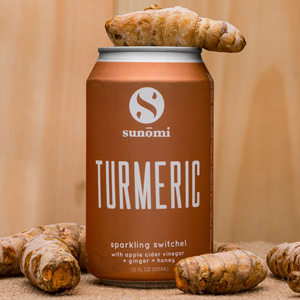
[00:04:47] Ray Latif: Cool. Well, if you're following BevNET's Instagram account, you may have seen some photos of a brand called Tsunomi on our account this past week. It's a sparkling switchel brand, switchel being an age-old recipe made with apple cider vinegar, ginger, lemon. You might have seen some products out there, including from a brand called Side Road or Up Mountain Switchel. Sonomi used to be called Sip City Switchel. The founder is Nikki Blank. She participated in New Beverage Showdown 15 and recently rebranded to Sonomi. Yeah, right. We met Nikki through the New Beverage Showdown at BevNET Live and it was Sip City at the time. It was a very different looking package. She's since moved from glass bottles to cans and it's now a sparkling switchel and moved away from naming the flavors after cities. And now she's very specific about the flavors. This one in particular is turmeric. And she sent us a few different concepts and trying to decide what the hero of this can should be and what would draw someone in and decided that she was going to go for flavor and then have them discover that it was switchel. And, you know, we talked yesterday about this kind of looks a little bit like a sparkling water and thinking maybe that's a good thing if it brings somebody in. And then you look at the ingredient panel here, the ingredient panel is very simple. So there's a lot of things to like about this. It draws your eye. The can's pretty striking and if you like turmeric, you will at least take a look at this thing. You will definitely take a look at that if you like turmeric. And when you go to the side, she's got, you know, some of the functional benefits on the side as well as the story of Tsunami. So I think this can, I think this can's worth a shot. Agree, I agree. You know she used to name flavors after cities, right? So if Boston were a flavor or what flavor would it be love that dirty water, right? Cream pie none of this sounds good except for maybe the cream pie the cream pie sounds very big sweet tooth.
[00:06:34] Enter Holod: It's my dentist loves me
[00:06:41] Ray Latif: So we have two separate coolers in the office. We have one cooler that holds non-alcoholic beverages, always full with wonderful, interesting new products. And we have another fridge that's underneath our bar in the kitchen. And that of late has been loaded with more and more craft canned cocktails. A couple in front of me. This brand is called Post Meridiam. It's these tiny little beautiful little cans. What size is this, John Craven? Two ounces? No, I think about four ounces. Yeah, four ounces. The one I'm holding in my hand, is there Mai Tai variety, 23.5% alcohol. It's a hundred milliliters. There we go. So ounces, milliliters, however you guys want to figure it out.
[00:07:19] Hot Cheese: Oh, that's like three point something.
[00:07:20] Ray Latif: Sorry. Okay. It says shake the can, pour over ice. I definitely want to try this, but it's a little too early in the day to do that. I've also got in my hands, well, now I've got in my hand, a canned cocktail from Venus Spirits founded by Sean. After you pried it out of the hand of John Craven. Yes. Founded by Sean and Grace Venus, good friends to BevNET. We've known them for some time, been in the beverage industry for some time. John Craven, have you tried this product yet? I've had many of those, Ray. They're quite good.
[00:07:45] Enter Holod: I may have picked some of those up when I visited Verb as well.
[00:07:48] Ray Latif: There you go. I really want to try this, the gin gimlet with cucumber and basil. Once again, I'll see you early in the day to do that.
[00:07:54] Evan Holod: There is basically like a new canned cocktail every day right now, so it's pretty crazy to see all the products coming through our office. I think we actually have like eight refrigerators in here, not just two. Don't downplay our office, Ray.
[00:08:08] Ray Latif: Our refrigeration game is strong. There are some refrigerators that are not open to folks in this office. You're not welcoming those refrigerators. I raid them anyway.
[00:08:16] Enter Holod: It's funny, too. The CBD drinks bounce back and forth between the non-ALK and the ALK cooler. like the category can't quite decide where to slot them in.
[00:08:26] Evan Holod: And it's interesting you bring up CBD. I think right now like canned cocktails are probably second to CBD drinks in terms of like just type of beverage that we're getting in the office like every day and You know, it's a lot of the lot of the same stuff, the Post Meridiam one, what is interesting about that since it's 23% alcohol, it's like an actual like cocktail that's meant to be poured over ice. The Venus Spirits is I think 8% and it's much more the you know, drink from the can, you know, we got the straightaway send us the spritzers. Yeah. I mean, there's too many to name right now, but it's interesting to see just how many, you know, companies are getting into that. And, you know, from a business perspective, I think a lot of distilleries are flocking to it simply because it has the promise of high volume compared to, you know, if you're a little distillery selling, I don't know, bottles of gin or whiskey or something like that. Like you're just never going to hit the sheer numbers volume wise. So we'll, we'll see how it works out.
[00:09:27] Enter Holod: You bring up a good point though about use case and that some of them are saying pour out some of them are saying drink straight from the can. I'm not sure which one will net out being. the leader, but it's hard to establish a consumer behavior when you're supposed to do different things with kind of different products.
[00:09:42] Evan Holod: Well, it seems like the ready to pour over ice type products, that's like a new use occasion. Like you're trying to get a cocktail nerd to buy something from a can, whereas this sort of lower alcohol seems like it's maybe an upgrade from like a, I don't know, yeah, I guess a big upgrade from like a hard seltzer or something like that. But Two totally different consumer bases. I would guess that the lower proof one probably has bigger market potential, but who knows?
[00:10:11] Ray Latif: Who knows indeed. But what I know is that we should get to our interview with Evan Holod. I think it's a pretty sweet one. No pun intended. I know, I know. Nice one, Ray. As mentioned at the top of the show, Evan Hollett is the CEO of Michelle & Augustin USA, the American arm of the French cookie company, which is known for its indulgent snacks and quirky branding. Michelle & Augustin, which is primarily owned by dairy conglomerate Danone, entered the U.S. market in 2016, and while the brand achieved some traction in the U.S., executives believed that it hadn't reached its potential. Enter Evan, who came on as CEO in 2018, following 10 years as a brand manager at Coca-Cola. In the following interview, I spoke with Evan about the history of Michel and Augustin, why its development in the U.S. stalled, and the approach to getting it back on track. Hey folks, it's Ray with Taste Radio. I'm on a call with Evan Holod, the CEO of Michel et Augustin, a French cookie producer, or at least that's what they're best known for. Evan, thank you so much for being on a call with me. Oh, well, thanks for having me, Ray, and for such incredible French pronunciation. I took, I took about three or four years in high school, but it really took your preparation prior to us actually getting on the air. Evan was like, I'm going to hang up the phone if you screw this up. And I was like, oh man, I've, no, that's, I Got to get this right. Like a true native speaker, Ray. It was impressive. Oh, thank you so much, Evan. I appreciate that. You're calling from Brooklyn, New York, and from the headquarters, the US headquarters of the company affectionately known as The Banana Farm. We are here at the one and only banana farm in the USA. One of only The Banana farms worldwide. Our original is in Paris, France. The one and only original banana farm, La Banane Allee. This is Banana Farm USA. We are not really what you'd call a traditional type of company or traditional business. So we don't have an office. We don't like to go for all that type of stuff. So we actually do have three fully growing banana plants here. So it's not just a banana farm in name only. We're functioning as a banana farm. But we have 11 people working for us right now. Most of them are actually doing what looks like some work. I can see from out here. But yeah, today is the first Thursday of the month. So we're about to have our open house tonight It's one of the features of The Banana farm first Thursday of every month 7 to 8 30 We open up to the community here in Brooklyn. And so we're gonna be inviting people in we'll doing a baking class tonight We'll be having some partners in who'll be helping us to celebrate with some some beer and wine Tell us a little bit about the background the history of the company and how it came to the States well, Michelle and Augustin are a are two French dudes and they are, they are unique. If you've ever met them, which obviously I've had the pleasure of, you know, as soon as you see them, that they are unique, but they are. They're definitely two French dudes for sure. I think, I'm not sure I've ever called them dudes to their face before, but they are dudes and they're unique in that you don't meet a lot of French entrepreneurs, frankly. And that is starting to change luckily because they are obviously they're tremendously bright and gifted people and they've got a tremendous and unique view and culture of the world. But the fact of the matter is that entrepreneurship is something that for a long time was a was almost a uniquely American thing. We think about Silicon Valley, we think about even in the food and beverage space going back decades with small brands like the rise of Samuel Adams, the beer side, with the sort of craft, this idea of craft, this idea of Ben and Jerry's, which is the way I think and like to describe Michel and Augustin. It's kind of the Ben and Jerry's of France as two guys who decided 15 years ago that they didn't want to be businessmen anymore. They were they were trained as as businessmen. August on work worked for Air France marketing department. Michelle was a consultant but they decided that they loved they loved French pastry. They really wanted to work in a manual craft. They knew each other since seventh grade, and they got back together as friends and decided that they wanted to write a book about pastry. And in doing so, they fell in love with this idea of a craft. They started studying, they started learning how to make shortbreads and products like that, and they started testing them. They started sharing recipes with their neighbors, and they realized that this was the business they wanted to go into. Now there isn't a lot of entrepreneurship over in countries in Europe and specifically in France because of the way the laws are set up. There tend to be more socialistic governments. They tend to have more stringent employment laws and things like that. But they didn't let that get them down. They really just kept pushing through. And about 14 years ago Michelle and Austin came into the marketplace. And they like I said they're unique. So people gravitated towards this idea of these two guys who didn't let all the restrictions and the hurdles stop them and they became a phenomenon over there. It's like Shark Tank and Kickstarter and Steve Jobs and all of these things kind of rolled into one and they're on the cover of magazines. They're on TV shows. People are following their adventure on social media. It's just starting to flourish over there. And so all of this converges at once. And these guys are just iconic. They're a phenomenon. And as that's happening, it's just everyone wants to follow and everyone wants to be a part of this Michelle and Augustine phenomenon. Now, at that same time, Danone gets involved. Danone says, we want to be a part of this. And for context, Danone is? Oh, I'm sorry. Danone is how fancy people like me pronounce Danone in the U.S. The large, wonderful and terrific multinational food company that specializes in dairy and water and baby food products and in the U.S. is also the owner of White Wave. and through their venture group, Denone Manifesto Ventures, made an investment into Michelle and Augustine a few years back, recently completing that acquisition and now owns almost all of the company. So, a couple of years ago, when they made their first investment into Michelle and Augustine, move for not just our company but also for France. Because I mean this was this iconic entrepreneurial first of its kind brands and this amazing you know huge just powerful French company in Danone coming together. And one of the outputs of that was well it's time for Michelle and Augusta to go global. This is the moment. And so we're better to do that. than the United States. Yeah, when they... They came to the States, they made a pretty big splash in that they landed all Starbucks stores nationally, which was a pretty big coup for a brand that just came into the States. So is the brand still represented at Starbucks? The brand is not currently at Starbucks. And I think for me, the Starbucks story is the perfect, perfect encapsulation of the Michelle and Augustine adventure. So for those people who aren't familiar with the story, when Michelle and Augustin were first getting ready to come over to the U.S., there was an opportunity to answer an RFP at Starbucks. And for folks who aren't familiar with an RFP? Of course, a request for a proposal or a request for a pitch or whatever you want to call it. But basically, they go out and they ask different vendors to come back and provide a proposal for putting your products into the store. and it's a very typical process and it's a 99.9% failure rate. And it's usually a very mechanical process. Big companies go out and they request everyone to just send an Excel spreadsheet in with all of your information with your lowest price on it. And then they throw away almost everything that comes in. And you have a 0% chance of getting in unless you're Mondelēz, Coke or Pepsi, Frito-Lay, one of the big players. Well part of what is so exciting and unique about Michelle and August on is that they do everything differently. In the U.S. we call ourselves the troublemakers of taste. In France it translates into the truth. They all do. The troublemakers of taste. But you know it basically means though that they stir it up. in a way, and they do things in their own unique style. Whereas most companies would respond to an RFP by putting together their price list, sending over some samples, that's not how they responded. When the Starbucks RFP comes over and someone says, please send us your price list and some samples, The first thing that they did was they posted it on the internet. They went out and they had their social media team because everything that they do is social media driven. It features the tribe, which is the people who work for Michelle and Augustine, the Troublions, the troublemakers who star in everything that Michelle and Augustine do. They're very well known and recognizable. And so they go out and they immediately fans and followers that Starbucks reached out. And what should we do. And of course you say we're going to go to Seattle. We're going to send our two top communications people out to Seattle to hand deliver this product. We're not just going to respond to the RFP. We're going to Seattle. It has to be there by Monday. It's Friday. Let's go. They start a hash tag coffee with Howard in French. I can't remember L.A. L.A. who Howard something like that. Coffee with Howard. They get all of their French fans thousands and thousands of people to start tweeting and posting things online to Howard Schultz. So by the time they actually get over there to Seattle Howard Schultz is actually waiting for them. He's gotten so many messages. The social media team at Starbucks is inundated with emails, with tweets, with posts on Instagram, with Facebook messages, that our team shows up in their orange Michelle and Augustine aprons with cookies. He receives them personally and takes the product and puts us into, at first, a test number of stores, immediately expands it into nationwide Starbucks distribution. That's an incredible story to me. And it's incredible for two reasons. One I can't believe that they had the guts to do it because to me that's not how that's just not how you operate. You don't just attack the CEO of one of the biggest companies like that. There's so many ways that could backfire on you. I wonder how the guts to do it. I would have had so many reasons why this is a bad idea. But then It worked. It did work. You got into Starbucks nationally. How long was the brand in stores? The brand was in store for a full cycle. They ran for a full year. But I think the thing about it is that the brand ran its course through Starbucks. But the challenge I think is that we weren't you know I say we you know this is this is before my time but we were not prepared at that point to take advantage of that type of distribution. of that type of exposure. We had a single product. The product that was at Starbucks was our four-cookie-square bar. It retailed for about $1.69. And that was the product that we had at Starbucks. We didn't have a version of that product that you could buy at a supermarket. We didn't have a version of the product that was available on Amazon in a multi-pack version. We didn't have a club version of it into a warehouse store that we could take advantage of this amazing distribution that we'd gotten. There was no build out around Starbucks. There was no plan as to how to take advantage of any of the And so the challenge for us as we moved into this next phase of the adventure in the US was less about some of the big show we wins. And it was more about getting some of the fundamentals in place so that we were better positioned to actually win in the marketplace. when we got those wins. It's super sexy to talk about Starbucks and it's super sexy to talk about I mean we're in the first class cabin in Delta Airlines. We're starting a new cycle there right now. We'll be on board through through February. We've been on board for the last three to six months. There's nothing more that I love than getting pictures of people in first class holding up those those Michelle and August and cookies. But to me like successes. I saw that. And then I walked into a supermarket and I bought a bag of Michelin Augustine cookies for four ninety nine or five forty nine. And now I have them in my pantry at home. I complete the play. And that's success. And we didn't have that before. So from what I'm hearing, it sounded like the brand in France could be built via marketing and social media and has had a lot of success doing that. But the differences in the US, as you mentioned, the fundamentals for retail and distribution matter a lot more. It's a different landscape. There's more channels here. There's more retailers here. Distribution system is more complicated. You really have like six retailers over there in France. The car for is in the monoprise of the world. You don't have nearly as many channels. You have the grocery channel over there. You don't have a club channel. You don't have a drug channel. They sell health and beauty and drug. Don't sell food and beverage. Even the convenience channel over there is the same people who are in the grocery channel. You know Monoprix has the convenience type of distribution system that you have to deal with when you're a small brand. It's a lot more direct sales. E-commerce is not nearly as big of a deal. Amazon over there is not a player in nearly the same way over here. So you just, you have to think about the market a lot differently when you're over here. So given the breadth of opportunity that you have in the US, the number of retail channels, the number of routes to market, Did you have to rethink the brand entirely to fit our system? Well, we had to rethink a lot of things. I mean, the brand had to be rethought completely because now we're talking about two different things, right? We have to think about the brand experience. What do I see when I'm a consumer? And then the product and packaging, like what am I actually engaging with and buying when I'm in front of the shelf? From a branding standpoint, it's not that we had to start over again, but we had to recognize that the experience that people had with Michel and Augustin in France was very different than the experience people were going to have with it here in the U.S. Why? Well, I told you at the beginning that, you know, this is a 14, 15 year old adventure that they've been on over there. that people have grown up now with this idea of Michelle and Augustine as these entrepreneurs, these two guys who survived the gauntlet of entrepreneurialism in a world where you can't succeed in entrepreneurialism, where the man keeps you down, the socialist man, the French man, I don't know, whatever the, I don't know. It's gotta be a, he probably wears a beret over there when he's keeping you down. French consumers were as invested in the story as much as they were in the products themselves, is what I'm hearing. They were completely invested in it. And they had lived through it to the point where they, it was all inside jokes now. They were completely a part of the ecosystem. And so when you take that then and you take something that is that is completely and it's inside baseball at that point, it's like everybody knows who these guys are. The packages had stories about people who had been part of the company who were employees and had their stories on it. And we took those products and packages and we dropped from here and we were telling stories about people who worked for the company on it. And you pick that up, and yeah, you were getting the sense that there was this big adventure going on, but you were getting the sense that you were being dropped into something that was already happening. And the reality was that we needed an opportunity to start a new adventure over here and basically ask ourselves, OK, if Michelle and Augustin had come to Brooklyn 15 years ago instead of Paris, If Michelle and Augustine had been a bunch of the cast of misfit characters that we've put together here in Brooklyn instead of the cast of misfits that they've got over in Paris, what would the adventure have looked like over there? What would the visual representation of it been? And that's what we've tried to create. So we built new branding. We built new characters to represent them because we needed visual shorthand. And when you look at all the great, you know, great brands and great icons of the world, that's what they do. They create a visual language that's a shorthand for what they want to be. So we've got these two crazy characters now that we've built. They've got blue hair. They've got crazy faces. I don't think they have teeth. I mean, one of their eyes, I think, pops out of its head even. I'm looking out into looking at staring or whatever. Yeah. So I go right out of his head even I could you look at it. And when you see it you go oh that guy's a troublemaker. You can see it. We've tried to recreate and produce a language of visual language now that explains to people in shorthand what it is that we're trying to stand for that didn't exist before. Is that specific to the American audience, though, or is it is it universal across the brand now? Right now, it's specific to the U.S. market, although we have started to use it a little bit in some of our export markets outside of France. So we've seen it creep into some of the other European markets like Spain. So how did you know what the... Do you want more repeat buyers on Amazon? Well, this free resource in collaboration with Straight Up Growth will help your brand turn first-time buyers into long-term subscribers. Download Winning the Repeat Purchase Game on Amazon now at Taste Radio slash SUG. That's Taste Radio slash S-U-G to start building retention-driven growth for your brand on Amazon. Scaling a beverage brand into major retail comes down to operational readiness. From packaging lead times to co-manufacturing strategy, the details can make or break a launch. In a new ebook in collaboration with Octopi and Asahi Beer USA, industry leaders share what they've learned in helping brands scale. Download it now at Taste Radio slash octopi. Do you need to scale your team faster without compromising on talent? Join Oceans for a live webinar on April 20th and learn how leading companies are hiring top global professionals who are ready to grow with your business. Register for the webinar now at Taste Radio slash oceans. That's Taste Radio slash oceans. consumer wanted? I mean, what type of research did you undertake to better understand how to market to these people, how to promote the brand, how to get people to pick up the bars on shelf and ultimately buy them? Oh, I'm supposed to answer that in a certain way. I feel like I'm supposed to tell you that we did a lot of research, right? I prefer you give me give me the straight answer, Revan. I think our audience deserves it. They deserve the truth. OK, they deserve the truth. Well, I mean, listen, we we do a couple of things. I mean, we work with great people. First off, you work with talented people, right? And so, you know, you don't just, you know, just leave it to chance. You work with talented people who know what they're doing. Second of all, you know, you write a good brief. And so you have a strategy from the beginning. And so we know what it is that we wanted to do. And we based that off of insight. I mean, I've been in the business for a while. People that we worked with and who we brought into this project were in the business for a while. And we talked things through. We kind of knew what it was that we were attempting to do. We test things a little bit. We don't ask people what they think. Consumers tend to find and I think we've seen consumers they don't really know what they want. They don't really know what they like. They know when they see something that they like. So I'm not trying to imply in any way shape or form that our own people are smart because I do think people are smart and I think people see something and they know that they like it. But I also think when you put people in a situation and a kind of research situation, whether it's with focus groups or whether it's surveys or things like that, people outsmart themselves. They start looking for things. They start wanting to like things or dislike things. They want to have opinions. There's no stakes in the game either. So, you know, it's very easy to say you like something, but then you don't have to buy it. I'm not asking whether you like this or not. I'm asking you to pay $1.59 for the bar and ask you to pay $5.49 for the bag. And research in general just doesn't approximate that situation. So our research right now is happening on shelf. It's happening with buyers. It's happening with distributors. And our research right now is incredibly positive. You know, it's interesting. You mentioned your background at Coke. You were a branding executive. Is that right? I was a I was a branding person. I'd say I think executives are people who have bathrooms in their offices. Got it. As a branding person, it's interesting. If someone had told me that a branding person from Coke was going to join Michelle and Augustin in 2018, I would have assumed that they're going to Coke-ify, if I can use that term, the brand from a packaging standpoint, from a marketing standpoint. And it feels like a lot of what you've done is sort of focused on distribution and innovation as the two ways to accelerate the brand's growth and development here in the States. Well, I think the stupidest thing that you can do is come into a business and say, you're going to fix things that don't need fixing, right? Michelle and Augustine in the U.S. don't have a brand problem. I mean, there was an opportunity here to figure out a way to communicate the brand story in a way that was a little bit clearer and to strip away a little bit of the excess storytelling that we were doing. And like I said, a way to create a little bit more shorthand so that the consumers could get a quicker understanding of what we are and what we're trying to say and what our position is. But we didn't have a branding problem. What we had was we had some pretty good products that were not available in the formats that they needed to be at. I mean you're talking about a 10 billion dollar category here in cookies. Almost all of it goes through you know the supermarket mass and club channel and most of it goes through in multi packs and variety packs and things like that in aisle. And we had zero products that could sell in that space. And so, yeah, I mean, we had to fix that really fast. Now, nothing goes as fast as we want it to, which is something that I'm learning very quickly. But yeah, we had to fix that quickly. We also didn't have the right supply chain necessarily in place. We didn't necessarily have the right distributors in place. We didn't necessarily have the right partnership, a broker stamp, all these things that I didn't necessarily even really understand. into this business. But yeah, you're right. Trust me, I thought when I was coming into this at first, I was looking at it, I was like, all right, yeah, just slap some new paint on this thing. And we'll just throw it out the door. And then I'll just put a 100% growth projection on every single year. And boom, I'm going to get rich. But no, when you actually dig into it, I mean, this, these guys have done such an amazing job of creating a brand that is, it is who they are. It's real. That doesn't need to be changed. It really didn't, you know, cause it's not a, it's not a BS brand. It's actually, it's actually legit. And it just needed to be, just needed to be sanded down a little bit. That's all. Evan, thanks so much for a fantastic call and look forward to catching up again soon. Thanks, Ray. Appreciate it. Say it one more time for me, Michel A. Augustin. I've been avoiding it, haven't I? Just one more time. Michel A. Augustin. Perfect. Au revoir. Au revoir. All right. That brings us to the end of episode 50 of Taste Radio Insider. Thank you so much for listening, and thanks to our guest, Evan Holod. Please subscribe to Taste Radio Insider on the Apple Podcasts app, Spotify, Stitcher, SoundCloud, or Google Play. As always, for questions, comments, ideas for future podcasts, please send us an email to ask at Taste Radio. On behalf of the entire Taste Radio team, thank you for listening, and we'll talk to you next time.
[00:38:06] SPEAKER_??: you
[00:38:12] San Francisco: Hello, I am Melissa Traverse here for the Taste Radio podcast, talking about some of the biggest tension points that CPG brands and founders face when they're scaling a brand, and those are financial accounting and inventory management. I am joined by Matt Lynn, inventory accounting guru from Belay Solutions, and he is going to shed some light on all of this that is going to help everybody out quite a bit. Matt, thank you so much for joining us today.
[00:38:43] Hot Cheese: Thank you for having us, Melissa. It's great to be out here at Expo West and it's great to sit down and be able to chat this because it's kind of a passion project of ours, working mainly with CPG brands and hoping to help them scale.
[00:38:54] San Francisco: It's been such a pleasure chatting with you and the team and learning all about what you do over there at Belay Solutions. Can you tell us a little bit about yourself and what your role is and the kinds of solutions that Belay gives to CPG brands and founders?
[00:39:10] Hot Cheese: Yeah, absolutely. My role with Belay, I'm actually our inventory accounting manager. I run our inventory department. So we work with CPG brands, taking them from spreadsheets, putting them on inventory management systems, and really helping connect their tech stack between their sales, online marketplaces to that inventory management system, even down to their financial systems like QuickBooks. Belay overall is kind of an outsourced accounting firm. And with that, we're helping teams. We have different levels with bookkeeping, controller level work, even high level into CFO type items. So we really help those brands in any way that they need financially. And then I just have a subset of a department where we're really just laser focused on inventory.
[00:39:53] San Francisco: It's certainly a complex topic and there are plenty of places to go wrong. Let's start by going right and start super simple. Can you tell us what some of the biggest red flags are that would help a founder understand or, you know, the person running a brand understand that it really is time to get some help with some of these areas?
[00:40:13] Hot Cheese: WKYT. They have a lot of transactions that don't get coded or they just put them into placeholders to just get rid of it so it's not an eyesore. They'll notice they have revenue but no cash or they notice that they have a good amount of cash but their blind spot is really seeing the vendor invoices that are sitting there just needing to be paid and so they just lack that clarity that's going to really be around the corner.
[00:40:50] San Francisco: You know, you were talking about one of the red flags that comes up that I think makes so much sense. When somebody asks you what your numbers are and you can't come up with the right number, that's a big problem because that's something that you really should be able to share with decision makers who you're ideally looking to do business with. What should you be able to call up at a moment's notice?
[00:41:15] Hot Cheese: Really at any time, you should be able to know an accurate margin. It's amazing how many founders we end up talking to that they can tell you their revenue numbers, they can tell you their selling price, and then the minute you start talking about cost or their cost of goods sold, they just get a deer in headlights look. So really it's very hard to tell, am I even making money? Or if you don't know your entire landed cost. Maybe you know what the freight cost is, the duties separately, but you're not really getting that as part of your unit cost. So it's really hard to tell. Am I even making money or am I losing money from the very beginning?
[00:41:48] San Francisco: And do you recommend that founders are able to call up a margin by channel?
[00:41:53] Hot Cheese: Absolutely. And depending on the number of products and channels, you kind of want to know what are your best sellers, which ones are making the most and which ones maybe you're not making as much. But especially if you're branching out and you're doing D to C with B to B, absolutely want to know that.
[00:42:09] San Francisco: Gotcha. You mentioned that when things feel really chaotic, that's probably a red flag. I would say that it probably almost always feels chaotic if you're running a CBD brand. And I know this may be hard to quantify, but is there a revenue number? Is there a number of doors number that would help a brand understand whether or not it makes sense to bring on a partner like Belay? Understanding that so many brands are bootstrapped or they might be tight for cash. What is that friction point?
[00:42:39] Hot Cheese: 3 3 3 3 3 But as you're growing, as you're getting to those six-figure revenue numbers, and especially as you're approaching seven, you want to make sure you've got good financials. Because as you scale to that point, most likely you're going to be looking to raise capital. And investors, the first thing they're going to look at is your books. And are they clean? And do they show a clear picture of your business?
[00:43:12] San Francisco: You know, another area that folks might look to to organize some of the chaos are their systems. So many folks stick with Excel spreadsheets for a good amount of time. How do you know that you need to outsource some of your accounting to an organization like Belay Solutions versus maybe signing on to a Synth7 or NetSuite or something like that?
[00:43:35] Hot Cheese: Well, that's actually something we really help with when it comes to that cost question. That's something that trips people up. And sometimes if you just have a turnkey business, you buy and sell a finished good, you can maintain with spreadsheets. And we've had clients with million dollar revenue that can do that. But we see so many brands nowadays are using contract manufacturers. and they're just sourcing certain parts of their product. So when you start talking costs, they have no idea exactly what their unit cost is. So that's where we come in and we kind of understand, we'll speak with the customers and the clients and get their needs. And then if we think they're ready for a system, then we'll help put them on that system so they can get some of that clarity. And it's not something we force on anybody. There are plenty of times where founders come to us and we'll tell them bluntly, you're not ready for it right now, but we'll let you know when we think you are.
[00:44:21] San Francisco: This sounds like excellent advice. What should a founder or somebody running a brand look for in an outsourced accounting partner? Are there certain checklist items that they should make sure that their partner be able to execute or be able to help them understand?
[00:44:38] Hot Cheese: Absolutely. I think one of the keys there's, there's a lot of outsourced accounting firms out there. Some focus on service-based SaaS companies, but if you're a CPG founder, you really want to make sure that your accounting firm has CPG experience. I would ask them, you know, what kind of brands have they worked with? And even beyond that industry specific, because there's so many subsets of CPG. And that's something that I think is great about what we do with Belay is that we kind of run the gamut. It's kind of like the insurance commercial. We know a thing or two because we've seen a thing or two across a broad spectrum.
[00:45:08] San Francisco: Probably getting references is always helpful, right? Absolutely. All right, so this all sounds great. I think we have a really good understanding of would it make sense to hire an outsourced partner? You know, what some of the things you should be looking for are. What does offloading this kind of work mean for the brand? What can this do for lightening the load of a founder or lightening the load of a brand operator? Like, how does that help them in their everyday business?
[00:45:37] Hot Cheese: It just tries to really help quiet the chaos. So what we're looking to do is just take some of the weight off that founder's shoulder, let them focus on building the brand, building the business, getting that exposure. If you don't have sales, you really don't have anything. So we want them to be able to focus on that while we take care of your back end office work. And we can just present that to you on a monthly basis, you can help make decisions, you can take that to investors. And really, you can just focus on growing your business.
[00:46:03] San Francisco: I feel like I felt founders and the folks who are running brands collectively sigh. A breath of relief just hearing that. How can people learn more about Belay Solutions?
[00:46:14] Hot Cheese: So people can text TASTE to 55123 for their free inventory guide to get started.
[00:46:19] San Francisco: Matlin, inventory accounting guru at Belay Solutions. Thank you so much for joining me here at Expo West. It's been such a pleasure to chat with you and learn about what you all do over there to help founders and brands with their financial accounting and inventory management. For everybody else out there, thank you for listening to the Taste Radio podcast. I am Melissa Traverse and we'll see you next time.