[00:00:04] Ray Latif: Hey everyone, thanks for tuning in to Taste Radio Insider. I'm Ray Latif, the editor and producer of Taste Radio, and you're listening to episode 51 of the podcast. I'm with my BevNET and Nosh colleagues John Craven, Mike Schneider, and Beth Kaiserman. We're recording from the Taste Radio studio at BevNET headquarters in Watertown, Mass. And in this episode, we hear about a brand whose fast start took many by surprise. That's Liquid Death. Founder and CEO Mike Cessario pulls back the curtain on the heavy metal themed water brand and explains why truly innovative ideas always sound crazy until they don't. If you like what you hear on Taste Radio Insider, please share the podcast with friends and colleagues. And of course, we'd love it if you could review us on the Apple Podcasts app or your listening platform of choice. Beth Kaiserman, welcome to the Taste Radio studio.
[00:00:52] Brad Avery: Hey, thanks so much for having me.
[00:00:54] Ray Latif: Beth is a senior reporter with Nosh. You joined us on April 1st, is that correct?
[00:01:00] Brad Avery: That is correct.
[00:01:01] Ray Latif: It's no joke. It is no joke. It's a serious matter. But you only came to BevNET headquarters here in Watertown a couple of weeks ago, right?
[00:01:08] Brad Avery: Yes, I just got here right after Labor Day.
[00:01:10] Ray Latif: Where were you before that?
[00:01:11] Brad Avery: In NYC, living in Brooklyn.
[00:01:13] Ray Latif: In the Brooklyn?
[00:01:14] Brad Avery: What neighborhood? Bed-Stuy, right in the middle.
[00:01:17] Ray Latif: Bed-Stuy! What do they say, do or die, Bed-Stuy? I'm so hip these days, you can tell.
[00:01:22] Brad Avery: They do say that in some parts.
[00:01:24] Ray Latif: In some parts. How'd you get involved in this insane industry that we're in?
[00:01:28] Brad Avery: Insane is right. I've actually been in a bunch of different facets of the food industry, including restaurants. I started out writing restaurant reviews, really was more interested in sort of like the health-focused nutrition side of things. So morphed into writing about alternative wellness for Forbes most recently, including obviously food and beverage there, some CBD articles coming after the Farm Bill was signed. And yeah, just sort of got involved in the natural food space that way.
[00:01:58] Ray Latif: Wellness and CBD sounds like you're a perfect fit for Nosh and now Taste Radio.
[00:02:02] Brad Avery: Yeah, seems to work out all right. CBD, we can't ever talk about CBD. Never talk about CBD. What do those letters mean?
[00:02:10] Ray Latif: John and Mike, welcome back. You were only gone for a few hours, but you went up to Portland North, Portland, Maine. That is not the Oregon variety. What are you guys doing there?
[00:02:21] Mike Cessario: First? We ate some delicious lobster rolls. You guys go to Eventide? No, that was crushed. We did not have time. It was like 10 to 12 and it was already mowed down. We went to the High Roller Lobster something or other. I don't know. It kind of looks more like a fast food-y kind of place. I've wanted to try it. Kind of like an old school diner kind of vibe there. Pretty good. Beth, have you been there?
[00:02:42] Brad Avery: No. I need to explore these areas where the seafoods are.
[00:02:45] Ray Latif: Yeah, Portland, mate. We're in Boston, or at least a suburb of Boston. Yeah. That's close enough, right?
[00:02:50] Mike Cessario: We have the seafood here.
[00:02:51] Ray Latif: Yeah. We've got some. We've got the seafood. Legal seafood.
[00:02:54] Mike Cessario: Got some Cs. Yeah, legal's good. We did a Taste Radio interview. And who, pray tell, was this interview with? Well, we were meeting with Alex Day, who's one of the partners and co-founders with Death & Co, which is a legendary cocktail bar and I suppose now a little bit of a building empire of bars and consulting. God, we talked about a lot of things. We talked for over an hour. Yeah. Someone's going to have to edit that, but no, it was great. It was a great interview though. So lots of, uh, lots of insight into, you know, different end of the world. Death and co. Liquid Death. I'm murdered.
[00:03:31] Ray Latif: We're just all about death here. Infinite Session.
[00:03:33] Mike Cessario: Kind of creepy here.
[00:03:34] Ray Latif: I gotta ask, were you drinking some legit cocktails? Did you get to photograph any, John Craven, for your? We had water.
[00:03:40] Mike Cessario: We had water. It was good. Nice glassware. Yeah, Portland Maine water's really, really tasty. Alex didn't make you a cocktail? I mean, it was like lunchtime.
[00:03:49] Ray Latif: He's a businessman, right? He's busy. Since when? What is this? You could have done like a, you know, a throwback to the 1980s when you had a cocktail with lunch.
[00:03:57] Liquid Death: I mean, part of what we discussed was when he likes to have a cocktail, but you'll have to listen to the interview to find out.
[00:04:03] Ray Latif: I see. OK, well, the interview is going to be published in an upcoming episode of Taste Radio. Look for that. Beth Kaiserman, what'Sell Your favorite kind of cocktail?
[00:04:10] Brad Avery: I love Negronis.
[00:04:11] Ray Latif: Oh, you've come to the right place.
[00:04:13] Brad Avery: Usually into Negronis. Also loved how they were kind of easy to make. I guess easy is maybe the wrong word if you're in the bar industry. But I love that it's an easy ingredient list to remember. At least that was helpful for me when I was a somewhat terrible bartender in the past.
[00:04:29] Ray Latif: No, one's a very good bartender until they fail about a thousand times and then eventually they become a decent bartender. Yeah. Yeah Campari is the key ingredient in the grannies. Yes, gin gin. Well gins the Spirit, I guess I'd call that the key ingredient, right? Yeah, but you know, it gets this color from Campari the famous red color. I like mine with mezcal Do you yes, I like those too.
[00:04:51] Brad Avery: Yeah, it's a nice kick in there.
[00:04:53] SPEAKER_??: Oh
[00:04:53] Ray Latif: Enough of this high-alcohol drinks. How about some low-alcohol drinks, like the one in your hand there, Mike?
[00:05:00] Liquid Death: Oh, Infinite Session IPA is what I'm having my hand right now. After we've murdered our thirst, I'm bringing myself back with Infinite Session.
[00:05:06] Ray Latif: It was nice of the founders of said company, Infinite Session, to stop by Bebna headquarters yesterday. That's Chris and Tom Hannaway came in all the way from the UK, London-based company. We briefly talked about Infinite Session in a previous episode. Great stuff, zero alcohol, and they are trying to make their way stateside.
[00:05:28] Mike Cessario: Yeah, pretty interesting story. And, you know, it's one of those categories where non-alcoholic beers just more developed in Europe. So always fun to talk to them about, you know, their efforts over here in the U.S. You know, it's definitely one of the more polished looking entries in that category here.
[00:05:47] Liquid Death: This is one of those where I'd love to just do some blind taste testing with people on this and say like founders all day and see if you could figure out which one is the N8, because this is very,
[00:05:57] Ray Latif: That's a bold statement, Mike.
[00:05:58] Liquid Death: It tastes very much like an IPA with alcohol. It's got soul, Ray. Usually you find the alcohol is what gives it, you know, the... the sole, the backbone, the malt, the hops, and the alcohol. The malt, the hops, and the alcohol.
[00:06:14] Ray Latif: Yeah, that's what does it. Those are the notes. Well, Chris and Tom will be in Baltimore this week for Natural Products Expo East 2019. If you're listening to this episode on Friday, September 13th, when we publish this, perhaps you're also in Baltimore with us. If you are, stop by, say hi. Beth, is this your first Expo East?
[00:06:34] Brad Avery: First expo east, yep. Any tips you guys can give?
[00:06:38] Ray Latif: Wear good shoes. Yes, sneakers for sure. Wear good shoes. Don't snack too much. Study up on the crab cakes. There's a lot of different crab cakes in Baltimore.
[00:06:49] Mike Cessario: Yeah, right on.
[00:06:50] Ray Latif: I'm not a huge crab cake guy myself, but I hear there's some decent ones. There's a lot of crabs.
[00:06:54] Mike Cessario: But if you are sampling, it's good to have someone with you so they can test it first. Give it about 15 minutes. They're still alive. Good to go. Is that why you take me along?
[00:07:06] Liquid Death: Yes. I got it. I say whenever you have a chance, wash your hands because you're obviously tasting a lot of food and shaking a lot of hands and things like that. So wash your hands as much as you can so you can prevent the dreaded conference SARS.
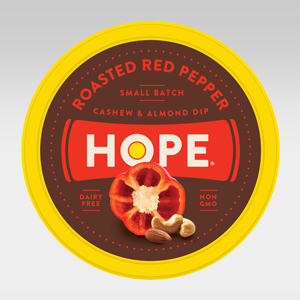
[00:07:19] Ray Latif: Yes. No one wants to come back and be ill, but it happens all the time. It happens. It's just the thing. Of course. Ahead of the show, we got this week, I'm holding in my hand, a container of French onion dip made with cashews and almonds. This is from a producer called Hope, known for their hummuses that are HPP'd, as in high pressure processed. Beth, have you tried these yet?
[00:07:41] Brad Avery: Yeah, I had a little bit of them today, actually. This one's really hearty, the French onion.
[00:07:46] Ray Latif: Yeah, I've never been a huge fan of cashew as a replacement for dairy, but Hope always makes great products, so I'm looking forward to trying this.
[00:07:52] Mike Cessario: Bring it on, I love cashews. Yeah, this stuff's super good. It's like one of those products, I don't know what I would do with it exactly. but having the chance to try it here, now I feel like I would definitely buy it again.
[00:08:05] Liquid Death: I think I would take one of these from the Ground Up cauliflower stalks and dip it in the roasted red pepper, cashew and almond dip. We might've done that.
[00:08:13] Brad Avery: Yeah, that's what I was doing with it earlier.
[00:08:15] Ray Latif: I think I'm gonna go in. The office has just devoured these things.
[00:08:19] Brad Avery: They're everywhere.
[00:08:20] Ray Latif: Since they came in. I mean, just people just eating and eating and eating. We can't stop.
[00:08:26] Brad Avery: There's one in every room. There's like a trail of them.
[00:08:28] Ray Latif: Yes. From the Ground Up. Thank you for the name of the brand. These cauliflower, what are they called?
[00:08:34] Brad Avery: They're cauliflower stalks. These are the cauliflower stalks. Yeah.
[00:08:36] Liquid Death: They're Bugles 2.0, I think. I mean, it's like that same flavor, same addictiveness, same just, but they're better for you.
[00:08:43] Ray Latif: Same shape as Bugles, yes. Made with cassava and cauliflower. Are you going to visit these guys when you're down in Baltimore there, Beth?
[00:08:48] Brad Avery: Yeah, I'm hoping to. I really like this product. It's nice and hearty. It has the great crunch to it. And like you said, it does hold up to actually putting into dips, which is fun too. Indeed I've had a lot of their crackers before and they have the stars. I like their products and their branding, too It makes me kind of feel like a child because it is a lot of products that harken back to childhood But you know that playful better for you by a playful toy vibe on there.
[00:09:12] Liquid Death: Uh, yeah
[00:09:14] Brad Avery: Yeah, they're really good, really nice.
[00:09:15] Liquid Death: On the package.
[00:09:17] Ray Latif: Okay, so the cauliflower stalks are vegan. As far as we can tell, With Hope dips are vegan, but don't take our word for it because it doesn't say it on the package, strangely enough. But let's keep the vegan vibe going. We've got some vegan creamer from a brand called Picnic, P-I-C-N-I-K. This just came to the office. This is keto-friendly. It's a hearty, this is a hearty package here. What is this, Hearty Weekend? Taste Radio how many times we can use that word twenty five point three six fluid ounces as in 750 milliliters of creamer. This is a lot of creamer. That's a large creamer So much creamer creamer once again something I haven't tried but Pick up the package and looking at it. It definitely piques the interest so to speak.
[00:10:00] Brad Avery: It's heavy.
[00:10:00] Mike Cessario: It is heavy I think people who consume creamer like a lot of creamer in their coffee, too.
[00:10:06] SPEAKER_??: I
[00:10:06] Brad Avery: Yeah, no, they love creamer. They love sugar, not to judge. I'm a person who likes to taste the coffee.
[00:10:13] Ray Latif: Yes, indeed.
[00:10:14] Brad Avery: Like a little dash of it and then move on.
[00:10:16] Ray Latif: Look at this. Negronis and coffee, wellness and CBD. It's no wonder that Beth was a perfect fit to come join us here at BevNET. Now, the picnic is shelf stable, but not shelf stable is this Malk. Malk organic creamer. This is maple, oat and pecan Malk. No where does it say milk on the package, note that. Also haven't tried this actually, we saw this at Expo West 2019 and they always make great products. So I'm really excited to try this one.
[00:10:43] Liquid Death: I'm pretty excited to try that one. My favorite creamer right now is Primal, which we don't have on the table, but I'm excited to try that Malka as that's coming now. That's a powdered creamer, the Primal.
[00:10:51] Ray Latif: Big fans of the podcast, love what they're doing as well. And just to note the Malk, only 16 ounces in this one. Yes. Last but not least, also vegan, I don't know why it wouldn't be, some iced tea from Granny Squibb, a local brand here in the New England area. This is a product that's made in Providence, Rhode Island, or at least manufactured for the Granny Squibb company in Providence, Rhode Island. I always love this product. It looks like they did a little bit of a rebrand, a little bit of a switch in terms of what they're promoting on the front of the package.
[00:11:24] Liquid Death: Looks like they've done a bit of a refresh here. There's a nice color call out for the cranberry now on this Charlie's Sweetened Cranberry, which again is sweetened. It says, you know, Charlie's Sweetened Cranberry, then Sweetened Granny Squibb. Ice Teen has a nice little sailboat on the front now.
[00:11:38] Ray Latif: Yeah, I thought it used to have Granny herself on the front of the can. She's on the back this time.
[00:11:42] Brad Avery: Yeah, she's on the back.
[00:11:43] Ray Latif: Yeah. The unsweetened variety, as expected, has zero calories and zero sugar. You know what else has zero calories and zero sugar? Liquid Death. What a segue. Such a pro, right? That being said, let's get to our interview with Mike Cessario, who, as I mentioned at the top of the show, is the founder and CEO of Liquid Death, a canned water brand whose edgy branding and online buzz have turned more than a few heads. We first met Mike at BevNET Live Summer 2018, where he participated in New Beverage Showdown 15. His presentation generated a few chuckles. Many attendees simply didn't know what to make of the brand. Less than a year later, however, it was clear that Liquid Death was no joke. The brand has attracted hundreds of thousands of followers on social media and in May raised $1.6 million in a seed round with funding coming from a range of investors including Dollar Shave Club founder Michael Dubin and Twitter co-founder Biz Stone. BevNET's Brad Avery spoke with Mike about the rapid rise of Liquid Death, how his experience as an ad exec and creative director for Netflix played into the creation of the brand, why he views it as a rebuke to extreme marketing, and how the company attempts to communicate authenticity.
[00:13:04] Dollar Shave: Hi, I'm Brad Avery with BevNET. I'm here on a call with Mike Cessario, the co-founder and CEO of Liquid Death Mountain Water, a canned water brand that promises to murder your thirst. Mike, thank you for joining us today. Thanks, Brad. So this is a curious brand, and it's an eye-raising one, and it's very much designed to be eye-raising. You have a background in marketing. Why don't you tell me a little bit about the development of Liquid Death and how this came about?
[00:13:33] Michael Dubin: Sure. So the early days, uh, high school, I grew up, you know, I played in a lot of bands, you know, punk bands, metal bands, you know, that kind of scene of stuff. And, uh, that's kind of where I think I, I got a lot of my early entrepreneurship sort of bugs, whether or not I realized that's what we were doing, but it's like, you know, we were designing t-shirts and show flyers and album covers and, you know, selling shirts and booking shows and kind of running this, your little sort of brand as a band. And, um, you know, didn't know exactly what I wanted to do, but ended up kind of doing the natural band job, which is becoming a designer. Um, after you realize you're not going to go tour with a band for the rest of your life. And then, you know, went to school for design, kind of switched to advertising because I was a lot more, um, a lot more inspired by the conceptual side of marketing more so than like the nitpicky kind of pixel pushing design stuff like I wanted to make funny ad campaigns and things that felt more like entertainment than design. So then I worked for a bunch of different advertising agencies over the course of about 10 years or so and was a creative director and I was running global campaigns for companies like Organic Valley and Netflix and Volkswagen and Nike and all these other brands. I was able to learn a lot about the struggles, A, that big brands have with marketing, being in all those boardrooms and seeing where they're struggling and who's beating them. What I would see is the short-sighted or bad decisions they would make on things and just building my own point of view on what a successful brand needs to be in the year 2019 and beyond. A couple years ago, the first thing I actually did was I started my own Spirits brand. I was only a couple years out of college, had this idea to try to make brandy cool, actually, and kind of found this white space, kind of designed this brand. made a couple calls to figure out how you can actually have it made, had a basically a PDF and I presented it to a distillery that I Ground Up in Northern California that had been making brandy. And they were all excited saying, Oh my God, we've been waiting for like 20 years for someone to like make brandy cool. had this distillery was like, yeah, we'll totally make it. I had no liquor experience, none. I had no beverage experience. And I literally just went on LinkedIn and looked for liquor industry folks. And back in my hometown of Philadelphia, there was an agency there called Quaker City Mercantile that created Hendrick's Gin and Sailor Jerry Rum. in partnership with a big alcohol conglomerate. And once the agency guy was bought out for Sailor Jerry, he kind of didn't care as much about running an agency anymore. So a lot of the people that worked for him all kind of scattered out. And I found two of them, they were interested. They came on board and all of a sudden it's like, wow, this is going to be real. We're going to make a brandy brand. And that was kind of my first real taste into the beverage entrepreneur space. And as you can imagine with alcohol, way, way, way more difficult than with water.
[00:16:35] Dollar Shave: Well, that was, uh, that was Steven grass, right? Steve grass. Yeah. And he has kind of a similar background to you kind of around, around punk scenes. He's been on Taste Radio as well.
[00:16:44] Michael Dubin: Oh, awesome. Yeah, no, Steve was kind of like a idol of mine, you know, when I kind of found out more about Sailor Jerry, because, you know, as you can imagine, like a lot of my friends who were in bands, you know, they were doing stuff for Sailor Jerry. And I always kind of had my eye on the brand. And once I learned about Steve, that was kind of my inspiration to be like, Oh, yeah, like, why can't creative advertising people actually create brands? Like, it seems like you can make some pretty powerful stuff with it. So yeah, that was kind of my foray into it. And that brand is still around now. They're in a bunch of different states. And, you know, I kind of at the time, you know, I was so young, I didn't know anything, and didn't really get business married to the right people. We didn't always agree. And, you know, once it kind of started to get off the ground, and me realizing that there's not going to be really any money for marketing and with alcohol, it's all about you know, bartender acquisition and tastings and all this super tactical kind of like boots on the ground stuff that my partners are really good at. So I'm like, Hey, you guys take it from here. I'm going to kind of take my piece and go back to doing the ad, you know, the advertising stuff. And I'll kind of like look on for my next thing. And then as I was thinking of my next thing, a couple of years later, that's when the idea for a Liquid Death came along. I knew the spirits industry and alcohol world really well from doing that for a couple of years, you know, I knew so many bartenders. I knew just the whole bar game and alcohol and beer marketing game and all that stuff. And then, you know, the flip side for me was I had always been into being healthy. And what would surprise most people, I think, is that The world of punk rock and and let's just call it alternative culture. There's a huge health kind of Staple in that culture, you know I became a vegetarian when I was 16 because in punk rock there were lots of people who were Vegetarians like that was a thing to be there was lots of vegans and we're talking about like the late 90s here Yeah, animal rights is huge Yeah, yeah long before the the Hope Foods kind of surge and all that and you know even at the time there was a small segment of straight-edge kind of people who didn't do drugs or drink alcohol or anything like that the big catalyst that sparked it was you know, I was hanging out backstage at Warped Tour with a friend's band that was on the tour and You guys may have heard this as well. But the energy drink brand that was sponsoring the Warped Tour They give all the bands Water in the energy drink cans because they know that these brands aren't going to drink energy drinks out in the hot sun all day So these bands are on stage pounding what looks like energy drinks to all the kids and everybody watching them But it's really just water and I remember thinking like man, that's so fucked up Very very sneaky. And at the same time it was also my first time ever drinking water out of a can I was like, wait a second Why isn't water in cans? That was just kind of this weird question that I had and it just sparked my curiosity and I just started kind of going down this rabbit hole of cans and water and finding out that, you know, cans are actually the most sustainable beverage package by basically every measure and they're infinitely recyclable and plastic was just kind of starting to get the bad rap at that time. And then it just has accelerated rapidly the last few years. You know, it's basically plastic is becoming like the new tobacco, pretty much.
[00:20:03] Dollar Shave: Yeah, well, let's talk about the branding a little bit. So, you know, launching a water in a can makes a ton of sense from a sustainability perspective, from a cost perspective. But you went with Liquid Death, you took a lot of influences, it seems more from from metal with, you know, battle axes and blood and skulls, and turn that into a CPG brand. I came across your original video organically on Facebook, and I thought it was like a funny or die skit. marketing the brand to start. So you started this not as a marketing exercise, but With Hope intention of launching a brand out of it.
[00:20:39] Michael Dubin: Yeah, definitely. And it took a while to kind of figure out what the brand was going to be. You know, all I knew was that being around the world of, of punk rock and counterculture, that energy drinks owned it all monster owned every punk rock or metal tour and all the skateboarders and motocross guys. And then Red Bull owned everything else in the world of sports. And, I knew for a fact that none of these guys actually drink that stuff. They just take their money. There are multi-billion dollar companies that can write crazy checks to all these guys. And when you're a skateboarder or you're an extreme sports athlete, the only way you can make money is from sponsorships. You know, you don't just skate down the street and all of a sudden people throw money at you. No, you have to find ways to kind of make a living. Music is a little different because bands, They sell albums, they tour, they sell merch. They have ways of making income that don't involve sponsorships. So bands can be a little more selective about who they want to rep, which is why we've been doing a lot in the music space and it's been doing really well for us. So what we were trying to really do was just say, hey, Energy drinks and beer and soda make all the coolest, funniest, boldest, countercultury stuff that there is. And then you look at the health space, and it's nowhere even near that. If you took all the healthiest beverage brands and put them in one cooler, and then you took all the unhealthiest stuff and put it in the other cooler, it's almost night and day of like, oh wow, look how much more exciting and cool this unhealthy side looks than the healthy side. And that was really what it was. It wasn't so much of like, oh, we want to make this thing for metal people and punk rock people. It was more just about, I guess it's a little bit of a fuck you to the kind of extreme marketing that has kind of taken over the counterculture. It's like Monster, Red Bull, you know. Full Throttle! Bang Energy! Like, it's trying so hard to be extreme, but at the end of the day, it's just marketing. Most of what is in that can is just water. There's a little bit of caffeine. There's a little bit of sugar. It's like the same stuff that's in my grandmother's breakfast tea. But all of a sudden, it's got this extreme wrapper on it. And it's just at the end of the day, it's all just marketing. It's all theater. And when we look at it that way, it's like, okay, well, if all marketing is essentially just theater because the brands between themselves are all so similar, you know, at the end of the day, how different is the liquid of Red Bull versus Monster versus Full Throttle versus whatever. And you can kind of say that for almost any brand. In 2019, marketing is about, At least for me, I think about not consumers like consumers. I think about them like investors. How are you getting people to invest in your brand? Because it goes beyond just, oh, I'm just paying this $1.85 because I only want the Liquid Death's in there. It's like, no, I'm giving my money to this company because I like what they do. I feel like I connect With Hope people that run this thing. I want to support this thing. I want to see more of this kind of thing out in the world. And I think that's how we think about it. Even though I've created this brand in a very, like you say, metal or punk kind of aesthetic, it's had this huge halo effect of people that really resonate With Hope brand. I can't Sell Your how many 35 plus women that I've talked to who are like, You know, I hate metal, but I love this brand. It's the only brand I want to drink and We've been kind of trying to wrap our heads around like, you know Well, what is it about that that gives it such a broad appeal even though on the surface it seems like such a niche thing I think what I've been able to come up with is I think everyone can understand that small and local and craft has been taking over big food and big drink for the last five to ten years. You're seeing big beer companies acquiring all the craft breweries. You're seeing everything gravitating to look more local and small batch across every category. The big brands have appropriated this kind of thing for the last few years, kind of trying to be a part of it, where if you go into a Hope Foods or you go into a supermarket, you pick up a bag of, let's say, jerky, and it looks like some farmer's market jerky, but You don't know, is that made by some huge company and it's just a packaging thing? Is this a mass-produced thing or is this a local thing? I think most people know that. When McDonald's has, quote, artisan sandwiches that are using farmer's market-looking branding, you kind of know that that design or visual language that used to instantly communicate small and not corporate isn't really effective anymore. So I think what it is in 2019, when you have two to three seconds of someone looking at your product to make a decision about it, the only way you can instantly convey this is small, or this is not big, or this is not corporate, is you have to do and say things that big brands would never do. It's not just enough anymore to just put some handwritten type on it so it looks like it's from a farmer's market, because it just doesn't work anymore. It's too saturated. It's already been done. And I think more and more in 2019, people care a lot more about what brands are doing outside of the product itself, even down to political affiliation. They want to know, do you support the right or the left? And Nike just made that huge bet With Hope Colin Kaepernick ad. They looked at the landscape and they said, hey, we're going to put our stake in the ground here. and support this guy where we know that there's a good portion of the country that's going to burn their Nikes, but then we know there's another good portion of the country that's going to wear Nike like a badge, like I stand for this.
[00:26:25] Dollar Shave: And that might also be knowing who's already buying Nike and what their values are.
[00:26:31] Michael Dubin: Exactly. Especially, I think you could probably imagine that any brand that is looking to have a younger demo, it's probably going to skew that way anyway.
[00:26:41] Dollar Shave: The thing I always think of is that meme with Steve Buscemi dressed as a skateboarder saying, how do you do fellow kids? And it always seems to be that question of marketing is how do you communicate authenticity? And we've seen so many attempts over the years of big brands trying to communicate something similar and the consumer sees right through it. And how did you think about that to say, look, when we do this, they need to know instantly that this is for real. And, you know, what is the thought process that goes into developing that?
[00:27:13] Michael Dubin: I mean, that's kind of the problem that when I worked for an ad agency, that's what every big brand essentially comes to an agency for. You know, most companies and brands are started by business folks, people who are very rational minded and with good reason, like you're trying to Marketing is one part of the brand, but everything else, when you're talking about logistics, supply chain, spreadsheets, number crunching, raising money, dealing with bankers, all that kind of stuff requires a certain type of person that is not the marketing, creative, authenticity maker type of brain. So learning and seeing that over the years, kind of helping brands, I think the biggest thing, and it sounds easy to do, but it's really not, it's really just making your brand seem like it was created by real people. And it's hard to get that done in a big brand where there's a lot of or a big company where there's a lot of process and focus groups and you know boardrooms like it's almost not possible in a lot of cases to create something insanely human and authentic in a boardroom because they're just not designed to foster that kind of thinking. which is why a lot of the times they have to use an agency because they're too close to their own product and business objectives to kind of understand what the normal person outside actually responds to or reacts to or how they think. When we talk to our customers, I really think about it Like the way I would talk to my friends. I can't Sell Your how many brands we've tried to tell. That's really the secret to everything. If you're a copywriter, I remember one of my copywriting mentors told me, your job as a copywriter is to convince the person you're talking to that there's a human being writing what you're writing. That's how we approach it. We look at it like, what joke would I make with my friends? How would I joke about this or comment on this if I'm literally talking to my friends on social media and I'm not a brand with a business objective? In a way, it's hard because You've got so many different things pushing the business side of, oh, we have to say this and we can't say that. And we have this objective and that objective. And it's very easy to get into this like business-y speak with your marketing that comes off that way, versus being able to just talk to someone like a human being. And I think that's really the secret as well for brands, where if you look at big, giant brands like Coke and Pepsi, These were brands that were literally created in the early 1900s. The name Coca-Cola was a good idea for a name in 1915, and that branding was a great idea in 1915. And of course, they've been able to become these huge, strong brands throughout so many different decades of different cultural changes and things like that. But now in 2019, these brands are massive, and they still are massive because they're these huge machines that sort of own the whole supply chain. They've got, you know, billions and billions of dollars for marketing and all that kind of stuff. So they're still able to kind of push it and have success, even though there has been a lot of decline in some of the more standard stuff that they've been doing for 100 years. But there's a time now where I think what people are looking for and what they're reacting to is very different than what worked for these brands for the last 100 years. I think you're starting to see it with brands like the fat Jewish White Girl Rosé getting acquired by AB. It's like CPG specifically kind of has this bland, just do it the way it's been done forever from a branding standpoint kind of approach. And I'm not sure exactly why CPG has been that way. And maybe that's why a brand like Liquid Death in the world of CPG seems like, oh my God, this is so crazy and out there. But if you look at other categories of things like, or products, like let's say video games, you know, super violent blood flying everywhere video game franchise can make billions of dollars. But when that video game comes out, it doesn't get the same scrutiny of, oh, wait, how is your bloody video game going to appeal to more people than metalheads? Because only metalheads like blood and violence, like how, how are you going to expand your audience? It's like that, that question doesn't get asked there because there's, when you start thinking about entertainment, There's horror movies that are way more, quote, metal and violent than anything we could probably show, but they still make $200 million at the box office because there is a huge group of people that they get a kick out of a certain style of aesthetic or a certain type of entertainment. I think one fact that we've thrown around that most people don't realize, The Walking Dead was the number three most popular show for women. It was like right behind This Is Us, and it's a show about flesh-eating zombies. So we think about our brand a little bit more like an entertainment company. And I think that's sort of what our vision is, is sort of blurring the lines between an entertainment company and a CPG brand. At the end of the day, if you want repeat purchases, in our opinion, you need kind of two things. One, the product itself has to be a good experience. When someone buys Liquid Death and they have an ice cold one in their hand and they crack it open and they drink it, they have to enjoy that experience. If it's like, oh, this is weird, or, you know, I hate this, or this is too hard to open, or, you know, the water tastes really funny, then yeah, you're only gonna get one purchase. But if the water's good, and they really like, oh, hey, this is, I actually like drinking water out of a can, or wherever they're drinking it, they have three people come up to them to ask them about it, and they start all these conversations, and they realize like, oh, wow, this thing actually gets attention when I'm drinking it. then you're going to have people that kind of invest in the brand and want to keep buying more of it. And the other part of it is, yeah, what is making people want to, you know, invest in your brand beyond just the liquid itself? Because almost any brand, I don't care what product category you're in, you can't almost ever own your liquid. Like anybody can create a similar recipe. They can eat whatever trendy little ingredient that you're putting in your thing now, that you're one of the only ones with it. 50 other million companies are going to start using it too, then you don't have much difference between you and everybody else. And then why is someone buying you over someone else when it's not really strongly based on taste? It's not strongly based on you've got some proprietary thing that nobody else can even come close to. It is based on brand. And it's about why do I want to give my $2 or whatever to this company that I perceive is kind of the same as the one next to it? And I think that's really where where the rubber meets the road in terms of building a loyal kind of keeps coming back fan base is it goes far beyond just the liquid itself. It's gotta be a brand that people want to support, continue to invest in, and you have to kind of keep that fire going. Like you can't just make one funny video and that's it. You gotta kind of keep evolving and making things and putting things in the world that hopefully there's enough people who say, hey, I like what this brand's doing. I wanna support it.
[00:34:34] Dollar Shave: Yeah, and you know, I think of going back to the video game example, there's some counter reaction as well, where if the moral majority is offended by Moral Kombat, it makes you want to go play Moral Kombat.
[00:34:45] Michael Dubin: Right. I mean, did you guys see the documentary with Jimmy Iovine and Dr. Dre about like beats? They go through, you know, the history of Interscope Records and all that. They said the greatest thing that ever happened was Tipper Gore putting the parental advisory sticker on our albums. All of our album sales went through the roof. They thought they were gonna like stop the sale of like gangster rap and heavy metal and all that. All it did was multiply it by 10. Because as soon as you start telling people this is bad or you shouldn't have this, you're absolutely right. Especially if you're talking to any kind of under 25 demo, it just makes people want it more.
[00:35:21] Dollar Shave: You've taken some seed money now. You go into the room With Hope investor. How do you pitch Liquid Death to an investor who maybe is trading in these all these other normal cpg brands? How do you make that pitch to say this is something that has legs to sustain itself?
[00:35:36] Michael Dubin: It's not a one-off gimmick That's uh, that's a good question. And I think the way we created Liquid Death is I think very different than the way most sort of CPG brands are formed, which was, I knew this from the beginning. I knew that putting spring water in a tall boy can that looks like beer called Liquid Death with a giant kind of dripping skull on it, there's nobody from a, you know, with a checkbook that's going to probably write you a check for that just as purely the idea. And, you know, I listen to the Masters of Scale podcast a lot with Reid Hoffman. And, you know, one of his things he always says is, truly innovative ideas are almost laughable at first. Because if you're doing something that almost seems like it makes a lot of sense right now, that probably means that there's 10 other companies that have already been working on it for four years. It's like the truly innovative things that haven't been done yet almost seem comical or crazy at first. And they're hard to find funding in the early stages. You know, like Uber. When Uber came out, it was like, people thought this was crazy. Like, yeah, who's going to get in a stranger's car? Like, yeah, that's never going to work. Or the first credit card processors on the internet. Oh, who's going to ever put their credit card information on the internet? That's crazy. You guys are crazy. I knew that it was going to be hard and one thing we had started doing in the agency world with some clients to try to kind of get them out of their boxes is. letting the market sort of decide what's going to work or not work. Because the way it usually happens is it's like agency or company creates some campaign or let's even say a product idea, come up with this idea, you present it to this board of people, there's three people, maybe one decision maker, based on their experience, what they know, they say, no, this one's not going to work, this one's not going to work. Okay, let's go all in and invest $10 million on this idea. And then it might seem like it's a great idea to them but then it goes into market and it fails or they even put it through testing. I've seen this countless times with clients where. Oh yeah, this campaign or this idea went through all this different fancy testing that we use and it tested through the roof and then you put it out in market and it totally flops. So what we started doing was trying to convince clients, hey, rather than us present you three different campaigns that you decide which one you want to buy, let's make 10 different things and find a way to test them in the market on social media. Because we've got all these tools with technology at our fingertips now where, OK, this campaign is about this. So what if we made a little Google keywords ad that had a funny headline that feels like it's part of this campaign? And we'll see how many people click on that versus the funny headline that's more in line with this other campaign idea that we have. And you're actually testing it in social or on the internet to real people who are in market to kind of get a sense of what's going to work or not, because you might surprise yourself. You might think, oh, this thing is the worst idea ever, Liquid Death, like no one's going to like that. And then you test it in social and realize, oh, my God, this thing is going bananas. But in a boardroom, you never would have been able to figure that out or someone wouldn't have had the insight to say, oh, yeah, let's make a big bet on that crazy thing. So I kind of took that approach. I said, all right. What is the least capital intensive way that we can test this idea just to see if it's even viable because we know that we're not going to just go immediately raise money for something like this. So let's prove it first. And I think that's something that more entrepreneurs should try to do is rather than Just kind of stick with your idea and go shop around for capital, hoping someone's just going to give it to you to take off. Find some kind of way to test it in market to get some kind of read on what the public's or whoever you're talking to's reaction is going to be. So what we did was we came up with an idea for a video, which was the original video. We Open $1,500 to shoot it. You know, we had a designer create the original sort of can design on a 3D looking, you know, looked very much like a real can, but it was all Photoshop. And let's make a Facebook page, no Instagram page, no Twitter page. Let's just put it on Facebook and let's just kind of pretend it's a real brand and sort of see what happens. And, you know, we maybe spent a thousand bucks in paid media over the course of like three months, just sort of pushing the video out there and a couple, you know, funny little Facebook posts. of the product. And then three months later, the video has 3 million views. We've got more Facebook followers than Awkwafina. We're getting direct messages from, hi, I work for a big non-ALK distributor called Big Geyser. Can we talk to a sales representative? You know, we get another DM. Hi, I own four 7-Elevens. How do I get this in my stores? Hey, I own a beer distributor in Utah. How can I get your product? And that was kind of what we used. Like once now we had ammunition, like, hey, look at all the views we have. Like, look how many people are following us. Like, look how many people are commenting on this saying, this is the greatest thing I've ever seen. How do I get this? How do I get this? Oh, look, distributors are actually reaching out to us, which is a rare thing. That was what we had to kind of get together as a proof point before you actually get kind of the money guys to say, oh, all right, I'm willing to kind of start taking a bet on this. And it kind of just kept going that way where we used that to raise a very small round of sort of friends and family kind of around just to kind of produce some physical product. And then once we had physical product and it was something real that people could hold in their hands, then it became even more interesting. And then that's when we were connected with our VC incubator that we're with called Science Inc. They were the ones behind Dollar Shave Club. and a few other kind of disruptive, more D to C CPG brands. But, you know, we met with them last November when we actually had physical product. We hadn't launched yet, though. We just kind of had the first round of product. They believed in it as well. You know, they saw with Dollar Shave Club the power of having a disruptive brand in a, you know, a very stale but large category and what that can do. So we kind of fit their MO pretty well. And then, yeah, we signed with them. They were able to put in a little bit more to kind of help us get our e-commerce sort of side of things buttoned up over the next few months, where we finally launched real product at the end of January in this year.
[00:42:16] Dollar Shave: Something else that Liquid Death has done really well is on-premise and sort of using that craft beer identity to be a good non-alcoholic solution. And in a way, it sort of rides the rise of mocktails and other types of non-alcoholic solutions in on-premise. Can you talk a little bit about that?
[00:42:37] Michael Dubin: It's funny, it's that the non-ALK thing was, again, and sometimes the best things happen this way, they happen almost on accident. It wasn't something where we set out, oh, we want this to be a great non-ALK solution for something. But the minute you start kind of getting your product out into the world and getting feedback on things, and you start realizing like, oh, wow, like all these, We're getting so many people saying, I don't drink and this would be the greatest thing. I've been sober for 18 years. I've been waiting for a product like this. We got lucky in a little bit of a sense too that water is something that everybody drinks. There's no real cultural baggage associated with water. Everybody drinks it. It doesn't matter who you are. The non-alcoholic world of non-alcoholic beer and mocktails, there is definitely cultural baggage associated with it. Most men in America, I mean, I don't think you would see them going into a bar comfortably being like, let me Sell Your mocktails list. There's something about it that feels, I don't know how to put my finger on it. Maybe it's weird that it's a fake something. It's like, oh, I want a fake cocktail. I want a fake beer. And maybe there's something about that. non-alcoholic beer is an easier thing because beer just doesn't really taste that good to most people. I mean, a couple craft beers, you know, people get into, but we're talking about like a non-alcoholic mass market kind of beer. It's like people drink beer because they want to get drunk. They don't drink it just for the taste. So I don't really ever see just non-alcoholic beer ever becoming this huge thing because nobody really likes the taste of beer to begin with. And then the other thing that we hear from our customers is, I love Liquid Death when they're either at, you know, a house party or a bar or wherever. Cause they're like, it's a place that people are hanging out for three, four hours sometimes. And they're like, I can't drink LaCroix for four hours. Like I drink one LaCroix and that's kind of like all I can really drink. Like I can drink Liquid Death all night long. And I think that's been a strength for us is it's a product that in all these different party environments you can absolutely continue to drink for multiple hours on end pretty easily.
[00:44:52] Dollar Shave: Before we go, one thing just real quick we didn't talk about was you built a lot of brand recognition through the Sell Your Soul campaign for a can of water. You had a lawyer draft a legally binding contract where consumers could sell their souls and receive a free can of water in exchange. My quick question for you, what are you going to do with all those souls?
[00:45:14] Michael Dubin: It's a good question. We've actually, we've had funny conversations around, okay, we own all these souls now. Like, does that change the valuation of the company? Like, what's a soul worth? You know, like, what can you do with souls? You know, it's like, technically, if we wanted, we could resell these souls on our site. Like in our merch store, can you buy someone's soul for $2?
[00:45:35] Dollar Shave: Ooh, or certain cans might contain a human soul in them. You don't know.
[00:45:41] Michael Dubin: Right, right.
[00:45:42] SPEAKER_??: Yeah.
[00:45:42] Michael Dubin: At the end of the day, in all seriousness, it's like every company is trying to create membership programs and, and, uh, you know, customer loyalty and that thing. And it's like, okay, how do you just make it more fun? You know, how do you make it more fun to talk about or do, you know, everybody's day is just filled with boring stuff all day long. You get on the subway and look at some boring subway ad, you got to go to work and you sit in your cubicle and you do this thing. It's like, how do we become this sort of fun, exciting, unique thing that happens in someone's day? I guarantee you, most people who took the time to actually go and sell their soul, that was probably one of the cooler things they did that day, was sell their soul on a website to get a free case of water or whatever it is. And it's been super successful for us. We started the soul program at the end of April, and we now have over 30,000 people have sold their souls.
[00:46:32] Dollar Shave: If you join Liquid Death's loyalty program, you're in it for eternity.
[00:46:37] Michael Dubin: That's right.
[00:46:37] Dollar Shave: Yeah. Well, Mike, thank you so much. This has been fantastic and loved having you on.
[00:46:44] Michael Dubin: Thanks a lot. Yeah, I appreciate it.
[00:46:48] Ray Latif: That brings us to the end of episode 51 of Taste Radio Insider. Thank you so much for listening, and thanks to our guest, Mike Cessario. Please subscribe to Taste Radio Insider on the Apple Podcasts app, Spotify, Stitcher, SoundCloud, or Google Play. As always, for questions, comments, ideas for future podcasts, please send us an email to ask at Taste Radio.com. On behalf of the entire Taste Radio team, thank you for listening, and we'll talk to you next time.
[00:47:18] SPEAKER_??: you