[00:00:04] Ray Latif: Hello, and thanks for tuning into Taste Radio Insider. I'm Ray Latif, the editor and producer of Taste Radio, and you're listening to episode 53 of the podcast. I'm with my BevNET colleagues, John Craven, Mike Schneider, and Melissa Traverse. We're recording from the Taste Radio studio at BevNET headquarters in Watertown, Mass. And in this episode, we're joined by Mark Rampolla, the founder of Zico Coconut Water and co-founder of venture capital firm, Powerplant Ventures, who joined us for a conversation about nurturing positive habits in life and business. If you like what you hear on Taste Radio Insider, please share the podcast with friends and colleagues. And of course, we'd love it if you could review us on the Apple Podcasts app or your listening platform of choice. We ran into Mark Rampolla after we walked through the pool of blood. What a way to start the show, Mike. Yeah. At Expo East in Baltimore, right after we walked through that pool of blood, we saw Mark. Which, unfortunately, you mean that literally. That's not actually a joke. I actually do mean that, yeah. Yeah, we walked through a little bit of a crime scene.
[00:01:01] Mark Rampolla: What was the blood from?
[00:01:03] Ray Latif: I don't know.
[00:01:05] Mark Rampolla: We don't know.
[00:01:05] Ray Latif: It was whatever was, I'm sure, not a good situation. But, yeah, we were just walking down the street. I'm like, hey, there's Mark Rampolla. I'm like, yeah, let's just let him go on a run. And then he kind of glanced back and then we stopped and talked. He couldn't just run away from us. But yeah, he said he was doing a podcast with you. And here we are. Here we are. Go figure.
[00:01:28] Zico Coconut: Publishing the podcast.
[00:01:29] Ray Latif: Publishing the interview on this episode of Taste Radio Insider. I was kind of like, well, Ray doesn't tell me anything or invite me to these, but good luck. It was a great interview. Folks, you're going to enjoy this one, yes. Yeah, he's always a good time. Melissa Traverse, welcome to the podcast. Welcome to Taste Radio Insider.
[00:01:44] Mark Rampolla: Thank you so much. I'm very happy to be here.
[00:01:46] Ray Latif: I'm very happy you're with us. You joined the team when?
[00:01:49] Mark Rampolla: About six months ago, six and change. So I am a brand specialist here for BevNET and Nosh. I spent a little over 11 years with Whole Foods Market before this.
[00:02:01] Ray Latif: Geez, I didn't even know it was that long.
[00:02:02] Mark Rampolla: It was a really long time.
[00:02:03] Ray Latif: That's why there's that halo over your head.
[00:02:05] Mark Rampolla: Is that what that's from?
[00:02:07] Ray Latif: Yeah.
[00:02:07] Mark Rampolla: I thought it was my good behavior.
[00:02:09] Ray Latif: Probably both.
[00:02:11] Mark Rampolla: So it's been really fun taking what I learned over there over here.
[00:02:15] Ray Latif: What'd you do over there?
[00:02:16] Mark Rampolla: So I was an associate marketing coordinator. I oversaw our experiential marketing program, which is basically demo. I also was our supplier relations person. So something very similar to what I do over here, connecting brands to all of the opportunities that make sense for them within the organization.
[00:02:36] Ray Latif: Well, it certainly sounds like people should stay in touch with you.
[00:02:39] Mark Rampolla: They should definitely stay in touch with me.
[00:02:42] Ray Latif: How do people get in touch with you?
[00:02:43] Mark Rampolla: So mtraverse, just like the Chevy Traverse at BevNET.com.
[00:02:48] Ray Latif: Very cool. Are you on LinkedIn too? Do you use LinkedIn?
[00:02:51] Mark Rampolla: I use LinkedIn. You can follow me on LinkedIn, on Instagram. I'm goodfoodrules. There's basically a million ways to get in touch.
[00:03:00] Ray Latif: Right. It's 2019. LinkedIn is like the telephone was in 1980. Okay. So this is a conversation I was having with people at Expo East about LinkedIn. And the idea that LinkedIn is sort of like the Rotary Club of new, right? Like in the past, everyone would always get together, all business professionals, and they'd, you know, share ideas and talk about what they're doing and try to sell to each other. It's like the Rotary Club, right? I mean, that's the way my dad did it. And I, you know, I'm assuming that's, you know, how things, how business worked back then. Oh, that's exactly how it worked, right?
[00:03:26] Mark Rampolla: Rotary Club.
[00:03:27] Ray Latif: Right. But LinkedIn, in a lot of ways, is sort of that impersonal way of connecting to people. You know, how do you do it really effectively is still, I think, a big question for folks. I don't know how you do it in a way that isn't annoying. I don't want to say annoying, but there are people who kind of are annoying on LinkedIn. I try to be annoying on LinkedIn. It works pretty well. No, but I think it, you know, LinkedIn's been around for a while and I think it was kind of like this second rate, you know, social network that all of a sudden as, you know, the world changed and Facebook became politicized and, you know, Instagram's kind of just, you know, images. All of a sudden, it was like- Don't even mention Twitter. Yeah, well, we're the firehose of Twitter. How could I forget that? I mean, all of a sudden, it's like, you know, LinkedIn became this thing where like, if you just want to be focused on work and, you know, generally not political stuff, it's a good place to be. And, you know, you can separate your sort of work life from, you know, I don't know, the pictures of your kids or whatever you post on other stuff. I think it works pretty well. So I think it's a great opportunity for thought leadership. If you have something to say, you know, beyond your brand, you have some kind of skill to provide insight into and you have some high value content. It's a great place not only to post that, but also to have ongoing conversations with people. We've seen a lot of signal there. I mean, Yeah, back in the day when LinkedIn first came out, it was like a contest to see how many people you could get LinkedIn to and then. Well, and like everything was broken on there too.
[00:05:01] Mark Rampolla: That's true.
[00:05:01] Ray Latif: I mean, it always, it's still to this day is like the most broken social network, you know, like technically broken, you know. But now I find a lot of things like your page, for instance, Ray, you like a lot of things on LinkedIn because you're very active on LinkedIn. So I find a lot of good content from the things that you're interested in. And I go to Wayne Wu's page, for instance, he likes a lot of things. And I find that that's always interesting. And that's what one of the things that makes LinkedIn really cool is that if there's somebody that you like or trust in the industry and they're active on LinkedIn, you can learn a lot from the things that they're liking. Even if, you know, a lot of times people will read that stuff. Sometimes people are just liking things that their friends have posted, but I think more times than not, it's high signal. Do you use the DM feature, the direct message feature as much as you do on Instagram? Because I know we all use the DM on Instagram a lot. I use it a lot to just tell people, uh, sorry, I'm not interested in whatever technology you're trying to sell me or whatever. I mean, that part of it is like, I don't know, every day, I mean, it's like, without fail, like, I just have, you know, messages, these long, long things that are like, you know, about the most obscure, I don't know, either technology, or I literally had someone send me a message about if I ever want to eliminate my back pain, and it went into this whole, you know, spiel, like it was the most untargeted thing ever. And part of me wants to know what's the technology to just spam people messages, because I'd love to do that myself. Just kidding. But yeah, no, I think it is, you know, where it's used best, I, you know, I use it a fair amount to like, introduce somebody to someone else, you know, I think that's a pretty good way to do that that kind of cuts through the clutter a little compared to, you know, just an email with the CC or something like that. But it has to be used carefully like anything else. I've enjoyed over the past week or so on LinkedIn, some of the posts that people have put out about things that they really liked at Expo East, some of the things that they saw, some of their key takeaways in terms of trends and new products. Melissa, I mean, you were at Expo East. How many times have you been to that show?
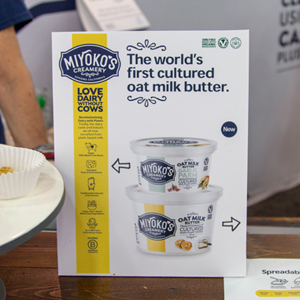
[00:07:11] Mark Rampolla: Maybe five or so Probably Expo East a little a little bit more often, so I'm curious about what your some of your takeaways were from the show Yeah, can I say what's Oat Is new? Yes, what's Oat Is new. A little wordplay there for you. I mean, Oat Is certainly a category that we see grow year over year, show over show. One of the products that sticks out in my mind the most is Miyoko's oat butter. Did you guys have a chance to try that?
[00:07:41] Ray Latif: Nope. Oat butter?
[00:07:43] Mark Rampolla: You can make butter from oats.
[00:07:46] Ray Latif: Hmm, I guess if you don't milk promotes then make sense.
[00:07:49] Mark Rampolla: Yeah, if you can milk a note for you can
[00:07:54] Ray Latif: I don't know about that. The FDA might have something to say about milk and oat. Saw Landis trying to do that in the BevNET labs once.
[00:08:00] Mark Rampolla: They have a line of plant-based cheeses and they launched an oat butter, which was delicious. And I think it would actually work as a likely substitute for a dairy-based butter. So that one was a good one. Van Leeuwen's oat ice cream, oat milk ice cream.
[00:08:19] Ray Latif: Oat milk ice cream. Well, I mean, Oatly, the brand overseas makes a lot of different oat based products, but I haven't seen an oat based ice cream in this country. Oatly has their frozen dessert.
[00:08:31] Mark Rampolla: They have that at Expo East well.
[00:08:33] Ray Latif: I would say just so-so for me. Okay. It's kind of, I don't know, got a lot of stuff in it to make it have its texture. So check out Van Leeuwen. I was gonna say, I mean, they have legit ice cream. I'm curious how that would be for sure. Yeah. Is it brand new? Is this the first time they've gotten into the oat milk based ice cream business?
[00:08:50] Mark Rampolla: I believe this is a new line for them as was Oatly's oat based ice cream. I believe they're both fairly new to the market.
[00:08:58] Ray Latif: Is it called ice cream? It's not ice cream. You can't call it ice cream. It's all that whole dairy problem, right? Is it ice cream with like a, well, first of all, you are asterix. You can do whatever you want until you get sued or someone tells you to stop. So, right. Well, you could avoid the problem. As Mike was pointing out, you could call it ice cream. C R E E M. Like people do with milk and they spell it. M Y L K. Right. Some people do that.
[00:09:22] Mark Rampolla: Frozen treat.
[00:09:23] Ray Latif: Frozen, frozen treat. C R Y L K doesn't work. Right. You know what oat-based product I didn't get to try was The New La Colombe oat milk lattes, which I heard were amazing. Some came into the office, didn't even get a sip. So La Colombe, if you have an opportunity, please send us more. John Craven, you had a good take on those, right? Those were pretty tasty, yeah. I think I snagged one of The New extras, so. I did drop more than my fair share of Rye's oat milk lattes at the show, but I did not get to the Locke alone. We're seeing a lot of oat milk lattes come to market, or at least a lot of new iterations on that product.
[00:09:59] Mark Rampolla: Bluestone Lane.
[00:10:00] Ray Latif: Bluestone Lane introduced one. Chameleon. Califia Farms just introduced one. Any other oat products?
[00:10:06] Mark Rampolla: As a matter of fact, oat milk is working its way into chocolate as well. So, Goodyeo has a line of oat milk chocolates. Rokka also uses oat milk in their chocolates as well. There's what can't oat do? What can't you do with oats?
[00:10:22] Ray Latif: Tried the Goodyeo at the last show. It was, you know, it's a good first entry into oat-based chocolate, but still doesn't have that creaminess for me. Can you make plant-based meat out of oats? Someone will try, no doubt. Landis, try it now. Does Minor Figures, do they have an oat milk variety? Oh, yeah. Yeah. Oh, yeah. Minor Figures is a UK-based milk company or plant-based milk company. Minor Figures was one of the first Oat Is that we got after Oatly. Are they going to your thing in London? I hope so. What's that thing in London that I'm talking about? Oh, that thing in London. Yeah. John Craven and I are going to go to the Bread and Jam Fest, which is October 3rd and 4th in London.
[00:11:00] Powerplant Ventures: What is that?
[00:11:00] Ray Latif: What is the Bread and Jam Fest? Bread and Jam Fest. It's the UK sort of entrepreneur founder forum for food and beverage entrepreneurs. So It's a fun and engaging conference that, you know, really ties together the UK food and beverage community. So we're going to be there both days. And on Thursday, the third, we're doing a panel with a couple of companies discussing launching in the US. So You know, just looking at it from the perspective of a couple of brands that have tried to launch over here, what their experiences have been, it should be, should be a fun time. And later that evening, we're hosting a meetup of sorts at the Home Slice Pizza in Fitzrovia. I think right now we, I don't know, what do we have, like 60 or 70 people coming? It's from 7 to 10pm, free pizza, beer, wine. I think they have a draft cocktail or two there. So should be some good networking. We're just, you know, excited to get over there and meet some of our listeners and some of the, you know, conference attendees that are joining us. So how do people join in on the fun? You can find all the details Taste Radio.com slash London. You said that like it was an advertisement, Mike. Thank you. Thank you. So while you guys are there next week, a bunch of the folks on this team are going to be going to Atlanta for The New show. That's the National Association of Convenience Store Show. Always interesting to go from Expo East to that show, looking for some of the bleeding, some of the trends that are bleeding from natural into convenience. Sometimes it's hard to find those, but we'll be looking for sure. Melissa Traverse you going to that show?
[00:12:38] Mark Rampolla: I am not.
[00:12:39] Ray Latif: No, don't worry. We're going to have all the details, all the amazing things coming out of that show in upcoming episodes of Taste Radio and obviously on the site. And if you're there and want to talk to Ray, make sure you get him before he gets his Krispy Kreme donut. Oh, God. And his little basket of fried chicken. I don't know if you still do that, but. I've never seen something suck the life out of someone as much as Ray gorging himself on fried chicken and doughnuts. You know it's going to beat you down. But sadly, those are probably the healthier, you know, food options.
[00:13:15] Zico Coconut: Right.
[00:13:16] Ray Latif: Speaking of which, do you guys see The New KFC sandwich? That's the doughnuts. Yeah. They call it a sandwich. It's two doughnuts with a piece of chicken in between. Is it called the heart attack? I don't know what it's called. I saw that and I was like, kill your arteries sandwich. This is incredible, but incredibly dangerous for some people.
[00:13:33] Mark Rampolla: You'll need a nap for sure.
[00:13:34] Ray Latif: You'll need a nap or you'll need a doctor. I mean, it's interesting to see a product like that that's so in the opposite direction of the trends we're generally talking about. Yes. Speaking of those general trends that are affecting the food and beverage industry, if you want to know everything that's happening in the business, you might want to attend Nosh Live or BevNET Live, right? Nosh Live is happening on December 4th and 5th in Santa Monica. BevNET Live is happening on December 9th and 10th, also in Santa Monica Watrous the Lowe's Santa Monica Beach Hotel.
[00:14:05] Mark Rampolla: And our early incentive rate is up on October 25th, so save yourself some money and get your tickets before then.
[00:14:10] Ray Latif: I like that. How much do you save?
[00:14:12] Mark Rampolla: 200 bucks. We didn't even practice that. It's not for nothing.
[00:14:15] Ray Latif: That was awesome. We didn't even practice that. Don't forget cannabis forum on Friday too. Of course. How could I forget about the cannabis forum? And then can we say that we might have a special Taste Radio thing on Saturday? What Taste Radio event, John? Well, I've forced you guys to do an event on Saturday, which was formerly known as our day off. But yeah, we're going to have a special soon-to-be-announced Taste Radio Live, which will basically be a live recording of an interview with, which we're going to be announcing later, but it'll be Saturday morning. I think we're looking at about 10 o'clock in the morning, you know, just going to be like a 90 minute or two hour thing, but you know, should be a fun time for, uh, everyone who's attending BevNET live and Nosh live and Cannabis Forum or, or Brewbound live to, uh, to join us. It'll be a free thing for conference attendees. So John was like, we should do Taste Radio live on Saturday. And I was like, Awesome. Well, I'll be a juiced up while you're doing that as you guys mentioned. We can't share many details yet But just know that Jay-z is gonna be there. So That's To consider if you are thinking about coming to Santa Monica, so it's the highlight of his year I'm just gonna say that for everything Jay-z will be knowing you ray That's like those are the initials for some beverage entrepreneur or something.
[00:15:42] SPEAKER_??: I
[00:15:43] Ray Latif: You're like, oh, he's Ottoman. VJZ.
[00:15:45] The New: No, no.
[00:15:46] Ray Latif: John Zimmerman, the founder of Fitjoy with his new oat milk cheese, actually. Yes.
[00:15:53] Mark Rampolla: I actually wanted to hear what you guys think about the dairy industry's kind of response to plant-based milk and plant-based milk products. There's A2, Organic Valley Ultra, and then Beckin has their lactose-free ice cream. I'm curious to hear how you guys think that that's going to compete. Compete with oat milk? With oat milk and almond milk and coconut milk, do you see the dairy industry's kind of response to all of the plant-based milk products as something that's going to kind of help them hang on to their spot?
[00:16:28] Ray Latif: No, I think it probably slows, you know, what are just long term challenges, which, you know, I think for those of us who, you know, have kids, certainly, at least in New England here, you know, we've all probably raised our children with, you know, much less of a, you know, you need to chug milk, which is the way we were kind of all raised. So I think, you know, over time, it's just going to be, I'm not saying anything that's like an original idea here, but there's that shift that's going to happen where people don't look at dairy as sort of like the premium thing. And I think, you know, certainly doing things like lactose free or, you know, stuff like A2 milk, you know, things that address like the allergy component to it will for sure, you know, keep consumers from leaving. I'm not really sure that that brings new consumers in, which is certainly what all the plant-based companies are doing right now. So, you know, it's not like milk's going away tomorrow. It's just something that's in this, you know, it's changing and who knows where that ends up, so. And cows are going to get a much needed rest. So look at, you know, an uptick in cow leisure time, cow resorts, you know.
[00:17:41] Mark Rampolla: They've been lactating for a long time.
[00:17:43] Ray Latif: They sure have, yeah. Well, you know who's in agreement about all this when it comes to plant-based ingredients and plant-based foods? Mark Rampolla. Mark Rampolla, who, as I mentioned, is the founder of Zico and just a little small venture capital firm called Powerplant Ventures that just raised $165 million. No big deal. No big deal. Mark joined me for an interview at Expo East 2019, where he discussed the role that habits have played in his personal life and career. As part of our conversation, Mark spoke about why he consistently reviews long and short-term goals, the importance of thoughtful communication with employees and colleagues, why daily huddles are key for highly effective organizations, why getting to bed early every night might be the most underrated habit of all. Hey folks, it's Ray with Taste Radio, and I am honored to be sitting down with Mark Rampolla, the founder of Zico Coconut Water and co-founder and partner with Powerplant Ventures. Mark, thank you so much for being with me.
[00:18:41] Zico Coconut: You're welcome, Ray. It's great to be here.
[00:18:42] Ray Latif: Great to see you as always. Just one of the good guys in this industry. Thank you. I know a lot of people want to talk to you here at Expo East, so I really appreciate you taking the time. My pleasure. Today, I wanted to pick your brain a little bit about habits. So as an entrepreneur, starting with Zico and then, you know, moving on to the investor role, how do you think about habits and what does the word habit mean to you?
[00:19:03] Zico Coconut: Yeah, it's a great question. I mean, I think in habits about habits a lot and predominantly personally. and how sort of I live my life and how that allows me to do what I want to do in the business world, but then also habits in business. And I think they are distinct in a way. Because what's interesting is my habits from Zico on the business are very different than they are in the fund, of course, but the personal habits cross. Right? And I'll tell you, I had a lot of, I think, good habits before I started Zico. And it was extraordinarily difficult to keep those and maintain those during Zico's, my nine years running Zico. And I've only realized in the last few years how critically important those are. And I think I've gotten back to a place where I have, frankly, the best habits I've ever had in my life. And I'm seeing that translate into more success than ever.
[00:20:04] Ray Latif: What were some of those good habits that kind of lost their way when you were with Zico?
[00:20:08] Zico Coconut: Sure. One thing I learned in sort of a corporate job before I started Zico was I had this really bad habit of whenever something seemed really important, It was going to take me effort and be a lot of thinking or a lot of work on a spreadsheet or just a lot of sort of strategic thinking. I tended to say, oh, I'll do that at the end of the day. I got a lot of stuff I got to get through. I got to get emails done and phone calls and meetings. And I would push it off. And inevitably, one of three things happened. Either I didn't get to it and I'd push it off to The New day. Or I would do it late in the evening and my productivity was bad and the work result was bad. Or I'd get home late and my wife was pissed. So it was generally just a bad outcome. And so fortunately, I developed pretty quickly the habit of doing first things first. Starting the day by deciding those two or three or four things I had to get done that day, particularly The New that were very important and very difficult, and I would do them first thing, right? And so get those done, and then whatever else happened in the day was good. That habit went away like a bad habit during Zico, particularly the crazy time at Zico because I'm out with distributors at 6 a.m. You know, I'm fielding phone calls and problems at 7 a.m. And so it was very difficult to get the important things done. And so I would wind up trying to get to them at the end of the day. I was working late. I wasn't productive. I wound up pushing them off to the weekend. And I think the business suffered. And so, you know, I've come back around again to understanding how critical it is to get clarity on what matters for the day, the week, the month, the quarter, the year, and work on those things first, because your plate will always be full, there will always be emails, there will always be phone calls, there will always be meetings. If you don't get the important things done, you know, they don't happen. How do you achieve clarity in knowing what is important? So that was a good habit, again, I developed early on, lost for a while, and then gained back. And that was, when I was in my 20s, I started writing long-term life goals. What are the things I want to do in The New 20, 30 years? And then I would back those down to five-year goals. And then I would back those down to year goals. And I got to a point, believe it or not, Zico arguably, not arguably, Zico was the result of that work. not the other way around. And so I can remember, and I was looking at this recently, I pulled out, I turned 50 this year, just a couple of days ago. Which is impossible. I know.
[00:23:00] Ray Latif: Happy birthday, but impossible. I'm looking at you right now, impossible.
[00:23:03] Zico Coconut: I pulled out a list that I had made with my sister in 1996, eight years before starting Zico, that had life goals on it. but it also had a five-year plan. It's had things like find a partner, buy a first home, save X dollars in savings, pretty modest goals. Personal goals. Personal goals, personal goals. And on that list was be an entrepreneur. At some point in my life, I wanted to be an entrepreneur. On that list was live in a foreign country. It was speak another language. And those goals, you know, and I went through a process of looking at those goals, you know, once a month and certainly on an annual basis, but really on a monthly basis for years. And I developed the habit of setting these long-term goals, breaking them down into five-year plan, and then on down. By the time I started Zco, this was, and I still have this from that time, a spreadsheet that had life values, life goals, annual goals that were personal, financial, spiritual, and community. And so really had a very rigorous process. And through doing that work, I came up with the idea that, my God, I want to start a business. I want that business to have social impact. I want it to be health and wellness. And Zico came out of that. Now, what was interesting is for probably the first eight years of Zico, I never went back to that. I just got so enmeshed in building the business, I forgot all about that. And so since 2013, when I left Zico, I've been back in the habit of starting it once again, to set life goals, five-year goals, and kind of work that down. And the result of that has been power plant one, power plant two, a lot of the social impact stuff I'm doing has come from that.
[00:25:00] Ray Latif: Have you tried to teach that to your employees? I mean, you as the CEO of Zico and then you've been an interim CEO for a couple of companies, how do you instill that kind of discipline to your organizations?
[00:25:10] Zico Coconut: That's a great question. I think as you asked me that question, I realized I have done a disservice to those that have worked for me and with me. that I should have shared more of that. You know, frankly, I think I was a little embarrassed. Like, I used to get made fun of by my family and friends, because I was always the planner. You know, I always had a life plan, life goals, and stuff like that. I think I thought it was soft and weak. So I think I shared it. I think if you talked to the people at Zico, they would have heard some of that. But I wish I had done more of that, frankly. And I'm trying now. You know, Power Plant's a small team. But we, before we started Power Plant, My original partners and I, and when Dan Gluck joined recently, we did the same sort of habit. We spent months on values, personal objectives, mission, vision, to make sure we were aligned. And Power Plant was a result of that. Because to me, that's the only way to live this life. It's your own life, right? How do you want to live your life? What we found is when there was alignment among the four of us as partners on how we want to live our life, then everything else started to flow out of that. And we're doing that with our associates as they join and everyone when they join. But one thing I have always done, and I think everyone at Zika would recognize this, is the early conversations I had with every employee was, what are you trying to do with your life? Right? What are you trying to accomplish? What do you want to be? So I can understand and we can understand how this fits in for you. Right? And so I've always had those conversations with employees. You know, where are you going? What do you want to achieve? What are you after? And how does this align? Because the extent that I always knew the extent that we could get alignment between, you know, me achieving my personal goals, the business achieving its goals, and individuals achieving their goals, you're going to get the best results. And it's also going to be a great place to work.
[00:27:04] Powerplant Ventures: Guessing your margins? That's risky. Belay Financial gives CPG brands the clarity to scale smarter, faster, stronger. Get your free inventory ebook by texting TASTE to 55123 and start making data work for you.
[00:27:23] The New: Tune in at the end of this episode for an exclusive interview with Matt Lynn of Belay Solutions. He sits down with Melissa Traverse to break down the biggest inventory and accounting mistakes CPG founders often make. You'll learn how to bring clarity to your numbers so you can scale with confidence.
[00:27:45] Ray Latif: their personal goals in a way that doesn't feel like it's overstepping?
[00:27:48] Zico Coconut: That's just one of my first questions. So I would say that if I sat down to interview somebody, and I always ask those questions, and they're not comfortable responding, it's not going to be a good fit. It's that simple, right? I want to work with people. I am who I am. I want to understand who they are, what they're after in life. It doesn't mean I need to know everything about their personal life, right? But for example, one story I remember from Zico, and I think I wrote about this in my book, was Andy Griffiths. A lot of people know him in the industry. I sat down with Andy and asked him, what are your goals? you know, life goals. And he said, you know, we're having an interview in Brooklyn at the time. And I said, Andy, where do you want to be? What do you want to do? And his response was, look, Mark, honestly, my goal is to move out west so I can ski more, surf more, you know, paddleboard more, you know, kayak more. And he said, look, I'm never going to be your VP of sales, but maybe I can run a division that's your West Coast division. And my response was, great, then here's the goal. You need to triple the business. First of all, you need to build an amazing team in New York, triple the business, hire, train, and find your replacement, and then I'll do everything I can to move you out west. That's it. So we had our agreement on the back of a paper napkin, right? And we understood that was part of his objectives. Eventually, we wrote him down, and it was part of his performance plan for the year. I'll be damned, within three years, built a great team, tripled the business, found and trained his replacement, and we moved him out to LA. It doesn't happen all the time that way, but it certainly is not going to happen if you're not upfront about it. I think the balancing act for me is, I try to always be clear with employees. I'm doing this now with CEOs and executives at teams that we invest in. Look, it's not my responsibility to build your life and career, right? That's your responsibility. But I certainly can't do anything if I don't know, right? So I love to know when somebody says, hey, look, you know, I'm in finance today, but what I'm really passionate about is operations. OK, well, look, I can't promise we're going to do that, but let's try to build in some objectives. Turns out the company really needs to do some interesting creative projects on operations. Why don't you join a team? Let's try to get a cross-functional team going so that you learn that. And so I'll have direct conversations with people that says, look, I can't promise you you're going to be VP of operations for this company from controller, right? But maybe what we can do is, When this company is scaled and ready to sell, maybe you can tick some boxes so your next job is in operations, right? So that becomes your definition of success is. My definition of success is get this company to the point where it's ready to sell. You as an employee, hopefully you're gonna get a great salary, a great bonus, and a great bump in equity at the end, but let's make sure you have some skills that better prepare you for where you wanna go next.
[00:30:52] Ray Latif: So Mark, when you're talking about personal habits, oftentimes people mention a specific physical activity, yoga, running, walking, what have you. How does that work into your life? Do you have a physical component to your daily habits?
[00:31:07] Zico Coconut: I do, but it's much more than physical. And I think, again, I mentioned earlier, I think my greatest advice on this is know thyself. You got to know yourself and what works for you. And it takes a lot of time to understand that and be able to determine that. But for me, it's not just about working out. It's not just about what I eat. It's about the series of my daily routine. And so what I've realized is if I want to be at my absolute best, I need to get to bed early, sleep, sleep, sleep. And there's all sorts of data that is and will come out in The New few years on the importance and the power of sleep. And it turns out that, you know, not too many years ago, you'd find top performing, you know, finance people, hedge fund managers, doctors, other people say, oh, sleep's for the losers, right? You know, I get four hours of sleep, aren't I amazing? Well, the research shows absolutely the opposite. And it turns out some of the most productive people in those fields now are getting their eight hours of sleep, right? For me, that starts what ensures I get a good night's sleep is also not drinking, right? It's hard for me. I like to drink, but I have forced myself to sort of improve that habit, understand those drivers and control that, particularly Sunday through Thursday night. Let's just say that. So when I don't drink, or I drink in a very moderate way, I get to bed on time. I get a full night's sleep. Then I have a morning routine. My morning routine is I have a very particular stretching routine I do, given my lower back problem, that I do for probably 20 minutes. Then I meditate. I meditate every morning, minimum 15 minutes. I try to do a target 20. Very often I get 30. and then I go for a walk. I used to be able to run, got lower back problems, can't run, so I walk. If I get through that routine, I will, during that time, take a, at some point, do a quick email text check, top of the email check, is there anything urgent. I'll do a quick priority list for the day. What are the top 10 things I gotta get done for the day? I glance at my five-year, one-year, quarterly, monthly plan that I do very quickly. One minute, just look at it every day. Just one minute, just remind myself. Then when I do my prioritization list, and then sometimes I'm really not in the office or kinda hitting my first phone call until nine o'clock. but oh my God, I am in a groove, I can be present, I can be focused, I know where I need to be, I know the conversations I have, and I am incredibly productive. Any of those things are off, I'm maybe five to 10% less than my optimal productivity, but I notice it, I see it, I can feel myself, I'm not quite present in the meeting, I wanna be somewhere else, I'm not having the best conversation. And then I have an incredibly productive day, And then I'm done, you know, and I try to end my day early, have dinner with my wife and kids if I'm home, and then I'll check email, do a couple little things in the evening, but then I'm in bed by, I sleep by 10 p.m., right? And if I hold that routine, my productivity's through the roof. Go to sleep at 10, what time do you wake up? Typically 5.30. So one trick is to figure out your own sleep rhythm is go for three or four days, get a good night's sleep, you know, figure out a time that's good for you to go to bed and figure out what time you wake up naturally without an alarm clock. Calculate that time difference. It's not always eight hours. Some people are seven and a half, some are eight and a half, but typically it's a 90 minute sleep cycles. Turns out for me, seven and a half is optimal. So if I, you know, go to bed a little bit earlier, a little later, at least I get seven and a half.
[00:34:42] Ray Latif: This is the first time we've ever talked about sleep on the podcast in terms of things that will benefit you as a business person. And I can't believe it's been this long.
[00:34:51] Zico Coconut: There are reams and reams and reams of research. It'll come out in The New few years as probably the most important thing we do. And it's destroying our world. When you look at the data on what happens when people are sleep-deprived, it's really scary, especially in urgent professions. I know, I'm pretty scary when I don't get enough sleep.
[00:35:11] Ray Latif: I'd like to talk about how you think about habits in terms of specific areas in business, such as communication. So when you talk to people, is there a bad way of approaching, or have you had an instance, or have you identified an instance where you were not communicating in a way that really resonated with your team, and how did you fix it?
[00:35:34] Zico Coconut: Yeah, so I think the role of an executive, particularly a chief executive officer or president of a company, or really anyone that's running a group, is to be very thoughtful about the way they communicate, what messages they send, what resonates with people, what doesn't resonate with people. And I think my biggest learning is twofold. One is know thyself. So I am who I am, right? I've got my habits, good and bad. I'm working on them all the time, but I am who I am. And at the same time, also understand my audience, right? So what I know, for example, about myself is I tend to be pretty enthusiastic, pretty positive. And I know how people can interpret that. So, you know, for example, at Zico, I realized early on, talk about other bad habits, we'll get the personal habits as well. I like to drink. And it turned out that we had this ongoing habit, I think, sort of a group, I would call it a pattern, where I was busy, the team was crazy, you know, we'd be out somewhere after a crew drive having a few drinks, and people would hit me up with ideas, right? And, you know, having a few drinks, chitchatting, you know. Next morning, somebody's like, oh, you know, Mark said this, or they would tell another executive. I hear we're now gonna, you know, everybody's gonna get new vehicles next month because Mark said it, right? And so I had to implement a policy with people. Anything I said after one cocktail or after 7 p.m. had to put in writing and or validated The New morning. right? Simple little fun thing. Everybody understood it, you know, and therefore we avoided that problem, right? I tried to also understand that there's no substitute for in-person communication with people. So I really made an effort to try it. Yeah, I think at our peak we were a hundred and some employees. So very difficult to see everybody regularly, but I made a point of seeing, trying to see every single person at least once a quarter. We had an annual event, so I at least see everybody at the annual event, at trade shows, at crew drives. So I had a tick list of who I was seeing, how often, and then the same thing with phone calls, right? So I had a list of people. that I would reach out to regularly just to check in with on the phone. I also made sure that I understood when's appropriate to send an email, when's appropriate to have a conference call, when's appropriate to send just a voicemail message to people, and try to always think through the messages I'm sending, the frequency that I'm sending. And what I find is it's got to be thoughtful, right? If it's random, if it's not planned out, it doesn't happen. And so I think that what I want to encourage people to do is be thoughtful about how you're communicating, what you want to communicate, and the way you're communicating it.
[00:38:33] Ray Latif: The forms of communication have evolved pretty dramatically over the past decade. You know, at one point, in-person meetings, a phone call, an email. Now you have text messaging, Slack, Instagram direct messaging, LinkedIn messaging, etc. And there's a lot of different ways that you can interact with your colleagues and your employees. Are there any bad ways to use digital communication? And if so, I mean, and this is all your opinion, but if so, why and how?
[00:39:01] Zico Coconut: Yeah, I'll give you a few thoughts. You know, I don't, I don't have a perfect formula, right? But what I would say is, I think everybody understands this. Email's a disaster right now. And I'll tell you the reason why is most people don't have a freaking clue how to use it. You know? And this is like, I got trained in the 90s by the corporation I worked through how to stop and think about an email you sent. Who needs to be on it? What do you want to achieve? Is it action required? Is it information only? And be thoughtful about that. The problem is that that needs to be applied to everything, right? And what annoys me the most is, yeah, I've got a lot of our businesses use Slack. We use that sometimes. There's a lot of other ways to communicate that are amazing tools when used the right way, right? So, yeah, I find with most companies where Slack is really helpful is you have a specific project you're working on, a department might use it, or you might use it for something like real-time communication on crew drives, on merchandising. There's sort of themes that you can use that on, right? But in general, I find that most people are not just thoughtful of which medium they're using, when, and how, right? So what's the proper use of email? What's the proper use of text? What's the proper use of pick up the goddamn phone? You know, I have that conversation a lot with people. Like, your job is not done when you send an email, right? Your job is done when the assignment or the objective is achieved. And it just infuriates me to see this massive email chain or hear all this text chatter go back and forth and nobody picks up the goddamn phone just to talk. And the other thing I highly recommend is I have really not been in or seen a highly effective organization that doesn't have a daily huddle. And that is at the executive level and at every key team level. Usually no more than, you know, five to seven people, whatever that sort of operating group is for that team. And it's 15 minutes, right? It's what are the key issues? What are the big problems? What do you work on today? Where do you need help? You don't solve problems. You don't debate. You're just teeing things up real time. And we had that for nine years at Zico, we had a 10.07. I found that if you scheduled at 10 a.m., 9 a.m. was a little too early for East Coast, West Coast, but if you scheduled for exactly the hour, it was always a challenge, so I found that 10.07 worked, right? That power plant, we have a standing daily call at 9 a.m., 15 minutes, no more than 15 minutes, key issue. So that's one little technique I've found to be really helpful.
[00:41:39] Ray Latif: I think that a lot of our listeners are going to start planning 1007 meetings now. And thank Mark Rampolla for that. You mentioned your book.
[00:41:46] The New: What's The New of your book again? Download Winning the Repeat Purchase Game on Amazon now at Taste Radio slash SUG. That's Taste Radio slash S-U-G to start building retention-driven growth for your brand on Amazon. Scaling a beverage brand into major retail comes down to operational readiness. From packaging lead times to co-manufacturing strategy, the details can make or break a launch. In a new ebook in collaboration with Octopi and Asahi Beer USA, industry leaders share what they've learned in helping brands scale. Download it now at Taste Radio slash octopi. Do you need to scale your team faster without compromising on talent? Join Oceans for a live webinar on April 20th and learn how leading companies are hiring top global professionals who are ready to grow with your business. Register for the webinar now at Taste Radio slash oceans. That's Taste Radio slash oceans.
[00:42:57] Ray Latif: Fruit. High-hanging fruit. I like that. A lot of great advice in there. One thing people don't talk about a Oat Is bad advice. And I've been asking a few entrepreneurs this question. What's the worst advice you ever got, Mark? Wow.
[00:43:11] Zico Coconut: Worst advice I've ever gotten. I would say, one that comes to mind, I'm not sure why this comes to mind, but I'll share it with you. I had a boss that gave me actually two really bad pieces of advice, but they're related. The New was, he said, you know, you need to lead by example, Rampolla. You know, you gotta be the first in the office, last to go home. That's the way people know that you're committed and they know that that's what it takes. For some reason, that just really never resonated with me at all. And I figured it out years later. And it was, as a young up-and-coming employee, you know, thinking I was, wanted to be on a fast track, wanted to do something with my life. I always knew that my goal was to have a life, right, and to have my own life. What worked for me, you know, a lot of hours, but sometimes I'd go home early, sometimes I'd come in late, sometimes I'd start at 4 a.m., you know, within the realms of flexibility. And what I realized is if my boss was living what I thought was a shit life, I had no desire to ever want to follow that. You know? And so I wound up leaving that company. That's the company I left to start Zco. And fortunately, I had not had him for a boss for some time. But I realized, that's garbage, you know? So what I try to model with and understand is, what works well for people? So I remember one employee we had at Zco. And I think it was probably these 10.07 meetings, right? Actually, that was a nine o'clock meeting we had for a period of time. And I can remember her scrambling in late. She was all frazzled. And it was always late, always miserable in that morning. And then I realized like, okay, what's up with you? Tell me about yourself. It turns out she's not a morning person, right? So we worked out something where it's like, look, you can't come in at noon. But can you get in by 9.30, right? So this young woman had a kind of a 9.30 habit, but she was the most productive. She would be there till 8 o'clock. She would work on projects nights and weekends. She was amazing. Once she got comfortable with coming in late, right? So there's a little bit of that adaptation on allowing people to live their life the way they want.
[00:45:22] Ray Latif: 100% agree, and it's been made a little bit easier nowadays with digital communication and your ability to work from home. Sometimes working from home, I can get a little abused.
[00:45:30] Zico Coconut: That's absolutely, and it can be abused, and it can also be unproductive. Working from home is, talk about personal productivity, extraordinarily difficult. I did that for a few years and realized it's tough.
[00:45:42] Ray Latif: Again, we're talking a little bit about advice. Instinct as a leader seems like it's so critical. I talk to folks and they say, you know what, follow your gut. It's often the way to go. You know what's right for you and what's right for your business. Could you talk to me about a time when you went with your instinct over great advice or what was perceived to be great advice and what the outcome was?
[00:46:06] Zico Coconut: Sure. I mean, I think what I've learned a lot in the last couple years about the value of instinct, the value of data, right? And there was a great book, Thinking Fast and Thinking Slow, I think it is, Daniel Kahneman, I think it is. Amazing book. And it turns out that the research supports When you are a real expert in the field, instinct is better than data. And when you know nothing about a field, don't go with your instinct, go with data, right? And so that's been amazing to learn and apply as a venture capitalist, right? Because I have, I think, honed a pretty good instinct. And so when it's an emerging stage beverage company, you know, that's doing typical DSD or conventional distribution models, and it's within a certain range, and it's in the US, my gut's gonna tell me what's right or wrong, right? And so that was Rebel, that was investing in Core, that was investing in Runo, which had a little challenges, but is now off to the races again. And so I've found that my instinct serves me really well when I have my proverbial 10,000 hours of expertise in an area. When I get outside of my comfort zone and try to apply instinct, I've been wrong. One is Juicero, right? Potentially amazing concept, but it turned out I didn't know a lot about, back then, direct-to-consumer, I didn't know a lot about tech, I didn't know a lot about what that business model was like, and I think Doug was a brilliant founder, but it was a flawed business model, and I trusted my instinct versus looking at the data. And so I think in general, that's something very important to remember. Instinct is great, but it's great when it's honed and learned and battle hardened with 10,000 hours. If you get outside of your comfort zone, trust the data.
[00:47:56] Ray Latif: Mark, I could talk to you for hours, 10,000 hours probably. You have so much great wisdom and advice for folks in this industry. Really, really appreciate the time. Thank you so much and hope to catch up again really soon. My pleasure. All right.
[00:48:08] Zico Coconut: Thanks, Ray.
[00:48:12] Ray Latif: That brings us to the end of episode 53 of Taste Radio Insider. Thank you so much for listening, and thanks to our guest, Mark Rampolla. Please subscribe to Taste Radio on the Apple Podcasts app, Spotify, Stitcher, SoundCloud, and Google Play. As always, for questions, comments, ideas for future podcasts, please send us an email to ask at Taste Radio. On behalf of the entire Taste Radio team, thank you for listening, and we'll talk to you next time.
[00:48:40] SPEAKER_??: you
[00:48:46] Mark Rampolla: Hello, I am Melissa Traverse here for the Taste Radio podcast, talking about some of the biggest tension points that CPG brands and founders face when they're scaling a brand, and those are financial accounting and inventory management. I am joined by Matt Lynn, inventory accounting guru from Belay Solutions, and he is going to shed some light on all of this that is going to help everybody out quite a bit. Matt, thank you so much for joining us today.
[00:49:16] Rotary Club: Thank you for having us, Melissa. It's great to be out here at Expo East and it's great to sit down and be able to chat this because it's kind of a passion project of ours, working mainly with CPG brands and hoping to help them scale.
[00:49:28] Mark Rampolla: It's been such a pleasure chatting with you and the team and learning all about what you do over there at Belay Solutions. Can you tell us a little bit about yourself and what your role is and the kinds of solutions that Belay gives to CPG brands and founders?
[00:49:43] Rotary Club: Yeah, absolutely. My role with Belay, I'm actually our inventory accounting manager. I run our inventory department, so we work with CPG brands, taking them from spreadsheets, putting them on inventory management systems, and really helping connect their tech stack between their sales online marketplaces to that inventory management system, even down to their financial systems like QuickBooks. Belay overall is kind of an outsourced accounting firm. And with that, we're helping teams. We have different levels with bookkeeping, controller level work, even high level into CFO type items. So we really help those brands in any way that they need financially. And then I just have a subset of a department where we're really just laser focused on inventory.
[00:50:26] Mark Rampolla: It's certainly a complex topic and there are plenty of places to go wrong. Let's start by going right and start super simple. Can you tell us what some of the biggest red flags are that would help a founder understand or, you know, the person running a brand understand that it really is time to get some help with some of these areas?
[00:50:47] Rotary Club: WKYT. They have a lot of transactions that don't get coded or they just put them into placeholders to just get rid of it so it's not an eyesore. They'll notice they have revenue but no cash or they notice that they have a good amount of cash but their blind spot is really seeing the vendor invoices that are sitting there just needing to be paid and so they just lack that clarity that's going to really be around the corner.
[00:51:24] Mark Rampolla: You know, you were talking about one of the red flags that comes up that I think makes so much sense. When somebody asks you what your numbers are and you can't come up with the right number, that's a big problem because that's something that you really should be able to share with decision makers who, you know, you're ideally looking to do business with. What should you be able to call up at a moment's notice?
[00:51:48] Rotary Club: Really at any time, you should be able to know an accurate margin. It's amazing how many founders we end up talking to that they can tell you their revenue numbers, they can tell you their selling price, and then the minute you start talking about cost or their cost of goods sold, they just get a deer in headlights look. So really it's very hard to tell, am I even making money? or if you don't know your entire landed cost. Maybe you know what the freight cost is, the duties separately, but you're not really getting that as part of your unit cost. So it's really hard to tell. Am I even making money or am I losing money from the very beginning?
[00:52:22] Mark Rampolla: And do you recommend that founders are able to call up a margin by channel?
[00:52:26] Rotary Club: Absolutely. And depending on the number of products and channels, you kind of want to know what are your best sellers, which ones are making the most and which ones maybe you're not making as much. But especially if you're branching out and you're doing D to C with B to B, absolutely want to know that.
[00:52:43] Mark Rampolla: Gotcha. You mentioned that when things feel really chaotic, that's probably a red flag. I would say that it probably almost always feels chaotic if you're running a CBD brand. And I know this may be hard to quantify, but is there a revenue number? Is there a number of doors number that would help a brand understand whether or not it makes sense to bring on a partner like Belay? Understanding that so many brands are bootstrapped or they might be tight for cash. What is that friction point?
[00:53:13] Rotary Club: a little bit different for everybody depending on where you're at in your process and sometimes just your level of understanding of financial aspects. You know, when you're first starting and you really cash conscious and don't want to spend that much money, you may keep it on yourself. But as you're growing, as you're getting to those six-figure revenue numbers, and especially as you're approaching seven, you want to make sure you've got good financials. Because as you scale to that point, most likely you're going to be looking to raise capital. And investors, the first thing they're going to look Oat Is your books. And are they clean? And do they show a clear picture of your business?
[00:53:46] Mark Rampolla: You know, another area that folks might look to to organize some of the chaos are their systems. So many folks stick with Excel spreadsheets for a good amount of time. How do you know that you need to outsource some of your accounting to an organization like Belay Solutions versus maybe signing on to a Synth7 or NetSuite or something like that?
[00:54:09] Rotary Club: Well, that's actually something we really help with when it comes to that cost question. That's something that trips people up. And sometimes if you just have a turnkey business, you buy and sell a finished good, you can maintain with spreadsheets. And we've had clients with million dollar revenue that can do that. But we see so many brands nowadays are using contract manufacturers. and they're just sourcing certain parts of their product. So when you start talking cost, they have no idea exactly what their unit cost is. So that's where we come in and we kind of understand, we'll speak with the customers and the clients and get their needs. And then if we think they're ready for a system, then we'll help put them on that system so they can get some of that clarity. And it's not something we force on anybody. There are plenty of times where founders come to us and we'll tell them bluntly, you're not ready for it right now, but we'll let you know when we think you are.
[00:54:55] Mark Rampolla: That sounds like excellent advice. What should a founder or somebody running a brand look for in an outsourced accounting partner? Are there certain checklist items that they should make sure that their partner be able to execute or be able to help them understand?
[00:55:12] Rotary Club: Absolutely. I think one of the keys there's, there's a lot of outsourced accounting firms out there. Some focus on service-based SaaS companies, but if you're a CPG founder, you really want to make sure that your accounting firm has CPG experience. I would ask them, you know, what kind of brands have they worked with? And even beyond that industry specific, because there's so many subsets of CPG. And that's something that I think is great about what we do with Belay is that we kind of run the gamut. It's kind of like the insurance commercial. We know a thing or two because we've seen a thing or two across a broad spectrum.
[00:55:41] Mark Rampolla: Probably getting references is always helpful, right? Absolutely. All right. So this all sounds great. I think we have a really good understanding of would it make sense to hire an outsourced partner? You know, what some of the things you should be looking for are. What does offloading this kind of work mean for the brand? What can this do for lightening the load of a founder or lightening the load of a brand operator? Like, how does that help them in their everyday business?
[00:56:11] Rotary Club: It just tries to really help quiet the chaos. So what we're looking to do is just take some of the weight off that founder's shoulder, let them focus on building the brand, building the business, getting that exposure. If you don't have sales, you really don't have anything. So we want them to be able to focus on that while we take care of your back end office work. And we can just present that to you on a monthly basis, you can help make decisions, you can take that to investors. And really, you can just focus on growing your business.
[00:56:36] Mark Rampolla: I feel like I felt founders and the folks who are running brands collectively sigh. A breath of relief just hearing that. How can people learn more about Belay Solutions?
[00:56:47] Rotary Club: So people can text TASTE to 55123 for their free inventory guide to get started.
[00:56:53] Mark Rampolla: Matlin Inventory Accounting Guru at Belay Solutions. Thank you so much for joining me here at Expo East. It's been such a pleasure to chat with you and learn about what you all do over there to help founders and brands with their financial accounting and inventory management. For everybody else out there, thank you for listening to the Taste Radio podcast. I am Melissa Traverse and we'll see you next time.