[00:00:04] Ray Latif: Hello, and thanks for tuning in to Taste Radio Insider. I'm Ray Latif, the editor and producer of Taste Radio, and you're listening to episode 58 of the podcast. I'm with my BevNET and Nosh colleagues, John Craven, Mike Schneider, and Martín Caballero, and we're recording from the Taste Radio studio at BevNET headquarters in Watertown, Mass. In this episode, we feature an interview with Kelly Heekin and Ben Schmidt, the co-founders of hydration brand Hoist, who discuss mainstreaming a niche concept. If you like what you hear on Taste Radio, please share the podcast with friends and colleagues. And of course, we'd love it if you could review us on the Apple Podcasts app or your listening platform of choice. I have something very, very important to talk to everyone about. Our listeners need to know this. Our audience as a whole needs to know about this. And I think it's something that we really haven't spent enough time on. It's Martín Caballero. It's not Martín Caballero. It's Martine. And a lot of people say Martin, and it bugs me. It must kill you, Marty.
[00:01:04] Martín Caballero: Yes. Yeah. Which is why I go by Marty, which is usually the easier way for people. But, uh, yeah, you know, I'll, I'll, I'll give you a pass the first time, but, uh, yeah, it's, it's Martin or Marty for me.
[00:01:14] Ray Latif: Right.
[00:01:15] Martín Caballero: Yeah. Don't ask about what happens after the second time. We're not going there.
[00:01:19] Ray Latif: Our first favorite Marty after Marty McFly.
[00:01:22] Martín Caballero: Yeah, well, you know, I can't compete with fictional characters, so I'll do my best. You're of Argentinian descent? Correct, yeah, my father's from Argentina.
[00:01:30] Ray Latif: Argentina, cool. Just watched that great Diego Maradona documentary on HBO.
[00:01:34] Martín Caballero: Fantastic. Yeah, really good if people are familiar with the Senna, Art and Senna documentary, and also the Amy Winehouse documentary that came out a couple years ago called Amy. It's from the same guy. Really, really fantastic. I mean, definitely someone near and dear to my heart for various reasons. I got a picture of him up in my office.
[00:01:52] Ray Latif: Diego Maradona, the superstar soccer player from Argentina. At least he was a superstar back in the day. You want to get this guy fired up, you talk about Argentina football or cold brew. That's how it goes.
[00:02:02] Martín Caballero: Pretty much. I'll drink a bunch of cold brew and then talk about soccer.
[00:02:04] Ray Latif: How about an Argentinian cold brew? Oof. Oof.
[00:02:07] Martín Caballero: That's too much maybe.
[00:02:08] Ray Latif: Add some hip hop and we're...
[00:02:10] Martín Caballero: Oh man. All right. I'm taking over. Uh, no, it's excellent. Uh, definitely worth a watch on HBO. Definitely if you're into sports, but also, I mean, fascinating kind of glimpse into the eighties and sort of a really interesting personality, uh, who was sort of defining that era. So yeah, seen it only three times. So only three, only three.
[00:02:30] Ray Latif: Yeah. Speaking of the 80s, and I know this is kind of piggybacking on our press your luck discussion from last week Mike with that sweater that beautiful. What shade of blue would you guys call that? It's like mr. Rogers. It is very mr. Rogers II I was gonna go with I'll take it. I was gonna go with Jason Seaver from growing pains Alan Can I go back to mr. Rogers, please? You want to go as Fred won't you be my neighbor Ray? Yeah, Ray is my neighbor right now. So it's John Craven.
[00:02:59] SPEAKER_??: I
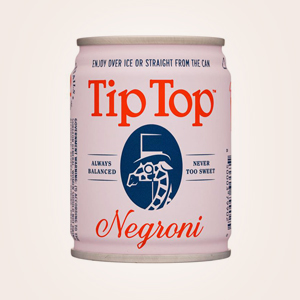
[00:03:00] Ray Latif: Yeah. Yay. Yay. I saw you post it on Instagram yesterday, Mike. Was this the Tip Top cocktail? It was the Tip Top cocktails. John Craven handed me three cans of Tip Top cocktails and I tried the Negroni yesterday. I was quite pleased. So Tip Top is a maker of pre-made cocktails. They package them in these 100 milliliter cans. Really nice packaging. Just enough for a cocktail. Hashtag world's cutest can, right? Is this the proper serving for a cocktail? 100 milliliters, John Craven? I don't know.
[00:03:31] John Craven: I mean, or is this close enough? I mean, I guess you'd go for like somewhere in the three to maybe four ounces. So that's kind of maybe a little on the bigger side. But yeah, those are those are great. Those are it's an Atlanta based company. And you know, it's definitely among kind of a new crop of ready to drink cocktails that are full strength, you know, they're not going for the like seven, 8% alcohol. That's just a literal, you know, cocktail all booze.
[00:04:02] Ray Latif: So I also, uh, I've got on the table here, some of this Mad Tasty couldn't get through an episode without talking about CBD. Mad Tasty is the name of the brand. This is a grapefruit variety, 20 milligrams of hemp extract. Marty, have you seen more of these brands promote hemp or CBD of late?
[00:04:17] Martín Caballero: Oh, that's a good question. I think they tend to hew closer to hemp. That's the one that will get you sort of less visible potential issues with regulatory agencies and that kind of thing. But there's definitely a, you know, case to be made that CBD gives you that sort of more premium call out. It's a little bit more of a sophisticated call out to the ingredient itself and that kind of functional aspect of it. It's also a call out to the authorities. It is. Yeah, absolutely. I mean, it's a tricky one to cross. I mean, again, anytime we talk about CBD beverages, we're talking about something that the federal government has not sort of approved. So there's chances you're taking all the time with it. I guess it's a matter of if you're going to be stepping in that arena, what's worth it to you to be cautious or to take a little more step and see if you really connect with people.
[00:05:04] Ray Latif: John Craven, how would you advise folks on whether to use CBD or hemp as a call out?
[00:05:09] John Craven: I think kind of like Marty said, it's, it's really just a toss up of what you're trying to be. And, you know, I suppose how maybe risk tolerant you are, which presumably these brands are already somewhat risk tolerant since they're, you know, going down this path to begin with. You know, I think this brand and this is becoming more common, you know, being Mad Tasty, Mad Tasty. It doesn't say CBD like on the can, but it does on their website. I mean, it's not that hard to figure out kind of what they're going for. So. I don't know. It seems like there's definitely, like Marty said, brands trying to stay away from literally putting CBD on the front of the can. So hemp's maybe a little lower profile.
[00:05:51] Martín Caballero: I think it's a little bit tricky also for consumers because we talk about all the time how consumers are still learning about what CBD is, why they should take it, why they shouldn't take it, whatever it may be. So it sort of adds another thing where maybe people have to sort of double check, okay, hemp extract is the same as CBD. More of we're talking about on the package. It makes it, you know, certainly makes a difference.
[00:06:12] Ray Latif: It's interesting. I feel like hemp has more of like a marijuana cache to it than CBD.
[00:06:16] Martín Caballero: Really?
[00:06:17] Ray Latif: Yeah. I mean, when you think about hemp, at least, you know, when I was in college, people talk about hemp and they'd be like, Oh, I've got hemp clothing or I don't know, hemp shoes and stuff like that. And everyone would know that it's like, it's association with marijuana, but it's also like the safe marijuana, you know? It's not psychoactive.
[00:06:34] Martín Caballero: Well, I think it's interesting because maybe more people have heard of hemp and maybe they already know that it's, you know, not going to get you high. But I think the CBD is like, I think that's eventually where it's going to go, because that's sort of the more sophisticated understanding of this cannabinoid system. CBD is one of a multitude of cannabinoids that people are just beginning to explore. You know, I think eventually, and hopefully after, you know, regulatory stuff gets figured out, it'll migrate towards CBD. And then hemp will be sort of, as you mentioned, you know, hemp fiber, clothing, other products and stuff like that.
[00:07:09] Ray Latif: And going back to the packaging here, it's a pretty fascinating looking, I don't know, art project. Reminds me a little bit of a crime scene where the blob was the victim or something like that. I'm sure they're gonna love to hear that.
[00:07:19] Martín Caballero: It's like a crime scene. It's intriguing. Keith Haring, squiggly, you know, little thing going on. The name Mad Tasty sets the bar pretty high.
[00:07:27] John Craven: Yeah, for sure.
[00:07:28] Ray Latif: If you don't pay it off, that could be a problem. Does it pay off? Has anyone tried it? I'm surprised you're using the adjective mad. But you can't call it pretty good. Because I thought in this office was one of the first times I heard people use Mad Tasty a synonym for good. Oh, like mad beat down? Yeah, like mad beat down. Mad means very. It's just like, you know, wicked. It could be called wicked tasty.
[00:07:51] Martín Caballero: I mean, would you drink something called delicious? I would, but I would expect I'd have very high expectations as I pick that up.
[00:07:59] Ray Latif: You just wouldn't call someone delicious, like as in a nickname.
[00:08:02] Martín Caballero: Hey, delicious.
[00:08:04] Ray Latif: Anybody? No? Kings of Comedy? Ah, forget it. Sorry, bro. All right. Certainly a lot of CBD infused, seltzer, sparkling waters. Starting to see more and more caffeinated sparkling waters come to market. Two that came in this past week. One was from the fine folks at Ugly. They had this new product called Ugly Energize. This one's got 160 milligrams of caffeine, also sunshine sparkling energy water. The variety I have in front of me is a lotus pear. I picked it up because it was lotus pear. I just wanted to try a lotus pear flavored anything. And I haven't yet, but I will shortly.
[00:08:39] John Craven: So true story. Every time I Instagram a product like an Ugly Energized or Sunshine, I, you know, within a few hours, get a direct message from, uh, this person named Todd Berardi who created high ball and he just writes novel idea, exclamation point. So, uh, which, you know, we'll give credit where credit is due for, uh, you know, Todd and high ball certainly. created the market for these types of products so it's kind of interesting to see it now coming back as a thing that is an extension off of companies that are making sparkling water.
[00:09:17] Ray Latif: Well, it feels like it's just part of this entire movement toward better for you beverages. I mean, we're seeing the explosion of hard seltzers, right? And a lot of that's coming from people who want less calories in their drinks. And I feel like this is in the same vein with these energy waters. They just want less calories, but they also want less of the other stuff that comes with most energy drinks.
[00:09:41] John Craven: Well, I think flavored sparkling water has really been after the dollars that are in carbonated soft drinks, right? Just standard soda. So it kind of makes sense from a just logical perspective of these companies seeing another carbonated soft drink like category in energy drinks and thinking that, you know, they can come at it with that same approach. And again, I mean, it's logically, it makes sense whether or not that will really disrupt things like the energy drink category, you know, I don't know, monster bang, Red Bull, whatever remains to be seen, but I think it's a smart move. Yeah, we haven't seen the Cascara crew who's trying the better for you energy thing.
[00:10:21] Ray Latif: Take a big chunk out of that market yet. Like John said, it remains to be seen since these are still really new. What's going to happen in that category?
[00:10:31] Martín Caballero: What I think is interesting is a couple things is clearly sparkling water as a delivery system for energy, CBD, functional benefits, you know, as you mentioned, like hard seltzer or something like that, alcohol even, is definitely becoming more popular. And I think just the popularization of regular carbonated water is definitely sort of opened people's eyes to the fact that you can integrate a lot of different things into this. The other thing I think is interesting is like a brand like Ugly and then Sunshine. I'm just looking at the cans right now, you know, coming from that sparkling water background and being sort of identified as a sparkling water company. But when you add caffeine and you sort of go towards energy, it affects the packaging. And you see that Ugly has a larger can size with this. I enjoyed the product, found it a little bit difficult to finish the whole thing in terms of the amount that was there. But it's just interesting to see how. It's a tall boy. It is a tall boy and it's interesting to see how even though some of the lines between the categories are blurring, there's still these kind of established elements like the package size. Putting it in this package size indicates this is an energy drink that can go alongside Monster Bang, the other ones we talked about. So some sort of evolution there, but also some sort of carryover of existing elements.
[00:11:43] Ray Latif: I went to a meeting with a tech company the other day and gave them a bunch of these products and they were just as excited to get the ugly energy and the sunshine as they were to try some Guru. Guru Energy, organic energy. That brand has been around for some time as well. But very different products. Yeah, very different product. You mentioned Todd Berardi, John Craven, Todd Berardi, the winner of BevNET's purse in the year of 2017. But who's going to be the winner of BevNET's purse in the year in 2019? Well, to find out, you'll have to attend BevNET Live, which is taking place on December 9th and 10th. That's a Monday and Tuesday. To find out more about how to attend, go to BevNET.com slash events. We're all going to be there. That is Martine, John, Mike, and myself. If you want to say hello, we'd love to meet you. We'd love to chat with you about anything. It could be about Maradona or beverages or cannabis. I'd like to talk to you about your package.
[00:12:36] Martín Caballero: Come find me if you want to talk about Maradona.
[00:12:39] Ray Latif: Where's that guy who loves to talk about Diego Maradona?
[00:12:42] John Craven: Don't talk to me about that.
[00:12:43] Martín Caballero: I'll be wearing the pin that says ask me about Diego.
[00:12:45] Ray Latif: Talk John Craven about Arsenal.
[00:12:47] John Craven: That's his favorite topic.
[00:12:48] Ray Latif: Talk to us about package design. Talk to us about product formulation. Talk to us about your hopes and dreams. Talk to us about your investment needs at BevNetLive. We can help you find the right people to talk to. They're there. They're ready to answer your hardest questions and help you take your company to the next level. As Mike mentioned, you know, we'd love to meet you. If you are attending BevNET Live, Nosh Live, The Cannabis Forum, Brewbound Live, we'll all be there. And, you know, we know the folks who are attending. And if you are looking to meet those folks, just come up to us, say, Hey, I wanted to meet this person. Could you make an introduction to this person? We're happy to do that. We're happy to point you in the right direction. Even if you don't know the people you want to talk to. You might just have a question. You might not know who you want to talk to. We've got some great CBD companies coming to this event that can answer all of your questions about how to get CBD into your beverage and what some of the pitfalls might be. Who knows better than the ones who are, you know, powering these beverages? And who knows better to point you in the right direction than Mike Schneider, BevNET's CMO and apparently resident Fred Rogers. Alright, I think it's time to get to our interview for this episode. That's with Kelly Heekin and Ben Schmidt, the founders of Hoist, a brand of premium hydration beverages based in Cincinnati, Ohio. Founded in 2009, Hoist has gone through a few iterations in its packaging and positioning. The products were originally sold in cans and marketed as hangover recovery drinks. In recent years, however, the brand has aligned itself with the expanding market for isotonic beverages and identifies as a more palatable and versatile version of electrolyte brand Pedialyte. That sounds a bit odd, considering that Pedialyte has seen booming demand among adults who covet the product for its rehydration benefits. In the following interview recorded at the 2019 National Association of Convenience Stores show, I spoke with Kelly and Ben about the genesis of Hoist, iterating upon the initial concept and communicating their vision to investors and retailers. They also discussed bootstrapping the company and why they haven't taken outside capital, and how Hoist has won placement and loyal consumers at military exchanges. Hey folks, it's Ray with Taste Radio. I'm at NACS 2019, and sitting with me right now are the co-founders of Hoist. That's Kelly Heekin and Ben Schmidt. Guys, thanks so much for being with me. Thank you, we appreciate it. Pleasure, thanks. How's your time in Atlanta been so far? As with any NACs, it's been nonstop action and tired but excited. For folks who are not familiar with the brand, can you tell us a little bit about what you are and what the primary function is? Yeah, I'd be happy to do that. I think it may be the easiest for you to take them through the history and it kind of exactly explains how we get there. Yeah, I know. Certainly it's a, we won't belabor the history, but nonetheless, Kelly, myself and two childhood friends started this several years back on the, on an idea that came from a friend of ours that played in the NFL for a number of years and a five, six year career as a journeyman, special teams type guy. He tells us that Dustin Cohen. Okay. I thought you were going to say Steve Tasker.
[00:15:54] Kelly Heekin: Yeah.
[00:15:55] Ray Latif: Love Steve. You're a bills mob.
[00:15:58] Martín Caballero: I am a bills mob.
[00:15:59] Ray Latif: Well, they dismantled our bangles the other day. three and one as of this recording. So it wasn't Steve Tasker. It was not Steve Tasker. A good friend of ours who's to this day, he's actually down in Sarasota. He's on the squad for the Sarasota police department, but nonetheless, Dustin had come back and he was telling Kelly and I that on the sideline of all the teams that he played for in the iconic orange ice cooler on the sidelines, they were pouring Pedialyte And mind you, this is 15 years back to where Kelly and I had looked at one another, and we thought, the beverage that you give to infants, I'm confused. What's the impetus behind that? And he tells us that all the sports nutritionists and dietitians had recommended that that was a more viable solution than some of the staples within the space. Mind you, Kelly and I were not too far removed from college at this point, and we've been known to entertain our fair share of Coors Lights and whatnot. And he tells us, oh, by the way, if you go out and you have too many beers, the best thing you can do for yourself is drink Pedialyte. So what do Kelly and I do? We stockpile our fridges and we've become avid consumers of that brand. We recognize that in terms of what it did and the formulation behind it, it was a fantastic product, still is. The only thing that was a miss was the flavor. So Kelly and I, young in spirit, entrepreneur spirit at that time, looked at one another and we thought, you know, if somebody could take the same, you know, concept, the formulation, and make it taste good and market it to more mainstream, then I think they'd really be on to something. And that was pretty much the, as to how this started was we took a PD light, gave it to a beverage scientist who we still work with today, Chris McVicar, and said, make this taste good. And that was back in 2001 when we first came up with the idea. And we knew nothing about the beverage industry, and we were just out of college. So we actually kept it on the back burner for at least seven or eight years until we finally got serious enough and kind of, frankly, sick of talking about it. So we each put in enough money to, in about 2008, started working for a couple of years, nights and weekends, trying to come up with all the qualitative, quantitative researches if this drink had any legs. I think that's when we first said, let's put enough money in to do one production run. And if it doesn't work, we can at least stop talking about it. Well, what's interesting is that you saw the opportunity or the opportunity was already there for Pedialyte in the NFL. It seemed pretty niche, again, because no one else was drinking Pedialyte as a recovery beverage. Well, at least not as a sports recovery beverage. Sure. So what made you think that there was a broad opportunity for mainstream consumers to start drinking that type of product? Well, you know, I have to give Kelly and I a little bit of credit in the fact that perhaps we were onto something earlier than we knew in the fact that back then Gatorade was king and to some degrees they still are today. But that said, things have changed quite a bit over the course of time to where consumers are reading labels more so than they ever have. And everyone is out there poking holes at their father's sports drinks and things of that nature. So it's really served us well in the fact that I think 60% of PD light sales as recently quoted in the wall street journal stem from adults. How many 60% of their sales stem from adults. So I think this, this super hydration movement is in full play, which serves us quite well because we've been going up against some pretty, pretty big players in the space and stealing, you know, shelf space, which has been a challenge and it's becoming more and more welcoming from category managers as I think body armor to some degree helped open the floodgates. but at the end of the day that's a fantastic product. But really the only thing that they did was add coconut water to an antiquated formulation. So we're pretty excited for where the future holds for us. You know it's interesting you say this because you guys came to our office in Watertown a couple years ago and you sat down in our kitchen and you talked to us about this hoist product that was going to be great for recovery and you're positioning it sort of as a Pedialyte alternative and We were like, you know, it's got to be tough to communicate who you are via another brand. How do you do that in a way that's not sort of promoting the other brand or talking about the other brand in a way that's that you're not. Yeah. One way is that got to give credit to Abbott Labs and Pedialyte. It's an incredible formula. And we just decided that instead of focusing on babies and the sick infants, that if you can put it in a good looking package that people actually want to carry around and we want to call ourselves adult Pedialyte, it kind of resonates with people. And I'll say that when we first launched this seven, eight years ago, One out of 10 people knew what Pedialyte was and the benefits of it. Now, it's 10 out of 10. It's amazing just the amount of recognition that that formula has done. We hate to promote another brand in our advertising, but at the same time, it's the easiest way to click with someone right now. Well, in a lot of ways, it sort of introduces people, gives people a point of reference to what you represent in the same way that probably some sports drink brands use Gatorade as that example. And you're right. Awareness of Pedialyte has changed. You need not look further than Times Square, where there's billboards of Odell Beckham Jr., the NFL star, who's now, I believe, the chief creative officer of Pedialyte, or something like that. Yeah, some sort of fancy title like that. And then, as I was telling you guys on the floor, I was in San Francisco a few months ago, and they had Pedialyte stocked right next to the Gatorade, right next to some of the waters and whatnot. To beat Pedialyte though, or to at least be within that category, you guys mentioned that you had to save up some money, start your first production run. One of the most interesting things about your brand is that you bootstrapped on your own to this point. You've never went out for outside capital? No, it's just been the four of us. And when we first launched this, it was strictly as a hangover drink. We were in a kind of a Red Bull looking Wrexham can and selling it to bars around Cincinnati as the last drink of the night. I remember that. I totally forgot about it. You guys were in cans. Yeah. I was selling out of the trunk of my car for six or so months. Sorry, I don't mean to laugh.
[00:22:17] Kelly Heekin: Yeah.
[00:22:17] Ray Latif: Oh, I laugh at it now, too. I was laughing at it then. But we had a lot of fun doing the hangover angle. But we just realized that There was a lot more sales Thursday through Sunday were great. And you know, when you're trying to bootstrap something, you need sales every day as in the beverage world. And that's when we, back in 2012 or so, I'd say we really kind of really rebranded, reformatted and to become an everyday drink. And, you know, we've been very fortunate where we've picked up some really good advisors. What I'll say is Ben and I will run through every wall, but some of our advisors have opened the doors for us first. So we don't suffer so bad. Yeah, I'll say we have had the good fortune of being around for a while to where we've made several mistakes, whether it be packaging, whether it be messaging. And luckily for us, we didn't really expand beyond our backyard until 2017. So I'll say we went to an expensive beverage college. Very expensive. And incubated within our backyard. So where the mistakes we were making weren't detrimental to the long term future of the brand because we could course correct within Cincinnati, Ohio in 2017. That's not to say that we're not free of mistakes today because we aren't. But I really believe that those years of learning firsthand have been paramount to our success moving forward. Do you mind me asking, I mean, how much money you had to start with for that first production run? Oh, the first production run, we, I think, put in about 20 grand. Since then, I mean, we've put in a lot more. But at the same time, as since we started just in Cincinnati, you know, we were able to keep it as small as possible. And now it's finally at a point where we're looking for some outside capital because we're ready to really, we feel like the mistakes that we've made in the past have helped us get to the point where we are today, which we think is
[00:23:57] Ben Schmidt: a product ready at a smart national launch.
[00:24:20] Mad Tasty: As you alluded to. Tune in at the end of this episode for an exclusive interview with Matt Lynn of Belay Solutions. He sits down with Melissa Traverse to break down the biggest inventory and accounting mistakes CPG founders often make. You'll learn how to bring clarity to your numbers so you can scale with confidence.
[00:24:38] Ray Latif: to, you're going to need to raise capital to reach some of those goals that you're talking about. Was one of the reasons early on that you didn't raise capital just sort of wanting to maintain ownership of the company? Or was it more that because you were so far ahead of a trend that you couldn't find an investor to believe in your vision? I think actually it was more, we knew we weren't ready. We knew we had to keep it small. And it's one thing if we lose our own money, you know, it's stressful enough in this industry, but when you add outside money in, it just adds the stress level so much more. So we were like, until we actually feel we have the product that's ready to go, then we need to do everything we can to keep it within ourselves. A bit of both, though, Kelly. I think, I mean, to some degree, we recognize that some of the big firms out there, you know, they have their baseline entry in terms of what you're doing in sales. I do believe we'll surpass those metrics this summer, excuse me, in 2020. But I do think a lot of it is, I mean, Kelly and I, we give the, our employees are, they're fantastic. And we give everyone the autonomy to operate as though this is your own entity. So we, we encourage entrepreneurship. And every one of our regionals, they don't need to call Kelly or I to make executive decisions in the field or with distribution. And if indeed we lost what I think makes us unique, and I think we would lose that if we had to answer to a higher power, so to speak. So, I mean, we have fun and we don't take this too seriously, but that will change in due time, I suppose. But for the time being, I think it's been instrumental for the success we've seen. But I will say that it's kind of timing has worked out very well for us. I mean, as we spoke before, just this hydration, super hydration, whatever you want to call it, or electrolyte solutions weren't too popular a few years ago. And yeah, we were definitely ahead of the trend and there's some other guys out there that are doing very well with it. And I think it's kind of opened up some eyes and we're hopefully in a very good position right now to keep expanding. We often kick one another as we continue to see brands that are emerging within the space, which is great because I think it elevates the category. But utilizing taglines and offerings that we were talking about this back on our couch when with my buddy in the NFL, the Ivy in a bottle, all that concept that's that is in full play right now. So it's funny. Do you feel like part of the reason that you're in a position to grow right now is because you had been able to survive for so long? I mean, you mentioned, what, 11 years since you've been doing this? We started in 2009, so almost just about 10.
[00:27:14] Kelly Heekin: Just about 10 years.
[00:27:14] Ray Latif: I mean, is it okay to just survive until that trend appears? I think in this industry, you have to. I don't think... The graveyard is deep, I presume, in the beverage realm. And not only that, but you think of so many brands, you think they're overnight successes like Ascensia or whatever it may be, and you realize they've actually been around for 15 or 20 years before, and it just all of a sudden took off. It was the right time, whatever it may be. And I think to be successful in this industry, you have to have the staying power and the ability to kind of adapt a little. It's not going to be an overnight success, that's for sure. Did you have to keep your own jobs? Do you have to keep separate jobs outside of this? I actually was the only one that left 10 years ago to do this. So I was the employee delivering out of my trunk for a while. Ben didn't move over here until about two and a half years ago. Yeah, I quit my full-time job two and a half, three years ago. And that was, again, that goes back to the timing of that's when we left the nest, so to speak, 2017. You know, it was a bold move, but nonetheless, I think that, you know, the longevity of us is a lot, it's passion oriented, man. Kelly and I are determined to make this thing work. And that's, you know, that doesn't come without staying the course over a 10 year time span. Lengthy, sure, but again, no scorched earth left behind and a lot of learning. At what point did you realize that you could communicate the functionality of Hoist, what it represented to a retailer, to a consumer, and that they would get it? You know, Ray, I think the answer to that question somewhat goes back to what we were talking about earlier with the adult-pedialyte connotation and the fact that that's really the moment where I see people's eyes light up and they understand the offering. There's two ways for which we can do that explanation. I can either get knee-deep into the science, and the osmolality factor as to what differentiates us from everything else out there, or I can simplify it to where people immediately understand the benefits of a Pedialyte. What's helped us in the communication is the rise of oral electrolyte solutions, and the consumers have quickly adapted to them being superior products to what you typically find in the sports drink hydration realm. So category managers, I'll tell you, they have been the easiest aspect for us to pursue in the fact that They are all looking for, yeah, right. Exactly. They're all looking for higher margin out of that isotonic door. It's a race to the bottom of sorts to where it's it's 10 for 10 all day long. Body owner came in and they go into play the premium game and they're quickly back to 10 for 10. So, you know, the category managers were, were never a hurdle per se. The unfortunate part about this for us is when we have a few minutes to sit down and actually tell someone about Hoist, they completely understand it. So when we can sit down with a buyer, he gets it and really enjoys it, loves it. Our issue is that there's just not a five second explanation for this. And that's where we need to get better as a marketing team. Well, you have as a tagline, science of hydration, you've trademarked it. But how much of the science do consumers really care about? And that's just it, they don't. I mean, I can get into the density of our formulation, mirrors what's within your bloodstream, but the eyes glaze over. I mean, at the end of the day, it's fantastic, great, you know, it tastes good. Yeah, right. Tastes good and it's effective. If I had a nickel for every email we get, whether it be Crohn's disease, chronic migraines, cramping, a multitude of different ailments that people email us every day, it's swear by the formulation, which again, attributes back to the passion of things is that we know that this product's helping a lot of people in a variety of different ways. Which it is funny that the amount of emails we receive from people just blindly emailing our website and saying, they're going through chemo and they swear by this. It gives you goosebumps and we're sitting there like, we just tried to create a hangover. We created a hangover, Alexei, right? This is incredible. Where is this taking us? Yeah, the goosebumps of an entrepreneur when someone actually says, hey, I really like your product. I've never encountered, but I can only imagine what it's like. I only get it when people are like, hey, that podcast was pretty good.
[00:31:10] Kelly Heekin: I'm like, ooh, goosebumps. It's a different kind of thing.
[00:31:13] Ray Latif: The person you were talking to was great. You know what? I never take that into account. Maybe it's not me. I should cut me down to size. Well, you have a whole other set of consumers that you help out on a regular basis, and those are soldiers. The military channel has been big for you guys. Tell me a little bit about how you identified that opportunity and why it could be a really significant part of your business going forward. We are beyond thrilled for what's happening within the United States military for us. And trust me, it did not happen overnight. But I think the early learning was that I had heard somewhere through the grapevine that the Marine Corps were power users of the PDLA formulation. And early on, we had a VP of sales, and I remember I was on him all the time with regards to military, military, military. And he'd continually tell me, the exchange business is fantastic, but you really need to go after the consumer facing. And I kept thinking to myself, well, there's more to military than the exchange component. Don't get me wrong. And to be clear for our listeners who aren't familiar with the exchange. Yeah. So you'll have AFIS, MCX, Nexcom, all of which are going to be the retailers on base. Just for simplicity's sake, think of a Circle K at Fort Bragg, whereas within the gates, that is called MCX. and the benefit to the end user on the military is that they don't pay sales tax. And those currently we have our ready to drink bottles in there. We actually had a little bit of dumb luck with getting over to another side of the military and that's we were googling military brokers and we ended up with one down in Virginia Beach that took us a whole new route, and I'll let Ben explain that one. He's been the worker on that one. This is a channel for which is incredibly complex, as are most government entities to some degree, and the Joint Culinary Circle of Excellence at Fort Lee, Virginia, the governing body of all things food and beverage within the U.S. military. So we've got some good friends, good contacts down there that over the course of two and a half years and multiple variations of packaging formulations to where we are finally approved for all things field feeding within the military. So when I say that, for instance, Fort Bliss, Fort Carson, Fort Bragg, we've got a multitude of bases that are currently purchasing our hydration powder. And we're one of three authorized for that realm along with Gatorade and Powerade. So that's not a process that came overnight, but we're pretty excited as we've got West Point absolutely flying through product. We just brought aboard Annapolis yesterday, the Naval Academy, and the opportunity we see is massive. And what I continue to see time and time again is it's fatigue. Flavor fatigue mostly to where the traditional folks within that realm are only offering one or two skews And if you consider every day you're consuming this beverage, they're looking for alternatives. So our military sales guy I got to give a shout out to Russ Campbell. He's awesome. He's absolutely just killing it out there. So pretty excited about what that channel represents for us and the last thing I'll tell you is that We are in test right now with the NATIC arm up your way in Boston on the UGRA and MRE rations component of military. We have two SKUs that are testing as we speak, and if indeed we land that, we'll soon be producing for military rations globally. That's incredible. But what we're now realizing is once indeed you crack, the opportunities are endless, and it's a very sticky entity to wear. I mean, we're most excited about the awareness that we're building, not to mention the fact that it's pretty cool to be hydrating our military right that makes us pretty proud but it's very very sticky business with a lot of potential and I will mention that we've got another guy Kelly alluded earlier to our board of directors and we've got a guy named by the name of John Kowalczyk who is pretty involved within the US military and has been a fantastic help for us navigating the channel.
[00:35:04] Mad Tasty: Do you want more repeat buyers on Amazon? Well, this free resource in collaboration with Straight Up Growth will help your brand turn first-time buyers into long-term subscribers. Download Winning the Repeat Purchase Game on Amazon now at Taste Radio slash SUG. That's Taste Radio slash S-U-G to start building retention-driven growth for your brand on Amazon. Scaling a beverage brand into major retail comes down to operational readiness. From packaging lead times to co-manufacturing strategy, the details can make or break a launch. In a new ebook in collaboration with Octopi and Asahi Beer USA, industry leaders share what they've learned in helping brands scale. Download it now at Taste Radio slash octopi. Do you need to scale your team faster without compromising on talent? Join Oceans for a live webinar on April 20th and learn how leading companies are hiring top global professionals who are ready to grow with your business. Register for the webinar now at Taste Radio slash oceans. That's Taste Radio slash oceans.
[00:36:14] Ray Latif: Angle is something that I didn't even consider until now. I mean, you have folks that are going to be in the military for a set number of years when they get out. If they can find your product elsewhere, you know, assuming they are fans, they'll buy it elsewhere. It's crazy the amount of brands that like, for instance, Rippin, Rippin Energy. There's, you know, there's stories out there that a lot of people can relate to. And the fact that consumer facing, I don't know that they were doing nearly what they were doing within the military, but I know back in Afghanistan and whatnot, they were bringing truckloads in. And the soldier was just ripping, ripping energy. It's a fantastic realm for us. But what excites me most is like, for instance, West Point. I mean, you've got the future leaders within the United States military, the cadets coming through there. And ultimately, when they leave, they'll have been consuming our product over the course of their four-year education and hopefully become massive advocates for us. And perhaps future board members. Exactly. 100% future buyer. Or for future buyers.
[00:37:10] Martín Caballero: There you go.
[00:37:11] Ray Latif: I'm not sure which is better, but they're both great. Let's talk a little bit about your board. You have some pretty experienced folks in the industry participating. Hal Kravitz, Kevin Klock, John Kowalczyk. I mean, these are heavy hitters. What was your pitch? Kelly will laugh about this because I'm a big proponent of LinkedIn. Networking has served me quite well in my career. And LinkedIn, I couldn't network as effectively as I have without LinkedIn. So I reached out to Hal when I knew that he had left Aquahydrate. And I sent him a note on LinkedIn, and I basically just gave him a little bit of insight as to what we were doing. He replied back, and he said, let's talk. And oddly enough, Kelly and I were heading to a boys weekend getaway in Malibu. Bringing a lot of hoists with you, I'm assuming.
[00:37:56] Kelly Heekin: We absolutely were.
[00:37:57] Ray Latif: And Hal was living in LA at the time, and he was picking up his son at LAX, and we were landing. So we met at a Starbucks in LAX. And if you've ever been to Starbucks in LAX, it's not a very ideal place to meet in the fact that there's too many people in it. Especially the one right around the where JetBlue takes off. Yeah. That one, that's Starbucks. Hey, Starbucks, if you're listening right now, do something about that because everyone hates it. Well, the Delta Terminal is under, they're completely gutting it. Okay. But Hal and Kelly and I really hit it off. And I think that's what served Kelly and I quite well is, again, this goes back to not taking ourselves too seriously, remaining grounded. And these are somewhat Midwestern core values. And we really hit it off with Hal. And from that point after that meeting, we just knew that somebody such as he, who had had multiple years at Coca-Cola, he led Aquahydrate to the success that they saw. He could lend so much to what Kelly and I were doing. We certainly didn't lack for passion, but we recognized that it wouldn't hurt to have. someone such as himself and Kevin, quite honestly, same situation when he left, what he was doing. I reached out to him again on LinkedIn, started with a conversation. We met at NACs last year. Actually, we had a beer at a, in the casino and, and we hit it off as well. And I tell you, I can't speak for Kelly, but I know he'd say the same Kevin and how are, it's just unbelievable to have guys with 60 plus years of success within this realm, helping us steer the ship. It actually probably meant more to Ben and I that once we met him, we had to actually enjoy their company. We didn't want some brilliant person that we just couldn't stand. So it worked out well that we just all got along very well. Zero arrogance allowed through our doors. That actually is what. Sounds like you've had some experience with that coming through your door. We can name a few names. That goes back to those mistakes. I've heard that happens from time to time. This is a reoccurring theme actually with the podcast. Keep bringing up the fact that aligning yourself with the wrong people is just a killer. Whether it's an employee or an advisor or an investor, it's really difficult to extricate yourself from a bad situation. Absolutely, 100%. We've had the good fortune of operating with folks that I would have zero problem nor would Kelly to go out and have a couple beers and dinner with tonight. And that served us quite well. There's no shortage of egos and whatnot within this very hall. and people in this industry. Kelly and I have promised one another that regardless of what occurs here, we're still sharing hotel rooms. We've known each other since third grade. Well, that's the best part of this business, right? Because the famous line is, it's not the result, it's the journey or whatever. I'm totally misphrasing this.
[00:40:40] Kelly Heekin: But I understand what you're saying.
[00:40:42] Ray Latif: Yes. But I mean. So you're great at this podcast stuff. No, I mean, you know, you'll look back on these times. Remember, you know, I really enjoyed having a rough it and stay in hotel rooms and and hopefully when, you know, hoist is as big as you hope it to be, you know, I'm sure you'll look back and say, I miss those days.
[00:41:04] Kelly Heekin: I miss those times.
[00:41:05] Ray Latif: So enjoy them while you can. you know, every day it's a roller coaster. You have your ups, you have your downs, but with perseverance is key. And ultimately I do know that one day we'll look back and, and want to get right back in it. Cause it's fun. I mean, Kelly Kelly may not, but Kelly's been doing this day to day a little bit longer than you have.
[00:41:24] Ben Schmidt: That's right.
[00:41:25] Ray Latif: But no, I love it. There's nothing I would change. Well, I am so happy that you guys could take the time to do this. I know you're extremely busy. This is a big show for you. So, sincerely appreciate you taking time out of your day to do this. I wish you the best of luck going forward. You know, Hoist, in my opinion, has a long runway for growth and I I hope it achieves everything that you hope to achieve. Thank you. Thank you. Your seal of approval definitely means a lot. It was two years ago. We didn't have it. I will tell you, when we sat in your offices in Watertown, I know that you and Martin were looking at each other like, I don't understand this. Yesterday when you came over, I tell you, we met a lot of great people, a lot of folks that can help us move forward within this conference. The single thing that I'll take from this is you saying, hey man, there might actually be something to this. So thank you. Why do you think we're sitting down and talking right now? Well, Kelly and I are as crazy as our wives may think. Once again, thanks so much, guys. Thank you. Thank you, Ray. Right on. That brings us to the end of episode 58 of Taste Radio Insider. Thank you so much for listening, and thanks to our guests, Kelly Heekin and Ben Schmidt. Please subscribe to Taste Radio Insider on the Apple Podcasts app, Spotify, Stitcher, SoundCloud, or Google Play. As always, for questions, comments, ideas for future podcasts, please send us an email to askatasteradio.com. On behalf of the entire Taste Radio team, thanks for listening, and we'll talk to you next time.
[00:43:03] Kelly Heekin: Hello, I am Melissa Traverse here for the Taste Radio podcast, talking about some of the biggest tension points that CPG brands and founders face when they're scaling a brand, and those are financial accounting and inventory management. I am joined by Matt Lynn, inventory accounting guru from Belay Solutions, and he is going to shed some light on all of this that is going to help everybody out quite a bit. Matt, thank you so much for joining us today.
[00:43:33] Ray Latif: Thank you for having us, Melissa. It's great to be out here at Expo West and it's great to sit down and be able to chat this because it's kind of a passion project of ours, working mainly with CPG brands and hoping to help them scale.
[00:43:45] Kelly Heekin: It's been such a pleasure chatting with you and the team and learning all about what you do over there at Belay Solutions. Can you tell us a little bit about yourself and what your role is and the kinds of solutions that Belay gives to CPG brands and founders?
[00:44:00] Ray Latif: Yeah, absolutely. My role with Belay, I'm actually our inventory accounting manager. I run our inventory department, so we work with CPG brands, taking them from spreadsheets, putting them on inventory management systems, and really helping connect their tech stack between their sales online marketplaces to that inventory management system, even down to their financial systems like QuickBooks. Belay overall is kind of an outsourced accounting firm. And with that, we're helping teams. We have different levels with bookkeeping, controller level work, even high level into CFO type items. So we really help those brands in any way that they need financially. And then I just have a subset of a department where we're really just laser focused on inventory.
[00:44:43] Kelly Heekin: It's certainly a complex topic and there are plenty of places to go wrong. Let's start by going right and start super simple. Can you tell us what some of the biggest red flags are that would help a founder understand or, you know, the person running a brand understand that it really is time to get some help with some of these areas?
[00:45:04] Ray Latif: Yeah, absolutely. I think some of the early red flags is just everything is chaos. So when they're looking in their financial software, maybe they don't really have an accounting background and they're kind of just piecing it together and doing their best. And what they'll see is that reconciliations take forever if they even happen. They have a lot of transactions that don't get coded or they just put them into placeholders to just get rid of it so it's not an eyesore. they'll notice they have revenue but no cash or they notice that they have a good amount of cash but their blind spot is really seeing the vendor invoices that are sitting there just needing to be paid and so they just lack that clarity that's going to really be around the corner.
[00:45:41] Kelly Heekin: You know, you were talking about one of the red flags that comes up that I think makes so much sense. When somebody asks you what your numbers are and you can't come up with the right number, that's a big problem because that's something that you really should be able to share with decision makers who, you know, you're ideally looking to do business with. What should you be able to call up at a moment's notice?
[00:46:05] Ray Latif: Really, at any time, you should be able to know an accurate margin. It's amazing how many founders we end up talking to that they can tell you their revenue numbers, they can tell you their selling price, and then the minute you start talking about cost or their cost of goods sold, they just get a deer-in-headlights look. So really, it's very hard to tell, am I even making money? or if you don't know your entire landed cost. Maybe you know what the freight cost is, the duties separately, but you're not really getting that as part of your unit cost. So it's really hard to tell. Am I even making money or am I losing money from the very beginning?
[00:46:38] Kelly Heekin: And do you recommend that founders are able to call up a margin by channel?
[00:46:43] Ray Latif: Absolutely. And depending on the number of products and channels, you kind of want to know what are your best sellers, which ones are making the most and which ones maybe you're not making as much. But especially if you're branching out and you're doing D to C with B to B, absolutely want to know that.
[00:47:00] Kelly Heekin: Gotcha. You mentioned that when things feel really chaotic, that's probably a red flag. I would say that it probably almost always feels chaotic if you're running a CBD brand. And I know this may be hard to quantify, but is there a revenue number? Is there a number of doors number that would help a brand understand whether or not it makes sense to bring on a partner like Belay? Understanding that so many brands are bootstrapped or they might be tight for cash. What is that friction point?
[00:47:30] Ray Latif: a little bit different for everybody depending on where you're at in your process and sometimes just your level of understanding of financial aspects. You know, when you're first starting and you're really cash conscious and don't want to spend that much money, you may keep it on yourself. But as you're growing, as you're getting into those six-figure revenue numbers, and especially as you're approaching seven, you want to make sure you've got good financials. Because as you scale to that point, most likely you're going to be looking to raise capital. And investors, the first thing they're going to look at is your books. And are they clean? And do they show a clear picture of your business?
[00:48:03] Kelly Heekin: You know, another area that folks might look to to organize some of the chaos are their systems. So many folks stick with Excel spreadsheets for a good amount of time. How do you know that you need to outsource some of your accounting to an organization like Belay Solutions versus maybe signing on to a Synth7 or NetSuite or something like that?
[00:48:25] Ray Latif: Well, that's actually something we really help with when it comes to that cost question. That's something that trips people up. And sometimes if you just have a turnkey business, you buy and sell a finished good, you can maintain with spreadsheets. And we've had clients with million dollar revenue that can do that. But we see so many brands nowadays are using contract manufacturers. and they're just sourcing certain parts of their product. So when you start talking costs, they have no idea exactly what their unit cost is. So that's where we come in and we kind of understand, we'll speak with the customers and the clients and get their needs. And then if we think they're ready for a system, then we'll help put them on that system so they can get some of that clarity. And it's not something we force on anybody. There are plenty of times where founders come to us and we'll tell them bluntly, you're not ready for it right now, but we'll let you know when we think you are.
[00:49:12] Kelly Heekin: That sounds like excellent advice. What should a founder or somebody running a brand look for in an outsourced accounting partner? Are there certain checklist items that they should make sure that their partner be able to execute or be able to help them understand?
[00:49:28] Ray Latif: Absolutely. I think one of the keys there's, there's a lot of outsourced accounting firms out there. Some focus on service-based SaaS companies, but if you're a CPG founder, you really want to make sure that your accounting firm has CPG experience. I would ask them, you know, what kind of brands have they worked with? And even beyond that industry specific, because there's so many subsets of CPG. And that's something that I think is great about what we do with Belay is that we kind of run the gamut. It's kind of like the insurance commercial. We know a thing or two because we've seen a thing or two across a broad spectrum.
[00:49:58] Kelly Heekin: Probably getting references is always helpful, right? Absolutely. All right. So this all sounds great. I think we have a really good understanding of would it make sense to hire an outsourced partner? You know, what some of the things you should be looking for are. What does offloading this kind of work mean for the brand? What can this do for lightening the load of a founder or lightening the load of a brand operator? Like, how does that help them in their everyday business?
[00:50:27] Ray Latif: It just tries to really help quiet the chaos. So what we're looking to do is just take some of the weight off that founder's shoulder, let them focus on building the brand, building the business, getting that exposure. If you don't have sales, you really don't have anything. So we want them to be able to focus on that while we take care of your back end office work. And we can just present that to you on a monthly basis, you can help make decisions, you can take that to investors. And really, you can just focus on growing your business.
[00:50:53] Kelly Heekin: I feel like I felt founders and the folks who are running brands collectively sigh. Breath of relief just hearing that. How can people learn more about Belay Solutions?
[00:51:04] Ray Latif: So people can text TASTE to 55123 for their free inventory guide to get started.
[00:51:10] Kelly Heekin: Matt Lin, inventory accounting guru at Belay Solutions. Thank you so much for joining me here at Expo West. It's been such a pleasure to chat with you and learn about what you all do over there to help founders and brands with their financial accounting and inventory management. For everybody else out there, thank you for listening to the Taste Radio podcast. I am Melissa Traverse and we'll see you next time.