[00:00:04] Ray Latif: Hello, and thanks for tuning in to Taste Radio Insider. I'm Ray Latif, the editor and producer of Taste Radio. You're listening to episode 59 of the podcast. I'm with my BevNET and Nosh colleagues, John Craven, Mike Schneider, and Melissa Traverse. We're recording from the Taste Radio studio at BevNET headquarters in Watertown, Mass. In this episode, we feature an interview with James McMaster, the CEO of Huel, a fast-growing UK-based brand of meal replacement beverages. James pulls back the curtain on Huel's robust e-commerce strategy and how the company is managing growth on two continents. If you like what you hear on Taste Radio Insider, please share the podcast with friends and colleagues. And of course, we'd love it if you could review us on the Apple Podcasts app or your listening platform of choice. You know, we're less than a month away from Nosh Live Winter 2019, and just about a month away from BevNET Live Winter 2019, both in Santa Monica Watrous the wonderful Lowe's at Santa Monica Beach Hotel. Someone once asked me what my favorite part of the event was, and I think the obvious answer Tis The New Beverage Showdown, because I host it, and it's really fun to see a dozen new entrepreneurs, wide-eyed, bushy-tailed, excited about getting on stage, showcasing their business plans, And now that we know that you wanted to be Wink Martindale as a kid, then Peter to market, sorry, sorry to market. Sorry. That's okay. I thought you were going to say your favorite part is when you inevitably are hosting some dinner that I don't ever get invited to, uh, in downtown LA, like, I don't know, 10 30 at night. Yeah, right when we gonna get an invite to that yeah, where's that invite aren't you guys in bed by 930? Totally joking turn down your invite. I've laughed at your invite. I'm not gonna lie. This is true This is really crazy person would go to downtown. Well. You know there's in the middle of our event on a weeknight I haven't done that. The traffic is it has to take at least two hours to get. Yeah, it's brutal. There's some there's some fine dining in Los Angeles. I mean, there's some great food out there. And so, you know, when in Los Angeles, you got to experience them. I'll be at the cha-cha chicken if anyone needs it.
[00:02:09] Melissa Traverse: For the record, I'll take an invite.
[00:02:11] Ray Latif: OK. I see I will be bestia on Saturday night. I'm there fantastic. That's a that's a good place. I'll meet Ray She'Tis The host and producer of Taste Radio bestia kindly bring your corporate card to exactly. It's funny I've actually run into some entrepreneurs there and did they buy a dinner no not even a drink didn't send you drinks. No nothing I don't want that. I just want a nice conversation about how they're growing their brands. Don't laugh, Nate. Nate's our director over here chuckling. He's chuckling. No, but if they brought some of their products with them.
[00:02:43] Melissa Traverse: I didn't turn it down.
[00:02:44] Ray Latif: Yeah. If they had some like a nice snack or a New Beverage and like, hey, Ray, I just want to have you try this.
[00:02:48] Tis The: I'd love to.
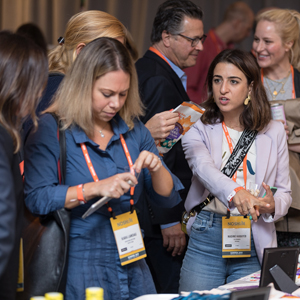
[00:02:49] Ray Latif: You might be chuckling because you're not in your uniform right now. Oh, for crying out loud. Where's your hat? I had an interview today with Sam Calagione. I want us to look very professional. Sam Calagione being the founder of Dogfish Head Beer. That interview is coming to Taste Radio in a couple of weeks, but getting back to my favorite part of DevNet Live and Nosh Live is sort of what I was talking about when I go to a Bestia and maybe somebody does have a product that they would let me sample. Nosh Live has what we call the sampling experience and expo where you get, I don't know, is it about, Melissa, it's about 50 brands or so?
[00:03:20] Melissa Traverse: 50 brands or so, yes, all sampling products and we do the sampling for the brands. And I think the benefit of this is that it's certainly not a trade show. You're not stuck in a booth handing out samples for three days. You are out controlling the conversations that you're going to have and you're completely in control of who you're going to talk to and who's going to try your product.
[00:03:43] Ray Latif: Including investors. Mike, how many investors are coming to Nosh Live? We've got 23, 16 unique companies registered right now, as of right now, and counting. Very cool. You know, you've had experience advising entrepreneurs on how to talk to some of these folks, especially at events like ours, and have it not only be a meaningful conversation, but one that you can expound upon down the line. What are some tips and tricks? Well, first of all, people will say, oh, I'm not looking for money right now. But the best time to talk to investors is when you're not looking for money. There's two times to talk to them, when you need money and when you don't. When you find an opportunity to talk to an investor, you should have a conversation with them about, you know, what you're up to, what they're up to, what they're seeing in the marketplace. And I always advise companies to talk to investors about companies that are like theirs. So, you know, you can see if an investor has done something for a company that you would want them to do for you. Indeed. And, you know, it's not exactly the same experience at BevNET Live. We have the sample coolers where attendees or entrepreneurs can bring their products or send their products and we'll put them in coolers for folks to try. You know, I really love that part as well, because the variety of new brands and new products and new line extensions that we see is pretty remarkable within a six month time frame. I mean, we held this event twice a year, once in New York, once in L.A. And just to see the innovation that comes out is remarkable. Not to mention the stampede when the sampling coolers open for the first time. It is like... During the first break. Oh my God, these people have never seen free beverages before. But it looks like something, you know, our event, it's like right after Thanksgiving. You usually see one of those clips of like, I don't know, I guess I'm dating myself here. Like when people used to like stampede each other to get like a cheap flat screen TV. Or Cabbage Patch Kid. Yeah. And then here we are with like, you know, hey, the coolers are open and it's like, you know. And Tina Turner's in the background singing Thunderdome. She was there. Yeah. Yeah. I mean, we've got some great pictures of that, like on our website and stuff. It's, yeah, it's a little nuts. For sure. And I mean, I feel like that's also a really interesting way to introduce your product or brand to the aforementioned investors that are coming to our events. And it's included in your registration. And yeah, so if you are attending Nosh Live or BevNET Live, this is a really great opportunity to showcase your finished product, your brand. to the attendees on the floor. I mean, we're looking at about 900 folks at BevNET Live, about 400 or so folks at Nosh Live. Investors, suppliers, service providers, you can get legal advice. There's all kinds of great things happening on the floor. Indeed.
[00:06:11] Melissa Traverse: And both of these events are so highly specialized, so it's either natural and organic CPG New Beverage. If you do want to participate in the Sampling Expo, you will need to register by November 15th.
[00:06:25] Ray Latif: Ah, November 15th, the cutoff date. Melissa's standing by. Operators are standing by. The cutoff for applying to the New Beverage Showdown or the Nosh Live Pitch Slam is also November 15th.
[00:06:37] Melissa Traverse: What a coincidence.
[00:06:38] Ray Latif: How about that? That's right. So whether you're sampling your finished products or brands participating in the Pitch Slam or New Beverage Showdown or doing both, there are so many meaningful opportunities to do more than just attend these shows. And to make it meaningful, I think the best thing that you can do is just bring like the three hardest questions you have or the three things that are keeping you up at night. And if you just walk the floor and ask everybody those questions, you're going to find the answers. And if the person that you ask doesn't know, they're going to know someone who does. I mean, the amount of great networking that happens, the amount of connections that happen and partnership that happens at our show, it's just incredible. Indeed it is. I didn't mention the way to apply, though, for the Pitch Slam and New Bedward Showdown. Melissa Traverse.
[00:07:18] Melissa Traverse: It's a three-part application, so apply online, send us samples, and film a short video. It doesn't have to be fancy, just something with your phone.
[00:07:26] Ray Latif: You don't need Scorsese. I mean it doesn't hurt I Don't know I'll say when people have done kind of high production value videos they're sometimes missing the point of The meat of it just my two cents. I Yeah, we want to see, like, you as a person. We want to see how you present. We want to get a sense of your personality. If you're, you know, going to be highly sort of scripted and, you know, you can't really work off the cuff, it's not going to show us what your stage presence is like. Yeah, be yourself, be comfortable, like, you know, sound confident about your product. It's that's kind of all you're pitching.
[00:08:03] Melissa Traverse: Show us what you're going to look like on stage. And I'll say, even if you're not selected to pitch, that's another chance to get in front of the editorial team.
[00:08:10] Ray Latif: Exactly. So once again, the cutoff for the sampling experience in Expo and for applying for the Nosh Live Pitch Slam and BevNET Live New Beverage Showdown is November 15th. Now, for folks who have a brand of, say, hard seltzer, hard kombucha, some of these non-alcoholic beers that are popping up.
[00:08:28] Tis The: Alternatives.
[00:08:29] Ray Latif: Alternatives. Maybe it's an opportunity to apply to the Brewbound Pitch Slam, Brewbound being our beer vertical. That is happening on December 4th and 5th. Their Pitch Slam, which I also host, is a pretty remarkable experience. All the information is out there, brewboundlive.com. We talked about whether this is a trade show or not, not a trade show. But plenty of magic is happening from a retail perspective at the show. Magic is also happening at Chez Jay, that you guys play Magic the Gathering. I do play sometimes Magic the Gathering with Ryan and Josh. I interrupted you, please. That's OK. Why are you always exposing me as a nerd? It doesn't take much to expose. I'm sorry, I had to. The world loves a nerd. Yes.
[00:09:17] Melissa Traverse: But you can get some of the most useful benefits that you would get out of a trade show without having to stand in a booth for three days and at the cost of 15 to 20 grand minimum.
[00:09:28] Ray Latif: Like free alcohol and camaraderie? Like that. Now, we're not just a few weeks away from our events, but we're just a few weeks away from that wonderful time of year called the holidays. Thanksgiving, Christmas, Hanukkah, et cetera. And I love seeing some of these, you know, one-off products from brands that are creating holiday SKUs. But sometimes it's kind of hard to have an impact in retailers when you are launching these holiday products or trying to have a big push to get people to try, buy, sample your products. Melissa, you know, given your retail background, having worked at Whole Foods, I mean, any tips for our audience at large here?
[00:10:11] Melissa Traverse: Seasonal SKUs can be great. They can also be really tricky. They require a lot of resources. They can be tough to get placement with. Sometimes a better play is to figure out a way to holidayize the things that you already have. So maybe change up the packaging, even change up the cases. So when retailers are making displays, they can take advantage of that.
[00:10:33] Ray Latif: How about those Coca-Cola cans that are sitting on the shelf like on December 26th or February 2nd?
[00:10:39] Melissa Traverse: And then sometimes they work. I think the one thing to remember about retailers during the holidays is it'Tis The most insane time of the year. So if your buyer isn't answering your phone call, you know, the first week of December, you know why, just be patient. And I think that there are a lot of creative things that brands can do to take advantage of the holidays. So you can call up local stores, ask to drop product for the team members who are working, who are really busy. Obviously experiential marketing. You can certainly focus on things that are holiday appropriate, but also don't forget that people do everyday shopping as well. So things like frozen pizzas, things to serve college kids when they come home. It's certainly a time to showcase your holiday items, but also think about the other use cases that arise around the holidays. There's only so much pumpkin spice you can take.
[00:11:33] Ray Latif: Barf. Has Huel launched a pumpkin spice? The aforementioned Huel meal replacement brand? I'm gonna go with no and would not advise them to do so. Probably not, no. Well, the person who would likely decide whether or not Huel would add a pumpkin spice flavor to its lineup is James McMaster, the CEO of the company. Founded in 2015, Huel, whose name is derived from the words human and fuel, is a maker of nutritionally complete powdered food New Beverage. The UK-based company has built a thriving direct-to-consumer business in Europe and the U.S. and is expected to generate over $50 million in sales in 2019. While e-commerce Tis The brand's bread and butter, over the past year, Huel has gradually introduced distribution to brick-and-mortar retailers to broaden accessibility and awareness of its products. In the following interview, Mike Schneider spoke with James about how Huel has managed growth in multiple countries, the challenges that come with rapid expansion, and why formal referral programs are central to its consumer acquisition strategy. All right, this is Mike here at Bread and Jam Fest in London with James McMaster, the CEO of Huel, who just got off a panel with our own John Craven.
[00:12:46] Season For: I did indeed, thank you. How did that go? Lots of fun, thank you. So predominantly a British audience thinking about what to do, whether to get into the U.S. market or not, and how to approach it. So really diverse group of people. I think there's predominantly people looking at traditional retail in stores, and then obviously we've come at it from a direct-to-consumer angle, which is obviously a bit different.
[00:13:05] Ray Latif: What a coincidence. Exactly what I want to talk about here on Taste Radio. So let's let's get started first, though, with for the two people in the audience who don't know the story of Huel and how you came to how you came to Huel.
[00:13:17] Season For: Well, sadly, it's probably more than two people, but I'm very happy to use that. Thank you. So we we've been around for four years now, started in the UK and our founder's garage, a guy called Julian Hearn, and it just went crazy to begin with, and a whole new category of nutritionally complete food. So Huel is made up of key ingredients like pea, rice, oats, sunflower, flaxseed, and all the vitamins and minerals that your body needs.
[00:13:44] Ray Latif: Is it a food or New Beverage?
[00:13:46] Season For: We say it's food, so people, I think, unfairly use the term meal replacement, and we just say no, we're food. So the average person having either 1,500 or 2,000 calories a day, that might be knife and fork food, it might be drinks, it might be bars, it might be all sort of snacks, so we're just food.
[00:14:02] Ray Latif: And before we get too deep into the US market, tell us a little bit about you. What's your background?
[00:14:09] Season For: So I started my business life working in strategy consultancy, a company called L.E.K. Consulting. It was a brilliant thing to have done. I basically worked on two main things. One, company strategy, so it would go in and help companies with an issue or problem or how to build their long-term plan, which was super fun. You got access to CEOs and CMOs of these global businesses, and I was sort of a 22-year-old just listening in a lot of time and doing lots of analysis and thinking and planning. And then we also did lots of mergers and acquisitions. So I got used to seeing lots of different industries. And then I did a project for a dairy company and ended up getting excited about a particular brand that they were looking at called GU, which is a dessert brand. There's also GU the energy gel, so it's not the energy gel. And I had a meeting with the founder, just gave him a call and we met up and suddenly I ended up working there. So I did all sorts of jobs, sales and marketing and customer service and operations. And it was my wonderful base in the whole wider business. Sort of your MBA. Exactly. Yeah, I did a business degree but never went back to do an MBA. And then I've stayed in food and drinks since then. So I've worked for brands like Ella's Kitchen, Children's Food that expanded out to the US. And then worked for a breakfast drink brand called Up and Go. And then got approached on LinkedIn a couple years ago by the guys at Huel, which was only a year, year and a half old at the time. And Julian, the founder, and James, the other founder, built a really successful startup and it was sort of exploding internationally and exploding in terms of all the cool stuff going on. So met up with them and joined two years ago.
[00:15:44] Ray Latif: Well what was it about Huel and the health of the company that they'd built up this startup in the let's not call it meal replacement space?
[00:15:52] Season For: I think the category was at the very beginning, so it's a new category. It has a very purpose-led brand. So I think if you're starting out business now, you can't be all about making money. And Huel has a very strong purpose about reducing the impact on animals and the environment. And it had just a phenomenal beginning in terms of revenue. So people wanted to buy the product, they found it fascinating, they found it different. We've got a very strong aesthetic, so people love the look and feel of it. And if you, you know, I spent a lot of time before joining looking on social and the strength of comment about what people were saying was super high and people really wanted to talk about it. It's a very interesting, disruptive category and brand. And who Tis The customer? Do you know what, the customer is so wide. We have, I think, probably predominantly office workers is a key area. People who are leading busy lives, they understand the need for nutrition. they don't want to be spending lots of time and money on their breakfast and lunch and sometimes dinner. But we get people who are doctors and nurses, we get people working in the tech world, we get photographers, we get teachers, we get a really wide range of people, predominantly 20s, 30s, 40s something. I think the pace of life, you're juggling a lot in those ages. And one reason why people buy Huel is for convenience, to have it be a help to your life and try and not have Fast food is junk food, but have fast food that's actually good for you.
[00:17:18] Ray Latif: So the co-founders reach an inflection point. They realize that they need to bring on somebody who's done this before, who can operate the business. They bring you into the company, and they immediately decide, OK, we're going to go take on the US. What'Tis The plan?
[00:17:34] Season For: So we launched in the US in July 2017 and I joined a few weeks after that. So actually my first few days, one of the biggest things that happened was that we'd run out of stock in the US because sales were higher than forecast. So I just jumped right in and we were learning, we were a much smaller group then, we had about 20 people and we couldn't get back into stock because we suddenly realized that the lead times on certain ingredients were really long. I think it was flaxseed, we ran out of flaxseed. I think the business welcomed me with open arms. They wanted someone to come in and to help it go forward in the next way. And everyone was very happy for me to be there. And we've been building up ever since. Probably about one person a week on average we've been hiring and bringing on board, which is tough. It means we've grown very quickly and trying to make sure the culture stays solid as we do that.
[00:18:23] Ray Latif: The founders have taken the brand into the US. Some things start to happen as they do when you go from one market to another. You've got a bit of experience taking brands internationally or bringing brands from other countries like Australia into the UK.
[00:18:40] Season For: Yeah, so it totally helps. I've been very lucky having lots of international experience from a fairly young age, and it teaches you to be quite resilient. I think a lot goes wrong. So if you're willing to grow into different countries quickly, you're going to have problems. And for us, it was particularly supply chain driven on the US side of things, but also on the people side, trying to make sure that you get the culture working in your favor. So we probably grew to too many offices too quickly. So at one stage, we had three offices in the UK, one in LA, one in New York and one in Berlin. So the sort of growing pains is difficult and you got different personalities around the world and how do you keep everyone tight and make sure the communication works for everyone. So yeah, we were and still are growing at this sort of pace. hyper-growth phase where you're sort of on this roller coaster and you're trying to keep it under control, but you like it being slightly out of control so it can just breathe and reach its potential, but at the same time, you need to constantly keep building foundations behind you.
[00:19:41] Tis The: Guessing your margins? That's risky. Belay Financial gives CPG brands the clarity to scale smarter, faster, stronger. Get your free inventory ebook by texting TASTE to 55123 and start making data work for you. Okay, so the role.
[00:20:01] Live Winter: Tune in at the end of this episode for an exclusive interview with Matt Lynn of Belay Solutions. He sits down with Melissa Traverse to break down the biggest inventory and accounting mistakes CPG founders often make. You'll learn how to bring clarity to your numbers so you can scale with confidence.
[00:20:18] Ray Latif: It's going crazy, it's doing loop-de-loops and all that kind of stuff. But let's say you could start the ride over. What kind of lessons did you learn along the way and are there things that you would caution, you know, a company who's going from UK into other markets to do?
[00:20:34] Season For: We probably went for too many markets too quickly. So we slowed that down in the last year or so. We've launched into fewer markets than we had, but there was a period where we were just opening up all over the place and that creates a lot of complexity. And then it's quite difficult as a team to use the word focus, because you're sort of saying, well, we're focusing on lots of things. So I think for us, it still felt like the right decision. I think specifically for brands going into the US, the biggest thing is how do you get there in the, fastest possible way with the lowest cost because lots of brands will spend ages getting there with huge budgets and then they'll find out that something very simple in their brand proposition wasn't quite right. You've wasted all this time and all this money making that happen so we had enough people asking us to come to the US on social, on email and our forum and on our website. There's enough confidence there in the growth rate of the UK and by being direct consumer the main thing is about how do you find the factories and the packaging to get the product there, and then you can back it with your customers.
[00:21:37] Ray Latif: Let's stay on the people side for a second here. In order to keep a team tight, multicultural team across different countries, what are the keys to communication and the tools that you use to get that done?
[00:21:50] Season For: So I'll be the first to say we're not perfect, but we focus a lot of time and energy on it. I think we're pretty good. And I got quite lucky with what we did at Ella's Kitchen, where we took a UK brand, we went into the US, we went into Scandinavia, went into mainland Europe, and had an office out in New Jersey. And you learn pretty quickly that you need to communicate several times everything you're saying. So what we have at Huel is, we call it all Hueligans, which is our version of an all hands meeting. And that's a video call globally every couple of weeks and different people get the microphone. And we basically look at it as what's been happening and celebrating success and what's coming up. And then I'm like a big feedback person, right? So I'll always ask, what could we be doing differently and better? And the team was saying, that's really great. But sometimes I wouldn't mind reading it as well. I do an email afterwards with sort of 10 bullet points saying, okay, here are the key messages of what's going on right now. And you can sort of read it and digest it in your own time. So we spend a lot of time on that. We're quite big on Slack. I've got a bit of a love-hate relationship with Slack. Same. I think it's fantastic when you're international and there's lots of to-ing and fro-ing, particularly on our customer experience team. So we're very hot on customer experience. It's probably our most focus we give at anything in the whole business, just giving the best possible experience to our customers. And they are on it all day long between the different offices communicating. It's an amazing tool. I think the downside of something like Slack is that I find that people don't get up and talk to each other enough. And sometimes people with Slack and they're only sort of ten feet away, and if they could just say, get up and talk a bit more, we might solve things a bit quicker.
[00:23:22] Ray Latif: What about the somewhat urgent nature of something like Slack, where you could get a message from someone who's expecting you to talk to them immediately, and maybe that's just not appropriate. You're in a business meeting or retail meeting, something along those lines, and somebody's just continuously slacking you.
[00:23:37] Season For: Yeah, I think it depends on what function you're doing. So for instance, let's take our customer experience team. They're in far fewer meetings than the rest of the team. So they're communicating with each other and with customers all day long. So Slack for them is instant response expected. With someone like me, I'm in a lot more meetings. Everyone knows I'm not very good at responding on Slack and it might be towards the end of the day. So come up and talk to me. Great. Or if you're not in the same office or I'm just out from my desk, send me a Slack and I'll get back to you later. So I think we've sort of, We haven't really laid that down, but it just happens that way. Interestingly, we do have other things. We've got a culture book that's this Google Slides 60-page long story, and we spent about six months creating that, and probably a bit long actually, but we might refine it in version two. But that sets out the way we like to communicate, the way we see our brand, the way we want to give the best possible customer experience, the way of doing things, and what we expect of people, and how to be a hooligan. and any new joiner on-boarding goes through that. So we try and lay out, this is our culture and what we believe in. You'll get that naturally through osmosis, through the team. We have all hooligans, we have slack, we spend a lot of time trying to keep it tight. But I look at people like Warby Parker, they do an all-hands meeting every week. And there's a lot of energy and time for the people, particularly in the senior team, running that. But I think it's worth it.
[00:24:54] Ray Latif: I couldn't agree more as somebody who's a brand builder and teaching someone that culture, especially a new person who's coming on board, you wanna help them get up to speed and help them understand the way that you communicate and the tools, and that's part of your culture, also part of your brand. Let's talk about moving the Huel brand into the US and the differences between the UK and the US market. So first off, Tis The product the same in the US as the UK?
[00:25:23] Season For: The product is very, very similar. Yeah. So obviously we've got local ingredient sourcing where we can. So for instance, the oats are coming from the US, whereas in the European supply chain, they're coming in locally. So you get very slight taste differences. We had to set up our own manufacturing. So we got two main supply chains, one in Europe, one in North America. And that takes a lot more time and energy. And I think in terms of the learnings you get, I mean, what we found was actually very quickly that most of our sales were coming from the East Coast and the West Coast. And we had one fulfillment center in the middle. Oh, and the problem is that meant average delivery time was about four days. And we're quite big on delivery speed. But to change that difficult when you come in as a relatively young brand, even in the UK, we're still a young brand, right? But when you when you go in there, no one knows you trying to convince bigger fulfillment centers to take you on isn't easy. And then there'Tis The whole tech behind working, working that through. So we now have three fulfillment centers in the US, which means if you're in New York, LA, San Fran, Chicago, you're now getting next day delivery, which is fantastic. And we get lots of great feedback about that. But in the early stages, you're just trying to figure stuff out. And we definitely didn't give as good a service as we do now, both in terms of availability of product, like I said, we ran out of stock. We weren't as fast on delivery. We didn't have a big enough customer experience team. We had an East Coast, sorry, a West Coast only team, which meant the East Coast team, if customers in the East Coast wanted to contact us, they got a slightly delayed response. So you just have to figure stuff out. But I think if you're growing super quickly, you can't be perfect. We'd rather beg forgiveness from customers and just overcompensate when things go wrong. But we've definitely learned along the way.
[00:27:02] Live Winter: The U.S. has a lot of different options. Scaling New Beverage brand into major retail comes down to operational readiness. From packaging lead times to co-manufacturing strategy, the details can make or break a launch. In a new e-book in collaboration with Octopi and Asahi Beer USA, industry leaders share what they've learned in helping brands scale. Download it now at Taste Radio.com slash octopi. Or do you need to scale your team faster without compromising on talent? Join Oceans for a Live Winter on April 20th and learn how leading companies are hiring top global professionals who are ready to grow with your business. Register for the webinar now at Taste Radio.com slash oceans. That's Taste Radio.com slash oceans.
[00:28:14] Ray Latif: You know, ways to get to consumer. We're, you know, direct-to-consumers become very big. There's Amazon. There are many, many different retail options. Whole Foods, Wegmans, Kroger, Walmart. What has Huel chosen, and how does that differ from what's going on here?
[00:28:29] Season For: So traditionally, brands would decide to go to a retail store first. And what that means is you need to get listings. And obviously, buyers have a really tough job in that they might only change their shelves once a year, once every two years, or occasional bits in between that. So it can be a much slower process for that to happen. So we, because our roots have been in direct consume, we chose to obviously go that direction. And that's meant we could grow quickly and get feedback quickly and launch new products. The other thing to consider is obviously Amazon. And a lot of brands, I think, take that Amazon option. We have done little bits on Amazon during that period, but it's never been our focus. And we'd much prefer customers becoming direct to us. And we believe we can give a better overall experience with them in the long term. So actually, Amazon is not a big player for us, but it can be for brands to do that. And I think if you're going to Try and Tis The US in a low-cost way. Amazon is an obvious option where you don't have to think about the speed of waiting for a buyer to want to list you and you can do that way.
[00:29:30] Ray Latif: So you've started to Tis The waters, direct-to-consumer, your own direct-to-consumer through the website. So what are the channels that you're using to market to the U.S. audience?
[00:29:40] Season For: So the big one is referral. You'd be surprised how global markets are these days, I think, particularly from social media. So we get people on Instagram who like to follow the kind of global or UK Instagram to find out what's going on there and looking back. We get people regularly going, hey, I've seen this is happening in the UK. Can I get this? And there's a lot of people, I think particularly Huel customers, there's definitely a type of movement going on and that they're almost quite cult-like. And you'd be surprised how much contact there is and how global these people are and they're traveling around the place. So there's a lot of recommendation going on, a lot of people talking about it. I think the only thing that happens for us is we get people in offices with these giant bags of fuel. And if you have one customer in an office, you might have hundreds of people seeing it and that brand awareness grows. So that's big for us. We spend a lot of time on both social, being organic, but also we do advertising as well. From a referral point of view, we've got a referral scheme, which is really good for us. So a formal referral program. And we also have a military discount and a student discount, which works particularly well for us. So there's a lot of different avenues in how we're growing there. I think one thing we've just started to get a bit more of is press. I think people are taking notice of Huel in the US, and that's driving a lot of new people being aware of us. But I still think our brand awareness is very, very low, but building quickly, predominantly through word of mouth.
[00:30:58] Ray Latif: You mentioned before that someone had seen Huel on social media. Have you tested into influencer marketing or is that on your roadmap?
[00:31:07] Season For: Not much, not much. I think some brands do a really great job of that. So obviously not food and drink, but Gymshark, who are a global brand now, but started out in the US, they do brilliantly by having influencers as part of their gang, and the influencers are the ones talking about Gymshark, and that works particularly well for them. I think with Huel, there's no obvious person who might be a big influencer or a celebrity, perhaps, to be associated, because it's such a wide product. We have people buying it because it's, a great nutrition. We have people buying it because it's really good value for money. We have people buying it because they've got a particular target in mind to either gain weight or lose weight, or people buying it who are vegan or trying to reduce their meat consumption and eat more plants. So there's so many different use cases that it's quite hard to pinpoint who an influencer might be.
[00:31:55] Ray Latif: You have this fledgling successful test in the US market. It's going really well. Will you evolve into a store brand, a brick and mortar brand?
[00:32:04] Season For: So the first two years of being in the US, we've been predominantly powder focused. And it's been incredibly strong for us, right? So we do 30 plus million dollars a year just with that. So what happened at the beginning of this year is we launched our ready to drink bottle. And for the first time, that opens us up to stores. And we've spent some time thinking about it. We've done a few trials in some stores with really positive feedback. It's a much more impulse-driven product. And the thing is with food and drink is, however much you might plan some meals, you don't plan all of your meals and all of your... your consumption. So we are taking baby steps probably Tis The best way to think about it in going into stores in the U.S. We just hired our first employee on the retail side, and I need to kind of navigate through the system of distributors and how that works best for us to make sure we can be available in the right places. But convenient on the go feels like the feedback we get where people most want to see us.
[00:33:00] Ray Latif: What is your take on the U.S., let's not call it a meal replacement market right now? Where do you see it going?
[00:33:05] Season For: So we call it complete food, nutritionally complete food.
[00:33:10] Ray Latif: My way is funnier.
[00:33:12] Season For: So it's become a very global market very quickly. So we now sell to 80 countries around the world. UK and US are our biggest markets, but we're growing in all sorts of areas. And I think it's something someone told me a long time ago that people around the world are more the same than they are different. And I truly believe that. And it's meant that we change very little about our products in different markets and the same sorts of people are attracted to it. And it's this movement of a different mindset maybe that people have. So yeah, we definitely think of it as just Huel as a global solution for affordable food that's better for the environment, more convenient and better for your body.
[00:33:56] Ray Latif: Well, what's next for Huel then?
[00:33:58] Season For: So it's pretty intense. It's very fast-paced. We do handle a lot. For us, a big jump up is January. It's always a particularly strong month for us. So we kind of scurry around trying to get all our projects finished in time for Christmas and then the January growth there. So we're handling loads of things right now. Some of it is NPD-led. Some of it is making improvements to our current product. Some of it is focusing on our website and our packaging and how we can make improvements. So we're just constantly improving things. MVP minimum viable products type brand so sometimes we'll launch things and then know we can make them better with a bit more time But the feedback we get from the early customers is great and allowing us to do that So one of our biggest challenges working out what not to do actually Well James, this has been a great conversation.
[00:34:44] Ray Latif: Thanks for joining me here at bread and jam in London and good luck to you and to heal Thank you.
[00:34:49] Season For: My pleasure
[00:34:53] Ray Latif: That brings us to the end of episode 59 of Taste Radio Insider. Thank you so much for listening, and thanks for our guest, James McMaster. Please subscribe to Taste Radio Insider on the Apple Podcasts app, Spotify, Stitcher, SoundCloud, or Google Play. As always, for questions, comments, ideas for future podcasts, please send us an email to ask at Taste Radio.com. On behalf of the entire Taste Radio team, thank you for listening, and we'll talk to you next time.
[00:35:25] SPEAKER_??: you
[00:35:31] Melissa Traverse: Hello, I am Melissa Traverse here for the Taste Radio podcast, talking about some of the biggest tension points that CPG brands and founders face when they're scaling a brand, and those are financial accounting and inventory management. I am joined by Matt Lynn, inventory accounting guru from Belay Solutions, and he is going to shed some light on all of this that is going to help everybody out quite a bit. Matt, thank you so much for joining us today.
[00:36:01] Pitch Slam: Thank you for having us, Melissa. It's great to be out here at Expo West and it's great to sit down and be able to chat this because it's kind of a passion project of ours, working mainly with CPG brands and hoping to help them scale.
[00:36:13] Melissa Traverse: It's been such a pleasure chatting with you and the team and learning all about what you do over there at Belay Solutions. Can you tell us a little bit about yourself and what your role is and the kinds of solutions that Belay gives to CPG brands and founders?
[00:36:29] Pitch Slam: Yeah, absolutely. My role with Belay, I'm actually our inventory accounting manager. I run our inventory department, so we work with CPG brands, taking them from spreadsheets, putting them on inventory management systems, and really helping connect their tech stack between their sales online marketplaces to that inventory management system, even down to their financial systems like QuickBooks. Belay overall is kind of an outsourced accounting firm. And with that, we're helping teams. We have different levels with bookkeeping, controller level work, even high level into CFO type items. So we really help those brands in any way that they need financially. And then I just have a subset of a department where we're really just laser focused on inventory.
[00:37:11] Melissa Traverse: It's certainly a complex topic and there are plenty of places to go wrong. Let's start by going right and start super simple. Can you tell us what some of the biggest red flags are that would help a founder understand or, you know, the person running a brand understand that it really is time to get some help with some of these areas?
[00:37:32] Pitch Slam: 3 3 3 3 They have a lot of transactions that don't get coded or they just put them into placeholders to just get rid of it so it's not an eyesore. They'll notice they have revenue but no cash or they notice that they have a good amount of cash but their blind spot is really seeing the vendor invoices that are sitting there just needing to be paid and so they just lack that clarity that's going to really be around the corner.
[00:38:09] Melissa Traverse: You know, you were talking about one of the red flags that comes up that I think makes so much sense. When somebody asks you what your numbers are and you can't come up with the right number, that's a big problem because that's something that you really should be able to share with decision makers who, you know, you're ideally looking to do business with. What should you be able to call up at a moment's notice?
[00:38:34] Pitch Slam: Really at any time, you should be able to know an accurate margin. It's amazing how many founders we end up talking to that they can tell you their revenue numbers, they can tell you their selling price, and then the minute you start talking about cost or their cost of goods sold, they just get a deer in headlights look. So really it's very hard to tell, am I even making money? Or if you don't know your entire landed cost. Maybe you know what the freight cost Tis The duties separately, but you're not really getting that as part of your unit cost. So it's really hard to tell. Am I even making money or am I losing money from the very beginning?
[00:39:07] Melissa Traverse: And do you recommend that founders are able to call up a margin by channel?
[00:39:11] Pitch Slam: Absolutely. And depending on the number of products and channels, you kind of want to know what are your best sellers, which ones are making the most and which ones maybe you're not making as much. But especially if you're branching out and you're doing D to C with B to B, absolutely want to know that.
[00:39:28] Melissa Traverse: Gotcha. You mentioned that when things feel really chaotic, that's probably a red flag. I would say that it probably almost always feels chaotic if you're running a CVG brand. And I know this may be hard to quantify, but Tis The a revenue number? Tis The a number of doors number that would help a brand understand whether or not it makes sense to bring on a partner like Belay? Understanding that so many brands are bootstrapped or they might be tight for cash. What is that friction point?
[00:39:58] Pitch Slam: 3 3 3 3 3 But as you're growing, as you're getting into those six-figure revenue numbers, and especially as you're approaching seven, you want to make sure you've got good financials. Because as you scale to that point, most likely you're going to be looking to raise capital. And investors, the first thing they're going to look at is your books. And are they clean? And do they show a clear picture of your business?
[00:40:31] Melissa Traverse: You know, another area that folks might look to to organize some of the chaos are their systems. So many folks stick with Excel spreadsheets for a good amount of time. How do you know that you need to outsource some of your accounting to an organization like Belay Solutions versus maybe signing on to a Synth7 or NetSuite or something like that?
[00:40:54] Pitch Slam: Well, that's actually something we really help with when it comes to that cost question. That's something that trips people up. And sometimes if you just have a turnkey business, you buy and sell a finished good, you can maintain with spreadsheets. And we've had clients with million dollar revenue that can do that. But we see so many brands nowadays are using contract manufacturers. and they're just sourcing certain parts of their product. So when you start talking costs, they have no idea exactly what their unit cost is. So that's where we come in and we kind of understand, we'll speak with the customers and the clients and get their needs. And then if we think they're ready for a system, then we'll help put them on that system so they can get some of that clarity. And it's not something we force on anybody. There are plenty of times where founders come to us and we'll tell them bluntly, you're not ready for it right now, but we'll let you know when we think you are.
[00:41:40] Melissa Traverse: That sounds like excellent advice. What should a founder or somebody running a brand look for in an outsourced accounting partner? Are there certain checklist items that they should make sure that their partner be able to execute or be able to help them understand?
[00:41:57] Pitch Slam: Absolutely. I think one of the keys there's, there's a lot of outsourced accounting firms out there. Some focus on service-based SaaS companies, but if you're a CPG founder, you really want to make sure that your accounting firm has CPG experience. I would ask them, you know, what kind of brands have they worked with? And even beyond that industry specific, because there's so many subsets of CPG. And that's something that I think is great about what we do with Belay is that we kind of run the gamut. It's kind of like the insurance commercial. We know a thing or two because we've seen a thing or two across a broad spectrum.
[00:42:27] Melissa Traverse: Probably getting references is always helpful, right? Absolutely. All right. So this all sounds great. I think we have a really good understanding of would it make sense to hire an outsourced partner? You know, what some of the things you should be looking for are. What does offloading this kind of work mean for the brand? What can this do for lightening the load of a founder or lightening the load of a brand operator? Like, how does that help them in their everyday business?
[00:42:56] Pitch Slam: It just tries to really help quiet the chaos. So what we're looking to do is just take some of the weight off that founder's shoulder. Let them focus on building the brand, building the business, getting that exposure. If you don't have sales, you really don't have anything. So we want them to be able to focus on that while we take care of your back-end office work. And we can just present that to you on a monthly basis. You can help make decisions. You can take that to investors. And really, you can just focus on growing your business.
[00:43:21] Melissa Traverse: I feel like I felt founders and the folks who are running brands collectively sigh a breath of relief just hearing that. How can people learn more about Belay Solutions?
[00:43:33] Pitch Slam: So people can text TASTE to 55123 for their free inventory guide to get started.
[00:43:38] Melissa Traverse: Matt Lynn, inventory accounting guru at Belay Solutions. Thank you so much for joining me here at Expo West. It's been such a pleasure to chat with you and learn about what you all do over there to help founders and brands with their financial accounting and inventory management. For everybody else out there, thank you for listening to the Taste Radio podcast. I am Melissa Traverse and we'll see you next time.