[00:00:04] Ray Latif: Hey folks, thanks for tuning in to Taste Radio Insider. I'm Ray Latif, the editor and producer of Taste Radio, and you're listening to episode 61 of the podcast. I'm with my BevNET and Nosh colleagues, John Craven, Brad Avery, and Mike Schneider, and we're recording from the Taste Radio studio at BevNET headquarters in Watertown, Mass. In this episode, we're joined by the founders of two innovative UK-based companies, Chris Hannaway of non-alcoholic beer brand Infinite Session, and Stuart Forsyth from coffee and oat milk brand Minor Figures, who detail their strategies for winning at home and abroad. If you like what you hear on Taste Radio, please share the podcast with friends and colleagues. And of course, we'd love it if you could review us on the Apple Podcasts app or your listening platform of choice. Now, folks, what's not commonly known about our recordings is that we flub a lot. And I just flubbed. And we had to do a retake because instead of pronouncing it Minor Figures, I said Minor Figures. And that's because I actually grew up in central Massachusetts. And from time to time, my Worcester accent comes back. It does. And it did at that moment. And then you somehow an Australian one came out when you were like, Minor Figures. I didn't do that. A little bit. Brad, did I do that? Minor Figures.
[00:01:18] Chris Hannaway: That's kind of what it sounded like.
[00:01:21] Ray Latif: That definitely sounded like an American trying to do an Australian accent. It was just the evolution of language. The evolution of language. It was indeed. Cool. Brad, how are you? I haven't seen you on the podcast in a bit. I'm good. I'm good. I'm here in The New studio for the first time. Which is not new. Mike was appalled that I hadn't seen it. Appalled? Was he really appalled? He was appalled. There are guests that know more about the BevNET office than Brad, apparently. I mean, he hasn't been back here in a long time. You know, Brad is kept under lock and key so that he can be, you know, working on stories for BevNET.com and for the BevNET magazine. And he's doing a great job at it. So well done, Brad. Well, thank you. He's got his priorities straight. Yeah. You excited for BevNET Live? I am. Yeah, it's, uh, it's going to be good shaping up well and, uh, coming up sooner. It always feels further away than it really is. And then it hits you. Yeah. All of a sudden you're on a plane to Los Angeles. Yeah, exactly. And then tomorrow you enter a fugue state for like a full week and then you're on the plane back and you're like, uh, what happened? And you're like, I need some juice shots to make sure they don't get sick. Luckily we got here Kor Shots that came into the office today. That's K O R a brand based out of Malibu, California. We can thank Jordan, the founder and CEO of Kor Shots for sending these over. I believe these are two new products, but it could be mistaken. Mike, what do you have in your hand there? I've got core reverse in my hand, which is a transversal troll. I think it's, um, it's very tall. Yeah, that's what it is. I thought it was the antidote for Facebook commenting Okay, I'm gonna make $90 an hour working part-time from home Dedicated readers comment on every story Names like Brunhilde Gorsepson if we give a trans reversal, they'll stop they'll stop trolling you. Yeah, these things feel really helpful when you are come back from a long flight I know whenever We wrap up the conferences in Santa Monica, it's always like, you're done, you're ecstatic, you've gone through all these emotions and then you also start to realize that maybe you shook a lot of hands. Don't you just cover your hands in Purell? I mean. I drink a half gallon of Purell actually. Oh man. Every day. Don't do that. At the conferences, yes. I've seen Ray literally take out a little Purell, squirt it on his hand and then shake someone's hand. It's just pre-empting. A pre-Purell. He's protecting them. No, you know what I do carry though? There's Listerine breast strips. Oh, that's right. I was trying to think you do have your thing. That's right. The Listerine things. Adam Stern and I, and it's not because I have halitosis or anything. It's just because, you know, you always want to be, you know, in the best mode Your Breath, if that's the phrase. Minty fresh. I mean, those are kind of like the nuclear option of cleansing your palate too. Sure. Because it's like, I don't know, napalming the flavor off there. Sometimes it definitely ruins your palate. How do those work with the Krispy Kreme doughnuts at Knack's though? You know, the thing at Knack's is I don't even bring Listerine breast strips because... You just lost cause? No, well... No, because there's so many gum and mint options there. There's a, you know, the Wrigley stuff, there's Tic Tac, they're always passing out things like that, huh? Hubba Bubba?
[00:04:37] Chris Hannaway: No.
[00:04:38] Ray Latif: Big League Chew? I haven't had Big League Chew in forever. It's a shame. Now Big League Chew, it'll be the first time we have Big League Chew in the brands in this episode, part of the copy. Wait, so if I just mention a brand, you have to put in the copy?
[00:04:49] Chris Hannaway: Correct.
[00:04:49] Ray Latif: It's his job all right. That's like a challenge for a future episode like what's the weirdest possible thing that future episode you can come up with something Yes about all that In-N-Out burger, we're gonna eat. I'm gonna avoid In-N-Out burger, and I just wanted a link to In-N-Out burger Cocaine Energy There you go. Wow.
[00:05:16] Chris Hannaway: All right.
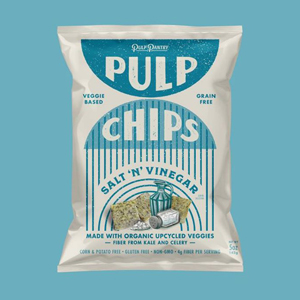
[00:05:17] Ray Latif: Energy. Let's talk about some like healthy products for a sec. Can we do that for a moment? Sure. We had some wonderful energy is healthy. I have in my hand a brand called Pulp Pantry, and they make pulp chips. These are chips and snacks made from pressed vegetables. It's a little bit of a, it's not a little bit, it's very much a food waste play. They take fresh- Upcycle, right? Come on. Upcycle, yes. That's a better way of saying it. They take fresh vegetable juice pulp and they turn it into these snacks. It's quite tasty. They are very- I highly recommend that one. I think it's the barbecue. The barbecue. And they have another one that I can't remember the, Flavor name that's just like super spicy. Well, I've got salt and vinegar right here. You want to try a salt and vinegar? You can go ahead and crunch on Crunch away with your Ollie pop pair that with the Ollie pop or perhaps a nice cold Dixie Elixirs Yeah, I met Caitlin the founder at fancy food show winter the winter fancy food show 2019 wonderful person she's a big fan and listener of the podcast and sought some some feedback on the brand and I think she's done a great job with it so yeah it's like this yeah good stuff yeah great with a perhaps a bottle shot cold Brew Dog a Dalston's rhubarb or perhaps an Ugly Drinks or even a Dash Water the longest list of brands in this episode in history. We're gonna have at least a hundred at this point. Mike, you got some meat in front of you.
[00:06:40] Chris Hannaway: I do.
[00:06:40] Ray Latif: What is that? New Primal Spicy Stick. New Primal. The New Primal. The New Primal, excuse me. The New Primal, not to be confused The New Primal or New Primals. I like that packaging. I do too. What kind of meat stick is that? It's definitely distinctive. Spicy. Well, this one is spicy. It's spicy, but it's 100% grass fed beef. One gram of sugar, six grams of protein, 90 calories. Nice little snack. Nice. See, we get these great snacks in the office and it's really fun to try a whole bunch of new things. It's also really fun to try all The New things at Nosh Live and BevNET Live. It's a cornucopia of new products that you get to try at these events. But more than just tasting The New products is getting the opportunity to meet people from this industry who can help you grow your brand. And it's interesting because the number one question I get from entrepreneurs and I've gotten a lot this month, is can you connect me with Investors Want might be interested in funding my company or brand? And I can make some email intros. But, you know, the reality is that we have a very, very high concentration of Investors Want BevNetLive and NoshLive. And these are people who are funding at the angel level, at the seed level, at the strategic level. And, you know, those personal one-on-one, even if it's just for a couple of minutes, meeting these people is building your network of investors so that, yes, not everyone is going to fund your brand, but you might have a small network of people that you can potentially work with. Well, and also, I think, you know, getting FaceTime with these people, even if you know, they're not the right fit for you today will certainly, you know, be paid back in the future. And I think, you know, the other side of it, I don't know, maybe you go and talk to someone from 301 or VB, you know, someone who for a lot of early stage companies is definitely not going to be a fit. But, you know, those people, of course, have their networks. And I think, you know, just starting to get your foot in the door there will be helpful even in making more connections for that stuff. And for sure, I mean, we're obviously biased. We wouldn't put on live events if we didn't think that the in-person element was effective and important. And, you know, I think just starting to establish a rapport with these people, I think we've seen a lot of that, like just even in The New we cover. It's like, you know, people who get investment deals done, you know, it's like these are people who are working, you know, not just at our events, but these are people that are working that community hard and constantly, you know, from basically their company's inception. And, you know, that's something that I think every entrepreneur needs to think about. You know, the fundraising challenge isn't just getting, you know, that first round. It's thinking ahead and making sure, you know, gee whiz, now I'm beyond angel Investors Want do I do now? I mean, obviously, it would be better if you've already been working that end of it. There are two perfect times to talk to Investors Want you need capital and when you don't need capital. Investors Want experienced. They are powerful networkers. They know a lot about the industry. So there's a chance they could help you. There's a chance they know someone who can help you if they aren't The New who can help you. And we have over 30 investment companies coming to Nosh Live and 21 and counting at BevNET Live. It's pretty impressive. Yeah, you know, John Craven, you mentioned 301 Inc. That's the venture capital arm of General Mills and VEB, the venture capital incubation arm of Coca-Cola. It's interesting how many people don't realize that they do want to talk to everyone, you know, even if you're brand new. They learn a lot about what's going on in terms of innovation and trendy concepts from brands like yours that are attending Nosh Live and BevNET Live. So yeah, don't be afraid to meet these folks. If you would like an introduction to the folks from 301, Inc. or VEB or any Investors Want these shows, you know, we'll do our best to make those intros. And at least like John said, you'll have a short face-to-face conversation with a person. their business card and you can follow up down The New. For sure. All of the strategic investors, you know, have a lot to offer at any stage. Again, I mean, I think even just having a conversation and learning, you know, what they're looking for in brands and entrepreneurs or trends and whatnot. I mean, I think those are, again, valuable people to. build a relationship with and continue to have a dialogue with. I think, you know, to Mike's point, talking to these people when you need to raise money is great, but if you're just starting from, hey, nice to Meet You, please invest in my company, that's a lot harder than going back to them after, you know, they've known you for a while. To John's point, you can have a pretty deep conversation with these guys. You don't have to just go up and give them your elevator pitch. You should get into their portfolio, ask them what they've been working on, try to find companies that are like yours or that you aspire to be so you can see how they took them from whatever stage they started working with them in to the stage that they are now. And then you can decide if that's the model that you want to follow. And that kind of gets you to a spot where you can decide if you want to work together or not, or if it's at least somebody that you want to try to pursue a relationship with. And I mean, my last, you know, thing I'd add on to that is just do your homework too. You know, going up to a, I don't know, a VEB and being like, Hey, what companies are you in? Well, gee, that's not gonna Meet You their ear. So, you know, you can figure out kind of who the key players are. And, and, you know, I think the number of them, it's not some staggering thing that will be impossible for you to learn, but it will also give you a sense of like, you know, if you look at a bunch of these different strategics, like, What stuff are they all investing in? There are definite similarities there that will, again, help you down the road. And you can watch our past episodes of Pitch Slam, and you can get to know a little bit about, say, the 301, Inc. team, because they are judges on the panel, so you know the questions that they're going to ask you just by the questions that they've asked people in the past, and it can give you a sense of just what they're like before you even go to the show. Go to noshlive.com and bevnetlive.com. We've got lists of the Investors Want are coming, so you can do your research. Indeed, an interesting company that's going to be attending BevNET Live is one known as LA Libations. LA Libations, a brand incubator that's been around for some time. They work with early stage companies, innovative companies. They also develop brands internally and they were in The New recently. Brad, you wrote a great story about their partnership with Molson Coors. Yeah, so Molson Coors has taken a minority stake in the company. It is a full investment, and they've gained two seats on the LA Libations board. As Danny Stepper, the CEO of LA Libations told me, they're getting married. It was very sweet. Sounds like something Danny would say. So the background on this is that LA Libations had had a longstanding relationship with the Coca-Cola company for reasons that haven't been disclosed. That relationship ended earlier this year. And Danny really spent the, and the LA Libations team spent the last half year really going around to all the major strategics and looking to create a, you know, find a new home. And Molson Coors wound up being The New that was the best fit for both of them. A beer company of all companies. Well, it's because Molson Coors, which, you know, as we've seen is now as of January, you know, rebranding, repositioning themselves. They want to have a larger playing non-alcoholic. A total beverage company. Exactly. Total beverage company play. And so LA Libations is really going to be that non-alc arm for them. Finding brands, identifying brands and creating brands. You know, you mentioned that LA Libations has some brands that they've created such as Glow, and they're going to be doing a lot more of that alongside identifying emerging startup brands that they can build and eventually, ideally, move into the Molson Coors distribution system and possibly acquisition. That's something that will be a case-by-case basis to be seen. It's interesting because we've seen Molson Coors' top competitor, ABI, with their ZX Ventures platform, invest in a lot of innovative non-alcoholic brands. We're talking about companies like Owls Brew, as well as Wave Soda. And I think LLA Bations is well positioned to bring some interesting ideas and innovative plays to Molson Coors. That's what they're known for. Yeah. Yeah, absolutely. And it's just really interesting to see all these, you know, major beer giants really branch out and look to create, you know, broader portfolios. Last year, they sort of made their first step towards that with the acquisition of Clearly Kombucha. And they actually... Molson Coors, that is. Molson Coors did. And they actually worked a little bit with LA Libations on sort of getting that up to speed and they unveiled a rebrand of Clearly at Expo West this year. I did a video interview about that from Expo West. Catch it on BevNET.com if you want to learn more about that. But yeah, so this is really a major step forward for them going total beverage, you know, going cross category and, you know, focusing on innovation. Totally. Well, congrats to Danny, Dino, Pat and the rest of the LA Libations team. Good luck going forward with that. Can't wait to Meet You at BevNET Live. Alright, I think it's time we get to our featured interviews for this episode. Let's start with Stuart Forsyth from Minor Figures. Launched in 2014, Minor Figures is a fast-growing UK-based maker of cold brew coffee and oat milk. Known for its pastel packaging and playful illustrations, the brand has a significant foothold in Australia and a small but expanding presence in the US. In the following interview, Mike Schneider spoke with Stewart about the figures behind Minor Figures, why he describes the package design as, quote, an exercise in restraint, and why the company takes a brand-first approach to marketing. He also discussed how Minor Figures is leveraging the US coffee community to build awareness and distribution, and how it's managing growth in three global markets. Hi, this is Mike, and I'm at the Bread and Jam Fest in London with Stuart Forsyth, the co-founder of The New and only Minor Figures.
[00:16:59] Infinite Session: My man, BevNET Mike.
[00:17:01] Ray Latif: Stuart, it's great to finally Meet You, IRL. My pleasure. No, the pleasure's all mine. I'd love to just start, for maybe the two or three people who don't know, what is Minor Figures? Tell us a little bit about the brand and the products.
[00:17:14] Infinite Session: Yeah, so Minor Figures is essentially a coffee company. We make innovations around coffee. They're always plant-based. They're always super fun. They're always really delightful. They've got no sugar. We make a range of ready-to-drink iced coffees. They're a cold brew. We brew it in-house. We also created a oat milk to go in the iced coffees. And almost as an afterthought, we released it as a one liter for the cafes. and those products are doing extremely well. We also have a CBD and of course we make the roast and ground.
[00:17:48] Ray Latif: What's the story though? How did the Beatles get together? Who's involved? Tell us a little bit about that.
[00:17:53] Infinite Session: Oh God, don't tell me that. They'll be calling me Ringo when I get back on Monday.
[00:17:57] Ray Latif: No, there's three founders. You're at least George. At least.
[00:18:00] Infinite Session: I feel George inside. There you go. Spiritually George. There's three founders. There's myself, a guy called William Rickson and another guy called Jonathan Chew. I had been with a product called Keep Cup. I started a product which was a coffee cup which brought me to the UK. It started with my brother and sister in Australia. I ran the UK hub for about seven years before selling that back to them and having a bit of fun, traveling around and then starting Minor Figures. Will had been in the coffee industry for a while as a barista and then Johnny, he had a tea brand for a while. So it was kind of a nice match. I knew the coffee scene very well and Johnny had experience with more of the big box retailers. So we got together with an idea to bring premium iced coffee to more people.
[00:18:49] Ray Latif: I'd love to talk about the essence of the brand. The Minor Figures brand is one that stands out for its simplicity, for its use of white space, and for the characters, for sure.
[00:19:01] Infinite Session: The brand's gone through several iterations. If you do Google back, you'll see that we had different packs, we had a different logo. As a startup, for those guys listening, you shouldn't be afraid to get to market as quick as you can and to just iterate, iterate, iterate.
[00:19:17] Ray Latif: be lean and nimble.
[00:19:18] Infinite Session: Yeah, yeah, yeah. Be lean and mean and, you know, be nasty. You know, that's one of the things you got to do in the early days. So when we realized products were working and not working, we were ruthless. We just cut them off. So one of the things that as we were able to grow our brand and get on different packing lines, we always wanted to move to a can. We had just produced our oat milk. So we had a chance. It was a sort of a bit of a a point at the end of the pier, it should say, where we could just change a lot of things at once. Once we did that, the product began to fly. The use of The New identity is interesting. It really almost makes the brand name Minor Figures make sense, which is great. We have a great illustrator called Andrew J. Ray. I should give him a plug. He's a legend in the game, North London boy, and our designers are fabulous at giving you that feeling, that white space feeling, that really relaxed thing. We treated the cans almost, you know, with the premium colors and the colorways they chose. It was almost like sort of faded board shorts from, you know, your favorite faded board shorts. It gave us that sort of feeling of summertime and something nice, so.
[00:20:23] Ray Latif: And how did these characters come to be and do they have names and personalities and all that? Do you plan to do things with them online? You know, we see them on social media, we Meet You do funny things with them, but like, how much of the essence of Minor Figures is brought to life in this brand?
[00:20:39] Infinite Session: Yeah, that is the question we wrestle with all the time. The characters are so important to the brand and to us. But there's something that we've done, which is, you know, people, if they see our brand, they say, oh, it's so crazy. Oh, it's so different. But actually, when you really look at it, it's actually a, it's an exercise in restraint. We just have two colours, we have an illustrated character and then basically our logo is just Arial font stretched out. So we don't really do anything at all wacky and what we must do as a brand and continue to do is not to make these characters like cartoons. We kind of see them as customers, not as mascots for the product. So what we like and often what we do is we just leave a lot of room for people to make up their own. We do write stories about them, which is super fun, but we let people write their own stories as well. So often people will say, ''Hey, look, that's so-and-so on the candle. That looks like so-and-so or isn't that someone?'' So we allow that space for people to put themselves in these characters shoes a little bit, which is super fun, and we just got to be careful how we approach that in future as we grow. I guess we don't want it to be like Tony the Tiger or something like this, you know?
[00:21:52] Ray Latif: Well, I mean, that wouldn't be the worst thing because Tony the Tiger is universally recognized for Frosted Flakes, or as you call them, Frosties. So who were these characters produced for? Who's the audience for Minor Figures? Who buys it right now?
[00:22:07] Infinite Session: Well, essentially, they're people interested in coffee. The history of iced coffee, particularly outside of the U.S., is one of a flavored milkshake, essentially. It's a dairy company who's trying to sell more milk, so they put chocolate, strawberry, vanilla, and then coffee in it. They don't care. So we were really the first in the U.K. as a coffee company and as a roaster to produce a product, an RTD coffee, in a can. So they're really for people who are interested in coffee, people who... Coffee lovers. Yeah, coffee lovers, knowledgeable about coffee. Yeah, people who are knowledgeable about coffee, but we wanted to give the opportunity for people on a train and on a plane and in a supermarket to have specialty coffee available to them outside of the handful, or more than a handful now, of cafes in London.
[00:22:51] Ray Latif: Not a plane, not a train, in a car, driving far.
[00:22:55] Infinite Session: Exactly.
[00:22:56] Ray Latif: You gave a talk just before this, you were on a panel, and I heard you talking about one of my favorite words, which is terroir. Why is that important for Minor Figures? How do you tell that story?
[00:23:06] Infinite Session: We do it very gently actually. Most coffee brands will put that front and center of what they are providing to the customer. And we actually go with brand first. We go with brand and feeling and product. And only after that do we talk about the origins of the coffee and the flavor profiles and things like that. So even though we are really knowledgeable about it and we're very serious about that aspect, we let that sit a little bit in the background and we try and do a brand first product. I think that the interesting thing about that is that a lot of, when I look at least on social media, it feels like a lot of people are fatigued with a lot of like, you know, coffee farm shots and sustainability shots. And it feels like the coffee industry needs a new paradigm a little bit. the specialty industry. I mean obviously we need to continue to support the farms and support the growers and you know climate change is a big issue for that but yeah I think that in terms of energy and excitement there's probably a new way to go and I hope to think that we're sort of a jumping off point for that.
[00:24:05] Ray Latif: What is the Minor Figures story on sustainability?
[00:24:08] Infinite Session: At the moment, we talk about it a hell of a lot. It's the busiest damn channel on our Slack. But it is hugely important for all business. I did another talk the other day where sustainability didn't come up. And I said to this panel, and they looked at me surprised and quite excited when I said it, I said, look, the guys who are protesting now, these kids who are taking Fridays off, which I wholeheartedly support. In fact, I've given all the staff a day off to protest in a written letter should they choose to do it.
[00:24:36] Ray Latif: I want to hug Greta Thunberg so badly.
[00:24:37] Infinite Session: Yeah, yeah. She's amazing, man. She's speaking really to the heart. She's really cutting through all the craziness. But these people who are protesting, these kids, they're going to be your colleagues at work. They're going to be your bosses. They're going to be your employees. They're going to be your customers.
[00:24:52] Ray Latif: They're a little mad at us right now, too, for what we've done to the environment.
[00:24:55] Infinite Session: Yeah, I mean, it's not very nice what we've done to the environment, so I can kind of get that. So for us, sustainability is really important. For us, in terms of practicality, we're going through B Corp right now. We're looking to offset a lot of our transport carbon, and we're looking at our supply chain in terms of that. We'd like to take plastic entirely out of our supply chain as well. So they're the practical things that we're doing right now. But on a daily basis, we are trying to get a plan. As a startup, you're trying to get a plan together and execute on that.
[00:25:20] Stuart Forsyth: internet. National expansion.
[00:25:41] Ray Latif: Tune in at the end of this episode for an exclusive interview with Matt Lynn of Belay Solutions. He sits down with Melissa Traverse to break down the biggest inventory and accounting mistakes CPG founders often make. You'll learn how to bring clarity to your numbers so you can scale with confidence. mention is it's a thing it's it's a romantic thing but tell us a little bit about the reality because one of the first things that struck me about Minor Figures was that first of all it was this this brand about less is more second was a premium coffee and then as I dug a bit and as I Meet You at the specialty coffee show in Boston distributors were coming up from Australia and saying It's flying off the shelves in Melbourne. It's doing really well in Sydney. And I was thinking, wow, you know, this UK company that's still fairly fledgling has already expanded to Australia and presumably is doing well. How does that come about? How do you know that you can expand? I mean, you're from Australia, so maybe you had a little sense of the market, but how do you know it's time to expand?
[00:26:41] Infinite Session: I think that the answer lies in several things really and it depends on the product and for people who are starting business again it depends on sort of where you're at in your cycle. Now for Minor Figures our community that we spoke to very clearly was the coffee community. Now that community is highly, highly, highly networked and I knew it through Keepcup so I had coffee contacts and the best roasters right throughout Europe, right throughout Australia and often in America. And so when we released our Minor Figures products, we knew we could connect to them very, very quickly. Again, someone in LA posts a photo of a Minor Figures product and The New day a barista in Korea wants it and a barista in Los Angeles, a barista in Melbourne, Oklahoma City, you name it, Toronto. So it can spread very, very quickly. So that is how we launched the sales cycle of food service and cafes is instant. If the barista wants it, he can buy it and he can have it The New day. Opposed to a retail environment where the sales cycle can be a lot longer, where you got your range reviews and your buyer changes hands and things like that. So we knew we could very quickly scale the business through that network and through that community and I guess through that tribe. Which is exciting, super fun, but very, very, very dangerous. And we're still not out of the woods yet in terms of the fact that we are really not that well known in the UK. We might be even better known in Canada and Australia. You know, we just signed Starbucks India. as an example. But I have struggled getting into some retailers here. So it's a very interesting sort of place where we find ourselves. The mission for Minor Figures over The New 12 months is to really, we brought on a lot more team to try and win over a lot more retailers in the UK. We'll focus on US as an area of strong growth and also Australia. So there are three, what we consider our three core markets.
[00:28:31] Ray Latif: You've just mentioned four very large markets, and then the monster, the US. So what are the similarities between launching in Australia and the UK market? I launched an app in Australia, and I know that it's very much a central media network. So if you can get into the media, you can see it and proliferate pretty easily and get throughout the country. But is it like that in the UK? Can you use similar strategies when you go from UK to Australia to get your message across?
[00:28:58] Infinite Session: Again, I mean, the community is highly networked, so the community is doing a lot of that work for us.
[00:29:03] Ray Latif: So it's word of mouth for you.
[00:29:04] Infinite Session: Yeah, it's a lot of word of mouth. And we don't pretend to think we can go into all the big box retailers at once right away. We're not trying to do everything at once. We know the sales cycle of the three regions where we are. In fact, Australia, which is probably the It is right now the strongest in terms of retail market. We're in, you know, three of the big supermarkets and we're in some petrol forecourts, all the places we dreamed of being in the UK, which we haven't managed to crack just quite yet. Whereas the U.S. market is predominantly cafes right now. We don't release our RTD cans. It's The New liter oat milks.
[00:29:37] Ray Latif: So I haven't heard you mention marketing much. What I've heard you say is if we get into retailers, then the characters on the can will do the job for us and then the people will talk about it. Is that it or...?
[00:29:49] Infinite Session: I don't know. I like to sell, you know. Sell, sell, sell. Sell the shit out of it. I'm sort of, you know, I'm that underdog mentality. You know, as I said at the start, you know, you got to be really nasty and, you know, get your products out there. The New step is, yeah, how do you market it? So, I mean, that's kind of a question which isn't answered yet. But as soon as you... If you do it in the food service environment, it's a different set of needs than if you do it in a big box retailer. So, when we land one, you'll see what we do.
[00:30:17] Ray Latif: Expand on the nasty comment for a minute here, because you hadn't said it on the air yet. You said it before in our prep, and we talked a little bit about getting out there, being nasty, and I think you were being a bit sarcastic, but I couldn't tell for sure. I don't know how to read you yet.
[00:30:35] Infinite Session: Yeah, I mean people get kind of a little bit sidetracked in business with the shiny object or how does my Instagram feed look or how does, you know, what's happening here and who's saying what about what and there's responses to this and that and the other. And I think the mentality that we've always had is a bit old school. You just got to blow by it. You know, you just got to keep pushing. If it's not working, change it. If you don't like it, do something about it. And you just push, push, push.
[00:31:00] Ray Latif: Well, what are the keys to international expansion, just from a blocking and tackling perspective? What sort of health of the business do you have to have in a market before you feel like you can just take on net new?
[00:31:10] Infinite Session: Yeah, it's a good question. I think it, again, depends on the product, depends on the market, depends on your customer base.
[00:31:15] Ray Latif: Okay, well, if it depends on the product, you change the product market by market. Do you have to?
[00:31:21] Infinite Session: For us, no. We wouldn't. But I wouldn't say that that is a golden rule for everybody. But I think Minor Figures in terms of what it does should be universal. We made it to be universal as an idea. The CBD isn't in some of our drinks. We don't put it in drinks because we don't consider it part of our core range because our core range should be global and the laws around CBD are all different. We want to have drinks which we curate as the best possible products we can make. And if you like them, then that's fantastic. Come and come and drink them and come and enjoy them. So that's how we approach from a product standpoint, from an export standpoint. Yeah, you need to be able to So firstly, you need to be able to find your customer. Now, how we go about it, and probably this is advice for others, is you find out who you want to sell your product. Say it's a cafe, as an example. You find out Your Breath cafe, who you want to stock your product, and then you've asked them who distributes to them. And when they tell you who distributes them, then you call that distributor and you kind of work back up the chain from you. You find your retailer, your gift shop or whoever it is, and you say, Jesus, I want to get my product in there. And then you ask who distributes all your gift cards or, you know, doorstops or cat food. And then you find out who that distributor is and you call them and you hound the hell out of them until they take it.
[00:32:32] Ray Latif: Distributed with doorstops and cat food. Interesting. Very interesting. Have you done everything perfectly? Is there anything that you'd do different if you had to, if you could start again from scratch?
[00:32:44] Infinite Session: Yeah, I'd do a lot differently. I mean, I don't know if I subscribe to any ideas that anything's ever done perfectly. As I said, we've struggled and scrapped. And one of the things which kept us going was the amount of pain that the three founders could endure. You know, you set yourself a goal to say, well, I'm not going to pay myself for six months or a year or, you know, whatever it is. And it happens to be three times as long as you thought it was going to be.
[00:33:05] Ray Latif: Well, just going to five markets, that's not very painful.
[00:33:08] Infinite Session: Five major markets. And you know, The New thing happens and The New thing happens. And then you just keep working and you keep working. It's funny because you have to be a special kind of maniac because you have to completely give everything yourself. You really empty yourself into the startup and the business, but you also have to not get your identity wrapped up in it. So you need to be able to step back and say, shit, that didn't work. Let's cut that off. Cut that off. Don't worry about that. Let's move on. And I think that's one of the interesting balances and almost really hard to do for a lot of people.
[00:33:38] Ray Latif: What's next for Minor Figures?
[00:33:40] Infinite Session: We've got some more products coming out. We have a lot of work to be done to just get The New stage of our business. The New stage of our business is scalability, growth, is improving sort of brand awareness here in the UK, availability of product here in the UK, just improving everything we do. I mean, I think one of the things which is good about Minor Figures is that we, you know, even the products, we want to improve the products. I hear a lot of other companies talking about sort of their oat milk and their canned oat milk. We were actually the first canned oat milk in the world. And it should be known because I hear a lot of other people talking about that. Makes me unhappy, but we do a lot of stuff which is really cutting edge at the time. It doesn't matter. End of the day, does it? No, it doesn't matter now. I really don't care. That's my nasty side coming out.
[00:34:26] Ray Latif: There it is.
[00:34:27] Infinite Session: Yeah. But for us, we work with a canning company to produce the current cans we're in with the widget. So we did a lot of work with those guys developing the can, which is the lining, the pressure, and all these sorts of things, which now a lot of other companies have followed us into. You know, the idea with the CBD is pretty exciting and interesting. We like that space. You know, you talked about our brand and stuff. If I was to sort of try to catch... Oh, I think I know who you're talking about.
[00:34:50] Ray Latif: You'd like those guys. We'll introduce you.
[00:34:54] Infinite Session: The interesting thing for us is, you know, we're a coffee company really at the nucleus, at the heart of it. But outside of that, we're sort of plant-based solutions. So we could see ourselves, you know, and our brand can stretch and be elastic and we can do a lot of stuff. We've got to make sure we keep it tight, you know.
[00:35:10] Ray Latif: Mm-hmm.
[00:35:12] Infinite Session: 4-4-2. Well... That was for you, Mike.
[00:35:17] Ray Latif: I got it. I know nothing about football. Thank you. Stuart, thank you so much for your time. Not at all. Thank you so much for your nastiness and quotes. Hope to Meet You again soon.
[00:35:26] Infinite Session: Yeah, let's go for a pint.
[00:35:31] Ray Latif: Next up is Chris Hannaway, the founder of non-alcoholic beer brand Infinite Session. Like Minor Figures, Infinite Session, which was launched in 2018, is based in the UK. The company has won acclaim and built a loyal following for its full-flavored, light-hearted approach to beer and brand. In an interview with Mike Schneider, Chris spoke about his background in non-alcoholic beverages and what led him to create Infinite Session. He also explained why the products are designed to reach, quote, flex-sober consumers, and discussed the metrics and indicators that the company is using to evaluate its brand strategy. All right, I'm Mike, and I'm here in London with the co-founder and CEO of Infinite Session, Chris Hannaway. Really happy to be on.
[00:36:12] Chris Hannaway: Thanks very much.
[00:36:12] Ray Latif: Oh, great to have you, Chris. So tell us a little bit about Infinite Session.
[00:36:17] Chris Hannaway: So Infinite Session is a craft non-alcoholic beer brand. I launched it with my brother Tom 18 months ago here in London. We have a range of three different beers. We've got a Pilsner, Pale Ale, and an IPA. And yeah, we're having a lot of fun in the UK market. We're in quite a lot of the main sort of supermarkets here. And yeah, it's going really well.
[00:36:38] Ray Latif: Chris, the UK alcohol free beer space seems a bit ahead of the US in terms of growth and usage. I mean, breweries we know are here like Heineken, St. Peter's, BrewDog, McKellar. Infinite Session is a craft brand in the UK. So tell me a little bit about what that means.
[00:36:53] Chris Hannaway: Yeah, so I think definitely with the way that the space is evolving, it's been quite a quick emergence over the last couple of years. I mean, we launched 18 months ago, as I said, and it's really come a long way just in that time even. The last year has been pretty crazy with all the retailers giving it a lot of space and attention and a lot of press attention. Probably prior to two or three years ago, there wasn't really a lot at all, and now there's a lot of talk. I think if you look at Germany and Spain, those guys have been at it for about 10, 15 years, really growing this space to probably 10% of their beer market. So yeah, you can't really put Europe all together. I mean, even actually Russia as well is really strong in the space. And so each country has its own individual culture with that. And the UK is actually relatively recent, but it has been really quick to grow.
[00:37:38] Ray Latif: Well, why you? What were you doing before this? And why you and Your Breath?
[00:37:41] Chris Hannaway: Yeah, yeah, so I had a sports drinks company called Overly. We made natural sports drinks. We were doing that sort of out of the UK and the US, but yeah, we sort of, my business partner had left and decided, you know, for me it was time for a change. I'd had this idea with my brother. We lived together as well as working together and really alcohol-free beer had come from a love of beer, particularly like the flavor of beer. And over the last five, 10 years in London, there's been a lot of craft beer coming through and You know, we've been surrounded by these great breweries and as much as we love drinking beer, ideally every night, you know, it's not medically advised. So we started trying some of the alcohol-free beers on our days off and yeah, we thought we could sort of do something that was a bit more complete and a bit more like the sort of pale ales, IPAs that we were drinking in those breweries.
[00:38:29] Ray Latif: So was it that simple or was there some other like lily white space that you spotted? I mean, white space that you spotted before you went into the market?
[00:38:36] Chris Hannaway: I think definitely having been in drinks, and I was previously in food before that, you start to realise the importance of a timing in a category, and I think we've been really fortunate with the timing, but that was also one of the reasons we did decide to come in. I think also it did just come from a place of real passion for beer. For me, coming from being in the healthy drink space before, there was almost no better marriage than healthy drinks and beer. So traveling a lot, going to different breweries, having that as an excuse for doing work is great. It's really been a great coming together for us.
[00:39:14] Ray Latif: What is a session and why are you called Infinite Session?
[00:39:17] Chris Hannaway: Great question. I think that means different things to different people. I think in different cultures, different strengths of beer mean different things. And that can be for a variety of reasons. If you go to mainland Europe, they have Radlers, which are really common in supermarkets, 2%, 3% sort of beers, fruit beers, that kind of thing. Here, we've had a long history of beers around a sort of 3.5%, 4% sort of ales on casks. sessionable ales that you can sort of drink across an evening. And that's really what it means. I think a sessionable beer is one that you can drink for an extended period of time and not sort of collapse on the floor too quickly. And so yeah, Infinite Session is obviously a play on that.
[00:39:56] Ray Latif: And maybe some of us on this podcast know what it's like to collapse on the floor too quickly. So you've come up with this idea and you've got this name Infinite Session. How do you turn that into a brand?
[00:40:08] Chris Hannaway: That's a good question.
[00:40:09] Ray Latif: I think it's, um, have you thought about like the brand pillars and, uh, you know, sort of the, the two or three words that really encapsulate the brand and, and what are those and, and how does that sort of bring it to life?
[00:40:21] Chris Hannaway: I think that's been a journey for us. I think we, have been so happy with our packaging. Our design agency, B&B Studio, did a great job from the start with the sort of initial branding that you see on the shelf. And I think we've been so happy with that. I think since we launched, we've been trying to then translate that into the sort of higher marketing sort of positioning, if you like, off-brand world piece. And I think sometimes that kind of thing can take a bit of time to get to. I think to answer your question, yeah, we see ourselves as a full-flavored, light-hearted brand positioning where you know, the flavor of this product is so important, like the taste of it, because non-alcoholic beers have been stuck in this bland, weak, sort of flavorless positioning for so long. So not only is that functional feature really important, but I think the lightheartedness as well. I think even from The New, Infinite Session, being quite a sort of a jovial, you know, not too serious kind of name. And we think that non-alcoholic beers have taken themselves really way too seriously over time. And actually, if you look at the mainstream beer world, whether it be Budweiser with their frogs, it could Shock Top with the dude, it could be in the UK we've had John Smith. Is that what that is, a dude? I don't know. There's been some really good ones in the UK with Boddington's and John Smith's and like really humorful advertising and I think that that is something that... You've got Guinness with the toucan and... Yeah, exactly. Guinness. And I think that's something that has been lost in non-alcoholic. It's always been such a, you know, a bland space. And so Full Flavoured Lighthearted is our sort of our positioning platform, I think, to take us forward.
[00:41:55] Ray Latif: Well, what can you do with that then?
[00:41:57] Chris Hannaway: I think it's about, you know, being able to take the mick out of yourself a little bit. We can play a bit, I think, around with the non-alcoholic proposition. I know for some people it's an outdated attitude, I guess, towards non-alcoholic beer is this stuff around, well, what's the point of it? Or, you know, I'd rather drink water. I think, again, the reason for lightheartedness is I think we're looking to, we're targeting a different consumer than the traditional non-alcoholic beer consumer. The way that we came into this was we were beer drinkers, craft beer drinkers, and wanted it sort of within our repertoire, if you like, of beers. And so that's the moderating sort of flex sober, if you like, if you want to term it, then that's the audience we're going after rather than the traditional sort of pregnancy or just driving or like a forced consumption. So yeah, to bring in what we probably consider to be that younger audience, I think that sort of lighthearted jovialness is a way to do it.
[00:42:49] Ray Latif: So you've made it accessible through the brand with lighthearted jovialness, as you say. And then what about the flavor profiles? What have you started with?
[00:42:58] Chris Hannaway: Yeah, our lineup is Pills, Pale, IPA. They are really the top selling. beers and craft, I think we wanted to come at it and try and make really solid beers within those categories. I think there's lots of potential exciting beers that we can make down The New. But for now, I think we wanted to focus on each time we brewed them to try and brew them a little bit better and to focus on getting those really nailed down. And yeah, I think it is what we were drinking when we were out and about and that kind of thing. It's what we were after ourselves. And sometimes you can't second guess the consumer too much. You just kind of have to go with what you want, I think.
[00:43:33] Ray Latif: I find these to be very tasty. I think people would have a hard time discerning these. Scaling a beverage brand into major retail comes down to operational readiness. From packaging lead times to co-manufacturing strategy, the details can make or break a launch. In a new ebook in collaboration with Octopi and Asahi Beer USA, industry leaders share what they've learned in helping brands scale. Download it now at Taste Radio.com slash octopi. Do you need to scale your team faster without compromising on talent? Join Oceans for a live webinar on April 20th and learn how leading companies are hiring top global professionals who are ready to grow with your business. Register for the webinar now at Taste Radio.com slash oceans. That's Taste Radio.com slash oceans. A session beer, like say a Founders All Day IPA, put it against your IPA, they might have a difficult time picking out which one's the session beer and which one is the NA. Do you brew this in the traditional method and take the alcohol out or do you start with a very different method?
[00:45:05] Chris Hannaway: So yeah, we don't remove anything in the process. We don't take any alcohol out. We design the recipe itself and the ingredients so that no alcohol actually, or it only goes up to the sort of 0.5% threshold within Athletic Brewing process, which means for us, it's been good for working with contract partners, which we do. We don't have our own brewery. It means that we can work with, we can be quite flexible with who we work with there. We don't need specialist equipment, so that's been good.
[00:45:31] Ray Latif: Your beer has soul. I mean, and a lot of times that comes with the alcohol, but as you said, here in the UK, the session beer, the under 5%, under 4% beer is a lot more prevalent. And was that an influence for you?
[00:45:45] Chris Hannaway: Yeah, I think so. There is some really good session beers. I think also recently there's been some really good what we call table beers, which are often in the sort of 2.8 to 3% kind of range. You know, I think we get a lot of that soul, if you like, through the complexity of our malt bill and then just, you know, adds depth of flavor. And then from the hopping, dry hopping sort of technique, which just like a craft beer, you know, we can still do that to the same level as a 5% beer and still get that level of flavor from, so.
[00:46:14] Ray Latif: Going back to the brand for a second here, do you have it right? And how do you know?
[00:46:19] Chris Hannaway: We don't know. I think we're 18 months in on this journey. It's just still me and my brother in the business. We've outsourced, like I say, our production and a number of other functions within it. And so this first 18 months has really been about proving, I think, the beer itself. I hate the term, but the liquids. And just trying to get that right and really build stuff out. I think from a branding and marketing perspective, We've definitely gone on a good journey and I think we think we're getting to the place where things make strategic sense a lot more but that's still yet to really be proven I think out there in the market because we don't do a huge amount of branded activity right now.
[00:46:59] Ray Latif: But what are the indicators that would say that you're doing well? Besides sales, obviously.
[00:47:04] Chris Hannaway: Yeah, of course. We get a lot of really good positive feedback on the branding itself, if you're talking particularly about the packaging and the can. I think we designed it in mind to be something that would fit in a regular social occasion as something that wouldn't stand out too much, which sounds a bit... converse to what you want but it needed to have an element of blending in because we've been in that position ourselves where we'd taken some non-alcoholic beers to a party a few years ago. We were playing football at I think 9am The New day on Hackney Marshes and we decided we'd only limit ourselves to I think three or four regular beers if you like and so we took some non-alcoholics but we ripped the labels off and we were ashamed by the big shiny silver zero that was on the front and all the rest of it. And so we wanted something that in that environment we could easily take. And, you know, it would tell you as a consumer, if you saw it on the shelf, clearly that it was like a non-alcoholic product, but it wouldn't stand out, you know, in that sort of inferior way in a social setting.
[00:48:07] Ray Latif: Thanks for inviting me to the football match, bro. Let's talk a little bit about the competition in the UK market. How advanced is this market and how do you find it to, you know, how do you find the competition?
[00:48:18] Chris Hannaway: Yeah, I think it's moving really quickly. There is a lot of competition. If you walk into Tesco, where we're stocked, there's probably 25 SKUs of non-alcoholic beer on the same shelf set. 25? If you go into the bigger Tesco extras in particular, and there's many more that aren't in there. in terms of competition I think the initial wave of the last two or three years there'll be a lot of development in the liquids as the beer I should say as it has you know we have ourselves improved our recipes I think at the moment there's a bit of it's a real sort of taste off I think in the years to come the brand that's where brands will really start to win out The New that have that best sort of connection with the consumer and because there will probably be a leveling off in terms of how good the beers are in terms of people will get closer and closer I think to each other but definitely we're seeing you know more of those sort of mid-level if you like or bigger craft breweries in the UK launching their own looking for that growth and that kind of thing over the last year or two but it's really good I think when we get grouped all together in a supermarket it brings a lot of attention to the category and Yeah, I think it's really great when you've got all that noise and it being talked about. I think a rising tide sort of lifts all boats from that perspective.
[00:49:32] Ray Latif: Well, Chris, we've seen you poking around in the U.S. We follow you on Instagram. We've seen you in various U.S. cities. Are you thinking about U.S. expansion? And what does that mean to Infinite Session?
[00:49:43] Chris Hannaway: Yeah, I think definitely the US is an interesting market, obviously a much bigger market than the UK itself. I think all beer cultures are different, and so timing is really important for any category or any brand, so it's about getting the timing right. But it does feel that in the US there is a move coming. whether it be Heineken who launched earlier this year and spending a lot of money in the market, being quite a helpful thing for the likes of us, or guys like Bill at Athletic Brewing a really great job in that market, or Philip Bravas and Wellbing and the rest, it's shaping up to be a really interesting marketplace. There's obviously so much headroom and I think the U.S. craft scene does have a slightly different edge to the U.K. I think if you ordered an IPA at a U.S. bar, often it would be a 7-8% beer, and that's not to say you can't get that here, but in most pubs in the U.K., it would probably be in the 5-5.5% range, and so, you know, we get the question put when we're in the U.S. about how people will take to that sort of 0.5 and how people take to sort of beers sub-4%, for example, but Whether it being in that non-alcoholic category, I think that's quite different to that three, four percent level. Because it's quite absolute, it means something different to the consumer. You walk into any supermarket in the US, most of them have, whether it be O'Doul's or some other legacy brand, and I think it's just time for a bit of a refresh. It seems like all the right signs are there for that to happen over The New few years, so it's interesting.
[00:51:15] Ray Latif: Well, Chris, thanks a lot for sitting down with us and for being on Taste Radio Insider. We really appreciate having you.
[00:51:20] Chris Hannaway: Awesome, thanks very much for having me. Great to be on.
[00:51:26] Ray Latif: That brings us to the end of episode 61 of Taste Radio Insider. Thank you so much for listening. And thanks for our guests Stuart Forsyth and Chris Hannaway. Please subscribe to Taste Radio on the Apple Podcast app, Spotify, Stitcher, SoundCloud, or Google Play. As always, for questions, comments, ideas for future podcasts, please send us an email to ask at Taste Radio.com. On behalf of the entire Taste Radio team, thank you for listening, and we'll talk to you next time.
[00:52:03] Minor Figures: Hello, I am Melissa Traverse here for the Taste Radio podcast, talking about some of the biggest tension points that CPG brands and founders face when they're scaling a brand, and those are financial accounting and inventory management. I am joined by Matt Lynn, inventory accounting guru from Belay Solutions, and he is going to shed some light on all of this that is going to help everybody out quite a bit. Matt, thank you so much for joining us today.
[00:52:33] Brad Avery: Thank you for having us, Melissa. It's great to be out here at Expo West and it's great to sit down and be able to chat this because it's kind of a passion project of ours, working mainly with CPG brands and hoping to help them scale.
[00:52:45] Minor Figures: It's been such a pleasure chatting with you and the team and learning all about what you do over there at Belay Solutions. Can you tell us a little bit about yourself and what your role is and the kinds of solutions that Belay gives to CPG brands and founders?
[00:53:00] Brad Avery: Yeah, absolutely. My role with Belay, I'm actually our inventory accounting manager. I run our inventory department, so we work with CPG brands, taking them from spreadsheets, putting them on inventory management systems, and really helping connect their tech stack between their sales online marketplaces to that inventory management system, even down to their financial systems like QuickBooks. Belay overall is kind of an outsourced accounting firm. And with that, we're helping teams. We have different levels with bookkeeping, controller level work, even high level into CFO type items. So we really help those brands in any way that they need financially. And then I just have a subset of a department where we're really just laser focused on inventory.
[00:53:43] Minor Figures: It's certainly a complex topic and there are plenty of places to go wrong. Let's start by going right and start super simple. Can you tell us what some of the biggest red flags are that would help a founder understand or, you know, the person running a brand understand that it really is time to get some help with some of these areas?
[00:54:04] Brad Avery: Yeah, absolutely. I think some of the early red flags is just everything is chaos. So when they're looking in their financial software, maybe they don't really have an accounting background, and they're kind of just piecing it together and doing their best. And what they'll see is that reconciliations take forever, if they even happen. They have a lot of transactions that don't get coded, or they just put them into placeholders to just get rid of it so it's not an eyesore. they'll notice they have revenue but no cash or they notice that they have a good amount of cash but their blind spot is really seeing the vendor invoices that are sitting there just needing to be paid and so they just lack that clarity that's going to really be around the corner.
[00:54:41] Minor Figures: You know, you were talking about one of the red flags that comes up that I think makes so much sense. When somebody asks you what your numbers are and you can't come up with the right number, that's a big problem because that's something that you really should be able to share with decision makers who, you know, you're ideally looking to do business with. What should you be able to call up at a moment's notice?
[00:55:05] Brad Avery: really at any time, you should be able to know an accurate margin. It's amazing how many founders we end up talking to that they can tell you their revenue numbers, they can tell you their selling price, and then the minute you start talking about cost or their cost of goods sold, they just get a deer in headlights look. So really it's very hard to tell, am I even making money? or if you don't know your entire landed cost. Maybe you know what the freight cost is, the duties separately, but you're not really getting that as part of your unit cost. So it's really hard to tell. Am I even making money or am I losing money from the very beginning?
[00:55:38] Minor Figures: And do you recommend that founders are able to call up a margin by channel?
[00:55:43] Brad Avery: Absolutely. And depending on the number of products and channels, you kind of want to know what are Your Breath sellers, which ones are making the most and which ones maybe you're not making as much. But especially if you're branching out and you're doing D to C with B to B, absolutely want to know that.
[00:56:00] Minor Figures: Gotcha. You mentioned that when things feel really chaotic, that's probably a red flag. I would say that it probably almost always feels chaotic if you're running a CBD brand. And I know this may be hard to quantify, but is there a revenue number? Is there a number of doors number that would help a brand understand whether or not it makes sense to bring on a partner like Belait? Understanding that so many brands are bootstrapped or they might be tight for cash. What is that friction point?
[00:56:30] Brad Avery: a little bit different for everybody depending on where you're at in your process and sometimes just your level of understanding of financial aspects. You know, when you're first starting and you really cash conscious and don't want to spend that much money, you may keep it on yourself. But as you're growing, as you're getting to those six-figure revenue numbers, and especially as you're approaching seven, you want to make sure you've got good financials. Because as you scale to that point, most likely you're going to be looking to raise capital. And Investors Want first thing they're going to look at is your books. And are they clean? And do they show a clear picture of your business?
[00:57:03] Minor Figures: You know, another area that folks might look to to organize some of the chaos are their systems. So many folks stick with Excel spreadsheets for a good amount of time. How do you know that you need to outsource some of your accounting to an organization like Belay Solutions versus maybe signing on to a Synth7 or NetSuite or something like that?
[00:57:25] Brad Avery: Well, that's actually something we really help with. When it comes to that cost question, that's something that trips people up. And sometimes if you just have a turnkey business, you buy and sell a finished good, you can maintain with spreadsheets. And we've had clients with million dollar revenue that can do that. But we see so many brands nowadays are using contract manufacturers. and they're just sourcing certain parts of their product. So when you start talking cost, they have no idea exactly what their unit cost is. So that's where we come in and we kind of understand, we'll speak with the customers and the clients and get their needs. And then if we think they're ready for a system, then we'll help put them on that system so they can get some of that clarity. And it's not something we force on anybody. There are plenty of times where founders come to us and we'll tell them bluntly, you're not ready for it right now, but we'll Meet You know when we think you are.
[00:58:12] Minor Figures: That sounds like excellent advice. What should a founder or somebody running a brand look for in an outsourced accounting partner? Are there certain checklist items that they should make sure that their partner be able to execute or be able to help them understand?
[00:58:28] Brad Avery: Absolutely. I think one of the keys, there's, there's a lot of outsourced accounting firms out there. Some focus on service-based SaaS companies, but if you're a CPG founder, you really want to make sure that your accounting firm has CPG experience. I would ask them, you know, what kind of brands have they worked with? And even beyond that industry specific, because there's so many subsets of CPG. And that's something that I think is great about what we do with Belay is that we kind of run the gamut. It's kind of like the insurance commercial. We know a thing or two because we've seen a thing or two across a broad spectrum.
[00:58:58] Minor Figures: Probably getting references is always helpful, right? Absolutely. All right. So this all sounds great. I think we have a really good understanding of would it make sense to hire an outsourced partner? You know, what some of the things you should be looking for are. What does offloading this kind of work mean for the brand? What can this do for lightening the load of a founder or lightening the load of a brand operator? Like, how does that help them in their everyday business?
[00:59:27] Brad Avery: It just tries to really help quiet the chaos. So what we're looking to do is just take some of the weight off that founder's shoulder. Let them focus on building the brand, building the business, getting that exposure. If you don't have sales, you really don't have anything. So we want them to be able to focus on that while we take care of your back-end office work. And we can just present that to you on a monthly basis. You can help make decisions. You can take that to Investors Want really, you can just focus on growing your business.
[00:59:53] Minor Figures: I feel like I felt founders and the folks who are running brands collectively sigh. A breath of relief just hearing that. How can people learn more about Belay Solutions?
[01:00:04] Brad Avery: So people can text TASTE to 55123 for their free inventory guide to get started.
[01:00:10] Minor Figures: Matt Lynn, Inventory Accounting Guru at Belay Solutions. Thank you so much for joining me here at Expo West. It's been such a pleasure to chat with you and learn about what you all do over there to help founders and brands with their financial accounting and inventory management. For everybody else out there, thank you for listening to the Taste Radio podcast. I am Melissa Traverse and we'll Meet You next time.