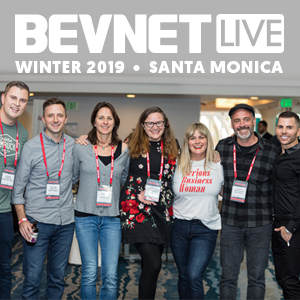
[00:00:04] Ray Latif: Hello and thanks for tuning in to Taste Radio Insider. I'm Ray Latif, the editor and producer of Taste Radio, and you're listening to episode 64 of the podcast. I'm with my BevNET and Nosh colleagues, John Craven, Mike Schneider, and Jon Landis, and we're recording from the Taste Radio studio at BevNET Live Winter 2019 here in sunny Santa Monica, California. In this episode, we're joined by Megan Bent, the founder and managing partner of Harbinger Ventures, an investment firm focused on scaling early-stage female-led and mixed-gender founded companies in the consumer brand space. Just a reminder, if you like what you hear on Taste Radio, please share the podcast with friends and colleagues. And of course, we'd love it if you could review us on the Apple Podcasts app or your listening platform of choice. Homestretch, got about another three hours left on this show? Yeah, we got to put that show down to bed. You got some post-show depression coming on? I guess so.
[00:00:55] Megan Bent: I mean, I've been looking forward to this for quite a long time. Met some amazing founders, drank some great beverages and trying to help founders find their way. It's been a lot of fun. Or it could be your terrible, terrible football team. 2-1, 3-1. Ah, dammit, someone told me they suck, and I was like so excited.
[00:01:13] Harbinger Ventures: Pepe. I'm like, Arsenal's bad? Wait, I care now, this is great. Ray, is that you?
[00:01:18] Ray Latif: I don't even know what's going on right now. But it's funny, because yesterday when Mike's team was playing, we were on the livestream studio and his team was down 1-0. Yeah. And he looked like he was going to get all verklempt about this.
[00:01:30] Megan Bent: I was.
[00:01:30] Ray Latif: So on the livestream studio, I encouraged folks to send Mike a note on Instagram saying, C-O-Y-G. That acronym means, come on you gunners, or as Mike would say, come on you gunners. I would say it that way, right?
[00:01:42] Megan Bent: You know, I've met a lot of Manchester United fans at the show and all of them are as nice as you, which is very surprising.
[00:01:49] Ray Latif: All right. All right. Good luck. Great stuff in the New Beverage Showdown as always, which we just wrapped up the first round of the finals. I'm excited to see the second round and find out who wins because it's a pretty competitive competition this one. Competitive competition? Can I say that? You can. Okay. It has been a competitive competition. Yeah. Landis has been running back up in state, back from the back of the room, up on stage trying to get all the samples organized and stuff. Are you tasting anything on the way up there?
[00:02:16] Carol Ortenberg: I've been trying to taste a few of them along the way. Everything tastes really good. Like all the judges said, it's just like the liquid is elevated. And I mean, everything that I've tasted is like, this is a shot. This could win.
[00:02:28] Harbinger Ventures: I have Landis pre-tasting just to make sure none of them are poison.
[00:02:34] Carol Ortenberg: No, that's what Nate was doing, and that's why he's currently blowing chunks. He took the bad one. Poor Nate. Poor Nate.
[00:02:39] Megan Bent: He's man down, man down. We had to have a photographer is at that photographer on Instagram at that photographer.
[00:02:46] Carol Ortenberg: Unfortunately, he is down and out for day two. I know what it's like. So I very, very much empathize with you, Nate. You were blowing chunks back in the day as Nate.
[00:02:55] Ray Latif: Nate said something on the Slack channel that actually said blowing chunks.
[00:02:58] Carol Ortenberg: Last year I was I was deathly ill and I missed most of BevNET Live. I was so chill.
[00:03:04] Megan Bent: I hope this joke goes a lot better than my blowing chunks joke on the when I was judging. I don't even remember that. Yeah, beverages are supposed to stay down, not come back up. Oh, OK. Remember that? Yeah, I do. Ed said he was going to gong me.
[00:03:19] Ray Latif: Well, as part of that, as part of the semifinal round that Mike helped judge a brand called Caffeine was up on stage. Unfortunately, they didn't make it to the final round, but I've been crushing these shots for the entire conference. It's an organic energy elixir.
[00:03:30] Megan Bent: You know, that's how competitive this competition is, right? Because Caffeine is, it's a great liquid and it's, it's a, they have good branding and it was just, it's just a really hard to make the decision of who to move on.
[00:03:40] Ray Latif: Yeah, I'm gonna I'm gonna crush one of these right now. In the meantime, John Craven, can you sort of reflect on this incredibly bigger event than we've ever had in our lives? I mean, people have been coming in being like, holy S-H-I-T, BevNET Live has grown to this remarkable size and it's just so impressive.
[00:04:00] Megan Bent: That spells shit and our listeners know how to spell it.
[00:04:06] Ray Latif: Trying to say something nice, you know, give you a softball there. And I got S-H-I-T'd on.
[00:04:14] Harbinger Ventures: All right. Well back to the softball. No, I think feedback is, you know, been super positive on walking into this hotel and like you're in the event, which is exactly what we wanted. I guess when you're outside the event, we've got our nice evident live sign out there and everything. And you know, there's just people everywhere, which is great. I mean, I think it's awesome to to see the community aspect of it with a little more breathing room. So I think that certainly is, I don't know, we'll see what we do next year, I guess.
[00:04:46] Megan Bent: The breathing room has been great. It's been fun sitting down with founders and just taking their packages and their products and giving them our two cents. And there's been a lot of time to sit down and say, hey, this is what I would do with your packaging. But also, hey, what would Kelly from the Grow Agency do? What would Fred Hart do? And just get all the opinions while you're here. Be that investor. Exactly, exactly. I spent a bunch of time with with kite. It's a sparkling adaptogenic tea from Canada ki te.
[00:05:13] Carol Ortenberg: Yeah And told me that you came up to her at the after party Or she came up to you because she's a big fan and you're like looking at her badge like oh I think we tore you apart on the live stream studio and then she was grateful Exactly. And then she came back the next day and had a real in-depth discussion and got tons of constructive feedback.
[00:05:31] Megan Bent: This is a founder who's had her liquid in a can, she said, for like two weeks. She's got all the call-outs ready. She's already certified. And I was surprised at how quickly these founders are spinning up beverages now that look really good. I mean, there's a lot of positives on that can. And the liquid in the can was amazing. I can't stop drinking it. Cool.
[00:05:52] Carol Ortenberg: I mean, they're going to be hopefully applying to pitch up on stage this summer.
[00:05:56] Ray Latif: We'll see. As always, we saw a lot of new and early stage entrepreneurs here attend the event. But we also saw a lot of established brands come to the show. And one of the most incredible moments for me was seeing a whole bunch of kombucha entrepreneurs get together during one of the breaks. We saw Jamie Danik from Hum, Donna Trout from HealthAid, GT Dave, obviously from GT's Living Foods, Sean Lovett from Revive, Hannah Crumb from KBI. And they were all chatting.
[00:06:20] Carol Ortenberg: Founder of Green Bell Kombucha. And Matt Thomas from Brewdoctor.
[00:06:23] Ray Latif: Matt Thomas from Brewdoctor. And it was an incredible scene to see all these folks together talking about this sort of collaborative effort they're working on to move the category forward.
[00:06:33] Megan Bent: And we talked a lot earlier this year about, you know, sort of the rift between everybody. And there's a photo. GT Dave has his arm around Dinah Trott, you know, right there. It's so good to see that kind of camaraderie.
[00:06:45] Ray Latif: It was also great to see Dinah Trott, our 2019 Person of the Year, the applause she got. when it was announced that she was the winner, really spoke to the respect that she has in this industry, and it was great. Cheers, Dinah. Cheers to all the winners.
[00:07:00] Megan Bent: I'm sipping up Pals. This guy came in from New Zealand. Pals? P-A-L-S? Yeah, P-A-L-S. It's a canned cocktail, and we were just, when you guys said to come find me, it's because I got kidnapped by the founder of Pals, and I was trying to give him my opinion on his product. Oh, and I hope you enjoyed that. I'm drinking it now. Drinking on the job.
[00:07:20] Harbinger Ventures: Way to go, Michael.
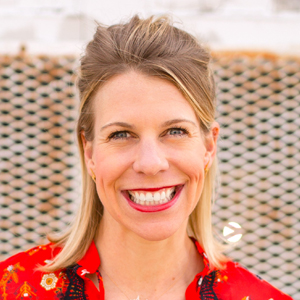
[00:07:23] Ray Latif: All right, let's get to our featured interview for this episode. That's with Megan Bent. As I mentioned at the top of the show, Megan is the founder and managing partner of Harbinger Ventures, a specialized investment firm whose mission is to provide growth, equity, and strategic resources to the next generation of female entrepreneurs. In an interview with Nosh editor Carol Ortenberg, Megan spoke about the creation of the firm, initial challenges of getting partners on board, and how the Me Too movement has impacted the development of its fund. She also explains why she returns a part of fund profits to the founder companies that she's invested in, how she vets potential portfolio companies, and what listeners can do at their own companies to encourage diversity.
[00:08:05] Iced Tea: Hi everyone, Carol here. I'm at the Mobile Innovation Summit in Denver, and I'm joined today by Megan Bent, who is the co-founder and managing partner of Harbinger Ventures. Megan, thanks so much for being with me today. Thanks for having me.
[00:08:20] Booch Bosses: Tell our audience, what is Harbinger Ventures? Harbinger is an early stage consumer growth equity fund that's focused on partnering with extraordinary founders who are bringing product, brand, business model, and organizational innovation in an integrated way to a large category, such that it can really transform consumer dynamics.
[00:08:43] Iced Tea: And this is not your first rodeo in investing. Talk a little bit about your career and how you got started in this industry and then found your way to Harbinger.
[00:08:54] Booch Bosses: You're absolutely right. This is not my first rodeo. I have many scars and battle wounds from about a decade in early stage consumer. I was fortunate enough to start my career partnering with an exited entrepreneur at a firm called Revelry Brands. And at the time, the vision was really to take an entrepreneur-friendly approach to building innovation in the consumer space, leveraging his experience as an operator, as a visionary, and applying it to the private equity model. And what was so fun about being a part of that firm is that we had carte blanche, so to speak, in terms of how we wanted to build our partnership model. We could make minority investments, we could incubate, we made control transactions. We took a consumer-centric approach to large categories and said, what's the best way to solve this large problem? And from the time that I was with him, I had the opportunity to sit in co-founding type roles as we brought brands to life, lead investor roles as we led multiple rounds of capital in early stage to adolescent brands, sit on different boards with founders and executive teams and help them solve problems, but also build the beginning framework of a firm that looked and felt pretty different than other private equity players that were in the market at the time.
[00:10:19] Iced Tea: What made it look and feel different than other firms?
[00:10:22] Booch Bosses: You know, firms really absorb the DNA and culture of the early founding teams. And we were not classically trained investors. Brendan was an entrepreneur and always will be. And I was a recovering consultant with an entrepreneurial spirit. And so We did not bring to the investment world any semblance of experience or process or even baggage, you might say, in terms of how things must and should be done. The result is that there were certain things that we really rebuilt in ways that we felt better served the portfolio companies and the entrepreneurs and the founders. And there was probably things that a little experience would have helped with and we were learning along the way. And what were some of the brands you worked on or helped bring to life? So part of our strategy was staying really concentrated so that we always had the capacity to roll up our sleeves and be operationally engaged as a thought partner, or even down in the portfolio companies at periods of time. So over the 10 years that I was there, we made six core investments, the first of which was a brand, when we first partnered with them, was called Phil's Fresh Foods, which became Evil. We were involved in a brand called Siggy's, which was- Just a little brand. Just a small Icelandic yogurt company out of New York. We did two different pet food companies, Only Natural Pet Store and I Am Loving You. The Revelry still owns an apparel company called Pact, which was really a first mover in fair trade, organic basics, and a candy company called Little Secrets. Many of those brands we essentially co-authored or co-founded as a part of the firm.
[00:12:04] Iced Tea: So after your time at Reverie, I'm sure you could have gone a multitude of different ways with your career. You could have gone and been an operator at a business, started your own company. What made you want to stay in the venture world?
[00:12:17] Booch Bosses: So having been mentored and trained by an entrepreneur, I think Brendan was not surprised when I came to him and said, this has been an unbelievable partnership, but I have my own ideas. And I have ideas around how private equity can be done differently, how it can be done better. And I want the opportunity to author that strategy myself. And he said, go do it. He was my first supporter and continues to be a huge friend and advocate. But what I saw is that the innovation and thought leadership around sourcing, supply chain, product, you name it, was really coming to life at the portfolio level. And then you'd go up to the board and the capital level, and there was real stagnation. There was stagnation in the gender composition of the teams, particularly relevant. to the emergence and high growth profile of female entrepreneurship. There was stagnation in terms of the business model and portfolio construction, how firms and fees were invested. There's just a real opportunity to rethink some of the fundamentals around how capital is invested in order to hopefully enhance the partnership between these thought-leading founders and what should be thought-leading capital. So what was the process of starting a fund like? It was harder than I thought it was going to be, if I'm being totally honest. I was optimistic, I was wide-eyed, and I was probably very much like the founders that I work with today, which is, this is an obvious idea to me, it's a great idea, and people are going to get behind it. nothing comes easy. You had to really hustle and get in front of investors and convince them that there was a real business model. And in the beginning, they're taking a risk on you. There is no business to really back. And so I was fortunate to be able to aggregate a handful of really thoughtful investors who said, go test this. Let's see if focusing on female founders can enhance the private equity model. Let's see if your portfolio concentration really can both manage risk but also enhance returns. Let's see if your ideas around reinvesting promote behind your founders can drive better collaboration and go prove it. And that's exactly what I had to go do. So similar to how founders have to go generate a proof of concept and show their product turns in Kroger or you know, drives high ROI on direct response channels. I had to do the same in the original portfolio, and I was fortunate enough to have the chance to partner with some really great early brands, and they were willing to sort of work with me on the new model, and we grew from there.
[00:14:59] Iced Tea: I could imagine those initial conversations must have been hard to have at times because you're not only pitching female LPs, you're going out to male LPs and saying, hey, here's all the things that are wrong that you might be contributing to.
[00:15:14] Booch Bosses: This conversation around gender or diversity is very awkward, right? It's an uncomfortable discussion. There's real sort of structural barriers to having it proactively. And so much of capital is still controlled by men. So you're absolutely right. I was mostly talking to men. And I had one investor that I remember getting on the phone with and giving him my pitch really passionately. And he said, you know, Meg, I just don't really get it. I'm not sure I understand how this is different from philanthropy. And I said, no problem. I'll go prove this to you. And we'll have a discussion in the future. And you know what happened is this became personal to him because he went home and talked to his family and his wife and his daughters. And I find this to be a typical experience. And he called me back three weeks later before we were closing the first fund and he said, I think I get it. I'm not sure I totally get it, but I think I get it. Let me give you a small amount of money so that I've got a foot in the door here and then go prove it. And that was very much the experience that I had. There was thought leading LPs who sort of wanted to get behind it, but they weren't quite sure they understood. And I took it as my sense of responsibility to bring them into both the mission, but also perform to prove to them that they'd made a smart bet.
[00:16:33] Iced Tea: Your first fund was just under 2 million. Your second fund was over 21 million. That's a significant jump in capital. What changed in that time period from Fund 1 to Fund 2?
[00:16:48] Booch Bosses: So Fund 1, I call internally the pilot fund because it was very much that. It was a sandbox for me to start to play in, to prove out the thesis, really understand where and how we were going to be able to drive value. And I was still managing Revelry full time. So I was essentially working two jobs. And what I saw as the primary drivers that were going to allow me to scale the fund is, one, to very explicitly demonstrate that a willingness to talk about gender could enhance the primary value drivers through the eyes of an investor, which means deal flow, it means access, it means influence, it means good terms. Those are sort of very specific KPIs that I really had to tie back to my thesis. I think the second thing that I really had to be able to demonstrate was that it was scalable, that there was enough female founders out there to be able to invest against this thesis at an increasingly larger level. And so those were things that I was very mindful in terms of how I approached. I had to be very disciplined in how I invested those first several millions of dollars in order to make sure that they were the highest and best use of that capital so I could earn my right towards the next fund. The next thing that I really had to do was be very clear in how the firm or the organization was going to grow to support this vision. So I brought on a business partner prior to raising the second fund. This was someone I knew extremely well, had been in the trenches with. We'd sat across the table and next to each other in a variety of different consumer deals. We had complementary skill sets. and he'd been an investor in the first fund. So he had skin in the game behind this thesis early on. And I think that also sort of credentialized, this is a real idea. This is not a part-time sort of mission-driven hobby, so to speak. And those are really important. And then the things that I can't really take credit for, but that definitely benefited is just broader awareness and discussion. There's been a real cultural zeitgeist over the last three years, whether it's sort of political, evolution, whether it's the Me Too movement, whether it's just sort of increasing awareness around the importance of broad stakeholder mentality versus shareholder mentality, those things have really changed the macro landscape such that there was more receptivity when we went to have this discussion. People were primed, they were curious, they were open-minded, and in some cases they were looking for a gender lens thesis that fit within their own portfolio goals.
[00:19:27] Iced Tea: I imagine that cultural movement is somewhat of a double-edged sword. Because on one hand, it's great that there's more awareness, but at the same time, it's become a buzzword. Sometimes it gets co-opted as a marketing tactic. How do you break through the latter and say, you know, this is really intrinsic to who we are, and it's not just picking up on a trend or a fad or something like that?
[00:19:55] Booch Bosses: It's such a great point, and you're absolutely right. Over the last couple of years, there's been a real rise in the number of what I'll call micro funds that have some component of a gender lens in their broader thesis. Recently, there was a list of over 70 funds that were chronicled, and they're deploying over a billion dollars. It certainly happens more than it did three years ago that when you're talking to investors, they say, oh, I just saw a gender lens thesis yesterday. How are you different? So really crystallizing our business thesis is absolutely critical. And I think one of the things that differentiates Harbinger and that we stay really true to in our broader mission is that we're not women funding women. This is not sort of a social impact strategy. The women that we fund are business executives. Their primary goal is to change their categories, influence their sectors, and generate significant wealth. If we do not first and foremost serve those business goals, we do not have a right to be at the table just because we're women and they're women. So we earn our way to the table through our business experience. But what I find and what our female executives share is there's a real joy and sense of appreciation when businesswomen get to do business with other businesswomen. And so for us, that's a stickiness that shows through in the strategy.
[00:21:22] Iced Tea: I imagine it also helps you relate to your portfolio companies now that you've been through this experience. While it's not entirely dissimilar from starting a CPG brand from scratch and dealing with other noise in the marketplace or on the shelf that you have to figure out how are you going to differentiate yourself and what you're trying to achieve.
[00:21:45] Booch Bosses: So many parallels. I mean, first of all, I was completely humbled, you know, taken down to the studs in terms of what it is like to raise capital. And how I now engage with founders has been forever transformed from that experience. So definitely sort of walking in their shoes, so to speak, has been really beneficial to how we approach partnerships. and how we build those relationships and the empathy that we feel for sort of the decisions and challenges that they face every day. But you're exactly right, you know, we see the private equity world through a similar lens in terms of the CPG world, you know, we're trying to build an innovative product. It just happens to be a financial product. We need a brand that is differentiated and stands for something. In this day and age, that brand can't be superficial. It has to be authentic and communicated across multiple channels, and it has to tie back to the product differentiation. So, you know, I can sort of go on and on in terms of the different ways that we've thought through that, but you're absolutely right. The approach that we took in terms of differentiating ourselves in market, we knew couldn't be superficial. It really meant rethinking fundamentals. And the core areas that we've done that that really stand out are, you know, one, our advocacy for female leadership. We're extremely vocal and we hold ourselves accountable to that in our portfolio. The second is our concentration. Your average growth equity fund might make eight to 15 investments, and we make five. It gives us a real sense of alignment around risk and partnership, and our capacity is built for peak periods, not just average periods. And then the last is the sense of collaboration that we bring to our portfolio and our willingness to put our own skin in the game behind that. All of our founders, for example, share in the upside of our fund. Literally, there's a profit interest structure where if I ask one portfolio to help another, they're economically incentivized to do so. That's our significant investment behind the belief that the founders are really power drivers in these businesses.
[00:24:01] Iced Tea: Can you explain that system that you have set up a little bit more for our listeners?
[00:24:06] Booch Bosses: It's not too dissimilar from like an employee incentive pool. It's just put in the construct of a fund model. So, so many fund managers really generate their own personal wealth creation once they are able to generate significant upside for their shareholders. Most of the time that upside is really kept within the firm, so the investment professionals or the employee at the private equity firm or the primary participants. That's true with us, but we've also carved out 10% that's granted back to our founders. In aggregate, if we achieve our fund goals, that's over a million dollars that'll be redistributed instead of to the investors and the GP, back to the founders.
[00:24:51] Iced Tea: I agree that that does give them motivation. And as you said, see skin in the game. But at the same time, I also love the idea that maybe one day they'll take some of those profits and invest that forward into their own female run businesses that they see an opportunity with.
[00:25:10] Booch Bosses: We certainly hope so. I think when we first put this sort of experiment in place, the original thought was you need to reward people for their time. The time and thought leadership is valuable and this skin in the game will unlock sort of inherent cross learning capabilities in the portfolio. But the two benefits that we've also seen is it allows them to really be advocates for us out in the market in terms of us being an authentic partner, and also for them sort of helping curate some of the best new founders, because they want those founders in their own investment portfolio. Oh, I love that. If you can imagine. So that has been a pleasant surprise. On the back end, we'll get to see, but there's research that we've been doing and working with exited female founders to understand how do you use your time and wealth post-exit? in ways that are different or unique or could also contribute on a pay-it-forward basis to closing this gap. And early data does suggest, you know, anecdotally, that women do have a desire to pay for their experience and their capital. So we would certainly hope that the incremental wealth they're able to generate from their exposure in our portfolio might be a starting point for future investment strategies.
[00:26:27] Iced Tea: I want to go back in the conversation a little bit and talk about bringing Seth in to the fund as a managing partner. And when we first discussed this, I said, is it kind of ironic you brought on a male managing partner in order to scale? I'd love to discuss kind of your thought process behind bringing him on board.
[00:26:46] Booch Bosses: It's such a great question, and it's one that we get asked a lot. And the short answer is, is that it was very intentional and very purposeful. I think our long-term vision for Harbinger is that it's a role model on the broader private equity community for what progressive thinking, values, accountability can do to firm culture in ways that ultimately enhance the business model and the business practices. And so we knew from day one, we want to build into our DNA some of the core components that will contribute to that, and balance is a part of that. We believe that the best thought leadership comes from organizations that show a diverse set of thinking that's across gender, but it's also across backgrounds, it's across experiences, it's across ages. If you look across our org charts, for example, in our portfolio companies, you'll often see that they're unusually constructed. They're over-indexed in certain functions that maybe don't make sense in terms of historical best practices in CPG. If you look at our boards, we try to really thoughtfully curate a mix of different experiences, ages, and gender. So we're big believers that this is best business practices and wanted it built in from day one. You know, the other thing that I'll say is, when you're in an environment like we are today, where there's such incongruency between female leadership representation on the entrepreneurial senior leadership level, 30 to 40% of entrepreneurs are women, and then capital, where 2% of capital goes to women, An exaggerated approach in terms of the thesis really makes sense. You know, our mandate is every single one of our portfolio companies has to have a female founder core to the DNA. The outcome of that is that we have 50-50 in terms of male to female CEOs. So exaggeration and intentionality is driving median outcomes because of where the market is today. And, you know, that's something we're just really thoughtful about and purposeful about.
[00:28:56] Iced Tea: Now, we talked about at Nosh Live how this is sort of specialized venture capital. It's not necessarily the right choice for everyone, and that's okay. So what makes a company the right fit for Harbinger?
[00:29:12] Booch Bosses: For us, this is, I think, the difficult answer that many founders don't like, which is because we're so concentrated, because we're so focused on a very specific value creation model, because we truly believe no one should be on your cap table unless they can add value. We don't invest in what we don't understand. We don't invest in what we're not passionate about. And we don't invest in businesses that sort of don't contribute to the broader portfolio thesis. So as a result, we cheer on many brands. I'm a huge consumer. I love exploring and discovering and sharing, but we invest in very few. So businesses that are a really good fit for us meet our life stage criteria and that they're really ready for that early growth equity check. They've figured out their value proposition. They have positive unit economics. They have a vision and a strategy for where growth is going to come from and a willingness to invest our capital behind that. These are businesses that have a unique and significant perspective on brand and product and business Mobile Innovation to go disrupt a category from multiple different angles so that there's a sense of speed and urgency and leverage in what we're doing. And ultimately, organizations that share our values and are willing to have the tough conversations around How do you scale not only the business and the brand, but also the culture in unison? Because that sort of trifecta, we think, create the best sustainable businesses.
[00:30:43] Iced Tea: It seems like a lot for a company to have, you know, a firm grasp on. Is it okay to say, this is something we want to do, but we don't know how to do it right now?
[00:30:57] Booch Bosses: Absolutely. A mentor of mine once said that the role of the entrepreneur is not necessarily to have the answer, but it's to continue to solve iteratively towards the answer before they run out of time, before they run out of resources, and before they've run out of goodwill. And so when we get involved in a company, we have zero expectation that everything's been figured out. When we put capital into our feminine care brand, Cora, for example, they were essentially a digitally native brand that had some exposure in Target and Amazon. Three years later, they're essentially a digitally native brand that's primarily sold in retail. It's been a huge evolution of the business model that's required them to rethink parts of their organization and marketing efforts. We love that challenge. We can be thought partners during that challenge. But the maturity that we're looking for really is around consumer-centric decision-making and a leadership appetite to make the hard decisions quickly.
[00:31:59] Iced Tea: For a period of time in our industry, a fund saying, we want to invest in better for you brands was kind of specialized. Do you see investment getting more focused and firms getting more narrow in what they're looking for? Or do you think we'll continue to see this kind of broad portfolios among venture firms?
[00:32:21] Booch Bosses: So that's an interesting question. Let's see if I have an answer that satisfies it. You know, if you look at the Series A landscape, for example, over the last 10 years, you've seen massive change in terms of the size of a Series A check. and sort of comparable evolution in the revenue profile of a Series A check. So the landscape has changed dramatically. You've also seen an emergence of a lot more capital. And as a result, I do think you see funds really trying to distinguish or differentiate themselves. And so specialization in some form or another, I think is a part of the way that they're doing that. I think the other driver of that specialization is a little bit of values mapping back to the founder profiles. You know, founders are often mission driven and they want to know their capital partner sort of shares those similar values. So that rhyming, I think, is what you see driving the specialization. At the other end of the spectrum, though, you see some of the larger private equity firms to continue to get larger and larger and larger, hundreds of millions of dollars in most recent funds. That really has driven almost a broadening of thinking and thesis in order to accommodate that. So you see a little bit of both.
[00:33:40] Iced Tea: It's kind of like if there's a spectrum, there's a stretching on both ends, maybe. I think that's probably true. So with the diversity of capital that we're seeing, what are your suggestions to founders when they're looking for a partner and they're looking for an investor? When you have someone all the way from the big firm to the specialized firm that want to join you in building your business?
[00:34:07] Booch Bosses: So one, I would say, ultimately, as much as investment is sort of framed as a transaction, it's probably more relational than anything else. In early stage consumer, a huge part of the underwriting is the person and your trust in their ability to lead and make hard decisions and the credibility. And so as a result, as you're approaching any sort of capital raise process, remember that they need to get to know you as a person, and you need to get to know them as a person. The second thing that I'll say is that there is no such thing as a clean, quick process. Make sure that you start way more in advance than you think. meet more funds than you think you're going to need, and be patient and hold on for a bumpy ride.
[00:34:56] Iced Tea: We love... It's not like falling in love, we'll just lock eyes and know that you're the fund for me. You absolutely wish.
[00:35:03] Booch Bosses: But no, it's a question that I get a lot is, you know, what's the right way to run it. And the right way to run it is stay scrappy, keep hustling, tell your story, believe in your story and keep putting up big numbers, show your performance and deliver good news through a process. It's really hard raising capital. And so there's no sort of quick and easy way to do it. So build the time around it. And then the last thing that I would say is, you know, many founders are product centric or brand centric in nature. It's a selling that mission and vision is a big part of what they do. the weakness and the story often is in translating that vision and mission into a common dialect. And the common dialect of an investor is around the business model, the growth plan and strategy. And so, you know, as you really show up to those numbers, make sure that you're as articulate and well-versed in the mechanics of the business, the financials of the business, the reality of the category, the risks in the category, so that you are almost bilingual in that conversation. Again, it sort of loops back to that concept of trust, but it also, I think, finding that common language can really accelerate a partnership.
[00:36:16] Iced Tea: While you do want to be grounded in the realities, you know, you have to be a bit of a storyteller and say, here's the potential and be the cheerleader for your brand. It can be difficult to do both at the same time.
[00:36:28] Booch Bosses: Definitely. There's a story that I always love, which is why is country music so able to make people cry when rock and roll is not? They talk about the same themes. And the research that was done around this is because country music is so specific. You know, it's a red truck and a bumpy road with mud spraying. And so when you go out and tell your story, you need to be able to sort of up-level and down-level and bring that investor into the vision at a high level, but then make it very specific to them, very relatable to them. When somebody shares an experience and they can connect it back to something really important in their life, an emotional need state, a practical need state. As an investor, you have this aha moment, this sort of click where you think, I get this, this is a big idea. So that relatability is so critical.
[00:37:21] Iced Tea: How hard is it for you when you get like the perfect pitch and you're like, I get this, it makes sense. And then you're like, but it's just not the right fit for Harbinger.
[00:37:31] Booch Bosses: Ugh, tough breakups are tough, right? The way that I soften it is that we have a mandate internally, which is always add value. Anytime you get on the phone with a founder, anytime you're in a diligence process with a founder, Avoid the temptation to make it a one-way dialogue where they're delivering information and you're a binary yes or no. That's dated, it's transactional, and it's a missed opportunity for mutual learnings. And so when we meet really excellent founders or businesses or brands or products, but they're not a fit for us for any particular reason, I try really hard to figure out what can I do to support you more generally, And I think that's a mutually nice way to let each other down. At least it was a good use of time.
[00:38:19] Iced Tea: I mean, it's a lot to juggle though, right? You have your portfolio companies, you're a mom, you have your home life, your work life. How do you balance it all? Because that's something we do here as a pain point among female founders is how do I just do it all?
[00:38:35] Booch Bosses: I wish I had an easy answer for that. I mean, in some ways, it's what we do best. You know, as women, we're naturally good at multitasking. We're naturally good at finding ways to collaborate and community outsource in order to sort of enhance productivity and effectiveness. From a more quantitative perspective, for me it's about organization and it's about working smarter, not harder. So really staying disciplined around what is it we do and what is it that we do not do allows me to be highly efficient and effective with my use of time. As a small fund, we don't have the luxury of getting distracted by bright, shiny objects or chasing down cool deals or meeting with cool people for no reason. We really try to- All the glamorous stuff. All the glamorous stuff. There's nothing glamorous about what we do. It's really execution heavy. It's really purposeful in our sense of time. We invest heavily in the ecosystem, but through a lens that helps us measure the ROI of that. And that allows me to make sure I'm spending enough time in the portfolio to really be the partner I promised, but also enough time with my family and be the mother I want to be and wife.
[00:39:54] Iced Tea: To wrap this up, I want to talk about what listeners can do who are motivated by the idea of helping the issue of gender diversity or just diversity in general. Not everyone has a fund that they can invest. So what are some things that listeners can implement in their own lives, whether they're a marketer, an operator, in their own businesses to try to assist with this issue?
[00:40:20] Booch Bosses: So I always like to start with the data. Let's rationalize this discussion and really get a clear picture of what we're talking about. So whether you're a marketer, whether you're a CEO, a board member, an investor, take the time to do even a quick and dirty audit of your stakeholder universe. What percent of my employees or my board or my investments are representative in different areas of diversity that are really important to you. Quantifying the landscape, I find, is a really helpful way to sort of diffuse any emotional response to this question, because it can be touchy. And that gives you a clear picture of where do you want to start, what are the priorities, and what are bite-sized goals you can put against each of those. So if you're a marketer and you look across all of your marketing assets, the way you're speaking to the consumer, You can challenge yourself to say, am I being broadly inclusive? Am I making sure I'm bringing in visually or representatively different audiences that I should be more thoughtful of? Is there a different way for me to approach this? If you're an investor and you're looking across your portfolio and you say, gosh, I look a lot like the market. 2% of my capital has gone into females and the rest has gone into men. really putting together a plan to more proactively network and meet with female founders or find other investors that are doing a better job and sort of piggyback off some of those initial efforts. If you're an exited or successful female executive, women have been slower historically to enter the investment world. We're extremely strong philanthropically. Challenge yourself to start cutting small checks. I'm going to start with, you know, five, $10,000 at a time. I'm going to do it behind other women I really believe in, or I'm gonna do it alongside funds, those baby steps forward are really critical to getting a flywheel going. And as the flywheel gets going, or there's a network effect that happens, you find that the network bias is reduced, your experience bias is reduced, and the gaps have the opportunity to start sort of organically closing, such that you can continue to more purposely address them.
[00:42:36] Iced Tea: I think your point about bite-size actions is important because sometimes if you just think about these issues globally, it can feel overwhelming. Like, what can I do?
[00:42:48] Booch Bosses: Definitely. That sort of bite-size advice I take in my life every single day. When we were first getting Harbinger off the ground, Another mentor or colleague said to me, get up every day and do something, right? Put together a desk, make some calls, get out in the market, but keep yourself moving forward proactively against your strategy in small ways. And those small actions will add up to big results. And that's exactly the way to start approaching this really big, very uncomfortable sort of structurally designed gender gap that's been persistent in our industry.
[00:43:25] Iced Tea: Well, you've given our listeners a lot to think about and hopefully take action in their own lives. And thanks so much for spending some time chatting with me today. Thanks for having me.
[00:43:36] Ray Latif: That brings us to the end of Episode 64 of Taste Radio Insider. Thank you so much for listening. And thanks to our guest, Megan Bent. Please subscribe to Taste Radio on the Apple Podcasts app, Spotify, Stitcher, SoundCloud or Google Play. As always, for questions, comments, ideas for future podcasts, please send us an email to ask at Taste Radio.com. On behalf of the entire Taste Radio team, thank you for listening, and we'll talk to you next time.