[00:00:04] Ray Latif: Hey folks, thanks for tuning in to Taste Radio Insider. I'm Ray Latif, the editor and producer of Taste Radio, and you're listening to episode 67 of the podcast. I'm with my BevNET and Nosh colleagues, Mike Schneider and Melissa Traverse, and we're recording from the Taste Radio studio at BevNET headquarters in Watertown, Mass. In this episode, we're joined by Matt Weiss, the founder of Pilon dried fruit brand RIND, who discussed his approach to incubating the brand while keeping his full-time job. Just a reminder to our listeners, if you like what you hear on Taste Radio Insider, please share the podcast with friends and colleagues. And of course, we'd love it if you could review us on the Apple Podcasts app or your listening platform of choice. Happy New Year, Mike and Melissa.
[00:00:47] Matt Weiss: Happy New Year.
[00:00:48] Ray Latif: Happy New Year to both of you. I'm sorry that I'm drooling. You mentioned Rind again. It always happens.
[00:00:53] Matt Weiss: We're used to it.
[00:00:53] Ray Latif: Happens to me. Mike's a big fan. 2020. Isn't that a TV show back in the day? Is that still a TV show?
[00:00:59] Matt Weiss: It still is with Barbara Walters.
[00:01:01] Ray Latif: Yes. She should have been able to drop the ball, I think.
[00:01:03] Matt Weiss: Yep. No one will ever take a black light to a hotel room ever again.
[00:01:07] Ray Latif: I always think about when I think about 2020, I always think about the Saturday Night Live skit with who was it? Was it Sherry Oteri who played Welcome to 2020. Yeah, it was kind of mean but also kind of funny. You know, I think Barbara probably laughs I think she left. Oh, yeah, I think Barbara was from Boston. She's from the Boston area, too If I recall Barbara Walters, I think she might have grown up in my dad You guys were friends when you're kids, right? Oh, come on Mike is actually pretending that he's like 10 years younger than me, but he's only I'm actually the oldest He's the oldest in the room. I think so.
[00:01:40] Matt Weiss: I think you are.
[00:01:41] Ray Latif: Yes Yes, but we're all friends here Mike you gave Melissa a nice jar of something it's a Szechuan chili crisp I did so, you know Melissa I noticed from her Instagram is doing a lot of cooking a lot of experimentation with some you know better for you brands and And I wanted to encourage that behavior. So I, you know, I went to the cupboard and pulled out some Sichuan chili crisp, which I have a six pack. You have a six pack of chili crisp? Oh, no, no. I was just talking about something different. I segued. No, no, I have a six-pack of Sichuan chili crisps. What's the name of this brand before we get off track here?
[00:02:20] Matt Weiss: Fly By Jing.
[00:02:21] Ray Latif: Fly By Jing, right? Yeah, Fly By Jing.
[00:02:22] Matt Weiss: I couldn't be more excited about this. I had a very saucy holiday season. I tried lot sauce, the Brooklyn Delhi achar, and I can't wait to put this Sichuan chili crisp all over everything.
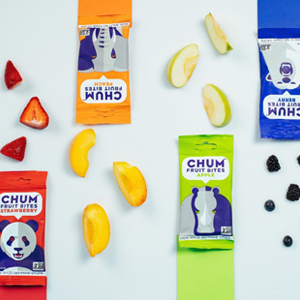
[00:02:35] Ray Latif: Yeah, you should Frank's hot sauce that stuff. Nice. Put that shit on everything, yeah. Now, before we jump to the mics, we're all chewing on chum. C-H-U-M. That's the name of a brand of fruit bites. I feel like a shark. Yeah, in a shark tank.
[00:02:49] Matt Weiss: The tastiest chum I've ever had.
[00:02:52] Ray Latif: It's Chum Fruit bites. And I don't know if they mean chum like your pal, your friend, your chum, or if they're like chum the waters because... I think it's the former. Yeah, there aren't any fish parts in it. I was checking. The ingredients are pretty simple on the package here, like apples, pears and strawberries. That's it.
[00:03:10] Matt Weiss: Are they based out of Australia or New Zealand? Somewhere where chum might be more commonly used?
[00:03:18] Ray Latif: No? Well, chum is probably really popular in Englewood Cliffs, New Jersey. Actually, they're made in South Africa, if you're looking at the back of the package, by a company called Saris, which is a global producer of fruit juices. That's just how they knew they'd get along because they use the word chum in Englewood Cliffs and also in South Africa. Well, I like that it's sort of a combination. I like that it's sort of a combination between chew and yum. Chum, right? Oh my God. Did you get there? I'm not sure about the name. I just think it's going to evoke some pretty interesting images for people like me who've done, you know, fishing with their dads back in the day and chum the waters. There you go. One thing I didn't bring to the studio was any Rind Snacks. And I have to admit that I have a secret stash of rind in my cabinet, in my office. I've been hoarding them. Don't go, please don't go into my cabinet. You'll find things you probably shouldn't find. It's like, it's like Skeletons In the closet. You'll find Skeletons In my cabinet.
[00:04:19] Chewing Chum: So there will be some other things I don't want to see next to those Rind Snacks.
[00:04:23] Ray Latif: But Matt Weiss, who we have on today's show, when he came to BevNET headquarters, he dropped off a bunch of Rind Snacks, which I promptly hoarded. This is the way. Yes. The way of Ray. But as I was reviewing our interview with Matt, it reminded me that we have so many people, we meet so many entrepreneurs in our industry that don't have backgrounds in the food or beverage business. A lot of them come from other industries, whether it be marketing or finance or teaching or law or could be anything. And consistently what we hear is that This business is a lot harder than they expected. We hear that from established entrepreneurs. We hear that from our early stage entrepreneurs that participate in our Elevator Talk series. But what's great is that they follow up with that by saying that. The community of food and beverage is a welcoming community and one that has really helped them find their footing. I hear a lot from new entrepreneurs when they come to like, you know, come to BevNetLive or they come to NoshLive and then they've met someone and then they don't realize who it was that they met. You know, they'll meet a founder of a larger company who's like very kind to them and gives them like, you know, the kinds of advice that they need to really move their company forward. And they're like, I had no idea. I had no idea who I was talking to. Totally.
[00:05:43] Matt Weiss: It makes sense because brands need shelf partners. You can't be the only product on the shelf. You don't want the responsibility of educating consumers, you know, just on your own about what your product's about. You need, you need to take up space.
[00:05:57] Ray Latif: That's a great point. And I think the other interesting thing that we consistently hear from entrepreneurs is that there's a motivation to pay it forward. There's a motivation to pay their education, their experience forward. We heard that from Matt in today's interview. We also heard that from Gail Becker, who is our featured interview for next week's episode of Taste Radio. She is the founder and CEO of a little brand called Kali Power.
[00:06:20] Matt Weiss: She came from journalism and politics, right?
[00:06:22] Ray Latif: And the Nosh person of the year.
[00:06:23] Matt Weiss: Yeah.
[00:06:23] Ray Latif: And the Nosh 2019 person of the year. She talks extensively, actually, about why that's the most gratifying part of what she does, especially now. I think we've established that you've been on the show a few times. Melissa worked at Whole Foods for a number of years, for about 11 years.
[00:06:40] Matt Weiss: 11 years.
[00:06:42] Ray Latif: I think one thing that's not well-known about Melissa is that- A secret past. Yes. Skelton's in the cabinet, so to speak. Yep. Job skeleton. Oh my gosh. I'm going to find Melissa in your cabinet when I search for your sex.
[00:06:54] Matt Weiss: Between your cabinet and my past.
[00:06:55] Ray Latif: But when we were at the events in Santa Monica, our events in Santa Monica, we went to dinner, Melissa, I, and our colleague Adam Stern, and you were telling us- Wait, what?
[00:07:05] Matt Weiss: Yes.
[00:07:06] Ray Latif: Hold on. Okay.
[00:07:07] Matt Weiss: I got an invite. You got the invite? I asked for an invite. Well, you asked for an invite on the show.
[00:07:13] Chewing Chum: Right, right, right. But you got it?
[00:07:15] Matt Weiss: Yeah, you have to manifest your destiny. You executed? I executed.
[00:07:20] Ray Latif: I gotta hear this. All right, sorry. And you were telling us about some of your career experience, which includes how many jobs?
[00:07:29] Matt Weiss: So this is my 34th job. Wait, what? 34. This is number 34. And there were a number that were in food.
[00:07:37] Chewing Chum: What, like a job a week?
[00:07:39] Matt Weiss: I mean, basically, yes. So I would have like two jobs at a time, or I'd spend six months there. But I was a caviar packer and grater. I worked in a salmon processing plant in Naknek, Alaska.
[00:07:51] Ray Latif: In Alaska. You were the salmon processor.
[00:07:53] Matt Weiss: It was brutal, man.
[00:07:54] Ray Latif: Did you find that in like a magazine ad and you went up there?
[00:07:57] Matt Weiss: No, no, no. It was a disaster waiting to happen that I sort of fell into.
[00:08:02] Ray Latif: Hold on, hold on, hold on. How do you get talked into that?
[00:08:07] Matt Weiss: Um, there may have been a, um, a guy involved that promised it would be a great experience.
[00:08:16] Ray Latif: That chuckle you heard might've been from our director, Nate. He's shaking his head.
[00:08:20] Matt Weiss: That's how all women end up in salmon processing plants in Alaska. All right, keep going.
[00:08:26] Chewing Chum: Does it get worse?
[00:08:27] Matt Weiss: It gets worse and better. I was on the pastry team at the original Flower Bakery with Joanne Chang.
[00:08:34] Ray Latif: A very famous baker here in the Boston area and James Beard Award winner, Joanne Chang.
[00:08:39] Matt Weiss: She's the best, the most amazing. I also worked at Cooks Illustrated, but then I had a number of jobs that were completely not food related. So I was a flight attendant for Pan Am.
[00:08:49] Ray Latif: This is the one that blew my mind.
[00:08:51] Matt Weiss: Yeah, it was right after 9-11. For Pan Am. She said Pan Am. She did say Pan Am. This was a beat down Pan Am though. This was not the Pan Am of the 60s.
[00:09:02] Ray Latif: Oh, this was Pan Am 2?
[00:09:03] Matt Weiss: 3. Oh, gotcha.
[00:09:05] Ray Latif: This wasn't Catch Me If You Can Pan Am?
[00:09:07] Matt Weiss: No, this was like we would land and half the oxygen masks would come out of the ceiling.
[00:09:12] Ray Latif: Oh, God. It was like Spider-Man 3 Pan Am, yeah.
[00:09:15] Matt Weiss: It was brutal Pan Am, yeah. I was a film projectionist. I had a high-fidelity moment and I worked in a used record store. What else did I do? I was an editorial assistant at a very well-connected newspaper in Rhode Island. So there's a lot. Motel 6, name it.
[00:09:31] Ray Latif: Mushroom testing?
[00:09:33] Matt Weiss: I mean, in there somewhere, yes. It's all in there. We all have histories and pasts that you just need to dig a little deeper to get to. And there's a treasure at the bottom.
[00:09:43] Ray Latif: There's a lot of digging through your history.
[00:09:44] Matt Weiss: There's a lot of digging.
[00:09:46] Ray Latif: Or you just need to continue to listen to Taste Radio Insider, because I'm sure we're going to unpack more of this in future episodes.
[00:09:50] Matt Weiss: We have to. I have enough for another 10 episodes.
[00:09:52] Ray Latif: Yes. Do you share your Instagram with the community, with the industry?
[00:09:57] Matt Weiss: She changed it. Yes, I just changed it. I went from- Good Food Rules is dead. Yeah, no. Now it's Melissa underscore Traverse.
[00:10:04] Ray Latif: Oh, underscore.
[00:10:05] Matt Weiss: Underscore. Underscore.
[00:10:07] Ray Latif: You know how much of your life you're going to spend saying underscore now?
[00:10:10] Matt Weiss: A lot of my life. Yeah, that's not good. No?
[00:10:12] Ray Latif: Mmm, maybe it'll set me apart from the rest Traverse Melissa or Bev net Melissa ooh Bev net Melissa Traverse We don't have a bad man. We don't have a bad man Melissa yet. No, so you could be better I'll just say there's there's a lot of gravity from the Bev net handle and you'll pull in a lot of people that way or not Melissa, you know, you know, but for practical purposes It's currently Melissa underscore Traverse, which you can't change due to Instagram rules for, I think, a few months. So right now, Melissa underscore Traverse, if you want to get in touch with Melissa on Instagram, that's the way to do it. And I highly recommend you do that because we are on the cusp of the 2020 Winter Fancy Food Show, which is happening in San Francisco from January 19th to the 21st. We're sending a pretty big crew of folks out there, but if you want to meet us, I think DMing us might be the best way to do it.
[00:11:04] Matt Weiss: Yeah, DM us. We want to see you. Totally. And we want to take pictures of your stuff and post it on social media.
[00:11:09] Ray Latif: Exactly. So, at Melissa underscore Traverse, at BevNetMike, and at BevTrade, B-E-V-T-R-A-Y-D-E. I'm just going to help you both with your brands in 2020.
[00:11:20] Chewing Chum: Please. We're just going to work on that. Okay.
[00:11:22] Ray Latif: BevTrade. BevTrade. Or, of course, you could reach us at BevNET, at BevNET Taste Radio, or at Nosh.com. All those handles you'll be able to get in touch with us. If you are exhibiting at the event and you have news about a new product, a brand revamp, new distribution, or otherwise, please let us know. Just go to BevNET.com or Nosh.com. There's a submit news feature. On the site, it's pretty easy to find. You can send us news that way and we will get back to you ASAP. I'm excited to see the folks at Harmless Harvest who will be exhibiting at the show. They're coming out with a couple of new products. This one that I have in my hand, they released last year. It's their protein and coconut plant-based beverage. This toasted coconut variety is amazing. Also, the folks from Purely Elizabeth Bionelli be attending. This is not new, but I love this product. This is their Cauli Hot Cereal. It's a cauliflower-based breakfast is what it's described as, essentially oatmeal made with cauliflower. And I talked to Elizabeth Stein, the founder and CEO of Purely Elizabeth about this in a recent episode of Taste Radio. It was a great conversation if you have time to listen to it.
[00:12:30] Matt Weiss: Seems like a resolution friendly item for the new year.
[00:12:33] Ray Latif: Indeed, indeed, it is this one. This one's got eight grams of protein. It's got 12 12% of your daily recommended amount of fiber. Yeah, got a lot of good stuff in here. I like this 15 grams of net carbs. I don't really follow carbs, though. I don't know. Maybe I just do I need to?
[00:12:50] Matt Weiss: No, no, no, I don't think so. Nope.
[00:12:54] Ray Latif: Yeah. Well, thanks guys. You don't for sure. Some of us do. What I need more of in my life is rind.
[00:13:04] Matt Weiss: Yes. Yes. Which you have in your closet.
[00:13:07] Ray Latif: So let's listen to the interview. Okay. As I mentioned at the top of the show, Matt Weiss is the founder and CEO of Rind Snacks, which launched in 2018 and has made headway with its premise of skin-on superfruit snacks. Encouraging consumers to keep it real and eat the peel, Rind has distributed to hundreds of independent and natural chain retailers across the Northeast and has a fast-growing online business as well. In his two-plus years as an entrepreneur, Matt has maintained his full-time job as an investment analyst while incubating Rind on nights and weekends. In the following interview, I spoke with Matt about his process for managing work, family, and an upstart brand, how he assessed the market potential and key point of differentiation for Rind, and the financial, opportunity, and reputational costs of entrepreneurship. He also explains the benefits of launching a brand later in life, the value of pitch slam competitions, and why he's a big believer in relentless networking. Hey folks, it's Ray with Taste Radio. I'm here in our office in Watertown, Mass. That's BevNET headquarters inside the Taste Radio studio. And with me right now is Matt Weiss, the founder and CEO of RIND. Matt, thanks so much for being with me. It's my pleasure, Ray. Great to be here. I've wanted to have you in the chair sitting across from me for some time now. I'm so glad that you made it out here from New York. How long have you been in New York?
[00:14:31] Skeletons In: I've been in New York almost 20 years now. So I'm originally from South Florida, went to school in North Carolina and have been working my way up the East Coast ever since. But after two decades in New York, I feel like a bonafide New Yorker.
[00:14:45] Ray Latif: I never would have guessed you're from South Florida. I might've said California, but South Florida is yeah, no.
[00:14:50] Skeletons In: Which is a lot like New York, but yeah, I was born and raised in Miami, went to high school in a town called Boca Raton. And yeah, Florida was awesome place to grow up.
[00:15:01] Ray Latif: Yeah. You mentioned North Carolina for college, went to Duke University. That's right. I looked at your LinkedIn page, a BA in Spanish and history. Yeah. Typical education for a CPG entrepreneur. Yeah.
[00:15:13] Skeletons In: That's what I thought too. I thought, let me major in Spanish. Let me go to a semester abroad in Madrid. have a lot of gazpacho, run with the bulls, and then start a dried fruit snack company.
[00:15:25] Ray Latif: A very popular dried fruit snack company, at least in this office, and getting some traction elsewhere too. One of the reasons I wanted to sit down with you, Ryan, growing very quickly. Tell us a little bit about the origin of Ryan, how you got started. Sure.
[00:15:37] Skeletons In: So Ryan really grew out of some inspirational lessons I learned from my great grandmother. Her name was Helen Sightner. She grew up in Ohio and then settled in Michigan where her husband and his three brothers had like a dry goods department store called Sightner Brothers. And so she was married into this retail business, this merchandising business. And she became, she was always a health food kind of nut and pioneer, lived to just about a hundred. So I got to know her as a kid up until I was about eight or 10 years old. And she just had unbelievable stories and was just brimming with vitality. One of those stories was she had a health food store in the 20s, I like to say well before kale was cool, in Flint, Michigan. And she had little business cards. You know, this is now part of like the family lore. Was this marketed as a health food store in the 1920s? It was called Helen Sightner's Stay Well Health Shop. Wow. And the tag was health makes life worth living. And she would carry nothing but whole fruit, vegetables, whole grains. This was a time when, you know, wonder bread and white bread and refined flours were sort of considered like a luxury. And she refused to carry a lot of that because it had been stripped away of its most nutritious part. And so she was sort of back to its roots of eating and food. And when I was a kid, she would tell my sister and I, it's all about roots, rinds, seeds, and stems. And you know, when you're eight, you're like, great grandma's crazy. But She was very, very interesting. She really walked the walk. She had an orange glow to her skin, I kid you not, from an excess of beta-carotene in her bloodstream, which juiced so many pounds of carrots. Her Rick James, right? From what I understand. Her Rick James. And so she was just in the back of my mind always as this inspirational pioneer in the natural food space. You know, I grew up around that with sort of a halo of healthy snacking. I begrudged it as a kid. I just wanted like lunchables like all my other friends, but instead I was getting like carrot sticks and water to go. But when I was thinking of a health food snack startup, the idea of the rind and all the nutrients concentrated in the edge of the fruit really resonated with me and the light bulb kind of went off.
[00:18:02] Ray Latif: So how long had Ryan been in development prior to you launching the brand? And you talked about identifying white space and a hole in the market for a product like yours. You know, what was your methodology for determining the market potential?
[00:18:17] Skeletons In: Good questions. I would say. what I wanted to do, you know, and I wanted to do a very easy to understand snack that was emphasizing a different angle, right? In this case, the power in the peel, right? All the, not just the nutritional benefits, but the texture, the tanginess. I mean, there's a reason why we zest oranges and lemons on top of muffins and baked goods, because it gives it that added zing. And so I wanted to explore why the dried fruit snack category needs to be boring, needs to be a lot of the same usual suspects of fruit, and then secondarily, why it needs to be laden with sugar and all the stuff that's off trend with health and wellness today. So you're studying the processing and manufacturing of dried fruit.
[00:19:08] Ray Latif: That's kind of where you went?
[00:19:09] Skeletons In: I went there, but I would say from the beginning, I just looked at the category set and I would go to some of the natural specialty chains. I'd go to Whole Foods. I'd go to conventional grocery. I'd look at a lot of the categories, private label and bulk bins. And, you know, I was sort of looking and seeing that, wow, this is being treated like it's candy. and processed like it's candy when it doesn't need to be. It should be single ingredient, whole fruit, roots, rinds, seeds, and stem, and instead it's being disguised or hijacked by candy makers and it's turned into a gummy or it's turned into a candied, you know, peel. You mean dry kiwi isn't supposed to look neon green?
[00:19:46] Ray Latif: It's not supposed to glow radioactive. That always blew my mind when I saw products like that, when I see the ultra green kiwi and then I look at yours and I'm like, okay, How did this happen and who's allowing this to happen?
[00:20:01] Skeletons In: Some colors just shouldn't occur in nature and the candied kiwi that you're referring to is one of those. But I would also just add that so much of the health and wellness trend today are sort of newfangled foods or superfoods or takes and that require some education. And I knew that I wanted this to be still to a very simple premise and value proposition and make it accessible. People know and have had dried fruit before and they know instinctively maybe there was a great grandmother in their life that reminded them all of the benefits are in the peel. And so to be able to just quickly say what you are and how you're different in sort of one sentence and have people get it right away was very important to me. And that's what I saw in this category.
[00:20:49] Ray Latif: Well, it seems to have worked because your packaging is fantastic. It's very apparent and intuitive as to what this is. Did you think about going to a design firm first? I mean, because design can be an expensive part of a product launch, of a brand launch. And a lot of times entrepreneurs will say, well, I know a friend who could do this, or I could do this on my own. And then within a few months or a year, they say, okay, no, we have to scrap this and go for much more polished look. You came out of the gate with a polished look.
[00:21:18] Skeletons In: I thought that was important. I really did want to invest the time in both certainly the product and what I was putting in the bag. So, you know, we didn't talk about some of the development on getting to, you know, working with best-in-class growers and processors and co-packers. But, you know, even though this was initially a side hustle, it was very clear to me that I had to really put my best foot forward. I knew the New York firms were very expensive. I knew I wasn't going to do that, but I also wasn't going to sort of rely on a friend or freelance to just sort of help do this. I wanted this to really have a lot of thought and effort behind it and project that way when we launched.
[00:21:55] Ray Latif: Did you have a number in mind about how much money you could spend on something like this?
[00:21:59] Skeletons In: Um, I did have a number in mind and I was pretty firm on that number in the beginning. And as things go, you know, the more you grow, the more work you end up giving to, you know, the team that's helping, uh, make the vision come to life. But in the beginning, I wanted to keep it sort of a very narrow scope of work around packaging, overall brand identity and, and website. And that's what we did.
[00:22:23] Melissa Traverse: Guessing your margins? That's risky. Belay Financial gives CPG brands the clarity to scale smarter, faster, stronger. Get your free inventory ebook by texting TASTE to 55123 and start making data work for you.
[00:22:43] Chewing Chum: Tune in at the end of this episode for an exclusive interview with Matt Lynn of Belay Solutions. He sits down with Melissa Traverse to break down the biggest inventory and accounting mistakes CPG founders often make. You'll learn how to bring clarity to your numbers so you can scale with confidence.
[00:23:02] Ray Latif: You know, it's interesting. I always refer back to a quote. We had Tom First, who is the co-founder of Nantucket Nectars. We had him up on stage at one of our events a few years ago. And I think one of the first things he said is that entrepreneurship is not a hobby. Entrepreneurship is not a part-time job. So how do you make it work when you have a full time job and there's only so many hours in a week? I think Tom's right.
[00:23:26] Skeletons In: And I think you certainly can't go on like this forever and expect to build a big business while you're still working full time in another field. How long did you have both things going on? Yeah, it's been about a year and a half, maybe up to almost two years now where I had been incubating, bringing some product to market. As we've grown, it's gotten more and more real. Like we were starting with, I was self distributing cases to bodegas and independent grocery stores in New York City that were conveniently within a 10 block radius of my apartment. you know, then distributors would come knocking and then we launched with Whole Foods and Fairway and Kings and Amazon. It started to become cumbersome doing this on my own terms when people were sort of expecting this to be, you know, a company with a supply chain and with accountability. And so what I have been doing ever since is The first two years have been proof of concept. Is there a fit in this market? Do others connect with this idea of the power in the peel like I thought they would? And we've seen enough traction in those first two years. I didn't want to just jump into it. without feedback from the market and be fully exposed. I raised three kids in New York City and, you know, without that somewhat of a safety net, I wouldn't want to just attempt it. But this has allowed me the flexibility to see the traction and then have the confidence and conviction to say, starting in 2020, I'm going to go all in on RIND.
[00:24:54] Ray Latif: Going back to sticking with your current job and staying with your employer, it's got to be noticeable when you're running this business and still at work. How do you do it in a way that doesn't alienate your employer? How do you do it in a way that doesn't feel like you're hedging your bets on one way or the other?
[00:25:12] Skeletons In: You know, the most important thing is to make sure you're not taking advantage of sort of, you know, an established relationship, the job that pays you, that allows you to have a life, you sort of have to get your work done. But, you know, I think there is an element of wanting to see how far I can take this. It started nights and weekends and started, you know, as the ball got rolling, and new doors were opening and the business started to ramp that it starts to become all consuming. But what's amazing about being a food startup today is you don't need a huge team to launch. And if it's a concept that has less complexity to it from a manufacturing standpoint than some others, you know, we're not making a bar or a ball or a bite, you know, we're using slices of, you know, commercially dehydrated dried fruit to a certain spec, then you can rely and grow using a lot of outsourced partners in the beginning. And There really is an opportunity to develop and grow and get critical mass that doesn't feel like you have to hedge your bets. It feels like you actually can run a small business on the side for a finite period of time and it either goes somewhere or it doesn't. where it's really an extra pursuit. What I would say is you have to really be honest with yourself about do you want to just have a hobby or do you want to build something that's going to really grow and have dimension to it. And The more I was feeding rind and the more it was being received by the market, and I would feel the reaction and it was exhilarating, you know, even whether going to a show or going and seeing people interact with the product on shelf at demos, that it's hard not to be all consumed by that. And that's what's been happening. But it was very important to me to sort of, at least in the beginning, try to set those boundaries, take it as far as I can, and then be honest with both my family and my employer about where things are, how they've developed. Because in the end, there's no way you could do this, you know, on a ongoing basis for much longer. Either the business takes off and becomes your entire focus, or it doesn't go anywhere and you got to close it down.
[00:27:35] Ray Latif: You mentioned boundaries by boundaries. I'm assuming you mean you're taking a very calculated risk. I'd say it's a huge risk.
[00:27:43] Skeletons In: You know, it involves not just, you know, I'm not doing this when I'm in my twenties. I'm doing this later in life where I have a family, I have other responsibilities, and I wanted to take Ryan to a point where it felt like I had, you can never fully de-risk anything, but where I felt that there was enough of that. momentum behind the brand, that this started to feel less and less like a crazy decision, and more like, you've got to go for this. This is your shot. And people really are drawn to this concept and the product. And That's the exciting part of where we're at today is I want to keep thriving and growing and seeing what Ryan can do.
[00:28:29] Ray Latif: So even though you have a full time job, what you're saying is it still feels like you're working without a safety net?
[00:28:34] Skeletons In: Very much so. You know, there's that saying about the Vikings burning the boats and as the sign of the ultimate commitment where you sort of have no no plan B. And part of a process of entrepreneurship, which is risky, which is lonely, which is terrifying and exhilarating all at the same time, is, you know, at the end of the day, you're learning. And you should constantly be learning professionally. And when you're not, you're sort of dead. And so if you feel like you've hit a wall, whatever you're doing professionally, and you're finding you're learning in another pursuit, there could be many ways to capitalize on that. In some cases, it might make the area of your profession where you may feel stuck, open up because you're approaching problem solving from totally different perspectives. It may lead to, like it is with RIND, you know, really going all in and feeling, you know, consumed by the growth of a new brand. I think at the end of the day, you just constantly have to be learning and pushing the envelope and doing something that you love to do and that you believe in.
[00:29:50] Chewing Chum: Do you want more repeat buyers on Amazon? Well, this free resource in collaboration with Straight Up Growth will help your brand turn first-time buyers into long-term subscribers. Download Winning the Repeat Purchase Game on Amazon now at Taste Radio slash SUG. That's Taste Radio slash S-U-G to start building retention-driven growth for your brand on Amazon. Scaling a beverage brand into major retail comes down to operational readiness. From packaging lead times to co-manufacturing strategy, the details can make or break a launch. In a new e-book in collaboration with Octopi and Asahi Beer USA, industry leaders share what they've learned in helping brands scale. Download it now at Taste Radio slash octopi. Do you need to scale your team faster without compromising on talent? Join Oceans for a live webinar on April 20th and learn how leading companies are hiring top global professionals who are ready to grow with your business. Register for the webinar now at Taste Radio slash oceans. That's Taste Radio slash oceans.
[00:31:02] Ray Latif: Everyone knows there's no guaranteed success in food and beverage or any other industry for that matter. And when an entrepreneur launches his or her brand, there's a good chance that you'll lose the money you put into that brand, into your venture. Did you have a sense of how much you were willing to lose or how much, you know, this might cost you in the long run?
[00:31:27] Skeletons In: Yes, I mean, they're even more than just the seed capital I committed to this, it was somewhat reputational as well, because I was sort of doing this on the side. And it was having, you know, it was more than anything, it was the commitment and investment of my time and resources. And in many ways, doing something like this is a bit of a selfish endeavor. I have three little kids at home. And you know, I had some precious time outside of work and I was pouring it into this concept of a fruit snack. So while I had a number in mind that I know I didn't really want to cross, and of course, I crossed it, the more you feed the beast, it was really allocating my time and making sure that if I was taking away a moment or experience with family from this, that I was at least involving them in this process. And again, it's a bit of trying to have it all, but I'm very glad that I did that. I don't know if I'm sort of answering your question. Great risk involved in this, but I think what has been so gratifying is involving the family in this and allowing my kids to see kind of the way I saw, you know, my dad, if I could bring it back, just sort of launching his business with no real safety net and figuring it out as he went along and how to build a practice. And, you know, my kids, are probably very confused about what dad does for a living between like visiting my office in, you know, midtown Manhattan as an investor, and then seeing the sort of endless boxes of dried fruit that I take with me to shows and I bring them along sometimes. But part of this exercise has also been to show them that they can be many different things in this world. And I want to give them that opportunity to just find what they're drawn to and learn it and love something, you know, really passionately.
[00:33:27] Ray Latif: Let's say you're giving advice to your kids about entrepreneurship. Would you tell them to start early? Or do you think you're in a good position right now to be an entrepreneur?
[00:33:37] Skeletons In: I think it's always a good time to try new things. And I think it's very easy to get caught up and measure yourself by your cohort and say, oh, you get together at dinners with friends or at a bar with buddies, and everyone is sort of, their career is advancing along that stair-step path that seems like they're making really great progress. But I think it's important to just realize that it's a long game. And you shouldn't be on someone else's path, you should really think about what you want your path to be. And if you're on that treadmill, and you're not really working towards something you love, or you have another idea, it's okay to pivot and to reinvent at different stages of your life. And I think that's true of honestly, any age. And so, yeah, I'd want them to be printing up business cards when they're eight years old for this, that, or whatever venture. And I'd want them to be doing that when they're 40 and 50 as well, because I think it's, you know, you can always start something new and pour yourself and dedicate yourself to doing it. And, um, it may not succeed, but you know, you have gained a lot from the process.
[00:34:49] Ray Latif: It's amazing. I think it's amazing to be able to share your passion with your family and your kids. In hindsight though, would you have been better off or do you feel like you would have been in a better position had you launched Ryan before you had a family?
[00:35:04] Skeletons In: Yes, I do think so. But you can't second guess. The idea might not have been what it is today. It might have been something, you know, really boneheaded and just had no, you know, couldn't have been so simple and kind of elegant as dried fruit with the skin on. So I try not to second guess. I mean, certainly all the responsibilities that come with a family. make it infinitely harder from a time and resource perspective to grow something with full commitment. But I also think there's huge benefits to your family support network being more established and stable and starting a company or a brand when you're, you are a little bit more established. A, you have a little bit more of seed capital from whatever your employment has been up to then. to launch. And then two, you're a little wiser. You've probably made some mistakes, but you have a good network in place to sort of pick you up and, you know, cheer you on.
[00:36:03] Ray Latif: I'd love to talk about relationships. I mean, one of the things that I've noticed about you is that you're great at meeting people, great at talking to people and sharing your vision for RIND. You know, what do you see as the most important parts of approaching someone that you want in your network and then maintaining that relationship?
[00:36:24] Skeletons In: I'm a big believer in relentless networking. You sort of never know when some of the seeds that you're planting and initial conversations or DMs or email reach outs, when those might bear fruit, if at all. It's not about, you know, it's not about a quid pro quo, right, to use those topical words. It's about helping each other, because in many cases, you know, I get some of that outreach now, with a brand in the market that's growing. And I make it a point to respond to all of them, just like I would hope, if you reach out to an entrepreneur that that I look up to that I want to pick their brain, figure out how, what roadmap they did or what advice they'd have with these challenges that, um, you just have to put yourself out there and you meet folks, you go to all the shows, you go to the shows that most people aren't going to. I mean, you really try to attack it creatively and politely. What are some of those shows that people don't go to? So one example is... Nosh Live.
[00:37:27] Ray Latif: Yeah, I think that's a great idea. Well, plenty of people go to Nosh Live, but if you're listening... No, that's discovered now.
[00:37:32] Skeletons In: That's not a hidden... That's not a secret. I think, for example, there are all sorts of tabletop shows that you could go to. There's distributor selling shows. When I was in investment research, none of the Wall Street analysts were going to Expo West or Expo East. That's where all the action was of companies in the pipeline that would ultimately become the next Beyond Meat. And so you kind of have to zig when others are zagging. Instead of going to the same old shows where the industry is going, you have to go maybe a layer below or a layer across and figure out what are sort of some of the ripple things going on that could become more mainstream. And so I'm trying to do that now as it relates to RIND because the goal I see is not just RIND as a dried fruit snack, but RIND as a sort of skin on snack platform.
[00:38:26] Ray Latif: It's interesting because we're seeing investment, at least very small amounts of investment coming from competitions like pitch slams, and we're seeing more and more of these pitch slams come into the industry. You've participated in a couple. How effective are those competitions in getting the word out about your brand and potentially meeting those kinds of investors that you want on your side?
[00:38:52] Skeletons In: I think they're invaluable, actually. I think You have to just push yourself out of your comfort zone. It's the only way you're going to grow. And, you know, I think everybody has an element of stage fright and putting their idea out there for the world to see and totally break down and destroy. Not that you guys do that as judges. But I think that's where you really learn, you know, the blind spots and the weaknesses and what people really may like and you hadn't thought about it or completely have a polarizing reaction to. And so. Even though I resist participating in some of these, you know, I have, you know, the other, this is the other character on my shoulder that somehow wins out and pushes me to do them because I never or rarely regret putting myself out there and gaining a lot of learnings from it and meeting a lot of people as a result. And so even if you fall on your face, you sort of learn, you get, you get your brand out there and then, I think you'll learn new ways of how to take the business to a new height from doing those. So I've been a big believer in doing those. I intend to do some more.
[00:40:04] Ray Latif: Matt, this has been fantastic. Once again, I mean, I've wanted to bring you onto the show for some time and you know how we feel about the brand here at BevNET and Nosh. So thanks so much for coming on. Congratulations on everything you've done to this point and good luck with everything going forward. Thanks, Ray. It's been a real pleasure. Fantastic. That brings us to the end of episode 67 of Taste Radio Insider. Thank you so much for listening, and thanks for our guest, Matt Weiss. Please subscribe to Taste Radio on the Apple Podcasts app, Spotify, Stitcher, SoundCloud, or Google Play. As always, for questions, comments, ideas for future podcasts, please send us an email to ask at Taste Radio. On behalf of the entire Taste Radio team, thank you for listening, and we'll talk to you next time.
[00:41:40] SPEAKER_??: you
[00:41:46] Matt Weiss: Hello, I am Melissa Traverse here for the Taste Radio podcast, talking about some of the biggest tension points that TPG brands and founders face when they're scaling a brand, and those are financial accounting and inventory management. I am joined by Matt Lynn, inventory accounting guru from Belay Solutions, and he is going to shed some light on all of this that is going to help everybody out quite a bit. Matt, thank you so much for joining us today.
[00:42:16] Winter Fancy: Thank you for having us, Melissa. It's great to be out here at Expo West and it's great to sit down and be able to chat this because it's kind of a passion project of ours, working mainly with CPG brands and hoping to help them scale.
[00:42:27] Matt Weiss: It's been such a pleasure chatting with you and the team and learning all about what you do over there at Belay Solutions. Can you tell us a little bit about yourself and what your role is and the kinds of solutions that Belay gives to CPG brands and founders?
[00:42:43] Winter Fancy: Yeah, absolutely. My role with Belay, I'm actually our inventory accounting manager. I run our inventory department, so we work with CPG brands, taking them from spreadsheets, putting them on inventory management systems, and really helping connect their tech stack between their sales online marketplaces to that inventory management system, even down to their financial systems like QuickBooks. Belay overall is kind of an outsourced accounting firm. And with that, we're helping teams. We have different levels with bookkeeping, controller level work, even high level into CFO type items. So we really help those brands in any way that they need financially. And then I just have a subset of a department where we're really just laser focused on inventory.
[00:43:26] Matt Weiss: It's certainly a complex topic and there are plenty of places to go wrong. Let's start by going right and start super simple. Can you tell us what some of the biggest red flags are that would help a founder understand or, you know, the person running a brand understand that it really is time to get some help with some of these areas?
[00:43:46] Winter Fancy: 3 3 3 3 3 They have a lot of transactions that don't get coded or they just put them into placeholders to just get rid of it so it's not an eyesore. They'll notice they have revenue but no cash or they notice that they have a good amount of cash but their blind spot is really seeing the vendor invoices that are sitting there just needing to be paid and so they just lack that clarity that's going to really be around the corner.
[00:44:24] Matt Weiss: You know, you were talking about one of the red flags that comes up that I think makes so much sense. When somebody asks you what your numbers are and you can't come up with the right number, that's a big problem because that's something that you really should be able to share with decision makers who, you know, you're ideally looking to do business with. What should you be able to call up at a moment's notice?
[00:44:48] Winter Fancy: Really, at any time, you should be able to know an accurate margin. It's amazing how many founders we end up talking to that they can tell you their revenue numbers, they can tell you their selling price, and then the minute you start talking about cost or their cost of goods sold, they just get a deer in headlights look. So really, it's very hard to tell, am I even making money? or if you don't know your entire landed cost. Maybe you know what the freight cost is, the duties separately, but you're not really getting that as part of your unit cost. So it's really hard to tell. Am I even making money or am I losing money from the very beginning?
[00:45:21] Matt Weiss: And do you recommend that founders are able to call up a margin by channel?
[00:45:26] Winter Fancy: Absolutely. And depending on the number of products and channels, you kind of want to know what are your best sellers, which ones are making the most and which ones maybe you're not making as much. But especially if you're branching out and you're doing D to C with B to B, absolutely want to know that.
[00:45:42] Matt Weiss: Gotcha. You mentioned that when things feel really chaotic, that's probably a red flag. I would say that it probably almost always feels chaotic if you're running a CVG brand. And I know this may be hard to quantify, but is there a revenue number? Is there a number of doors number that would help a brand understand whether or not it makes sense to bring on a partner like Belait? Understanding that so many brands are bootstrapped or they might be tight for cash. What is that friction point?
[00:46:13] Winter Fancy: 3 3 3 3 3 But as you're growing, as you're getting to those six-figure revenue numbers, and especially as you're approaching seven, you want to make sure you've got good financials. Because as you scale to that point, most likely you're going to be looking to raise capital. And investors, the first thing they're going to look at is your books. And are they clean? And do they show a clear picture of your business?
[00:46:46] Matt Weiss: You know, another area that folks might look to to organize some of the chaos are their systems. So many folks stick with Excel spreadsheets for a good amount of time. How do you know that you need to outsource some of your accounting to an organization like Belay Solutions versus maybe signing on to a Synth7 or NetSuite or something like that?
[00:47:08] Winter Fancy: Well, that's actually something we really help with when it comes to that cost question. That's something that trips people up. And sometimes if you just have a turnkey business, you buy and sell a finished good, you can maintain with spreadsheets. And we've had clients with million dollar revenue that can do that. But we see so many brands nowadays are using contract manufacturers. and they're just sourcing certain parts of their product. So when you start talking costs, they have no idea exactly what their unit cost is. So that's where we come in and we kind of understand, we'll speak with the customers and the clients and get their needs. And then if we think they're ready for a system, then we'll help put them on that system so they can get some of that clarity. And it's not something we force on anybody. There are plenty of times where founders come to us and we'll tell them bluntly, you're not ready for it right now, but we'll let you know when we think you are.
[00:47:54] Matt Weiss: That sounds like excellent advice. What should a founder or somebody running a brand look for in an outsourced accounting partner? Are there certain checklist items that they should make sure that their partner be able to execute or be able to help them understand?
[00:48:11] Winter Fancy: Absolutely. I think one of the keys there's, there's a lot of outsourced accounting firms out there. Some focus on service-based SaaS companies, but if you're a CPG founder, you really want to make sure that your accounting firm has CPG experience. I would ask them, you know, what kind of brands have they worked with and even beyond that industry specific, because there's so many subsets of CPG. And that's something that I think is great about what we do with Belay is that we kind of run the gamut. It's kind of like the insurance commercial. We know a thing or two because we've seen a thing or two across a broad spectrum.
[00:48:41] Matt Weiss: Probably getting references is always helpful, right? Absolutely. All right. So this all sounds great. I think we have a really good understanding of would it make sense to hire an outsourced partner? You know, what some of the things you should be looking for are. What does offloading this kind of work mean for the brand? What can this do for lightening the load of a founder or lightening the load of a brand operator? Like, how does that help them in their everyday business?
[00:49:10] Winter Fancy: It just tries to really help quiet the chaos. So what we're looking to do is just take some of the weight off that founder's shoulder, let them focus on building the brand, building the business, getting that exposure. If you don't have sales, you really don't have anything. So we want them to be able to focus on that while we take care of your back end office work. And we can just present that to you on a monthly basis, you can help make decisions, you can take that to investors. And really, you can just focus on growing your business.
[00:49:36] Matt Weiss: I feel like I felt founders and the folks who are running brands collectively sigh a breath of relief just hearing that. How can people learn more about Belay Solutions?
[00:49:47] Winter Fancy: So people can text TASTE to 55123 for their free inventory guide to get started.
[00:49:52] Matt Weiss: Matlin Inventory Accounting Guru at Belay Solutions. Thank you so much for joining me here at Expo West. It's been such a pleasure to chat with you and learn about what you all do over there to help founders and brands with their financial accounting and inventory management. For everybody else out there, thank you for listening to the Taste Radio podcast. I am Melissa Traverse and we'll see you next time.