[00:00:04] Ray Latif: Hey folks, thanks for tuning into Taste Radio Insider. I'm Ray Latif, the editor and producer of Taste Radio, and you're listening to episode 68 of the podcast. I'm with my BevNET and Nosh colleagues, John Craven, Mike Schneider, and Beth Kaiserman, and we're recording from the Taste Radio studio at BevNET headquarters in Watertown, Mass. In this episode, we're joined by former NFL star Matt Light and Bill Dessel, the co-founders of sessionable spirit brand Keel Vodka. Just a reminder, if you like what you hear on Taste Radio, please share the podcast with friends and colleagues. And of course, we'd love it if you could review us on the Apple Podcasts app or your listening platform of choice. I always ask our audience to review Taste Radio on their listening platform. Many have. But for those of you who haven't, we have an added incentive. A brand spanking new Taste Radio t-shirt. This is the new version. The old version used to have The King Taste Radio logo across the chest. This one has sort of the logo up near the left shoulder.
[00:01:02] Matt Light: Yes, the right shoulder. This is more design model. Yeah, I just don't really like shirts with a massive logo right in the middle.
[00:01:09] Bill Dessel: Like the Superman logo.
[00:01:10] Matt Light: Like the Sharp logo, for instance? Like the Sharp logo, okay. We gotta talk about what you're wearing just for a minute here. Sure. Just for a second, perhaps. The vintage Manchester United Umbro kit. Who's on the back there, number seven? Who is on the back number seven? Eric Cantona. I've never heard of that guy. Who is that?
[00:01:26] Ray Latif: Eric Cantona. Who? The legendary figure at Manchester United. I got this as a belated Christmas gift. This is a throwback jersey, probably from like 96, 97. It's got like a Dracula collar on it. Guys got the collar popped and everything. No, the collar popped is how Cantona wore his jersey. Yes. Just to intimidate his opponents, and intimidate he did.
[00:01:46] Matt Light: He sure did.
[00:01:47] Ray Latif: He sucked their blood after he scored goals.
[00:01:48] Matt Light: He did. Yeah. Oh gosh. That was 30 seconds. I'm not getting back.
[00:01:54] Ray Latif: But the irony is that I'm actually wearing a Taste Radio t-shirt underneath this jersey.
[00:02:00] Matt Light: Speaking of warm, oh my gosh.
[00:02:01] Ray Latif: Speaking of warm. Listeners at home, in your office, in your car, if you want a Taste Radio t-shirt, just let us know. Post a review, please. Send us an email that you posted a review. We just need your mailing address and preferred t-shirt size. If you can, send us a screenshot of your review. We'll send you the t-shirt. It's so soft, so high quality. You'll be the envy of all your fellow entrepreneurs. Nothing but the best there. It really isn't every single t-shirt that we send out the t-shirt.
[00:02:27] Matt Light: I think the cost of the t-shirt correct me if I'm wrong $250 per t-shirt We optimize for softness ray, but the cost is not $250 t-shirt. Okay, it's a it's a $250 value. That's what you say. It's like it's like the prize that the new beverage showdown. I'm gonna talk about the value by 250 bucks at least
[00:02:48] Ray Latif: So it's like those infomercials where they say, you know, this deal is worth $19.99, but it's the value of the $19.99.
[00:02:55] Matt Light: It's a life changing t-shirt. It's a soft t-shirt. It is, it's very soft. $19.99, just like your Manchester United. I actually have a $19.99 jersey as well.
[00:03:07] Ray Latif: All right, Beth, you're much closer to the snack table than I am. There's a bright red bag of chips in front of you. What is that?
[00:03:14] Keel Vodka: Yeah, so this is a brand called Full of Chips. I love a pun. The gimmick, well, I guess I shouldn't call it a gimmick. The shtick is that, you know, you get a bag of chips, oftentimes it's not full, sometimes it's like quarter of the way full, sometimes three quarters. This says on the front of the pack, I'm full, feel for yourself. And this bag is packed to the brim. You can feel that it's heavier. Granted, we've opened it and ate a few already, but when you get the package, you can actually use it to lift weights while you eat it, because it's so full. No, that's not part of their shtick. But it's a cool package. It's bright red, bright yellow on the front. And I think it's a fun idea. It may not fit into our better for you ethos, but I think it's a fun take on something people are always complaining about in snacks. At least I was always complaining about that.
[00:04:01] Ray Latif: You were complaining that there's too much air
[00:04:02] Keel Vodka: Your bag excited to have one of your favorite snacks, and you open it, and it's like yeah, nothing here You know you can't just go hey can have more you gotta buy more.
[00:04:12] Ray Latif: That's fun another bag Did you feel that way about the wisps the wisp tomato basil cheese chips? Oh?
[00:04:18] Keel Vodka: Oh my goodness. I've been eating those all week. I love those because they taste like a little meal. Like they're so savory. They don't really taste like just another, you know, cheesy snack that you might eat when you're not thinking. Yeah.
[00:04:29] Matt Light: I mean, it's, it's actually all cheese. Unlike, you know, say a cracker that's cheese flavored that might, you know, I'm not throwing that over you. You can't, come on. It's the real deal. John Craven's going to throw it across the studio to Mike. Mike caught it. Touchdown. I should have just thrown it with the bag open. It'd be incredible to get that on video the time I threw an open bag of chips at Mike. That would have been interesting. Yeah, well, I wouldn't really do that, but those are super tasty. Now, we do have some more snacks here. It's like a whole powdered pizza, basically. A whole powdered pizza. No, it's like Parmesan cheese, tomato powder. Oh, the tomato basil flavor, yeah. He's correct. Onion powder, garlic powder, paprika, sort of a powder.
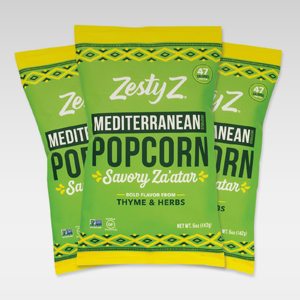
[00:05:12] Ray Latif: Well, I have some more snacks in my hand. I have Zesty Z's Mediterranean popcorn. This is their spicy variety. Thanks so much to Alexander Herrick. He sent these over. He's the founder and CEO of Zesty Z. I just call him Zesty Z. You call him Alexander? Zesty Z is a maker of za'atar condiments and spreads. If you're not familiar with za'atar, it's that piquant thyme and herb seasoning that's been used in the Middle East and Mediterranean for more than decades, probably centuries at this point. Yes, we'll call it centuries.
[00:05:42] Matt Light: Regardless, tasty stuff. Those are big in flavor. It's not just tasty, it's zesty. John Craven, do you want to do the honors? I mean, I would just like to point out that this is a full bag of popcorn. That is absolutely a full box. You can feel it. Yes, STC. They didn't put that on the label. They didn't know my god. It's like green popcorn, too Really the bag is orange.
[00:06:02] Keel Vodka: No, I mean, yeah, you got that have some spicy popcorn I think Beth is like he's got a tractor beam like vision on this I can tell she wants popcorn It's just talking about this with Aaron over on the Nosh side how much we love popcorn Aaron Cabre our editorial assistant. That's correct. Yes Yes, we love popcorn and ice cream over there. What of the major food groups? Oh You were eating popcorn and ice cream? No, we love those things. Who doesn't love popcorn and ice cream? I don't know. I don't want to know that person.
[00:06:30] Ray Latif: Wow. Together? I would eat popcorn and ice cream at the same time or like popcorn infused ice cream for sure.
[00:06:36] Keel Vodka: That would be good. I use popcorn as a palate cleanser at trade shows. If you can find a plainish one.
[00:06:42] Ray Latif: Yeah, but where can you find a plainish popcorn?
[00:06:45] Keel Vodka: They're around.
[00:06:45] Ray Latif: Yeah. Okay, that's an interesting way to clean your palate. I like that. This flavor is big. You know, it is dry January. I don't know if anyone's partaking in dry January, but we had a visit last week from some folks who have created a Sober Curious-ish product. It's a hop-infused sparkling water. The brand is called Oregon Hop Springs. They're based in Bend, Oregon. Cindy and Dave Glick are the co-founders. I don't know if you guys got to try it, but have you tried the hop? I mean, we have hop tea. We've obviously tried hop tea and hop water, but it seems like that's an interesting alternative for folks who are trying to cut back on alcohol and cut back on beer. In fact, Cindy and Dave were talking about how they go and sample the product at beer events and hop events across the Pacific Northwest. And it seems to be a go-to product for folks who are, well, reducing their beer intake. We actually recorded an interview with Cindy for a future edition of our Elevator Talk series, which showcases up and coming food and beverage brands to the industry via short interviews with their founders. The content is published on YouTube and Instagram stories. If you're a founder and interested in participating in Elevator Talk, just send us a note to askatasteradio.com. I'd send you or I'd say the entire link to the application, but it's probably just easier to email us. We also had a nice visit from Nassim Ayoud, who's the co-founder of Punch Pops, a brand of alcohol-infused ice pops. They're made with really premium ingredients, nothing artificial, and made with orange wine. That is wine made from oranges as opposed to the other orange wine.
[00:08:22] Matt Light: The other orange wine that has this, it's a white wine with The King, the grape skin.
[00:08:26] Ray Latif: Yes, limited contact with The King as well. So yes, did you get to try some Punch Pops, Mike?
[00:08:32] Matt Light: I did. They were aptly named. Yeah.
[00:08:35] Keel Vodka: Did they pack a punch? Yeah, they did.
[00:08:37] Matt Light: Mike was on the ground just eating a Popsicle. Yeah, I was in fetal position immediately after my first. No, I mean, they're definitely on the boozy side and quite refreshing and tasty.
[00:08:50] Ray Latif: They are, they're 7% alcohol per serving. They are quite tasty. We had a jolly time in the office on Friday.
[00:08:58] Matt Light: We really did, it was nice. I was not there that day, which maybe contributed to the jolly time, but yeah, kind of bummed. I think we still have some in the freezer. I'm gonna give those a try one of these days. Yeah, you definitely need to give those a go. As somebody who's down with the whole spirits industry, this is a different delivery method, different experience, pretty cool. Literally cool as well.
[00:09:20] Keel Vodka: Yes, very very cool. Did you get your own bed? No not yet? I keep looking at them though, but it's always at the wrong time of day
[00:09:25] Ray Latif: Well, you can always take one home.
[00:09:27] Keel Vodka: I don't want to be as jolly as you, though. You got so jolly you were vacuuming your office wildly.
[00:09:31] Matt Light: We're coming full circle.
[00:09:32] Keel Vodka: I'm not always ready for all that during the day.
[00:09:34] Matt Light: That was after he cleaned out the secret cupboard because everybody started raiding it.
[00:09:39] Ray Latif: There was a video taken of me on Friday, me vacuuming my office. If you want to come really full circle here, the reason I was doing that is because I was elbow deep in a bag of Zesty Z popcorn. True story. And I was pulling out the last kernels and I realized that as I was pulling out the last kernels, a whole bunch of it spilled all over the floor. I was like, okay, I don't want to leave my office like this. You know, I know we have a cleaning crew come in here after hours, but I'm not going to leave this for them. So I went and got the vacuum and I started vacuuming. And some guy in the office started filming me, put it on Slack, and it was pretty funny. But yeah, that's why I was vacuuming. It wasn't due to the Punch Pops. I was jolly, but not that jolly.
[00:10:23] Keel Vodka: Some guy. You just needed a little snack.
[00:10:25] Ray Latif: Yes.
[00:10:26] Keel Vodka: Very zesty, gotta say.
[00:10:27] Ray Latif: Well, once again, thank you to Nassim for dropping by. If you're listening and happen to be in the Boston or the San Diego area, please let us know. We'd love to have you in the office. We'd love to try your product, chat with you about your brand, your business. Just send us a note to ask at Taste Radio. As we mentioned in last week's episode, we will be, a bunch of us, at least the four of us in this room, and then a few of us outside this room, we'll be visiting the Sonoma and San Francisco areas this weekend. What's that? Five of us. Oh, five of us. Yes, because of Nate, our director, our videographer, our photographer, all of the above, Jack of all trades. For the Winter Fancy Food Show, the 2020 Winter Fancy Food Show, if you're going to be in the area, if you're attending, exhibiting, please drop us a line. A good way to do that is to DM us on Instagram. Some of you already have. Thank you so much for doing so. BevTrade with a Y, B-E-V-T-R-A-Y-D-E, BevNetKraven.
[00:11:23] Keel Vodka: Beth, what's your Instagram handle? It's B-A-K-2-5-1.
[00:11:26] Ray Latif: B-A-K-2-5-1. Yes. All right. And BevNET Mike. You and I, Beth, have non-BevNET, Nosh.
[00:11:34] Matt Light: I think you're still pulling on the gravity of BevNET because you start typing Bev and BevTrade is going to come up, you know? Yeah, that's true.
[00:11:41] Keel Vodka: Well, you know, BevNET Beth, just something about that is too much.
[00:11:45] Matt Light: That's true. You could do Nosh, Beth. That sounds weird too.
[00:11:47] Keel Vodka: That sounds weird too. Something about Beth being one syllable makes life weird with things.
[00:11:51] Matt Light: Beth Nosh? That sounds like a fake name.
[00:11:53] Keel Vodka: It sounds like I'm trying to say a sentence like Beth eats and then I'm just like Beth Nosh talking like a caveman. But I can think about it.
[00:12:01] Matt Light: Beth Nosh now. That should be your little tagline on your bio. Talking like a caveman.
[00:12:07] Keel Vodka: I mean, I do apologize to Carol often for sending her things on Slack like, story ready now, read please. And then I'm like, oh, that thing I was supposed to write is finished. That is the sentence now.
[00:12:21] Matt Light: It's to the point. Yeah. Caveman Beth? Caveman Beth.
[00:12:25] Keel Vodka: Caveman BevNET Beth.
[00:12:29] Ray Latif: Gosh, off the rails, we've gone. Yes. Anywho, please DM us if you're attending, exhibiting, if you're gonna be in the area, we'd love to see you. We do have a correction from last week's episode. Speaking of last week's episode. Yeah, I think. It's not necessarily a correction, so to speak, it's more of a sort of a miscommunication about a product.
[00:12:46] Matt Light: Mike, you wanna explain? So Chum Fruit Bites, basically we have this basket where we pull out interesting packages, right? And we try them, people send us things to the office, we decide to discuss them on the show and we pulled out this package of Chum Fruit bites, which I think, I think did what they were aiming to do, which is to evoke some kind of emotion in me. I was like, what is this? What could this possibly mean? Could it, is it, is it pals like your friend or is it, you know, chum like chum the waters? And so it got us talking and, um, you know, uh, end of the day, it turns out that it, they mean the meaning pals, your friends, and also that it's still very tasty.
[00:13:25] Ray Latif: Indeed. And there's a charity component to it, which is why each package has the animal on the front of the package.
[00:13:32] Matt Light: They're supporting the mission of wild aid to save endangered species.
[00:13:36] Ray Latif: Yeah. It's good stuff. The product itself, fantastic.
[00:13:40] Matt Light: Yeah. Simple, clean ingredients on trend. And fruity. And fruity. Yes. And triangles, which I also like. And what? Triangles. Oh, they are cut into triangles. Is my favorite shape. Yes. Not for nothing. Great.
[00:13:56] Keel Vodka: Glad we cleared that up.
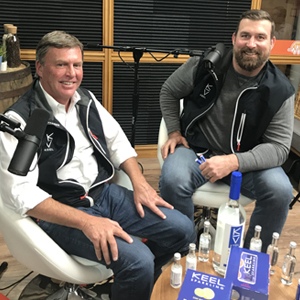
[00:13:57] Ray Latif: Yeah. Alright, I think it's time we get to our featured interview for this episode. That's with Keel Vodka co-founders Matt Light and Bill Dessel. At 23.8% alcohol by volume and 58 calories per serving, Kiel promotes itself as the world's first premium light spirit. Now, as I mentioned at the top of the show, Matt Light is a former NFL standout and was a key member of the New England Patriots offensive line in three of the team's Super Bowl wins. As you might expect from someone who protected Tom Brady's blindside, Matt is built like a bear, and so perhaps not the first person you'd think of to co-found and promote Matt Light vodka. Yet, as Bill explains in our interview, Matt brings as much passion and hustle to Kiel as he brought to the gridiron. Which is critical, given that, as you'll hear from both Bill and Matt, building a spirit company comes with a range of challenges and complexities. But they're getting there, one day at a time. Hey folks, it's Ray with Taste Radio. I'm here at BevNET headquarters in Watertown, Mass. Sitting with me right now are Bill Dessel and Matt Light of Keel Vodka. Gentlemen, thanks so much for being with me. Hi, Ray. Yeah, great to be here. It is great to be here. Matt, you attracted a crowd when you entered the office, former New England Patriots star.
[00:15:12] Bill Dessel: Can I call you a star? I think you were a star. Yeah, I mean, I don't know. I didn't touch the ball or do anything really athletic in my career, so I'm not sure what you'd call me. Actually, I did pick up a fumble one time twice actually and I would have been in the end zone of Dan Copeland had blocked anyone So I love you Dan, but you know had he been a better blocker For his own guys, right? You're looking at a guy that would have had a celebration
[00:15:36] Ray Latif: Keel Vodka has been around for about five years now? Yes. Very cool. So how'd you guys get together? I mean, what was the source of your inspiration? Why did you decide to launch A Vodka?
[00:15:45] New England: It really came from beyond premise. I owned a restaurant in Rhode Island. Okay. And we're lucky to be in Providence, a lot of innovation with Johnson and Wales, a lot of food innovation. The more I got in the business of the restaurant, I just saw a real lack of innovation and spirits. The only thing I could see in innovation wise was the next flavor. And I was kind of, I was one of those real, those owners that I didn't want anything new. The last thing I wanted was another vodka. And the very last thing is a flavored vodka. And I just saw a huge hole in the market for something that was lighter, refreshing, something that I would like. So that's how it all started. And how did you guys meet, you and Matt? We met probably 16 years ago, not playing football. So if you think it was on the football field, it wasn't. You were not a football player, Bill? No, no.
[00:16:30] Bill Dessel: Squash is his game. Squash, a real game. He's pretty good. I mean, I won't take anything away from him. I mean, not that squash is a sport, but you know, in terms of athleticism. Yeah, you do pretty good in that realm.
[00:16:41] Ray Latif: I try. Do you play at the Harvard Club? No down in Rhode Island.
[00:16:45] New England: I have though in the past, but I'm an ex squash player. You can only play for so long, unlike football, you know, where it's just like, you know, it's gotta, it wears on your body after a while. I can imagine it does.
[00:16:56] Bill Dessel: So I was friends with his brother-in-law and then I met Billy and it was immediate that we were gonna have a lot of fun together. And actually, as I'm exiting the game, he's coming back to me with this idea that he and Tom had conjured up over... Tom, your other co-founder. Yeah, Tom McGowan. Yeah. And it's an interesting story because, you know, for me, you know, look, I was a connoisseur. I spent a lot of time in bars, you know, I had a little bit of knowledge of the industry, but you know, here I am retired looking for something to do. And basically Bill and Tom come in and say, Hey, look, we've got this awesome opportunity. You need to check this out. And I thought. You guys are still working on that idea, this concept. Yeah. And it was great because they had just gotten product in and it took a lot of discovery. I mean, they put years of trying to come up with not just the core things, right? Like the name and the formula and, and, but all the, the hidden work that goes into behind, you know, launching a brand like this, whether you're dealing with a TTB and all the regulatory stuff that you had to pass through and, You know, so it's been an awesome journey. It's been something for me, too, that when I retired, I wanted to go from the not so real world of football and into the real world and do something at a very high level, do something that takes more than just skill and whatever. You have to be, you know, dogmatic in your approach, right? Like, you have to really understand that There's a lot of people out there you're competing with. And I liked it. I liked the competition side of, you know, what fuel represents.
[00:18:24] New England: Yeah. We literally went through the phone book and look for someone with the right last name. And we came across, you know, Light, Matt Light and Bill said, wow, that would be really good if we could get him.
[00:18:33] Ray Latif: Well, it worked. It worked really well. Well, let's talk about the Light. aspect of Kiehl because, I mean, that is your big point of differentiation. Yes. Starting from, you know, working with the TTB and the government to launch Matt Light vodka brand, that in itself was challenging. I mean, talk about that process and why it was so difficult.
[00:18:53] New England: It was a huge challenge. And back then you could talk to the TTB. When I first started this, I started trying to permit in 2012. And it was almost like an Abbot and Costello. I would be like, I want to make Matt Light vodka. And the government, the TTB would be, it doesn't exist. I'd be like, I know that's why it's a good idea. They're like, no, it doesn't exist. There's no such thing as light vodka. You know, vodka is vodka.
[00:19:15] Ray Latif: Vodka is vodka because it has to be at 40 proof and made with certain ingredients.
[00:19:18] New England: Yes, at 80 proof. They literally held my hand through the process, the TTP. Literally? Yeah, I mean, it was tough over the phone, but I felt like they were there right with me. But here's where you signed, Bill.
[00:19:29] Bill Dessel: Exactly. For those of you who can't see, Bill has extremely long arms.
[00:19:31] New England: No, but for instance, they would say, go up and, you know, take a look at a regular vodka bottle, Bill. My office used to be in the bottom of my restaurant. The world headquarters of Kiehl started in the basement of our restaurant. And if you look at a normal vodka, it'll say Absolut Vodka. If you look at a flavored vodka, it'll say absolute citron or whatever. And then way down the bottom, in very small letters, it'll say vodka with grapefruit flavoring or lemon flavoring. It's called a statement of composition. And when the light dawned on me, like, aha, to get the vodka on the bottle, we have to have it with something. So that's our kind of our secret sauce. It says vodka with natural flavor. So, but it was a process. That was a hard part. And the harder part with the government was putting the ingredients on the bottle. they would ask me, why do you want to do that? You're trying to make it seem healthy or something. And I would, I just wanted to let people know what was in it because I was just, I couldn't believe the world of vodkas with cotton candy vodka and pita butter and jelly vodka. It was crazy. All the flavors that were constantly being pushed on me at the restaurant. And I thought telling people that was actually what was in it or what's not in it really would be a great thing. And so we were the first to put the ingredients on the bottle.
[00:20:40] Ray Latif: And to be clear, the government won't allow alcoholic beverage companies to promote their products as healthy or even yes, any sniff of health. Exactly. So it I can, I can see both sides. But in your case, it worked. So I mean, what was it that you convinced them to put? How did you convince them to get the ingredients?
[00:20:58] New England: It took about a year and a half. And we had to do all different types of little demarcations, really. It got down to little lines and where it was on the bottle, and it became very, very technical in their mind. And finally, we had to get rid of state balance facts. That's one statement. And then they approved it. I think we wore them down, actually.
[00:21:17] Bill Dessel: Eventually, it was a process. I think, too, the other side of it, right, is now when you hear about somebody putting any facts on their bottle, especially as it relates to the nutritional side of it. It's like, oh yeah, no kidding, that's what you do. Six years ago, that wasn't the conversation. Totally. You know, so when we first launched this, people would look at it and they'd be like, oh wow, there's only calories in vodka? Because the education didn't exist.
[00:21:41] New England: Or zero carbs.
[00:21:41] Bill Dessel: Or zero carbs. And then they would say, oh my goodness, you guys are a premium life spirit. I've never heard of that. We'd say, Yeah, no, that's that's why we made it right. And so it came with such an education in the early years, you know, whether that was off premise, and we're at a liquor store, and we're and we're getting to know our customers. And I think they were all really blown away at that work. But that took an unbelievable amount of work. I mean, yeah, hearing it from his perspective is unique, because he was there from day one, just you know, dealing with these folks. It became a real challenge, almost.
[00:22:11] New England: Like, you know, why does vodka have to be hard liquor? You know, there's a reason why they call it hard liquor. And we just wanted to do something that we actually would like, you know, something that was along the lines of Matt Light beer. I used to Google all the old Miller Light ads, and they all started with Deacon Jones and all these big guys drinking, you know, tastes great, less filling. That was one of the things we're talking to Matt and always and his, you know, friends and things is let's create something that would be light and refreshing, not necessarily healthy, because you can't, you know, make it healthy, but you can make it better for you. Right. And that's where we are today.
[00:22:44] Ray Latif: And that's the term that a lot of folks use is better for you. Yes. You know, there is a, I guess, is a tangential relationship to the term healthy by calling it better for you. But I mean, to your point, Matt, I mean, everything you see nowadays when it comes to trends in the alcoholic beverage business are moving toward a better-for-you product. I mean, hard seltzers, you guys recently launched a seltzer product that you call a vodka soda. But before we get ahead of ourselves, I mean, I'm curious because there have been better-for-you vodkas on the market prior to Kiehl. Vive is one I can think of. How did you sense a way or how did you attempt to differentiate Kiehl from those other products? And you know, those other products that in, you know, cases not like Vive didn't do so well. Right.
[00:23:29] New England: Our whole thing, it's the taste. I mean, it's the quality of the product. Vive was out there. There were a couple of others, obviously Skinny Girl was just launching. And that didn't translate really to our world or my old world of on-premise. You know, a lot of people, women and men, you know, the name was a little off-putting where Kiehl, Our whole thing is liquid to lips and having people taste it.
[00:23:51] Bill Dessel: We always, when we're doing in-store tastings, there's one word we always... Yeah, it's so much fun, you know, they'll come up and want a bottle signed or something if we're in this market, right? Yeah. And eventually, you know, I like to hear what people really actually think, you know, and I think that that's what every every brand does, especially in early years, like you really want to see, okay, what does our customers say when they try it the first time? And of course, we would commission different studies and, you know, different people doing things that would give us a lot of data and touch points with our customers. But at the end of the day, we would be out there dealing in real time with our customer base. And I'd say, okay, give me one more to describe it. Right. But before you do that, I'm going to whisper it in your husband's ear. And I don't know that we ever lost that bet because the one word that always came out, which is really unique to a vodka, right, was smooth. And the second one was refreshing. And so You know, I think if you look at it from that perspective, that is a differentiator, that's something kind of unique, because if you're not a vodka drinker, your mind doesn't ever go to those two things, right? I mean, smooth and refreshing.
[00:24:57] New England: But those adjectives aren't necessarily associated with vodka. And to your question before, I think it's a lot to do, you know, with our percentage of alcohol. It's 23.8% for a reason, because in our opinion, in our distiller's opinion, we work together, you know, creating it, that's where you can really taste it. After 23.8, it starts to almost get that kerosene taste, you know, and up to 40, then you have that almost grimace when you take a shot of vodka. And the restaurant side too, it's better margins too. So you could never take Matt Light beer drinker, you know, convert them to a keel drinker. It's much better for your margins and, you know, your average check and everything in a restaurant. I don't think it's women and men. It's more of the active lifestyle person that really gravitates towards keel. Women, you know, a lot of times will convert from white wine to keel. When they find out there's 130 calories in a white wine and 58 calories in a keel, that's a huge selling point.
[00:25:54] Ray Latif: You still do want to get keel. I mean, you can certainly target the active lifestyle demographic in certain ways and reach The King certain channels. But I mean, to get really broad awareness about keel, you've got to get into the bars, right? Yes. You know, there are some people who might say something negative about Matt Light vodka. So for example, I mean, I was in a bar the other day. And I said, Oh, you know, we were talking about, you know, my job. And I was like, Oh, yeah, I'm doing Apple Podcasts interview with Matt Light, who is one of the co-founders of this brand. And the person said Keel Vodka, the bartender. And I said, Yeah, do you know what he goes? Yeah, that's Matt Light, S-H-I-T. So you've got to convince those gatekeepers, those bartenders as much as anyone. So how do you reach those guys who are non-believers in the product and the brand.
[00:26:37] New England: It's funny when we first launched it, you know, we launched it in Rhode Island where, you know, I had a restaurant and the community really got behind it. And then we came up to Boston and it was a different attitude. You know, all the markets, each state we're in, they're all different for a variety of reasons. Our big thing is it's an education, similar to a wine. So to your point, staff trainings are huge. I mean, I owned a restaurant. You have a bartender that may come in two nights a week. He sees a bottle, he doesn't know what it is, or a server. But that is our first line of attack, really, our bartenders and servers. So the more education, and you can see the light go off. I love doing staff trainings and restaurants and things, and particularly when they, they know that, hey, I could sell maybe two or three cocktails instead of one. or my customer is really going to have fun drinking it and remember my name the next time they come back. And there's liability issues now with bars and servers and bartenders. So the awareness is much greater than it was when we started. But we used to take it personally in the beginning. It was like, You know, we didn't even know how to address it. Sometimes the low ABV, we kind of want to add it more on the calorie side and the ingredient side of it than rather on the ABV side. And then, you know, fast forward today, it's almost the opposite where no one's really, people are drinking it because it's lighter because it's lower ABV, but there's a real education to it.
[00:27:56] Bill Dessel: Yeah. And to that point, I think that, you know, we would have many conversations on, do we even want to talk about the alcohol percentage, right? Like, is that something that we want to shy away from? Almost a side of your mouth would be like, how do you make a, like, Oh, it's a 23.8%. Yeah. And what we quickly learned, and I think it, it did take a little bit of time is that, you know, people actually really warmed up to that once that education happened. Right. It's not easy to do on premise, right? It's not easy to go in and do these in-staff trainings and get everybody on board and really get them to buy in. But luckily for us, what we were trying to do six years ago has become exponentially easier today because the competition's coming and people understand that, you know what? If I can get a little bit less alcohol, that's actually a good thing. I can always have a drink in my hand. I can enjoy my night. I can do it in a balanced way, right? Everything that we've been preaching is now coming out in some other forms, right? We still think that our original formula, our original mindset, what we've launched with Kiehl's Sparkling still fits our brand, right? And we wanted to create this lifestyle brand, something that was bigger than just, you know, a name or an opportunity, right? Um, but we think it's as good today as it's ever been. And it's a lot easier to educate people. So for that guy that was sitting at the bar that says, you know, I don't want Matt Light vodka, you know, it's like, yeah, it's not for everybody for sure. Like it's, it's definitely not something that everybody's going to gravitate towards, but. Part of that too comes with the idea that it's a vodka, right? Like immediately when you hear vodka, you think, all right, 40% full in. If it's not that, then it's kind of like almost negative to begin with. Whereas if you do a little bit of a mindset shift and you say, hey, this is Matt Light vodka. This is an alternative for those drinking beer and wine. Then a little bit of Matt Light switch starts, you know, that starts to come on and you start seeing them go, oh, okay, well, I get that. Yeah. That's the same bartender too that probably said, I remember Matt Light went off sides.
[00:29:56] New England: and ruin that whole thing.
[00:29:58] Ray Latif: I'll tell you that bartender is a big Patriots fan, but it was also a dive. So a dive in keel may not, you know, may not work, may not be the best fit. So it's almost like you've got to pick your spots. Right. And I think we were talking about this before we jumped in the mics, which is that, Kiel is going to work in certain places and it's not in others. But how do you figure out that distribution strategy? How do you figure out that retail strategy?
[00:30:21] New England: One of the best things we did, we stayed local. We really stayed in Rhode Island en masse for the first few years and really learned how to sell it, learned who drank it, why they were drinking it. before we expanded out of our comfort zone, kind of. And what we noticed, you know, Rhode Island's a great place to trial a product, because you have the college crowd, you have Newport, you have Providence, it's very diverse. And we started to realize that, to your point, it was kind of a higher educated consumer. I always say to like a bar owner, a restaurant owner, think Amstel Light, someone that's willing to spend the same amount They're drinking it because they like it. You know, they're not drinking it to get buzzed or to get bombed. They're drinking it because they want to be social.
[00:31:04] Bill Dessel: They want to enjoy their experience. And what you also realize in this industry is that it all comes down to you. You know, distribution is great, but they're not going to be the ones, you know, moving your product. We learned that real early on. Because we didn't come from the industry. So every day was an education. And that's part of why when Bill says staying local was such a huge part of our success to get to where we are today. It's because we watch a lot of other brands that try to do everything all at once. And they didn't really understand who their consumer was, let alone how many pitfalls there are in this industry, if you try to bite off more than you're really ready for.
[00:31:36] New England: And it doesn't really show, like I used to be disappointed, or I'd be at our distributor show, you know, on the table next to me, they'd be like, Bill, how many states you in? And I'm like, uh, two, you know? And I'm like, how about you guys? They're like 22. I'm like, wow. I'd come home to my wife. I'm like, geez, we got to get going. We got to like, get out there. And then the next year they're gone. Yeah. Right.
[00:31:53] Ray Latif: They could be in 22 States and sell a hundred cases. You could be in two States and sell a hundred thousand cases.
[00:31:57] New England: We learned real, our Keel customer is very loyal. It's almost like a diet. Once you start drinking it, it's really hard to go to a, you know, a full strength.
[00:32:07] Ray Latif: Yeah, it was interesting, Matt, I mean, you pointed out that it's really about you guys, you know, you're selling the product, you guys are the entrepreneurs behind the brand, you're the face of the brand in so many ways, you know, how do you establish guidelines for your respective roles? How do you work in a way that's going to bring out the best in each of you?
[00:32:26] New England: Right, it's funny, I'm not a big person on titles and generally, but when you do a startup, I mean, you have to be all in and you have to wear many hats. And you quickly find out as you get going, you know, it's kind of like controlled chaos, who's better at what and who has time to do this. And, you know, Matt has a foundation. We all have kids. I have three kids, Tom has two, Matt has four, pulled in a lot of different directions. And it was just kind of starting to go to our strengths. You know, I'm a lawyer by background, had a restaurant, so I understood the hospitality side of the business, I think on premise, not the store side. Tom was great at branding. You know, he designed our first bottle. He had the name Kiel. Obviously, Matt is very well known. But when Matt got involved, it was funny the night before, when I was thinking about Matt, you know, thinking about someone to do fun videos and promote the brand. And Matt really wanted to get more involved in a startup. and the business behind it, you know, but obviously it takes a village, we always say, so we use everything we can do. You know, if Matt is doing a bottle signing, that's awesome. I was on the board of the Hospitality Association. If I can convince people to take the, you know, the bottle in, it's very, very hard to break in, in this business with a small spirit brand. So, you know, you tend to gravitate what you like really, or you won't be successful. If you try to force somebody in a role, it's not going to work.
[00:33:50] Bill Dessel: You know, it just doesn't, We all bring something to the table, but we also bring these prior lives, right? So whether it was Tom and the guys that he knew, you know, from the Wall Street side of things, you're always raising money, right? When you have a brand like this and you're always going through the headaches of those things. So, you know, each one of us bringing people to the table that are not only there, you know, from a capital standpoint, when you're, when you're going through a raise, but there are also people that can really help the business model and they can help us fine tune and tweak things. And so we've leaned on all these people, all these people that have been in our lives prior to Kiel, to the people we've met within the industry that have been really helpful. I mean, there are people in the industry that are like, hey, listen, son, good luck to you. Don't touch me.
[00:34:34] Ray Latif: For folks who are listening and are not watching the video. I barely touched his knee. It was in between a tap and I almost broke your leg. It was one of the two.
[00:34:47] Bill Dessel: No, but we've had a lot of help, you know, and I think that's been huge. And our families.
[00:34:50] New England: I mean, our wives are, I mean, we're all in, our friends. You know, I had three rules. I said to Tom when I started this and the three rules I said to Matt when I started, I learned this from another business. to make a company, or to start a company and grow a company, it's really hard. Yeah, there's a lot of nights, you're up at two or three in the morning, like, how am I going to do this? How am I going to make payroll? Oh, my God, we have this great opportunity to sponsor this thing, you know, it's it's constant. But my three rules were one, you have to have fun. So I said that to Tom and to Matt. Number two, you have to stay friends. You know, I've known Matt 16, 17 years when he first came to this area. I've known Tom since high school through college. So have fun, stay friends, and then make money. The three rules. So we're two for three right now. So we're getting there. No one bats a thousand, but we're on our way. You're not friends anymore? No.
[00:35:44] Ray Latif: Well, no, I mean, that's really interesting. I mean, you all, you all have your roles and you're all really, you know, you're strong in different aspects of the business, but let's say, you know, you have a serious disagreement about the direction of, uh, of the brand. Let's say you think, you know, you want to enter 10 more States and what do you think that's not a good idea?
[00:36:05] New England: Everything we debate them and every, everything from the can, the color of the can to what States, and we've had, and we have a great board too. So we have some of our. initial investors on the industry side. And we have our, you know, our core guys, our initial investors that are just logical. And we, and we, it's like, if you knew what you were getting into you, would you do it? And we'll sit together as a group and be like, no, I don't think we should enter Tennessee right now. We're just not ready. Or we, you know, hopefully listen to people that have done it before. You know, we're not reinventing the wheel here, especially with distribution.
[00:36:37] Bill Dessel: It is comforting to know that everybody really respects each other. And when we say we're going to do something, the good news is we do it. I mean, it's not like we're half-assing anything, but in this world, like you have to go out and earn the respect, right? Especially going back to distributors, they're not going to give you anything. Right. They deliver your product, basically. You better show up and you better do what you say you're going to do because they're looking for a reason to maybe not work with you. And, you know, those are The King of people we have. They said they're going to be there. They said they're going to do a tasting. They say they're going to show up and do an in-staff training. You know, if we say that we're going to honor some kind of, you know, promotional incentive piece or whatever. Colorado is a great example.
[00:37:16] New England: we worked real hard to finally get the, you know, I used to say I couldn't get arrested at the distributor. Now, you know, we do so many events. I mean, literally, you know, we'll, we'll average over 30 events a month. So every 5k yoga event, you know, Anywhere we can get people to, you know, at our level of our budgeting, it's really a word of mouth or now it's influencers and digital is taking that to the new extreme. But to us, it's getting the product out and having people try it, whether it's an in-store tasting, whether it's, you know, doing someone's book club, literally, you know, and off the beaten track places that like some of our board guys, like, why would you do a tasting, you know, at Lululemon? You can't buy it there. We're like, that's where our consumer lives. Right. We haven't done everything right. Obviously, we've made mistakes along the way. But one of the probably the biggest thing we learned is the people that do work for Kiehl, you know, have to live the lifestyle, have to really believe in it. And that's hard to do to your point.
[00:38:11] Bill Dessel: So our ambassadors, we try to get people that are only working for Kiehl to less of an agency, you know, so whether that's a bartender, yoga instructor, and that's a really good point, because I think early on, we said, Okay, we want to get industry people, right? We want to get people that you know, are part of a tastings group or whatever, we'll hire them. That'll just be a little bit easier on us. We'll find, you know, people that, you know, offer these kinds of services where they'll come in and kind of, you know, handle all your brand ambassadors. And if you're going into a new state and you're opening up, you know, a new territory, you know, we'll kind of take on that. And what you find out is, you know, they're, they're not invested the way we're invested and they're also not, they're not living that lifestyle. And I think that's a really key point because. You know, people that live the lifestyle, naturally they, you know, again, and it has to start with, it has to be a really good product, right? Like you can live that lifestyle, but if it's not a quality product, if it doesn't get, if you don't get past that, you get nothing else done. So these are people that, you know, appreciate, you know, what Kiehl represents and the differences that are there, but they truly live that lifestyle. And then they incorporate that. into what we're asking them to do, not so much where they're, okay, this is the industry I've been in forever, and I just want to get a job working with another, you know what I'm saying? So outside the box, I mean, we bring in people that have never been in the liquor industry, and now there's some rock stars for us, right? I mean, they're out there telling the story, living the lifestyle, and it's real.
[00:39:32] Ray Latif: You know, and then there's athletes. You know, we see a lot of athletes get involved with food and beverage companies or other consumer products, you know, sometimes as endorsers of the brand, sometimes they're investors of the brand. I mean, do you guys, Matt, do you ever tap into your, you know, NFL contacts to help spread the word about Kiehl? And would you ever, you know, consider an NFL or other professional athlete as an investor?
[00:39:56] Bill Dessel: As an investor, I mean, I think we would definitely welcome that. I mean, we have a host of people that we've reached out to on their friends and family lists and then people that we've then come in contact with that are, you know, maybe fall into that realm, right? Like I've actually, you know, sent our deck over to a number of guys that I played with that are a little bit more investment savvy. Like they're, you know, they take an active role in a lot of what they invest themselves in or what their group does. And it's a natural for them because again, it kind of targets that lifestyle, right? That active. you know, lifestyle. So, you know, in terms of just paying them as an ambassador, so to speak, gosh, we do really well with kind of that organic growth and people discovering Kiehl on their own and being really good at telling the story of Kiehl without even our involvement. That's the best way. We have a really good track record with those people that are coming in and reordering and getting to know the brand and getting through that education.
[00:40:52] Ray Latif: I mean, this sounds like a very amazing and rewarding business, but also really tough and very complicated. Yeah. So I got to ask, what's tougher doing this or being a lawyer doing this or being an NFL player? Uh, this is tougher. Okay. Cause this is still being a lawyer. This is tougher.
[00:41:09] New England: Yes. It just tougher in general because it's, You know, you're always raising money, you're always growing the brand, you're worrying about all the people that work, you know, for you. It's all consuming. You know, it doesn't stop. Similar to a restaurant business kind of there, you know, but building a brand, I think whether it's a spirits brand or any brand, to do it successfully, you got to be all in.
[00:41:30] Bill Dessel: You just can't casually do it. You know, everything worth doing, you know, you struggle and you fight through things and you learn a lot and it typically never goes the way you really think it's going to go. I mean, when I got involved, You know, my whole mindset was, OK, where can I fit in? And I love marketing. I love promoting, you know, whether that's what we did from a football perspective in terms of just dealing with the media and always be on the go and and being in the spotlight, so to speak, to, you know, work with my nonprofit and other companies, right, being a spokesman. So when I saw this opportunity and I said, OK, well, I get to work with two guys that I know and I appreciate and respect. We get to launch something. We're kind of disruptors from the standpoint that you know, the industry, they make it really difficult for people that are on the outside to get in. And so you got to, you know, prove your way and you got to earn that respect. I love that idea. But, you know, if I had to compare it to what I've done in football, I would say that one comforting thing for me playing the game of football is like, literally, and I got really tired of hearing this about five minutes into my career over 11 years is like, all it had to do was my job, right? So I focus on what a left tackle needed to do in the communication and went, you know, with that, I didn't have to worry about the quarterback was doing behind me. Because that's not, you know, that's not really an athletic player anyway, but you know, like I had to like, you know, hit people and block people and, you know, do my deal. And if I did that, we'd be okay. Right. And we have a good team and these guys are all professionals. They're really good at what you do. Then you get into the real, real world and you realize that like business is a lot more unpredictable than your sports team. And. Not everybody is drinking the Kool-Aid, so to speak, at times, right? Like we've had to get rid of people that we thought were going to be rock stars. You know, we had people that were advising us in ways that we found out later probably, you know, was more self-serving than it was for the greater good. And other people that maybe weren't really sacrificing the way that, you know, we, we did. And then that starts to breed that cancer in a locker room kind of thing. And, and, and there's so many other variables that go into having success in the business realm, right? Then it is the team. So. It's more challenging overall, if you look at the whole thing, when you're in the real world, than it definitely ever would be on the playing field. But I think some of the same challenges, right? Like, are you able to get up when you get knocked down? Are you really invested? And what do you bring to the table? And how can you do that better tomorrow than you did it today? And really not, you know, Not having that thin skin, right? Being thick skin and being able to say, okay, well, we sucked at this and we're not real great at that, but here's how we're going to attack it. And like Bill said earlier, you know, we've got a lot of really good voices at the table. You know, whether it's the board, people that we consult with, our team, they are invested and now we just got to be able to scale it.
[00:44:20] New England: And we're all different, like to your point earlier on roles, you know, how do you get labels or roles or what do you do? We definitely compliment each other and we respect each other. You know, we laugh, premium light and spirit, the three of us. But, you know, Tom is the spirit. You know, he helps me in ways he doesn't even know sometimes, just being calming or relaxing or just, you know, calm down. But what Matt was funny, we noticed early on, Tom and I, so we were struggling doing this, getting a permit and stuff. Matt joins us right before we launched. And our first distributor meeting, we're sitting there and Matt asked a question that we never thought of asking or it just wasn't our world. It's like, what's our goal? Like, how many cases am I supposed to sell from Memorial Day to Labor Day? I remember when you asked them that. And once we had a number, the three of us walked out of there like, oh, we're going to crush that. We're going to work really hard. We'll show them. We'll sell double that. You know, but it was that mentality, I think, that Matt brought to us and to our whole team of being very goal oriented.
[00:45:19] Ray Latif: Guys, this has been a great conversation. I've learned so much about Kiehl. I've learned so much about what you guys do to make this a magical brand, so to speak. And it's pretty amazing. And I wish you all the luck going forward and hope to see you again really soon.
[00:45:33] New England: And this is huge to us, Ray. Thank you very much. We appreciate the time. This is big.
[00:45:37] Ray Latif: Well, you know, one hand washes the other. So thanks so much again for coming in.
[00:45:41] New England: Stay balanced. Stay balanced, yes.
[00:45:42] Ray Latif: All right. All right. That brings us to the end of episode 68 of Taste Radio Insider. Thank you so much for listening, and thanks to our guests, Matt Light and Bill Dessel. Please subscribe to Taste Radio on the Apple Podcasts app, Spotify, Stitcher, SoundCloud, or Google Play. As always, for questions, comments, ideas for future podcasts, please send us an email to askattasteradio.com. On behalf of the entire Taste Radio team, thank you for listening, and we'll talk to you next time.
[00:46:15] SPEAKER_??: you