[00:00:05] Ray Latif: Hey folks, thanks for tuning in to Taste Radio Insider. I'm Ray Latif, the editor and producer of Taste Radio, and you're listening to episode 69 of the podcast. I'm with my BevNET and Nosh colleagues, John Craven, Mike Schneider, and Jon Landis, and we're recording from the 2020 Winter Fancy Food Show here in San Francisco, California. The Press Room. The Press Room, indeed. In this episode, we're joined by John Sorial, the founder of Tadah Foods, who discusses the ups and downs of running his falafel-centric brand, which recently won investment on the reality TV show Shark Tank. Just a reminder, if you like what you hear on Taste Radio, please share the podcast with friends and colleagues. And of course, we'd love it if you could review us on the Apple Podcasts app or your listening platform of choice. People have been reviewing us over the past week. It's been great. We are sending t-shirts out to anyone who does. Just send us a screenshot of your review to askatastereadio.com. Make sure to give us your address and the size of t-shirt that you're looking for.
[00:00:55] John Sorial: Prey, I really enjoyed spending the weekend with you. I mean, getting to hear some of the calls that you made where you also, before you end a call, you say, and we would really appreciate it if you would rate us on iTunes. I say it in my sleep, like I said last week. Rate us on the Apple podcast.
[00:01:07] Ray Latif: I wake up and I say, please review us, please review us. Apple podcast app, your listening platform of choice. Are you saying that to your child? Maybe my inner child?
[00:01:16] Tadah Foods: So I ran into or from trip dash yesterday and I know he just reviewed us and, you know, a shirt. And I'm like, oh, we should have told you were coming. We would have just brought it for you.
[00:01:26] Ray Latif: Yeah. Big ups to or for that review. Really nice one. But your T-shirt is on its way. Medium, I believe. Correct me if I'm wrong in the mail. Yes. Winter Fancy Food Show, always fun to come to San Francisco. A few line extensions, few interesting products that we saw, a bunch on the table right here. What is this bag of Happy Snaps?
[00:01:47] John Sorial: Who brought this? I brought that, that's from Evoke. They've been making muesli for, I think they said eight years, and they've recently innovated and made these little chips called Happy Snaps. Oat crisps. They make a cocoa, they make a honey, and this is the most addictive one, the berry. And these are oat chips.
[00:02:05] Ray Latif: Or more specifically, wholesome oat chips.
[00:02:08] John Sorial: Now, it also, remember the monster cereals? There's Frankenberry and there's Count Chocula. This is like the Frankenberry and the other one is like the Count Chocula. I don't know if that was intentional, but they need a Blueberry Oat don't have that one yet.
[00:02:20] Ray Latif: Yeah. You wash it down with some Kite. You have two cans of Kite in front of you.
[00:02:24] John Sorial: Excuse me.
[00:02:25] Ray Latif: Kite is once again- So many cans of Kite. Kite is once again an organic sparkling tea that's based in Canada. Oh, nice.
[00:02:33] John Sorial: Yeah, we got to meet up with the kite crew again, and they supplied us for the show, I guess. They gave some Jon Landis, they gave some to me. We've been powered by kite. And there's a specific function associated with each variety, is that what it is? Yes, Ray, this one's called Unwind, and so the adaptogens are designed to help you with balance and stress. I saw something like that.
[00:02:53] Ray Latif: Vegan Rob's launched a new line of mental health teas. They have a few different varieties. One, there's two that I'm looking at right now. One relieves anxiety and one that's anti-aging. There's also one that relieves depression and boredom.
[00:03:07] Shark Tank: Yeah. Sounds interesting. Vegan Rob's never a dull moment over there.
[00:03:10] Ray Latif: Never. For sure. Although I didn't get to see Rob Ehrlich, who is one of the good guys in the industry. I love Rob. Also, some single serve one-offs. I see one in front of Jon Landis. Julie's, J-O-O-L-I-E-S, a brand of organic pitted and non-pitted dates. Pitted. This is a single serve.
[00:03:27] Tadah Foods: What is this? I'm biased. My wife's name is Julie. Spell differently. Yeah, but I kind of like by default have to like this brand, you know, but also, you know, fish basis. Mike Gordon was plugging them on Instagram yesterday. So that also helps you. Julie's like, but no, Amanda's over there. She's fantastic. She's been sharing this for a while now. And they're coming out with this single serve package with the dates are actually pitted and it's a pretty great snack. I got to say. Yeah, I saw they're doing some cool stuff. Packaging is really cool. I like the way that it pops.
[00:04:05] John Sorial: I mean, trying to make dates fun. They've got a new three pack because and Amanda likes to say that. Yeah, it looks like a little deck of cards, but the slogan is everything is exciting after the third date.
[00:04:16] Ray Latif: Yeah, I like what I saw from Queen & Co. That's the maker of granola butter. They have a new single serve of their product, which is perfect for me because if I just had the jar around, I'd eat that whole jar in one serving.
[00:04:27] John Sorial: Not for nothing. They're gooners. So, you know, The first football reference of the show.
[00:04:34] Shark Tank: There's going to be a fine jar. Shout out to Slam Daddy and Allie. Yeah, indeed. John Craven, what do you have in front of you, a Pocket Latte? Well, Mike put this here. OK. It's a lavender vanilla flavored ready-to-eat coffee. Is it chocolate? Translate that into understandable terms. It is a chocolate bar with coffee in it. One cup of coffee, or the equivalent of one cup of coffee in each bar. It's a tasty snack. It's pretty tasty.
[00:05:02] John Sorial: It's got eleven grams of sugar. So it's not like exactly a latte replacement. But I think for coffee lovers who want to, you know, a snack, this is pretty tasty.
[00:05:10] Ray Latif: Yeah, I like the name, like the packaging. It's purple. How many ounces is that?
[00:05:15] Shark Tank: Probably two ounces. Yeah. No, sorry.
[00:05:17] John Sorial: Zero point nine to some cool call outs on the back. They've got like a sweetness rating and a caffeine rating. Did anyone get to try the plant based pork rinds from Beanfields? Yeah, those are quite tasty. Yeah.
[00:05:28] Ray Latif: Story on Nosh posted this week about the new line extension.
[00:05:31] John Sorial: Not pork rinds though. They're careful to say that they are vegan cracklings, which a pork rind is a longer implementation and a crackling are the bits.
[00:05:38] Ray Latif: The little scraps. The little scraps.
[00:05:41] John Sorial: I mean, Landis would be the expert.
[00:05:42] Ray Latif: Exactly. I was just going to say, the most important consumer is the one who likes pork rinds. They live up to the real thing, so to speak.
[00:05:47] Tadah Foods: Yes. They were good. They were very good. I would eat them again. But I also like the Beanfields chips. I'm a big fan of all their products.
[00:05:53] John Sorial: Those spicy queso, oh my God. Yeah.
[00:05:56] Ray Latif: Well, I mean, plant-based was all over the show, as would be expected. Miyoko's, the plant-based maker of cheese and butter products, they launched a couple of new products. What was it, a pepper wheel?
[00:06:08] John Sorial: There's a pepper jack cheese replacement, and then also a cheddar cheese, which are extraordinary, and there's oat butter as well. The oat butter's tasty. Oh, right. Yeah. Very cool stuff. I guess oat milk butter. Yeah.
[00:06:21] Ray Latif: I recorded an interview with Miyoko, the founder of the company. That's going to be appearing on a future episode of Taste Radio. Look for it soon. Also great to run into Paul Evers and the gang from Riff Cold Brew. They have a couple of new line extensions for their Alter Ego line, which is a line of sparkling Cascara drinks. I was really amazed by the fruit juice infused products. One was made with guava and passion fruit, the other one with blackberry, both absolutely delicious.
[00:06:44] Tadah Foods: Yeah, that guava passion fruit. I don't drink those beverages, but I wanted to go back for more.
[00:06:51] John Sorial: It's pretty tasty, isn't it? It kind of, you know, if you like the cascara flavor, the original is good, but I think that the finish of the guava and the berry is pretty good.
[00:07:01] Tadah Foods: I don't drink those beverages. I'm just caffeine free. I'm not an energy drink consumer. So this is not my type of thing. But again, I definitely wanted to go back.
[00:07:09] John Sorial: Did you hear that, Paul? Landis just said it was an energy drink. I mean, we had a conversation about the branding and maybe bringing that to the forefront. So let's see what happens with Riff. But they do have a couple of interesting new accents on their label. Now it says Let's Riff. And there's some changes to the packaging along with the line extension. So interesting stuff from them.
[00:07:31] Ray Latif: You don't drink coffee, Landis, but you have a can of Verve flash brew in front of you. But that's the decaf.
[00:07:36] Tadah Foods: Yeah. Wow. There you go. So I drank a lot of this actually today because it tastes really damn good. And I haven't been able to actually drink coffee. That flash brew is tasty. That tastes good because I'll maybe take a sip or two and then I'll start to get all jittery. Yeah. Verve has a new decaf line extension that they said they're getting a really good reception from, you know, nice looking can for sure. That yellow orange and yellow really pops for sure.
[00:08:02] John Sorial: They also let me touch their Lammers open machine, too. They gave me a latte lesson because I think they're a little bit tired of the shitty latte art I've been making.
[00:08:09] Ray Latif: So I think they immediately regretted that decision. I think so, too. John Craven, did you get to taste the new Blue Bottle extensions, the cafe au lait and the single origin coffee?
[00:08:18] Shark Tank: I just tried their oat milk product. That was honestly the only one I I don't know.
[00:08:24] John Sorial: The New Orleans coffee, too.
[00:08:25] Ray Latif: They've had the New Orleans coffee, but the cafe au lait is new and it was pretty darn good. I really enjoyed it. And that single origin that they have in cans extending that. Yeah, the bright and the bold, those are both pretty tasty. Totally. Jon Landis, you don't drink caffeine, but you got in front of you a bottle of Sunwink, a sparkling herbal tonic. This one is called Lemon Rose Uplift. Did it uplift you?
[00:08:47] Tadah Foods: Yeah, this one's great. I mean, this is there. I don't believe there's any caffeine in this. It's just lemon balm really is the main functional ingredient here. And, you know, I think that product like this, an herbal tonic. First of all, they're doing a nice job evolving it. They got into an actual non-alcoholic beverage bottle and out of a Blue Bottle. They have a resealable cap and they are not painting their bottles. It's just a fully wrapped bottle. Now it looks really, really clean. It's just most people probably wouldn't even notice that they're changed, completely changed their packaging. But they did.
[00:09:21] John Sorial: And it's definitely true to the essence of what they were trying to do in the beginning. For sure.
[00:09:25] Tadah Foods: Yeah, and I think that, you know, we'll see what happens with all these CBD products. But, you know, this is a type of a brand that I could see some people who maybe aren't into the whole CBD trend or it's not for them. They might gravitate towards something like this that is definitely all about like the all natural herbal properties, which
[00:09:45] John Sorial: No one's saying that CBD isn't that, but it's definitely got a nice vibe to it that kind of says herbal, maybe even a little psychedelic there. It has that whole, it reminds me of a Neon Indian cover, a Neon Indian album.
[00:09:59] Ray Latif: Oh, good call out. Good colors. There weren't many CBD infused products. I did see one at Incubator Village. Nature's Nosh. They're little granola balls or something.
[00:10:08] John Sorial: Yeah, kind of granola balls.
[00:10:09] Shark Tank: Yeah. Interesting stuff. There was also Mood 33 here. Oh, okay. Down at the Liberty Richter booth. But yeah, and really not a lot of CBD.
[00:10:18] SPEAKER_??: Yeah.
[00:10:18] Ray Latif: Got a sneak peek of the Remedy Organics new keto products. They have a new line coming out. They introduced it here at the show. Maybe cold brew keto, vanilla and chocolate. Chocolate was pretty amazing.
[00:10:29] Tadah Foods: Makes way sense to me. You know, when you talk about keto, you take a protein smoothie. They're already like low in sugar. I mean, it's a natural line extension for someone like them, and they're going to be showing and pouring that at Expo West.
[00:10:42] John Sorial: Atlantis just also handed me this this hay free to bar, which is a tiny bar, 250 calories, 21 grams of fat. Erythritol is actually listed twice on the label here. Coconut oil, erythritol and then the chocolate chips have erythritol. So they had to list it again. Erythritol. Wow.
[00:10:58] Tadah Foods: That's a keto bar. There were two women that had the bars on their headband and they were walking around and I don't know. They didn't explain the brand to me as much as their need to have keto-friendly products that tasted good, that were snackable.
[00:11:13] John Sorial: Send us an email to askatasteradio.com. Let us know what this is all about.
[00:11:16] Tadah Foods: Yeah, we'll get in touch with them.
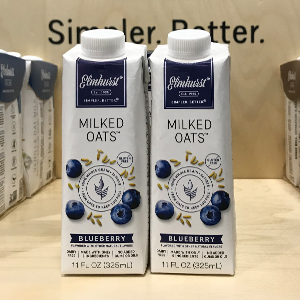
[00:11:17] Ray Latif: Fantastic. Almost forgot, but I know how to because this is one of the best things I drank at the show was the Elmhurst Naturals new milked oats line. I tried their Blueberry Oat, which was just absolutely phenomenal. Great job on that, guys. Also really interesting brand. There's a restaurant chain called Burma Superstar. And they just launched a new line of products called Burma Love. And it's made with Fermented Tea leaves. This product that I'm looking at is a tea aioli, which was just really innovative stuff. Tea aioli. That is not something I've heard of before. It's aioli made with Fermented Tea.
[00:11:52] Shark Tank: How about that? Mayonnaise? It's a fancy name for mayonnaise, yes. Next, you're going to tell me that bone broth is just fed stock, soup. Yeah, that's soup. Terrible. Yeah.
[00:12:04] Ray Latif: But all in all, fun show as always, Food Show. Thanks so much to the folks who stopped us in the halls and told us how much they're enjoying the show. Please keep those comments coming. We're doing it all for you guys.
[00:12:18] Tadah Foods: You know what makes great bone broth is chicken feet. Wow, that is I mean it's just chicken feet and hot water and then you got your bone broth I'm gonna go back to my hotel right now and whip that up.
[00:12:33] Shark Tank: But uh Yeah, this was this is a good warm up for Expo West. You know, Expo West is already on everyone's mind. Or is it like seven weeks away?
[00:12:43] John Sorial: Something like that. Certainly heard a bunch about, you know, a lot of innovation that's coming out that people just aren't ready to talk about, as usual, as usual.
[00:12:51] Ray Latif: But under the day, you know, Expo West is the grandfather of all. Is that what the term is? The granddaddy of all?
[00:12:57] Shark Tank: The godfather? The granddaddy? The granddaddy of them all. The Super Bowl. Can we say Super Bowl in here? No. Stop it. The big game? Cut that, Joe. We said Super Bowl in the last week's episode of Taste Radio Insider. Cease and desist is on the way, right?
[00:13:09] Ray Latif: Stop. Three times Super Bowl winner, Matt Light. That's true. All right. How about we talk about the interview for this episode? Time to get a cocktail. Yeah. As I mentioned at the top of the show, John Sorial is the founder of Tadah Foods, a maker of plant-based Mediterranean-inspired products, including frozen falafel wraps and bite-sized falafel poppers. Launched in 2011, Tadah built a robust business during its first five years, with distribution retailers across the U.S. and annual sales of $2.3 million at its peak. In 2016, however, its manufacturing partner became financially insolvent and sent Tadah into such a tailspin, the company seemed unlikely to recover. But John hung on, and following three dark and grueling years, he received an opportunity to present on the ABC show Shark Tank. The appearance yielded a $500,000 investment from Guest Shark Tank Kind Snacks founder Daniel Lubetsky, along with invaluable media exposure, each of which have reinvigorated the company. In the following interview, I spoke with John about the inspiration behind TADA, why the company contributes 25% of profits to nonprofit organizations, staying focused while constantly under duress, how he prepared for Shark Tank, what it was like to turn down an offer from Mark Cuban. Hey folks, it's Ray with Taste Radio. I'm here at BevNET headquarters at the Taste Radio studio in Watertown, Mass. Sitting with me now is John Sorial, the founder and managing partner of Tadah Foods. John, thanks so much for joining me.
[00:14:43] Jon Landis: Thanks for having me, Ray. I appreciate it.
[00:14:44] Ray Latif: Happy New Year. Happy New Year to you as well. Today is December 31st, and usually I don't say the date of our recording, but this is a special momentous day.
[00:14:52] Jon Landis: Yeah. I feel honored that I'm going to be closing out the 2019 for you guys. And the decade. Yeah. Yeah. So that's actually, now that puts more pressure on me.
[00:15:01] Ray Latif: You guys have been around for almost a decade.
[00:15:03] Jon Landis: Yes, we have been. Actually, it's amazing when you think about it, because it really has flown by. It's amazing when I think about it. It's like, wow, a decade. And I feel like we're just getting started.
[00:15:12] Ray Latif: That was in 2011 when you started.
[00:15:13] Jon Landis: Yeah, 2011 is where we went to trade. Yeah.
[00:15:16] Ray Latif: What month was that? April. April. So you started Tadah Foods a month after I started working here at BevNET. That's nuts. Yes, it is.
[00:15:24] Jon Landis: It is. I guess it's been preordained that we should come together.
[00:15:27] Ray Latif: Exactly. So for folks at home who are not familiar with Tadah, what do you guys do?
[00:15:32] Jon Landis: So Tadah Foods is a frozen line of ethnically inspired plant-based foods. And what we've done is we've taken the cultural wisdom of generational cooking, right? I like to say that people in the US especially view plant-based eating as this hot new way of eating and it's like this new trend. And the rest of the world just calls it eating, right? It's using locally sourced, primarily plant-based foods to provide sustenance and nutrition. And so we've taken those recipes, and we've made them modern and approachable for consumers. It's really about celebrating the inherent qualities and flavors and Taste Radio layering in spices and culinary techniques to extract the best flavor profiles, right? Because people everywhere, they want to enjoy what they eat. And I kind of feel like that's been missing with all of this plant-based focus. It's great that people are focusing now on more plant-based foods as part of an overall diet, but I really think that it should be flavor focused, right? People should enjoy what they're eating as well as having it be nutritious for you.
[00:16:36] Ray Latif: It sounds like it would have been fun to grow up in your house because you probably ate really well and ate lots of flavorful nourishing foods.
[00:16:44] Jon Landis: Yeah, I was a well-fed chubby kid to say the least. And it was a really fun household. My parents were immigrated from Egypt. And it's very common, I think, to people who come from immigrant upbringings. They might have been professionals in different fields, you know, chemistry or medicine or engineering. And a lot of them, when they come to the U.S., they default to food and food service. So my parents owned in Queens, New York, they owned several delis, all my aunts and uncles, they owned either, you know, the catering companies, food distribution, restaurants of all kinds, fast, casual. And so, you know, foods is the big part of culture, right? For everyone, right? For sure. Yeah. And so we ate a lot of home-cooked, plant-based heavy meals. It was just delicious.
[00:17:30] Ray Latif: Your products are amazing.
[00:17:32] Jon Landis: Thank you.
[00:17:32] Ray Latif: I really appreciate that. We had some samples come into the office and I had one of your falafel wraps. I think it was with Lebna and I know falafel as we talked about on the phone prior to our interview. And man, it's really good. Like you would never think you could make frozen falafel taste as good as yours.
[00:17:48] Jon Landis: That's always the highest compliment is someone who's eaten fresh falafel or has made it themselves. And you explained to me that your family business was actually known for, you know, the falafel products. And to hear that from you was a great compliment. But we approached this from almost a naive standpoint when I was developing the product and taking my recipe and scaling it up. I leaned really heavily in my engineering background when I was approaching co-packers. They would tell me the way they would do things. And it was, it was a conversation, but I really insisted that we make the product without doing these tiny small compromises. They kept suggestion because I didn't want it to be death by a thousand paper cuts, right? You substitute one ingredient here, you change one part of the process there, and then you find yourself looking back and the product that you're now mass producing. is nowhere near what you would serve in your home or in your restaurant. And so I think one of the things I'll allow myself to take credit for is being relentless or uncompromising in our approach to the quality of the products, right? I insisted that we soak the chickpeas ourselves, that we get the fresh scallions, fresh cilantro, fresh parsley, and that we really make the product just on a larger version of how we would make it in the restaurant or at home. And then we, through trial and error, like many food entrepreneurs go through, we honed in on the right way to present the product in its optimal form. And that was one of the reasons why I didn't want to just do a plain falafel product, because I think you've probably done this at home, right? You've had some leftover falafel and you've either refrigerated it or you freeze it. And then you go to heat it up, and it's really dry and bland. And so that's why I wanted to make like a comprehensive product, something that had the sauces and everything in it. And so that you didn't have to think about it, right, right, had that good mouthfeel, you know, you lose some of that crispness. But with our gluten free stuff, falafel poppers, you can actually put a little bit of olive oil in a pan and then re crisp them up and they come out pretty close to make my mouth water right now.
[00:19:50] Ray Latif: I want to go back to a point you made about insisting with your co-packers, you insisted that you would have to use the ingredients you wanted to use and prepare the falafel in a way that you wanted to be prepared. How do you insist to co-packers? Because at the end of the day, they're the ones who kind of hold all the cards, right?
[00:20:11] Jon Landis: Yeah, they definitely do. They definitely do. Well, I like to feel like one of my strengths is relationship building. And so I go into things pretty transparent and I like to communicate with people and explain to them why I want to do things a certain way. It's a give and take. Like I said, there are certain things that we did have to, in terms of process and flow, to make the product as efficient as possible or as cost effective as possible. You can't always insist, right? So there's going to be times where you try to get your way and there's going to be times that you have to compromise. So when you're starting up, you work with the co-packer that will work with you, right? And that's part of the process, right? The first co-packer you start with isn't necessarily the best co-packer, but they're the ones that give you the opportunity to make your product at scale. I think a lot of people listening or people that are in the industry will identify with this. Co-packing is part of the journey, right? And it's like finding Mr. Right or Mrs. Right. There's going to be some misses there. Like you're going to end up with some psychos. right, along the way, and you're going to question your judgment and character. And so, yeah, you cut your teeth on the first co-packer, you learn. And again, I'm fortunate that I have an engineering background. So I have a problem solving mindset. And that adds value to the process, right? A lot of times people go into it, they're like, Oh, we don't know what to do. And co-packers don't want to take on that headache, or they'll overcharge you for what they will be bringing to the table. But because I was able to do all of the scaling up of our recipes, and there are recipes, and I was able to actually problem solve a lot of the process issues. But co packers ultimately hold a lot of power. To this day, we are constantly looking for co packers that can not only improve our efficiencies and our outputs and be able to scale with us as we grow. And we're, you know, we're looking forward to a tremendous 2020. But also, to improve the product, because even though we hear all the time, this is the best tasting frozen product, or one of the best products we buy at grocery, it's like an A plus, I'm figuring out from that immigrant mindset, how do I get an A plus plus, right? Ray, you probably remember this growing up, you would come home with a 97 on a test, and your mom or dad would be like, oh, that's good, but why'd you miss three points, right? It's never good enough, right? And so you're constantly trying to beat yourself. Which I think is healthy, right? For us, our whole brand is based on our product quality and the uniqueness of our flavors and how fresh everything tastes. And consistency. And consistency, right? Exactly. That was one of the issues we had with one of our co-packers was, I'll tell this story real quick, we were off like a rocket from 2011 to 2016. I think we really just caught everyone by surprise and we were winning multiple awards and we're just gaining distribution. We were making some mistakes, but because of our scale and we were trying to, you know, be strategic about our growth, they were pretty manageable mistakes. But in 2016, We were having issues with our current co-packer and we were looking to, as our volume increased, reduce our manufactured costs and also increase output. And we ended up partnering with a newer co-packer that promised us best-in-class production facilities, that they would have a process flow that was tailor-made for our product and would allow us to realize some real gains in our margins. And we ended up partnering with them. and they eventually became financially insolvent, and that sent us into a tailspin. That really hurts an upstart brand. You can weather a lot of difficulties and challenges, but having your product unavailable for several months, that's almost the kiss of death. We should have gone out of business, and we almost did several times, but those two years were the most lonely and challenging years of my life. you really have to dig deep in order to keep going because it's just one bad day after another. I always felt like this wasn't the end and that's where that pathological optimism comes into play. You're thinking about Well, if I could just get over this next hurdle, I'll start to see some daylight. And then you get that other hurdle, and you might get like a little glimpse of something at the end of the tunnel. But it was pretty dire. I was like, yeah, I think we're gonna end up turning off the lights here at Igudugud.
[00:24:45] Ray Latif: you know, having a positive outlook on the future of the brand is one thing, taking those steps to right the ship.
[00:24:54] Jon Landis: So the first thing is being confident that the company that was successful just a few short months ago is the same company and that potentially even better, and that you were dealing with a liquidity and manufacturing issue. I mean, two big major issues, right? There's a lot of great companies that fail because of those issues. I basically doubled down, like mortgaged my house, took on, you know, personally guaranteed small lines of debt just to keep production going. key decisions in the form of being really transparent with our vendors. You know, it's a common saying, fake it till you make it type of thing. I don't know if it's my upbringing, you know, from New York City. I'm not a fake it till you make it kind of guy. I'm almost painfully authentic in how I approach things. And I just had really difficult discussions with our vendors saying, hey, this is where we are. This is, I know we owe you guys money. And I put together a plan. This is before Shark Tank. This is how I hope to get back on track here. But I really need you guys to kind of lean in on this problem with us and help us to keep going. And as much as I like to joke about all the bad co-packers we've had over the years, we've also had some tremendous vendors that have supported us and that have helped us. And a lot of our success is due to their support. So being truthful and open in those conversations, I think is really key. Investing in yourself. And I know that often can come across with horrible results, right? When people are like, yeah, I'm going to mortgage my house because I think this is going to work because I have the best poodle shaver in the world. I probably should have not made the correlation between poodle shaving and eating plant-based foods. Yeah, so those were really key. Having really great partners and investors, like my friends and family, and there's three of them that made the initial investment and were part of this whole ride. They stepped up time and time again, right? And when you kind of take a step back, you're like, wow, they were crazy to continue investing and helping. And I would say, hey, guys, I just need this much more to keep going. And that was one of the things that has been highlighted throughout this whole process is there is enough money just to keep you going. And then there's enough money to help you get back onto your growth curve. And I don't think we would have ever been able to secure enough money based on the current state of the company to get back on that growth curve. And from using a chemical term, we needed like a certain amount of activation energy to get back, to get that, that chain reaction going. And that's where I say, I'm incredibly blessed to have been featured on Shark Tank because that was that activation energy, right? Because it just puts you back on a national stage in a way that nothing else can do.
[00:27:56] Ray Latif: As much as it is a way to find investment, it's an infomercial for the brand. I mean, if it's only 10 minutes. We've mentioned Shark Tank a number of times. How'd you get on the show?
[00:28:10] Jon Landis: So in one of those dark, dreary days in which I was barely making it through the day, you hear time and time again for people, Oh, you should go on Shark Tank. You should go on Shark Tank. And you kind of just brush it aside. It's not for me. Right. And cause you, you also, when you're in the industry, you also hear it's one of the most expensive forms of VC money you can get in terms of, you know, how they evaluate your company because they're baking in the media exposure as part of that. And you just brush it aside because I kept, I would just have a pretty active imagination. So I would just, daydream what the interaction with Mr. Wonderful would be like when he finds out we give 25% of our profits. You give 25% and I don't know how much of it actually made it to air, but it did go down the way I had envisioned it with him. Not as negative, but still pretty close. you kind of brush it aside, you brush it aside, because you're so caught up with the blocking and tackling of your company. And then when you're running into issues, you're trying to put out fires left and right. So you don't really think about it. But in one of those days, I just needed something to be hopeful about. And it was Two years ago, I applied online on the Shark Tank site and filled out some questionnaire and I got an automated response. Sorry, casting for season 10 has been closed, but we'll keep your application on file for future seasons. And I never thought about it again. And then I was working late at night at home and I was getting just one bad email and one bad communication after another. I'm trying to process everything and it starts to wear you down, right? Especially, you know, working all day, you know, you come home, you try to be like this positive role model, husband, father, and then you have to kind of like almost disassociate from the entrepreneur side of your brain. And then you log back on, you start working, and then you just, I was just, I was getting tired and I was, I was like, That's it. I'm closing my laptop and I'm going to read a book or just go to bed or something. And I'm walking away from my computer. I hear the ding, whatever, the little notification. And I look and it was someone from Shark Tank Casting. And then they said, Oh, we ran across your application. We're casting for season 11. And then, you know, we kicked off that whole process with him.
[00:30:20] Ray Latif: That's amazing.
[00:30:20] Jon Landis: Yeah.
[00:30:21] Ray Latif: Yeah. To say the least. It's interesting because one of the sharks that was on the show was a guest Shark Tank Lepetsky, who is a food entrepreneur. I mean, it seemed like the timing really worked. Did you know he was going to be on the show?
[00:30:33] Jon Landis: I found out the night before.
[00:30:34] Ray Latif: Wow.
[00:30:35] Jon Landis: Yeah, the night before.
[00:30:36] Ray Latif: Did you tweak your presentation? So, yes.
[00:30:39] Jon Landis: It's funny. He's not just a food entrepreneur, right? He's an icon in the space, right? There haven't been many food entrepreneurs that have built billion-dollar brands in the last 10 years, and he's one of a small handful of people that have done so. And going into it, you know, you have who you think would be your best shark, your top Shark Tank everyone loves Mark Cuban, but, you know, Barbara. And so when I got the notification, I was, oh, by the way, this is who's going to be your guest shark. I literally found out like the night before. I call my wife and one of my partners, I was like, it's Dan freaking Lebesgue. I can't believe it. You know, founder. I mean, I eat his products all the time and love what he, what he and his company stand for. And I remember my wife and my partner saying, listen, don't lock in on him because you get to piss off the other sharks. Cause you're going to start ignoring them. And I was like, no, you're right. You're right. They're like, listen, you want to get a deal. So. treat them all the same, engage, feel out the situation. And, uh, yeah, we're pretty fortunate that, you know, we got offers not just from Daniel, but from also from Mark.
[00:31:42] Ray Latif: That was, I mean, that was interesting. Like, how do you turn down Mark Cuban? And you pretty much have to do it, you know, pretty quickly.
[00:31:49] Jon Landis: Yeah. Yeah. I mean, I was, I was just like, racking my brain because my best case scenario before I knew Daniel was going to be there was I was going to get a deal from Mark Cuban. And then Daniel's there. And I'm like, they're both billionaires. They're both wildly successful. Daniel is in the food space, right? And not only is Daniel in my space and he understands because he was selling stuff out of the back of his trunk when he first started kind. He understands that struggle, but he also made a better offer to us. So at the end of the day, It was a difficult decision, but it was a clear decision to make. What did you originally ask for when you walked in? $300,000 for 10% of the company. So I had a $3 million valuation on the company. Looking at the trailing 12 months, but also historically what we have done as a company, as part of the process, I was looking at different ways of analyzing my company. And this is one of the things one of my friends told me, because going at the Shark Tank, we had done over $8.5 million in sales, lifetime for the company. Uh, which a lot of people kind of poo poo that metric, but lifetime sales. Yeah. Right. You know, it's always trailing 12 months, you know, but I was looking to pull together any bright data points for the company because we were coming off of such a high and we weren't in such a bad place going into the, into the show. and eight and a half million in sales. And one of my buddies, when he was giving me a pep talk, he's like, and he used some colorful language that I won't use here. He's like, listen, someone's blankety blank. He goes, you've sold over 4 million falafels to Americans. You're like, you're the falafel king. And one of my partners would, he would make me laugh sometimes. He would try to like inflate the nomenclature, but at the same time, knock me down on rung. He would say, listen, we're the number one food brand run by a former bald chemical engineer. Right?
[00:33:45] Ray Latif: So now that you do have that investment, now that you do have that great partner in Dan, do you go back to the playbook? in how you built the brand, how you got on shelf, how you partner with retailers, or is it a different kind of approach that you have to take now?
[00:33:59] Jon Landis: There are some things that you hold true to, and there's some things you have to change, right? One of the amazing things about the Shark Tank experience is that it compresses and accelerates dozens of strategic decisions into a really short timeframe. And you are forced with facing some ugly truths, right? You know, that whole due diligence process that you go through with the sharks after the show, it's like a bearing of your soul and all the things that you've done well, but more often than not, all the things that you've done poorly. So one of the things that Daniel, you know, has been coaching me on and kind of like trying to get me to take a step back and look at is that there is no way my company is going to succeed without a really strong team. So he was hammering us and, you know, pushing me, you know, you need to set up an employee, you know, stock option pool or plan, you know, an ESOP. And it's not something you think of when you're a really small company. Also, when you spend a lot of time dwelling on the numbers, you start to realize it's a good thing to run a company lean. but you could also run a company too lean and it could hurt you, right? So taking on the right amount of capital at the right time is critically important to being able to continue to chart a path of growth for your company. So one of the things that we realized is we still need additional funds, right? Because now we're just back on this, on the skate ramp of growth. So I'm trying to get ahead of that and make sure that we secure that capital to continue funding our growth without having to take a step back again as a company, right? Because I want to try and get away from this one step forward, two step back, uh, that we had encountered, you know, the prior years. So we want to be able to keep our foot on that accelerator, if you will.
[00:35:54] Ray Latif: How many people, when you, when you say you were running late and how many people did you have on staff from 2011 to 2016?
[00:36:01] Jon Landis: So for most of the time, it was just me and one other person. You were doing sales operations. I did everything. Yeah. I did everything. Yeah. No wonder Dan was like, you need more people. Well, yeah. You know, it was one of those things where he's like, okay, great. You've done a commendable job doing this, but there's no way you scale this company beyond what it is now without additional people. And he's a hundred percent right.
[00:36:24] Ray Latif: I'm excited for you. This has been so great sitting down and talking to you. Thank you so much for coming in. Just great to hear your story. It's really inspiring and I'm wishing you all the luck going into 2020 and beyond.
[00:36:36] Jon Landis: I'll take all the luck I can get for sure. I appreciate it. I appreciate the time.
[00:36:39] Ray Latif: Thanks so much again, John.
[00:36:39] Jon Landis: Thanks, Ray. All right.
[00:36:44] Ray Latif: That brings us to the end of episode 69 of Taste Radio Insider. Thank you so much for listening, and thanks to our guest, John Sorial. Please subscribe to Taste Radio on the Apple Podcasts app, Spotify, Stitcher, SoundCloud, or Google Play. As always, for questions, comments, ideas for future podcasts, please send us an email to askattasteradio.com. On behalf of the entire Taste Radio team, thank you for listening, and we'll talk to you next time.
[00:37:11] SPEAKER_??: you