[00:00:05] Jon Landis: Hey, Mike, can I get a quick status update on BevNET Live and Nosh Live, please?
[00:00:09] Mike Schneider: Landis, there's over 550 people registered for BevNET Live, and Nosh Live's gonna be our biggest show ever, twice the size of the last one by conservative estimate.
[00:00:18] Jon Landis: And I heard that the room block at the Lowe's Santa Monica Beach Hotel is completely booked. Is that true?
[00:00:24] Mike Schneider: It is true, but we have you covered. We procured a limited number of rooms at the nearby La Meridienne Santa Monica Beach.
[00:00:30] Jon Landis: Well, folks, that's been your status update for BevNET Winter Events. And it's like I've been telling you, get your tickets soon and join us in Santa Monica, November 29th and 30th for Nosh and December 3rd and 4th for BevNET Live.
[00:00:42] Mike Schneider: And December 1st for the Cannabis Forum for Food and Beverage. Visit BevNetLive.com and NOSHlive.com for details. And now Taste Radio.
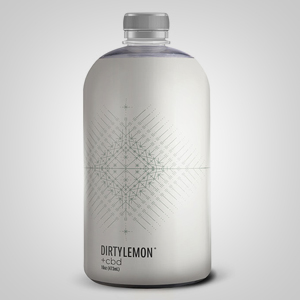
[00:00:58] Ray Latif: Welcome to another edition of Taste Radio Insider. I'm Ray Latif and with me are my BevNET colleagues, John Craven, Mike Schneider, and Jon Landis. This is episode seven of Taste Radio Insider. We're recording from our Taste Radio studio in Watertown, Mass. And in this episode, we feature an interview with Wyatt Taubman, the founder and CEO of fast-growing juice shot brand, Vive Organic, which recently pulled in $7 million in new funding. Just a reminder to our listeners, if you like what you hear on Taste Radio, please share the podcast with friends and colleagues. And of course, we'd love it if you would rate us on iTunes. Well, we've got some Dirty Lemon in front of us. This is the new Dirty Lemon Plus Turmeric. I don't think we're going to be seeing the Dirty Lemon CBD anytime soon.
[00:01:40] Mike Schneider: I was hoping that the box had the last, I saw a box come in from Dirty Lemon and I ran out to the front to see if it was the end of the CBD.
[00:01:47] Ray Latif: No. If you were paying attention to any BevNET news last week, you would have seen that Dirty Lemon has discontinued sales and production of its CBD elixir, timely considering that we were just talking a lot about CBD in Insider Episode 6. John Craven, what do you think about this move?
[00:02:05] John Craven: Well, I guess reading the statement, it certainly sounds like, you know, a move where they got some legal counsel giving them some advice on what to do. You know, Dirty Lemon obviously is one of the, I suppose, higher profile, like non-alcoholic beverages with it. So, you know, maybe the target got too big on their back and time to sit on the sidelines for a bit. Watch everyone else kind of figure this out.
[00:02:29] Ray Latif: Still not legal on a federal level, but that's perhaps one of the biggest impediments to growth for CBD in the category as a whole. Jon Landis, I can't let you not talk about CBD on an episode, so what's your word?
[00:02:41] Jon Landis: I mean, I love that newsletter that we sent. That was like the... That was on Friday. It was all CBD. Well, and it had one brand discontinuing and another brand getting like a raving review for their CBD beverage. That was recess. Yeah, recess. And I think that it's a really great kind of microcosm is like where we are with the CBD industry right now. Nobody knows.
[00:03:02] Ray Latif: And of course, the title of episode six of Taste Radio Insider, the CBD gold rush. If you haven't listened to it, now's your opportunity to do so. Well, maybe not now, but sometime in the near future.
[00:03:13] Mike Schneider: You know, if I was the marketing guy for Dirty Lemon, I'd just be going, you know, Zach, Adam, this is a bummer, but we got a PR hit. We got a PR hit.
[00:03:22] Jon Landis: Any news is good news. Any news is good news.
[00:03:24] Ray Latif: No PR is bad PR. Well, read all about the news on BevNET.com. Once again, the name of the article is Dirty Lemon Discontinues Sales in Production of CBD Elixir. As I mentioned at the top of the show, Wyatt Taubman is our featured interview for this episode. We all know Wyatt, a New Beverage Showdown finalist. From two years ago, June of 2016, that was New Bearwood Showdown 11. And as I mentioned, his company just pulled in $7 million.
[00:03:50] Mike Schneider: Energetic, passionate, driven entrepreneur, Wyatt.
[00:03:54] John Craven: Indeed. And he's for sure coming a long way since his Showdown appearance, you know, a couple of years ago, right when they were like literally getting started. So, you know, it was really great to get to sit down with him. When Mike and I were in LA and You know, he's kind of just opening up about the whole fundraising process and the challenges of it. And, you know, I think it's neat to hear from an entrepreneur about the process and, you know, the pain points of that, as opposed to, you know, I'm sure right now he's probably getting the, hey, congrats on your big raise and everything's all positive. It's really a challenge just to get that kind of over the finish line. So I think this is an interview that hopefully will be useful to anyone out there who's early stage and maybe wondering if what they're going through is normal or whatnot.
[00:04:43] Mike Schneider: Yeah, I feel like this kind of reminds me of the kitchen project that we just did at our house. And, you know, why instead of on the tour of the kitchen, instead of like, you know, just saying, hey, here's the new refrigerator, here's the new island, that kind of stuff. He really stripped it back to the studs and showed us how everything went together and the different phases of the project and what he, you know, what he was thinking about, you know, in various phases of fundraising and what he's planning to do next. And I think this is going to be great for a lot of entrepreneurs.
[00:05:10] Ray Latif: It is an excellent interview. Great job, guys. And for those entrepreneurs that are like, oh, well, I'm not at the point where I'm going to raise $7 million, Wyatt talks a lot about early stage, well before the $7 million, mid-stage bridge funding, et cetera. So a great opportunity to learn about what their process was and how it might be able to apply to your process. Interestingly enough, one of the investors in the round was Powerplant Ventures, which was co-founded by Mark Rampolla. Interestingly enough, Mark Rampolla, a judge during the New Beverage Showdown finals that Wyatt participated in. Yes. Jon Landis, what does this tell you about participating in the New Beverage Showdown?
[00:05:46] Jon Landis: Magic is in the air. I mean, the new Everett showdown is a really fun opportunity. It's a, it's great exposure and feedback. We got 12 brands that are going to get up on stage this winter. We're just getting, working with them now on preparing and stuff, the 16th edition. And we'll see what kind of comes out of the whole thing, but I don't think you really need the showdown. Like, I mean, the showdown is a lot of fun, but it's kind of a shiny object. Like Bevanette live is the real value. He didn't even win the showdown.
[00:06:18] Mike Schneider: He didn't win. And we always tell everybody, Atlantis tells everybody, you know, you don't have to win to get value out of being in the showdown or coming to the event.
[00:06:25] Jon Landis: And I don't even know, I think, you know, Wyatt and I had a couple of conversations just if he should do it. Cause he wasn't even sure if he should do it at the time. We went back and forth a lot. I remember Craven, you introducing me to him as like some surfer bro. And like, And I had no idea what to expect and I got on the phone with him and I'm like, yeah, this guy surfs.
[00:06:46] Mike Schneider: He's come a long way too. He is a surfer guy, but he's also like, he's a careful, thoughtful, data-driven analytical entrepreneur who in this interview is going to tell you what you should be looking at or what he was looking at at each of the stages of investment and what they were trying to achieve and thinking about the big picture along the way, but how he took baby steps to get there. It was fun.
[00:07:09] Jon Landis: And I think a lot of the lessons that he's kind of disclosing aren't just for investment. You know, if you just take a step back on the whole thing, it's when I'm getting into business with someone, they want something out of me. What is it? And how do I maximize that for them? And, you know, at this stage, what's most valuable to me and what should I have my eyes on? What target should I have my eyes on? So I think a lot of what he says is interchangeable outside of just raising capital.
[00:07:37] Ray Latif: Very cool. Good stuff. Please listen to the interview before we get to the interview. Just a quick thanks to a couple of visitors to BevNET headquarters over the past week. We had a visit from the folks behind Prickly, local brand. What do they make again, Jon Landis? A prickly pear juice beverage. A prickly pear juice beverage. Very cool.
[00:07:55] Mike Schneider: I've seen other prickly pears out there.
[00:07:57] Jon Landis: A whole kombucha with a prickly pear. Indeed. Yeah. This is the base of prickly pear as an antioxidant source and a couple of different purees. It's all very early stage development.
[00:08:09] Ray Latif: Indeed. We also had a visit from the folks behind H-Factor. Gail and Chris came in to visit us. H-Factor, a brand of hydrogen waters in a pouch packet.
[00:08:18] Mike Schneider: Yeah, we enjoyed Cortados with them. It was nice to have them come in.
[00:08:21] Ray Latif: Did you make those Cortados? I may have. You are Mr. Cortado in this office. Were they vegan? No, they weren't. These were whole milk. These were whole milk? Whole milk this time, yeah. I'd ask Nate Brescia, who's filming us on Instagram Live right now, how he feels about the whole milk. How do you feel about that, Nate? How do you mean?
[00:08:37] Mike Schneider: I mean, actually, this is kind of weird, because you don't have a microphone. Nate, you need to jump on the mic here and talk about whole milk?
[00:08:42] John Craven: They can probably hear him better. He's talking right in the phone. Indeed.
[00:08:45] Mike Schneider: Indeed.
[00:08:45] Ray Latif: If Nate had been around, I would have made nut milk, of course. Indeed. Well, if you happen to be in the Boston area, or if you're making plans to come to Boston area, we'd love to see you here at BevNET headquarters. Let us know. Just send us an email to ask at Taste Radio.com. We'd love to have you. We'd love to talk to you. We'd love to show you the studio. that we record in. Or we can see you in Santa Monica. Or we can see you in Santa Monica. Yes. We come to you, I guess, sort of. When is BevNET Live again, Jon Landis?
[00:09:09] Jon Landis: December 3rd and 4th, Monday and Tuesday. When's Nosh Live? November 29th and 30th, Thursday and Friday.
[00:09:14] Ray Latif: He memorized those like two years ago.
[00:09:16] Jon Landis: And in between is the? Cannabis Forum for Food and Beverage on Saturday, December 1st.
[00:09:20] Ray Latif: Jon Landis, gold star on his forehead. It's all written on his hand. Gold star on his forehead. Did you just record an aftertaste radio? I think you did. I don't know, we could use it. Alright, let's get to our interview with Wyatt Taubman, who launched Vive Organic in 2015. The cold-pressed two-shot brand markets a range of products formulated with a specific function, including its immunity boost, wellness rescue, and antioxidant detox shots, and which recently picked up national distribution at Whole Foods. As part of the aforementioned discussion about funding, Wyatt spoke about the importance of aligning timing and opportunity, the role of competitors in the brand's development, and how Vive worked with its retail partners to drive velocity.
[00:10:07] John Craven: Okay, so Mike and I are here in El Segundo, California at the offices of Vive Organic and we're joined by Wyatt Taubman. Thanks for joining us. Thanks, John. Thanks, Mike. Always fun to get out here to Southern California and I guess be at ground zero for a lot of these emerging beverage trends. So Vive's been at it for about three years. Yeah. And, you know, a lot's changed since you first started. I think, you know, when you first started, the concept of a shot, a wellness shot, a cold-pressed juice shot, it was a thing, but it wasn't really a category per se. Everything was, you know, kind of about these full-size cold-pressed juices. I'm curious, you know, looking back now, what was it like, you know, to help sort of build this category out? Yeah. And I guess what lessons learned were there?
[00:10:53] Dirty Lemon: Yeah. It's a super interesting point that you bring up around the category and kind of what it's become. Because, you know, three years ago, four years ago, when we were thinking about this idea, we weren't thinking about it as like as it relates to a category. That wasn't what we had going through our mind. We saw what we thought were trend indicators. You know, we spent months looking into this idea of the wellness shot after I had my first experience taking a ginger and turmeric shot and overcoming a cold back in early 2014. So I was looking at it in the context of timing and not wanting to be too early and not wanting to be too late. That's something that I, um, this idea of like not being too early and not being too late is something that some early investors in another company I was doing back in 2013 had told me. When you want to build a company, you really want to, ideally you're finding a product or a space to get involved in that has like a lot of momentum, that there's going to be a wave of momentum that is going to pick you up and carry you and move you forward. And it's really fun and exciting to be able to ride that wave of momentum. And so their feedback back in 2013 that really stuck in my head was, don't be too early. Don't be too late. And it's like, okay, great. You know, if we knew that, like perfect timing, it's easy.
[00:12:22] Mike Schneider: Yeah. Why was that? Why? Like, why wasn't it just about, Hey, start the momentum, you know, start, uh, create the wave yourself.
[00:12:29] Dirty Lemon: Yeah, it's really like these waves, they're bigger than kind of any one company sometimes or any one team. It's something that can be with regards to Vive Organic and wellness shots. It's a global wave. It's a global trend. And so We wanted to get in on the trend but early enough when we still could be the leader and be a pioneer. And the idea of riding this wave is you don't want to be out in front of the wave when you're paddling and there's nothing that you're about to catch. You know, you're just paddling and you're paddling and it's really tough. It's expensive. You're educating a lot of people about this idea, this concept. It's very time consuming, and it may not move forward very quickly.
[00:13:15] Mike Schneider: So you had this idea, and you potentially had the goods in Vive Organic, but investors told you, wait, slow down a little bit. We see indications that others are going to get involved in this market too, and you should come in then?
[00:13:27] Dirty Lemon: So we had investors in the last year, two years asking, okay, what are your thoughts around other competitor, other entrants and how this might evolve over time? There was definitely those investors posing that question, but back when we were getting this off the ground, it was more around, is there a large market opportunity here? Like when we were presenting the idea to investors, they were asking, is there a large market opportunity here? Do you have a product or can you create a product that fits that market opportunity? And do you have the team that can execute? And we were checking those boxes. And that's what was needed to raise our first smaller round of funding back in December of 2015.
[00:14:08] John Craven: So I guess to go back to your wave analogy and the timing and all of that. How important is it to have competition then? I mean, it sounds like, you know, none of this is possible without a sea of, you know, competitors.
[00:14:23] Dirty Lemon: Yeah, competition is I think going back to the timing, it can be a great thing. If you don't have any competitors getting in on your idea or on your space, you might not have a very good idea. Or maybe they're just not seeing it the same way. I don't know. But competitors can be a great thing in terms of consumer education, the build out of a category, more, you know, retailers kind of embracing this concept and dedicating more shelf space. But going back to the wave analogy and the timing, too early would be, you know, years ahead of any competitors, potential competitors. Too late might be when there's 100 or 200 competitors. And there's already a few winners on a national level. You know, and if you're starting the company at that point, you know, the waves passed you by. And there's certainly brands that can start a company when, you know, in a crowded category and they can be successful. But for us, we wanted to ride that momentum and be a pioneer. And that was a big motivator for us.
[00:15:25] John Craven: So let's talk a little bit about shelf space, because I think that's another place where the category and, you know, what's available for vibe has changed, you know, thinking back to a couple of years ago when, you know, shots weren't really a thing in the cold case, you know, you and other competitors kind of improvised a bit, I guess I would say, what was that process like trying to get retailers to Embrace the shot. And I guess just for our listeners sake, how would you describe shelf space for wellness shots now? And maybe just talk a little bit about how, you know, vibe is sold to retail.
[00:15:59] Dirty Lemon: Yeah. So this one was actually, this was a really interesting one for us. We just had come through raising our seed round of funding in December of 2016, and we hit the streets like just trying to test everything we possibly could. You know, every type of retailer, every type of location within the retailers, because we didn't know where the product We had early data points to suggest that our product was performing really well and consumers were loving it, which is what enabled us to raise our seed round. But at that point, we wanted to get as much data as possible to inform our decisions as to where to focus our time and energy, which channels to focus our time and energy, and which types of merchandising solutions would provide the highest velocity or the highest return on our time and money. and where in the stores would result in the highest velocity. And so we hit the ground just testing everything we possibly could for the first really six months of 2016. And after the first six months of 2017, we had enough data points to hone in on which channels were working for us real well, which merchandising solutions seemed to be working well, which locations in the store seemed to be working well, and then it was about educating those retailers that we wanted to get in front of around hey, you know, if you put this product in the front grab and go, the performance is going to be exceptional. But if you put it in this other location in the store, it's going to be, you know, one-eighth of the sales or the velocity. So then it was about, you know, just making sure we were doing a good job educating the retailer as to where to place the product and what types of velocities or, you know, sales they could expect by putting in that location.
[00:17:56] Mike Schneider: So velocity and sales expectations often something that you need to know when you're going for, you know, investment initially. So you have this chicken and egg problem, right? So you have to go and test and learn. And basically that's what you should use a test and learn across multiple channels. How did you gain the confidence of the people who are putting money in initially to get to that point? Super, super good question.
[00:18:20] Dirty Lemon: And that's like, that is the chicken or the egg.
[00:18:22] Mike Schneider: He smiled a lot and said, Hey, I'm a good guy.
[00:18:25] Dirty Lemon: Oh, it's, uh, so it's the challenge for every entrepreneur, right? To get the, uh, the first group of investors to invest. And the way I typically look at it or think about it is, at every phase, at every round of funding, you're going to need to have checked different check boxes in order to get those groups of investors to invest in the first phase, the friends and family round phase. You know, for those, they're going to believe more in you as a person. And so it's going to be a little bit easier to get them to put their money in with less data and less information product. It pays the product for us. It was, we didn't even have the product developed at that point. What we had was large market opportunity slide, you know, deck built out, look at this trend, look at this large market opportunity. Here's the product we know we can create. Here's the team that's going to execute. Will you guys help to get this off the ground? And we know we were able to do that. We were able to successfully raise enough money to then go and create the product that we had let people know we wanted to create. We then got it into a certain number of stores to test and understand how the product was performing. And then once we knew that the product was performing well, we then collected enough data to arm ourselves for our next round of funding. And then we went for our seed round. So different checkboxes that needed to be checked for the seed round. than for their friends and family. And so we made sure that we were honing in on what were those check boxes? What was the seed round investors going to be paying attention to and looking for in order for them to write a check? And once we knew we had, you know, check those boxes, then it was like fundraise, fundraise, fundraise until we got that seed round secured. You know, I'm going to ask you what the boxes are. Okay. Yeah, yeah, yeah. So this is where, you know, it's tricky because in every industry, the boxes are different. Sure. And so like this was my first time in CPG. And so I didn't really know what the boxes were. I spent a lot of time on BevNET. I read a ton to really hone in on what are investors looking for? What are the key, you know, and got to this point of like velocity, right? Velocity is like I was watching BevNetLive and I heard, you know, I think it was Mark Rampolla saying, you know, velocity, velocity, velocity. And so just started to kind of hone in on the different checkboxes and to kind of go back in time and think about it. At our friends and family round, it was large market opportunity. It was basically large market opportunity and team. I mean, those were those, you know, trend indicators.
[00:21:04] Mike Schneider: And you were looking for the ability to prove, you were looking for the ability to figure out what the velocity was.
[00:21:09] Dirty Lemon: Exactly.
[00:21:10] Mike Schneider: We needed to know that at the seed round.
[00:21:12] Dirty Lemon: We needed to get the velocity of the seed round. And so once we had enough money to go and create the product that we believed in, we got our team of doctors behind, you know, the product. We started to formulate. We, we have super grassroots. I mean, we were testing flavor profiles on the Venice beach boardwalk, hundreds of consumers. you know, ranking our different flavor profiles. And once we had our product and we launched it at Erwan, Lazy Acres, and a handful of other Southern California small kind of retailers, we then hit demos hard for the first month. to educate consumers, and then we pulled back because we needed to understand, you know, what was our natural velocity, like non-supported, non, you know, influenced by demos or whatever. We collected about, I think it was about four months of data or five months of data. on our velocities within these different types of locations in Southern California. And that gave us the velocity checkbox that we needed. Sans marketing, so a true control. True control. Yeah, there was no discounts, no demos, nothing. You know, just true, natural, unaided velocity. And once we had that checkbox of velocity, and it was a velocity that we felt was going to be a velocity that would allow us to raise the seed round. Because again, going back to the reading of just, you know, articles trying to find a a benchmark. We needed to find a benchmark that we felt if we could hit or exceed would put us in a position to raise a successful seed round. I was spending a lot of time on BevNET. I found a few different articles that suggested these other beverage brands that had successfully raised Series A, been acquired. What were they doing from a velocity standpoint early on in their life cycle? You found your proxy. I found a proxy. So then I was like, okay, we know we're outperforming some of these brands. large market opportunity trend. It's continuing wind at the back. It's continuing to grow. Velocity metric is their checkbox and a team. And that was, it was time to, you know, go raise our, our larger round of funding to then take us to our series a, we needed our seed round to get us to our series. And our series a had its own set of check boxes. So once we successfully raised our seed round, it was like, okay, what are the check boxes that are going to put us in a position to raise our series a let's make sure we check those boxes.
[00:23:36] John Craven: Now, a couple of years later, you're, you know, raising money for, you know, a Series A round, you know, kind of curious, you know, what sort of adjustments you've had to make, you know, I'm assuming as with any startup, the plan that you, you know, had set out with has evolved, meandered, been made better. So what's that part been like for you?
[00:23:57] Dirty Lemon: Yeah, we have navigated and we've adjusted and maneuvered. And for us, I think a really interesting kind of learning took place immediately following our seed round. We raised our seed round in December of 2016. And we hit the ground just running, just testing everything we possibly could in Southern California, you know, and every type of location that we could possibly test, you know, from airports to corporate campuses, to universities, to coffee shops, to vegan cafes, to conventional, to, you know, fitness centers, yoga studios, you name it. And when we were trying it, we were testing everything we could. And then we were analyzing our performance, like our velocities in every one of those channels and sub channels. So, We dove real deep on our early kind of velocity and early performance to kind of identify what we felt was like going to be the right focus for us to scale the business. And we stayed local in Southern California. for the first really about two years because we wanted to make sure that we figured everything out and solved all the issues that we were facing in a more focused manner basically that we could actually handle. We didn't want to get ahead of ourselves. And once we honed in on what we believed were the right channels based on this early kind of velocity analysis, and once we had really solved for what we felt was like the right, what was going to really work in those channels, product placement, merchandising, et cetera, then it was time to look at raising a larger round of funding to throw gas on the fire, I guess, so to speak.
[00:25:40] Mike Schneider: If you're testing all these different channels, once you have success within the channel, then you have to optimize within the channel. So there's so many variables to test for.
[00:25:48] John Craven: I guess I'm curious, you know, as you talked about having to tick certain boxes for the seed round, what were the boxes that you had to tick for Series A that, I don't know, maybe you hadn't thought about or were challenging? You know, I guess, again, you're kind of working through it. So just curious kind of what lessons were learned.
[00:26:07] Dirty Lemon: Yeah, this was an interesting one, actually. The seed round, we checked the boxes pretty much right on. I mean, we ended up having a very successful seed round and didn't take a ton of time to raise it, which is definitely not like for any entrepreneurs that are listening. You know, it can take, you know, solid six months to raise a seed round. It can take longer than that. It could be as short as maybe three months or so. You got to get in front of a lot of people. I mean, I think I probably spoke to about 500 people. You know, you get about 20 people to put money in, so you get about 480 no's. But for the Series A, I knew that it was, that we needed to get to like a $2 million in trailing 12 months. $2 million in sales, trailing 12 months. Because I just articles I had read saying, you know, that was and people that I was talking to at that point saying, you need to, that's really kind of the threshold for institutional, you know, early stage VCs are going to start to actually be able to fund you. The challenge that we faced was on the other side of the spectrum, the advisors that we were meeting at that point and asking these different questions, they were saying, stay focused in Southern California. So it's, it's tricky to, you know, stay very focused in Southern California or LA and then get to 2 million in sales over the last 12 months. So I thought, okay, well, if we can get our velocities to a point that like, like, let's get our velocities to a point that maybe they aren't gonna have to, maybe that 2 million threshold is, you know, they're gonna say, okay, you know, less, we'll be interested in your company if, even if you're doing less than that. I was wrong on that one. I hit the, hit the ground fundraising in, in September, 2000 and, uh, and 17. Tons of great meetings, met a lot of great people. Within like about 60 days, all the interest that was there from our velocity and our performance, once everyone kind of understood what our trailing 12 months were, we were just too early.
[00:28:08] Mike Schneider: 500 nos.
[00:28:09] Dirty Lemon: We were just too early. And so I was like, Okay, like, gosh, like, we have to do it a different way. So we did a bridge round. And we raised the same amount, but just from a different type of investor, investors that didn't have this threshold that you needed to, you know, hit in order for them to be comfortable putting money in. So we did it under a convertible note, and raised a very successful bridge round. And then that gave us the ability to continue to grow and scale and pull in the right team and partners to continue to build the business. For new investors, what is a bridge round? It's just a round of funding that gets you from one of your rounds to the next round. It's a bonus round. You know, it's like going back to the checkboxes. You know, maybe you need five checkboxes to raise your Series A and you have four of them checked or three of them. So the bridge round gets you that other checkbox. Focus on that checkbox. Get the other checkboxes to go raise your next round of funding. So our bridge round took us from our seed to our Series A.
[00:29:10] Mike Schneider: why you mentioned this before, but raising an A round is very different from angel round or seed round of capital. Yeah. Talk to me about the kinds of money that you were looking for in an A round.
[00:29:21] Dirty Lemon: Yeah. Well, in an A round at that point we were, we're looking for strategic money. We're looking for when I say strategic money, I mean like smart, you know, money that comes with know how, knowledge, connections, advice, feedback, that type of, uh, so industry specific, industry specific and hands on people that are going to want to be involved to help and build the, you know, you can go to for support. You know, that was, that was our goal. But early on, you just need money to grow. So you can kind of get a little bit, I think a little bit more selective as you continue on, and you continue to grow your business. Of course, if your business or your product is performing well, you can start to become a little bit more selective and really hone in on what types of people do you really want to have around the table. That's the goal. That's if your business is doing well.
[00:30:16] John Craven: All right, Wyatt. Well, hey, this has been, you know, tremendously insightful. And I'm sure any of our early stage food and beverage entrepreneurs out there will appreciate the really candid advice that you've given and just information on how this stuff works. Really appreciate you taking the time to sit down with us.
[00:30:32] Mike Schneider: Yeah, thanks, Wyatt. And congratulations.
[00:30:34] Ray Latif: Yeah, thanks, John. Thanks, Mike. Appreciate the time. Thanks. That brings us to the end of episode seven of Taste Radio Insider. Thank you so much for listening. And thanks to our guest, Wyatt Taubman. Tune in next week to episode 137 of the flagship Taste Radio podcast, when we're joined by NBA legend and body armor investor, Kobe Bryant. Please subscribe to Taste Radio Insider on iTunes, Spotify, Stitcher, SoundCloud, or Google Play. And as always, for questions, comments, ideas for future podcasts, please send us an email to ask at Taste Radio.com. On behalf of the entire Taste Radio team, thanks for listening, and we'll talk to you next time.