[00:00:04] Ray Latif: Hello again, and thanks for tuning in to Taste Radio Insider. I'm Ray Latif, the editor and producer of Taste Radio, and you're listening to episode 70 On The podcast. I'm with my BevNET Nosh colleagues, John Craven, Mike Schneider, and Martín Caballero, and we're recording from the Taste Radio studio at BevNET headquarters in Watertown, Mass. In this episode, we're joined by Nick Guillen and Nick Ajluni, the co-founders of Truff, who discuss the digital origins and rapid development of their high-end hot sauce brand. Just a reminder, if you like what you hear on Taste Radio, please share the podcast with friends and colleagues. And of course, we'd love it if you could review us On The Apple Podcasts app or your listening platform of choice. Just a quick housekeeping note. On February 10th, we're going to phase out SoundCloud as a listening platform for Taste Radio and Taste Radio Insider. You won't be able to access new or past episodes on SoundCloud after that day. The good news is that there's many other ways to get your Taste Radio fix, including Apple Podcasts, Spotify, and Stitcher, among others. If you have any questions or desperately want us to continue service on SoundCloud, just shoot us an email to ask at Taste Radio. All right, peace SoundCloud. Not just yet, February 10th. Is anyone going to be sad? I think we have some subscribers on SoundCloud for sure. We have hundreds actually.
[00:01:19] Nick Guillen: I feel a little nostalgia. Sure.
[00:01:21] Ray Latif: I feel a little sad. It used to be our hosting platform. I'm over it. I'm still on a stand of disbelief that anyone listens to this crap anyway. Well, for our listeners who are listening to this crap in San Diego. Damn, bro. You guys have an opportunity to meet the Taste Radio team and the BevNET and Nosh teams that are part of our West Coast office on February 17th. We'll be hosting a meetup at our new office in San Diego. It's a little shindig that's going to take place from 4 p.m. to 6 p.m. Pacific time. We'll have beverages and light appetizers. Oh, light appetizers. I didn't even know.
[00:01:58] Nick Guillen: I don't know. Yeah, geez. I didn't set the budget for this.
[00:02:02] Ray Latif: But we're encouraging folks who are attending to BYOS, which means bring your own samples. RSVP for the meetup at Taste Radio slash San Diego. There's a form On The page. Just include your name, company and email address. We'll send over a few additional details.
[00:02:18] Nick Guillen: Yeah, I'm I guess the lone person in this room that's going to be there in person.
[00:02:22] Ray Latif: You never know. I mean, We Might just jump on a plane and fly out to San Diego. You can come out too. Highlight is you get to meet Jackie though Jacqui Brugliera. Yeah, Jacqui Brugliera producer. What about Landis Jon Landis is gonna be there, of course, too Crickets Are we giving away a t-shirts at this thing Uh, you tell me, I don't, you seem to have all the details. On The t-shirts? Just a period. I don't know. We have to ask Jackie. Are we having fish tacos there, Ray? I hope. I mean, I'm definitely going to.
[00:02:52] Nick Ajluni: I hope so too. I'm going to cancel that trip.
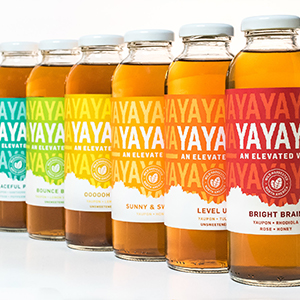
[00:02:54] Ray Latif: Well, we're not sure if we're giving away t-shirts at this thing. I hope we do. One surefire way to get a t-shirt is to review Taste Radio On The Apple Podcasts app or your Favorite Things platform. If you post a review, just let us know by sending us an email to askatasteradio.com. We just need your mailing address and your preferred t-shirt size, and if you can just send us a screenshot of your review And we'll get you that t-shirt ASAP. Just don't rate us on SoundCloud Not anymore now it's kind of a waste of time if you're gonna write a bad review put it on SoundCloud We may we may bump up that date for the phasing out of SoundCloud Bunch of things On The table today lots lots of crunchy things there was a whole bunch of things open before we even got started Yeah, we had to be powered by Union Whole Earth Snacks pepperoni crisps Craven just he busted right into that. That's an interesting one It's just like someone took pepperoni slices and extra dried them out. I think that's exactly what it is It says snackable charcuterie with a hint of pepper and spices you say charcuterie or charcuterie charcuterie How do you say it Martine? Charcuterie? I say it Mike Schneider. Charcuterie. That sounds more like it. Yeah, I think so. Yeah. Union Whole Earth Snacks. And they also make these trail mix squares, one we have on our table here. It's a beef and cranberry variety. Beef cranberry. I mean, those crisps are a little sharp. You got to watch out for those. As in they'll cut the inside of your mouth? Yeah. Oh. That and Captain Crunch. Yeah. Well, as I always recommend after eating these crispy snacks, we can wash it down with some On The things we have On The table, including Ya Ya Ya, which is a brand of functional energy drinks made with yaupon and herbs. We first saw this brand at BevNET Live Summer 2019. Do they call us an energy drink? Uh, yeah.
[00:04:49] Oprah Winfrey: I think they're kind of trying to understand their identity.
[00:04:52] Ray Latif: Yeah, I mean it's like a bottle of tea basically It's not tea it's yaupon and it's like yerba mate isn't tea. It's fun. Exactly So she's trying to create something new here. She has On The founder and CEO Rachel young who provided a new beverage showdown 17 and I should say our good friend Rachel is trying to create something new here with Ya Ya Ya. And you know, she's been working through the identity and this packaging is looking pretty good. And certainly what's inside is tasty. It's just one of those things where, again, you've got that sort of education burden in front of you when you create something new. Yeah, she describes it as Yaupon On The side On The label here. Yaupon is the wild and tea in quotes, tea plant On The United States, the only caffeine containing plant native to all of North America. It's also a true cousin to Yerba Mate. So there you go. I just mentioned BevNET Live, the 2020 edition On The summer event is a lot closer than you think. And if you register now, you'll save $200 off On The full ticket price. I feel like this is where I should do my Ben Stiller impression from Starsky and Hutch. Do it. Do it. Nobody? The new Starsky and Hutch, yes. Have you not seen Starsky and Hutch? Did you see that part? No. Marty, you've never seen this? What? No. Excellent flick. There's a great Snoop Dogg performance in that one. Yes. Huggy Bear?
[00:06:15] Favorite Things: Huggy Bear, yes.
[00:06:16] Ray Latif: Todd Phillips, the director of Starsky and Hutch, also the director On The Joker. Yeah. Well, how about that? Look how far we've come. Moving on up, uh, BevNET Live Summer 2020 is going to be held on June 10th and 11th in New York City. It's going to be epic and lit and what other adjectives you want to use? Definitely.
[00:06:33] Favorite Things: So lit.
[00:06:33] Ray Latif: It's going to be so lit. John Craven, you have in your hand some Little Secrets. Little Secrets is a brand of higher-end candy or higher-end versions of familiar candy products. The one that you got is called Chocolate Pieces, but very reminiscent of M&M's. He's guarding it as if it was a Sushi Rito. I'm just kind of looking at it, tasting one here and there. No, I mean, Little Secrets candies are pretty solid, so always happy to try. I was munching On The crispy wafers yesterday. Milk chocolate, two cream filled wafers. I've been saving one today for a treat. Do you ever do that? Like open up a package of candy or something like that and you don't want to eat the whole thing. So you save one for another treat. Is it the marshmallow test or something like that? I don't know. You know, you get one now or you get two later. I'm unfortunately known for my garbage mouth thing. So that, that rarely happens. It looks like we got our first hangover relief product On The year, which I'm sure there'll be more coming. So that's kind of nice. It's called Hello Tomorrow. It's in a pouch. That's what I was thinking. It's kind of interesting. Does that seem more or less appealing in that sort of package than a shot or a eight ounce can or something like that? Marty, you're talking about Hello Tomorrow. You're referring to Hello Tomorrow. That's correct. Yes. But in your hand, you've got The Plug, which is in a small plastic shot bottle. Yeah, I think this is the format that we've seen most of these drinks in, which is the 3.4 ounce shot, there or thereabouts. Yeah, I would put that On The same set as like Morning Recovery. Yeah, exactly. I think they have actually, they use a similar ingredient as Morning Recovery as well. So, oh yeah, there you go. There's a marketing campaign in here. No Hello Tomorrow or something like that. You know, I don't know. It's something to be said for the way this, there's a play on hell for sure. Also On The table, we've got, what's that called, Mike? Think New. What is that? Spelled like think moo with an N. This is a smarter coffee. Can you see my eyes rolling? Powered by nature. And it's in a pouch. It's in a pouch. It looks like a teabag. OK. And it says the Zen Keto, CBD, Colombian coffee, L-theanine, MCT. And then if you turn it around On The back, it gives you some suggestions for how to use it. For a deliciously creamy coffee, add one packet. Two Hint Water and stir for 30 seconds. One serving per day. It's got CBD, L-theanine, and MCT oil. Single origin Colombian coffee, CBD hemp extract, MCT oil, powder, C8, and a couple other things. So it sounds like there's a lot of functionality going on in there. I think so. Do we need that much functionality? And I'm not, I'm not judging. I'm just saying this seems like there's a lot going on. Ask Amanda Chantelle Bacon. From the founder of Moon Juice? Founder of Moon Juice. She's got products like Sex Dust. Who knows what that does? It has a lot of functionality in it. I don't know. I don't know what that does either. I don't know. I think it's a, well, with Moonjuice kind of a related thing, I think it's something that could definitely be a big hit, especially with the, you know, it's got an attractive design. It's got that sort of convenience factor. It has some appeal, but I think to a pretty narrow set of people who are probably, you know, familiar with some of those ingredients and maybe, you know, looking for a kind of like a bulletproof coffee alternative or instant kind of version, kind of some crossover there. So I think it's definitely got appeal, but probably for a pretty niche market, at least right now. Well, the challenge is you've got to explain what the ingredients are and what they do, right? So you've got CBD, which is already hard to explain. I mean, you've got to explain what MCT oil does, what L-theanine does. I mean, we're seeing brands come to market saying, okay, we've got this great functionality, but yeah, now you have to spend a ton of money explaining and educating the consumer about said function. To be fair, Think New isn't the first one trying to explain what L-theanine does. You've got a lot of matcha brands out there talking about L-theanine. MCT oil has been fairly popular. Certainly people know at this point, some people know what CBD is and what it can do for you.
[00:10:32] Nick Ajluni: Guessing your margins? That's risky. Belay Financial gives CPG brands the clarity to scale smarter, faster, stronger. Get your free inventory ebook by texting TASTE to 55123 and start making data work for you.
[00:10:52] Favorite Things: Tune in at the end of this episode for an exclusive interview with Matt Lin of Belay Solutions. He sits down with Melissa Traverse to break On The biggest inventory and accounting mistakes CPG founders often make. You'll learn how to bring clarity to your numbers so you can scale with confidence.
[00:11:11] Ray Latif: Well, I mean, another example is what we've got On The table, the some humble Humblemaker Coffee shots. Each one of those has some added functionality via natural ingredients like ginseng. We mentioned taste, and I really think that's the interesting thing about like functional coffees is because people you know, such as myself, big coffee drinkers have such a strong kind of identification with what coffee tastes like. And when you combine it with all the, you know, functional attributes, I think sometimes you can get a little bit separated from, you know, it's a little bit harder to balance because coffee has such a strong identity. And I kind of felt that way about the Humblemaker shots. I would recommend these just on taste alone. I think they're just great tasting cold brew shots. And the added functionality is kind of nice. But I think that, you know, for depends on what kind of coffee drinker you are, but the appeal is going to be to really have that, you know, premium coffee taste. And I think that's a tough thing to balance.
[00:12:06] Oprah Winfrey: Yeah, Marty, I definitely agree with you On The taste aspect of it. To me, the sort of added functional stuff is, I don't know, maybe unnecessary and kind of confusing.
[00:12:15] Ray Latif: I mean, it feels like it's selling me on like purity On The coffee, but then we added stuff to it. And I don't know me, I'm kind of a coffee purist. I don't really want to add stuff to it. I think, too, with the label, kind of a lot of stuff going on in terms of calling out all the functional ingredients and stuff like that, and whether that's something that's going to get people to pick this up off the shelf or not.
[00:12:38] Oprah Winfrey: I'm not sure if that's going to motivate as much as just knowing this has great taste.
[00:12:45] Ray Latif: And with that, John Craven takes a sip of Hint Water. That's their new clementine flavor that they launched at the Winter Fancy Food Show. Kara Golden, the founder and CEO of Hint, it's great to have her On The podcast on Taste Radio Insider. A few jumps back, that was episode 20 of Taste Radio Insider, talking about the secret to a successful e-commerce strategy. If you haven't listened to that one, I highly recommend it. What what just happened there?
[00:13:13] Oprah Winfrey: Enjoying some snacks. He just ate a Union Whole. It's another Union Whole snack a beef cranberry trail mix square.
[00:13:20] Ray Latif: Do you need something to wash that down? Okay, I got a cranky coconut Uh, yeah, we'll, uh, we'll wrap it up there. I'm drinking grumpy grapefruit myself. Yeah, we'll wrap it up there. We got, we got some Angry Seltzer On The table. It's a new brand of sparkling waters, flavored sparkling waters, that is. The founder is Howard Weiss. He came to BevNET Live winter 2019. A nice little brand there. He also participated in one of our Elevator Talk interviews. Check it out on YouTube. Are they at all related to Hello Water? I don't think so. I can't stop eating this beef cranberry trail mix square, and I'm not sure why. I'm not sure if it's because I love it or because I just can't understand it. It's incredible. It's probably a little bit of both. This is a pretty interesting brand. I just wish it were a little more positive. You're talking about Angry Seltzer.
[00:14:12] Oprah Winfrey: Yeah, I mean, I think, you know, resentful raspberry. Grumpy grapefruit. You know, it's eye-catching, but I think this might be challenging to get people to really
[00:14:22] Ray Latif: associate with that type of brand so if you go up to your boss and You see he's drinking an Angry Seltzer. You're just not engaging that there. Yeah, I don't know that's uh It's interesting. I don't know what are the other flavors cranky coconut and You know I can deal with cranky and grumpy resentful seems a little I I would have gone for Rageful Red? Oh, there you go. Oh, geez. Maybe that's already taken and trademarked. He trademarks all the flavor names. Psychotic Peach. OK, Psychotic Peach. There you go. I wish we had some trough hot sauce to go with these pepperoni crisps. We don't have any On The office, though, do we? I think we're out. The West Coast branch didn't have to, you know, figure out how to get them on a plane. So they, I think they have all the, all the truff right now. Okay. Well, we're gonna be talking a little bit about truff and how that brand has risen to its prominence. Right about meow. As I mentioned at the top On The show, Nick Guillen and Nick Ajluni are the founders of Truff, an upscale truffle infused hot sauce that's promoted as quote, the pinnacle of heat experience. Founded in December 2017, the brand, known for its sleek packaging and decadent flavor, has become one On The top-selling hot sauces on Amazon and a beloved product among chefs and celebrities, including Oprah Winfrey, who included truff On The coveted 2018 List of Favorite Things. Amid surging sales last year, the company raised its first round of outside capital at a valuation of over $25 million, which the founders say is a reflection of both Truff's growth potential and savvy social media strategy. On The following interview, Nick and Nick spoke about how their backgrounds in digital media and streetwear fashion contributed On The creation of Truff and how Instagram factored into the brand's design and aesthetic. They also explain why it took two years to get to a finished product, and their reluctance to rush trough to market, their thoughtful approach to retail, and why investors are betting On The as much as they are the brand. Hey folks, it's Ray with Taste Radio. I'm here at the 2020 Winter Fancy Food Show in San Francisco, California, and sitting with me right now are the founders of Truff, Nick Guillen and Ajluni Egluny. Gentlemen, thank you so much for being with me. Thank you for having us. Thank you. How is your fancy Food Show going?
[00:16:46] Nick Guillen: Good, really good. Lots of activity, lots of prospective accounts that are bringing us on. Is this your first time at the show? No, it's our third time. Third time? We did it this San Francisco last year and then summer in New York last year too. Right on. And then this one is our third one.
[00:17:04] Ray Latif: So for folks at home who are not familiar with the brand, what is Truff?
[00:17:08] Oprah Winfrey: Truff is a luxury lifestyle digitally native hot sauce brand. What does digitally native mean? Digitally native means a brand that primarily lives online. For us, it's through social media. Facebook, Instagram, Snapchat.
[00:17:25] Ray Latif: So what was the inspiration behind launching a brand like Truff? I mean, we've seen dozens, hundreds, thousands of hot sauce brands come to market, seen many here at the Fancy Food Show. Why did you think you could make a difference? Why did you think you could come to market with a product that was going to resonate in a different way? And this is Nick Guillen who's about to speak, by the way, so let's just clarify. We have Nick Guillen and Nick Ajluni. For folks at home listening, if you hear Nick Guillen's voice, this is what it sounds like.
[00:17:51] Oprah Winfrey: It's not the nice KFM radio voice like Nick A's, but I'll give you my best shot. On The Truff brand actually started with an idea not focused on creating a hot sauce. So about four and a half years ago, I got the handle Sauce on Instagram. And Nick and I, we were involved in various businesses throughout college and always working together On The things that we were passionate about. And at that time, we were really interested in social media, Instagram, really studying brands that were digitally native online. And I got this handle Sauce on IG. Did you buy it? No, I just got it organically.
[00:18:31] Nick Guillen: Wow. You've been like, for a lot of years before that, always like scooping up handles and trying to get good accounts, like building accounts and stuff. Nice.
[00:18:39] Oprah Winfrey: And the first person I told was Nick. I was like, Nick, I just got this handle on IG. This is like Times Square of New York on social media. Let's do something with it. And Every day from that point we just started collaborating and posting imagery we thought would resonate with like the pop culture foodie. So very high quality images.
[00:18:59] Nick Guillen: A bunch of different things like food, lifestyle, women with food, things that would fit the account sauce, like things that were saucy, things that we thought were cool, things that we thought people would like resonate with and gravitate towards. What kind of people, what kind of consumers were you trying to reach? The pop culture, millennial, foodie that's aware of what's happening in music, fashion, sports, culture in general. Just like that pop culture, LA, New York, just like that scene of, I mean, kind of not who we were necessarily, but I mean, that we're very well aware of. Yeah, the word was sauce. Like, sauce is so relevant in pop culture. Think about how many people have said, I got the sauce, or like, I'm saucy, or like, whatever. I mean, it's just a very popular name. And so we wanted to, like, kind of articulate that name through imagery. Got it. And that was our Instagram account at the time. It also happens to be... a product, right? Exactly. Well, the first picture we ever posted was literally a jar of sauce. Yeah, like pasta, just like sauce. It was just like, we're like, well, that's ugly. Yeah. So we're like, let's make this a little sexier.
[00:20:01] Oprah Winfrey: And then On The way, you know, we started growing this account pretty quickly. It was like popping. Yeah. Like after a couple of months, we had like 10, 15,000 followers and like Sam Smith followed us and some celebs started following us. It was turning into like a thing. So he and I were just like, OK, this is cool, but let's not just be a food account on Instagram. Let's take this On The next level. Like, how can we create a platform where a brand would live? How could we create a product and use this as a channel to reach our customers and our followers? On The first market we looked at was the hot sauce market. And that's when we just saw a lot of opportunity.
[00:20:39] Nick Guillen: Yeah, I mean, there's a bunch of different sauces, right? There's like barbecue sauce, there's salad dressing, there's pasta sauce. But what was part of culture was hot sauce. And like Sriracha obviously has become really relevant pop culture. And at that time, this was like during at the election when Hillary Clinton was like, I have hot sauce in my bag, just trying to be cool like Beyonce. And it was just part of culture. She was trying to appeal because she knew it was relevant. And hot sauce has always been relevant. It's something we've always loved and used. And I was like, let's make a cool hot sauce, but not just a cool hot sauce, like an upscale hot sauce, a nice one, one that's different than all the other hot sauces. You know, that's been the same.
[00:21:17] Ray Latif: idea that I think a lot of entrepreneurs On The hot sauce space had, well, I'm going to create something that's so different from what's On The market. But what's inside the bottle is one part. What's outside the bottle is another part. And you have some fantastic branding. Your package is just so striking in so many ways. Did you start with the idea of a brand, or did you start with the idea On The liquid itself, On The product itself? I guess what I'm asking is, what came first, formulation, branding, package?
[00:21:46] Oprah Winfrey: I think what came first was the knowledge and our learnings of studying Instagram and studying CPG over the last, I don't know, four years before this and just really seeing the difference in a brand like Surrock. You know, creating like a high-end luxury lifestyle vodka. And then another brand that maybe has a good product, but isn't positioned as well, isn't branded as well, doesn't really connect to their target consumer. And I think what we wanted was kind of to take everything that we saw On The hot sauce space really On The next level. Amazing formula, like sourcing ingredients from the best, the best. creating custom packaging, you know, custom cap, truffle inspired lid, custom bottle, and really just doing everything On The best of our ability.
[00:22:39] Ray Latif: Had you seen other high-end hot sauce brands out there? No. No?
[00:22:44] Nick Guillen: I mean, so there was just white space for... So more to your point on that, it wasn't like, okay, formula or packaging. It was like marriage On The two and one wasn't before the other. And it was like, we wouldn't have the cap without a truffle formula because the cap is a truffle. The cap looks like a truffle. It's supposed to be our modern take on like a geometric black truffle. But it wasn't like, hey, let's do a cool cap. OK, what looks like the cap? It was really exploring, like, how can we make this sauce luxurious and taste absolutely amazing? And truffle is one On The ingredients we landed on. And figuring out how to incorporate truffle into the sauce, I guess, was kind of where we spent a lot of time. But when we knew we were going that route, all the branding had to obviously match that. And that's where we got the cap and the word truff. I mean, the brand name is literally truff. And so we're clearly a truffle product at this point, you know? Sounds like a great idea.
[00:23:35] Ray Latif: Actually executing on that idea is pretty tough. Nickian, you mentioned that you guys had studied CPG and trends On The space for four years before launching the brand. What were some On The key learnings that you guys had prior to launching the brand?
[00:23:50] Oprah Winfrey: So Nick had a powdered beverage company in college, so we really learned a lot about, what was the name On The company?
[00:23:58] Nick Guillen: Nick's Fix. Nick's Fix? Yeah, that's where I met you guys. Yes. I went to a Bevinette a long time ago. With Marky Mark? Yes, Marky Mark. I was trying to learn about the industry, and that's kind of where we got kind of immersed in branding and packaging and CPG and which ones are doing it right. And On The flip side was the social media aspect of like, just seeing brands pop off and sell product and use influencers, but not really building actual brands, just peddling product.
[00:24:25] Oprah Winfrey: Our mentality, I think, is instead of trying to influence the consumer, it's trying to influence influencer. And in doing that, you really have to not like try to be cool, but be cool. And when you see people at a very high level that organically enjoy your product, it starts to trinkle down, whereas you can pay someone to post and target a certain group of people, but On The long run, that's not really scalable and that's not how you build a legacy, long-living brand.
[00:24:59] Ray Latif: Did you think the opportunity was scalable at the outset? Because I think someone might say, OK, well, if it's a luxury hot sauce brand, it's only for a few people, which makes it inherently niche. But did you think there was a real opportunity to scale this and make it sort of a brand for everyone?
[00:25:12] Oprah Winfrey: 100%. And the great part about Truff is it's still very attainable On The average consumers. We're not selling a $200 bottle of hot sauce. It's an $18 bottle of hot sauce.
[00:25:23] Ray Latif: That's still kind of pricey for most consumers, though, no?
[00:25:26] Nick Guillen: in a world where people are spending $500 on a t-shirt. Or an almond milk latte is six bucks. Yeah. And it lasts, what, 10 minutes? Yeah. Yeah. And truff last, it goes a long way.
[00:25:37] Ray Latif: I mentioned the package. Once again, just beautiful glass bottle, the words truff On The letters T-R-R-U-F-F spilled On The middle. Nick Ajluni, you mentioned the geometric shaped cap that looks like a truffle. Who designed all this? Who designed the package?
[00:25:53] Nick Guillen: So we had an idea of what we wanted it to be like and feel like. We worked with a team that's very accomplished On The space and we kind of brought it to life with them, kind of with our team's direction on where we wanted it to go and we wanted to look and feel like.
[00:26:07] Oprah Winfrey: It was how we could engineer a brand for social media. How can we build virality into a product through the way it looked?
[00:26:16] Ray Latif: And that's because it wasn't going to live on shelf. As you mentioned, it's digitally native, so you don't have to worry about what it looks like on retail shelves.
[00:26:21] Nick Guillen: It was going to live on shelf, just not On The beginning. Okay. We're now making our stride into retail heavily. Some things we didn't want to see was we didn't want to look like the other hot sauce bottles, kind On The standard like five ounce woozy with the kind of, it goes up and then there's the neck.
[00:26:35] Ray Latif: Yeah.
[00:26:36] Nick Guillen: That thin bottle with the small cap. Nothing was off the shelf. Yeah. Bottles custom, troughs like engraved On The bottom, the caps obviously custom. And it's just like, it looks like it's its own category as opposed to just kind of, I mean, if you look, we see pictures all the time of like 30 hot sauces lined up and we like, we stand out because it just, it doesn't look like the other bottles. And so we didn't want to look like the other ones, but we did want it to look like it was nice and upscale, engineered for social media. Truff On The front is because you can't miss that if someone posted on social media. It could have been like Truff at the top, kind of smaller font, but like we wanted it to be very clear what it was and who we are.
[00:27:10] Favorite Things: Do you want more repeat buyers on Amazon? Well, this free resource in collaboration with Straight Up Growth will help your brand turn first-time buyers into long-term subscribers. Download Winning the Repeat Purchase Game on Amazon now at Taste Radio slash SUG. That's Taste Radio slash S-U-G to start building retention-driven growth for your brand on Amazon. Scaling a beverage brand into major retail comes down to operational readiness. From packaging lead times to co-manufacturing strategy, the details can make or break a launch. In a new e-book in collaboration with Octopi and Asahi Beer USA, industry leaders share what they've learned in helping brands scale. Download it now at Taste Radio slash octopi. Do you need to scale your team faster without compromising on talent? Join Oceans for a live webinar on April 20th and learn how leading companies are hiring top global professionals who are ready to grow with your business. Register for the webinar now at Taste Radio slash Oceans. That's Taste Radio slash Oceans.
[00:28:22] Ray Latif: What were some On The most important elements? I mean, you mentioned the brand name itself. The custom bottle is one thing. I mean, did it have to have a certain weight? I mean, how do you think about that sort of incorporating those luxury elements?
[00:28:33] Nick Guillen: It did have to have a certain weight. Yeah. Because shipping, we needed to be under a pound to ship through the mail. Oh, right. First class. First class mail. Not to ship through the mail, but to get, you know, to make it even affordable to be able to send a bottle to someone that's glass, that has sauce in it, in a corrugated box, in an envelope across the country. And so ounces mattered, glass weight mattered, cap weight mattered, the corrugated box mattered. It all mattered to get to that point.
[00:28:57] Ray Latif: How long did it take to get to that point, to get to that finished bottle?
[00:29:01] Oprah Winfrey: A couple years. Yeah, two years, I would say. You guys were patient. That's all we are. Yeah, very, very patient. Now, a lot of brands, it's great to have a minimum viable product. But I think with how we positioned ourselves and what we were building behind the scenes, it was extremely important for us to have a finished product that we could offer On The world that they would take seriously. Because what we're trying to do, it's a lot different than what had been done On The past. So Nick and I probably went through about, I would say, 300 to 400 different variations of a formula that he and I thought were good. And then we narrowed it down to 5 to 10, and then put those feelers out. But most On The feedback, I think, was pretty positive off the bat.
[00:29:47] Ray Latif: You know, it's expensive to start a food company. It's expensive to start a food brand. And as you mentioned, you're a patient two years in development just for the package itself and then creating the formulation as well. How did you support yourselves financially? How did you support the project? I mean, where did this initial funding come from?
[00:30:05] Nick Guillen: So when we were starting it, I was working at a restaurant.
[00:30:08] Oprah Winfrey: I just quit my job and moved back home with my parents and I was basically driving for Uber. At the same time, I had a hat company and I was just kind of like hustling On The side.
[00:30:17] Nick Guillen: Since it was such a long process, there were so many phases of our life that we were doing while building this. He was in tech staffing, quit that. I was working at a restaurant, quit that. We went both of it with our parents. He was driving Uber, started a hat company, sold the hat company while we were doing this, which was crazy. After we kind of started to take out, the first like six, eight months, we were living at my parents, both of us, and running the business out of my parents' garage. And then after a while, I was like, hey, we need a bigger warehouse. Found like pretty affordable office warehouse space in Huntington Beach, and then have grown from there. Now we're in a much larger warehouse.
[00:30:53] Ray Latif: How long did it take before people were like, wow, these guys are actually doing what they said they were going to do, and that trough is actually a viable concept?
[00:30:59] Oprah Winfrey: I mean, out the gate, we came out pretty hot. No pun intended. Yeah, no pun intended. A few On The guys on our team that we kind of got a lot of inspiration and guidance from the beginning, they were very well connected On The industry. So we were able to really blanket social media out the gates organically.
[00:31:20] Ray Latif: They were very influential on social and connecting with them allowed you to have a bigger presence.
[00:31:24] Nick Guillen: Not so much on social but their network. And who are these folks? Two of them, Aaron Levant from, he started Agenda trade show and then ComplexCon and now the app network and then Jon Buscemi who is a luxury sneaker designer amongst many other things. So On The way We had known John, my dad, was running Buscemi with him. And he's a huge foodie, huge luxury guy. And we were working on this concept. And they were kind of gravitated towards like, hey, that's cool. This is a cool idea. And John introduced us to Aaron, who had always wanted to start his own hot sauce. And we kind of all had a similar vision of making it lifestyle, which was one On The key things, as opposed to more of like a heritage brand. And we kind of all just were On The same page. So we decided to all work together On The project. Nick and I, of course. did the majority of everything, but we've tapped On The for a lot of reach and network and inspiration. They're all very smart people and have been a ridiculous amount of help.
[00:32:21] Ray Latif: How'd you learn about the actual business, the sort of nuts and bolts of selling a brand, and particularly selling a brand online?
[00:32:29] Oprah Winfrey: So I think in a lot of maybe two or three years, like I mentioned, Nick and I studying social and these online brands, we learned a lot about e-commerce at the same time. And I learned a lot previously at the business that I had. It was a hat business. I learned a lot about e-com and digital media buying, building brands through Facebook and Instagram. Community management. Yeah, community management.
[00:32:51] Nick Guillen: He had like the best customer service On The world. He was like doing it by himself. It was like the things people would say, this brand is so amazing. I love these hats. They're so quick to respond. Like he was doing it all by himself. He was like, literally start to finish and he realized how far that went. And so one On The things we've always focused on since then was having as good of customer service as possible and like literally talking to people like they're people and not, we're very much so like involved with every one of our customers. Every question we get on Facebook, we respond like immediately and our email support is like as good as it can be. Like we're very focused on that.
[00:33:26] Oprah Winfrey: And building a community was, I think, one On The biggest things. And a lot of brands, you can have a great following and, you know, you could build this big digital thing, but they're not really connecting emotionally with the customers. Like, for example, we have what's called a Truff VIP group. It's a closed invite only group on Facebook. And some of our, like, biggest cult customers who are our friends now join this group and everyone's sharing recipes and what they have in common is our product. And it's really great to be like a part of that. And they're like our family now.
[00:33:58] Ray Latif: It seems like it's easier to build that community when you have that digital interaction. There's a lot of different platforms you can use to interact with your customers. That's certainly one benefit of being online. But you recently have, as Nick, you mentioned earlier, gotten into brick and mortar retail stores. Why'd you decide to make that move? Because it sounds like you're doing pretty well online.
[00:34:21] Nick Guillen: We had always done retail from the beginning, just select retail and like accounts that I think we felt resonated with our ethos and who we are and where we sat. The stories you're in speaks a lot about who you are and what your brand is about. So accounts like Neiman Marcus and Dean and DeLuca when they were around and Wally's and Beverly Hills and now, you know, Selfridges in London and just kind of When we do grocery, it's kind of more high end. Wegmans and Whole Foods, we're in all the Wegmans. We're launching Whole Foods nationally, like this week, Central Market.
[00:34:53] Ray Latif: Are you in stores like Wegmans and Whole Foods, are you positioned, are you merchandised next to? Hot sauce. Hot sauce? Yeah. Is that where you want to be? Is that where you sell best?
[00:35:01] Nick Guillen: That's a really good question. We are a hot sauce. We do great On The gourmet section. The specialty section is, and Whole Foods, when we get a secondary placement on like the cheese shelf, flies. We're a lot of things. We're a great gift. We're a hot sauce. We're kind of a specialty product that goes great with charcuterie. Like, we're so many different things. And I think that's kind of one On The reasons that we've been able to resonate with so many different audiences and so many different types of people. That was one of our really big questions early on. Where are we? Who are we in retail? And that's another reason why we also waited is because we didn't want to do something that wasn't the right thing.
[00:35:38] Ray Latif: It seems like you are On The right thing, and I bet a lot of your investors would feel that way too. Because last year you guys raised a bunch of money on a $25 million valuation for the company, and the company's only how old at that point? Was it a year?
[00:35:52] Nick Guillen: Year and like four months at that point.
[00:35:53] Ray Latif: That doesn't happen in food and beverage. you're a year in, then your valuation is, well, at least you're raising money on a $25 million valuation. Right.
[00:36:01] Oprah Winfrey: We had an amazing first year. It wasn't just smoke and mirrors. We really put On The work. We sold a ton of product, and we really started what was the beginning of what we think is a very prestigious hot sauce brand. And we weren't just, like I mentioned On The beginning, trying to jam a product down a consumer's throat. We were really giving them something that they enjoyed and they liked using.
[00:36:25] Nick Guillen: Yeah, we didn't have to really convince people. I mean, of course, everyone has a different idea of what a valuation company should be and there's really no right answer. But we land on something that was very fair based on a very productive year one. We weren't necessarily needing money. We weren't really looking for money, but we were always open to kind of strategic partners and people that would be value added. And so we weren't just taking money. We were just talking to people who were, we were very much revered and appreciative of their involvement and we knew what they could help us with.
[00:36:56] Ray Latif: What aspect On The deck did you guys try to highlight? And were they the same aspects that investors really wanted to see and hope to see? Is it, you know?
[00:37:05] Nick Guillen: There wasn't actually just like a decade. This is what we're investing. This is our, the opportunity are you in? It was more so just Having real, legit, long, true conversations with people, showing them things we're doing, showing them our numbers. When you say things you're doing, what do you mean? How we approach things, our digital strategy, the amount of impressions we've had, the amount of engagement we've had. Things like making the Oprah list in year one were massive. Sort of intangible things like non-revenue. Plus revenue.
[00:37:33] Favorite Things: I mean all of it.
[00:37:36] Nick Guillen: Like Nick said, there's no smoke and mirrors. We're as open of a book as you could possibly be. This is what we're doing. This is where we're headed. This is what we were able to do in one year. This is why it's working, and this is the opportunity.
[00:37:48] Oprah Winfrey: Yeah, and we looked at comparable brands On The market to get to that number, and we were, we think, more On The conservative end of things. It was very fair.
[00:37:58] Ray Latif: What were some On The comparable brands that you were looking at?
[00:38:00] Nick Guillen: Other like CPG products? Yeah, just like recent exits, you know, recent multiples on revenue, recent, I mean, whatever it may be, just, just, we weren't like outlandish, you know, with, with 100K in sales and wanting 250 times our, you know, top line. It wasn't like that at all. Another thing is a lot On The people we ended up working with, On The groups, they loved the product themselves. And before we even started talking, and they understood what we were doing, and they completely, they got it. And they come from a lot of different areas where they built brands that did not fit On The market to start, you know, on paper. How's that gonna make sense? An $18 hot sauce. But it made sense for them, and they got what we were doing, and that's why, kind of, we were able to land with everyone. Did it help that you guys are young?
[00:38:45] Ray Latif: I mean, you're both... not 30, you were both picked as part On The Forbes 30 under 30 in food and drink for 2020.
[00:38:52] Nick Guillen: Did you feel like that was an advantage for you? I think what people really felt that was authentic, which it is, is our understanding of how to position and utilize social media. It kind of is something we grew up with to a point, I mean, the last 10 years, I guess. And Most On The older generation just doesn't understand it the way we do and understand how to leverage it and utilize it and position things on it. And to that extent, I think there was a lot of trust and assurance that Nick and I were actually very good at operating this business and doing what we knew how to do. And so I think it actually helped us. It certainly seems that way.
[00:39:32] Ray Latif: How many followers do you guys have on social media at this point on, say, Instagram?
[00:39:36] Oprah Winfrey: IG we have over 80,000 organic, never bought a follower ever. Yeah. Facebook is around, I think 30. And then we have a closed invite only group of about 3000. So closed invite only to our customers. They go in there, share recipes, share how they're using. A lot of like people are making friends in this.
[00:39:57] Nick Guillen: in this group, which is really cool to see. I was shocked after that group started to get momentum. I used to see what people were posting on it, the amount of people, the creativity that they're having with creating recipes with trough and what they're putting it on and how much it is a part of people's life. I was like very impressed.
[00:40:12] Oprah Winfrey: Yeah, like people are they're finding what they could use trough with. It's not like trough is their first thought when they're eating. Not, okay, I'm gonna have a piece of pizza. It's, okay, I have this awesome ball of hot sauce, what am I gonna put it on? I think a lot of it's just really authentic. And seeing what people, like for example, it may give us an idea to create a recipe and then send it out to our 100,000 list of subscribers, and it's very value added. So it's like they're giving us value and then we're scaling it up and giving value back.
[00:40:45] Ray Latif: Is social the most important part of your day-to-day? What is your highest value for the company at this point?
[00:40:51] Oprah Winfrey: I think it's all On The above. It's continuing to grow the brand, continuing to build relationships with our customers, finding new opportunities. Kind of what we've been looking at every year since we launched is the previous year, how we can improve every aspect On The business, and how we can continually get better at what we're doing. Learning from the things that didn't work, and then doubling down on some of our successes.
[00:41:20] Nick Guillen: We call it Truff V1, Truff V2, Truff V3. We're on V3 right now. V3? Version 3. Okay. Just like our constant improvement of things that we want to just keep getting better at and doing more of. Totally.
[00:41:33] Ray Latif: Well, guys, this has been really great. I mean, I've seen Truff on Instagram, I think, Right around the time that you guys launched, I was like, wow, this looks like an amazing product. And then you guys sent some to our office. I'm like, wow, this is a really amazing product. So congratulations on everything that you've done to this point, and good luck going forward. Please stay in touch. We'd love to hear more about what's going on On The years to come.
[00:41:54] Oprah Winfrey: Thank you so much, and congrats on everything you guys are doing. We follow everything, and it's amazing to see. Yeah, we appreciate you guys big time.
[00:42:01] Ray Latif: All right, guys, thanks so much again.
[00:42:03] Oprah Winfrey: Thank you.
[00:42:03] Ray Latif: Right on. That brings us On The end of episode 70 of Taste Radio Insider. Thank you so much for listening, and thanks to our guests, Nick Guillen and Nick Ajluni. Please subscribe to Taste Radio On The Apple Podcasts app, Spotify, Stitcher, or Google Play. As always, for questions, comments, ideas for future podcasts, please send us an email to askattasteradio.com. On behalf On The entire Taste Radio team, thank you for listening, and we'll talk to you next time.
[00:42:37] SPEAKER_??: you
[00:42:43] Meet Us: Hello, I am Melissa Traverse here for the Taste Radio podcast, talking about some On The biggest tension points that CPG brands and founders face when they're scaling a brand, and those are financial accounting and inventory management. I am joined by Matt Lynn, inventory accounting guru from Belay Solutions, and he is going to shed some light on all of this that is going to help everybody out quite a bit. Matt, thank you so much for joining us today.
[00:43:13] Ray Latif: Thank you for having us, Melissa. It's great to be out here at Expo West and it's great to sit down and be able to chat this because it's kind of a passion project of ours, working mainly with CPG brands and hoping to help them scale.
[00:43:24] Meet Us: It's been such a pleasure chatting with you and the team and learning all about what you do over there at Belay Solutions. Can you tell us a little bit about yourself and what your role is and the kinds of solutions that Belay gives to CPG brands and founders?
[00:43:40] Ray Latif: Yeah, absolutely. My role with Belay, I'm actually our inventory accounting manager. I run our inventory department, so we work with CPG brands, taking them from spreadsheets, putting them on inventory management systems, and really helping connect their tech stack between their sales online marketplaces to that inventory management system, even down to their financial systems like QuickBooks. Belay overall is kind of an outsourced accounting firm. And with that, we're helping teams. We have different levels with bookkeeping, controller level work, even high level into CFO type items. So we really help those brands in any way that they need financially. And then I just have a subset of a department where we're really just laser focused on inventory.
[00:44:23] Meet Us: It's certainly a complex topic and there are plenty of places to go wrong. Let's start by going right and start super simple. Can you tell us what some On The biggest red flags are that would help a founder understand or, you know, the person running a brand understand that it really is time to get some help with some of these areas?
[00:44:44] Ray Latif: WKYT. They have a lot of transactions that don't get coded or they just put them into placeholders to just get rid of it so it's not an eyesore. They'll notice they have revenue but no cash or they notice that they have a good amount of cash but their blind spot is really seeing the vendor invoices that are sitting there just needing to be paid and so they just lack that clarity that's going to really be around the corner.
[00:45:21] Meet Us: You know, you were talking about one On The red flags that comes up that I think makes so much sense. When somebody asks you what your numbers are and you can't come up with the right number, that's a big problem because that's something that you really should be able to share with decision makers who, you know, you're ideally looking to do business with. What should you be able to call up at a moment's notice?
[00:45:45] Ray Latif: really at any time, you should be able to know an accurate margin. It's amazing how many founders we end up talking to that they can tell you their revenue numbers, they can tell you their selling price, and then the minute you start talking about cost or their cost of goods sold, they just get a deer in headlights look. So really it's very hard to tell, am I even making money? or if you don't know your entire landed cost. Maybe you know what the freight cost is, the duties separately, but you're not really getting that as part of your unit cost. So it's really hard to tell. Am I even making money or am I losing money from the very beginning?
[00:46:18] Meet Us: And do you recommend that founders are able to call up a margin by channel?
[00:46:23] Ray Latif: Absolutely. And depending On The number of products and channels, you kind of want to know what are your best sellers, which ones are making the most and which ones maybe you're not making as much. But especially if you're branching out and you're doing D to C with B to B, absolutely want to know that.
[00:46:40] Meet Us: Gotcha. You mentioned that when things feel really chaotic, that's probably a red flag. I would say that it probably almost always feels chaotic if you're running a CVG brand. And I know this may be hard to quantify, but is there a revenue number? Is there a number of doors number that would help a brand understand whether or not it makes sense to bring on a partner like Belait? Understanding that so many brands are bootstrapped or they might be tight for cash. What is that friction point?
[00:47:10] Ray Latif: 3 3 3 3 3 But as you're growing, as you're getting to those six-figure revenue numbers, and especially as you're approaching seven, you want to make sure you've got good financials. Because as you scale to that point, most likely you're going to be looking to raise capital. And investors, the first thing they're going to look at is your books. And are they clean? And do they show a clear picture of your business?
[00:47:43] Meet Us: You know, another area that folks might look to to organize some On The chaos are their systems. So many folks stick with Excel spreadsheets for a good amount of time. How do you know that you need to outsource some of your accounting to an organization like Belay Solutions versus maybe signing on to a Synth7 or NetSuite or something like that?
[00:48:05] Ray Latif: Well, that's actually something we really help with when it comes to that cost question. That's something that trips people up. And sometimes if you just have a turnkey business, you buy and sell a finished good, you can maintain with spreadsheets. And we've had clients with million dollar revenue that can do that. But we see so many brands nowadays are using contract manufacturers. and they're just sourcing certain parts of their product. So when you start talking cost, they have no idea exactly what their unit cost is. So that's where we come in and we kind of understand, we'll speak with the customers and the clients and get their needs. And then if we think they're ready for a system, then we'll help put them on that system so they can get some of that clarity. And it's not something we force on anybody. There are plenty of times where founders come to us and we'll tell them bluntly, you're not ready for it right now, but we'll let you know when we think you are.
[00:48:51] Meet Us: That sounds like excellent advice. What should a founder or somebody running a brand look for in an outsourced accounting partner? Are there certain checklist items that they should make sure that their partner be able to execute or be able to help them understand?
[00:49:08] Ray Latif: Absolutely. I think one On The keys, there's, there's a lot of outsourced accounting firms out there. Some focus on service-based SaaS companies, but if you're a CPG founder, you really want to make sure that your accounting firm has CPG experience. I would ask them, you know, what kind of brands have they worked with? And even beyond that industry specific, because there's so many subsets of CPG. And that's something that I think is great about what we do with Belay is that we kind of run the gamut. It's kind of like the insurance commercial. We know a thing or two because we've seen a thing or two across a broad spectrum.
[00:49:38] Meet Us: Probably getting references is always helpful, right? Absolutely. All right. So this all sounds great. I think we have a really good understanding of would it make sense to hire an outsourced partner? You know, what some On The things you should be looking for are. What does offloading this kind of work mean for the brand? What can this do for lightening the load of a founder or lightening the load of a brand operator? Like, how does that help them in their everyday business?
[00:50:07] Ray Latif: It just tries to really help quiet the chaos. So what we're looking to do is just take some On The weight off that founder's shoulder, let them focus on building the brand, building the business, getting that exposure. If you don't have sales, you really don't have anything. So we want them to be able to focus on that while we take care of your back end office work. And we can just present that to you on a monthly basis, you can help make decisions, you can take that to investors. And really, you can just focus on growing your business.
[00:50:33] Meet Us: I feel like I felt founders and the folks who are running brands collectively sigh. A breath of relief just hearing that. How can people learn more about Belay Solutions?
[00:50:44] Ray Latif: So people can text TASTE to 55123 for their free inventory guide to get started.
[00:50:49] Meet Us: Matt Lynn, inventory accounting guru at Belay Solutions. Thank you so much for joining me here at Expo West. It's been such a pleasure to chat with you and learn about what you all do over there to help founders and brands with their financial accounting and inventory management. For everybody else out there, thank you for listening On The Taste Radio podcast. I am Melissa Traverse and we'll see you next time.