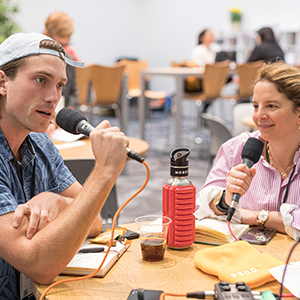
[00:00:04] Ray Latif: Hello, and thanks for tuning in to Taste Radio Insider. I'm Ray Latif, the editor and producer of Taste Radio, and you're listening to episode 72 of the podcast. I'm with my BevNET and Nosh colleagues, John Craven, Mike Schneider, and Melissa Traverse, and we're recording from the Taste Radio studio at BevNET headquarters in Watertown, Mass. In this episode, we're joined by Alden Blease and Emma Frelinghuysen, the co-founder and CEO respectively of Red Bar, an innovative brand of plant-based protein bars. We also sit down with Arnold Coombs, the Director of Sales and Marketing for Coombs Family Farms, the top-selling organic maple syrup brand in the US. Just a reminder, if you like what you hear on Taste Radio, please share the podcast with friends and colleagues. And of course, we'd love it if you could review us on the Apple Podcasts app or your listening platform of choice. It smells Osso Good in here because I made some soup. It smells oh Osso Good. It does smell oh Osso Good. It's delicious. I ran into Meredith Cochran, who's the founder and CEO of Oh Osso Good, which is a Los Angeles-based brand of bone broth and paleo soups. I ran into her at the 2020 Winter Fancy Food Show. She was very kind to send us a whole bunch of products, including... What is this one, Melissa? I made it, but I forgot what it was.
[00:01:17] Alden Blease: It's like Thai carrot. Thai carrot paleo soup. There you go. It's delicious. A little bit of spice.
[00:01:22] Ray Latif: Totally, and much needed in this office. Everyone seems to be kind of ill from week to week. It migrated from San Diego, it feels like, because everyone in our San Diego office was ill like a month ago, and now it's migrated here. They've shipped us all kinds of packages to make sure we got what they had. John Craven, you're just getting over some illness. Are you drinking your soup? Uh, I drank it. It was pretty good. Why do I keep calling you John Craven? I don't know. I gotta stop doing that.
[00:01:46] Emma Frelinghuysen: I'm just gonna call you Latif when you do that.
[00:01:49] Ray Latif: There you go. So just to teach me a lesson, teach me to stop doing that. I'll teach you a lesson. Latif. Yes. Thank you very much, Meredith, for sending that product. I mentioned San Diego. John Craven, call me Latif now. You will be in San Diego next week With the West Coast team which will be holding a meetup once again on February 17th If you would like to attend and it's gonna be a big party with what maybe a hundred people at this point I think there's like a hundred people signed up and I hear we have a Like a food truck with pizza and beer.
[00:02:23] Emma Frelinghuysen: Oh, wow. I mean they don't have those in Watertown All you need now is a DJ Yes, again that meetup in San Diego was on February 17th
[00:02:44] Ray Latif: If you're thinking about attending, please RSVP do so at Taste Radio dot com slash San Diego. There will, by the way, be no football talk at this thing.
[00:02:55] Emma Frelinghuysen: That is a rule.
[00:02:56] Ray Latif: Yes. No American football talk. Plenty of soccer talk.
[00:02:58] Emma Frelinghuysen: No, no, no, no, no, no, no, no, no, no, no, no, no, no, no, no, no, no, no, no, no, no, no, no, no, no, no, no, no, no, no, no, no, no, no, no, no, no, no, no, no, no, no, no, no, no, no, no, no, no, no, no, no, no, no, no, no, no, no, no, no, no, no, no, no, no, no, no, no, no, no, no, no, no, no, no, no, no, no, no, no, no, no, no, no
[00:03:05] Ray Latif: I thought you were a Wolves fan.
[00:03:07] Emma Frelinghuysen: I thought you got out of the Premier League. I just picked them because of their logo. And I don't even know where they play.
[00:03:12] Ray Latif: I don't remember this conversation.
[00:03:13] Emma Frelinghuysen: Name one player for Wolves. No. OK. Raul Jimenez. Wolverhampton Wolves. Great. What about Rui Patricio?
[00:03:20] Ray Latif: All right.
[00:03:20] Emma Frelinghuysen: All right. But we're gonna have a lot of hockey talk there. There is Joshua Pratt. our resident office manager there and all-around technical director, massive NHL fan. He would love for someone to talk about hockey with him. He's already putting on the foil for every game, you know.
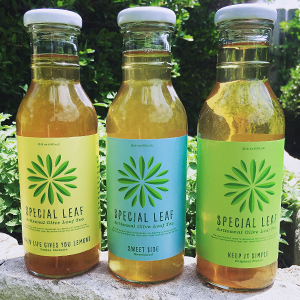
[00:03:39] Ray Latif: We have a lot more product in the studio beyond the oh-so-good, including some TS2T. TSTT, a maker of loose leaf teas and Cold Brew bottle tea, which is fantastic stuff. Thank you so much to Patrick Tanous and Dan Klein, the founders, for sending some products. I interviewed Patrick back in episode 19 of Taste Radio Insider. It's The New titled, Think you're outworking your competition? Try knocking on 500 doors in 25 days. I really liked that interview. It's a dandy. If you haven't had a chance to check it out, please do so. You know what's also interesting right next to the Tiesta Tea? I saw this product in the cooler the other day. It's an olive leaf beverage.
[00:04:18] Alden Blease: Yes, I spoke with Chris Cook just the other week.
[00:04:22] Ray Latif: Chris Cook is the founder of this brand?
[00:04:24] Alden Blease: He certainly is. So he was a chef and he had arthritis. So he launched this beverage because olive leaf obviously has antioxidant properties. And so this is what he came up with.
[00:04:35] Ray Latif: What's The New of the brand? It's called Special Leaf. Special Leaf. Special Leaf.
[00:04:38] Emma Frelinghuysen: No, not Special Leaf. Special Leaf. You have to say it in a Special Leaf. Special Leaf. That was a creepy way, Mike. I know. I didn't say that, but yeah, we were all thinking it.
[00:04:49] Ray Latif: So I'm not familiar, I'm slightly familiar with olive leaf and the benefits of drinking an olive leaf beverage or tea, whatever you want to call it. But what are these perceived benefits or actual benefits, Melissa?
[00:05:01] Alden Blease: So the compound that Chris Cook talked about was alluropein, which is an antioxidant that you find in olive oil and olives. And that's The New that is, I understand that kind of helps with inflammation and, and regeneration. And it's a functional ingredient.
[00:05:19] Emma Frelinghuysen: It has a good taste. 17 grams of sugar is going to be tough in the war on sugar era.
[00:05:26] Alden Blease: The calorie count is low, but 17 grams of sugar is rather high for a functional beverage.
[00:05:33] Ray Latif: But it's the main ingredient, really, that's the issue, right? And I don't want to call it an issue, but it's the main ingredient that's going to be the biggest hurdle for Special Leaf.
[00:05:41] Emma Frelinghuysen: Absolutely. I mean, if you look at the package, the thing that grabs you is the Special Leaf itself, which is, you know, the logo. When you're building a new category or creating something brand new, I think the hero should definitely be the thing. In this case, artisanal olive leaf tea is kind of small here and it's not going to grab you. So you're not going to, you're not going to like grab olive fans here, olive leaf fans here immediately. It does look like a tea. It looks like, you know, a Rev1 package though. And then if you get to the side of it, it's got some interesting things on it, like caffeine free, antioxidant, anti-inflammatory. And then some claims that I'm not sure how they're substantiated, but enhances your mood, increases blood flow, and then some other things about just what's in it.
[00:06:25] Ray Latif: It's interesting you mentioned the bottle, Mike, because it is one of those stock bottles that kind of looks like a barbecue sauce thing. Oh, this is a salad dressing, my friend. Salad dressing, okay. And in The New Beverage Showdown, multiple times we've had New Beverage brands come up and present or entrepreneurs representing new beverage brands come up and present, the judges are always like, you're like my favorite salad dressing Peloton. Yeah, they're always there. The criticism is often about that package and how it doesn't really fit the beverage set. Peloton being a cascara beverage, which You know, if you get past the salad dressing bottle, it tastes pretty good. Yeah. John Craven. John Craven. John, would you recommend? John, a.k.a. John Craven, would you? I'm going to stop doing this. I mean, do you have an issue with the, you know, the use of these bottles? I feel like it's again, you know, it's just sort of a stepping stone to something else. Yeah, that's it. I mean, you know, you got to start somewhere, right?
[00:07:19] Emma Frelinghuysen: Plenty of brands have started in that bottle and gone on to something else and greatness in some cases. So it's fine. it's better to get out there and figure out what's gonna stick before you commit to some, you know, custom bottle or whatnot.
[00:07:35] Ray Latif: Those custom bottles are not cheap, talking $100,000 in some cases.
[00:07:39] Emma Frelinghuysen: In this one though, you know, the pieces of advice I would give here are that the flavor is when life gives you lemons. It's not, and then it's lemon verbena underneath that. So there's another thing that people are gonna go, what is lemon verbena? But people like lemon and lemon flavor. So make lemon flavor, Heroic. So you can draw someone and say, Hey, there's a lemon tea that I like. And then they'll figure out, Oh, it's artisanal olive tea. What's that? Olive leaf tea. What is that? Do I want to drink that? But you got to pull them in somehow with something that they know.
[00:08:07] Alden Blease: Do you think that would turn people off that they don't know what olive leaf tea is and they'd be hesitant to grab it? Or would that be something that would drive?
[00:08:14] Emma Frelinghuysen: That's the exact thing that you need to test. You can test that in social media. It's like, hey, would you would you rather we lead with the lemon or would you rather we lead with the olive leaf tea? People who, you know, are going to try this thing. I mean, I think it's going to be like any of these sort of kind of waste product type beverages or food products, like if you're using coffee fruit or cacao fruit, you know, it's like people's immediate thought will be, you know, and probably question like, does it taste like olives? Right? So that's just going to be the challenge with it. I mean, I think the stuff tastes pretty good. I mean, it's probably a little on the sweet side, but I think they have a second flavor we didn't try, but
[00:08:56] Alden Blease: And a third that's unsweetened.
[00:08:58] Emma Frelinghuysen: Okay. But I think it's pretty good. The other primary thought is for founders to put it in a salad dressing bottle if it's upcycled, apparently. You mentioned that. I did. That's not the definition of upcycling, Mike. It's close.
[00:09:11] Ray Latif: Yeah. Just hot off the press or hot off The New, right in front of you, John, is some of Nitro Beverage Company's newest flavor. They've got a New Orleans-style coffee variety. Oh, it's in your hand, Mike. I have it. Yeah, I'm like, it's in my kung fu grip, Ray. That's what you'll have to pry it from. What's The New Orleans-style formulation again? What is that? Chicory. Chicory, right. Chicory and probably sweet. Chicory and sweet. They never add any sugar to their products though, do they? Yeah, there's no sugar in that. I wonder how this is gonna taste.
[00:09:44] Emma Frelinghuysen: Would you like to know? I mean, you can do just chicory. That's what they're doing here. I mean, that's the Grady's Cold Brew style, so. I'll get you one, Melissa.
[00:09:54] Ray Latif: Thanks. Tasty stuff for sure. It's in that purple can. You don't see too many purple,
[00:09:59] Emma Frelinghuysen: The reason you don't see a lot of purple packaging is because purple means Lavender Is, that's a good point. So if it's a lavender beverage... You forgot about grape there, bro. Make it purple. It means grape.
[00:10:12] Alden Blease: Lavender Is The New grape.
[00:10:14] Ray Latif: Oh, that's how we're going to title this episode. Lavender Is The New grape. guessing your margins, that's risky.
[00:10:22] Emma Frelinghuysen: Belay Financial gives CPG brands the clarity to scale smarter, faster, stronger. Get your free inventory ebook by texting TASTE to 55123 and start making data work for you. Tune in at the end of this episode for an exclusive interview with Matt Lynn of Belay Solutions. He sits down with Melissa Traverse to break down the biggest inventory and accounting mistakes CPG founders often make. You'll learn how to bring clarity to your numbers so you can scale with confidence.
[00:10:57] Ray Latif: We obviously can't do an episode without crunching into the microphones. John, what are you going to crunch on? Some enlightens? Was that bean bada bing? What is that?
[00:11:05] Alden Blease: They're broad beans. Broad beans? Yes. No, fava beans.
[00:11:08] Ray Latif: Fava beans. I don't know, some sort of bean. What are you laughing at, Nate? Nate, our director, once again. I tried something. Calling us out on the idiots that we are. Wow. They're delicious. I don't know much about Enlightened. Melissa, do you know much about Enlightened?
[00:11:25] Alden Blease: Yeah, of course. So they have a line of products. They do keto-friendly ice cream. They do ice creams where you can have the whole pint for a hundred calories, 80 calories, that sort of thing. And their focus is better for you snacking.
[00:11:41] Ray Latif: You know, I thought they were an ice cream brand, but then when I saw these beans, I was like, wow, that's a heck of a line extension or brand extension.
[00:11:49] Alden Blease: And they also had Rice Krispie treats that were also keto friendly, I believe. But I don't know if they're still doing those.
[00:11:55] Emma Frelinghuysen: They've been doing the beans for a while. And also, it's interesting how they segment their booths at trade shows because they keep them very separate. But yet they're right next to each other as well. So it's weird how they separate them, but keep them keep them there because you're right. It is sort of strange to think about an ice cream brand doing beans or a bean brand doing ice cream. You know what that's right for, though? Hashtag snacks on a plane.
[00:12:18] Ray Latif: Snacks on a plane for sure. How about that Lesser Evil that John's holding in his hand? Grain-free paleo puffs from the brand Lesser Evil.
[00:12:25] Alden Blease: They're pink.
[00:12:26] Ray Latif: They're pink. Perfect for Valentine's Day. Hey, Jinx. They're sweet tasting.
[00:12:31] Alden Blease: They have two SKUs just for Valentine's Day, and I think they're exclusive to Whole Foods, and I think you can also get them on their site as well, but they're both pink. There's that and a pink popcorn.
[00:12:42] Ray Latif: The popcorn is what they're known for, and The New I always see on the shelf. I haven't had the puffs yet. How are they?
[00:12:49] Emma Frelinghuysen: Pretty good. I'd probably prefer one that were spicier rather than sweet. What are the puffs made of? Sweet honey puffs. They are, what are these things? Cassava flour, it looks like. You know, the latest in extruded snacks here.
[00:13:03] Alden Blease: Paleo-friendly snacking. And I think the red is from radish juice.
[00:13:07] Emma Frelinghuysen: Ooh, I like that.
[00:13:09] Alden Blease: Fancy.
[00:13:09] Emma Frelinghuysen: They're mad buttery too. Yum. Yeah, they are very, there's a, what does this say? Organic ghee and coconut oil. They definitely taste, you can taste that ghee in there.
[00:13:20] Ray Latif: I'm much more of the savory versus sweet puff popcorn snack for sure. Mike, you mentioned trade shows and how Enlighten kind of lays out their booze for their various product lines. You've got some advice for trade shows, particularly the upcoming Expo West, yes?
[00:13:38] Emma Frelinghuysen: I do, Ray, actually. Melissa and I have been having a lot of conversations with brands that are getting ready for Expo West. What have you been hearing out there, Melissa?
[00:13:44] Alden Blease: People are super amped about Expo West, but everybody has the same question. How do you drive booth traffic, Mike?
[00:13:51] Emma Frelinghuysen: I mean, it's one of those things where there's a lot of the same strategy out there right now, which is, I'm going to unveil The New greatest product in the industry. And I'm going to wait until Expo West pulls back the curtain or cuts the tape or whatever it is they do to allow all the fish to come into the aquarium. And then my product is going to be The New that everybody thinks is the darling of the show. But that's everyone's strategy right now.
[00:14:14] Alden Blease: Thousands there are so many brands doing just that so what what do you do?
[00:14:19] Emma Frelinghuysen: Well Melissa Surprisingly this is this is an organic conversation none of this was script crazy you can tell We've been having the conversation and we're like we should probably put some of this advice into the show. And we actually went to the, you know, we went, we took it a little farther and said, let's even write an ebook about building awareness before a show and, you know, stuff that you can use to create awareness within the industry. Because there's like, There's two main buckets of advertising that are out there right now that you're using to promote your product. One is consumer advertising, and everybody, I think, knows what consumer advertising is. We get a lot of questions about how to do it well. And then two is the trade spend, like how are you going to optimize your presence within a retailer, field marketing, things of that nature. There's another bucket. industry advertising and what is that? I mean, it's this idea of, I need to get my product to be top of mind for someone who's a retailer or an investor and to know, you know, the story of the company and then also what products I offer so that when you need that, it comes to mind.
[00:15:39] Alden Blease: Before you can get consumers to buy your product off the shelf, you need compliance and buy-in from your partners, from your retailers, from your investors, brokers. You need to work with all of those people before you can get people to buy it off the shelf.
[00:15:56] Emma Frelinghuysen: Right. And we wrote an ebook so that you can read a little bit about that before you have a conversation with us or really any industry publication about, you know, building awareness within the industry. And you can get that at Taste Radio slash awareness.
[00:16:10] Alden Blease: Do it.
[00:16:11] Ray Latif: Do it indeed. You know, it's funny you guys talk about this because, Melissa, you were explaining that You know, you need buy-in from the industry before you can get buy-in from consumers. And sometimes when I'm attending these shows, I speak with founders and they're so passionate about their brands. They're so passionate about their products. But it's clear that they would benefit from having another person or other people manage the day to day. And I think that's an interesting point that we explore in today's interview with Alden and Emma, Alden being the founder of Red Blease and Emma being the CEO. And we see this from time to time, you know, the visionary isn't always the best leader of a company.
[00:16:57] Alden Blease: I think to be a successful entrepreneur, you have to manage this really careful friction point of self-confidence and self-assuredness with self-awareness. So having the perseverance to do it every day, but then also being able to know perhaps what's not working or what your skill set is not in hiring for those things.
[00:17:17] Ray Latif: Totally. You know, in the day-to-day stuff is the minutiae that people aren't really interested in sometimes. It's like you get bogged down with numbers or spreadsheets or, you know, decks, things like that, that some people who are the innovators just, it's not their wheelhouse. They're not excited about it. So find someone who is really good at it. And there are a lot of benefits to handing over the reins. I think the, you know, the pinpoint sometime is pride and sort of being able to let go. It's got to be hard for founders. It's got to be hard for entrepreneurs to give up that kind of control.
[00:17:51] Alden Blease: putting the success of your business ahead of your own ego. But at the same time, you need to have some ego and confidence to even want to do it in the first place. And that's really tricky.
[00:18:02] Ray Latif: Totally.
[00:18:03] Alden Blease: When I worked at Flour Bakery, I really thought that Joanne Chang was such a great example of that. Somebody who was incredibly skilled at pastry and business, but also had a lot of emotional intelligence and was able to hire really strong people to carry the business forward.
[00:18:19] Emma Frelinghuysen: And oftentimes it's not that you can't do all of the jobs, it's just you don't have enough time to do all of the jobs. I worked with a guy in the tech space named Jeff Glass, who one of the best things about him was he was a guy who did what he said and said what he did. And he would lay out the vision for a company and then he would trust that people could actually execute on said vision. And a reason that he was always very successful in what he did and a reason that people liked to work for him was that he created opportunities for people. I think as leaders in an organization, you have to get to a point where you can let go, trust, create opportunity, and that's how you scale. That's how you become a great organization.
[00:18:59] Alden Blease: Letting go is so important, but it can be so hard to do because it's your baby.
[00:19:03] Ray Latif: Totally. All right. I think it's time to get to our featured interviews for this episode, beginning with Alden Blease, the co-founder of Red Blease and Emma Frelinghuysen, who is the company's CEO. Founded in 2014, Red is a brand of plant-based protein bars infused with vegan prebiotics, probiotics, and adaptogens. Although Red cultivated a loyal following and distribution at several major retail chains, last year the company introduced a significant rebrand and reformulation of the bars, which was announced alongside $2.2 million in new funding. In September of 2019, Red replaced its CEO of nearly four years with Emma, a veteran CPG executive who joined the company from natural foods giant Hain Celestial. In the following conversation, BevNET CMO Mike Schneider spoke with Alden and Emma about the reasons for and planning of REDD's pivot, how evolving consumer trends impacted the changes, and lessons from the rollout.
[00:20:03] Emma Frelinghuysen: It's Mike here at the Winter Fancy Food Show in San Francisco with Alden Blease, the founder of Red Blease and Emma Frelinghuysen, the CEO of Red Bar. Welcome to the show. Thank you so much, Mike. Thanks, Mike. Super glad to have you here. So today we're going to talk a lot about Red Bar. We're going to talk about some background and get into a recent pivot for RedBar, some exciting news, some changes in formulation and how you got to that. So why don't you start just by giving a background for the people who don't know what is RedBar and how did you get to where you are today? RedBar is a plant-based protein bar that's low in sugar and packed with probiotics and adaptogens. And for those of you who are wondering what an adaptogen is, adaptogens are ingredients that help our bodies adapt to stress. And in our bars, we have ingredients like maca, we have chagarishi, quarter-step mushrooms, we have goji berries, we have acai, we have turmeric. We also have a probiotic. My interest in health goes back to my childhood. It was a very emotional time. My grandfather was diagnosed with cancer when I was very young, and it was cancer of the intestines. And he went in for surgery, ended up having a colostomy bag and a feeding port, and he lived this way for eight years. He could not eat. And this was very hard for me to watch because he was my childhood hero, and all I wanted to do was help my grandfather. And when he died, I realized that the best way to fight these diseases is to prevent them altogether, which means living a healthy lifestyle. So I focused on health. I researched health. And fast forward to my freshman year of college, still interested in health. In fact, I was a vegan. And I was coming off of a modeling contract. I was completely broke. I signed up for the least expensive meal plan option. And within a few weeks, I ran completely out of meal funds. I was running one to two hours a day, hitting the gym. And when this happened, I had to find a way to eat plant-based food that was gluten-free, packed with superfoods, and so the way for me to do this was to go to my local health food store. So I went to the health food store, I filled a bag full of bulk ingredients including oat bran and coconut, goji berries, maca, cacao, mashed it all together with some agave syrup, and this mixture sustained me for an entire week. Pretty soon, my friends noticed that I was toting around a bag full of all these ingredients mashed together, and that I had so much energy. I was running faster. I was running longer. And they asked me, what's in the bag? And I gave them a little sample. And they loved it and actually ordered their own little bags. They requested a little bag of dough. So I said $10 for the bag. And that was the point at which I realized that this was potentially a business opportunity. So I changed the form factor from a ball to a bar. I started printing out labels on the backs of old grocery bags. And I drove around Maine selling these dorm-made bars. And they were called Red Bar from the beginning? Actually, no. They were called Rawgasms from the beginning. My friends loved it, The New spread around town. I had a loyal demographic of middle-aged men who swore by the bars. They loved it. Anyway, that's a little bit later in the story. So I was selling the bars in stores. I realized that I didn't have enough money to even go back for my second year of school. So I dropped out of school and started making the bars full-time. And for about- That's great advice for anyone, right? Yeah, exactly. If you want everyone around you to think that you're insane, do exactly what I did. So I dropped out of school, I started making the bars, I started reinvesting the money from each sale back into the infant brand at the time. Bought labels, bought ingredients in bulk, refined the recipe. And sales started to pick up. And eventually, about two years later, two really influential buyers in the Northeast approached me and they had about the same thing to say. They said, we love your product. We do not like The New. We would love to carry your product, but you also need to prepare for greater distribution. Wait, wait, rawgasm is, what's wrong with that? Exactly, what's wrong with that? So I decided I was going to make a pivot then, and I stopped making rawgasms altogether at that moment. I put all of my focus into creating Red Bar. The New happened pretty fast. I said, OK, I'm going to recycle the colors. But the R in Red Bar certainly stands for rawgasm. It did. It's R period, E period, D period, D period. Yeah. Yeah. Red was an intuitive name. It just kind of came to me. I wanted to recycle the red color. And I also wanted to be able to tell people how to find the brand in stores. And so I thought, what's better than saying, go into the store and pick up a Red Bar with bright red packaging. So that's part of why I named it REDD, and at the time it stood for Research Enhanced Design and Development, which is what I felt like I was doing at the time. I was doing a lot of focus groups, and actually University of Maine Innovation Engineering Department allowed me to conduct focus groups whenever I wanted, so that was really helpful during that time. So I, two years later, finally launched in June of 2014, Red. And its packaging was bright red. Launched in Whole Foods in Portland, Maine. And the success was immediate. We were selling 100 bars a week in that single store. And we had five facings at eye level. And at this point, I had bootstrapped and then I had raised a little bit of money from some friends and family, about $30,000. That success led to the entire North Atlantic region of Whole Foods picking up red. And when that happened, the local manufacturer who is making Red Bar could not keep up with the demand. It was a small biscuit manufacturer. And in the amount of time that it took to make two to three pallets of Red Bar, they could make three truckloads of biscuits. So not efficient at all. The owner of this company said, you either need to buy equipment to make this more efficient for us, or you need to find another manufacturer who is more specialized. So I opted for finding a new manufacturer, and I had reached out a few years prior to a manufacturer in Oregon who specialized in bars. I contacted them, flew out, met with them, they agreed to take on the project. But the problem was that their minimum run requirement was 100,000 bars. And to date, I had only made 10,000 bars. So that's a tenfold increase, which meant time to raise some capital. And one of my mentors at the time introduced me to a man named Peter Van Alstyne. And Peter, is a businessman from Maine, really good at raising capital, had all the credentials at the time to make this thing work, so brought Peter on, and it was great. We actually raised a million dollars. And you brought Peter on as the? CEO. As the CEO.
[00:27:39] Red Bar: Brought Peter on as the CEO.
[00:27:40] Emma Frelinghuysen: This is an important milestone for Red Bar, because Red Bar brings on a CEO. Now let's talk a little bit about that for a second. How hard was it for you to step away from being the CEO, and what did your role become? It was very difficult, actually, because up until that time, I had all of the autonomy. I could do whatever I wanted. I could test product. I could make pivots, you know, micro pivots to make the product incrementally better. So I was stepping back and putting my ego aside and putting all of my trust into a person who I had just met. So it was a challenge, but it was also necessary. And I knew it was the best thing that I could possibly do at the time, because there was no way for me, you know, a college dropout at the time to raise a million dollars. I just didn't have the connections or the know-how. So I was hiring for my deficits. So you bring on a CEO. And what does that allow you to do? Where does that take you? That allowed us to create an actual company. Raised a million dollars right out of the gate. We hired several people to help run the operations. So it was like our 10X, actually no, more like 50X boost. We actually went from ad hoc to an organization. So Red Bar is born as a company and you have a product. It's a very different product than The New that's sitting in front of us today, here, right now. And we also have Emma here. So we've got to get to that part of the story. So let's just establish what Red Bar was, you know, when you put it on the shelves with a CEO, when it became a real company. We ended up launching in the spring of 2016. So launched in the spring of 2016. And for two years, people were consuming the black bars, bright colored labeling on the front, which you probably remember quite well. Each of the bars had caffeine. They also had about 14 grams of sugar. 14 grams of sugar is the thing that I most remember. 10 grams of protein. They were very tasty. They were, yeah. Of course they were. And we started to hear from the field that people didn't like the sugar content. There was definitely a shift in consumer preferences. We also wanted to find ways to optimize the bars for the consumer. So we started to do focus groups, and we realized also that we could help our brand really speak from the shelf. And we had a need for capital as well. And so all these things were kind of happening, and that's when we made the decision to bring on Emma. So let's talk to Emma. Emma, tell us a little bit about your background.
[00:30:37] Arnold Coombs: Sure. I've spent my entire career in the food industry. I started off after college. I worked at Williams-Sonoma, which is right here in San Francisco. I was there for four years. I worked at Diageo, the spirits company, on two great brands, Guinness and Johnnie Walker.
[00:30:53] Emma Frelinghuysen: Never heard of those two.
[00:30:56] Arnold Coombs: And then I spent actually almost eight years at Fresh Direct, which is the online grocery store based in New York. And when I was there, I worked on a bunch of different projects, including developing their private label brand. So I had really kind of gone from retail back into CPG in a way. And I was super excited when I joined Hain to kind of get back into CPG, but focus on organic and all-natural brands. So I spent five years there. And I was really looking for another opportunity to have a bigger role at a smaller company. And I just loved the idea of Red. I met Alden. He was the first member of the team that I met in person. We had coffee in New York. And I just, I loved the product. I loved his story. And I just, I felt like the brand was really where consumers are looking these days. The fact that it's authentically plant-based and really has all the right attributes. It's low in sugar, high in fiber, free in probiotics. I was just super excited about the opportunity because of the product, the brand, the trends, but also the people surrounding the brand. So, as I said, I love meeting Alden and the board members, the investors, and the team that's in place in Brunswick, Maine are all very passionate about this space.
[00:32:13] Emma Frelinghuysen: Do you want more repeat buyers on Amazon? Well, this free resource in collaboration with Straight Up Growth will help your brand turn first-time buyers into long-term subscribers. Download Winning the Repeat Purchase Game on Amazon now at Taste Radio slash SUG. That's Taste Radio slash S-U-G to start building retention-driven growth for your brand on Amazon. Scaling a beverage brand into major retail comes down to operational readiness. From packaging lead times to co-manufacturing strategy, the details can make or break a launch. In a new ebook in collaboration with Octopi and Asahi Beer USA, industry leaders share what they've learned in helping brands scale. Download it now at Taste Radio slash octopi.
[00:33:01] Alden Blease: Do you need to scale your team faster without compromising on talent? Join Oceans for a live webinar on April 20th and learn how leading companies are hiring top global professionals who are ready to grow with your business.
[00:33:14] Emma Frelinghuysen: Register for the webinar now at Taste Radio slash oceans. That's Taste Radio slash oceans. So tell me a little bit about why this was the right time for you to come on and what the mission is now.
[00:33:28] Arnold Coombs: So one thing I would say is that we've done some work over the past couple months just to kind of codify and formalize the brand's core values. And we believe that there are four core values, health, progress, expression, and empowerment. And these are things that have always been a part of the brand, but the story was never formalized.
[00:33:49] Emma Frelinghuysen: We had also grown to a certain point, and we started to see momentum kind of leveling off a little bit. And we realized that that was a good indication that we needed to do something radical and start to just take the product, break it apart, and just reassemble it into a better, stronger version of itself. And that is true for the entire organization, actually. And so you decided that it was time to take on this really owner's task of a rebrand. Correct. Rebrand, reformulation. Reformulation, repackage, rebrand. Talk to me a little bit about that process. In terms of the rebrand, we wanted to make our product really speak from the shelf. So we listened to our consumers and we realized that we could do a much better job at this and we also realized that 70% of the people who were buying our bars were female and they were of a certain demographic and we just were not serving them with our previous product as well as we could have. So we found a high fashion brand identity firm and we decided to begin working with them to really hone in the packaging. And which comes first, Emma or the rebrand? Are they happening in parallel? They happened somewhat in parallel towards the end. Really non-specific answer right there. So the first thing that happened was we realized that we wanted to make big sweeping changes to the brand identity and the packaging. We made that decision in July of 2018, and we had a pretty short window of time to make all those changes. So that was the first change that happened. And then we found Emma a little bit later on.
[00:35:39] Arnold Coombs: So one thing I'll tell you that's kind of an interesting tidbit. When I met with Alden for the first time, The New branding was just starting to roll out and market. And I looked at the social media and I saw that they had completely eliminated any previous posts that had the old branding on it, which is a decision that I questioned from the start. So once I started, we actually went back and put our old social media back into the feed because I think The team had gone so far on the Rip the Band-Aid concept that they were just, I think it was lacking some authenticity. And I think consumers understand that brands evolve and change over time, and they want to hear about it and know about it honestly.
[00:36:23] Emma Frelinghuysen: Low sugar, adaptogens, probiotics, prebiotics, a lot to talk about. How do you decide what to focus on? We're focusing on what our consumers care about. So plant-based protein. low in sugar. Fiber content is quite high. We also have pre and probiotics and adaptogens.
[00:36:46] Arnold Coombs: We also want to make sure that plant-based is the number one message and attribute that we're communicating. We really feel like that's the most differentiated thing that we offer. Our product tastes unbelievable. We think it's the best bar on the market, but taste is table stakes for consumers. The fact that we are plant-based and we have, you know, no dairy in this bar is really a differentiator in this category. One of the kind of learns that Alden and I had, we've been spending a lot of time together, as you can imagine. And we were visiting Whole Foods in LA. And we actually were visiting one of our biggest stores in the region. And we went to talk to the grocery team lead to thank him so much for his support, give him a t-shirt, and give him some bars. And he told us that he couldn't take them, but thank you so much for the offer because he was vegan. So that was a real lesson for us that we need to do a better job communicating that we're plant-based and vegan if the grocery team lead in one of our best stores in the country didn't know that we were vegan.
[00:37:49] Emma Frelinghuysen: How do you ultimately figure out, though, what's going to go on the front of the bar? As Emma mentioned, this is an evolution, and the evolution continues. Brands are always evolving, and we're always learning from our consumers in the field. We exist to serve them, and part of serving them is, of course, communicating with them. And by being out in the field and hearing from our Whole Foods buyer that he didn't know that this was a vegan product, we just learned something extremely important that many other people are probably also wondering. Is this vegan? So that's a good example of how information comes through the field and back into the brain of RET. At all levels. It's not just at the consumer level. It's also from an industry level, from a buyer perspective.
[00:38:39] Red Bar: Exactly.
[00:38:40] Emma Frelinghuysen: There are so many inputs. Alden and Emma, thanks so much for being on Taste Radio. We can't wait to see The New round of packaging and The New round of formulation. And we wish you the best of luck.
[00:38:51] Arnold Coombs: Thanks, Mike.
[00:38:51] Emma Frelinghuysen: Thank you so much.
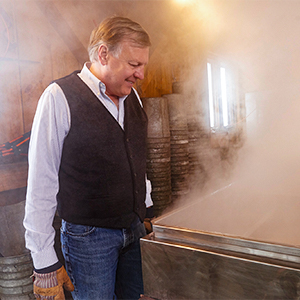
[00:38:56] Ray Latif: On to our interview with Arnold Coombs, who is the Director of Sales and Marketing for Coombs Family Farms, the number one organic maple brand in the U.S. A seventh-generation maple farmer, Arnold's roots in the business of maple syrup run deep. He's knowledgeable about every aspect of production and speaks eloquently about the tradition and history of the Coombs brand. He admits, however, that many consumers view maple syrup as a commodity product, and convincing them to embrace a particular brand is often challenging. Yet, Coombs has made strides building consumer loyalty by way of education about the product's health benefits, use as an ingredient, and packaging innovation, all of which we cover in the following conversation. Hey folks, it's Ray with Taste Radio. I'm here at the Taste Radio studio here in Watertown, Mass. And sitting with me right now is Arnold Coombs, the Director of Sales and Marketing for Coombs Family Farms. Arnold, thanks so much for being with me.
[00:39:52] Red Bar: My pleasure. Thanks for having me.
[00:39:53] Ray Latif: You drove down from Vermont this morning. Yes. Brattleboro. Brattleboro, Vermont. That's like the hub of the universe for maple syrup, isn't it?
[00:40:03] Red Bar: Well, it's a very funky little town. Yeah. And there's a lot of maple there, yes. How long have you been in the maple business? I grew up in it. My family made their living in maple. So all my life, except for college and a few years after that, I joined the family business in the 80s. At that point, it was kind of in trouble. We got it turned around and we wound up selling it so my parents could retire. And I started another company called Coombs Family Farms.
[00:40:25] Ray Latif: The interesting thing about maple syrup and a lot of commodity products is that it's difficult to own, I guess, a commodity. Exactly. And when you want to build a brand around something like maple syrup, you know, what was the strategy? What were you thinking about in terms of how you communicate the difference between what you were selling to every other maple syrup that's out there in America?
[00:40:51] Red Bar: Well, a lot of it's the family. Having grown up in Maple and having a love for Maple, we like our syrup to have a certain flavor to it. Now, Yes, you can say maple is maple, but there's a certain terroir to the syrup. And we're buying, we have our own syrup, but we also buy from other farmers and you blend it in a way much like wineries do to get a certain flavor profile. And we're very particular about our flavor profile. And we feel because of that, we can just have a top-notch product all the time. And so we've ran with having a quality product, having the history behind it and having a sustainability behind it. And at that time, no one was really running with that.
[00:41:32] Ray Latif: You said three things there, flavor, history, and sustainability. You know about all that. You know how good the flavor is. You certainly understand the history and sustainability aspects of this, but how do you communicate all three of those things to the consumer? in a way that's pretty concise, but also highly informative.
[00:41:53] Red Bar: Yeah, that's the difficult part. And it's leaning on two to three pillars primarily, which is a sustainability in the history, because flavor, they got to try it. And they can't always do that. So, you know, working on the marketing of saying, this is our background, we live and breathe maple, we always have, we know maple, and we want to make sure you have a good experience with maple that you enjoy what you're going to taste. And we work on that through social media and other marketing, more social now than any other marketing, I guess I would say. Used to be advertising, now it's all gone social.
[00:42:26] Ray Latif: Did you stop advertising?
[00:42:28] Red Bar: Just trade journals, no consumer advertising. It's all social there. Why? It's a better connection. And that's where consumers are now looking. There's not as many, uh, If you look back at the history of the magazine the last 20 years ago from consumers, I mean, it's really changed a lot. And it's just hard for us to pick the right demographic, the psychographic that's going to like maple. You know, it's such an unusual product, as opposed to I don't know, potato chips or something. It's more of a niche item than many of the other food items. But it's growing. I mean... It's definitely growing. Consumption of maple syrup is... The maple industry has doubled in the last 15 years. So it's growing considerably. A lot of that has to do with the desire for alternative sweeteners. And when you start looking at that, maple is the best sweetener for you. Yes, it's still a sugar, no doubt about that. but it's got some minerals in there that are good for you. It's got over 60 antioxidants. So if you're going to have a sugar, you might as well get the best one for you. Plus it's got a great flavor.
[00:43:28] Ray Latif: There's been a lot more research on the antioxidant benefits of maple syrup as compared to other sweeteners. Have you leaned hard into that? I mean, are you funding some of those studies? I mean, and again, how do you communicate that information to the end consumer?
[00:43:46] Red Bar: We haven't so much funded it, but we're in fairly regular contact with the University of Rhode Island. Sareem Navendra down there is the doctor who's doing the research, very good at it. He's also done research on cranberries, blueberries, the red wine, so he knows the antioxidant side of things. So we're in touch with him a lot. We supply maple if they want to do some research, some projects and such. We would donate the maple to it. And so we do look at that because consumers are just going in that direction of what's going in my body. They want to know. And, you know, maple's been around since the indigenous people were making it, but we still don't know a lot about it. And actually we were talking about that at a meeting the other day in our office, how we know so much more about maple than we ever have. And there's so much more we need to learn. It's a unique product in that sense.
[00:44:34] Ray Latif: What are you trying to learn more about when it comes to maple syrup?
[00:44:36] Red Bar: The chemical composition, how it affects... Well, let me step back. When we're boiling it, say, into sugar, you know, certain syrups convert very well and sometimes every now and then you get a bash, it's like, wow, that's not the sugar we want, you know, and we melt it back down and liquefy it and turn it into something else. And generally don't have a solid idea of why. Because even though we've doubled in the last 15 years as an industry, we're still a small industry, and we don't have the base for which to donate or put a lot of money into research. As an industry, we have been very cooperative, and we combine funds to do research. But when you're small, there's only so much you can do. That's why Maple is seen in the marketing side as a commodity, because no one has enough of a budget to really break out and create that brand that stands out.
[00:45:26] Ray Latif: So you must have to rely on your retail partners to help you spread the word about Coombs and support the brand on shelf, but it's sort of a two way street. You are relying on them, but they're relying on you to provide that information to help sell your product, right?
[00:45:45] Red Bar: Yes, absolutely. And you know, some partners are much better at it than others. Some are really, into educating their customers. And those are The New we really want to work with because we can get the word out and the customers and the consumers are going to be educated. And that's the biggest thing that we're trying to do is educate them as to benefits of maple, the flavor profile of maple and what you can do with it. You know, it's not just for the big three pancakes, waffles and French toast. You can use it in beverages. You can use it in a variety of things. And we cook with it all the time at our house. We don't go through sugar. I'm not even sure we have any sugar in our house. It's either maple sugar or maple syrup.
[00:46:26] Ray Latif: The Mrs. Butterworks of the world, the Aunt Jemima syrups of the world. Do you really think about them as competitors or, I mean, is it sort of, that's a whole nother world? I mean, are you trying to tap into those consumers? Is it even worth you trying to reach out to them?
[00:46:42] Red Bar: I think it is, and I'm always optimistic, but I look back at other things that have happened in the food industry, and when I was a kid, you know, you go down the oil section, and it's Wesson and a bunch of others, corn oil and all vegetable oils, and maybe a can or two of olive oil, and now you go down that section and there's a whole lot of olive oil. And I'm hoping we can have that type of conversion for pure maple, that you see all the fake stuff there, you know, the Aunt Jemima's and log cabins of the world, and you see a little bit of maple. I'd like to see that ratio change considerably so there's a lot more maple. And I think consumers will do that. You know, there's a reason there's more olive oil on the shelf. People like it better. They're willing to pay for it. The flavor profile is better. It's the same thing with maple. You know, it's got a better flavor profile. It's much better for you. And so I think consumers ultimately will go for it. But it comes back to education component. And how do we get the word out? And then we got that. Catch-22 are too small as an industry or as a company to have million-dollar marketing plans. So it's social media and kind of hacking away at it and trying to build it one little step at a time.
[00:47:52] Ray Latif: Seems like that's kind of how you built the company anyway. I mean, it is one step at a time, but is there a long-term vision for where you want the brand to be, say in 10 years or 20 years, or is everything sort of just a stepping stone, sort of test and learn and see where Coombs fits into American households?
[00:48:11] Red Bar: It's both. There's a lot of testing and learning. You know, we are a country company. You know, we're out in the middle of nowhere in many ways. Our main office is on top of a hill. The only neighborhoods you can see are maybe a mile plus away. It's out there. And so it's not like we have a network nearby that we can draw from, you know, it's, it's learned it ourselves quickly as possible, you know, fail fast. That whole thing, uh, adage of trying to try different things, see what works and keep hammering away at it. And so we will keep trying to do that. We are working, uh, you know, some guerrilla marketing and you work with a lot of chefs. You try to, we try to get them to, uh, experiment with maple and we're seeing that more and more, you know, it gets into TVs and programs and things like that. You just get as much product as you can so people can see it used as many different ways as possible. We're seeing a lot of growth in the industry and it's more off-brand, but we're selling to a lot of manufacturers now using maple as an ingredient. So it's going into all sorts of bars. It's going into sausage and yogurts, breads. The largest bakery in the country buys maple from us to put into an English muffin. It's going into a lot of drinks, a lot of juices. And so we're seeing that side. And my hope is as consumers see that on the label, like, hey, they put real maple in this thing, that they'll try and experiment more at home. As simple as having a smoothie with it or something and sweetening your smoothie with some maple. You know, even Cheerios now has a pure maple. So, it's growing as a popular flavor. But the consumer, there's that core group, which we love, that wants to use it in most everything, much like I do. And there's a majority of people who are just like, huh, pure maple, what do I do? Pancakes. Those are The New we've got to educate. So, to grow, to steal business from Aunt Jemima, and then to grow just to have additional uses.
[00:50:06] Ray Latif: The exposure and awareness component, hey, this is what pure maple is, this is what it tastes like, certainly helps. Accessibility also helps. The fact that people can actually get pure organic maple syrup at most places around the country at this point must be a great way for you to just get people to try it, going back to the original point of here's what maple syrup, organic maple syrup tastes like. Part of the reason why there is greater accessibility is that there are more store brand and private label brands out there. Coombs is a supplier to a number of those brands. And what's the strategy there? Because on The New hand, you're trying to build your own brand, you're trying to build Coombs. And on the other hand, certainly there's a cashflow component to what you're doing, but it's almost like in some ways you're competing against yourself?
[00:51:01] Red Bar: Yes, we are. Now, originally selling private label was to survive so that we could grow our business to put more volume through and support more farmers. And it continues to be a large component of what we do. And it's hard to fight what the grocery industry is going to do. And the grocery industry is definitely going in the private label direction. And so we want to sell maple, we want to support the farmers.
[00:51:29] Ray Latif: When you say the grocery industry is moving in the direction of private label, How do you quantify that?
[00:51:35] Red Bar: Private label products as a percentage of sales are growing in a grocery store, almost all grocery stores. So from the smaller ones to the Kroger's, private label is big and growing. And they're always trying to improve their private label basis. And so it's hard to fight that. You know, everyone's fighting it. Heinz is fighting it with ketchup and everyone's fighting it. I mean, we're just a small maple company. We can't go up and beat them up and tell them no. So we supply them. And that helps us on the backside of what we're trying to do in maple. We buy from a lot of small farmers. The basis of our business has always been built on working with the farmer. And it goes back to my grandfather and grandmother back in the 40s when, you know, the farmer, they were selling equipment to produce maple at the time, as we are now. And so a farmer might come and say, I need a new evaporator and I can't afford it. My grandparents would front them the money, they'd make the syrup, and then they'd pay off my grandparents in syrup. And so it's kind of a bartering system in that way with a time delay. We're still doing that with up to four or 500 farmers a year. You know, they'll come and say, we can tap the neighbor's trees, but banks will want to loan money for the tubing systems because it's all custom fit. And we don't have quite enough money for that. We can fund everything else. So we'll support them on that, give them the equipment. They make the syrup in the springtime and pay us off in April and May. What that does allows them to grow. and allows us to grow. And so we have a better source of maple from all these farmers, and they're able to grow and maintain the family farm. And so the more syrup we can sell, the more farmers we can support. That's in the back of my mind pretty constantly. And so if I have to sell it to a company under their brand, I will do that. Now, doesn't mean I don't want to grow my brand, because I certainly do. We want to have a solid brand. And so we work both ways. And then hopefully many stores, we have our brand and a private label. And when we do that... we're able to do more marketing at the store level to say, let's do some demos with maple because no matter which one sells, we both benefit. Whether buying my brand or your brand, if they're both coming from our facility, our farm, let's promote and have the consumer try it. You know, let's make something. Let's do a maple balsamic vinegar dressing and put it into stores and do a little sampling and have consumers try that and have them say, wow, I didn't know I could do that with maple. And so it actually has its benefits to us to be able to do the private label as well.
[00:54:02] Ray Latif: When you're side by side next to a private label brand that is essentially your maple syrup, how do you get them to care more about your brand, especially when your brand might be priced a dollar or two more because it is a branded product?
[00:54:15] Red Bar: Yeah, we're definitely going to be higher priced because the private label brand normally does not promote. They don't have promotions regularly throughout the years. Occasionally they do, but that's all coming out of the retailer and the retailers generally don't want to do that. Whereas we will promote at least quarterly, we'll have some sort of promotion of drive sales. And to do that, you have to have a higher retail at times. And that's what the whole majority of grocery is nowadays is what they call high low. You got a regular price and then you got a discount price and you just keep playing that game. Not that I like it, but that's the world I play in. You have other retailers that just have what we call EDLP, everyday low price. And that's where I would prefer to shop myself, but in general, consumers don't go to, well, they do, but the other stores are bigger. It's a bigger way. So yeah, we're going to be higher and we just have to work with that. You know, so build that brand, build the trust, you know, a private label, they can switch suppliers and it's very price driven. And you know, that's tough for us at times because we have certain quality standards that we don't want to, bend at all. You know, the syrup going into a private label bottle compared to what's going into a Coombs brand is the same. And that's just our philosophy. We don't want to say, hey, we can cheapen it if we add some of this other less flavorful syrup to it. We just don't do that. We have other markets for the poor quality syrup so we don't have to put it into a bottle. That's the benefit of selling to manufacturers. You know, the quality of flavor is not as precise there because it's going to get overpowered by all the other ingredients. And therefore, the price is lower for the manufacturer. And we are able to get rid of a product that's not something we would want to put into our bottles. So it allows us to have a higher quality product going in the syrup into our bottles. So it all works together. It's all tied together with a string, essentially.
[00:56:05] Ray Latif: Just hope that string is held tightly. Yes, exactly. Well, one way to differentiate from private label is via innovation. And one of the most striking items that you sell is a sprayable syrup. I can't really explain how this works, but to our listeners at home, can you explain what a sprayable maple syrup is? Sure.
[00:56:29] Red Bar: So it's a can of maple syrup that when you press the button on the top, it comes out in a stream. We call it maple stream. So it's very targeted. And the benefits of this, there's multiple benefits, I guess. We looked at this originally because we had heard from a lot of moms that they didn't give their kids the real syrup. They gave them the fake stuff because they were just going to waste the real syrup because it just comes out of the bottle too much. Real syrup is thinner than the fake stuff. By law, it's always 11 pounds to the gallon. And that's the density that it has to be. If it's any thicker, it'll crystallize. Any thinner, it'll ferment. And so we had this issue with moms not wanting to use it because it's going to get wasted on the plate. You're going to have pancakes swimming. And so with a spray, you can just squirt it and it stops. It comes out and then as soon as you let go, it stops. And so it's very targeted and very kid friendly in that sense. Heck, it's better for me because my pancakes tend to swim too. So you can just spray it on, cut a piece of pancake and spray it right on top. eat it, cut another piece, spray it on top. And so it's the innovation of quality control in the sense that you're not going to waste it. You don't have to refrigerate it. Pure maple needs to be refrigerated after opening, and you can take it anywhere. For example, I was traveling Saturday. I travel with my own syrup, of course, but I went in to have pancakes for breakfast, and I took in a maple spray because I just leave it in my pickup. It doesn't need a refrigerator, so I can just take it out of the pickup and to the restaurant and squirt it on my breakfast or in my coffee. And it's taken off fairly well. We didn't know what to expect. So it's called bag-on-valve technology. There's a little bag inside this can with syrup in it, and then just regular air pressure. There's no propellants or anything like that. Container is still recyclable. And we're getting a lot of positive feedback from moms. It's like, this is great. We go through less syrup, which in one way is not as good for me, but they're using the pure maple now as opposed to giving them the fake stuff. What's the retail price on that? It's about a dollar. It's a seven ounce can. It's about a dollar more than an eight ounce bottle. So it is more expensive. With volume, we'll be able to drive that down.
[00:58:37] Ray Latif: You know, there's an IHOP not too far from our office here, and I can totally see the Maplestream in their stores, even though they, I think before we got on the mics, you mentioned that there's only one IHOP in the country that sells maple syrup, and of course it's in Vermont. But it seems like the Maplestream would be a good option for food service, would be a good option for an IHOP. Have you explored that at this point? Have you explored partnering with chains and food service operators to sell your syrup?
[00:59:07] Red Bar: Yes, and we've talked to a number of the large chains. They're less receptive to it because of cost. There's a lot of regional chains that seem to be doing very well with it, and we try to work with as many of those as possible.
[00:59:20] Ray Latif: Well, Arnold, thank you so much for sharing the story of Coombs. I really, really appreciate your time. And I certainly appreciate your maple syrup. It's outstanding. And the maple stream actually found its way into my home and my daughter actually quite likes it. She's a big fan.
[00:59:35] Red Bar: I'm glad to hear that. And I appreciate the opportunity to speak with you. You too. Thank you so much.
[00:59:42] Ray Latif: That brings us to the end of episode 72 of Taste Radio Insider. Thank you so much for listening, and thanks to our guests, Alden Blease and Frelinghuysen, and Arnold Coombs. Please subscribe to Taste Radio on the Apple Podcasts app, Spotify, Stitcher, or Google Play. As always, for questions, comments, ideas for future podcasts, please send us an email to ask at Taste Radio. On behalf of the entire Taste Radio team, thank you for listening, and we'll talk to you next time.
[01:00:12] Emma Frelinghuysen: you
[01:00:18] Alden Blease: Hello, I am Melissa Traverse here for the Taste Radio podcast, talking about some of the biggest tension points that CPG brands and founders face when they're scaling a brand, and those are financial accounting and inventory management. I am joined by Matt Lynn, inventory accounting guru from Belay Solutions, and he's going to shed some light on all of this that is going to help everybody out quite a bit. Matt, thank you so much for joining us today.
[01:00:48] Coombs Family: Thank you for having us, Melissa. It's great to be out here at Expo West and it's great to sit down and be able to chat this because it's kind of a passion project of ours, working mainly with CPG brands and hoping to help them scale.
[01:01:00] Alden Blease: It's been such a pleasure chatting with you and the team and learning all about what you do over there at Belay Solutions. Can you tell us a little bit about yourself and what your role is and the kinds of solutions that Belay gives to CPG brands and founders?
[01:01:16] Coombs Family: Yeah, absolutely. My role with Belay, I'm actually our inventory accounting manager. I run our inventory department, so we work with CPG brands, taking them from spreadsheets, putting them on inventory management systems, and really helping connect their tech stack between their sales online marketplaces to that inventory management system, even down to their financial systems like QuickBooks. Belay overall is kind of an outsourced accounting firm. And with that, we're helping teams. We have different levels with bookkeeping, controller level work, even high level into CFO type items. So we really help those brands in any way that they need financially. And then I just have a subset of a department where we're really just laser focused on inventory.
[01:01:59] Alden Blease: It's certainly a complex topic and there are plenty of places to go wrong. Let's start by going right and start super simple. Can you tell us what some of the biggest red flags are that would help a founder understand or, you know, the person running a brand understand that it really is time to get some help with some of these areas?
[01:02:19] Coombs Family: Yeah, absolutely. I think some of the early red flags is just everything is chaos. So when they're looking in their financial software, maybe they don't really have an accounting background, and they're kind of just piecing it together and doing their best. And what they'll see is that reconciliations take forever, if they even happen. They have a lot of transactions that don't get coded, or they just put them into placeholders to just get rid of it so it's not an eyesore. they'll notice they have revenue but no cash or they notice that they have a good amount of cash but their blind spot is really seeing the vendor invoices that are sitting there just needing to be paid and so they just lack that clarity that's going to really be around the corner.
[01:02:56] Alden Blease: You know, you were talking about one of the red flags that comes up that I think makes so much sense. When somebody asks you what your numbers are and you can't come up with the right number, that's a big problem because that's something that you really should be able to share with decision makers who, you know, you're ideally looking to do business with. What should you be able to call up at a moment's notice?
[01:03:21] Coombs Family: Really, at any time, you should be able to know an accurate margin. It's amazing how many founders we end up talking to that they can tell you their revenue numbers, they can tell you their selling price, and then the minute you start talking about cost or their cost of goods sold, they just get a deer in headlights look. So really, it's very hard to tell, am I even making money? or if you don't know your entire landed cost. Maybe you know what the freight cost is, the duties separately, but you're not really getting that as part of your unit cost. So it's really hard to tell. Am I even making money or am I losing money from the very beginning?
[01:03:54] Alden Blease: And do you recommend that founders are able to call up a margin by channel?
[01:03:58] Coombs Family: Absolutely. And depending on the number of products and channels, you kind of want to know what are your best sellers, which ones are making the most and which ones maybe you're not making as much. But especially if you're branching out and you're doing D to C with B to B, absolutely want to know that.
[01:04:15] Alden Blease: Gotcha. You mentioned that when things feel really chaotic, that's probably a red flag. I would say that it probably almost always feels chaotic if you're running a CBD brand. And I know this may be hard to quantify, but is there a revenue number? Is there a number of doors number that would help a brand understand whether or not it makes sense to bring on a partner like Belay? Understanding that so many brands are bootstrapped or they might be tight for cash. What is that friction point?
[01:04:45] Coombs Family: a little bit different for everybody depending on where you're at in your process and sometimes just your level of understanding of financial aspects. You know, when you're first starting and you're really cash conscious and don't want to spend that much money, you may keep it on yourself. But as you're growing, as you're getting to those six-figure revenue numbers, and especially as you're approaching seven, you want to make sure you've got good financials. Because as you scale to that point, most likely you're going to be looking to raise capital. And investors, the first thing they're going to look at is your books. And are they clean? And do they show a clear picture of your business?
[01:05:18] Alden Blease: You know, another area that folks might look to to organize some of the chaos are their systems. So many folks stick with Excel spreadsheets for a good amount of time. How do you know that you need to outsource some of your accounting to an organization like Belay Solutions versus maybe signing on to a Synth7 or a NetSuite or something like that?
[01:05:41] Coombs Family: Well, that's actually something we really help with when it comes to that cost question. That's something that trips people up. And sometimes if you just have a turnkey business, you buy and sell a finished good, you can maintain with spreadsheets. And we've had clients with million dollar revenue that can do that. But we see so many brands nowadays are using contract manufacturers. and they're just sourcing certain parts of their product. So when you start talking cost, they have no idea exactly what their unit cost is. So that's where we come in and we kind of understand, we'll speak with the customers and the clients and get their needs. And then if we think they're ready for a system, then we'll help put them on that system so they can get some of that clarity. And it's not something we force on anybody. There are plenty of times where founders come to us and we'll tell them bluntly, you're not ready for it right now, but we'll let you know when we think you are.
[01:06:27] Alden Blease: That sounds like excellent advice. What should a founder or somebody running a brand look for in an outsourced accounting partner? Are there certain checklist items that they should make sure that their partner be able to execute or be able to help them understand?
[01:06:44] Coombs Family: Absolutely. I think one of the keys, there's, there's a lot of outsourced accounting firms out there. Some focus on service-based SaaS companies, but if you're a CPG founder, you really want to make sure that your accounting firm has CPG experience. I would ask them, you know, what kind of brands have they worked with? And even beyond that industry specific, because there's so many subsets of CPG. And that's something that I think is great about what we do with Belay is that we kind of run the gamut. It's kind of like the insurance commercial. We know a thing or two because we've seen a thing or two across a broad spectrum.
[01:07:14] Alden Blease: Probably getting references is always helpful, right? Absolutely. All right. So this all sounds great. I think we have a really good understanding of would it make sense to hire an outsourced partner? You know, what some of the things you should be looking for are. What does offloading this kind of work mean for the brand? What can this do for lightening the load of a founder or lightening the load of a brand operator? Like, how does that help them in their everyday business?
[01:07:43] Coombs Family: It just tries to really help quiet the chaos. So what we're looking to do is just take some of the weight off that founder's shoulder. Let them focus on building the brand, building the business, getting that exposure. If you don't have sales, you really don't have anything. So we want them to be able to focus on that while we take care of your back-end office work. And we can just present that to you on a monthly basis. You can help make decisions. You can take that to investors. And really, you can just focus on growing your business.
[01:08:09] Alden Blease: I feel like I felt founders and the folks who are running brands collectively sigh. Breath of relief just hearing that. How can people learn more about Belay Solutions?
[01:08:20] Coombs Family: So people can text TASTE to 55123 for their free inventory guide to get started.
[01:08:25] Alden Blease: Matt Lynn, inventory accounting guru at Belay Solutions. Thank you so much for joining me here at Expo West. It's been such a pleasure to chat with you and learn about what you all do over there to help founders and brands with their financial accounting and inventory management. For everybody else out there, thank you for listening to the Taste Radio podcast. I am Melissa Traverse and we'll see you next time.