[00:00:04] Ray Latif: Hello, and thanks for tuning in to Taste Radio Insider. I'm Ray Latif, the editor and producer of Taste Radio, and you're listening to episode 73 of the podcast. I'm with my Nosh colleagues, Beth Geisman and Carol Ortenburg, and we're recording from the Taste Radio studio at BevNET headquarters in Watertown, Mass. In this episode, we're joined by Anouck Gotlib, The Expo Chief Belgian Boys, a fast growing brand of European inspired treats and snacks, who discusses her thoughtful approach to branding and retail development. Just a reminder, if you like what you hear on Taste Radio, please share the podcast with friends and colleagues. And of course, we'd love it if you could review us on the Apple Podcasts app or your listening platform of choice. I have had a song stuck in my head all morning. Do you know that Billie Eilish song, Bad Guy? I'm not going to try to sing it. You know, I'm a bad guy. But you know what's really weird about that song? I'm such an idiot. This is the first time I realized that The bad guy is a girl in the song.
[00:01:02] Anouck Gotlib: Yeah.
[00:01:03] Ray Latif: Yeah. I don't know why. I just never listened to the lyrics. I just I like the like the tune on its own. Yeah.
[00:01:08] Anouck Gotlib: There's a lot going on in that song.
[00:01:10] Ray Latif: It's hard to miss the lyrics. Totally. Totally. How are you guys doing? Good. Good. How are you?
[00:01:16] Anouck Gotlib: Hi, Carol. Welcome back. Yeah. It's in full Expo West prep. I think the press releases and news announcements are coming fast and furious. Two companies sold one day like that never happens unless it's Expo West.
[00:01:29] Ray Latif: Expo West fever is at a, what do they say? Is that a pitch? Is that what they say?
[00:01:35] Anouck Gotlib: Is that a fever pitch?
[00:01:36] Ray Latif: Something like that.
[00:01:37] Anouck Gotlib: Yeah.
[00:01:37] Ray Latif: Expo West, is that a fever pitch? Okay. We'll go with that. Yeah.
[00:01:40] Anouck Gotlib: We'll go with that.
[00:01:41] Ray Latif: Okay. Uh, yeah, just a couple of weeks until the show starts, maybe less than that at the date of publication of this episode of the podcast. So, uh, hope you're all geared up and ready to go. We will be out there in full force. If you have news and you're exhibiting at the show and you want to share that news with us, Carol, how do you do it on Nosh?
[00:01:59] Anouck Gotlib: Well, for Nosh and BevNET, if you go to our site and click the Submit News link, you can shoot us a note, shoot us a press release, give us all the details, and we'll make sure to stop by the booth as well as send our awesome photography team by to snap some photos. Maybe you'll wind up in a story or a slideshow on Nosh after the show.
[00:02:20] Ray Latif: And that goes for BevNET too. There's the same Submit News link on the BevNET site. Look for it if you can't find it. Or you can email us at ask at tastereader.com. But that sort of defeats the purpose, doesn't it? To email us to find the Submit News link. I'm sure you can find it anyway. It's not that hard.
[00:02:36] Anouck Gotlib: Yeah. Or you could just email your news at news at Nosh.com or news.bev.com. So many ways to reach us. It's like, we're there for you. We're here to help celebrate and cover your news.
[00:02:47] Ray Latif: Indeed. Uh, we're also here to give away free t-shirts. If you review us on Taste Radio on the Apple podcast app, just take a screenshot of your review. Send us a note to ask at Taste Radio with your address and the size of your choosing. We will get you that t-shirt and perhaps. If you'd like to meet up The Expo West, let us know and perhaps you'll meet me and I'll have a backpack full of t-shirts to hand out at the show. Carol just returned from South America, as Beth mentioned. Well, she didn't mention, but as Beth alluded to, how was South America?
[00:03:22] Anouck Gotlib: It was amazing.
[00:03:24] Ray Latif: I went two years ago and- You look like you're still wrapped up from the winter in South America.
[00:03:29] Anouck Gotlib: Well, it's summer there.
[00:03:30] Ray Latif: Oh, summer there, right.
[00:03:31] Anouck Gotlib: It was like, I have a sunburn underneath this, but coming back to this cold weather is a little bit of a culture shock. Take me back. I cannot deal with three more months of gray, but it was amazing. I went, spent most of the time in Argentina with a little bit of time in Uruguay. I fell in love with that country. It was the first time I had been there.
[00:03:49] Ray Latif: Did you go to Montevideo?
[00:03:51] Anouck Gotlib: We did go to Montevideo. That's where we spent our first couple of days. And then there's a quick little easy ferry that takes you right to Buenos Aires. Spent some time there and a little bit of time in Mendoza as well in wine country. In Montevideo, I fell in love with a coffee shop called The Lab Coffee Roasters, which introduced me to the fact that cold foam is really popular in South America right now. I think Starbucks has stopped their cold foam drinks, I believe, in the U.S. or it was a limited time offer. South America, it's everywhere. We have to learn how to make this in the Bevanette kitchen. I'm dying.
[00:04:27] Ray Latif: What is cold foam?
[00:04:29] Anouck Gotlib: So picture the foam on a latte, but cold, thicker and denser. So as you're drinking, if you go to a great coffee place like The Lab, it kind of lingers there and you get a little bit with every sip. It's kind of an art apparently to get the right density of foam and bubbles, but it's a little bit more labor intensive than latte foam. It's something you'd serve on a cold brew, which is how I had it there.
[00:04:55] Ray Latif: You'd serve it on a cold brew or would sort of come with the cold brew?
[00:04:59] Anouck Gotlib: You have the cold brew and then they make the foam and pour it on top.
[00:05:02] Ray Latif: Gotcha.
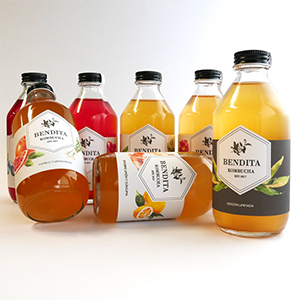
[00:05:02] Anouck Gotlib: Of course, if you're drinking coffee in South America, you're probably also drinking a little bit of wine, especially if you go to Mendoza. And one winery that really I was impressed by was Piettelli Vineyards. They have one of the few female winemakers in Argentina. She's amazing. The wines are great. They're currently, they have two wineries, one in Mendoza, one in Salta, and they're currently building out some expansions to their winery in Salta that should really make it a very cool destination. And I hope it means more people learn about Argentinian wine because there is so much wine there. But then, I mean, seeing as this is Taste Radio, we work at BevNET, have to talk about one of the, you know, categories that I saw the most growth in The Lab two years, which was kombucha. There was so much more kombucha in South America this year, which is great because if you're drinking a lot of wine and eating a lot of steak, trust me, what you need at lunch is a kombucha. And I connected with the founder of Bendita Kombucha, who actually studied how to make kombucha in Canada and will be coming to the U.S. later this year, hopefully, maybe coming to a BevNET Live or Expo West. And she believes she's the first kombucha maker in Uruguay. And they have just this beautiful bottle, great product. I wish I could have brought it back, but I wasn't sure how bottles of kombucha would fare in my luggage, you know, over a 17-hour flight.
[00:06:26] Ray Latif: Probably not very good.
[00:06:27] Anouck Gotlib: Yeah.
[00:06:27] Ray Latif: No.
[00:06:28] Anouck Gotlib: Coming home to clean kombucha off of everything sounded like not the best way to go about it.
[00:06:33] Ray Latif: I guess that's one of the benefits of working for BevNET is that people can ship us stuff and often do. I don't know how, if the kombucha companies that you visited will be able to ship here, but that would be nice.
[00:06:43] Anouck Gotlib: Yeah, that would be cool. It was definitely some strong competitors to what we have here in the States, really intense flavors, nice balance on acidity and sweetness. And like I said, certainly a really nice compliment to all the steak you're eating while you're in South America.
[00:07:01] Ray Latif: Exciting stuff.
[00:07:02] Anouck Gotlib: Yeah, can we go back to the steak for a second? Can we talk about what you ate while you were there a lot a lot of steak often from grass-fed cows Nice, but then I was saying to Nate earlier a lot of vegan food, too There was actually pro-vegan graffiti on the streets of Uruguay, and we actually stopped in one cafe that was advertising Beyond Meat. Like, little tiny cafe serving up this sandwich that's famous there, and you could order a Beyond Meat burger, which kind of blew my mind. Huh. Interesting.
[00:07:36] Ray Latif: That is interesting. I didn't even know Beyond Meat had reps in South America.
[00:07:40] Anouck Gotlib: I'm gonna be honest. I don't know if they do or if it was like black market Beyond Meat sort of being Slipped in to be sold in cafes.
[00:07:50] Ray Latif: Are you sure it's Beyond Meat.
[00:07:51] Anouck Gotlib: That's the question Yeah, it could could have been not Beyond Meat. That is a fair point You're gonna have to go back and invest it could have been beyond Beyond Meat
[00:07:59] Ray Latif: Or it could have been Beyond Meat, but like, you know, with like a U instead of an O and Beyond Meat and, you know, and that wasn't really, yeah, not, not the same thing. If it's less than beyond, is it just meat? Yeah, I guess so. Good point, Beth. Well, you know where we're going to see a lot of Beyond Meat is The Expo West. Every time I see their booth at one of these shows, there's a line down the aisle, people waiting in line to chomp on one of those things. Beth, am I mistaken, or is this your first Expo West with Nosh?
[00:08:35] Anouck Gotlib: It's my first Expo West, yes.
[00:08:36] Ray Latif: Is it your first Expo West period? Yes, yes, yes. Wow.
[00:08:39] Anouck Gotlib: The rest have just been a build up to this moment. Oh God. We've been running drills in the parking lot, making her shake hands and then see how fast she can apply hand sanitizer, you know, breaking in shoes, doing backpack weight training. So I think she's ready. I think she's ready.
[00:08:56] Ray Latif: Somehow drinking even more water than usual. Do you have your retractable club, as our friend Adam Stern has, to beat away the crowds, you know? That's not a bad idea.
[00:09:05] Anouck Gotlib: So basically just become an old man.
[00:09:07] Ray Latif: You know, when there's 80,000 people going to this event, it just becomes more and more challenging to navigate your way through it. And on top of it, they keep adding more booths. And there's a lot of brands out there that you want to see, but inevitably you're going to miss a few. Carol, do you have any tips on how attendees can sort of hit the places they need to hit?
[00:09:28] Anouck Gotlib: I try to walk every aisle of the show.
[00:09:32] Ray Latif: That's not a great tip.
[00:09:33] Anouck Gotlib: Yeah, it's not a great tip. So I start at one end of a room and I just walk. to the other end and then I just rinse and repeat over and over again. Inevitably I fail. Uh, so maybe that's my tip is don't be hard on yourself. If you feel like you missed something, this is just the beginning point of a conversation. It's not the only time you can connect with someone. Follow up via email, have a phone call, go out for coffee. I heard recently someone started having walk Whole Foods meetings where they walk through the grocery store with someone to chat. And I'm like, that's a great way to have a meeting and get somebody's insights. So there will be FOMO. Don't let it consume you. Take care of yourself. Take some time for yourself every day. Take time for that cup of coffee or matcha, whatever gets you going in the morning and take a little time for yourself at the end of the day.
[00:10:23] Ray Latif: Beth is pulling at the top of her sweater nervously. I think we're stressing her. No, I was going to say to follow us on Instagram at BevNET, at Nosh.com, at BevNetTasteRadio, at BevTrade with a Y, at ModernFoodist. And Beth, once again. B-A-K-2-5-1. B-A-K-2-5-1. Oh, I like that.
[00:10:46] Anouck Gotlib: That's catchy.
[00:10:47] Ray Latif: Yeah. I like it.
[00:10:48] Anouck Gotlib: That's very exciting. Why 2-5-1? It just was something I was assigned to at school, and I just kept it forever. I like that just cuz what does that mean you were assigned that? Oh, we were assigned email addresses. Oh, I just kept it for things after student 251 and that's what it was Mars where she just had a cubicle that she walked into Yeah, I have a feeling I'll be doing my posts toward the end of the day in my wind down period, like Carol mentioned, because I don't really like to do it as I go and feel crazy. I like to engage and talk with people more than be on my phone. So, but look out for some good pics, hopefully. And I think that's a good point. You know, it's very easy to get caught up in social media and what am I missing? Engage face-to-face, have a conversation with somebody new, learn about what's going on them. Instagram is a great tool, but it will be there when you check it a couple hours later.
[00:11:40] Ray Latif: That almost sounded like, I don't know the way you said that, it almost sounded like the Three's Company theme song. Come on knock on my door, we'll be waiting for you. You know, I don't know what it is with me today and like these songs, I'm losing my mind. It must The Expo West.
[00:11:54] Anouck Gotlib: You're basically living in a musical right now. That's what I try to do. I am.
[00:12:00] Belgian Boys: guessing your margins, that's risky. Belay Financial gives CPG brands the clarity to scale smarter, faster, stronger. Get your free inventory ebook by texting TASTE to 55123 and start making data work for you.
[00:12:19] Anouck Gotlib: Tune in at the end of this episode for an exclusive interview with Matt Lynn of Belay Solutions. He sits down with Melissa Traverse to break down the biggest inventory and accounting mistakes CPG founders often make. You'll learn how to bring clarity to your numbers so you can scale with confidence.
[00:12:37] Ray Latif: The other thing to note, Beth, is that all these after parties can really beat you down. So you gotta be careful about these after parties. I don't know if you're a big consumer of alcoholic beverages. Actually, I don't even think I've seen you consume more than one. I did invite Beth to the BevNET bar for a beer once, and it was toward the end of a day, and you were very kind in doing it. I think you still had to finish your story, though.
[00:12:58] Anouck Gotlib: I was just waiting for it to publish.
[00:13:00] Ray Latif: Oh, okay. You drank eight ounces of beer, probably in about two minutes, and then bolted. I assume that you were busy or that you didn't want to hang out with us. But the other thing I just assume is the beer is not your thing. Not really.
[00:13:12] Anouck Gotlib: I'm not as into beer anymore, but I like trying them, which is why I poured just a small amount to try. And now that it's wintertime in frosty bean town, I'm much more into cocktails right now. So. Right on. Yeah, I mean nothing too crazy. I like to try different things, but I like Manhattans. I like Negronis. Who doesn't? But I'm also, as Carol and Jeff know, sorry guys, obsessed with hydration and constantly pushing people to drink more water in the day. She's been great for my skin. Yeah, not just when they're drinking, just all day. I think a lot of people just forgo it, kind of forget about it, don't think about it. Yeah, I'm big on hydration.
[00:13:46] Ray Latif: Do you are you one of those people? I haven't seen this do you have like a jug of water with you at all times?
[00:13:51] Anouck Gotlib: I have a bottle at all times. Yeah, and usually an extra pint glass of water, too So she's double fisting water at her desk. I'm like Beth slow down slow down bad.
[00:14:00] Ray Latif: Yeah, I'm pretty crazy over there You know that pint glass that used to be filled with beer is now filled with water.
[00:14:04] Anouck Gotlib: Mm-hmm.
[00:14:05] Ray Latif: Yeah In my hand, I'm holding a new product that came into the office. This is called Bright Fox. Speaking of hydration, this is nightlife hydration for a brighter tomorrow. Maybe this is good for everyone's skin too, who knows? It's actually a really striking package. It's a matte black in a 10.1 ounce aluminum bottle with a black cap. And it's pretty minimalist. The copy is all in this sort of light orange color. And the first thing I thought of when I saw this was RXBAR. I don't know. Did you get that?
[00:14:36] Anouck Gotlib: It's like in that sort of minimalist design where it's interesting how now having a really clean label that just sort of lists things very succinctly has become associated with certain brands. Just like I think when you see pastel colors, a lot of people instantly think of someone like recess. So it's pretty amazing when a brand can just, become the standard when you see this style of design.
[00:15:00] Ray Latif: Well, and it's interesting because that standard was originally established by Blueprint, the brand of cold press juices. I remember when I first saw that, it just listed the ingredients inside each bottle of juice. And I'm like, man, this is such a good idea. Why didn't anyone think of this before? But yeah, I mean, RxBar has really taken that to another level with what they've done. RxBar just came out with this new limited edition line of products called RxBar Select. What makes it select? I wonder.
[00:15:28] Anouck Gotlib: Well, I think if you visit The Expo West booth, they'd be happy to tell you more.
[00:15:32] Ray Latif: Another tip for Expo West.
[00:15:34] Anouck Gotlib: But also stay tuned. We'll have a little bit of that on Nosh. I'm curious to see if we maybe see a refrigerated bar from RX at some time. I'll tell you, that's one of the trends we're seeing The Expo West is, is a lot of news coming in about new refrigerated protein bars or snack bars a la Perfect Bar. So who knows what we'll be seeing from those guys in the future.
[00:15:55] Ray Latif: And who knows if retailers will allocate more space for those products, because there's a limited amount of refrigerated space in those stores.
[00:16:01] Anouck Gotlib: Speaking of refrigerated bars, have you guys had the Perfect Bar Trail Mix flavor? No, that sounds delightful, though. It's so good. I just saw it for the first time the other day. It doesn't really have like pieces of nuts or fruit in it like most trail mix-y bars do, but it's really, really delightful. We did get sent some High Peaks plant-based sunrise trail mix sausages. That was a lot of adjectives. So I'm not sure, like, could you just eat the vegan sausage as a refrigerated bar? Unclear, but I'm excited to try those out as well and see their trail mix nature.
[00:16:36] Ray Latif: Is plant-based kind of redundant when you say vegan?
[00:16:39] Anouck Gotlib: It is. It is. You're right. I'm sorry, Ray.
[00:16:41] Ray Latif: No, no, no. I'm not saying I'm saying is that the way they describe it? Because I'm wondering.
[00:16:44] Anouck Gotlib: No, they are a plant-based high in protein sausage made with white beans, cranberries, maple and cinnamon.
[00:16:53] Ray Latif: Good Lord. A lot going on there.
[00:16:55] Anouck Gotlib: A lot going on.
[00:16:56] Ray Latif: Yeah.
[00:16:56] Anouck Gotlib: Seems like the word vegan is fading out. You think so? Yeah. I mean, it's like if you adhere to the lifestyle, you could also say you adhere to a plant based lifestyle because plant based... They're interchangeable at this point? I mean... I think so. And then it was interesting, we just published a story on Nosh about Tofurky's new cheese line, Mucho, and on the biggest letters on the front of the pack, it says dairy-free. It doesn't even say plant-based. And I said, you know, yes, you have plant-based at the top, but why did you pick dairy-free? And they said, because there are so many people who are looking for these products beyond just living a vegan lifestyle. You might want a dairy-free product or a plant-based cheese because you just simply can't consume dairy. And there is less ethical and moral associations with being plant-based or certainly dairy-free than there is with being vegan. Well, that makes sense too if they're sitting in the dairy set with that. I mean, I think that's one of those questions that goes along with plant-based. Are you in some special natural set? Are you in the vegan set? Are you in the dairy cheese set? Every retailer is still kind of figuring that one out.
[00:18:01] Ray Latif: It probably depends on how much money you have for slotting fees. Yeah. Yeah. Great stuff, guys. Thank you so much for sitting in and good luck The Expo West. I'll be rooting for you. I'll be in the press room I'd say 70% of the time recording interviews for future episodes of Taste Radio and Taste Radio insiders So if you're looking for me at the show, you might find me there. Cool. Cool. Sounds good All right, I think it's time to chat about our featured interview for this episode. The brand may be called Belgian Boys, but it's a self-described Chief Belgian girl leading the charge. That's Anouck Gotlib, who is The Expo Chief Belgian Boys, which markets a range of authentic European breakfast foods and sweet snacks, including liege waffles, crepes, pancakes, and stroopwafels. Launched in 2014, the brand is represented in a variety of retail channels and chains, including Target, CVS, Whole Foods and Costco. Anouk, who began as Belgian Boys's head of marketing and established the brand's whimsical aesthetic, took the reins in 2018 and has positioned the brand as one of familiar indulgence, expanding and curating the product line with delicious foods that are easily understood and appreciated by American consumers. In the following interview, I spoke with Anouk about the formation Chief Belgian Boys and how her background in fashion influenced the brand's identity and continues to play a role in her management style. She also discussed the company's retail strategy, how she cultivates buyer relationships, best practices for effective merchandising, and how Belgian Boys landed a deal with JetBlue. Hey folks, it's Ray with Taste Radio. I'm here in New York City, and sitting with me right now is Anouck Gotlib, The Expo Chief Belgian Boys. Anouk, how are you?
[00:19:55] Chief Belgian: Hi, Ray. I'm doing great. How about yourself?
[00:19:57] Ray Latif: I'm doing great. It's a sunny morning here in Manhattan, and anytime it's a sunny day, I'm happy.
[00:20:04] Chief Belgian: Well, and it's Valentine's Day, so happy Valentine's!
[00:20:06] Ray Latif: Happy Valentine's Day to you as well. Thank you so much for bringing the Valentine's Day treats. Right in front of me are two big cooler bags Chief Belgian Boys products, which if you're not familiar with Belgian Boys, this is a gift like no other. So thank you so much for this.
[00:20:21] Chief Belgian: Of course. And I hope you enjoy it.
[00:20:23] Ray Latif: I'm certain I will. So for folks at home who are not familiar with Belgian Boys, what do you guys do?
[00:20:29] Chief Belgian: So Belgian Boys is an indulgent brand. We are a happy brand. We sell waffles, cookies, crepes, pancakes. We don't take ourselves so seriously. We want to make family time fun. Our products are imported from Belgium and Holland. And how did we really start with this? You know, it's our story, Skinny and Chubby, the guys on our logo, aka Greg and Joel. If you met them at the trade show, these are crazy guys.
[00:20:59] Ray Latif: These are the founders?
[00:21:00] Chief Belgian: These are the founders. And the brand was really started with a nostalgic aspect behind it. It's, you know, those trees that we grew up with in Belgium. I'm also from Belgium. If you don't hear it at my accent, now, you know for a fact. And we grew up with a lot of these streets in Belgium. So for those who don't know, Belgium is such a tiny country. And if you drive for an hour, you're in Amsterdam. If you take a fast train, you're in Paris. So we grew up with that influx of cultures around us. And, you know, coming to the U.S., you drive for four hours, you're in the same state. So we were lucky in that sense. And when we came to the U.S., we were missing that. We were missing those goodies and those snacks. And when we were traveling or Greg was in college and bringing back those treats for his college dorm and bringing those waffles and he saw, oh my God, my friends are even more crazy. My American friends are even more crazy about it. than I am. And when they heard that his mom was visiting or something like, oh, can you ask her to bring this one or bring that one? And they got really excited about it. And so then that's when he said, oh, well, you know, I'm not the only one liking these streets. And maybe, maybe there's an idea here that we should explore.
[00:22:25] Ray Latif: I always ask for an afternoon treat whenever I can get my hands on some stroopwafels. You take one and you put it on a cup of tea or a cup of coffee and the caramel starts to get a little bit softer and it's like, it's so indulgent. You can take a nap for, I don't know, two, three hours after that though. It's not necessarily that you have to, you'll get tired or anything else like that, but you're so satisfied after eating that stroopwafel.
[00:22:47] Chief Belgian: And you know, what you say is definitely something that we brainstorm a lot about at the office because Americans have the culture of taking the coffee on the go and everything's happening real fast and they go from one place to the other. And what we aim to bring here with our company is also give the consumer some time to escape the everyday, like take your coffee, sit down, take five minutes out of your day to enjoy it and elevate that experience of your morning or your afternoon coffee with a waffle or with a treat, a stroopwafel on top. And that's something that we try to bring to the American consumer and seeing our fans doing it on social media is pretty cool.
[00:23:31] Ray Latif: Treat yourself.
[00:23:32] Chief Belgian: Treat yourself, definitely. Well, we're all about the indulgence.
[00:23:37] Ray Latif: So you came from a pretty fast-paced industry, the fashion industry, and are now The Expo of a CPG company. How'd you get involved with Belgian Boys?
[00:23:45] Chief Belgian: Well, I dated the founder. Okay, one way to do that. Chubby on our logo. And really, when we started with the business, I was working, you know, helping out at night, bringing my knowledge in fashion, creating the creative behind the brand. work with a graphic freelancer on the logo, on the packaging, on really the foundation of the brand, while during the day, taking the subway to Fashion Avenue, getting off at 42nd Street, and doing my assistant design work at Fashion Label. And I think it was pretty fast in when Joel and Greg launched the business. They were like, hey, Anouk, why don't you join us full time? And it just made sense.
[00:24:32] Ray Latif: It sounds like creativity was a key learning from the fashion industry or at least a key asset that you could bring from fashion into the brand. Were there any other sort of learnings from fashion that you could incorporate into Belgian Boys?
[00:24:45] Chief Belgian: Yeah, I think fashion designers are extremely creative people and they have very visual skills. In fashion, you're able to see a design, a product, way before you even put an idea on paper. And that's a skill, I think, that I bring back every day at Belgian Boys. Another thing would be a very close eye to detail, because in a garment, let's say, there's so many aspects. There's the cut, the drape, the fabric, even the size of the seams. nothing is left for coincidence. There's all clear choices for every single thing that goes into a dress or a shirt. And I think bringing that to CPG has really been something I do on the daily basis and it helps me. With my background in fashion, working with creative people in our company and our team has done it so much easier because not only can I give direction, I actually know what needs to be done. And I think sometimes there is a communication issue between a creative designer and the founder or a CEO of a company. But I really understand what needs to be done from a technical perspective as well. And the communication between myself and the creative director at Petropolis is very smooth.
[00:26:08] Belgian Boys: Do you want more repeat buyers on Amazon? Well, this free resource in collaboration with Straight Up Growth will help your brand turn first-time buyers into long-term subscribers. Download Winning the Repeat Purchase Game on Amazon now at Taste Radio slash SUG. That's Taste Radio slash S-U-G to start building retention-driven growth for your brand on Amazon. Scaling a beverage brand into major retail comes down to operational readiness.
[00:26:38] Anouck Gotlib: From packaging lead times to co-manufacturing strategy, the details can make or break a launch. In a new ebook in collaboration with Octopi and Asahi Beer USA, industry leaders share what they've learned in helping brands scale. Download it now at Taste Radio slash octopi. Do you need to scale your team faster without compromising on talent? Join Oceans for a live webinar on April 20th and learn how leading companies are hiring top global professionals who are ready to grow with your business. Register for the webinar now at Taste Radio slash oceans.
[00:27:14] Ray Latif: That's Taste Radio slash oceans. So the stache, the mustache is a critical component of the brand identity. Where did it come from?
[00:27:24] Chief Belgian: So while you may know that Belgium is known for its famous beer and chocolate and waffle, Belgium is also known for its animation. So it's a place where Tintin and the Smurfs and Hercule Poirot was born.
[00:27:41] Ray Latif: I'm not familiar with that last one.
[00:27:43] Chief Belgian: Well, you should Google it.
[00:27:44] Ray Latif: I will.
[00:27:46] Chief Belgian: And we think of Skinny and Chubby as part of this tradition. The minions of the food business that bring really those animated antics from Brussels and Belgium to Brooklyn.
[00:27:58] Ray Latif: And there's a social component to the mustache as well. What's the hashtag that you use?
[00:28:03] Chief Belgian: Hashtag rock that stache.
[00:28:05] Ray Latif: Rock that stache.
[00:28:05] Chief Belgian: Rock that stache, yeah. The mustache is really our most engaging product in my opinion. It's a cute little mustache. The first thing you want to do is put it in front of your face and just take a selfie with it, right? Together with the product launch, we wanted to launch a social campaign where we invite the consumer to nominate the charity of their choice for part of our products proceeds. The way it works is just you snap a picture, upload it onto Instagram, hashtag rock that stash and nominate your charity. And from the Alzheimer Foundation to the local dog shelter, Make a Wish, it's been great to partner up with these charities.
[00:28:48] Ray Latif: Let's talk a bit about your product line. What was the first product you guys launched with?
[00:28:52] Chief Belgian: Well, right off the bat, Belgian Boys launched with our dry assortment and our frozen breakfast assortments. You know, this has been something that over the years, a lot of people have said, oh, you guys are doing too many things. You don't know your strategy. Are you a frozen brand? Are you a cookies brand? What Belgian Boys aims to become is a household staple for indulgence, quality, and taste. So we want the consumer to be able to follow us through their day. If it's that morning quick fix with our mini pancakes, the afternoon snack, or our newest launch with our frozen desserts. We just hit the shelves in Q4 of last year.
[00:29:36] Ray Latif: which I'm not a cheesecake eater, but my goodness, those products are incredible.
[00:29:40] Chief Belgian: Thank you.
[00:29:41] Ray Latif: That is, it's incredibly indulgent, but somehow not too sweet, which I guess is kind of what cheesecake is. But it's also very light, surprisingly light.
[00:29:51] Chief Belgian: Yes, yes. And I think we do bring that European taste to it as well. So the not overly sweet, I think comes from there as well. Our chocolate is real Belgian chocolate in our products. And we set up a certain quality standard, importing the products from Europe. That's really important for us.
[00:30:12] Ray Latif: How many product lines do you have?
[00:30:13] Chief Belgian: So we have our breakfast line, we have our cookies line, and we have our desserts line.
[00:30:20] Ray Latif: So when you're deciding to incorporate a new product line to the portfolio, what's that process like? How do you decide, how do you determine when to introduce, say, a cheesecake to the market?
[00:30:31] Chief Belgian: Yeah, what we found really helpful was to gather consumer data, to speak to our customer, to ask them what they think. A way we do that is we will launch our product non-branded at Whole Foods. Let's say Whole Foods Northeast has had our cheesecakes non-branded near the bakery case for a season. We saw how fast they're selling and how good the data and feedback was. And then we decided to bring them onto our core line. So really trying the product at different places like non-branded. Sometimes private label is a great avenue for us to test it prior to bringing it under our brand. We do a lot of product introduction at Costco. That's the way we view Costco. We view it as we don't build our business on Costco.
[00:31:24] Ray Latif: It sounds like it's sort of an incubator for new products.
[00:31:26] Chief Belgian: For us, it is. For us, it is. We get immediate feedback. We have that great relationships with the Costco buyers as well. And you can see if a product resonates well or doesn't very fast at Costco.
[00:31:39] Ray Latif: This is really interesting because To be able to bring a non-branded product into a Whole Foods and have it in their dessert case, I would think that you'd have to have a pretty good relationship with that retail chain, or to be able to say, okay, we're going to incubate and test out new products at a Costco. Those relationships sound like they run deep. How did you get in good, for lack of a better phrase, with these buyers?
[00:32:07] Chief Belgian: Well, I think in our world, we're in the people's business, right? And it's all about the people. It's all about creating those relationships that are far beyond just selling to sell, in my opinion.
[00:32:20] Ray Latif: So you mentioned Whole Foods and you mentioned Costco. Belgian Boys products are sold in a lot of different retail chains. I've seen them in CVS and in Target. What's the right retailer for each product line? How do you determine that?
[00:32:34] Chief Belgian: we do have a wide product assortment. And I think with our brand DNA, with our DNA, our brand is able to live in not just one specific retailer or channel. Our core consumer, he buys method cleaning. He buys Kleenex. He wears Nike sneaker shoes. His basket is filled with produce and Special K and Pretzel Crisps. So it's a very, down-to-earth consumer that most of the retailers you mentioned have.
[00:33:08] Ray Latif: It's a mainstream consumer.
[00:33:09] Chief Belgian: It's a very mainstream consumer.
[00:33:11] Ray Latif: By the way, I haven't heard Special K mentioned on the podcast. This is the first time Special K has ever been mentioned on the podcast, but I like it.
[00:33:17] Chief Belgian: Yeah, well, you know, we had a consumer survey and this is actually one of the brands that came out. So it really does show to how mainstream our consumer is.
[00:33:25] Ray Latif: So really that someone's going to a grocery store or Target buying Special K and then also buying Belgian Boys? And more Belgian Boys.
[00:33:33] Chief Belgian: So this is also something we've seen in their baskets. We do add that incremental sales to the category by having our consumer not only buy one of our items, because they trust our product. After they tasted one, they will buy more. you know, while you might be hesitating about buying something at $4 or $5.99, a waffle near the register or a cookie near the register at just a dollar is for us a way to really bring that new customer to get introduced to Belgian Boys.
[00:34:06] Ray Latif: And is it really about, again, going back to that relationship with those buyers, is it really about convincing the buyer to merchandise the product there?
[00:34:15] Chief Belgian: I like the word convincing because I think with the buyers, what's really important with a buyer is first of all, that you understand what's on their shelf, right? So before you go into a meeting with a buyer, go and look at the shelves. Don't just go into a meeting and never go to the source, right? And I think a lot of people do that. Just expect, oh yeah, I'm going to present my brand. And then, you know, no, you need a strategy behind it. You need to Make sure that what you sell to the retailer makes sense for the retailer. Walk the aisles of the supermarket, walk near the register and see who's there. What are they spending? What are they buying? Why are they buying it? What's a certain demographic? And this way, I think you can relate to the buyer and even find a way together with the retailers to set your brand up for success at their chain and not for failure.
[00:35:08] Ray Latif: Now, one of the biggest wins that Belgian Boys has had is getting on to JetBlue. Your mustache cookies are on every single flight passed out to every single airline passenger of JetBlue. It's amazing. And I fly JetBlue almost exclusively. And every time I'm always like, oh, thank goodness, this indulgent, wonderful little cookie is exactly what I needed on this six hour flight. Talk to me a little bit about that deal. How'd it come together?
[00:35:36] Chief Belgian: Yeah, well, first of all, JetBlue has been an amazing partner. I love working with that team. They are amazing people. And I think for a company like JetBlue to even consider a small company like us is really an honor. to give the opportunity for small business to be working together with such big corporation is quite outstanding to me. Believe it or not, I met Christina, who used to be the buyer for Snack at JetBlue at Winter Fancy Food Show in 2016. She had her badge turned and I just, you know, went and did my spiel and just like, hey, are you familiar with Belgian Boys? And we just went on talking.
[00:36:20] Ray Latif: You didn't know she was the buyer for JetBlue at the time because she had her badge turned around.
[00:36:23] Chief Belgian: I did not.
[00:36:24] Ray Latif: Which a lot of the buyers do at these events.
[00:36:26] Chief Belgian: Yeah, but they can't anymore because now they print it on both sides, right?
[00:36:29] Ray Latif: Yeah, that's right, yeah.
[00:36:30] Chief Belgian: But it took a lot of persistence, definitely. It took us, I think, two and a half years before we were actually on board, after we first met. And then it was, you know, when, when we really started talking and getting closer to that, that partnership, JetBlue was also very key on product development and JetBlue was very much involved in the process of the actual product. And the fact that it's mustaches really makes it cute. I mean, you know, I talked a little bit about the social awareness. But think about it, we're in the plane and you have nothing to do but, I don't know, listen to music, catch up on some work. So you're catching the passenger also on a very receptive time. And they just get the mustaches. Half of the pictures on social media on hashtag rock that stache are from people on that plane. So it's been a great partnership for us. The one thing that was really important for us as well is to make sure that the passenger that gets it on JetBlue is also converted to a consumer and a fan of the brand. By securing placement and partnerships with stores like Seabo Express, the passenger is able to see Belgian Boys on the way to the airport, in the airport, in the flight, and then on the way out of the airport. That's already three touching points with the same person in one day, which is really how we try to convert someone from just being introduced to the brand to becoming a consumer and a fan.
[00:38:03] Ray Latif: It would seem to me that Belgian Boys or you'd Chief Belgian Boys to be sort of a ubiquitous brand, be seen everywhere. I mean, you're already in the air, you're already in a lot of different retail chains, in different places throughout the store. But how do you determine when an opportunity isn't the right opportunity for Belgian Boys? How do you figure out when it's not in line with the product strategy or brand strategy?
[00:38:24] Chief Belgian: Well, right now, actually, we're looking, we've been working on incubating the breakfast into a fresh segment of the store. Your frozen breakfast. Our frozen breakfast into the fresh segment of the store. This is a concept that in Europe exists for long. When you go into a supermarket, In the breakfast section, there's tons of options. In America, there's yogurt. Millions of brands, millions of flavors. I have nothing against yogurt, but there has to be something else for breakfast as well, right?
[00:38:52] Ray Latif: I agree.
[00:38:53] Chief Belgian: And there's something about that fresh breakfast. now proven concept at Costco that it works. So it worked in Costco. We brought it to the deli in fresh instead of to the frozen. The consumer reacted very well to buying that breakfast that he can just like, oh, put in the fridge and get out of your breakfast and get out of the fridge, just heat it up. It's ready made.
[00:39:16] Ray Latif: And it's like a pancake.
[00:39:17] Chief Belgian: It's a pancake and a crepe. We have both of ours. And this is something that with the proven success at Costco, we also want to bring to the rest of America. And we're working with our retail partners on bringing it to that next level because we believe that America is ready for fresh breakfast. We want to pioneer that category because there really isn't a lot there. In 2019, we entered the Walmart incubator set, actually. Wow. Yes. And we were happy to learn that we are a great performer there. And, you know, if Walmart's consumer is ready, that means America is ready, in my opinion.
[00:39:55] Ray Latif: You must have to do a lot of planning in advance, thinking about if and when you graduate to that core mod. Because if you don't have product for say 3,000 stores, it's never going to work.
[00:40:06] Chief Belgian: I think 3,000 stores is really key to what you said. Don't go out too fast. The way we view it with buyers is we want to make this a success. Don't give us too big, too fast, because then we're set up for failure. I think a lot in our business, when you start out, you're like, oh my God, a thousand stores. And it gets exciting when you just start out. But very fast, you see that you can't be successful in all those thousands or 2,000 or 3,000 stores. I rather work with the buyer and say, hey, give me 200 stores where I know I'm going to perform in the right markets, where we know we have proven concepts, where our brand awareness is big. and that we can succeed and grow gradually, slowly at a slower rate, slower pace, but really monitor each store and make sure that the consumers in that community are aware Chief Belgian Boys, where to get it, because now there is also that shift of I'm not buying the breakfast in the frozen aisle, I'm finding it fresh. And there's a lot of education to do to the American consumer because he's just not used to shopping that aisle for fresh, but he's been super receptive at finding it there.
[00:41:26] Ray Latif: Anouk, this has been so much fun talking to you. I've wanted to sit down with you for a while and I really appreciate you making the time and I really, really appreciate you bringing me some product. Thank you. You mentioned that you're happy to talk to folks, entrepreneurs who are in the industry, who are making their way through our crazy business. How do they get in touch with you?
[00:41:43] Chief Belgian: Yeah, of course. Like literally open door policy. I was not joking. Just come knock. We're in Williamsburg and in Brooklyn. Yeah. And my email is Anouk at Belgian Boys. If you don't know how to spell it, it will probably be on the bottom somewhere.
[00:41:59] Ray Latif: A-N-O-U-C-K at Belgian Boys.
[00:42:02] Chief Belgian: Yes, but please really any questions, any mistake I can avoid you from making, I'm all here.
[00:42:08] Ray Latif: Outstanding.
[00:42:09] Chief Belgian: And thanks for having me. Really, it's been a pleasure.
[00:42:12] Ray Latif: Indeed, it has been a pleasure. Happy Valentine's Day.
[00:42:14] Chief Belgian: You too.
[00:42:15] Ray Latif: Thank you. That brings us to the end of Episode 73 of Taste Radio Insider. Thank you so much for listening and thanks for our guest, Anouck Gotlib. Please subscribe to Taste Radio on the Apple Podcasts app, Spotify, Stitcher, or Google Play. As always, for questions, comments, ideas for future podcasts, please send us an email to ask at Taste Radio. On behalf of the entire Taste Radio team, thank you for listening, and we'll talk to you next time.
[00:42:53] Whole Foods: Hello, I am Melissa Traverse here for the Taste Radio podcast, talking about some of the biggest tension points that CPG brands and founders face when they're scaling a brand, and those are financial accounting and inventory management. I am joined by Matt Lynn, inventory accounting guru from Belay Solutions, and he is going to shed some light on all of this that is going to help everybody out quite a bit. Matt, thank you so much for joining us today.
[00:43:23] The Expo: Thank you for having us, Melissa. It's great to be out here The Expo West and it's great to sit down and be able to chat this because it's kind of a passion project of ours, working mainly with CPG brands and hoping to help them scale.
[00:43:34] Whole Foods: It's been such a pleasure chatting with you and the team and learning all about what you do over there at Belay Solutions. Can you tell us a little bit about yourself and what your role is and the kinds of solutions that Belay gives to CPG brands and founders?
[00:43:50] The Expo: Yeah, absolutely. My role with Belay, I'm actually our inventory accounting manager. I run our inventory department, so we work with CPG brands, taking them from spreadsheets, putting them on inventory management systems, and really helping connect their tech stack between their sales online marketplaces to that inventory management system, even down to their financial systems like QuickBooks. But Lay overall is kind of an outsourced accounting firm. And with that, we're helping teams. We have different levels with bookkeeping, controller level work, even high level into CFO type items. So we really help those brands in any way that they need financially. And then I just have a subset of a department where we're really just laser focused on inventory.
[00:44:33] Whole Foods: It's certainly a complex topic and there are plenty of places to go wrong. Let's start by going right and start super simple. Can you tell us what some of the biggest red flags are that would help a founder understand or, you know, the person running a brand understand that it really is time to get some help with some of these areas?
[00:44:53] The Expo: Yeah, absolutely. I think some of the early red flags is just everything is chaos. So when they're looking in their financial software, maybe they don't really have an accounting background, and they're kind of just piecing it together and doing their best. And what they'll see is that reconciliations take forever, if they even happen. They have a lot of transactions that don't get coded, or they just put them into placeholders to just get rid of it so it's not an eyesore. they'll notice they have revenue but no cash or they notice that they have a good amount of cash but their blind spot is really seeing the vendor invoices that are sitting there just needing to be paid and so they just lack that clarity that's going to really be around the corner.
[00:45:31] Whole Foods: You know, you were talking about one of the red flags that comes up that I think makes so much sense. When somebody asks you what your numbers are and you can't come up with the right number, that's a big problem because that's something that you really should be able to share with decision makers who you're ideally looking to do business with. What should you be able to call up at a moment's notice?
[00:45:55] The Expo: Really at any time, you should be able to know an accurate margin. It's amazing how many founders we end up talking to that they can tell you their revenue numbers, they can tell you their selling price, and then the minute you start talking about cost or their cost of goods sold, they just get a deer in headlights look. So really it's very hard to tell, am I even making money? or if you don't know your entire landed cost. Maybe you know what the freight cost is, the duties separately, but you're not really getting that as part of your unit cost. So it's really hard to tell. Am I even making money or am I losing money from the very beginning?
[00:46:28] Whole Foods: And do you recommend that founders are able to call up a margin by channel?
[00:46:33] The Expo: Absolutely. And depending on the number of products and channels, you kind of want to know what are your best sellers, which ones are making the most and which ones maybe you're not making as much. But especially if you're branching out and you're doing D to C with B to B, absolutely want to know that.
[00:46:49] Whole Foods: Gotcha. You mentioned that when things feel really chaotic, that's probably a red flag. I would say that it probably almost always feels chaotic if you're running a CVG brand. And I know this may be hard to quantify, but is there a revenue number? Is there a number of doors number that would help a brand understand whether or not it makes sense to bring on a partner like Belait? Understanding that so many brands are bootstrapped or they might be tight for cash. What is that friction point?
[00:47:20] The Expo: 3 3 3 3 3 But as you're growing, as you're getting to those six-figure revenue numbers, and especially as you're approaching seven, you want to make sure you've got good financials. Because as you scale to that point, most likely you're going to be looking to raise capital. And investors, the first thing they're going to look at is your books. And are they clean? And do they show a clear picture of your business?
[00:47:53] Whole Foods: You know, another area that folks might look to to organize some of the chaos are their systems. So many folks stick with Excel spreadsheets for a good amount of time. How do you know that you need to outsource some of your accounting to an organization like Belay Solutions versus maybe signing on to a Synth7 or NetSuite or something like that?
[00:48:15] The Expo: Well, that's actually something we really help with when it comes to that cost question. That's something that trips people up. And sometimes if you just have a turnkey business, you buy and sell a finished good, you can maintain with spreadsheets. And we've had clients with million dollar revenue that can do that. But we see so many brands nowadays are using contract manufacturers. and they're just sourcing certain parts of their product. So when you start talking cost, they have no idea exactly what their unit cost is. So that's where we come in and we kind of understand, we'll speak with the customers and the clients and get their needs. And then if we think they're ready for a system, then we'll help put them on that system so they can get some of that clarity. And it's not something we force on anybody. There are plenty of times where founders come to us and we'll tell them bluntly, you're not ready for it right now, but we'll let you know when we think you are.
[00:49:01] Whole Foods: That sounds like excellent advice. What should a founder or somebody running a brand look for in an outsourced accounting partner? Are there certain checklist items that they should make sure that their partner be able to execute or be able to help them understand?
[00:49:18] The Expo: Absolutely. I think one of the keys there's, there's a lot of outsourced accounting firms out there. Some focus on service-based SaaS companies, but if you're a CPG founder, you really want to make sure that your accounting firm has CPG experience. I would ask them, you know, what kind of brands have they worked with? And even Beyond Meat industry specific, because there's so many subsets of CPG. And that's something that I think is great about what we do with Belay is that we kind of run the gamut. It's kind of like the insurance commercial. We know a thing or two because we've seen a thing or two across a broad spectrum.
[00:49:48] Whole Foods: Probably getting references is always helpful, right? Absolutely. All right. So this all sounds great. I think we have a really good understanding of would it make sense to hire an outsourced partner? You know, what some of the things you should be looking for are. What does offloading this kind of work mean for the brand? What can this do for lightening The Lab of a founder or lightening The Lab of a brand operator? Like, how does that help them in their everyday business?
[00:50:17] The Expo: It just tries to really help quiet the chaos. So what we're looking to do is just take some of the weight off that founder's shoulder. Let them focus on building the brand, building the business, getting that exposure. If you don't have sales, you really don't have anything. So we want them to be able to focus on that while we take care of your back-end office work. And we can just present that to you on a monthly basis. You can help make decisions. You can take that to investors. And really, you can just focus on growing your business.
[00:50:43] Whole Foods: I feel like I felt founders and the folks who are running brands collectively sigh. A breath of relief just hearing that. How can people learn more about Belay Solutions?
[00:50:54] The Expo: So people can text TASTE to 55123 for their free inventory guide to get started.
[00:50:59] Whole Foods: Matt Lin, Inventory Accounting Guru at Belay Solutions. Thank you so much for joining me here The Expo West. It's been such a pleasure to chat with you and learn about what you all do over there to help founders and brands with their financial accounting and inventory management. For everybody else out there, thank you for listening to the Taste Radio podcast. I am Melissa Traverse and we'll see you next time.