[00:00:04] Ray Latif: Hey folks, thanks for tuning in to Taste Radio Insider. I'm Ray Latif, the editor and producer of Taste Radio, and you're listening to episode 74 of the podcast. I'm with my BevNET and Nosh colleagues, John Craven, Mike Schneider, and Melissa Traverse, and we're recording From The Taste Radio studio at BevNET headquarters in Watertown, Mass. In this episode, we're joined by the founders of Sound Sparkling Tea, Tommy Kelly and Salim Najjar. Just a reminder, if you like what you hear on Taste Radio, please share the podcast with friends and colleagues. And of course, we'd love it if you could review us in the Apple Podcasts app or your listening platform of choice. Welcome back, John. Welcome back, Mike. And welcome back, Cotter. Anybody watch Welcome Back, Cotter from back in the day? Oh, yeah. Oh, who are you? Horshack. Horshack. Yeah. Vinny Boberino. Did I say correctly is it Barbarino any Barbarino Barbarino played by Jon Landis? Oh, no wait John Travolta. Sorry Wasn't it you John that said that Jon Landis looked likes with his hair looks like Vince Vega from from Pulp Fiction that was me that was you yeah Sorry, where's that like a badge of honor though? He said that's his profile photo in slack right yes. Yeah, yes, I think it's quite a compliment.
[00:01:15] Sound Sparkling: I think so you know Okay
[00:01:19] Ray Latif: Melissa, how are you?
[00:01:20] Tommy Kelly: I'm very well. How are you?
[00:01:21] Ray Latif: Excited. Excited for next week. Excited for Expo West. Kind of, maybe, sort of.
[00:01:26] Tommy Kelly: Yeah, we're all working on it, right? Yeah. We're all working on getting amped up.
[00:01:29] Ray Latif: Yeah. I think we're better prepared than I have. I feel better prepared than I have been in the past. How so?
[00:01:35] Salim Najjar: We have a ton of interviews lined up. Yes, we do ray has a really tight plan that goes in 15-minute increments Has some going from one end of the convention center to the other bring your running shoes totally kidding That's like the worst Eating Your can do I'm not gonna do that don't make appointments people have asked me They're like oh can we meet up at the show?
[00:01:53] Ray Latif: I'm like just I'll be in the press room recording a lot of interviews especially on Thursday, so it's good It's almost like you have a booth it is yeah, yeah the press room or The New hope network lounge where I also record some of these interviews as well and A lot of brands preparing as well. I've seen some things coming through on Nosh and BevNET.
[00:02:10] Tommy Kelly: Brands are preparing. They are building buzz. They are also getting ready.
[00:02:16] Ray Latif: Nora Snacks, Belgian Boys From The Ground Up to name a few.
[00:02:21] Tommy Kelly: Maya Kaimal. Everybody is getting ready.
[00:02:23] Ray Latif: Yep. Exciting stuff for sure. We should get into some tips for Expo West and how to prepare From The event. But let's hold off on that just for now because I know People missed John and Mike last week so sad they were out of the office getting some rest in prior to you know the big Feedback that was the best episode ever it was a pretty good one John you're in San Diego and parts of the West Coast you're in Las Vegas at one point too. Yeah, I
[00:02:53] Salim Najjar: What were we doing in Vegas? That doesn't seem like the place you'd go. No, it's not. I mean, if I'm being honest, I was literally just going there to get a cheaper flight home and to drive through the desert instead of driving to LA. So I took a five hour drive. with no traffic to avoid a two-hour drive with traffic. I saw a pic of the Bellagio on your Instagram though. Yeah, yeah, I think I spent a full, geez, what was I there for? Maybe 12 hours, yeah. Okay, I wanna know what beverages. Sorry to anyone who lives in Las Vegas. I wanna know what beverages John Craven brings to the desert for a five-hour car ride through the desert.
[00:03:31] Ray Latif: That's a good question. Water. You saw a lot of beverage entrepreneurs and food entrepreneurs at the meetup in San Diego, which was held last Monday. How'd that go? It looked like it was amazing.
[00:03:44] Salim Najjar: Yeah, that was a really fun way to both, you know, show off our new office out there. get some time to have some pizza and beer and, you know, try a lot of product samples. But I think we had a little over 100 people show up for it, which was, you know, great for a Monday evening that's also a holiday. But yeah, lots of Definitely lots of excitement around Expo West Coast that as well. And yeah, just good to connect with people who I don't know, I feel like I'll probably, you know, not get a chance to talk to everyone that I want to in Anaheim.
[00:04:19] Ray Latif: So yeah, well, let's do it again soon. Mike, did you talk to a few food and beverage entrepreneurs when you were in London town? Yeah, I only went to London. I didn't get to go to the desert. But yeah, met up with a bunch of food and beverage entrepreneurs, notably, Adam Vanna from Jarr Kombucha gave me a tour. of his factory, which I guess you'd call it. Interview with Adam in episode, I think it was 11 of Taste Radio Insider. Good stuff. He's a veteran of Taste Radio Insider. I mean, this place was pretty extraordinary. They're very transparent about everything that they do. I mean, he's stirring tea with a paddle. They've got some pretty interesting brewing methods, which is not really the classic, you know, mason jar method with a SCOBY. They actually have like a starter fluid that they use, and the SCOBY comes later, but it tastes legit. I also met up with Tommy Ben from Pip and Nut. He's heading up the peanut butter cup operation and hooked us up with some peanut butter cups. Pip and Nut. Pip and Nut, a nut butter company out of UK with fantastic nut butters. Nice. Did you get to try any of The New Grillo's products that they brought in last week? I know you guys were out of the office, but
[00:05:36] Tommy Kelly: Yep, so Travis and Eddie stopped by last week.
[00:05:39] Ray Latif: Travis, the founder, and Eddie, who is jack of all trades, from what I understand.
[00:05:43] Tommy Kelly: Exactly right.
[00:05:44] Ray Latif: Grillo's a maker of refrigerated pickles, premium pickles, that is. We actually featured Travis on episode 175 of Taste Radio. Great conversation. One of our most popular episodes, actually, if you haven't had a chance to listen to it, please do. Travis is quite the character, and he's made quite some interesting products. On the table we have two pickle salsas, aptly named Pickle de Gallo.
[00:06:10] Tommy Kelly: They also have a sweet one that's not on the table as well.
[00:06:12] Ray Latif: Okay. John Craven, you just took a spoonful of that. I just said John Craven again. Darn it. John, you just took a spoonful of the Pickle de Gallo. How was it?
[00:06:21] Salim Najjar: It's good, Ray. It's good. It's good. OK. I tried some yesterday as well. It's quite I like it. I mean, it's basically like pickle relish. OK. Premium pickle relish because you're saying premium a lot. OK. I did say premium a number of times.
[00:06:34] Tommy Kelly: They were talking about how they were positioning this as a salsa instead of a relish because the use cases for relish are more limited. So the number of times that you're going to put relish on a sandwich or a hot dog are far fewer than perhaps scooping it up with a chip. But I think it's delicious.
[00:06:50] Ray Latif: I haven't tried it yet. I'm going to have to dip in there at some point. I did get to try The New beverages from Grillo's. They have a new two SKU line of vinegar drinks that are made with cold pressed cucumbers and are promoted for their recovery benefits.
[00:07:05] Tommy Kelly: Those are being positioned as sports recovery drinks and they have electrolytes in them. So there is a lemon and then there's a pickle. They were talking about how they use fresh pressed cucumbers. So it's not just a bottle of brine, but they use fresh pressed cucumbers. And then it has the electrolytes that you might be looking for in another sports drink as a way to recover.
[00:07:26] Ray Latif: Have you tasted this?
[00:07:28] Tommy Kelly: I have tasted it. It does taste like pickle juice.
[00:07:30] Ray Latif: Did you taste it? Oh yeah, I had a very, very small amount of it. Was it like the veggie kefir? GT's veggie kefir? It's actually a lighter flavor than you might expect.
[00:07:39] Tommy Kelly: If you've had the Farmhouse Culture dill shots, it's less intense than that. It's something that you could drink more of.
[00:07:47] Ray Latif: I played football last night. I should have tried this. I mean, I definitely need pickle recovery after my next match. Yeah. I mean, they're not the first brand to promote pickle juice as a recovery drink. You know, we've seen this before, but it's interesting how many people I. put a video of the beverages on my Instagram, and it was amazing to see how many people DMed me asking about those products. So there seems to be some interest for one reason or another. I don't know if it's just sort of a novelty thing at this point, if they're really interested in, you know, a pickle juice beverage. The Big Swig pickle. Evoked quite a response as well like people either loved it, or they're like wood, but it's a maker of seltzer Sparkling waters, and they had a pickle flavor right now Functional benefit to it though did it just awesomeness. It just makes you feel like you just drank a pickle Yeah
[00:08:38] Tommy Kelly: They've tried so many things in the past. So they tried pickled tomatillos, pickled grapes, pickled beets. So their brand that I think really likes to have fun and tries a lot of different things. So it'll be interesting to see how the beverages land.
[00:08:52] Ray Latif: Travis, if you're listening, mellow. All right. He'll he'll know what that means. Also in the office, Nyree Bakarian-Mack from Alta Goods popped into the office. Alta is a brand of CBD infused tahini bites. They are amazingly tasty. John, have you tasted one? I don't know if you... I have not. You should. These are amazing. And they have CBD in them, both of which are right up your alley. That's all I care about, CBD.
[00:09:16] Tommy Kelly: They'll calm you right down.
[00:09:18] Salim Najjar: The CBD was very effective. Mike would know. What does that even mean for you, Mike? For me? I was, I was feeling no pain. I was very chilled out.
[00:09:29] Tommy Kelly: Nyree, her day job is as a product safety scientist. So she works to reduce human exposure to chemicals and cosmetics. So she's taken that expertise and she's applying it to the CBD industry where things are pretty largely unregulated. So she does batch testing on everything, publishes the results on her website, and she's taking that very seriously.
[00:09:52] Ray Latif: I could tell as I was tasting the Alta bars and I was tasting each of them and maybe had more than a bar and a half. I think I probably had two bars total. She was like, Oh, I'm curious about how that's going to affect you.
[00:10:04] Tommy Kelly: Mike can also attest to the CBD, the quality of the CBD in Alta.
[00:10:09] Ray Latif: I like the quality of the CBD in the Alta, yes. I just like the quality of the product itself. I mean, it just tastes incredible. It does. And that was part of it. I couldn't stop eating it. So we talked to Irene about whether or not she would sell the product without CBD. And she was pretty hesitant. She's had people ask her that before, because again, they're really delicious. And the price point with CBD is about $4.99 for a small square and, you know, would be significantly less without the CBD, but I mean, it's, it's kind of hard to market a snack bar in today's market that doesn't have a functional benefit, especially if you are a small company, right? For me, this is a bar where if you wanted to try CBD, you might want to try this because it was a pretty good representation of what I think CBD is supposed to feel like.
[00:10:53] Tommy Kelly: Again, Mike can attest to the quality of the CBD and all that goes.
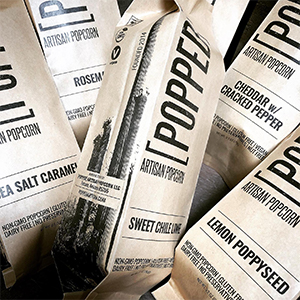
[00:11:02] Ray Latif: When I walked into the studio, I swear it smelled like a delicious popcorn factory and what we have on the table Are some products from a brand called popped Artesian Popcorn, which is based out of Tucson, Arizona These are incredibly beautifully packaged. Each one of them is 2.4 ounces. How would you describe these bags sort of tall?
[00:11:23] Salim Najjar: Yeah, there you go
[00:11:26] Tommy Kelly: I spoke with Diana last week. So right now the popped Artesian Popcorn is mostly in places like they have vineyards, the Ritz Carlton carries it, bars. So they're looking to branch out into retail. And one of their main differentiators is that they do all of their own production, which is not, which is not so common these days. And their flavor lineup is pretty special. So we have the lemon poppy seed over there. They have a churro flavor. a prickly pear caramel, so they're doing some wild stuff with flavors.
[00:11:58] Ray Latif: Exciting. They definitely are doing some wild stuff with flavors. You guys are munching on the lemon poppy seed for a bit. It's tasty. I have mixed feelings about the packaging, because again, we both thought it was coffee. You see it in the product room and just walk right by. It's like, oh, we got another coffee. Oh, it's not a coffee. Oh, it's a popcorn. Interesting. So it pulls you in if you like coffee and hopefully like popcorn once you find out that it's popcorn.
[00:12:21] Salim Najjar: You try to make a cortado out of this by accident?
[00:12:25] Ray Latif: Later probably something you'd do perhaps we could pair the popcorn with some liars Which is an Australian based brand of non-alcoholic spirits they launched in the US in December I don't know if it's liars. I don't think they want you to call it liars No, it is because it's named a liar.
[00:12:42] Salim Najjar: Oh
[00:12:42] Ray Latif: It's named after the lyrebird. You're lying about this. Which is an Australian bird known for its ability to mimic any sound. I was pretty impressed by lyres, even if you're not impressed by The New, Mike. Oh yeah, I was definitely impressed by the product. So they make non-alcoholic representations of a whole bunch of different spirits like whiskey, gin.
[00:13:02] Salim Najjar: Absinthe have you tried the absinthe John I've tried the gin gin is really good did not know we had an absinthe Did they send us one or maybe they didn't maybe they sent us a like red aperitivo dry aperitivo the dry, like the London dry gin one, and then this, uh, which I assume a white cane spirits, a white rum.
[00:13:26] Ray Latif: Out of the brands that come to the office, you know, the non-alcoholic brands that we've seen, and we've seen quite a few, Lyric's is pretty impressive. They make a really good product. Stop calling them liars.
[00:13:35] Tommy Kelly: If one wanted to mix non-alcoholic spirits with alcohol, how would that turn out?
[00:13:40] Salim Najjar: Uh, you can definitely do that. There are definitely cocktails and bars out there that use things like seed lip just to lower the proof of a cocktail. I think that's one of those things that I'd probably defer to a professional rather than try that at home but I find that they mix really well with kombucha.
[00:14:02] Ray Latif: I've been mixing them with GT's original and making some, you know, afternoon cocktail. I think they're cocktails. Well, they probably mix well with a product I'm holding in my hand, which is From The makers of Withco Cocktails, which is a Nashville based company, which makes concentrated cocktails. This is a old fashioned variety. It's a 16 ounce glass bottle, beautiful packaging Withco uses. fresh premium ingredients. The ingredients here are pure cane sugar, water, aromatic bitters, cinnamon, orange peel, and raw vanilla. As I mentioned, the packaging is really striking. It's a full wrap with a sort of black for about, I'd say four, what's that, four fifths of the bottle. Nice apothecary bottle for a cocktail. Yep, and then the lower half is The New of the variety and color-coded to specify that variety. You have Ellis Old Fashioned, John Craven's holding Honey Sour, and I have Jackass, Ray. What is the Jackass variety? Yeah, what exactly is that? It says my name, BevNET, well no, Ginger Root, Bitters, and Lime. I'm keeping this. Okay. You can keep it. Uh, thanks so much to Josh Ellis, who is the founder of Withco and a loyal listener of Taste Radio. If you want to send us some products, we'll happily accept them. Please send them to BevNET slash Taste Radio, 44 Pleasant Street, Suite 110, Watertown Mass, 02472. Perhaps we'll chat about them in a future episode. When you're at Expo West though, these are the aforementioned tips that I think we'd like to share a few of them. At least Melissa, I know you have a bunch that you'd like to chat about.
[00:15:39] Tommy Kelly: I put together some tips. I've been on the brand side of a trade show and it is brutal. It is a really, really long time to be in a booth. So there are a few things that brands can do to mitigate some of the pain.
[00:15:57] Ray Latif: Literal pain.
[00:15:58] Tommy Kelly: There is literal pain. So one of them is pretty obvious, but self-care. I mean, bringing food with you is always a good option. There's not a ton of food that you can, like real food that you can get at these shows. And if you depend on slices.
[00:16:11] Ray Latif: As opposed to samples.
[00:16:12] Tommy Kelly: Yeah. Like if you're going to have your team eat slices of frozen pizza for lunch, they are going to leave. So a lot of brands will bring their own food, bring water, water not only for your team to have, but also to share with visitors who come for meetings and that kind of thing.
[00:16:27] Ray Latif: But you know who does usually have a little bit of real food at their booth is Sir Kensington's. There's usually vegetables there.
[00:16:34] Tommy Kelly: That's a good tip. Sir Kensington's is definitely a good tip for people at the show.
[00:16:39] Ray Latif: You miss vegetables at the show. They're not, they're few and far between, but you hit the Sir Kensington's booth, it feels like an oasis. Free vegetables. Yeah.
[00:16:47] Tommy Kelly: So you can bring your own vegetables or you can go to the Sir Kensington's booth. Thank you, Mike. Fun fact.
[00:16:54] Salim Najjar: Just in a little picnic basket full of vegetables. Just hang.
[00:16:59] Tommy Kelly: Getting out of the booth is really important. So not only so that you don't get booth fatigue, but also so you can check out your competition. And when you go to visit other booths, you can check out not only how they're showcasing product, but also how they're talking to people. Having clear roles and talking points for everybody at your booth. So the kinds of people who are going to come visit will vary. You'll have investors and retailers, media. So having clear matrix talking points for everybody.
[00:17:26] Ray Latif: This is a really important point. You bring a lot of different kinds of people for different kinds of conversations and you have to really think about what's that flow going to be like. And when the dream retailer comes over, Are you going to have them talk to a founder and a salesperson, or are you going to have them talk to a marketing person first and get the whole backstory? You probably don't want to do that. You have to figure out who's going to have what kind of conversation.
[00:17:47] Tommy Kelly: Making sure you know how to triage people who are coming to your booth, who's assigned to talk to whom is really important.
[00:17:55] Ray Latif: Yeah, those time wasters like BevNET Mike, you got to make sure.
[00:17:58] Tommy Kelly: Just shuffle him to the side.
[00:17:59] Ray Latif: Do you have any more vegetables? Push him aside.
[00:18:01] Tommy Kelly: Just give him some vegetables, he'll be fine. I would like to test your CBDs car. create your own buzz. So in addition to the buzz that you have built by perhaps working with Nosh and BevNET, when you're at the show, you never want to understaff your booth. When you walk down those aisles, you don't want to see a booth where there's one person on their laptop, you know, sitting down.
[00:18:26] Ray Latif: Oh, that is a rookie, rookie move. Love those. On your laptop at the booth, look at people, talk to people, be bright.
[00:18:33] Tommy Kelly: If there are a bunch of people crowded around a booth, that's the booth that's going to get more attention. So making sure to build your own buzz at the show is really important. One that I think is really important is giving everybody respect who comes to the booth. People switch badges, they hide badges. You never know who knows whom. So even if it's not the person or the people that you were really, really hoping to talk to at the show, treat everyone with respect because you just never know.
[00:18:57] Salim Najjar: On that note, don't violently cough in your hand before you go to shake my hand. That was my next point. Kindly. Oh, and no food prep in the restrooms. I always love those signs.
[00:19:07] Tommy Kelly: Yeah, yeah.
[00:19:08] Salim Najjar: There are a lot of those signs. It must have been a problem.
[00:19:10] Ray Latif: Anyway, it is team huddles at various points throughout the I was going to say the match, but throughout the event, especially like beginning of the day and end of the day to All About the conversations that you're having, how you might want to tweak the pitches that you came in with, because you have to be ready to change the plan.
[00:19:25] Tommy Kelly: That's another point. Having specific goals From The show. You can't stick to those goals if you're not constantly huddling and talking and adjusting as you go. That's a really good point.
[00:19:36] Ray Latif: Well, so that was a lot of really good and concrete information. Thank you so much for sharing it. And I'm sure our audience is going to be very happy that you did.
[00:19:43] Tommy Kelly: My pleasure, and we wish everybody the best of luck. Drink that water.
[00:19:47] Ray Latif: Drink that water. Eat those vegetables. We forgot one thing. Follow our Instagram accounts if you want to see what's going on outside the show. Like if there is a little bit of a lull in traffic and you want to see what's going on, you can follow BevNET, Nosh.com, BevNET Taste Radio, you know.
[00:20:03] Tommy Kelly: Don't let the show pass you by.
[00:20:04] Ray Latif: Right. Exactly. Melissa, what's your Instagram handle again?
[00:20:07] Tommy Kelly: Melissa underscore Traverse.
[00:20:09] Ray Latif: There you go. And everyone knows BevNET Craven and BevTrade with a Y. Should I change it? Here's something. All right. I'm going to ask our audience. Should I change my Instagram handle to Bevanette Ray or Bevanette Taste Radio Ray? Taste Radio with a Y. Taste Radio.
[00:20:25] Salim Najjar: That's clever. That's like cheese with a Z. Don't laugh, Nate. That's a bad idea.
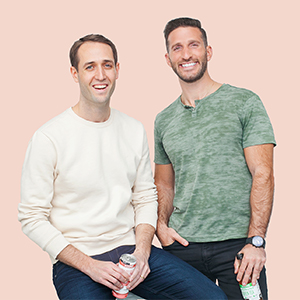
[00:20:31] Ray Latif: If anyone has any ideas or any suggestions on whether or not I should change my Instagram handle, just shoot me a note, ask at Taste Radio. On that note, I think it's time to get to our featured interview for this episode. As I mentioned at the top of the show, Tommy Kelly and Salim Najjar are the co-founders of Sound Sparkling Tea, which debuted in 2015 and has been at the forefront of an emerging market for carbonated teas. Hailed by Bon Appetit magazine as The New La Croix, Sound is known for its herbal, unsweetened, and organic iced teas, and also markets a line of tea-infused sparkling waters, which the company introduced in 2019. The products are primarily distributed in the Northeast and Mid-Atlantic also available at several chain and independent retailers across the U.S. Nuclear engineers turned beverage entrepreneurs, Tommy and Salim admit that Sound's development has come with more than a few costly mistakes. And in the following interview, they discuss several of the pitfalls that in hindsight could have been avoided, why they view failures as lessons, how to stay lean while growing, and why corporate sales have been a boon From The brand. Hey folks, it's Ray with Taste Radio. I'm here in Manhattan, New York. Can you say Manhattan, New York? Does that make sense? You say Brooklyn, New York. You say Staten Island, New York. Very rarely do you say Manhattan, New York. Yeah, you don't hear that often. You just The New York. You just The New York. New York, New York. And the voices you just heard belong to Salim Najjar and Tommy Kelly, the co-founders of Sound Brands, the makers of Sound Sparkling Tea and Sound Sparkling Water. Gentlemen, thank you so much for having me. Thank you for having us. Thanks for having us on. This is really fun for me because I first met you guys, I believe it was at an Expo West a long time ago when the brand was called Soterra. It's since obviously been renamed Sound Brands then I saw you guys again during The New Bedward Showdown at BevNET Live. What was that, four years ago?
[00:22:21] Sound Brands: Yeah. Yeah, that was four years ago. June 2016 or 15?
[00:22:28] Ray Latif: I think it was, yeah. The amazing thing is we were Soterra for maybe six months. Yeah. And the originals all know it very well.
[00:22:36] Tommy Kelly: The OGs.
[00:22:37] Ray Latif: Hey, I mean, I remember because I really loved the taste of the brand. And what was weird is I think I loved the Taste Radio remember the taste more than I remember the brand name, but I certainly remember the brand name now. That was four years ago, but to go back to the earliest days of Sound, you'd have to go back to when you guys were working for a nuclear power plant. Is this right? That's right. Indian Point, owned by Entergy, up in Peekskill, New York. It's about 40 miles, 50 miles north of the city.
[00:23:05] Sound Brands: Powers most of New York City. Both of you engineers. Yeah. Yeah. I was mechanical. My degree was mechanical. I was electrical and computer, but working mechanical there, working actually together there on the same boss. That's how we met.
[00:23:19] Ray Latif: Right. At the end. At the end. Yeah. Yeah. We, uh, that's kind of how we got there. We were in different groups. We worked our way to the same, maybe eight person group and then left within maybe a month of each other. Yeah. How long were you there at the company? I was there about five and a half years. Same with me, five and a half years, yeah. That's a long time to be at a nuclear power plant.
[00:23:39] Sound Brands: Whoo, yeah.
[00:23:41] Ray Latif: I think to the layman, it sounds scary to work at a place like that. But to me, it feels a little bit more terrifying to be an entrepreneur in the beverage business. What is it for you guys? We've done both, and yeah, you're spot on. I mean, a nuclear power plant, and also we sat in cubicles, mostly. Salim was in the plant a lot more than I was. But yeah, you're in an office, you're sitting at a computer. What'd you say? I said that explains a few things. Sorry, Salim. No worries. Keep them coming. Keep them coming. Yeah. I don't know. It's like a, you're in there more, but I mean, it was like a clean basement and there's so many safety factors built into it. Not the same with beverage entrepreneurship. There's less of a safety net. Yeah, I think, and you're learning on the fly, right? There's no roadmap, but there are operators in the nuclear power plant that have been training for two years how to operate the plant in every scenario. For us, it's, you know, again, it's not a one-size-fits-all. You can go to BevNET Live, you can read, you know, the Honesty book, all these different things, right? But when it's your product, it's go to market strategy. Everything else is, there's so much nuance to it. You can't just open the operating manual and say, you know, turn this knob. It's a lot less cut and dry. Absolutely. Let's start From The beginning because the idea for sound actually came while you were working at the power plant. Tommy, it was your idea originally? Originally my idea. Saleem helped me bring it to life for sure. But yeah, I was a sparkling water drinker. I drank hot tea for caffeine as well. I was drinking yerba mate. And it was a summer day. I remember sitting at my desk in the afternoon drinking a sparkling water and a hot tea, one for refreshment, one for caffeine. And I was surrounded by soda drinkers, people drinking caffeinated sodas. And I wanted that experience of a cold, crisp, carbonated beverage that was caffeinated, but obviously none of the ingredients that were in it. thought, why can't I just carbonate tea? And so I went to a Teavana, I believe, bought some loose leaf tea that day. I went to Target and got a SodaStream, brewed it, cooled, carbonated it, and said, OK, this exists. Or this is possible, rather. And then it was more figuring out, why doesn't this exist? Has this been done before? And I was making it at home, bringing it into work as my caffeinated beverage of choice. And then bringing it in, Salim and I sitting in the same group, He was a very, very, you know, he's off scale high now on health fanatic, right? But, you know, so he obviously loved the product. And we also then started looking into more of the market, understanding the opportunity, and it expanded much beyond caffeine into, you know, more of a sparkling water alternative. So what was your interest in having Salimi as a co-founder? And what was your interest in working with Tommy as a co-founder of Sound? So my interest in working with Salim was, I mean, I know that I was working on it personally for maybe a year or so, just tinkering around. And when Salim started to come into the picture, things started to accelerate and get done more quickly. And he was obviously much more operationally minded, you know, more driven in that sense. And he's also more energetic and a better salesperson than I am, candidly. So, I mean, I think that our skill sets couldn't complement each other more, but we also, I think, high level shared all the same values and had the same vision From The quality and where it was going and just wanting to, you know, self-improvement and wanting to be better every day. But when you get down to the details of who excels at what, it was, I think, a perfect fit. Thank you for that. Thank you for that.
[00:27:15] Sound Brands: And yeah, I will definitely echo and agree that for me, health nut for sure. And I started diving in the power plant days down a path that was exploring that and really cutting out sugar from my diet at that time. And so I will never forget the day that Tommy brought in the sample for me to try. I mean, he had been talking about it for a while, brewing it at home, and I never got to try it. And I like to say it was just love at first sip when I took that. And I mean, five and a half years is a long time at a power plant. From day one, I was trying to find my way out and getting my hands involved in the business world, taking MBA classes, but I didn't want to jump ship until it was I found something that I truly believed in and had passion for and could really see myself helping grow. And Tommy put together this incredible business plan that I mean, now looking back on it, I'd laugh. It was 35 plus pages of just research and dedication. And I mean, it was very clear his mission for this product and what he wanted to do with it and it resonated so well with me and I was just like this is somebody who sees the big picture who will not waver from you know what he believes this brand can become and it was a no-brainer for me to actually dump money and put in all my time to get it going and I think we do very much have a complementary skill set, which I think is very important in a co-founder because we were friends as well. A lot of people say don't get into business with friends. So, I mean, it has, of course, been a roller coaster and, you know, we do have our disagreements, but I think we balance each other out and over the years. I think we can definitely say it's been so much more mutual respect for having that person check you. I mean, it's not always good to be high energy yes to everything. You need to think big picture and Tommy is just that, a big picture thinker.
[00:29:02] Ray Latif: So for all the research that you guys did on the category and this opportunity for a sparkling tea, You must have come across other sparkling tea brands that hadn't been very successful because sparkling tea has been around for a number of years. What did you see as the opportunity? What did you see as the point of differentiation that sound could bring to the market that other brands didn't have, that consumers hadn't seen? Yeah, so I think you really to understand how our product was different or how it was missing the mark for us as consumers at the time was on the surface if you looked at the product label it Sound Sparkling tea, right? But to understand why that wasn't successful is you look at the ingredient panel and tea may have been the fourth or fifth ingredient. I think that was the case for a lot of products that came to market that were almost a soda with tea in it being marketed as a sparkling tea. You also had on the other side a set of products that were more within the clean energy category that were sparkling and tea based. But the carbonation level there was so low that it didn't really capture the same experience as you would with a sparkling water or soda product. So I think those are the two things, you know, the ingredients and the carbonation content are the two things that our product brought to market that had never been done before.
[00:30:18] Sound Brands: And in terms of differentiation, I mean, just looking at the sparkling water market as a whole, we felt at that time very commoditized and a lot of products were coming out with stevia and erythritol. This was now five years ago, which never sat well with us, always gave us a headache. And then also this natural flavor, which just by definition in our industry is ambiguous. And I think over the years, we've seen that with a lot of, you know, The New and some of the legal aspects around that. So for us, that was really our biggest differentiator, kind of sticking true to using, you know, only tea or extracts as our ingredient, being transparent.
[00:30:58] Ray Latif: So, as I mentioned, it was originally called Sotera, even for a short amount of time and eventually became Sound. Where did the brand name come from?
[00:31:06] Sound Brands: Soterra was Tommy's idea and that was really just SOD, short for Sode Terra, Latin of the Earth, so Soda of the Earth. Then we got into some legal matters with that name, which at the time, obviously we were not thrilled about because we had dumped a lot of our own money into producing this product. And all the labels. And all the labels, and it was the first production run, so minimums, and we actually got that product into a Whole Foods. So we, I mean, we were, you know, we thought that was great. And so when that, that lawsuit came, we were not thrilled having to change The New, but were forced to just from a financial standpoint. So it was really a blessing in disguise, right? If you take a look back now, you know, we're thankful that that happened. And it took a long time to come up with this name. There was a lot of back and forth, a lot of polling, family and friends. But The New Sound comes from Sound Brands an adjective. So sound body, sound mind, sound ingredients, sound mission, sound company, really a descriptor for what's in the product, but more importantly, what we're trying to build from a platform and from a brand standpoint.
[00:32:14] Ray Latif: Yeah, and I think it was actually valuable to get to where we are with the brand name. I couldn't have been done right out of the gate without really having brought a product to market previously because I think being two outsiders to the industry, we started to, as Celine was saying, understand more about the natural flavors. And we said, hey, we're creating this product. It's white tea with peach and ginger. And you'd be getting the spec sheets From The supplier and it would be peach flavor. And that was it. And so I think we started to realize just, you know, how much ambiguity there was in a lot of ready to drink beverages. And everyone was throwing in stevia erythritol. So, so sound ingredients and twofold about the mission, right? We, that also inspires how we get involved in, you know, like a New York City nonprofit wellness in the schools and helping educate youth. And it's All About really our mission is related to obesity and helping people drink less sugar. So sound ties into all of those. The first year of entrepreneurship, from what I understand, is very, very difficult. It's also when most people fail. I think in the beverage industry, there's about a 92% failure rate within the first year. And then out of the 8% that are still left after that first year, I think it's only 10% of those make it on to The New year. What was your first year like? How'd you make it through? How many times did you want to quit? It's a very leading question. Yeah. I would say that honestly, like the first year, I don't know that we wanted to quit. I mean, I don't, I know that I'll speak for myself, but I know your personality is the case. And I think that also too, maybe being engineers, we were inherently curious and it was bumps in the road were more, how do we solve this rather than like, okay, this is it. So I think it was just a lot of learning All About, the challenges of just the vernacular of the industry, right? We were smart people, I think, you know, by degree, right? We're smart on paper, but you come into the industry and you're talking about, you know, the difference between an MCB and an OI, like, what? I don't know what's a TPR. What's a broker? How does a broker operate versus a merchandiser? When do you need a broker? There's different types of brokers. So I think that was really the first year was just a crash course on how does the industry work. And I think we probably Should have spoken to more people within the industry. We're a little bit siloed in that sense. But yeah, to me, that was kind of my memories of the first year, learning things the hard way that way, outsourcing, listening to consultants rather than, you know, diving in headfirst and saying, you know, we're going to solve this ourselves, which we did, you know, probably three to four months into it and things turned around very quickly.
[00:34:57] Sound Brands: Yeah, and I mean, I will echo that. I remember the first year, I'd probably classify it as a bunch of failures, right? I mean, from spending way too much money on an initial product with the labels and producing it to spending way too much money on an outsource sales team when you shouldn't even be in the store. But I don't really think a failure is a failure when you're an entrepreneur. When you're an entrepreneur, a failure really is a lesson. If looked at properly, then you don't do it again. Right. So we had plenty of those. And I think those all led us to where we are in a perfect example. The New that we touched on is, you know, our name and having to change The New. And most people could look at that as a failure. But that really led us to a lot of our current strategy in terms of spending money now and how lean we are and, you know, ensuring that Whatever we are spending our money is focused on our goal and building our brand rather than just what necessarily other people are saying.
[00:35:52] Ray Latif: This other people term that you both have mentioned, one in a good light, as in Tommy, when you said listen to other people who have been there, done that, versus other people, Celine, that you mentioned, I'm assuming the consultants that Tommy was referring to. Tell me about the impact of consultants and what they bring to the table. Because this is an important question. I think there's a lot of people out there in our industry who say, okay, I can help you. I can guide you. I've been doing this for a long time. But it's certainly not a one size fits all approach. And sometimes the advice works for one brand, but definitely not for another. I think that the key thing is knowing how to use them, how to work with them. If you hire a broker and you start paying them $5,000 to $10,000 a month and you don't know what your strategy is for go-to-market, which chains you're going after, you don't have the bandwidth to manage them and talk to them weekly or daily, whatever it might be. then there's no sense in hiring that service provider. There's a benefit to it, but I also think you need to have the knowledge base and the strategy and the team bandwidth behind that and the budget too, right? A lot of times there's no sense in selling into these large chain accounts if you don't have the budget for sales and marketing behind it. So I think that's probably what Salim was saying early on is we didn't spend enough time learning about what is our brand positioning, what makes us different, what's our value proposition, and started working with service providers without knowing how we wanted to direct them. So when you start doing that, that's a good way to spend money inefficiently very quickly. How did you know you were on the right track though? I mean, at a certain point you can say, okay, well, we failed a lot, but it makes sense to keep going regardless because we are onto something. You know, what was it that gave you confidence that this could be a successful brand, that you would have some traction going forward after that first year?
[00:37:50] Sound Brands: So there's a lot, you question yourself a lot in terms of, you know, is this something that can be successful when you have all those failures? But I think, you know, our belief in the product and just really our brand and what we were trying to bring to the market, an objectively healthy, unsweetened, sparkling beverage and The New York it out there and just, you know, for ourselves, for our own network of family and friends, that's been, I'd say, the driving factor to this point, really.
[00:38:17] Ray Latif: Yeah, and I would add too, because in the early days, Salim and I were doing all the demos at Whole Foods and these stores. And as you said, you love the taste of the product, The New and design and all of that left much to be desired at the time. But there's no way that standing behind a demo table and the person tries it From The first time and they love it, right? It's like nothing they've ever tried before. Those sort of things are, they keep you moving, right? You have these bumps in the road and then that's the thing that says, There's something here. It's not a failure. It's just not on the right track just yet. It was just you guys doing demos for a long time. How long were you guys the only employees of the company?
[00:38:58] Sound Brands: It was the first three years, really three, three and a half years. It was the two of us, a lot of obviously outsourced help, which was, was needed. But after that first year of those failures and spending a lot of money on those failures, we realized that, you know what? We need to take a step back. We need to really figure out what our brand is, who we are, how we want to present ourself in the market. So it was just a lot of that From The first three years.
[00:39:23] Ray Latif: And rate in costs, it sounds like. Yes. Some of those costs are... Your salaries. Did you take a salary those first three years?
[00:39:31] Sound Brands: Are we still taking a salary? We took what we needed to survive. I wouldn't even say survive. We took what we needed to get by and yeah.
[00:39:42] Ray Latif: Those first three years were, I think, so necessary, again, as being outsiders to learn about the things we were just talking about and being The New at the table with UNFI or the DSD and getting the questions on, you know, what's your hip pocket deal? I don't know. What's a hip pocket deal, right? So like how can you deploy a sales rep? when you don't even know to tell them what to say. So it was like, you know, we All About like, you know, hiring someone earlier would have been the right move. Cause it frees you up as a founder to do bigger picture thinking and all of these things that founders are supposed to be doing. Right. But I think too, we had to learn, we learned everything during that time, which is, you know, now at a point where we have a team, we actually can speak, speak the language. Who was your first hire? I was actually Salim's cousin, George. He's amazing. We needed someone again to manage our DSD distributor in New York. Just hustling up and down the street, someone that was young and energetic. Lebanese ideal, you know.
[00:40:48] Sound Brands: Knows how to sell. Yeah, yeah, exactly. He was, I mean, he's been with the, or seen the product since inception, just being my cousin and, you know, watching it grow and always was, was interested. And, um, and so really just made perfect sense. Someone who we knew we can trust to be out there and not just do a nine to five, you know, but do what it was going to take, which was desperately needed.
[00:41:10] Ray Latif: Yeah, and I mean, you know, in New York City, up and down the street sales, you can't, you have to have a person in these stores every single day. And he was doing things for us, like making deliveries for a marketing event, you know, whatever it took, he was doing it. So he was learning a lot that he was doing a very wide spectrum of things as you would hope for as an entrepreneur Eating Your first hire, you know, he kind of did whatever was needed. It's one thing to get on shelf, and if you go up and down the street, you'll find a handful of bodegas. You might find 100 bodegas that'll take your product. It's another thing to stay on shelf, right? What's been the strategy? What's been your retail strategy, not just for getting distribution, but getting turn, getting pull? It's definitely evolved recently, and Salim can speak to our other channel strategy here, but just New York DSD specifically, as you said, getting on the shelf is easy, more or less. If you have product and you have a budget to deploy, you can make the case and you don't need to get paid for it. You get on every shelf you want. What do you mean by that? Well, in going in and taking free product, most stores will do it. Free fill, right? Things, other terms we learned fairly quickly. So for folks who aren't familiar with free fills, you know, what's the upside of doing a free fill in a bodega in New York City? The upside is it gets your product on the shelf. I mean, now what we shoot for is more of a buy one, get one free deal as an intro or something where, you know, even less aggressive, but where the store is actually purchasing a case, right? Because what we came to find out on a free fill, especially when you're an unknown brand and you don't have a person in the stores checking in on it, you may give a free-fill today and it may still be in backstock collecting dust next month. So that's the challenge with the free-fill, but the upside, the opportunity is generally as a Sound Brands with no track record, a lot of these accounts require it. So obviously Whole Foods and accounts like that that also ask for a free-fill will put your product on the shelf. It's more challenging up and down the street. But yeah, that's why you do a free-fill. Get the product on the shelf as a Sound Brands. When you started to see people drinking the product, what were they saying about it? Because, you know, I have a perspective, but I'm a unique customer because I have some beverage industry experience. I know, you know, what you guys were talking about, what's in the product versus what shouldn't be in the product or what I wouldn't drink in a product like that. What was resonating most with consumers and how did you end up getting that right on the front of the package? Because you've gone through a few different rebrands.
[00:43:40] Sound Brands: Yeah, I mean, I think as Tommy was saying, it was very important for us to do all those whole food demos to start because we got to see that feedback firsthand. And I mean, I remember I'd say the two biggest things that that we'd hear was, wow, this is very clean and there's like no aftertaste. or no lingering taste or no chemical taste, which was one of the biggest reasons why we created it. A natural flavor gives, because of it by definition, it could be several other sub-ingredients in that natural flavor, you don't necessarily get a clean palate or a clean back-end taste. So clean, I'd say, is one of the things we heard most.
[00:44:17] Ray Latif: I think beyond that, too, it was, you hear a lot of people saying, I've never tasted anything like this before. And I think that catering to a sparkling water consumer, they were very much conditioned, even if there were 50 different brands, to be drinking lemon, to be drinking raspberry lime, right? And so when we started bringing out rose tea with lime and cardamom, these palates that were accustomed to drinking things a bit more thoughtfully crafted, were pleasantly surprised. So I think from a flavor profile perspective, and that's really, those two things are really what drive our strategy now today still is ingredients, ingredient quality, as Salim was saying, and ingredients thoughtfulness and the thoughtfulness of the flavor profiles. You probably heard a lot of feedback as well from your corporate sales. Talk a bit about that corporate strategy because it is, it seems like it's pretty key to trial and perhaps a pretty good source of revenue. Yeah. I mean, so Salim just lit up.
[00:45:18] Sound Brands: So the product was conceived in a corporate account, right? That's when Tommy came up with the idea. And after that first year or first three to six months of really, quote unquote, the failures and spending a lot of money to get in retail and, you know, to pay to play that they say in retail and realizing that, okay, like you said, it's one thing to get your product on a shelf. You're spending a lot of money on the back end to demo it, to merchandise in it, to make sure, you know, that it's selling in there. And we had a lot of friends that were working in these, you know, high-end tech startup companies like the Facebooks, the Googles that have what's known as pantry offering. And pantry is really free, an unlimited supply of free beverages and snacks for their employees. And that market in the U.S. is a $5 billion and growing market alone. So for us, looking at that pantry channel and realizing the economics of it, we're far greater than those in the retail channel. And actually, you know, you get a path to profitability in that channel because you're not spending anything on the back end, right? Because the end customer who is in fact our target customer, anybody that is in a Facebook working there is someone we'd want the product in our hands. They're getting it for free. You don't need to convince them to buy it off of a whole food shelf. So it's a brand building channel. which is really what we want to do, build our brand. And because you cut out a layer of the pie in terms of distribution, right? Typically, and this is all stuff we had to learn as we went, but typically we sell to a distributor, they sell to Whole Foods, Whole Foods sells to you. In this case, you sell to a corporate distributor, they'll sell to the Facebook or LinkedIn, and your end customer gets it for free. So after our learnings in that first year and realizing, hey, we need to be a lot more lean in our spending, but we still want to build our brand and grow to top line, we quickly shifted and decided, you know, let's take a mile deep, inch wide approach in retail focus really just here on New York. It's not about the number of doors, it's about the velocity in the doors and the turns. but let's really see what we can push in this corporate channel to build a brand because we don't need to spend as much and you're Eating Your product and the perfect customer.
[00:47:33] Ray Latif: So do you have a sense of how much of your business you wanted at traditional retail versus corporate?
[00:47:39] Sound Brands: When we started, no. But since then and looking now a couple of years in corporate and just seeing how it's played out, that's how we base our strategy. That's how we base our model. And we do see that, you know, shifting over time. But right now, just because of the economics and the spend in corporate, it's a bigger, a much bigger piece of our pie right now.
[00:48:01] Ray Latif: We always say this, like we're fighting it up and down the street in these bodegas to get a 3k sale and all of a sudden LinkedIn's over 600 cases. You know, your philosophy can change pretty quickly when that starts to happen. And I think it goes back to what we were talking about in terms of don't hire a broker until you have the right budget behind it to support your sales and marketing growth. Right. So we haven't been doing things like that, but. And knowing the traction that we're starting to get, and we're getting market pull, and you All About free fills, and you're constantly giving out free fills early on. We never give out free fills now unless it's to a larger chain account. But up and down the street, you're starting to get more market pull. People are reaching out to you. And I mean, I think that's more of a gut type thing, but we're starting to hit an inflection point now where we were a bit ahead of the category, you know, in terms Sound Sparkling tea, and now the category is starting to mature. And we have a lot of other brands now educating consumers on what Sound Sparkling tea, what are these sparkling water alternatives, right? They know what to expect. There's now almost an alternative sparkling set within stores, which is incredibly helpful for us. I've seen your product in a lot of places, most notably at Whole Foods in my neck of the woods. Again, it's a Big Swig when you can get on shelf, particularly at a place like Whole Foods, given the volume that they do, given the visibility, given that you're aligning with what a Whole Foods represents. What's that like working with a retailer to determine the right merchandising strategy, the right pricing strategy, the right promotion strategy? Because all those things are really important to staying on shelf once you're there. Yeah, I think, I mean, we've definitely had instances where we've gone into stores thinking it's going to be a win and we were discontinued, right? And I mean, from our wins and our losses, you know, the biggest differentiator is how much attention you pay to them and how much buy-in you're also getting From The retailer, right? How excited are they to bring you in? If you're forcing it in and you end up on the bottom shelf and the ambient aisle, right, that's not going to be a huge win for anybody if you don't have buy-in From The store. So I think it's a combination of both sensing how much excitement and buy-in you're getting From The store that's bringing you in, and also, as you said, having promotional calendars set up, being able to support them through demos, supporting through targeted events and sampling within the area. You want to grow into new chains, and it's super exciting to say, this chain wants to bring me in in Texas. This chain wants to, you know, we have an opportunity to go to the Pacific Northwest. We have, you know, no placement there. People are emailing about it. Let's go. But again, going back to budget and resources, you're just setting yourself up for an initial free fill, limited reorders, you're probably going to spend money on some demos and merchandising, but it's not going to be enough to build the momentum. So that's where we've become super thoughtful on retail growth and being, as Salim said, inch wide, mile deep, because you need to have support and you need to have the firepower behind it. That's how you stay on shelf. And that's why retail is the most critical channel long term. That's where most people are buying beverages in grocery and convenience, but it's also the most expensive. So that ties obviously back to our growth strategy by channel. So five plus years in, chipping away, looking at the opportunity that's ahead of you. But let's look back for a sec. What's The New Eating Your'd change if you could?
[00:51:33] Sound Brands: It would be to not have been so hard on ourselves during those difficult times. The mental stress and grind of being an entrepreneur, especially in the CPG industry, is grueling. Stress is at a cellular level the root of all disease and death outside of accidents. So looking back on the past five years and all those stressful times, a lot of it was self-induced and based on our own internal expectations. So if you were to just take a step back during those difficult times and kind of accept the reality of your situation and look at it from a different lens, you find, like we were talking about, really, that stressful or failure moment is a lesson, right? And I'm a big believer in reality is created by our minds, by our perception. So if you can continue having a positive outlook, a positive perspective, putting out that good energy, it's crazy how the universe just takes that and gives that positive energy right back to you and things unfold the way they should and that failure was not a failure.
[00:52:44] Ray Latif: Yeah, I mean, I definitely agree, you know, with Salim in terms of when you're in it, you're in the weeds and you're doing everything, every little document that needs to be reviewed and signed, whatever it might be, you know, a document from a distributor needs to get reviewed and signed, and it's going to be a day late. And it's like, oh, you know, we're going to miss our opportunity to launch next week. And I say with like taking a longer term look at, you know, a really high level perspective and zooming out and saying, I think if we said, all right, we're in this for 20 years, right, you know, you're going to be in this for 20 years, the amount of stress that you would put yourself under to make certain decisions, whether it's related to launching at a new chain, or, you know, even we All About the brand a lot early on, and, and rather than going to market out of the gate, because we felt like we needed to be first to market, just taking a step back and taking more time to invest into What is the brand? Where does it fit into customers' lives? Being really thoughtful about that before just rushing to jump into things. I think early on we did have a little bit of a sped up mentality.
[00:53:52] Sound Brands: Saleem approach. The Saleem approach.
[00:53:55] Ray Latif: Well said. And well said throughout this conversation. Guys, I'm so glad that I had the opportunity to sit down with you. You know, I've been a big fan of sound. I'm not going to sound very objective here for a long time. And I think you make an outstanding product. And I'm really excited to see how The New five years unfolds From The company and for you guys personally. So thanks so much again From The time. And we'll see you soon. Thanks, Rye. Thanks for having us, Rye. All right. That brings us to the end of Episode 74 of Taste Radio Insider. Thank you so much for listening. And thanks to our guests, Tommy Kelly and Salim Najjar. Please subscribe to Taste Radio on the Apple Podcasts app, Spotify, Stitcher or Google Play. As always, for questions, comments, ideas for future podcasts, please send us an email to ask at Taste Radio. On behalf of the entire Taste Radio team, thank you for listening, and we'll talk to you next time.
[00:54:59] Tommy Kelly: Hello, I am Melissa Traverse here From The Taste Radio podcast, talking about some of the biggest tension points that CPG brands and founders face when they're scaling a brand, and those are financial accounting and inventory management. I am joined by Matt Lynn, inventory accounting guru from Belay Solutions, and he is going to shed some light on all of this that is going to help everybody out quite a bit. Matt, thank you so much for joining us today.
[00:55:30] Bon Appetit: Thank you for having us, Melissa. It's great to be out here at Expo West and it's great to sit down and be able to chat this because it's kind of a passion project of ours, working mainly with CPG brands and hoping to help them scale.
[00:55:41] Tommy Kelly: It's been such a pleasure chatting with you and the team and learning All About what you do over there at Belay Solutions. Can you tell us a little bit about yourself and what your role is and the kinds of solutions that Belay gives to CPG brands and founders?
[00:55:57] Bon Appetit: Yeah, absolutely. My role with Belay, I'm actually our inventory accounting manager. I run our inventory department, so we work with CPG brands, taking them from spreadsheets, putting them on inventory management systems, and really helping connect their tech stack between their sales online marketplaces to that inventory management system, even down to their financial systems like QuickBooks. Belay overall is kind of an outsourced accounting firm. And with that, we're helping teams. We have different levels with bookkeeping, controller level work, even high level into CFO type items. So we really help those brands in any way that they need financially. And then I just have a subset of a department where we're really just laser focused on inventory.
[00:56:40] Tommy Kelly: It's certainly a complex topic and there are plenty of places to go wrong. Let's start by going right and start super simple. Can you tell us what some of the biggest red flags are that would help a founder understand or, you know, the person running a brand understand that it really is time to get some help with some of these areas?
[00:57:00] Bon Appetit: Yeah, absolutely. I think some of the early red flags is just everything is chaos. So when they're looking in their financial software, maybe they don't really have an accounting background, and they're kind of just piecing it together and doing their best. And what they'll see is that reconciliations take forever, if they even happen. They have a lot of transactions that don't get coded, or they just put them into placeholders to just get rid of it so it's not an eyesore. they'll notice they have revenue but no cash or they notice that they have a good amount of cash but their blind spot is really seeing the vendor invoices that are sitting there just needing to be paid and so they just lack that clarity that's going to really be around the corner.
[00:57:37] Tommy Kelly: You know, you were talking about one of the red flags that comes up that I think makes so much sense. When somebody asks you what your numbers are and you can't come up with the right number, that's a big problem because that's something that you really should be able to share with decision makers who you're ideally looking to do business with. What should you be able to call up at a moment's notice?
[00:58:02] Bon Appetit: really at any time, you should be able to know an accurate margin. It's amazing how many founders we end up talking to that they can tell you their revenue numbers, they can tell you their selling price, and then the minute you start talking about cost or their cost of goods sold, they just get a deer in headlights look. So really it's very hard to tell, am I even making money? or if you don't know your entire landed cost. Maybe you know what the freight cost is, the duties separately, but you're not really getting that as part of your unit cost. So it's really hard to tell. Am I even making money or am I losing money From The very beginning?
[00:58:35] Tommy Kelly: And do you recommend that founders are able to call up a margin by channel?
[00:58:40] Bon Appetit: Absolutely. And depending on the number of products and channels, you kind of want to know what are your best sellers, which ones are making the most and which ones maybe you're not making as much. But especially if you're branching out and you're doing D to C with B to B, absolutely want to know that.
[00:58:56] Tommy Kelly: Gotcha. You mentioned that when things feel really chaotic, that's probably a red flag. I would say that it probably almost always feels chaotic if you're running a CVG brand. And I know this may be hard to quantify, but is there a revenue number? Is there a number of doors number that would help a brand understand whether or not it makes sense to bring on a partner like Belay? Understanding that so many brands are bootstrapped or they might be tight for cash. What is that friction point?
[00:59:27] Bon Appetit: 3 3 3 3 3 But as you're growing, as you're getting to those six-figure revenue numbers, and especially as you're approaching seven, you want to make sure you've got good financials. Because as you scale to that point, most likely you're going to be looking to raise capital. And investors, the first thing they're going to look at is your books. And are they clean? And do they show a clear picture of your business?
[00:59:59] Tommy Kelly: You know, another area that folks might look to to organize some of the chaos are their systems. So many folks stick with Excel spreadsheets for a good amount of time. How do you know that you need to outsource some of your accounting to an organization like Belay Solutions versus maybe signing on to a Synth7 or NetSuite or something like that?
[01:00:22] Bon Appetit: Well, that's actually something we really help with. When it comes to that cost question, that's something that trips people up. And sometimes if you just have a turnkey business, you buy and sell a finished good, you can maintain with spreadsheets. And we've had clients with million dollar revenue that can do that. But we see so many brands nowadays are using contract manufacturers. and they're just sourcing certain parts of their product. So when you start talking cost, they have no idea exactly what their unit cost is. So that's where we come in and we kind of understand, we'll speak with the customers and the clients and get their needs. And then if we think they're ready for a system, then we'll help put them on that system so they can get some of that clarity. And it's not something we force on anybody. There are plenty of times where founders come to us and we'll tell them bluntly, you're not ready for it right now, but we'll let you know when we think you are.
[01:01:08] Tommy Kelly: That sounds like excellent advice. What should a founder or somebody running a brand look for in an outsourced accounting partner? Are there certain checklist items that they should make sure that their partner be able to execute or be able to help them understand?
[01:01:25] Bon Appetit: Absolutely. I think one of the keys there's, there's a lot of outsourced accounting firms out there. Some focus on service-based SaaS companies, but if you're a CPG founder, you really want to make sure that your accounting firm has CPG experience. I would ask them, you know, what kind of brands have they worked with and even beyond that industry specific, because there's so many subsets of CPG. And that's something that I think is great about what we do with Belay is that we kind of run the gamut. It's kind of like the insurance commercial. We know a thing or two because we've seen a thing or two across a broad spectrum.
[01:01:55] Tommy Kelly: Probably getting references is always helpful, right? Absolutely. All right, so this all sounds great. I think we have a really good understanding of would it make sense to hire an outsourced partner? You know, what some of the things you should be looking for are. What does offloading this kind of work mean From The brand? What can this do for lightening the load of a founder or lightening the load of a brand operator? Like, how does that help them in their everyday business?
[01:02:24] Bon Appetit: It just tries to really help quiet the chaos. So what we're looking to do is just take some of the weight off that founder's shoulder. Let them focus on building the brand, building the business, getting that exposure. If you don't have sales, you really don't have anything. So we want them to be able to focus on that while we take care of your back-end office work. And we can just present that to you on a monthly basis. You can help make decisions. You can take that to investors. And really, you can just focus on growing your business.
[01:02:50] Tommy Kelly: I feel like I felt founders and the folks who are running brands collectively sigh. Breath of relief just hearing that. How can people learn more about Belay Solutions?
[01:03:01] Bon Appetit: So people can text TASTE to 55123 for their free inventory guide to get started.
[01:03:06] Tommy Kelly: Matt Lin, Inventory Accounting Guru at Belay Solutions. Thank you so much for joining me here at Expo West. It's been such a pleasure to chat with you and learn about what you all do over there to help founders Sound Brands with their financial accounting and inventory management. For everybody else out there, thank you for listening to the Taste Radio podcast. I am Melissa Traverse and we'll see you next time.