[00:00:04] Ray Latif: Hello, and thanks for tuning in to episode 76 of Taste Radio Insider. I'm Ray Latif, the editor and producer of Taste Radio, and I'm with my BevNET and Nosh colleagues, John Craven, Mike Schneider, and Jeffrey Klineman. We're recording from the Taste Radio studio at BevNET headquarters in Watertown, Mass. And in this episode, we're joined by Mark Alexander, the CEO of fast-growing skier brand Icelandic Provisions. Just a reminder, if you like what you hear on Taste Radio, please share the podcast with friends and colleagues. And of course, we'd love it if you could review us on the Apple Podcasts app or your listening platform of choice. Mark Alexander, I always like it when someone has two first names as their name, right? I'm an avid skier, so I'm really looking forward to this interview. It's not that kind of skier, Mike Schneider. Sorry. Your last name doesn't fit. I've never met anyone whose first name Mike Schneider. No, you don't usually see that, but it does mean tailor in German, so you might know a tailor. Oh, really? Yeah. As in T-A-Y-L-O-R? Or T-A-I-L-O-R. I don't know anybody with that spelling. No. John Craven. I mean, everyone calls you Craven, so your last name is essentially a first name, right? Yeah, well, we have a lot of people named John here. It's just a matter of efficiency. Less than we used to. We used to have about 10 or 12 Johns in the office.
[00:01:19] Mark Alexander: Yeah, that sounds kind of weird to say that. Yeah.
[00:01:21] Ray Latif: We have too many Johns here. Yeah, I don't know. That was The Good days of the beverage industry. It was a bunch of dudes named John that wanted to apply for all our jobs.
[00:01:31] Mark Alexander: Now it's much more diverse now. Thank God.
[00:01:33] Ray Latif: Thank God. Slightly more diverse for sure. But there's only one Ray. And there's only one Jeff in the office as well. As far as I know. Do we have another Jeff in the office?
[00:01:41] Mark Alexander: We used to have another Jeff.
[00:01:42] Ray Latif: We had other Jeffs. Jeff Hyde. Yes. You kind of took him out though. Most popular name 1972 for boys. Jeff. Was that the year you were born? Yeah. Oh, there you go. Well, that makes a lot of sense. Perfect. Yeah. Lots of fun with our Elevator Talk live stream yesterday. We set this up to give entrepreneurs from across The Good and beverage industry an opportunity to share news and new products that they would have been exhibiting at Expo West 2020. As everyone knows, the show has been postponed. We talked to 30 30 entrepreneurs and executives from companies like T-Riot, Bobo's, Salty, Ayoba, Greenbelt Craft Kombucha. I mean, the list goes on and on. It's fun to expand the platform though. I mean, Elevator Talk, as most people know, has been a show that we used to interact with brand new brands who want to practice their pitch to their dream investor. And so it was fun to have established brands come on and talk about line extensions and refreshes and rebranding. And even in the case of Ayoba Yo, a new name. Yeah, now it's called Ayoba. Yeah. It was really fun. I felt really engaged and excited about what people were coming out with, how their brands were evolving. And obviously these were difficult times that we're living in at this point, but you know, the excitement and the energy in The Good and beverage industry seems really strong.
[00:03:07] Mark Alexander: Yeah, I mean, you could definitely see almost the pent up energy in some of those folks. And I think we kind of felt that way here, too. You know, it's like we were all, you know, ready to go for Expo. And it was great just to like be able to connect with a lot of these people. And I feel like the net was pretty positive, so.
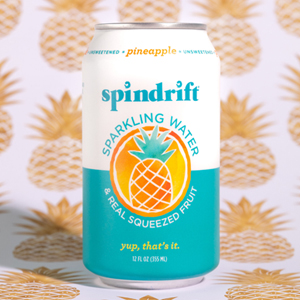
[00:03:27] Ray Latif: Yeah, we had such a great response from entrepreneurs from across The Good and beverage industry, so much so that we're going to do a couple more sessions, actually three more sessions. As of the recording today, we're doing another one tomorrow on Thursday, March 12th. I hope you all tune in for that, or I hope you all tuned in for that, that is. And then two more next week on March 17th and 19th, all at 3 p.m. Eastern Time. Please tune in on LinkedIn or on the BevNET and Nosh homepages. We just got some new, or the newest SKU from Spindrift. That's their new pineapple variety. This is something they were going to be showcasing at Expo West. And along with this news about the new SKU, news broke last week that the premium sparkling water brand raised $29.8 million in a new funding round, its single largest round to date. Congratulations to Bill Creelman and the team over at Spindrift, who are right up the street in Newton.
[00:04:20] Icelandic Provisions: Not a lot of information about that raise. They didn't really want to talk about it much. We're not even sure who most of the investors were. We don't know if there was a lot of re-up or if they brought in some new folks.
[00:04:38] Ray Latif: Yeah. Read the full story on BevNET.com. I'm sure we'll be following up with more details as they come in.
[00:04:44] Campbell Soup: Have any of you guys tried the pineapple yet?
[00:04:46] Ray Latif: I have not, but I'm hoarding it. I like it. Yes. Have you? I haven't. I'm looking forward to maybe throwing it in with a little, a little dark rum. I had a little tasting yesterday and I think that you're going to enjoy that. I hope I did. I'd be happy to have that tasting at around three o'clock today if you're available, Jeff. Well, it depends on what day today is. Wednesday. And I have dark rum and one can of Spindrift. Well, that's very exciting. Let's do it. That's happening. Well, if you're looking for something of the non-alcoholic variety, you might want to try Athletic Brewing. I don't think we have any in the office, but congrats to Bill Shufelt, who's a longtime Taste Radio listener. He's the co-founder of the fast-growing non-alcoholic beer brand, Athletic Brewing, which just announced a raise of $17.5 million. And they're moving into a former production facility owned by Ballast Point in San Diego. That means they'll have two production facilities, one on the East Coast and one on the West. Good stuff from Bill and Athletic Brewing. Tasty, tasty product. Tasty product. Exciting to see this category growing. I mean, I think this is one of those where The non-alcoholic beer space has come such a long way and this product, you close your eyes, taste this against some of the lower ABV beers, you won't be able to tell the difference. It's really good stuff. Congratulations to Bill for being someone who could really put together a brand that people believe can go national real quick. I'm wondering where the competition is.
[00:06:18] Mark Alexander: Well, there's other competition out there. I think it's, you know, we're still in the very early stages and it seems like, you know, these guys have a head start as far as being, you know, a standalone as opposed to a line extension, not out beer. you know, I think they just have a head start. So I think good on them for, to your point, like not waiting for that San Diego guy to pop up.
[00:06:43] Ray Latif: Uh, you can read on the story about, uh, Athletic Brewing and its new raise on Brewbound.com. Check it out soon. All right. On the table today, we've got just, you know, I put a bunch of stuff down and it's just been torn apart. You guys are munching on the bean fields, vegan crackling, aged white cheddar. What are they? Chips? Are they, what are they? They're, they're vegan cracklings. They're kind of, um, they're extruded snacks, right? Wait, are the, these are the cracklings that are supposed to be quote unquote pork rinds or like Vegan Pork rinds? Yeah. Those in the, uh, snack. Oh, we got some snack ones too. Yeah, did you say slack lens? I didn't say it's like it's like the office tools getting in your brain there exactly Snack lens 90 calories eat the whole bag. Did you guys eat the whole bag? I didn't get to try.
[00:07:29] Mark Alexander: Yeah, we shared shared a little bit, but They look like large Fritos I give them Give them credit for that.
[00:07:36] Ray Latif: They dissolve like a good pork rind. I Don't eat a lot of pork rinds. I will trust you I talked to Arnold Ventura, the CEO of Beanfields, about these. You know Arnold Ventura? We all do, don't we? Yeah. Arnold's a renaissance guy, right? He's an artist, he's a marketer, he loves data, and we were talking about why they called these cracklins, and he talked about the properties of cracklins, and we talked about the care that they put into the name and why they don't call them Vegan Pork rinds, why they specifically called these cracklins. They have the crunch, they have the flavor, those were all really important to him. Alright, I think it's time to get to our featured interview for this episode. That's with Mark Alexander, the CEO of Icelandic Provisions. Following a long career at the Campbell Soup Company, Mark joined Icelandic Provisions in February of 2019. A brand of traditional Icelandic skier, Icelandic Provisions launched in 2016 and has tapped into a growing market for high-protein, low-sugar cultured dairy. The products, known for their rich flavor and velvety texture, are sold in over 6,000 locations nationwide, including Whole Foods, Wegmans, and ShopRite. In the following interview, I spoke with Mark about his transition from Campbell Soup Icelandic Provisions, lessons and takeaways from prior roles at Campbell that he's incorporated into his current one, and how the company assesses trendy concepts and ingredients. Hey folks, it's Ray with Taste Radio. I'm on a call with Mark Alexander, who is the CEO of Icelandic Provisions. Mark, how are you? I'm doing great, Ray. Thanks. How are you? I'm great. I'm great. Where are you calling in from today?
[00:09:09] Campbell Soup: I'm in New York City, right next to Grand Central Station at Icelandic Provisions Global Headquarters.
[00:09:16] Ray Latif: Very cool. How long has Icelandic Provisions been around and how long have you been with the company?
[00:09:21] Campbell Soup: And so the company was founded a little over four years ago, and it was founded by some American venture capitalists from Boston, Polaris Founders Capital. And they had spent a lot of time in Iceland with an investment that they had over there. And they fell in love with the country, with the lifestyle, with The Good, and especially with the skier. So they decided they want to bring the product to America. So they struck up an arrangement with MS Dairies, which is the largest Icelandic dairy cooperative, and put together a management team here and launched Skier about four years ago. And then I came into the picture a little over a year ago, I joined the company, joined the board, and then took on the CEO role.
[00:10:04] Ray Latif: Now, Mark, you came to the company after nearly three decades at the Campbell Soup Company, which is pretty amazing. What are some of the roles that you had at Campbell?
[00:10:13] Campbell Soup: I have virtually every role that they have. So I joined the company in Canada as the Assistant Brand Manager on Pepperidge Farm Frozen Desserts and managed my way around the world four or five times across Europe and the UK, Asia, Australia, and managed businesses in the UK, ran our Asia Pacific division. ran all of our international businesses, and then spent my last five or six years there managing the soup, sauce, and beverage business in the Americas.
[00:10:48] Ray Latif: Interesting. So you had nearly every role in the company. I'm assuming you weren't the CEO though.
[00:10:53] Campbell Soup: No, stopped short of that. I actually spent most of my time with the company overseas. I'm from Canada originally, so I started there. I actually went back there at one point as the lead marketing person. And he just spent a lot of time traveling around and living in different places and, you know, sort of came back to the corporate headquarters for my final stint. But the CEO role was never mine.
[00:11:19] Ray Latif: It was not your ambition to be CEO of the company?
[00:11:23] Campbell Soup: It was my ambition to be CEO of a company. And I've now happily realized that.
[00:11:28] Ray Latif: Well, it's interesting. I mean, how many people work for Campbell Soup how many people work for Campbell when you were there?
[00:11:33] Campbell Soup: Something around 16,000 people around the world. So yeah, pretty, pretty big company, pretty big workforce.
[00:11:40] Icelandic Provisions: Guessing your margins? That's risky. Belay Financial gives CPG brands the clarity to scale smarter, faster, stronger. Get your free inventory ebook by texting TASTE to 55123 and start making data work for you.
[00:12:00] Whole Foods: Tune in at the end of this episode for an exclusive interview with Matt Lin of Belay Solutions. He sits down with Melissa Traverse to break down the biggest inventory and accounting mistakes CPG founders often make. You'll learn how to bring clarity to your numbers so you can scale with confidence.
[00:12:18] Ray Latif: So I'm curious, you know, how do you manage ambition in a company with that many people when I'm sure there are a number of folks looking at those top positions in the C-suite?
[00:12:28] Campbell Soup: Yeah, you know, one of the things that I've learned over the year, Ray, is that there's so many different motivations that people have for coming to work. Absolutely, there are people who have ambition and want to get to the top and so forth, but there are lots and lots of people coming to work for different reasons. People who really want to practice their craft and want to make great products and want to live in the lab and live in the kitchen and make great food. There are people who want to solve problems for consumers and they literally get their satisfaction from doing that. So I never found that I was in some environment of scraping and clawing and managing ambition. I think I always enjoyed working with a team of people who all brought different perspectives and had different ambitions for themselves within the company.
[00:13:20] Ray Latif: What are some of the most challenging aspects of working at a place like Campbell and what are some of the most rewarding?
[00:13:26] Campbell Soup: So I'll start with the rewarding because, you know, I have zero regrets about my many years there. I had a wonderful experience. And what was great about it is first of all, the global aspect. I mean, I love travel. I love experiencing different cultures. And so working in a company with the scale of Campbell's just allowed me to have such a rich set of experiences in all kinds of crazy places like Papua New Guinea, spent a lot of time in Indonesia and all over Europe. And so a lot of rich experiences with the global nature of a company like Campbell's. One of the other things that was really gratifying was because of the scale of the company, you know, you're super relevant and you can have a lot of impact. You know, when you're in virtually every household, when your business is of a scale that it really matters to your customer, you know, you feel like you can really impact things in a significant way. So those are some of the things I really enjoyed. I think one of the challenges in a big company is there are so many gears and cogs and so forth in the company and so many people who need to get involved to get something done because of the scale that you're operating at. And that automatically puts you in a situation where you're spending a lot of time internally. sorting things out and making sure the gears are meshing, which takes away from time out with consumers and customers. So it's that internal focus, which is necessary in a large enterprise that can be challenging as well.
[00:14:56] Ray Latif: So I'm sure this ability to be a little bit more nimble and be able to innovate on a more consistent fluid level was one of the reasons that you were drawn to Icelandic Provisions. But then again, I'm putting words in your mouth. What really drew you to the company?
[00:15:11] Campbell Soup: When I left Campbell's, I was pretty clear in my own mind what I was looking for. And the first thing I was looking for was a great product and brand that I could personally invest myself in, that fit into my lifestyle of being outdoors, active, healthy, trying to eat well, something that my family would get into, my wife and my kids would enjoy the product, that it'd be cool to talk to my friends about. So great product, great brand was definitely number one. Second thing was significant growth opportunity, where I could see a 5x, 10x kind of growth opportunity with product innovation, with channel expansion, with geographic expansion. There was growth that you could see that you could get after. And the third thing was great people. Business is all about people. So I was looking for investors, board, management team that were great people. So those are my ingoing criteria. And I met a lot of people. I was working with a number of different firms and looking at different things. And when I met John Flint and Greg Rubin from Polaris Founders Capital, I hit it off with them right away. We went over to Iceland together and met the partners over there, started eating the product. This product is awesome. The brand has so much potential and meeting with our partners over there, thinking these are great people and the growth opportunity just became obvious. So the more time I spent with them, the more clear it became to me that, Hey, this company fulfills all the things I'm looking for. So I joined up a little over a year ago and really haven't looked backwards. It's, it's everything that it's cracked up to be.
[00:16:53] Ray Latif: What was the steepest part of the learning curve in the transition from Campbell's to Icelandic Provisions?
[00:17:01] Campbell Soup: Yeah, I mean, it's definitely a learning curve, Ray. No question about it. But, you know, first of all, I think because I had a lot of experience working in smaller operations all around the world, and Campbell's is a fairly autonomous company, that, you know, working in a small company with some resource limitations wasn't entirely new to me. And then we'd been acquiring a number of smaller growth companies in my last five or six years at Campbell's, like Plum Organics, and spent a lot of time with that team and that business. So I had a reasonable appreciation for what I was getting myself into. But having said that, I think a couple of things. First of all is that subject matter expertise is a little bit harder to come by. So, at a large company, you've got an expert in the next office on just about any topic, whether it's advanced analytics, food safety, food law. Pick your topic and there is a PhD or someone that you can go talk to and get great insight, great information. we rely on a broad external network at a company like Icelandic Provisions and you've got to hunt around sometimes to get that kind of expertise. So that's certainly been a part of the learning curve is having to be a bit more resourceful in terms of getting input on important decisions and things. And I think the second thing is, to be honest with you, is the focus on cash. We're an early stage company. We have people's own money invested in this. And I think in all my years working for Campbell's, I might've visited the treasury department once. And here, I mean, I look at our cash statement every week and I'm looking at the inflows and the outflows and paying really close attention to the cash. So that's been a learning curve as well.
[00:18:51] Ray Latif: I can see why, you know, just hearing you talk about the company, how much passion you have for the brand at this point. And, you know, I think that's one of the things that drives a lot of people when they work for entrepreneurial food and beverage companies is the passion to transform, the passion to bring a unique flavor or texture or just a new taste to a legacy category like yogurt, for example. You know, is that the reason that we're seeing so many folks who have corporate experience migrate to entrepreneurial beverage companies and food companies?
[00:19:26] Campbell Soup: Yeah, I think that's part of it, Ray, for sure. I think that, you know, it's no secret that the growth is at the small end of town, you know, and the consumer is looking for authenticity, you know, clean ingredients, brands that resonate with them. And there are a lot of small companies doing that really well. And if you, you know, parse Total Food Nielsen numbers, you can see that, you know, all of the growth is happening down with the smaller companies. So definitely the growth is fun and people want to be there. But I think also that a lot of the smaller challenger companies have a real sense of purpose. They exist to fulfill things that are meaningful to employees. And I think there's also a freedom to operate in smaller companies which is harder to come by in a bigger company. There are fewer strictures and encumbrances and the weight of big departments overseeing everything. And there's a lightness and an agility that you can just really get on and do stuff. So I think that combination of growth, purpose, and freedom are really compelling for people to come over to the smaller side of town.
[00:20:40] Ray Latif: Now, as you've been staffing at Icelandic Provisions, do you find that the transition for some folks or during the hiring process, if you're looking at folks who have corporate experience, do you feel like that transition is going to be harder because they're not used to that light and agile? approach that entrepreneurial companies are used to?
[00:21:01] Campbell Soup: A hundred percent, Ray. I think that adaptability to a small environment is absolutely critical. And, you know, we are assessing people. That's a really important part of what we do. And so we actually hire a lot of people who've already had some small company experience. And then we're looking for people who have that kind of personality, that kind of approach where they are going to be able to adapt. And I am no exception to that. And I think when our Polaris founders capital people saw my resume they were like are you kidding me. Like how's this guy even going to function in a company like ours. But as I got to know them and they saw oh wow OK well this guy is you know run businesses in Indonesia that are pretty bootstrappy, you know, spend time in smaller companies, you know, maybe that could work. But that was certainly front of mind for them, you know, as I came in. And certainly, as we look at people and bring people on board, you know, we're looking for those personal characteristics where they're not afraid to roll their sleeves up. No one is above packing a box to send off to a customer. No one needs to have an assistant or is going to frown about doing their own expense report. So we check all that stuff out. And we actually have a fun tradition that before we actually hire someone, we have them meet in a group with all of our employees and we'll have a beer or something and chat with people and just get a sense, are they going to fit in?
[00:22:27] Ray Latif: Percentage wise, I mean, how many folks are you hiring from CPG conglomerates versus from the entrepreneurial community?
[00:22:35] Campbell Soup: It's a mixture, you know, and typically, I shouldn't say typically, but what we see a lot are people that are sort of already migrating from big to medium to small. So, you know, for instance, our most recent hire is our new chief marketing officer, which we're super excited about. His name is Dan Hickel, and he's been the VP of the Cliff brand at Clif Bar. And Clif Bar is obviously a lot bigger than we are, but they're sort of a medium-sized company. And, you know, Dan started his career and spent a lot of years at Pepsi before that. So, you know, this, I think, for him and for us, you know, felt like a sort of natural migration as he comes in. So a lot of our people have big company experience, but a lot of them have also worked in medium-sized or smaller companies as well.
[00:23:22] Whole Foods: Do you want more repeat buyers on Amazon? Well, this free resource in collaboration with Straight Up Growth will help your brand turn first-time buyers into long-term subscribers. Download Winning the Repeat Purchase Game on Amazon now at Taste Radio slash SUG. That's Taste Radio slash S-U-G to start building retention-driven growth for your brand on Amazon. Scaling a beverage brand into major retail comes down to operational readiness. From packaging lead times to co-manufacturing strategy, the details can make or break a launch. In a new e-book in collaboration with Octopi and Asahi Beer USA, industry leaders share what they've learned in helping brands scale. Download it now at Taste Radio slash octopi. Do you need to scale your team faster without compromising on talent? Join Oceans for a live webinar on April 20th and learn how leading companies are hiring top global professionals who are ready to grow with your business. Register for the webinar now at Taste Radio slash oceans. That's Taste Radio slash oceans.
[00:24:33] Ray Latif: every day we hear about one particular diet or one particular ingredient as being the hottest, the newest, the best for consumers, for modern consumers. Do you feel like hype is, is fueling a lot of these emerging trends or, you know, are consumers asking for, you know, the elements that are embedded in these ingredients or in these food trends or diets?
[00:24:58] Campbell Soup: Yeah. I mean, I think as I think about that, I'm going to quote our head of innovation, John Heath, and he talks about paper fires and wood fires. And we see both of them, right? And, you know, paper fire burns really bright and then it's out, you know, before you know it. And a wood fire is going to last and burn for a while. And that's how we sort of try and look at things. Is this thing that's going on, is that a paper fire or a wood fire? And we're trying to attach ourselves to wood fires and things that are going to endure and things that are always going to be relevant for consumers. And, you know, consumers are smart and I and our company have ultimate respect for the consumer. And like anyone, you know, people can be fooled once and, you know, they can be convinced into buying something because of some crazy promise. But ultimately, they're going to find out that it didn't work. You know, it didn't taste the way they promised. No, I didn't lose weight when I ate this way. And they'll come back to the things that really work and really perform. And that's where we try to play. And I think the fact that we're a traditional Icelandic company with a food product that has existed for literally over a thousand years and is nutritionally dense, is easy to consume. I mean, those are enduring things. And that's a wood fire that we want to be part of.
[00:26:28] Ray Latif: So what are some of those things that you're incorporating into your innovation pipeline? What are some of the relevant ingredients and formulations that you feel like will resonate with consumers today and beyond?
[00:26:41] Campbell Soup: Yeah, so we'll look at what consumers are really interested in and then try and bring it into our product. in a way that's relevant and authentic to who we are. So I'll give you an example. We recently launched a range of whole milk products, and they're amazing taste experience. They're just unbelievably creamy. In fact, they're called creamy. is what we call the line. And, you know, as we've been developing more flavors within that whole milk range, you know, one of the things we're looking at is the popularity of cold brew coffee. But rather than just, you know, going out and sourcing some cold brew coffee and throwing it in there, our innovation team, you know, went to Iceland and, you know, found the most interesting Icelandic cold brew coffee, which is being made by a company called which is a coffee chain in Iceland and partnered with them for a year to develop an unbelievably awesome Icelandic cold brew coffee. And then we've put that into the creamy skier and it is unbelievable. So it's a way that we've taken a taste trend and an ingredient which consumers are really looking for, but then built it into our product in a really unique and authentic way.
[00:28:01] Ray Latif: I should ask about sugar because that's always top of mind for consumers these days. How do you factor this reduced or this call to reduce sugar in your products into your innovation strategy?
[00:28:17] Campbell Soup: So I think consumers are clearly wired right into the sugar dilemma, which is, you know, too much of it is going to cause you potential health problems and weight problems and so forth. And there are lots of people trying to bring products to market that solve that. The beauty of our skier is that the product is just naturally lower in sugar. And that's because the Icelandic cultures that we use, the heirloom Icelandic dairy cultures, are very mild. And that means that we don't have to dose up the skier with lots of sugar to deliver a great taste, to offset the sourness of the culture. we don't have to work that hard. We don't need to bring in artificial crutches, artificial sweeteners and so forth to bring a product that's lower in sugar. So that is an absolute guardrail. It's part of our brand. We are naturally lower in sugar and all of our products will be developed within that framework.
[00:29:21] Ray Latif: So Icelandic Provisions, you know, the way I think about the brand is as a premium offering within the yogurt set. And I doubt you'd disagree, but when you're talking about premium products, you're often talking about a premium price point as well. You know, how do you address that dynamic between premium and affordable?
[00:29:42] Campbell Soup: Yeah. I mean, look, there's no question. We're at the, at the higher end within the yogurt set, but let's also be real. We're not a luxury car. You know, we're still, you know, generally speaking under $2 for a cup. So we're, we're definitely accessible to a lot of consumers. And I think the differentiator is got less to do with, you know, you've got to be super wealthy to be able to afford. I signed a provisions. Like I say, we're generally under $2 a cup. What we see is a much stronger association with people who are looking for the attributes and values that we bring. So people who want really good food, who want nutritionally dense food, who want great taste, who want something interesting to eat, are coming into our business. And $1.79 or $1.99 for a cup of really good food is still accessible to a lot of people.
[00:30:35] Ray Latif: How would you protect against, say, a potential premium competitor reducing prices on a regular basis, say, you know, dropping down to an everyday low price that is 50 to 75 cents lower than yours? I mean, I guess what I'm asking is, how do you maintain that integrity of a premium brand if your competitors are reducing their price points such that you wouldn't be able to compete?
[00:31:03] Campbell Soup: So, great question, Ray. And I think the value equation has a numerator and a denominator, right? And the numerator is The Good quality, the taste, the ingredients that you're using, that you bring to the consumer, and the denominator is the price. We're very focused on the numerator, not the denominator. So we're going to win consumers with our food and with our nutrition and with our taste. We're not going to get dragged down into discounting as a way to win. So we're going to differentiate on our food and our quality. And really, to be honestly speaking, we don't have a whole lot of flexibility to do anything else because the cost of our product is pretty high. You know, we use the best ingredients. We're using Icelandic cultures. It takes almost four cups of milk to make one cup of skir because we're, you know, ultra filtered. So, you know, it kind of is what it is. And we're very much focused on the value we bring to consumers with our food and not trying to play around with the price too much.
[00:32:09] Ray Latif: Oftentimes I speak with entrepreneurs and ask them what their long-term visions are for a company. You know, as much as you are the CEO, I guess you're in some ways the chief entrepreneur of the company. You know, what's your long-term vision for Icelandic Provisions? I mean, how do you think about a sort of quote unquote endgame for the brand?
[00:32:31] Campbell Soup: Yeah, so first of all, I just say, Ray, that maybe I'm the chief entrepreneur, but we have 20 odd employees and every one of them is an entrepreneur. You know, we have unbelievably awesome people. So, you know, I'm working with a group of people that are innovating and coming up with new ideas every day. And that's that's really one of the real joys of coming to work. And what we're trying to do together is build a modern Icelandic Provisions company. And what I mean by that is, you know, skier is absolutely our core product and we think there's lots and lots of room to grow skier. And we're innovating all the time and coming up with new varieties, new ranges like whole milk. We have lots of distribution that we can go out and get. But ultimately, over time, we think that the brand can be even bigger than that. And there's an amazing food culture in Iceland. The purity and the cleanliness and the beauty of The Good and the product and the ingredients there is awesome. And so we think that we can provide a range of Icelandic Provisions over time and build a large and meaningful company that's delivering great tasting, nutritionally dense foods.
[00:33:46] Ray Latif: Well, Mark, it's been so great speaking with you. You know, we had some Icelandic Provisions skier here in our office and it flew out of our refrigerator. So I think you're doing something right if you're feeding the folks at BevNET and Nosh. Thank you so much again for a really great conversation and good luck going forward with everything you guys are doing at the brand.
[00:34:07] Campbell Soup: Hey, thanks a lot, Ray. It's been great talking to you and glad you love our product. Indeed we do.
[00:34:16] Ray Latif: That brings us to the end of episode 76 of Taste Radio Insider. Thank you so much for listening, and thanks for our guest, Mark Alexander. Please subscribe to Taste Radio on the Apple Podcasts app, Spotify, Stitcher, or Google Podcasts. As always, for questions, comments, ideas for future podcasts, please send us an email to ask at Taste Radio. On behalf of the entire Taste Radio team, thank you for listening, and we'll talk to you next time.
[00:34:45] SPEAKER_??: you
[00:34:50] Elevators In: Hello, I am Melissa Traverse here for the Taste Radio podcast, talking about some of the biggest tension points that CPG brands and founders face when they're scaling a brand, and those are financial accounting and inventory management. I am joined by Matt Lynn, inventory accounting guru from Belay Solutions, and he is going to shed some light on all of this that is going to help everybody out quite a bit. Matt, thank you so much for joining us today.
[00:35:20] Ray Latif: Thank you for having us, Melissa. It's great to be out here at Expo West and it's great to sit down and be able to chat this because it's kind of a passion project of ours, working mainly with CPG brands and hoping to help them scale.
[00:35:32] Elevators In: It's been such a pleasure chatting with you and the team and learning all about what you do over there at Belay Solutions. Can you tell us a little bit about yourself and what your role is and the kinds of solutions that Belay gives to CPG brands and founders?
[00:35:48] Ray Latif: Yeah, absolutely. My role with Belay, I'm actually our inventory accounting manager. I run our inventory department. So we work with CPG brands, taking them from spreadsheets, putting them on inventory management systems, and really helping connect their tech stack between their sales, online marketplaces to that inventory management system, even down to their financial systems like QuickBooks. Belay overall is kind of an outsourced accounting firm. And with that, we're helping teams. We have different levels with bookkeeping, controller level work, even high level into CFO type items. So we really help those brands in any way that they need financially. And then I just have a subset of a department where we're really just laser focused on inventory.
[00:36:30] Elevators In: It's certainly a complex topic and there are plenty of places to go wrong. Let's start by going right and start super simple. Can you tell us what some of the biggest red flags are that would help a founder understand or, you know, the person running a brand understand that it really is time to get some help with some of these areas?
[00:36:51] Ray Latif: Yeah, absolutely. I think some of the early red flags is just everything is chaos. So when they're looking in their financial software, maybe they don't really have an accounting background and they're kind of just piecing it together and doing their best. And what they'll see is that reconciliations take forever if they even happen. they have a lot of transactions that don't get coded or they just put them into placeholders to just get rid of it so it's not an eyesore. They'll notice they have revenue but no cash or they notice that they have a good amount of cash but their blind spot is really seeing the vendor invoices that are sitting there just needing to be paid and so they just lack that clarity that's going to really be around the corner.
[00:37:28] Elevators In: You know, you were talking about one of the red flags that comes up that I think makes so much sense. When somebody asks you what your numbers are and you can't come up with the right number, that's a big problem because that's something that you really should be able to share with decision makers who, you know, you're ideally looking to do business with. What should you be able to call up at a moment's notice?
[00:37:53] Ray Latif: Really at any time, you should be able to know an accurate margin. It's amazing how many founders we end up talking to that they can tell you their revenue numbers, they can tell you their selling price, and then the minute you start talking about cost or their cost of goods sold, they just get a deer in headlights look. So really it's very hard to tell, am I even making money? Or if you don't know your entire landed cost. Maybe you know what the freight cost is, the duties separately, but you're not really getting that as part of your unit cost. So it's really hard to tell. Am I even making money or am I losing money from the very beginning?
[00:38:26] Elevators In: And do you recommend that founders are able to call up a margin by channel?
[00:38:30] Ray Latif: Absolutely. And depending on the number of products and channels, you kind of want to know what are your best sellers, which ones are making the most and which ones maybe you're not making as much. But especially if you're branching out and you're doing D to C with B to B, absolutely want to know that.
[00:38:47] Elevators In: Gotcha. You mentioned that when things feel really chaotic, that's probably a red flag. I would say that it probably almost always feels chaotic if you're running a CBD brand. And I know this may be hard to quantify, but is there a revenue number? Is there a number of doors number that would help a brand understand whether or not it makes sense to bring on a partner like Belay? Understanding that so many brands are bootstrapped or they might be tight for cash. What is that friction point?
[00:39:17] Ray Latif: 3 3 3 3 3 But as you're growing, as you're getting into those six-figure revenue numbers, and especially as you're approaching seven, you want to make sure you've got good financials. Because as you scale to that point, most likely you're going to be looking to raise capital. And investors, the first thing they're going to look at is your books. And are they clean? And do they show a clear picture of your business?
[00:39:50] Elevators In: You know, another area that folks might look to to organize some of the chaos are their systems. So many folks stick with Excel spreadsheets for a good amount of time. How do you know that you need to outsource some of your accounting to an organization like Belay Solutions versus maybe signing on to a Synth7 or NetSuite or something like that?
[00:40:13] Ray Latif: Well, that's actually something we really help with when it comes to that cost question. That's something that trips people up. And sometimes if you just have a turnkey business, you buy and sell a finished good, you can maintain with spreadsheets. And we've had clients with million dollar revenue that can do that. But we see so many brands nowadays are using contract manufacturers. and they're just sourcing certain parts of their product. So when you start talking costs, they have no idea exactly what their unit cost is. So that's where we come in and we kind of understand, we'll speak with the customers and the clients and get their needs. And then if we think they're ready for a system, then we'll help put them on that system so they can get some of that clarity. And it's not something we force on anybody. There are plenty of times where founders come to us and we'll tell them bluntly, you're not ready for it right now, but we'll let you know when we think you are.
[00:40:59] Elevators In: That sounds like excellent advice. What should a founder or somebody running a brand look for in an outsourced accounting partner? Are there certain checklist items that they should make sure that their partner be able to execute or be able to help them understand?
[00:41:16] Ray Latif: Absolutely. I think one of the keys, there's, there's a lot of outsourced accounting firms out there. Some focus on service based SaaS companies, but if you're a CPG founder, you really want to make sure that your accounting firm has CPG experience. I would ask them, you know, what kind of brands have they work with? And even beyond that industry specific, because there's so many subsets of CPG. And that's something that I think is great about what we do with Belay is that we kind of run the gamut. It's kind of like the insurance commercial. We know a thing or two because we've seen a thing or two across a broad spectrum.
[00:41:46] Elevators In: Probably getting references is always helpful, right? Absolutely. All right. So this all sounds great. I think we have a really good understanding of would it make sense to hire an outsourced partner? You know, what some of the things you should be looking for are. What does offloading this kind of work mean for the brand? What can this do for lightening the load of a founder or lightening the load of a brand operator? Like, how does that help them in their everyday business?
[00:42:15] Ray Latif: It just tries to really help quiet the chaos. So what we're looking to do is just take some of the weight off that founder's shoulder, let them focus on building the brand, building the business, getting that exposure. If you don't have sales, you really don't have anything. So we want them to be able to focus on that while we take care of your back end office work. And we can just present that to you on a monthly basis, you can help make decisions, you can take that to investors. And really, you can just focus on growing your business.
[00:42:40] Elevators In: I feel like I felt founders and the folks who are running brands collectively sigh a breath of relief just hearing that. How can people learn more about Belay Solutions?
[00:42:51] Ray Latif: So people can text TASTE to 55123 for their free inventory guide to get started.
[00:42:57] Elevators In: Matt Lin, Inventory Accounting Guru at Belay Solutions. Thank you so much for joining me here at Expo West. It's been such a pleasure to chat with you and learn about what you all do over there to help founders and brands with their financial accounting and inventory management. For everybody else out there, thank you for listening to the Taste Radio podcast. I am Melissa Traverse and we'll see you next time.