[00:00:04] Ray Latif: Hello, and thanks for tuning in to episode 79 of Taste Radio Insider. I'm Ray Latif, the editor and producer of Taste Radio, and I'm with my BevNET and Nosh colleagues, John Craven, Mike Schneider, and Melissa Traverse. In His episode, we're joined by Ethan Hirshberg, the founder and CEO of Ethan's, a fast-growing brand of organic, functional shots. Just a reminder, if you like what you hear on Taste Radio, please share the podcast with friends and colleagues, and of course we'd love it if you could review us on the Apple Podcasts app or your listening platform of choice. So as usual, I'm wearing a cap, which I often do at home or in the office. But during yesterday's Elevator Talk livestream, which I was hosting, I was not. Rewatching the video, I realized that I need a haircut. I was going to say, Ray, did you look a little bit like you may have starred in the Lego movie? You'd been wearing your hat recently in that day, right? Yes, but I showered beforehand. So usually when I shower, it gets rid of the hat head. But I'm wondering if I should do it myself, because I don't know when I'm going to see my barber next. And should I get one of those Flobies? You remember the Flobie where you connect the buzzer to your vacuum?
[00:01:13] Ethan Hirshberg: My mom was in an ad for the Flobie. What? She was. She worked for BJ's Wholesale Club, and she was in their flyer demonstrating a Flobie.
[00:01:22] Ray Latif: That's incredible. Wow. And Melissa, did your mom have, you had 34 jobs? Did your mom have 56? Is that one of her 56?
[00:01:31] Ethan Hirshberg: She's actually a pretty minimalistic, I think, like three.
[00:01:35] Ray Latif: So she stuck with Flobies and a couple other things.
[00:01:37] Ethan Hirshberg: Once you go Flobie, there's just nowhere else to go.
[00:01:41] Ray Latif: John Craven, you look like you got a haircut recently. Do you do it yourself?
[00:01:45] John Craven: No, I got a haircut I think like the day before all the stay at home stuff happened. So and I've already been in touch with the person who cuts my hair and she said she'd make a house call if needed for some shady under the table stuff. I'm like. Haircut in the backyard, I'm down. We'll see, we'll see.
[00:02:11] Ray Latif: If not, I might have a mullet in a few weeks. He needs like really long shears to cut it from a distance. I know, I know. Distance haircuts, I want to see that.
[00:02:21] Ethan Hirshberg: And then she can do your hedges.
[00:02:23] John Craven: Yeah, I have a nice loper in the garage, don't worry. She definitely needs to be a guest on Taste Radio that day. There you go.
[00:02:29] Ray Latif: That would be kind of fun. So I've been chatting with a bunch of entrepreneurs over the past week. Melissa, I know you have as well. It's been great to talk to folks. I've done FaceTimes, I've done phone calls, I've done Google Hangouts. So folks that have listened to recent episodes of Taste Radio Insider, thank you so much for reaching out to us. Please continue to do so. It's been so amazing to meet new entrepreneurs and talk about their brands and products. from that we've created what I'll call a Virtual Mailbag because we've we've been getting a lot of really interesting questions and a lot of similar questions from entrepreneurs that we've been speaking with and yeah we've got about four questions I think would be fun to Ruminate on and chat about you know, one of the biggest ones that we consistently get sort of an evergreen question It's probably as important now than it is ever is Do you know any investors that would be interested in funding my concept or my brand and this is specifically related to new companies brands that are have been on the market for Under a year and it's a very good question Mike I mean, do you have any suggestions as to you know, how to answer that question? Ray, we hear this question all the time, whether the economy is good, whether the economy is struggling. The question really here is, I guess, do you know a company who's interested in my sparkling beverage with ashwagandha? And the answer is no, we don't know specific needs of investors. It's really important for you now to do research on investors like you've never done before and to craft that pitch. Make sure that you have differentiators in your pitch. Make sure that you have your numbers buttoned up. and do some research on the backstory of these investors, find investors that are doing things that are interesting to you, that have invested in companies that you might want to emulate and that can give you the kind of support that you need or are hands off the way that you need them to be. But now more than ever, it's really important to practice and hone that pitch. Now, Melissa, you got the next question from the founder of a CBD beverage company, correct?
[00:04:33] Ethan Hirshberg: Yes, exactly right. So I spoke with Jade, G&Juice. They are launching a CBD beverage right now. It's obviously not the most ideal time to launch a beverage at retail, so they are focusing more on e-commerce and doing as much outreach via social media as they can. And they had a question about how to use Instagram advertising for CBD. They found that when they submitted their advertisements through Instagram and used CBD in their messaging, they weren't accepted. But then when they changed over to hemp extract, they were accepted. So what's the deal with that?
[00:05:14] Ray Latif: Facebook and Instagram do not allow you to advertise cannabis, cannabis products. CBD is under that list of cannabis products. We have a little bit of experience with this with the cannabis forum. They don't allow it. Hemp extract seems to be a bit of a loophole here, although I would still advise to be careful about how much you're plunking into advertising of hemp extract. Because as with anything on Facebook and Instagram, the regulations could change at any moment. It's just a tough time for the world of cannabis in general, trying to get CBD on the shelves, hemp extract on the shelves. And I can just imagine it must be really challenging for this brand.
[00:05:54] Ethan Hirshberg: They are up to the challenge.
[00:05:55] Ray Latif: I'm sure they are. Yeah, this question actually came up in my interview with Hillary McCain, who is the founder and CEO of Sweet Reason, which is a brand of CBD infused sparkling waters. She was featured in Episode 78 of Taste Radio Insider. I asked her why she uses hemp extract instead of CBD on her bottles, and she said, basically, it just came down to what retailers want. Retailers don't want to see CBD on the label. They'd rather see hemp extract. So, you know, if you are marketing a CBD infused food or beverage brand, chances are you're better off not using CBD in the label at this point. Yeah, right now it has everything to do with the fact that people look at CBD, see cannabis, and in some places it's still not legal. Nope. All right, we have one more question from the mailbag, and that question is, how do I launch a beverage or food during a time when I can't do field marketing? Very important question.
[00:06:48] Ethan Hirshberg: So there are so many reasons why it's important to be in front of customers, whether it's in store or at festivals, to not only share the product with people and get them to taste it, but also to assign a person to the brand. So especially when you're launching a brand, consumers want to know. They really want to know the person behind it, and they want to believe in that person and support them. And then on the other hand, it's really helpful for entrepreneurs to do demos and be in front of people to see what customer reactions are so they can kind of change and hone the way they're going about things. I think in terms of getting customer feedback, a lot of that can be done online on social media. If you're doing direct to consumer, you can include surveys. I mean, it's not the same, but being able to get the information from consumers that you'd want as you grow and scale your brand, I think is a really important piece. Besides just getting the product into the mouths of customers, being able to get that feedback is also really important. And I do think that that's something that you can do online via various channels.
[00:08:01] John Craven: Well, also, I think, you know, my new favorite question that I'm, I guess now forced to answer is what's your home address, right? So, you know, it's kind of the only way to try stuff right now. So offering people samples, I mean, especially right now, again, like most of us are just cooped up at home. It's not like we're all going to the grocery store and out to eat. So, you know, there's certainly an opportunity if again, done in a, uh, place where you built a rapport with someone?
[00:08:32] Ray Latif: One thing brands should be thinking about is that request samples landing page. You still need to get the attention of the industry. And right now is a good time to work on that landing page for requesting samples and get that in front of the industry. There are platforms like Bevanette and Nosh and others out there where you can put a campaign into play. Buyers, retailers are still reading, they'll see that. If you want to get samples into their hands, especially if you're launching a new beverage, or a new food product, you're looking for ways to get in front of those decision makers right now. And this is a way to do that. So work on that landing page, get that thing cooked up, put it onto your website, and do some advertising.
[00:09:12] Ethan Hirshberg: And then if you do have e-commerce running, being able to build those sales and show a track record of success when retail is up and running again and you are having those meetings, being able to show the success you've had already will do a lot to help you.
[00:09:27] Ray Latif: Thank you to all the entrepreneurs and the folks who have reached out. Please continue to do so. You can send us a note to ask at Taste Radio, or you can send emails directly to us, rlatif at BevNET.com, jcraven at BevNET.com, mschneider at BevNET.com, and mtraverse at BevNET.com. Reach out and touch. We'll be happy to talk. I like the Graham too, Ray. Yeah. And Graham, BevNET, Mike. Well, yeah, wasn't that a phrase from back in the day, reach out and touch us? That was AT&T. Yeah, come on.
[00:10:01] John Craven: What was that? AT&T. Reach out and touch someone. I think it was a commercial for long distance telephone service. Oh yeah, they were trying to get people using long distance. Yeah, because back when you were paying, I don't know, 15, 20 cents a minute.
[00:10:14] Ethan Hirshberg: It's messaging that's riddled with issues now.
[00:10:17] John Craven: Could you imagine if right now we didn't have all this free Zoom meeting and we had to make long distance phone calls? I think my home phone would be ringing and it would be like a collect call from like Landis. You know, cause nobody'd want to pay for those work long distance calls, right? Like if some, if you know, someone wanted your time, you'd be like, cool, I'll call you collect.
[00:10:41] Ray Latif: Remember that movie boiler room when they're out there making phone calls or making a sales pitches to people over the country. And one guy asked the other guy, he's like, you know, how much is our phone bill? It's like, Oh, it's approaching $300,000 this month. Like my goodness. Can you imagine how much money people spend?
[00:10:56] John Craven: Could you imagine how much more profitable boil the boiler room? What was that company called? JT Marlin. The bottom line for JT Marlin would have been just massively improved.
[00:11:08] Ray Latif: I'm just recalling this phrase, long distance, like when you go into the kitchen and you're making a lot of noise and your mom's like, I'm on the phone with grandma long distance. I can't hear anything, you know?
[00:11:18] Whole Foods: Oh, God. Guessing your margins? That's risky. Belay Financial gives CPG brands the clarity to scale smarter, faster, stronger. Get your free inventory ebook by texting TASTE to 55123 and start making data work for you.
[00:11:44] Stonyfield Farm: Tune in at the end of this episode for an exclusive interview with Matt Lin of Belay Solutions. He sits down with Melissa Traverse to break down the biggest inventory and accounting mistakes CPG founders often make. You'll learn how to bring clarity to your numbers so you can scale with confidence.
[00:12:01] Ray Latif: I did have some great conversations, as I was mentioning this past week. I just want to give a shout out to Zach Bateman, who's the founder of Brewpub Jerky, really interesting brand. They're really focused, obviously, on working with breweries. They make jerky that is tailored to consuming with a nice pint of beer. So, Zach, thanks so much for reaching out. Also, Tyler Dooley, who is the founder and CEO of a Boston-based company called Wake Up Water. which makes a line of energy waters. Wake Up Water launched last year. I could use some of that Wake Up Water right now. I keep screwing up my lines over here. People don't know that because we edit so much. Give us the Wake Up Water. But thank you very much, Tyler, for reaching out. And Melissa and I both spoke with Danny Dubana. Danny, Melissa, you can explain who Danny is.
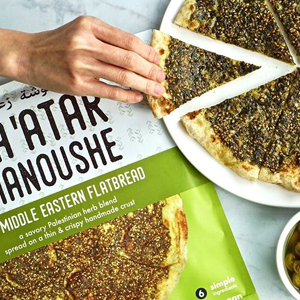
[00:12:46] Ethan Hirshberg: Yeah, so Danny is an entrepreneur out of DC. He has a brand called ZNZ. Initially, he was selling Zatar, which is that Middle Eastern blend of thyme, sesame and sumac. So he is in the middle of launching his Manusha. So it's a middle eastern flatbread with olive oil and za'atar and it is one of the most freaking delicious things I've ever had in my life But again, it's not the most ideal time to launch something like this But he was kind of talking through some of the successes that he's been having and I was I was very impressed with them Um, he is a hyper local supply chain. So his production was not impeded Ideally, he would be in the middle of increasing distribution and getting into more retailers right now. That's really not on the table, because grocers are really just trying to keep their shelves filled. They're not having meetings necessarily, and they're not printing new tags, that kind of thing. So he's focusing on the partners that he has already. He's in a number of regional Whole Foods Market stores and some independent. So he called up all of his partners. And kind of came to them from a place of we're here to help you and support you What can I do for you? And so he did direct store deliveries to help them fill their very empty frozen shelves and was doing um Like triple the sales and some of his retailers and he's just really focusing In His existing customers to build his consumer base So when things change he has a really again a really good track record to build on and I was very impressed
[00:14:21] Ray Latif: And as always, I want to encourage folks to continue tuning in to Taste Radio and Taste Radio Insider. We've got some amazing content in the coming weeks. Also, stay tuned for information about the next edition of BevNET's Elevator Talk livestream, which features short interviews with food and beverage entrepreneurs from across the country. That content is streamed live on LinkedIn and YouTube. We'll release details about date and time on BevNET and Nosh in the coming days. Lastly, please continue to send us questions. We'd love to speak with you, and we're here to help in any way we can. All righty, it's time to get to our featured interview for this episode. That's with Ethan Hirshberg, who, as I mentioned at the top of the show, is the founder and CEO of Ethan's, which markets a range of organic wellness shots that are formulated with functional ingredients, including apple cider vinegar, MCT oil, and green tea. Launched in 2017, the brand debuted at Whole Foods locations nationwide and has since added placement at chain stores in a variety of retail channels, including Wegmans, Walmart and Sprouts. In the following interview, I spoke with Ethan, whose father is Stonyfield Farm co-founder Gary Hirshberg, about growing up in the food and beverage industry, why launching Ethan's was about solving a problem, the importance of, quote, being nimble responsibly, how core values are incorporated into the brand's products and communicated to consumers, and why adaptability is the biggest advantage small brands have over larger competitors. Hey folks, it's Ray with Taste Radio. I'm going to call right now with Ethan Hirshberg, who is the founder and CEO of Ethan's. Ethan, thank you so much for being with me. Thanks for having me, Ray. Where are you calling in from today? I'm dialing you from quarantine in San Francisco. San Francisco, a fantastic city, probably quieter than it normally is.
[00:16:13] John Craven: Yeah, no kidding. Are you based in San Francisco? Is the company based there? So we were based in Boulder, Colorado. I used to live here for a number of years when I worked for Harmless Harvest, but moved to Boulder about three years ago to start the company.
[00:16:25] Ray Latif: Gotcha. You have quite the lineage when it comes to your entrepreneurship in food and beverage. Tell us a bit about how your family has participated in our amazing industry.
[00:16:38] John Craven: Yeah, well, so just for background, my dad started Stonyfield Farm, let's see, about almost 30 years ago. So I grew up in New Hampshire, was born on the farm, and then my first job in high school, going to expos, things like that. So basically a lifetime around the organic food industry. So watching it evolve and then being able to participate from this angle has been a special experience.
[00:17:04] Ray Latif: You mentioned Harmless Harvest, known for its coconut water, has expanded into different product categories since. What was your experience like there? What did you do and how did it support your entrepreneurial journey?
[00:17:16] John Craven: Yeah, so that was my first job out of college and it was a lot different back then. I think it was only like 10 employees when I joined, so this is 2013. So it taught me a ton, obviously, about the food industry in general, but I think more so just about that phase and what that sort of life is like and finding out if that was appealing to me. Turns out it was. But joined kind of as a jack of all trades and then really gravitated towards the product development and innovation side of things, which is really where my interest still lies, even in trying to wear all the hats with my own company now. So got going, worked on our raw tea line, which sorry to say, is no longer around and then spent the last year or so over in Thailand working out of the plant on coconut meat based products, which they have just recently come to market with. So excited to see that.
[00:18:06] Ray Latif: It's interesting, you worked with, I'm trying to count four entrepreneurs, or at least you grew up with and worked with four entrepreneurs. What were some of the more memorable experiences? I mean, how did they teach you? What did they teach you about running your own business?
[00:18:20] John Craven: Honestly, the most important thing I think I've gotten from all the mentors in my life is just a little bit more of the big picture perspective. And that's helped inform a lot of the steps we've taken at the beginning, primarily around boring things like corporate structure, all the way to just what you do fundraising-wise, and how important it is whose money you take and how much. I think as an entrepreneur, it's sort of a lonely life, and so having sympathizers who can understand the struggle and what it's like to deal with a crisis or make a bad decision that costs you money and costs your own money, your friends' money, your family's money, things like that.
[00:19:01] Ray Latif: Do you still call upon those mentors, your dad, Justin and Douglas, who started Harmless Harvest?
[00:19:07] John Craven: My dad and cousin only like three or four times a day, I would say.
[00:19:14] Ray Latif: You know what, it's nice that they can pick up the phone. It's nice when you have a mentor who actually picks up the phone, right?
[00:19:19] John Craven: Definitely. And I should mention, I mean, a number of others in the industry, I think one of the things I've been so impressed with getting involved on a professional level is just how giving people are with their time. Even the people that we would kind of put on a pedestal and consider celebrities in our little world are usually willing to jump on the phone and grab coffee or talk through a crisis.
[00:19:40] Ray Latif: That's amazing. And I think, you know, that's something I hear a lot from early stage entrepreneurs as well, which makes our industry, you know, such a great place to, to work in and launch a brand. Speaking of launching a brand, Ethan's, when did it get off the ground? You know, what was your interest in launching what began as a line of apple cider vinegar shots? Yeah.
[00:20:00] John Craven: Yeah. It's taken many different shapes, which obviously I'm sure we'll get into. You know, it's funny because if I look back right now, just knowing what I know, I'm sure those are the most common words for any entrepreneur. Obviously, I think our product set probably would have started out a lot more how it looks right now, but I got into it, honestly, for one real purpose. I think I was always sort of eyeing starting my own business and obviously gaining the knowledge at Harmless about creating products and how to bring something to market and, you know, food safety and some of those sort of foundational aspects of creating a food product. I just discovered something I was passionate about, which is a really common thread that you hear throughout this industry. I mean, there's, you know, people who just started making things in their kitchen, which is a really unique thing about what we're all doing. And that was really the case here. So like you said, it started with a single ingredient, which was apple cider vinegar. Again, in our weird little organic beverage world, everyone knows about the benefits of it. That was an awakening for me to realize just how small that world is. But I got into it in my own personal use while I was in that job at Harmless Harvest and quickly encountered a What I found was a pretty common problem, which is that most people who drink it, they take it daily and they drink it straight. And anyone who is listening who has done that knows obviously it can be a difficult experience. So the company was really founded in that kind of narrow but important mission, which was to solve a problem. And for me, it was making my daily shot of apple cider vinegar taste good. And honestly, not much more complicated than that.
[00:21:40] Ray Latif: So the interesting thing about apple cider vinegar is you could make it taste great, but there's still plenty of people who won't drink it. You know, were you thinking about that broad group of consumers who would never try your products, or were you really honed in on the natural consumer, those folks who shop at a Whole Foods or a Sprouts on a regular basis?
[00:21:59] John Craven: Yeah, so one of the lessons I learned from Harmless Harvest to embrace and lean into your core customer. And that kind of sounds obvious, but I mean, we had fanatics at that brand, people who would have the Whole Foods teams, you know, pull aside all the pink ones and hold them for them and things like that. more than like mass market viability, I was mostly just focused on to start solving the same problem for people that I solve for myself. So that would be like the apple cider vinegar drinker. And again, I mean, you're going to hear a lot of things, obviously, I think, on this podcast, you interview early stage entrepreneurs, the go-to-market approach could not be more different than that of a big company, right? And so I wasn't looking at market size or addressable market or anything like that. I was really just, it came from a genuine place of trying to solve that singular problem. Obviously, you get further down the road and you have to start really thinking about those things. And I think for us, you can see the steps we've taken to do that.
[00:23:02] Ray Latif: You mentioned Harmless Harvest and what they taught you. I mean, do you feel like your knowledge base gave you a head start, gave you an advantage over, say, other entrepreneurs who have no prior experience in the food and beverage industry?
[00:23:14] John Craven: Yeah, well, I mean, I think having a little bit more big picture understanding was really the big asset that I gained from both growing up around entrepreneurs and then being involved, as well as maybe a closer understanding of the struggle of being an early stage company. I mean, one of the beautiful things about our industry, I feel like is if you're a self-starter, you can really, I mean, these are achievable steps, right? So like for me, it just started in my kitchen. I went to the store, bought apple cider vinegar, bought other things I might want in there, fruit juices, ginger, and turmeric, and then not too far after that, I had a product. And that's just step one. And you can kind of kick that down the road a little bit and just, you know, I think with anything, you just have to go one step at a time.
[00:23:58] Ray Latif: Let's talk about your initial launch, your foray onto the market. Whole Foods was your first retailer. I'm sure that's the first retailer that a lot of entrepreneurs would love to have. What was that process like? How did you initially engage Whole Foods? And then how were you able to achieve a global presence right off the bat?
[00:24:23] John Craven: Yeah, well, that's a really nice way of putting it, Ray. That process. Well, first of all, Whole Foods has been an amazing partner for us. Obviously, this was pre-Amazon acquisition, so I don't think it's speaking out of turn to say some things have changed. But their sort of calculated risk-taking has really worked for us because we take a similar approach. So that process, I guess, I'll just back it up a second to just the way that we arrived at or the way that Will Arrive at shots. was by basically touring around and talking to everybody I knew who might have an inroad or even just general knowledge and understanding about the space and bouncing my products off of them. So we didn't really come to the conclusion of the apple cider vinegar portion of the saga. But like I told you earlier, the first product I made was actually an RTD vinegar beverage. And so Fast forward through basically six months of iteration and feedback, and the constant feedback I was getting from industry insiders was to go with the shots. It was a more, I think, unique and then obviously straight to the point format for a beverage like that. So by the time I was even really getting put in contact with any retailers, I felt like I had a pretty well fleshed out product. And that turned out to be the case. Obviously being in the shot space at that time turned out to be a blessing because it was just on this massive upswing. And so we were able to kind of ride that wave.
[00:25:51] Ray Latif: What did the experience teach you about your consumer base? I mean, you talked about leaning into your core consumer. Was that core consumer the person you thought it was? Or is it someone different? And how did they perceive your product?
[00:26:05] John Craven: That's a good question. My philosophy so far with this company, and we'll see how it bears out, but has been to test products live. And so rather than spend 30 grand on a third party marketing company to do focus grouping for us, we make the best products we can possibly make or that we think so internally, and then we just launch it. And then the next step is just to be kind of maniacally obsessed with customer feedback. And so across all channels, that is what we're focused on. And so for us, what happened was, yes, the people who drank apple cider vinegar every day understood the product immediately and said, apple cider vinegar shot on it, and then the flavor. And they said, oh, great, I can substitute this instead of my normal shot. Turns out that's not as many people as we thought, and everybody else had no idea what it was for or when to take it. And so, you know, I mean, another thing that we really kind of pride ourselves on and are a little bit boastful about is just adaptability. And so it's basically been two years of frequent and fast iteration and tweaking. Responsibly. Responsibly.
[00:27:22] Ray Latif: Well, that was one of the key points I thought that, you know, from our conversation prior to this interview is talking about, you mentioned this notion of being nimble responsibly. Can you sort of elaborate on what you were talking about?
[00:27:35] John Craven: Yeah, well again, I think how responsibly we do it really depends on who you ask. Like I told you on the pre-interview, this is the thing that we focus on most because it is our sole advantage in the marketplace, is maneuverability and flexibility and adaptability. Within the bounds that we have set up as a brand and as a company, we are open to feedback and we're open to change. And so obviously every decision has a financial impact, but laying things out so that you can make changes. I mean, we do, we sacrifice margin on the first couple of runs of product by ordering small quantities so that, you know, we can change and tweak one thing or the other, whether that's just text on the side of the bottle, all the way through the, through the design or even formulation. And I truly believe that the only way to get feedback that really informs your product for the long run is by being in the marketplace.
[00:28:27] Ray Latif: You know, I asked a CBD entrepreneur this question, and I'll ask it to you as well, because you both sell products with highly functional ingredients and hero ingredients that, you know, define your brand as much as the brand itself. You know, are you selling a beverage? Are you selling an ingredient? How do you navigate that path? How do you navigate that communication to consumers?
[00:28:49] John Craven: Yeah, well, so this is one of the things that we have sort of shifted our focus on. Obviously, I started with an ingredient, and then we applied that pretty quickly to the MCT shots, like we went apple cider vinegar shot, MCT shot. Like I told you earlier, the central learning that we've taken from being in the marketplace, especially with shots, is that people need a clear function and occasion for it. And again, I mean, another thing besides feedback, obviously, we're obsessed about looking at competitors. It's definitely not a stretch to say that we've taken lessons from the other brands in our space who have done a phenomenal job communicating that.
[00:29:23] Ray Latif: How do you adopt this philosophy of a rising tide lifts all boats while being your own boat as sassy and as bright as you can be?
[00:29:35] John Craven: Yeah, well, I think this and almost everything else comes from really knowing who you are. And so I guess we should have backed up by saying all this maneuverability, adaptability, all the kind of things that I'm throwing out, they all have to happen within a framework of what the company is, because you don't want to be a shapeshifter either. And so for us, it's rooted in a couple really core values that we have, knock on wood, managed to be uncompromising on. And that's the way that you kind of present yourself to the consumer and the retail marketplace and say, you know, this is who we are. And so I think the most obvious one for us is the glass packaging, for instance. Huge differentiator means a ton to our core customer. How much it means to people outside of that remains to be seen, but it's something that it's in the bones of our company and it's something that we've stuck to. And I think little things like that, well, not little to us, but things like that kind of give people a cue as to who you are and who's behind it.
[00:30:38] Stonyfield Farm: Do you want more repeat buyers on Amazon? Well, this free resource in collaboration with Straight Up Growth will help your brand turn first-time buyers into long-term subscribers. Download Winning the Repeat Purchase Game on Amazon now at Taste Radio slash SUG. That's Taste Radio slash S-U-G to start building retention-driven growth for your brand on Amazon. Scaling a beverage brand into major retail comes down to operational readiness. From packaging lead times to co-manufacturing strategy, the details can make or break a launch. In a new e-book in collaboration with Octopi and Asahi Beer USA, industry leaders share what they've learned in helping brands scale. Download it now at Taste Radio slash octopi. Do you need to scale your team faster without compromising on talent? Join Oceans for a live webinar on April 20th and learn how leading companies are hiring top global professionals who are ready to grow with your business. Register for the webinar now at Taste Radio slash oceans. That's Taste Radio slash oceans.
[00:31:49] Ray Latif: You talked a bit about who you are and what you're all about. Again, in a conversation prior to our interview, you talked about a clear set of values. What are those values? How do you define Ethan's from a perspective of this is what we represent?
[00:32:03] John Craven: Yeah, well, so I think I gave you three. And this is purely on the product side. And, you know, one of the things about this industry in particular is, you know, you are presenting yourself through the form of a product. And for entrepreneurs, it really is that personal. And so And by that I just mean, you know, someone can hold it in their hands, they put it inside their body, it couldn't be more personal. And so we focus on every single detail from how it feels when you pick it up, all the way, of course, through how it tastes and how it works. But for us, the three things that we focus on on the product side are, one, the packaging, which I just touched on, two, organics. Organics is, central to me as a person, obviously my history and childhood, and it's just a value that we are not compromising on. And then three, and this has kind of been the most important for us, is just functionality. So even on points that we cannot smoothly integrate into marketing or positioning, we make sure to be non-compromising. And so an example there is like with the apple cider vinegar shots. the secondary ingredient in each one, ginger or turmeric, like we put those in functional doses always. And I think that's sort of a long view in trying to create a product that is really going to make a difference for people.
[00:33:25] Ray Latif: You said one, two and three, is that the hierarchy of product values or values that you try to incorporate into your product and brand?
[00:33:35] John Craven: Yeah, that's a good question. And obviously, it's something that we've talked about. I mean, this is kind of getting into a larger conversation. And it's a fun and interesting one about, you know, where you can make concessions. And more and more as I've done this and gotten investors in the door and had to consider margins and and supply chains, you know, there's a million reasons to compromise on your values from the beginning. And I think, unfortunately, that's not because they're bad people or anything. I mean, we see brands compromise on those various stages, you know, always across the industry. And so for us, it's really about making sure that we can stick to those things. And if we can't, then being honest and transparent about why not. But those three are just three, but we have lots internally as well.
[00:34:26] Ray Latif: How important is the communication of those values to the end consumer? Is it really sort of an internal thing or is it something you speak to the trade about? Or is it also something that you have to share with your audience? And if not, if it's not something you share with your audience, you know, how do you become really clear about function and occasion? Because that is really important In His day and age, especially for products someone might call, and I'm not calling you this, but esoteric.
[00:34:58] John Craven: No, I don't take offense to esoteric. So part of the, I guess, just tweaking and using feedback applies to the messaging. And you can see that in the most recent rebrand we did, but we have talked about our products a million different ways. And that's just as important as what's in the bottle in terms of how people are understanding it. Honestly, I mean, everything from what kind of B12 we're using in our organic energy shots, all the way through just saying what it does. And so, I mean, I could get into the weeds and I think each product of ours has its own set of, you know, kind of one, two, and three talking points. And you just have to be really obsessive with talking to people and understanding how they're understanding the product in order to find which of those is number one.
[00:35:51] Ray Latif: When it comes to function and occasion, how do you talk to consumers about when they should drink your products, when they should be taking your products? Do you, do you offer any kind of guidance? I mean, how do you talk to consumers about that?
[00:36:02] John Craven: Yeah, so this is one of the perils of being on the forefront of a format. I mean, prior to us and a few other brands kind of going national on Whole Foods and expanding beyond there, shots were either alcohol or energy. And so presenting, and of course we have energy now, but presenting the idea of basically a functional beverage in a two-ounce bottle There are some barriers to understanding and I think we have to take our cues from other areas of the industry who have successfully changed the format. A great example is like pouched baby food. I always look at that because it was this wave over a couple of years that really took it over. Getting people to integrate it into their daily routine and understand exactly how to use it has been the primary learning for us. Presenting something as an apple cider vinegar shot, it was not nearly as effective as presenting it as a daily detox shot. Because as soon as you pick that up, you see those two words, you understand when to take it and why. And so we applied the same thing to our MCT shots, they became fast fuel. And so Yeah, like I've said, that has kind of been the messaging learning around shots is saying when and why.
[00:37:15] Ray Latif: Ethan, you've since extended the brand beyond Apple Center Vitiger shots. You know, tell me a little bit about your innovation. How did you evaluate the opportunity and then how did you evaluate the performance of those shots after they hit the market? I mean, obviously there's an easy way to evaluate that performance. Did it sell or not? But I guess, how did consumers receive these products? What was the reception like?
[00:37:38] John Craven: Yeah, so obviously you can see the evolution here and kind of track it from start to finish. And this is another thing I would just talk about with us and with entrepreneurship in general, is I think just being open to reinventing yourself again, obviously within the boundaries that you set up in order to stay true. But for us, it started off as you know, let's make apple cider vinegar taste good. And the vast majority of the positive reception that we were getting both from consumers and from retailers. So, you know, that's a customer of ours, of course, was around actually the shop format instead of necessarily around the ingredient of apple cider vinegar. And so that was a big takeaway for me in those early days was, okay, I think I've created a product here that has successfully solved the problem. And obviously that some people are enjoying, But what is the marketplace telling us? And it was that shots are the way to go. And so like I told you, I mean, so we basically just took that format and ran with it. And that has opened up everything for us. And so expanding into different functions, the second iteration was around MCT oil and immunity and some of these other ones. Once we knew we were a shot company, which is a really important part of identity building, we kind of took a step back and said, okay, what's the big one in the room that we need to tackle? And it was energy shots. So we launched that organic energy line back in August. And again, that was really just, even though we were operating in our tiny little world, which I've referenced a few times, I think just picking your head up and sometimes looking at the broader seen in front of you. I mean, even still, even as we're battling for shelf space and Whole Foods and things like that, the entire world still knows shots as energy. And so we're really focused on kind of fighting that fight on both fronts and, you know, hopefully creating a solution to some of the problems created by conventional energy shots.
[00:39:38] Ray Latif: Your brand is an eponymous brand. It's named after you. Ethan's is owned by and founded by Ethan Hirshberg. Are you the face of the brand as much as anybody else? I mean, are you the one that people want to talk to? Are you the person that people want to meet and hear about? Do you put yourself in that situation? Are you comfortable with that situation?
[00:39:58] John Craven: Yeah, so I normally just attribute that to a lack of creativity. No, you know, my dad started his company with a partner and Harmless Harvest was two co-founders. So most of the businesses I've seen up close have kind of had that interplay. And it's sort of been one of the most difficult things for me. I'm an introvert. And like I told you, what I really pursued in my professional life In His industry was the product development side. And so it would be hard to say I didn't ask for it in naming the brand, but I have had to kind of take that on. It's really, it's been a major growing experience for me. I think anyone who knows me well will predict how uncomfortable that would make me, but it's something that I've definitely grown into and kind of been convinced of. I mean, it's been, I think the first thing that every single investor or prospective investor has said to me, at least the founders, or those who have founded their own companies have said, you know, you need to put yourself out there more. And so, you know, in watching my dad's company or Harmless Harvest again, I mean, there was one guy who was ops and finance and behind the scenes, and then there was one who was sales and marketing. And I think having to play both those roles has been probably the most challenging growth experience for me. But again, I can't say I didn't ask for it.
[00:41:19] Ray Latif: Looking back, hindsight's always 20-20. Is there anything you could have done differently? I mean, you had all this experience. It seems like you got off to a great start. You've expanded the line pretty significantly. And by all measures, it seems like you're doing a lot of things right. Is there anything that you would do differently? Is there anything that you feel like you've gotten wrong?
[00:41:41] John Craven: Oh my, I mean, how much time do you have? I think the biggest one for us that's pretty industry specific was just really understanding where we fit at retail. And so obviously I mentioned kind of the peril, I think of being on the front of a wave here in terms of the format, but I don't think that we had a clear enough line of sight about what we were and where we went. And that's obviously been a developing landscape, but just an example, like, we launched Whole Foods nationwide and we were sort of getting some traction and some pretty good velocities and really starting to get out there, but some retailers were not ready for this product and they weren't ready for the set. And that first year, especially with the apple cider vinegar shot, which again had not yet taken its final form, and I guess it probably still hasn't, but I was taking any retail that came to us, and you learn the lesson pretty quickly there, which is you really have to go where the brand and product is being best presented. We went into everything from shelf-stable supplements to shelf-stable beverage. We launched in the shelf-stable beverage set at Sprouts. And I went in there, looked at the shelf, and you can barely see our bottles, right? Because they're tiny. And, you know, they're sitting there next to 16-ounce drinks. So things like that, it's like, those are the crucial building blocks about how, especially when you're early on, about how you're introducing yourself to your consumer, how they're encountering your product. And if you don't get it right, you rarely get a second chance.
[00:43:15] Ray Latif: Well said. Ethan, you've been off to a great start. Obviously, you know, as you mentioned, there are some bumps or some pitfalls or some mistakes, but I've loved, you know, to see your brand develop on the market. And it's great to see how everything has sort of blossomed for you. And I'm excited to see how it goes from here. So thank you so much for joining me on Taste Radio Insider. Good luck with everything going forward and please stay in touch.
[00:43:41] John Craven: Yeah, well, you guys have been so great for us and for the industry, and so we appreciate the coverage and the love.
[00:43:49] Ray Latif: All right. Love, mutual respect. All right. That brings us to the end of Episode 79 of Taste Radio Insider. Thank you so much for listening, and thanks to our guest, Ethan Hirshberg. Please subscribe to Taste Radio on the Apple Podcast app, Spotify, Stitcher, and Google Podcasts. As always, for questions, comments, ideas for future podcasts, please send us an email to askatasteradio.com. On behalf of the entire Taste Radio team, thank you so much for listening, and we'll talk to you next time.
[00:44:32] Ethan Hirshberg: Hello, I am Melissa Traverse here for the Taste Radio podcast, talking about some of the biggest tension points that CPG brands and founders face when they're scaling a brand, and those are financial accounting and inventory management. I am joined by Matt Lynn, inventory accounting guru from Belay Solutions, and he is going to shed some light on all of this that is going to help everybody out quite a bit. Matt, thank you so much for joining us today.
[00:45:02] Gary Hirshberg: Thank you for having us, Melissa. It's great to be out here at Expo West and it's great to sit down and be able to chat this because it's kind of a passion project of ours, working mainly with CPG brands and hoping to help them scale.
[00:45:14] Ethan Hirshberg: It's been such a pleasure chatting with you and the team and learning all about what you do over there at Belay Solutions. Can you tell us a little bit about yourself and what your role is and the kinds of solutions that Belay gives to CPG brands and founders?
[00:45:30] Gary Hirshberg: Yeah, absolutely. My role with Belay, I'm actually our inventory accounting manager. I run our inventory department. So we work with CPG brands, taking them from spreadsheets, putting them on inventory management systems, and really helping connect their tech stack between their sales, online marketplaces to that inventory management system, even down to their financial systems like QuickBooks. Belay overall is kind of an outsourced accounting firm. And with that, we're helping teams. We have different levels with bookkeeping, controller level work, even high level into CFO type items. So we really help those brands in any way that they need financially. And then I just have a subset of a department where we're really just laser focused on inventory.
[00:46:12] Ethan Hirshberg: It's certainly a complex topic and there are plenty of places to go wrong. Let's start by going right and start super simple. Can you tell us what some of the biggest red flags are that would help a founder understand or, you know, the person running a brand understand that it really is time to get some help with some of these areas?
[00:46:33] Gary Hirshberg: 3 3 3 3 They have a lot of transactions that don't get coded or they just put them into placeholders to just get rid of it so it's not an eyesore. They'll notice they have revenue but no cash or they notice that they have a good amount of cash but their blind spot is really seeing the vendor invoices that are sitting there just needing to be paid and so they just lack that clarity that's going to really be around the corner.
[00:47:10] Ethan Hirshberg: You know, you were talking about one of the red flags that comes up that I think makes so much sense. When somebody asks you what your numbers are and you can't come up with the right number, that's a big problem because that's something that you really should be able to share with decision makers who you're ideally looking to do business with. What should you be able to call up at a moment's notice?
[00:47:35] Gary Hirshberg: Really, at any time, you should be able to know an accurate margin. It's amazing how many founders we end up talking to that they can tell you their revenue numbers, they can tell you their selling price, and then the minute you start talking about cost or their cost of goods sold, they just get a deer in headlights look. So really, it's very hard to tell, am I even making money? Or if you don't know your entire landed cost. Maybe you know what the freight cost is, the duties separately, but you're not really getting that as part of your unit cost. So it's really hard to tell. Am I even making money or am I losing money from the very beginning?
[00:48:08] Ethan Hirshberg: And do you recommend that founders are able to call up a margin by channel?
[00:48:12] Gary Hirshberg: Absolutely. And depending on the number of products and channels, you kind of want to know what are your best sellers, which ones are making the most and which ones maybe you're not making as much. But especially if you're branching out and you're doing D to C with B to B, absolutely want to know that.
[00:48:29] Ethan Hirshberg: Gotcha. You mentioned that when things feel really chaotic, that's probably a red flag. I would say that it probably almost always feels chaotic if you're running a CBD brand. And I know this may be hard to quantify, but is there a revenue number? Is there a number of doors number that would help a brand understand whether or not it makes sense to bring on a partner like Belay? Understanding that so many brands are bootstrapped or they might be tight for cash. What is that friction point?
[00:48:59] Gary Hirshberg: 3 3 3 3 3 But as you're growing, as you're getting into those six-figure revenue numbers, and especially as you're approaching seven, you want to make sure you've got good financials. Because as you scale to that point, most likely you're going to be looking to raise capital. And investors, the first thing they're going to look at is your books. And are they clean? And do they show a clear picture of your business?
[00:49:32] Ethan Hirshberg: You know, another area that folks might look to to organize some of the chaos are their systems. So many folks stick with Excel spreadsheets for a good amount of time. How do you know that you need to outsource some of your accounting to an organization like Belay Solutions versus maybe signing on to a Synth7 or NetSuite or something like that?
[00:49:55] Gary Hirshberg: Well, that's actually something we really help with when it comes to that cost question. That's something that trips people up. And sometimes if you just have a turnkey business, you buy and sell a finished good, you can maintain with spreadsheets. And we've had clients with million dollar revenue that can do that. But we see so many brands nowadays are using contract manufacturers. and they're just sourcing certain parts of their product. So when you start talking cost, they have no idea exactly what their unit cost is. So that's where we come in and we kind of understand, we'll speak with the customers and the clients and get their needs. And then if we think they're ready for a system, then we'll help put them on that system so they can get some of that clarity. And it's not something we force on anybody. There are plenty of times where founders come to us and we'll tell them bluntly, you're not ready for it right now, but we'll let you know when we think you are.
[00:50:41] Ethan Hirshberg: That sounds like excellent advice. What should a founder or somebody running a brand look for in an outsourced accounting partner? Are there certain checklist items that they should make sure that their partner be able to execute or be able to help them understand?
[00:50:58] Gary Hirshberg: Absolutely. I think one of the keys there's, there's a lot of outsourced accounting firms out there. Some focus on service-based SaaS companies, but if you're a CPG founder, you really want to make sure that your accounting firm has CPG experience. I would ask them, you know, what kind of brands have they worked with? And even beyond that industry specific, because there's so many subsets of CPG. And that's something that I think is great about what we do with Belay is that we kind of run the gamut. It's kind of like the insurance commercial. We know a thing or two because we've seen a thing or two across a broad spectrum.
[00:51:28] Ethan Hirshberg: Probably getting references is always helpful, right? Absolutely. All right. So this all sounds great. I think we have a really good understanding of would it make sense to hire an outsourced partner? You know, what some of the things you should be looking for are. What does offloading this kind of work mean for the brand? What can this do for lightening the load of a founder or lightening the load of a brand operator? Like, how does that help them in their everyday business?
[00:51:57] Gary Hirshberg: It just tries to really help quiet the chaos. So what we're looking to do is just take some of the weight off that founder's shoulder, let them focus on building the brand, building the business, getting that exposure. If you don't have sales, you really don't have anything. So we want them to be able to focus on that while we take care of your back end office work. And we can just present that to you on a monthly basis, you can help make decisions, you can take that to investors. And really, you can just focus on growing your business.
[00:52:22] Ethan Hirshberg: I feel like I felt founders and the folks who are running brands collectively sigh. Breath of relief just hearing that. How can people learn more about Belay Solutions?
[00:52:33] Gary Hirshberg: So people can text TASTE to 55123 for their free inventory guide to get started.
[00:52:39] Ethan Hirshberg: Matt Lynn, inventory accounting guru at Belay Solutions. Thank you so much for joining me here at Expo West. It's been such a pleasure to chat with you and learn about what you all do over there to help founders and brands with their financial accounting and inventory management. For everybody else out there, thank you for listening to the Taste Radio podcast. I am Melissa Traverse and we'll see you next time.