[00:00:04] Ray Latif: Hello, and thanks for tuning in to episode 80 of Taste Radio Insider. I'm Ray Latif, the editor and producer of Taste Radio, and I'm with my BevNET and Nosh colleagues, Mike Schneider and Melissa Traverse. In this episode, we're joined by celebrated sommelier, Jordan Salcito, the founder of acclaimed wine brand, Ramona. Just a reminder, if you like What To hear on Taste Radio, please share the podcast with friends and colleagues, and of course, we'd love it if you could review us on the Apple Podcasts app or your listening platform of choice. So as I do most mornings, I woke up and I made myself a little breakfast. And it's strange because I'm eating a lot, but I think the stress doesn't affect me, I guess, in terms of gaining weight as it does with some people. So like I'm eating cupcakes and cookies with my breakfast these days in hopes of maintaining my weight. But I think, I don't know what's going on here. Are you guys eating a lot of sweets and snacks? How is it affecting you? I'm pretty sure it's the marathon that you're running after breakfast though, right? No, you know What To is? It's so my office is downstairs and I run up the stairs 10 times a day. And I think that's, I think that's been a big difference versus being in the office where I'm like, I'm a slug with the office door closed and not doing anything for, well, not doing any kind of physical activity for eight, 10 hours out of the day.
[00:01:22] Jordan Salcito: I would say I'm not eating cupcakes for breakfast, but I have been cooking more, but I haven't noticed that I've been eating more, which seems to be working out okay so far.
[00:01:34] Ray Latif: I'm one of those people as I've got a little pack of Belgian Boys's Mustache Cookies in front of me here, those butter cookies. We can hear you opening up those packages. Oh, jeez. Look, listen. This is healthy compared to your cupcakes. The four cupcakes you're garbage mouthing for breakfast.
[00:01:56] Jordan Salcito: Mike is eating the kale of cookies. Ray is eating the cupcake of cupcakes.
[00:02:01] Ray Latif: Yes. These are buttercream frosting cupcakes too. And the Pillsbury brand of cake mix too. So a double whammy for me. You're insane. No, I actually do have some Belgian Boys cookies right in front of me, Mike. I don't know why these have been here so long.
[00:02:18] Jordan Salcito: I'll give you both my address.
[00:02:22] Ray Latif: Let's do it. We're going to send Melissa some sweet snacks. In addition to some Belgian Boys on my desk here, I've got some Project 7 Sour Ropes, which are pretty amazing. I am a candy fiend, at least when I have candy on my desk, and these are really difficult to pass up. I don't even know how I haven't even opened these yet. Project 7 being the specialty candy brand that supports seven areas of basic humanitarian need domestically and abroad. They're makers of mints, candy, and gum. really like what they're doing and hey, if you make a product that tastes as great as this or what I expect it to taste like, you're doing pretty well. Melissa, have you had these before?
[00:03:04] Jordan Salcito: I have and they are delicious. I meant to give them to my kids and I ate them all by myself.
[00:03:10] Ray Latif: Nice, well done. No artificial flavors, colors, or preservatives. How can you pass it up? You can't.
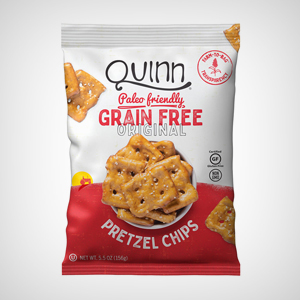
[00:03:15] Jordan Salcito: I have been snacking on Quinn's grain-free pretzel chips. I'm a huge fan of their line in general, their popcorn, the gluten-free pretzels that they have, and a couple of months ago they came out with these grain-free pretzel chips that use cassava, potato starch, and green banana flour. They are so delicious, and I'm also really appreciative of their mission that prioritizes supply chain transparency and sustainability.
[00:03:43] Ray Latif: I've been snacking on this chip that I can't get enough of, and it's partially because the chip is delicious, but partially that the brand's name is Al Chapino. Nice. But they make these tortilla chips that have global flavors. They've got Bollywood sweet and sour, Thai green curry, and barbecue tikka masala. I think the branding is cool. The taste is great. I think they're a fun company. I think I saw that brand on Instagram. Is that where you found it? I might've found it in the office, Ray. Ah, okay. Gotcha. Yeah, they were just sitting there. And I figured, you know, we're not going to be there for a while. So I might have helped myself.
[00:04:22] Jordan Salcito: It's the right thing to do.
[00:04:26] Ray Latif: What's it called again? Alciapino. Alciapino, because I keep thinking about that guy in Tropic Thunder or the character in Tropic Thunder, Alpacino. Once again, listeners, thank you so much for sending in questions and just reaching out about your brands and products. We got a lot of folks reaching out to us at askatasteradio.com and individually via email and Instagram direct messaging this past week. So we'll do another edition of the virtual mailbag. One question that came up, which is a really good one, is about crafting surveys and questionnaires for post-direct consumer e-commerce follow-ups. And the questions about what should be on those surveys, what should entrepreneurs be asking their consumers, their customers post-sale? Mike, any thoughts? I mean, it all depends on What To What To know about your product, right? So if you have packaging questions, you should ask them about how they feel about the package or specifics about the package, or if they noticed certain things about the package that you wanted them to notice. If you What To know about the flavor of of your beverage or your food, then you should ask them about that. But I think the biggest mistake that I see in surveys is that people ask too many questions and nobody has time for more than three or four. That's like optimal. If you're asking a 10 survey question, it better be for your elite users, your beta testers, things like that. The goal is to make them feel special and to let them know that their time matters and to show them that their answers have an impact on the product.
[00:06:01] Jordan Salcito: And it may lead to changes that you're making in the product as well, whether it's the packaging, the product itself, those are things that brands are constantly adjusting based on who their consumers are.
[00:06:12] Ray Latif: Another question that came in this week was about factors that entrepreneurs should consider when determining the pace at which they should scale their brands.
[00:06:23] Jordan Salcito: I think that one of the hardest things for an entrepreneur to do is to say no to something. But when a brand is launching, I think it's really important to keep things on the smaller side until you have a good idea of what's resonating with consumers and what's working in your retailers. So small can mean a tight geography. It doesn't mean that you have to stay in five stores for the first year, but keeping a tight geography allows entrepreneurs to do events that are in the area, check on the stores, build relationships with the store managers, and really figure out what's working so they can adjust what they're doing to set them up for success as they scale. I would say that until you have a proof of concept, it's really tricky and possibly dangerous to have your product land in many retailers, especially if they're spread across the country, because while it's hard to get into retailers, it's actually often even harder to turn product once you're in there. So if you have a proof of concept, you know you have something that works, then you have the opportunity to think about growing into more locations.
[00:07:36] Ray Latif: It's tricky because as you scale to more markets, it increases all of your costs. It's not just your cost of goods. You have to think about your marketing costs and what does it take to generate awareness in a particular market. I'd say that's some pretty sound advice. One more question that came up this week was about opportunities to align with corporate gift programs and Meal Kits. Melissa, someone reached out to you specifically about this question. Corporate gift programs, can you explain What To entrepreneur was asking about?
[00:08:06] Jordan Salcito: Yeah, absolutely. In addition to focusing on traditional e-commerce sales, whether it's through Amazon or direct-to-consumer through your own site, subscription-based services like Blue Apron, Purple Carrot, and gifting programs, whether they're corporate or consumer-facing, are other options for sure. And to get an answer to this question, I spoke with one of my favorite entrepreneurs. His name is Gavin, and he is the founder of Sunday Provisions, which is a delicious brand of pecan butter. And his advice is that it's really not that much different than working with traditional retailers. So first of all, making sure that your product is a fit is really important. Is it light? Is it easy to ship? Is it non-perishable? All of those things are important considerations when you decide to consider something like this. And then after you decide that this might be a fit for you, doing your research is really important. So if you are a CBD bite or a matcha brand, you might do better to approach a company like Goop versus ButcherBox. So you What To know who the partners in your box are going to be. If you are a sustainability-based brand and that's really important to you and you're paired with, say, an Iranian caviar or a foie gras, that's not going to further your initiatives. And beyond that, knowing your demographic is really important because these services, the margins are very tight on them. So the goal for any brand, after they land in a subscription box, is to Ask Consumers who try the product go and buy it themselves. So making sure that you are aligning yourself with a subscription-based service or a gift box that has the demographic that you think will actually go out and shop. And then, of course, I think one of the main questions is, how do brands get involved with these programs? And the answer I got from Gavin is that it's really very similar to working with a traditional retailer. So He was approached by a buyer for one at Fancy Food. These buyers walk Expo West, Fancy Food, those sorts of things. There are specific trade shows geared towards services like this. There's one called Shop Object, and then I'm sure there are more. But beyond that, cold calling, emailing, all of the ways that brands find themselves reaching buyers for traditional retailers are important, using your contacts. And the one piece of advice that he gave, it's so simple, but I think it's so true, is figure out how to make your call or your email be the one that a buyer What To pick up. And in his words, he said, sell yourself, sell your dreams, sell your vision. And I think that's just really great advice. There are so many entrepreneurs and brands who are approaching buyers, and you need to do something to call yourself out from the pack.
[00:10:58] Ray Latif: Thank you so much for doing the research on that. And speaking with Gavin, it sounds like he definitely knows what he's talking about. Definitely. You know, when you were talking about cold emailing, it reminded me of our most recent episode of our flagship Taste Radio podcast, when we spoke with the founders of Bantam Bagels, Nick and Elise Oleksak, and they talked about how they got into Starbucks via cold emailing. And it's a really interesting way they did it. I won't give it away because I want folks to listen to the episode. So if you have a chance, tune in.
[00:11:27] Jordan Salcito: We would love to hear more questions from you, so please email us at askattasteradio.com. Please send us your questions and we would love to get you some answers.
[00:11:38] Ray Latif: Speaking of asking questions, I was talking to a founder this week whose industry has been decimated by the coronavirus, as many industries have. And they were feeling guilty because they're actually a company that's seeing surge in demand and seeing some success and wondering if it was appropriate to celebrate the growth of their company. We don't know What To new normal is going to be when, you know, God willing coronavirus is behind us. And I think positive news from a company or companies in an industry is really important right now because, you know, business people are resilient. Some, a lot of entrepreneurs have seen failure before they see success. Nobody was planning for this to happen, but everybody's planning right now for what they're going to do next. So you should be doing What To.
[00:12:26] Eleven Madison: Guessing your margins? That's risky. Belay Financial gives CPG brands the clarity to scale smarter, faster, stronger. Get your free inventory ebook by texting TASTE to 55123 and start making data work for you.
[00:12:46] David Chang: Tune in at the end of this episode for an exclusive interview with Matt Lin of Belay Solutions. He sits down with Melissa Traverse to break down the biggest inventory and accounting mistakes CPG founders often make. You'll learn how to bring clarity to your numbers so you can scale with confidence.
[00:13:04] Ray Latif: All right, I think it's time to get to our featured interview for this episode, which, as I mentioned earlier, is with Jordan Salcito, the founder of Ramona, a fast-growing brand of canned wine and wine spritzes. Following high-profile roles as the sommelier at acclaimed restaurant 11 Madison Park and as the wine director at David Chang's Momofuku, Jordan launched Ramona in September of 2016. Lauded by critics Ask Consumers for its striking package design and commitment to high-quality organic ingredients and sustainable production methods, Ramona is distributed nationwide at Whole Foods along with independent chains and restaurants across the U.S. In the following interview, Jordan spoke about the origins of her passion for wine and inspiration for Ramona, why a can was the right vessel for the brand, why she's not prescriptive about how and when people should drink the wine, and how cultivating relationships prior to Ramona's launch was critical to its fast start. Hey folks, it's Ray with Taste Radio. I'm on a call right now with Jordan Salcito, who is the founder and CEO of Ramona. Jordan, thank you so much for being with me.
[00:14:13] Whole Foods: Good morning, Ray. I'm so happy to be here.
[00:14:15] Ray Latif: I'm really happy you're with me. You know, I saw a can of Ramona, your wine, about six or seven months ago and was so struck by the beautiful package design. I didn't even know it was a wine when I first saw it and it just compelled me to pick it up. And I do What To talk to you about how you picked out those elements of your label. But before we even get to that, you know, how did you choose the name Ramona? Where did that come from?
[00:14:41] Whole Foods: Of course. So Ramona is named after my little sister's childhood alter ego. In fact, it was more of like an alter ego scapegoat. And whenever she was doing something she wasn't supposed to, and this is when she was around four or five years old, she would blame it on this alter ego. and she, whom she called Ramona. And so that just always stuck with me. I always, you know, of course, as the older sister, it was very annoying at the time, but also so clever. And so when I decided to sort of pivot from a career in fine wine and fine dining to producing a beverage, an organic spritz in a can, it just felt a little, it felt rebellious along the same lines. And so, but and I guess the other thing to say about her alter ego is there's always a, it was sort of a clever mischievous little alter ego and I loved channeling the spirit and that is why, that is why Ramona, the brand Ramona, that's where it got its name.
[00:15:37] Ray Latif: I figured it had some sort of connection to Ms. Quimby, but wasn't a hundred percent sure. So, uh, you mentioned your background in fine dining.
[00:15:44] Whole Foods: Yeah, it was really, so I always had a restaurant job after my high school internship or my college internship. It was sort of the thing that I always enjoyed doing that was extra cash that was not ever meant to become a career path. And then when I graduated from college, I graduated during a recession, moved to New York with the intent on going into the publishing industry. I found a day job that was fine, but I had an evening restaurant job for, again, extra cash. It was actually a cook there, a guy named Fran Derby. who said, look, you clearly care. You care too much to work here. You should come with me to open this new restaurant called WD-50. My friend Wiley Ufrain is going to open it, and it's going to be great. And so I was right out of college at the time, but got to help open that restaurant. And Wiley, for me, he's just so intentional, so cerebral, so inclusive. And I just fell in love with this restaurant world that he had created because it was just a very different caliber than anything I had been a part of before. For me, that was the moment where I realized it's not an either-or. The restaurant industry is such an industry that really is so stimulating and so fun to be a part of, but also meaningful. I think that was a game-changing moment for me.
[00:17:17] Ray Latif: Yeah, it seems like an all-in for the most passionate people participating in the restaurant industry. I've talked to chefs before and it seems like the most successful ones are the ones who are the first one in the kitchen and the last one to leave.
[00:17:32] Whole Foods: Yes, exactly.
[00:17:33] Ray Latif: Yeah. So, you know, how did you parlay your experience into a career in wine?
[00:17:39] Whole Foods: Of course. So initially I wanted to write about food. That's what I thought I would do because I had run some writing awards and just really enjoyed it as well. And I thought you know I'll write about restaurants and that's how I can sort of merge these two worlds. ended up going to culinary school. And then as part of the culinary certification, you have to cook in a restaurant. And I wanted to work in a restaurant where I felt like I could learn the most. And for me, that was Restaurant Danielle. So it was a four New York Times star restaurant and this real melting pot. And I had the chance to stage at some other great restaurants as well. But Danielle just felt, it was just electric. Danielle as a human is incredibly gracious and incredibly supportive of people who work in his kitchen and who work hard and who care. It was really a magical time. The last event that I ended up cooking at was called the La Palais de Neige. It was in January of 2006. And it was this pretty magic event. It was actually much smaller. So the 20th anniversary La Palette was just a couple of weeks ago in 2020. But this was a very small, small occasion. And it was in Aspen, Colorado. And it was basically eight of the top Burgundian winemakers in the world and a handful of collectors. And I was there in the um in the kitchen with danielle i remember we were cooking chicken oysters and you know there are a number of other things but danielle said look you clearly care about wine you know before going i read up at the time it was before jasper morris's book was out and there was a book called the coat door by clive coats and it's pretty encyclopedic and i would just study it he said you clearly love wine you It doesn't seem like the kitchen, you can have a job in the kitchen, but what I think, my sense is that you What To work harvest in Burgundy. And that was exactly what I had dreamed. So in 2006, I had a chance to work on an event called the La Palette des Neiges in Burgundy, or sorry, in Aspen, Colorado, and it was a celebration of Burgundian winemakers. So, eight of the top Burgundian winemakers in the world came to open up wines that they had made or their grandparents had made, a handful of collectors, a handful of other chefs in the country, and it was just this electric moment for me. And Danielle Ballou was the one who really noticed it and said, look, you know, of course you can have a job in the kitchen, but my sense is that you really What To be in wine. And that weekend, I lined up my first harvest, which was at a winery called De Mende Larlo in Burgundy. And so that was for later that fall. And I flew out to Burgundy that September and worked my first harvest. And that was when I knew that it was really the career path I wanted to really sink my teeth into.
[00:20:33] Ray Latif: Harvesting grapes and burgundy sounds like the best thing in the world right now. It's probably the best thing in the world ever, like just in life in general, but right now I could definitely see myself doing that and staying there and never coming back.
[00:20:46] Whole Foods: I hear you. I hear you.
[00:20:48] Ray Latif: Yeah. You ended up working for David Chang as well, the famous chef from Momofuku. What impact did he have on your wine career?
[00:20:58] Whole Foods: So just in between those two, I got to work at Eleven Medicine Park and that was really a great education. In fact, I met Dave and decided to take the job at Momofuku, overseeing the beverage programs, just after swearing to myself that I had finished working in restaurants, that I was sort of done with that. Dave is super convincing for anyone who's met him, he's very persuasive. But also, it was this different creative mandate than typically exists in restaurants. Restaurants are usually very much an autocracy, and the direction has to come from the top down, and that way, you make sure that everyone's marching to the same beat. The history of a kitchen is, of course, the military brigade. The thing about Dave's restaurant group, which was so different and so appealing, was that it's the opposite of that. It's really all about hiring people that he trusts and then empowering them to make creative decisions. And that was his mandate to me. He said, look, you clearly understand the rules. Now break them. Your job at Momofuku is build me a great wine program and don't follow or adhere to any rules that that you've worked with in the past, it's time to break those and think outside the box, which is how the restaurant group operated certainly during my entire time as part of the day-to-day operational team. It was just so much fun. I think I grew up you know, family where creativity was was encouraged and valued. And really, I think the thing that so many restaurants don't have room for is that piece. And so when I had that conversation with Dave, it was so easy to say yes and to take that job and to just pour myself into it, because you never get that kind of mandate.
[00:22:43] Ray Latif: It sounds like that mandate was an inspiration or part of the inspiration for launching Ramona. What really got you into the beverage business or into the packaged beverage business more specifically, you know, and how much did you know about the industry prior to launching the brand?
[00:22:58] Whole Foods: It certainly did inspire. I think, you know, that that kind of environment is ripe for new ideas. And that's something that Momofuku really places a value on. And so a lot of my my job, in addition to the just day to day logistics and the writing of the list and that kind of thing, was just sort of brainstorming, constant brainstorming and which I like to do sort of in off hours anyway. And the idea for Ramona really came from from this one particularly intense fine wine sort of moment of my life where I was very intensely studying for the master sommelier exam and we were opening co. We were really reopening co. We just moved it to extra place. a super intense time and I realized yes of course I love great phenomenal bottles of wine as much as the next person but when I wasn't drinking a bottle of wine like that what I wanted to drink most of the time was something refreshing and fun and delicious something sort of along the lines of maybe an Aperol Spritz or a beer, but I'm not really a beer person. And I felt as though there was this void in the market and this opportunity for somebody who, like myself, didn't necessarily gravitate towards a cold, refreshing beer to be able to have access to that same experience at the value system that I demanded from anything I personally consumed. And that was, for me, the big gaping hole was a beverage for casual moments that adhered to a quality value system. And for me, that meant organic farming, sustainable practices, and taste. I mean, taste at Momofuku, I think the other thing that Dave prioritizes more than anything else is that whatever it is has to be delicious to the point where he would Sometimes when we were opening co, you would hide behind a wall and look at people's reactions to dishes. If people didn't love it, that initial moment where you're taking a bite and you react to it unconsciously, either you love it or you don't. That deliciousness, I felt like there was nothing out there available that adhered to a value system and tasted like something that I wanted to drink.
[00:25:18] Ray Latif: Getting fine wine into a can sounds like it's not the most difficult thing to do. Getting people to believe that fine wine can be sold in a can seems like a different kind of thing. Even if you tell people it's organic and it's sourced from great grapes and there's a lot of thought that went into the can, how did you manage that disconnect? Why was the can the right vessel for Ramona?
[00:25:45] Whole Foods: And it's such a great and very fair question. The thing about Ramona, so I think it was the fourth can on the market, but the vision for Ramona was never the can, even though that's how it's become visually defined, or that's how it is in a can, that's how so many people know it. But the inspiration was always the liquid itself. Even though Ramona has really come to Ramona's now visually defined by the can, that was never the first priority. The first priority was the liquid inside. And so that was what I spent so much time thinking about. And there was a wisp, I hesitate to say this because wine coolers are so terrible, but I remembered them from the early days of experimenting with alcohol. And I remember the first time I tried one and thought, This tastes so much better than beer to me. Of course, wine coolers are terrible, and my palate at whatever age that was has certainly evolved from then, but the inspiration was sort of that if a wine cooler, taking what was good about the wine cooler, the potential of the wine cooler, but then upgrading it into effectively an Aperol spritz that was organic and all natural and balanced and something that came pre-packaged, which you can get those in Italy, but you can't really get them anywhere else. For me, there was just this massive opportunity to create something that I want, something that tasted like I wanted to drink. and I was hesitant to put it in the can. And then I remember in February of 2016, reading an article that Food & Wine, it was the global buyer of Whole Foods, a guy named, I think it was Devin Broglia or Doug Bell, who wrote that they predicted the trend of 2016 would be wine in cans. So that gave me a lot of confidence that we were onto the right track. We had decided to do it anyway, but I was certainly nervous. Then the thing about a can, of course, it basically folded into the ethos of the idea for what we wanted to do anyway, which was really democratize great wine and this high-low, have something that was excellent, but also portable and accessible. Ray, you mentioned the graphics at the beginning of our conversation and the inspiration for the label. was those propaganda posters of the Russian Constructivist Movement, which was this movement in the 20s and 30s where a group of artists, some of whom were these strong female artists, decided to reject the notion that fine art lived in a gold frame and either at an oligarch's home or in a museum, and that instead fine art was something that belonged to everyone. and art did not discriminate and fine art could be a poster on the side of a truck or a building. It didn't matter where it was because everyone had access to it in the same way that felt very aligned with our vision for Ramona.
[00:28:54] David Chang: Do you want more repeat buyers on Amazon? Well, this free resource in collaboration with Straight Up Growth will help your brand turn first-time buyers into long-term subscribers. Download Winning the Repeat Purchase Game on Amazon now at Taste Radio slash SUG. That's Taste Radio slash S-U-G to start building retention-driven growth for your brand on Amazon.
[00:29:20] Ray Latif: A well-fed-out plan doesn't necessarily mean that you're going to execute as well as you might think you could. So true.
[00:29:26] Whole Foods: So very true.
[00:29:27] Ray Latif: How did you plan to launch the brand so that you would get off to the right start? I mean, you eventually did get into Whole Foods globally in 2018, but what went into that process of planning for success?
[00:29:42] Whole Foods: Oh my goodness. You know, I think now it's nice because now I think I've, I've graduated to the sort of the planning phase, but at that time it was, I could plan the launch, but beyond that, then it's sort of out in the world. So, and many things about the launch didn't go as planned. For example, we were supposed to have Ramona in the market by, I wanted it in the market by May. And at the time, there were so few wine in cans that there were two mobile canners. There was one in Arizona and one upstate New York.
[00:30:19] David Chang: Scaling a beverage brand into major retail comes down to operational readiness. From packaging lead times to co-manufacturing strategy, the details can make or break a launch. In a new e-book in collaboration with Octopi and Asahi Beer USA, industry leaders share what they've learned in helping brands scale. Download it now at Taste Radio slash octopi. Do you need to scale your team faster without compromising on talent? Join Oceans for a live webinar on April 20th and learn how leading companies are hiring top global professionals who are ready to grow with your business. Register for the webinar now at Taste Radio slash oceans. That's Taste Radio slash oceans.
[00:31:03] Whole Foods: I served along the Northeast, and I was told by everyone that I canvassed not to work with the person in the Northeast and definitely to go with the one in Arizona. So then it was this whole thing of figuring out their schedule and when you're paying for them to get out from Arizona. Anyway, this new canning line becomes available. The Arizona guy says, actually, you What To be with my friend who's starting in DC. His canning line isn't ready yet, but you will be the first product canned with this canning line, which was, the canning line was supposed to be done in June, like early June. And then of course it doesn't even finish until late July. And by the time it was up and running was, was late August. And that was when we produced Ramona. And the plan, we did a test batch and we did the, you know, uh, an amount that I thought was, was pretty small. I have, I created back in 2011 a company called Belless, a wine company called Belless. So I knew a little bit about distribution and just how hard selling anything is because you have to make sure that the level of education is there and that you're communicating the value proposition well and that you're nurturing the important relationships and making sure that you're getting the product into the right people's hands and mouths and that kind of thing. So I had no delusions about, you know, about ease. And instead, that test batch had posted a photo on Instagram. And before the first day of summer, we had sold out completely, which was a gift because it proved that we had interest from the market. And then at that time, we decided we wanted to move production entirely to Italy. So we had been working with organically grown Italian grapes. But the more research we did, we found this amazing winery partner in Italy. And Italy's agricultural standards are incredibly high, certainly higher than the U.S. Glyphosates have been banned there since 2016. That's roundup that ends up in our water system and is being linked to all kinds of things like the increase in cancer and infertility. There are many, many things about glyphosates that I wanted little to nothing to do with. And our winery partner in Italy is his family-run company, and they, in fact, right now, we're, you know, of course, in the middle of the coronavirus. I think we're, do our listeners know what day it is?
[00:33:33] Ray Latif: I mean, if I don't know what day it is, then our listeners probably don't know what day it is.
[00:33:38] Whole Foods: It's late March, but they are up and running and I'm getting emails from them. We just, you know, added production run last week, which went through and I couldn't believe it. So they're, they're really amazing. Um, and anyway, so we, we were, uh, introduced to them. I was introduced to them and, and it was one of the easiest decisions I would say. There was certainly some, some luck in being connected with them because they're just so terrific. And, um, We placed our first order for that first Italian batch, which landed October 2017. And six weeks later is when we found out we had been included in the global Whole Foods program for summer of 2018.
[00:34:19] Ray Latif: amazing stuff. Getting on shelf, tough enough. Getting off shelf is pretty difficult as well. But it sounds Ask Consumers have really embraced the brand. And I'm wondering if the reasons they're buying the product are the reasons that you thought they would buy the product. I mean, Do you have to be explicitly clear about function and occasion, which is, you know, part of the reason why you launched the brand? You know, are they more interested in Ramona because of the striking package design?
[00:34:52] Whole Foods: such a fun question because I think you know in some cases yes and certainly in sommelier circles I love when I get videos from people who are shotgunning a Ramona in the wine cellar which happens sort of frequently um and I and I love that and so I think you know that the sommeliers who who shotgun ramona are certainly they're drinking it because they believe in the product and they they know the value system behind it but and it's one of the things that i that i wanted in designing ramona was to not be too fussy at all so it's sort of like yeah you know it should be a can that's fun to pick up and it should be delicious and And those are the two things that matter the most. And then anyone who is interested in digging in more and learning more about the product will know that then they will have a chance to really understand our value system, know that anything that we put in there is always going to be organic. And it's, I think, four ingredients. It's grapes, wine, grapes, grape juice, organic citrus. So everything's organic, and then there's a little bit of citric acid in the grapefruit just to keep it fresh and bright. My goal is that one's first interaction with Ramona is not on the shelf somewhere, that they've sort of seen it or heard about it before. That is my goal, of course. We can only control so much of that, but I think if people have a sense of what we stand for, and why we exist, then that tends to resonate with a lot Ask Consumers.
[00:36:24] Ray Latif: I can see how Ask Consumers might look at Ramona and say, OK, this is a product where I'm trading up from something. It could be trading up from a hard seltzer or, you know, cheap wine, for example, not to call certain things cheap wine, but, you know, let's call a spade a spade. Or, you know, in some ways, and this is, you know, has nothing, I think highly of Ramona, but some people might say, okay, I'm trading down by drinking, you know, wine from a can. Others might say, okay, this is sort of a lateral move, maybe, you know, a high-end craft beer to, you know, a high-end wine in a can. You know, do you have to be flexible in how consumers perceive Ramona? Is there a way that, you know, you market the brand as trading up in value or trying something you know, for Ask Consumers who's used to a premium option in another beverage category.
[00:37:15] Whole Foods: This is a great question. I think what we try to do is communicate as best we can our value proposition. So we actually are tweaking packaging a little bit. This will start to hit the market this year. We just realized that we don't say made with organically grown grapes really loudly. When we launched in 2016, it was important to me, but I didn't want it to be sort of branded as like, I don't know, I didn't want it to sort of be tagged as one thing. And so it always has been organic, but we realize now. We realized, I guess, really last year, all of this consumer feedback, people love that it's organic, and a lot of people didn't know that it was. So I think that's really, for me at least, the great challenge, the skill set of really nailing packaging and communicating the value proposition to a person that you've never met and that you really have two seconds of their attention. at a grocery store or at a restaurant or in a wine shop, you get two seconds of their attention and that is such a different skill set than having someone trapped in a seat at your restaurant and getting to talk to them for a few minutes. So it's been fun. It's been a real fun challenge tweaking packaging and what we basically through a lot of conversations with people who love the brand people who we've never met that we just did some studies with basically I'm trying to get as what we did last year was canvas as many people and types of people that we could to get a sense of What To package was communicating to them. And did that resonate with What To intention for it was? And we have made a few tweaks accordingly. But really, I think the biggest challenge is packaging is so different. And packaging is so important. And whatever you say on that package, you need to jump off the shelf, you need to grab their attention. We got a lot of great feedback that we were doing that. A lot of people would say, I don't even know what's inside, but I love the way the can looks, so I bought it. And wow, it happens to be great, which is great. My goal is to give people every reason to pick up a can and then to drink it and then to What To drink it again.
[00:39:33] Ray Latif: That's a fantastic plan, and I think one that any food and beverage entrepreneur should embrace. One of the things that I think you did really, really well when you launched was PR. PR is kind of challenging. You know, you can hire a firm, pay them $4,000 a month, and it might do something for you. It might do a little bit, it might do a lot. In Ramona's case, I feel like it did a lot. There was a lot of conversation about the brand in trade and mainstream media publications. You just seemed to see the brand in a lot of places that seemed right. It just felt right. How did you get your PR so right from the get-go?
[00:40:13] Whole Foods: Oh, thank you for saying that. You know, I really think the story was right. I mean, I think I knew the market really well because my job while launching it was overseeing a national beverage program. So I was, you know, pitched things all the time and I knew that there was nothing like this that I wanted to drink or that people like me and I knew there had to be more than just one of that out there. people who are not necessarily beer people. I think we actually ended up launching the same year as White Claw. I didn't know that there was a White Claw, but they have tapped into something too. I think the thing that we did really well was we had the right product in the market at the right time, and it was before the can explosion happened.
[00:41:06] Ray Latif: Did it help that you were a known figure in the wine business prior to launching Ramona?
[00:41:12] Whole Foods: I think really what was so helpful, and this is the beauty of restaurants, is that restaurants are about relationships. And that's the most fun part of a restaurant is, of course, the team you're working with, but also the people that you get to know through the years. And I had been in the restaurant industry for 10 years over 10 years in New York when I launched Ramona and and therefore there were just so many people that I had served when they came into dinner at 11 Madison Park or Veritas before that or that I would see at wine auctions and it's a pretty It's a relatively small world in that way. And I remember getting really good advice when I was brand new. In fact, I think it was before I started my first official day in the kitchen at Danielle. And a mentor of mine said, look, the restaurant industry in New York is an incredible one. And What To put in is What To get out. And so I took that very seriously. And and relationships matter. I think a lot of the great press, we had an amazing write-up by Eric Asimov in the New York Times last spring or last summer. He dedicated his final five paragraphs of an entire column to Ramona and called it an unqualified success. the quote that he said that I love so much is that Ramona is absolutely delightful. And I know, you know, I talked to him before about the project, but I think it helps that he knows that any list that I built, I cared about, and it had lines of integrity and sort of the decisions that I made are up to that point, up to prior to Ramona, were ones in which I placed a value on quality. And I think that that was very helpful because having those pre-established relationships and Ramona being out there before all these other things popped up really has been helpful in keeping it top of mind, especially with people I've known for a long time anyway.
[00:43:10] Ray Latif: So what's next for the brand? You've had a great start. How do you stay on track? How do you keep momentum going? And how do you see your role evolving?
[00:43:20] Whole Foods: It is always evolving. I think one thing that we are going to focus on more, of course the product, but I don't think that just adding more flavors is the answer. We are going to be coming out with, I hope it lands, the run that just was produced last week is dry grapefruit, and so that is one I'm very excited about. It's 90 calories, it's drier in style, it's super refreshing and delicious. I'm excited about that on the product front, although we're always brainstorming, but really storytelling and that is where, and community. When I think of why I believe Ramona is a success is because people know the brand, people trust the brand, people enjoy the product, but also Ramona is very much a part of the community. And I think for our goal, what we What To focus on more is highlighting different people in our community who are doing exciting things that we What To shine a light on and support. And I think that really, I guess it's back to the hospitality world. Relationships matter. And so that's one thing that I think a lot of brands don't get to do so much is really nurture those relationships. And that's something that's been part of our core value system. So that's part of what's on the horizon. I would say the other thing that we are investing in is direct-to-consumer experience so that we actually can reach the people that we have a direct line of communication with, and that's our Instagram followers primarily right now, Twitter to some extent, Facebook to some extent, but really investing in that infrastructure. is something that we are very excited about for 2020.
[00:45:10] Ray Latif: Well, I'm excited to see how the brand develops in 2020 and beyond. You know, what's really interesting, Jordan, is I am a subscriber to Wine Enthusiast magazine. And I think it was a couple of years ago, maybe actually it was about four years ago, I got this issue with a picture of a winemaker jumping up in the air on the cover. And I was like, Who is that person? She must be pretty cool to be on the cover of the magazine. And lo and behold, it's you, Jordan Salcito.
[00:45:44] Whole Foods: That was how we launched Ramona. And it was accidental. We were not supposed to launch that way. We were trying to be very, you know, tight and tidy with our messaging. And that was the, yeah, it was 2016. And I remember at the photo shoot, they said, oh, bring something you're excited about. And so I didn't have actual cans of Ramona, so I had Red Bull cans. I had printed out the prototype, the paper prototype label, and I taped it on. And so, yeah, that was how we launched, was with pretend cans of Ramona on the cover of One Enthusiast. I love that you saw that article.
[00:46:21] Ray Latif: Yeah, that is an amazing story and this has been an amazing conversation. Jordan, thank you so much again. I really appreciate the time. Hope we can meet up in person in the near future because I'd love to share a can of Ramona with you.
[00:46:35] Whole Foods: I would love that as well.
[00:46:39] Ray Latif: That brings us to the end of episode 80 of Taste Radio Insider. Thank you so much for listening and thanks for our guest, Jordan Salcito. Please subscribe to Taste Radio on the Apple Podcasts app, Spotify, Stitcher or Google Podcasts. As always, for questions, comments, ideas for future podcasts, please send us an email to askattasteradio.com. On behalf of the entire Taste Radio team, thank you for listening, and we'll talk to you next time.
[00:47:15] Jordan Salcito: Hello, Mike and Melissa Traverse here for the Taste Radio podcast, talking about some of the biggest tension points that CPG brands and founders face when they're scaling a brand, and those are financial accounting and inventory management. I am joined by Matt Lynn, inventory accounting guru from Belay Solutions, and he's going to shed some light on all of this that is going to help everybody out quite a bit. Matt, thank you so much for joining us today.
[00:47:45] Meal Kits: Thank you for having us, Melissa. It's great to be out here at Expo West and it's great to sit down and be able to chat this because it's kind of a passion project of ours, working mainly with CPG brands and hoping to help them scale.
[00:47:57] Jordan Salcito: It's been such a pleasure chatting with you and the team and learning all about What To do over there at Belay Solutions. Can you tell us a little bit about yourself and what your role is and the kinds of solutions that Belay gives to CPG brands and founders?
[00:48:13] Meal Kits: Yeah, absolutely. My role with Belay, I'm actually our inventory accounting manager. I run our inventory department, so we work with CPG brands, taking them from spreadsheets, putting them on inventory management systems, and really helping connect their tech stack between their sales online marketplaces to that inventory management system, even down to their financial systems like QuickBooks. But Lay overall is kind of an outsourced accounting firm. And with that, we're helping teams. We have different levels with bookkeeping, controller level work, even high level into CFO type items. So we really help those brands in any way that they need financially. And then I just have a subset of a department where we're really just laser focused on inventory.
[00:48:55] Jordan Salcito: It's certainly a complex topic and there are plenty of places to go wrong. Let's start by going right and start super simple. Can you tell us what some of the biggest red flags are that would help a founder understand or, you know, the person running a brand understand that it really is time to get some help with some of these areas?
[00:49:16] Meal Kits: Yeah, absolutely. I think some of the early red flags is just everything is chaos. So when they're looking in their financial software, maybe they don't really have an accounting background, and they're kind of just piecing it together and doing their best. And what they'll see is that reconciliations take forever, if they even happen. They have a lot of transactions that don't get coded, or they just put them into placeholders to just get rid of it so it's not an eyesore. they'll notice they have revenue but no cash or they notice that they have a good amount of cash but their blind spot is really seeing the vendor invoices that are sitting there just needing to be paid and so they just lack that clarity that's going to really be around the corner.
[00:49:53] Jordan Salcito: You know, you were talking about one of the red flags that comes up that I think makes so much sense. When somebody asks you what your numbers are and you can't come up with the right number, that's a big problem because that's something that you really should be able to share with decision makers who you're ideally looking to do business with. What should you be able to call up at a moment's notice?
[00:50:18] Meal Kits: Really at any time, you should be able to know an accurate margin. It's amazing how many founders we end up talking to that they can tell you their revenue numbers, they can tell you their selling price, and then the minute you start talking about cost or their cost of goods sold, they just get a deer in headlights look. So really it's very hard to tell, am I even making money? Or if you don't know your entire landed cost. Maybe you know What To freight cost is, the duties separately, but you're not really getting that as part of your unit cost. So it's really hard to tell. Am I even making money or am I losing money from the very beginning?
[00:50:51] Jordan Salcito: And do you recommend that founders are able to call up a margin by channel?
[00:50:55] Meal Kits: Absolutely. And depending on the number of products and channels, you kind of What To know what are your best sellers, which ones are making the most and which ones maybe you're not making as much. But especially if you're branching out and you're doing D to C with B to B, absolutely What To know that.
[00:51:12] Jordan Salcito: Gotcha. You mentioned that when things feel really chaotic, that's probably a red flag. I would say that it probably almost always feels chaotic if you're running a CBD brand. And I know this may be hard to quantify, but is there a revenue number? Is there a number of doors number that would help a brand understand whether or not it makes sense to bring on a partner like Belay? Understanding that so many brands are bootstrapped or they might be tight for cash. What is that friction point?
[00:51:42] Meal Kits: 3 3 3 3 3 But as you're growing, as you're getting to those six figure revenue numbers, and especially as you're approaching seven, you What To make sure you've got good financials because as you scale to that point, most likely you're going to be looking to raise capital and investors. The first thing they're gonna look at your books and are they clean and do they show a clear picture of your business?
[00:52:15] Jordan Salcito: You know, another area that folks might look to to organize some of the chaos are their systems. So many folks stick with Excel spreadsheets for a good amount of time. How do you know that you need to outsource some of your accounting to an organization like Belay Solutions versus maybe signing on to a Synth7 or NetSuite or something like that?
[00:52:38] Meal Kits: Well, that's actually something we really help with when it comes to that cost question. That's something that trips people up. And sometimes if you just have a turnkey business, you buy and sell a finished good, you can maintain with spreadsheets. And we've had clients with million dollar revenue that can do that. But we see so many brands nowadays are using contract manufacturers. and they're just sourcing certain parts of their product. So when you start talking cost, they have no idea exactly what their unit cost is. So that's where we come in and we kind of understand, we'll speak with the customers and the clients and get their needs. And then if we think they're ready for a system, then we'll help put them on that system so they can get some of that clarity. And it's not something we force on anybody. There are plenty of times where founders come to us and we'll tell them bluntly, you're not ready for it right now, but we'll let you know when we think you are.
[00:53:24] Jordan Salcito: That sounds like excellent advice. What should a founder or somebody running a brand look for in an outsourced accounting partner? Are there certain checklist items that they should make sure that their partner be able to execute or be able to help them understand?
[00:53:41] Meal Kits: Absolutely. I think one of the keys, there's, there's a lot of outsourced accounting firms out there. Some focus on service-based SaaS companies, but if you're a CPG founder, you really What To make sure that your accounting firm has CPG experience. I would ask them, you know, what kind of brands have they worked with and even beyond that industry specific, because there's so many subsets of CPG. And that's something that I think is great about what we do with Belay is that we kind of run the gamut. It's kind of like the insurance commercial. We know a thing or two because we've seen a thing or two across a broad spectrum.
[00:54:11] Jordan Salcito: Probably getting references is always helpful, right? Absolutely. All right. So this all sounds great. I think we have a really good understanding of would it make sense to hire an outsourced partner? You know, what some of the things you should be looking for are. What does offloading this kind of work mean for the brand? What can this do for lightening the load of a founder or lightening the load of a brand operator? Like, how does that help them in their everyday business?
[00:54:40] Meal Kits: It just tries to really help quiet the chaos. So what we're looking to do is just take some of the weight off that founder's shoulder. Let them focus on building the brand, building the business, getting that exposure. If you don't have sales, you really don't have anything. So we want them to be able to focus on that while we take care of your back-end office work. And we can just present What To you on a monthly basis. You can help make decisions. You can take What To investors. And really, you can just focus on growing your business.
[00:55:05] Jordan Salcito: I feel like I felt founders and the folks who are running brands collectively sigh. Breath of relief just hearing that. How can people learn more about Belay Solutions?
[00:55:16] Meal Kits: So people can text TASTE to 55123 for their free inventory guide to get started.
[00:55:22] Jordan Salcito: Matt Lynn, inventory accounting guru at Belay Solutions. Thank you so much for joining me here at Expo West. It's been such a pleasure to chat with you and learn about What To all do over there to help founders and brands with their financial accounting and inventory management. For everybody else out there, thank you for listening to the Taste Radio podcast. Mike and Melissa Traverse and we'll see you next time.