[00:00:04] Ray Latif: Hello, and thanks for tuning in to episode 81 of Taste Radio Insider. I'm Ray Latif, the editor and producer of Taste Radio, and I'm with my BevNET and Nosh colleagues, John Craven, Mike Schneider, and Melissa Traverse. In this episode, we're joined by Ashley Thompson, the co-founder and CEO of fast-growing overnight oatmeal brand, Mush. Just a reminder, if you like what you hear on Taste Radio, please share the podcast with friends and colleagues. And of course, we'd love it if you could review us on the Apple Podcasts app or your listening platform of choice. Mush, I really like that word. It's like when you were watching those old movies and you'd see some guy with sled dogs, you know, with reins and be like, mush, mush. This is a different kind of mush that we're gonna be talking about today, though. I mean, the beauty about mush, too, in that, you know, it describes overnight oats.
[00:00:52] Ashley Thompson: It's like one of those words that kind of says what it is, right? But it's like just on the edge of being okay for a food product as opposed to, I don't know, something like plop, right? Oh, God.
[00:01:04] Whole Foods: Plop would be the same.
[00:01:06] Ashley Thompson: I mean, kudos to Mush. I love the product, love the brand, and it is a very accurate descriptor of said product.
[00:01:13] Ray Latif: Well, if there ever is a brand that's called Plop, somehow I think we'd probably cover it on Nosh or BevNET depending on which- Could be a smoothie. It could be a smoothie. Speaking of BevNET and Nosh, some big news this past week, BevNET and Nosh are moving to a subscription-based model. John, why are we doing this?
[00:01:33] Ashley Thompson: Yeah, so there's a post on both BevNET and Nosh that talks about this in a little more detail than we will on here. But right now, I mean, we too, like many of you out there, are adapting to the new way that the world works right now. We really want to make sure that we're able to continue to provide the coverage and insight that we provide to all of everyone in these communities that we value. And we're, again, like many of you out there, just also thinking about our team. And this is a path that allows us to continue to move forward without any sort of disruption. And also, I think it creates a path for us where Look, our focus is really to continue to make the content that we provide and the resources that we provide to these communities like even better. And, you know, this is something that will help accelerate that. And that's our intention with this. We have a lot of exciting stuff that we're working on soon to announced, but also, you know, right now, I think we're, we've put it out there as a charter membership where, you know, there are benefits for getting in early and hopefully, uh, everyone in the community understands that the response, uh, so far has been extremely positive and, you know, we're just doing our best to work through it. So certainly welcome, uh, feedback.
[00:03:00] Ray Latif: John, you mentioned the benefits, uh, Melissa, Mike, can you talk a little bit about the benefits? Cause there are plenty.
[00:03:06] Whole Foods: Our charter member subscribers will have exclusive access to editorial content. They will have discounts on future events and advertising, and they'll also have access to our online educational series, which is an on-demand video-based learning program for food and beverage. So whether you're an established brand that has team members that could benefit from some education, or you're a new founder who's just learning the ropes, that's also a really great plus.
[00:03:34] Ray Latif: We also have some new virtual interactive video content that we've been working on too, which we think you'll find pretty exciting. Indeed. For full details, go to BevNetOrNosh.com, click on the subscribe button in the upper right-hand corner of the page, and you'll get all the information you'll need. Just to echo what John was saying earlier, again, this is as much about supporting independent high-quality journalism as anything, and I encourage folks to sign up as soon as they can. You'll be really happy you did. So a lot of fun yesterday during our Elevator Talk live stream, which we are presenting weekly on LinkedIn and YouTube. We were joined by 10 entrepreneurs from across the food and beverage spectrum, a lot of early stage folks. The show was co-hosted by Patrick Schwarzenegger. who is the actor, investor, and advisor. He's involved with about 16 food and beverage companies, including Keto Life, Super Coffee, Malk, and Blaze Pizza, which is a pretty amazing list on its own, just of those three brands. If you're familiar with the show, we spend an hour speaking with entrepreneurs from 10 different brands and spend about five minutes with each, going over news and new products that they have to offer.
[00:04:56] Whole Foods: I was really impressed with Alex from Battle Bars. Alex and his co-founder are both ex-military, and they have focused largely on a direct-to-consumer audience. Because they're both ex-military, they have been able to reach that kind of core consumer audience, so they have a really committed consumer base that they are messaging to and working with. The military is certainly a very tightly knit community, and that's kind of allowed them to build up this network of brand ambassadors and really committed consumers, which will help them grow. They are shipping to military bases. They have a subscription service. And they continue to focus on their DTC growth due to what's going on right now and their adding more money to their digital budget. And I think that there's a really interesting crossover between military and the fitness community. There are so many boot camp style workouts and bodybuilders adopt some of the discipline that you might associate with a military audience. And I think it's just a really interesting study in how to build a brand on a niche audience like that.
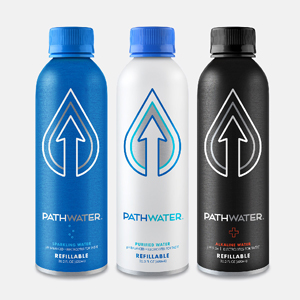
[00:06:06] Ray Latif: Totally. Yeah, Patrick mentioned that he was pretty impressed with the brand as well. If you did watch the episode and want to get in touch with Patrick, he encouraged folks to direct message him on Instagram. He says he replies to everything. He's a pretty bright guy. He's a pretty speedy replier, right? I mean, you should test that brand because Uh, I thank them for, you know, doing the show for instance, he replied within five minutes. Uh, so I think he's pretty active on the Instagram. The show was great yesterday. It was good to see, you know, brands that we know, uh, pitching, like it was good to see Mark Seiden from Cloud Water, uh, some brands that I hadn't seen before, like, like Fruinen. Eat Fruinen. I guess that's how you'd pronounce it with the, uh, umlaut over the O. And you and Patrick really diving into the ice cream category. It was also good to see, uh, Shadi Bakor from, from Pathwater. And, you know, he had some really sort of heartfelt comments about the community and the things that, you know, we've been doing here at BevNET to support the community. And thanks for those kind words, Shadi. I just wanted to say thank you. And then, you know, we didn't really get too deep into the pitch of Pathwater, which is something that I've kind of struggled with. You know, my question for Pathwater would have been, Are you really a beverage company or are you a bottle company disguised as a beverage company or a sustainability company? It's pretty interesting take on the business that Shadi has. I'm always interested in hearing what's next from those guys. In this case, it was an alkaline water and a sparkling variety. Yeah, well, Shadi, if you're listening, send an email to Mike, that's mschneider at betnet.com. He wants to hear more about how you position your brand. I think that's a good question, Mike. You can communicate with me Schwarzenegger style too, if you want to just slide into my DMs, that's fine. Schwarzenegger style, that's a hashtag if I've ever heard one, that's a great one. That's a long hashtag.
[00:07:59] Whole Foods: I know that I'm still drinking out of a Pathwater bottle that I bought after the Winter Fancy Foods show in the airport, so they certainly work as a sustainability model. Making my point.
[00:08:10] Ray Latif: As mentioned, we're hosting Elevator Talk live stream every Wednesday at 3 p.m. Eastern time. We encourage brands of all shapes and sizes. If you have news and new products, let us know. Send us a note to ask at Taste Radio or rlatif at bevnat.com. We'll get you in touch with our producers and we'll get you on the show.
[00:08:28] Kat Thomas: Guessing your margins? That's risky. Belay Financial gives CPG brands the clarity to scale smarter, faster, stronger. Get your free inventory ebook by texting TASTE to 55123 and start making data work for you.
[00:08:47] Elevator Talk: Tune in at the end of this episode for an exclusive interview with Matt Lin of Belay Solutions. He sits down with Melissa Traverse to break down the biggest inventory and accounting mistakes CPG founders often make. You'll learn how to bring clarity to your numbers so you can scale with confidence.
[00:09:05] Ray Latif: Can we talk about PR for a second? Because it's interesting when we're getting these folks applying to the Elevator Talk livestream, a lot of times we are in direct contact with the founders. Sometimes we get applications from PR agencies on behalf of a brand or an entrepreneur. And, you know, PR came up in a couple prominent ways in recent episodes of Taste Radio and Taste Radio Insider. The first one being with the founders behind Bantam Bagels, and the second with Jordan Salcedo, who is the founder and CEO of canned wine brand Ramona. And they both talked about how important PR was in the early stages of their growth, how much of an impact it had on getting the word out and getting the message out about their brands and how their products are differentiated from others on the market. And then I got some inbound email on LinkedIn about this very subject as well. So I wanted to talk about how brands should think about working with PR agencies. You know, one of the things that's really important to me is that a PR agency can authentically recite your brand story. A lot of times I'll be talking with a rep from a PR firm and I'll ask about the brand story or particular details about the product or entrepreneur, and they don't have the answers. And that is a red flag for me. It just sounds like the PR agency is... sort of going through the motions instead of really having an authentic relationship with the brand and the entrepreneur. It's really important that you guys are on the same page with those firms because they are, in essence, an extension of your company. In my former life, I was a brand who had to choose PR companies. And for me, it was really important that they had some experience in the business that I knew so that I could see if they were good at picking up the things, the very things that you're talking about, right? If they could understand the talking points, if they were able to hold a conversation about you know, a brand in my business, because I think it's really important that you don't have a company that's just going out there and sort of blanketing your message. They have to be able to have a relationship with the audience that they're pitching. So for instance, if you're pitching Bebno, you're pitching Taste Radio, and you don't know that your founder has already been on one of our shows or done articles or content with us in the past, that for me is a red flag to begin with. you know, that kind of misstep can sort of undo the entire conversation as you, you know, just stated, right? So you, you, you may have been interested in that conversation from the beginning, but then you get to a point where you're asking a question and if the basic questions can't be answered or, you know, you can't have a, that next level conversation to some extent, then it's just, it's going to make for a difficult relationship between the brand and the agency. You know, the agency has to be able to help you scale. They don't need to know everything. They don't need to be perfect, but they need to know, you know, when to say, okay, I'll get back to you with that information versus trying to take on the entire conversation as well. It's a really tough game.
[00:12:07] Whole Foods: And I think there's something really important to talk about in terms of what's required on the client side. So for any client who wants to hire a PR agency, they should really know what their brand personality is first. A PR agency is an organization that understands media outlets and also has developed relationships within those media outlets. But it's going to be really hard for them to get good coverage for you if you don't know what your brand personality is first. Jordan from Ramona was talking about how she wanted to roll out a line that was very similar to a wine cooler and that's fun and cool. with quality ingredients. And there was a really fun story that I heard about her product being stocked in a bar that was hosting an MTV Video Awards after party. And Kanye went up to the bartender and asked for the coolest drink they had, and he got a Ramona product. And it kind of took off from there. And I think Rihanna was drinking it the next night. But knowing what your brand personality is will get you really far from the get-go.
[00:13:12] Ray Latif: You also need to be invested in the PR company. You can't expect a PR company is just going to make magic for you. You have to share your roadmap. You have to be able to share the upcoming milestones. And you have to sit in on some strategic sessions ahead of just sending a PR company out there and expecting that they're going to just make it rain PR opportunities for you. It just doesn't work that way. I mean, that's a really good point, Mike. You know, setting expectations with your agency is really important. The other thing that I want to point out is that it's really important that you have high res photos of the entrepreneur and the products readily available. It's so weird when I talk to a PR company, I'm like, hey, do you have any high res images? of the entrepreneur or of the brand or the brand logo. And they're like, yeah, unfortunately, we don't have any of that. I'm like, what? How is that possible? It's because the brand didn't provide them. I guarantee you, dimes to dollars. It's not because the agency didn't ask. And that's another struggle. It's tough. You have to have a certain amount of assets, a certain level of strategy, and a roadmap prepared before you bring on an organization to help you. That's why it's difficult for early stage companies be that involved with PR companies. And on the flip side, it's why a lot of PR companies don't take on a lot of earlier stage companies because they just don't have the assets yet. But you'll see them take on a few here and there, but they need more established companies because that's where, I guess, what you call the meat is for a PR company to be able to say, all right, we can be involved strategically. There's a good roadmap. They have an understanding of where they're heading. And then we can jump in and give them ideas for how to build awareness.
[00:14:52] Whole Foods: And to your point, Mike, hiring a PR agency as an early stage brand can be really difficult and oftentimes doesn't make sense for consumer facing PR because if a customer reads about your product and then can't find it, it's really frustrating. So having distribution for consumer facing PR is obviously really important before you make that investment.
[00:15:14] Ashley Thompson: Good stuff, you guys. I feel like I've just been sitting here listening rather than contributing because I've had this same conversation like a million times. Yeah, no, I mean, I think it's something that it never gets old to repeat it because I think it's just a good reminder for everyone out there.
[00:15:33] Ray Latif: Great stuff. All right, it's time to get to our featured interview for this episode. That's with Ashley Thompson, the co-founder and CEO of Mush. Launched in 2015, Mush is a brand of refrigerated overnight oats that are made with dairy-free milk and packaged in single-serve containers with a built-in spoon. The brand is distributed at natural, conventional, and club retailers nationwide. And in just five years since its debut, Mush pulls in over $20 million in sales annually, according to the company. In the following interview, I spoke with Ashley about her background prior to launching Mush and what motivated her and co-founder Kat Thomas to launch an oatmeal brand. She also discussed why she set out to create, quote, a best-for-you product, why she likes having, in her words, a polarizing brand name, preparing for her first meeting at Whole Foods, why the company has pivoted from a product-first approach to a team-first focus and strategy. Hey folks, it's Ray with Taste Radio. I'm gonna call right now with Ashley Thompson, who is the co-founder and CEO of Mush. Ashley, thank you so much for joining me today.
[00:16:40] Patrick Schwarzenegger: Thank you so much, Ray. I sincerely appreciate the opportunity.
[00:16:44] Ray Latif: Well, I sincerely appreciate you being with me this morning. Like a lot of folks I've interviewed for the show, you started out in the financial services industry, which is really interesting. I'm wondering why so many people that get into food and beverage and launch food and beverage brands come from finance.
[00:17:01] Patrick Schwarzenegger: It's a really great question. I think the joke in finance is that you really break your back and sometimes even your soul trying to make a ton of money. And then later on in life you spend all of that money trying to fix your back and again your soul. And so I think the lifestyle within finance isn't super conducive to mental and physical well-being. It's just so demanding, especially if you're a high performer, you really have to dedicate your entire life to it. So I think a lot of folks see a chance to find some soul and something to be passionate about other than money, which draws them to the industry as well. You kind of admire passion of the brands from a distance, and you really get curious about what folks are doing in the food and beverage industry.
[00:17:54] Ray Latif: It sounds like finance might turn your brain, soul, and back into mush. Pun intended, yes.
[00:18:02] Patrick Schwarzenegger: Yes.
[00:18:04] Ray Latif: Were you looking at the food and beverage industry for investment? I mean, what were you doing in finance and how did it tie into this industry?
[00:18:11] Patrick Schwarzenegger: Yeah, so no, I wasn't at all looking at food and beverage when I was in my role. I was on a really bespoke desk on a trading floor in New York. But I too realized that my passion didn't lie in finance and I really had an interest in food and beverage and really in health and wellness. That started at an early age when my sister was diagnosed with type 1 diabetes. that was a really difficult situation to endure with her. And that's when I realized there's just this huge connection between food and mental and physical well-being. And I've always carried that with me. And so when I felt like my lifestyle was imbalanced working in the finance industry, I knew immediately I had to switch gears and do something about it.
[00:18:59] Ray Latif: And you started at a relatively young age. When did you launch Mush? Or when did you co-found it?
[00:19:04] Patrick Schwarzenegger: Yeah, very young. I was 24.
[00:19:07] Ray Latif: 24. So you must have known pretty early on that a 40-year career in finance was not for you.
[00:19:15] Patrick Schwarzenegger: Yes, I knew I would not last 40 years. I'm a high performer, a type A person. I'm super competitive. I want to win. And I knew that I didn't have an edge because I just wasn't as passionate about it. And I didn't like the lifestyle of it.
[00:19:31] Ray Latif: and you wanted to win in oatmeal. I can imagine that there's a lot of people who share that interest in oatmeal. Well, probably not, but I mean, tell me what drew you to a category that a lot of people look at as kind of bland.
[00:19:46] Patrick Schwarzenegger: Yeah, that's the beauty of it. So oats are such a staple in the American diet. And when I was working in finance, I was fueling myself every day with oatmeal, trying to mix it up. And, you know, I just, I could see that it was such a sleepy category and I really wanted to, I wanted to reinvent something. I didn't want to launch a me too brand. I wanted to take a new spin on something. and continued to think and refine what the product concept could be. And at the time I was eating a ton of overnight oats and I thought, why hasn't anyone commercialized this yet? There's a huge white space here. There's a space to be creative and novel with something that's really familiar. And I think that's where the magic lies in any sort of product innovation.
[00:20:36] Ray Latif: So Ashley, you've talked about attempting to reinvent the way people think about oatmeal. That's a pretty big set of consumers. There's a lot of people that eat oatmeal. Were you focusing on a specific set of consumers? Who are those people when you talk about reinventing the way people think about oatmeal?
[00:20:58] Patrick Schwarzenegger: Yeah I guess. And I think like a lot of entrepreneurs you sort of invent things that you yourself could use or you solve a problem that you personally have. So when I think about our target consumer I really think about who am I. And I don't necessarily pigeonhole myself to a specific demographic so much as a psychographic. So we reinvented oatmeal for someone who uses food as fuel to their endeavors without sacrificing taste, quality, and nutrition. People who love mush love it for its simplicity and functionality. It has minimal ingredients. great macronutrient profile. It's quite utilitarian. It usually becomes a staple in their everyday diet, so it serves a significant purpose of fueling folks in the morning who want to do things better, feel better, and just all around succeed.
[00:21:54] Ray Latif: Now what you sell, what mushes is overnight oats. And if you've been following social media over the past two, three years, you're probably seeing a lot of folks that are preparing overnight oats at home. And so in this little bubble of ours, that's the natural food and beverage industry, one might think that everyone knows about overnight oats, but there's a misconception about that. Awareness for that type of food is not very high, right?
[00:22:23] Patrick Schwarzenegger: Absolutely. You know, people have been eating hot oatmeal for decades and very few people have actually ever tried eating oats cold. It's still a super novel concept in the American diet and not only have a lot of people not ever tried it before, they certainly don't know the health benefits of eating cold soaked oats. So that's been a super huge learning for me as an entrepreneur that you really do need to be on the right part of the creative curve having the right mix of novelty and familiarity to get something to take off. And that's what we're trying to get. We're trying to get consumers to that spot where they understand it's a very familiar ingredient. And now this is just a novel way of eating it.
[00:23:08] Elevator Talk: Do you want more repeat buyers on Amazon? Well, this free resource in collaboration with Straight Up Growth will help your brand turn first-time buyers into long-term subscribers. Download Winning the Repeat Purchase Game on Amazon now at Taste Radio slash SUG. That's Taste Radio slash S-U-G to start building retention-driven growth for your brand on Amazon. Scaling a beverage brand into major retail comes down to operational readiness. From packaging lead times to co-manufacturing strategy, the details can make or break a launch. In a new e-book in collaboration with Octopi and Asahi Beer USA, industry leaders share what they've learned in helping brands scale. Download it now at Taste Radio slash octopi. Do you need to scale your team faster without compromising on talent? Join Oceans for a live webinar on April 20th and learn how leading companies are hiring top global professionals who are ready to grow with your business. Register for the webinar now at Taste Radio slash oceans. That's Taste Radio slash oceans.
[00:24:19] Ray Latif: How did you assess the most critical aspects of the brand when you were deciding to commercialize this idea? What were the most important parts and how did you incorporate them into the final product?
[00:24:30] Patrick Schwarzenegger: Yeah, that's a great question. When we were first coming up with the product, we had a strict vision of what we wanted. We wanted really a best-for-you product, not a better-for-you product, but a best-for-you product, a product that delivered on taste, quality, and nutrition. And we really wanted to make a healthy item convenient. That's really why we started the business, to make oatmeal more accessible and more convenient for people to eat more of it. And so in the beginning, we really just did things that absolutely didn't scale. For the first nine months of the business, we started in farmer's markets, collecting a ton of anecdotal information about what consumers wanted and cared about, where they thought the value proposition was, and then did more of that and less of what didn't work. It was a really great experience and has undoubtedly helped lead to the overall success of the product.
[00:25:27] Ray Latif: So how did you end up on Mush as the name? I'm sure you had a bunch of names that could have been that of the brand. How'd you land on that one?
[00:25:38] Patrick Schwarzenegger: The first thing that comes to mind is it's really a nod to my father. So as a younger kid, I, again, was pretty type A and I always made my breakfast the night before and would soak my cereal overnight and every morning my dad who would be up reading or working when I came down the stairs would ask, what's in your mush this morning? So that kind of stuck with me. The product that I was making early on as a kid has kind of come full circle. It looks very different nowadays. So it's a nod to my father. It's also a very polarizing name, which I like. It's super memorable. Some people think that it's distasteful. but they still remember it and ultimately that's what I think will help carry the brand along. And now it's actually an acronym for Mankind's Ultimate Source of Health, which hopefully will serve as a greater platform for the business in the future.
[00:26:38] Ray Latif: It certainly seems like it. Now, your product is in a single-serve plastic container. It's a black label with the letters M-U-S-H written in white. Do most people know it's oatmeal when they pick it up? How do you get people to understand what the product is as much as what the brand is?
[00:26:58] Patrick Schwarzenegger: People don't know what it is when they first pick it up, which is a huge barrier, and it's something that we're trying to overcome. We've made a lot of mistakes along the way, but we continue to fine-tune the messaging, and that's really part of our journey as entrepreneurs, and part of the journey in this climate especially. It's about continuous improvement, not only in product, but in messaging, and it's something we continue to work on. I don't think we've nailed it quite yet, but we're working towards that.
[00:27:27] Ray Latif: Now, earlier you mentioned that most people have eaten oatmeal warm. It's traditionally eaten warm, but again, your product needs to be refrigerated. It's eaten cold. Does it add another level of complexity to the brand or does it in some ways help because people know that it's a different kind of product? It's a different approach to oatmeal.
[00:27:48] Patrick Schwarzenegger: It adds a ton of complexity. So when you think about the retail landscape and when you think about store layout, there's only so much refrigeration space and it's been predominantly used for dairy products and beverages and produce. And we really don't fit into any of those categories. We're non-dairy. and we're not a beverage and we're certainly not produce. So it's added a ton of complexity because even when it's sitting on the shelf next to yogurt, yes, it's signaling that it's a fresh item and that it's refrigerated, but it doesn't really explain anything else. And it's really tough to differentiate between what the value proposition of the yogurt is versus what our product is, especially if someone doesn't even know what our product is.
[00:28:35] Ray Latif: So you've got all these barriers, or seemingly you've got all these barriers. You know, number one, it's not really clear that it's oatmeal. And number two, that needs to be refrigerated. And number three, that you're a relatively new brand. You still got into Whole Foods though. And that was your first retailer. And there's, you know, as I've mentioned on this podcast a number of times, Whole Foods seems to be the Holy Grail for a lot of early stage brands. But preparing for that first meeting, getting ready to make your pitch to that Whole Foods buyer is so critical. How did you prepare for that first meeting?
[00:29:09] Patrick Schwarzenegger: Yeah, what a great question. I just want to take a second to give a big shout out to all of the workers at Whole Foods. They are true heroes in all of this as well. They've, you know, maintained our food ecosystem, which is just as important as the medical field at this point. And so just want to give a big thanks. But as it relates to preparing for the meeting, you know, I think We got in early on and at the time we had just focused so much on creating the best possible product for retail. And we put together what we felt was just the most amazing product with a ton of new attributes a great value proposition. And I think when we went into the meeting the buyer could see our passion and our willingness to learn and grow. And just the fact that we brought something that was really new it wasn't another me too item. And I think that's really what got us over the finish line and ultimately led us to the promised land of partnering with such a great retailer like Whole Foods.
[00:30:18] Ray Latif: Your branding is really striking too. And a lot of times when I pick up a package, if the branding is outstanding, then I'll want to know more about the product. I'll want to learn more about the benefits and attributes of that product. How much has your branding helped you and how much did it help you in that first meeting?
[00:30:34] Patrick Schwarzenegger: Yeah, I think it helps tremendously. Some people absolutely love our branding, others, you know, I guess might not take note of it, but it's really differentiated, especially in a cold case with a ton of products that are mostly white, the black really stands out. And yeah, I think the buyer again could see that we had put a ton of thought into differentiating the product, not just to be different, but for good reason.
[00:31:02] Ray Latif: It also feels really masculine, which is something that's a little different for that set that you're in next to yogurts and whatnot. Was that intentional? Were you looking to create a brand that appealed a little bit more to male consumers?
[00:31:16] Patrick Schwarzenegger: Yeah, it was intentional. We thought that if we made it too feminine, that it would turn away males. But if we made it somewhat more masculine, it wouldn't necessarily turn away women. And we wanted both men and women to be able to pick this up and enjoy it. And the actual product format with the spoon is really conducive to both men and women enjoying it.
[00:31:44] Ray Latif: So how many Whole Foods stores were you in? What region? And what did that experience teach you about scaling, not just within that retailer, but scaling the brand across the country?
[00:31:56] Patrick Schwarzenegger: Wow, so many learning lessons launching in those first 10 stores. I think the biggest one is that merchandising is just such a huge component to winning in the space. You can have the most amazing product, but if people don't see it because it's in the wrong spot or it's next to something that triggers a different sentiment or doesn't necessarily make sense, you won't necessarily get that trial and it'll just sit on the shelf. And you know a lot of buyers point to this when you first launch with them. They stress that you will need a full on marketing platform to help get the product off the shelf once they put it on. And it's so true. And a huge aspect of that is merchandising. So We have a great merchandising partner that helps us across the country, get us new placements, secondary placements, etc. You know, being in retail, that's really your biggest marketing opportunity as a brand. So make sure you take advantage of it and put the necessary resources behind it to make it a true success.
[00:33:03] Ray Latif: How do you find that merchandising partner? And you know, how do you determine that that was the right one for your company?
[00:33:11] Patrick Schwarzenegger: We vetted a couple, you know, I'm a huge proponent of reference checks. So when I, um, I met a couple at, uh, Expo West one year, and then I asked the brands who partner with the two merchandising teams that we were vetting, what their experience had been previously. And we went with the partner who we felt would be best suited to merchandise our particular product, because it's really not a one size fits all.
[00:33:40] Ray Latif: Great product, great branding, great merchandising. There's another component to all this, which is price. You have a premium price point. What is your price?
[00:33:50] Patrick Schwarzenegger: Our price ranges from, well, for our Oval Cup, our Oval Custom Cup, it ranges from $349 to $399 in retail currently.
[00:34:00] Ray Latif: And that's for a single size serving, right?
[00:34:02] Patrick Schwarzenegger: That's a single size serving.
[00:34:03] Ray Latif: Correct. So, you know, what did pricing teach you about how to scale and how to evolve the brand and expand the buying opportunity for consumers who might want to try your brand, but are shut out because of that price point?
[00:34:24] Patrick Schwarzenegger: Yeah, great question. I mean, just as you've noted, it's a premium price point, and that only works for a small subset of consumers. But when we started out making this product, we wanted it to be accessible for everyone. That's ultimately the goal. I actually don't really believe in premium priced products. I believe in pricing products. appropriately for the quality and integrity of the product, but I don't necessarily believe in pricing food at a premium. So, there came a point in time where we realized we're only going to hit a certain set of consumers at this higher price point because it's just a non-starter for a lot of households. So what can we be doing to reach those consumers? And it was actually one of the biggest decisions we had to make in 2019. And we ultimately decided to come out with a new product format that looked and felt more like a yogurt and spoke more like a yogurt from a price perspective. That'll be distributed in conventional retailers at a much lower price point to hit a new set of consumers who will undoubtedly enjoy it just as much as those folks who like it at a premium price point.
[00:35:43] Ray Latif: What would the difference be in terms of pricing?
[00:35:46] Patrick Schwarzenegger: That'll retail for around $249 to $199, depending on the retailer and the distribution method.
[00:35:53] Ray Latif: That's a pretty significant reduction in price and I'm sure one that's going to make that brand a lot more accessible to consumers. But at the same time, you're moving away from that custom packaging that has represented the brand for so long. Do you have any concerns that that custom packaging, that consumers are going to miss that packaging and what you've done and how it represents the brand?
[00:36:15] Patrick Schwarzenegger: We want to continue to utilize that packaging in the natural channel and in the away from home channel. So in places like coffee shops and cafes where the spoon under the lid really does make a ton of sense and adds good value to the consumer. But I, you know, I'm a firm believer that what got us here won't get us there. And we have to do what we have to do. A custom pack isn't going to take us to the next level. We can't unlock a new set of consumers because the pricing architecture just doesn't make sense. So we're willing to try something new. I think it is a little bit of a risk, but I am very, very hopeful that it will succeed.
[00:36:58] Ray Latif: As I mentioned, the package has come to represent mush as much as the brand, in my opinion. That's kind of the way I've looked at it. You know, what's been your experience with custom packaging?
[00:37:08] Patrick Schwarzenegger: Yeah, you know, there's so many great brands like Calafia or Method Hand Soap, and their custom packs really do make a difference. They're iconic shapes that really differentiate the brand, not only from a content perspective on the actual packaging, but the the shape and the format of it. And I'm a firm believer in that. I think there's a lot of beauty in it. But there are tons of challenges with custom packaging. I mean, it's just that, custom. And what does custom imply? It implies a higher price point. So again, if you're in a super commoditized space, you're going to run into challenges having pennies added to the actual pack format. And then there's longer lead times. Our lead time for that pack is quite long, relatively speaking. And that creates challenges when you want to have a nimble supply chain. So there are pros and cons. And so long as the pros outweigh the cons, then I think it's great. And it's something that folks should explore because it is a way to differentiate. But I don't always think it's the right route to go down for every brand.
[00:38:20] Ray Latif: You've been doing this for almost five years. You're coming up on your five-year anniversary in June of 2020. When we talked prior to our current conversation, you had mentioned that the company had a product-first focus that's since shifted to a team-first focus. How did you come to the realization that you needed to make that change?
[00:38:41] Patrick Schwarzenegger: That's a great question. The hard way. I think a lot of introspection. There came a point where we were dropping the ball on a lot of things. Our bandwidth was super strapped and I just could tell, I could feel that there was a lack of experience that was inhibiting us from getting to the next level. And so I had a ton of dialogue with my father who's an entrepreneur and a ton of dialogue with a lot of my mentors in the space and my investors ultimately. And it was so obvious to me what I had to do which is shift my focus away from being obsessed with the product. and start obsessing over the people who I surround myself with on this team. And again, huge shout out to my team. They are incredible folks. We've recruited a ton of great talent in the last nine months that has just, you know, propelled us tremendously forward. we would not be where we are today without them. Their experience, their talent, and their passion and commitment to the mission really makes all the difference. We have a tiger by the tail. This is an amazing product that people love and enjoy, and now it's really about executing well on the roadmap that we have. That certainly all boils down to the team.
[00:40:05] Ray Latif: How much of putting together that team meant handing over the reins to and handing over control to certain aspects of the business that you were less than willing to accede?
[00:40:18] Patrick Schwarzenegger: Yeah, great question. I mean, it was a huge learning moment for me. I tend to like to control things and I love to do things. I've always really been a strong individual contributor and I had to completely shift my mindset to not doing but helping and managing and leading and serving those who are doing and executing. And it's just, it looks so different from the early days. And there's been, again, a lot of mistakes along the way. But I've just continually sought to understand how to get it done, how to get to the next level, how to work with others, how to work through others. And thankfully, the folks who I've surrounded myself with have just been so gracious with me in my journey and evolution from founder to CEO. And that's really made all the difference. But it's so tough handing over the reins. You know it's like this baby that you create. That's what you do. You birth something into the world that you so deeply believe in and you want it to succeed. And now it's in the hands of other folks. And you you kind of have to guide them but also give them the autonomy that they need and deserve to execute well. So it's a balance, it's a dance every day. It's something that I am really enjoying learning at this point in my journey, in my career. And yeah, I wouldn't change it for the world. Lots of mistakes though along the way, that's for sure.
[00:41:51] Ray Latif: As expected in entrepreneurship.
[00:41:53] Patrick Schwarzenegger: Exactly.
[00:41:55] Ray Latif: Has there been a point at which a colleague or an employee has suggested an idea that ultimately turned out to be the right idea despite your misgivings or skepticism about that idea?
[00:42:08] Patrick Schwarzenegger: Oh yeah, it happens all the time. I mean, I have, when I set out to hire our leadership team, I made a point to hire people who know way more than me and who are, you know, faster, stronger than me in their respective functions. And they certainly propose things that I wouldn't even ever think of. And when I think about teams I always think about this idea that one plus one equals three. That the power of two people conversing over an idea is far greater than each of those individuals thinking of ideas on their own and so I mean absolutely ideas come about all the time and we run with them especially if we think it's a really good idea and sometimes we don't always agree but the most important thing is that you agree to disagree you pick a path and you you move swiftly and everyone kind of marches forward with that idea knowing you might agree or you might not but you need to commit to to the plan on hand.
[00:43:14] Ray Latif: Well, the company's marched forward on a pretty prominent retailer in recent weeks, and that's Costco. You've shown some traction and success in natural. You know, how do you prepare for the club warehouse channel? Because that is also, for a lot of entrepreneurs, a second Holy Grail in some ways.
[00:43:32] Patrick Schwarzenegger: Absolutely. And you certainly need to be prepared when heading into the club channel. You know, we did a lot of research. We spoke to a lot of folks who've done it before. So other entrepreneurs who have seen tremendous success in the channel. We also partnered with an incredible broker and those folks have a ton of knowledge about the space and have worked with the buyers at Costco for so long. They really understand how to develop products, already existing products, but how to transform them into a Costco ready product. And then we really did our due diligence on making sure that capacity wouldn't be a constraint. So really focused on our supply chain, making it formidable, having secondary and tertiary suppliers in the event that volume spiked or there was a misstep, because what you really don't want to do is commit to something and then not be able to fulfill it, for you know one of the largest retailers in the world which is Costco and they're such great operators so you really want to be a great operator to them as well so we just did a ton of due diligence we asked the right questions you know looked at our pricing architecture really focused on making sure that we wouldn't cannibalize other business and we made sure that we had the right attitude coming into a partnership with them, you know, understood why we were doing it at that time and for what reasons, which has absolutely helped us.
[00:45:07] Ray Latif: Earlier you mentioned that, you know, Mush has the opportunity to be a platform for a variety of product lines. You're really hitting your stride with the oatmeal, with the overnight oats. How do you determine when to introduce that next product line to the brand?
[00:45:21] Patrick Schwarzenegger: Yeah, that's a great question. It's something that I grapple with a lot. You know, I think when you have a ton of momentum on a certain product line, you should just roll with it. So if revenue is continuing to increase just through sheer distribution gains and velocity gains, For such a small team, I think it would be a big misstep if we introduce a new product line that took away from what's already occurring in the market with our current line. And as soon as we feel like growth needs to come from something new is when we'll introduce something new. So I've been really disciplined about not shifting focus too much really being laser focused on again the tiger by the tail that we have. But that's not to say we don't want to innovate. We absolutely do. I think it's necessary for future growth and we were committed to that for sure.
[00:46:20] Ray Latif: How often do you think about the end game? And that's assuming you have an end game or at least an idea of what it's going to look like. Because you're young, the brand is still relatively young. Do you think about how the brand will eventually move on to say the next stage or its next evolution? Or is it really, really important to just focus on the day to day and sort of everything will take care of itself? Because I've heard both answers from entrepreneurs.
[00:46:46] Patrick Schwarzenegger: Yeah, I really tend to focus on the day-to-day and what I'm learning and what I'm doing. I don't like to think about the end game. And a lot of investors have asked me along the way, so what is the end goal? And I don't really have a clear cut answer. What I really like as an entrepreneur is the journey and the learning. I once heard a quote that happiness is the joy you feel in pursuit of your highest potential. And I think that's exactly what describes the journey that I'm on. I'm so happy working hard, building meaningful relationships, through the work that we do. And so long as I continue to feel that way, I don't see why there has to be an endgame. I do believe sky's the limit. It's probably that fantasized talent in me that I have. But I would love to continue on and grow this brand to be as big as I can. And as soon as I'm not fit for the role is when I would look to do something different.
[00:47:51] Ray Latif: Well, I look forward to seeing how it all plays out. As I mentioned, you know, Mush, a really standout brand. I love what you guys are doing. And this has been such a fantastic conversation, Ashley. I know our listeners are going to get a ton out of it. If one of them wanted to reach out to you, is LinkedIn the best way to do it?
[00:48:07] Patrick Schwarzenegger: That would be great. I would welcome it.
[00:48:09] Ray Latif: Outstanding. Thank you so much again for taking the time. We had some technical difficulties throughout this process and you have been a champion. So thank you so much for doing, for putting up with me.
[00:48:20] Patrick Schwarzenegger: No, thank you, Ray. I sincerely appreciate the dialogue and the opportunity to be on the show with you. Thank you again.
[00:48:28] Ray Latif: Thank you. Talk to you soon. That brings us to the end of episode 81 of Taste Radio Insider. Thank you so much for listening. And thanks for our guest, Ashley Thompson. Please subscribe to Taste Radio on the Apple Podcasts app, Spotify, Stitcher, or Google Podcasts. As always, for questions, comments, ideas for future podcasts, please send us an email to ask at Taste Radio. On behalf of the entire Taste Radio team, thank you for listening, and we'll talk to you next time.
[00:49:08] Whole Foods: Hello, I am Melissa Traverse here for the Taste Radio podcast, talking about some of the biggest tension points that CPG brands and founders face when they're scaling a brand, and those are financial accounting and inventory management. I am joined by Matt Lynn, inventory accounting guru from Belay Solutions, and he is going to shed some light on all of this that is going to help everybody out quite a bit. Matt, thank you so much for joining us today.
[00:49:38] Ashley Thompson: Thank you for having us, Melissa. It's great to be out here at Expo West and it's great to sit down and be able to chat this because it's kind of a passion project of ours, working mainly with CPG brands and hoping to help them scale.
[00:49:49] Whole Foods: It's been such a pleasure chatting with you and the team and learning all about what you do over there at Belay Solutions. Can you tell us a little bit about yourself and what your role is and the kinds of solutions that Belay gives to CPG brands and founders?
[00:50:05] Ashley Thompson: Yeah, absolutely. My role with Belay, I'm actually our inventory accounting manager. I run our inventory department, so we work with CPG brands, taking them from spreadsheets, putting them on inventory management systems, and really helping connect their tech stack between their sales online marketplaces to that inventory management system, even down to their financial systems like QuickBooks. Belay overall is kind of an outsourced accounting firm. And with that, we're helping teams. We have different levels with bookkeeping, controller level work, even high level into CFO type items. So we really help those brands in any way that they need financially. And then I just have a subset of a department where we're really just laser focused on inventory.
[00:50:48] Whole Foods: It's certainly a complex topic and there are plenty of places to go wrong. Let's start by going right and start super simple. Can you tell us what some of the biggest red flags are that would help a founder understand or, you know, the person running a brand understand that it really is time to get some help with some of these areas?
[00:51:09] Ashley Thompson: WKYT. they have a lot of transactions that don't get coded or they just put them into placeholders to just get rid of it so it's not an eyesore. They'll notice they have revenue but no cash or they notice that they have a good amount of cash but their blind spot is really seeing the vendor invoices that are sitting there just needing to be paid and so they just lack that clarity that's going to really be around the corner.
[00:51:46] Whole Foods: You know, you were talking about one of the red flags that comes up that I think makes so much sense. When somebody asks you what your numbers are and you can't come up with the right number, that's a big problem because that's something that you really should be able to share with decision makers who, you know, you're ideally looking to do business with. What should you be able to call up at a moment's notice?
[00:52:10] Ashley Thompson: Really at any time, you should be able to know an accurate margin. It's amazing how many founders we end up talking to that they can tell you their revenue numbers, they can tell you their selling price, and then the minute you start talking about cost or their cost of goods sold, they just get a deer in headlights look. So really it's very hard to tell, am I even making money? Or if you don't know your entire landed cost. Maybe you know what the freight cost is, the duties separately, but you're not really getting that as part of your unit cost. So it's really hard to tell. Am I even making money or am I losing money from the very beginning?
[00:52:43] Whole Foods: And do you recommend that founders are able to call up a margin by channel?
[00:52:48] Ashley Thompson: Absolutely. And depending on the number of products and channels, you kind of want to know what are your best sellers, which ones are making the most and which ones maybe you're not making as much. But especially if you're branching out and you're doing D to C with B to B, absolutely want to know that.
[00:53:05] Whole Foods: Gotcha. You mentioned that when things feel really chaotic, that's probably a red flag. I would say that it probably almost always feels chaotic if you're running a CVG brand. And I know this may be hard to quantify, but is there a revenue number? Is there a number of doors number that would help a brand understand whether or not it makes sense to bring on a partner like Belait? Understanding that so many brands are bootstrapped or they might be tight for cash. What is that friction point?
[00:53:35] Ashley Thompson: 3 3 3 3 3 3 3 3 3 3 3 But as you're growing, as you're getting to those six-figure revenue numbers, and especially as you're approaching seven, you want to make sure you've got good financials. Because as you scale to that point, most likely you're going to be looking to raise capital. And investors, the first thing they're going to look at is your books. And are they clean? And do they show a clear picture of your business?
[00:54:08] Whole Foods: You know, another area that folks might look to to organize some of the chaos are their systems. So many folks stick with Excel spreadsheets for a good amount of time. How do you know that you need to outsource some of your accounting to an organization like Belay Solutions versus maybe signing on to a Synth7 or NetSuite or something like that?
[00:54:30] Ashley Thompson: Well, that's actually something we really help with when it comes to that cost question. That's something that trips people up. And sometimes if you just have a turnkey business, you buy and sell a finished good, you can maintain with spreadsheets. And we've had clients with million dollar revenue that can do that. But we see so many brands nowadays are using contract manufacturers. and they're just sourcing certain parts of their product. So when you start talking cost, they have no idea exactly what their unit cost is. So that's where we come in and we kind of understand, we'll speak with the customers and the clients and get their needs. And then if we think they're ready for a system, then we'll help put them on that system so they can get some of that clarity. And it's not something we force on anybody. There are plenty of times where founders come to us and we'll tell them bluntly, you're not ready for it right now, but we'll let you know when we think you are.
[00:55:16] Whole Foods: That sounds like excellent advice. What should a founder or somebody running a brand look for in an outsourced accounting partner? Are there certain checklist items that they should make sure that their partner be able to execute or be able to help them understand?
[00:55:33] Ashley Thompson: Absolutely. I think one of the keys, there's, there's a lot of outsourced accounting firms out there. Some focus on service-based SaaS companies, but if you're a CPG founder, you really want to make sure that your accounting firm has CPG experience. I would ask them, you know, what kind of brands have they worked with? And even beyond that industry specific, because there's so many subsets of CPG. And that's something that I think is great about what we do with Belay is that we kind of run the gamut. It's kind of like the insurance commercial. We know a thing or two because we've seen a thing or two across a broad spectrum.
[00:56:03] Whole Foods: Probably getting references is always helpful, right?
[00:56:06] Ashley Thompson: Absolutely.
[00:56:08] Whole Foods: All right. So this all sounds great. I think we have a really good understanding of would it make sense to hire an outsourced partner? You know, what some of the things you should be looking for are. What does offloading this kind of work mean for the brand? What can this do for lightening the load of a founder or lightening the load of a brand operator? Like, how does that help them in their everyday business?
[00:56:32] Ashley Thompson: It just tries to really help quiet the chaos. So what we're looking to do is just take some of the weight off that founder's shoulder. Let them focus on building the brand, building the business, getting that exposure. If you don't have sales, you really don't have anything. So we want them to be able to focus on that while we take care of your back-end office work. And we can just present that to you on a monthly basis. You can help make decisions. You can take that to investors. And really, you can just focus on growing your business.
[00:56:58] Whole Foods: I feel like I felt founders and the folks who are running brands collectively sigh a breath of relief just hearing that. How can people learn more about Belay Solutions?
[00:57:09] Ashley Thompson: So people can text TASTE to 55123 for their free inventory guide to get started.
[00:57:15] Whole Foods: Matt Lynn, inventory accounting guru at Belay Solutions. Thank you so much for joining me here at Expo West. It's been such a pleasure to chat with you and learn about what you all do over there to help founders and brands with their financial accounting and inventory management. For everybody else out there, thank you for listening to the Taste Radio podcast. I am Melissa Traverse and we'll see you next time.