[00:00:04] Ray Latif: Hello, and thanks for tuning in to episode 82 of Taste Radio Insider. I'm Ray Latif, the editor and producer of Taste Radio, and I'm with my BevNET and Osh colleagues, Mike Schneider, Melissa Traverse, and Jeffrey Klineman. In this episode, we're joined by Lee Robinson, the Director of Dairy and beverage for Whole Foods Market. Just a reminder, if you like what you hear on Taste Radio, please share the podcast with friends and colleagues. And of course, we'd love it if you could review us on the Apple Podcasts app or your listening platform of choice. I'm ecstatic this morning. Can you guys guess why?
[00:00:37] Lee Robinson: I can't.
[00:00:39] Ray Latif: Okay, I'll tell you. Because I got a delivery of bounty paper towels. And I've been waiting for these things and they finally came.
[00:00:51] Lee Robinson: The quicker picker ever.
[00:00:53] Ray Latif: Yes. The brand finally pays off. It is actually a bounty. Indeed it is. These are the things that get people excited, or at least get me excited these days, is when you get a delivery of essentials from Amazon, which, you know, those essentials are harder and harder to find these days.
[00:01:10] Lee Robinson: I was very excited to find flour and sugar in my local grocery store. So two wins for the week.
[00:01:16] Ray Latif: Ooh, outstanding. I know you're a big baker.
[00:01:18] Lee Robinson: Yes.
[00:01:19] Ray Latif: What are you planning on making this weekend?
[00:01:21] Lee Robinson: I've got my sights set on Stella Park's banana bread because I have some aging bananas and I might just roast some sugar for that.
[00:01:30] Ray Latif: That sounds amazing. I know some of you still get excited about toilet paper deliveries, but I just want to point out yet again that I am now toilet paper free. Wow. You're what? I'm toilet paper free. What does that mean?
[00:01:45] Whole Foods: That's involved. I installed a bidet. That's devolved.
[00:01:49] Ray Latif: I don't know if we can talk about this on a show about food and beverages. Is that okay? I just said paper towels. You went there, Mike.
[00:01:55] riffed on: Wow.
[00:01:56] Ray Latif: I had to because it's, you know, those are two of the biggest things that people are worried about right now, paper towels and toilet paper. I've relied on Amazon for the past, I don't know, six, seven weeks and probably bought more stuff on there than I have in a lifetime. And it's been great. And, you know, it takes a little bit of perseverance, but, you know, you can find some things and they'll deliver them to you. Just, you know, be patient. Jeff, thank you so much for joining us today. It's been a while since we've had you on The Banter. Exciting news for BevNET. We're introducing a new live program that's going to be Debuts Next week.
[00:02:31] Whole Foods: Yeah, so I'm mostly here to promote the launch of our new show, Office Hours. where we take some of the real experts in the food and beverage industry, talk to them about some of the more technical nuts and bolts and strategic issues that brands are facing as they go into this tough period right now and attempt to come out of it. And so we'll pick topics like capital preservation, distribution, what the investment market is like during tough times, and what some of the really hard conversations brands and their investors and other gatekeepers are having. And then we open it up. to the brandscape and look forward to hearing your calls and questions. Whoa, whoa, whoa. What do you mean calls and questions? I mean that these people are here to answer the questions that brands and entrepreneurs have. A call-in show. I love it.
[00:03:41] Lee Robinson: This is what you've been waiting for.
[00:03:44] Whole Foods: Jeff, how long have you been talking about having one of those? That's incredible. I actually haven't been talking about it very long, but it just seemed like something that we needed to do. Mike, you've been talking a lot about community. And to me, one of the great sort of Distance communities that you see out there are the ones that sort of pop up around sports talk or call in programs like the Howard Stern show where you have vibrant communities that are interested in supporting and you know even sometimes just making fun of each other.
[00:04:22] Ray Latif: We've been talking a lot about the interactions that We Have as a community and how a lot of that has been lost with the landscape of events right now. And it's interesting how we went back to this construct of the call-in show and are building on some of the things we've been doing with our Elevator Talk series, where We Have brands that interact with us in pitch mode. And we thought, well, why don't we just have this show with
[00:04:48] Whole Foods: with experts and open it up to the community to participate with their questions and see what happens. I'm really looking forward to it. I think that The only way it's really going to work, though, is if we hear from you out there. And so we've got a lot of different ways that you can chat questions to us. You can text them. And we're happy also to actually bring the voices in via Zoom so that we can have these kinds of conversations in real time. And we'll be live streaming from three to four on Tuesdays. And we just can't wait.
[00:05:28] Ray Latif: And we know some of the experts who will be on the show in advance, so you'll have time to think about some of those questions. Jeff, who are we going to have on the show?
[00:05:35] Whole Foods: Yeah, so our very first episode is going to feature Jeremy Triefenbach from Stage One Financial and Rob Leishman from the Lyric Group. And what's interesting here is that Rob's really an on-the-ground sales and marketing consultant and he does a lot of financial planning with startup brands and Jeremy is sort of a for hire partial CFO for a lot of food and beverage brands and they both have really strong views on on how you preserve capital and create cash flow right now. And I know a lot of entrepreneurs are facing these sort of tough decisions about personnel, about the cost of goods that are sold. And so we're going to talk about where you put your money, where you put your energy during the next few months as we really start to deal with this period after the big surge of consumption that happened when we all went into our homes. So, our future guests include folks like John Maggiore, Jordan Gaspar, Brad Barnhorn and Alan Murray, Robert Brown and Wayne Wu, a couple of private equity investors, and Brandon Ng from Houlihan Loki.
[00:07:02] Ray Latif: Very cool stuff. I'm really looking forward to the first episode, which as Jeff mentioned, is next week on April 28th. At 3 p.m. Eastern Time, we'll have new episodes every Tuesday at 3 p.m. Eastern Time. For full details on how to call in and text and send those questions to us, check out BevNET and Nosh in the coming days. We'll have all that information for you. You know what I'd love to hear about on the show is the role of advisors and building an advisory board. Melissa, you got a question from an entrepreneur about that very subject this past week.
[00:07:33] Lee Robinson: Yes, I did. It was a very early stage brand. They were in the process of launching and they were wondering how to go about choosing a board of advisors and how to get them to sign on with you.
[00:07:47] Whole Foods: Boy, that's pretty interesting. I bet a couple of our guests would be happy to do that on Office Hours. I can tell you that both Brad Barnhorn and Alan Murray are very involved in sort of putting together and participating in those kinds of advisory boards. One of the things that I've always talked with entrepreneurs about is figuring out what they think they don't know and filling out an advisory board with people who are capable of supplying insights that they just don't have experience with.
[00:08:26] Lee Robinson: And also, I'm sure, filling out the doors that the entrepreneurs themselves can't open, so finding people who can open doors.
[00:08:35] Whole Foods: Yeah, always. I mean, if you can get access to retailers, to investors through these kinds of things, it's really helpful. But it's also, it's one of those things where if you have an advisory board, you need to be really active in using it. You know, you need to think about whether or not you want to compensate them.
[00:08:57] Lee Robinson: Do you have to listen to their advice? and follow it?
[00:09:01] Ray Latif: Well, these are all great questions. And it's funny because we're launching an evolution of our education platform in the coming days. And Ken Sadowski, the well-known beverage investor, talks a lot about how to interact with advisors, how to find them, how to compensate them. And he's been doing this for a long time. I think one of the biggest takeaways I got from him in that conversation we had was about building your network and where to find advisors. And, you know, we've talked about this in the show a number of times, but your network, your community is so critical to finding the right people to incorporate into your brand and company. And, you know, finding those people and building that network is about sharing information on BevNET, calling it to shows like Office Hours, listening to Taste Radio, reading BevNET and Nosh, all those things, you know, okay, we've talked about it and it might sound self-serving, but I mean, that's the way a lot of folks have built their advisory boards and built their board of directors, etc. My piece of advice on this, as someone who's built advisory boards before, is that you first have to start by asking. You have to ask someone to be on an advisory board. And I think that's one of the things that's a difficult hurdle for entrepreneurs to get over is, how do I do that ask? I would not recommend doing it in an email. You should establish some kind of personal relationship, some sort of personal contact with someone first before you ask them. You can say, I'm putting an advisory board together and I'd love to talk to you about that. I also tend to tell entrepreneurs not to say, I want to pick your brain about something. Be very specific about what you want to talk about and then you'll have the conversation properly set up.
[00:10:40] Whole Foods: I would also strongly suggest that if you form an advisory board, you may want to use their advice.
[00:10:48] Ray Latif: Yeah, I mean there's nothing worse than giving advice and having someone go, hey that's great advice, and then going in the opposite direction.
[00:10:57] Lee Robinson: Right, right.
[00:10:59] Whole Foods: Just to answer that earlier question, Melissa.
[00:11:03] Lee Robinson: It might be useful to point out the difference between a board of advisors and a board of directors. A board of advisors is typically something that's used by an early to mid-stage brand and is an informal group of folks that you put together for advice and door opening, that kind of thing. Their goal, a board of advisors' goal is to mentor and advise a CEO and management team, whereas a board of directors is a more formal governing body. They're more well-compensated, so it's more expensive, they have more power, and they have a fiduciary responsibility to put the needs of the business over the needs of the employees, which is usually something that a much larger organization would be looking for.
[00:11:53] Ray Latif: Well, we've offered as much advice as we can on the show. You know, I think some of it is, most of it is pretty sound. You know, if folks want to go in a different direction, understandable as well. We're not on your board of advisors, so do whatever you want. It's not necessarily our core competency, but you know, we've been around the block a couple of times, so we've seen how some successful entrepreneurs operate and just giving some advice based on how those folks have operated.
[00:12:21] riffed on: Guessing your margins? That's risky. Belay Financial gives CPG brands the clarity to scale smarter, faster, stronger. Get your free inventory ebook by texting TASTE to 55123 and start making data work for you.
[00:12:41] Office Hours: Tune in at the end of this episode for an exclusive interview with Matt Lin of Belay Solutions. He sits down with Melissa Traverse to break down the biggest inventory and accounting mistakes CPG founders often make. You'll learn how to bring clarity to your numbers so you can scale with confidence.
[00:12:58] Ray Latif: Melissa, over the past week, you were in touch with a brand called Overeasy. They make a brand of protein bars, is that right?
[00:13:04] Lee Robinson: Very close. So I spoke with Kyle, who is the founder Over Easy. And Over Easy a line of bars specifically going for a breakfast plate. They are a high-protein, high-fiber bar that's mainly made up of oats and egg whites and other ingredients, of course. So Kyle actually has a background in the military, which I thought was interesting because last week we were talking about Alex and Battle Bars. Alex was also in the military. So I think it's really interesting that We Have two entrepreneurs launching bars with a similar background. Mike, I think you pointed out that it's definitely time to do battle. Trying to break into the bar category, especially in a time like this, takes some serious resolve and a willingness to do battle. Kyle went to West Point, he was a college athlete, and he noticed that they were going through 1,000 protein bars a week throughout that college community. He not only saw an opportunity to serve that demographic of folks, But the busy college athletes who don't have time to eat breakfast oftentimes turn into busy adults who don't have time to eat breakfast. So he's focusing on college athletes. Kyle went to Ohio State and he's working with the Buckeyes and really looking to build that core base of consumers who are going to be brand ambassadors and help drive sales later on down the line. It's obviously a really difficult time to launch a product anyways, and certainly the bar category is a saturated one. He's doing a few things to try to help him through this difficult time when you can't really set up meetings with buyers or get new distribution and brick and mortar. So obviously focusing on Amazon and direct-to-consumer e-commerce, working on smaller format bars that are bite-sized samples so that in the future they may have more opportunities to sample in a climate where active sampling will be limited. And I asked him if his military background helped him in any way for what's going on right now. He said he was stationed in Liberia during the Ebola outbreak. So he said he's really used to dealing with uncertainty and he's using a similar approach to uncertainty as what he learned in the military, which is creating systems and processes to deal with the matters at hand. So we wish Kyle and Over Easy lot of luck.
[00:15:35] Whole Foods: We love veteran entrepreneurs in this space and it's amazing some of the folks who we've continued to see thrive. Certainly Scott Lerner over at Farmhouse Culture has spoken about some of the decision-making capabilities that you learn. that he learned as a Marine, and he's certainly well known as a great leader. Additionally, of course, there are tax benefits for starting a business as a military veteran, so that always helps.
[00:16:11] Lee Robinson: Absolutely, and they're tied into a very committed audience of early adopters that certainly must go far.
[00:16:20] Whole Foods: Yeah, and a committed network. I mean, a lot of these folks will support each other simply by having been in the military together.
[00:16:29] Ray Latif: I also want to talk about a new line of bars that was launched in recent weeks, and that's from Buddha Brands. They launched a new line of keto bars under their Hungry Buddha Brands. These are made with plant protein, only have two grams of sugar and five grams of net carbs. I tried the coconut cocoa one recently, the coconut cocoa variety recently, and it is fabulous. I'm not usually a big keto guy. I've never really adopted that diet or participated in lifestyle.
[00:17:00] Lee Robinson: You have cupcakes for breakfast.
[00:17:01] Ray Latif: Yeah, exactly. I have cupcakes for breakfast. But I got to tell you, this goes to the point of no matter what the product is, it's got to taste amazing. And these keto bars taste fantastic. So thanks so much to Chris and his team over at Keto Friends. I got a confession, Ray. What's up? I definitely survived on those in the beginning of the pandemic. No, I've not survived on them, but I had more than my fair share. I found those in the office, brought them home, and enjoyed them very much.
[00:17:27] Lee Robinson: Ray, I think if hungry Buddha Brands can get you to choose an energy bar for breakfast Over Easy cupcake, that's a solid win.
[00:17:35] Ray Latif: That is a solid win, although I don't think I'm going to stop eating cupcakes for breakfast anytime soon. It's my fun thing to do for the day.
[00:17:45] Whole Foods: If you want to learn more, you can come and play with your vast collection of paper towels. Yes, I'm not sure how to play with those, but I do have them available if needed.
[00:17:56] Ray Latif: If you're interested in learning more about Hungry Buddha Brands, Chris Magnone was on our Elevator Talk series. He was. He was on the very first one that we did, I think, the first live stream one that we did. And it was fantastic. We're doing those weekly, Elevator Talk live stream, Wednesdays at 3 p.m. Eastern time. We've had a great response from entrepreneurs on the show and from our guest hosts as well. This past week, we had Darren Revelle. the well-known sports business reporter and partner with Tastemaker Capital, which is invested in brands including Vienna Snacks and Athletic Brewing Company. Next week, We Have Patrick Schwarzenegger on as our guest host. He's an actor and also an investor and advisor to food and beverage companies, exciting times for Elevator Talk live stream.
[00:18:43] Lee Robinson: Ray, if a brand is interested in being featured in an Elevator Talk live stream, how should they get in touch?
[00:18:49] Ray Latif: You know, probably the easiest way is just to send us an email. You can send an email to askattastereader.com or send me an email to rlatifatbevnet.com. We'll connect you with our producers and get you on the show.
[00:18:59] Lee Robinson: Good stuff.
[00:19:00] Ray Latif: ZNZ, the folks from ZNZ were also on the show. That was a couple of weeks ago. Mike, you're still not over how good those products taste, I guess. I don't know. It might be my new Honey Mama's infatuation. A restraining order is probably already in the works from those guys. But for me, they've been a very interesting brand because of the creativity beyond the great products. a really creative Instagram strategy for them, and I've been enjoying that content. They even went as far as to put me in one of their ads, and as you know, one of their products is a flatbread that's called a Manusha. There's a picture of me eating it that says, the only man you-sha I root for.
[00:19:38] Whole Foods: Very clever, very clever.
[00:19:39] Office Hours: They know I'm an Arsenal fan, and I don't like man you at all.
[00:19:46] Lee Robinson: And the product itself is so delicious. I know we talked about this before, but they're flatbreads covered with sitar. I have a Lebanese friend, and the only other place I've ever had minutiae was when her mother made them. And I have to say, they are just as good as, if not better than those. They are fantastic.
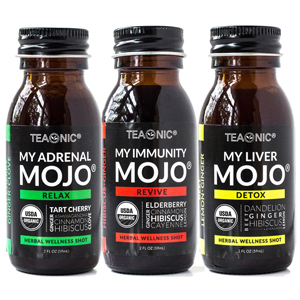
[00:20:07] Ray Latif: Also, a big thanks to the folks from Teonic, which is a maker of functional herbal beverages and shots. They sent us a bunch of their wellness shots, which are called Mojo shots. There's a variety called My Adrenal Mojo, My Brain Mojo, and My Gut Mojo. They've been great for me. I love the shot category, and I love what Teonic is doing with these functional wellness shots. You know, relax, clear mind, digestion. I mean, that's exactly what I need in this day and age.
[00:20:36] Whole Foods: Can't beat digestion.
[00:20:38] Ray Latif: I was just going to say, can't beat digestion. All right, it's time to get to our featured interview for this episode. That's with Lee Robinson, the Director of Dairy and Beverage for Whole Foods Market. A long-time veteran and key decision-maker at the natural retail giant, Lee held a variety of positions at Whole Foods before taking on his current role in September of 2017. As part of an expansive interview, Lee discussed best practices for working with and developing long-lasting relationships with retail buyers, why he urges entrepreneurs to be transparent about their business and innovation strategies, and how he evaluates disruptive concepts. He also offers his perspective on the future of plant-based food and shared his advice on how new brand owners should set expectations for buyer communication and meetings amid the current crisis. One important note on that last point, Lee asked entrepreneurs and brand executives to please not send samples into the Whole Foods market offices unless you have a range with your specific category manager, buyer, or forager. Whole Foods will communicate when they're openly accepting samples again. Now, let's start this fantastic and highly informative conversation. Hey folks, it's Ray with Taste Radio. I'm going to call right now with Lee Robinson, the Director of Dairy and Beverage for Whole Foods Market. Lee, how are you? I'm great, Ray. How are you? I'm pretty good. I'm pretty good. I can only imagine how crazy it's been on your end, at least for the last seven or eight weeks. It's been quite the whirlwind for sure. But we're happy to be supporting everyone our team members and customers and their health. It's our number one priority. Well, thank you for everything you're doing. As many people have noted, our grocery stores and those that work in the grocery stores are on the front lines of the crisis. And it's just invaluable what you guys are doing. And I know I'm still using Whole Foods on a regular basis, and it's really helped my family. So thank you very much for that. You know, today we're going to be talking a lot about how brands and entrepreneurs can work with Whole Foods to develop a strong relationship with the retailer and other retailers as well. Let's start talking about your role. Tell me a little bit about yourself and how you got involved with Whole Foods. Sure. So actually, it's a good question. I even internally, I like to ask people like, Hey, what's your Whole Foods story? And you know, everyone's got like a really unique path through the company and comes from it with different angles. So my Whole Foods story, I walked into a store in 2007 in Pittsburgh, Pennsylvania. looking for a job, and I was coming from the restaurant industry, so my skill set was really cooking, and I actually started in prepared foods at that Whole Foods in Pittsburgh. At the time, it was the only one in Pittsburgh. Now there are three, with discussions and plans for others. So I started cooking in prepared foods in that store in Pittsburgh, really fell in love with the culture, and got my first taste of kind of what the company was all about. It's kind of hard to ignore, but when you walk into a store, it's got the core values posted up in the stores, and that's alive and well in every store that you work in. And it's just amazing to kind of see how that comes alive and how team members interact with their business and their products and customers. So I did that for a while. And while I really enjoyed it, the next steps for my career development were things that I wasn't as interested in at the time. And I thought that I wanted to get a little bit more in the analytical side of things. So I left the company actually, and I went to work for Dick's Sporting Goods at the headquarters in Pittsburgh, Pennsylvania. I did that for about four years, and I worked in a couple different areas in omni-channel merchandising. So I started in e-com, actually on the golf side of the business. And I was doing a large swath of business that covered golf apparel, footwear, soft goods, and consumable products. And then made the transition eventually over to both Ecom and Brick and Mortar, and was helping to run some businesses there. And then ultimately, I moved over to the bike world at Dick's. And that really resonated with me as an avid cyclist. I still am to this day. I race bikes a lot of seasons out of the year and really wanted to see what that world was all about. You know, even though bikes may not be what you would think of as far as Dick's Sporting Goods goes, but like it was an interest and a passion. So it was really cool. I got to live and breathe that industry for a while. Then I kind of had some life changes come up and my partner Emily was moving to DC for grad school. And I went with her and also knew that there was a office in the DC area for Whole Foods, the Mid-Atlantic office. And so I kind of sat patiently and targeted that for a while and really wanted to make that happen. And something opened up on the grocery team there. So I got a got a job as a buyer there in the Mid-Atlantic office as an associate buyer and took a couple steps up the ladder and was managing dairy and beverage business for the Mid-Atlantic region. I absolutely loved it and it was really great to be back with the culture and supporting that from a different level. So it was pretty cool to connect the experience I had from the in-store level, albeit on a different team, not on grocery, but then from the regional level. And I thought back a lot on my time in store. It's little things. I can remember the dairy buyer in the Pittsburgh store. His name was Brandon. This was right when Fahey yogurt was coming out and was really big. And the individual team member passion around products was so cool. And he was so stoked on Fahey before that was the big wave of Greek yogurt that it was. So that was the sort of thing that it was cool to be at the regional level and really support that, not just with bigger national brands, but also with the smaller local brands that we work with. Whether that be Harrisburg Dairies or any other smaller dairy brands, it was great to support the operations and purchasing side of things. So about four years ago, some opportunities opened up in Austin, Texas here at the headquarters. And I felt like the skill set I had gained from Dix, which was a really rigorous model of category management, taught me quite a bit that I could offer to the things that we were trying to do and evolve as a company at Whole Foods. And so I was able to get that position and took a move down here to Austin and started at the very beginning of what we're calling the merchandising evolution. which is really propelling and adapting to the changing landscape of natural and organic foods. So when I landed here in Austin, I started on frozen desk. I worked about half of the frozen categories for a while and then moved over to dairy. So I was kind of back in another wheelhouse of dairy and frozen and served as a dairy category manager on yogurt, milk, eggs, several other categories for a while. And a few years ago, I started to take the position to lead the dairy and beverage team here. So, hoping to lead the team that oversees all the business for the company on the global side of brands. That sounds like a pretty significant job and role you have. And I'm curious because for someone in your position, I'm assuming that industry trends, news, data are critical for your ability to effectively manage dairy and beverage, the two areas of focus for your role. You know, how do you read and interpret industry news and content, including what you might see on BevNET, Nosh, and even Taste Radio? Yeah, yeah, for sure. You know, I've always liked to think of category management And not even just on the retailer side, not just the buyer, but I think everyone involved, it's almost like a mystery. Like you're trying to understand what's next or like you're looking for clues and they can come in all different forms. And I think that was super exciting is that, sure, you can read a lot of industry news and pick up on trends and that can be extremely important. And I think it's really important to understand what's getting substantiated by you know, really valuable media outputs and outlets such as Nosh, Taste Radio, and lots of others out there who kind of help to build trends. But, you know, it's the one-on-one conversations. It's the meetings that We Have. It's a little bit more of like the informal side. can end up being extremely valuable. You could have a one-off conversation with someone that maybe sits just outside their sales pitch. And they can tell you about some of the things that are really perking their ears. And that may or may not even be in the specific segment that they're doing business in. But like, it's like, okay, so you just picked up another clue. And like, does that attach to anything else? Like, we're talking about plant based? Are we talking about cleaner ingredient decks or like a new exciting protein? Or, you know, is that something that can translate across different form factors and different products? Maybe, you know, if we work with someone, we could make this new trend, live and breathe in a new area. And so that's a, that's always been the fun journey. Since you brought it up, Taste Radio, I am an avid listener, avid fan. Although I must admit, it's tough right now without the computes because I got so much of my listening done in the car. So it's sad to say it's not as consistent as it was before. But I particularly love the show because I think, you know, from the position that we frequently sit in on the retail side, we get so many sales pitches and that's great. That's part of it. Enjoy those mostly, right? That's all good stuff. But you don't always get the other side of it. And I really enjoy that about the show that you get sort of like a layer deeper, and you get to hear about someone's passions or the backstory. And so there's always like, just a couple more details that get that ball that are super interesting. Well, as they say, Lee, the check is in the mail. Thank you very much for saying all that about Taste Radio. Glad to support Ray. And I hear you on the commute. We've encouraged folks to perhaps go for a jog or a bike ride and listen while you're doing that type of physical activity. But yeah, hopefully we'll be back in our cars sooner than later. Or I don't know, is that a good thing? I think it's been good for the environment in some ways that We Have't been driving as much. I think you're right. Many of the stuff published around the cut down of emissions and all that sort of stuff, it is pretty fascinating how it's changed. Totally. Well, for many of the brands that we featured on Taste Radio, a lot of them started out in Whole Foods. And we get questions all the time about, okay, you know, how do I get into Whole Foods? Or how do I get into this particular retailer? How do I work with the buyer on the other side? And, you know, a lot of What I wanted to talk about today was sort of peeling back the onion, so to speak, in terms of how to have those relationships, how to have those effective relationships. And you and I have talked in the past a few different times about this very subject and how to work with buyers. There are a few things that you mentioned in particular that can lead to fruitful and effective relationships for both parties. The number one question we get is, how do I get a meeting with a buyer? You know, people will say, okay, I've called, I've walked into the store, I've emailed, I've left products at the store and I still can't get a meeting. You know, I would say that there are, it's not hard to land something in someone's inbox or a sample in an office? And I don't think everyone's gonna love to hear this answer, but like we're getting that correspondence. We're getting the sample. We Have visibility to it. It's not from a lack of communication. We frequently kind of revisit this and we say, is anyone having trouble getting ahold of us? And we say, no, that really doesn't feel like it. That's usually not the issue. I think the issue, of course, that you're asking about is how do they get the response that they want? And there are so many different ways that sometimes this happens. There can be something that's just hot and someone is tracking, meaning a category manager is saying, Yeah, I've been following that brand. I like what they're doing. I'm watching. And you may not actually have heard from that buyer. even though they know who you are, they know your brand, they're watching. Maybe it's someone that you're just starting to do business with Whole Foods. Maybe it could be in one or two regions. And they're thinking, how do I get a meeting with the global category manager? And believe it or not, We Have a team that is... They're watching. They're taking a look at all this stuff. And so they're tracking to it. Sometimes it does work through email. You know, I understand that can be an easy way and you say, I don't get the response I want or I'm not getting a response at all. Hopefully that's not the case. I know our team's pretty good at getting back to everyone. If I could just give a pointer on tone and something I'll probably touch a lot, touch upon a lot here is really, you know, a sincere tone in how you approach it. The team gets so many sales pitches and if you send a blanket can sales pitch, If you grab someone on a trade show floor and you just start blurting out everything that you do with everyone else, while sometimes that information can be exactly what they hear, I would say, or what they want to hear, you know, more often than not, what they're really looking for is, how do I work with this person? Is there an authentic relationship? Do they have a great product? Do I feel like we can actually have a two-way street dialogue that can turn into something really great? And so I think that the pointer back is just be sincere, be authentic in how you're coming to the table and what you really have to offer. And that actually can be enough to engage someone in a conversation. I'd say that's pretty great advice. I can imagine that you've had long term relationships with entrepreneurs from many brands for many years. How do you navigate the terms of a successful relationship? I think there are a couple different ways to look at that. And it kind of depends on how the brand evolves with the business. So success could be something as simple as the product, the brand that you carry that you're that we're carrying and you sell to Whole Foods. is something that really works for our customers. And it doesn't need to grow a lot. Not everyone wants to hear that, right? But sometimes that's the truth. And things can kind of hum along and be kind of status quo. And dare I say, the relationship is a little transactional, but maybe it doesn't need to grow beyond that. That can be really successful. And I think it can be hard for brands and suppliers to hear that sometimes because it's Everyone always wants to grow. And how do I get bigger? How do I get more line extensions? Sometimes it's actually a blessing in disguise that you're not growing. There are times when a brand can grow too quickly and overextend themselves. And it doesn't always feel like it, but Whole Foods retailer could actually have the best interest in mind for that brand. So there's a successful piece there where it could just be status quo business. Of course, it's going to change. Everything always changes. There's status quo doesn't usually last very long because things just move quickly. But I would say like when you get into a little bit more of an elevated relationship, you start to break beyond that transactional relationship. And I think what's interesting is that there is absolutely a level of trust. And you don't really get that until you're vulnerable. And when you show your vulnerability, and this is two ways sometimes, right? Like, there's that trust that can then be built.
[00:37:33] SPEAKER_??: So
[00:37:34] Ray Latif: Brands may want to know, well, how do I plan out further with my retailer, with Whole Foods? How do I do this so that it actually becomes a longer term relationship I can count on? And that's when you need to get away from that sort of just one-off transactional piece and actually share something. What are your intentions? So what's your strategy? What's your plan with your channel strategy? If a brand keeps their cards too close to their chest and doesn't share that, then there's that sort of lack of trust built. And again, sometimes that's okay, if that's the relationship that can have a healthy place in the assortment as well in the category. But if you want to kind of go beyond that, and you kind of got to read the signs from ourselves, from the buyer and have them come back to you and kind of share a little bit about what they're trying to do with the category. And you can kind of, this is the tough part, you got to take an honest look at each other and say, are we trying to go the same direction? And if you are, great, then you should be able to do some really great things. If you're not, you got to have an honest discussion around, can we reconcile any differences? And of course, you'll enter into some sort of negotiation, right? And so it could be around channel strategy, exclusivity, et cetera. You know, you want to know kind of where they can expect, where we can expect the brand to take the business and what's that going to go and do in the future. And that will greatly improve that relationship because then you can both navigate that together.
[00:39:10] Office Hours: Do you want more repeat buyers on Amazon? Well, this free resource in collaboration with Straight Up Growth will help your brand turn first-time buyers into long-term subscribers. Download Winning the Repeat Purchase Game on Amazon now at Taste Radio slash SUG. That's Taste Radio slash S-U-G to start building retention-driven growth for your brand on Amazon. Scaling a beverage brand into major retail comes down to operational readiness. From packaging lead times to co-manufacturing strategy, the details can make or break a launch. In a new e-book in collaboration with Octopi and Asahi Beer USA, industry leaders share what they've learned in helping brands scale. Download it now at Taste Radio slash octopi. Do you need to scale your team faster without compromising on talent? Join Oceans for a live webinar on April 20th and learn how leading companies are hiring top global professionals who are ready to grow with your business. Register for the webinar now at Taste Radio slash oceans. That's Taste Radio slash oceans.
[00:40:21] Ray Latif: I imagine that innovation is a big part of that discussion as well. A lot of times I'll hear brands that want to, you know, hold their cards close to the chest when it comes to what's next for the brand in terms of brand extensions or line extensions. Are you recommending that they be more upfront with their retail partners about what's next? I would say you got to read that relationship with your buyer and category manager. Generally, that'll be something that we'll approach you about. We might sit down and say, hey, we want to devote some time strictly to talking about what's next, right? And we want to understand where you're going. It might be the case where you could be sitting in a meeting for a category review, and you show your card, so to speak, and you say, hey, here's where we're going. And you kind of got to judge the reaction from the category manager. And I think this is actually where that honesty can be really helpful. It's hard to do sometimes, but Sometimes the brands need to say, is this something you want to do with us? And sometimes that's not always how it's put out there. Sometimes it's where you buy what I'm selling, you know, sort of thing. And it's like, no, this is actually like, if we're going to do this together, like just ask that question. I know that can be really tough. But I think that like that kind of brutal honesty goes a long way. I don't know if you've ever seen the motorcycle diaries. But there's this really great scene where Che Guevara and his counterpart, I can't remember his friend's name, but they're leaving their host's house, and they're talking about this book that the host wrote, and he asked them how it was. And the first guy goes, he's like, it's great, it's amazing, it's one of the best books I've ever read. And then Che jumps in and he's like, um, it's bad. It's really terrible. You should take your day job. And it's not for you. And the guy is super thankful, right? Because he's like, well, now I know. Now I know what I'm supposed to do. Finally, someone told me. And I actually think that there's a parallel there. The more you guys like between a buyer, a category manager and a brand, you can just kind of say, where do we stand? That can be super helpful and beneficial to both parties. Being brutally honest and hearing brutally honest feedback is critical for an entrepreneur to develop that thick skin to get them to what it takes to be successful. But sometimes entrepreneurs aren't willing to hear brutal honesty. Sometimes they're just going to go ahead and do what they want to do. And that includes perhaps saying no to a request from a retailer. How do you do that gracefully, though? How do you do that in a way that maintains that relationship that you were talking about? I actually think you could almost flip it around and say, if a category manager, if myself, were to say no to your product, what's the response that the brand would want back? And I think if you kind of take it all down to the bare bones, what you really want to know is, well, why not? Like, what's the real reason why? And so I think to answer your first question about that, it's like, how do you say no? It's like, well, we would actually kind of ask the same, like, you know, if we, if we put a request out there to, I don't know, support a promotion or how to co-develop or do an exclusive on a product and the answer's no, all that can be made is an assumption because you don't have all the information. But if there's some transparency there and it's, Well, here's what we had in mind. Maybe it's out of our financial capacity right now and we can't support it and it's going to overspend. Of course, we want you to lean in with us. That's generally one of the requests. But having an understanding of why, and then thinking longer term, okay, so then what else can we do? If this isn't the thing that can happen right now, now I understand why. And actually, go back to that mystery, pick up a clue type of thing. If it's like, well, we're not so sure we can get a secure line with our co-packer and we think it's going to be a problem. Like oh well actually maybe we should have a discussion about something else then and talk through what just day-to-day supply chain looks like. So I think that that kind of goes back to that vulnerability and trust like If you kind of come back to it and tell the truth, you're both off in a better place understanding a little bit more about how the relationship stands and what the next steps are. That stuff has a way of kind of coming back to you anyway. Yes. Yes, it does. I've seen brands grow at Whole Foods from being, you know, the tiniest, most local brand into one that is sold nationally in all of your stores. Sometimes that brand will start out as part of your local retail program. And we get questions about, you know, how do I get involved with those local retail programs? You know, what's the best way for brands to take advantage of those kinds of opportunities? We Have a really fantastic team of regional buyers and local foragers that is unparalleled in the industry, honestly. And I feel very fortunate to all be part of the same team that does that work. There is a really simple email alias. I know this is like table stakes, but WFMLocalatWholeFoods.com. We'll set that person off on the right path, the brand. And the local forger will see that for the respective region that you sell and make your goods in. And, you know, you're right. Sometimes those concepts start really small. And what's cool about that, and it's still, it's the same reason that I joined the company and why I came back when I think through some of those scenarios that happened in. 2008, 2009, and what I helped facilitate at the Mid-Atlantic Regional Office. And even now, the story is similar. And it's really incredible because there can be a small local brand that started in a few stores and started to gain traction. Maybe they didn't have all the pieces and parts put together of how to scale as a company. But with the perseverance, they were able to understand where they needed to grow. And that's one of the most amazing things about what's been happening in the industry, what we do at Whole Foods, what I've been lucky to be a part of for a long time, is watching not just products be successful, but watch people be successful and watch people grow and learn what they thought they knew that they didn't know. and who to bring on board to help support the things that they didn't know and how to build a team out and potentially how to get out of the way of that new team that they just created to really elevate the brand. That whole evolution is just fascinating and it's a narrative I never get tired of. That local network that We Have is the gateway to that. And so brands can start in a couple stores, they can reach out and they can get in touch with their regional offices and make it happen. Of course, you've got to do all the right things. You're going to do the things you probably naturally would. You're going to do demos. You're going to promote when it makes sense, even when you don't understand what a trade budget is yet at that point. And you're going to work and listen to everyone you talk to about formulations and packaging, and get that consulting advice and really take it to heart. And it can be a really cool thing. Is it a good idea for brand owners and entrepreneurs to maybe nudge or needle their forger partners to get perhaps a meeting with a regional buyer or a global buyer like yourself? I don't think it hurts to tactfully show the success of your products, but you got to be realistic about what that means. There's a distinct disconnect at times between brands when absolute growth as a rate, as a percentage, versus an index against the category average, or even in a more mature light, how they're adding something incremental to the category. So while I think that can work really well, just showing 300% growth is not going to get you where you need to be. Being smart about how you're pointing out why it's successful can absolutely help you. So if you're saying we are actually offering something new in the category and it may not be holding quite average with the total category average but it's humming along just below that and we think that's pretty impressive. What do you think? that can be a much more productive dialogue. And so I would encourage that sort of behavior, but also understanding that sending that same email two to three times a week, even weekly, is more than needed. And just be patient when you put that information in the right people's hands. That was tactfully said, Lee. Well done. You know, bringing something different to the category. Everyone always says, I think I'm bringing something different. I have a disruptive concept. My thing is totally new. It's going to completely change this entire category. Nay, the entire food and beverage industry. Yeah, we've heard that a few times. So disruptive. I want to, I want to home in on that word. How do you define or identify a disruptive concept? Oh, man. How long is this interview? Because We Have a lot to talk about. You know what? We're digital. We can record for hours. Well, identifying it up front is always tough. You can take a couple different angles at it. I mean, you can look at it and say, Wow, that is a concept I have never seen before. And that could mean it's a really great concept or a really terrible concept. And sometimes terrible ones at first seemingly terrible or not very plausible end up being quite successful. Or sometimes something will make waves at first and then just kind of sit quietly on the shelf. That actually is probably one of the paths I find to be super interesting. there can be products out there that have been introduced to the market. Maybe you thought, eh, I don't know, it's not so hot. We'll see if it does okay, kind of throw it out there. And it kind of incubates. And it can actually be that the product wasn't as disruptive as it ends up being in the long haul, because maybe the customer base wasn't ready for it. Maybe the media trend wasn't there. Maybe sort of the a special ingredient diet, that couldn't have been the flavor of the day. But when it comes along and that brand is ready, they might actually have a leg up on someone else who's trying to enter the market later. And it could be a day late and a dollar short for someone who's trying to capitalize on something that's already got a groundswell. So it's always pretty fascinating to see how that happens. There are other trends that hit the market like a big bang, right? I mean, we've seen it. Oat clearly has made a big stance, and you can just see that by the sheer number of products that contain it now. So sometimes that works. Sometimes that inspiration comes from another part of the global market that maybe the domestic US didn't really tap into. There might be other things that can seem disruptive because they don't have a big presence here. But when you peel back a little bit of the data, maybe there's an analogous product that they'll hear in the domestic US that maybe they don't sell overseas. And so what seems disruptive when you bring it here already has a replacement need state. And so it actually doesn't really scratch that itch. So there's all sorts of different ways to approach it. It's hard to tell. I mean, obviously, we stay out front and we like to take chances and risks and support emerging trends. And that's worked very well for us. But There's always going to be some chances that you take that don't pan out. Sometimes packaging is the most disruptive part of a brand. You know, it might be a product or a brand that exists in a legacy category, but somehow the packaging is so striking and so standout that it disrupts the shelf. At the same time, there can be some packaging that goes a little too far. You know, what are some forgivable mistakes when it comes to package design and branding? Forgivable, so to speak, although it makes it sound like it's up for judgment, I guess it is, but forgivable would be when a brand is genuinely trying to stretch their boundaries and they're testing the waters to see how far can we take this brand We really think that it can exist in another segment. And of course, that comes with strings attached to form factor and supply chain and ingredient sourcing, all sorts of deficiencies. But if we ignore all that, and we're just talking about someone's trying to maybe breathe some new life into their brand with new packaging. It's a fine line between being able to walk that walk versus abandoning your brand pillars. And If you look at your package, and you don't think that the customer could repeat back to you what your brand's all about, then you probably went too far. And that's a pretty tough thing to come to terms with or even wrap your head around sometimes. But I think that that actually harkens back to just how strong is your brand strategy? And how does that actually show up? Do you know your top three to four attributes that your brand is going to stand for? And when you start to stray and become something that you're not, that can be pretty deadly. Of course, there are exceptions to that, and sometimes it really works. But I would say that that can frequently be something that can be tough to rebound from, or at least maybe just not all that successful and somewhat of a costly learning. A brand that I think has done quite well with their branding and packaging is Oatly. And as you mentioned, you know, the oat category and particularly the oatmeal category has just exploded in recent months. I think we could look at the overarching shift or the overarching trend of plant-based foods as supporting the development of oat milk. I'm interested to hear what you think the next evolution of plant-based food will look like. I think it can be really important for different segments to kind of take a look, different movements, take a look at themselves and say, what got us here won't get us there. Meaning the legacy products that plant-based built the category on that kind of stayed stagnant for a little bit, right? And didn't really have that explosive new customer adoption are pretty different from what's on the shelf now. That's a pretty good example of that, right? Like what got, you know, this whole plant-based movement to where it is now is not what started it. So if you think about using that model, what's that look like in the future? You almost can't answer that question without identifying your true audience, though. And thinking about the size of the customer base and who would need to adopt it to really continue to build it. And for many of the brands that actually support their mission statement on an environmental basis, if that's what they're going for, they need that mass appeal. And there are a couple of things that come with that. But number one is always flavor. Flavor's king. I mean, we hear it all the time, right? Like if the beverage isn't good, if the product doesn't taste good, if it's not a good experience, then it's not going to catch on. That's never going to go away. There are only so many people out there that will eat a product strictly for their attributes without taking flavor into a higher consideration set. So if you think of it that way, of course, flavor is always going to be important. There will, of course, be an analog to the real deal if that's what you're going for. Not everyone wants to necessarily do that. So the plant-based proteins, the new wave of stuff that's come through, there's a large audience of people that really enjoy that. There's also a large audience that doesn't, and there's kind of different schools of thought. But again, it's kind of going back to who's your target audience for that product. I would say probably what we will see, clean ingredient decks are important, but that's also probably more prevalent in the natural and organic industry. Process products, I think it's a little TBD, honestly. There's a lot of customers that I think might be crossing over who right now that's maybe not as important to them, but where that threshold sits is kind of unknown. And it's still being tested and the boundaries are being pushed to really understand how far can it go before people are uncomfortable with it. And so what's that look like? And it's always an interesting sort of evolution is just how far is too far. So those are some things that I think we'll be on the lookout for. Along those lines, I'd love to hear your thoughts on just general channel strategy, where brands have a license to sell. And this is not just specific to plant-based brands. This is for all brands. I mean, what advice do you have for entrepreneurs about how to formulate their channel strategy? I think one of the biggest missteps that we've seen everyone's seeing in the industry is when the intentions aren't set early and growth is growth and points of distribution are gained at a clip that is just too fast for the brand to catch up with. That's one-on-one, right? So like it's kind of a rookie mistake. If you, great, you got an interested buyer, go for it. If you have the capacity, right? And then if you don't, if you scramble to figure it out, chances are you probably won't be very successful. You're just not going to be able to scale that quickly. Your team probably doesn't have the skill set to be able to do it. You probably don't as a founder, or maybe if you have a CEO, they may not have been through that before and understand the channels. So just one-on-one first step there, you got to understand the pitfalls of what that looks like. But as you go through that, it kind of comes back to that brand strategy and knowing your audience. there are a lot of ways you can approach that. I do enjoy in an academic way, I will say, some of the ways that food service has come into play. I think it's pretty interesting to test the products, spend some time incubating, having the flexibility to formulate, getting some of the details fine-tuned. We've certainly seen that be pretty successful, and it's also a really great way to get trial out It's a great way to do some of the biggest demos you can possibly do. So that can be a pretty powerful vehicle. But when you talk about actually setting your intentions for brick and mortar retail strategy, channel strategy, you do need to be really careful about who you're going for. And that's not just right off the bat. If you're a natural and organic focused product and that's who your customer is, happen to be biased. We feel very strongly that We Have that customer and we know We Have an extremely engaged customer at Whole Foods that can help grow your brand and help substantiate what you're doing. That's a really great way for that to get cracked open. You might look at your product and say, No, that's not what we're going for. You know, this is a conventional and a C store sort of beverage or whatever. And, you know, we need to be DSD and you're not going to go any other way. That's a whole different ball of wax. But if you know that going into it, then you're not going to necessarily make some of those mistakes of going too far too fast and not really thinking through everything. On top of all that, though, got to understand what your trajectory looks like. So of course your goal is probably to grow and to what extent you kind of want to have that in mind. So you almost want to ask yourself how big do we possibly want to get right. If we're comfortable capping off at $500 million revenue. Where does that put us? Do we want to go way bigger than that? Where does that put us? Or maybe you want to be much smaller than that. And that's a really great and admirable thing to do. And I think it's a really comforting thing actually to know your limits and to know, no, I don't... Maybe personally, you don't want to live your life like that. Maybe you don't want to run that big of a company and you think that you can sit comfortably at a much smaller total revenue amount. So you can kind of use that and then fill in the gaps of where your channel strategy grows and what the stages look like, the capital you need to take on to get there, all hugely important things. Of course, similar to our other conversations, Ray, that comes back to helping us understand that also helps us understand how we can grow together. And so it's a lot better if we actually understand Yeah, in two years, I want to be, you know, X thousand points distribution. And here's here's the goal. Like, oh, OK, that's a different conversation we're having now. You know, maybe we need to approach things a little bit differently, but that can be super helpful for everyone involved. So over the past month, we've been doing something called a virtual mailbag as part of our Taste Radio Insider banter. And I mentioned one of the biggest questions we always get is, you know, how do I land a meeting with a buyer at Whole Foods or another retailer? And along the same lines, this is a question we've gotten so many times, which is, you know, given the current circumstances, you know, what should be, what should my expectations be for getting in touch with someone or getting a call back or an email back or getting a meeting amid the current crisis? Do you have an answer for that? First and foremost, safety of our team members and customers is our number one priority. So everything that we're doing right now is through the lens of that. We are still looking towards the future. understanding and hopeful that we will find ourselves in a better place, which we will. And when we're there, we know that we're going to have to have gotten some work done in the meantime. So we are looking at current category review calendars. They are on schedule. We are moving forward. There's still that conversation you have with your category manager, with your buyer. You can ask them and see what's going on with the projects that maybe you've been working on together. It's important to understand some of that work that you have done together and understand just how that's shaping up. At the same time, be mindful and understand that, of course, there are lots of other things, primarily on the operational front, that are center plate and everyone's hyper focused on. So I think that's my best piece of advice is just When you can, in a respectful and tactful way, have that conversation or a gentle email exchange. I wouldn't get impatient on it, but just know that it's something we are thinking about as well. And so I'll get back to you when they can. But of course, there are other things going on right now that we're focused on. Brian Rudolph, who appeared on our podcast a couple of years ago, gave a nice piece of advice or what I consider to be a nice piece of advice for entrepreneurs, which is to be polite, but be relentless. I don't know if you'd agree with that. I totally get it. I might say I use polite perseverance, but I get the tone of it. I totally see that. But yeah, I would agree. Indeed. Lee, you know, you and I were scheduled to sit down at Expo West to record this conversation. And unfortunately, we couldn't make that happen. But I, you know, a million thanks for taking the time out of what I assume is an extremely busy schedule for you right now to chat. And I think this is going to be one of the most impactful interviews that We Have ever featured on Taste Radio. So thank you so, so much for this. And please stay in touch. I know you will, as will I, because it's so great to talk to you now and always. Yeah, same thing, Ray. Really appreciate your patience as we Clearly had to pivot a couple times, but I'm really happy to take part of this and just be involved. So glad to spend some time together. Talk soon. Yes, indeed. Thank you so much again. Okay. Thanks, Ray. That brings us to the end of episode 82 of Taste Radio Insider. Thank you so much for listening, and thanks for our guest, Lee Robinson. Please subscribe to Taste Radio on the Apple Podcasts app, Spotify, Stitcher, or Google Podcasts. As always, for questions, comments, ideas for future podcasts, please send us an email to askattasteradio.com. On behalf of the entire Taste Radio team, thank you for listening, and we'll talk to you next time.
[01:06:39] Lee Robinson: Hello, I am Melissa Traverse here for the Taste Radio podcast, talking about some of the biggest tension points that CPG brands and founders face when they're scaling a brand, and those are financial accounting and inventory management. I am joined by Matt Lynn, inventory accounting guru from Belay Solutions, and he is going to shed some light on all of this that is going to help everybody out quite a bit. Matt, thank you so much for joining us today.
[01:07:09] Debuts Next: Thank you for having us, Melissa. It's great to be out here at Expo West and it's great to sit down and be able to chat this because it's kind of a passion project of ours, working mainly with CPG brands and hoping to help them scale.
[01:07:20] Lee Robinson: It's been such a pleasure chatting with you and the team and learning all about what you do over there at Belay Solutions. Can you tell us a little bit about yourself and what your role is and the kinds of solutions that Belay gives to CPG brands and founders?
[01:07:36] Debuts Next: Yeah, absolutely. My role with Belay, I'm actually our inventory accounting manager. I run our inventory department, so we work with CPG brands, taking them from spreadsheets, putting them on inventory management systems, and really helping connect their tech stack between their sales online marketplaces to that inventory management system, even down to their financial systems like QuickBooks. Belay overall is kind of an outsourced accounting firm. And with that, we're helping teams. We Have different levels with bookkeeping, controller level work, even high level into CFO type items. So we really help those brands in any way that they need financially. And then I just have a subset of a department where we're really just laser focused on inventory.
[01:08:19] Lee Robinson: It's certainly a complex topic and there are plenty of places to go wrong. Let's start by going right and start super simple. Can you tell us what some of the biggest red flags are that would help a founder understand or, you know, the person running a brand understand that it really is time to get some help with some of these areas?
[01:08:39] Debuts Next: 3 3 3 They have a lot of transactions that don't get coded or they just put them into placeholders to just get rid of it so it's not an eyesore. They'll notice they have revenue but no cash or they notice that they have a good amount of cash but their blind spot is really seeing the vendor invoices that are sitting there just needing to be paid. And so they just lack that clarity that's going to really be around the corner.
[01:09:17] Lee Robinson: You know, you were talking about one of the red flags that comes up that I think makes so much sense. When somebody asks you what your numbers are and you can't come up with the right number, that's a big problem because that's something that you really should be able to share with decision makers who, you know, you're ideally looking to do business with. What should you be able to call up at a moment's notice?
[01:09:41] Debuts Next: really at any time you should be able to know an accurate margin. It's amazing how many founders we end up talking to that they can tell you their revenue numbers, they can tell you their selling price, and then the minute you start talking about cost or their cost of goods sold, they just get a deer in headlights look. So really it's very hard to tell, am I even making money? Or if you don't know your entire landed cost. Maybe you know what the freight cost is, the duties separately, but you're not really getting that as part of your unit cost. So it's really hard to tell. Am I even making money or am I losing money from the very beginning?
[01:10:14] Lee Robinson: And do you recommend that founders are able to call up a margin by channel?
[01:10:19] Debuts Next: Absolutely. And depending on the number of products and channels, you kind of want to know what are your best sellers, which ones are making the most and which ones maybe you're not making as much. But especially if you're branching out and you're doing D to C with B to B, absolutely want to know that.
[01:10:36] Lee Robinson: Gotcha. You mentioned that when things feel really chaotic, that's probably a red flag. I would say that it probably almost always feels chaotic if you're running a CBD brand. And I know this may be hard to quantify, but is there a revenue number? Is there a number of doors number that would help a brand understand whether or not it makes sense to bring on a partner like Belay? Understanding that so many brands are bootstrapped or they might be tight for cash. What is that friction point?
[01:11:06] Debuts Next: 3 3 3 3 3 But as you're growing, as you're getting to those six-figure revenue numbers, and especially as you're approaching seven, you want to make sure you've got good financials. Because as you scale to that point, most likely you're going to be looking to raise capital. And investors, the first thing they're going to look at is your books. And are they clean? And do they show a clear picture of your business?
[01:11:39] Lee Robinson: You know, another area that folks might look to to organize some of the chaos are their systems. So many folks stick with Excel spreadsheets for a good amount of time. How do you know that you need to outsource some of your accounting to an organization like Belay Solutions versus maybe signing on to a Synth7 or NetSuite or something like that?
[01:12:01] Debuts Next: Well, that's actually something we really help with when it comes to that cost question. That's something that trips people up. And sometimes if you just have a turnkey business, you buy and sell a finished good, you can maintain with spreadsheets. And we've had clients with million dollar revenue that can do that. But we see so many brands nowadays are using contract manufacturers. and they're just sourcing certain parts of their product. So when you start talking costs, they have no idea exactly what their unit cost is. So that's where we come in and we kind of understand, we'll speak with the customers and the clients and get their needs. And then if we think they're ready for a system, then we'll help put them on that system so they can get some of that clarity. And it's not something we force on anybody. There are plenty of times where founders come to us and we'll tell them bluntly, you're not ready for it right now, but we'll let you know when we think you are.
[01:12:47] Lee Robinson: That sounds like excellent advice. What should a founder or somebody running a brand look for in an outsourced accounting partner? Are there certain checklist items that they should make sure that their partner be able to execute or be able to help them understand?
[01:13:04] Debuts Next: Absolutely. I think one of the keys there's, there's a lot of outsourced accounting firms out there. Some focus on service-based SaaS companies, but if you're a CPG founder, you really want to make sure that your accounting firm has CPG experience. I would ask them, you know, what kind of brands have they worked with? And even beyond that industry specific, because there's so many subsets of CPG. And that's something that I think is great about what we do with Belay is that we kind of run the gamut. It's kind of like the insurance commercial. We know a thing or two because we've seen a thing or two across a broad spectrum.
[01:13:34] Lee Robinson: Probably getting references is always helpful, right? Absolutely. All right. So this all sounds great. I think We Have a really good understanding of would it make sense to hire an outsourced partner? You know, what some of the things you should be looking for are. What does offloading this kind of work mean for the brand? What can this do for lightening the load of a founder or lightening the load of a brand operator? Like, how does that help them in their everyday business?
[01:14:03] Debuts Next: It just tries to really help quiet the chaos. So what we're looking to do is just take some of the weight off that founder's shoulder, let them focus on building the brand, building the business, getting that exposure. If you don't have sales, you really don't have anything. So we want them to be able to focus on that while we take care of your back end Office Hours. And we can just present that to you on a monthly basis, you can help make decisions, you can take that to investors. And really, you can just focus on growing your business.
[01:14:29] Lee Robinson: I feel like I felt founders and the folks who are running brands collectively sigh a breath of relief just hearing that. How can people learn more about Belay Solutions?
[01:14:40] Debuts Next: So people can text TASTE to 55123 for their free inventory guide to get started.
[01:14:45] Lee Robinson: Matt Lin, Inventory Accounting Guru at Belay Solutions. Thank you so much for joining me here at Expo West. It's been such a pleasure to chat with you and learn about what you all do over there to help founders and brands with their financial accounting and inventory management. For everybody else out there, thank you for listening to the Taste Radio podcast. I am Melissa Traverse and we'll see you next time.