[00:00:04] Ray Latif: Hello, and thanks for tuning into episode 83 of Taste Radio Insider. I'm Ray Latif, the editor and producer of Taste Radio, and I'm with my BevNET and Nosh colleagues, Mike Schneider, Melissa Traverse, and Carol Ortenburg. In this episode, we're joined by Jessica Young, the founder and CEO of Bubble, an online marketplace focused on better-for-you and clean-label brands. Just a reminder, if you like what you hear on Taste Radio, please share the podcast with friends and colleagues. And of course, we'd love it if you could review us on the Apple Podcasts app or your listening platform of choice. Everyone's trying to find ways to be entertained when you're home in quarantine. So this weekend, I found a way to be entertained by eating some of these Bean Boozled Jelly Beans. You know those things? So Jelly Belly puts out... Yeah, Jelly Belly, the renowned jelly bean company, a few years back, introduced this new line of products where there are jelly beans that look like their traditional flavors, things like buttered popcorn or toasted marshmallow or juicy pear, but in actuality are grossed out flavors like stink bug, rotten egg, and booger. So they have all these beans in this jar and basically you shake them all up and you could be getting one of their famous flavors like, you know, my favorite's juicy pear, or you could be getting that booger flavor, which looks exactly like a juicy pear. I guess that's one way to be entertained. I wasn't entertained doing it. I was doing it by myself too, which is probably not a really fun thing to do. I think you're supposed to do this with other people. I think it's hilarious. We had those in the office. I think Brad Avery brought them in and was trying to trick people with those. But remember that used to be, originally that was a partnership with the Harry Potter people and it was Bertie Bott's Every Flavor Beans and you were supposed to feel like a wizard eating them, Ray. I didn't feel like a wizard at all. Yeah, no, you are supposed to prank folks with these, I think. You know who reached out to me? I put these on my Instagram feed and Kate Weiler from Drink Simple reached out and she said she participated in one of these Bean Boozled competitions or I don't know what you would call it, Bean Boozled experiments at an Expo East a few years ago and she said it was not pleasant, not a pleasant experience. Yeah, what would the maple flavor one be? What would the Bean Boozled flavor for maple be? A bad maple flavor? Oh, I don't know. Rotten eggs? pine needles or something. Actually, pine needle jelly beans might be good. I don't know. I wouldn't hate that. I like IPAs, you know. Yeah, there you go. I like IPAs. Carol, it's been a while since we've heard or seen from you. How are you doing?
[00:02:47] Jessica Young: I'm doing well. We're just chugging along in Noshland. Lots of exciting news going on.
[00:02:54] Ray Latif: Chugging along, it makes you sound like part of the Brewbound team.
[00:02:57] Jessica Young: Should I say caling, hemping, collagen-ing along?
[00:03:01] Ray Latif: I can pick something much more appropriate. Indeed. Carol, we actually have heard from you. I saw you on video the other day doing an interview with the CEO of Lilly's.
[00:03:12] Jessica Young: Yeah, it was great to catch up with Jane Miller. She's always such an inspiring CEO and how she leads her team and thinks so strategically about, you know, this was supposed to be a really big growth year for the company. But at the same time, if there's a recession, you know, what happens for the chocolate market and how do you kind of plan for two paths for growth? Meanwhile, they launched a new low-sugar chocolate chip cookie into certain Costco regions, and it's exciting to hear during this time about new product launches.
[00:03:44] Ray Latif: It definitely is. I mean, it's a huge part of what we cover on BevNET and Nosh. And speaking with entrepreneurs during our recent Elevator Talk livestream shows, you know, a lot of them talked about wanting to launch or preparing to launch in 2020 and not being able to do so because of the crisis. And, you know, Melissa, you told me that, you know, you've been speaking to entrepreneurs about, you know, how to prepare for when buyers are ready to start reviewing and looking at new products and new brands and adding them to their shelves? Because it doesn't seem like they're doing that right now.
[00:04:18] The Most: Definitely not so much. And it's one of the questions that brands have in the forefront of their minds. And there are a few things that I think would be helpful for brands to keep in mind moving towards a time when Retailer And having those meetings. Besides all of the housekeeping things that we've talked about before, tightening up branding, shoring up your supply chain, focusing on social and social metrics, all that stuff is good. But in addition to all that stuff, being prepared to show relevance, a lot of larger brands are in the process of skewing down and focusing on faster moving inventory. So, brands who are looking to pitch new products should really take a hard look at the space and make sure they're offering something truly unique. This will help them not only with buyers, but also with consumers. So, in an economic downturn, consumers are looking to trade over to private label products, looking for cheaper alternatives, so really making sure that they're offering something truly unique and needed in the space. Also for e-commerce, we've talked plenty about e-commerce, so whether it's Amazon, Jet, Thrive, Hubba, getting really knowledgeable and comfortable with those platforms and the data that they get, so making sure they know how to pull reports, what's a good ad spend so that that sales history will be something that they can truly understand and share with buyers when they are able to secure those meetings.
[00:05:46] Ray Latif: All great points. You know, I would highly recommend folks, I would highly recommend folks listen to every episode of Taste Radio and Taste Radio Insider. But last week's episode, episode 82 of Insider, when we sat down with Lee Robinson, who's the director of dairy and beverage for Whole Foods Market, really outlined how the Retailer And looking at their review schedule For New brands and new products. Lee indicated that they are continuing to assess opportunities to expand their selection, but he urged entrepreneurs not to send in products without having first spoken to a category leader or a forager.
[00:06:27] The Most: Yes, this is probably not the time to be persistently pursuing an email response or phone response three times a week from your buyer. It comes off as a little bit tone deaf, and I think that retailers will have long-term memories for this period of time.
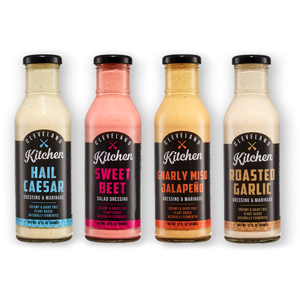
[00:06:43] Jessica Young: That said, you know, we are seeing launches into Whole Foods. Haven'Hu Kitchen and Cleveland Kitchen both launched, I believe, nationwide into Whole Foods over the last two weeks. And we're hearing about resets coming back to Retailer And the next month. And on top of that, was speaking with a distributor who said they're having more calls than ever with new brands. So I think it is a case-by-case basis and really figuring out what's the right tactics for each individual Retailer And distributor.
[00:07:16] Ray Latif: So I think the moral of the story is that where there's a will, there's a way. And you have to keep your pitch fresh. You have to keep your data in front of you. And you're going to have to do your best to project what your results would be in a new normal. Nobody knows what that new normal is going to look like. But remember that Retailer And going to want to see you prepared. They're going to want to know what to expect from you. And so you have to take your best guess at it.
[00:07:41] Jessica Young: I think there's been some great points here, but for more clarity, it also happens to be a topic on next week's Office Hours, which will be about category reviews and resets and new directions for retail. Tune in this coming Tuesday at 3 p.m. Eastern to learn more about that.
[00:07:59] Ray Latif: Of course, Office Hours is For New call-in show. As Carol said, that will be every Tuesday, 3 p.m., hosted by Jeffrey Klineman. 3 p.m. Eastern time for folks listening on the West Coast, that's noon Pacific time.
[00:08:13] Transparent Food: guessing your margins, that's risky. Belay Financial gives CPG brands the clarity to scale smarter, faster, stronger. Get your free inventory ebook by texting TASTE to 55123 and start making data work for you.
[00:08:32] Bubble Approval: Tune in at the end of this episode for an exclusive interview with Matt Lynn of Belay Solutions. He sits down with Melissa Traverse to break down the biggest inventory and accounting mistakes CPG founders often make. You'll learn how to bring clarity to your numbers so you can scale with confidence.
[00:08:50] Ray Latif: You know, it's great to hear that distributors are interested in bringing on new brands and that Retailer And looking at ways to follow through on their resets. You know, a big question remains about how you demo and sample your products. Field marketing just seems to be something that's still a ways away. And just how it's going to work logistically is something that's very much unanswered at this point. I'd love to chat a little bit about ways that brands are attempting to get samples to consumers. The Most visible and obvious way that I've seen it done and done effectively is via free samples or offering free samples on Instagram and just having the recipient pay for shipping. The guys behind Super Coffee did that really effectively last year. when they rolled out their Super Espresso line seemed to work out really well in terms of liquid to lips and just building awareness for that new line.
[00:09:46] The Most: I've certainly heard of a number of brands who are working on sample sizes, bite size products that they can sample in a variety of ways. So that's definitely something that I'm hearing more of.
[00:09:59] Jessica Young: Earlier this week on Nosh, we also covered how some experiential businesses are pivoting to more sampling offerings that can be mailed direct to consumers. For example, office snack company Snack Nation now launched a direct-to-consumer box that employers can send their employees, give them a little work-from-home wellness, I think they're calling it. along with coffee. And then one idea I loved is this company called Hello Mailbox. And so you know how everyone says, let's grab a coffee together. You, if you say that to someone, can through her site, mail them a High Brew coffee can or a bag of coffee beans and literally brew it or crack open the can and have a coffee together. And I was like, that's such a great idea.
[00:10:46] Ray Latif: That's really cool. One of my favorite trends during the pandemic has been to watch the rise of beverage e-commerce. Brands like Revive get online and Better Booch build their experiences along with some of the brands that we've already seen, like the Spudsies of the world who have been doing e-commerce for a while. It's just really been interesting to see how these sites have popped up and how the experiences look really great. If you want to learn more about e-commerce and how to launch your e-commerce experience, you should definitely check out Taste Radio episode 82 with Soylent co-founder John Coogan, who gave us a really great overview of how to do that.
[00:11:25] Jessica Young: And Ray, this might be a teasing me episode, but I assume e-commerce was a big part of the conversation of what you talked to the founder and CEO of Bubble about.
[00:11:35] Ray Latif: Indeed it was. They have a pretty innovative approach to online Retailer And Jessica is extremely well spoken and intelligent about how she's plotting to take on the giants and bring exposure and awareness to a lot of small brands who wouldn't necessarily have it otherwise when it comes to e-com.
[00:11:57] Jessica Young: And she's doing it all with a new puppy that I see on Instagram. Very adorable puppy.
[00:12:03] Ray Latif: The puppy actually appears a couple times during the show. You can barely hear the puppy, but it's there. That's what we needed on Taste Radio, puppies and kittens to increase our ratings.
[00:12:16] The Most: That's really what I needed more of. That's what the world needs now.
[00:12:20] Ray Latif: Well, we've talked a bit about Jessica Young and her company, Bubble, so perhaps it's time to get to our interview. Before we go, Ray, though, I just want to remind our listeners that there's still a chance to get charter member benefits by subscribing to BevNET and Nosh. Visit Taste Radio slash charter member to learn about them. Don't wait. As mentioned at the top of the show, Jessica Young is the CEO and founder of Bubble, a curated e-commerce platform for health-focused and clean label products. Launched in January of 2019, Bubble promotes itself as, quote, The Most Transparent Food marketplace and carries a range of packaged food and beverage brands that must meet a rigorous set of standards, including clean ingredients and commitment to sustainability, to be sold on its site. Bubble currently represents over 180 brands and over 1,000 products and is rapidly expanding its reach amid surges in online shopping and consumer demand for better for you products. In the following interview, I spoke with Jessica about how she drew upon her diverse career experience to create Bubble, how she assessed the opportunities and challenges for the company and thoughtfully communicated each to investors, enhancing visibility for small brands via the platform, what she anticipates as the next evolution of e-commerce. Hey folks, it's Ray with Taste Radio. I'm going to call right now with Jessica Young, the founder and CEO of Bubble. Jessica, how are you?
[00:13:44] Jessica Young: I'm good. How are you?
[00:13:46] Ray Latif: I'm doing pretty fantastic. Where are you calling from this morning?
[00:13:50] Jessica Young: I am currently in Pennsylvania at my parents' house. I fled New York about a month and a half ago in the middle of stay-at-home orders hitting the city. I left hanging out. I have a new puppy on my lap, so new addition and running bubble completely remote. no complaints. Everyone kind of on my side is healthy, happy and we're rocking and rolling. It's weird to be, you know, 31 living back home for an extended period of time, you know, getting told to take my dishes out of the sink. And so, um, no, but it's good. I I'm valuing the family time and getting a lot of cooking in. I ordered like four different bread starters from, you know, ancient sourdough kind of things online. So I've been experimenting with that. And, you know, I'm enjoying the slowdown a lot, actually.
[00:14:47] Ray Latif: You probably know how to make sourdough better The Most people because you were a trained chef.
[00:14:51] Jessica Young: Yeah, you know, I love cooking. I think there's something to be said for doing something personally versus professionally. You know, when you're kind of forced to do something, it sometimes can take a little bit of the glimmer out of it. But I originally got into cooking kind of being in Hu Kitchen and in the food world In the middle of college, I was going to college on a pre-med biochemistry track and was cued to graduate early. I was taking a pause because I was like, whoa, I'm going down this road really quickly. I had a friend living in New York that I would go up and visit. and she told me that her roommate was moving out. Would I want to move to the city, maybe do something, take a break? And then I decided to go and enroll in cooking school, which was always a passion of mine. By no means was it a professional decision or life path choice. And basically when I enrolled in cooking school, I never looked back. I was totally ignited by the food scene in New York, knew that that deep down in my gut was the world I needed to be in, or I think was meant to be in, and never looked back, never went back to college, which was an interesting thing at the time to kind of jump off that cliff, but no regrets and haven't looked back since.
[00:16:09] Ray Latif: So once in New York City, it's probably hard to leave the city. It's a really fun place to be and work and work at some pretty interesting places you did. Tell us a bit about your career experience and I guess how it all led to the creation of Bubble.
[00:16:26] Jessica Young: Yeah, it was definitely a windy path, not something I don't I would recommend for anybody else, not even myself. I don't know how everything has led me to where I am now, honestly, looking back, but I really, I would say just followed my passion. When I graduated cooking school, I got immediately right into fine dining. I didn't know if that was my forever kind of role or career, but it was definitely a place I knew I wanted to be in and dedicate my career at the time to. So worked in some pretty fancy restaurants in New York City. I would say most notably the Modern, which is two Michelin inside the MoMA. So from working in fine dining, I got the opportunity to join the opening crew at Hu Kitchen. I got a call one day, I was bouncing in between private cheffing for some notable people in the city and working in fine dining restaurants I would You know work as a private chef basically to make ends meet Got a call one day from some of my chef buddies who were brought in to open Hu Kitchen saying hey Jess We need someone to run the pastry program of this new fast casual paleo restaurant. Can you do it? I'm like first of all, what is paleo? I have no I've never heard of this and And they're like, look, you're the only person we know who knows what almond flour is and what to do with it. So you need to get in here. So I was definitely at the time bouncing around with a lot of what now is very health-focused, wellness-focused food. I had a vegan pop-up restaurant that I would run with some of my chef buddies. Throughout the year, we would do super high-end plant-based meals, very much like the menu of ABCV, but before that existed, really just focusing on plant. It wasn't kind of a moral vegan route. It was really about plants and what they brought to the table, literally. you know, went into Hu Kitchen kind of blindly, leading their pastry program, developing recipes, working with the team there. And I was really ignited by kind of that startup culture. And that really piqued my interest, kind of putting something together from the ground up, still being within the food world, which I was really passionate about, but this was definitely pushing the envelope, you know, really restricting to a paleo menu, seeing something come up from nothing. And I wanted to be a part of that. I then got an opportunity at a meal kit company. And that was really my big introduction into startup e-commerce and that whole culture. And that was the next I would say big light bulb moment in my career. And really what did it for me kind of in that world was making a difference at a large scale. I wanted to be a part of food and I didn't see that happening. And it was quite getting quite burnt out in fine dining. It wasn't making a difference. And I was really attracted to these bigger scalable models that would truly impact kind of like my own family, right? People that don't have access to you know, what these things are in the meal kit industry was doing that. So jumped in at ritual to run operations. Again, that was sort of like a total intro into business. Things like series a, we're getting thrown around to me. That was a baseball term, right? When I got involved, I was like, what is a series? What are we talking about here? Um, so I really educated myself a lot. I signed up for every general assembly class, I was still living with my friend who was at NYU at the time. She was attending Stern, and I would actually take her student ID and sneak into a lot of the lectures. in her business classes and listened to a lot of VCs and totally immersed myself, I think gave myself kind of like my own little MBA at the time. And then from there was introduced by someone at that company to a woman named Rachel Jory, who was looking to start a company called Daily Harvest. And the way this person introduced me to her was that she was looking to make a play for Frozen. She has a great kind of product basis, but needs a me, you know, quote me. And I'm like, okay, what is a me? And he goes, someone who really understands food and also understands DTC, you know, logistics and carrier networks, because no one else kind of has this mixture of both. And she needs a first hire and you would be a perfect fit. So went to her house, sat down at Hu Kitchen table. We kind of talked about the product aligned on mission and brand and where that was going. And I think the rest is history. Joined as Daily Harvest's first employee and kind of built out all things back in while Rachel really focused a lot on the brand and customer growth and, you know, setting us up for kind of national expansion really, really quickly. We went from being available on the East Coast to completely national within a year and a half. That was definitely a rocket ship to be a part of. It was everything I was looking for within a company in e-commerce. I was looking to be a part of a company that would truly scale, truly hold brand value and resonate with customers before kind of branching out or doing anything on my own at some point in the future. And obviously it kind of mission aligned to kind of the food that I am always a part of in my career. I think that's like a very common thread, things that are good for you, but also tastes really great. That's super important to everything I'm about. And now kind of with bubble that has all these paths have led to bubble. So it's definitely kind of been that yellow brick road all leading to bubble.
[00:21:58] Ray Latif: It certainly seems like that. You know, you've gone from inside Hu Kitchen to product development, to the nuts and bolts of CPG, now immersing yourself in retail. Why retail? Why do you think you can make the biggest impact in that sector?
[00:22:14] Jessica Young: I had started to really make a name for myself in e-commerce. And what kept coming to me were a ton of companies looking for retail sales points. And I was at the time thinking about leaving Daily Harvest to start my own food label. as a next step. And I didn't really have a time frame in place. I just knew that, okay, I think when Daily Harvest is at the right place, I'm going to jump out and do my own line of food. That's been a dream of mine for a long time, but there seemed to be this bigger issue Outline, which was the distribution point, you know, all these brands were looking to be picked up. They didn't understand direct-to-consumer. Amazon wasn't a fit. Their distributors were kind of taking too long or were too costly. But that e-commerce, if you hit it right, seemed to be the win. And that was the question that kept coming to you is, okay, how are you guys doing this at Daily Harvest and Chobani didn't have a good answer for all the companies coming to me. I'm like, look, you have one standalone product. And what kind of came out of my mouth in these conversations was speaking to me wanting to launch my own brand. I was in the same position. I was going to be in the same position as all of these other brands. And so the problem that existed was that there wasn't a basically a marketplace for curated goods in the same way that other verticals suited that model, right? You have in the craft space Etsy curating and giving a platform to all of these brands. You have Grubhub and Seamless answering this for delivery food. You have Sephora curating and doing this for beauty. But when you looked at the health food world, which has one of The Most dedicated customer bases, online grocery growing 40% year over year, why does this industry not have a solution? And so that issue drove me to look into the space further, understand the ins and outs of marketplace. I really started to have a lot of conversations. before jumping out and doing this on my own. And so when I knew that the numbers were there and that this was a serious problem within food, I wanted to be the person to address that and definitely had the experience to.
[00:24:22] Bubble Approval: Do you want more repeat buyers on Amazon? Well, this free resource in collaboration with Straight Up Growth will help your brand turn first-time buyers into long-term subscribers. Download Winning the Repeat Purchase Game on Amazon now at Taste Radio slash SUG. That's Taste Radio slash S-U-G to start building retention-driven growth for your brand on Amazon. Scaling a beverage brand into major retail comes down to operational readiness. From packaging lead times to co-manufacturing strategy, the details can make or break a launch. In a new e-book in collaboration with Octopi and Asahi Beer USA, industry leaders share what they've learned in helping brands scale. Download it now at Taste Radio slash octopi. Do you need to scale your team faster without compromising on talent? Join Oceans for a live webinar on April 20th and learn how leading companies are hiring top global professionals who are ready to grow with your business. Register for the webinar now at Taste Radio slash oceans. That's Taste Radio slash oceans.
[00:25:33] Ray Latif: When you were starting out, I assume you had a business plan, and I'm curious, given your self-taught MBA, what you did for SWOT analysis, in other words, strengths, weaknesses, opportunities, threats, and what you see as Bubble's biggest strength, and what's its biggest weakness?
[00:25:53] Jessica Young: Yeah, I think, you know, touching on Amazon being a juggernaut, it doesn't mean that that will always remain or that that suits every industry. You know, I definitely compare us all the time. And, you know, yes, we did do an initial SWOT analysis, but we constantly do them, you know, really every quarter, we're looking at our competitors, how are we, you know, fitting into the customer's lifestyle and making that win, right? Because Amazon is not a fit for every scenario in your life, even though they try to be, and that's great. Love Amazon, really. I'm a loyal customer. But it doesn't suit everything, right? When I look for quality, when I look for curation, I'm not buying my beauty products on Amazon. I'm not buying my clothing from Amazon as much as they may try. And they're really focused on scale and deal hunting. When designing Bubble and looking at the landscape, I was definitely looking at Amazon. I was looking at Erewhon in LA, which is like Disney World for health food fanatics like myself. When I land in LA, my first stop is not In-N-Out Burger, so hopefully that doesn't put too many people off. It's Erewhon. I want to go walk the floor, see what's going on. That's more exciting to me than going to Expo East or West. And so I wanted to bring that to the rest of the country. I wanted to bring the experience I wanted to other people or that I had access to, to the rest of the country, to my own family. here in Pennsylvania. Then looking at Thrive Market, I think they started off in a great way. They're very much Costco meets Whole Foods. They describe themselves that way. You need to be a member to shop on their site. Then similar to Costco, that membership is in a way, subsidizing the deal that you see with the products on their site. They're buying in large volume, they're inventorying those items, and then they're passing that discount on to you. To be a brand, on the brand side, to fit into that Costco model, you have to have serious scale behind you to fund those POs, to then get a discount to pass on the thrive market so that they can pass that on to their customers. And so when I was looking at the landscape, I was, you know, again, looking for low barriers for brands to be on. I wanted to have a platform that was both small and big brand friendly. And so, and that was the win to me was that landscape of aggregating both small and large brands with the commonality of clean label, innovation, and something that customers would love that, you know, at the end of the day, we could all be scaling together. And that was the ecosystem that really both set us apart and is setting us up for scale and kind of pushing the future of food forward.
[00:28:36] Ray Latif: This all sounds amazing. And I can imagine your investor presentation is pretty buttoned up based on what you just communicated to me. You know, what did they see as the biggest opportunity for Bubble? What part of your business plan were The Most concerned about?
[00:28:52] Jessica Young: Yeah, that's a good question. Um, we do have investors now started the company on with, you know, traditionally my own savings, my own dime. I'm a, you know, single female. And so, um, you know, I don't have any other kind of situations backing me. So it was, it was a big leap of faith to make sure really everything was buttoned up on my side. I'm also a solo founder. I didn't actually intend for that to happen. It just did. I was, really looking for a co-founder just couldn't find the right fit and so definitely every team member that I bring on is definitely a co-founder in some way to me so we balance each other out but you know it was a huge leap of faith for me to a make sure that this is the right next move you know b was I equipped to do this um c is this something I want to dedicate the next five, 10 years of my life too. And so taking that from having a self-funded operation to then bringing in friends and family, I'm currently in the middle of raising a seed round. You know, the biggest opportunity that investors see is really what I see is that we are in one of the fastest growing categories in consumer, which is online grocery. The adoption rates have been soaring kind of before the coronavirus hit. Now that we are in the middle of this, a third of the country now has been shopping online. I think it's only proving out what we're doing. The one major contributor is that we do need to be very shoppable and offer a lot of different items in particular categories. That was a factor of time for us to build that inventory roster. Investors definitely see what we see, which is that there needs to be some protection around food and a leader within the health food scene. and someone who's supporting both small and large brands. And that's really where we come in.
[00:30:43] Ray Latif: And so were they concerned about the fact that you're so laser focused on one particular segment of the food industry? You know, I ask that not because I'm trying to be judgmental about, you know, your selection. It's just that it could feel to some investors like it is a very narrow focus.
[00:31:02] Jessica Young: Totally. And I think that's with any company, when you bring investors in, you bring tons of different opinions. I've been in meetings where people have told me, oh, wouldn't it be great if you had, like you guys have healthy Cheetos, you actually sell Cheetos as well. And that way the customer can buy both the healthy and not healthy option in the same place. And while that may be a great idea, that's not something I believe in, and that is the core value of our company. We really believe that Bubble is the future of food by both what we sell, how we sell it, and the convenience we offer and will be offering down the road with our distribution point. So I would say the biggest point that investors were kind of wary of at this point was because we're a drop ship marketplace and we don't take on that inventory risk, we remain very asset light. You know, there are some constraints with that, right? Customers expect to have all of their order delivered in one package. Um, there has been a little bit of communication break in terms of when you place an order, is it coming in one box? So that's something we've had to, address and make sure that we make very clear, because we have a seamless checkout and you're buying everything in one shot, things do arrive to you in separate shipments currently. That was, I would say, the biggest point of conflict. But then when investors understand our full scope and where we're going, that puts those worries to bed.
[00:32:34] Ray Latif: We've talked a lot about the plan. I'd love to talk about the brands. Tell me about the ideal brand for Bubble. What elements does it have to have?
[00:32:44] Jessica Young: I would say the ideal brand for Bubble starts with a clean label. We do not pass go with a brand. They are not invited to sell on the platform unless they have a clean label. And for us, that's around the types of sweeteners that are used. We do not allow products that have refined cane sugar in products. Again, coming from a culinary perspective, there are so many other useful sweeteners in the world that should be used in food. Refined cane sugar is a super low cost, cheap way out, in my opinion, and doesn't really add too much depth of flavor. We start there. We also don't allow any artificial sweeteners. We look for products that have honey unrefined stevia Coconut sugar kind of low glycemic things are acceptable date and things like that. So we start with clean label We then move to taste so all products are on Bubble are put through our taste test. We really believe that just because a product looks good, has a clean label, doesn't mean it needs to taste like cardboard. And then I think also speaks to the brand we're building. If you have bad taste experience with something that you bought at Bubble, we don't believe that that reflects well on Bubble, but also all the other brands that sell, because we very much view what we're building as a kind of co-op with the other brands that are on the platform. We screen for taste. We also look at branding and what we started looking at even more in this past year since we've been launched, um, is how much face value drives purchase. Um, we've started collecting a lot of data around what sells just based on packaging, the coloring of the packaging and things like that. There's a lot of really interesting insights kind of coming out with that. So we do take branding into consideration as well. Just because we know that certain things will move, we will give brands feedback on all of those points, you know, taste, labeling, branding. And then we also look at the people behind the brand, you know, who is running the operation. You know, we get paperwork on file. We got a lot of press this past year as being the Etsy of health food. And while that's an awesome comparison, we also had a lot of mom and pop brands reach out to us thinking they could sell products, but they were in you know, their own Hu Kitchen, making little mixtures and tinctures. And we are very much a professional graded site. And so you need to be producing out of a professionally graded and, you know, certified kitchen space. And so we really look behind the scenes to, you know, who's running the operation? Is it built to scale? You know, if this product takes off, Will we need to kind of give them any additional support? We're almost kind of investors in a way when looking at the brands that we select because we're scaling every day. And so we know kind of based on projections that some of these brands will struggle if they hit the right note with our customer base based on scale. So that's something we're constantly looking at, revising and building kind of better systems within our ecosystem for these brands.
[00:35:54] Ray Latif: Well, it sounds like you have a pretty rigorous and thorough vetting process, which would make me wonder how many brands are actually a fit for Bubble. You know, how many brands do you have in your product selection?
[00:36:06] Jessica Young: Yeah, we have over 180 brands. We have over 1000 SKUs offered. And while we're highly selective, you know, I think we're in an industry that is constantly innovating and pumping out new products all the time. I mean, I'm sure as you know, there are 1000s of products that come out every day. We're definitely a part of the future of FoodWave in what we stand for. And so luckily, we're just seeing more and more of those brands that fit our guidelines every day. So that makes our job much easier. We have a lot of brands that are in the process of launching, and they now come to us with advice before they've launched to get sampling and our seal of approval before they've actually come to market, which is interesting to see. So it's definitely exciting to be part of the authority, the leader, in this space, which is what we are aiming to do. But yeah, very highly selective, but we're definitely in an innovative category. And so there's just so much innovation all the time. And I would say even more so now with the brands looking for online sales, having retail be shut off, struggles with Amazon and accounts over there. So So onboarding kind of brands coming to us, there is no shortage. We really actually can't keep up currently with the amount of brands trying to get on Bubble.
[00:37:24] Ray Latif: Do you have any exclusivity in terms of the brands that you carry? Are there any benefits that exist to those brands that are sold exclusively online on Bubble?
[00:37:35] Jessica Young: We don't hold exclusive, so they have the opportunity to go sell on other channels. We believe that the brand should be expanding outside of Bubble. We really aim to own online. We have a great brand called Sky High Farms that makes products, and they only are selling on Bubble online because they don't want to manage other channels. They don't want to manage their own website or customer base or customer service, and they get all of that through having the Bubble store, in a sense. Whether they stick to that in the future or not, that's not something that we're looking at. If they want to open their own online store, great. But we will be doing some exclusives down the line. I would say we have a really cool drop culture that's been happening on Bubble, similar to the sneaker world. Our customer base is very dedicated. So when we release something new, we see very high sales when that product launches. And we put a lot of marketing initiatives behind that. We have a very powerful email list that we've built in the past year. over 150,000 subscribers to that, where we talk about trend once a week on our newsletter that has a great fan base. And then we do some dedicated emails around products that we really feel our customer would love. And so when products now hit that, they sell. And so we've been really ramping up on that kind of drop culture with our very dedicated customer base who is looking for the latest and greatest in food, and they're looking for that from us, right? What is Bubble saying is hot? Do I need it? They're really trusting when we say something tastes good and you need it. They're buying it.
[00:39:09] Ray Latif: I'm assuming a lot of the brand owners and entrepreneurs listening would love to hear more about your customer base. You mentioned 150,000 subscribers to your email newsletter. Who is the average consumer?
[00:39:21] Jessica Young: Our best and kind of core customer is actually about an hour and a half outside of the city and is about 45 minutes to two hour drive from any type of Whole Foods. So these definitely are the people who are interested but don't have physical access. And that online bridge allows them to tap into all these amazing products.
[00:39:44] Ray Latif: So Jessica Young've been doing this for a little over a year, about 15 months now. And I just learned about Bubble Approval a few weeks ago. What's been The Most effective way to market and promote and introduce people to Bubble? And that's not just consumers and customers that I'm talking about. What's been the best way to attract attention within the industry?
[00:40:09] Jessica Young: Yeah, the best way has been really sticking to our standards. I would say anytime we do that, it not only resonates with customers, but customers become those advocates for shopping on Bubble. Customers and brands, right? Brands bring other brands to us to list. We're definitely in that conversation as that authority, and that's our goal, right? In the same way that Sephora holds true in beauty, we hope to do the same for the health food industry. Sticking to these standards, being that go-to place for customers, and then over time, being the place where brands can really scale as we have a scaled customer base. That's really run true for us. Press talks about us when we stick to that. Just really being in that conversation as the leader around quality and standards, kind of filters into everything else, right? We've had a massive spike in our email subscriber base, which was not expected. That's now become a major conversion channel for us that is very owned and I think sets us apart. There's a lot of voice in our point of view that comes through.
[00:41:16] Ray Latif: Now you touched on this a little bit earlier in our conversation, which is that the COVID crisis has really changed the way people shop and drawn a lot of Americans to e-commerce and online retail. How are you keeping up? Because I'm sure it's got to be a little overwhelming at this point. I, you know, you have a message on your website at the top of your website, which talks about, you know, how busy it has been for Bubble. You know, but what's been your strategy for managing immense growth at a time of crisis?
[00:41:51] Jessica Young: Yeah, I mean, it's been crazy. Myself and our whole team, we're working 16, 18 hour days, basically seven days a week at this point. And we're all working remote, which is new for us because we had a tiny team in New York. We were all in the same room. We could work very quickly, effectively and communicate in real time, right, being in the same room. with everyone. So now having to get on a phone, schedule more Zoom calls is adding to, I think, the speed at which we were working before. So yeah, I mean, as I mentioned earlier, one of the drivers for investors to get involved was just seeing growth trends in the industry, right? And this is stuff that's widely known for any investor in this space. Between 2016 and 2018, online grocery doubled. And so that was a real true adoption for buying food online, whether you were in a meal kit or a straight CPG company, just selling product. There was major adoption in that period. Last year, moving forward, as I mentioned, about 10% of the population was shopping online. Not huge, but growth rates were steady, growing 40% year over year. That was definitely the wave of the future. What the COVID crisis has done is really, I think, pushed forward a lot of behaviors that we saw coming in the next two, three years in a much more accelerated way. A recent report came out that in the past month, 30% of the population shopped online and of that 26% shopped online for the first time. These are people that have known that they could buy food online, never really did it, and now are. We saw that in a more reactionary way, a ton of growth come through. We've been managing a lot of brands trying to get on the platform. We've been really trying to prioritize the shift in inventory purchase. Customers really shifted from our more niche, unique items, supplements, and snack goods to straight pantry goods and some, you know, pretty boring stuff that we had on our site that wasn't moving, right? Lentils and beans and pantry staples, sauces, products that are great, but they were honestly not moving that much. And we were grateful that we had this huge inventory of pantry staples on Bubble to offer customers. because they were running out in their local stores. So with the wave of keeping up added with escalated rates of adoption, which I think are only going to increase after this period, because people are going to be used to it, right? Oh, I placed this order. It's different demographics getting into this space. It's going to remain. If we go into another period with this crisis of stay-at-home orders, In the fall, that's a prediction. We'll be even more set up for what this is. My team is managing. We've been looking into customer service solutions, which has been really interesting to set up and manage remote to keep up with the customer side. So we've been keeping up with customer demand through bringing in external teams around customer service. So that's been an adventure to not have that in our budget or plan and to shuffle that around. We're doing a ton of regular check-ins. We do with our team morning check-ins, afternoon check-ins, and then we've amped up our one-on-one touch bases to manage workflow and make sure we're on the same page.
[00:45:16] Ray Latif: You know, you and I talked prior to this interview and you talked about the potential for perishable on bubble and the opportunity there. I mean, do you see that as The Most important and most impactful part of not just what you do in the future, but for e-commerce in general?
[00:45:35] Jessica Young: Yeah, I you know, that's really what I've dedicated my career to and I think made a name for myself in is that perishability front That's not something too many people, you know know about that that's on the way for us You know people definitely relate us and know bubble as you know, the go-to place for cool snacks and pantry goods releasing our bread collection in the middle of this crisis was a nod to what's on the way and So, you know, I do I think the future of food is a very independent and varied system It's not big food that all is private labeled under one, you know company and you know, there's a lack of quality there I think if you make you know the best Szechuan pepper sauce you are that person and you should be the person to drive that brand and make that product and It's not coming from one big brand. And so our system and what's been really our saving grace through this crisis has been our asset light, varied inventory, shipping directly from the brand system because we've had minimal delays. I know you touched on a kind of warning up top on our site, looking at the comps from Instacart to even Thrive Market, getting groceries, Thrive Market has gone in and out of not accepting new members. There's a two-week delay on Fresh Direct if you go to places. grocery order right now. And with Bubble, we really haven't seen too many delays. And the reason we have that warning on our site right now is really for the carrier networks. Our brands are fulfilling faster than ever. We have weekly inventory checks with everyone to make sure that we're providing our customers in real time. product changes and it's really just been on the carrier networks being overwhelmed with deliveries that we're seeing delays. So, you know, I think that points to where we're going in the future with perishable, you know, and our localized delivery that will be on the way with the independent brands that are the backbone of bubble.
[00:47:36] Ray Latif: You know, I can't wait to see how the platform evolves, you know, in the coming months and years. It sounds like you've got the foundation for something really amazing in supporting small and emerging brands and innovative concepts. It seems like it's the center of the bullseye in terms of what we need in our industry. So congratulations on everything you've built to this point, Jessica, and good luck with everything going forward with Bubble.
[00:48:01] Jessica Young: Thank you. Yeah, that means a lot. We're excited, and we have many, many updates on the way that we're excited to share with customers.
[00:48:09] Ray Latif: I'm excited to hear about them. Please stay in touch.
[00:48:12] Jessica Young: I will, of course.
[00:48:16] Ray Latif: That brings us to the end of episode 83 of Taste Radio Insider. Thank you so much for listening, and thanks to our guest, Jessica Young. Please subscribe to Taste Radio on the Apple Podcasts app, Spotify, Stitcher, or Google Podcasts. As always, for questions, comments, ideas for future podcasts, please send us an email to askattasteradio.com. On behalf of the entire Taste Radio team, thank you for listening, and we'll talk to you next time.
[00:48:51] The Most: Hello, I am Melissa Traverse here for the Taste Radio podcast, talking about some of the biggest tension points that CPG brands and founders face when they're scaling a brand, and those are financial accounting and inventory management. I am joined by Matt Lynn, inventory accounting guru from Belay Solutions, and he's going to shed some light on all of this that is going to help everybody out quite a bit. Matt, thank you so much for joining us today.
[00:49:21] Retailer And: Thank you for having us, Melissa. It's great to be out here at Expo West and it's great to sit down and be able to chat this because it's kind of a passion project of ours, working mainly with CPG brands and hoping to help them scale.
[00:49:33] The Most: It's been such a pleasure chatting with you and the team and learning all about what you do over there at Belay Solutions. Can you tell us a little bit about yourself and what your role is and the kinds of solutions that Belay gives to CPG brands and founders?
[00:49:48] Retailer And: Yeah, absolutely. My role with Belay, I'm actually our inventory accounting manager. I run our inventory department, so we work with CPG brands, taking them from spreadsheets, putting them on inventory management systems, and really helping connect their tech stack between their sales online marketplaces to that inventory management system, even down to their financial systems like QuickBooks. Belay overall is kind of an outsourced accounting firm. And with that, we're helping teams. We have different levels with bookkeeping, controller level work, even high level into CFO type items. So we really help those brands in any way that they need financially. And then I just have a subset of a department where we're really just laser focused on inventory.
[00:50:31] The Most: It's certainly a complex topic and there are plenty of places to go wrong. Let's start by going right and start super simple. Can you tell us what some of the biggest red flags are that would help a founder understand or, you know, the person running a brand understand that it really is time to get some help with some of these areas?
[00:50:52] Retailer And: Yeah, absolutely. I think some of the early red flags is just everything is chaos. So when they're looking in their financial software, maybe they don't really have an accounting background and they're kind of just piecing it together and doing their best. And what they'll see is that reconciliations take forever, if they even happen. They have a lot of transactions that don't get coded or they just put them into placeholders to just get rid of it so it's not an eyesore. they'll notice they have revenue but no cash or they notice that they have a good amount of cash but their blind spot is really seeing the vendor invoices that are sitting there just needing to be paid and so they just lack that clarity that's going to really be around the corner.
[00:51:29] The Most: You know, you were talking about one of the red flags that comes up that I think makes so much sense. When somebody asks you what your numbers are and you can't come up with the right number, that's a big problem because that's something that you really should be able to share with decision makers who, you know, you're ideally looking to do business with. What should you be able to call up at a moment's notice?
[00:51:53] Retailer And: Really, at any time, you should be able to know an accurate margin. It's amazing how many founders we end up talking to that they can tell you their revenue numbers, they can tell you their selling price, and then the minute you start talking about cost or their cost of goods sold, they just get a deer-in-headlights look. So really, it's very hard to tell, am I even making money? or if you don't know your entire landed cost. Maybe you know what the freight cost is, the duties separately, but you're not really getting that as part of your unit cost. So it's really hard to tell. Am I even making money or am I losing money from the very beginning?
[00:52:26] The Most: And do you recommend that founders are able to call up a margin by channel?
[00:52:31] Retailer And: Absolutely. And depending on the number of products and channels, you kind of want to know what are your best sellers, which ones are making The Most and which ones maybe you're not making as much. But especially if you're branching out and you're doing D to C with B to B, absolutely want to know that.
[00:52:48] The Most: Gotcha. You mentioned that when things feel really chaotic, that's probably a red flag. I would say that it probably almost always feels chaotic if you're running a CBD brand. And I know this may be hard to quantify, but is there a revenue number? Is there a number of doors number that would help a brand understand whether or not it makes sense to bring on a partner like Belay? Understanding that so many brands are bootstrapped or they might be tight for cash. What is that friction point?
[00:53:18] Retailer And: 3 3 3 3 3 But as you're growing, as you're getting to those six-figure revenue numbers, and especially as you're approaching seven, you want to make sure you've got good financials. Because as you scale to that point, most likely you're going to be looking to raise capital. And investors, the first thing they're going to look at is your books. And are they clean? And do they show a clear picture of your business?
[00:53:51] The Most: You know, another area that folks might look to to organize some of the chaos are their systems. So many folks stick with Excel spreadsheets for a good amount of time. How do you know that you need to outsource some of your accounting to an organization like Belay Solutions versus maybe signing on to a Synth7 or a NetSuite or something like that?
[00:54:13] Retailer And: Well, that's actually something we really help with when it comes to that cost question. That's something that trips people up. And sometimes if you just have a turnkey business, you buy and sell a finished good, you can maintain with spreadsheets. And we've had clients with million dollar revenue that can do that. But we see so many brands nowadays are using contract manufacturers. and they're just sourcing certain parts of their product. So when you start talking costs, they have no idea exactly what their unit cost is. So that's where we come in and we kind of understand, we'll speak with the customers and the clients and get their needs. And then if we think they're ready for a system, then we'll help put them on that system so they can get some of that clarity. And it's not something we force on anybody. There are plenty of times where founders come to us and we'll tell them bluntly, you're not ready for it right now, but we'll let you know when we think you are.
[00:55:00] The Most: That sounds like excellent advice. What should a founder or somebody running a brand look for in an outsourced accounting partner? Are there certain checklist items that they should make sure that their partner be able to execute or be able to help them understand?
[00:55:17] Retailer And: Absolutely. I think one of the keys, there's, there's a lot of outsourced accounting firms out there. Some focus on service-based SaaS companies, but if you're a CPG founder, you really want to make sure that your accounting firm has CPG experience. I would ask them, you know, what kind of brands have they worked with? And even beyond that industry specific, because there's so many subsets of CPG. And that's something that I think is great about what we do with Belay is that we kind of run the gamut. It's kind of like the insurance commercial. We know a thing or two because we've seen a thing or two across a broad spectrum.
[00:55:46] The Most: Probably getting references is always helpful, right? Absolutely. All right. So this all sounds great. I think we have a really good understanding of would it make sense to hire an outsourced partner? You know, what some of the things you should be looking for are. What does offloading this kind of work mean for the brand? What can this do for lightening the load of a founder or lightening the load of a brand operator? Like, how does that help them in their everyday business?
[00:56:16] Retailer And: It just tries to really help quiet the chaos. So what we're looking to do is just take some of the weight off that founder's shoulder, let them focus on building the brand, building the business, getting that exposure. If you don't have sales, you really don't have anything. So we want them to be able to focus on that while we take care of your back end office work. And we can just present that to you on a monthly basis, you can help make decisions, you can take that to investors. And really, you can just focus on growing your business.
[00:56:41] The Most: I feel like I felt founders and the folks who are running brands collectively sigh. Breath of relief just hearing that. How can people learn more about Belay Solutions?
[00:56:52] Retailer And: So people can text TASTE to 55123 for their free inventory guide to get started.
[00:56:58] The Most: Matt Lynn, inventory accounting guru at Belay Solutions. Thank you so much for joining me here at Expo West. It's been such a pleasure to chat with you and learn about what you all do over there to help founders and brands with their financial accounting and inventory management. For everybody else out there, thank you for listening to the Taste Radio podcast. I am Melissa Traverse and we'll see you next time.