[00:00:04] Ray Latif: Hello, and thanks for tuning in to episode 84 of Taste Radio Insider. I'm Ray Latif, the editor and producer of Taste Radio, and I'm with my BevNET and Nosh colleagues, Mike Schneider, Melissa Traverse, and Martín Caballero. In this episode, we're joined by Jamba Dunn, the founder and CEO of fast-growing kombucha brand, Rowdy Mermaid. Just a reminder, if you like what you hear on Taste Radio, please share the podcast with friends and colleagues, and of course, we'd love it if you could review us on the Apple Podcasts app or your listening platform of choice. Marty, how are you? I'm doing great, Ray. I'm holding up okay here in Somerville. Very cool. Very cool. Did you get to hear about the good news this morning that The Bundesliga will be back mid-May? That is definitely exciting. I never thought I would be a German football fan, but I'll tell you, I'm ready to go. I'm ready with my Dortmund kit. Let's do this.
[00:00:56] Jamba Dunn: I was just gonna ask what The Bundesliga is, but now I know.
[00:01:01] Ray Latif: The Bundesliga is the German soccer league. The best team you might have heard of is Bayern Munich. Oh my god, I can't believe you just said that. What? They are. Why don't you just kick me in the head while you're at it, Bayern Munich?
[00:01:18] Jamba Dunn: Lucky for you, he can't.
[00:01:21] Ray Latif: Most folks in the office are Premier League fans, that's the English soccer league, but some friends and I have decided that we're going to pick a German soccer team to follow while the Premier League is still on hiatus. I'm picking, in honour of my friend Sebastian Dreher, Eintracht Frankfurt.
[00:01:39] Rowdy Mermaid: I'm a Dortmund guy.
[00:01:40] Ray Latif: Let's do it. I'm going to go Hertha Berlin. That's a solid choice. Solid choice. Yep. Almost stole Granatechka from the Gunners, but that's another story. Can we talk about food and beverage now? We will talk about food and beverage, but I just want to remind Melissa for next week, you need to pick a, you need to pick a German soccer team. That's a, that's going to be yours to follow for the next nine weeks.
[00:02:03] Jamba Dunn: I'm going to work on that. I'm going to make myself some spaetzle and work on that.
[00:02:07] Ray Latif: Melissa, let's let's, I got one for you. It's Mönchengladbach. Okay. Borussia Mönchengladbach. Work on that.
[00:02:14] Jamba Dunn: Is that a joke?
[00:02:16] Ray Latif: Nope. They're like in fourth place right now. It's a quality team. Okay. Quality side.
[00:02:21] Jamba Dunn: Taking notes.
[00:02:22] Ray Latif: In addition to my happiness about The Bundesliga coming back, it's been great to see BevNET and Nosh covering news about how food and beverage Brands Are lent support to those in need during the COVID-19 pandemic. Marty, you've taken the lead on this Brands Giving Back series that we've been publishing, and it's been amazing to see the ways that companies have been helping out. Yeah, it's been really great to see just, obviously, the community coming together and everyone getting involved, whether it's a large, significant donation of money, whether it's giving products to people in need, healthcare workers specifically. It's great to see just people come together and really respond to a crisis situation. What I think is really interesting is that, obviously, over the past couple of years, we've talked a lot about how small businesses really, in this space, have built an authentic relationship with their audiences. And you're really seeing that play out now in just the kind of things in the initiatives that some of these Brands Are doing, whether it's Liquid Death working to support bands and musicians that aren't available to tour as they would normally, whether it's a brand like Upwell reaching out to the Native American community in New Mexico where they're based and just looking to help them where they've been disproportionately affected by some of the health concerns of the virus. So, you know, all these authentic relationships that have been built over time Brands Are really strong are now coming out in this kind of philanthropic effort. And it's really cool to see. I think that a lot of that groundwork that has been laid is really coming through in a great way, despite the circumstances. And we've also seen brands helping brands. So we just saw a program spun up by Little West Fives, Better Booch, Vive Organic, Donut, Good Mylk Company, Mush and Julie's to Elm Coffee companies. They put together a whole support a local roaster program with curated brands like Chromatic and Partners and Elm Roasters, some really great coffee companies and their groundwork. humble maker. I mean, it's a pretty nicely curated list and there are discounts available and they've just been using their social media to promote this program.
[00:04:30] Jamba Dunn: On the food front, I had the opportunity to speak with the folks over at Harvest, H-A-R-V-S-T. Their plan was to redefine ready-made meals and one of their co-founders is Chef John Doherty, who was the executive chef at the Waldorf Historia for over 20 years, and the owner of Black Barn in New York. They were set to launch their brand now, and their whole program is heat and eat shelf-stable meals, and their plan was to partner with retailers on college campuses. airports, office buildings. And while that has been put on hold, they've shifted their focus to the mission-driven end of their company. So they have a foundation called Heavenly Harvest, and their goal is to kind of be like the food version of Tom's. So, you know, Tom's has their one-for-one program for shoes. and they will be donating one meal for every five sold, working with food banks and community centers like the YMCA shelters. They've doubled down on the mission-driven part of their company and have donated 50,000 meals in major cities in the United States with Feed the Children and the YMCA. They are also doing their part.
[00:05:42] Ray Latif: Marty, if brands want to get in touch with you about their charitable initiatives during the crisis, how do they do so? Well, there's two ways that are usually easiest. We have the submit news portal on the BevNET.com homepage that really helps us just sort of direct a large volume of inquiries that we receive on a daily basis. Please feel free to email me as well. I will try to get back to you as soon as I can. But yeah, keep them coming. We are, you know, putting these roundups out every week and just trying to stay on top of, you know, the large amount of great stuff that we're hearing. So please keep Is Coming. and your email address for folks who don't know it?
[00:06:18] Rocky Mountain: That would be mcaballero at BevNET.com. mcaballero at BevNET.com.
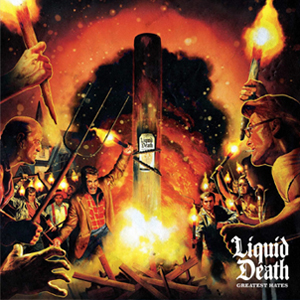
[00:06:27] Ray Latif: Nicely done. You mentioned Liquid Death, Marty, and man, their Instagram has been on fire of late. Liquid Death is that heavy metal-themed canned water brand that's been growing so quickly and doing so much with its direct-to-consumer business. They, over the past month, have launched a couple of really hilarious and compelling campaigns, the latest being a Greatest Hates album. You heard that right, Greatest Hates. in which internet hate comments are read or sung by a hardcore metal singer and then turn into an album. They have 12 tracks of people hating on their brand and their products, many of them taking issue with their embrace of Satanism. Have you guys listened to this album? I've listened to this album. My favorite song is Fire Your Marketing Guy, of course. But I got to say for the genre, they did a really good job here. The music is every bit as good as Napalm Death or Cannibal Corpse. It's a pretty sweet album they did. It's so authentic. Whoever is running this stuff over there must be having the best Is Coming up with all these amazing Instagram contests and, hey, let's do an album. I mean, come on, it's got to be a blast.
[00:07:50] Jamba Dunn: Best job ever.
[00:07:50] Ray Latif: If we tried to pull this off, would it be like we'd have to get Bernard Sumner from New Order to sing like, I could tell you about Ray Latif's perfect radio voice and insightful interviews. Yes. That would be the correct choice. You've thought about this a little bit more than I have, Mike. I was really into this campaign. I think it's brilliant. It just brought me back to the time that Mike Cesario was up on stage talking about marketing bullshit, and it turns out he's a marketing genius. He's the best at the marketing bullshit. He is a pretty impressive entrepreneur. We actually sat down with Mike Cesario for episode 51 of Taste Radio Insider. If you haven't heard it, he sits down with Bevan reporter Brad Avery for a really fantastic and compelling interview. I highly recommend listening to it. The interesting thing about the Greatest Hates album that Liquid Death Is Coming is that it's only one of their brilliant campaigns. They're doing this other one that was just absolutely hilarious. They are asking people to send in videos of themselves skateboarding in their homes, and they're going to pick the best one and pay their rent or mortgage for six months. It's pretty interesting. If you go to their website right now, you can see this guy skateboarding in his kitchen. I'll just let our listeners watch this because it's pretty hilarious stuff. I'd say pro tip, you should probably have one of their songs like Reconsider Your Life Choices in the background while you're skating. That would be a surefire way to get their attention.
[00:09:30] Rocky Mountain: Listen, you don't want to come in second. If you're going to do this, you better win or else you're going to have a smoldering rubble and no six months of rent to pay it off.
[00:09:42] Ray Latif: The songs on the album are incredible though. Get Slaughtered on Shark Tank, This Crap is Pure Evil, Go Out of Business. Liquid Death. Liquid Death from the very beginning, I think since we all saw that very first viral video that launched their whole brand and just gave it a whole life, I think they've just been one hit after another. Go out of business. It's incredible. I can't wait to listen to this after the recording. Mike, you should send in a video. You're a skateboarder. I remember the first time you started working at BevNET, you'd always be coming to the parking lot on your longboard. You could do this. Yeah, I could definitely do that. I think they're looking for shortboarders probably, but hey, why not? I'll send a video. Shoot for the stars. There you go. Mike can laugh at me. He'll enjoy that. You can get your mortgage paid for six months. That sounds like a pretty good deal right now.
[00:10:34] The Bundesliga: Guessing your margins? That's risky. Belay Financial gives CPG Brands Are clarity to scale smarter, faster, stronger. Get your free inventory ebook by texting TASTE to 55123 and start making data work for you.
[00:10:54] Is Coming: Tune in at the end of this episode for an exclusive interview with Matt Lin of Belay Solutions. He sits down with Melissa Traverse to break down the biggest inventory and accounting mistakes CPG founders often make. You'll learn how to bring clarity to your numbers so you can scale with confidence.
[00:11:12] Ray Latif: You know, as of this recording, we're only a few days away from Mother's Day. So happy Mother's Day to you, Melissa, and to all the mothers listening.
[00:11:19] Jamba Dunn: So I've noticed some brands doing stuff for Mother's Day. Obviously, folks will be celebrating Mother's Day in a slightly different way than normal because I'm sure as you all know, Mother's Day is one of the biggest restaurant holidays that there are. So I've seen some good social content from brands that are focusing in on pampering at home and that kind of thing. Stonewall Kitchen, for example, they're doing a giveaway with Cho Chocolate Garnet Hill with a way to pamper mom at home. And then Fine and Raw is a brand that I'm always impressed by their holiday offerings. So they did something really cool for Valentine's Day where they partnered with a local artist and did a limited edition box series. For Mother's Day, Fine and Raw Is Coming an assortment of their bars and their truffles and their chocolate hazelnut butter spread. And there's a message to mom on the labels of their products, which I thought was a really great idea.
[00:12:16] Ray Latif: Well, speaking of moms, I was speaking with Jessica Levison, who is the founder and CEO of a brand called Peekaboo Organics. If you watch our Elevator Talk livestream on a regular basis, you might have seen her a couple of weeks ago. Peekaboo Organics is a brand of organic ice cream with veggies hidden in every single pint. So, for example, they make an organic vanilla ice cream with hidden zucchini.
[00:12:41] Jamba Dunn: Can you taste the zucchini?
[00:12:43] Ray Latif: No, they're hidden. So you can barely taste anything. Everything tastes like it should, which is amazing. Interesting. Yes. Also, big shout out to Nadia Gara, who's the founder and CEO of a brand called Argania Butter. Argania Butter is a maker of almond butters made with argan oil. They have a bunch of different varieties, and they recently launched a new line of cauliflower hummus, which Nadia was kind enough to send over to me. I can't wait to dig into that stuff. It just sounds so innovative and amazing. I haven't seen a cauliflower hummus on the market yet, so I'm excited to get into that. As usual, if you do have new products, new line extensions, new brands that you want to share with BevNET and Nosh, you can do so, as Marty mentioned earlier, via the Submit News portal, and you can still send us product to our office. We'll get it, we'll talk about it, we'll eat it, and we're excited to do so. So please keep that Is Coming, and please keep those products coming if you want to share them with us. All right, I think it's time to get to our featured interview for this episode, which, as I mentioned at the top of the show, is with Jamba Dunn, the founder and CEO of Rowdy Mermaid Kombucha. Founded in 2013, Rowdy Mermaid has emerged as one of the fastest growing brands in the kombucha category and achieved national distribution in 2019. Despite its rapid growth, the company, which has deep roots in its backyard of the Rocky Mountain, had long embraced a patient and thoughtful approach to expansion, and for years avoided venture capital funding in favor of independent management and oversight. In the following interview, I spoke with Jamba about how he's reconciled the duality of Rowdy Mermaid's current trajectory and its long-term business strategy, the brand's function-forward approach to formulation and new product development, why he eventually decided to align with a private equity firm, and how his role as and definition of CEO has changed over the years. Hey folks, it's Ray with Taste Radio. I'm gonna call right now with Jamba Dunn, the founder and CEO of Rowdy Mermaid Kombucha. Jamba, how are you? I'm doing great today. Thank you for asking. Oh, that's wonderful. Why are you so great today?
[00:14:55] Rocky Mountain: Well, I'm on radio with you. So that's, that's a good day right there. But it's, it's a beautiful day here in Boulder. It's in the 70s. And I'm looking at Snowcap Mountains in the background from my office. So it's a great day.
[00:15:12] Ray Latif: That definitely sounds like a great day. 70 degrees and you can see Snowcap Mountains. Boulder is a beautiful, beautiful town. How long have you been there? Let's see, we moved here about 15 years ago from the Bay Area. Nice. I read in your bio that you live on the outskirts of Boulder, in the mountains.
[00:15:32] Rocky Mountain: So we lived in Boulder for a long time and Boulder started growing. And when we heard that the Google campus Is Coming in and it was going to get even busier downtown, we realized that we had an opportunity to move just a little bit outside of Boulder. I wouldn't, I call it the mountains. My kids always correct me because it's not technically the mountains, it's just further into the mountains than Boulder. We live in a small town called Lyons and we moved over there because we could now have gardens all around the house and we spend most of our time gardening and doing a lot of herb gardening. So I think it was a really good move for us. And I'm in Boulder every day, so I get the best of both worlds.
[00:16:17] Ray Latif: I recently spoke with the founders of a company called Rowdy Energy, and your brand is called Rowdy Mermaid. I know why theirs is called Rowdy because it's based on the nickname of a NASCAR driver, one of the co-founders, Kyle Busch. In your case, I'm curious as to what Rowdy Mermaid means or represents to you.
[00:16:39] Rocky Mountain: Yeah, yeah. So Rowdy Mermaid was what I used to call my daughter when she would have kombucha. So it started with other kombuchas. She was a big kombucha drinker when she was three. And when she'd drink kombucha, she'd just start getting a little bit crazy. And she loved to play mermaid. And so I started calling her the Rowdy Mermaid. And part of how I got started in the kombucha world was in trying to understand what it was that was making her so rowdy and trying to figure out how I can solve for that and eventually coming up with decaffeinated kombucha and and non-alcoholic kombucha and taking a little bit of the rowdy out. And then there's kind of a funny story because I had forgotten about that. That was, what, 2011. And by the end of 2012, when I decided that I was going to actually launch a business in this category, we were in Hot Springs in Colorado. And I'd forgotten all about it. My daughter being the Rowdy Mermaid and she was playing mermaid in the pools, but she was being a little bit out of control. My wife asked me at one point, well, if you start a business, what are you going to call it? Right in that moment, my daughter was being really out of control and I had to shout across telling her that she had to stop what she was doing. She was being a really Rowdy Mermaid. Then I just realized in that moment that that was the name.
[00:18:21] Ray Latif: Well, it is a very unique name with a great story. And I can only imagine your daughter running all over the place, hopped up on kombucha. It sounds pretty visually stunning, actually. She still is rowdy, by the way. Well, that's a good thing. Sometimes it's nice for kids to be kids and because, you know, being an adult, you don't get a lot of opportunities to be rowdy when you're an adult or at least get away with it. Unless you're a NASCAR driver. Unless you're a NASCAR driver, yeah. So I've talked to a lot of kombucha entrepreneurs and it seems like most of them start in the entrepreneur's kitchen or garage. Is that how you got your start? Did you just start boiling up pots of kombucha in your kitchen? And why launch a brand? You know, this was something that you made for your daughter and for your family, but why launch a business?
[00:19:18] Rocky Mountain: Yeah, good question. It wasn't my intent to launch a business. I was just perfectly happy obsessing over the details and solving problems with my small team of experts brewing 200 gallons at a time like a madman in my garage so that I could ultimately serve 12 ounces to my three-year-old. I was obsessed, and I think you hear this also with a lot of kombucha entrepreneurs, but I had started off small in the kitchen. It spread to closets in the house. Then I took over the garage and Eventually, I was producing so much kombucha, I didn't know what to do with it. And so sometimes at night, I'd just run it out into the drains out in the back, hundreds of gallons at a time. And to me, I had transitioned from trying to make a product for my daughter to completely obsessing over the science and how I could change each batch to make it a little bit better or a little bit more in line with my approach. And so I unwittingly developed a product and a process that didn't exist in my category And soon I had neighbors coming over on the regular with jars or empty milk cartons. I had people offering to buy the product from me. And we would hold garage sales on the weekends sometimes so that I could put kegs that I had full of kombucha on tap and give it away free just so I could empty the kegs out and go back and make more. And so I ended up backing into creating a product that fit a niche in the category that didn't yet exist. And so, as I said, it wasn't always my intent to start the business. It kind of started around me. But now that I'm a little bit older and we've been doing this for a while and I look back, I realize having come from a family of entrepreneurs, It was probably inevitable that I was going to end up starting a business at some point.
[00:21:32] Ray Latif: How did Rowdy Mermaid get off the ground? I think you'd mentioned that you started a tap room. Is that how you were selling products to the public?
[00:21:40] Rocky Mountain: Yeah, so I was thinking if I could just empty out all the tanks and the kegs on the regular, then I could tweak the recipe and tweak the science and see what the outcome is, sell it off quickly, and then go back and try to make it better again. And so it seemed to me at that time that starting a kombucha tap room would be the ideal situation. I could brew in the back. We could talk with people in front. We could sit and look at the beautiful mountains in Boulder and listen to hip hop. And I was in my vision back then, I was going to have all this free time. I was going to go back to reading philosophy books from college and Before I knew it, we had started the business and launched in April of 2013. And it took off from that moment on so quickly that there was never a moment's rest.
[00:22:43] Ray Latif: Obviously, you're not just a taproom Brands Are. There was a big break for you. And in that big break, you determined that there was an opportunity to sell a packaged product. Could you tell us a little bit about that story?
[00:22:55] Rocky Mountain: Absolutely. Yeah. So we had the tap room and it was a lot of fun. And we had locals that would come and stop by and sit and have lunch there. And One day, we got a group of people from a local business called Whole Foods Corporate Headquarters, which was the Rocky Mountain region headquarters. And they came in and they all very much enjoyed the kombucha. And some of them talked with me a little bit after that. And then they came back several times on the regular. And I was told by one of them that If we were to figure out how to get this into a package that they would love to get it on shelf. And so that led to me having more serious dialogue with the buyer and the buyer really wanted to get us to shelf. And so we did whatever we could to figure out how to solve the problems to get to shelf. And, you know, I was just thinking about this the other day. Things were so different back then. I don't think you hear about Whole Foods talking with brands that they like and trying to get them to shelf any longer. But what is even funnier is that They wanted me to launch with three SKUs on shelf as the first approach. And I remember going to their offices one day thinking, well, it's just me running everything at this business and I'm not sure if I could do three. What if we launch one SKU? and actually trying to get them to cut back the set. And eventually I caved into their wisdom and it launched on shelf and was a very different product in the set. And so again, the product took off almost immediately.
[00:24:47] Ray Latif: What made it so differentiated? I read about you and I know you're personally inspired by New Nordic cuisine. So what really set Rowdy Mermaid apart from other brands that were on the market? And you know, at the time, as you mentioned, there weren't a lot of them. But what really put yours in a different kind of space than others?
[00:25:07] Rocky Mountain: Yeah, good question. So function forward formulations is definitely was our starting point. We made kombucha that wasn't so much about the probiotics as it was about the other ingredients that provided the function to each one of the flavors. We had a decaffeinated SKU at the time and still do. We have three now. And we were really thinking about functional health from a different viewpoint than the rest of the category was at that time. Giving Back to your mentioning of the New Nordic cuisine, New Nordic was, if you know anything about it, was started by some world-famous chefs who wanted to revision Norwegian food and Scandinavian foods. And they wanted to try to emphasize purity, freshness, seasonality, the local environment. And they did whatever they could to re-envision the traditions that they had grown up with. And to me, when I looked at the kombucha set, it seemed very traditional. as a set. The ways that people make kombucha, the ways that they were talking about kombucha, it all seemed very conservative to me. And having grown up as a punk rocker, I really felt like the New Nordic approach and re-envisioning tradition was perfect for me. So I used that as my inspiration. And I also was inspired by the New Nordic minimalism in art and the smaller package sizes that you sometimes see in Scandinavia. So we took all of those different traditions and sort of put them together to build a product that was very unique in the kombucha set and I think still is very unique. And one of the other things that we also realized in thinking about the New Nordic approach was that we had been considering consumers to be sort of clueless, I'd say, about the category. The approach that the category seemed to take to consumers was that they didn't know what kombucha was, and they didn't know what the ingredients were, and we had to say it all over with marketing all over the bottles. our approach and the New Nordic approach was, how about we shift that model and think of the consumers as intelligent and educated and well-researched. And when we made that shift, it actually allowed us to pull off a lot of the marketing that we thought was necessary and the packaging, and we created a very clean look. And so when Whole Foods came to us, It was mostly because they didn't have a better for you, higher quality, smaller package size kombucha in the set, and they thought that we would make a nice addition. And it turned out to be the thing that launched us. What size was your package? It was 11-ounce when we first launched. We couldn't sustain it at one point. About a year after launching the package and really getting some traction, the bottle company decided that they didn't want to make that bottle any longer. And we got pushed up to a 12-ounce, and we've been in 12-ounce ever since.
[00:28:55] Ray Latif: You've been in 12-ounce ever since. Different package form, but we'll get to that.
[00:29:01] Is Coming: Do you want more repeat buyers on Amazon? Well, this free resource in collaboration with Straight Up Growth will help your brand turn first-time buyers into long-term subscribers. Download Winning the Repeat Purchase Game on Amazon now at Taste Radio slash SUG. That's Taste Radio slash S-U-G to start building retention-driven growth for your brand on Amazon. Scaling a beverage brand into major retail comes down to operational readiness. From packaging lead times to co-manufacturing strategy, the details can make or break a launch. In a new ebook in collaboration with Octopi and Asahi Beer USA, industry leaders share what they've learned in helping Brands Are. Download it now at Taste Radio slash octopi. Do you need to scale your team faster without compromising on talent? Join Oceans for a live webinar on April 20th and learn how leading companies are hiring top global professionals who are ready to grow with your business. Register for the webinar now at Taste Radio slash oceans. That's Taste Radio slash oceans.
[00:30:12] Ray Latif: You know, it's interesting, just as a side note, I've been to the world famous restaurant Noma a couple of times, run by Rene Rodzepi, one of the folks that you refer to as inspiring New Nordic cuisine. And I actually, the first time I went there, I did have a kombucha, which was pretty phenomenal. It was a little vinegary in taste though, to be honest. And that is one of the things that people have referenced when they're talking about kombucha, trying it once and never trying it again, is that vinegar flavor. And nowadays, you see a lot of brands not necessarily focusing on function, but on flavor. And they're targeting a lot of soda drinkers, trying to get people to trade up from a sugar-sweetened beverage that really has no health benefits to one that has gut health benefits and less sugar, etc. That seems less of a target for Rowdy Mermaid, though. Is that the case?
[00:31:10] Rocky Mountain: Yeah, I would definitely agree with that. We got into this to provide a better-for-you option in the kombucha set. And because we got into it for those reasons, and we really focus on the functionality of the beverage, we often think about our products in terms of use cases, like energy or relaxing or antioxidant, hydration, whatever the use might be, and there are many of them throughout the day. I tend to personally think of a lot of soda companies and alcohol companies similarly as approaching a sort of mood occasion. And because they tend to really focus on a mood occasion, they're focused on, you know, the uplifting, vibrant sort of party, energetic approach. And to me, that just doesn't really speak to the depths of what it is that we've built here at Rowdy Mermaid. So I don't really ever see that being a focus for us. We will always be a function-focused company.
[00:32:24] Ray Latif: But your products do taste good. I mean, flavor has to be an important component, regardless of whether you're function-forward or flavor-forward. How do you consider new flavor development and line extensions? that fit with a particular function?
[00:32:40] Rocky Mountain: It's a great question. And it is very interesting how we end up developing recipes that do taste great. We typically don't start with what we think of flavor, which flavor Is Coming to sell, obviously. as a company, we start with, what are some of the problems that we are trying to solve here, and how can we heal ourselves? And we go deep into research, and that research typically gives back some interesting information about ingredients that could work together to do different things. For instance, the turmeric needs to be activated in order to be processed by the body. And one of the ingredients that activates turmeric happens to be pineapple. And pineapple and activated turmeric is really good for the digestive system, specifically if you have autoimmune disease. And so we went into research in this topic, and we ended up developing our last SKU, which is called Lion's Root, and it's turmeric, pineapple, and lion's mane mushroom, which all three of those work together very well as functional ingredients. They just also happen to taste fantastic. And every SKU that we've developed has been developed in that same manner.
[00:34:17] Ray Latif: Currently Rowdy Mermaid is one of the faster growing brands in the kombucha set. You guys have had a pretty great track record and trajectory over the past couple of years and slowly evolved into a national brand. I say slowly because for a long time, Rowdy Mermaid seemed to be focused on regionality, staying within that Rocky Mountain region, West Coast, not necessarily looking to expand to the Midwest or East Coast. Last year, you became a national brand. How much of the expansion, though, was planned or thought in advance? Or how much of the growth of the category really forced your hand to become a nationwide player?
[00:35:05] Rocky Mountain: I mean, I, as a company, was always on expansion, specifically in natural. As you mentioned early on, we had been approached by market chains to expand in the Midwest, the East, the South. And we had turned them down because we just weren't ready for expansion at those times. And that really wasn't the goal at that time for the company. But in 2018, our velocities were so high, we had some of the highest velocities in the set for any regional player in the kombucha space. We had some of the highest same-store sales. We also had some of the lowest ACVs at that time. And we had developed a warehouse or a facility that was big enough to support multiple regions of growth, but We started to feel ourselves being somewhat shut out of growth. The largest brands in the set were allowed to play a natural and conventional convenience club DTC. They could play in any region. But it was somehow implicit that we as a company were expected to remain small and regional and somewhat special as a brand. And it was difficult because we needed to see more growth. The Rocky Mountain region is very particular because it's difficult to get into the mountains. The markets that we could sell in were localized to certain regions of the state, and so our growth felt very hampered. But by 2019, we had to start thinking about the problem a little bit differently. We had applied for patents for our alcohol control and our sugar control technologies. We could scale the products efficiently while remaining safe. The facility was running great. We were running on wind energy. We had invested into regenerative organic. We had a great team and now we had great backers who also came in with a Series A and believed in our strategy to shift into cans in order to be more sustainable as a company. And right around that time, one after one, it felt like the industry was being hit by lawsuits. And the lawsuits reached not only kombucha companies, but distributors, stores themselves, etc. And overnight, we started to see a slight softening of the kombucha category. And it seemed to us like if we were going to act, now was the time to act. So if we couldn't expand vertically with stores, it felt like we had no other option but to expand horizontally. So we started reaching out and all across America we discovered that there were stores and multiple channels that were actually just waiting for a safer product to support the set. And almost overnight we went from five states to 20 states and from 20 states to 43 states. It happened fairly quickly.
[00:38:34] Ray Latif: So Jamba, amid this growth and this evolution from being a regional company, breeding a regional brand to a national one, did you have to reevaluate your mission and your value system in that shift? Did you have to make any compromises in terms of the focus and initial vision of Rowdy Mermaid?
[00:38:57] Rocky Mountain: Well, we grew when we knew we could do it without hindering our core values. That was the only way we were going to grow. And, you know, somewhat ironically, growth gave us the opportunity to really sit back and mine our value systems and transform what had been our personal values and our personal missions into company missions. And so in a very paradoxical way, the more we grow, the more we're actually able to lean into our mission as a company.
[00:39:36] Ray Latif: The backer you mentioned in your Series A round is Karp Riley. And you've turned down VC money in the past, preferring to be patient and thoughtful about expansion. You've talked about this a number of times in a number of articles. What made Karp Riley the right partner? Because They are a pretty good-sized firm with a track record of brands that have undergone significant growth in a short amount of time. How did you determine the right path forward with them so that you were both going into the next few years with the same mindset and the same strategy?
[00:40:16] Rocky Mountain: Carp Reilly, above all the other VCs that we had spoken with, We felt really really understand the beverage sector. They partnered with lots of companies like Kavita Koya Zola. spindrift and they they really understand this sector of business more than more than anyone. But they also have their own money which is very different from most funds. So their investment isn't all about forcing growth. It's about supporting vision. And to us As a company that had a very different vision from other companies in our category, we felt like they came in with just the right amount of support that we needed. We felt like we had developed something unique and we have deep views on the functional category and they love those views and that vision and they see where they can help. And so they they felt every bit like the perfect partner for us. And I have to say having interviewed so many different VC companies or having been interviewed by so many companies it was really refreshing to see Alan walk through the door. and a t-shirt and a pair of chucks and just to sit down with him and listen to his wisdom and just realize that here was not a person that was looking at me as an investment. Here was a person who was looking at me as a friend and somebody that he wanted to get to know better. And it's really started, I would say, a wonderful friendship between ourselves and the Carp Reilly crew. And we really lean on them a lot for advice and feedback. And we have a very open relationship with them. It's completely different than what I hear from other companies. the Boulder satellite area about their backers needing to get their money out, et cetera, forcing them to maybe lay off employees during the COVID crisis. And we don't have any of that.
[00:42:39] Ray Latif: Well, it sounds like an incredible relationship then because I think that's one of the reasons that a lot of folks are wary of working with venture capital partners is too many hands on the wheel, so to speak. And the Alan you were referring to is Allen Karp, one of the co-founders of Karp Riley. You know, a lot of investors I've talked to in the past say the best time to raise money is when you don't need it. And it seems like there were a lot of opportunities to do so in the past, or at least there were a number of opportunities to do so in the past. But when you're thinking about growing, did you have a plan in place? years ago for potentially going national, you know, were you thinking about this on a level that was okay, not we're going so fast right now and we need money and because you know, next year, we probably will be national versus, okay, let's strategize five years before we might need this money five years before we might go national and say, what would this look like? And, you know, how should we position ourselves to best meet this kind of demand this kind of opportunity?
[00:43:47] Rocky Mountain: Well, we had always expected growth, but we had expected it earlier. To be honest, part of growing while trying to remain neighborly and connected and sustainable and all of the morals of the brand was really challenging. We didn't have a lot of money to really invest into the type of growth that we had been thinking about. And so we were in the position where if we were going to grow as big as we wanted to now was the time to pull in capital. Once Carp Reilly came in, there wasn't a mandate that we had to grow. They just supported the initiatives that we already had put into motion. And so we felt like we were in a position to finally take a leap without the fear. You know, I'll never forget, we were hemming and hawing over, I can't remember if it was CapEx or OpEx, but I remember Alan coming to me one day and just pulling me aside and reminding me that we're never going to save our way to prosperity as a business. That's not how it works. And he's absolutely right. We had to start taking the capital we had and putting it to work for us. Soon when we did that, we started to realize that with growth, we could have actually a bigger impact on our supply chain and we could reduce our cogs and increase our margins. And so in a way, growth really started supporting what the brand stood for, and it seemed like the right way to go. So we heavily leaned into it in the last year. We recently redesigned our facility and so now we can grow 20 times what our 2019 model was. So we've set ourselves up also for next wave growth plans.
[00:45:51] Ray Latif: Building that infrastructure is really important. In many interviews in the past, entrepreneurs have talked about building the infrastructure for success, but sometimes building infrastructure and preparing for growth comes with its own set of challenges. You mentioned hip-hop earlier, so I'll throw in a big reference here, you know, mo' money, mo' problems, maybe this is mo' growth, mo' problems. So, you know, what are some of the challenges, assuming that there were some, that you had to overcome to get to your current position, to get to that current capacity that you were talking about? And in hindsight, what would have made that process easier?
[00:46:28] Rocky Mountain: I think one of the things that would have made the process easier was my belief in the trajectory of the company and having more belief in my own perspectives on what we could bring to the set and what we could bring to the functional category. And instead of trying to raise the capital to a certain level before we would make certain transitions to actually pull in professionals earlier on in sales and operations and other areas of the business that really have flourished under some of the people we have on our team and bringing them in so that they could help build the road out in front of us to make our dreams possible. I kind of feel as though we were working in reverse for so many years. We were expecting some level of success and then we were going to put that money towards the things we wanted to do. And we realized later that model was backwards.
[00:47:33] Ray Latif: Bringing people in, having experienced folks on your team, I can imagine it's been a weight off your shoulders from trying to manage a lot of different things at once. I actually saw a blog post on your website from a couple of years ago that profiled you as the company leader and founder. And your acronym for CEO was not that of chief executive officer, but it was cruel example of overwork. How has your job changed, I wonder? You know, how do you think about your day-to-day role as CEO, that is, Chief Executive Officer?
[00:48:17] Rocky Mountain: Well, you know, speaking of the cruel example of overwork, we used to say in the beginning that an entrepreneur is the only person that will work 80 hours a week to keep from working 40. So it all seems to fit well together. But you know I love working and I love everything about what I get to do now. I've transitioned from having my hand in sort of every pot in the business which I think is probably great for my employee morale to me now really focusing more on raising and allocating money managing growth expectations really returning back to the roots of the company and some of the visions that I have for different products and product development. And Since the COVID pandemic, I've stepped away from, a few of us have stepped away from the business, and I've come to realize that my team can really, really run this without having me here all the time, you know, pointing out things. So I think that loosening the reins of the business has been extremely positive for all of us. And it puts me in a position where I can actually now step away just enough to start thinking about personal health and wellness again, so that I'm not a cruel example of overwork, but actually someone who can inspire my team.
[00:49:53] Ray Latif: We've got a link, that blog post on our show notes, because it's also got a great picture of you from, it says, Jamba Dunn a month before owning his own business. A little different look for you. Jamba, it's been so great speaking with you. I do want to ask you one quick question about your name. I wonder how many people are going to see the name Jamba and think, oh, it's the co-founder of Jamba Juice. I can't wait to listen to that episode. How often do you get that? How often do you get people saying, oh, you're the co-founder of that juice company?
[00:50:28] Rocky Mountain: More often than I would like. But in a very strange way, Jamba Juice has actually helped me. Before I could say my name is Jamba like Jamba Juice, a lot of people thought my name was John Boy. And so I would say Jamba like Jamba Juice is better than John Boy. But interestingly, I've got a little bit of a history having crossed paths with the CEO back when he was at Juice Club. And so it's been a fascinating evolution to grow up alongside that company.
[00:51:11] Ray Latif: I would agree about John Boy, by the way. I think the last time I heard John Boy or the reference of John Boy was from The Waltons. Absolutely. That's dating myself. I shouldn't even know what The Waltons are all about. But anyway, good night, John Boy. That's exactly right. Yeah. I didn't want to be that guy. Well, Jamba, once again, thank you so much for taking the time to speak with me. This has been a ton of fun, so informative, so enlightening, and congratulations on all your success to this point, and good luck with everything going forward. Thank you so much.
[00:51:42] Rocky Mountain: It was such a pleasure to talk with you. I really appreciate it.
[00:51:46] Ray Latif: All right. That brings us to the end of episode 84 of Taste Radio Insider. Thank you so much for listening, and thanks to our guest, Jamba Dunn. Please subscribe to Taste Radio on the Apple Podcasts app, Spotify, Stitcher, and Google Podcasts. As always, for questions, comments, ideas for future podcasts, please send us an email to askattasteradio.com. On behalf of the entire Taste Radio team, thank you for listening, and we'll talk to you next time.
[00:52:25] Jamba Dunn: Hello, I am Melissa Traverse here for the Taste Radio podcast, talking about some of the biggest tension points that CPG Brands Are founders face when they're scaling a brand, and those are financial accounting and inventory management. I am joined by Matt Lynn, inventory accounting guru from Belay Solutions, and he Is Coming to shed some light on all of this that Is Coming to help everybody out quite a bit. Matt, thank you so much for joining us today.
[00:52:55] Rowdy Mermaid: Thank you for having us, Melissa. It's great to be out here at Expo West and it's great to sit down and be able to chat this because it's kind of a passion project of ours, working mainly with CPG Brands Are hoping to help them scale.
[00:53:07] Jamba Dunn: It's been such a pleasure chatting with you and the team and learning all about what you do over there at Belay Solutions. Can you tell us a little bit about yourself and what your role is and the kinds of solutions that Belay gives to CPG Brands Are founders?
[00:53:22] Rowdy Mermaid: Yeah, absolutely. My role with Belay, I'm actually our inventory accounting manager. I run our inventory department, so we work with CPG brands, taking them from spreadsheets, putting them on inventory management systems, and really helping connect their tech stack between their sales online marketplaces to that inventory management system, even down to their financial systems like QuickBooks. Belay overall is kind of an outsourced accounting firm. And with that, we're helping teams. We have different levels with bookkeeping, controller level work, even high level into CFO type items. So we really help those brands in any way that they need financially. And then I just have a subset of a department where we're really just laser focused on inventory.
[00:54:05] Jamba Dunn: It's certainly a complex topic and there are plenty of places to go wrong. Let's start by going right and start super simple. Can you tell us what some of the biggest red flags are that would help a founder understand or, you know, the person running a brand understand that it really is time to get some help with some of these areas?
[00:54:26] Rowdy Mermaid: WKYT. they have a lot of transactions that don't get coded or they just put them into placeholders to just get rid of it so it's not an eyesore. They'll notice they have revenue but no cash or they notice that they have a good amount of cash but their blind spot is really seeing the vendor invoices that are sitting there just needing to be paid and so they just lack that clarity that's going to really be around the corner.
[00:55:03] Jamba Dunn: You know, you were talking about one of the red flags that comes up that I think makes so much sense. When somebody asks you what your numbers are and you can't come up with the right number, that's a big problem because that's something that you really should be able to share with decision makers who, you know, you're ideally looking to do business with. What should you be able to call up at a moment's notice?
[00:55:27] Rowdy Mermaid: Really, at any time, you should be able to know an accurate margin. It's amazing how many founders we end up talking to that they can tell you their revenue numbers, they can tell you their selling price, and then the minute you start talking about cost or their cost of goods sold, they just get a deer in headlights look. So really, it's very hard to tell, am I even making money? Or if you don't know your entire landed cost. Maybe you know what the freight cost is, the duties separately, but you're not really getting that as part of your unit cost. So it's really hard to tell. Am I even making money or am I losing money from the very beginning?
[00:56:00] Jamba Dunn: And do you recommend that founders are able to call up a margin by channel?
[00:56:05] Rowdy Mermaid: Absolutely. And depending on the number of products and channels, you kind of want to know what are your best sellers, which ones are making the most and which ones maybe you're not making as much. But especially if you're branching out and you're doing D to C with B to B, absolutely want to know that.
[00:56:22] Jamba Dunn: Gotcha. You mentioned that when things feel really chaotic, that's probably a red flag. I would say that it probably almost always feels chaotic if you're running a CVG brand. And I know this may be hard to quantify, but is there a revenue number? Is there a number of doors number that would help a brand understand whether or not it makes sense to bring on a partner like Belait? Understanding that so many Brands Are bootstrapped or they might be tight for cash. What is that friction point?
[00:56:52] Rowdy Mermaid: 3 3 3 3 3 But as you're growing, as you're getting to those six-figure revenue numbers, and especially as you're approaching seven, you want to make sure you've got good financials. Because as you scale to that point, most likely you're going to be looking to raise capital. And investors, the first thing they're going to look at is your books. Brands Are they clean? And do they show a clear picture of your business?
[00:57:25] Jamba Dunn: You know, another area that folks might look to to organize some of the chaos are their systems. So many folks stick with Excel spreadsheets for a good amount of time. How do you know that you need to outsource some of your accounting to an organization like Belay Solutions versus maybe signing on to a Synth7 or a NetSuite or something like that?
[00:57:47] Rowdy Mermaid: Well, that's actually something we really help with. When it comes to that cost question, that's something that trips people up. And sometimes if you just have a turnkey business, you buy and sell a finished good, you can maintain with spreadsheets. And we've had clients with million dollar revenue that can do that. But we see so many brands nowadays are using contract manufacturers. and they're just sourcing certain parts of their product. So when you start talking cost, they have no idea exactly what their unit cost is. So that's where we come in and we kind of understand, we'll speak with the customers and the clients and get their needs. And then if we think they're ready for a system, then we'll help put them on that system so they can get some of that clarity. And it's not something we force on anybody. There are plenty of times where founders come to us and we'll tell them bluntly, you're not ready for it right now, but we'll let you know when we think you are.
[00:58:33] Jamba Dunn: That sounds like excellent advice. What should a founder or somebody running a brand look for in an outsourced accounting partner? Are there certain checklist items that they should make sure that their partner be able to execute or be able to help them understand?
[00:58:50] Rowdy Mermaid: Absolutely. I think one of the keys, there's, there's a lot of outsourced accounting firms out there. Some focus on service-based SaaS companies, but if you're a CPG founder, you really want to make sure that your accounting firm has CPG experience. I would ask them, you know, what kind of Brands Are they worked with? And even beyond that industry specific, because there's so many subsets of CPG. And that's something that I think is great about what we do with Belay is that we kind of run the gamut. It's kind of like the insurance commercial. We know a thing or two because we've seen a thing or two across a broad spectrum.
[00:59:20] Jamba Dunn: Probably getting references is always helpful, right? Absolutely. All right. So this all sounds great. I think we have a really good understanding of would it make sense to hire an outsource partner? You know, what some of the things you should be looking for are. What does offloading this kind of work mean for the brand? What can this do for lightening the load of a founder or lightening the load of a brand operator? Like, how does that help them in their everyday business?
[00:59:49] Rowdy Mermaid: It just tries to really help quiet the chaos. So what we're looking to do is just take some of the weight off that founder's shoulder, let them focus on building the brand, building the business, getting that exposure. If you don't have sales, you really don't have anything. So we want them to be able to focus on that while we take care of your back end office work. And we can just present that to you on a monthly basis, you can help make decisions, you can take that to investors. And really, you can just focus on growing your business.
[01:00:15] Jamba Dunn: I feel like I felt founders and the folks who are running brands collectively sigh a breath of relief just hearing that. How can people learn more about Belay Solutions?
[01:00:26] Rowdy Mermaid: So people can text TASTE to 55123 for their free inventory guide to get started.
[01:00:31] Jamba Dunn: Matt Lin, inventory accounting guru at Belay Solutions. Thank you so much for joining me here at Expo West. It's been such a pleasure to chat with you and learn about what you all do over there to help founders and brands with their financial accounting and inventory management. For everybody else out there, thank you for listening to the Taste Radio podcast. I am Melissa Traverse and we'll see you next time.