[00:00:04] Ray Latif: Hello, and thanks for tuning in to episode 86 of Taste Radio Insider. I'm Ray Latif, the editor and producer of Taste Radio, and I'm with my BevNET and Nosh colleagues, Mike Schneider, Melissa Traverse, and Beth Kaiserman. In this episode, we're joined by GT Dave, the founder and CEO of iconic brand GT's Kombucha, who discusses a major decision in the company's evolution. Just a reminder, if you like what you hear on Taste Radio, please share the podcast with friends and colleagues. And of course, we'd love it if you could review us on the Apple Podcasts app or your listening platform of choice. Beth, it's so good to hear your voice. I don't think I've heard your voice in, what, at least nine weeks.
[00:00:44] Living Foods: Nine weeks. Oh, my goodness. Hi, guys. I know. I miss you all so much.
[00:00:48] Ray Latif: I miss you too. We sit like, what, 10 feet away from each other? Or normally we sit 10 feet away from each other?
[00:00:54] Living Foods: Yeah, I especially miss our snack banter. It's so not as exciting having snacks on your own.
[00:01:01] Tracking Snacking: No, it's not. It's really easy to have snack banter with Ray because his office is full of snacks.
[00:01:08] Living Foods: Yes, there's many nooks and crannies filled with snacks in that office.
[00:01:13] Ray Latif: Yeah, there's a not-so-secret cabinet with not-so-secret shelves and hiding spots for snacks. I think I raided it before the quarantine, though, so most of it's out of there. But I do miss passing your desk and seeing some new products and asking you kindly if I can sample some of them, and you're always gracious enough to share them with me, so thank you for that.
[00:01:35] Living Foods: Absolutely. I miss pushing my chocolate on people and they never want to take me up on it. Then I got stuck with all this chocolate, which is not a bad thing, but very dangerous for me. For the future, I will always help you out with that, Beth. Okay, cool. Yeah, I need to identify the few people who will take me up on it.
[00:01:53] Ray Latif: Most I could feel you jumping into your screen to tell Beth how much you want to sample the chocolate.
[00:02:01] Living Foods: I'm here and I'm ready for chocolate.
[00:02:04] Ray Latif: All right.
[00:02:05] Living Foods: Noted. You're going on my good list.
[00:02:09] Ray Latif: Well, I assume we're going to be receiving a bunch of snacks, chocolate or otherwise, from folks that are wanting to participate in our Nosh pitch competition. Melissa, you got the details on that, yeah?
[00:02:20] Living Foods: I sure do. Stop the presses. The applications are live. We are seeing them roll in. We will be hosting Nosh's Pitch Slam No. 8, presented by 301, Inc. The semifinals will be on June 9th, and we'll select 12 brands to pitch for that, and then we will narrow it down to six brands for our June 11th finals. The winners get some pretty great prizes, including an interview after the pitch. a sweet ad package on Nosh, a trophy, bragging rights, and of course, everybody gets the visibility that comes with pitching.
[00:03:00] Ray Latif: Yeah, I'm really excited for this year's Pitch Slam or this edition of the Pitch Slam. I'll be hosting it, and this is the first time that the competition has had two rounds, a semi-final round and a final round. We've always had two rounds for the New Beverage Showdown, which I love and have hosted for many years now.
[00:03:17] Living Foods: Very exciting stuff. And then BevNET's New Beverage Showdown 19 presented by Coca-Cola's Venturing and Emerging brands will, as usual, have 12 brands pitching for our semifinals. Those are also on June 9th. And then six brands will go on to our finals on June 11th. The deadline to enter for both pitch competitions is on May 29th, so that's next week. There's not a ton of time. There's no cost to enter or pitch, so I can't think of a good reason why a young and emerging brand wouldn't apply.
[00:03:54] Ray Latif: I agree. I mean, especially because we've seen so many young, emerging and exciting and innovative brands in our Elevator Talk livestream series. You know, just from the folks that we've talked to, I think we have a great cadre of brands that could participate. They just need to apply.
[00:04:12] Living Foods: Absolutely. And they would be joining, the winners will join the ranks with HealthAid, Malk, Know Brainer, Beckin. It's a great crew.
[00:04:21] Tracking Snacking: It definitely is. I can't wait to get judgmental, Ray. I've got my pen of judgment. I'm holding it right now.
[00:04:27] Living Foods: Is it red? No. Is it a pen or a quill?
[00:04:32] Ray Latif: A quill. Maybe I should upgrade to the Quill of Judgment. Good idea. The Quill of Judgment.
[00:04:39] Living Foods: A virtual Quill of Judgment. I'm going to order one right now.
[00:04:45] Tracking Snacking: I think Amazon has that. Yeah, it's the secret to happiness is always having something to look forward to. I shall look forward to the arrival of the Quill of Judgment.
[00:04:55] Ray Latif: Beth, do you still use a quill when you're writing stories for Nosh?
[00:04:58] Living Foods: Yeah, that's why it takes me so long. No, no, I actually do still write to-do lists by hand though. I find it very helpful to see it before plugging it into a digital tool.
[00:05:13] Ray Latif: You know what? I still do that as well. For some reason, you know, writing down lists or typing out lists on your computer feels like it's already working. You're already in the process of working versus, you know, the preparing for that actual work.
[00:05:28] Living Foods: And crossing things off with a pencil or a pen is always more satisfying than doing it digitally. I know. What is that? Something about the sound and the feeling and I guess the sight. Yeah.
[00:05:42] Ray Latif: Well, Beth, you must have done some great preparation for your recent story about snacking and how brands are adapting to changing times and palates, particularly within salty and crunchy snacks. I thought that was a great piece and one that gave a really nice overview of how things are evolving amid the current crisis and just in general in terms of the food industry.
[00:06:04] Living Foods: Yeah absolutely. I love talking to these brands and not just Tracking Snacking but across the board. Lots of had to sort of make this huge and very quick shift to e-commerce. And it's just interesting to hear how much success they've had. And I'm so glad to hear that. And you know a couple of the sort of strategies that have worked for them including having these party size packs which obviously Frito Lay is kind of the famous you know maker of those. Those coming into smaller brands is really interesting to me because that's kind of a concept that these brands see as lasting beyond the pandemic, which is great. You know, that doesn't seem like something that will go away. But for now, it's also something that's super convenient for families.
[00:06:46] Ray Latif: Now, are they focusing sales of these multi serve bags or these at least, you know, party size or family size bags in e-commerce? Or are they looking to also sell in the club channel?
[00:06:58] Living Foods: So for now e-commerce seems to be this is where these packs are a hit. I think the idea is to eventually launch them in club as well.
[00:07:06] Ray Latif: Awesome. Well, I'm not a club retail shopper. I don't know. I've never been Costco or BJ's or Sam's Club kind of guy.
[00:07:13] Living Foods: You have got to go To Costco. The deals to be had. Ray, when this is all over, I am going to take you shopping To Costco.
[00:07:22] Tracking Snacking: I don't know if Ray's home can handle that much stuff. I mean, like, we've seen his office.
[00:07:27] Living Foods: He has nooks and crannies. He can handle it. I mean, I was just thinking about that in terms of the Instacart workers. How do they fit a lot of stuff in their car?
[00:07:36] Ray Latif: Does it have to be a worker who has a truck? That is an excellent question, Beth. I don't know. That's a great point. Like what if you have like, you know, a 36 pack of, of like paper towels, like what kind of card, like that's a Honda Civic. That's not going to carry that stuff.
[00:07:50] Living Foods: Yeah. I think you can make it fit. If you want it bad enough, you'll fit it in there. I have.
[00:07:58] Ray Latif: Melissa, among your 100 jobs in your life, did you ever work To Costco? Were you ever To Costco ambassador?
[00:08:03] Living Foods: I never did, but I'm not going to rule it out. I To Costco. Melissa, you're an influencer, but only To Costco. Let me tell you, one of my favorite things, at least in To Costco in the New England area, have Chosen Foods, avocado oil, at a price that you will not believe, and I'll leave it there.
[00:08:24] Ray Latif: Great advice for anyone who's listening. You know, I think the largest size food container that I have is something I'm holding in my hand from Wegmans. It's peanut butter filled pretzel nuggets. And this is a 24 ounce container. I've gotten through, I'd say about three quarters of this jug of peanut butter pretzels. But yeah, I don't know if I need any more than that at this point.
[00:08:47] Living Foods: Do those supplement your breakfast cupcakes?
[00:08:52] SPEAKER_??: Yeah.
[00:08:52] Ray Latif: No, these are late-night snacking peanut butter pretzels that I pair with some Trader Joe's cookie butter. It's indulgent and unnecessary, is really what it is.
[00:09:02] Living Foods: You must have the metabolism of a 16-year-old.
[00:09:06] Ray Latif: I think I do because I am not gaining any weight during this pandemic. Yeah, I know people probably look at me and say, you're an a-hole for saying that.
[00:09:17] Tracking Snacking: I'm going to smash you right now.
[00:09:18] Ray Latif: I'm thinking about coming right through the Zencaster. You know, I do and I did think about pairing these peanut butter filled pretzels with some whiskey that I had yesterday. It was delivered by a company called Virginia Distilling Company that released this new American single malt whiskey called Courage and Conviction. And they were doing this virtual tasting with the CEO and the brand experience manager. And I thought it was fantastic. It was a half hour virtual tasting, and they went through the ins and outs of how the product came about, how long it's been in development, some of the things that you might be experiencing in terms of what's on the nose and on the palate, how it differs from other American whiskeys on the market, the evolution of this single malt whiskey category. And then they left plenty of time for questions. And I thought it was a really great way to speak to the trade about a new product.
[00:10:16] Living Foods: It is so amazing to see how brands are using the opportunities that are presented by this whole thing to their advantage. On Office Hours this week, I thought that Wayne Wu and Robert Brown did a really great job of going through some of those things and talking about how consumers have more time to explore new brands than they did before, and out of stocks can have an impact on brand loyalty. So for subscribers who didn't have a chance to catch it, It was a really great episode and they had some really great tips on how to build out some of the things that can be advantageous during this time.
[00:10:55] Ray Latif: I agree it was a really great episode and once again it's only open to subscribers of BevNET and Nosh.
[00:11:03] Love Letter: Guessing your margins? That's risky. Belay Financial gives CPG brands the clarity to scale smarter, faster, stronger. Get your free inventory ebook by texting TASTE to 55123 and start making data work for you.
[00:11:23] Living Foods: Tune in at the end of this episode for an exclusive interview with Matt Lynn of Belay Solutions. He sits down with Melissa Traverse to break down the biggest inventory and accounting mistakes CPG founders often make. You'll learn how to bring clarity to your numbers so you can scale with confidence.
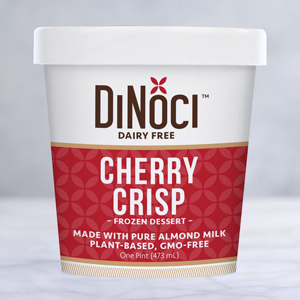
[00:11:41] Ray Latif: Speaking of other things that I've been indulging upon of late, I recently had some Dinochi dairy-free ice cream sent to me. There is a cherry crisp variety that is just out of this world. I spoke with the CEO of Danochi as part of our Elevator Talk live stream a couple of weeks back. And when he mentioned the cherry crisp, I jumped out of my seat and they very graciously sent me a sample and it is out of this world. I can't say enough about it.
[00:12:11] Living Foods: That's really cool. It's really rare to find a cherry ice cream. I feel like it's such an old-school, like, ice cream parlor flavor.
[00:12:18] Ray Latif: It is whole cherries with this, you know, the crumble that you see in, like, Apple Crisp? Yeah. It's all that blended together with an almond milk base, and it just all works so well together.
[00:12:29] Living Foods: Oh, awesome. This is now, I think, the third time I've heard you mention it, so I think I will have to seek that out. I had to swing into the office yesterday and I grabbed a pop and bottle canned oat milk latte and it was just delicious. I've always been a fan of their products and I think this is the first time I've had the product out of a can and it was delicious, delightful.
[00:12:55] Tracking Snacking: I love how pop and bottle is in a can, it's so hipster.
[00:12:59] Living Foods: It is, it is and the liquid inside is delicious.
[00:13:03] Tracking Snacking: The bottle that comes in a can, pop and bottle.
[00:13:07] Ray Latif: Oat milk lattes with a functional twist in cans. That's as hipster as it gets. It's great stuff. It's delicious.
[00:13:14] Tracking Snacking: So tasty.
[00:13:15] Ray Latif: Yeah, I'm not trying to make light of their product. It is some fantastic stuff.
[00:13:20] Tracking Snacking: Not for nothing, Ray. The founder is a gooner.
[00:13:23] Ray Latif: Just saying. He's a gooner. He had to go there just so that he could bring up the fact that my team, my German team, Eintracht Frankfurt.
[00:13:34] Living Foods: Oh, yes. Ray, my team crushed your team.
[00:13:38] Ray Latif: They did. Your team, Borussia Gladbach, kicked my team out of the park.
[00:13:44] Living Foods: In the first 35 seconds, we scored a goal.
[00:13:48] Ray Latif: We now. She says we.
[00:13:50] Living Foods: I finally understand the pride. I have team pride.
[00:13:54] Ray Latif: I can assume that, like some of our listeners right now, Beth is like, what are you and Basile talking about?
[00:14:01] Living Foods: No, I'm not looking at pictures of ice cream while we talk. What are you talking about, Ray?
[00:14:08] Tracking Snacking: Did you have some good ice cream this week, Beth?
[00:14:10] Living Foods: Well, you know, it's officially ice cream season. I don't know if you guys heard, but according to my calendar, it is. The sun's been out for more than three days, so it's ice cream season. I'm actually really excited to try this new Yasso dipped Greek yogurt bar that's come out. They have four flavors and they look awesome. I love Yasso already. So that's my next goal. I don't know if I'm going to stick to this, but one thing that I used to love to do is to get myself to do real exercise. I would sort of frame it around like running to the store to try to find a new product I'm excited about. So basically, that could be my next project is jogging for a chocolate covered yogurt bar.
[00:14:56] Tracking Snacking: Another good project, Beth, is if you want to, you could catch up on Taste Radio episode 123, which featured the founders of Yasso.
[00:15:05] Ray Latif: Yeah, that was a good one. Love it. As you noted, it is ice cream season, so get on it, folks. It is always kombucha season, and Mike, you had some pretty tasty kombucha yesterday, yeah? I did, Ray. I had GT's Golden Pineapple, which I believe is the latest GT SKU. Very cool. Did you have it before, during, or after your interview with GT?
[00:15:26] Tracking Snacking: I had it before the interview. It was very kind of him to send some of the latest product along to inspire the conversation.
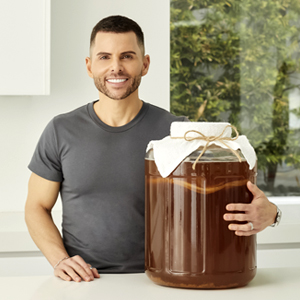
[00:15:33] Ray Latif: Well, I hope there's still some left at the office because I need to go grab some because that does sound pretty darn good. Just as this interview with GT sounds pretty darn good. Let's say you created an iconic brand that essentially launched a category and is beloved by millions of loyal consumers. Why would you change a thing? That's the question we explore in our interview with GT Dave, the founder and CEO of GT's Living Foods, the maker of GT's Kombucha. The brand recently underwent a package revamp that tweaked a few elements of its label design and renamed two product sub lines as a way to better delineate its offerings. In the following interview, Mike Schneider spoke with GT about the rebranding process, including the reasoning behind each change and update, and how his perspective as a category creator impacted the moves. He also spoke about why he's embraced a more public persona than in the past, why he's adamant that kombucha should avoid comparisons to soda.
[00:16:29] Tracking Snacking: Hi, I'm BevNET CMO Mike Schneider here in Newton, Mass., and I'm with the founder of GT's Living Foods, GT himself. Thanks for joining me. Today I wanted to talk about something that you announced via Instagram, and you also spoke to BevNET's Martín Caballero about, which is this rebranding of GT's.
[00:16:48] To Costco: Yep. It's a big deal. I mean, it turns out it took me 25 years to get here. So you could argue and say I'm a little bit of a slow learner, but I believe that again, every brand if treated properly is a lot like a human being. And, you know, sometimes there are kind of late bloomers and I think my brand in many ways is no exception. So we really are in our 25th or 26 year kind of stepping into our own and kind of owning our identity and also understanding and and arguably streamlining some of the quirks that have in the past has made my Brad Avery special and very unique and very unconventional. But as the shelves and the industry gets very crowded, I think it's important that your fans, new and old, understand who you are and what you can do for them within the first five seconds of them interacting with the brand. And so that's really my responsibility right now with this brand, this rebrand, refresh, if you will.
[00:17:43] Tracking Snacking: So the TikTokers of the world and the BevNET mics of the world need to really still be able to identify with your brand.
[00:17:51] To Costco: That's exactly it. I mean, you mentioned TikTok, right? People live in 15 seconds now, right? If you don't hook somebody in those first 15 seconds, it's kind of game over. They swipe or click or do whatever they do. And your product, when you interact with the consumer, is no exception. So that's why I wanted to make sure that we expressed ourselves visually in a way that was clear to the consumer and that we were inviting them into our world versus kind of discouraging them with a lot of confusion and a lot of kind of esoteric stuff.
[00:18:21] Tracking Snacking: And GT, we know that you, like many founders, of course, are very proud of your brand and very close to the foundation of the brand, the pillars, its meaning. It comes from you. And also that the GT's consumer is very passionate about the brand. You just alluded to that. In fact, you mentioned it overtly. So let's dive in here. Why was it time to rebrand GT's Kombucha products?
[00:18:46] To Costco: Well, I mean, there was a lot of things that kind of brought us here. One was, you know, for our own reasons, whenever we would engage with consumers intentionally or even unintentionally, meaning like in passing, I would hear firsthand how they were referring to us. And, you know, candidly, it was like six different ways. It was GTs, GTS, Dave's Kombucha, GT's Kombucha, Synergy, Trilogy, the pretty label, the one with the flower on it, you know, the one with the colorful labels. I mean, all these different descriptors, but with the exception of maybe GTs, GT's Kombucha and Synergy, all of them were wrong. And then when you boil it down to those three, a lot of times when we were talking about ourselves, people were still a little confused and Again, right now, more than ever, brands have such a small window to get their message across. If you don't get it, you really do lose them. I went on a listening tour at the tail end of last year, where I actually personally started to demo in health food stores like Chosen Foods and others. That's when I really got to re-engage with the consumer. Candidly, Mike, I was blown away by how much they have changed. Before, back in the day in the 90s when I started, people would go into these stores hungry, thirsty, looking for new ways of eating and drinking and living. They were looking for nutrition. They were looking to fix their ailments. They were really curious. Now, They're very jaded, they're very calloused. Again, because of social media and other things, it's very superficial. So if you don't hook them, you miss the opportunity. And so I realized that in many ways we were our own obstacle. So case in point is I would be doing these demos and I would reference a new flavor that, by the way, wasn't that new. It had maybe been on show for like three to six months. And even the most fanatic of consumers were like, oh, That's interesting. I had never seen that flavor, or I'm unaware of that flavor. And my theory on that is it because, and I'm very proud of it, we have such an established line with so many different flavors, but there are so many shades of red and pink and all of that, that it gets difficult to find your next new flavor amongst that sea of rainbow colors.
[00:21:07] Tracking Snacking: I always found that problem. I always found with Guava Goddess and Strawberry Serenity that those were difficult to discern just from the label, and then you had to kind of dive in. Not that I minded getting either of them, but you know.
[00:21:20] To Costco: No, it's true. But again, it's almost discouraging you from finding the flavor. And again, just like with anybody, a lot of times you're known by your greatest hits, even though you have a lot new music out. And so that's how I kind of see my flavors is that I really want people, I love that people enjoy Gingerade and Trilogy and kind of our core items, but there's some really exciting ones that are out there. And we've experienced some incredible success like Watermelon Wonder. And that's also because the label of Watermelon Wonder is very distinct. So we've learned a lot, right? So step one is streamline the shelf. do brand blocking, which you can't do if you have a synergy and a kombucha in every single line that you make. In addition to that, which was a big deal for us last year, is as brands start to innovate, that we have to If there's so much confusion within your own product line that everybody just thinks that everything you make is a kombucha, then that means everything that's new doesn't feel new to some people. And whether it was Dreamcatcher, Alive, or even AquaKeefer, I'd have friends that are very sophisticated and hopefully well-informed individuals that would still hit me up and be like, oh my God, I love your new kombucha. And that was very frustrating and continues to be frustrating for me, because as you know, when you're creating a new product line, it's like giving birth. You're really putting so much energy and time and love into this newborn baby that you're about to give birth. And if everybody confused it with an existing child, you kind of feel like, wait, so why did I do all this work again? So it's been fun I must say. And with the already some of the changes that we've done of streamlining now enlightened is just synergy. Classic is now classic kombucha and our classic gold is now hard kombucha. They're very easy to navigate and each of them have their own label architecture that when they're on shelf, especially, not only looks beautiful because you have this incredible label architecture going on, but it's a clear cue of what is what. And so the consumer can make a well-informed purchasing decision, which really is kind of the secret sauce.
[00:23:29] Tracking Snacking: So what does it take for the tea cauldron to boil over? For you, a category creator, to undertake a rebrand? It's a very big deal to undergo a rebrand. And what does it take for you to decide that this is the time?
[00:23:41] To Costco: Well, I can put it simply, and I'll use two words, is being misunderstood. and being misinterpreted. And what I mean by that is when I started to do these listening tours at the stores and re-engaging consumers, whether it was in-store, on social media, through our consumer relations emails and telephone calls, I was realizing that in many ways we were being kind of thrown in with all the other brands that are on the shelf. And I'm not here to disparage any brand, but The kombucha set today is dramatically different than it was five years ago, and certainly 10 years ago, and definitely 25 years ago. So, as you know, there's shelf-stable kombucha, there's pasteurized kombucha, there's kombucha made from concentrate, there's a kombucha light, there's all these different things. And people, some consumers, were thinking that we were some of the things that we're not. And That's confusing for everybody because if they want a pasteurized kombucha and then they buy ours, they're going to be let down. Or if they don't want a pasteurized kombucha and they think we're pasteurized, we are going to be let down. So it was a lot of disappointment starting to happen. And as the category starts to mature, I mean, I think everybody will echo the sentiment that last year was not a great year for the category. And it's easy for me to say this, but I'll say it anyway. About five years ago, I saw this coming. And the reason why I can say that is what Kombucha is going through right now is not dissimilar to what went on in craft beer, right? So you have something really special, really sexy, really sophisticated, you know, has a beautiful story and all of that, which is my kind of summary of craft beer. And then you have 200 brands on shelf, which I know is an exaggeration. But that's what the consumer is seeing. And at the end of the day, whether it's craft beer, kombucha, cold brew, fill in the blank, it really is, there's only so much share of stomach that we're all going for, number one. And then number two is new consumers, which every emerging category, and I still put kombucha somewhat in that descriptor, is that everybody's looking to grow your audience, and you really need to grow your audience by bringing new consumers into the category. And so what we were starting to learn is that because there was so much confusion on shelf, Consumers are rather walking up and just saying, oh, forget it. I'm just going to get a sparkling water. Or they would go to the shelf. They would kind of guess which brands fit their needs. And then they would be disappointed sometimes. And certain research has shown us that, and this is pretty compelling, is there's one out of 10 consumers that try kombucha and don't have a good initial experience are going to come back to the category. So that means you have a 10% chance of recovering a bad impression, a distasteful experience, or whatever. And that is a problem. And so similar to what we've seen in adjacent categories like coconut water, you guys had Vita Coco many, many months ago. And what I heard then is similar to what we're going through is that coconut water kind of started to get a bad rap. because it started meaning so many different things to the kind of unaware consumer. And the entire category got pigeonholed into this one particular impression, which unfortunately wasn't a positive one. So kombucha in many ways is that, right? People, if you go, we did something like this man on the street experience where we kind of had people try kombucha for the first time or even ask them if they knew of kombucha. And a lot of times it was like, it's disgusting. It's this, it's that. And it was more about its flavor. and less about its functionality, which is part of the problem these days in the industry, in my opinion, is everybody's going just for flavor and they're forgetting that we really exist to improve people's health and to guide them into hopefully a destination of cleaner, purer, simpler foods that come straight from the earth. But you know I think in through competition sometimes that becomes almost like a debate or an argument or even finger pointing and the consumer gets kind of stuck in that kind of crossfire.
[00:28:04] Tracking Snacking: So let's take a bit of a rewind for a second here, and let's talk about the evolution of GT's kombucha brands, because you've had this idea from the beginning that kombucha was part of a journey, it was part of a wellness regimen for people, and you've always said to me that food is medicine. Let's talk about how you conveyed that in the original meaning of the GT's brands. I'm curious about the original meaning behind Black Label and Synergy and GT's Kombucha Organic and Raw. Then also, we should talk about what those became under this rebranded schema. But let's start first by talking about how you originally conveyed your products to people.
[00:28:50] To Costco: Absolutely. And that's a great question. And, you know, again, if you wouldn't mind taking a stroll with me down memory lane to the year of 1995, when I got started, because what happened in 1995 is, of course, kombucha became a thing in my life. And it really was, for the most part, my life and a handful of others that knew about it. And it certainly was far, far, far from mainstream. And the world that existed in 1995 was a world that primarily was dominated by Snapple. by Sobe, by Mountain Dew, like again, products that right now that certainly have a different impression in people's minds, but back then that was actually considered healthy. You know, Snapples made from the best stuff on earth was a very successful slogan. So imagine me, a young kid trying to pitch something that's called kombucha that sounded far out, looked far out and tasted far out. And so I was comfortable initially in the very, very niche health food marketplace like Air One, Co-Opportunities, the place where, again, the diehard yogis and vegans and raw foodists would go. That was the environment that my brand of GT's Kombucha was born into. Now, about a year after doing this, I was starting to try to get my friends, which by the way were all teenagers at the time, to drink kombucha. And it was pretty unanimous that they were all turned off to it because it was foreign to them at the time. And so just like, you know, a lot of people is we don't accept the things that we don't understand. So I needed to kind of broaden the appeal of kombucha and kind of thread in certain aspects that my audience and my hopefully soon to be consumers could relate to. So what I did, and it was a slight pivot, is I maintained the GT's kombucha product line and brand for my diehard vegans, raw foodists, yoga devotees, all of that, but also kind of opened up another door, which was the Synergy door, because Synergy is a beautiful word. By the way, what was also big in 1995 was Red Bull. So this whole energy drink. Red Bull, Snap, Sobe. Yes. And so with Synergy in the name, I loved what Synergy did for me at the time, is that it kind of played into this energy drink craze that was going on at the time. And I also, I always seek for meaning in things. And so what I noticed in the early days of making kombucha, that when you pair kombucha with fresh pressed juice, which typically has like a four to 10 day shelf life, They synergize. The kombucha preserves the fresh juice, and the fresh juice enhances the flavor of kombucha. So it's that whole 1 plus 1 equals 3 philosophy. So that new name of Synergy, as well as these fruit flavors like Cosmic Cranberry and Mystic Mango, really kind of lowered the barrier of entry for kombucha to many. And that became kind of like my Americana kombucha, if you will. And what I use that as is, I'm going to give you all these analogies, but like a kombucha on training wheels, right? So it allowed people to ease into it. get used to the flavor, the bite, but most importantly, experience what it does for them. Because I got started because I believed, and I still believe, that kombucha can change people's life for the better. And so I believed as soon as I could get, if I could get one bottle into your hand, and better yet, into your body, you would be a believer for life. And so Synergy was that, and once you hook them with that, then they would start graduating to the more dynamic flavors of gingerade, original even, and then people found their place. And a lot of times the kombucha and the synergy positioning would allow people to have different flavors for different occasions. And also for me as a kind of closeted marketer, it gave me the opportunity to have this like masculine feminine play on the shelf, right? Because kombucha was always very clinical and very serious and very stark. And Synergy had a little bit more of an ornate quality, certainly more color forward, a little bit more playful. And so that's when I realized, and by the way, both brands existed on shelf. But to your credit, I would say at the time, and I would say from 1996 or 97 when Synergy was born to about 2005 and even closer to 2010, I would say 50% of our consumers thought they were different companies. And that was remarkable. And I have a little story that I'll share is I was once speaking at a mind body green kind of seminar. And the MindBodyGreen community is like the creme de la creme of your people that are diehard health food people. They're really on the cutting edge of what's new and all of that. And so again, needless to say, they were our audience. And so I was sitting at the dinner table at this MindBodyGreen event, and somebody asked me, this was before I spoke, what I did for a living. And I said, well, I own a kombucha company. And they said, well, that's great. Which one? And I said, GT's Kombucha. And I was talking to a couple, by the way, and the woman said, oh, that's that's very sweet. I'm not familiar with that brand. And seconds after finishing that statement, she leaned over to her husband or boyfriend and she said, and she whispered in his ear. I overheard that and I said to her right then and I said, oh, that's mine too. She goes, no way, I love that stuff. It was right before my very eyes, I was witnessing the complete swing of I don't know you and I'm not interested to, oh my God, I know you, I drink you, I love you, I'm having a celebrity moment right now. It was really interesting. That was the first time that I started to see that we needed to fix this, which we tried. We tried even in 2015 to rearrange our label architecture and align the GT's master brand. Because I don't know if you remember, prior to 2015, the GT's logo was at the top of the Kombucha label, but on Synergy, it was at the bottom. Yes, I remember that. It was much smaller and it almost just looked like a little graphic. And so in 2015, we went through this very arduous, which you would not think something so simple as just a logo relocation would be so dramatic of a change. But it was like four to six months of studying the label. And with that, we realigned the label architecture. And we thought, okay, now it's clear. But you know what, it still wasn't. So we clearly had more work to do.
[00:35:44] Living Foods: Do you want more repeat buyers on Amazon? Well, this free resource in collaboration with Straight Up Growth will help your brand turn first-time buyers into long-term subscribers. Download Winning the Repeat Purchase Game on Amazon now at Taste Radio.com slash SUG. That's Taste Radio.com slash S-U-G to start building retention-driven growth for your brand on Amazon. Scaling New Beverage brand into major retail comes down to operational readiness. From packaging lead times to co-manufacturing strategy, the details can make or break a launch. In a new e-book in collaboration with Octopi and Asahi Beer USA, industry leaders share what they've learned in helping brands scale. Download it now at Taste Radio.com slash octopi. Do you need to scale your team faster without compromising on talent? Join Oceans for a live webinar on April 20th and learn how leading companies are hiring top global professionals who are ready to grow with your business. Register for the webinar now at Taste Radio.com slash oceans. That's Taste Radio.com slash oceans.
[00:36:55] Tracking Snacking: As you were studying the label architecture and you were trying to figure out what would make it clear, what was going through your mind, what kind of iterations did you go through?
[00:37:04] To Costco: So, I mean, at the time I was very conservative and very cautious about changing the label too much, because speaking from personal experience, I have been a loyalist to so many brands. And I would say it's the majority of the times when they do a rebrand, something else behind the scenes is going on. They've rather been acquired. The owner has stepped aside. It's a new recipe. It's a new positioning where they're going.
[00:37:32] Tracking Snacking: Somebody's making their mark.
[00:37:33] To Costco: Yeah, exactly. So I didn't want my fans who I, I feel are almost like family to think that I have quote unquote sold out. So I was being very cautious about how much I changed it. But at the time when I was working with these designers to help me refresh the label, the designers were adamant about saying, you need to pick one of these brands and kill the other one. And again, it's like someone telling you to pick a child. I was like, I can't, I absolutely can't. And so I was mortified with that suggestion. But it wasn't until now, as Classic has really become its own product line, that I thought, you know what, I don't have to kill anything. I just have to slowly and strategically delineate so everything can still exist. Because what Killing Signal to me is it would no longer be, it would no longer be on the shelf. And that broke my heart because I have an equal love for both the Kombucha label design as well as the Synergy label design. So now with our current positioning, There's something for everyone and there's something for me. I see all my beautiful labels that I hold near and dear to my heart being able to shine and exist on the shelf in its own way and getting the attention it deserves.
[00:38:47] Tracking Snacking: Enlightened becomes synergy, which synergy clearly a word that you love, one that you want to have be part of the GT story ongoing and now you're able to actually expand that story. Yes. Classic becomes classic kombucha. Tell us a little bit about that. Classic used to be Black Label, right? That's true. That was the original formula of GTs, the one that was a little harder for some of us to find. And when we found it, we were like, wow, here it is. The insiders, the people who know, go for the Black Label.
[00:39:17] To Costco: Exactly. It was the very exclusive, very limited, hard to find line that we created in about 2011. And so Classic was created as our kind of stake in the ground of our original recipe. And so, as many people don't know, back in 2010, when the whole kombucha category was challenged with this controversy of alcohol, every brand, including mine, was kind of tasked with this responsibility or opportunity to reformulate. And so we did reformulate, and that's where Enlightened came to be. But because in my mind, and to be honest, in many, many, if not all of our consumers' minds, the original recipe was great, and nobody had a problem with it. And during 2010, when our product was off the shelf, consumers would step forward and say, hey, I don't care where I need to get this. I don't care if I have to go to a liquor store. I don't care if I have to pull out my ID. I want it. I need it. I benefit from it. It has changed my life, and I can't live without it. So that's not really something that you take lightly when, you know, in this day and age, if something's not available, consumers just move on. And so that signaled to me that I had something very, very special on my hands and I should not just quickly forget about it. So I brought that product line back as our classic kombucha. And the word classic is an operable word and has a lot of definition in it that it really is our original classic recipe that started it all. And so for those that like the enlightened but still miss the full-bodied, longer-fermented flavor of our original recipe, we wanted to make sure that they still had that. And so that's where our classic kombucha line was born. And again, It was both classic kombucha and classic synergy. And to your point, the two primary physical indicators of them was the black accents on the label, which a lot of people would say, I drink the black label, or the amber bottle, which a lot of people would say, I drink the dark bottle.
[00:41:21] Tracking Snacking: Right, and of course there were versions of Synergy that were in black label, and so that was confusing. Yes. Right, I totally understand.
[00:41:29] To Costco: Yes, but now we're not the only product in amber bottles. And so when people say I drink the dark bottle, that could be misleading. or if they say I drink the black label that could also be misleading because that is now no longer unique to us. So that's why with this rebranding I really wanted to have everything hinge off of that classic name and have it be part of the name. So before classic was a little bit more of a like a footnote descriptor Now it's part of the name. So it's called GT's Classic Kombucha. And I think with that word classic, we can talk about its timelessness. We can talk about its history, not just history in the making of kombucha and its origins, but also in our own history, which I think is as important for a brand like ours. It's starting to mature. It's important that we don't forget our roots. And so that's what classic is in many ways.
[00:42:25] Tracking Snacking: I have to just make sure that I have this right. So when I'm trying to be cool with my friends, I should no longer say I drink GT's black label. You'd rather I say I drink GT's classic kombucha. Yes. All right, so let's look at the higher ABV line. So you had such awesome SKUs as New World Noir and Heavenly Hops, and that's now become Hard Kombucha, and I think has the most drastically different look under the new schema. So let's talk about that. I think it also kind of takes you into new territory here.
[00:43:01] To Costco: It absolutely does. And that's certainly by design. So to your point, the reason why our hard kombucha label is so dramatically different than anything in the current line is that the consumer and the consumption occasion is so dramatically different than synergy and classic kombucha, right? You're intentionally seeking alcohol. which is not, even though classic kombucha is technically an over 21, I can tell you with confidence that consumers are not seeking alcohol. They're seeking the original recipe, the classic recipe. But with hard kombucha, that's very different. And I'm going to be honest, the hard kombucha category came out of nowhere. If you had told me three years ago that there was going to be a kombucha product line that had an intentionally high level of alcohol that you're pitching as a replacement for beer and wine and distilled spirits, as well as this objective of actually feeling like a buzz, I'd be like, you're crazy. That's like an oxymoron. That's like counterintuitive. But, you know, you have things like White Claw, which was a game changer in many ways. And you've had other kind of trends and micro trends, as well as generations and different environments and different approaches to things that the alcoholic set has also changed dramatically. So our hard kombucha is intended to live in the alcoholic set. not like classic that I would say nine out of ten times still sits side by side with Synergy and our Enlightened products on shelf, but hard is for those that are going to drink alcohol and consume alcohol as their primary goal. So with that in mind, we wanted to make sure that what used to be called our classic gold now had the word hard kombucha because that hard kombucha is a very functional word and a very descriptive word in the eyes and mind of the consumer. And also we wanted the look and feel of it to be sophisticated and nighttime and again something that would feel appropriate in a bar or a nightclub or at dinner or again something that suggests this nighttime occasion. But at the same time, we don't lose our spirit or our soul in the process, which is why there was a strong emphasis on maintaining this kind of Eastern element that exists in everything we do. Because in many ways, that's our identity. You know, we stand for this higher consciousness, this Eastern philosophy, this kind of otherworldly way of seeing the world, if that makes sense. And that should exist even in something like our hard kombucha. And so I'm very pleased with how the label came out. As you know, it's really hard, no pun intended, to create something that feels like you, but also doesn't feel like you, right? Because you don't want to be perceived as this one-size-fits-all or this one-trick pony, but you also don't want to become what, unfortunately, Gatorade at some point turned into many, many years ago. Luckily, they kind of got out of it, which is you don't know what's what. It's just a mess on the shelf. And brands easily, especially as you innovate, you can fall into that trap. And so with our hard kombucha, we wanted to make sure that it was different yet familiar.
[00:46:18] Tracking Snacking: You're a category creator and this changing up the scheme of a brand in a lot of ways is very logical, but you're also a very emotional guy. Talk about the emotion behind making these changes.
[00:46:34] To Costco: Yeah, absolutely. So I've said this before, so forgive me for being redundant, but I've always treated my brand and my company like an overprotective parent. And the reason why I say that is if you can imagine, I know you're a parent, Mike, that the day that your child walks in with a piercing or a tattoo or a crazy hair color or something like that, it's a little jarring, to be honest. Most of the time, there's always exceptions. And it's because you become so attached to how they look and the identity that they've kind of grown into over the many years of their childhood. But once they start reaching their teenage years and moving into their 20s, they start making their own independent decisions. And those decisions in many ways define who they are. And so with me, my products were no exception. in many ways felt that I birthed them, as weird as that sounds, and that I had architected their identity. But just like with everything, the environment that they started to exist in and the influences of that environment started to drive and dictate their look and feel, which I, of course, was resistant to, just like your child getting a tattoo. But if that child wants to join a rock band, That tattoo actually becomes almost the rite of passage, if you will. It's kind of like that. If I want my products to speak in a certain way and appeal to the right people in a certain way, I kind of need to let go a little bit. I'm not saying they're thrown out of the house and they're living in Europe right now. they have their own place, but they're still somewhat local. I still see them every weekend. So it's kind of like that. And so again, it was very emotional. It was very personal. And like I said, at the beginning of the interview, I think you could argue I was slow to adapt. But to be honest, I think in many ways, over the course of the 25 years that I've been doing this, it's my cautiousness and my sensitivity and my thoughtfulness to what we do and how we do it that has allowed kombucha to be what it is today, which is something that truly is special. I've never tried to exploit it. I've never tried to make it mainstream. I've never tried to make it something that it's not. And unfortunately, I can't say that with confidence right now. I think there is some activity in the marketplace that, whether it's consumers or brands or retailers or all of the above, they're trying to make kombucha, whether they know it or not, into just a new age soda. or a lightly sparkling something, which is fine if you're looking for a short-term gain. But if you're looking for what I started to do, which is I want kombucha to be part of people's lives indefinitely. Indefinitely, Mike, which is a big deal.
[00:49:27] Tracking Snacking: Can you talk about some specific things that you heard from the audience that made it into this rebrand?
[00:49:34] To Costco: Absolutely. So one was, as I said earlier, that they didn't know that all these products were made by the same company, number one. Number two, there was some drastic misinformation or misinterpretation of what was one versus the other. So to think that one is less potent than the other, or one is made differently than the other, and I'm talking even within Enlightened, you know, that was challenging. And then for newer consumers who don't really understand the history of classic, we were learning that classic was starting to lose its meaning. As you had your diehard staying in the category with us, but newer consumers weren't coming into the classic line. And so that was also very disappointing. So I, I didn't want classic to ultimately become like a dinosaur where it just kind of lost popularity and lost relevancy. And then lastly, it's really to breathe some new life into the category. Because the one other learning that I experienced firsthand when I went into the stores is, back in the day when I first started, our labels and products were like this beacon of light. that just shined off the shelf and was like this oasis or this just like again this North Star that consumers when they entered the store gravitated to and connected with and it spoke to them. But just like with everything once something becomes popular. others beside you or even far away from you start to borrow certain things. And so now when you look at the shelves, a lot of brands are saying the very same thing. And a lot of brands look very, very similar. Even our bottle, which again, it was intended to be a custom bottle back in 2005 when I designed it. But because I foolishly didn't trademark it and didn't go through all those loopholes, other brands shortly thereafter, I'd say about five years later, started to use that same bottle. And so now you even have that arguable kind of intellectual property, a blurring going on that we really needed to say, all right, we need to make sure that we recapture that light that allows our products to shine off shelf. And I'm not here to overshadow any other product or brand that we are with but i just think we're a destination product or destination brand we've learned the people come to the store come to the set for us and so we have learned that people buy us and other brands but if they can't find us, a lot of times they just leave. So it's really this conversation about what being this category captain, which by the way is a word that I just learned a few years ago, and really being the architect of these sets and holding the hands of the retailers and eventually the consumers of saying, hey, if this is what you need, we can show you where to find it.
[00:52:37] Tracking Snacking: Let's talk about rolling out a rebrand. It's easy, of course. I mean, you just throw a bunch of new labels on a package and it's done, right?
[00:52:45] To Costco: Right.
[00:52:46] Tracking Snacking: Not so much.
[00:52:49] To Costco: And you know what, because it's not easy, it's an incredible opportunity to rekindle or start a conversation with your fans. Because that's also something that I've noticed in recent history is that there are a lot of products in the marketplace, kombucha and otherwise, but not a lot of them are truly anchored by a founder, a founder that's as crazy and neurotic and as passionate as I am.
[00:53:16] Tracking Snacking: And hey, listen, every founder doesn't have an owl. I don't think so.
[00:53:26] To Costco: Thank you. And so, you know, I've learned and I even said this in a recent Bloom story that we did about not hiding and not disguising yourself for the desire of fitting in, it's actually doing the reverse. It's celebrating what makes you unique, your quirks, your idiosyncrasies, your weird ways of expressing yourself, your weird ways of seeing the world, and just celebrate that. Because I guarantee you, and I've learned this, that if you do that and you own it unapologetically, that people stand up and say, I relate. Or if they don't say I relate, they say I respect you. And that those relatable, respectable qualities, in my mind, is what makes you, your brand, and your consumer have a feeling of emotion. And that you cannot buy. And I said this before, people barely remember what you said, they'll sometimes remember what you did, but they'll almost always remember how you made them feel. So it's having that emotional connectivity is really important. So as you've probably noticed, even on the company and my own personal social media handles, I've made this intentional effort to step forward and in front of the camera, and speak to my fans. Because the one other thing that I realized, and I was really embarrassed about, is people didn't even know that GT was a guy. That was a human being. They thought it was GTS, which sounds like some kind of sports car acronym or something like that. And they also didn't know who I was. Those that knew that there was a person thought that I was this 80-year-old chanting monk that's praying over a cauldron every night and that's it. But in reality, I'm young, I'm fit, I'm a certain type of personality that I think in many ways embodies my brand and my brand embodies me. And I think pairing us together is really like, you know, this husband and wife, this father-daughter, father-son type of relationship that people, it almost feels like family, right? Parent-child. I think people really gravitate to that.
[00:55:39] Tracking Snacking: But this took a long time for you to become the face of the brand. And what light flipped on or switch flipped somewhere that caused you to start speaking on behalf of the brand I know that you've always talked to people about the brand and you've always been a person who cares about what people think about it and have been innovating based on the feedback that you get. But what was it like to step out from behind the curtain and put yourself out there?
[00:56:06] To Costco: Well, it was hard, to be honest, and I'll explain why. So, you know, I intentionally did not want to be in front with the brand or even in front of the brand, because one, I never wanted to be perceived as this guy that was just trying to get famous, right? Number one. Number two is the product's the hero, not me, right? I am the conduit. I am the servant. I am the steward of the brand. I am not the brand is what I was thinking. But when that started to change was two things. One is when I was in the Forbes article, which I know we talked about earlier offline, I was portrayed in a very peculiar way. And it was jarring for everyone, including me, when they saw that video. And because I did not do a well enough job of establishing my image and my philosophy and my values and my purpose as the owner, founder, creator, it was so easy for people to believe that false depiction that the Forbes video and article did of me. And, you know, people, I'm going to be honest, people turned really quickly. They're like, oh my God, he's a freak. I'll never buy that product again. I was so close to designing a shirt, Mike, that said, don't read the comments. When you're called the gay Tony Stark, I mean, there's only really one way that can go, in my opinion. So it was really this awkward... It's kind of cool. Yeah, it really is. It really is. And, you know, I was an opinion of one at the time because My marketing department was absolutely mortified when the first Cody Ko video hit. They thought it was cyberbullying at its finest. They thought this was going to have to be this PR battlefield. And I watched the video and I was like, guys, where is your sense of humor? This shit is funny. Like, come on, have we fallen into a trap that we take ourselves so seriously that we can't laugh at the bizarre things that we intentionally or unintentionally get pulled into? So that in many ways is very liberating. Because like I said earlier, and this is something that I experienced at an early age, being a young gay boy growing up in a very straight and homophobic environment in the 90s, is for the first decade or two of my life, I was hiding, right? I was trying to be something that I wasn't. for fear of ridicule. And the Forbes thing felt very similar to that experience. With the Cody Ko kind of twist of things, it was like, well, if you can incorporate humor into this and laugh at yourself and even play into it, then I think everybody wins because you're now laughing and they're laughing and it's not a mean-spirited type of situation, which is what it was previously. So to be honest, I jumped in the driver's seat and I steered that vehicle in the right direction and I had a blast. And the good news And this is ultimately what kind of spearheaded me into having the confidence that I need to be more out there, is that there really is this younger generation, right? Call them what you want, millennials, Generation Z, whatever the name is these days. and all of the above is, you know, they're looking for guidance. Because like I said, the health and wellness space isn't as clearly defined as we all think it is, right? You have all these trends, you have keto, you have all these different ways. I mean, there's too many to name. But a lot of consumers and a lot of young consumers really don't know what works for them. So that's number one. And number two, and believe me, I'm not patting myself on the shoulder when I say this, so take it for what it's worth, but a lot of times they're looking for somebody to inspire them. And what I saw out of that second Cody Co video are these young kids that were reaching out to me saying, hey, I want to let you know you're the coolest CEO I've ever seen. I think you're funny as hell. And I want to be you when I grow up. I want to be young, successful, with a great sense of humor, and with a playful personality that I don't stop living my life just because I live in a very serious world. And that kind of insight and feedback really resonated with me, Mike. And that's when I was like, you know what? I have forgotten what has made my brand and my company so special, which is I started back in 1995 with one wish only. And that was to make a product that I believed in, that was made from love, and brought love into people's life and certainly health into their lives. And it really was a very specific approach. It wasn't transactional. It wasn't superficial. It wasn't all these things that unfortunately I think a lot of brands including mine have fallen into that trap. And it kind of rekindled this desire of like I want to talk to my fans. I want to engage them good or bad. I want to talk to them. I want to educate them. I have so much more I want to share within Kombucha and outside of it. And if I'm going to rely on an ad or a slogan or a copy post or a POS sign to get that message across, Screw that. Let's just do it straight. Let's do it the old-fashioned way with good old human interaction. And it's been wonderful. I mean, we're approaching the one-year mark of when this all happened. And I'm telling you, my life, my relationship with my brand, and the relationship with me, my brand, and the consumer, and everybody else has dramatically changed for the better. So I can say with confidence, it's working.
[01:01:53] Tracking Snacking: You talked a bit about education, and let's go back to the rebrand for a bit here. You've got this great new rebrand, and now you have to educate people on what's going on with GTs. You started doing that via social media. Is social media the primary way that you're going to do that, beyond the shelf, or what else is there in store for this rebrand?
[01:02:17] To Costco: Well I mean it's kind of all of the above rights. You'll certainly see it on the shelf because once the trend label transition concludes you'll see a dramatic change on shelf with just brand blocking and label architecture blocking. So that will already signal to all the consumers new and old what these items are. And then certainly to complement that conversation and experience with social media, which is still one of my favored and preferred mediums because it's very fluid, it's very casual, it's very interactive. You can have those conversations in numerous ways with your, again, new and existing brand lovers. And then certainly on your website, which again allows, and then of course not to overlook, just the copy and language on the label. Right? So we're being a little bit louder and prouder with the fact that all our products are unpasteurized, and all our products are made a certain way, so people know what they're getting to make sure that this is what they want, or if not, they can find something else. So it's just really clarity. And then last but not least, and this is kind of the cherry on top, by having this message delivered by me, it overcomes and avoids that almost inevitable confusion of, oh God, they sold their company. Like somebody else is running the show. So if it's really me, and I don't think, I hope I don't come off like a puppet, that because I make a conscious effort to speak from the heart, that I hope and pray that my fans pick up on that and that they understand that this is really a personal decision. This is not being driven by competition or losing market share or you know somebody bought my company. This is really like hey I'm just like me. My product is evolving and this is the next stage of evolution.
[01:04:01] Tracking Snacking: so many good setups here. A brand is an evolution. It's never quite finished. You've rebranded your kombucha products. Are you finished now or do you have the bug and have ideas for evolution of other products?
[01:04:18] To Costco: 100%. One last note on the rebranding is we're also actually going to slightly tweak the logo. The logo! Yeah, because, and it's so subtle, but Mike, I'm telling you, it's going to make a world of difference. Because if I hear somebody call us GTS one more time, I think I'm going to jump off a cliff.
[01:04:39] Tracking Snacking: Don't jump off a cliff.
[01:04:41] To Costco: And, you know, I'm kind of a symmetry freak. So the reason why our logo has always been a capitalized GTS is I love the symmetry. But I realized that in the desire to maintain that symmetry, I chose symmetry over clarity. And so the apostrophe S, which we all know indicates ownership. right? That this is mine, this is from me, this is created by me.
[01:05:08] Tracking Snacking: I know there's a lot of people that don't know how to use an apostrophe. My biggest pet peeve is apostrophe use. So if you want to teach people how to use apostrophes, I'd be pretty happy.
[01:05:20] To Costco: Well, yeah, I mean, it's that too. It's reintroducing proper grammar and proper spelling. Which is a lost art, it seems, right? Yeah. But even with, I mean, setting aside the apostrophe, even just the lowercase s. signals to people like, hey, this is something else. And then it again reminds them or complements this parallel conversation of me talking and referencing myself, my life, the way I see the world, my lifestyle, why I develop these products. And people go, I get it. This is a person's product. This is not just a company's product. And that's a big difference. So to go back to my point, so with the logo, as it lives on the label, we're going to be removing the Living Foods wording because it's sometimes too small to even have any importance. And we've reduced the S to be a lowercase apostrophe S. So it's really clear that this is GTs. Now, I'm not saying that we're done and that's it. We'll still have to, of course, kind of have some complementary stories and information that support that conversation. But it's going to be, it's already, because we've done a couple of tests, it's already proven some really great results. So we're really pleased with it. And so now on to your more pointed question about what's next from an evolution and innovation standpoint. I mean, last year was a very busy year for us. To go in from having one, call it product category, which is kombucha, to expanding that to yogurt and adaptogenic teas, which again are very cutting edge, as well as aqua kefir, which is our water kefir. And then we have some other products up our sleeves. It's really important that people understand not only what you're doing, right? Because as I said earlier, everybody thinks that anything we make is a kombucha. So that's a problem. And then also to make sure they understand where is it coming from? Because I think a brand's highest aspiration is to be a brand that people trust. that they reach for that brand and they know when they reach for it, they can trust that it's going to give them good stuff, not bad stuff. It's going to do everything that they want it to do and nothing else. And so it's again, it's building that relationship. And so I want to make sure that if we, whatever we put out, and of course I'm not going to be like slapping my name on like a yoga mat or like a protein bar, you know, I'm going to exercise some self-restraint and make sure that we extend ourselves in a world into a world that makes sense for us. And again, this world of Living Foods is kind of the framework that we live within. But if we can successfully achieve that goal, I think that a lot of the products that we will make, again, will complement our existing product lines and help us move towards a beautiful and inspirational and compelling portfolio of better for you products, which again, is really the end game for me.
[01:08:21] Tracking Snacking: Well, GT, thank you so much for taking the time. I really appreciate it. It's been really fascinating to go through this journey with you and talk a little bit technically about how you got to where you got, but also for you to really just add the emotional track that is clear in your brand, but it's also great to hear from you.
[01:08:41] To Costco: Thank you. Well, listen, I never get tired of sharing my story because it really is the heartbeat of me as a person, as well as the heartbeat of my brand and company. So thank you for allowing me to share. Thanks for being on Taste Radio. It was my honor. Always a pleasure, Mike. Thank you so much. Always great to talk to you.
[01:09:00] Ray Latif: That brings us to the end of episode 86 of Taste Radio Insider. Thank you so much for listening. And thanks to our guest, GT Dave. Please subscribe to Taste Radio on the Apple Podcasts app, Spotify, Stitcher, or Google Podcasts. As always, for questions, comments, ideas for future podcasts, please send us an email to askattasteradio.com. On behalf of the entire Taste Radio team, thank you for listening, and we'll talk to you next time.
[01:09:34] Living Foods: Hello, I am Melissa Traverse here for the Taste Radio podcast, talking about some of the biggest tension points that CPG brands and founders face when they're scaling a brand, and those are financial accounting and inventory management. I am joined by Matt Lynn, inventory accounting guru from Belay Solutions, and he is going to shed some light on all of this that is going to help everybody out quite a bit. Matt, thank you so much for joining us today.
[01:10:04] New Beverage: Thank you for having us, Melissa. It's great to be out here at Expo West and it's great to sit down and be able to chat this because it's kind of a passion project of ours, working mainly with CPG brands and hoping to help them scale.
[01:10:16] Living Foods: It's been such a pleasure chatting with you and the team and learning all about what you do over there at Belay Solutions. Can you tell us a little bit about yourself and what your role is and the kinds of solutions that Belay gives to CPG brands and founders?
[01:10:32] New Beverage: Yeah, absolutely. My role with Belay, I'm actually our inventory accounting manager. I run our inventory department, so we work with CPG brands, taking them from spreadsheets, putting them on inventory management systems, and really helping connect their tech stack between their sales online marketplaces to that inventory management system, even down to their financial systems like QuickBooks. Belay overall is kind of an outsourced accounting firm. And with that, we're helping teams. We have different levels with bookkeeping, controller level work, even high level into CFO type items. So we really help those brands in any way that they need financially. And then I just have a subset of a department where we're really just laser focused on inventory.
[01:11:15] Living Foods: It's certainly a complex topic and there are plenty of places to go wrong. Let's start by going right and start super simple. Can you tell us what some of the biggest red flags are that would help a founder understand or, you know, the person running a brand understand that it really is time to get some help with some of these areas?
[01:11:35] New Beverage: I think some of the early red flags is just everything is chaos. So when they're looking in their financial software, maybe they don't really have an accounting background and they're kind of just piecing it together and doing their best. And what they'll see is that reconciliations take forever, if they even happen. They have a lot of transactions that don't get coded or they just put them into placeholders to just get rid of it so it's not an eyesore. They'll notice they have revenue but no cash or they notice that they have a good amount of cash but their blind spot is really seeing the vendor invoices that are sitting there just needing to be paid. And so they just lack that clarity that's going to really be around the corner.
[01:12:12] Living Foods: You know, you were talking about one of the red flags that comes up that I think makes so much sense. When somebody asks you what your numbers are and you can't come up with the right number, that's a big problem because that's something that you really should be able to share with decision makers who, you know, you're ideally looking to do business with. What should you be able to call up at a moment's notice?
[01:12:37] New Beverage: Really at any time, you should be able to know an accurate margin. It's amazing how many founders we end up talking to that they can tell you their revenue numbers, they can tell you their selling price, and then the minute you start talking about cost or their cost of goods sold, they just get a deer in headlights look. So really it's very hard to tell, am I even making money? Or if you don't know your entire landed cost. Maybe you know what the freight cost is, the duties separately, but you're not really getting that as part of your unit cost. So it's really hard to tell. Am I even making money or am I losing money from the very beginning?
[01:13:10] Living Foods: And do you recommend that founders are able to call up a margin by channel?
[01:13:14] New Beverage: Absolutely. And depending on the number of products and channels, you kind of want to know what are your best sellers, which ones are making the most and which ones maybe you're not making as much. But especially if you're branching out and you're doing D to C with B to B, absolutely want to know that.
[01:13:31] Living Foods: Gotcha. You mentioned that when things feel really chaotic, that's probably a red flag. I would say that it probably almost always feels chaotic if you're running a CVG brand. And I know this may be hard to quantify, but is there a revenue number? Is there a number of doors number that would help a brand understand whether or not it makes sense to bring on a partner like Belait? Understanding that so many brands are bootstrapped or they might be tight for cash. What is that friction point?
[01:14:01] New Beverage: 3 3 3 3 3 But as you're growing, as you're getting to those six-figure revenue numbers, and especially as you're approaching seven, you want to make sure you've got good financials. Because as you scale to that point, most likely you're going to be looking to raise capital. And investors, the first thing they're going to look at is your books. And are they clean? And do they show a clear picture of your business?
[01:14:34] Living Foods: You know, another area that folks might look to to organize some of the chaos are their systems. So many folks stick with Excel spreadsheets for a good amount of time. How do you know that you need to outsource some of your accounting to an organization like Belay Solutions versus maybe signing on to a Synth7 or NetSuite or something like that?
[01:14:57] New Beverage: Well, that's actually something we really help with. When it comes to that cost question, that's something that trips people up. And sometimes if you just have a turnkey business, you buy and sell a finished good, you can maintain with spreadsheets. And we've had clients with million dollar revenue that can do that. But we see so many brands nowadays are using contract manufacturers. and they're just sourcing certain parts of their product. So when you start talking cost, they have no idea exactly what their unit cost is. So that's where we come in and we kind of understand, we'll speak with the customers and the clients and get their needs. And then if we think they're ready for a system, then we'll help put them on that system so they can get some of that clarity. And it's not something we force on anybody. There are plenty of times where founders come to us and we'll tell them bluntly, you're not ready for it right now, but we'll let you know when we think you are.
[01:15:43] Living Foods: That sounds like excellent advice. What should a founder or somebody running a brand look for in an outsourced accounting partner? Are there certain checklist items that they should make sure that their partner be able to execute or be able to help them understand?
[01:16:00] New Beverage: Absolutely. I think one of the keys there's, there's a lot of outsourced accounting firms out there. Some focus on service-based SaaS companies, but if you're a CPG founder, you really want to make sure that your accounting firm has CPG experience. I would ask them, you know, what kind of brands have they worked with? And even beyond that industry specific, because there's so many subsets of CPG. And that's something that I think is great about what we do with Belay is that we kind of run the gamut. It's kind of like the insurance commercial. We know a thing or two because we've seen a thing or two across a broad spectrum.
[01:16:30] Living Foods: Probably getting references is always helpful, right? Absolutely. All right. So this all sounds great. I think we have a really good understanding of would it make sense to hire an outsourced partner? You know, what some of the things you should be looking for are. What does offloading this kind of work mean for the brand? What can this do for lightening the load of a founder or lightening the load of a brand operator? Like, how does that help them in their everyday business?
[01:16:59] New Beverage: It just tries to really help quiet the chaos. So what we're looking to do is just take some of the weight off that founder's shoulder, let them focus on building the brand, building the business, getting that exposure. If you don't have sales, you really don't have anything. So we want them to be able to focus on that while we take care of your back end office work. And we can just present that to you on a monthly basis, you can help make decisions, you can take that to investors. And really, you can just focus on growing your business.
[01:17:24] Living Foods: I feel like I felt founders and the folks who are running brands collectively sigh. A breath of relief just hearing that. How can people learn more about Belay Solutions?
[01:17:36] New Beverage: So people can text TASTE to 55123 for their free inventory guide to get started.
[01:17:41] Living Foods: Matt Lynn, inventory accounting guru at Belay Solutions. Thank you so much for joining me here at Expo West. It's been such a pleasure to chat with you and learn about what you all do over there to help founders and brands with their financial accounting and inventory management. For everybody else out there, thank you for listening to the Taste Radio podcast. I am Melissa Traverse and we'll see you next time.