[00:00:04] Ray Latif: Hello, and thanks for tuning into episode 87 of Taste Radio Insider. I'm Ray Latif, the editor and producer of Taste Radio, and I'm with my BevNET and Nosh colleagues, John Craven, Mike Schneider, and Melissa Traverse. In this episode, we're joined by Allison & Stephen Ellsworths, the co-founders of sparkling apple cider New Beverage, Poppy, who discuss the brand's evolution and thoughtful alignment with strategic investors. Just a reminder, if you like what you hear on Taste Radio, please share the podcast with friends and colleagues. And of course, we'd love it if you could review us on the Apple Podcasts app or your listening platform of choice. Well, I hope everyone had a healthy and restful Memorial Day weekend, an extra day to stay at home and take it easy. John, it looked like you had some nice cocktails you were sipping on. Coconut Cartel rum was the main spirit in play? Yeah, I used that a couple times. Good folks, great product.
[00:00:58] The Ellsworths: It's a Guatemalan dark rum that's got Coconut Cartel in it.
[00:01:02] Ray Latif: Kind of tasty. Coconut Cartel and rum in it. It's not just a straight spirit. It's already premixed? No, it is a spirit that is distilled and contains Coconut Cartel in it. It's not a cocktail, it's a spirit. Very cool. Mike, did you have anything interesting to drink over the weekend? I did, Ray. My weekend was powered by Revive sparkling kombucha, also aguabucha, and Ugly Drinks. And a little bit of GTs, of course. Nice, nice. I was actually sipping on some Revive myself. I'd had some hoarded... I have a hoarding problem, as everyone knows. Anyone who listens to Taste Radio knows I have a hoarding problem. So I hoarded some Revive Kombucha. When was it? It must have been, I don't know, at least four or five months ago. And I found it stashed. And I was like, yes. And I put it in the fridge. It was fantastic. I actually ordered the sparkling kombucha, Ray, and in a nice little surprise, the team sent my bottle cap. Do you remember when they had that contest where you could submit stuff to put on the underside of the bottle cap? I submitted, live now, text later, and they put my bottle cap and some stickers in the box. Is that a reference to not texting and driving? Well, yeah, it's a reference to not texting, Ray. Okay, just across the board, don't text, just drink. You know, you gotta live, live outside in the real world, not your phone. Exactly. Why would we do that? Exactly. Admittedly, it's not very relevant right now, right? Yeah. Yeah. Well, you know, it's a bottle cap that'll live forever. It'll live in perpetuity. It's meaning and message anyway. Melissa, how are you doing?
[00:02:48] New Beverage: I'm great. I did not have any kombucha this past weekend, but I have been loving the gin and tonics. I love Fever Trees. I love their Naturally Light, the lower sugar tonic. I feel like it makes a better tasting drink. John Craven, I want to hear your professional opinion about this, but I love gin and tonics with the pulp. I looked up the name for what those little citrus kernels are, and they're called juice vesicles. I just, I love, I love a gin and tonic with pulp. Is that, is that completely profane?
[00:03:22] The Ellsworths: I'm not a huge gin and tonic fan myself, so hey, have at it. Do whatever you want. All right. But yeah, I mean, there are some that you can make with like fruit juices and stuff, so why not?
[00:03:35] New Beverage: Why not?
[00:03:36] Ray Latif: Vesicles, vesicles, vesicles, vesicles. I just wanted to say it.
[00:03:39] New Beverage: It's a good word.
[00:03:42] Ray Latif: Melissa, you could start a company where you sell the little pulp in a jar as Melissa's vesicles.
[00:03:48] New Beverage: Done and done.
[00:03:49] Ray Latif: There you go. She's already got the domain. She just ordered it right now.
[00:03:53] New Beverage: I still have time to apply for New Beverage Showdown, don't I?
[00:03:57] Ray Latif: Indeed, Melissa. If folks listening are interested in participating, interested in joining us for the New Beverage Showdown, New Beverage Showdown 19, which is presented by Venture and Emerging Brands, an operating unit of the Coca-Cola Company, Today is the deadline. Today's the last day to apply. That's May 29th. I should say the date of publication of this podcast is the last day to apply. All the information you need will be in a link in the show notes. Looking For that. But please expedite your application because once May 30th hits, we're not accepting anyone else. Also, preceding our showdown competition on June 9th and 11th is Nosh's Pitch Slam 8, which is sponsored by 301, Inc. The deadline to apply for that competition is also May 29th, the day of the publication of this podcast. If you're interested in applying, we'll also add the link to do so in the show notes. Once again, today is the last day to apply. Hey, Ray, is it today? Yes, it is today. It is May 29th. So sad. Yeah, yeah. I'm actually really excited, though, for our new Beaverton Showdown competition, as I am always, because I host that competition. I'll be hosting it for the pitch time as well, but... Our judging panels are starting to come into clarity here. And one of our judges, I'm so excited for, is Jamie Danik, the co-founder and CEO of Humm Kombucha. He'll be joining us for the final round of the competition on June 11th. Talk about a great entrepreneur.
[00:05:29] The Ellsworths: Yeah, no, I mean, Humm Kombucha has come a long way since its beginnings, just like a lot of Humm Kombucha brands out there. And their latest product, the Hum Zero, just got some of that this week. You know, Mike seems to be hogging all Humm Kombucha at his house, but I did get some Humm Kombucha zero samples. I haven't tried it yet, though, since I had to take it over to the office first for some photos. But yeah, great stuff. And yeah, she's a great person.
[00:05:58] Ray Latif: Nate's taking photos today, John. You should have it. You should have it back and be able to try it soon.
[00:06:04] Shark Tank: If you're not going to steal it.
[00:06:05] Ray Latif: I'm going to try. I'm definitely going to try. Kombucha castle or whatever you're living over there.
[00:06:09] New Beverage: Kombucha thief, the worst kind.
[00:06:12] Ray Latif: It's a hard job, but somebody's got to do it. We'll be releasing full details about the judging panels for the competition for the New Beverage Showdown in the coming days. Look forward on BevNET. And we'll be releasing the judging panels for the Pitch Slam, Nauseous Pitch Slam, also in the coming days. We have so many innovative and diverse brands applying for that competition. I've been watching the brands flow in and the conversations have been happening with the brand sales team, and Melissa and the crew have curated just a phenomenal list of brands for both competitions. Pitch Slam in particular, I'm not sure how we're going to decide.
[00:06:50] New Beverage: It's going to be really hard. There are so many fantastic applications coming in, and we're really excited to see what happens.
[00:06:58] Ray Latif: Melissa, you talked to a pretty early stage brand called Picasa earlier this week. Are they applying for the competition?
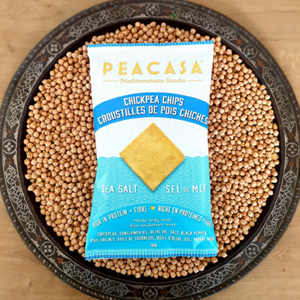
[00:07:04] New Beverage: Yes, I did. And they just Might Be. You never know. You never know. They are preparing to launch their chickpea chips. They're 100% chickpea flour. So usually, or quite often, a brand that uses a bean flour will also incorporate like rice or corn flour, but It's 100% chickpea flour. One of their co-founders grew up in the south of France and grew up eating soca, which is that, I'm sure you guys know that, chickpea flour pancake that's so delicious. So they are in the middle of a Kickstarter campaign because they're doing their own production, which is certainly a large undertaking that requires capital.
[00:07:46] Ray Latif: A brand new company doing their own production.
[00:07:49] New Beverage: It's wild. It's wild. So they have a pretty proprietary product and it sounds like it would be harder for them to use a co-manufacturer because of the nature of their product. But it's definitely a large undertaking.
[00:08:06] Ray Latif: It's definitely one of the downsides to being first to market is that, you know, you're first to market and there aren't co-packers out there who know how to produce your product. So you have to go to a co-packer and teach them how to make your product. And there's also, you know, there's setup costs for that. It's, it's, it's a tough game. This is an issue that's come up in the Showdown competition a number of times where we hear an entrepreneur say they're launching their own production facility. It actually came up with the folks that we're interviewing today. It's interesting to hear their perspective on that in our conversation, so we'll get to that shortly. But, you know, Bob Burke discusses this topic, this very specific topic at length as part of our BevNET and Nosh education series. you can get full access to his talk and others which include literally hundreds of hours of content about business planning, scaling your brand, retail and distribution, investment and funding strategies, marketing and so much more. Simply by subscribing to BevNET and Nosh, the easiest way to do that, head to BevNET.com, Looking For the red subscribe button in the upper right hand corner and you are on your way.
[00:09:11] New Beverage: That's all you have to do. And we have different tracks. So we have early stage, intermediate, and advanced tracks. So no matter where you are in your business, we've got something for you.
[00:09:21] Ray Latif: Subscribers also get access to our video content. So we've got fresh new shows like Office Hours, which are interactive. And you also get access to our new BevNET and Nosh Virtually Live event, which we're pretty excited about. You can check out the details on BevNET.com and Nosh.com. Very cool. Can't wait to see the lineup for that event. And once again, head to www.BevNetOrNosh.com to learn more.
[00:10:05] Rohan Oza: Tune in at the end of this episode for an exclusive interview with Matt Lynn of Belay Solutions. He sits down with Melissa Traverse to break down the biggest inventory and accounting mistakes CPG founders often make. You'll learn how to bring clarity to your numbers so you can scale with confidence.
[00:10:23] Ray Latif: Melissa, you were crunching on something before we got in the mics here. What was that?
[00:10:27] New Beverage: So hue grain-free crackers are perhaps maybe my newest favorite snack. They hit my local grocery store shelf just recently and I'm just realizing this is the second grain-free cracker I'm talking about in this episode so it's definitely a thing. They have no vegetable oils and actually no oils at all that I could see in the ingredients. They don't use any binders like gums or less-thins or anything. And they're really small and really thin. I think they're delicious. Obviously, Q is the brand that makes organic, paleo, and vegan chocolate. And they were the winner of our 2019 Best New Product for their baking gems. And I think these crackers, they're a big hit with me, that's for sure.
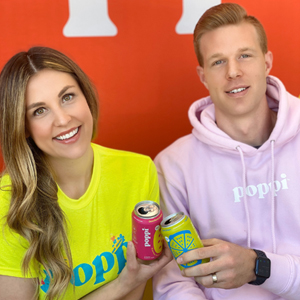
[00:11:11] Ray Latif: Very cool. It's interesting that they're making that leap from chocolate to crackers, but snacking is snacking, right? Definitely going to be partnering with Melissa's vesicles. Everything comes full circle. I love it. All right. It's time to get to our featured interview for this episode. That's with Allison & Stephen Ellsworths, the co-founders of sparkling apple cider vinegar brand, Poppy. If you're a regular reader of BevNET, you might recognize the wife and husband team who triumphed in BevNET's New Beverage Showdown 12 competition. Or you might recall them from their 2018 appearance on Shark Tank, in which they received a $400,000 investment from beverage industry luminary Rohan Oza. In both appearances, the brand was known as Mother Beverage. Earlier this year, The Ellsworths unveiled the newly named, newly packaged Poppy, which is positioned as a better for you soda. In the following interview, I spoke with Allison & Stephen about their foray into New Beverage industry and lessons learned from their first year in business, one that included their own production facility. They also spoke about how consumer awareness about poppy's key ingredient has evolved over the years and how they're maintaining their independence and vision for the brand while aligned with influential and experienced strategic partners. Hey folks, it's Ray with Taste Radio. I'm gonna call right now with Stephen and Allison Ellsworth, the co-founders of Poppy. Stephen, Allison, how are ya?
[00:12:36] Mother Beverage: Hey Ray, how are you? We're great.
[00:12:39] Ray Latif: Yeah, everything's great over here. Fantastic. Yeah, I'm doing pretty good myself. Before we hopped on the call, you guys mentioned you're in a car right now, which is a first for me. I've never recorded with someone who on the other end is in a car.
[00:12:51] Mother Beverage: It's great for sound. It's padded, so it's either this or screaming kids in the background.
[00:12:57] Ray Latif: Screaming kids in the background wouldn't be nice to our audio engineer, Joe, who's been so nice to me over the years. I couldn't do that to him. So thank you so much for that. I really appreciate it.
[00:13:05] Mother Beverage: Of course.
[00:13:08] Ray Latif: So Poppy, formerly known as Mother Beverage, you know, we've known each other for, I want to say, about three and a half years. Mother Beverage being a winner of BevNET's New Beverage Showdown 12 back at BevNET Live in 2016. And it was amazing to hear about your story. And I'd love to go over some of the origin story of Poppy. You know, like many entrepreneurs, you guys started in Hu Kitchen, began selling the product at farmers markets. And one of the most interesting parts of the development of the brand is how you got your first big break. Can you talk about how you positioned yourself and prepared yourself for that opportunity and what the opportunity was?
[00:13:49] Mother Beverage: Yeah, of course, you know, I think we kind of have to go back to the beginning of, of why we even started the company. And it kind of goes back to a personal story of mine, that I personally have always been a really healthy person growing up, I always ate really healthy, I like to work out. And even in college, I was a dance major. And so You know, I just felt really good. And then after college, I graduated and got a degree and started working in oil and gas research. And I hit the road and was traveling and all of a sudden just was not feeling very good. stomach always hurt. I had a bloating, feeling and had skin issues. And I just didn't know what was going on. So I started going to doctors and they couldn't figure it out. And after a few years, I just got fed up. And I read online, of course, that drinking apple cider vinegar could kind of help reset and detox your body. So at this point, I was so desperate that I was like, Okay, I'm going to try this and started taking shots of apple cider vinegar every day or putting it in water, mixing it with different things just to get it in. And I was shocked after two weeks of how amazing I felt, I really feel like it reset and detox to my body. And The only problem was it tasted horrible. I love the way it made me feel, but I was like, I cannot do this straight vinegar for the rest of my life. And I love to cook. So I went to Hu Kitchen, started playing around with different recipes. But for me personally, I really wanted to keep it healthy and for it to taste good, which I think that combination is really hard to do. So I feel like I landed on a really good recipe, started sharing it with Steven and family and friends. And naturally, we all loved it. And we took it to the farmer's market and started selling it on the weekends at the farmer's market. And to your point earlier, what you were talking about, we were there after about three weeks, and a person comes by, she tries the product. And she goes, this is so amazing. I typically don't do this. I'm actually the local forager for Whole Foods. And she gave us her card. And she was like, you guys have to be in Whole Foods. This was a hobby at this point, we were like, what is going on? Like, I just created this product for something that I truly loved. This Whole Foods buyers telling us we have to be in Whole Foods. And, you know, we just went for it. We opened our own production facility, we quit our full time jobs and just jumped in all at once and like we're off to the races. So it's kind of kind of crazy how we got started.
[00:16:46] Ray Latif: You guys opened your own production facility. That's kind of aggressive and not something that a lot of folks would do. Why'd you do that? For us really to protect the integrity of the product and really make it in a way that we felt really good about was important to us. And so obviously opening up our own manufacturing facility allowed us to control that from start to finish. The great thing about that, even though it was challenging in the beginning, it's really allowed me and Allison to develop this intimate relationship with how the product should be made. So as we've continued to scale, we've really been able to take those learnings and apply it to our trusted partners. The production facility is not something you still currently have, right? Correct. Yeah, we got out of that business.
[00:17:30] Mother Beverage: Thank goodness.
[00:17:32] Ray Latif: Thank goodness. So I assume that in hindsight, it wasn't the best decision.
[00:17:37] Mother Beverage: It's a lot of work to manufacture yourself. And when we originally got into it and started making our own product, we actually had a friend who ran a brewery here in Dallas. And he's like, Oh, hey, I'll help you guys get all set up. And it was just like a natural progression of us doing it. But it really manufacturing yourself can stunt the growth of a company because instead of meeting with new retailers and talking about growth and the future, you're busy putting caps on bottles. And so I think we realized it pretty early on that that was probably not the best thing to do to grow the business quick. And Stephen kind of touched on it. The fact that we were able to actually manufacture ourselves gave us such a great understanding of how our product is made. And now that we've moved to a co-packer, It's given us, I think, an edge in that we can talk to them and understand that process over other people that just go direct to a co-packer.
[00:18:42] Ray Latif: You guys mentioned a couple of times that you were oil and gas analysts New Beverage entrepreneurs, and certainly the first that I've ever met who've made that leap. You didn't immediately quit your day jobs, though. Why not? And what effect did that have on the development of the business? We did quit our jobs pretty early on. This was a passion project, right? We didn't jump into this industry thinking that we were going to start the New Beverage, for better or worse. Allison had this product that she created that she loved. She shared it with friends and family, they loved it. We took it to the farmer's market, they loved it. A Whole Foods buyer approached us, and she loved it. And so, I think that once we saw this validation, we knew pretty early on that we had something special here. And so we did, in fact, quit our jobs, but we kept them long enough where we felt comfortable until we felt comfortable making this jump.
[00:19:35] Mother Beverage: I mean, I think what a lot of people don't realize too, unless you are in our industry, is from the time she approached us and she was like, you guys have to be in Whole Foods to the time you're on the shelf was about 11 months, right? We started down the road of starting our own production facility. I jumped in first and quit. And then I was kind of doing it. But we're a little crazy on the other aspect is when we started this, I was actually three months pregnant. So we like to kind of tell people that we literally started a company, had a baby and quit our jobs all within like one year. And we took our life savings and put into it as well. So, you know, after a while, we just knew in our gut, this is something that we really wanted to do. And we just went for it. I think that's just being an entrepreneur.
[00:20:27] Ray Latif: You knew in your gut, no pun intended.
[00:20:30] Mother Beverage: I know, right? Exactly.
[00:20:33] Ray Latif: As I mentioned, we met about three and a half years ago and I was recently watching your presentation in the semi-final round of our New Beverage Showdown and was struck by the comments from one of the judges or a comment from one of the judges who said that, I think this is a product for people who are in the know. Do you see it that way? I mean, how much has changed since that time? I mean, how much consumer awareness has changed or evolved about ACV? first of all, I could put myself back there. It's like it happened yesterday, because I think she was spot on. And even more specifically, it referred to the name mother, we were talking about the name mother, and how much that resonated with people. And she said, mother, yeah, that's great. But I really think it resonates with people that are in the know. Because the the mother of vinegar, And I think that that really just continues to speak to ACV as a whole. People know that it's super healthy for them. But the biggest challenge is they also know that it doesn't taste very good, right? And so I think that what you saw as mother and what you see as poppy has really embodied that transition and really adapting to the consumer. Consumers, they demand an amazing pace, but now they're also demanding functionality. They want low sugar, they want low calories, and they want a positive benefit back to the consumer. So I think that that really was a huge spark for the transition, for the rebrand. From mother to poppy, and quite frankly, has allowed us to build this platform and to reposition this product that is geared for mainstream consumers.
[00:22:08] Mother Beverage: Yeah, we we used to have apple cider vinegar plastered on the front of our mother bottle. And what we've realized is people like Steven said, they want to have it, but they don't want to know that they have it because, because it is still a very fraction amount of people that really want to drink it every day. They've heard it's good for you. Their grandmas told them they need to drink it, do these things. But what we love with poppy is the fact that it's in there, but it's not so in your face. And so we get the reaction now when people drink poppy of they drink it, they're like, this is so good. And they turn the can over, and they're shocked that there's apple cider vinegar in it. And so then we've gotten a consumer now that's like, whoa, this tastes good. This is healthy. It's a great addition versus like, I don't know, there's vinegar in that. I don't know if I want to try it. So it's something that was a really big factor in the rebrand for us.
[00:23:05] Ray Latif: Yeah, I'd love to talk about the rebrand and how it came about. It kind of all started when you guys appeared on the hit reality TV show Shark Tank and picked up an investment from the legendary beverage professional Rohan Oza. You know, we've had folks on the show who have appeared on Shark Tank before, and it's always great to hear about how they got on the show, because I'm sure there's folks listening right now that want to know and want some advice on how to do that. Yeah, so it's a great story. We love to tell it. Honestly, we were seeing really positive growth locally and at the farmers markets. But Allison and I, quite frankly, we had bigger dreams. We knew that this product had the ability to go global, right? But we also were aware that we needed funding and we needed strategic partners really to help spark the growth of the business. And Alton was scrolling on Instagram and saw a casting call in Dallas in two days, right? So we looked at each other. And just like we did with Mother, we said, what the heck? Why not? Let's do this. So two days later, we were literally pitching our brand to Shark Tank. And really the rest is history.
[00:24:24] Mother Beverage: You know, this was a few years after we started and I was pregnant with our second child, I was actually nine months pregnant. So we were going back and forth with the producers whether or not I could fly in and get out there for the show. But once again, we were like, it's okay. like the baby's healthy, we're healthy, we're going to go for it. And it was kind of nice because once we got out there, there's not a lot of know of who your shark is, or, or you don't find that out until the night before. So we didn't even know Rohan was going to be on the show. Looking back, the producers told us like they were definitely wanting us to pitch to them. And that's why they were kind of pushing even though I was pregnant and whether or not we should reschedule because The producers loved our product. They wanted to see success for us. And we were really excited once we found out it was Rohan because, I mean, at the end of the day, all the sharks are amazing, but you really cannot beat him when it comes to New Beverage industry.
[00:25:24] Ray Latif: So not knowing Rohan knows there was going to be one of the sharks, one of the judges on the show. What was your strategy going in? How much were you asking for? And did you prepare your pitch to appeal to one of the, I guess, long-term judges or long-term charts? Because Rohan isn't on every show, but on every show you do seem to see some of the same folks like Mr. Wonderful, etc. Yeah, I think we went into to Shark Tank, like we said, we jumped in with both feet, we, we wanted to leave there with a deal. And we had full intentions of doing so. As far as the ask, I think that's a little bit of a loaded question, because you kind of work with the producers to kind of find to find a balance of what the ask is based on other businesses that have pitched on the show. So that was kind of a kind of a little bit of a moving target there. But we knew that we wanted to, to align ourselves with the with a strategic that could help really, you know, like I said, spark the growth of the business. And so when we found out that row and some others were going to be on there, it was just icing on the cake. And like Allison said, the one great thing about Shark Tank is it's everything's really under the radar, the producers and the whole staff work really hard to make the experience as authentic as possible. As you mentioned, you rebranded from Mother Beverage to Poppy and the investment from Rohan elicited that shift. Talk about that process and why he urged you to make that change.
[00:26:58] Mother Beverage: Yeah, so like I said, he fell in love with us and the product, and he will not be shy in saying he did not love the packaging or the name. And on top of it, we actually weren't able to trademark the word mother. You can't really own that. It kind of actually gave us an opportunity to step back and evaluate what was missing in the market. And we really feel like our taste profile was more like a soda, a healthier soda. And so we really went after that and leaned into it. It was not an easy process. We worked really closely. If a lot of people don't know, Cavu has a internal brand team that we worked really close with and an internal design team. And it took us about a year. And we did a lot of studies from, we would sit in a group at Rohan's house and be like, what, if you were a car, what kind of car would you be? And like really dove deep and did consumer studies and And it was quite a process to, we knew there was a gap for the Gen Z, we're looking and searching for a healthier soda. Soda has not changed in years, like basically since the 1960s, even if it's before that. So in 1960s, you had the Coke. the sugary with the chemicals and then in the 80s the diet coke craze came and it was the chemicals but you have all the unnatural sweeteners and then in the 2000s they have the zero cokes right and now I feel like the generation now it's just calling for something different in this soda marketplace and we really feel like we're that soda for the next generation and we feel like poppy just it's more than just a brand name, right? It feels happy, it's fun, it's lively. So with going through that, we kind of got there through the brand. And it wasn't an easy place or anything that we went through. But we really feel like we did a good job to find that gap of what was needed in the marketplace to be the next better for you soda that people just love.
[00:29:15] Ray Latif: How do you do that in a way that elicits refreshment, first and foremost? What does poppy mean? What do the colors on the can represent? Like Allison was saying, the emotion that we want to elicit is joy. I think that Coca-Cola has really done a great job in kind of eliciting that emotional response from a consumer, right? And so we wanna do the same thing and we feel like that's what Poppy has done. There's a bigger story around the rebrand where we were kind of going back and forth between white labels and color labels. And I think that that landing on color really goes into this. We want to make people feel happy when they drink it because it tastes good. We also want poppy to make them feel happy because it makes them feel good physically, and not just emotionally. And so, like Allison was saying, poppy is more than just a brand. We think that it's an adjective. It's a way of describing how you feel. And I think kind of going back to that piece, of the rebrand and really connecting with consumers and their struggle with ACV and communicating refreshment. That's why this rebrand was really so important to overcome that obstacle. We even found with Mother that if you could just get them to try the products, they love that. And so that really was the major goal of the rebrand and the updated packaging was to communicate refreshment in great taste. And we think we've done that. You mentioned Rohan's team a couple times. Rohan's team is inclusive of Kavu Venture Partners, the food New Beverage firm that he co-founded. And a few months after his investment on Shark Tank, Kavu invested in Mother Beverage, again now Poppy. I can assume after the Shark Tank deal, there was a lot of buzz about your brand and your company, and that there might have been some other strategics interested in participating in your next investment round. How did you evaluate that opportunity to partner with Kavu? Did you turn down other offers? We definitely were entertaining other offers, but just for a brief second. I think that the small interaction that we've had with Rowe just made Kavu the natural fit. As you know, Rowe is a partner and founder of Kavu, and so We had loved the interaction that we had with Ro and interfacing with Kabu kind of during the diligence portion of it. And we knew that they would be great partners as well. So the decision was pretty easy for us.
[00:31:45] Rohan Oza: Do you want more repeat buyers on Amazon? Well, this free resource in collaboration with Straight Up Growth will help your brand turn first-time buyers into long-term subscribers. Download Winning the Repeat Purchase Game on Amazon now at Taste Radio slash SUG. That's Taste Radio slash S-U-G to start building retention-driven growth for your brand on Amazon. Scaling New Beverage brand into major retail comes down to operational readiness. From packaging lead times to co-manufacturing strategy, the details can make or break a launch. In a new e-book in collaboration with Octopi and Asahi Beer USA, industry leaders share what they've learned in helping brands scale. Download it now at Taste Radio slash octopi. Do you need to scale your team faster without compromising on talent? Join Oceans for a live webinar on April 20th and learn how leading companies are hiring top global professionals who are ready to grow with your business. Register for the webinar now at Taste Radio slash oceans. That's Taste Radio slash oceans.
[00:32:56] Ray Latif: Obviously Rohan and Kavu are highly influential names in food New Beverage. I know you guys said that you trust them and they give you the freedom to execute your vision as you see fit. At the same time, I mean, they, as I mentioned, have a lot of experience in the industry. I can imagine that it's kind of difficult to say no to them when there's a disagreement in terms of the brand's direction. How does that relationship work so that you are able to maintain your voice and vision for the company? as you said, they have a ton of experience in the industry. And because of that, they understand that a critical part of developing a brand is the founder story, and being authentic. And so because of that understanding, it makes aligning on on our goals and the overall direction of the business very, very painless. So we've really found that they're great partners and advisors. They truly are there when we need them and when we don't need them, they're not there. You know, you can talk about the benefits of ACV apple cider vinegar all day and you can talk about great Taste Radio again, you know, a beautiful can, a beautiful packaging. The consumer also has another factor in determining whether or not they're going to buy the product, and that's price. And you're at a premium price point, significantly more than a can of soda. So how do you communicate to the consumer that this is worth spending the potentially three, four times more that it's going to cost than, say, a can of sparkling water or soda? That's a great point, and that's something that is at the forefront. I think $299 for a 12-ounce canned product is premium. And I think that there's a couple ways that we're working really hard to communicate that, especially in these early stages. If you look at the back of a can of soda or even let's say soda, right? It's carbonated sugar, if you will. It's citric acid, it's carbonated water, it's flavorings, high fructose corn syrup or sugar. You look at the back of ours and we use organic cane sugar, we use real fruit juice, we use pure raw unfiltered apple cider vinegar as the base for our products, we only use non-GMO, kosher, and plant-based ingredients. So, of course, there's going to be a premium associated with that. So, that helps as far as communicating the higher price point. I think that the other element of it is the brand that we've created. When you've built such a brand that's so visually dynamic, that's socially and digitally connected, that also communicates premium as well. And we've seen a lot of success with that. But I think over time, obviously, as you grow the business, and you work to reach a larger audience and really capture a bigger market opportunity, cost, no doubt has to come down for it to meet the consumer's expectations. But for us, what's so important is maintaining the integrity of the product, maintaining the integrity of the brand. And we know that our consumer base is really loyal. And so we'll continue to work to decrease those costs to meet the expectations of the consumers. But I think at these early stages, it's really maintaining those premium ingredients and building a really premium brand. That's been the most impactful in communicating and justifying the price point. You're not the only one with the idea of making a better-for-you benefit-filled soda, or soda alternative, that is. You know, I can name at least three or four brands that are in that similar space, in cans, with attractive branding. There's competition growing, is I guess what I'm getting at. How do you stay ahead of that competition? You know, what are you thinking about, not just for the next few months, but for the next few years, in terms of how to be a category leader? We love that the category is growing. It's raising awareness of what soda should be, quite frankly. We view our biggest competition as traditional CSD. And it's a massive category that's quite frankly ripe for disruption. And so I think for us in these early stages is building a brand that is, we like to say Gen Z or bus, that's socially and digitally connected people, a brand that people want to be seen with and that they feel connected to. And then obviously it's speed to market, right? We've got to make sure that we're aligning ourselves with the right distributors, the right retailers. And like most other categories, that's really the recipe for success is building a brand that people love and aligning yourself with strategics along the way. Well, again, you have a pretty fantastic strategic that you're working with. Allison & Stephen, you know, having met you about three and a half years ago and seeing you guys win the showdown on stage at BevNET Live, it's just so amazing and so rewarding, honestly, personally, for me to see the development of the brand and see how far you guys have come and how well you're doing. Congrats on everything to this point and so much luck and love going forward.
[00:38:14] Mother Beverage: Thank you, Ray. We believe BevNET has been a part of our story since the beginning and we have a lot of love for you guys too. So we appreciate that.
[00:38:22] Ray Latif: Definitely. Yeah, we were babies when we won the New Beverage Showdown and we've loved that validation and it's really given us fuel to keep pushing forward here. So it's been great to have you guys along with us for the ride. Thank you so much for saying that. And once again, thank you so much for being on Taste Radio.
[00:38:40] Mother Beverage: Thanks, Ray. Have a good day.
[00:38:41] Ray Latif: Take care. You too. Thank you. That brings us to the end of episode 87 of Taste Radio Insider. Thank you so much for listening, and thanks to our guests, Allison & Stephen Ellsworths. Please subscribe to Taste Radio on the Apple Podcasts app, Spotify, Stitcher, or Google Podcasts. As always, for questions, comments, ideas for future podcasts, please send us an email to askattasteradio.com. On behalf of the entire Taste Radio team, thank you for listening, and we'll talk to you next time.
[00:39:14] SPEAKER_??: you
[00:39:20] New Beverage: Hello, I am Melissa Traverse here for the Taste Radio podcast, talking about some of the biggest tension points that CPG brands and founders face when they're scaling a brand, and those are financial accounting and inventory management. I am joined by Matt Lynn, inventory accounting guru from Belay Solutions, and he is going to shed some light on all of this that is going to help everybody out quite a bit. Matt, thank you so much for joining us today.
[00:39:50] The Ellsworths: Thank you for having us, Melissa. It's great to be out here at Expo West, and it's great to sit down and be able to chat this because it's kind of a passion project of ours, working mainly with CPG brands and hoping to help them scale.
[00:40:01] New Beverage: It's been such a pleasure chatting with you and the team and learning all about what you do over there at Belay Solutions. Can you tell us a little bit about yourself and what your role is and the kinds of solutions that Belay gives to CPG brands and founders?
[00:40:17] The Ellsworths: Yeah, absolutely. My role with Belay, I'm actually our inventory accounting manager. I run our inventory department. So we work with CPG brands, taking them from spreadsheets, putting them on inventory management systems, and really helping connect their tech stack between their sales, online marketplaces to that inventory management system, even down to their financial systems like QuickBooks. But Lay overall is kind of an outsourced accounting firm. And with that, we're helping teams. We have different levels with bookkeeping, controller level work, even high level into CFO type items. So we really help those brands in any way that they need financially. And then I just have a subset of a department where we're really just laser focused on inventory.
[00:41:00] New Beverage: It's certainly a complex topic and there are plenty of places to go wrong. Let's start by going right and start super simple. Can you tell us what some of the biggest red flags are that would help a founder understand or, you know, the person running a brand understand that it really is time to get some help with some of these areas?
[00:41:21] The Ellsworths: WKYT. they have a lot of transactions that don't get coded or they just put them into placeholders to just get rid of it so it's not an eyesore. They'll notice they have revenue but no cash or they notice that they have a good amount of cash but their blind spot is really seeing the vendor invoices that are sitting there just needing to be paid and so they just lack that clarity that's going to really be around the corner.
[00:41:58] New Beverage: You know, you were talking about one of the red flags that comes up that I think makes so much sense. When somebody asks you what your numbers are and you can't come up with the right number, that's a big problem because that's something that you really should be able to share with decision makers who, you know, you're ideally Looking For do business with. What should you be able to call up at a moment's notice?
[00:42:22] The Ellsworths: Really at any time, you should be able to know an accurate margin. It's amazing how many founders we end up talking to that they can tell you their revenue numbers, they can tell you their selling price, and then the minute you start talking about cost or their cost of goods sold, they just get a deer in headlights look. So really it's very hard to tell, am I even making money? or if you don't know your entire landed cost. Maybe you know what the freight cost is, the duties separately, but you're not really getting that as part of your unit cost. So it's really hard to tell. Am I even making money or am I losing money from the very beginning?
[00:42:55] New Beverage: And do you recommend that founders are able to call up a margin by channel?
[00:43:00] The Ellsworths: Absolutely. And depending on the number of products and channels, you kind of want to know what are your best sellers, which ones are making the most and which ones maybe you're not making as much. But especially if you're branching out and you're doing D to C with B to B, absolutely want to know that.
[00:43:17] New Beverage: Gotcha. You mentioned that when things feel really chaotic, that's probably a red flag. I would say that it probably almost always feels chaotic if you're running a CVG brand. And I know this may be hard to quantify, but is there a revenue number? Is there a number of doors number that would help a brand understand whether or not it makes sense to bring on a partner like Belait? Understanding that so many brands are bootstrapped or they Might Be tight for cash. What is that friction point?
[00:43:47] The Ellsworths: 3 3 3 3 3 But as you're growing, as you're getting to those six-figure revenue numbers, and especially as you're approaching seven, you want to make sure you've got good financials. Because as you scale to that point, most likely you're going to be Looking For raise capital. And investors, the first thing they're going to look at is your books. And are they clean? And do they show a clear picture of your business?
[00:44:20] New Beverage: You know, another area that folks might look to to organize some of the chaos are their systems. So many folks stick with Excel spreadsheets for a good amount of time. How do you know that you need to outsource some of your accounting to an organization like Belay Solutions versus maybe signing on to a Synth7 or NetSuite or something like that?
[00:44:42] The Ellsworths: Well, that's actually something we really help with when it comes to that cost question. That's something that trips people up. And sometimes if you just have a turnkey business, you buy and sell a finished good, you can maintain with spreadsheets. And we've had clients with million dollar revenue that can do that. But we see so many brands nowadays are using contract manufacturers. and they're just sourcing certain parts of their product. So when you start talking cost, they have no idea exactly what their unit cost is. So that's where we come in and we kind of understand, we'll speak with the customers and the clients and get their needs. And then if we think they're ready for a system, then we'll help put them on that system so they can get some of that clarity. And it's not something we force on anybody. There are plenty of times where founders come to us and we'll tell them bluntly, you're not ready for it right now, but we'll let you know when we think you are.
[00:45:28] New Beverage: That sounds like excellent advice. What should a founder or somebody running a brand Looking For in an outsourced accounting partner? Are there certain checklist items that they should make sure that their partner be able to execute or be able to help them understand?
[00:45:45] The Ellsworths: Absolutely. I think one of the keys there's, there's a lot of outsourced accounting firms out there. Some focus on service-based SaaS companies, but if you're a CPG founder, you really want to make sure that your accounting firm has CPG experience. I would ask them, you know, what kind of brands have they worked with? And even beyond that industry specific, because there's so many subsets of CPG. And that's something that I think is great about what we do with Belay is that we kind of run the gamut. It's kind of like the insurance commercial. We know a thing or two because we've seen a thing or two across a broad spectrum.
[00:46:15] New Beverage: Probably getting references is always helpful, right? Absolutely. All right. So this all sounds great. I think we have a really good understanding of would it make sense to hire an outsourced partner? You know, what some of the things you should be Looking For are. What does offloading this kind of work mean for the brand? What can this do for lightening the load of a founder or lightening the load of a brand operator? Like, how does that help them in their everyday business?
[00:46:44] The Ellsworths: It just tries to really help quiet the chaos. So what we're Looking For do is just take some of the weight off that founder's shoulder. Let them focus on building the brand, building the business, getting that exposure. If you don't have sales, you really don't have anything. So we want them to be able to focus on that while we take care of your back-end office work. And we can just present that to you on a monthly basis. You can help make decisions. You can take that to investors. And really, you can just focus on growing your business.
[00:47:10] New Beverage: I feel like I felt founders and the folks who are running brands collectively sigh. A breath of relief just hearing that. How can people learn more about Belay Solutions?
[00:47:21] The Ellsworths: So people can text TASTE to 55123 for their free inventory guide to get started.
[00:47:27] New Beverage: Matt Lynn, inventory accounting guru at Belay Solutions. Thank you so much for joining me here at Expo West. It's been such a pleasure to chat with you and learn about what you all do over there to help founders and brands with their financial accounting and inventory management. For everybody else out there, thank you for listening to the Taste Radio podcast. I am Melissa Traverse and we'll see you next time.