[00:00:04] Ray Latif: Hello, and thanks for tuning into episode 88 of Taste Radio Insider. I'm Ray Latif, the editor and producer of Taste Radio, and I'm with my BevNET and Nosh colleagues, Mike Schneider, Melissa Traverse, and Brad Avery. In this episode, we're joined by Ashley Rogers, the founder of innovative puff brand Spudsy, who discusses lessons learned from her initial foray into CPG and how she's applied them to her current business. Just a reminder, if you like what you hear on Taste Radio, please share the podcast with friends and colleagues. And of course, we'd love it if you could review us on the Apple Podcasts app or your listening platform of choice.
[00:00:38] Ashley Rogers: Ray, did you get to crunch on any of that new vegan ranch spudsy while you were doing the interview?
[00:00:43] Ray Latif: I didn't, but Ashley said she'd send us some of that product to the office. I mean, it sounds like sweet potatoes and ranch dressing are a winning combination. I can't wait to try that one.
[00:00:52] Ashley Rogers: Hopefully, she'll send the sour cream and onion as well. She keeps teasing us on Instagram.
[00:00:57] Brad Avery: I think ranch in anything is a winning combination myself.
[00:01:02] Ashley Rogers: I can't wait to try her new chocolate ranch.
[00:01:05] Brad Avery: Okay, you got me.
[00:01:07] Ashley Rogers: I would have chocolate ranch.
[00:01:09] Ray Latif: Thank you, Brad. Thank you. Brad, how are you? I haven't talked to you in a bit.
[00:01:14] Ashley Rogers: I know, I'm good. I'm good. Yeah, it's great to be on. Been a little too long since I've been on the show, but things have been doing all right over here. Brad, you've been busy. Have you even had time to be on the show? Yeah, I have been pretty busy. I mean, there's been a lot of news just kind of coming out of the industry. I think maybe even more than I initially expected at this time, which I thought would be down, but really everything is shifting so rapidly that it's been hard to keep up sometimes.
[00:01:43] Brad Avery: While Brad is on this podcast, he's simultaneously taking calls and writing an article, so you should be fine.
[00:01:49] Ray Latif: Well, this month is going to get even busier. We've got a lot going on here at BevNET and Nosh. Next week kicks off our Nosh Pitch Slam 8, sponsored by 301, Inc. and BevNET's New Beverage Showdown 19, sponsored by Venturing and Emerging Brands. Both of the semi-final rounds will be held on June 9The Pitch Slam will be running from 12 to 1.30 p.m. Eastern Time and the Showdown from 3.30 to 5 p.m. Eastern Time as well. The final rounds of both competitions will be held on June 11th. Really amazing to see the breadth and variety of brands that applied. Nearly 200 combined between the two competitions. Just amazing.
[00:02:31] Brad Avery: We are so excited about all of our applicants and we're really looking forward to the competitions. We had some incredibly talented and innovative brands apply and it was so hard to narrow each competition down to 12 brands, but we did it and it's going to be great.
[00:02:48] Ashley Rogers: The good news is that we had enough applicants for a few different competitions and that there is another application process right around the corner. We'll be announcing that later this year. Yeah, I saw the list New Beverage brands for the showdown and I really think it's an exciting batch for sure. I think a real good diversity of innovation in hot categories and some new twists on classic categories. Looking at what has been chosen here to compete is a really strong batch and I'm really excited to see how it plays out. Me too, Brad. I've got the pen of judgment ready to go.
[00:03:26] Ray Latif: Yes, Mike will once again reprise his role as a judge for the Showdown semi-final round. And, you know, to all the folks who applied, and I know some of you are listening right now, we feel so humbled to be a part of this amazing community of entrepreneurs and food New Beverage, And Why you're creating is really driving our industry forward. For folks that made it into the competitions, congratulations. For folks who didn't make it this time around, congratulations as well, because again, what you're doing is really special and we had a really hard time whittling it down as Melissa noted, but we were just so amazed by what came in and I know that we have a really bright future ahead.
[00:04:09] Brad Avery: We saw some really interesting trends across the board. Brad just mentioned some of the ones that came up for New Beverage Showdown. Through Nosh, we saw a number of brands doubling down on frozen snacks and appetizers, which is certainly prescient as we think about how those sales have climbed in the last few months. And certainly Global Palate is a big thing, Middle Eastern flavors, a number of brands who use sesame and tahini. It's going to be great.
[00:04:38] Ashley Rogers: Hey, did we mention this one's on us? You can stream the New Beverage Showdown for free on BevNET.com and Pitch Slam for free on Nosh.com.
[00:04:48] Ray Latif: That's a great point, Mike, and I highly recommend that folks do so. A lot of lessons and really interesting insights and points from our judges come out of that competition, come out of both competitions, that is. You'll definitely want to tune in. In addition to those amazing folks that are contributing to our community of entrepreneurs and food New Beverage, we're excited to see our entire community coming together for BevNET and Nosh Virtually Live, which will be held on June 23rd and 24th. A big undertaking to put this together, and it's going to be a really, really exciting event. If you've ever attended a Nosh Live or WebNet Live, you already know the benefits of attending those shows. But our virtual event will include even more opportunities to network, meet investors, meet distributors. It's going to be a really amazing show.
[00:05:33] Brad Avery: We're also so excited about this. I think in some ways it might be even easier for attendees to find the people that they're looking to speak with and network. There are ways to search for people, request chats, send messages. It's going to be big.
[00:05:49] Ashley Rogers: We've also added structured ways to meet up. If you go to BevNET.com or Nosh.com and go to the Virtually Live tab, you can register for the event and we've added investor speed dating, Ray.
[00:06:00] Ray Latif: Investor speed dating, Mike? That sounds like something that a lot of folks would be interested in for sure.
[00:06:07] Ashley Rogers: We've got a great group of investors. We're going to be adding some more. Currently, any brand who's registered for the event can express interest in investor speed dating. We'll get you signed Up And you get seven minutes with your dream investor.
[00:06:19] Ray Latif: Well, in addition to all the networking and investor meeting opportunities, we're going to have a ton of content, relevant and timely content that is packed into the event as well. Brad, you're working on some of that content right now, right?
[00:06:33] Ashley Rogers: Oh, yeah. We're putting together, you know, breakout rooms that will accompany some main stage presentations that will be streamed. So the breakout rooms are going to be really great where you can sort of choose your own adventure with the conference, different panels, different roundtables, Q&A, a lot of great opportunities. I'm working on some that I'll be moderating with some data dives on how consumer behavior has changed during this year pandemic. And I've got some others that are focusing on marketing. I should have a really fun marketing interview that I think you'll really enjoy. So I'm really looking forward to this. I think we've put together a great set of content for this first go at a virtual event. And we're going to be opening the doors the day before the event so that you can get to know the sponsors. The sponsors will have resources and on-demand content for you to consume ahead of the event. It's going to be really cool.
[00:07:30] Ray Latif: Totally. And I like the way you talked about it being sort of a choose-your-own-adventure, Brad. I mean, there is going to be a ton of content that will be available to all registered attendees. Even if you can't make it live, we'll have it for you after the show. Don't think that if you attend one breakout session, you'll miss another one, but there's a lot of opportunity to network within those breakout rooms as they're happening. So, as Mike mentioned, we'll be opening the doors prior to the event for folks to get familiar with the site And Why the content. Once again, the event is being held on June 23rd and 24th. Subscribers of BevNET and Nosh will be able to register at no additional cost. If you haven't subscribed to BevNET or Nosh, now is the time to do so. Go to either site, look for the red button in the upper right-hand corner, hit subscribe, and you'll be good to go.
[00:08:22] Ashley Rogers: And unlike Choose Your Own Adventure, where, I don't know about you, but I always died after the first two pages. We're going to have a lot of different ways to navigate you through the event. We're going to make sure that you have enough time to figure out how the event works and get to the sessions that you want to be able to attend. And it's going to be exciting and fun and definitely an adventure. Adventure is the right word, Brad. Nice choice of words. I promise if you come to my breakout sessions, you will not encounter a spiked pit or a snake in the corner of the room. That will not happen.
[00:08:56] Ray Latif: I guarantee it. important things to know before attending BevNET and Notch Virtually Live.
[00:09:23] Ashley Rogers: Tune in at The Wind of this episode for an exclusive interview with Matt Lynn of Belay Solutions. He sits down with Melissa Traverse to break down the biggest inventory and accounting mistakes CPG founders often make. You'll learn how to bring clarity to your numbers so you can scale with confidence.
[00:09:41] Ray Latif: Brad, you talked a lot about timely content for attendees of the show. Speaking of which, I really enjoyed your recent article on how some brands in the coffee business are pivoting during the pandemic.
[00:09:54] Ashley Rogers: Yeah, that was a really interesting piece to work on. I did that about a couple of weeks ago now where It's pretty clear the on-premise channel has been perhaps the hardest hit during the pandemic just because by the very nature of it, restaurants have had to close, offices have had to close, and that's an entire channel that's just been shut off. One category that we've seen crop up over the past several years, especially as the workplaces have moved to sort of create these friendly environments for their employees to have on draft coffee and other products. So we've seen the rise of on draft Coffee Break Lean Box coffee that has targeted this channel. And now that's just been shut off. So I spoke to several brands that that was their core strategy, or if not their core strategy, a significant part of their business and how they've adjusted. And Why found really innovative, interesting ways to pivot. And Why can keep these pivots going after the channel reopens.
[00:10:59] Brad Avery: Brad, you pointed out in that article something that we've been hearing a lot in the industry, that consumers aren't spending money on daily trips to get lunch Joyride Coffee, transportation, parking, even clothing. And so they certainly may be willing to pay more at home for items like this.
[00:11:18] Ashley Rogers: Yeah, and so if you look at the article, some of the decisions that these companies have made, so there's Joyride, And Why are a distributor that also makes their own coffee, And Why pushed up by a full year the release of a bag-in-box product. They had always kind of wanted to make this move to the at home use occasion and this necessitated that they jump into it. And so what they've done is they've made a premium quality coffee in a bag Lean Box that you can purchase online and keep in your fridge. It's a way to carry over also the consumers that had been used to Joyride on draft when they went to work. And now this is a way to maintain that consumer base at home and give them the same product and reach them directly rather than through their employers. But I'll add that they're also working with employers who are looking to provide the coffee for their employees to take care of their staff while they're at work from home.
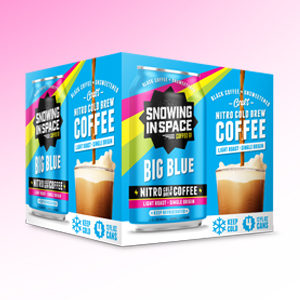
[00:12:18] Brad Avery: Can we also talk about that brand you mentioned called Snowing in Space, who's doing a bean business, launching a whole bean business, And Why have those creature packages where the Coffee Break turns into a puppet for parents who have kids to play with. It made me miss prizes and cereal boxes.
[00:12:35] Ashley Rogers: Snowing in Space is wonderful, and that was a kind of cute little surprise that came up when I was talking with them. You know, they wanted to make the move into Whole Bean as a way to diversify the business and, you know, have another line that they can sell. And I just thought when he mentioned that they were going to make these fun packages that it was just, it's a smaller part of the brand, but it's also something that just, you know, feels so ingenious and catches your eye when it's on shelf, their packaging pops. So what they've done is they've put these little monster or creature faces on the back of their, of their packaging. And so when you're done with the package, You can turn it into a hand puppet that you can give to your kids or entertain your kids with if you work from home and you have small children who often require constant attention. I hope those are child safe because I was The Wind who used to swallow the prizes.
[00:13:31] Brad Avery: You couldn't fit one of the bags on a head, so that's a good thing.
[00:13:34] Ashley Rogers: That's a good thing, yeah. I would make sure that the Coffee Break residue is thoroughly cleaned off if you don't want your kids caffeinated to all hell. I also, when I was a kid, once shoved Trix up my nose too far and had to go to the doctor. You were one of those kids. Yeah, definitely. Experiment. I've always been innovative, Brad. And Why'd you learn? Don't shove tricks up your nose, of course, and don't swallow prizes in the cereal box. Also, don't eat the rhododendrons. That was another thing I did.
[00:14:09] Ray Latif: The lessons that come out of Taste Radio are just remarkable.
[00:14:13] Ashley Rogers: If you take any lesson away from this episode, let that be it.
[00:14:18] Brad Avery: Don't do what Mike did as a child.
[00:14:19] Ashley Rogers: Rotten tangerines are poisonous. That was uncomfortable. My uncle, he ate roses, and my mom told me that, you know, hey, your Uncle Joe, he ate roses. And so I was like, oh, we'll go eat flowers too. Be like Uncle Joe. Yeah, that was a bad idea. Thanks, Uncle Joe.
[00:14:33] Ray Latif: Yeah. I really want to read a book about your childhood, Mike. I think it would be a bestseller for sure. I'll work on that, right?
[00:14:39] Ashley Rogers: Eating grass with Mike Schneider.
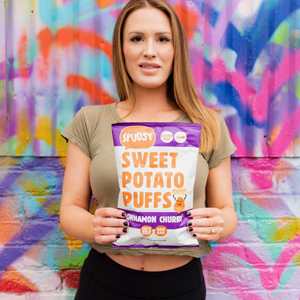
[00:14:43] Ray Latif: All right, I think it's time to get to our featured interview for this episode. That's with Ashley Rogers, the founder and CEO of Spudsy, a fast-growing brand of sweet potato-based snacks. A serial entrepreneur, Ashley cut her teeth in the food business as the founder of an ahead-of-its-time meal kit company, and is also the co-founder of protein-centric food brand Buff Bake. In the following interview, Ashley discusses how she applied lessons from her first two businesses to the development of Spudsy and spoke about the critical importance of velocity, thoughtful distribution, co-packer relationships, and reliable business partners. Hey folks, it's Ray with Taste Radio. I'm gonna call right now with Ashley Rogers, the founder, CEO, and head Spud of Spudsy. Ashley, how are you?
[00:15:30] Buff Bake: Doing great, how are you?
[00:15:31] Ray Latif: Pretty good. Pretty good. Where'd head spud come from?
[00:15:35] Buff Bake: I just thought it was like a cute, creative little title. I don't know. Sometimes I feel weird, like saying CEO or founder, like it's too legit for me. So I just like head spud. It makes it more fun.
[00:15:48] Ray Latif: It's too legit. I like that. The last time I heard that phrase too legit, that was a long time ago, but now I'm dating myself when I reference MC Hammer. He's not even MC Hammer anymore. He's just Hammer, right?
[00:16:01] Buff Bake: Sure, is it?
[00:16:03] Ray Latif: She's like, I have no idea what you're talking about.
[00:16:05] Buff Bake: No idea.
[00:16:05] Ray Latif: Let's just leave it at that. Okay. You know, you're an entrepreneur twice over, actually more than that. You're an entrepreneur three, maybe four times over. Yeah. And it's interesting because when we talked, you grew Up And this. You were raised in an entrepreneurial household. Yep. Tell us about your exposure to running your own business.
[00:16:25] Buff Bake: Yeah, so I was raised by my dad who is an entrepreneur. He's from New York and moved to Las Vegas. I was born and raised in Las Vegas. He moved to New York with like $500 in his pocket and built a little Vegas empire. He owned a chain of like 70 bars in Las Vegas called PT's Pub. And so I basically just grew up watching him start this business. And now he does a ton of other things. He didn't go to college. He barely graduated high school, but he just always had this drive instilled within him. And I feel like I kind of got it from him.
[00:17:04] Ray Latif: You mentioned you grew up in Las Vegas. That's when you started your first business. You know, how did you get into this space? You know, what really keyed your foray into entrepreneurship?
[00:17:18] Buff Bake: Yeah. So my first job was at the hard rock casino. I was a cocktail waitress out by the pool. So I worked with girls in a bathing suit, serving drinks. And a lot of these girls ate really healthy. I realized then that I never want to work for anybody else. I'm like, I had to do my own thing. So my first company that I started was a meal prep company called LV Lean Box. And this was like before meal prep was cool. This was literally like 10 years ago. I've always been into health and fitness and eating healthy. And I started prepping meals for these girls. And within like a month, I had 50, over 50 girls that I was making meals for. And eventually I had, I was making meals for this tech guy. He owned like a software company. And he ended up, he had just sold his software company and wanted to do something fun. And he ended up buying LV Leanbox off of me. So that was kind of like my first little entrepreneurial experience.
[00:18:20] Ray Latif: And how long was it between when you started the company to when you sold it?
[00:18:25] Buff Bake: I did LV Leanbox for about, it was quick, like nine months. Month one, I had 50 people that I was making meals for. I was renting kitchen space out of somebody's kitchen. And by month nine, I had like over 250 people that I was making meals for.
[00:18:43] Ray Latif: Well, if you can build and sell a company in nine months, you're doing something right. I wonder how much that had to do with the launch of your next business, which is Buff Bake. Talk a bit about what Buff Bake is and how you identified the opportunity to innovate in the category in which that brand plays.
[00:19:00] Buff Bake: So I wanted to stay in the same space because, I mean, LV Leanbox was kind of like my entry into the food space. And I saw that no one was really making protein products. Our first Buff Bake product was a protein muffin called a Buffin. And no one was really doing this product. So that was the first product we started to create. We realized that the shelf life on it was extremely short. It had a two-week shelf life. And we were shipping muffins across the country. They were moldy. So that's kind of what brought us to these nut butters. We had saw another brand, Nuts & More, doing these nut butters on Shark Tank, and I thought it was a great idea. And that's kind of how the whole nut butter Buff Bake started.
[00:19:48] Ray Latif: Obviously, you know, we see a lot of protein-enhanced nut butters these days. What made you think at the time of Buff Bake's launch that there was a consumer out there for this brand and for this type of product?
[00:20:04] Buff Bake: Yeah, I knew then the protein nut butters made sense because so nuts and more was doing them, but they were mainly on the east coast and weren't we were in California, I moved from Vegas to California with my cousin Brittany, and no one was really they weren't being distributed anywhere on the west coast. And so that's kind of why we saw a need for it. I saw like how much they were scaling their business through social media and through getting into distribution on the East Coast, that I knew we needed it on the West Coast. So that's why we started to do these protein nut butters. We just started selling them on social media. This is like before Instagram blew up, like you would post something on Instagram with an influencer, and you would get thousands of dollars in sales like Instagram five years ago. And we started selling The Wind farmers markets across Orange County.
[00:20:55] Ray Latif: You mentioned another brand that was on the market already, which is Nuts and More. The interesting thing about a regional focus for you guys is that it wasn't very regional for very long. You know, when we talked prior to this interview, you talked about the surprising amount of success that you had. early into the business's life cycle. Why was it so surprising? And Why were you so surprised at how rapidly it was growing?
[00:21:22] Buff Bake: I think I was so surprised because on our end, we felt like we didn't really know what we were doing. Like we were just, we rented kitchen space. We were make, at first we were doing everything ourselves. We were making nut butters. in a tiny kitchen in Costa Mesa, doing all of the packaging and everything ourselves and just selling them through small outlets. But because we gained so much visibility on Instagram so quickly, National Chain Vitamin Shop found us through Instagram and we ended up going from self-manufacturing in a tiny kitchen to buying equipment and renting our own building and manufacturing there to moving to a co-packer. So everything just happened so quick and we kind of had to learn along the way. But yeah, it was surprising, like from the time we launched BuffBank to the time we were in Vitamin Shop, that was all in year one. So things happened really quick for us.
[00:22:20] Ray Latif: Was quick a good thing or looking back, would you have preferred to slow down?
[00:22:26] Buff Bake: We definitely should have moved slower. I know we talked about some of my mistakes and that was one of my big mistakes and one of my big learning lessons that I'm so grateful for. was we grew way too fast. So it went from being in Vitamin Shoppe nationwide, to being in GNC nationwide, to being in really everywhere. The protein nut butter turned into a protein cookie because we wanted our name Buff Bake to make sense again. So we ended up creating this protein cookie and we basically went into nationwide distribution in really everywhere you can think of. Safeway, 20 Bar Fitness, Sprouts, northern regions of Whole Foods so quickly that we didn't really have the opportunity to dive deep in any of these stores. And it's funny because before I was like, Oh, it's so hard to get into a store like that's the hard part. But that's the easy part is getting your product on the shelf. The hard part is educating a consumer to get them to pull your product off the shelf. And that's probably my number one learning lesson within BuffBank. So I definitely would have taken it slower. But that's what I'm doing with Spudsy.
[00:23:42] Ray Latif: Well, you live and you learn, right? Well, one of the other things that you mentioned and we discussed was the name. And you brought that up, you know, Buffbake had to play in spaces where the name of the brand made sense. And, you know, to me, when I think about the word buff, I think about, you know, people who work out, protein, you know, fitness-oriented consumers. And that can lend itself to a more narrow and niche focus.
[00:24:12] Buff Bake: I think Buff Bake like such a cute and catchy name, but I do feel like Buffbake fit when we, when we first created Buffbake, we created it with fitness people in mind, fitness influencers, fitness retailers. Like, so I do think it could be a little bit polarizing to like a natural consumer. So if I were to know what I knew now, I probably would have named it something different.
[00:24:39] Ray Latif: Another thing you might have done different is find a more reliable co-packer. Now, this is something that comes up often. I always get questions from folks in our audience about how to find a good co-packer, how to establish a good relationship with your co-packer, what to do when things go wrong. You've run the gamut in terms of working with co-packers. You really stepped in it, so to speak, with your production partner for Buff Bake. Can you talk a little bit about what went wrong And Why things didn't work out the way they should have?
[00:25:13] Buff Bake: Yeah. So finding the right co-packer is like next to impossible. Like it's so hard to find a good manufacturer. I feel like that cares about your product and your baby and the way that you do. I feel like a lot of these co-packers, they just want the business. They want to pump out products and the consistency that they have lacks. With BuffPake, we definitely experienced several challenges. One, the last co-packer we had before I left the company, they produced like a $100 million brand, $200 million brands, massive brands, protein bars. And obviously these $100 million brands that are running around the clock are their priority. So we've been put in situations where we were unable to receive product for months at a time because we weren't that co-packers priority, which sucked for us because we were getting POs and orders and we had no product to ship because we were unable to produce. So just situations like that and consistency issues were always a really big challenge. definitely picking the right co-packer and finding a solid co-packer manufacturer relationship, I would say is mistake number two that I learned on that journey. And to me, that's like something that you have to find.
[00:26:40] Ray Latif: I have to think that the contract really matters, doesn't it? I mean, when you think about a problem between two parties, it's the contract that binds them. So if something went wrong, couldn't you litigate?
[00:26:53] Buff Bake: Yeah, I'm sure you could, but one, no brand wants to go into litigation because they're broke anyways. At least we did not have money to litigate. There are contracts in place, but there's like stipulations. So a contract could say like, okay, if we don't produce your order two times in a row, you have the ability to go to another manufacturer or something like that. If we don't produce your order within 30 days, you have the ability to go to a different manufacturer. But what people don't realize is like, we don't want to go to another manufacturer because You can't just pick up your fricking ingredients and walk to another manufacturer and have them make your product. You have to do pilot runs. You have to find the manufacturer. Every manufacturer is different. Their equipment is different. Your product may need to be slightly tweaked and R&Ded for it to work on a different manufacturer's equipment. That process could take three to six months to pick up your stuff and go to a manufacturer. And co-packers know that. So I feel like at a lot of times, most of the time, you're at their mercy. And I mean, it kind of just is what it is, unless you want to pick Up And move to a manufacturer and it takes three to six months or however long to get that new manufacturer to learn how to make your product. So it's just not that easy. But yeah, there are contracts in place.
[00:28:17] Ray Latif: Sometimes partners have contracts between them as in co-founders or those who have invested in your brand. But as we've noted, with co-backers, contracts aren't always the be-all end-all to keeping a relationship in line.
[00:28:34] Buff Bake: Yeah, there were several partners Buff Bake. I started Buffbake with my cousin and then we brought in two other people. And then by the time I left, there was five of us. I feel like with BuffBake, there just was too many cooks in The Pitch, maybe. And I mean, that can get hard when you have so many different partners, family, friends, like all in a company together. That was kind of the situation there. To me, like, this is my third lesson, actually. Picking your team and picking the people you surround yourself with and just having that culture within your company literally will make or break your company. To me, culture and your team is everything. And you just need to find people that are on the same level as you, that work well with you, and you work well with them. So this was a big learning lesson for me. I think there were just too many cooks in The Pitch. And ultimately, I wanted to do my own thing. And I feel like I started BuffBank with just me and my cousin, Brittany, and it just turned into so many people being involved that I just wanted to go back to it just being me or a limited amount of people. But team, culture, freaking crucial.
[00:30:00] Ray Latif: You hear that, folks? It's not just crucial. It's freaking crucial.
[00:30:03] Buff Bake: Freaking crucial.
[00:30:04] Ashley Rogers: Yeah. Do you want more repeat buyers on Amazon? Well, this free resource in collaboration with Straight Up Growth will help your brand turn first-time buyers into long-term subscribers. Download Winning the Repeat Purchase Game on Amazon now at Taste Radio slash SUG. That's Taste Radio slash S-U-G to start building retention-driven growth for your brand on Amazon. Scaling New Beverage brand into major retail comes down to operational readiness. From packaging lead times to co-manufacturing strategy, the details can make or break a launch. In a new e-book in collaboration with Octopi and Asahi Beer USA, industry leaders share what they've learned in helping brands scale. Download it now at Taste Radio slash octopi. Do you need to scale your team faster without compromising on talent? Join Oceans for a live webinar on April 20th and learn how leading companies are hiring top global professionals who are ready to grow with your business. Register for the webinar now at Taste Radio slash oceans. That's Taste Radio slash oceans.
[00:31:17] Ray Latif: Let's talk about Spud Z. You know, I'm curious, you talked about three very specific stumbling points that became lessons, but before they became lessons, I'm sure you were just like, man, this is a tough, tough business. You know, why do you get back into CBG knowing how difficult it is?
[00:31:34] Buff Bake: It is difficult, but it's what I know. It's what the last six years of my career was, was CPG. And honestly, it's what I'm obsessed with. I shop at Whole Foods and Sprouts. Those are the two main stores that I go to, but I'm obsessed with Whole Foods. I could spend two hours in Whole Foods just looking at people's brands, product and branding and ingredients. I just love it. And like, I feel like this is this is the world that I want to be in. And yeah, it's hard. But I mean, I'm really good at figuring things out. And Why I set my mind to something like I figure out a way to get it done. So I just I knew this is where I wanted to be. And I knew I wanted my next branch is to be in food, specifically in sweet potatoes.
[00:32:24] Ray Latif: Spudsy, a brand of sweet potato puffs. You know, you entered the space just as we're starting to see a lot more innovation in the puff snack category, we'll call it, puff snack segment. You know, what made you think that you could create an innovative product with a single ingredient? Because a lot of what we had been seeing was with chickpeas or pea-based protein or things like that.
[00:32:50] Buff Bake: Yeah, I just became obsessed with this sweet potato idea. I mean, when I was in Buff Bake, towards The Wind of Buff Bake is really when I just became obsessed with it. I, I saw other brands launching that revolved around chickpeas and cauliflower and other vegetables, like you said, and I don't want to eat those things, but I want to eat a sweet potato. Like you go to any restaurant in America, they sell sweet potato fries. I feel like the consumer gets what a sweet potato is. And honestly, I was just shocked to find out that there one wasn't a platform brand that revolved around the sweet potato and there wasn't a sweet potato puff. And so that's kind of why I wanted to hop on the sweet potato train.
[00:33:35] Ray Latif: I often ask this question. I mean, did you have to become an expert in your key ingredient to best market and sell your end product?
[00:33:47] Buff Bake: I mean, I would say you definitely need to know your key ingredient. I would say that I am a sweet potato expert now. If your whole brand revolves around that, I would probably say yes.
[00:34:01] Ray Latif: You mentioned that you took an independent approach to launching Spudsy, as in you wanted to run the business without partners, at least at first. Was that true also for fundraising? Was it something where you were very cautious about accepting money and from whom?
[00:34:20] Buff Bake: With Spudsy, I had a really unique situation. I think when I started Spudsy, starting a brand cost a ton of money. It just does. I want to build a household name. Like I want to build something big and massive. And that's another reason why I left buff bait to go to Spudsy because I just did not see buff bait being my household name. So when I left to go to Spudsy, I had a little bit of my own money that I used to start Spudsy. I launched a Kickstarter campaign where I raised like $15,000 in 30 days. And the manufacturer that I found to make my sweet potato puffs invested over six figures into, multiple six figures into Spudsy to get it off the ground because they believed in me and my idea so much that they wanted to be a part of it. So my situation was very unique where really I went from idea to having a partnership with this manufacturer who was going to basically help me fund getting this idea off the ground, like before I even had a sweet potato puff.
[00:35:36] Ray Latif: This is a very rare, unheard of situation. It is. And I wonder, you know, I'm sure there's a lot of folks listening. We're like, well, how'd she do it? You know, was it the brand? Did you have product ready? I mean, what was it that actually ended up selling the brand to this co-packer?
[00:35:57] Buff Bake: Yeah. I mean, I asked myself that question, but ultimately they, um, a couple of years ago partnered with another salty snack brand. Who's now like, They do 80 million plus in revenue a year. They're a massive salty snack brand. They partnered with them at a very, very young age. And it was the first investment that my co-packer made was in this other salty snack brand. They had massive success with this brand. And Why I approached them with my spudsy idea, I literally sent them an email, I think on a Thursday. And the next week I was sitting in their offices, signed an NDA, had a phone call. told them my idea, told them my background. And a week later, I was sitting in their offices, working on formulating a deal with them. And Why told me that they wanted Spudsy to be the second brand that they do this with because they believe Spudsy has just as much or more potential than the previous brand that they did this with. And we hit it off. I mean, my co-packer tells me, he's like, the second I met you, I knew you would run through a brick wall to get it done. And between like him seeing my drive and him knowing my past and the success that they've had with this other brand and them believing Spudsy can do the same thing that this other brand did from them, like the combination just It worked for them And Why believed in my idea And Why believed in me and we partnered together.
[00:37:32] Ray Latif: How did you navigate the terms of that relationship, the contract with that co-packer in such a way that you wouldn't be losing control of your company and wouldn't be giving up too much equity?
[00:37:43] Buff Bake: Yeah, so the partnership is actually, they're very minority partners in the company. So I got really lucky without me even having a product, they gave me like a very fair valuation. So I only had to give them a little piece of equity. It's so crazy. Like even when I talk about this and I go through this in my head, how this whole thing worked, like sometimes I don't even believe it. I don't know. I just feel like I was literally meant to create this brand. I'm so obsessed with it that like everything has just, it's just worked. It's just like come together and worked Not For Spudsy, it was about a six-month process getting through this with attorneys, helped me through it, obviously, to formulate this partnership. But over those six months, we started developing the product. And as soon as the partnership was finalized, we started making products and started selling products.
[00:38:42] Ray Latif: So it wasn't an overnight thing. You did do due diligence.
[00:38:45] Buff Bake: Oh, yeah.
[00:38:46] Ray Latif: As did, I'm sure, the co-packer. And I think that's an important point to make here is that even if the partnership looks great in person or on paper, it still takes time to vet each other.
[00:38:58] Buff Bake: Yeah. I will tell you right now, one thing that I learned is nothing good happens overnight. I am the most impatient person in the world. Like I want to run and get things done immediately. Like give me an answer, give me an answer, but nothing happens overnight. So that's one of the things that I've like improved within myself is my patience level over the last six years, but yeah, it definitely didn't happen overnight. It takes a long time to get those deals done, but ultimately it ended up working out.
[00:39:30] Ray Latif: Nothing happens overnight, but as you mentioned, and as we saw with Buff Bake, things can happen pretty quickly. Spudsy did carve out a pretty significant retail footprint early on. The brand is about to go national in Whole Foods in September. You know you're supposed to pull back on the reins. You know you want to pull back on the reins. But when the brand has such a following and such interest from buyers to put it on shelf, you know, what's your strategy? What's your process for taking the patient approach to expansion and growth?
[00:40:03] Buff Bake: You literally just have to say no, we're, we're saying no, or not no, but not right now. And it's so scary. Like it scares the shit out of me to tell retailers no, because you're like, what if they don't come back? Or that's $100,000 PO, like there's so many things that run through your head, but you want to dive deep in the retailers that you think you can build your brand in. And that's kind of my strategy for Spudsy.
[00:40:32] Ray Latif: Well, how do you know which retailers those are? You know, what's your process for identifying retailers where you believe the brand can be successful?
[00:40:40] Buff Bake: I believe our consumer is a Whole Foods shopper. So first you need to identify who your consumer is and where does your consumer shop. And those are the retailers that you should target.
[00:40:51] Ray Latif: It's hard to be everywhere when your team is pretty small. What was funny is that you told me for a long time it was just you and then a director of operations was your first hire. Why have you decided to keep your team so small and then tight?
[00:41:06] Buff Bake: Yeah. It was just me. I mean, we started selling product March 2019. Before that, I was in Spudsy for about a year. So it basically was me for the first year and a half. And I made my first actual real hire November of 2019. I don't think that I've purposely kept it this small for as long as I have. I just, I got to a point where like, I wanted to max out myself before I started hiring people. But now we're in the process of closing our Series A raise that will hopefully be closed soon. And now is the time where I want to start building out my team.
[00:41:49] Ray Latif: You must have used outsourced support for some of the functions of your brand. What were some of those positions? What were some of those roles that were easiest to outsource? And Why were some of the most difficult ones?
[00:41:58] Buff Bake: Yeah. So we do use a ton of outsourced people. I have a social media team that's outsourced. I have several brokers. We use third party merchandisers. So basically a team of people, they're called basemakers. They're basically our boots on the ground in regions. So they're like my eyes on the floor And Why help us get secondary placement. They help us put dollar-off stickers on bags and just make sure our promos are being executed properly. And I think that's it as third party people. So I did a smaller raise last year after my co-packer put money into the company. We brought in a group called Stage One Fund. I'm actually in their offices right now. I currently share an office with them. The CFO, Jeremy, is like our interim CFO at Spudsy. So he's been a big help and kind of like an outsourced person too. But Again, I got lucky with this relationship also. They've been amazing and if I wouldn't have raised money from them last year, it would have been another little hurdle.
[00:43:07] Ray Latif: The branding is something you brought Up And your branding is striking. It definitely feels like it's been polished right out of the gate. How much time did you spend on getting the brand right? How many iterations did you go through before you felt comfortable with moving forward with this as your go-to-market packaging?
[00:43:27] Buff Bake: We've gone through probably three to four iterations, so not a ton. Our branding is pretty similar from the time that we launched to now. We just added a little bit more color and color bars. But I don't know, to me, branding is everything. That is one of the things that I feel like I'm best at is branding. And it's something that I'm very passionate about. I like clean, crisp branding. When I go to Target, I buy stuff because of the branding. And it's just so important to me to have because I feel like that's one of the ways people pull your product off the shelf. I feel like having those words, sweet potato puffs, really big on the front of the bag was something that was really important to me. So it's like a no-brainer for the consumer to understand and get and pick Up And buy.
[00:44:19] Ray Latif: What are the elements that create that no-brainer response?
[00:44:25] Buff Bake: So, I mean, look at RxBar. RxBar, I feel like, did an amazing job with their branding because they're telling the consumer exactly what the product is.
[00:44:35] Ray Latif: Sweet potato puffs are certainly the biggest part of the package. I'd say it's, you know, that phrase takes up, I don't know, 70%. 70% of the package, whereas the logo is a bit smaller. It's big, but it's just not as big as Sweet Potato Puffs. You have plant-based on there at the bottom of the package. But what's interesting is the bag says what it says on the front. And then if you go to your website, a lot of the communication is about upcycling and saving imperfect spuds.
[00:45:09] Buff Bake: Yep. I'm glad he brought this up.
[00:45:11] Ray Latif: So why is that a big focus of your website and not so much the front of your package?
[00:45:17] Buff Bake: So it's a big focus on the back of our package. I feel like you can't be everything. And I mean, people are like, why aren't you organic? Why aren't you this? Like people are always going to like ask questions. Why, why, why? Like I tried to fit as much on the front of the packaging to have that, those words, sweet potato puffs. as big as they are. But the back of the bag is all about save the spud. And that's something that's so important to us. Like in 2019, we saved 100,000 ugly sweet potatoes. And in 2020, we will save over a million ugly sweet potatoes. So this was like a huge reason why I'm so obsessed with this concept also is because of our upcycling mission that's tied into the brand.
[00:46:04] Ray Latif: Ashley, it's been so great talking to you. You know, I first saw your product coming to our office about a year ago, and people came into The Pitch and saw your packaging, just ripped it open, started munching on these things. I love hearing that. Yeah, it's really interesting. You do have striking branding. You do have great products. And that's clearly not just me talking about it. When you do convince your co-backer to invest. When you do get into Whole Foods nationally, you must be doing something right. So congratulations on everything you're doing to this point, and good luck with everything going forward.
[00:46:35] Buff Bake: Thank you so much. I really appreciate it.
[00:46:41] Ray Latif: That brings us to The Wind of episode 88 of Taste Radio Insider. Thank you so much for listening, and thanks to our guest, Ashley Rogers. Please subscribe to Taste Radio on the Apple Podcasts app, Spotify, Stitcher, or Google Podcasts. As always, for questions, comments, ideas for future podcasts, please send us an email to ask at Taste Radio. On behalf of the entire Taste Radio team, thank you for listening, and we'll talk to you next time.
[00:47:14] Brad Avery: Hello, I am Melissa Traverse here for the Taste Radio podcast, talking about some of the biggest tension points that CPG brands and founders face when they're scaling a brand, and those are financial accounting and inventory management. I am joined by Matt Lynn, inventory accounting guru from Belay Solutions, and he is going to shed some light on all of this that is going to help everybody out quite a bit. Matt, thank you so much for joining us today.
[00:47:44] The Wind: Thank you for having us, Melissa. It's great to be out here at Expo West and it's great to sit down and be able to chat this because it's kind of a passion project of ours, working mainly with CPG brands and hoping to help them scale.
[00:47:56] Brad Avery: It's been such a pleasure chatting with you and the team and learning all about what you do over there at Belay Solutions. Can you tell us a little bit about yourself And Why your role is and The Wind of solutions that Belay gives to CPG brands and founders?
[00:48:12] The Wind: Yeah, absolutely. My role with Belay, I'm actually our inventory accounting manager. I run our inventory department, so we work with CPG brands, taking them from spreadsheets, putting them on inventory management systems, and really helping connect their tech stack between their sales online marketplaces to that inventory management system, even down to their financial systems like QuickBooks. Belay overall is kind of an outsourced accounting firm. And Why that, we're helping teams. We have different levels with bookkeeping, controller level work, even high level into CFO type items. So we really help those brands in any way that they need financially. And then I just have a subset of a department where we're really just laser focused on inventory.
[00:48:54] Brad Avery: It's certainly a complex topic and there are plenty of places to go wrong. Let's start by going right and start super simple. Can you tell us what some of the biggest red flags are that would help a founder understand or, you know, the person running a brand understand that it really is time to get some help with some of these areas?
[00:49:15] The Wind: Yeah, absolutely. I think some of the early red flags is just everything is chaos. So when they're looking in their financial software, maybe they don't really have an accounting background, And Why're kind of just piecing it together and doing their best. And Why they'll see is that reconciliations take forever, if they even happen. They have a lot of transactions that don't get coded, or they just put them into placeholders to just get rid of it so it's not an eyesore. they'll notice they have revenue but no cash or they notice that they have a good amount of cash but their blind spot is really seeing the vendor invoices that are sitting there just needing to be paid and so they just lack that clarity that's going to really be around the corner.
[00:49:52] Brad Avery: You know, you were talking about one of the red flags that comes up that I think makes so much sense. When somebody asks you what your numbers are and you can't come up with the right number, that's a big problem because that's something that you really should be able to share with decision makers who you're ideally looking to do business with. What should you be able to call up at a moment's notice?
[00:50:17] The Wind: really at any time, you should be able to know an accurate margin. It's amazing how many founders we end up talking to that they can tell you their revenue numbers, they can tell you their selling price, and then the minute you start talking about cost or their cost of goods sold, they just get a deer in headlights look. So really it's very hard to tell, am I even making money? Or if you don't know your entire landed cost. Maybe you know what the freight cost is, the duties separately, but you're not really getting that as part of your unit cost. So it's really hard to tell. Am I even making money or am I losing money from the very beginning?
[00:50:49] Brad Avery: And do you recommend that founders are able to call Up And margin by channel?
[00:50:54] The Wind: Absolutely. And depending on the number of products and channels, you kind of want to know what are your best sellers, which ones are making the most and which ones maybe you're not making as much. But especially if you're branching out and you're doing D to C with B to B, absolutely want to know that.
[00:51:11] Brad Avery: Gotcha. You mentioned that when things feel really chaotic, that's probably a red flag. I would say that it probably almost always feels chaotic if you're running a CVG brand. And I know this may be hard to quantify, but is there a revenue number? Is there a number of doors number that would help a brand understand whether or not it makes sense to bring on a partner like Belait? Understanding that so many brands are bootstrapped or they might be tight for cash. What is that friction point?
[00:51:41] The Wind: 3 3 3 3 3 But as you're growing, as you're getting to those six-figure revenue numbers, and especially as you're approaching seven, you want to make sure you've got good financials. Because as you scale to that point, most likely you're going to be looking to raise capital. And investors, the first thing they're going to look at is your books. And are they clean? And do they show a clear picture of your business?
[00:52:14] Brad Avery: You know, another area that folks might look to to organize some of the chaos are their systems. So many folks stick with Excel spreadsheets for a good amount of time. How do you know that you need to outsource some of your accounting to an organization like Belay Solutions versus maybe signing on to a Synth7 or a NetSuite or something like that?
[00:52:37] The Wind: Well, that's actually something we really help with when it comes to that cost question. That's something that trips people Up And sometimes if you just have a turnkey business, you buy and sell a finished good, you can maintain with spreadsheets. And we've had clients with million dollar revenue that can do that. But we see so many brands nowadays are using contract manufacturers. And Why're just sourcing certain parts of their product. So when you start talking cost, they have no idea exactly what their unit cost is. So that's where we come in and we kind of understand, we'll speak with the customers and the clients and get their needs. And then if we think they're ready for a system, then we'll help put them on that system so they can get some of that clarity. And it's not something we force on anybody. There are plenty of times where founders come to Up And we'll tell them bluntly, you're not ready for it right now, but we'll let you know when we think you are.
[00:53:23] Brad Avery: That sounds like excellent advice. What should a founder or somebody running a brand look for in an outsourced accounting partner? Are there certain checklist items that they should make sure that their partner be able to execute or be able to help them understand?
[00:53:40] The Wind: Absolutely. I think one of the keys, there's, there's a lot of outsourced accounting firms out there. Some focus on service-based SaaS companies, but if you're a CPG founder, you really want to make sure that your accounting firm has CPG experience. I would ask them, you know, what kind of brands have they worked with and even beyond that industry specific, because there's so many subsets of CPG. And that's something that I think is great about what we do with Belay is that we kind of run the gamut. It's kind of like the insurance commercial. We know a thing or two because we've seen a thing or two across a broad spectrum.
[00:54:09] Brad Avery: Probably getting references is always helpful, right? Absolutely. All right. So this all sounds great. I think we have a really good understanding of would it make sense to hire an outsourced partner? You know, what some of the things you should be looking for are. What does offloading this kind of work mean for the brand? What can this do for lightening the load of a founder or lightening the load of a brand operator? Like, how does that help The Wind their everyday business?
[00:54:39] The Wind: It just tries to really help quiet the chaos. So what we're looking to do is just take some of the weight off that founder's shoulder, let them focus on building the brand, building the business, getting that exposure. If you don't have sales, you really don't have anything. So we want them to be able to focus on that while we take care of your back end office work. And we can just present that to you on a monthly basis, you can help make decisions, you can take that to investors. And really, you can just focus on growing your business.
[00:55:04] Brad Avery: I feel like I felt founders and the folks who are running brands collectively sigh a breath of relief just hearing that. How can people learn more about Belay Solutions?
[00:55:15] The Wind: So people can text TASTE to 55123 for their free inventory guide to get started.
[00:55:21] Brad Avery: Matt Lynn, inventory accounting guru at Belay Solutions. Thank you so much for joining me here at Expo West. It's been such a pleasure to chat with you and learn about what you all do over there to help founders and brands with their financial accounting and inventory management. For everybody else out there, thank you for listening to the Taste Radio podcast. I am Melissa Traverse and we'll see you next time.