[00:00:05] of snack: Hey Mike, can I get a quick status update on BevNET Live and Nosh Live, please?
[00:00:09] Ray Latif: Landis, there's over 550 people registered for BevNET Live, and Nosh Live is going to be our biggest show ever? Twice the size of the last one by conservative estimate.
[00:00:18] of snack: And I heard that the room block at the Lowe's Santa Monica Beach Hotel is completely booked. Is that true? It is true, but we have you covered. We procured a limited number of rooms at the nearby La Meridienne Santa Monica Beach. Well, folks, that's been your status update for BevNET Winter Events. And it's like I've been telling you, get your tickets soon and join us in Santa Monica, November 29th and 30th for Nosh and December 3rd and 4th for BevNET Live. And December 1st for the Cannabis Forum for Food and Beverage.
[00:00:45] Ray Latif: Visit BevNetLive.com and NoshLive.com for details.
[00:00:50] of snack: And now Taste Radio.
[00:00:54] Ray Latif: Hey folks, welcome to another edition of Taste Radio Insider. I'm Ray Latif and with me are my BevNET colleagues Mike Schneider, Jon Landis and Brad Avery. This is episode nine of Taste Radio Insider and we're recording from our Taste Radio studio in Watertown, Mass. In this episode, we feature an interview with Nik Ingersöll, the co-founder and CMO of innovative banana snack brand, Barnana. Just a reminder to our listeners, if you like what you hear on Taste Radio, please share the podcast with friends and colleagues. Of course, we'd love it if you could rate us on iTunes. It's a running gag here. Mike Schneider, have you rated us on iTunes? Uh, I think so. Yeah. Have you rated both Taste Radio and Taste Radio inside? I don't think I've rated the insider yet. No, I mean, I don't want to be the only one on there going.
[00:01:39] Brad Avery: You're not the only one.
[00:01:40] Ray Latif: We'We Got at least a hundred ratings on a trendsetter or trailblazer trendsetter. That voice you heard is Brad Avery's voice for those who are relatively new to the podcast. Brad's been on the podcast before, but not recently. Brad, thanks so much for joining us.
[00:01:54] Carol Ortenberg: Thank you. Thank you.
[00:01:54] Ray Latif: Glad to be on. I'm jumped all over your lines there. Brad is a staff reporter with BevNET. And he's joining us today because he wrote a couple interesting articles that we published on the site last week. But before We Got to that, let's talk about today itself. Black Friday. For those who are listening on Friday. Which is most of you. I mean, you're subscribed, right? You've said, hey, Siri, subscribe to Taste Radio Insider Podcast. That legit just happened and we're not cutting that. Well done.
[00:02:29] Nik Ingersöll: Wow.
[00:02:30] Ray Latif: That's uh, that's pretty sensitive. Chill with the cola archive. It hurt through my pocket. Just so you know. You're making the right podcast.
[00:02:37] Carol Ortenberg: Okay.
[00:02:38] Ray Latif: So you're, you're, you're subscribed. Now you just need to rate. Yeah.
[00:02:41] Brad Avery: Okay.
[00:02:41] Ray Latif: All right. I'm on it, Ray. Okay, well done.
[00:02:44] Carol Ortenberg: Hey Siri, play Despacito.
[00:02:48] Barnana Car: She doesn't know your voice.
[00:02:50] Ray Latif: Brad, you're like an old hat over here already. Well done. No, if you're listening at the day of publication of this podcast, it is Black Friday. If you're listening the Monday after, it's Cyber Monday. So, We hope all the brands participating in what we'll call sales holidays are doing quite well. And actually hope everyone's Thanksgiving was great. If you had a turkey, tofurken. What is it, tofurken? You mean a turducken? Turducken, yes.
[00:03:16] of snack: I confused the two.
[00:03:17] Ray Latif: Those are two things you shouldn't confuse. Does Beyond Meat make a turkey yet? I don't think so. They make sausage.
[00:03:21] of snack: Impossible Burger? Any of those guys? No. I haven't heard about any plant-based turkey. Will it come with the carcass? Oh, yeah, are you gonna make soup?
[00:03:32] Ray Latif: What about the leftovers? All right, for sandwiches, for listeners out there who have a brand that makes a plant based turkey product, please send it to us. You can send it to Taste Radio, Attention Ray Latif, or Jon Landis, or Mike Schneider, perhaps even Brad Avery. I will eat it. 44 Pleasant Street, Suite 110, Watertown Mass, 02472. There you go. We'll put that in the show notes as well. It's a giant ball of gluten. Can't wait. Well, happy Thanksgiving to all. Brad Avery, now I mentioned this at the top of the show. You're here because you wrote a couple of fantastic articles that appeared on bednet.com last week. And one of them was on nootropic beverages. For listeners out there that don't know what nootropics are all about, what are they?
[00:04:15] Carol Ortenberg: OK, so nootropics are otherwise known as smart drugs. And it's a bit of an umbrella term because it can apply to anything that you take and has a effect on your brain function, on your mental capacity. And people kind of take them to try and get an edge. So it can be anything from adaptogens and other natural occurring substances to synthetic drugs. And in that area, there's a whole spectrum from, things that are, you know, generally regarded as safe to the wild frontier of, you know, take it your own risk. So it all falls under this umbrella term of nootropics.
[00:04:56] Ray Latif: So what you're talking about is everything from supplements to ingredients. Right. Legal, illegal, and otherwise.
[00:05:02] Carol Ortenberg: Right. And for the most part, the industry for nootropics is largely focused in supplements right now and has been for many years. where pills and powders and the like, and largely e-commerce is the big area, but you can find them in various supplement shops and specialty spaces, but largely the business is centralized online.
[00:05:26] Ray Latif: If the lines of legality are fuzzy, how do they get away with the e-commerce?
[00:05:30] Carol Ortenberg: I think that kind of almost opens it up more in some ways. I think it almost makes it a little more acceptable. So there's one little trick where sometimes they'll label a product as research chemicals, which can get them through FDA regulations if they're being labeled and branded the right way. Sometimes they run afoul. Sometimes there's something like, I hope I'm pronouncing this correctly, Paracetam, which is banned all sales in the US, but for a few years was very popular. But it has a variety of side effects and you can get it overseas. So sometimes people still get it in the UK or elsewhere in Europe, but US FDA has cracked down on that. And that is, you know, as far as beverage companies go, they've been using it. Some of them that I spoke to said they originally planned on using it or were using, but later removed it.
[00:06:20] of snack: You might have to go on the dark web, Mike.
[00:06:22] Ray Latif: Well, it's interesting you mentioned that, Jon Landis, because, Brad, in your article, you mentioned a very large community that follows a subreddit focused on nootropics. And that's not necessarily the dark web, but it is. Weird things happen on that subreddit, yes?
[00:06:39] Carol Ortenberg: Yeah, so okay, so to kind of take you through, so that subreddit has about 150,000 plus subscribers right now, and a lot of them are active, constantly posting, talking about Nootropics. So where did this all begin? So Nootropics have, you know, been around for many years, but they kind of have their modern basis in biohacking. And I think if you're in the beverage industry, you might know biohacking, thanks to Bulletproof CEO Dave Asprey, who has been a big proponent of it. But biohacking can, you know, predated Bulletproof and has a variety of different terms. Just like nootropics itself, it can be anything from just meditating or, you know, scheduling your sleep differently to full-on cybernetic implants and microchips. And there's been people who put in, like, magnets in their fingertips just to see what happens. They're playing around with the human body. So the concept of hacking, like when computer hacking kind of comes down to biology and the body, and how do you optimize performance? How do you kind of take your body to the next step? So that's where nootropics has kind of come in, is it's a way to play around with your biology, with your brain, and try and optimize your performance. So there's a lot of keeping track of changes, of supplements, and so that's kind of where the concept of the nootropic stack comes in, is they'll play around with different types of nootropics and see how they interact. One of the big most well-known ones is caffeine plus l-theanine. kind of gives you a more level focus. So that's kind of a common stack combination.
[00:08:09] Ray Latif: So as it relates to beverages, how are some of these products being marketed? And is it becoming more mainstream?
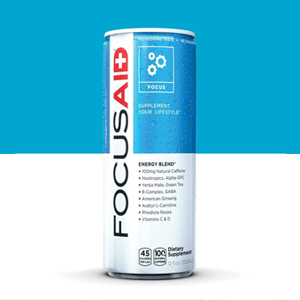
[00:08:15] Carol Ortenberg: It's hard to say if it's becoming more mainstream. I don't think we're at that point yet. I think we're really at the beginning of nootropics and beverages. And that was part of the reason why I wanted to write the story is because there's been brands that have been around for a number of years, and none of them have taken off. They still are very niche, and the supplements area is much bigger. The supplements area, companies like Nootrobox, or now known as Human, H-V-M-N, You know, have taken investment from injuries in Horowitz and a lot in the tech space. But in beverage, it's much more early stage. So one of the bigger brands that is doing it and has the largest distribution that I'm aware of. LifeAid and they have their FocusAid SKU and so that uses nootropics and uses some caffeine and uses some other Ingredients for it, but they have you know about 10,000 points of distribution right now and in retail and According to them. It's their second best-selling SKU right now.
[00:09:14] Ray Latif: What are the what's the what's the claim on FocusAid more better focus?
[00:09:19] Carol Ortenberg: The better focus. So, you know, I think we've heard a lot in, you know, in coffee and in other types of spaces about how, well, you want more energy but you don't want the jitters or you don't want the crash. And so this is just sort of another way positioning yourself in the energy area where it's saying you're going to get better energy. You're going to get more focused, more level energy without the crash, without the jitters. And that's kind of what this is doing, except it kind of has a bit of a science sci-fi type of aesthetic to it. We're saying, well, you take this special, you know, smart drug that's going to really open up your potential and your ability to focus. Interesting. So it's a so it's an enhanced function. Exactly, you know communicating this is hard to to a mainstream consumer This is very much, you know, not not to be derogatory, but this is a nerd stuff This is stuff that people who get talking about stuff like stacking and you know different, you know And and basically like you said hacking and mixing Chemicals with weird names and all of that. This is something people get very obsessive over and it becomes a hobby. So you gotta now make the transition to can you get a mainstream consumer to not only go for it, but understand it and know what they're getting. So I think trying to play off of the energy space is how you're gonna do that.
[00:10:35] Ray Latif: Especially if these are, these nootropics are highly interactive and the results of combining them are unpredictable.
[00:10:44] Carol Ortenberg: I mean, that's why if you're developing a beverage like this, you have to really put in your research and know what you're doing. So, you know, I brought up LifeAid with FocusAid. I mean, they have a lawyer, they have an FDA guy that they can go to and be like, is everything here, you know, completely by the books? Is everything here safe? Is this a combination that's going to work for consumers? And that, you know, before they bring it to market, they make sure they've, you know, dotted their I's and crossed their T's.
[00:11:10] Ray Latif: So it sounds like that's a really good reason to attend BepNetLive or NoshLive, right? To meet one of these attorneys, one of these experts? That's absolutely right, Ray. That was a prerecorded line that we're just ready to... We pressed the button on that.
[00:11:25] Barnana Car: I got it.
[00:11:26] Ray Latif: I'm going to push the button. Ready? Watch.
[00:11:29] of snack: I got the button right here. That's absolutely right, right?
[00:11:33] Ray Latif: Anytime we need it, we just push the lambdas button.
[00:11:36] Brad Avery: Well done. Well done.
[00:11:37] Ray Latif: I feel like Fred from the CERN show now. Well, I mean, the amount of education that it's going to take to communicate these benefits is pretty high and it is going to cost a lot of money. I think that it probably is really the barrier for this idea of nootropics going mainstream.
[00:11:53] of snack: And that's what I think we've been seeing with the nootropic brands to date. I mean, Brad touched upon it in his story as well. It's. It's a subjective functionality. At the end of the day, it's going to affect different people in different ways. And the level of efficacy is going to be different with different people. I mean, I'm sure if you're talking about biohacking, in my head, I'm thinking, oh, well, it's probably dosage based on your weight and other consumption. And when's the right time to consume this? Before or after a meal and things like this. So there's a lot that has to happen here. Before all that happens, we need a population that's really open to the idea of like altering, you know, their brain in positive ways. It's literally like taking drugs to do better work. So, you know, a lot of people don't like taking drugs, surprisingly, shockingly.
[00:12:49] Carol Ortenberg: I don't know how to follow that. I think there's one drug that people are starting to turn to. Exactly. Yeah.
[00:12:56] Ray Latif: Nice transition there, Brad. Well done.
[00:12:58] of snack: I mean that's that's been an it's been very eye-opening for me to see how crazy the population here seems to be for CBD knowing that it's existed all this time and like you know I've known about it forever and nobody's seemed to care about it until before 2018.
[00:13:17] Ray Latif: That's because people like me didn't know that there's, you know, that THC and CBD are different. We didn't know, there wasn't a lot of education for the mainstream around the medical uses of marijuana. Plus there are people, you know, who would just shut that message off because they are averse to taking drugs. Yep. There you go. Well, there is still a question of whether or not you can actually sell products that are infused with CBD. And we had a reporter who could write a story about it. Brad also wrote a story about four beverage brands that use CBD as a functional ingredient. And, you know, in your story, you mentioned that there's an upcoming farm bill that might affect how some of these products are sold. You know, what does that bill entail?
[00:14:06] Carol Ortenberg: OK, so there's a little bit of background on that. In 2014, the last farm bill, which was signed by President Obama, kind of opened up a pilot program for hemp cultivation research and did a little bit of work on that. And now there's all this talk about an upcoming farm bill that I think was supposed to be here by now, but it's still not come, that is really going to open the door. It's going to basically fully legalize CBD and industrial hemp, not marijuana or THC, but industrial hemp cultivation. And there's a lot of bipartisan support for this. Senate Majority Leader Mitch McConnell is a big proponent of this. I think part of that is because his home state of Kentucky is a big area for hemp cultivation and agriculture. And so this would really clear a lot of that red tape that comes with CBD, and it would make sure that sale of it is completely legal in all 50 states.
[00:15:01] Ray Latif: Sale of CBD-infused products or sale of the ingredient CBD?
[00:15:06] of snack: Both.
[00:15:06] Ray Latif: Both. OK. So it sounds like Jon Landis knows all this already. He read the article. Yes. So as of now, it sounds like most of the CBD sold is not grass, generally recognized as safe.
[00:15:18] Carol Ortenberg: This whole thing is so caught up in politics, but, you know, one thing that happened recently was Attorney General Jeff Sessions resigned for reasons completely unrelated to this, but he was one of the biggest marijuana hawks in Washington, D.C., and when he resigned, the cannabis stocks just went through the roof now that their biggest opponent was no longer in charge of the Justice Department.
[00:15:37] Ray Latif: Yeah. Interesting conversation. Much, much more to discuss about CBD, cannabis, and THC at Mike Schneider. Cannabis Forum for Food and Beverage, Ray. December 1st at Lumeridian in Santa Monica.
[00:15:50] of snack: Man, I was talking to someone just earlier today who was coming to Cannabis Forum and Beverage School and BevNET Live. And We Got four full days of curated content and dedicated networking sessions. And I mean, people are just excited. I mean, I walked in the office. Did you guys feel like the excitement kind of just buzzing around this place today?
[00:16:10] Ray Latif: Yeah, we had a company meeting today and everybody got together. You know, we're ready. I mean, we're ready. We're getting ready to go out. We're talking about, you know, last minute preparations, dotting I's, crossing T's. The thing I'm worried about, Landis, is are people as prepared as we are? Are they going to the lists? Are they looking at the investors? Are they making lists of questions? It's a holiday season.
[00:16:36] of snack: Are they making their lists and checking it twice? I found that the people who have their tickets are, and the ones that don't are the ones that aren't. That seems pretty intuitive. Yeah, I feel like the people who aren't prepared are the ones still eyeing coming to this thing. And I really only have one question for you people. What are you waiting for?
[00:16:59] Ray Latif: Well, take advantage of the list that we put together of companies that are coming. Look through the investors, look through the suppliers, look through service providers and make a list of your hardest questions for them. You know, and look at their bios, look at their profiles, see who the investors have invested in, find companies that are similar to yours, you know, find investors that have a similar philosophy to you or at least the company that you want to build and then go in and ask some questions and first of all, see if they invest in companies that are, you know, at your stage, you know, if you're early stage and you're talking to a late stage investor, it's good to have that conversation, but don't talk to them about investing in you now. Talk to them about what do you need to do to get to that level where they will invest in you, and what do they recommend that you do to get there, you know? What kind of money should you be taking right now? What should you be trying to prove? at this stage of your company with the money that you take and how much do you need to do that? Because you don't want to take, you never want to take too much. You don't want to have too high of a valuation because you won't be able to get your next round.
[00:18:04] of snack: One of the questions I hear a lot of the time, Mike, is am I too early to be attending this event? Really, the earlier stage you are, the more you gain to benefit. And think of it this way, if you have a early stage business, the smaller and earlier you are, all the businesses out there were that size. Not all of them grow to be the big size. The bigger you get, the more complex your business is. But when you're small, it's really well-known and really well-established. And there's a lot of people out there who have a lot to offer and to help. And that's the best time to be taking the most that you can out of these events.
[00:18:38] Ray Latif: You're going to find out a lot of what you don't know when you come to these events. And you're going to find the partners that kind of calm you down and tell you how you're going to get to these next milestones and how you can achieve scale. So find a supplier, ask them your questions about formulation, ask them questions about co-packing, and ask them about the companies that they work with and find out what you need to do to get to that level. Because that's what you're going to be doing in an earlier stage to get to the stage where you can scale the way you want to be able to scale. And Jon Landis, to your point earlier, I mean, I think some of these early stage companies are like, oh, is it worth it? Am I going to get anything out of it? You know, I think a lot of it is maybe they feel like they're walking into something kind of alone, like they're, it's just too big for them to really digest. But you're not walking into it alone. I mean, And I'm really serious about this. You have people that you can rely on, like come and talk to us. Come talk to me. Come talk to Brad, Jon Landis, Mike Schneider, John Craven. We absolutely want to network and talk to you folks. And if you are looking to speak with someone specific, We'll try our best to help. If you're looking for a supplier, if you're looking for an investor, we can try our best to point you in the right direction.
[00:19:46] of snack: But never think that you're walking into this conference alone. It's a common feeling, though. I mean, especially with BevNET Live with 800 people coming, it's really overwhelming. But come to the Beverage School beforehand. Come to Boot Camp before Nosh. You know, spend some time with us, you know, get oriented and acclimated to the whole thing. And our badges are so red that they like glow. We're like the easiest people to find. We're everywhere. We have people all over the place. Everyone on our team wants a chat with you guys. Brad, I know, I mean, having a conversation with Brad is only going to help make his job easier.
[00:20:18] Carol Ortenberg: Yeah, I mean, I can tell you just as a reporter, I mean, so much of what I do covering the industry is just from my desk on the phone. So it's great to be able to meet people in person and have a full conversation face to face. Or even if we haven't met yet, I, you know, I want to hear your news. I want to know what's happening with your company and I want to stay in touch so that when you do have developments that you can reach out and we can, you know, Get that news out there.
[00:20:40] Ray Latif: Did you hear Brad say you can talk to him on or off the record? I mean, that's huge. People don't know about that, that you can talk to a reporter about what's coming so that they're ready when it happens. Yep. Well, you can talk to Brad off the record. There's just no guarantee that you're going to keep it off the record, right? No, I'm going to stay off the record.
[00:20:59] Carol Ortenberg: I'm going to keep destroying my reputation.
[00:21:02] Barnana Car: He's a total pro.
[00:21:03] Ray Latif: I'm just messing. Brad's a fantastic guy or a fantastic reporter. And I'm really happy that you joined us today. on Taste Radio Insider. Yeah, fantastic reporter.
[00:21:12] of snack: Okay guy. All right, all right.
[00:21:17] Ray Latif: Let's get to our interview with Nik Ingersöll. As I mentioned at the top of the show, Nick is one of the co-founders How Barnana Car fast-growing brand of banana-based snack foods. He's also the CMO and drives the creative vision for the brand, which is known for its bold packaging and quirky promotions, including its Barnana Car, which, as you may have guessed, is a big banana on wheels. In 2016, Nick was honored by Forbes as part of its annual 30 Under 30 list and was back in the Boston area for an event celebrating this year's class. He graciously visited BevNET HQ for an interview with Nosh editor Carol Ortenberg and BevNET CMO Mike Schneider, which explores the branding and design strategy How Barnana, which recently underwent a rebrand. As part of the conversation, Nick discussed the thought process for packaging of different product lines and determining what to include on the front of packaging. He also explains his perspective that brands have to take risks to move the market and how to balance internal feedback about design from investors, board members, and co-workers.
[00:22:22] Brad Avery: Hi, everyone. Carol here. I'm with Mike and Nik Ingersöll, who's the co-founder and CMO of snack band, Barnana. Nick, you're in town for Forbes 30 Under 30. Thanks so much for joining us.
[00:22:34] Nik Ingersöll: Thanks for having me. Stoked to be here.
[00:22:37] Brad Avery: So for our listeners at home with that, can you tell us about How Barnana is?
[00:22:42] Nik Ingersöll: Yeah, How Barnana is the banana snack brand. We upcycle bananas that used to go to waste at farms in South America and turn them into delicious snacks. So we make banana bites, banana brittle, and plantain chips. Why would these bananas be be wasted? So, bananas that you see in the supermarket are usually green. They look like, you know, you take them home and in a couple of days they're going to taste pretty good. And they may have some nicks or bruises from transport. But at the farms, if they have any nicks, cuts, any sort of abnormalities, they're too big, too small, they don't fit in a box, then they're just set aside and they just go to waste. They're composted or sold for dog food, that kind of thing.
[00:23:20] Brad Avery: So what made you want to start a banana-based company? Was this something when you grew up, you were like, you know what? I just, one day I want to do something with bananas.
[00:23:29] Nik Ingersöll: Yeah, I don't know if you if you told me when I was 13 that I was going to be slinging bananas for cash for a living, probably wouldn't have believed you. So yeah, it was one of those things where, you know, I met Kawai when I was in undergrad. So my business partners, Matt and Kawai and I started this in 2012 was when we launched. 2013 was our first full year. And in Brazil, you have all these different sorts How Barnana based snacks. How Barnana passa, Barnana Car. But in Anina, they're just kind of dehydrated bananas. They're wrapped up in cellophane, sold on street carts. Sometimes they're mixed with brown sugar and things like that. And there had just been nothing like that that had been in the U.S. before. And so acai starts coming over, coconut water starts coming over. These things have been in Brazil for a very long time, but just never packaged and sold to the American consumer. And so that was kind of what sparked the idea.
[00:24:14] Brad Avery: And Cowie's from Brazil, right?
[00:24:16] Nik Ingersöll: Yeah, he's from Curitiba.
[00:24:18] Brad Avery: So how, I mean, there's lots of products that internationally are huge. And how do you decide that that's the one that's going to make it and that you should commercialize for the American market?
[00:24:27] Nik Ingersöll: Well, you don't. You know, I think for us, it was just maybe we collectively have a higher tolerance for risk. I think that oftentimes if you try to analyze the market too much, especially for things that haven't been done before, you can find yourself doubting what you're doing. Also looking to other markets like Brazil, and seeing that it was successful there gave us a little boat of confidence. But How Barnana Car the number one selling fruit in the U.S., more than apples and oranges combined. So there's no education around bananas. Well, yeah, and there's no secondary products either, right? Because you have with apples, for instance, you have applesauce, apple cider, apple this, apple that, you know, apple everything. But with bananas you have... Nothing.
[00:25:09] Brad Avery: Maybe some like banana chips occasionally.
[00:25:11] Nik Ingersöll: There were some, yeah.
[00:25:12] Brad Avery: They're like the ones you pick out of the trail mix usually.
[00:25:14] Ray Latif: There's some frozen bananas at, you know, Trader Joe's and stuff. But you're right, they're edge cases.
[00:25:18] Nik Ingersöll: Yeah, yeah, exactly. And so that was kind of the white space opportunity that we took advantage of.
[00:25:23] Brad Avery: As CMO though, it's kind of up to you to figure out a way to market that and make it appealing to U.S. consumers.
[00:25:31] Nik Ingersöll: Yeah, that was a big thing. And when cows would bring these bananas back, they're wrapped up in cellophane and they're brown and kind of ugly and super sticky. And so just eating them alone, you need some sort of antibacterial hand wipes or something, a sink close by to eat them. And so we're like, all right. We can't do that, and so what we decided to do for our very first product, which was the original Banana Bites, is chop those things up, dehydrate some bananas all the way, crush them up into banana powder, and then dust them on there so that way they don't stick to your fingers. They're more visually appealing. We decided to put them in a nice stand-up pouch so people could share. It looks pretty, and that's kind of what we decided to do, as well as introduce other flavors like chocolate and things that people like.
[00:26:11] Ray Latif: And speaking of looking pretty, I mean, you just talked about being basically an ugly fruit brand, but there's nothing ugly about banana. Why didn't you embrace it the other way around?
[00:26:20] Nik Ingersöll: Well, in 2012, we were kind of at the forefront of this whole upcycling thing. We were kind of doing it before that term was around, and so there was very little, if almost no awareness in terms of upcycling anything, let alone bananas. When you use the word ugly fruit, people, especially with bananas, have a lot of misperceptions. So the bananas that we use, if you saw them in South America, they're still green, right? They look like if you left them in your house for four or five days, they'd be good to eat. But when you talk about bad bananas or ugly bananas, people think of them like the ugly bananas that sit in their kitchen. So that was a challenge for us, for sure.
[00:26:58] Brad Avery: There's also a lot of messages there, right? You'We Got the nutritional benefits, you'We Got the ugly fruit, you'We Got the upcycling. Your package is pretty honed and tight on what your message is. How did you dial in on what's going to resonate and really move the needle with consumers?
[00:27:14] Nik Ingersöll: Yeah, at the beginning it was just kind of ruthless focus. I have a design background, so I do all the design and branding at Barnana Car the packaging and all of that. I'm a bit maniacally focused on designing things in general, so whether it'How Barnana things or just random things that I think up. And so it starts there, right? And then we really look at the product and say, what does differentiate us? I think that a lot of times people get really romantic about the story of what their product is without really telling consumers how it tastes, that it tastes good, the actual things that they need to know to make that very, very short consideration window valuable for them when they see it on the shelf.
[00:27:50] Ray Latif: We're really curious about how the evolution of the message works here on Taste Radio.
[00:27:53] Brad Avery: And how did you kind of figure out what did and didn't work? Did you do consumer research? Is this just like a founder's gut feeling?
[00:28:02] Nik Ingersöll: Yeah, at the very beginning it was definitely pure gut instinct. And also we were all, all three of us are athletes and eat really healthy. So we are our consumer in a lot of ways. So in that regard, it was a bit easier, but it was kind of like trying to figure out when your spaghetti is cooked, you just kind of take it in your hand and you chuck it at the wall and then just kind of see if it sticks or not. So the first iteration was definitely that.
[00:28:24] Ray Latif: Thanks for going PG on that, by the way.
[00:28:26] Nik Ingersöll: You're welcome. And, you know, if you think about the different iterations of the packaging, and especially if you ask my two business partners, we iterate the packaging relentlessly, like all the time. And so it's always fine tuning and you do have to pay for plate costs and things like that, right? And we just went through a rebrand of the bites that are now on shelf.
[00:28:48] Ray Latif: Can you upcycle old brands? Because I think there's a lot of brands out there that would like your previous iteration. Yeah, I would like to do that.
[00:28:57] Brad Avery: Oh my God, new business model.
[00:29:00] Nik Ingersöll: Upcycling brands, yeah, that's a good one.
[00:29:02] Brad Avery: That redesign was a pretty major shift and it originated with the Plantain Bites in January. What were you trying to achieve with that and how did you sort of use this new product as a launching pad for a whole new brand look and feel?
[00:29:17] Nik Ingersöll: Yeah, it's one of those things where we decided to launch these plantain chips, and plantains are part of the banana family, but definitely categorically different than the banana bites, right? You're talking about a savory, salty snack, a crunchy thing that people already know, right? They know what potato chips are, and this is sort of the first formidable potato chip competitor that isn't made of potato that is still flavor-forward and all these different things. That gave me the opportunity to have a blank canvas and say, okay, what do I want to put on that canvas? And when you're working with an existing look and feel of a product, it's much, much, much more difficult to redesign something like that because you're working against people's perceptions, right? And as soon as you see something, you can't unsee it. And so already burned into their retinas is the old packaging. So the plantain chips kind of provided us a way to look at the brand with fresh new eyes. The decision that I made was to take that banana leaf that we had always used in all the packaging and make it more Technicolor, make it more tropical and true to where the product comes from. And that was kind of what kicked it all off.
[00:30:19] Ray Latif: I would encourage founders who are listening to the story or designers who are listening to the story to go out and look at How Barnana package and note that it does not say the first formidable potato chip competitor that is not made with potatoes. I mean, you say that without saying it. That's the key in design.
[00:30:36] Nik Ingersöll: Absolutely, yeah. I mean, a lot of it is you have a very small window to get somebody to pick that thing up and a smaller window to have them consider it before they put it into their cart. And if you miss out on that, or even if you're too literal, I think, you lose a lot of brand in doing so.
[00:30:51] Ray Latif: Find a designer that wants to drive trial and cares about driving trial.
[00:30:55] Brad Avery: I mean, I just look at the shelf How Barnana chips and I'm like, ooh, pretty rainbow. I want those in my cart.
[00:31:00] Ray Latif: But what was the rainbow all about? Because the previous iteration of the brand was all very uniform. So it said barnana first. And what was the thinking behind making the brand more prominent and going with colors for a flavor differentiation?
[00:31:14] Nik Ingersöll: Yeah, so I think that in package design in general, one major mistake that I see happen very often, and I made this mistake very early on during the spaghetti throwing, seeing what sticks moment in the company at the very beginning. Can I cuss on this show? You can.
[00:31:30] Brad Avery: You can definitely.
[00:31:30] Nik Ingersöll: We'We Got PG-13. Yeah, all right. Or are. I think one of the big mistakes that people make is they underestimate, or really what it is, is people that are designing packaging overestimate, they give the consumer too much credit in discerning between flavors. And I made this mistake when we first started and it baffles me that you could make a bright pink package and a bright green package and people are still going to be slightly confused as to what flavor that is. So I would encourage everyone, it doesn't need to be a color block per se, but really differentiate between flavors, people are very easily confused. And for us, I think it's also important to show what the product is on the front, make banana bites really prominent, and make that sort of the template that goes across all product lines.
[00:32:22] Ray Latif: When you're choosing colors, how important is it to choose a color that somebody else in the market's already chosen for that? For instance, pink. To me, pink, savory snack, maybe pink salt? Yeah. Yeah, absolutely.
[00:32:31] Brad Avery: But there's also not a lot of pink chip brands playing devil's advocate. Like I walked through that aisle. It's a lot of bright reds, maybe some blues and greens, but there's not a lot of like neon.
[00:32:40] Ray Latif: Do you want to be leading the charge or do you want to be doing Carol saying you're going out there and seeing what everybody else is doing if you're going to compete?
[00:32:46] Nik Ingersöll: Yeah, it's a little bit of both for sure. I mean, you don't want something that's so categorically different and alien that people can't recognize what it is. But for me, I think it's important to take those risks and be on the cutting edge. Everything that we've always done is being on the cutting edge of what we're doing. And we're not afraid to go out on a limb and play in that upper 20% and have some things not work. And even for the new rebrand on the Bites, the package is sort of a lavender purple, you know, nice little Technicolor package for chocolate. And you don't see a lot of bright purple chocolate packaging. And we do have brown on the top and bottom, but same thing with a pink salt, right? It's a salted plantain chip, and it's in a bright pink package. But, you know, I think that you have to take those risks to move the market. And when people get too safe and play it too safe, especially with package design, everything just starts to look the same.
[00:33:34] Brad Avery: You also, you know, you mentioned assuming consumers can tell the difference between your products. You also don't make the assumption that consumers want to know everything about banana on the package. And sometimes I pick out a package and there's like tiny font romance copy that, like you said, you'We Got 10 seconds to catch that consumer's attention. How did you decide what made it and got cut? Like, you know, athletes and upcycled bananas and native Brazil. It's very honed in on what you guys talk about.
[00:34:03] Nik Ingersöll: Yeah, you can really get yourself lost in the jungle with trying to put too much on the front of a package. So a lot of brands, they'll be too descriptive on the front of snack. They'll have arrows all over the place. Oh, it's this part is crunchy and this does that. And, you know, there's just sort of this word salad of nonsense with a little Caesar dripped on top. And you're just like, you know, sorting through to find the croutons like what is in this thing? And it gets kind of tough. You know, it's easy to do that. I think that's the easy thing to do. It's very easy to put everything about your brand on the front of snack, but it's very difficult actually to be reductive and say, these are the most important things to put on there and that's what we're going to go with. And you'll have a lot of debate, right? Ah, well, I think this should go on. no, this is so important." Well, everything is important, but again, it's really that consumer is going to see that product for the very first time. They're going to see the front of the package. If you don't capture that, nothing else matters. Your story doesn't matter. Nothing matters because they'll never pick it up. They'll never put it in the cart. You can put some more romance copy on the back. But where the hook really is, is once you get that consumer, it tastes great, they like the way the package looks, they learned a little bit more about the brand on the back, they go to your site, they follow you on Instagram, whatever that is, that's what you do.
[00:35:20] Ray Latif: And they tell their friends, yeah. Yeah, exactly.
[00:35:22] Brad Avery: I don't think it's always that it's easier. I think sometimes it's also you fall in love with your brand and you fall in love with the story and you want to tell everyone everything about the story. It's kind of, I imagine, because I don't have one, like having a new baby. You want to tell everyone about the wonderful things that your kid does. And I imagine as a founder, it's hard to pick, you know, what's what's the most important part of my baby?
[00:35:44] Nik Ingersöll: It really is. And I don't have a baby either. But yeah, I think that... Mike, we're looking to you. I've done the dad jokes. People know. Yeah, so it's like, ah, do I leave the arm? Do I take off a foot? I'm sorry, I was just rolling with the analogy. Yeah, I think it's interesting, like people do fall in love with their brand. I think it serves as a liability in a lot of regards in several different ways. So being too romantic about your story and what you're doing, being overly romantic about it, it has some pitfalls. And one of those pitfalls is putting everything on the front of snack, right? Because everything we do is so important. And it also can affect the Taste Radio R&D of the product because, you know, oh, well, we do all this awesome stuff and we're doing all these things. And then they neglect to look at the product and say, what are consumers saying about the taste? And if it doesn't taste good, then your mission doesn't matter.
[00:36:38] Ray Latif: Well, speaking of what consumers say, how much of the evolution of the brand has come from the mouths of consumers? How much is based on feedback? And obviously when you build a brand, you start with a story that you feel is going to be the story. And then in the social media age, the brand is not always your own. You have to listen to what other people are saying about it and kind of work that into the brand.
[00:36:57] Nik Ingersöll: That's exactly right. Yeah, you know, you make the snowball at the top of the hill, and then the consumers roll it. And it can pick up speed, it can hit bumps, or whatever. And, you know, it's one of those things where you have to listen to what your consumers are saying. On our social media channels, we respond to every single person that comments on anything, all the DMs, right, and have conversations with them. Let's bother them right now. Yeah, please do. Hit up at Barnana Car get ready for a good time. It's important to do that. It's looking at Amazon reviews. It's sending out surveys and actually seeing what your core consumers are looking for, but also not neglecting the potential consumers that you have in other markets that you're not in. And so, you know, call it Erewhon in Los Angeles, which is a super high end co-op, that consumer is not the same as the mom in Lincoln, Nebraska, shopping at Hy-Vee. And so you got to kind of play a balance there as well.
[00:37:51] Brad Avery: Look, it's a delicious product, but it's still hard to make a How Barnana bite look good as a hero ingredient on the front of snack. So how did you go about in the new packaging conveying to consumers what was inside while still trying to make it somewhat appealing?
[00:38:06] Nik Ingersöll: Yeah. I won't play off of the pun, appealing, for Mike's sake. It would make for a great dad joke. However, you do have to be mindful of what it looks like on the front. For us, it was to show the cut shot. When you cut it in half, it's yellow in the middle, right? You actually see what the banana looks like. Barnana Car mostly water. When you dehydrate them, they shrink a ton. They change colors and things that mangoes don't How Barnana Car very unique in that regard. So, you know, it's making a package that's really beautiful, putting a nice cut shot on the front, and making it okay and not having consumers get surprised when they purchase the product.
[00:38:42] Brad Avery: That's interesting, that point about surprise. Like, if you make it too pretty and they open it up, they think something's wrong.
[00:38:48] Nik Ingersöll: Yeah, and people, again, Americans are not used to seeing dehydrated bananas. You would imagine that they're yellow like these banana chips that are fried in random oils, and like you said, you're picking them out of your trail mix and not eating them, and these taste actually really delicious, so looks are never what they appear, and what we often say is, don't judge a banana by its peel.
[00:39:09] Brad Avery: So while I'We Got two CMOs in the room, I have to ask, it's kind of a tough job, right? Like, CMO is the thing where everybody thinks they know what you do, because it's not like an engineer, right, where code is magic and I don't know how to do that. Marketing, everyone's like, oh, it's a pretty picture and some words on Facebook. How do you internally, I think we talked a lot about how do you balance consumer feedback. How do you balance the internal feedback coming from you, from your board, from your other co-founders, from your co-workers, all that stuff?
[00:39:42] Nik Ingersöll: That is a very good question. So especially with creative and I sit in a unique position of CMO where I also do all the high level design. And so with design specifically, it's one of those things where everybody thinks that they dress well, right? They look at themselves in the morning and they're like, shit, yeah, man, look at me. I'm ready to go. Take me to GQ. But meanwhile, they have like, you know.
[00:40:05] Ray Latif: Clearly today you're one of those guys. You guys got it. You should see what he's wearing. It's amazing. Check my story on Instagram.
[00:40:11] Brad Avery: Well, it won't be live anymore, but.
[00:40:14] Nik Ingersöll: It'll be pinned, it'll be pinned, trust me on that. I'll highlight this one.
[00:40:17] SPEAKER_??: He'll have a highlight.
[00:40:18] Nik Ingersöll: We'll archive it. Yeah, so it's like, everybody wakes up in the morning, they're like, oh yeah, man, I'm ready to go on the cover of Vogue, you know, Vanity Fair, let's go. Meanwhile, they have bright orange shoes, their belt and their shoes don't match, they're wearing pinstripes and polka dots, and it just looks like a mess. And so, if you're Versace and you're trying to design your new fashion line, you're not going to value that person's feedback as much as you would somebody who dresses well. There is this ambiguity around aesthetic, for sure. You do have to be mindful. When it comes to design, you want to take inspiration and feedback from people who are good at that. I don't think you would want to take brain surgery advice from me. I wouldn't be that helpful. I could kind of, you know, oh, you should probably. But wash your hands first. Wash your hands. There's a scalpel involved, a little bit of numbing. Yeah.
[00:41:13] Ray Latif: Unfortunately for me, I work with people who are good in the industry, so I hear a lot of feedback.
[00:41:19] Nik Ingersöll: Yeah. You know, it's one of those things where you have to take the feedback and distill it in some way. And I think you have to sort of rank it by what those people are good at. You know, people that are good at what they do and you're doing something similar, you should absolutely value that feedback. and take it in aggregate and really sit and think about it. But at the same time, you do have to block out a lot of the feedback that you receive that isn't the best. If you take all the feedback everybody gives you constantly and you're trying to just follow that all the time internally, you're just going to be spinning your wheels a lot. So there is a fine balance. I think that, you know, you want to take the advice from your board, obviously, and certainly in my position, my two business partners, and I value their feedback a lot. But also, if it's package design, I'm going to ask the best package designers that I know, because they'll provide the best
[00:42:03] Brad Avery: You are a co-founder, I was going to say, so you do have to take the board feedback. It's hard when you've accepted investment, which you guys have done, and now you'We Got this board member who's also giving feedback.
[00:42:12] Nik Ingersöll: Yeah. I mean, luckily for us, our board's pretty dope. They're all great guys, so I don't have some of the board problems that I would imagine a lot of people listening to this podcast do, but yeah.
[00:42:21] Ray Latif: You're a founder and you're also a CMO and designer. How important is it for your designers to travel the world? You're going to Ecuador to get your bananas. It's not just right around the corner. How important is it for somebody who's telling the story to experience the entire story to be able to tell it?
[00:42:41] Nik Ingersöll: Yeah, I think it is really important. Without knowing the full supply chain of what you're doing, you don't truly realize the impact that you have. And for us, especially with the plantain chips and the bananas that we talked about earlier, these plantains are grown deep in the Amazon rainforest. And to get there, you have to drive six hours from the nearest city on a dirt road, hop in a boat on the Amazon River, and go village to village. And these villages are 50 people, 75 people at a time, and they don't have running water or electricity in most of these places. And so, you know, we're providing real economic value to them and going and visiting them and really truly understanding the impact is so important. And without that, it's very hard to tell the full story. And, you know, if you don't know your story well, then how is anyone else going to know?
[00:43:28] Ray Latif: You're a founder. You're here to take on the world, right? At what point do you feel you'll actually be able to step away from the day-to-day in the design world? I mean, you're running the creative shop there now. Can you walk away from it?
[00:43:38] Brad Avery: Are you a designer who's a founder or a founder who also designs?
[00:43:43] Nik Ingersöll: That is a funny question. So I grew up as a fine artist. So I was painting and selling my paintings at galleries as a teenager and trying to get by that way. And that is a tough business. And so, you know, what I figured out very early on is to design things for businesses because that's where the money actually is, right? Logos, design, packaging, websites. I learned how to code some code and websites is like, you know, 2009, 10, 11, 12. And that was where the real money was at. So what I ended up doing is, is taking on client service work. I later co-founded an interactive marketing agency that we did a lot of those things. And so, you know, I've always been sort of having both hats. It's it's definitely not one or the other. In terms of stepping away from design, you can never do that. It's like, hey, you want to step away from financial planning or, you know, you can't because it's not good for the business. Right. Yeah, I think that, you know, a lot of the lower level design stuff, I can be more of, you know, a creative director in that regard. But in terms of any of the high level brand design and decision making, that's something that will never go away, whether it'How Barnana Car any company that I do in the future.
[00:44:50] Brad Avery: Speaking of the future, excited to see what future products come How Barnana Car thanks so much for being with us today.
[00:44:57] Nik Ingersöll: Likewise, I super appreciate it. Of course, if you want to get yourself some of those tasty banana snacks, you can head over to our website, Barnana.com or the Instagram at Barnana, B-A-R-N-A-N-A. If you want to ask me any questions, you can DM me on Instagram as well, at Ingersoll and IK. Great. Boom.
[00:45:18] Ray Latif: That brings us to the end of episode nine of Taste Radio Insider. Thank you so much for listening, and thanks for our guest, Nik Ingersöll. Tune in next week for episode 139 of the flagship Taste Radio podcast when we're joined by Don Voltaggio, the legendary co-founder of Arizona Beverages. Please subscribe to Taste Radio Insider on iTunes, Spotify, Stitcher, SoundCloud, and Google Play. As always, for questions, comments, ideas for future podcasts, please send us an email to ask at Taste Radio. On behalf of the entire Taste Radio team, thank you so much for listening and we'll talk to you next time.